Saturday, November 22, 2025

Momentum grows for Trump to designate the Muslim Brotherhood as a foreign terrorist org - Jerry Dunleavy


by Jerry Dunleavy

The Brotherhood has spawned a host of radical Islamist groups and affiliates around the world. The White House may soon take action, spurred by state-level concerns.


Momentum seems to be growing in the push to convince the Trump Administration to designate the Muslim Brotherhood (MB) as a foreign terrorist organization, with the Republican governor of Texas publicizing the newly-established designation in his state. Members of Congress and think tanks are pushing the proposal as well.

The first Trump Administration indicated that they were strongly considering designating the MB — a radical Islamist group founded nearly a century ago in Egypt but with chapters, parties, and affiliated movements around the world — as a foreign terrorist organization, but they did not do so. The second Trump Administration has similarly suggested that such a designation is likely, but it has not happened nearly a year in.

Republican Texas Gov. Greg Abbott this week designated the MB and the Council on American-Islamic Relations (CAIR) as being “foreign terrorist organizations and transnational criminal organizations.” CAIR has denied the label and sued the Texas government. According to Politico, "CAIR says that proclamation, which bars its members from buying land in Texas, violates its members’ constitutional property and free speech rights."

Some Democrats joining the movement

Republicans in the House and the Senate, along with some Democrats, are currently pushing for the State Department to designate the Brotherhood as a foreign terrorist organization. Secretary of State Marco Rubio indicated in August that the designation of the MB as a foreign terrorist organization was “in the works” but that the process was a lengthy and careful one, including because the MB has numerous branches and affiliates to examine individually.

A number of Middle Eastern countries have already taken action against the MB, with Egypt and Jordan banning the group and Saudi Arabia, the United Arab Emirates, and Bahrain labeling it a terrorist organization.

The MB pushed back against the potential terrorism label during the first Trump administration, arguing in 2019 that “we will remain [...] steadfast in our work in accordance with our moderate and peaceful thinking in what we believe to be right, for honest and constructive cooperation, to serve the communities in which we live and humanity as a whole.”

"The Muslim Brotherhood will remain stronger — through God's grace and power — than any decision,” the MB added at that time. The MB’s motto is "Allah is our objective. The Prophet is our leader. The Qur'an is our law. Jihad is our way. Dying in the way of Allah is our highest hope."

The Brotherhood did not respond to a request for comment sent to them through their official English language website. CAIR did not respond to a request for comment.

Abbott: "Not welcome in our state"

Gov. Abbott of Texas revealed on Tuesday that he had designated both the MB and CAIR as foreign terrorist groups — something that the Trump Administration has not yet done.

“The Muslim Brotherhood and CAIR have long made their goals clear: to forcibly impose Sharia law and establish Islam’s ‘mastership of the world.’ The actions taken by the Muslim Brotherhood and CAIR to support terrorism across the globe and subvert our laws through violence, intimidation, and harassment are unacceptable,” Abbott said.

“Today, I designated the Muslim Brotherhood and CAIR as foreign terrorist organizations and transnational criminal organizations. These radical extremists are not welcome in our state and are now prohibited from acquiring any real property interest in Texas.”

The proclamation by Abbott argued that the MB “provides support to localized branches in countries and territories throughout the world, including groups that conduct terrorism internationally” and that the activities of MB branches have been “limited or prohibited” by other governments due to the MB “engaging in terrorism or attempting to destabilize those countries.”

CAIR responded by claiming they were being defamed and by attacking Abbott. “Greg Abbott is an 'Israel First' politician who has spent months stoking anti-Muslim hysteria to smear American Muslims critical of the Israeli government,” CAIR’s national organization said in a press release

“By defaming another prominent American Muslim institution with debunked conspiracy theories and made-up quotes, Mr. Abbott has once again shown that his top priority is advancing anti-Muslim bigotry, not serving the people of Texas,” the group added.

Criminal investigations launched

Abbott’s office then announced on Thursday that the governor had directed the Texas Department of Public Safety to “launch criminal investigations” into CAIR and the MB.

“The goal is to identify, disrupt, and eradicate terrorist organizations engaged in criminal activities in Texas," Abbott said. “We will target threats of violence, intimidation, and harassment of our citizens. We will also focus on individuals or groups who unlawfully impose Sharia law—which violates the Texas Constitution and state statutes." 

CAIR launched their lawsuit against the State of Texas government in federal court on Thursday as well.

“CAIR-Texas and the Texas Muslim community are standing up for our constitutional rights by directly confronting Greg Abbott’s lawless attack on our civil rights,” CAIR said in publicizing their lawsuit. “We are not and will not be intimidated by smear campaigns launched by 'Israel First' politicians like Mr. Abbott. Mr. Abbott is defaming us and other American Muslims because we are effective advocates for justice here and abroad.”

Congressional push for State Department to label the MB as an FTO

Sen. Ted Cruz, R-Texas, and other Republican Senate co-sponsors introduced a bill in July which would call for the MB to be designated as a foreign terrorist organization, or FTO.

“The Muslim Brotherhood is a terrorist organization, and it provides support to Muslim Brotherhood branches that are terrorist organizations. One of those branches is Hamas, which on October 7 committed the worst single-day massacre of Jews since the Holocaust, which included the murder and kidnapping of at least 53 Americans,” Cruz said this summer. 

“They are committed to the overthrow and destruction of America and other non-Islamist governments across the world, and pose an acute threat to American national security interests. American allies in the Middle East and Europe have already labeled the Brotherhood a terrorist organization, and the United States should do the same, and do so expeditiously,” Cruz said.

Rep. Mario Díaz-Balart, R-Fla., and Rep. Jared Moskowitz, D-Fla., reintroduced the Muslim Brotherhood Terrorist Designation Act of 2025 in July, arguing that it “implements a new modernized strategy for designating the global Muslim Brotherhood as a terrorist group.”

“The global Muslim Brotherhood has numerous regional branches, including terrorist organizations such as Hamas, and spreads violence and instability throughout the Middle East,” Díaz-Balart said. “For this reason, it is crucial to U.S. national security interests that we prohibit U.S. dollars from enabling the Muslim Brotherhood’s dangerous activities, and that we ensure Muslim Brotherhood members are blocked from entering the United States.”

Moskowitz argued that “the Muslim Brotherhood has a documented history of promoting terrorism against the United States, our allies, and our society.”

Trump again weighs labeling the MB as a foreign terrorist organization

Then-Trump White House Press Secretary Sarah Sanders told reporters in April 2019 that "the president has consulted with his national security team and leaders in the region who share his concern, and this designation [of the MB] is working its way through the internal process.” The designation never happened.

Rubio, serving as both Secretary of State and National Security Advisor for Trump, was asked this August about whether the State Department would designate CAIR or especially the MB as a foreign terrorist organization.

“Yeah, all of that is in the works, and obviously there are different branches of the Muslim Brotherhood, so you’d have to designate each one of them,” Rubio said. “But let me just tell you that there’s a process which I didn’t fully appreciate till I came into this job, and I know people don’t want to hear about processes, but because these things are going to be challenged in court, right?”

Rubio added: “We are constantly reviewing for groups to designate for what they are: supporters of terrorists, maybe terrorists themselves, whatever it may be. We haven’t done this in a long time, so it’s — we’ve got a lot of catch-up to do. And you’ve mentioned a couple names, particularly the Muslim Brotherhood, that are of grave concern.”

A brief history of the Brotherhood

The Ottoman Empire collapsed in 1922 in the wake of its defeat alongside in World War One after it allied with Germany. Mustafa Kemal Atatürk, the founder of modern Turkey, and other Turkish nationalists took power and soon abolished the Ottoman Caliphate in 1924 upon the nation's founding.

The Brotherhood was founded by Sunni imam Hassan al-Banna in Egypt a few years later in 1928, with the aim of establishing an Islamic state — a caliphate — which would be governed by sharia law. Sayyid Qutb — a major thinker for and leader of the Muslim Brotherhood in the 1940s, 1950s, and 1960s — was an Egyptian revolutionary whose promotion of jihad is believed to have inspired more modern jihadists such as Osama bin Laden and Ayman al-Zawahiri.

The MB helped inspire many of the terrorist offshoots which would emerge in the ensuing decades. Egyptian Islamic Jihad — which counted Zawahiri as one of its leaders prior to him merging his faction with al-Qaeda — was active in the 1970s, prior to the Soviet invasion and U.S. intervention, and the group successfully assassinated Egyptian President Anwar Sadat in 1981. The Islamic Group was another jihadist group formed in Egypt in the 1970s. Palestinian Islamic Jihad was formed in Gaza in 1979 as an offshoot of the Muslim Brotherhood, and it has been active in attacking Israel ever since.

Mohamed Morsi — the leader of Egypt’s Muslim Brotherhood — was soon elected president of Egypt after Hosni Mubarak’s February 2011 resignation. Morsi served in the role from June 2012 until July 2013. Following large-scale protests in June 2013, the Egyptian military — led by Abdel Fattah el-Sisi — removed Morsi from power. Sisi is the current ruler of Egypt.

Hamas is also considered to be a branch of the MB, and other Muslim groups and organizations are closely linked to the brotherhood.

This year in March, on the anniversary of its founding, the Brotherhood released a statement arguing that “throughout its long journey since its founding by the martyred Imam Hassan al-Banna (may God have mercy on him), the ‘Muslim Brotherhood’ group has given great importance to the issue of Palestine, which has remained and will remain the central issue of the nation” and that the MB “has defined its approach to dealing with it by mobilizing all possible energies to support its resistance and defend its sanctities.”

Threats posed by the MB, according to experts 

The Free Press published a story this summer on “How the Muslim Brotherhood Is Capturing Europe.” The article cited a leaked report by the French Ministry of the Interior which concluded that “the Brotherhood’s strategy is to install a form of ideological hegemony by infiltrating civil society under the guise of religious and educational activities.”

The Institute for the Study of Global Antisemitism and Policy — which says it is “committed to fighting antisemitism on the battlefield of ideas” — has released multiple reports warning about the Brotherhood.

“The Muslim Brotherhood appears to be the intellectual inspiration behind all Islamist groups (and their jihadist offshoots) that operate today, such as ISIS, al-Qaeda, and Hamas,” the institute assessed in 2023. “Sunni jihadist groups are grounded in the firm ideological roots that key MB ideologues pioneered in the last century.”

The institute released another report in November titled, “The Muslim Brotherhood’s Strategic Entryism into the United States.”

“This comprehensive study exposes and examines the Muslim Brotherhood’s comprehensive, multigenerational strategic campaign to transform Western society (especially in the United States) from within, through what its own internal documents describe as ‘civilizational struggle’ (jihad),” the report this month contended. “Unlike conventional terrorist threats, this strategy exploits democratic freedoms and institutions to advance fundamentally anti-democratic objectives, representing a sophisticated form of nonviolent extremism targeting Western democracies.”

Think tank: "A gateway to terrorism"

The conservative Foundation for Defense of Democracies think tank released an October report on “Patient Extremism: The Many Faces of the Muslim Brotherhood” and argued that “a more systematic approach to the Brotherhood is long overdue.”

“The ideas that animate Hamas are not unique; they are part of the Brotherhood’s common heritage. These ideas have also spread far beyond the Brotherhood, animating al-Qaeda, the Islamic State, and many other lethal organizations. The spectacular violence of al-Qaeda and the Islamic State ensures a forceful response from the United States and other victims,” FDD said. “At the same time, their attacks contribute to a certain complacency regarding the Muslim Brotherhood, whose branches in the United States and Europe reject the use of violence within their host countries.”

The think tank added: “Yet globally, the Brotherhood is a gateway to terrorism, infusing members with the religious doctrines and hatred that justify violence. The most determined of these members then form splinter groups or migrate individually to terrorist organizations.”

FDD released a memo this month which “maps out the funding, leadership, and history of the Brotherhood’s activity in six countries in the Middle East and serves as a starting point for determining which branches merit U.S. designation under existing terrorism authorities.” FDD said their research showed why the U.S. “should designate the Muslim Brotherhood and its offshoots as Foreign Terrorist Organizations.”

The MB’s unexpected relevance to NYC politics

Just the News review previously found that Zohran Mamdani embraced a nearly decade-long association with Linda Sarsour, a high-profile anti-Israel and pro-Palestinian activist, as he rose from an activist to New York State assemblyman and now the Democratic Party-backed winner to be mayor of America’s largest city. Sarsour’s commentary and views on Israel have stirred years of controversy and accusations of anti-Semitism, an allegation she denies.

She also infamously posted a tweet in 2011 which downplayed the concerns about the radical MB taking over Egypt, saying, “Yo' the Muslim Brotherhood knows how to parrrttaaay! So much for radical islamists taking over!”

Sarsour said in a 2017 speech that it was important to wage “jihad” against the Trump White House. She soon backpedaled on the meaning of the word "jihad" by claiming that critics were taking her words out of context as she emphasized her commitment to nonviolence. 

Mamdani himself spent a summer in college in Egypt, where the self-described democratic socialist — who was not yet an American citizen — learned about the “addiction of revolution” and witnessed the overthrow of the Brotherhood by the Egyptian military firsthand.

Mamdani having it both ways

Mamdani wrote an article in August 2013 for the Bowdoin College student newspaper about his time in Egypt that summer, and while he seemed critical of the MB’s rule during his time in Egypt, he seemed even more critical of the Egyptian military — particularly the Supreme Council of the Armed Forces (SCAF). He was also critical of the “fulool” — described as remnant supporters of the former Mubarak regime — and urged people not to be fooled by their efforts.

The mayor-elect also questioned the wisdom of the decision by the Egyptian Revolutionary Socialists to join in protests against the Brotherhood, asking if a socialist revolution would really be easier with the Egyptian military back in charge.

Mamdani and Trump met in the White House on Friday, as the president weighs whether to designate the MB as a foreign terrorist organization. Although there was no readout of the private meeting, the BBC reported the tête-à-tête was "surprisingly conciliatory."  


Jerry Dunleavy

Source: https://justthenews.com/government/security/momentum-grows-trump-admin-designate-muslim-brotherhood-foreign-terrorist-org

Follow Middle East and Terrorism on Twitter

IDF conducts strikes on Hezbollah targets in southern, central Lebanon - Sam Halpern


by Sam Halpern

Residents of northern Israel were informed on Saturday afternoon that the sounds of explosions they may hear are the result of the IDF carrying out a wave of strikes on southern Lebanon.


Flames and smoke errupt from the site of an Israeli airstrike that targeted a house in the southern Lebanese village of Tair Filsay on November 19, 2025.
(photo credit: COURTNEY BONNEAU/Middle East Images/AFP via Getty Images)

The IDF struck a number of Hezbollah launchers and military sites in central and southern Lebanon on Saturday afternoon, the military announced.

"The IDF struck several Hezbollah launchers that were recently identified and placed in military sites in southern Lebanon," the military stated. "In an additional strike in the Bekaa area, the IDF struck two Hezbollah military sites in which activity of terrorists was identified, including weapons storage facilities and additional military structures."

The IDF continued, noting that the Hezbollah military assets and activities were in violation of the understandings between Israel and Lebanon and that the military would continue to act to eliminate threats to the country.

The announcement follows weeks of IDF strikes on Hezbollah and Hamas terrorist infrastructure in southern Lebanon.

Earlier, the Upper Galilee Regional Council and the Kiryat Shmona Spokesperson informed the public that the military had begun conducting a wave of strikes on targets in southern Lebanon and, as a result, residents of northern Israel may hear the sounds of explosions from across the border.

IDF graphic showing the locations of the Israeli strikes on Hezbollah launchers in southern Lebanon. November 22, 2025. (credit: IDF SPOKESPERSON'S UNIT)

'Explosive sounds may be heard' from southern Lebanon, northern council warns

"At this time, the IDF has begun a wave of attacks in the southern Lebanon area. Explosive sounds may be heard," the Upper Galilee Regional Council's statement noted.

The governmental bodies noted that, as of this time, no change has been made to the situation assessment, and civilians have not been given any special instructions.

The Hezbollah-affiliated Lebanese outlet Al Mayadeen reported that Israel had struck 16 times across several areas, including in central Lebanon's Bekaa Valley.

This is a developing story. 


Sam Halpern

Source: https://www.jpost.com/israel-news/article-874784

Follow Middle East and Terrorism on Twitter

Lebanon’s president still thinks Beirut can successfully confiscate arms from Hezbollah - analysis - Seth J. Frantzman


by Seth J. Frantzman

Lebanon’s President Joseph Aoun announced that the army will launch a peace initiative in southern Lebanon, taking control of additional positions along the border.


Supporters of Lebanon's Hezbollah block the streets with burning tires as they rally in cars and motorbikes to protest the government's endorsement of a plan to disarm it, in Beirut's southern suburbs early on August 8, 2025
(photo credit: IBRAHIM AMRO/AFP via Getty Images)


Lebanon’s President Joseph Aoun said over the weekend that it is the responsibility of Lebanon’s army to protect all Lebanese people and that the army will launch a peace initiative in southern Lebanon, where it will take control of more positions along the border.

It is not clear how this will happen as Israel continues to control several points in Lebanon and has increased its strikes on Hezbollah. Aoun says that Lebanon still wants a monopoly on weapons, but it is unclear how it will collect arms from groups that Lebanon intends to disarm.

The problem for Lebanon is that its leaders are better at making speeches and statements than actually confiscating the arms. For instance, Lebanon had actually collected weapons from some Palestinian factions in the Ain al-Hilweh camp, but apparently, the arms remained with Hamas members. This is just one example of how the government failed to disarm a single small camp.

How will it collect them from Hezbollah?

Saudi news outlet, Arab News, reported that “Lebanon’s president, Joseph Aoun, on Friday reaffirmed that responsibility for the protection of southern Lebanon rests solely with the Lebanese army.” However, this was short on details. He was visiting a barracks in Tyre, Lebanon’s army headquarters for the southern Litani sector along the border with Israel, the report said. It appears the Trump administration is nonplussed. They cancelled meetings with Lebanese Army commander General Rudolph Haikal. Aoun met with Haikal over the weekend during the trip to Tyre.

Aoun discussed with the army various issues, including the Mechanism Committee that monitors the truce with Israel. Aoun wants a permanent solution in southern Lebanon. He said the state is ready to present a timetable for the army to take control of border positions.

People and members of the Lebanese army gather at a damaged site in the aftermath of Israeli strikes, according to the Lebanese Ministry of Public Health, in Abbasiyyeh, Tyre district, southern Lebanon, November 6, 2025. (credit: Ali Hankir/Reuters)
However, it is unclear when this will happen and whether Israel will reduce strikes and see if the army will actually collect the arms. Lebanon keeps saying it is ready and willing for regional states to play a role. However, it never seems to actually “ensure all weapons outside state control are permanently neutralized,” despite Aoun’s claims.


Seth J. Frantzman

Source: https://www.jpost.com/middle-east/article-874802

Follow Middle East and Terrorism on Twitter

EU probe into Palestinian Authority shows violations of 'pay-for-slay' ban - Jerusalem Post Staff


by Jerusalem Post Staff

The pay-for-slay program by the PA was said to have ended in February earlier this year, after President Mahmoud Abbas had signed a decree canceling it.


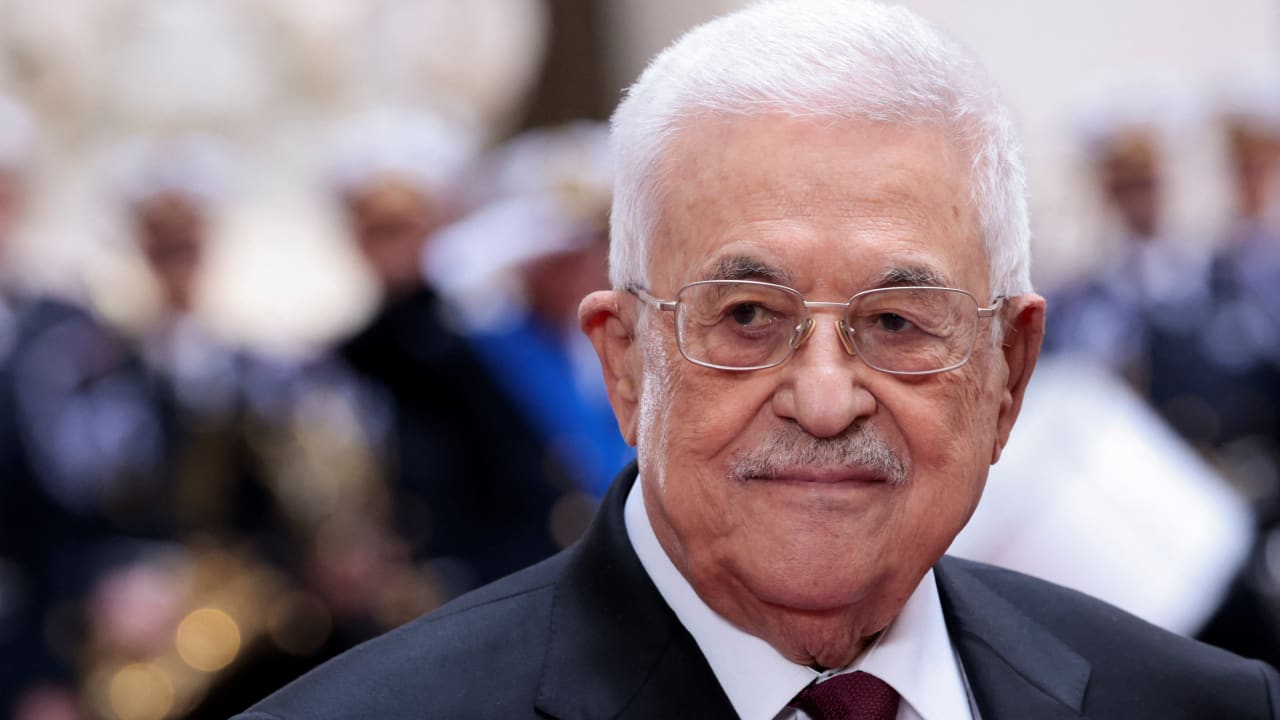
Palestinian Authority President Mahmoud Abbas and Italian Prime Minister Giorgia Meloni (not pictured) meet at Chigi Palace, in Rome, Italy, November 7, 2025.
(photo credit: REUTERS/REMO CASILLI)


The Palestinian Authority may still be carrying out its 'pay-for-slay' policy of Palestinian terrorists by means of "bypass channels," according to a Tuesday exclusive by Euronews.

The "pay-for-slay" program, also known as the "Martyrs' Fund," was reportedly ended in February after PA President Mahmoud Abbas signed a decree canceling it. The announcement was met with much European approval.

The Euronews report cites Brussels as saying that no EU funding has any part in the PA program, and that the EU, alongside the US and Israel, has criticized the "pay-for-slay" program for rewarding Palestinian terrorists financially who've committed attacks against Israelis. 

The PA has denied that its program financially aided any members of terrorist organizations, Hamas and Palestinian Islamic Jihad.

Pay-for-slay kept afloat due to 'bypass channels'

The suspicion that the EU was continuing to help fund the program started when Israel claimed that the system was operating through "bypass channels." These channels reportedly operate outside a new program called the Palestinian National Economic Empowerment Institution (PNEEI), which was instituted as a new centralized body that "would manage social aid to Palestinians," in the form of welfare, employment, and housing aid, the social organization claimed.
Palestinian Authority President Mahmoud Abbas, September 8, 2025; illustrative. (credit: JONATHAN BRADY/POOL VIA REUTERS)
Suspected bypass channels do not report or audit additional payments given to PNEEI applicants, according to information obtained by Euronews. Bypass channel payments may also be given to individuals who have not applied to PNEEI.

A European Commission executive told the outlet that pay-for-slay payments were still being made, adding that “We understand that a recent payment has been made to the families of prisoners, based on a previous scheme. We profoundly regret this decision, as this seems to go against prior announcements."

Brussels has now also demanded clarity from the PA on the status of the program, the report added.

The pay-for-slay program ban was also a prerequisite for the United Kingdom to recognize a Palestinian state, British Prime Minister Keir Starmer said in late September.

It was also reported by the Palestinian Media Watch (PMW) late last month that the PA had also paid stipends to security prisoners and to families of “martyrs” at PA post offices, despite publicly claiming to have ended the practice.

PMW Director Itamar Marcus said that, "the PA Post Offices paid terrorists’ salaries and stipends to families of terrorist ‘Martyrs.’”


Jerusalem Post Staff

Source: https://www.jpost.com/middle-east/article-874771

Follow Middle East and Terrorism on Twitter

Why Israel Fears Turkey’s Involvement in Gaza - Jonathan Spyer


by Jonathan Spyer

A Significant Difference Between the Position of Israel and That of Its Chief Ally, the United States, on the Way Forward Is Emerging


Turkish President Recep Tayyip Erdoğan has never condemned the massacres of 7 October 2023. Rather, the Turkish leader describes Hamas as “not a terrorist organization, it is a liberation group, ‘mujahideen’ waging a battle to protect its lands and people.’”

Turkish President Recep Tayyip Erdoğan has never condemned the massacres of 7 October 2023. Rather, the Turkish leader describes Hamas as “not a terrorist organization, it is a liberation group, ‘mujahideen’ waging a battle to protect its lands and people.’” Shutterstock

As the Gaza ceasefire struggles into its second month, a significant difference between the position of Israel and that of its chief ally, the United States, on the way forward is emerging. This difference reflects broader gaps in perception in Jerusalem and Washington regarding the nature and motivations of the current forces engaged in the Middle East. The subject of that difference is Turkey.

Ankara appears to have played a significant role in securing the 10 October ceasefire between Israel and the Gaza Islamists.

The Turks have expressed a desire to play a role in the ‘international stabilisation force’ (ISF), which, according to President Donald Trump’s 20-point plan, is supposed to take over ground security control of Gaza from the IDF (and Hamas) in the framework of the plan’s implementation. Ankara appears to have played a significant role in securing the 10 October ceasefire between Israel and the Gaza Islamists. Now, Turkey wants a major role in future arrangements on the ground in Gaza, in both the military and civilian sectors.

Israel is absolutely opposed to any Turkish role in future security arrangements in Gaza. Jerusalem appears to grudgingly accept Turkish civil involvement. Here also, however, given the background and orientation of the Muslim Brotherhood-associated Turkish IHH Humanitarian Relief Foundation, which is currently engaged in relief work in the Strip, there is extreme suspicion in Jerusalem. The IHH was the sponsor of the 2010 ‘flotilla’ to Gaza, in which a number of Islamist activists and their allies sought unsuccessfully to break Israel’s naval blockade on the territory. But while a Turkish civil role is probably unavoidable, Israel draws the line at a Turkish troop presence.

This is because Israel identifies Turkey in its current form as something very close to an enemy state. The reasons aren’t mysterious. Jerusalem has alleged that Ankara allows Hamas to maintain a large office in Istanbul, from which they claim the organisation has planned both military and terror activities and political and media campaigns.

Israel has also claimed that Turkey facilitates the unimpeded travel of Hamas officials across the Middle East by supplying them with Turkish passports. Turkish President Recep Tayipp Erdogan has never condemned the massacres of 7 October 2023. Rather, the Turkish leader describes Hamas as ‘not a terrorist organisation, it is a liberation group, “mujahideen” waging a battle to protect its lands and people’.

The Turkish leader is somewhat less complimentary in his view of Israel’s leaders. A few days ago, Ankara issued arrest warrants for alleged ‘genocide’ against Israeli Prime Minister Benjamin Netanyahu and 36 other Israeli officials.

In May 2024, against the background of the Gaza war, Erdogan announced that ‘relations with Israel have been severed’. Later, it became clear that he had been referring specifically to trade relations. Still, the statement reflected that the state of affairs between Jerusalem and Ankara had reached their lowest ebb.

The Israeli system considers that Turkey’s consistent pattern of anti-Israel activities forms part of a larger, assertive, and expansive regional strategy. It fits comfortably with Turkey’s military incursions into Iraq and Syria over the last half decade, its deployment of drones and proxy fighters in Azerbaijan and Libya in support of allies’ wars, its efforts to build influence in Lebanon, the West Bank and Jerusalem, its burgeoning alliance with Qatar, and its ‘mavi vatan’ (blue homeland) strategy in the Mediterranean, in which it seeks to lay claim to expanded exclusive economic zones (EEZs) in the eastern Mediterranean, Aegean and Black Seas.

The Israeli system considers that Turkey’s consistent pattern of anti-Israel activities forms part of a larger, assertive, and expansive regional strategy.

In all this, Israel sees a combination of political Islam and Neo-Ottoman revanchism, exemplified by a statement by Erdogan earlier this year that Turkey’s ‘spiritual geography’ extends to ‘from Syria to Gaza, From Aleppo to Tabriz, From Mosul to Jerusalem’.

Israel suspects that Turkey wishes to make use of the ISF in Gaza as a platform by which it can reinsert Turkish troops into the Israeli-Palestinian context and use their presence in turn to leverage influence, probably through tacit cooperation with its Hamas ally.

The current US administration shares little or none of Israel’s perception of Turkey. Rather, it sees Ankara as a strong, stable and welcome partner, able and willing to play an important role in securing the region. President Trump describes Erdogan as a ‘great leader’. The White House has rushed to embrace the new Sunni Islamist president of Syria. As Trump has noted, the victory of Ahmed al-Sharaa and his rebel group Hayat Tahrir al-Sham in the Syrian civil war was equally an achievement for Turkey, which created the conditions for the Sunni Islamist fighters to prepare before they marched on Damascus late last year.

The administration appears to have taken Turkey as a kind of guide on regional matters, accepting the notion that Turkish power can guarantee Syria and continue to prevent an Isis resurgence. In a recent briefing to the Middle East Forum thinktank, Turkish researcher Sinan Ciddi also noted that, during his September visit to the White House, Erdogan committed to giving the US access to Turkey’s deposits of lithium and other critical mineral deposits in the country.

The combination of strong, authoritarian rule, an apparent ability to achieve goals and a willingness to make available natural resources appear to have won Trump’s favour. Turkey’s close alliance with Qatar, which similarly backs Sunni political Islam across the region, forms part of the same general orientation.

US Middle East envoy Tom Barrack on Thursday paid tribute to the Turkish role in Syria, describing ‘Turkey’s tireless role… a testament to the quiet, steadfast diplomacy that builds bridges where walls once stood’. In all this, one can detect Trump’s famously transactional view of relations with foreign powers. These are forces with power and money that can get things done. They claim to want stability. They offer potential tempting material inducements. What’s not to like?

Turkey’s close alliance with Qatar, which similarly backs Sunni political Islam across the region, forms part of the same general orientation.

In this, there is a key difference between the US and its allies in Jerusalem. The view of Middle Eastern affairs diplomacy as a real estate deal so prevalent in Trump’s White House is programmed to regard such elements as politicised religion or nationalist revanchism as surely verbiage only, perhaps to be used to fire up the base, but hardly likely to motivate or direct behaviour at the state level. Here is the gap in understanding. Prior to 7 October, many in Israel also dismissed these elements, convinced that the shared motivation of self-interest would solidly undergird relations and that, therefore, for example, the Hamas leaders in Gaza could be bought off with money and material inducement.

For now at least, in Israel, no one believes that any more. But that is the principle that appears to be underlying much of the current US orientation in the pivotal Middle East region. The problem is that the Middle East is notably different from the real estate world in a number of key details. Recent experience suggests that those who try to ignore this may eventually learn it through bitter experience.


Jonathan Spyer

Source: https://www.meforum.org/mef-online/why-israel-fears-turkeys-involvement-in-gaza

Follow Middle East and Terrorism on Twitter

The Iraqi cleric and ex-Houthi spokesperson breaking ranks to defend Israel online - Dana Ben-Shimon


by Dana Ben-Shimon

Two Arab activists are challenging dominant regional narratives by defending Israel online, even after facing bombings, persecution, and exile.


Ghaith Al-Tamimi condemned the October 2025 Yom Kippur attack on a synagogue in Manchester, England.
(photo credit: Christopher Furlong/Getty Images)
When 20 living Israeli hostages were finally returned from Gaza last month, Ghaith Al-Tamimi, an Arab influencer from Iraq now living in London, felt the same surge of emotion as millions of Israelis.

“I went through these things, I understand the suffering,” he told The Jerusalem Report.

A former political prisoner in Iraq, Al-Tamimi knows firsthand what it means to be tortured behind bars. His empathy also stems from a tragedy closer to home. In 2006, his brother was kidnapped, likely by al-Qaeda, and the family has not heard from him since.

“I was born and raised in a country where there is killing, oppression, and abductions, so I, more than anyone else, can feel the agony and the pain of the Israelis waiting for their loved ones to come home,” he said.

From Baghdad to London

Al-Tamimi grew up in a devout Shi’ite family in Baghdad, where he was taught to hate Israel and view Zionists as “devils.”

“But then I began to connect with Jews and Israelis and realized that the ‘devil’ is not that bad. I started to ask, ‘Why should I hate Israel?’” he said.

Ghaith al-Tamimi (credit: Courtesy)
His questioning came at a high cost, however. As head of the Iraqi Center for Diversity, an organization that promotes coexistence among religions, he became a target of Islamist groups.

“At one point, my house was blasted because of my views,” Al-Tamimi said.

In 2015, he was forced to leave Baghdad after facing harsh persecution for rejecting Iranian figures, the influence of their militias in Iraq, and ISIS.

Now based in London, the 44-year-old, who is also a Shi’ite cleric, has emerged as one of the most outspoken Arab voices defending Israel and condemning extremism. 

With more than 400,000 followers on X, he regularly challenges Iran and its proxies, not hesitating to denounce the terror group Hamas.

Shame and disgrace

Al-Tamimi’s posts are often blunt and fiery. In one, he backed the assassination of Abu Obaida, the spokesman of Hamas’s military wing. 

In another post, he wrote: “Hamas and those who side with it – may they go to hell. Shame and disgrace to those sympathizing with them until the day of judgment.”

He also condemned the terror attack outside a Manchester synagogue on Yom Kippur, declaring: “Hatred and terror against Jews do not discriminate between a Zionist, an Israeli, or a Jew. Everyone is a target of racist terrorism, and anyone who claims otherwise is lying or deceiving. I stand in solidarity with British Jews and the people of Israel.”

His support for Israel is unusually direct for an Arab public figure, a position that has made him a pariah among many Arabs and Muslims. He has also paid a heavy personal price for his convictions.

“The most recent attack was in 2023 when my car was bombed while I was in Iraq going home from my office,” he recounted. He said it was due to his friendship with Israeli academic Elizabeth Tsurkov, who was held hostage by militias in Iraq and returned to Israel in September. That was the last time he visited Iraq.

Iran’s shadow

Al-Tamimi is furious about what he sees as biased Western and Arab media coverage of the war in Gaza.

“They did manipulations and showed only the things they wanted to show, focusing on Hamas’s narrative and ignoring the Israeli side,” he said, singling out the Qatar-sponsored Al-Jazeera network for spreading anti-Israel propaganda.

But his greatest ire is reserved for Iran.

“They should go. This destructive regime must be dismantled,” he said. “Otherwise, it will continue to control countries like my own – Iraq – and raise a new generation of radical militias and proxies across the region, including the West Bank and Gaza.”

“Don’t be afraid of a Palestinian state that will never be established,” he added. “It’s only a left-wing illusion. Even in Europe, some countries don’t really believe in it and allow pro-Palestinian protests to divert attention from their own internal problems and political tensions. Your real fear should be Khamenei.”

The Yemeni influencer calling for peace

With 1.3 million followers on X, Yemini activist Ali Al-Bukhaiti takes a pragmatic approach toward Israel and the region’s conflicts, which are grounded in political reality rather than emotion.

“I recognize Israel’s right to exist within 1967 borders; but Israel, for its part, should recognize the rights of Palestinians on these same lines and accept a solution to the Palestinian cause,” he told the Report.

Ali al-Bukhaiti (credit: Courtesy)
Al-Bukhaiti pushes back against hardline Palestinian extremists, arguing that armed struggle has failed to advance their interests so far.

“Armed resistance doesn’t serve the Palestinian interest, since Israel is stronger,” he said, urging Palestinians to adopt peaceful means instead.

Spokesman for the Houthis

Now living in the UK, where he was granted political asylum in 2019, Al-Bukhaiti once served as a spokesman for the Houthi movement. He broke with the group after it seized Yemen’s capital, Sanaa.

“The Houthis are a terror group committing crimes against the Yemeni people,” he said emphatically. “They claim to support the Palestinians, but I said from day one that their actions would not help. Their missile attacks harmed Israeli citizens and disrupted daily life and airport flights; but overall, the damage to Israel was very small compared to what the Yemenis suffered.”

In one post, he compared Hamas in Gaza to the Houthis in Yemen, writing that “Gazans are controlled by a terrorist group (Hamas) that presents itself as a national liberation movement, just like the Houthis in Yemen.”

In another post, he contrasted life in Israel with conditions in Yemen: “The situation of Arab citizens in Israeli towns and cities like Nazareth is far better than that of Yemenis under Houthi rule.”

People-to-people peace

Al-Bukhaiti believes that any lasting peace in the Middle East must go beyond governments and take root among ordinary people.

He noted a paradox across the Arab world: “In some Arab states that haven’t signed peace treaties with Israel, a portion of the public is more open to Israel and understands it better than the public in countries that already have peace agreements, such as Egypt and Jordan, where attitudes are much more hostile.

“Arab countries want peace,” he said, “but the Palestinian issue keeps standing in the way. It’s also because hardline Islamic groups in countries like Jordan, Lebanon, Yemen, and Egypt draw their legitimacy and influence from the Palestinian cause.”

According to Al-Bukhaiti, these movements manipulate the issue to maintain power. “It’s an issue that stirs up public opinion, and in the end leaders of these countries fear it could cause turmoil and turn against them.”

Hope for Yemen

Though critical of Hamas and the Houthis, Al-Bukhaiti warned that Israel’s strength alone cannot guarantee long-term stability. “Israel is in a position of power now, but power doesn’t last forever,” he said.

“Many changes can happen in the future. America may not always be as strong or supportive as it is today, meaning that Israel could lose its current advantage. Real peace cannot be built on power alone. It has to be seen as just by everyone in the region.”

Despite his realism, he remains hopeful. “I hope that one day a peace agreement between Israel and Yemen will be reached, enabling Jews of Yemeni origin to return for a visit,” he said.

And with an emotional nod to Yemen’s vanished Jewish community, he stated: “We love the Jews of Yemen and need to apologize to those who were expelled, suffered persecutions by the regime, and had their property expropriated.” 


Dana Ben-Shimon

Source: https://www.jpost.com/jerusalem-report/article-874311

Follow Middle East and Terrorism on Twitter

The siege of Park East Synagogue and cooperating with Mamdani - Jonathan S. Tobin


by Jonathan S. Tobin

Some leaders think they must make nice with the mayor-elect. But how can you work with a hostile mayor who openly sympathizes with those attacking Jewish houses of worship?


Zohran Mamdani, the incoming mayor of New York City, and Jessica Tisch, New York City police commissioner, speak during a news conference after their visit to the New York City Police Memorial on Nov. 19, 2025. Photo by Richard Drew-Pool/Getty Images.

In the wake of Zohran Mamdani’s decisive victory in the New York City mayoral election, most Jewish leaders believed that they had no choice but to do their best to cooperate with him. Doing so was in keeping with the traditions of American democracy.

But how do you work with someone who is sending mixed messages to antisemitic mobs about whether it is OK to besiege synagogues and threaten Jews with violence?

That’s the dilemma facing New York Jewry in the wake of Mamdani’s equivocal comments about the siege of Park East Synagogue on Manhattan’s Upper East Side on the evening of Nov. 19 by an anti-Zionist mob who harassed those entering the building and chanted slogans like “From New York to Gaza, globalize the intifada” and “Resistance you make us proud, take another settler out.”

Lying about aliyah and international law

Speaking through a spokesman, the mayor-elect issued an anodyne statement about “discouraging” the use of such slogans threatening Jews with violence. It said, “He believes every New Yorker should be free to enter a house of worship without intimidation.”

Had it stopped right there, it would have been appropriate and engendered no criticism. But Mamdani couldn’t leave it at that. In the same sentence, the statement went on to qualify his condemnation of the incident by declaring that “these sacred spaces should not be used to promote activities in violation of international law.”

Let’s be clear: What happened in the synagogue that night was no violation of international law. It was a gathering organized by a group that promotes Jewish immigration to Israel. Far from illegal, that’s a right that is secured by international law dating back to the aftermath of the First World War. It was established in the 1920 San Remo Agreement that guaranteed the right of Jews to settle in their ancient homeland, and then the 1922 League of Nations creation of the British Mandate for Palestine in order to implement this principle.

The founding of the modern-day State of Israel as a result of the U.N. 1947 Partition Resolution (or Resolution 181) further clarified the principle.

But to Mamdani, a man who has been obsessed with opposition to the existence of a Jewish state his entire adult life, merely thinking about moving there is wrong and in violation of some entirely fictional “law” in which Jews—unique among all the peoples in the world—are to be forbidden from living in the place where they are indigenous.

The message he was sending to both the antisemitic mob and to the Jews was clear. The 34-year-old may not yet feel comfortable openly supporting incidents in which Jews are threatened with violence and harassed while entering a synagogue. But not even a desire to ensure that he has a honeymoon period with New Yorkers after his election is enough to prevent him from stating unambiguously that he is definitely on the side of those making such threats.

If nothing else, that should give pause to the city’s Jewish establishment, which has spent the weeks since Mamdani’s election signaling to him that they want to make nice with him and have no intention of actively working against a man who has no scruples about siding with antisemites.

An abnormal situation

If this had been a normal mayoral election, that’s exactly what they should be doing.

Many, especially in deep-blue New York, have treated President Donald Trump’s two election victories as an exception to that basic premise of democracy. That notwithstanding, it is necessary for those who back the losing candidates in elections to act as a loyal opposition to the winners, as opposed to a “resistance,” as Trump’s adversaries have done. Whatever one thinks about the outcome, those who care about democracy are obligated to treat the results of the ballot box as legitimate and to work with the victors for the betterment of all citizens.

And that is exactly how Jewish leaders were treating Mamdani. His record of support for antisemitic BDS campaigns and opposition to the existence of the one Jewish state on the planet—not to mention his radical socialist ideas about governing the city—had frightened many Jewish New Yorkers, the overwhelming majority of whom voted against him. But the organized Jewish world made no secret about its readiness to cooperate with the new administration in City Hall.

They cheered the news that Mamdani was prepared to allow Police Commissioner Jessica Tisch to stay in her crucial role, thus sending a message that Jews would not be abandoned. And Mamdani also sent representatives to meet with leaders of the city’s Jewish Federation and Community Relations Council.

Skepticism was warranted. Still, they were prepared to give the mayor the benefit of the doubt. They accepted the premise that his ideological obsession with opposing Israel and opposition to essential elements of Jewish identity related to the Jewish homeland and peoplehood would not impact his duties as mayor or endanger the Jewish community.

But the Nov. 19 incident gave Jewish New Yorkers an unwelcome reminder of what it means to have someone so closely associated with Jew-hatred in a position of power. More than that, they were put on notice about what they are likely to be in for during the next four years.

Making the Jews scared

When Park East Synagogue, a Modern Orthodox congregation whose building is a historic landmark, hosted an event for the Nefesh B’Nefesh organization that promotes aliyah, it was besieged by a mob of more than 200 demonstrators shouting antisemitic slogans and harassing those entering the venue. As the New York Post reported, the swarm of angry Jew-haters chanted the usual litany of slogans that have become familiar since the Hamas-led Palestinian Arab terror attack in southern Israel on Oct. 7, 2023.

Their purpose was not merely to state their hostility to Israel or Jews. As one of their leaders told the mob, “It is our duty to make them think twice before holding these events.” As the Post reported, the agitator “repeated emphatically” that “we need to make them scared. We need to make them scared. We need to make them scared.”

And by stating that he agreed with the basic premise of their cause, the mayor-elect was telling Jews throughout the city that they had every reason to be afraid for their safety in a New York governed by the incoming mayor. And so, Mamdani needs to be sent an unequivocal message by decent New Yorkers, whether or not they are Jewish, that this kind of messaging is both unacceptable and dangerous.

It’s not just that he was lying about aliyah being a violation of international law rather than a basic right of the Jewish people. He also has no business spouting opinions about what sort of events should be held in synagogues. That’s especially true when those houses of worship are liable to be besieged by bloody-minded protesters who seek to intimidate Jews into silence, when the mayor is making no secret that he is in agreement with the thugs screaming at the Jews.

Despite the pious language about ensuring the safety of those entering synagogues, his talk about Jews holding illegal events is a bright green light to antisemites to repeat this outrage. Under the circumstances, Jews have every right to wonder what’s in store for them in Mamdani’s New York, regardless of Tisch’s continued tenure at the New York City Police Department. Indeed, it may well be a foreshadowing of even worse to come.

That’s why the “business as usual” talk from Jewish leaders has to cease.

It’s true that Jewish organizations need to ensure that there is some cooperation with the city administration when necessary. But they can’t ignore the fact that Mamdani isn’t being shy about telling Jews that they can only consider themselves safe if they disavow an essential element of their identity and faith. Support for Israel and Zionism is integral to being Jewish, and that is something that the overwhelming majority of Jews believe, whether or not they are observant or where their sympathies lie in terms of Israel or American politics. 

In essence, Mamdani isn’t hesitating to send a message that he is at war not just with Prime Minister Benjamin Netanyahu, whom he continues to threaten with arrest if the Israeli leader visits the city on his watch. Notwithstanding his pledges to be a mayor for all New Yorkers, he’s also at war with Jewish peoplehood. And that is something that no Jewish leader or entity should tolerate or let pass without vigorous protest.

Jewish leaders must act

At this point, responsible Jewish leaders, especially those specifically tasked with monitoring antisemitism and the defense of the Jews, like the Anti-Defamation League, need to stop talking about cooperation and start planning for a campaign of active resistance to Mamdani’s prejudicial attitudes towards Jewish life.

That means not only organizing the kind of demonstrations that make it clear that New Yorkers won’t accept his taking the side of violent thugs advocating for Jewish genocide.

It also should mean a policy of legal action designed to thwart those instances when the mayor and his staff of left-wing agitators and Marxist ideologues start trying to put their ideological obsession with destroying the Jewish state into action with BDS-style discriminatory policies. In addition, they must begin—to the extent that it is possible in a city and state where gun rights are not respected by local authorities—to prepare members of the Jewish community to defend themselves against what is likely to follow.

And they should also declare their willingness to support any actions by the president of the United States, who, though opposed by the liberal Jewish majority in New York, has a demonstrated record of support and friendship for Jews and Israel, intended to hamstring Mamdani’s ability to injure the Jewish community. 

The coming months will be a test not only of how far Mamdani will go to antagonize and threaten the Jewish community, but also of the mettle of a generation of Jewish leaders who have heretofore shown little sign of being ready to lead their community in an unprecedented battle for their rights and safety. If they aren’t equal to this challenge, and instead prefer to seek to ingratiate themselves with an antisemitic mayor, then it will be time to replace them with others who are made of sterner stuff.


Jonathan S. Tobin is editor-in-chief of the Jewish News Syndicate, a senior contributor for The Federalist, a columnist for Newsweek and a contributor to many other publications. He covers the American political scene, foreign policy, the U.S.-Israel relationship, Middle East diplomacy, the Jewish world and the arts. He hosts the JNS “Think Twice” podcast, both the weekly video program and the “Jonathan Tobin Daily” program, which are available on all major audio platforms and YouTube. Previously, he was executive editor, then senior online editor and chief political blogger, for Commentary magazine. Before that, he was editor-in-chief of The Jewish Exponent in Philadelphia and editor of the Connecticut Jewish Ledger. He has won more than 60 awards for commentary, art criticism and other writing. He appears regularly on television, commenting on politics and foreign policy. Born in New York City, he studied history at Columbia University.


Source: https://www.jns.org/the-siege-of-park-east-synagogue-and-cooperating-with-mamdani/

Follow Middle East and Terrorism on Twitter

Iran Is Building a Missile Empire, the World Looks Away - Majid Rafizadeh


by Majid Rafizadeh

Iran must not be allowed to grow stronger, more dangerous, and more emboldened. The stakes are global, affecting every nation that depends on a secure free world.


  • While global focus has shifted to other crises, Iran has rapidly and aggressively been accelerating its ballistic missile production at the speed of light.

  • If the West is serious about stopping Iran's missile expansion, dismantling these missile networks must be part of the strategy. Every intercepted shipment delays Tehran's ambitions and weakens its ability to radiate threats.

  • The US should have let Israel keep on going when it wanted to, after the Trump administration took out three of Iran's nuclear plants: Israeli Prime Minister Benjamin Netanyahu knows what he is doing.

  • Iran must not be allowed to grow stronger, more dangerous, and more emboldened. The stakes are global, affecting every nation that depends on a secure free world.

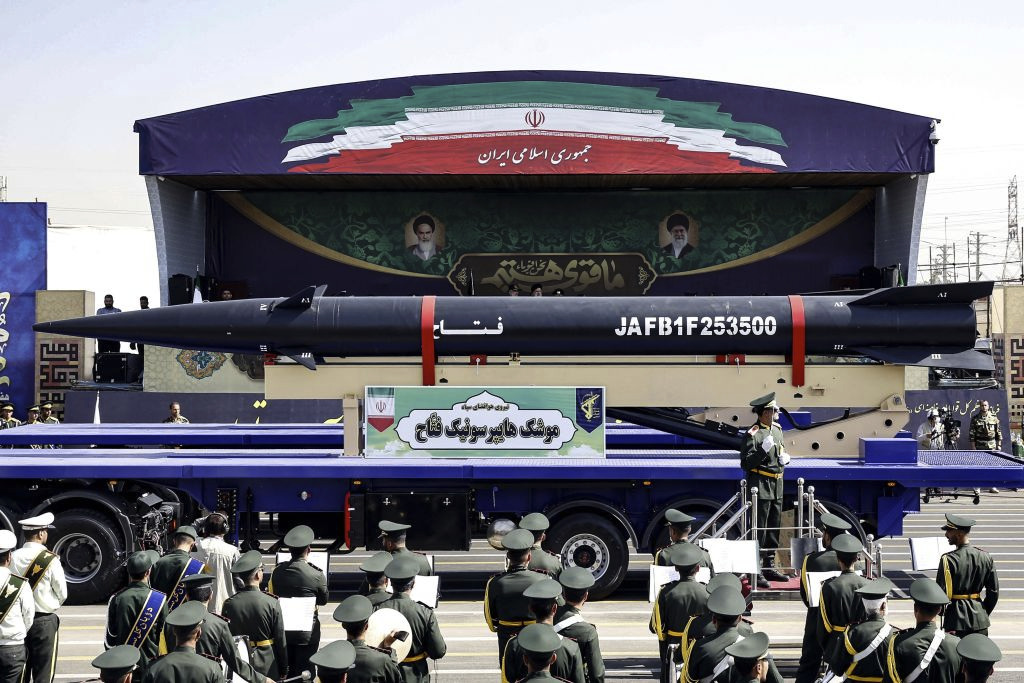
While global focus has shifted to other crises, Iran has rapidly and aggressively been accelerating its ballistic missile production at the speed of light. Pictured: A Fattah hypersonic ballistic missile is displayed during the annual military parade in Tehran, on September 22, 2023. (Photo by AFP via Getty Images)

Little attention is being paid to Iran in the aftermath of the 12‑Day War, but the threat it now poses is growing significantly. While global focus has shifted to other crises, Iran has rapidly and aggressively been accelerating its ballistic missile production at the speed of light. The Iranian regime is proudly announcing its manufacture of vast quantities of missiles, expanding assembly lines, and is openly boasting about its growing arsenal. Iran is not concealing these developments; it is bragging about them. The regime, despite a crippling drought, appears to feel emboldened, empowered, and determined.

"Iran's missile power today far surpasses that of the 12‑Day War," Iranian Foreign Minister Abbas Araghchi recently declared. His remarks were reinforced by Defense Minister Brig. Gen. Aziz Nasirzadeh, who claimed that the defense industry has not only recovered from wartime strain but has grown dramatically. "Iran's defense production has improved both in quantity and quality compared to before the 12‑day Israeli-imposed war in June," he stated, insisting that new missiles are now rolling off production lines faster than ever. The government seems to believe it has momentum—and appears eager to show it.

Some politicians and analysts may dismiss these proclamations as Iran just wishing to intimidate adversaries, prevent attacks and maintain regional influence. The reality, however, is that Iran's missile production is most likely meant to wage war again, either directly or through its proxies. The regime has a documented record of firing its missiles at U.S. military bases, at targets in Iraq, at striking Israel, and launching missiles into Qatar. Iran has also provided ballistic missiles to militant groups such as the Houthis in Yemen and has also been supplying missile and drone technology to Russia for use against Ukraine. Iran's proxies have launched missiles at civilian airports, commercial vessels, cities, and infrastructure across the region. Anyone who interprets this build‑up as "defensive" is ignoring decades of evidence to the contrary.

Iran is additionally boasting that its missiles can hit U.S. cities, European capitals, and targets throughout the Middle East. Iranian officials continue to emphasize their desire to wipe out Israel. Iran seems to view missile development as the backbone of its strategy to compensate for conventional military weaknesses. What if Iran should load just one of these missiles with a nuclear warhead? The window to constrain Iran's capabilities may be rapidly closing. The US should have let Israel keep on going when it wanted to, after the Trump administration took out three of Iran's nuclear plants: Israeli Prime Minister Benjamin Netanyahu knows what he is doing.

The West would be wise to put a credible military option back on the table: let Iran know that continued missile expansion, threats, and proliferation will again provoke a direct and forceful response. This would entail strategically identifying and facilities involved in the development, assembly, testing, and distribution of ballistic missiles.

The second step should involve comprehensive, relentless sanctions. Any individual, corporation, foreign bank, or government entity involved in facilitating Iran's ballistic missile program might be sanctioned without delay. Also included should be suppliers of raw materials, transportation networks, front companies, and financial institutions that help Iran circumvent restrictions. The sanctions need to be enforced with penalties severe enough to deter others from assisting Iran and include freezing overseas assets, banning access to global banking systems, and imposing full trade restrictions on any company or country that aids Iran's missile program.

Perhaps the most important economic pressure point is cutting off or severely restricting Iran's oil sales to cripple its ability to sustain rapid missile production. This means applying intense diplomatic pressure on Iran's major purchasers to halt imports. Every barrel of Iranian oil sold directly funds missile components, weapons shipments to proxies, drone fleets, and destabilizing operations across the region.

Iran's missiles do not remain confined within the country's borders. They are distributed to militant organizations that operate far from Iran's territory, extending Tehran's reach. If the West is serious about stopping Iran's missile expansion, dismantling these missile networks must be part of the strategy. Every intercepted shipment delays Tehran's ambitions and weakens its ability to radiate threats.

Iran's missile arsenal was already large before the 12‑Day War, but it is now significantly bigger, more sophisticated, and growing at an unprecedented speed. The regime's confidence and aggression are rising in parallel with its production capacity. It is important to act before Iran's missiles reshape the geopolitical landscape in ways that could be difficult to reverse. Stopping this expansion requires combining a credible military option with severe sanctions, cutting off the regime's oil revenue, and targeting every node of its proliferation network. Iran must not be allowed to grow stronger, more dangerous, and more emboldened. The stakes are global, affecting every nation that depends on a secure free world.


Dr. Majid Rafizadeh is a political scientist, Harvard-educated analyst, and board member of Harvard International Review. He has authored several books on the US foreign policy. He can be reached at dr.rafizadeh@post.harvard.edu

Source: https://www.gatestoneinstitute.org/22066/iran-missile-empire

Follow Middle East and Terrorism on Twitter