Is the terrorist organization quietly recovering? Without the level of destruction the IDF wrought on it, Hamas would have already become a monstrous threat again. Opinion.
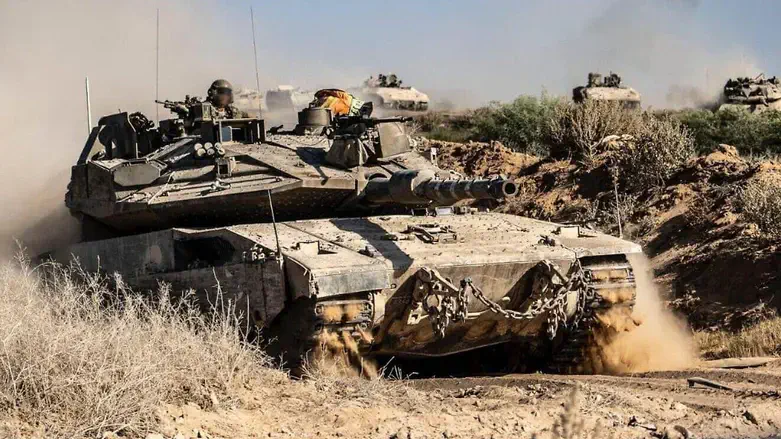
IDF in Gaza City, Sept 16, 2025 IDF
The first visit to the Gaza
Strip after Oct. 7 showed a relatively intact city, amid plumes of smoke
and sounds of battle. A year later, in November 2024, Jabalya was a
massive pile of rubble, stretching from horizon to horizon, with packs
of dogs roaming among the ruins and garbage. On the 1,00th day of the
war, nothing remained in the area. The densely populated camp looked
desolate and quiet like the surface of the moon. Engineering drills
searched for tunnels below ground, with D9 bulldozers operating above.
In the vast majority of Gaza, nothing remained, neither above ground nor
below it.
This is the
situation in all the territory controlled by Israel, which makes up
about two-thirds of the Strip’s territory. Rafah was wiped off the face
of the earth, as were most of Khan Yunis and huge swaths of Gaza.
Ninety-two percent of the tunnels have been completely destroyed; the
rest will be destroyed soon.
Inside
Hamas-controlled Gaza, there have been increasing reports recently of a
resurgence, tunnel rehabilitation, training exercises, and an
inevitable IDF operation. These reports should be taken with a massive
grain of salt. Hamas is failing to genuinely rearm after its smuggling
routes in the air, on land, at sea and underground were choked off.
Three hundred sixty-two smuggling tunnels from Egypt were destroyed in
Rafah. Training is conducted in hiding, reconstruction materials aren’t
arriving, and the newly dug tunnels in the sand are barely shored up
with whatever is available: sheet metal, wood scraps.
Iran
bends over backward to protect Hezbollah; for Hamas, it doesn’t even
pick up the phone. That’s what happens to someone who starts a war
without permission and is considered a lost cause.
Perhaps
this is why Hamas recently agreed to terms that include handing over
all heavy weaponry, tunnel maps, production sites and weapons caches.
Its leaders agreed that the weapons would be surrendered to a committee,
not to Israel. The multinational force that will subsequently deploy
will serve as a buffer between Hamas and Israel, and will be responsible
for the collection.
Israel
will withdraw only after Hamas is disarmed, the militias’ weapons are
also collected, all government positions are handed over to a
technocratic committee and police officers who fail a security clearance
are forced to retire.
The
agreements make no mention of small arms, which flood Gaza by the tens
of thousands. How flooded? The divisions maneuvering in Gaza used to
transport rifles to the Israeli border, where bulldozers would run them
over and crush them. At a certain point, they asked to stop collecting
weapons because it had become their primary activity.
“Make
no mistake," says a very senior army officer, “of all the enemies we
have faced, they are the most cruel, the most hateful towards us and the
most uninhibited."
And
this is exactly the reason why it was forbidden to stop and “fight
another day," as Nitzan Alon and others suggested (during the war). From
the perimeter, without this level of destruction and without isolating
them from their patrons, Gaza would have recovered rapidly. By day
1,000, it would have already become a monstrous threat again, rather
than a wave of rubble and despair.
Force does not solve everything.
There
is something very strange about modern wars. One day, you bomb the
enemy, and on the second day he calls you on WhatsApp after getting the
internet working again. We tend to look at the absurdity of senior
American administration officials conducting friendly conversations with
the heads of a terror regime. But it is safe to assume that for the
Iranians it is harder. They need to talk with the people who killed
their admired leader and caused their economy hundreds of billions of
dollars in damage.
In the
first two weeks after the signing of the agreement, there was an almost
absolute consensus that Iran had won. This feeling of catastrophe was
caused by a rare coalition of the regime’s mouthpieces in Tehran, the
establishment media in America, and the hard feelings in Israel and
within the Republican Party.
If
things are so good for Iran, why did they fire at the beginning of the
week in the Strait of Hormuz? The accepted approach is that the regime
is simply taunting Trump out of hubris and an absolute conviction that
he will not dare to attack back. But a senior American official offers
an additional possibility:
“The
Iranians are shooting because it turned out that they are losing. They
thought they would open the strait from their side immediately, and in
parallel, slow down access for Western vessels. In practice, the
opposite happened. We have safe passage under ‘Project Freedom,’ without
them controlling it at all.
"Meanwhile,
despite the temporary suspension of the sanctions, it became clear to
them that no bank in the West is willing to do business with them for
two months. They are offering steep discounts but have not sold even one
barrel of oil. In addition, no asset was unfrozen. The Gulf states have
no desire to lift a finger for them."
Not
everything is measured in oil, but also in optics. The Americans
believe that what they did in the agreement is to give the moderate wing
there an incentive against the extreme side, and to see what will come
out of the clash between them. They see the power struggles at the top
as one of the achievements of the war and believe that something good
can still come out of the skirmishes.
Give
us credit, the Americans ask again and again. Just as you did not
believe that Hamas would give up the hostages, you also do not believe
that Iran will give up its nuclear program. Force solves many things,
but contrary to what the Israeli government and its leader think, it
does not solve everything. The war has reached a stage in which the
marginal utility of using force is steadily decreasing. We are not as
naive as you think, nor are we Innocents Abroad,
like the title of Mark Twain’s book about his journey to Palestine in
the 19th century. (In Hebrew, by the way, the title is translated to the
somewhat cynical name “A Pleasure Trip to the Holy Land.")
(Appeared in Yisrael Hayom)
Amit Segal is an
Israeli journalist, radio and television personality. He serves as the
political commentator of Israel’s Channel 12 news (N12 News company) and
anchors Israel’s highly watched “Meet the Press" show on Channel 12.
The Strait of Hormuz
has reopened, yet Iran has already begun behaving as its policeman –
controlling maritime traffic and speaking openly about levying fees. The
White House insists no such fees exist, claiming Tehran pledged not to
impose them while warning that US warships remain nearby and could
return if necessary. One side is clearly not telling the full truth, or
the agreement itself contains deliberate ambiguity.
Even
if Iran never collects a single dollar, exercising control over the
strait grants it an immensely dangerous political weapon. Tehran’s
ultimate objective has always been to position itself as the authority
deciding which tankers may pass, meaning Gulf exporters and
energy-importing nations alike would become dependent on Iranian naval
officers for permission to transit. During any future dispute with a
Gulf state, Iran could obstruct that country’s exports under various
pretexts, just as it could pressure European or Asian importers by
selectively slowing shipments.
It
would use Hormuz to impose its regional policies and exact unofficial
tribute, consistent with a decades-long pattern of coercion, from
detaining foreign nationals on fabricated charges to employing proxy
militias across Iraq and Lebanon.
Thus, when US Vice President JD Vance and Secretary of State Marco Rubio
say Iran pledged not to charge transit fees, that may well be true, yet
it says nothing about Tehran’s broader ambition to dominate the
waterway without issuing literal toll tickets. Political hegemony is far
more dangerous than financial extortion.
Oman’s
announcement of an alternative shipping corridor should therefore be
viewed as a test of Iran’s intentions, though it is unlikely to endure
without credible military deterrence behind it. The struggle over Hormuz
will shape the Gulf’s future, raising the question of whether Gulf
states and other affected nations are doing enough to mobilize
international opinion against a geopolitical shift that could threaten
regional security and global energy exports for years.
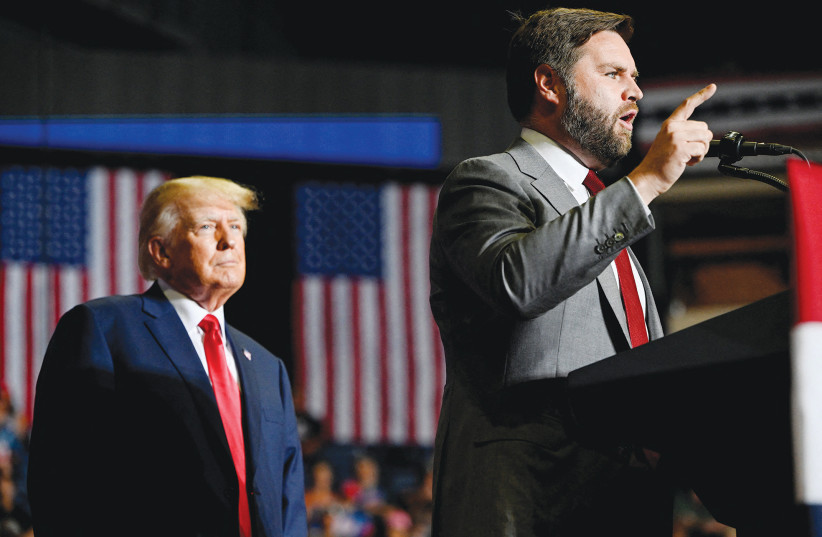
US President Donald Trump and Vice President JD Vance: Too early to determine upper hand. (credit: Gaelen Morse/File/Reuters)
In
reality, it was Iran’s closure of Hormuz – not its missiles or drones –
that pushed President Donald Trump into rushing toward the Geneva
memorandum. As Trump himself acknowledged, Iran had lost the military
confrontation but retained leverage by threatening the global economy.
The president was candid about his motives: dwindling US strategic oil
reserves, rising inflation, higher gasoline prices, and the political
risks facing both his presidency and his party before November’s
elections left him choosing between prolonging the conflict or striking a
deal with Mohammad Bagher Ghalibaf, representing Iran’s new leadership.
Tehran
recognized Washington’s urgency and responded with sweeping demands,
including control over Hormuz, while Trump’s team focused almost
exclusively on securing nuclear concessions regardless of the price
elsewhere. Ironically, the American maritime blockade had been effective
in bringing Iran to the negotiating table; President Mahmoud Pezeshkian
himself admitted during a visit to Pakistan that Iran had been nearing
catastrophe before talks began.
Washington
entered negotiations demanding an end to Iran’s nuclear program,
surrender of enriched uranium, freedom of navigation, and the
dismantling of Tehran’s regional militias. It emerged having signed a
memorandum pledging not to attack Iran or Hezbollah, releasing frozen
Iranian assets, and establishing a reconstruction fund.
Just weeks earlier, the Iranian regime had been buried beneath the rubble of war. What changed?
Vance
argues these concessions are confidence-building measures and that the
final agreement will eventually reflect balanced compromises. Yet since
Geneva, Iran has behaved with growing confidence, escalating pressure
and threats while offering no meaningful concessions in return. Even
reopening Hormuz came with demands that vessels acknowledge Iran’s
authority, submit information, and await approval before passing – not a
concession at all, but the foundation of an entirely new system of
Iranian control.
– Abdulrahman Al-Rashed
Faced with bad deal or return to war, Trump may choose war
An-Nahar, Lebanon, June 26
The
world is anxiously watching the ongoing US-Iran negotiations, mediated
by Qatar and Pakistan, in hopes of transforming the memorandum of
understanding into a final agreement that prevents renewed war and
ushers the Middle East toward greater stability. Yet many observers
remain uneasy because Washington and Tehran continue issuing
contradictory statements on fundamental issues, particularly Iran’s
nuclear program and the future of the Strait of Hormuz.
Each
government faces enormous domestic pressure to present itself as the
clear victor, insisting that it has imposed its conditions on the other.
Although both sides genuinely seek to avoid another war and give
diplomacy a chance, the increasingly confrontational rhetoric and
inflated public expectations could ultimately undermine the negotiations
and reignite hostilities, especially when Israel’s opposition to the
process is factored in.
It
is still too early to determine who has gained the upper hand, since
that judgment can only be made once the conflict has fully ended and
military forces have returned to their bases. From Tehran’s perspective,
the mere survival of the Islamic Republic constitutes a victory, and
there is merit to that claim. Yet the consequences of the war will haunt
Iran for years.
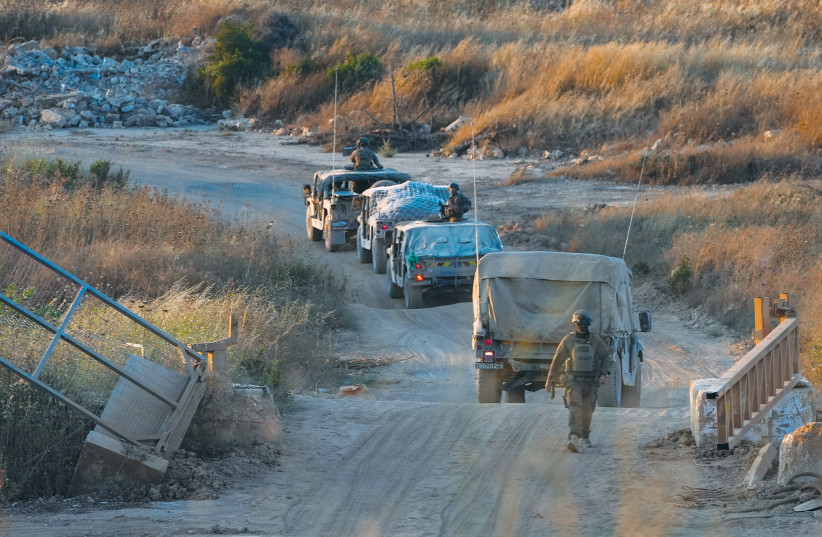
IDF convoy enters southern Lebanon from northern Israel, June 29. (credit: FLASH90)
Following
decades of sanctions, a devastating military campaign, and a crippling
naval blockade, the regime now faces severe economic and social
challenges that the release of frozen assets cannot fully resolve. Much
of the money to be unfrozen will barely address Iran’s pressing domestic
needs, while at least $12 billion is expected to be spent through a
US-supervised account purchasing American agricultural products, meaning
Tehran will not enjoy unrestricted access to its own resources.
US President Donald Trump,
meanwhile, failed to secure the decisive triumph he had envisioned.
Iran’s leadership survived the assassination of supreme leader Ali
Khamenei, continued fighting under a successor, and succeeded in closing
Hormuz, triggering a global economic crisis that placed enormous
pressure on Washington. Trump suddenly confronted the prospect of a
prolonged conflict requiring US ground forces; precisely the type of
Middle Eastern war he has long promised the political base he would
never wage.
He
also faces another dilemma: any agreement must convincingly eliminate
the military dimension of Iran’s nuclear program by removing highly
enriched uranium and preventing Iranian enrichment for at least two
decades. Anything less risks being viewed by the American public as
another version of the 2015 Obama agreement that Trump himself once
denounced as the worst deal ever negotiated.
Israel
likewise doubts Tehran will ultimately accept those nuclear conditions.
Trump’s advisers also understand that no agreement can survive
politically without addressing Israel’s security concerns. Consequently,
Washington is actively working to dismantle Iran’s regional proxy
network, placing particular emphasis on Hezbollah.
Pressure
on Iraq has already yielded results, with most Popular Mobilization
Forces factions reportedly surrendering their weapons to the state.
Including Lebanon in the memorandum is likewise intended to compel
Tehran to pressure Hezbollah into ending military operations and
withdrawing north of the Litani River, thereby easing negotiations and
creating an opening for a lasting settlement of Hezbollah’s arsenal.
Iran’s
ballistic missile program remains the most difficult issue, and many
diplomats believe Washington may eventually accept leaving it unresolved
while strengthening regional missile defenses and allowing certain
allies to expand their own ballistic capabilities as a counterweight.
Yet influential voices in Tehran appear convinced that Trump is
politically trapped and that America has effectively lost.
They
are therefore urging Iranian negotiators to make no concessions on
either the nuclear file or Hormuz. Such overconfidence risks repeating
the same strategic miscalculation that led to war in the first place,
when Tehran failed to believe Trump would actually carry out his
threats.
Trump
has publicly declared that he will never accept Iranian transit fees in
Hormuz and insists on a definitive nuclear settlement. He cannot
realistically sell an agreement that fails on either count.
Faced
with the choice between a weak agreement and renewed military action,
even one requiring US forces to secure the Strait of Hormuz, he may
ultimately conclude that war is the less costly option, leaving Iran to
squander what could be its last genuine opportunity for a negotiated
settlement.
– Riad Kahwaji
Israel’s zero-sum approach to Iran
Al-Ittihad, UAE, June 26
Israel’s
response following the signing of the US-Iran memorandum of
understanding reflects long-standing strategic principles that continue
to shape its approach toward Iran. Despite the ceasefire and
Washington’s decision to pursue negotiations on issues including Iran’s
nuclear and missile programs, sanctions relief, and compensation
mechanisms, Israel insists that none of these developments can come at
the expense of its national security.
Across
both the political and military establishments, there remains broad
consensus that Iran constitutes an existential threat requiring
definitive, not partial, solutions. While Israel is prepared to
cooperate with the American diplomatic initiative, including
arrangements concerning Lebanon and limited withdrawals, it intends to
spend the 60-day implementation period closely monitoring Iranian
behavior while preparing for every possible outcome.
Israeli
leaders fear that Tehran’s objective is to maximize concessions by
exploiting what they perceive as President Donald Trump’s eagerness to
secure an agreement, while the most difficult negotiations remain ahead
and much of the process continues behind closed doors. Consequently,
Israel rejects any approach that relies on half-measures or allows Iran
to re-emerge as a dominant regional actor while retaining significant
nuclear or missile capabilities.
For
Israeli decision-makers, such an outcome is unacceptable regardless of
the diplomatic gains elsewhere. Accordingly, Israel’s military
establishment cautions against leaving events entirely in Washington’s
hands or allowing prolonged disagreements with the US over strategic
priorities. Instead, it advocates maintaining an independent, proactive
posture while coordinating closely with American counterparts through
the joint intelligence and military mechanisms that have only grown
stronger during the conflict.
Israel
fully intends to continue its long-running shadow war against Iran and
will not abandon its operational doctrine. Throughout the initial
implementation period, it will remain deeply engaged, emphasizing that
military options continue to precede political calculations.
The
same logic applies in Lebanon. Israel plans to preserve and reinforce
its security arrangements on the ground despite discussions of partial
withdrawals, maintaining buffer zones extending beyond the Litani River
and reshaping its defensive priorities in ways similar to its approach
in Gaza. These measures reflect Israel’s determination not to compromise
its security while remaining prepared for any collapse in US-Iran
negotiations.
Such
preparations also signal that Israel will never accept the
rehabilitation of the Iranian regime as a regional power capable of
threatening its national security. At the same time, Israeli leaders are
watching political developments in Washington, particularly the
upcoming congressional midterm elections, which could alter the American
domestic environment surrounding the agreement.
Under
every conceivable scenario, Israel has no intention of disengaging from
the Iranian file. It will continue maneuvering politically, militarily,
and through intelligence operations, reserving the option of
intervening during the 60-day period if it believes the agreement is
empowering Tehran or failing to eliminate the Iranian threat.
Washington
itself appears to recognize that Israel may decide at a certain stage
to act independently, potentially disrupting implementation despite the
administration’s commitment to preserving the agreement. Above all,
Israel remains determined to locate and secure Iran’s stockpile of
enriched uranium by whatever means prove necessary.
Ultimately,
Israeli leaders regard the current understandings between Prime
Minister Benjamin Netanyahu’s government and the Trump administration as
fragile tactical alignments rather than enduring strategic consensus.
Israel intends to retain full freedom of action and will independently
determine its military and strategic course toward Iran, regardless of
the diplomatic process unfolding around it.
– Tarek Fahmy
Egypt and Iran: When a Soccer match became the World’s mirror
Al-Masry Al-Youm, Egypt, June 28
When
Egypt’s match against Iran ended, what stayed with me was neither the
winning goal nor qualification to the next round, important as it was,
but a very different question: when did soccer lose its innocence? The
game is no longer confined to 90 minutes between 22 players.
Long
before the opening whistle, it unfolds in political offices,
international federations, sponsorship negotiations, television rights
markets, and corporate boardrooms, only to continue afterward across
media outlets, social platforms, and policy discussions. That is why I
could never see Egypt versus Iran as merely another World Cup fixture.
Some matches are played on the pitch, while others, often the more
consequential ones, take place outside it.
What
struck me most was the expression on the Iranian coach’s face after the
final whistle. He did not look like a man disappointed by a missed
opportunity or searching for excuses. He stood there carrying something
far heavier than a soccer result, as though he had emerged from an
examination in history rather than from a sporting contest.
Perhaps
this is only my own interpretation, because none of us can truly know
another person’s thoughts, yet faces sometimes speak more honestly than
words because they are not rehearsed or filtered through political
calculation. In that moment, I felt I was watching not a defeated coach
but a man carrying the burdens of a nation passing through one of the
most difficult periods in its history. It led me to wonder whether sport
can still be separated from politics at all.
Half
a century ago, people turned to soccer to escape the world. Supporting a
team required no declaration of political allegiance or ideology;
loving the game was enough. Today, however, the world has become too
interconnected for any human activity to remain untouched by politics.
Sport
itself has acquired extraordinary influence. When more than 1 billion
people watch a World Cup final, each image, flag, and celebration
becomes a message that extends far beyond the match. A global soccer
star inevitably becomes part of his country’s soft power, whether he
intends to or not.
It
is therefore unsurprising that governments now treat sport as a
strategic investment rather than mere entertainment, spending billions
to host tournaments and strengthen national teams because they recognize
that a country’s image is shaped not only through diplomacy but through
everything that inspires admiration and respect.
Power
itself has evolved. Influence increasingly matters as much as military
or economic strength. The question is no longer simply what a nation
possesses, but how the world perceives it. A national team represents
far more than its soccer federation or players; it reflects a country’s
culture, discipline, institutions, teamwork, and ability to perform
under pressure.
Every
strong performance strengthens that image just as effectively as a
celebrated film, a leading university, or a scientific breakthrough.
Those who dismiss soccer as merely a game overlook how modern economies
value reputation. Investors study perceptions alongside financial
statements, while tourists choose destinations based as much on image as
on price.
Sport
has become part of the economy of reputation. A disciplined team,
sportsmanlike players, and respectful supporters often shape
international perceptions more effectively than expensive advertising
campaigns. That is why I believe Egypt’s qualification should not be
viewed solely as a sporting achievement but as another chapter in
strengthening the country’s international standing.
It
does not replace economic reform, education, or development, but it
contributes to a broader narrative that Egypt remains present,
competitive, and engaged with the world. Yet while celebrating Egypt’s
success, I kept returning to the Iranian team. Those players carried not
only the hopes of their supporters but also the extraordinary
political, security, and media pressures surrounding their country.
Whatever
one’s views of governments or policies, athletes in such circumstances
bear burdens they never chose. Players want to play soccer, and coaches
want to manage matches, yet the world insists on assigning greater
meaning to every gesture, every celebration, and every silence. Sport
loses part of its innocence but gains another role: becoming one of the
clearest mirrors through which the world reveals itself.
Soccer
is no longer simply an escape from reality but increasingly one of the
ways reality expresses itself. Modern soccer also revolves around
broadcasting rights, sponsorships, advertising, digital platforms,
merchandise, sports tourism, and betting markets, generating revenues
exceeding the GDP of some smaller countries.
Yet
its greatest value often lies not in direct financial returns, but in
the image it creates. Reputation has become an economic asset. Countries
with stronger international images attract greater investment, tourism,
and talent, and every successful national team adds another layer to
that intangible capital.
Investors
may not make decisions because of a single goal, but they do notice
societies that demonstrate organization, resilience, and capable
institutions. Egypt’s continued presence in the tournament therefore
means its name, flag, and anthem continue appearing before worldwide
audiences; symbolic perhaps, but deeply significant in today’s economy
of image.
The
match also reminded me of society itself. For a brief moment, millions
of Egyptians with different political views, beliefs, and economic
circumstances united behind one shared hope. Few institutions can create
such moments of collective identity.
Most
striking of all, however, was not the contrast between Egyptian joy and
Iranian disappointment but their common humanity. Triumph and sorrow
belonged equally to ordinary people. In that instant, I was reminded
that what unites nations is often greater than what divides them.
Perhaps that is why sport remains one of the few arenas where countries
can compete without fighting.
That, above all, was the lesson I took from Egypt versus Iran.
It was never merely a soccer match but a small mirror reflecting a much
larger world, where politics, economics, identity, culture, and human
emotion intersect – and where, despite everything, the human story
remains the one most worth telling. – Dina Abdel Fattah
Translated
by Asaf Zilberfarb. All assertions, opinions, facts, and information
presented in these articles are the sole responsibility of their
respective authors and are not necessarily those of The Media Line,
which assumes no responsibility for their content.
President Donald Trump and Republicans have at least five battles they must wage and win before the midterms, which in turn, will determine a possible change in majority in the U.S. House and, less likely, the Senate.
The nation thoroughly partied and commemorated the 250th anniversary
of the Declaration of Independence on Saturday. Once the final firework
fizzles and the big bash is over, President Donald Trump and Republicans
have multiple battles they must wage and win before the midterms and a
possible change in majority in the U.S. House and, less likely, Senate.
Resolving the Iranian conflict
The U.S. and Israel launched strikes
on Iran in late February 2026, triggering a regional war, a blockade of
the Strait of Hormuz, and economic ripple effects, including energy
price pressures. A memorandum of understanding
was signed in mid-June, outlining a ceasefire extension, reopening of
the Strait, sanctions relief framework, and a 60-day timeline for final
negotiations on Iran’s nuclear program, but technical talks have seen
mixed signals.
At the same time, the ceasefire seems to be an on-again/off-again affair. Politico and
others have reported that U.S. Central Command criticized Iran for an
“egregious ceasefire violation,” calling it "the latest test for a shaky
truce as peace talks between Washington and Tehran progress slowly."
To satisfy voters, Trump likely will have to finalize and implement a
comprehensive deal within the 60-day window (by mid-August), fully
stabilize the Strait and region, secure verifiable limits on Iran’s
nuclear activities, and deliver visible economic relief.
Beyond falling gas prices, a successful resolution could lower energy costs
(helping inflation), demonstrate strength, and provide a tangible win,
and position Republicans as effective on national security, an issue
that has been in the top headlines for most of the year.
Securing America's elections
The SAVE America Act
has passed the House multiple times but remains stalled in the Senate
despite Trump’s strong push to attach it to must-pass legislation such
as FISA (Foreign Intelligence Surveillance Act) reauthorization. The
bill requires proof of U.S. citizenship for federal voter registration,
along with photo ID and other election security measures.
It is also one of the most universally popular issues, an easily winnable conquest by Senate Republicans, with more than eight in ten voters supporting ID requirements, pollster Scott Rasmussen said on social media.
Advancing it would energize supporters ahead of early voting, though
some Senate Republicans have noted implementation challenges before
November. Solving it means securing Senate passage — potentially via
reconciliation — and beginning rollout steps to claim a clear
legislative victory on voter security.
A March Marist poll
indicated that 34% of Americans express little or no confidence in
their state or local government to conduct fair and accurate elections
in November, up from 24% previously.
Inflation/cost of living
"Dinner table" issues have always taken a high priority in
determining about what issues citizens are most concerned. 2026 is no
different. Inflation and household costs (groceries, housing, energy,
etc.) consistently rank as the top voter concern in 2026 polling, often
cited by 26–40% as the most important issue. Trump’s approval on the economy and inflation remains underwater in multiple surveys.
This is voters’ dominant pocketbook issue. Tariffs, the Iran-related
energy disruptions, and other factors have contributed to pressure.
Demonstrable progress, like stabilizing or lowering prices, is essential
to improve economic perceptions and generic ballot numbers.
The solution, at least in the minds of voters, comes in the form of
tangible easing of cost pressures—such as a successful Iran deal
lowering energy prices, targeted deregulation, or other measures—before
voters head to the polls. Even incremental improvements in sentiment
could help Republicans' cause.
Last year, a report from the Pew Research Center
found that "The affordability of health care (67%), inflation (63%),
the federal budget deficit (57%) and the number of Americans living in
poverty (53%) are also among the public’s top concerns."
Immigration/deportation
Immigration and border security typically rank among the top 3–4
issues for voters and have historically been strengths for Republicans.
However, some enforcement actions have drawn criticism and contributed
to dips in approval.
It remains a high-salience issue that motivates the base while
independents watch for results. Sustained control and visible reductions
in illegal crossings or related problems have already reinforced a key
advantage.
With a new sheriff in town as ICE (Immigration and Customs Enforcement), former Oklahoma state trooper and Marine Lance Schroyer being nominated as director could help rehabilitate the image or popularity of Trump's deportation operations.
For this to help Republicans, border security metrics must be
maintained, along with enforcement priorities, and possibly advance
related legislative or executive actions that demonstrate effective
management without major backlash.
Healthcare costs
Healthcare premiums and out-of-pocket costs are, according to non-profit research charity KFF, a recurring top-tier voter concern
(often ranking high in economic worries alongside inflation). KFF's
website defines themselves as meeting "the need for a trusted,
independent source of information on national health issues—one with the
scope and reach to be a counterweight to health care’s vested interests
and a voice for people." Recent policy changes to Medicaid and
Obamacare, including elements of major legislation, have drawn scrutiny from all corners.
Actions that stabilize or lower premiums/costs for families, address
implementation fallout from recent bills, or offer targeted relief ahead
of the election can flip the script on this historically
favorable-to-Democrats issue.
Amanda Head is White House Correspondent for Just The News. You can follow her here.
The goal seems to be to outlast the current US administration and then openly march toward nuclear bombs.
Iran saw Trump's turn-around on permission to have ballistic missiles and... must have thought, "Why not nuclear weapons too?"
The goal seems to be to outlast the current US administration and then openly march toward nuclear bombs.
One look at Libya and Ukraine, which gave up their nuclear
weapons with catastrophic results, and then at North Korea, which did
not, tells the regime everything it needs to know. A nuclear deterrent
is the ultimate insurance for survival -- and expansion.
This critical moment is not helped by wishful thinking.
Flawed agreements, or even ones that look firm, will simply wait until
the US has turned its attention somewhere else.
Before a US administration that was resolute, the Iranian
regime's days could be numbered.... Targeted military responses against
renewed ballistic missile, nuclear, and proxy activities -- or members
of the regime who are not helpful -- remain on the table. There are no
shortcuts.
[T]he focus must be on finishing the job: unrelenting pressure
and denying the regime any tools that might threaten the world. Anything
less perpetuates an Iran openly bent on destruction.
Iran saw Trump's turn-around on permission to have ballistic
missiles and must have thought, "Why not nuclear weapons too?" The goal
seems to be to outlast the current US administration and then openly
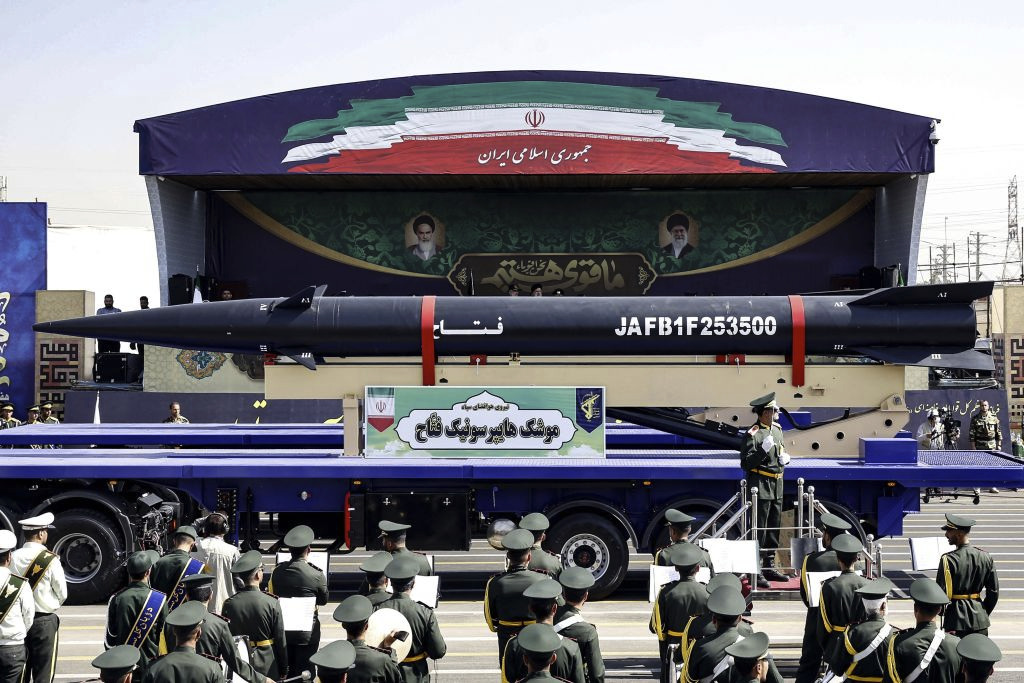
march toward nuclear bombs. Pictured: A Fattah ballistic missile is
displayed during the annual military parade in Tehran, on September 22,
2023. (Photo by AFP via Getty Images)
The Islamic Republic of Iran has long mastered the art of deception, particularly when it comes to its nuclear program. Many times, it has been caught
advancing its nuclear ambitions behind closed doors -- from covert
enrichment facilities to undeclared sites -- only, when exposed, to
delay, deflect and deny.
Now, the regime is not even hiding it.
Iran, like the rest of us, saw President Donald Trump foolishly
change his mind from prohibiting Iran's regime from having ballistic
missiles to permitting them -- supposedly to defend themselves in a
neighborhood that has been relatively peaceful except for them. The Times of Israel reported Trump's decision:
"If other countries have them, it's a little bit unfair for them not
to have some," Trump said. "If Saudi Arabia and Qatar, and they all have
some, I would say that in relative proportion, I think it's okay" for
Iran to have ballistic missiles as well.
"Missiles aren't the problem... They hurt a little location, but they
don't blow up the planet [like nuclear weapons do]," Trump said.
Ballistic missiles may not be able to "blow up the planet," but they
do seem to have been the reason Trump declared a fatal premature
ceasefire on April 8. Saudi Arabia and presumably other Arab Gulf States
let it be known that they were not happy about being victims of them.
Iran's missiles can now reach Europe. Soon they will undoubtedly have
even longer ranges, to target America's east coast cities, and be even
more precise. Just wait until they are tipped with nuclear warheads.
Iran saw Trump's turn-around on permission to have ballistic missiles
and – largely using Trump's own logic, implied deterrence – must have
thought, "Why not nuclear weapons too?"
After the recent Islamabad Memorandum of Understanding with the
United States that followed devastating blows from Israeli and US
strikes, Iran's state media outlet Fars News published
a striking commentary, titled along the lines of "No Choice but to
Build the Nuclear Bomb." Such a statement does not appear in such an
outlet without high-level approval. This marks a shift; the regime is
openly declaring its intentions.
Fars argued that Iran must achieve "nuclear deterrence" to negotiate from strength. It framed
this as essential amid a changing world order. This is not rogue
commentary. Fars reflects hardline thinking from the Islamic
Revolutionary Guard Corps (IRGC). Its publication underscores that the
regime feels emboldened enough to voice what it has long pursued in the
shadows.
The goal seems to be to outlast the current US administration and then openly march toward nuclear bombs.
This is an ideological, fundamentalist regime founded on exporting
revolution. The Islamic Republic's founding "Supreme Leader," Ayatollah
Ruhollah Khomeini, declared:
"We shall export our revolution to the whole world. Until
the cry 'There is no god but Allah' resounds over the whole world,
there will be struggle."
Iran's constitution enshrines
the duty to spread this theocratic ideology. The regime views itself as
a vanguard against perceived enemies, with ambitions that transcend
borders invented by infidels. One look at Libya and Ukraine, which gave
up their nuclear weapons with catastrophic results, and then at North
Korea, which did not, tells the regime everything it needs to know. A
nuclear deterrent is the ultimate insurance for survival -- and
expansion.
The International Atomic Energy Agency, repeatedly struggling
with Iran's restrictions on monitoring and inspection of nuclear sites,
missed presumably most clandestine advances. Even after the strikes,
and pledges in recent understandings to allow
inspectors back, the regime has an ostentatious track record of using
diplomacy as a cover to advance its nuclear weapons programs in secret
while talking peace. Post-Trump, or after any perceived lapse in
resolve, the path to weaponization will rapidly accelerate.
This critical moment is not helped by wishful thinking. Flawed
agreements, or even ones that look firm, will simply wait until the US
has turned its attention somewhere else.
So long as Iran's ruthless IRGC military regime is in place, there will not be real compliance or real peace.
First, the current regime needs to be weakened even further. The US
and Israel may have levelled several of the "top layers" but there are
apparently many more to go.
The regime cannot sustain indefinite pressure on multiple fronts —
economic collapse, internal unrest, and external isolation — while
pursuing grand ideological goals. Before a US administration that was
resolute, the Iranian regime's days could be numbered. Giving it oxygen
now risks a nuclear-armed Iran emboldened to pursue domination, and
threatening Israel, Gulf states and the United States. Targeted military
responses against renewed ballistic missile, nuclear, and proxy
activities -- or members of the regime who are not helpful -- remain on
the table. There are no shortcuts.
For the sake of the Iranian people and international stability, the
focus must be on finishing the job: unrelenting pressure and denying the
regime any tools that might threaten the world. Anything less
perpetuates an Iran openly bent on destruction.
Dr. Majid Rafizadeh is a political scientist, Harvard-educated analyst, and board member of Harvard International Review. He has authored several books on the US foreign policy. He can be reached at dr.rafizadeh@post.harvard.edu
NATO nations face three major problems, none of which is on the agenda in Ankara.
If fully backed by NATO, Ukraine could win.
Taking into account the devastation [the Middle East] war has
caused, not only in Iran but also in Israel and the GCC countries, not
to mention its global impact, talk of devising a new plan to bring peace
and stability to the region sounds like adding insult to injury. Great
powers have been talking of a plan for the Middle East since 1919.
NATO nations face three major problems, none of which is on the agenda in Ankara.
The first is that most members are experiencing what amounts to a
cultural civil war accompanied with a general de-sacralization of
political authority.
The second problem is that NATO's war machine, including all
those giant aircraft carriers and heavy bombers, was meant for classical
wars that may have become part of history.
The third problem is that the new form of war favors inexpensive
materiel, such as drones, theater missiles and rockets, while the
military industry in NATO nations is geared to producing costly
warplanes, cruise missiles and, of course, aircraft carriers and their
equally costly bridesmaids.
In Ankara, the key word will be "cheese" as TV cameras record yet another photo-op.
NATO nations face three major problems, none of which is on
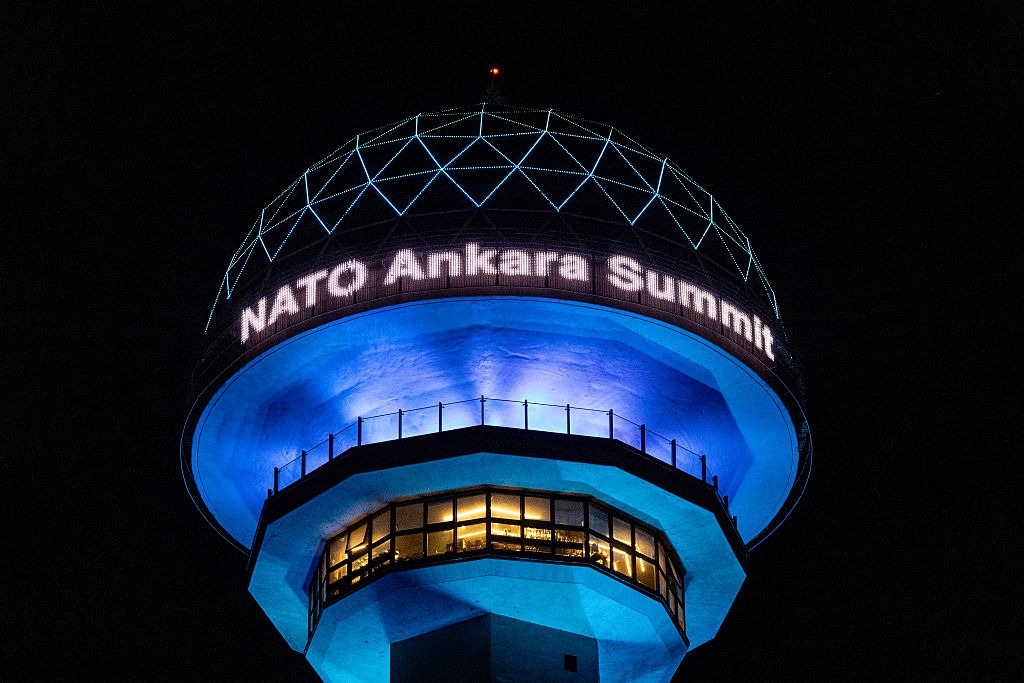
the agenda at this year's summit in Ankara. Pictured: The Atakule tower
in Ankara, on July 5, 2026. (Photo by Serdar Ozsoy/Getty Images)
Having led ceremonies marking the 250th anniversary of the United
States' independence on July 4, President Donald Trump will be heading
to Ankara, Turkey, for the 36th summit of the North Atlantic Treaty
Organization (NATO), which some fear could be the stormiest the
75-year-old beast has seen.
Signs are that Trump is still unhappy with the alliance, which he
thinks has been ripping the US off for decades. Nevertheless,
Secretary-General Mark Rutte is making the rounds in TV studios,
assuring everyone that the US president will come to Ankara in a calmer
mood.
"This summit will be about delivering on promises made," Rutte says.
By this he means promises by almost all members to increase defense
spending to between 4 and 5 percent of their GDP, something that Trump
demanded as soon as he entered the White House.
But what does delivering à la Rutte mean? In fact, it means fixing a
putative date for reaching the desired percentage. In the case of
Germany, NATO's richest European member, it will be 2029, while Canada
is looking even further down the line. As far as France is concerned, a
question hangs over the promise if only because no one knows who will be
in the Elysée Palace next year while at least one main contender, the
hard-left leader Jean-Luc Mélenchon, talks of leaving the alliance and
discarding France's nuclear deterrence. Another leading contender, the
hard-right National Rally leader Marine Le Pen, has always maintained
some ambiguity on the subject by quoting Charles De Gaulle about an
independent defense policy.
It seems that only Poland and Italy remain fully committed to
promises made, while political turmoil puts a question mark in front of
Great Britain's promises.
Even then, NATO's problems are not caused by a shortage of money. The
alliance's military expenditure is still higher than the international
average.
And as far as one can work out, no case has been made to show that
larger expenditure alone will save this old and tired relic of the Cold
War.
By any measure, Rutte is the best secretary-general NATO could have
at this juncture. He has been crafty enough to develop what diplomats
call the "Rutte method" in handling Trump. Short of hanging a Trump logo
over NATO's headquarters in Brussels, he has done everything to
persuade the MAGA leader to moderate his tongue-lashing of NATO allies,
travel to Turkey, and remain in the game for two days.
Thus, the Ankara summit is likely to be a success, as was the G7 in
Evian, France, where Trump stayed and listened, albeit with thinly
disguised boredom, for two days. But when we say success, we mean
success as a series of photo-ops; the G7 produced nothing to cheer about
because it wasn't designed to do so.
The same may happen in Ankara.
Three items top the agenda in Ankara: Ukraine, military production and the Middle East.
On Ukraine, the alliance is unlikely, because unwilling, to do more
than it is doing now. This is a war that could continue for another
decade or at least until the end of Vladimir Putin's career. Russia
cannot win because it lacks the economic, demographic and political
wherewithal. Putin's claim that he is fighting "Nazis" doesn't make him a
Stalin. Nor does that make his oligarchic federation a new version of
the USSR ready to sacrifice 20 million men.
If fully backed by NATO, Ukraine could win. But what would that win
mean? A shattered country would regain control of some more scorched
earth.
On military production, NATO members are already divided, with
Germany, France, Britain, Italy and Canada trying to get the lion's
share for their own industries. Even Poland, the Baltic republics,
Sweden and Finland are seeking their separate niches if and when there
is a golden shower.
Including the Middle East on the agenda may be nothing more than an
attempt to paste over the cracks caused by the current war against Iran
when the US failed to secure even moral support from its NATO allies.
Taking into account the devastation this war has caused, not only in
Iran but also in Israel and the GCC countries, not to mention its global
impact, talk of devising a new plan to bring peace and stability to the
region sounds like adding insult to injury. Great powers have been
talking of a plan for the Middle East since 1919.
Right now, Turkey, the host of the summit, is musing about the end of
the post-World War I treaties of Lausanne and Montreux to regain at
least a droit-de-regard in parts of Iraq, Syria and what was once Palestine.
NATO nations face three major problems, none of which is on the agenda in Ankara.
The first is that most members are experiencing what amounts to a
cultural civil war accompanied with a general de-sacralization of
political authority.
Bipartisanship on defense and foreign policies has broken down, as
most governments don't even talk with their opposition. In Turkey, the
government is even trying to appoint the leader of the main opposition
party. In Britain, Nigel Farage, leader of the ultra-right party,
regards the current Labour government as a passing nightmare.
A divided society cannot win a war even when it enjoys overwhelming
superiority in terms of men and materiel. The current war against Iran
is just one example of how the absence of national unity in the US, not
to mention disunity in NATO, forced Trump to scale back his early
ambitions.
The second problem is that NATO's war machine, including all those
giant aircraft carriers and heavy bombers, was meant for classical wars
that may have become part of history.
Asymmetric war allows a much weaker adversary with a cottage-industry
version of hardware to hang on as long as possible and raise the cost
for the stronger side.
In the current conflict with Iran, the US deployed a third of its
aircraft carrier fleet, but to avoid a "big disaster" caused by mosquito
speedboats, seldom used them.
The third problem is that the new form of war favors inexpensive
materiel, such as drones, theater missiles and rockets, while the
military industry in NATO nations is geared to producing costly
warplanes, cruise missiles and, of course, aircraft carriers and their
equally costly bridesmaids.
In Ankara, the key word will be "cheese" as TV cameras record yet another photo-op.
Gatestone Institute would like to thank the author for his kind
permission to reprint this article in slightly different form from Asharq Al-Awsat.
Amir Taheri was the executive editor-in-chief of the daily Kayhan
in Iran from 1972 to 1979. He has worked at or written for innumerable
publications, published eleven books, and has been a columnist for Asharq Al-Awsat since 1987. He graciously serves as Chairman of Gatestone Europe.
Supreme Leader Mojtaba Khamenei a no-show as of Sunday morning.
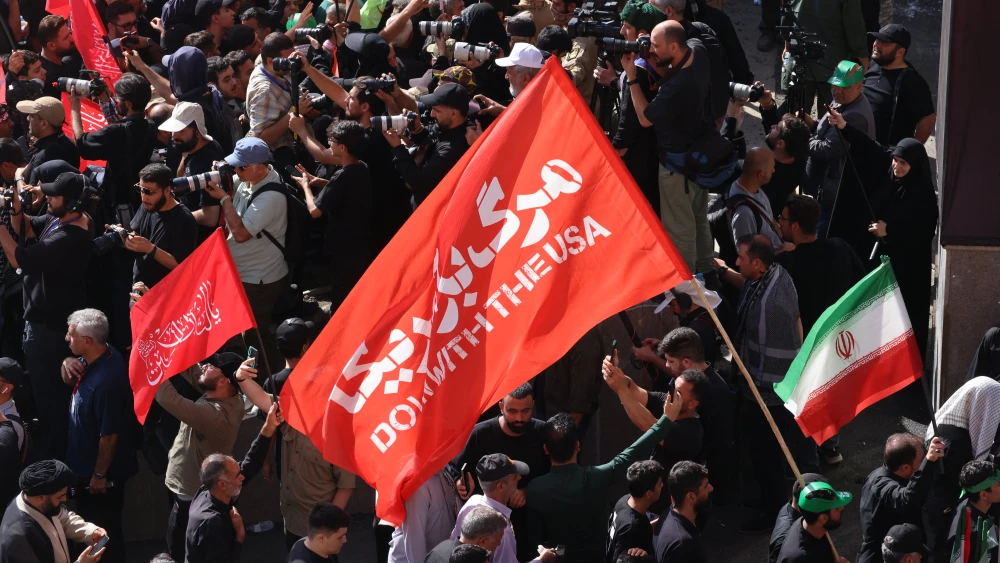
Iranian mourners carry a flag reading “Down with the USA” as they gather
for prayers over the body of slain Supreme Leader Ayatollah Ali
Khamenei during the second day of funeral ceremonies in Tehran, July 5,
2026. Photo by Atta Kenare/AFP via Getty Images.
Iranian Foreign Minister Abbas Araghchi met on Saturday with
representatives of Tehran’s regional terrorist allies on the sidelines
of the funeral of slain Supreme Leader Ali Khamenei.
Araghchi held
separate meetings with representatives of Hezbollah, Hamas, the Popular
Front for the Liberation of Palestine and the Houthis, Iran’s Press TV outlet reported.
“The
Zionist enemy and the criminal U.S. imagine that they can destroy the
resistance by physically assassinating its leaders,” Araghchi said in
remarks published by the state-run outlet. “Yet in reality, the pure
blood of the resistance martyrs has led to the disgrace and defeat of
the American criminals and the Zionist regime.”
In a meeting with
Mohammad Fneish, a Shi’a Lebanese politician and representative of
Hezbollah, Araghchi reiterated that Tehran was seeking to end the war in
Lebanon in ongoing talks with the United States.
Meanwhile, the
Islamic Republic’s top diplomat told Hamas’s Muhammad Ismail Darwish,
who heads the terrorist group’s leadership council, that Tehran would
continue to support the Palestinian cause until the establishment of an
independent state with Jerusalem as its capital.
Khamenei’s
funeral got underway in Tehran on Friday, more than four months after he
was targeted and killed in the opening Israeli Air Force strikes of
“Operation Roaring Lion/Epic Fury.”
The multi-day ceremonies are
scheduled to run through Thursday, when Khamenei is to be buried at the
Imam Reza shrine in Mashhad.
Mojtaba Khamenei, who was appointed
as the Islamic Republic’s third supreme leader following his father’s
death, had not been seen at the ceremonies as of Sunday morning.
Three
of Ali Khamenei’s other sons—Mostafa, Masoud and Meysam Hosseini
Khamenei—appeared in public on Sunday for the first time since the war
began on Feb. 28, offering prayers over their father’s remains at the
Imam Khomeini Mosalla of Tehran mosque, Iran International reported.
Thousands
of mourners gathered in the mosque’s courtyard on Sunday, with some
carrying red banners symbolizing revenge and chanting slogans calling
for the deaths of U.S. President Donald Trump and Israeli Prime Minister
Benjamin Netanyahu.
The New York Times, citing two members
of Iran’s Islamic Revolutionary Guard Corps and a source involved in
planning the funeral, reported that Mojtaba Khamenei told officials he
wants to attend the burial ceremony in Mashhad and lead the traditional
prayer for the dead.
The newspaper cited the sources, who spoke on
condition of anonymity because they were not authorized to discuss the
funeral preparations, as saying security officials had rejected the
proposal over concerns Israel could attempt to assassinate the supreme
leader at the ceremony or use it to track his whereabouts.
The
younger Khamenei was injured in the airstrike that killed his father.
While it is generally believed that Mojtaba is still alive, he has not
appeared in public since the start of the war, and no images or audio
recordings of him have been released.
The government approved a NIS 60 million plan to expand rehabilitation, mental health, employment and family support for festival survivors.
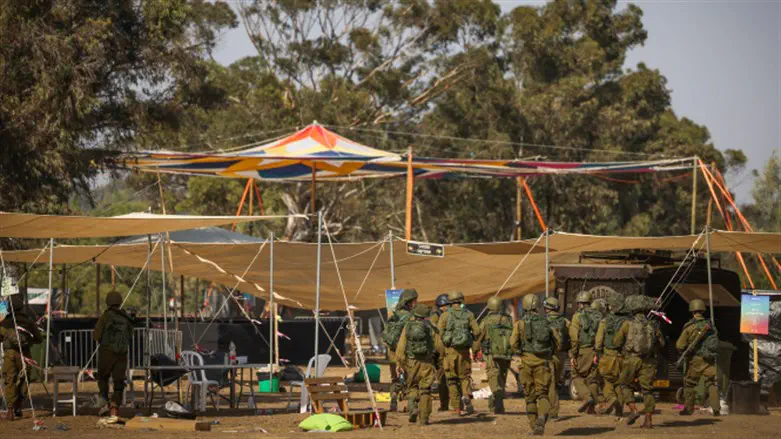
The scene of the massacre at the Nova Festival Chaim Goldberg/Flash90
The Government on Sunday
approved the proposal by Prime Minister Benjamin Netanyahu, which
implements the state’s commitment to continue standing alongside the
survivors of the southern festivals in the long-term rehabilitation
phase. As part of the decision, a plan was approved to continue and
strengthen the framework of responses for the survivors of the 7 October
2023 southern festivals, aiming to ensure long-term continuity of care,
rehabilitation, and employment for thousands of survivors and their
families.
The new plan,
totaling approximately NIS 60 million for the years 2026-2028, was
formulated under the leadership of the Prime Minister's Office following
comprehensive inter-ministerial staff work, data analysis, public
participation, and dialogue with survivors, their families, and
professionals.
The
decision seeks to adapt the government response to the current stage of
rehabilitation and recovery, after the initial responses provided
following the October 7 terrorist attack helped establish a primary
support framework for the survivors.
According
to data, approximately 3,600 festival survivors have been recognized as
victims of hostile acts. The rates of injury and disability among this
population indicate long-term consequences that necessitate ongoing
tailored support, treatment, and rehabilitation.
Key Elements of the Decision:
*
Establishment of a personal support system for survivors through a
‘single government address’ that will assist in exercising rights,
coordinating between elements providing therapeutic care and ensuring
continuity of rehabilitation through the Ministry of Welfare and Social
Affairs.
* Expansion of
responses and support for the families of survivors, recognizing their
central role in the recovery and rehabilitation process.
*
Development of dedicated programs for prevention, intervention, and
treatment regarding substance abuse among festival survivors.
* Expansion of medical and mental health responses.
* Improvement of accessibility to mental health emergency responses for survivors and their families.
* Strengthening continuity of care by adapting physical and mental health services and managing coordinated treatment.
*
Formulation of tailored rehabilitation and employment integration
pathways through the Ministry of Labor, the Employment Service, and the
National Insurance Institute.
*
Continued development of a government digital system to enable
coordination among all entities, exercise of rights, data management,
and an up-to-date assessment of the situation for decision-making.
Additionally,
the Directors-General committee oversight will continue its operations,
and a dedicated official has been appointed within the Prime Minister's
Office to coordinate the government's work, monitor the implementation
of the decision, and ensure the ongoing adaptation of responses to the
needs of the survivors and their families.
The
plan is designed to ensure that in the coming years after the disaster,
survivors of the southern festivals will continue to receive a
coordinated, accessible, and tailored government response, as part of
the State of Israel's ongoing commitment to accompany them through the
process of rehabilitation and returning to normal life.
UN Watch urged Antonio Guterres to waive Philippe Lazzarini's immunity so national authorities can investigate allegations of complicity in terrorism.
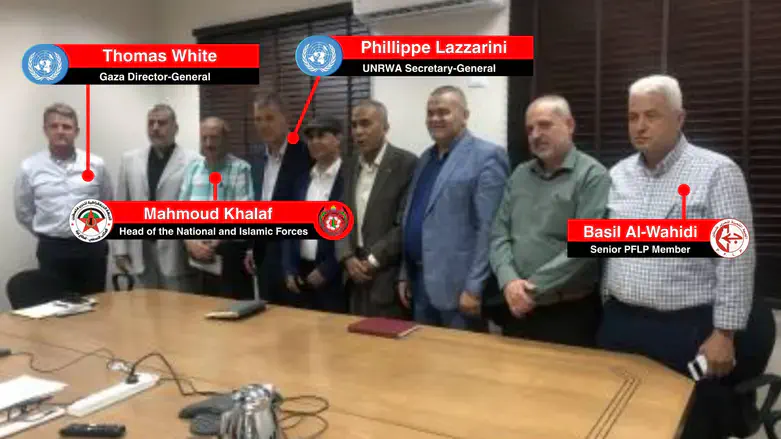
Philippe Lazzarini with terrorists Social Media
As Philippe Lazzarini’s term
as Commissioner-General of UNRWA ended last week, UN Watch called on UN
Secretary-General António Guterres to immediately waive any immunity
enjoyed by the outgoing UN official so that competent national
authorities may investigate and prosecute him for alleged complicity in
terrorism, war crimes, and crimes against humanity. The request was made
in a formal legal letter invoking Section 20 of the Convention on the
Privileges and Immunities of the United Nations.
The
letter argues that immunity exists solely to protect the interests of
the United Nations, not individual officials, and must be waived where
it would impede the course of justice without prejudicing the
Organization’s interests.
“For
years, we repeatedly warned Mr. Lazzarini that Hamas had deeply
infiltrated UNRWA," said Hillel Neuer, Executive Director of UN Watch.
“We provided detailed evidence identifying Hamas-affiliated teachers,
school principals, union leaders, and other employees. We documented
repeated meetings between senior UNRWA officials, including Mr.
Lazzarini himself, and leaders of Hamas and other terrorist
organizations. Yet he continued to assure governments that UNRWA’s
neutrality mechanisms were effective while overseeing an agency whose
personnel, facilities, and resources were being exploited by terrorist
groups."
UN Watch contends
that despite repeated warnings, Lazzarini continued to oversee the
payment of salaries to thousands of UNRWA employees in Gaza, many of
whom have since been shown to have deep ties to Hamas and other
terrorist organizations, while continuing to administer facilities that
provided terrorist groups with access to students, infrastructure, and
institutional legitimacy. The letter states that these facts establish
reasonable grounds to investigate whether Lazzarini knowingly
facilitated or provided material support and assistance to individuals
and entities involved in terrorism, war crimes, and crimes against
humanity.
UN Watch called
on Secretary-General Guterres to publicly waive any applicable immunity
without delay and to ensure the full cooperation of the United Nations
with any resulting criminal investigation.
“The credibility of the United Nations depends on demonstrating that immunity is not a shield for impunity," Neuer said.
Last
week, UNRWA held a pledging conference at the United Nations in New
York, with several countries announcing voluntary contributions for the
Agency’s 2026 operations amid ongoing concerns over its management and
neutrality. UN Watch warns that without accountability for past
leadership failures, further funding risks perpetuating the very
problems that have undermined UNRWA’s credibility.
President Carter gave his thermostat speech in 1977 while wearing a sweater and sitting by the White House Library fireplace.
New York democratic-socialist Mayor Zohran Mamdi's suggestion that
city residents turn up their thermostats to 78 degrees during the
heatwave this July 4 holiday weekend to help conserve energy has drawn
sharp criticism from essentially every corner of the conservative
movement – with some members even going so far as to compare the mayor's
comment to Democrat President Jimmy Carter's 1977 "sweater speech."
“New York: it’s hot out there, and the power grid is working overtime to keep us cool," Mamdani wrote Wednesday on the social platform X. "Set your AC to 78 degrees, turn off lights/electronics you’re not using, and unplug what you can.”
He also wrote: "A stable grid means the AC stays on, and lives are
saved. Let’s ease demand – and get through the heat – together."
The backlash was quick and came from everybody from former GOP House
Speaker Newt Gingrich, to at least six former (and perhaps future)
Republican presidential candidates, to GOP Reps. Nancy Mace and Marjorie
Taylor Greene, who are, respectively, either leaving Congress in the
next several months or left in the past several months.
Gingrich, a Georgia Republican, suggested Thursday on X that Mamdani's idea reflects “the reality of big government socialism’s inability to solve problems.”
He also wrote: “Telling New Yorkers to set their air conditioning at
78 degrees is an open admission of the failure of the left to provide
enough inexpensive electricity that people can be comfortable even in
hot weather."
Kentucky GOP Sen. Rand Paul, a 2016 Republican presidential
candidate, said Mamdani's request is "proof that communism is
(unfortunately) alive and well.”
Said Greene:
“This is the worst campaign ad for the Democrats. Set your air to 78
degrees? Bless your hearts New York City!! American energy should be so
strong and plentiful that you never have to set it above 70 if you don’t
feel like it."
Even Dave Portney, a media personality who founded Barstool Sports in
2003 and endorsed GOP presidential nominee Donald Trump in 2024, got
into the act, posting on social media, "78 degrees??? Welcome to communism people! Hope you enjoy."
While they focused on attacking Mamdani, Josh Holmes, chief of staff
for Kentucky Sen. Mitch McConnell when he was Senate Republican leader,
and others recalled the Carter speech, which the president delivered
while wearing a sweater and sitting by the White House Library
fireplace.
Carter, a Democrat, asked Americans in the televised speech to
conserve energy by lowering their thermostats to 65°F during the day and
55°F at night in winter. Later that summer, he urged them to set their
cooling systems to 78°F.
A couple of years ago, The Washington Post recalled the moment with a story headlined: "Jimmy Carter wore a sweater – and ignited years of Republican backlash."
The conservative- and libertarian-minded Bill of Rights Institute
once called Carter's decision, about two weeks into his presidency, to
first tackle energy, as part of a large attempt to fix an overall
struggling U.S. economy, a "costly mistake."
In 1980, then-Republican presidential nominee Ronald Reagan
decisively defeated Carter, holding him to one term, in large part over
Carter's economic policies, asking voters, "Are you better off than you
were four years ago?"