▼

Sunday, October 25, 2026

Leftist violence explodes across Europe, with more than 1,000 arrested in France - Nicholas Ballasy


by Nicholas Ballasy

Previous protests turned violent in major cities like Paris


Violence erupted across Europe on Saturday as leftist demonstrators smashed windows, set fires and confronted a massive police force that deployed water cannons but could not slow down the discontent across a continent that has drifted leftward in recent years.

French Interior Minister Laurent Nuñez announced more than 1,000 rioters had been arrested as Paris became the epicenter of the unrest and transformed one of Europe's most iconic capitals into an armed fortress.

"Violent individuals have no place in the marches," the Paris Police Department said in a social media post. "The objective is clear: to prevent troublemakers from joining the procession, and to ensure the safety of the demonstrators."

Nunez said security forces faced an “extremely high level of violence ... with projectiles constantly being thrown and mortar fireworks fired.”

The unrest spread elsewhere as violent clashes broke out in Rome and Albania's capital of Tiranë, where government buildings were set ablaze.

More than 70,000 police were deployed in France as cities prepare for a weekend of more protesting and marches. About 110,000 demonstrators marched in Paris.

More than 500,000 protested in the streets last weekend, the Associated Press reported. 


Nicholas Ballasy

Source: https://justthenews.com/world/more-70000-police-deployed-france-cities-prepare-more-riots

Follow Middle East and Terrorism on Twitter

Alarming fraud trend puts small-town mosque with industry and foreign govt ties in focus: ‘Our motherland now’ - Andrew Mark Miller


by Andrew Mark Miller

Uzbek trucking companies repeatedly cited for unsafe driving and invalid CDLs gave hundreds of thousands in gifts


This article is Part 2 of a Fox News Digital exclusive series investigating trucking fraud, public safety, and assimilation concerns in southwest Ohio. You can read Part 1 here.

MAINEVILLE, OHIO — A mosque rising amid rural homes and farmland in southwest Ohio has become a focal point in the community’s growing concerns over an influx of foreign-owned trucking companies and trucking fraud, with a Fox News Digital review revealing significant financial ties between the mosque, trucking companies and the government of Uzbekistan.

Roughly one mile north of the main intersection in Maineville, a small Warren County village with about 1,400 residents, sits the Islamic Center of Maineville, which has been under construction for the past four years following its approval by Hamilton Township in April 2022.

Fox News Digital found that the mosque received substantial donations from trucking companies that government records show were cited for serious safety and compliance violations, while the mosque’s own Telegram channel displayed associations with people identified as current or former Uzbek officials.

For years, the Islamic Center of Maineville has posted on Telegram to its 3,600 members, courting donations, acknowledging partnerships with trucking companies, and even sharing screenshots of donations from local trucking companies, owned by Uzbeks, totaling hundreds of thousands of dollars.

HOW AN UZBEK TRUCK DRIVER’S FATAL CRASH EXPOSED TROUBLING FRAUD TREND IN MIDDLE AMERICA: ‘CHAMELEON CARRIERS’

Mosque and Trucks

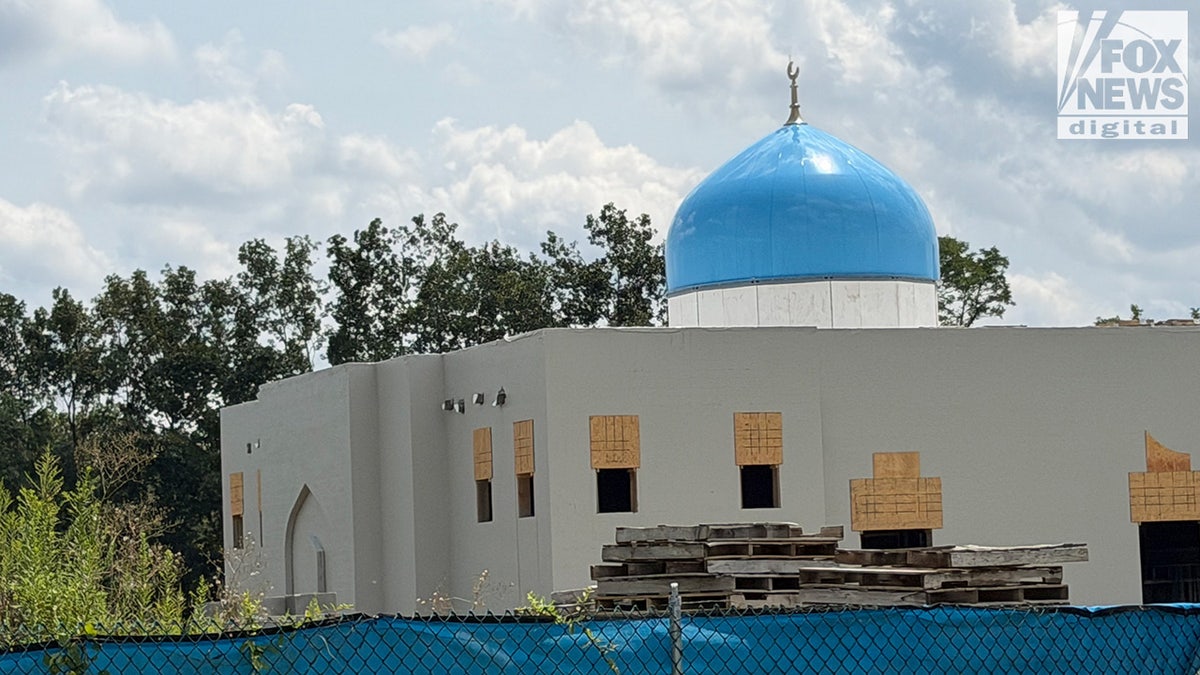
A mosque rising amid rural homes and farmland in southwest Ohio has become a focal point of community concerns over an influx of foreign-owned trucking companies after a Fox News Digital review found significant financial ties to the industry and the government of Uzbekistan. (Fox News Digital)

Buraq Limited, a Springboro trucking company associated with Rukhshona Sultonova, donated at least $28,000 to the Islamic Center across 28 gifts, according to Telegram screenshots reviewed by Fox News Digital.

A review of the company’s records found dozens of reported violations, including multiple English-proficiency violations, four ELD (electronic logging device) violations, three invalid-CDL violations, four expired medical cards and four hours-of-service violations. 

Premier Trucking Group Inc., owned by Sam Avazov, has received over 100 total violations, including for unsafe driving and invalid CDLs. In September, the Islamic Center posted a screenshot of a $1,000 donation from Premier Trucking Group, which has donated at least $25,000 to the mosque.

OUT OF CONTROL, UNQUALIFIED ILLEGAL ALIEN TRUCKERS ENDANGERING KIDS ON US ROADS, INSIDER WARNS: ‘JUST MADNESS’

photo of mosque construction site

The Islamic Center of Maineville currently being constructed in southwest Ohio. (Fox News Digital)

Foko Logistics LLC, owned by Abubakr Olimov and based in Hilliard, donated $20,000 in a single gift to the mosque, and had 52 violations across 37 inspections in FMCSA’s current 24-month record. The company had vehicle-maintenance violations involving damaged brake hoses, an inoperable tractor-protection valve and severely underinflated tires. Ten of its 24 vehicle inspections resulted in an out-of-service designation, a rate of 41.7%.

Maca Transportation and Services LLC, based in Dayton and owned by Muminkhuja Kholkhujaev, donated at least $7,000 across eight gifts. FMCSA’s records show 120 violations across 72 inspections, including an English-proficiency failure and multiple false or incomplete hours-of-service records. The company also had serious brake, tire, and other vehicle-maintenance violations, with 14 of 36 vehicle inspections resulting in an out-of-service designation, or 38.9%.

One trucking company that gave $150,000 to the mosque and helped organize the overall fundraising effort , Phoenix Cargo, told Fox News Digital the mosque approached the company multiple times asking for donations but said the $150,000 figure the company ultimately donated "represents only a fraction of the mosque's total construction budget" and that "Phoenix Cargo is not even among the project's top 100 donors."

Phoenix Cargo has been cited hundreds of times for safety violations, including English proficiency, ELD tampering, and unsafe driving violations.

Fox News Digital reached out to the mosque for comment but did not receive a response. Earlier this month, the Islamic Center said it is "committed to operating responsibly and in accordance with applicable law."

"The fundraising for the Islamic Center concerns me because a large percentage of the Uzbek truck companies that donate have been repeatedly cited for the same kinds of serious inspection violations," Nodawolf, an online researcher who lives in the area and has been documenting alleged trucking fraud in southwest Ohio for months and was granted anonymity due to death threats he's received, said. "Those violations suggest a pattern of non-compliance with our laws and regulations among the donors, which is troubling given the community’s concentration in the freight industry in Maineville."

Fox News Digital also asked the mosque if an administrator for their Telegram channel with the name "Bek A" is Bekhzod Asrarov, an Uzbek truck driver living in Maineville who authorities say struck and killed 21-year-old Ohio soccer player Tobias "Toby" Forsythe earlier this year. Asrarov was unable to communicate effectively in English at the scene, according to authorities, and has been accused of removing and concealing his dashcam after the crash.

ICE LAUNCHES CDL FRAUD TIPLINE AS DHS HIGHLIGHTS DEADLY CRASHES INVOLVING ILLEGAL IMMIGRANTS

Bekhzod Asrarov and Traffic

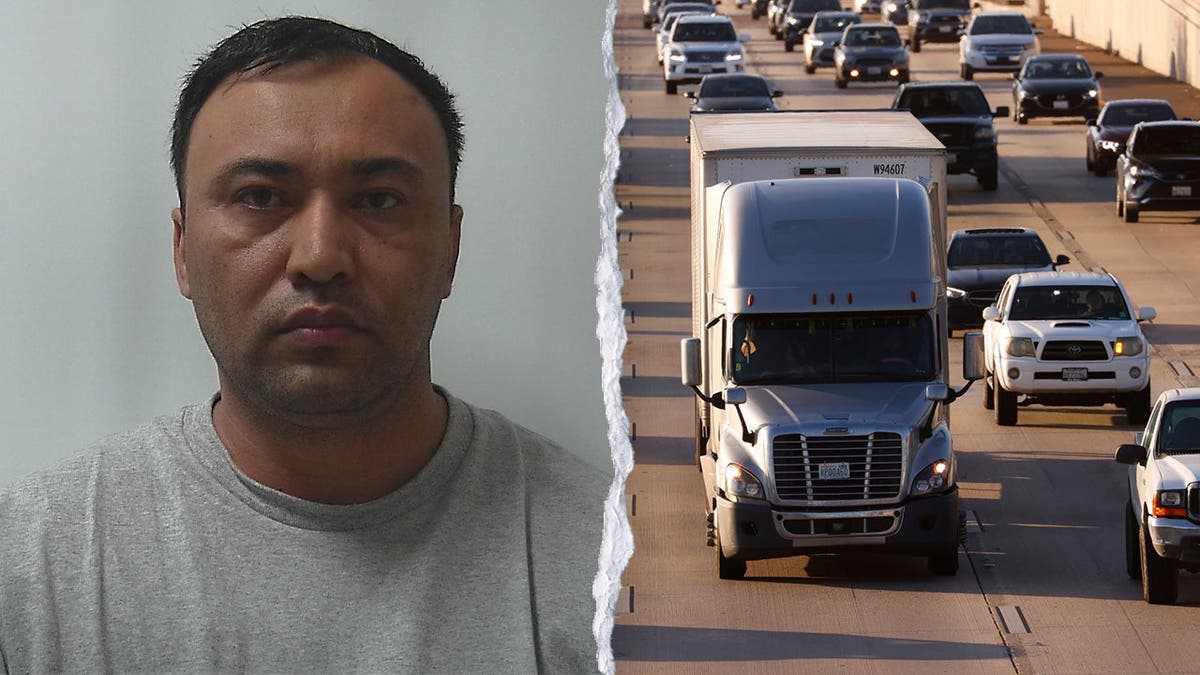
The death of college soccer player Tobias "Toby" Forsythe, who was allegedly struck and killed by truck driver Bekhzod Asrarov (pictured) in Ohio, has fueled debate over commercial trucking safety. (Madison County Sheriff's Office ; Kevin Carter/Getty Images)

The mosque did not provide a response.

The Islamic Center’s website says it does "not solicit donations from any foreign government, organization, association, partnership or individual or any agent thereof" and that "any such attempt" should be reported to the mosque immediately. However, the organization's Telegram account suggests close ties with the government of Uzbekistan, specifically when it comes to trucking companies.

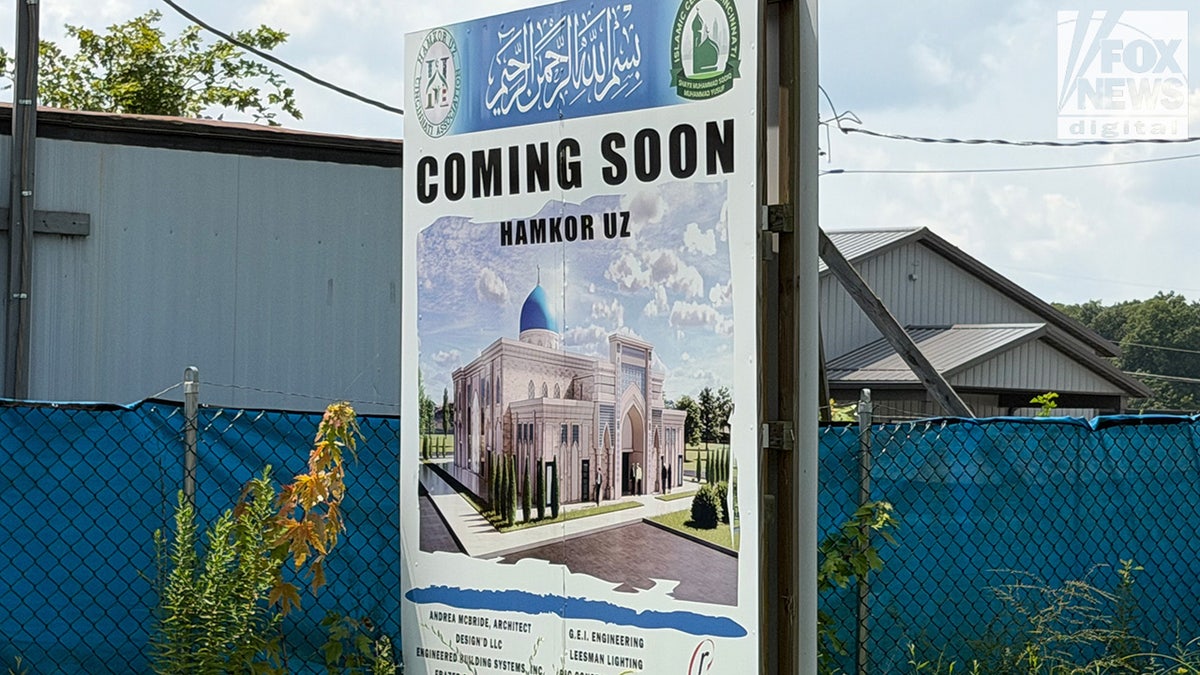
Hamkor Uz Cincinnati Association is a nonprofit organization established in 2020 to unite Uzbeks in the Cincinnati area and support community projects, including the construction of religious and cultural centers. Hamilton Township records identify Hamkor as the owner of the roughly 6.7-acre property where the Islamic Center of Maineville is being built.

Telegram screenshots reviewed by Fox News Digital show the organization’s ties to former Uzbek government officials. One image shows the Mason office of Erkinbay Abdulla, with an accompanying message describing him as a former Uzbek official who "creates the trucking companies."

Another screenshot contains a community statement attributed to Sukhrob Norbekov, whom an accompanying message identifies as another former Uzbek official who represents the mosque. The material places officials linked to Uzbekistan alongside an organization involved in the mosque project and individuals involved in creating local trucking companies.

Current Uzbek officials also appear to be involved with the mosque and local trucking industry via the central Asian nation’s Ministry of Digital Technologies, according to photos posted on the mosque’s Telegram.

The screenshots show a list of a six-member Uzbek delegation that traveled to the United States in April 2025, including Ambassador Furqat Sidiqov, regional government officials, and three officials from the Ministry of Digital Technologies. Separate posts invite entrepreneurs and truck-company managers to an April 19 IT conference hosted by Hamkor Uz Cincinnati at a banquet hall in Loveland, Ohio.

TRUMP ADMIN INVESTIGATING 75 TRUCK DRIVER SCHOOLS FOR FRAUD, HELPING NON-CITIZENS GET LICENSES

Sign outside mosque

A sign outside the Islamic Center of Maineville which is currently being constructed. (Fox News Digital)

Additionally, a review of the Hamkor Uz Telegram channel, with current and former Uzbek government officials as administrators, showed advertisements for local trucking companies, removable truck signs, English courses for truck driving school, and legal counseling. Other posts include the owner of the mosque providing guidance on how to understand "Shariah compliant banking" and a post on "speaking English with the police" and how to "learn on the road."

Nodawolf said the ties to the government of Uzbekistan are troubling to him "because these Uzbek trucking companies appear to be tightly organized, with patterns that look almost like a shared blueprint."

"Given the documented safety and compliance problems in many of these companies, it’s reasonable to ask whether gaps in U.S. regulations are being systematically exploited," he added.

Several locals who spoke to Fox News Digital said they have expressed their concerns about the rise in Uzbek trucking companies and potential safety gaps that could come along with it to their elected officials but have largely been ignored.

"They're scared, I think they recognize that they could be called names, they can recognize they could be called out for, you know, like, Islamophobic or racist or things, but it's not that at all," a resident from nearby Middletown, Ohio, which has also experienced an influx of foreign-owned trucking companies, who posts information about trucking companies online under the name GHOSTOPSUZ, told Fox News Digital.

One lawmaker who has taken action against trucking fraud is Ohio Republican state Rep. Michelle Teska, who represents most of Warren County, including Maineville, and has introduced legislation to strengthen commercial-driver licensing requirements, including a measure requiring driver examinations to be administered in English, which she told Fox News Digital addresses the "low-hanging fruit of the problem."

"I did some research and basically found out that you can get your driver's license and your CDL license in the state of Ohio and you can have that test in 10 different languages," Teska said. "So that, to me, common sense says that's insanity."

Teska says she has seen the problem "firsthand" while driving around her district, calling it "rampant."

"This past weekend, I was at an event in Warren County and I was at an event that is right across the street from the BMV and I was just kind of observing a gentleman pulling in a semi truck cab into the parking lot on a Saturday at the BMV taking up four spaces, clearly had no idea how to drive the truck," Teska explained. "So I walked over to the BMV and spoke to this person and kind of confronted him and said, hey, do you speak English? He replied, no, I don't speak English. Asked him where he was from. He was from Uzbekistan. So it was crazy because I was watching it all take place live."

Authorities in Warren County have been ramping up their presence in the trucking industry and on the roads in recent weeks, including a crackdown over the last week.

"The Hamilton Township Police Department actively monitors traffic safety concerns within our jurisdiction and works with our public safety partners to address violations and unsafe driving behaviors when identified," a spokesperson for Hamilton Township said. "In fact, our officers recently participated in a targeted traffic enforcement initiative focused on commercial motor vehicles, working alongside partner agencies to identify safety violations and improve roadway safety. We will continue to enforce applicable laws and take appropriate action when circumstances warrant."

Warren County Prosecutor David Fornshell stressed there is nothing inherently wrong with mosque fundraising and he has not received any information that any laws have been broken. He told Fox News Digital, however, that clearly "there’s something going on" within the Uzbek community in southwest Ohio that "warrants at least awareness on the part of law enforcement."

"It's disproportionate to what we see with any other immigrant community," Fornshell said.

Since 2021, Fornshell said the area has seen an "influx of cases involving Uzbeks" that has prompted the need to hire more court interpreters and city employees who speak the language, particularly in the lower courts that deal with traffic offenses.

"I would say hardly a week goes by where we don't have some felony case involving an Uzbek, it's pretty frequent at this point," Fornshell said.

Census data from 2024 shows that roughly 1,500 people born in Uzbekistan live in Greater Cincinnati, while about 3,800 Uzbekistan-born residents live across Ohio. Uzbek community leaders say the actual population is significantly higher, estimating that roughly 4,000 Uzbek families live in southern Ohio, including U.S.-born children.

"This is our motherland now, from now on," Hamkor Uz board member Nodirjon Ernazarov told the Cincinnati Enquirer through a translator last week in a story highlighting the Uzbek population’s efforts to become part of the community. The article explains that the influx of Uzbeks was driven, in part, by the area’s proximity to the trucking industry.

"Uzbek people are very hardworking people," Ernazarov added. "So this mosque is (being built) by the help of all Uzbeks."

The article does not mention that Ernazarov also owns a trucking company, Ray Cargo Corp., which has donated tens of thousands of dollars to the mosque and has been cited for numerous safety violations, including unsafe driving and driver fitness.

Fox News Digital reached out to every trucking company mentioned in the article for comment.


Andrew Mark Miller is a reporter from Pasadena, California, who has been with Fox News Digital since 2021. You can reach him at AndrewMark.Miller@fox.com. 

Source: https://www.foxnews.com/politics/alarming-fraud-trend-puts-small-town-mosque-industry-foreign-govt-ties-focus-our-motherland-now

Follow Middle East and Terrorism on Twitter

Ilhan Omar Investigation Red Flags Broad Immigration Fraud and Terrorism Security Risks - Todd Bensman


by Todd Bensman

Because Letting Somalis Into America Is Strictly for High-Stakes Gamblers, the Only Safe Bet with Them Is to Just Refrain


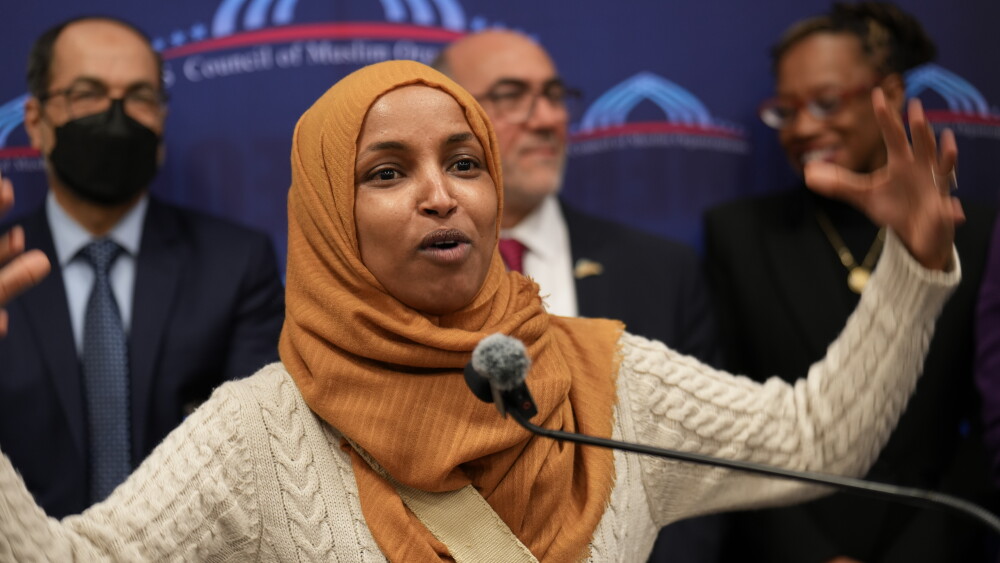
The Trump administration’s ongoing fraud probe into Somali-born Rep. Ilhan Omar’s refugee and U.S. citizenship approvals carries much more importance than many Americans realize as this political theater unfolds. Image: Rep. Ilhan Omar (D-MN) speaks during a public reception at the annual Muslim Advocacy Day at the Capitol in Washington, D.C.; April 28, 2025.

The Trump administration’s ongoing fraud probe into Somali-born Rep. Ilhan Omar’s refugee and U.S. citizenship approvals carries much more importance than many Americans realize as this political theater unfolds. Image: Rep. Ilhan Omar (D-MN) speaks during a public reception at the annual Muslim Advocacy Day at the Capitol in Washington, D.C.; April 28, 2025.Shutterstock

The Trump administration’s ongoing fraud probe into Somali-born Rep. Ilhan Omar’s refugee and U.S. citizenship approvals carries much more importance than many Americans realize as this political theater unfolds.

The investigation should serve as a reminder to Americans that there are serious concerns about Somali refugees committing immigration fraud with impunity.

The Omar affair highlights an underlying homeland security problem about the other 150,000 other Somali refugees let in before President Donald Trump mostly closed the Somali pipeline spigots and, most pertinently, about the thousands more hoping to get through after his 2029 departure.

Omar denies all wrongdoing, and she has not been tried for any crime. Regardless, the investigation should serve as a reminder to Americans that there are serious concerns about Somali refugees committing immigration fraud with impunity. When Somalis do lie to get in, they bring elevated risks of public welfare fraud and gang crime.

But perhaps most aversely: the potential for Islamic terrorism.

The pivotal moment in Somalia’s history with enduring U.S. security implications

To understand some of the issues with Somali immigration, it is worth understanding Somali’s history since the January 1991 overthrow of Somali dictator Mohammed Siad Barre.

Until about 2013, anarchy prevailed in the Muslim-majority nation. No effective government existed, let alone a vital records office, to issue uniform documents like birth certificates, driver’s licenses, marriage and divorce records, or deaths. There were no effective law enforcement agencies to prosecute criminals and create a criminal history database.

No central government intelligence service existed to build computerized datasets of thousands of fighters recruited by the al-Shabaab terrorist group, which still rules large swaths of Somalia and exercises influence in neighboring countries. Atrocity-committing warlords, clan paramilitary groups, and al-Shabaab don’t exactly keep publicly accessible computerized membership records.

No effective government existed, let alone a vital records office, to issue uniform documents like birth certificates, driver’s licenses, marriage and divorce records, or deaths.

It gets worse. Warring militias destroyed almost every pre-1991 citizen record going back generations. The information black hole persists, as the State Department describes on its Somalia web page in its General Documents section.

“Although the United States formally recognized the new government of Somalia on January 17, 2013, there continues to be no recognized competent civil authority to issue civil documents,” it says. “There are no circumstances under which immigrant visa applicants can reasonably be expected to recover original documents held by the former government of Somalia.”

This helps explain why Omar’s investigators are unlikely to find a simple paper trail consisting of documents like birth certificates, driver’s licenses, school enrollment documents or military records.

Impact on Omar investigations

Legacy U.S. media outlets have made much of the fact that past U.S. investigations of Omar and her family’s immigration claims did not produce facts or charges, as though because of innocence. But these accounts omit Somalia’s disappeared-records history. If American refugee adjudicators found vetting impossible, unimaginative criminal investigators could not get far unraveling Omar family mysteries.

The homeland security and justice departments are looking into whether Omar’s deceased father falsely claimed she was young enough in 1995 to get automatic derivative refugee status for minors. They’re investigating if her father covered up his own disqualifying military resume as a full colonel and military commander in the Siad Barre regime, since its “Black SS” and commanders systematically tortured regime enemies and killed as many as 200,000 people. They’re checking whether she married a brother for U.S. immigration status.

Will investigators find birth certificates, drivers licenses, school enrollment documents or Barre regime military records in Somalia? Probably not; More determined investigators must get resourceful to find U.S. courthouse-worthy facts.

The same fact-finding problems, though, portend broad public safety consequences of far more importance than Omar.

The domestic national security and public safety threats of Somali immigration

This is hardly an isolated case, and it could portend broad public safety consequences of far more importance than details about Omar’s own history.

Before Trump cut off most Somali immigration in both of his terms, a potential terrorist from Somalia being considered for entry into our country might as well sign his name as Mickey Mouse and list his profession as “cartoon figure entertainer” since no information exists to disprove this offered information. This problem left U.S. adjudicators to roll the dice letting in Somalis who offered whatever unverifiable names and narratives.

Other Somali refugees were caught after lying about their terrorism involvement with terrorist organizations and cost taxpayers unnecessary law enforcement time and prison resources.

Consider the case of Abdul Razak Ali Artan, who was born in Somalia and entered the U.S. as a refugee with his mother and six siblings in June 2014 from a Pakistani refugee camp. On November 28, 2016 he was inspired by ISIS to use a Honda Civic and butcher knife to injure 11 people at Ohio State University before being shot dead by a campus officer. Sen. Charles E. Grassley, R-Iowa, later complained that U.S. adjudicators missed big clues during vetting.

Other Somali refugees were caught after lying about their terrorism involvement with terrorist organizations and cost taxpayers unnecessary law enforcement time and prison resources. In his 2007 refugee application, Abdinassir Mohamud Ibrahim lied about which clan he was born into, which helped him dodge the fact that close relatives in his true clan were leaders in Somalia’s violent “Islamic Courts,” the U.S.-designated terrorist entity that later became al-Shabaab.

The FBI finally caught up to Ibrahim in San Antonio in 2014 for having helped his terrorist friends back home recruit more terrorists. He illegally sent cash too.

Somalia is so wiped clean of information that two Ethiopians, married couple Mohamed Abdirahman Osman and Zeinab Abdirahman, claimed they were Somalians, no doubt knowing checks with the records-competent U.S.-allied Ethiopian government would reveal they were dangerous al-Shabaab operatives.

Their 2014 refugee claim and later green card and citizenship applications falsely said al-Shabaab blew off both the husband’s hands. They were living in Tucson in 2018 when the FBI finally discovered he was an active al-Shabaab explosives expert who lost his hands preparing bombs for the group to detonate. Furthermore, the FBI learned a brother went on the run following a terrorism conviction, and an uncle and aunt in 2014 bombed a restaurant in Djibouti. From Tucson, the couple sent tens of thousands of dollars abroad to support these fugitives.

Another consequence of Somali resettlement is that they form culturally insulated enclaves that don’t assimilate well and pass old-country extremism to younger generations.

We know this, in part, because law enforcement has identified up to 40 Somali-American young men as having joined or attempted to join ISIS in Iraq and Syria. At least two dozen Minnesota enclave Somalis traveled to join al-Shabaab back in the homeland.

Another consequence of Somali resettlement is that they form culturally insulated enclaves that don’t assimilate well and pass old-country extremism to younger generations.

A standard-bearer was Somali-born Dahir Adan, who entered the U.S. as a two-year-old refugee. He went on to stab ten shoppers with two steak knives in September 2016 at the Crossroads Center shopping mall in St. Cloud, Minnesota before an off-duty police officer shot him dead. ISIS claimed Aden “was a soldier of the Islamic State.”

Another assimilation failure was Abdirahman Sheik Mohamud who was a toddler when he resettled with his family in Columbus, Ohio. Years later as a (maybe) 20-year-old, in 2013, he followed an older brother to fight with al Nusra in Syria. Upon learning his brother died in combat, Mohamud returned with a plot to attack a federal prison in Fort Worth, for which the FBI arrested him enroute to Fort Worth in November 2018.

View the forest above the trees

Somali citizens no doubt suffered persecution, and many who have left can’t return home because of ongoing dangers. But a look beyond the political theater of the Omar investigation makes clear that documentation that can pierce the secrets of Somalis rarely exists. Which means that verifying anything real about Somalis is rarely possible. Which means letting this group into America is strictly for high-stakes gamblers.

The only safe bet with Somalis is to just refrain.

Published originally in modified form on October 22, 2026, at the Daily Signal under the title “Ilhan Omar Investigation Draws Attention to Broad Immigration Fraud and National Security.” 


Todd Bensman

Source: https://www.meforum.org/mef-online/ilhan-omar-investigation-red-flags-broad-immigration-fraud-and-terrorism-security-risks

Follow Middle East and Terrorism on Twitter
Three Antisemitisms; One Beneficiary - Gregg Roman


by Gregg Roman

The Three Antisemitisms End at the Same Roll Call, and Tehran Is Counting the Votes


Islamist, right-wing, and left-wing antisemitism come from different traditions and say different things about Jews. In Washington, all three argue for the same policy: that the United States walk away from Israel. 

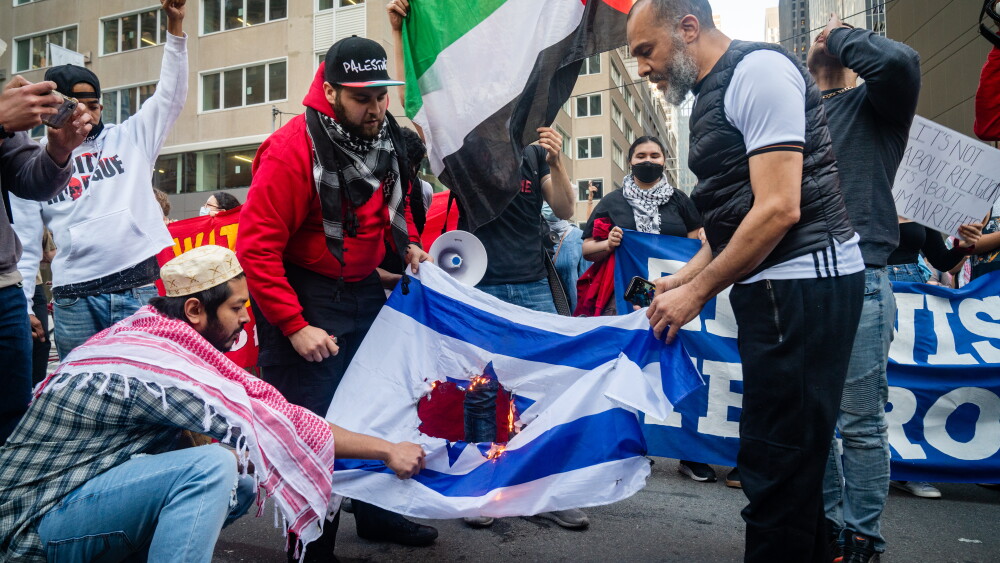
The three antisemitisms meet at one point: the demand that the United States step back from Israel. Image: An anti-Israel protest in New York City, May 15, 2021.

Left-wing antisemitism divides the world into oppressors and oppressed, files Jews and Israel among the oppressors as white, colonial, and powerful, and concludes that the Jewish people, alone among nations, has no right to a state. Image: An anti-Israel protest in New York City, May 15, 2021. Shutterstock

On April 13, Tucker Carlson told the readers of his morning newsletter that “President Trump is a slave to Israel.” Two days later, 40 of the 47 senators in the Democratic caucus voted to block sales of bombs and bulldozers to Israel. A month after that, federal prosecutors charged an Iraqi national with plotting to attack a prominent New York synagogue and Jewish institutions in Los Angeles and Scottsdale, Ariz., on behalf of Iran’s Revolutionary Guard and Kata’ib Hizballah; a grand jury indicted him on May 28.

American politics now carries three distinct antisemitisms, each with its own origin, its own picture of the Jew, and its own goal.

The three events are not equivalent. The first is a pundit’s smear, the second a policy judgment, the third a crime. Read together, though, they show what Americans miss when they treat antisemitism as a partisan scorecard, each side tallying the other’s offenses and excusing its own. American politics now carries three distinct antisemitisms, each with its own origin, its own picture of the Jew, and its own goal. For all those differences, all three push Washington toward the same policy: distancing the United States from Israel. The regime that gains most from that outcome is Iran’s.

At the extreme, each of the three has killed Jews in America or tried to: the Pittsburgh synagogue gunman in 2018, the Capital Jewish Museum gunman in 2025, and the Iranian-backed plot against a New York synagogue alleged this spring. That violence belongs to the fringe. This essay is about the mainstream, where the three meet not in attacks but in policy.

A Doctrine with a State

Islamist antisemitism is hatred of Jews grounded in a reading of Islamic scripture and organized as a political program. It teaches that Jews are enemies of Islam by nature and that a Jewish state on land once ruled by Muslims must be destroyed. The 1988 Hamas charter quotes a hadith holding that the Day of Judgment will not come “until Moslems fight the Jews (killing the Jews).” Ali Khamenei called Israel “a deadly, cancerous tumor,” and his regime built what Ofira Seliktar and Farhad Rezaei, writing in the Middle East Quarterly, call a propaganda industry to carry that message abroad. What sets this version apart is that a government stands behind it, with an army, treasury, foreign ministry, and armed proxies such as Kata’ib Hizballah.

American commentary often softens the doctrine into grievance, resistance, or a reaction to Israeli policy. The softening fails when an American spokesman says the quiet part aloud. When Nihad Awad, executive director of the Council on American-Islamic Relations, said in November 2023 that he “was happy to see” Gazans “breaking the siege” on October 7, even the Biden White House condemned the remarks as antisemitic. Washington has begun to treat the threat as a security matter: in January, the Treasury and State Departments designated the Egyptian, Jordanian, and Lebanese branches of the Muslim Brotherhood as terrorist organizations. Scrutiny of the money has lagged. Qatar, Hamas’s longtime host, was the largest foreign source of funds to American universities in 2025, at more than $1.1 billion.

The Disloyal Insider

Right-wing antisemitism is older than the State of Israel and owes nothing to Islam. It stems from the European conspiracy theory that Jews are a foreign body inside the nation: a disloyal minority that secretly steers a country’s money, media, and government. The man who killed 11 worshippers at Pittsburgh’s Tree of Life synagogue in 2018 wrote minutes before the attack that a Jewish refugee agency “likes to bring invaders in that kill our people.”

That is the difference from the Islamist version. Islamist antisemitism treats Jews as a religious enemy, and its target is Israel, which it wants destroyed. Right-wing antisemitism treats Jews as untrustworthy neighbors, and its target is their influence at home. Israel interests it mainly as proof of that disloyalty.

Surveys that test the old canards, that Jews have too much power or are more loyal to Israel than to America, find them most common among young adults on the far right.

Surveys that test the old canards, that Jews have too much power or are more loyal to Israel than to America, find them most common among young adults on the far right. Eitan Hersh of Tufts and Laura Royden of Harvard reached that finding in a survey of 3,500 Americans taken in November 2020, and the Yale Youth Poll found the same pattern among “extremely conservative” young voters in 2025. Those questions measure the right’s vocabulary. They capture little of the left’s, which speaks of Israel rather than of Jews.

Those attitudes no longer stay on the fringe. In October 2025, Carlson gave Holocaust denier Nick Fuentes a friendly interview, and Heritage Foundation president Kevin Roberts called Carlson’s critics a “venomous coalition.”

Applied to foreign policy, the theory produces the charge of dual loyalty. Opposing the Iran war is a legitimate position. Carlson’s explanation for it is of a different kind: he says the United States went in “at the behest and demand of Israel.” He offers no evidence. For those who already hold the older belief that Jews control the governments they live under, none is needed.

The Oppressor Nation

Left-wing antisemitism grows from a theory of oppression rather than a theology or a conspiracy. It divides the world into oppressors and oppressed, files Jews and Israel among the oppressors as white, colonial, and powerful, and concludes that the Jewish people, alone among nations, has no right to a state. Because it presents itself as opposition to Israel rather than to Jews, it seldom uses the old language of Jewish power. Its mark is that it holds Jews anywhere answerable for Israel and treats Israel’s supporters as fair targets. On May 21, 2025, Elias Rodriguez shot Yaron Lischinsky and Sarah Milgrim dead outside the Capital Jewish Museum in Washington, D.C., and shouted “free, free Palestine” after his arrest; a federal grand jury indicted him on hate-crime charges.

In a December 2023 Harvard CAPS/Harris poll, 67 percent of voters ages 18 to 24 agreed that “Jews as a class are oppressors and should be treated as such.”

This version supplies the slogans of the crowds that have filled campuses and city streets since October 7, 2023, and it seldom marches alone. Its usual partner is the first of the three. The revolutionary left and political Islam have made common cause against Israel at least since parts of the Western left hailed Khomeini’s revolution in 1979; Craig Considine, a Middle East Forum writing fellow, joins others in calling the partnership the red-green alliance. Its campus wing shows the seam. Hatem Bazian, who helped found Students for Justice in Palestine at Berkeley in the 1990s, founded American Muslims for Palestine in 2006 and chairs it, and the ADL reports that AMP has long helped coordinate SJP’s activities. The ideas have reached the young. In a December 2023 Harvard CAPS/Harris poll, 67 percent of voters ages 18 to 24 agreed that “Jews as a class are oppressors and should be treated as such.”

In mainstream politics, this version shows itself less in what progressive leaders say than in what they decline to rule out. Asked on Meet the Press to condemn the slogan “globalize the intifada,” Zohran Mamdani answered, “That’s not language that I use.” On his first day as mayor of New York, he revoked the city’s orders barring divestment from Israel and adopting the International Holocaust Remembrance Alliance definition of antisemitism.

Where They Meet

The differences matter because each version calls for a different response. Islamist antisemitism has a state, money, and fighters behind it, making it a security problem to be met with designations, prosecutions, and sanctions. Right-wing antisemitism is a conspiracy theory moving into the conservative mainstream, and conservatives have the standing to push it back out. Left-wing antisemitism is an ideology that has become respectable on campuses and in city halls, and progressives have the standing to draw the line against it. Neither camp is excused from opposing all three.

Yet the three meet at one point: the demand that the United States step back from Israel. On July 15, that demand reached the House floor. Thomas Massie (R-KY) offered an amendment to strip all $3.3 billion in aid to Israel. He was the only Republican to vote for it. Democrats supplied the other 103 votes, and it failed, 104 to 314.

Iran’s rulers have pledged to destroy Israel, and American aid and arms are much of what keeps Israel’s military ahead of Iran and its proxies. Every blocked sale and every cut dollar serves Tehran, whatever the motive of the member who casts the vote.

Voting against an aid package is not antisemitism, and most members who did so are not antisemites. The question is which arguments built the coalition. From the right came the claim that Israel has captured Washington; from the left, the claim that Israel is itself a colonial crime against indigenous peoples. Few in either camp take cues from Tehran, yet both arrive at the position Tehran has sought from Washington since 1979. Iran’s rulers have pledged to destroy Israel, and American aid and arms are much of what keeps Israel’s military ahead of Iran and its proxies. Every blocked sale and every cut dollar serves Tehran, whatever the motive of the member who casts the vote.

Some object to this framing. Peter Beinart, editor-at-large of Jewish Currents, argues that “it’s critical to be able to make a distinction between bigotry against a group of people and criticism or condemnation of a state.” He is right, but the distinction cuts both ways. Criticism of an Israeli government is politics. Holding American Jews responsible for that government, claiming that Israel controls the American president, or denying Jews alone a national home is something else entirely, whoever says it.

Three conclusions follow. First, hold everyone to one standard. Conservatives should judge Carlson by the test they apply to Mamdani, and progressives should do the reverse; a party that polices only its rival’s antisemitism is keeping score, not fighting it. Second, Washington should treat Islamist antisemitism as the security threat it is: complete the Brotherhood designations, prosecute Iranian proxy plots on American soil, and enforce Section 117 of the Higher Education Act so that foreign gifts to American universities, including those from Gulf states, are fully disclosed. Third, editors and hosts should call out the dual-loyalty charge, and the claim that Jews everywhere answer for Israel, every time either one airs.

The three antisemitisms start in different places: a theology in Tehran, a conspiracy theory on the right, an ideology on the left. They end at the same roll call, and Tehran is counting the votes.


Gregg Roman is the executive director of the Middle East Forum. In 2014, the Jewish Telegraphic Agency named him one of the “ten most inspiring global Jewish leaders,” and he previously served as the political advisor to Israel’s deputy foreign minister and worked for the Israeli Ministry of Defense. A frequent speaker on Middle East affairs, Mr. Roman has testified before Congress and the Knesset and appears on international news channels such as Fox News, i24NEWS, Al Jazeera, BBC World News, and Israel’s Channels 12 and 13. He studied national security and political communications at American University and the Interdisciplinary Center in Herzliya and has contributed to The Hill, Newsweek, the Los Angeles Times, the Miami Herald, and the Jerusalem Post.

Source: https://www.meforum.org/mef-online/three-antisemitisms-one-beneficiary

Follow Middle East and Terrorism on Twitter
Majority of Americans concerned about rise of socialist candidates - Sarah Roderick-Fitch


by Sarah Roderick-Fitch

Forty-four percent of American voters surveyed in The Center Square’s Voters’ Voice Poll say they would prefer to live in a city or community where Democratic Socialists have not gained influence.


(The Center Square) -

A plurality of Americans don’t want to see their community move in the direction of the Democratic Socialist agenda, according to a new poll from The Center Square.

Forty-four percent of American voters surveyed in The Center Square’s Voters’ Voice Poll say they would prefer to live in a city or community where Democratic Socialists have not gained influence.

In contrast, 33% say they would like to see their city or community move more in the direction of places where Democratic Socialist candidates have gained influence, while 23% are unsure.

The latest poll comes as voters head to the polls in less than two weeks, where several Democratic Socialists and their agenda are on ballots across the country, with a majority concerned socialist candidates could gain ground.

The Center Square Voters’ Voice poll also found that 55% of American voters are concerned about Democratic Socialist candidates running for and winning elected office in the U.S., while 37% aren’t concerned.

A slew of candidates running as Democratic Socialists appears to be raising alarms with many American voters.

Of the 55% who are concerned, 35% are very concerned, while 20% say they are “somewhat concerned.”

Of those not concerned, 17% say they are not too concerned, while 20% say they are not at all concerned.

The poll comes as several Democratic Socialist candidates have risen in popularity across the country. The Democratic Socialists of America say they have had 160 candidates run across the U.S. this year,, with 62 losses and 11 wins..

The latest poll comes on the heels of an August poll by The Center Square, which found 63% of Americans are concerned with the growth of socialism or communism in American politics, while 29% were not concerned.

Of the 63% concerned in August, 36% said they were very concerned, and 27% were somewhat concerned.

The Center Square’s Voters Voice Poll, conducted by Noble Predictive Insights, surveyed 2,527 registered voters from Oct. 5-7 via an opt-in online panel and text-to-web cell phone messages. The sample included 1,136 Republicans, 1,171 Democrats, and 220 True Independents, who did not lean toward either major party when asked.

Heading into the midterm elections in November, Republicans and several Democratic voices have warned against democratic socialists rising to power across the country, with the backing of U.S. Sen. Bernie Sanders, I-Vt., and U.S. Rep. Alexandria Ocasio-Cortez, D-N.Y.

It’s not only Republicans warning against socialism. U.S. Sen. John Fetterman, D-Penn., has been outspoken about several self-proclaimed democratic socialists gaining popularity within the Democratic Party.

Earlier in the month, Fetterman cited a CBS News poll that found nearly 60% of Democrats have a positive view of socialism.

“The Democratic Party is becoming the party of socialism. 58% view socialism positively. 50% view capitalism negatively. I’m a proud free market capitalist. This is lunacy,” the senator wrote on social media.

Fetterman isn’t the only Democrat calling out the party’s growing socialist arm; veteran Democratic strategist James Carville has called on the Democratic Socialists of America to drop the word “Democratic” from their name to distance the party from leftist policies.

In contrast to the CBS poll, The Center Square’s Voters’ Voice Poll found that 49% of Democratic voters are concerned with the rise in socialism or communism, while 40% aren’t concerned at all.

The poll comes as several democratic socialist candidates across the country, including in New York, Colorado, Michigan, California, and Florida, have received the nod from Democratic voters to advance to the November elections.

The poll's margin of error is +/- 2.0%. 


Sarah Roderick-Fitch

Source: https://justthenews.com/index%2ephp/nation/states/center-square/poll-majority-americans-dont-want-see-communities-adopt-socialist

Follow Middle East and Terrorism on Twitter
From diesel fuel to prisoner releases, Trump is reviving Kissinger’s ‘peace dividends’ strategy - John Solomon


by John Solomon

Kissinger suggested to Nixon in 1973 that the United States could score small victories with the Chinese and Soviets – which could ease human suffering and help Americans – that incrementally would lead to peace in Vietnam. That may be a precedent of note today.


While the world was still raging that President Donald Trump would turn to Russia’s Vladimir Putin to try to score relief for Americans suffering from inflated diesel prices, the president’s diplomatic team led by special envoy Steve Witkoff was wheeling and dealing behind the scenes in stealth mode.

Volodymyr Zelensky, who exploded at the Trump-Putin diesel deal, was bluntly told by U.S. officials there was no value in poking the eye of the one ally whose financial and intelligence assistance was at the heart of Ukraine’s ability to stand toe-to-toe with the much larger, nuclear-armed enemy.

He also was told, despite repeated and widely reported overtures from NATO’s Mark Rutte, there were no more Patriot missiles that America could send to Ukraine at present, since they were being stockpiled for other needs, according to interviews with several Western officials.

The message was unmistakable: a war pause was the best option.

Remarkably, Zelensky changed tune and went on Trump’s favored Fox News outlet to announce he was willing to freeze the battle lines in a deal to pause the war. Such a proclamation was not only positive for prospects for a short-term ceasefire; it also sets up a longer range chance to create a lasting land-for-peace armistice.

Hostage release, trilateral negotiations and a ceasefire emerge

At the same time, Witkoff’s team had been working feverishly for weeks with Moscow to secure the release of Stephen Hubbard, a retired American teacher held captive in Russia at POW and prisoner camps since he was captured in Ukraine in 2022. The seventy-four-year-old was subjected to harsh conditions during his incarceration and paraded out on cameras as a propaganda tool.

Putin obliged, and Hubbard was reunited with his family Wednesday morning around the same time as Zelensky’s offer.

Next, Russia announced Thursday it was open to trilateral negotiations with Ukraine next month in Abu-Dhabi. And then First Lady Melania Trump announced on Friday an unprecedented deal for a ceasefire in Oleshky, located in the south of Ukraine where residents were reportedly starving. The ceasefire is scheduled to start Oct. 27,

The sequence of events led the American lawyer who worked pro-bono for Hubbard’s release to compare the Trump strategy to that of the legendary Henry Kissinger, who during America’s frustrating stalemate during the Vietnam War was able to foster better relations with Communist China and détente with the Soviet Union.

“I think it's pretty clear what's going on,” said Attorney Martin DeLuca, who played key roles in both Hubbard's and fellow American Mark Foley’s releases from Russia. “A lot of the media seems to be puzzlingly fixated on the idea that there was some secret arrangement as to why he would have been released," he said.

"As if it's inconceivable that the most obvious of all explanations, which is if you reengage, if you engage in dialog, if you make progress in repairing a relationship, and restoring dialog," DeLuca added, also saying "perhaps one of the small early dividends in the long and hard road to peace, can be human, and I think Stephen Hubbard is one of those.”

“We talk about peace dividends. This term dates back to a very skilled foreign policy president, Richard Nixon. I believe it was in 1972 or 1973, after he started re-engagement with China and détente with the Soviet Union, and that's when he began talking about peace dividends [...] So this is not something new. But it is something that people seem to have forgotten ever existed before Trump,” he said.

Real meaning of "peace dividend"

Kissinger coined the term “peace dividends” back in a 1973 memo to President Nixon after returning from a trip to China. Over the years, the term has been hijacked to mean that only if America wins a war there are dividends like less military spending that can be achieved.

But that was not meaning as Kissinger originally meant it.

The-then national security adviser suggested to Nixon that the United States could score small victories with the Chinese and Soviets – which could ease human suffering and help Americans – that incrementally could lead to peace in Vietnam.

“The progression of our relationship in the past twenty months is remarkable,” Kissinger wrote on March 2, 1873. “I believe it is one of your most striking successes in foreign policy. If we continue to handle it carefully, it should continue to pay dividends—in relaxing tensions in Asia, in furthering relations with Moscow, and generally in building a structure of peace.”

In another words, dividends can be scored on the road to peace, not just after it.

Kissinger was awarded the Nobel Peace Prize in 1973 and shared with North Vietnamese diplomat Lê Đức Thọ for negotiating the Paris Peace Accords to end the Vietnam War.

Those who know Trump well insist that is the framework of how he, Secretary of State Marco Rubio and Witkoff have dealt with Russia in an effort to press a deal with Ukraine.

"Well, I mean, this is a very difficult situation, and we've seen this go on over the course of the last 18 months, where you've had good cop, bad cop moments,” former Deputy National Security Adviser and current Vice President of the Heritage Foundation's Institute for National Security and Foreign Policy, Victoria Coates said. 

"I think President Trump, having inherited a really horrible situation in Ukraine, is hoping to avoid major escalations and to get to a resolution to this," she said.

Coates added that one dynamic is that European nations that long applauded Zelenskyy are now suffering from “war fatigue” and dealing with internal strife like what has been seen in France, Spain and Belgium recently.

“What I was hearing from everybody who was not an EU official was the Ukrainians are exhausted. They need to regroup They need to rebuild. We need to get this resolved was really the refrain. I think that's what President Trump is trying to do,” she said,

Plodding land gains in a war of attrition

The Russia-Ukraine war is now lurching toward its fifth year, a conflict seemingly made intractable by a daily slaughter machine on the battlefield, Putin’s cunning determination to trade his own soldiers’ lives for plodding land gains in a war of attrition and Europe’s romanticism of a narrative that somehow Kyiv is a tiny David who will slay Moscow’s Goliath.

But interviews with more than a dozen security experts paint a consensus picture that Ukraine cannot win a war of attrition: it has already lost to death or injuries much of its young male population, and is now sending older men to the front lines.

“It's a stalemate. All you have are thousands of people dying over nothing. The lines on the map haven't moved significantly for years, and so it's just really kind of a senseless war,” said James S. Robbins of the Institute of World Politics. “But you have two sides that are completely dug into their position. The president's been trying his best to mediate some kind of compromise or an armistice. Maybe just get a ceasefire going, and that would be good.”

Robbins praised Trump for drawing a line with Ukraine and ending the notion there is a blank check for a war of attrition that also is driving up American energy prices.

“Even though the United States is a major supporter of Ukraine and continues to be, this whole issue is over just one aspect of Ukraine's war policy, which is targeting Russia's energy. Well, that has an impact  on us,: he said. “So it's one thing to help out the Ukrainians in their war against Russian aggression, which everybody can get behind. It's another thing if that war then begins to have negative effects on the United States. 

“So I think that's why the president said you have to moderate that, and maybe this is a way to show Ukraine  that U.S. support is not unlimited  and that they also have to come around and get to a negotiation. Hopefully, the Russians will also see that.”

Along the way, Trump will try to score some dividends for the American people when he can, such as Hubbard’s release, experts said. 


John Solomon

Source: https://justthenews.com/index%2ephp/government/security/suna-diesel-prisoner-releases-trump-reviving-kissingers-peace-dividends

Follow Middle East and Terrorism on Twitter
‘Jewish self-determination into a national reality': What to know about Israel’s Oct. 27 election - JNS Staff


by JNS Staff

Who decides which candidates will enter the Knesset? How is the prime minister chosen?


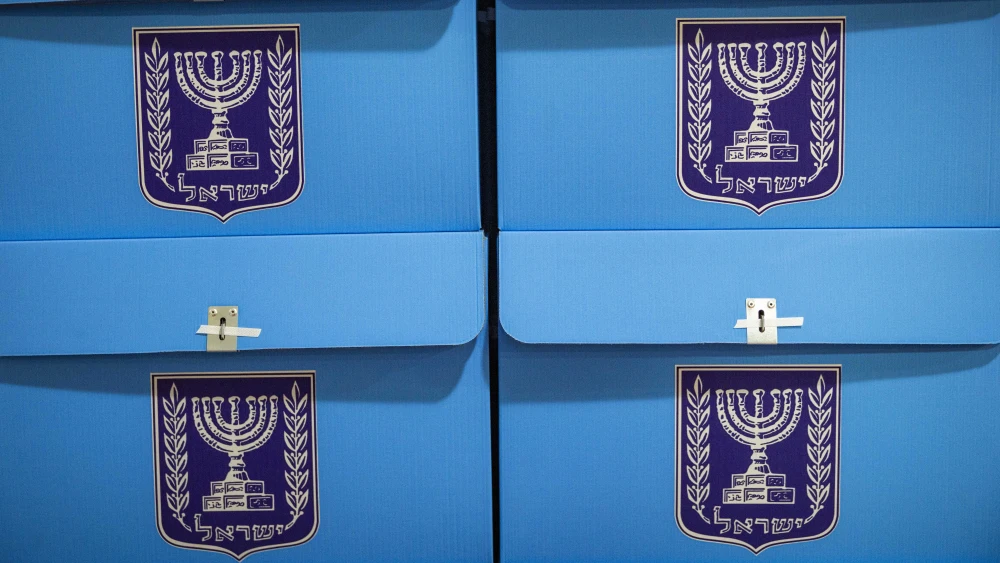
Ballot boxes at the Central Elections Committee warehouse in Shoham ahead of Israel’s general elections, Oct. 14, 2026. (Photo by Yonatan Sindel/Flash90)

More than 7.3 million Israeli citizens are eligible to vote in the upcoming election for the Knesset on Oct. 27, with some 810,000 of them living abroad, according to data released on Wednesday by Israel’s Central Bureau of Statistics.

A national holiday by law, schools, kindergartens and most workplaces are expected to be closed for Election Day, as millions of citizens will take to more than 11,000 polling stations operating across the country to elect the 26th Knesset.

Proportional representation

Israeli democracy is based on a parliamentary system of proportional representation. This means that Israeli citizens do no vote directly for a prime minister or district representatives. They vote for a party that runs in a single, nationwide constituency, where the legislative body—the Knesset—has 120 seats.

A vote for a party is a vote for a list of Knesset candidates. The 120 Knesset seats are divided proportionally to the number of votes that each party wins. Thus, if a single party won 50% of the valid votes, it would secure 60 Knesset seats.

No party has ever won a majority of the votes, so every government has been formed by a coalition of parties.

In addition, parties must receive at least 3.25% of the valid votes to enter the Knesset; votes cast for parties that fail to reach this electoral threshold are discarded.

Choosing a prime minister

Although typically the leader of the largest party becomes prime minister, this is not always the case. The law stipulates that the Israeli president designates the member of the Knesset who has the best chance of forming a coalition with the task of forming a government.

The designated member of Knesset must present the proposed government and its policy guidelines to the Knesset and win its approval before taking office as prime minister.

If the designated member of Knesset is unable to do this, the president designates another member of Knesset to try.

The prime minister must moreover hold a Knesset seat while serving as the head of the government. Other ministers are not required to be lawmakers.

The Israeli president is elected by the Knesset for a seven-year tenure. Israel’s current president, Isaac Herzog, is scheduled to end his term in July 2028.

Who can run?

Any Israeli over the age of 21 can stand for election to the Knesset, unless he or she has been disqualified from being elected by the courts.

Candidates or factions can also be disqualified if they are found to violate Section 7A of Basic Law: The Knesset, which prohibits a candidate or a political party from negating the Jewish and democratic identity of the State of Israel, inciting to racism, or supporting an armed struggle against the Jewish state.

How does the voting work?

Every citizen over the age of 18 can vote for the Knesset.

Each voter is assigned to a specific polling station near his or her place of residence, as listed in the Population Registry, and may vote only at that station.

Exceptional cases allow for alternate polling stations. These, for example, include soldiers who may vote at polling stations on IDF bases, hospital inpatients, prisoners and detainees, and certain Israeli officials and representatives serving abroad. In some cases, police officers, prison guards and on-duty security personnel may vote at designated stations where their duties prevent them from voting at their regular station.

Polling-station committee members and secretaries may vote at the station where they are working, subject to the applicable rules.

People with restricted mobility may vote at a special accessible polling station rather than their assigned station.

Women staying in domestic-violence shelters can vote through special arrangements intended to protect their safety.

Israelis abroad, other than certain officials and representatives, and in some cases their spouses, cannot vote.

Behind the voting booth

Behind the voting booth, the citizen selects a paper ballot with two or three letters that symbolize a political faction and seals it in a blue envelope.

The regular ballot boxes are subsequently counted at the regular stations across the country while the special ballot boxes are transported to the Knesset and undergo a series of processes to verify the eligibility and integrity of the votes.

The vote-counting process is carried out under the close supervision of the Central Elections Committee, as well as observers who represent the outgoing Knesset factions, the Knesset Guard, and Election Integrity Inspectors, with professional guidance from the Central Elections Committee’s Legal Office and dozens of attorneys and legal experts hired for this purpose. 

More than a century of democracy

On Thursday, Israel’s Foreign Ministry posted on X an explainer with historical background about Israel’s democratic nature.

It states that decades before the state’s establishment, “the Zionist movement had already established a political culture rooted in vigorous debate, competing ideas and democratic decision-making. Delegates elected to Zionist congresses debated the future of the Jewish people, voted on policies and built the institutions that would transform the dream of Jewish self-determination into a national reality.”

Decades before women gained the right to vote in many other countries, the Second Zionist Congress in 1898 granted female delegates full voting rights.

“Israel’s Declaration of Independence promised complete equality of social and political rights to all citizens, regardless of religion, race or sex. It guaranteed freedom of religion, conscience, language, education and culture,” the ministry continues.

Despite the war that ensued after Israel’s formation, the leaders of the state kept their word to uphold the declaration’s principles and held the first official national election on Jan. 25, 1949, eight months after independence.

A World Economic Forum ranking from 2019 places Israel among the world’s 20 oldest continuous democracies.

Although since its inception Israel has faced “wars, terrorism, security threats, political upheavals and profound social change,” it has always maintained its commitment to parliamentary democracy, the Foreign Ministry states.

“Israel’s democracy was born in adversity. Its endurance is one of the country’s greatest achievements,” it adds.

“Jewish, Muslim, Christian and Druze citizens, from cities and countryside, religious and secular, from every background and community, will participate [on Oct. 27] in the same democratic process. They may disagree profoundly about Israel’s future, but each has an equal vote in determining it,” the ministry says.


JNS Staff

Source: https://www.jns.org/news/israel-news/what-you-need-to-know-about-israels-election

Follow Middle East and Terrorism on Twitter
Is Iraq’s Ali Al-Zaidi Repeating Adil Abdul‑Mahdi’s Mistakes? - Michael Rubin


by Michael Rubin

By Providing Iran Inroads and Prioritizing Iraq’s Corrupt Ex-Prime Minister over the Masses, Al-Zaidi Is Disappointing Iraqis


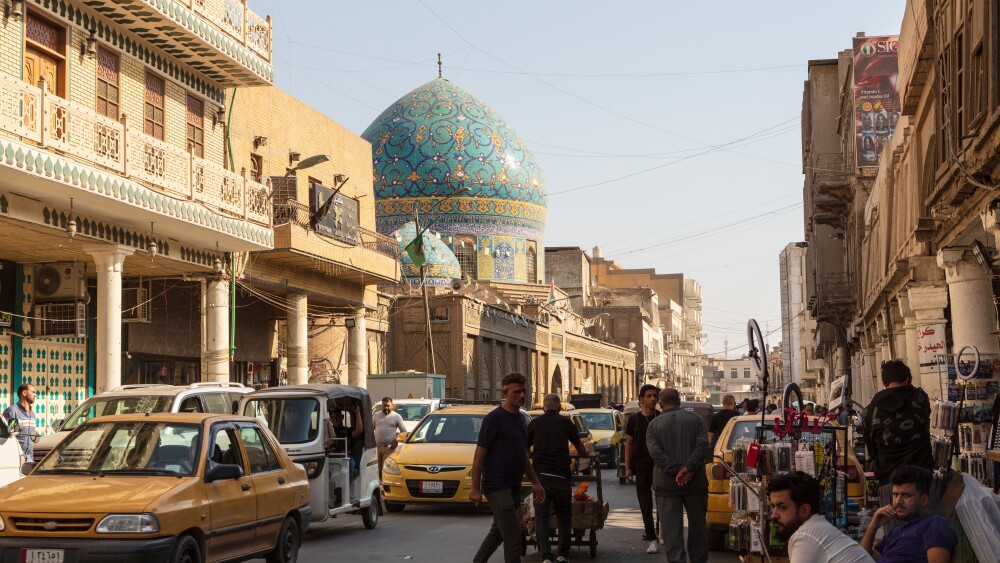
The blue dome of Haydar Khana Mosque rises above this street in Baghdad, Iraq.

The blue dome of Haydar Khana Mosque rises above this street in Baghdad, Iraq.Shutterstock

Elections in Iraq are real. It is perhaps the only Arab country where no one—politicians and ordinary citizens alike—has any idea who the new prime minister will be when they head to the polls. Selecting the head of government, though, is a process involving months of negotiations among Iraq’s political parties and their often-unelected doyens.

It has been almost six months since the Coordination Framework, the Shi‘i political grouping and largest vote-getter, named Ali al-Zaidi as its “consensus candidate,” after an impasse among factions backing better-known candidates. President Nizar Amidi designated him that evening, just ahead of the constitutional deadline.

It has been almost six months since the Coordination Framework, the Shi‘i political grouping and largest vote-getter, named Ali al-Zaidi as its “consensus candidate.”

Al-Zaidi was just 16 when U.S. forces unleashed “shock and awe” on Baghdad and ended Saddam Hussein’s quarter-century rule. Fifty-two percent of Iraqis were born after Saddam’s fall and many others, like al-Zaidi, came of age under the new system. Al-Zaidi was clever, built political contacts, maneuvered well, and played the patronage game. Iraq remains among the world’s most corrupt countries, despite recent improvements.

Just as some Sunni Arab businessmen got rich under Saddam and many Kurdish businessmen owe their livelihoods and contracts to Kurdistan Democratic Party leader Masoud Barzani’s patronage, al-Zaidi was among the most successful of the Shi‘i nouveaux riche.

He was the owner and boss of the Al-Oweis Group, a conglomerate of 15 companies, and the contractor for the program to supply food to the state’s ration-card system and food-services to the Iraqi military. Many members of parliament accused it and the Al-Janoob Islamic Bank, which he founded in 2016, of corruption. He was also chairman of Al-Watania, the National Holding Company founded in 2017, with interests in agriculture, real estate, banking, information technology, media, logistics, and solar energy, and he had other interests in Taawon hypermarkets and oil services. He chaired the boards of Al-Shaab University and Ishtar Medical Institute.

Ali al-Zaidi, the Iran-backed Coordination Framework's choice for Iraq's prime minister.

Ali al-Zaidi, the Iran-backed Coordination Framework’s choice for Iraq’s prime minister. المكتب الإعلامي لرئيس الوزراء, via Wikimedia Commons

The theory behind al-Zaidi’s appointment was he could bring a fresh face and more practical approach to Iraqi politics. The White House supported him for two reasons: First, he was not Nouri al-Maliki, the corrupt and sectarian former prime minister who repeatedly sold Iraqi sovereignty for personal profit to Iran; and second, al-Zaidi promised to get serious about disarming Iranian-backed militias. It was a commitment al-Zaidi repeated in his White House press conference with President Donald Trump: “There is not any need for the presence of any faction. … We never accept for any entity to carry weapons outside the control of the state.”

It was wishful thinking. Al-Zaidi may have been former Prime Minister Mohammad Shia al-Sudani’s pick in the Coordination Framework’s caucus, but al-Zaidi owed both his political rise and his fortune to Maliki. Like his predecessors, al-Zaidi told the U.S. president what he wanted to hear, and then did the opposite. Trump’s Memorandum of Understanding with Iran also relieved pressure on al-Zaidi and convinced Maliki and other pro-Iran proxy leaders like Hadi al-Amiri, Qais al-Khazali, and Qubad Talabani that they could outlast American pressure.

Al-Zaidi not only has resisted his promises to rein in the Badr Corps, Kataib Hezbollah, and Asa’ib Ahl al-Haq, but his office increasingly has sought to aid new Iranian inroads.

Former Iraqi Prime Minister Nour al-Maliki.

Former Iraqi Prime Minister Nour al-Maliki. Shutterstock

Yusuf Khalaf Yusuf, chairman of the Advisory Commission and al-Zaidi’s representative at the Internet Governance Forum Iraq, for example, has moved to cancel contracts awarded to Supercell, Enkidu, and TeleCore, who together are building Iraq’s only communications network not compromised by Chinese components or Iranian commercial proxies like ScopeSky or EarthLink Telecommunications (no relation to the American company EarthLink LLC).

The danger is not just al-Zaidi’s ineffectiveness or deliberate deceit, nor is it only increasing Iranian influence in Baghdad. Al-Zaidi’s willingness to prostitute himself to Maliki now endangers all of Iraq.

In summer 2018, demonstrations erupted in Basra after contaminated water sent 100,000 people to the hospital and sickened thousands more. While many Americans caricature Shi‘a as Iranian proxies, many Iraqi Shi‘a despise Iran. Protests culminated in the burning of the Iranian consulate.

In October 2018, Adel Abdul Mahdi emerged as prime minister, five months after elections. Abdul Mahdi was a familiar face—he was 76 and had served as minister of oil, minister of finance, and vice president. Because he was the consummate insider, Iraqis did not offer him much of a honeymoon period.

Iraq has an educated population, but its universities produce more graduates than the state and private sector can provide meaningful jobs. In September 2019, unemployed graduates staged sit-ins, which security forces countered with water cannons. Abdul Mahdi then fired a popular anti-Islamic State commander, Lt. Gen. Abdul-Wahab al-Saadi. Outrage reached the boiling point and, on October 1, young Shi‘a staged marches in Baghdad and across southern Iraq under the slogan “Nurid watan” (“We want a homeland”). It rejected the establishment Shi‘i religious parties as corrupt and the broader political system as disenfranchising, as party-boss horse trading trumped popular will. The movement became known as Tishreen, after the Iraqi and Levantine Arabic word for October.

If a new Tishreen movement erupts, the protestors will target the entire establishment, potentially risking Iraq’s collapse and the intervention of neighboring states.

The response was brutal. Pro-Iran security forces fired live ammunition into crowds and Abdul Mahdi shut down the internet. Militias kidnapped activists. Iranian Qods Force Chief Qassem Soleimani reportedly flew to Baghdad to help coordinate the crackdown. Protesters attacked Iranian consulates in Karbala and Najaf. On November 28, security forces gunned down several dozen protesters in Nasiriyah. The next day, Grand Ayatollah Ali al-Sistani’s Friday sermon urged parliament to reconsider its support for the government, and Abdul Mahdi announced his resignation, though he stayed on until May 2020, when former civil society activist-turned-intelligence chief Mustafa al-Kadhimi took office.

Al-Kadhimi disappointed activists. He was uncharismatic, his office was corrupt, and he granted Iran access in exchange for quiet. He oversaw little reform. By prioritizing Maliki over the masses, al-Zaidi is likewise disappointing Iraqis. The danger is that, having accepted the promise of reform once, Iraqi protestors will not be fooled again. If a new Tishreen movement erupts, the protestors will target the entire establishment, potentially risking Iraq’s collapse and the intervention of neighboring states.

Essentially, it will be a firestorm. The question now is whether Trump will sit by while al-Zaidi lies to him and profits off the sale of gasoline to the arsonists.


Michael Rubin

Source: https://www.meforum.org/mef-observer/is-iraqs-ali-al-zaidi-repeating-adil-abdul-mahdis-mistakes

Follow Middle East and Terrorism on Twitter