by Jerry Dunleavy
As the U.S. strikes Iran, a jury has concluded that a Pakistani man is guilty of trying to assassinate Trump on behalf of the IRGC.
The Pakistani national charged with attempting to organize
an assassination plot against now-President Donald Trump on behalf of
Iranian intelligence has been found guilty of murder-for-hire and
terrorism charges following a jury trial in Brooklyn.
The federal jury took just two hours to convict Asif
Merchant, 47, after testimony from a confidential informant, two
undercover FBI agents who posed as Mafia contract killers, and the
defendant himself, according to the New York Daily News.
Federal prosecutors have alleged that two Iranian-linked
plots to assassinate then-candidate Donald Trump — both allegedly linked
to Islamic Revolutionary Guard Corps (IRGC) — were launched in 2024 as
Iran sought to meddle in the election to stop Trump’s return to the
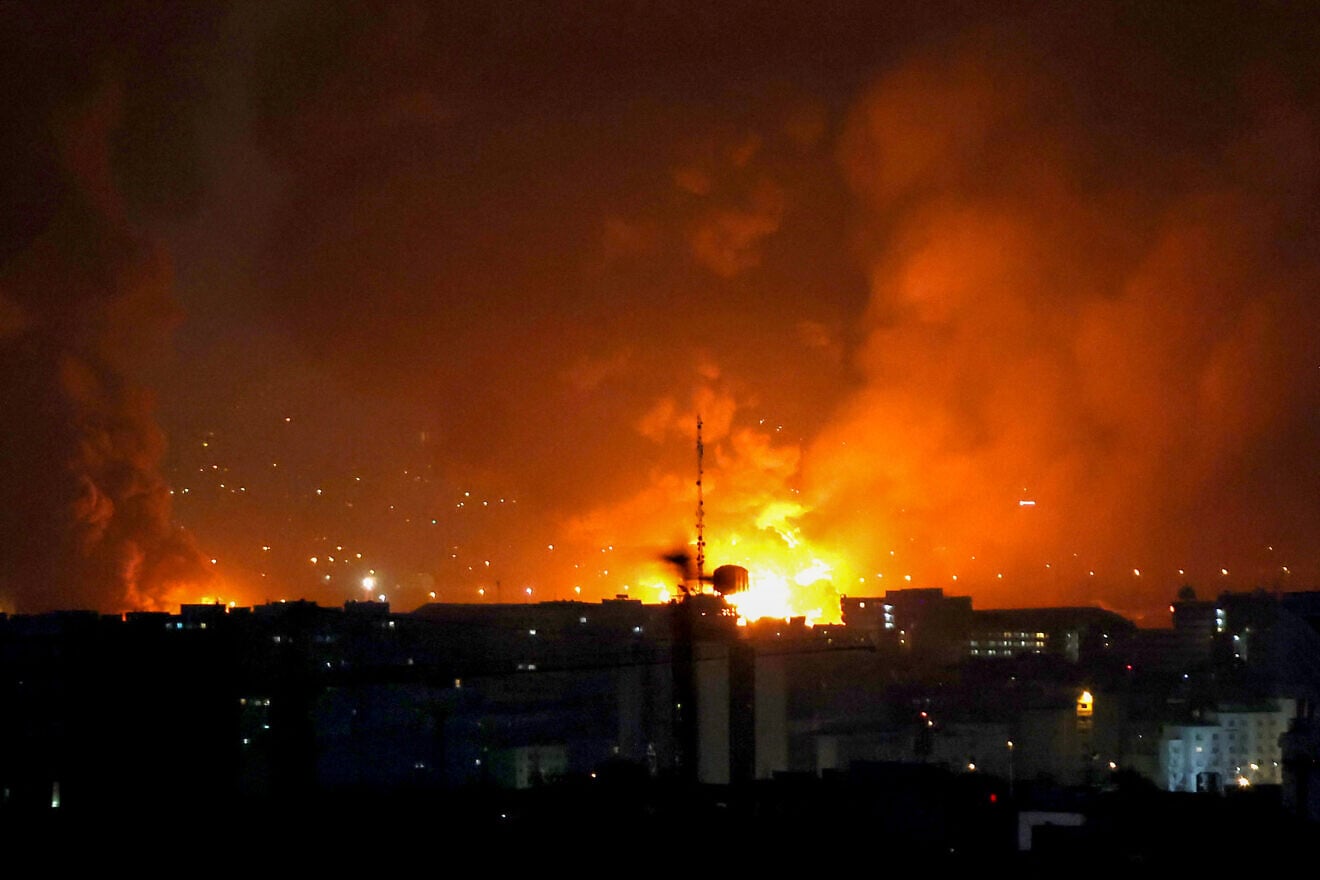
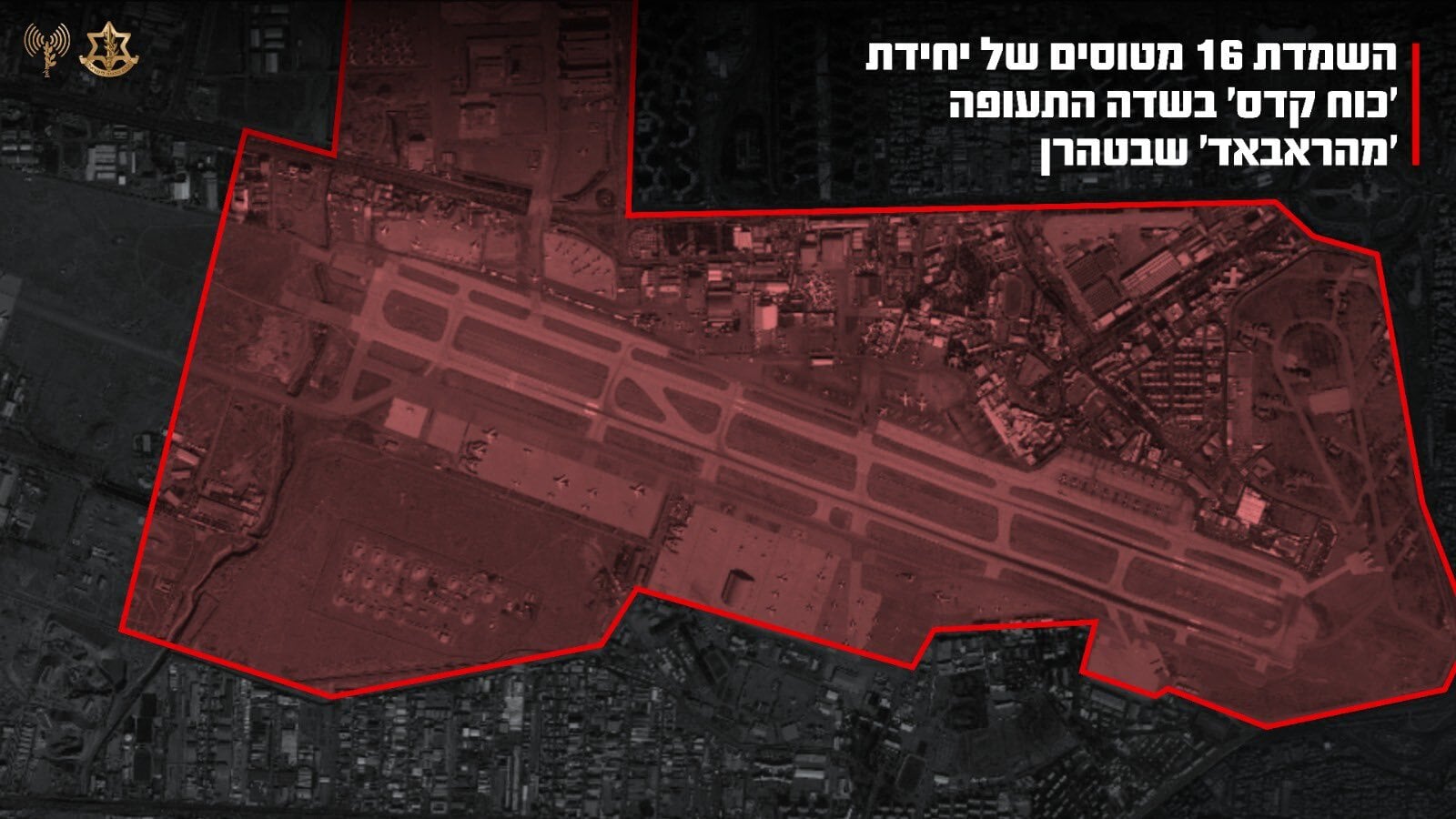
White House, with one of the trials kicking off in late February just days before U.S. and Israeli strikes commenced against the Iranian regime last Saturday.
The Justice Department filed charges against Pakistani national Asif Merchant and against Afghan national Farhad Shakeri
for their alleged roles in Iranian-backed assassination plots. The
former defendant’s somewhat convoluted plot targeted Trump, while the
latter defendant’s apparently more sophisticated plot was also aimed at
the president.
Shakeri remains at large in Iran. Merchant pleaded not guilty, and the trial against him began last week shortly before the initiation of Operation Epic Fury last Saturday. A jury found him guilty following a roughly week-long trial in New York City.
“This man landed on American soil hoping to kill President Trump —
instead, he was met with the might of American law enforcement,”
Attorney General Pam Bondi said
on Friday. "The Department of Justice will remain ever-vigilant to
protect Americans, prosecute terrorists, and halt acts of terrorism
before they happen.”
The Iranian assassination plots
are detailed in press releases and court filings by the Justice
Department and the FBI and, while prosecutors have not linked the
Iranian efforts to the other assassination efforts against Trump at a
Butler, Pennsylvania campaign rally in July 2024 and at his Florida golf
course in September 2024, the Iran-origin murder-for-hire allegations
show the multitude of threats against Trump’s life during the 2024
presidential campaign.
The cases also highlight the lengths to which the Iranian government was seemingly willing to go to attempt to keep Trump out of the Oval Office for a second term.
"Asif Merchant showed up to the U.S. looking to assassinate President
Trump and other government officials," FBI Director Kash Patel tweeted Friday. "This FBI didn’t forget. Today: Justice."
The IRGC leader who was allegedly behind the assassination plots
aimed at Trump in 2024 has been killed amidst U.S.-Israeli strikes in
Iran, Secretary of War Pete Hegseth announced on Wednesday.
Trump assassination plotter admitted to working for the IRGC
Merchant admitted to working for the IRGC when he took the stand during the trial this week.
The New York Times reported
that Merchant “testified on Wednesday that he had worked with Iran’s
Islamic Revolutionary Guard Corps to devise his scheme, which included
hiring hit men.”
The outlet recounted
that the Pakistani national “said that he had been forced to go along
with the plot to protect his family in Tehran from the Revolutionary
Guards Corps.” Merchant has two wives — one in Pakistan and one in Iran.
“I was not wanting to do this so willingly,” Merchant reportedly said on the stand.
The outlet reported
that Merchant testified that his cousin Husnain linked him up with the
IRGC, and that he began working with IRGC official Mehrdad Yousef in
late 2022.
“He asked me if I was interested in doing some work with the Iranian government, and I said yes,” Merchant reportedly testified.
The outlet said
that “over the course of many conversations” in Tehran, Merchant
testified that “his Iranian handler did name three people” for
assassination.
"He did not tell me exactly who it is, but he told me — he named
three people: Donald Trump, Joe Biden, and Nikki Haley," Merchant said, according to Fox News.
“I was interested in intelligence work and I wanted money,” Merchant testified, according to the New York Post.
CBS News said
that “Merchant testified that his periodic visits to the U.S. for his
garment business piqued the interest of his Revolutionary Guard contact,
who trained him on countersurveillance techniques.”
Merchant reportedly said he traveled to Iran to meet with this IRGC handler in March 2024.
The Guardian reported
that Yousef “directed him to travel to the U.S. in 2024 and recruit
criminals to carry out a four-part operation: staging protests, stealing
documents, laundering money, and arranging a murder.”
The Associated Press said
that Merchant testified that, while in the U.S., “he even reported back
to his Revolutionary Guard contact, sending observations — fake,
Merchant said — tucked into a book that he shipped to Iran through a
series of intermediaries.”
FBI agent Jacqueline Smith reportedly testified
that Merchant “told us about how he was recruited, assessed, trained in
a variety of sessions on tactics” and that he “was given a task to
complete, came to the U.S. and carried out the task.” The New York Post reported
that Smith added that Merchant told the bureau that he had “assessed
that the target was Donald Trump” and that Trump was being targeted over
the Soleimani strike.
Merchant reportedly claimed
in court that he was “mentally ready” to be arrested and claimed that
he had wanted to tell U.S. police about the plan beforehand.
“I was going to tell the government,” the Pakistani national told the court. “I wanted to apply for a green card.”
Prosecutors told
the court on Tuesday that “there is absolutely no evidence that the
defendant traveled to the United States to hire hitmen to kill
politicians out of duress or fear for relatives, as defense counsel
claimed at sidebar today.” The U.S. attorney added that Merchant “was in
the United States for a prolonged period and did not once avail himself
of the opportunity to seek the intervention of the appropriate
authorities.”
Smith also said
that Merchant had told the FBI that he initially thought the attempted
assassination of Trump in Butler, Pennsylvania in July 2024 had been
carried out by the Iranians.
“He said that he thought that Iran was responsible for that because that’s the same thing he was sent here to do,” Smith testified, according to Courthouse News.
Prosecutors also shared evidence that Merchant had extreme animosity for Trump for years prior to the plot.
The New York Times also reported
that “prosecutors showed jurors images they said they had retrieved
from Mr. Merchant’s Facebook account showing Mr. Trump’s decapitated
head and Mr. Trump next to a pig.”
The New York Post said
Merchant “testified that he posted the gruesome image on his Facebook
page after the U.S. military’s killing of prominent Iranian military
leader Qassem Soleimani in 2020, during Trump’s first term.”
“Whichever items were popping up, I was sharing them,” Merchant reportedly said on the stand.
IRGC leader behind the Trump assassination plot killed in Iran
“The leader of the unit who attempted to assassinate President Trump
has been hunted down and killed. Iran tried to kill President Trump, and
President Trump got the last laugh,” Hegseth said in a Wednesday press
briefing.
Israeli media outlets reported
on Wednesday that Rahman Mokadam, described as the head of the IRGC’s
special operations division, was the Iranian official who had been
killed. The exact name of the IRGC official has not been formally
confirmed by the U.S. military.
The U.S. and the Israelis launched a joint attack early last Saturday morning against Tehran, killing Iranian leader Ayatollah Ali Hosseini Khamenei and degrading the Iranian military.
Trump said
last Sunday night that "I got him before he got me” in reference to the
Ayatollah, according to ABC News. “They tried twice. Well, I got him
first."
Israeli journalist Amit Segal first tweeted
on Wednesday morning that “Israel has eliminated Rahman Mokadam, head
of the Islamic Revolutionary Guard Corps special operations division,
and the man behind the assassination attempt on Trump on the eve of the
2024 presidential election. Trump was informed of this in the past few
hours by Israel.”
Hegseth said during his Wednesday press conference
alongside Gen. Dan Caine, Chairman of the Joint Chiefs of Staff, that
the IRGC official who had allegedly played a role in the Trump
assassination plot had been placed on a target list during Operation
Epic Fury, but that killing the IRGC leader had not been a top priority
and had not been raised by Trump at all.
“We’ve known for a long time that Iran had intentions of trying to kill President Trump and/or other U.S. officials,” Hegseth said.
“And while that was not the focus of the effort by any stretch of the
imagination — in fact never was raised by the president or anybody else —
I ensured, and others ensured, that those who were responsible for that
were eventually part of the target list.”
The war secretary added:
“It wasn’t the beginning of the effort — we were focused on missiles
and launchers, and that’s the focus — but ultimately, if we had the
opportunity to get at those who were trying to get at Americans
specifically, we would. And so, we eventually had the opportunity to do
that from the air.”
Plots against Trump part of “Notable Attack Planning” by the IRGC
The Office of the Director of National Intelligence (ODNI) has categorized
both Iranian-backed assassination plots against Trump from 2024 as
examples of “Notable Attack Planning” by the Iranian regime’s IRGC.
Mike Waltz, the U.S. Ambassador to the United Nations, had brought up the IRGC assassination ploy during a Saturday emergency meeting of the UN Security Council.
“For 47 years, the Iranian regime has chanted, quote, ‘Death to
America.’ At every turn, at every opening of its Parliament, it has
sought to eradicate the State of Israel,” Waltz said.
“It has waged an unending campaign of bloodshed and mass murder. It is
responsible for a series of unprovoked armed attacks targeting the
United States and Israel, violations of the UN Charter, and threats to
international peace and security across the Middle East.”
The Iranian government also repeatedly sought to meddle in the 2020 election as they attempted to stop Trump’s reelection, and in 2024 they carried out hack-and-leak operations against his campaign and, according to prosecutors, assassination attempts against him personally.
Just the News reported recently that Marc Elias, the Clinton
campaign lawyer who helped fund British ex-spy Christopher Steele’s
discredited dossier pushing baseless claims of Trump-Russia collusion in
2016 joined other Democrats in denying confirmed Iranian election
influence efforts in 2020 and 2024 aimed at denigrating Trump, calling it a “Big Lie.”
Asif Merchant and the “murder-for-hire” plot targeting Trump
The September 2024 charges brought by the U.S. Attorney’s Office for Eastern District of New York alleged Merchant
attempted murder for hire and for attempting to commit an act of
terrorism transcending national boundaries connected to the alleged plot
against Trump. Trump’s name did not appear in the criminal court
filings against Merchant, but multiple law enforcement officials told news outlets that Trump was a target of Merchant’s murder plot.
Then-FBI Director Christopher Wray said
in August 2024 that “this dangerous murder-for-hire plot exposed in
today’s charges allegedly was orchestrated by a Pakistani national with
close ties to Iran and is straight out of the Iranian playbook.”
“For years, the Justice Department has been working aggressively to
counter Iran’s brazen and unrelenting efforts to retaliate against
American public officials for the killing of Iranian General Soleimani,”
then-Attorney General Merrick Garland said.
Prosecutors said Merchant allegedly traveled from Pakistan to Turkey
and then to Texas to enlist Americans to help him carry out his
assassination scheme. Prosecutors said that Merchant was born in the
Pakistani city of Karachi and that “in his travel records to enter the
United States, Merchant indicated frequent travel to Iran, Syria, and
Iraq.”
Merchant was arrested
on July 12, 2024, when he was ready to board a flight out of the United
States and was charged on July 14, 2024. The day in between — July 13,
2024 — was the same day that Thomas Crooks
attempted to assassinate Trump at a rally in Butler, Pennsylvania.
Crooks shot Trump in the ear and shot and killed Trump rally-goer and
firefighter Corey Comperatore before Crooks was himself killed by Secret
Service snipers.
The ODNI wrote a November 2024 report
with a subsection on “Iranian Plots Against Former U.S. Officials”
which were being carried out by the Iranians in an effort to avenge the
killing of Soleimani.
“Iranian security services have generally directed plots from Iran
using surrogate networks, often including third-country individuals with
access to the United States, to try to maintain some level of
deniability for their operations,” the ODNI said. “On 6 August [2024],
the U.S. Department of Justice unsealed a criminal complaint against
Asif Merchant, a Pakistani national with close ties to Iran, for
attempting to orchestrate a plot to assassinate U.S. politicians and
government officials on U.S. soil.”
The FBI special agent who wrote the criminal complaint
against Merchant compared his plot against Trump to the charges brought
in August 2022 against an IRGC member who had allegedly plotted to
assassinate former Trump national security adviser John Bolton “likely
in retaliation for the death of Soleimani.”
Senate Judiciary Committee Chairman Chuck Grassley, R-Iowa, released an FBI proffer document
in September 2024 containing statements from Merchant which were
potentially made in exchange for some sort of leniency from federal
prosecutors.
The FBI proffer document recounted
Merchant’s description of an alleged meeting he had at a safe house in
Iran with his handler — Yousef. The FBI document described “Merchant’s
work for the IRGC” and “Merchant’s IRGC affiliation” and said that
“Merchant cooperated with the IRGC because he was interested in
intelligence work and wanted money.”
Merchant also said
he thought the IRGC would pay $1 million to everyone who participated
in the assassination effort, but that he believed he would only receive
$50,000 for his role.
The Pakistani national was arrested, the plot failed, Trump won, and
the survival of the Iranian regime now seems to be at stake.
“There will be no deal with Iran except UNCONDITIONAL SURRENDER!” Trump said
on Truth Social on Friday. “After that, and the selection of a GREAT
& ACCEPTABLE Leader(s), we, and many of our wonderful and very brave
allies and partners, will work tirelessly to bring Iran back from the
brink of destruction, making it economically bigger, better, and
stronger than ever before.”
Jerry Dunleavy
Source: https://justthenews.com/government/courts-law/guilty-man-charged-trump-assassination-plot-convicted-nyc-after-admitting
Follow Middle East and Terrorism on Twitter