Monday, July 20, 2026

US bombs Iran for three hours, on ninth consecutive night - JNS Staff


by JNS Staff

“The strikes will continue degrading Iranian military capabilities used to attack commercial vessels and civilian mariners transiting the Strait of Hormuz,” CENTCOM said.


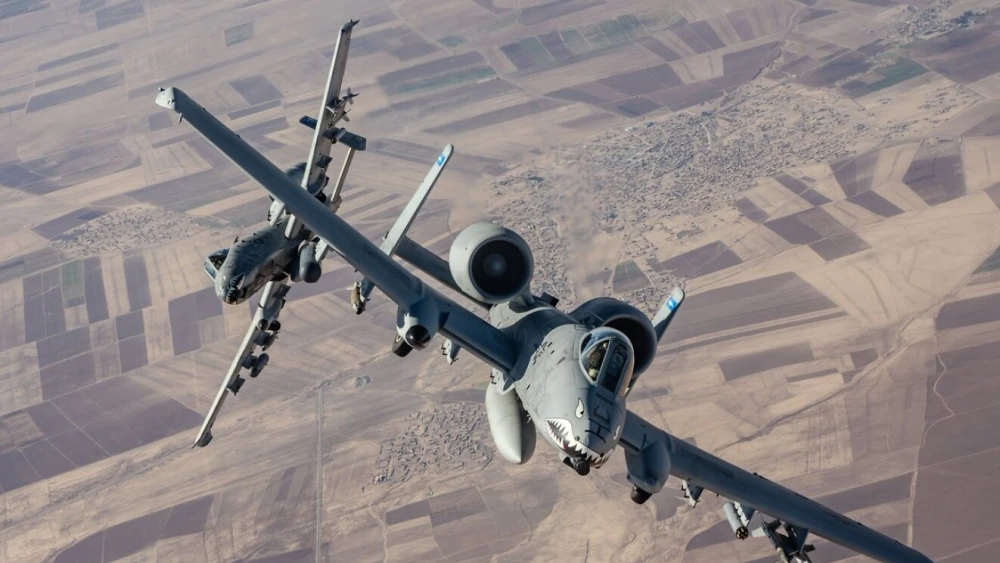
US Air Force A-10 fighter jet
U.S. Air Force A-10 Thunderbolt II close air-support attack aircraft, aka “Warthogs,” fly over the U.S. Central Command area of responsibility. Credit: CENTCOM.

The U.S. military bombed Iranian military sites for three hours, from 7 to 10 p.m. on Sunday, for the ninth consecutive evening of attacks, U.S. Central Command said.

The military attacked “Iranian military command centers, air defense and coastal surveillance sites, maritime capabilities, missile and drone launch sites and communications networks to further diminish Iran’s ability to attack commercial vessels and civilian mariners transiting the Strait of Hormuz,” CENTCOM said.

“The strikes will continue degrading Iranian military capabilities used to attack commercial vessels and civilian mariners transiting the Strait of Hormuz,” it added.

CENTCOM said on Sunday that U.S. military personnel have found “unidentified remains” at the Jordan base where an Iranian aerial attack killed two American service members and left another missing on July 17.

“An examination process to verify the remains is ongoing,” CENTCOM said.

U.S. President Donald Trump told reporters on Sunday that the military struck the Islamic regime “very hard again” in honor of the service members killed in the Iranian attack on Jordan.

“We did that in honor of the probably three—it’s probably three as opposed to two—great patriots,” the president said. “Those great patriots were out there fighting that Iran cannot have a nuclear weapon.”

“Iran has been very, very badly damaged. They’ve lost everything almost militarily; they’ve got very little left. They’ve got some missiles. They’ve got some drones. They’ve got some manufacturing ability. Not much,” he continued.

“We control the Strait [of Hormuz]. They don’t control anything, so we’ll see what happens,” Trump added.

U.S. forces have redirected six vessels and disabled another since the naval blockade of Iranian ports was reinstated on July 14, CENTCOM said on Sunday.

The number of commercial vessels redirected as part of the naval blockade increased from five on Saturday, according to the command.

Zamir: IDF ready to ‘immediately resume combat’

Israel Defense Forces Chief of Staff Lt. Gen. Eyal Zamir said on Sunday that the Jewish state was prepared to “immediately resume combat” as it closely monitors regional tensions involving the Iranian regime.

“We are closely monitoring developments in Iran and maintaining a high level of readiness,” Zamir said during a situational assessment held at the Judea and Samaria Division.

“We monitored today’s launch toward the Aqaba area [in southern Jordan], and our Aerial Defense Array remains on alert to protect Israeli civilians,” he continued, adding that “we are prepared to immediately resume combat and will act with great determination against anyone who harms us.”

Israeli defense officials believe that the likelihood of a further escalation with the Islamic Republic has increased significantly in recent days, Channel 12 News reported on Monday.

“We are preparing for every scenario and developing both immediate and long-term operational options,” a senior Israeli official told the outlet. “If the Americans decide to escalate or involve Israel, or if the Iranians take action against us, we will be ready.” 


JNS Staff

Source: https://www.jns.org/news/u-s-news/us-bombs-iran-for-three-hours-on-ninth-consecutive-night

Follow Middle East and Terrorism on Twitter

US announces: Implementation of Israel-Lebanon deal begins in pilot areas - Israel National News


by Israel National News

State Department says the pilot program of the agreement between Israel and Lebanon to end hostilities has begun in 3 villages.


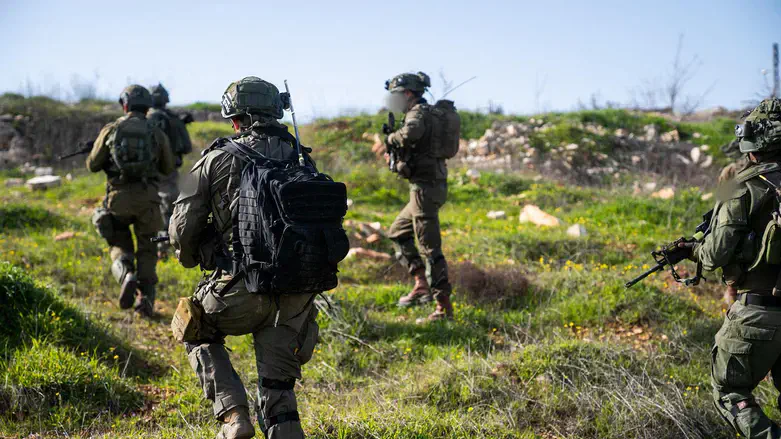
IDF soldiers in Lebanon
IDF soldiers in Lebanon                                                                                  IDF Spokesperson

The US State Department announced today (Monday) that implementation of the Israel-Lebanon agreement has begun in the designated pilot areas in southern Lebanon. According to the announcement, implementation has commenced in the villages of Froun, Srifa, and Zawtar al-Gharbiyeh.

The announcement states: "Today, pilot zone operations began in the villages of Froun, Srifa, and Zawtar Al-Gharbiya in accordance with the Trilateral Framework and under the auspices of the Military Coordination Group for Lebanon."

"This milestone is a direct outcome of last week’s discussions between Israel and Lebanon in Rome. The United States will continue working closely with both parties to implement the Framework to a successful conclusion," the State Department said.

US Secretary of State Marco Rubio hosted Lebanese President Joseph Aoun at the State Department yesterday (Sunday).

Following his session with Rubio, Lebanese officials confirmed that Aoun is slated to hold a meeting with President Donald Trump on Tuesday.

In an official readout issued after the talks, the State Department noted that Rubio commended the Lebanese government for its "determined effort to reclaim Lebanon's sovereignty, disarm Hezbollah and dismantle its terrorist infrastructure, and move towards peace".

The high-level diplomacy follows Washington-brokered talks initiated in April between Lebanon and Israel - nations that lack formal diplomatic ties - aimed at forging a permanent peace agreement to end the Israel-Hezbollah war. On June 26, negotiators established a foundational framework in Washington outlining a withdrawal of the Israeli military from southern areas alongside the deployment of the Lebanese army, slated to begin within two designated "pilot zones".

However, the execution of the pact remains strictly conditional upon the total disarmament of Hezbollah. The Iran-backed terrorist group has completely rejected the framework and the underlying bilateral peace talks.

Following a follow-up round of negotiations last week in Rome, American officials reported that Israel and Lebanon successfully agreed on the specific guidelines and organizational structure required to operationalize the two buffer zones.

During the Sunday session, Rubio stated that Washington remains dedicated "to supporting the successful implementation of the Trilateral Framework and to backing the Government of Lebanon's efforts to deliver peace, economic recovery, and a better future for the Lebanese people".

Despite agreeing to hold talks with Israel, the Lebanese President has repeatedly rejected the idea of a face-to-face meeting with Netanyahu, as floated by Trump.

Aoun has made clear that a high-level summit with Netanyahu is currently out of the question, stressing that the cessation of hostilities must be the primary focus before any direct political engagement can be considered.

Earlier this month, Aoun again ruled out the possibility of a direct meeting with Netanyahu, stressing, “If we were to find ourselves in the same room, I would immediately leave."


Israel National News

Source: https://www.israelnationalnews.com/news/430461

Follow Middle East and Terrorism on Twitter

Iran's War on the Arabs: Time for the Gulf to Stand with Israel - Khaled Abu Toameh


by Khaled Abu Toameh

Taken together, these terrorist organizations form what Tehran proudly calls the "Axis of Resistance." It is, in reality, an axis of terrorism. Its purpose is not just to destroy Israel. Its objective is to spread Iran's revolutionary Shiite Islamist ideology, undermine moderate Arab governments, expel American influence from the Middle East, and ultimately wage jihad (holy war) against the West.


  • Over the past week, the Iranian regime has demonstrated once again that its ambitions extend far beyond destroying Israel.

  • It is a war against the entire Middle East and, ultimately, against the United States and the West.

  • Tehran then launched missiles and drones not only against US assets but also against infrastructure in Arab countries across the Gulf, in addition to Jordan, presumably so they would pressure US President Donald J. Trump to call off US firepower and return instead to waste-of-time negotiations for a waste-of-time "deal" that Iran would not honor in the first place.

  • In reality, the negotiations have been worse than a waste of time... The negotiations actually caused harm. They gave the regime time to retrieve missiles it had hidden and to resume firing, with targeting assistance from China and Russia, on US forces and allies in the Gulf.

  • Iranian regime ideology rejects peaceful coexistence and normalization between Arabs and Israelis -- as does the ideology of the Muslim Brotherhood, currently embodied by Qatar and Turkey.

  • Taken together, these terrorist organizations form what Tehran proudly calls the "Axis of Resistance." It is, in reality, an axis of terrorism. Its purpose is not just to destroy Israel. Its objective is to spread Iran's revolutionary Shiite Islamist ideology, undermine moderate Arab governments, expel American influence from the Middle East, and ultimately wage jihad (holy war) against the West.

  • The Arab states therefore have every reason to openly align themselves with the United States and Israel in confronting the Iranian threat.

  • This is not about choosing sides in someone else's conflict. It is about defending their own sovereignty, their own interests, their own citizens, and their own future.

  • The lesson of the past week: So long as the regime in Tehran remains committed to exporting its "Islamic Revolution" and maintaining its network of terrorist proxies, there can be no genuine security or stability in the Middle East.

  • Until the Iranian regime abandons its expansionist ambitions or loses the capacity to pursue them, the Middle East will remain trapped in recurring cycles of violence. Until then, the Arab states would be wise to recognize that this is their fight as much as Israel's.

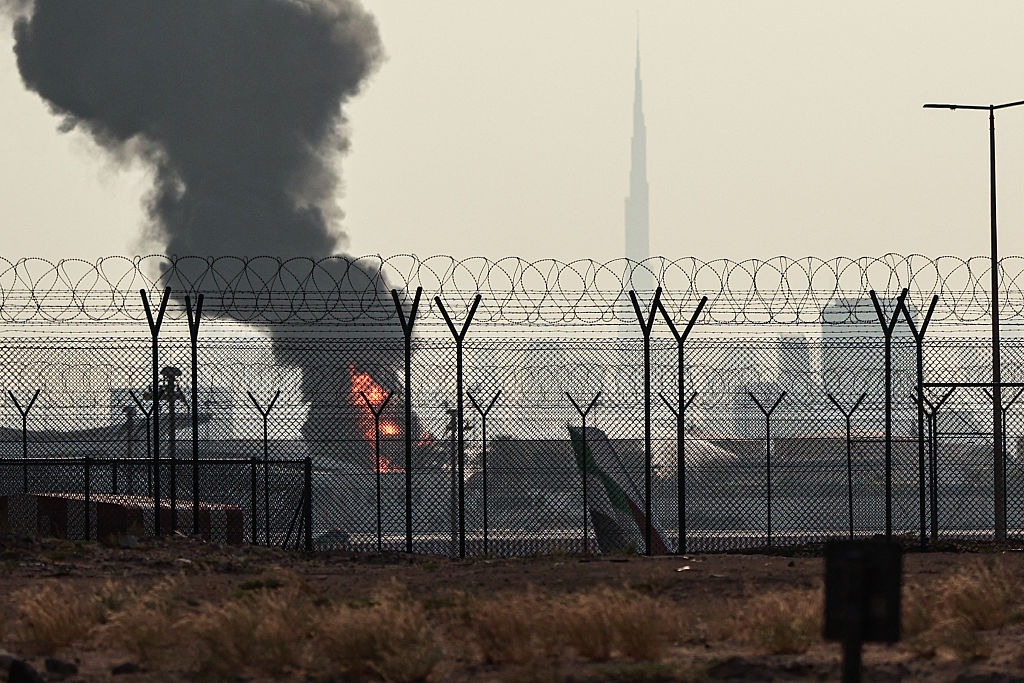
Over the past week, the Iranian regime has demonstrated once again that its ambitions extend far beyond destroying Israel. Tehran has launched an unprecedented campaign of missile and drone attacks against several Arab states, targeting critical infrastructure, ships, airports, oil facilities, power stations, desalination plants, ports and even residential neighborhoods. Pictured: Flames and smoke from an Iranian drone attack next to Dubai International Airport on March 16, 2026. (Photo by AFP via Getty Images)

For decades, governments of many Arab states have viewed Iran's aggression primarily through the prism of its conflict with Israel. That illusion has now been shattered.

Over the past week, the Iranian regime has demonstrated once again that its ambitions extend far beyond destroying Israel. Tehran has launched an unprecedented campaign of missile and drone attacks against several Arab states, targeting critical infrastructure, ships, airports, oil facilities, power stations, desalination plants, ports and even residential neighborhoods.

These attacks should remove any doubt: Iran's war is not only against Israel. It is a war against the entire Middle East and, ultimately, against the United States and the West.

The latest escalation also exposes the fatal flaw in the Memorandum of Understanding signed between Washington and Tehran only weeks earlier. The agreement was supposed to reduce tensions and guarantee safe navigation through the Strait of Hormuz. Instead, Iran immediately violated its commitments.

Beginning on July 6, Iran resumed attacks on commercial ships in the Strait of Hormuz, despite pledging to ensure safe passage for international vessels. The attacks prompted American military strikes against Iranian targets. Tehran then launched missiles and drones not only against US assets but also against infrastructure in Arab countries across the Gulf, in addition to Jordan, presumably so they would pressure US President Donald J. Trump to call off US firepower and return instead to waste-of-time negotiations for a waste-of-time "deal" that Iran would not honor in the first place.

The Iranian regime has never demonstrated any willingness to abide by agreements if they conflict with its revolutionary ideology or strategic objectives. The latest memorandum of understanding between Iran and the US has gone the way of countless previous understandings with Tehran: reduced to little more than worthless paper.

In reality, the negotiations have been worse than a waste of time, except to see if any deal might be possible with a regime that just murdered more than 50,000 of its own citizens in January alone. The negotiations actually caused harm. They gave the regime time to retrieve missiles it had hidden and to resume firing, with targeting assistance from China and Russia, on US forces and allies in the Gulf.

This chain of events is hardly surprising, and the same disaster applies to Iran's terrorist proxies.

Hamas repeatedly violated ceasefire agreements before launching its October 7, 2023 invasion of Israel. Hezbollah has ignored international resolutions demanding its disarmament while repeatedly violating ceasefire agreements. Yemen's Houthis have continued attacking international shipping despite multiple diplomatic initiatives and understandings.

Negotiating with terrorist organizations or the regime that sponsors them has consistently produced the same result: more violence and terrorism.

The current wave of Iranian attacks illustrates precisely why.

Over the past few months, Iran has carried out sustained missile and drone attacks against at least seven Arab countries.

Commercial vessels in the Strait of Hormuz were struck. Kuwait, Bahrain, and Jordan came under coordinated missile and drone attacks. Qatar was targeted for a second time in one week. Kuwait suffered direct hits on an oil facility, a power station, and a desalination plant, and was forced to suspend flights at Kuwait International Airport. Saudi Arabia issued emergency missile alerts as Iranian projectiles threatened its territory.

Even Oman, which has long maintained cordial relations with Tehran and served as an intermediary between Iran and the US, was not spared.

Tehran claims that it targets only American military facilities. Reality tells a different story.

Civilians have been killed, residential areas struck, and airports, hotels, ports, oil facilities and other civilian infrastructure have suffered significant damage.

These are not attacks on military facilities. They are acts of state terrorism, targeting purely civilian infrastructure and designed to intimidate entire societies.

The Arab League was correct in condemning the attacks as "heinous and reckless" violations of Arab states' sovereignty. It warned that Iran's actions represent "a serious and unprecedented escalation threatening the security and stability of the entire region."

The Arab League also reaffirmed its "full solidarity and unwavering support" for the Arab countries targeted by Iran.

These statements are welcome, but words alone will not stop the Iranian regime.

For years, Iran has systematically built an empire of armed proxies across the Arab world. Iran dominates Lebanon through Hezbollah. It exercises enormous influence over Iraq through Shiite militias. It transformed Yemen's Houthis into a heavily armed force capable of threatening one of the world's most important maritime trade routes. It continues to bankroll Hamas and Palestinian Islamic Jihad in the Gaza Strip and the West Bank. Iran's influence extends deep into Syria as well.

Taken together, these terrorist organizations form what Tehran proudly calls the "Axis of Resistance." It is, in reality, an axis of terrorism. Its purpose is not just to destroy Israel. Its objective is to spread Iran's revolutionary Shiite Islamist ideology, undermine moderate Arab governments, expel American influence from the Middle East, and ultimately wage jihad (holy war) against the West.

That agenda was underscored this week in a statement attributed to Iran's Supreme Leader Mojtaba Khamenei, declaring that "the American enemy" should prepare for "unforgettable lessons" from Iran and the "Axis of Resistance."

This is not the language of a regime seeking peace. It is the language of a regime openly threatening continued war.

Iran's aggression is steadily eroding whatever sympathy it once enjoyed among many Arabs. The regime's true face has become impossible to conceal. This new belligerence should be a turning point for Arab governments.

According to the news website MBN:

"Ahmed Alkhuzei, a leading analyst in Bahrain, said that as the war drags on, people increasingly experience its consequences in their daily lives. As a result, he said, they are more likely to see Tehran not as a victim but as a destabilizing force whose actions directly threaten their security and prosperity.

"'Iran is being recast from a distant geopolitical actor into the immediate source of instability,' he told MBN."

Iran is not merely Israel's problem. Its missiles threaten Gulf capitals. Its proxies destabilize Arab governments. Its attacks endanger Arab economies. Iranian regime ideology rejects peaceful coexistence and normalization between Arabs and Israelis -- as does the ideology of the Muslim Brotherhood, currently embodied by Qatar and Turkey.

One of Tehran's principal strategic objectives has always been to sabotage the Abraham Accords and prevent further normalization between Israel and its Arab neighbors. Iran understands that regional peace and cooperation weaken its revolutionary narrative and diminish the influence of its terrorist proxies.

The Arab states therefore have every reason to openly align themselves with the United States and Israel in confronting the Iranian threat.

This is not about choosing sides in someone else's conflict. It is about defending their own sovereignty, their own interests, their own citizens, and their own future.

The lesson of the past week: So long as the regime in Tehran remains committed to exporting its "Islamic Revolution" and maintaining its network of terrorist proxies, there can be no genuine security or stability in the Middle East.

The Islamabad Memorandum of Understanding has already collapsed: it rested on the false assumption that the Iranian regime could be trusted to honor its commitments. The Islamic Republic's own history, and its latest missile and drone attacks against the Arab world, prove otherwise.

Peace cannot be built upon deals with a regime that views every agreement merely as another tactical pause in its long war against the US, Israel, and its Arab neighbors.

Until the Iranian regime abandons its expansionist ambitions or loses the capacity to pursue them, the Middle East will remain trapped in recurring cycles of violence. Until then, the Arab states would be wise to recognize that this is their fight as much as Israel's.


Khaled Abu Toameh is an award-winning journalist based in Jerusalem.

Source: https://www.gatestoneinstitute.org/22715/iran-war-on-arabs

Follow Middle East and Terrorism on Twitter

McCain-Feingold, USAID and the NGO Network - Stu Cvrk


by Stu Cvrk

Good intentions gone bad—by design!


Money is the mother’s milk of politics.

—Jesse Unruh, the 26th California treasurer

The debate over money in politics is defined by a core tension between the ideals of transparency, privacy, and mandated disclosure. Proponents of robust transparency and disclosure requirements (especially America Firsters) argue that voters have a fundamental right to know who is funding candidates, parties, and issue advocacy since undisclosed “dark money” from wealthy individuals, corporations, unions, or foreign-linked entities can distort democratic outcomes, enable corruption or undue influence and facilitate implementation of left-wing policies funded by U.S. taxpayers without authorization or scrutiny. They push for lower reporting thresholds, real-time disclosures, and the closing of loopholes like super PACs and 501(c) organizations to let sunlight act as a disinfectant.

Opponents (the Democratic Party and their deep-state allies) counter that stringent disclosure rules infringe on First Amendment rights and donors’ privacy, exposing individuals and businesses to harassment, boycotts, job loss, or political retaliation—especially in an era of polarized social media and doxxing. They contend that anonymity protects legitimate expression and participation, warning that overly aggressive mandates could chill political speech and drive money further underground.

The system has been rigged to support the opponents of transparency over the years by design. Let us examine that premise.

The Bipartisan Campaign Reform Act (aka McCain-Feingold)

The explosions of “soft money” during the Clinton years brought about the first major campaign finance reform effort in decades. The term “soft money” refers to unregulated, unlimited contributions made to political parties (not directly to candidates) for activities that are supposedly not tied to federal elections—such as party-building efforts, voter registration drives, get-out-the-vote campaigns, and issue advocacy advertising. The reform effort resulted in the infamous Bipartisan Campaign Reform Act (BCRA) of 2002.

Origins and Passage

Senators John McCain and Russell Feingold began championing campaign finance reform in the mid-1990s as a reaction to what was seen as a toxic political landscape in which large donations tipped the scales for certain candidates and parties. The immediate trigger was the 1996 election cycle, when Bill Clinton pioneered the use of soft money funneled through the Democratic National Committee to supercharge campaign spending. A second catalyst came later: the final catalyst for House passage was the Enron scandal—and the lavish style with which the bankrupt Texas energy company had bankrolled legislators in both parties.

McCain-Feingold was created to prohibit soft money contributions to national political parties and limit campaign financing to hard money. Hard money is regulated, limited, and fully disclosed contributions made directly to federal candidates, their campaign committees, or political parties.

The bill passed the House 240-189, passed the Senate 60-40, and was signed into law by President George W. Bush on March 26, 2002. Bush was so unenthusiastic about the legislation that he dispensed with the traditional White House Rose Garden signing ceremony as he instead set off on a two-day fundraising trip for congressional Republicans.

What It Accomplished

One of the most significant campaign finance regulations introduced by the BCRA was that national political party committees could no longer receive “soft money”—that is, unlimited donations to political parties from individuals, unions, or organizations—for federal elections. It also prohibited corporate and union broadcast communications within 30 days of a primary and 60 days of a general election.

The Unintended (or Intended?) Loophole

President Bush was perhaps prescient in his lack of enthusiasm for McCain-Feingold, as moneyed interests always seem to find ways around or through regulations, often through weak enforcement.

Money Migrates Downstream

The law’s central flaw—whether by design or negligence—was that it drove money out of transparent party channels and into opaque nonprofit structures where disclosure requirements were far weaker. The bill banned soft money but left in place a weak enforcement system that has resulted in little regulation of contributions to independent committees, including so-called 501(c)(4) and 527 groups.

Instead of resulting in more transparency and accountability, the law resulted in less. Prior to McCain-Feingold, the public knew the identity of soft money donors, which gave the two national parties a record $458 million in 2002 before the practice was outlawed. Many of these same donors are still making contributions to outside groups. But now the public is often left in the dark.

The numbers tell the story starkly. 501(c)(4) social welfare groups spent just $2.6 million in 2002. By the 2012 election, the amount had reached $257 million—nearly 100 times more than a decade earlier.

The 501(c)(4) Dark Money Architecture

501(c)(4) organizations can run attack ads, promote candidates and mobilize voters, all without ever disclosing a single one of their donors—as long as up to 49.9 percent of their activities are political. Section 501(c)(4) of the U.S. tax code allows organizations to make independent expenditures on politics while concealing their donors’ names—as long as politics isn’t the organization’s “primary activity.” This is the essence of “dark money.” The IRS has the daunting task of trying to determine when nonprofits in that category violate that vague standard.

Critically, since 2015, thousands of complaints have streamed in—from citizens, public interest groups, IRS agents, and government officials—that C4s are abusing the rules, but the agency has not stripped a single organization of its tax-exempt status for breaking spending rules during that period.

Citizens United Compounds the Problem

A short eight years after McCain-Feingold, a series of Supreme Court rulings struck down spending limits on corporations and unions, radically altering the campaign finance landscape and ushering in the era of the super PAC and, with it, a proliferation of other nonprofit organizations not required to disclose their donations under U.S. tax law.

USAID and the NGO Network

Unrestricted spending limits for corporations and unions and weak enforcement of campaign finance laws by the IRS and the political actors of the deep state make for a witch’s brew of the U.S. Agency for International Development and the tens of thousands of nongovernmental organizations (NGOs) that help distribute U.S. taxpayer funds in the U.S. and around the world.

The Structural Relationship

USAID was created by President Kennedy in 1961, and it was structured to receive foreign policy guidance from the State Department while operating as a nominally independent agency. Over decades, it built an extensive network of NGO implementing partners—contractors and grantees that carry out programs on the ground. In many cases, interagency partners are used as conduits for partnering with other NGOs—such as State Department management of various activities—rather than implementers themselves. Such cases blur the lines between a “managing agency” and an “implementing partner,” since an NGO in such cases effectively operates as the implementing partner.

USAID contractor and grantee indirect costs sometimes equal 30 percent of direct project costs, and of U.S. assistance contracted to firms and nonprofits worldwide in 2020, four-fifths still went to U.S. firms as prime contractors. This created a permanent, D.C.-centric ecosystem of organizations financially dependent on continued government grants.

Advancing Policies Without Congressional Direction

A serious and well-documented criticism—raised by conservatives, foreign governments, and some bipartisan congressional voices—is that USAID under certain administrations was used to advance ideological and political agendas that Congress never specifically authorized. There is credible evidence that during the Obama and Biden years, USAID was used to promote policies abroad that remain controversial within American society itself and that serve no clear national security interests.

The Heritage Foundation published a report exposing what it described as a nexus between USAID and George Soros’s Open Society Foundations, claiming that the Obama administration had “at times turned USAID into an instrument for promoting agendas that have failed to gain consensus acceptance within American society itself,” including transgender rights and same-sex marriage.

Open Borders and Immigration Policy

A specific subset of criticism concerns USAID-funded NGOs that facilitated migration into the United States. The U.S. Committee for Refugees and Immigrants, one of the nonprofits that transported illegal aliens across the country under the Biden administration, reported receiving vast sums from federal sources. Congressional testimony has detailed how some Soros-affiliated groups receiving government grants also took “extreme stances against the enforcement of immigration law,” declaring federal immigration agencies a “threat to civil liberties” and working to establish representation rights for immigrants facing deportation.

Documented Fraud and Kickbacks in the NGO Network

Separate from ideological concerns, the USAID implementing partner network has a documented record of financial fraud. The International Rescue Committee paid $6.9 million to settle allegations that its staff received kickbacks and steered procurements to a Turkish supply ring engaged in bid-rigging, billing USAID for inflated procurements in violation of the False Claims Act. The Academy for Educational Development paid more than $5 million to settle allegations that it submitted false claims to USAID in Afghanistan and Pakistan, failing to ensure compliance with rules concerning competition in procurements. In June 2025, a government contracting officer for USAID and three owners and presidents of companies pleaded guilty in a decade-long bribery scheme involving at least 14 prime contracts worth more than $550 million.

The following foreign terrorist organizations (FTOs) have received funding from USAID, USAID-connected NGOs, or both:

Examples of ideologically motivated fraud perpetrated by USAID include the following:

  • $1.5 million—Advancing DEI in Serbia’s workplaces.
  • $70,000—Producing a “DEI musical” in Ireland.
  • $47,000—A “transgender opera” in Colombia.
  • $32,000—A “transgender comic book” in Peru.
  • $2 million—Sex changes and LGBT activism in Guatemala.


ActBlue and the Foreign Money Problem

The McCain-Feingold architecture—which pushed donations toward less-regulated nonprofit and online channels—created conditions that were eventually exploited through online bundling platforms. ActBlue, the dominant Democratic online fundraising processor, came under serious scrutiny.

ActBlue’s own law firm, Covington & Burling, sent “startling” memos in early 2025 warning that ActBlue’s CEO may have misled Congress about how the platform ensures donations come from U.S. sources, concluding there was “a substantial risk that some of the funds received” were “impermissible contributions from foreign nationals.”

A joint House committee report alleged that ActBlue “allowed bad actors, including foreign actors, to exploit its online platform to make fraudulent political donations” and cited mass resignations from ActBlue’s own legal and compliance team as a consequence of the scandal. The Republican-led House Administration Committee found evidence that illegal donations from China, Russia, Iran, and Venezuela may have been laundered to Democratic campaigns through the platform, with foreign actors allegedly exploiting existing U.S. donors by making straw donations without their knowledge.

President Trump signed a presidential memorandum directing the attorney general to investigate allegations of “straw donor” and foreign contributions through online fundraising platforms, with congressional investigators finding, over a 30-day period during the 2024 election cycle, hundreds of ActBlue donations from foreign IP addresses using prepaid cards.

The full extent of foreign money in ActBlue is still under criminal and civil investigation.

Concluding Thoughts

Connecting these threads, a coherent structural critique can be summarized as follows:

McCain-Feingold killed transparent soft-money donations to parties, but the same money migrated into 501(c)(3)s, 501(c)(4)s, and online bundlers with far less disclosure—creating a shadow funding infrastructure for political activism, including the election of favored candidates and implementation of favored policies.

USAID and the State Department built a global NGO network that, under certain administrations, became a vehicle for implementing progressive policy objectives—on immigration, gender ideology, media influence, and electoral politics in foreign countries—that were never specifically authorized by Republican-controlled Congresses or Republican presidents, funded by taxpayer dollars, and operating largely beyond normal oversight mechanisms.

The NGO network domestically connected that infrastructure back to U.S. politics: organizations receiving federal grants also lobbied for open-border policies, ran voter mobilization programs, and fed into the broader progressive fundraising ecosystem.

ActBlue sits at the end of that chain—a nominally independent nonprofit that aggregated small-dollar donations in ways that allegedly allowed foreign money and straw donations to enter the U.S. campaign finance system at scale, with its own lawyers ultimately acknowledging the risk of serious federal violations. The fact that ActBlue CEO Regina Wallace-Jones pleaded the Fifth multiple times under questioning by the House Administration Committee on June 10 explains everything (she knows they committed criminal acts and doesn’t want to incriminate herself).

As a result, the tensions between the ideals of transparency, privacy, and mandated disclosure throughout the chain continue unabated in 2026. This friction plays out in court battles and in the political arena, where the challenge remains of striking a balance that deters corruption without sacrificing the associational privacy essential to a free society. Not to mention catching crooks who violate campaign finance and other U.S. laws with impunity.

The Trump administration is trying to restore the balance in favor of transparency and the enforcement of existing laws. The Democrats who have learned to rig the system for their political benefit are fighting tooth and nail to restore the status quo ante Trump and keep the money flowing. That is a big part of what the midterm elections are all about.

Photo: Senator John McCain (L), R-AZ, with Campaign Finance Bill co-sponsor Russell Feingold (R), D-WI, talk to the press after the US Senate passed the bill 02 April 2001 in Washington, DC. The Senate voted 59-41 for the bill to ban unlimited contributions to political parties, also known as "soft money." McCain and Feingold say the measure will break the power of large donors over lawmakers. Opponents of the bill argue it violates the First Amendment's guarantee of free speech. The bill would raise the amount of direct contributions for candidates from 1,000 to 2,000 USD, and increase disclosure requirements and restrict advertising by independent groups. AFP PHOTO/Manny CENETA (Photo by MANNY CENETA / AFP) (Photo by MANNY CENETA/AFP via Getty Images) 


Stu Cvrk retired as a captain after serving 30 years in the U.S. Navy in a variety of active and reserve capacities, with considerable operational experience in the Middle East and the Western Pacific. He is a graduate of the U.S. Naval Academy, where he received a classical liberal education that serves as the key foundation for his geopolitical commentary.

Source: https://amgreatness.com/2026/07/20/mccain-feingold-usaid-and-the-ngo-network/

Follow Middle East and Terrorism on Twitter
Inside House Democrats' fear-driven turn against Israel - Andrew Solender


by Andrew Solender

It's not just that the left is winning seats — they're ousting incumbents and instilling panic among House Democrats, who fear they may be next if they don't take a more hostile posture toward Israel.


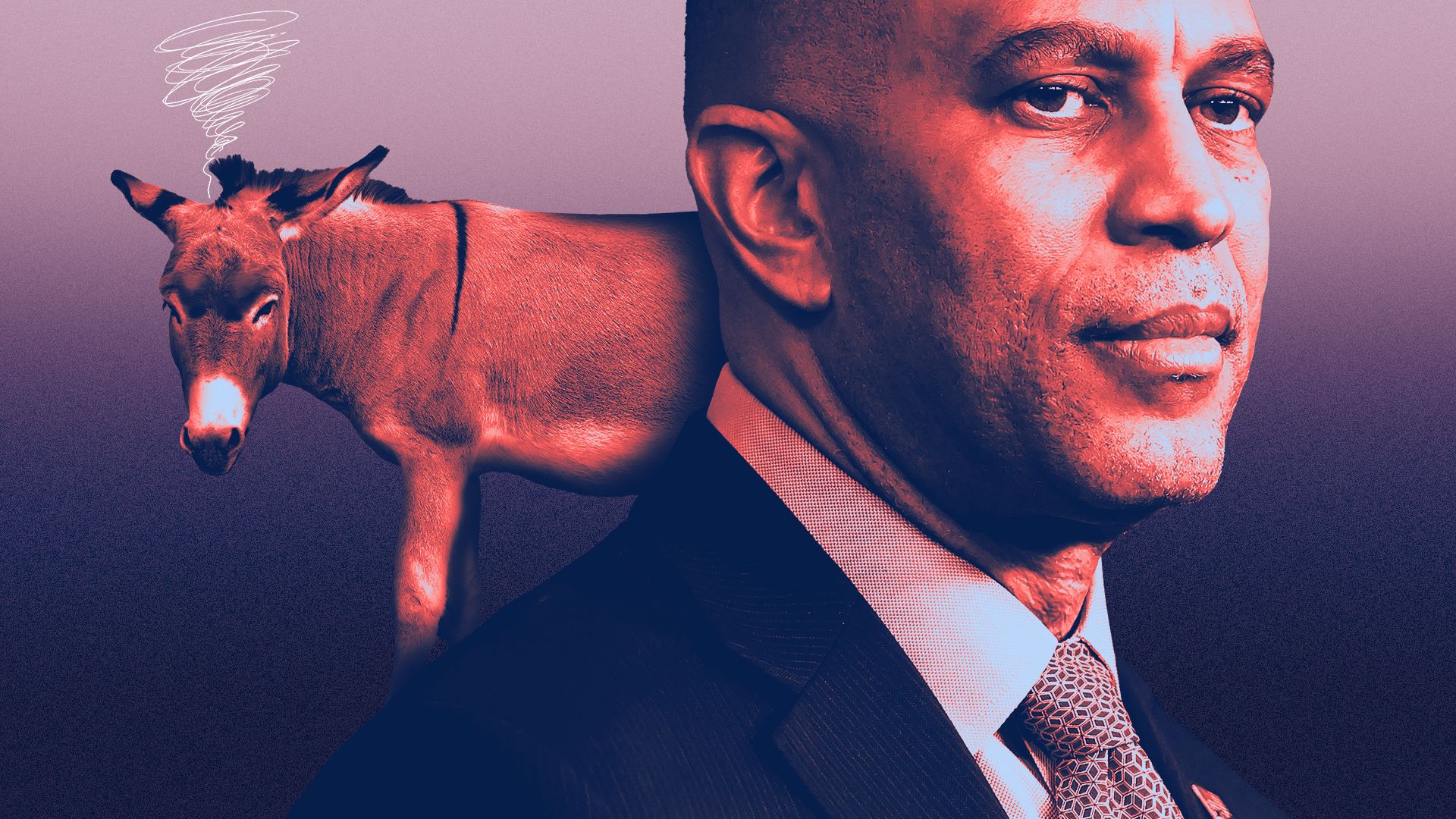
Photo illustration of  House Minority Leader Hakeem Jeffries with an angry donkey behind him
Photo illustration: Sarah Grillo/Axios. Photo: Michael M. Santiago/Getty Images


Last week's dramatic showdown over cutting U.S. aid to Israel offered a glimpse into just how profoundly progressive anger is reshaping Democratic politics.

Why it matters: It's not just that the left is winning seats — they're ousting incumbents and instilling panic among House Democrats, who fear they may be next if they don't take a more hostile posture toward Israel.

  • "Our primary victories this cycle defeating AIPAC-backed candidates ... is forcing the Democratic caucus to finally heed the calls of their voters," said Usamah Andrabi, a spokesperson for Justice Democrats.
  • It's a reality the pro-Israel center sees as well. "This is no longer about substance," Rep. Josh Gottheimer (D-N.J.) tells Axios, "It's about the raw fear of pissing off the far left."

Driving the news: On Wednesday, 103 House Democrats voted in favor of an amendment to a State Department funding bill that would have prohibited any of the money from going to Israel.

  • At issue for many Democrats was the fact that the amendment, introduced by Rep. Thomas Massie (R-Ky.), made no carveout to preserve non-military diplomatic funding.
  • Still, many Democrats who had substantive concerns with the measure voted for it anyway. They said they wanted to send a message to Israeli Prime Minister Benjamin Netanyahu over his actions in Gaza and Lebanon.

What we're hearing: One swing-district House Democrat who voted for the amendment cited a "shifting of attitudes around Israel ... over the past year," and said they "want to be a good reflection of my district."

  • "The American people are like, 'These are our tax dollars,' and they see the devastation, 85 percent of homes in Gaza are destroyed," the lawmaker told Axios.
  • Another House Democrat who voted for the measure said the defeats of several pro-Israel lawmakers in primaries this year "reinforced for people the depth and breadth of the change in public opinion."

What they're saying: "Obviously what's happening politically around the country has impact on members of the House," said former House Majority Leader Steny Hoyer (D-Md.), who opposed the amendment.

  • Rep. Steve Cohen (D-Tenn.), who also voted "no," told Axios that political pressure "probably" played a role. "I think Israel is in trouble," he said.
  • "As long as Netanyahu is in charge, there are going to be many votes against Israel funding or support," Cohen added.
  • The intrigue: The vote put House Minority Leader Hakeem Jeffries (D-N.Y.) in the minority of his own party. He was among the 98 Democrats who voted against the measure.

    • A former House Democrat told Axios some current lawmakers have fumed to them that Jeffries "is not reading the moment of where the party is now."
    • But a House Democrat who was involved in efforts to sink the amendment said Jeffries' letter opposing it "made a huge difference" and "picked up like 30 to 40 people" who were on the fence.
    • There would have been more votes for the amendment had Jeffries not spoken out, the lawmaker said, estimating that as many as 150 Democrats might have supported it in that scenario.

    Asked by reporters Thursday whether the vote is evidence he is out of step with the direction his party is going on Israel, Jeffries responded, "Ask me a serious question and I'll give you a serious answer."

    The bottom line: "There's no good marketing for what's going on there ... and more people at home are speaking out on it," a House Democrat who opposed the amendment told Axios.

    • "There's no good political play here," the member said.
     

Andrew Solender

Source: https://www.axios.com/2026/07/20/democrats-israel-jeffries-massie-amendment-vote

Follow Middle East and Terrorism on Twitter
Trump praises Johnson, House GOP as chamber sets up SAVE America Act fight - Ben Whedon


by Ben Whedon

The House plan would see much of the bill, including the voter ID provisions, tied to budget proposals, with the aim of getting them through the Senate via reconciliation.


President Donald Trump on Monday thanked House Speaker Mike Johnson and much of House Republican leadership for their efforts to include key provisions of the SAVE America Act in a budget plan.

The House plan would see much of the bill, including the voter ID provisions, tied to budget proposals, with the aim of getting them through the Senate via reconciliation. That process permits legislation to clear the chamber without the 60-vote filibuster requirement if the bill is primarily budget-related.

"Thank you to our Great Speaker, Mike Johnson, the House Budget Chairman, Jodey Arrington, and the members of the House Budget Committee, including Lloyd Smucker, Ron Estes, Andrew Clyde, Josh Brecheen, Erin Houchin, Mike Carey, Blake Moore, Jay Obernolte, Tom McClintock, and many others, for launching an effort to get AS MUCH of THE SAVE AMERICA ACT as possible in a Budget Bill, along with aid to our incredible Farmers, and funding for our Military," Trump posted on Truth Social

"We need Voter Photo ID (Identification!), Proof of Citizenship and, hopefully, No Corrupt Mail In Ballots (except for illness, disability, Military, or travel)," he added. "I am asking all House Republicans to VOTE YES this week on the Budget Resolution, which is an important first step towards getting a Budget Bill. House Republicans must UNIFY, and fight for THE SAVE AMERICA ACT!"

The reconciliation plan is still likely to hit a snag in the form of the Senate parliamentarian, who has balked at plans to pass legislation through the reconciliation process. Senate Majority Leader John Thune has declined to fire her, despite public pressure from Trump.


Ben Whedon
is the Chief Political Correspondent for Just the News. Follow him on X.

Source: https://justthenews.com/politics-policy/trump-praises-johnson-house-gop-chamber-sets-save-america-act-fight

Follow Middle East and Terrorism on Twitter
Feds must strengthen identity verification policies to help prevent government-wide fraud: GAO says - Nicholas Ballasy


by Nicholas Ballasy

Login.gov serves as the federal government's central identity verification service, allowing members of the public to securely access government websites and services.


The General Services Administration must take additional steps to strengthen its Login.gov identity verification platform or risk continuing to leave federal agencies vulnerable to fraud and identity theft, according to findings in a new Government Accountability Office report.

In the report, titled "GSA Needs to Address Fraud Threats and Technical Issues," the watchdog said GSA has made progress implementing most of its previous recommendations but has yet to fully adopt clear plans and timelines for resolving technical problems with Login.gov that federal agencies have reported. 

Growing number of cyberattacks and data breaches has made the need for stronger safeguards essential

GAO warned that without those changes, agencies across the federal government could continue to experience security and operational weaknesses that increase the risks of fraud. "Without GSA-proposed actions and timeframes for addressing the challenges, agencies will continue to experience technical issues with the system," the report read.

Login.gov serves as the federal government's central identity verification service, allowing members of the public to securely access government websites and services. The platform was created to help agencies confirm users' identities while protecting sensitive personally identifiable information (PII).

GAO said the growing number of cyberattacks and data breaches has made the need for stronger safeguards essential, given that stolen personal information can be used to commit fraud across multiple government programs.

"The proliferation of cyberattacks on federal agencies and other organizations has led to an increased risk of stolen personally identifiable information (PII) being used to commit fraud," GAO wrote. The report noted that criminals have used stolen data to fraudulently obtain government benefits, redirect Social Security payments and open financial accounts in victims' names.

The watchdog also noted that identity theft can lead to financial losses for victims and reputational damage for government agencies.

"In this type of fraud, thieves use identifying data, such as Social Security numbers and driver’s license numbers, to open new financial accounts without a person’s knowledge. These types of attacks can result in financial loss and damage to the reputation of federal agencies and financial institutions," GAO said. "Protecting PII and preventing identity theft is critical, as the harms can range from lost funds to emotional distress," GAO also said.

Still undergoing tests, but GSA has failed to implement recommendations

GAO reviewed several previous findings involving Login.gov, including whether the system regularly backed up user data, complied with federal digital identity standards, addressed technical issues reported by agencies and documented lessons learned from pilot programs.

Congress provided approximately $187 million through the Technology Modernization Fund in 2021 to expand Login.gov's capabilities, including improving security, strengthening anti-fraud protections and making it easier for agencies to adopt the service.

While the agency has addressed most of those concerns, it is still testing Login.gov's data backup processes and whether the remote identity-proofing services fully comply with federal digital identity guidance. GAO said the agency has not fully implemented one of its key fraud-fighting recommendations.

"Specifically, GSA has not established timeframes with its partners for addressing agency-reported technical challenges. Without GSA-proposed actions and timeframes for addressing the challenges, agencies will continue to experience technical issues with the system," read the report, referencing Login.gov.

The report said fully implementing the remaining recommendation "would help the federal government ensure PII is better protected and lessen the risk of identity theft."

GAO said it will continue to track GSA's efforts to address the outstanding recommendation as the Login.gov platform remains a cornerstone of identity verification for a host of federal agencies. 


Nicholas Ballasy

Source: https://justthenews.com/government/federal-agencies/gsa-must-strengthen-identity-verification-policies-better-prevent

Follow Middle East and Terrorism on Twitter
Fossil fuels still dominate globe, despite trillions of dollars spent on energy transition: report - Kevin Killough


by Kevin Killough

In 2025, fossil fuels provided 86.3% of the world's total energy. That's down from 83.6% the previous year. Renewables showed large year-over-year gains, but one researcher estimates that at the current pace, it will take centuries for the world to reach net-zero emissions.


Climate advocates for years have been promising a “clean energy transition” was just on the horizon. The globe has spent $10 trillion in the past decade on the effort, and that was backed up by government mandates. 

Despite all that support, an annual benchmark report shows yet again that coal, oil and natural gas continue to dominate the global energy picture. 

The 2026 “Statistical Review of World Energy” finds that 86.3% of primary energy consumption was derived from fossil fuels last year. This is down from 86.6% the previous year. 

Driven by subsidies and government mandates, wind and solar energy saw the greatest year-over-year growth, according to the report, with solar accounting for 71% of the increase in renewable energy from 2024. 

The report is considered a benchmark source for data on energy trends around the globe. It was originally produced by BP, but in 2022, the British energy company passed off the task to the Energy Institute, a United Kingdom-based energy nonprofit that advocates for a transition away from fossil fuels.  

Centuries to net-zero

This year, the institute partnered with Ember, a think tank that advocates for the wind and solar industry. The lead authors’ statements in the report’s foreword reflect the authors’ commitment to net-zero emissions, focusing on increases in renewable energy while downplaying the lack of any evidence of a transition away from fossil fuels. 

“The 75 years of energy history documented in this Review have largely been a fossil-powered growth story," Phil MacDonald, Ember CEO, said in his forward foreword. 

"Today, the data show that supply growth is increasingly renewable and electric. Electricity continues to outpace total energy supply growth, particularly in Asia. For the first time, renewables – driven largely by solar – were the largest source of new energy supply.” 

Nuclear, hydroelectric and other carbon-free generation technologies reached their highest level ever in 2025. Their share of the global energy picture stood at 14% in 2025, climbing steadily over the past decade. 

However, as Dr. Roger Pielke Jr., a climate researcher and senior fellow at the American Enterprise Institute, points out in his “The Honest Broker” Substack, the figures shouldn’t get net-zero emissions proponents too fired up. 

With respect to climate policies, the pace of change is agonizingly slow. Based on the growth in the past 10 years, Pielke wrote, it would take centuries to reach net-zero. 

Coal is still king

The report finds that people are using more energy than ever, which is a sign that they are getting wealthier

The globe’s total energy supply in 2025 was over 600 exajoules, a measurement of energy used for extremely large numbers, which was an increase of 1.7% over the previous year. 

Global oil consumption increased by 1.3% in 2025, a higher rate than the 1.1% increase seen in 2024. Alongside this increase in hydrocarbon consumption was an increase in emissions of 1.1%, a third of which was from the U.S. 

Coal was the largest source of global energy, taking up nearly one-third of the total, a decrease from the 33.7% in 2024. Natural gas was the next largest source of energy at 21.9%, and hydroelectric accounted for just under 14% last year. 

Pielke explains that to reach net-zero emissions by 2050 – a goal established by the 2015 Paris Agreement which has informed many nations’ climate policies – the world would need to retire 21 exajoules of energy from fossil fuels every single year. 

To replace that lost reliable energy, Pielke wrote, the world would need to build the equivalent of one 1.75-gigawatt nuclear power plant every day from now until 2050. To make up the lost energy with wind farms would require building 2,000 turbines every day for the next 25 years. 

“Net-zero 2050 is infeasible, by any practical standard, but that does not mean that the aspiration of net-zero is impossible,” he wrote.

Wind, solar and batteries

Global solar power rose by 30% in 2025 over the previous year, and its share of total generation reached 8.7%, which surpassed wind, at 8.4%. Solar’s share nearly matches nuclear power’s share at 8.8%. 

The “World Energy” report also notes that battery storage capacity grew by 66% in 2025, exceeding that of the generation types. However, as the Institute for Energy Research notes in its analysis of the report, battery storage isn’t a generation type. 

“It stores excess energy generated by other sources for later use, particularly when wind and solar power are in a lull. Batteries are thus a necessary additional expense due to the intermittency of wind and solar generation,” the IER wrote. 

While the report shows that subsidies and government mandates are producing large increases in the share of wind and solar, providing plenty of highlights for advocates of net-zero, the report also shows that the globe’s primary source of energy is fossil fuels, and net-zero won’t likely be seen for many decades to come.  


Kevin Killough

Source: https://justthenews.com/politics-policy/energy/despite-trillions-dollars-spent-energy-transition-fossil-fuels-still

Follow Middle East and Terrorism on Twitter
Anti-Zionism is the most racist ideology in the world - Benjamin Kerstein


by Benjamin Kerstein

If you want a picture of the future, imagine a Jew on the rack—forever.


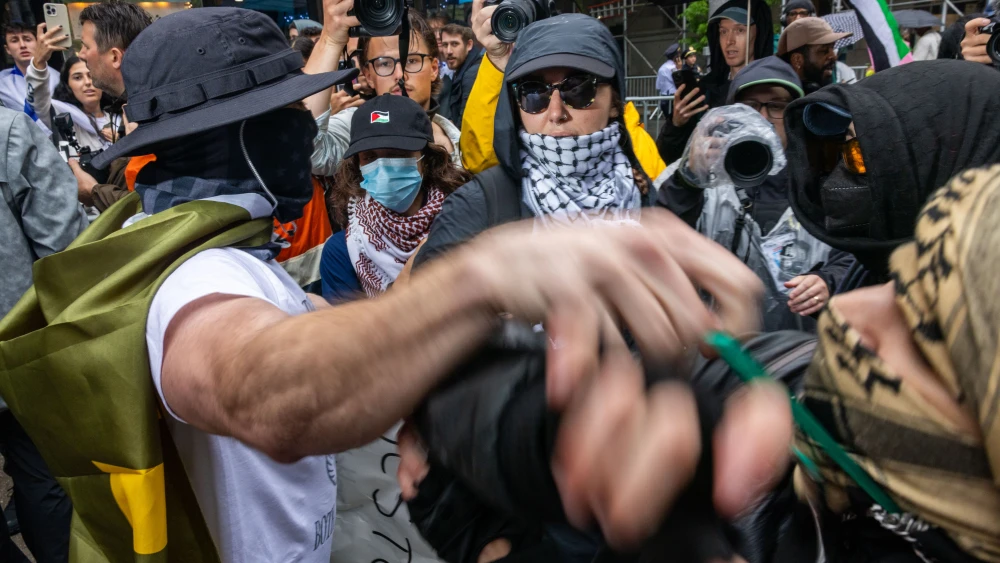
Pro-Palestinian and counter-protesters meet where fans were gathered hoping to see their favorite celebrities enter the annual Met Gala on May 5, 2025 in New York City. Photo by Alex Kent/Getty Images.
ro-Palestinian and counter-protesters meet where fans were gathered hoping to see their favorite celebrities enter the annual Met Gala on May 5, 2025 in New York City. Photo by Alex Kent/Getty Images.

There is almost no way to have a political conversation or debate today without, at some point, the word “racism” being brought into play.

Usually, the word serves as a “nuclear option,” a way of demonizing one’s opponent and detonating any possibility of consensus. This was described best by the internet’s famous “Godwin’s Law,” which holds that, “As an online discussion continues, the probability of a reference or comparison to Hitler or to Nazis approaches one.”

This is complicated by the fact that, for the most part, the word has been devalued to the point that it essentially means nothing. At best, “racism” has come to mean, “something of which I violently disapprove.” At worst, it has become a euphemism for “radical evil” or, in a non-metaphysical age, “the devil.”

Anti-Zionists understand this quite well, and they deploy the term “racist” at every possible opportunity, usually as a preemptive strike to obfuscate what they say next, which, ironically, tends to be genocidally racist: “From the river to the sea,” “Globalize the intifada,” “Death to Israel,” etc. In their hands, the word “racism” is a sword and shield, a way to strike what is hoped to be a mortal blow while parrying any attempt at defense.

This kind of sucker-punching is both cheap and decidedly undignified, but it can be effective, especially against squishy liberals. Such liberals live in terror of the accusation of racism and are easily rendered guilt-ridden by the thought that they themselves might be even slightly racist.

Indeed, many on the left have perfected this form of emotional blackmail by asserting that everyone is racist—excepting, of course, themselves—thus forcing all the squishy liberals of the world, and far too many others who ought to know better, to bend the knee at will.

All of this is ironic, however, because it is not an exaggeration to say that, in many ways, anti-Zionism itself is the most racist ideology in the world today.

The extent to which anti-Zionism is racist ought to be obvious. First, it is an ideology of absolute apartheid—an apartheid on the scale of humanity itself. For millennia, the Jews were essentially second-class citizens of the world and only managed to achieve something like equality through Zionism and the establishment of the modern-day State of Israel.

Anti-Zionism seeks to reverse this meager form of equity and, in effect, re-establish the old global apartheid, confining the Jews to a new ghetto, made even more oppressive and barbaric by globalization and the powers of modern technology.

The logic of anti-Zionism is genocide. We know this because the anti-Zionists say so.

More importantly, perhaps, is Martin Luther King Jr.’s observation: “In the final analysis, racism is evil because its ultimate logic is genocide.”

There can be no question that the logic of anti-Zionism is genocide. We know this because the anti-Zionists say so. Indeed, they say so as stridently as they possibly can. The aforementioned slogans are proof enough of this fact.

Moreover, if there are such things as “speech acts,” then there are also acts that constitute speech. Thus, every Jew that the anti-Zionists assault and kill constitutes a statement of intent, and that intent could not be clearer.

But anti-Zionist racism is not confined to the desire for physical extermination. Even if some anti-Zionists do not actually want to kill all the world’s Jews, they still desire a kind of genocide: a genocide of the spirit. That is to say, if there is one overriding ambition harbored by any anti-Zionist, it is to hurl the Jews back into exile. That is inherent in the goal of dismantling the Jewish state, even if its Jewish residents are left physically unharmed.

As Oct. 7 proved, the Jews would not be left physically unharmed, but that is somewhat beside the point, because even if they were, they would still be subjected to the genocide of the spirit, which is, in its own way, as horrific as a genocide of the body. The genocide of the spirit is an act of infinite prolongation, a crucifixion that never ends. It is the consignment of the soul to the Ninth Circle. Anti-Zionism wants precisely this: to torture the Jew not solely in the moment of slaughter, but for eternity.

We know this because of the one question anti-Zionists never acknowledge, let alone even answer: What, exactly, are the Jews supposed to do? Should we simply submit to the depredations of a perpetual and eternal exile without hope of redemption? Should we allow our bodies and our souls to be exterminated without resistance? The anti-Zionists’ answer is, of course, “yes,” though they are rarely capable of mustering up the courage to say so. Instead, they present rosy scenarios of coexistence and equality that have never and will never be granted to the Jews.

Any thinking Jew with any awareness of our dire, if triumphant, history knows that such promises of coexistence and equality are, at best, debased hypocrisy, because we have long memories, and we remember exile and what it means: It means torture. It means the perpetual infliction of pain on the part of a world content to take its sadistic pleasures from a people unable to defend themselves against the assault. If you want a picture of the anti-Zionist future, imagine a Jew on the rack—forever.

This is not a fate as horrific as Auschwitz, but it is horrific enough, and the idea that the Jews ought willingly to submit to it, let alone that it is morally incumbent upon us to do so, is as racist as the ambition itself.

It is also, whether the anti-Zionists, with their preening pretensions of sainthood, like it or not, an ambition that could only be harbored by the most racist ideology in the world today, because it is ultimate racism, a racism with nowhere else to go, a racism that has reached the end of King’s terrible logic.

There is only one admonition to be drawn from this tawdry spectacle, and it is simply this: We do not have to listen to these people. No anti-Zionist has the right to fancy himself a member of a caste of saints, and we are under no obligation to recognize the anti-Zionist’s delusion that he is a saint.

As such, the anti-Zionist has forfeited any moral right to make any argument whatsoever. He has removed himself, with malice aforethought, from the arena of human discourse, and to enter into it with him would be to lose our humanity. To take our humanity is, of course, precisely what the anti-Zionists want, and we should not give it to them.

Our only answer, then, should be to look the anti-Zionist in the eye and speak the truth: “You are not a saint. You are the devil.” 


Benjamin Kersteins a writer, editor and novelist, and a fellow at the Z3 Institute. His latest work is Self Defense: A Jewish Manifesto (2025).

Source: https://www.jns.org/opinion/column/benjamin-kerstein/anti-zionism-is-the-most-racist-ideology-in-the-world

Follow Middle East and Terrorism on Twitter
House takes aim at powerful legal bar group with probe into law school DEI - John Solomon


by John Solomon

Rep. Brandon Gil has summoned ABA President Michelle Behnke for questioning at Wednesday's hearing. The ABA is the largest legal trade association in the nation, and has a stranglehold on accreditation of law schools.


Congress is about to take aim at one of the legal profession's most powerful bodies as it readies a hearing this week on whether the American Bar Association has weaponized its sway over law school accreditations to force diversity, equity and inclusion (DEI) practices in admissions and coursework, Just the News has learned.

Rep. Brandon Gill, R-Texas, the chairman of the House Oversight Committee's Task Force on Defending Constitutional Rights and Exposing Constitutional Abuses, has scheduled a hearing Wednesday on “The Future of DEI in Law School Accreditation and the Legal Profession.”

The hearing comes after the task force last week explored the role DEI played in workplaces and universities' hiring and employment. Gill has summoned ABA President Michelle Behnke for questioning at Wednesday's hearing.

The task force will "analyze how the American Bar Association (ABA) has weaponized its accreditation authority to promote DEI policies that are contrary to federal civil rights law and the negative consequences in the legal profession that result from these harmful policies," the committee told Just the News. "Members will also explore how Congress can help permanently eliminate DEI policies within American institutions, including the legal profession and academy."

After President Donald Trump returned to office last year and declared war on discriminatory practices in academia and elsewhere, the ABA suspended its rule that required law schools to strive to ensure DEI in recruitment, admissions, and student programming.

The ABA council that oversees accreditation went a step further this past May, voting to end the rule. Referring to the past few years, Gill said he believes the ABA's full-throated promotion of DEI may have created illegal discrimination in law school admissions and practices.

Gail Heriot and Peter N. Kirsanow, two members of the U.S. Commission on Civil Rights, submitted in February of last year letters requesting legislation prohibiting the accreditors from using their power to push educational institutions to violate the Supreme Court's decision in Students for Fair Admissions, Inc. v. President & Fellows of Harvard College (2023).

In that case, Chief Justice John Roberts found that "Harvard’s and UNC’s [DEI] admissions programs violate the Equal Protection Clause of the Fourteenth Amendment." Roberts added that "it sees the universities’ admissions policies for what they are: rudderless, race-based preferences designed to ensure a particular racial mix in their entering classes.  Those policies fly in the face of our colorblind Constitution and our Nation’s equality ideal."

Justices Sonia Sotomayor, Elena Kagan and Kentanji Brown Jackson dissented from the opinion.

Gil said he is concerned the ABA's influence is pressured law schools into illegal discrimination.

“DEI is a cancerous ideology that promotes unlawful discrimination and steals opportunities from Americans who would otherwise earn jobs and law school admissions spots on merit," he said. "The ABA has abused its accreditation power to force harmfully racist and often illegal DEI policies and coursework in law schools across the nation."

The Texas congressman added that the DEI emphasis has an impact beyond the law by impacting the quality of practicing attorneys.

"The ABA’s promotion of DEI has created poorly trained lawyers who prioritize political activism over following the lawless," he said. "Congress must do its part to identify harmful DEI policies within the ABA and legal profession to help root them out and ensure equal opportunity and access to justice for all Americans." 


John Solomon

Source: https://justthenews.com/government/congress/mona-house-takes-aim-powerful-legal-bar-group-probe-law-school-dei

Follow Middle East and Terrorism on Twitter

Sunday, July 19, 2026

Trump Must Abandon His Dangerous Plan to Sell F-35s to Turkey - Con Coughlin


by Con Coughlin

According to the report published by Israel's i24News, Kurdish militias were preparing to launch an attack on Iran with the aim of instigating a nationwide rebellion against the ayatollahs' tyrannical rule when the US halted the operation due to pressure from Erdogan.


  • Trump's willingness to even consider lifting the F-35 ban is being seen in the context of his charm offensive to forge closer ties with Erdogan, an initiative the American leader has undertaken despite the Turkish leader's well-documented support for radical Islamist groups such as the Muslim Brotherhood and Hamas.

  • Erdogan also seems to have initiated a charm offensive, most likely with at least a partial view to prying loose those F-35s.

  • According to the report published by Israel's i24News, Kurdish militias were preparing to launch an attack on Iran with the aim of instigating a nationwide rebellion against the ayatollahs' tyrannical rule when the US halted the operation due to pressure from Erdogan.

  • Apart from Erdogan's long-held support for the Islamist ideology espoused by the expansionist Muslim Brotherhood and its allies, the Turkish leader has also been accused of actively thwarting the Trump administration's attempts to disarm Hamas terrorists in Gaza as part of its peace initiative in the enclave.

  • Efforts to pressure Hamas's terrorist leadership into fulfilling its disarmament obligations have, though, been stymied by the interventions of Turkey and Qatar, the Gulf state that also supports a variety of Islamist groups, which have actively used their influence to delay the disarmament process.

  • Turkey's obstructive approach to the disarmament issue in Gaza follows a series of public statements in which Erdogan has explicitly stated that he regards Israel as a potential enemy, and that the two countries could soon find themselves involved in a direct military confrontation. With Turkey desperately jockeying to replace Iran as the region's dominant power, such a prospect cannot be dismissed lightly.

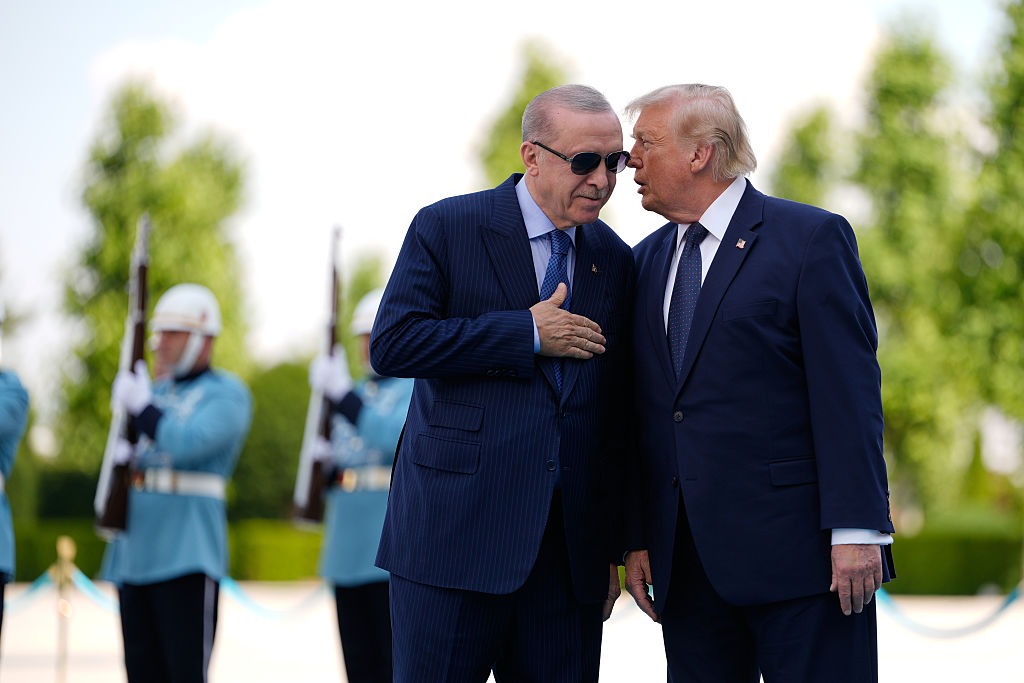
US President Donald Trump's willingness to even consider lifting the F-35 ban is being seen in the context of his charm offensive to forge closer ties with Turkish President Recep Tayyip Erdogan, an initiative the American leader has undertaken despite the Turkish leader's well-documented support for radical Islamist groups such as the Muslim Brotherhood and Hamas. Pictured: Trump speaks with Erdogan during the NATO summit on July 7, 2026 in Ankara, Turkey. (Photo by Emrah Gurel/Pool/Getty Images)

US President Donald Trump must abandon his plans to sell Turkey highly sophisticated F-35 stealth fighters because of the deeply duplicitous conduct Turkish President Recep Tayyip Erdogan displayed during efforts to end hostilities between the US and Iran.

Trump's willingness to even consider lifting the F-35 ban is being seen in the context of his charm offensive to forge closer ties with Erdogan, an initiative the American leader has undertaken despite the Turkish leader's well-documented support for radical Islamist groups such as the Muslim Brotherhood and Hamas.

Trump's courtship of Erdogan, moreover, is continuing despite concerns being raised about Turkey's duplicitous involvement in peace talks to end the Iran war. While, in public, Ankara has said its main objective is to end hostilities in the Gulf, it has also been working quietly behind the scenes to provide support for the beleaguered ayatollahs.

The latest evidence highlighting Erdogan's continued support for the Iranian regime is contained in reports that Turkey actively thwarted a joint military operation backed by the US and Israel to launch a Kurdish-led incursion of Iran in the early stages of the war aimed at overthrowing the Islamic regime.

According to the report published by Israel's i24News, Kurdish militias were preparing to launch an attack on Iran with the aim of instigating a nationwide rebellion against the ayatollahs' tyrannical rule when the US halted the operation due to pressure from Erdogan.

Erdogan's openly Islamist agenda certainly also makes a compelling argument for Trump to give serious consideration to reversing his decision to lift the ban preventing Ankara's acquisition of F-35 warplanes.

Apart from Erdogan's long-held support for the Islamist ideology espoused by the expansionist Muslim Brotherhood and its allies, the Turkish leader has also been accused of actively thwarting the Trump administration's attempts to disarm Hamas terrorists in Gaza as part of its peace initiative in the enclave.

The requirement for Hamas to fully surrender all of its weapons was a key demand of Trump's 20-point Gaza peace plan.

Efforts to pressure Hamas's terrorist leadership into fulfilling its disarmament obligations have, though, been stymied by the interventions of Turkey and Qatar, the Gulf state that also supports a variety of Islamist groups, which have actively used their influence to delay the disarmament process.

Turkey's obstructive approach to the disarmament issue in Gaza follows a series of public statements in which Erdogan has explicitly stated that he regards Israel as a potential enemy, and that the two countries could soon find themselves involved in a direct military confrontation. With Turkey desperately jockeying to replace Iran as the region's dominant power, such a prospect cannot be dismissed lightly.

Erdogan also seems to have initiated a charm offensive, most likely with at least a partial view to prying loose those F-35s.

Despite Erdogan's professed Islamist sympathies and his deepening antagonism towards Israel, Trump has nevertheless expressed his intention to sell the F-35s to Ankara after meeting with Erdogan at the start of the recent NATO summit in Ankara.

Trump previously blocked Turkey's participation in the F-35 programme during his first term in the White House, following Ankara's decision to purchase Russia's S-400 air defence system.

Erdogan is arguing that he has not yet unpacked the S-400s, which were built for one reason: to target and defeat the F-35s. Presumably he will unpack them after the F-35s have been safely delivered.

The move prompted fears within the Pentagon that allowing Turkey access to the top-secret F-35 programme would enable the Russians, who have close ties with Ankara, to gain access to the warplane's stealth technology, thereby compromising its ability to evade Russian anti-aircraft systems.

Despite these well-documented objections to Turkey's participation in the F-35 programme, with Ankara said to be lobbying to purchase up to 100 of the stealth fighters, Trump now appears minded to ease the ban he imposed during his first term and allow the sale of the aircraft to Turkey to proceed.

When asked at the NATO summit about lifting the ban on Turkey buying the warplanes, Trump replied, "That's a decision we're going to make... it's a great plane, the best plane by far, and it's certainly something we will consider."

Trump's change of heart on the F-35 issue has already prompted widespread criticism from numerous quarters. Greece, which historically remains at odds with Turkey on a number of regional issues, such as Turkey's continued occupation of northern Cyprus, has indicated its dismay at the decision.

Trump's move should also attract strong opposition from Israel, the other country most immediately threatened by a frequently bellicose Turkey (as here, here, here and here). Israel has already successfully integrated the F-35 into its air force, with the stealth warplane playing a pivotal role in the recent military campaigns against Iran.

The Israel Air Force has been so impressed with the F-35's performance that the Israeli government recently announced its intention to purchase a further 50 of the planes, a move deemed to be vital to maintaining Israel's all-important air superiority in the Middle East.

Any move by the US to sell F-35s to Ankara could compromise Israel's air supremacy by providing the Turks with the ability to analyse the top-secret technology that gives the Israel Air Force a decisive advantage in air combat.

Israeli Prime Minister Benjamin Netanyahu has already voiced his opposition to the proposed deal, warning in an interview with CNN that the sale of America's most advanced fighter aircraft "doesn't make Turkey a friendly state to the United States." In part of an escalating dispute with Erdogan, Netanyahu described Ankara as "a regime that's infected with the Muslim Brotherhood, which hates the United States."

Trump's proposal to sell F-35s to Turkey should provoke fierce opposition in the US Congress, which one hopes will be unwilling to lift the ban imposed on Turkey because of its close ties with Russia and Iran, as well as its ongoing, if temporarily subdued, hostility to Israel and Greece, and expanding its hold on occupied Cyprus.

The first public move against a possible policy change on the F-35 issues has come from US Representative Dina Titus (D-NV), who has gathered the signatures of 18 members on a letter to the leadership of the House of Representatives.

The lawmakers are calling for guarantees that current US law will be upheld and that Congress will be ready to intervene if the administration attempts to move ahead with Turkey's return to the programme.

With opposition mounting on all sides to the proposed deal, Trump would be well-advised to take heed of his critics and abandon his plan to provide the world's most sophisticated warplanes to Turkey's openly pro-Islamist, charming but ruthless leader — who thinks nothing of decimating his country's military, disabling any political opposition, and imprisoning, torturing and deporting journalists, persecuting Christians, Kurds, Alevis and other perceived dissidents.


Con Coughlin
 is the Telegraph's Defence and Foreign Affairs Editor and a Distinguished Senior Fellow at Gatestone Institute.

Source: https://www.gatestoneinstitute.org/22714/trump-turkey-f35

Follow Middle East and Terrorism on Twitter