by Pierre Rehov
The Palestinian Authority does not recognize Israel and most likely has no intention whatsoever of dismantling Hamas. For the Palestinian Authority, "reconstruction" offers laundering its legitimacy, access to institutions, long-term influence, and the chance, once President Donald Trump leaves office, of being deliciously positioned to do anything it likes.
The Palestinian Authority is not a neutral Muslim-majority entity seeking peace. Its doctrine has, for decades, blended conventional diplomacy with asymmetric warfare — using terrorism as an instrument of policy. In the last decade, this double game has not disappeared. It has merely learned to speak the language of Western guilt. Countries in the West have actually rewarded its terrorism, both by continuing lavishly to fund it and by climbing over one another to recognize a fictitious, nonexistent "Palestinian State."
Palestinians in Gaza might be tired of Hamas, but that does not mean they are ready to live peacefully side-by-side with Israel.
Just imagine the Palestinian Authority inside Gaza's reconstruction ecosystem, with access to donor funds, humanitarian logistics, and institutional channels. Reconstruction money is not neutral. It creates influence, dependency, and leverage. The Palestinian Authority understands this better than anyone.
The Palestinian Authority does not recognize Israel and most likely has no intention whatsoever of dismantling Hamas. For the Palestinian Authority, "reconstruction" offers laundering its legitimacy, access to institutions, long-term influence, and the chance, once President Donald Trump leaves office, of being deliciously positioned to do anything it likes.
For Israel, this scenario is existentially dangerous. Israel would be expected to tolerate a hostile foreign security architecture on its southern border while remaining ultimately responsible for the consequences of its failure. Any future escalation — rocket fire, tunnel reconstruction, arms smuggling — would place Israel in an impossible position: to act militarily and be accused of attacking "the forces for peace " or refrain and absorb the threat. Either choice is unacceptable.
For Washington, the trap is more subtle but equally severe. Once the United States endorses a framework, it becomes politically and financially invested in its survival. Billions of dollars in aid, contracts, and diplomatic capital follow. At that point, acknowledging failure becomes almost impossible. The priority shifts from solving the problem to preserving the framework — even as security deteriorates.
A post-war Gaza that is not fully demilitarized -- and remains that way -- will not stay quiet. Hostility will mutate.... Reconstruction will become camouflage. And the international presence meant to stabilize the situation will end up institutionalizing the very forces it was supposed to eliminate.
That is why this "Palestinian Authority solution" is a terrible idea for Israel — and a strategic trap for Washington: It offers the appearance of control while in fact hollowing out any real security.
Trump's instinct to reject endless wars and failed orthodoxies is sound. Both Gaza and Ukraine are littered with the wreckage of peace processes divorced from security realities, aid policies disconnected from accountability, and diplomatic frameworks that rewarded rejection.
Trump's real challenge is to resist the temptation to confuse participation with solution. The Middle East is full of actors eager to "participate" in Gaza — not to neutralize the threat it presents, but to shape its outcome to their advantage. The Palestinian Authority's interest in Gaza should be understood not as an act of goodwill, but as a bid for expanded power in a conflict that resonates across the Islamic world.
Accepting such a compromised "solution" will create a familiar pattern: the United States funds, legitimizes and protects bad actors, while constraining Israel and empowering hostile intermediaries. When the stabilization force then inevitably collapses, Washington will be told that the failure was due to insufficient patience, insufficient funding, or insufficient engagement — never to the flawed premise itself. Trump has an opportunity to break this cycle.
The opportunity requires drawing a clear red line that reconstruction comes only after demilitarization, not the reverse. Stability is the outcome of security, not a substitute for it. Legitimacy therefore cannot be granted to any actors whose strategic culture depends on permanent confrontation with Israel.
The Middle East does not need another "grand framework" built on diplomatic wishful thinking. It needs fewer illusions, fewer intermediaries, and clearer consequences -- ones that are actually implemented.
If Trump listens to the siren songs that promise order without disarmament, he will inherit the failures of his predecessors. If he refuses — and insists on realities rather than rituals — he may yet reshape the post-war equation.
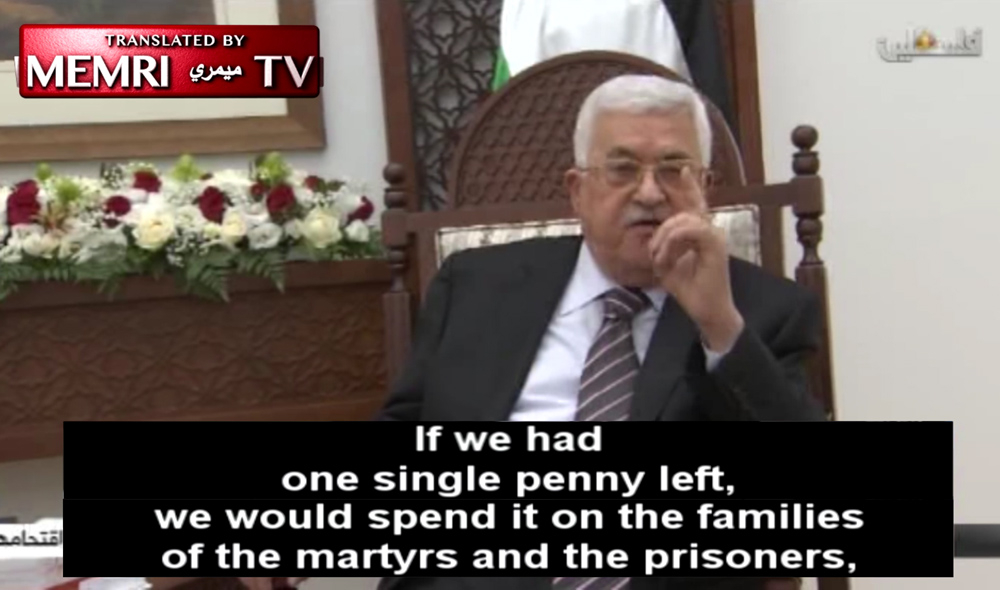
In Washington, there is a recurring temptation: when a crisis becomes exhausting, any actor offering "help" starts to look like a partner. The reconstruction of Gaza has reached that stage. The rubble is real. The humanitarian pressure is real.
The Palestinian Authority is not a neutral Muslim-majority entity seeking peace. Its doctrine has, for decades, blended conventional diplomacy with asymmetric warfare — using terrorism as an instrument of policy. In the last decade, this double game has not disappeared. It has merely learned to speak the language of Western guilt. Countries in the West have actually rewarded its terrorism, both by continuing lavishly to fund it and by climbing over one another to recognize a fictitious, nonexistent "Palestinian State."
Terrorism had become a tool of statecraft, shielded by its many funders, including the European Union (here, here and here) and European governments, as well as protestors in the West. As the American scholar Victor Davis Hanson notes:
"[L]egions of campus protestors never disown the slogan, 'Palestine will be free from the river to the sea' — a call to destroy the current state of Israel and everyone in it — because they either all believe in it or assume their clueless followers have no idea what it means."
The result is a form of stealth blackmail. This is not an accident. It is a system.
The Palestinian Authority does not seek stability in the traditional sense. It seeks managed instability: enough chaos to retain relevance, extract concessions, coax funding and insert itself as an unavoidable intermediary whenever crises erupt.
Exporting this model into Gaza would be catastrophic. A culture built on incitement to violence, terrorism, and an ideological determination that Israel should not exist is fundamentally incompatible with long-term peace.
A Long Record of Terror Infrastructure
The West has long tolerated the Palestinian Authority's rhetorical condemnation of terrorism while ignoring the ecosystem that has flourished on and around it: teaching hate and rewarding terror.
Sadly, the Palestinian Authority cannot be treated as a trustworthy security actor in sensitive theaters where counterterrorism credibility is non-negotiable.
Pressure to change works — but only while it is applied. Once relieved, the underlying strategic culture remains unchanged. Palestinians in Gaza might be tired of Hamas, but that does not mean they are ready to live peacefully side-by-side with Israel. Compliance to a new set of requirements may be tactical, not doctrinal.
Gaza Reconstruction as Strategic Infiltration
Just imagine the Palestinian Authority inside Gaza's reconstruction ecosystem, with access to donor funds, humanitarian logistics, and institutional channels. Reconstruction money is not neutral. It creates influence, dependency, and leverage. The Palestinian Authority understands this better than anyone.
The Palestinian Authority does not recognize Israel and most likely has no intention whatsoever of dismantling Hamas. For the Palestinian Authority, "reconstruction" offers laundering its legitimacy, access to institutions, long-term influence, and the chance, once President Donald Trump leaves office, of being deliciously positioned to do anything it likes.
By presenting itself as an ostensible contributor to stabilization, the Palestinian Authority seeks to recast its global image — from problem to partner — and go on to shape Gaza's political future however it likes. By aligning with other Islamist diplomatic narratives, a new regime will reinforce the extremist axis that treats Israel's legitimacy as negotiable. This is not humanitarian; it is maneuvering.
A Terrible Idea for Israel — and a Trap for Washington
The idea of involving the Palestinian Authority — or any ideologically hostile Muslim power, such as Qatar, Turkey, Pakistan or Iran — in Gaza's post-war stabilization is not merely naïve or simplistic. It is structurally dangerous. It rests on a recurring Western illusion: that parties, neutral only on paper, can reshape realities on the ground without becoming hostages to them. History suggests the opposite.
Even supposedly neutral peacekeepers or stabilization forces, from southern Lebanon to Afghanistan, from UNIFIL to ISAF, lack both ideological clarity and coercive authority and tend to ossify into inflexible presences. Rather than dismantle local power structures, they monitor, report, negotiate — and adapt to and often actually enable them. Even armed factions learn to coexist with these local guardians, to bypass them, or to instrumentalize them. It is far easier to accommodate militants than to confront them. Gaza, with its dense urban terrain, fortified terrorist networks, and radicalized social fabric, would accelerate this dynamic.
Any group that is unwilling or unable to dismantle Hamas — or its successor entities — does not neutralize the threat. It freezes it. Worse: it creates a protective buffer around it. Terrorists do not need to defeat those trying to contain them; they only need to outlast them. Time, in asymmetric warfare, is a weapon.
For Israel, this scenario is existentially dangerous. Israel would be expected to tolerate a hostile foreign security architecture on its southern border while remaining ultimately responsible for the consequences of its failure. Any future escalation — rocket fire, tunnel reconstruction, arms smuggling — would place Israel in an impossible position: to act militarily and be accused of attacking "the forces for peace " or refrain and absorb the threat. Either choice is unacceptable.
For Washington, the trap is more subtle but equally severe. Once the United States endorses a framework, it becomes politically and financially invested in its survival. Billions of dollars in aid, contracts, and diplomatic capital follow. At that point, acknowledging failure becomes almost impossible. The priority shifts from solving the problem to preserving the framework — even as security deteriorates. This is how illusions perpetuate themselves.
Introducing actors such as the Palestinian Authority -- or a countries with an Islamist stance -- into this environment compounds the risk. The Palestinian Authority's strategy is not one of disarmament and finality, but of operating in a gray zone: denying formal responsibility while tolerating or enabling actors beneath the threshold of open conflict. Gaza does not need another operative skilled in ambiguity. Gaza needs clarity.
A post-war Gaza that is not fully demilitarized -- and remains that way -- will not stay quiet. Hostility will mutate. Groups will fragment, rebrand, and infiltrate civilian structures. Aid flows will become leverage. Reconstruction will become camouflage. And the international presence meant to stabilize the situation will end up institutionalizing the very forces it was supposed to eliminate.
That is why this "Palestinian Authority solution" is a terrible idea for Israel — and a strategic trap for Washington: It offers the appearance of control while in fact hollowing out any real security.
Trump's Challenge
Trump faces a familiar dilemma — one he has encountered before in different forms: how to cut through inherited illusions without creating new ones.
Trump's instinct to reject endless wars and failed orthodoxies is sound. Both Gaza and Ukraine are littered with the wreckage of peace processes divorced from security realities, aid policies disconnected from accountability, and diplomatic frameworks that rewarded rejection.
Gaza, however, also presents a unique risk for a leader who values deal-making and burden-sharing.
The offers now circulating — a multinational stabilization force, Palestinian "legitimacy," shared reconstruction responsibilities — are seductive precisely because they promise to reduce direct American exposure. They suggest that others can carry the load, manage the problem, and absorb the political cost. This promise is largely illusory.
The United States cannot outsource strategic responsibility without losing strategic control. Any framework that excludes the decisive dismantling of Hamas's military and ideological infrastructure merely prolongs the conflict and favors the most radical actors.
Trump's real challenge is to resist the temptation to confuse participation with solution. The Middle East is full of actors eager to "participate" in Gaza — not to neutralize the threat it presents, but to shape its outcome to their advantage. The Palestinian Authority's interest in Gaza should be understood not as an act of goodwill, but as a bid for expanded power in a conflict that resonates across the Islamic world.
Accepting such a compromised "solution" will create a familiar pattern: the United States funds, legitimizes and protects bad actors, while constraining Israel and empowering hostile intermediaries. When the stabilization force then inevitably collapses, Washington will be told that the failure was due to insufficient patience, insufficient funding, or insufficient engagement — never to the flawed premise itself. Trump has an opportunity to break this cycle.
The opportunity requires drawing a clear red line that reconstruction comes only after demilitarization, not the reverse. Stability is the outcome of security, not a substitute for it. Legitimacy therefore cannot be granted to any actors whose strategic culture depends on permanent confrontation with Israel.
The Middle East does not need another "grand framework" built on diplomatic wishful thinking. It needs fewer illusions, fewer intermediaries, and clearer consequences -- ones that are actually implemented.
If Trump listens to the siren songs that promise order without disarmament, he will inherit the failures of his predecessors. If he refuses — and insists on realities rather than rituals — he may yet reshape the post-war equation.
The choice is his. As are the consequences.
Pierre Rehov, who holds a law degree from Paris-Assas,
is a French reporter, novelist and documentary filmmaker. He is the
author of six novels, including "Beyond Red Lines", " The Third
Testament" and "Red Eden", translated from French. His latest essay on
the aftermath of the October 7 massacre " 7 octobre - La riposte "
became a bestseller in France.As a filmmaker, he has produced and
directed 17 documentaries, many photographed at high risk in Middle
Eastern war zones, and focusing on terrorism, media bias, and the
persecution of Christians. His latest documentary, "Pogrom(s)"
highlights the context of ancient Jew hatred within Muslim civilization
as the main force behind the October 7 massacre.
Source: https://www.gatestoneinstitute.org/22152/palestinian-authority-trap-gaza
No comments:
Post a Comment