by Ahmed Charai
By generating several emergencies at once, Tehran hopes to divide America from its allies and distract from its nuclear ambitions. Washington must not allow that strategy to succeed.
Iran remains what it has long been: a state controlled by a narrow ruling clique that preserves its power through repression, intimidation, corruption, and support for armed groups.
Tehran's rulers operate according to the logic of a mafia state: Protecting the ruling network, intimidating opponents, threatening neighbors, exploiting disorder, and using negotiations to gain time or strategic advantage.
By generating several emergencies at once, Tehran hopes to divide America from its allies and distract from its nuclear ambitions.
Washington must not allow that strategy to succeed.
Restrictions cannot disappear through convenient expiration dates. Sanctions relief must be gradual, conditional, and reversible. There can be no secret facilities, delayed inspections, or endless arguments over obvious violations.
Enforcement is the agreement.
[Trump] prefers an agreement to another prolonged war, but he also understands that an agreement reached through weakness can produce an even greater conflict.
International law without enforcement is an appeal. International law backed by power is order.
American leadership is essential. Iran benefits whenever Washington's partners doubt American resolve or respond separately. The answer must be unity, credible deterrence, and a refusal to accept regional blackmail.
The Iranian people are not America's enemy.
Trust [for Iran's leaders] is unnecessary. Verification, deterrence, and the credible power to punish violations are indispensable.
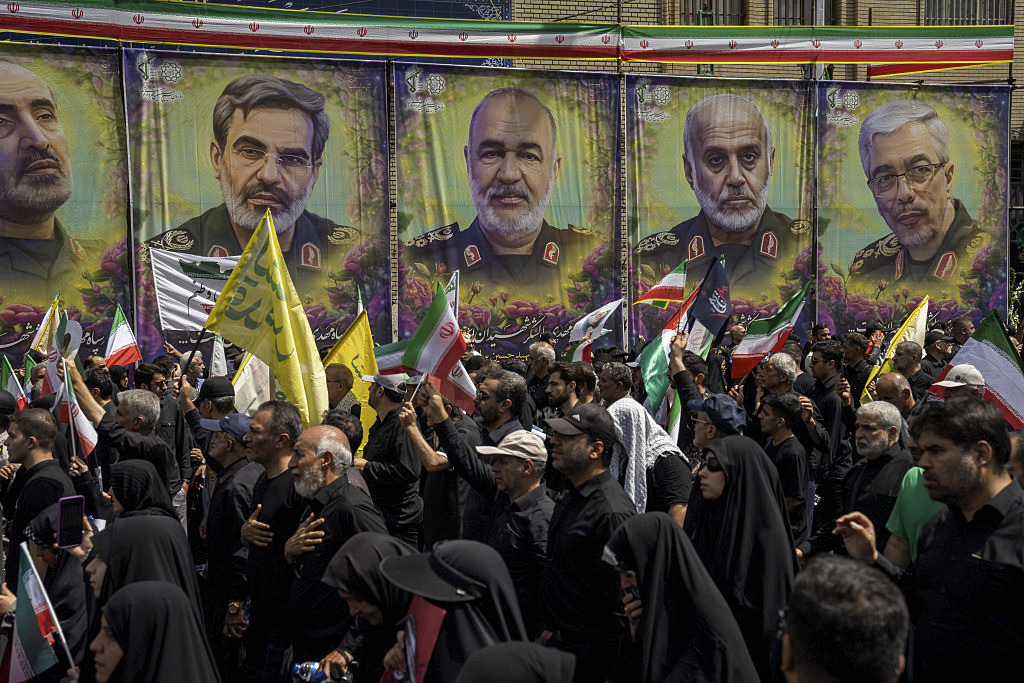
Iran remains what it has long been: a state controlled by a narrow ruling clique that preserves its power through repression, intimidation, corruption, and support for armed groups.
My judgment of the regime has not changed.
Tehran's rulers operate according to the logic of a mafia state: Protecting the ruling network, intimidating opponents, threatening neighbors, exploiting disorder, and using negotiations to gain time or strategic advantage.
Nothing in Iran's conduct justifies trust, and no future agreement should be mistaken for evidence that the regime has changed.
That is why President Donald Trump's approach matters.
Trump is not asking the world to trust Tehran or have us believe that its rulers are reliable partners. His method is direct: apply overwhelming pressure, establish an unmistakable red line, leave the door open to an agreement, and make clear that deception or refusal will bring serious consequences.
That red line is simple: Iran must never possess a nuclear weapon.
Iran's rulers have repeatedly tried to multiply crises and overwhelm diplomacy with competing demands.
They use armed proxies, threaten regional stability, challenge freedom of navigation, and create uncertainty across the Middle East.
By generating several emergencies at once, Tehran hopes to divide America from its allies and distract from its nuclear ambitions.
Washington must not allow that strategy to succeed.
Iran's terrorism, missile program, regional aggression, and abuse of its citizens all require sustained pressure. But none is more urgent than preventing the regime from acquiring a nuclear weapon.
Why?
A nuclear-armed Iran would transform intimidation into nuclear blackmail.
It would place Israel and America's Arab partners under permanent threat, accelerate a regional arms race, and give Tehran greater freedom to destabilize the region.
President Trump has consistently placed this danger at the center of his policy.
Any agreement must ensure that Iran can never build or possess a nuclear bomb. That is not faith in Tehran. It is an exercise of power against a regime that has earned distrust.
Negotiating with Tehran does not legitimize it.
Agreements are not rewards for good behavior or declarations of friendship.
The United States has often negotiated with dangerous adversaries because American interests required enforceable limits on their conduct. An agreement with Iran should be understood in exactly those terms: not as reconciliation, but as constraint.
Its credibility cannot depend on signatures, ceremonies, or promises from Iranian officials. It must depend on what Iran is required to do, how compliance is verified, and what consequences follow any violation.
Iran must disclose its nuclear materials and relevant facilities. Inspectors must receive immediate access. Restrictions cannot disappear through convenient expiration dates. Sanctions relief must be gradual, conditional, and reversible. There can be no secret facilities, delayed inspections, or endless arguments over obvious violations.
When dealing with an untrustworthy regime, enforcement is not a secondary provision. Enforcement is the agreement.
For too long, Western policymakers have treated pressure and diplomacy as opposites. They are not. Pressure gives diplomacy credibility. Deterrence gives negotiations purpose. Power creates the conditions in which an adversary may decide that compromise is preferable to confrontation.
Iran's rulers understand the difference between words and consequences. They have learned to ignore condemnations, exploit divisions among democratic nations, and prolong diplomacy while advancing their objectives.
Trump's method seeks to reverse that calculation. He prefers an agreement to another prolonged war, but he also understands that an agreement reached through weakness can produce an even greater conflict.
Iran must therefore face a clear choice: permanently abandon every path toward a nuclear weapon or confront the full economic, diplomatic, and military consequences of refusing.
That is not warmongering. It is realism.
International law without enforcement is an appeal. International law backed by power is order.
Keeping the nuclear issue at the center does not mean ignoring Iran's broader conduct. The United States must strengthen cooperation with Israel and its Arab partners, reinforce regional defenses, protect maritime commerce, and confront Iran's networks.
Tehran must not be allowed to attack through proxies and then deny responsibility, or use their violence as leverage.
American leadership is essential. Iran benefits whenever Washington's partners doubt American resolve or respond separately. The answer must be unity, credible deterrence, and a refusal to accept regional blackmail.
The Iranian people are not America's enemy.
They have paid a terrible price for a system that chooses repression and regional expansion over prosperity.
President Trump is right to pursue an agreement that permanently prevents Iran from obtaining a nuclear weapon. Such an agreement would not erase the regime's crimes, transform Tehran into a trusted partner, or eliminate the need for pressure against its regional activities.
But it could achieve the most urgent strategic objective: ensuring that Iran's ruling clique never possesses the weapon capable of turning aggression into nuclear blackmail.
Any agreement must therefore begin with the nuclear issue and end with enforceable guarantees that Iran will never acquire the bomb.
Trust is unnecessary. Verification, deterrence, and the credible power to punish violations are indispensable.
This editorial originally appeared in Newsmax
Ahmed Charai is the Chairman and CEO of World Herald
Tribune, Inc., and the publisher of the Jerusalem Strategic Tribune, TV
Abraham, and Radio Abraham. He serves on the boards of several prominent
institutions, including the Atlantic Council, the Center for the
National Interest, the Foreign Policy Research Institute, and the
International Crisis Group. He is also an International Councilor and a
member of the Advisory Board at the Center for Strategic and
International Studies.
Source: https://www.gatestoneinstitute.org/22586/no-trust-no-illusions-no-nuclear-iran
No comments:
Post a Comment