The official said Gulf allies' attempt to learn more of the U.S. objectives in Iran were unsuccessful, saying, 'I’d like to get full clarity, and we did not get there'
As President Donald Trump
weighs his options on a possible military strike on Iran, a senior Gulf
official told Fox News Saudi Arabia will not allow the U.S. to use its
airspace or bases for such an attack.
A
high-ranking government figure from a Gulf Cooperation Council (GCC)
state told Fox News that the "U.S. hasn’t shared objectives or plans" regarding Iran with Gulf allies despite recent high-level Saudi meetings in Washington aimed at gaining clarity.
"We
said this as friends, [we] want to make sure they understand our
position and our assessment in general. And we want to understand the
U.S. assessment with as much clarity as possible," the senior official
said. "I’d like to get full clarity, and we did not get there."
Regarding U.S. military movements for a strike on Iran, the official said, "The plan is something other than using Saudi airspace."
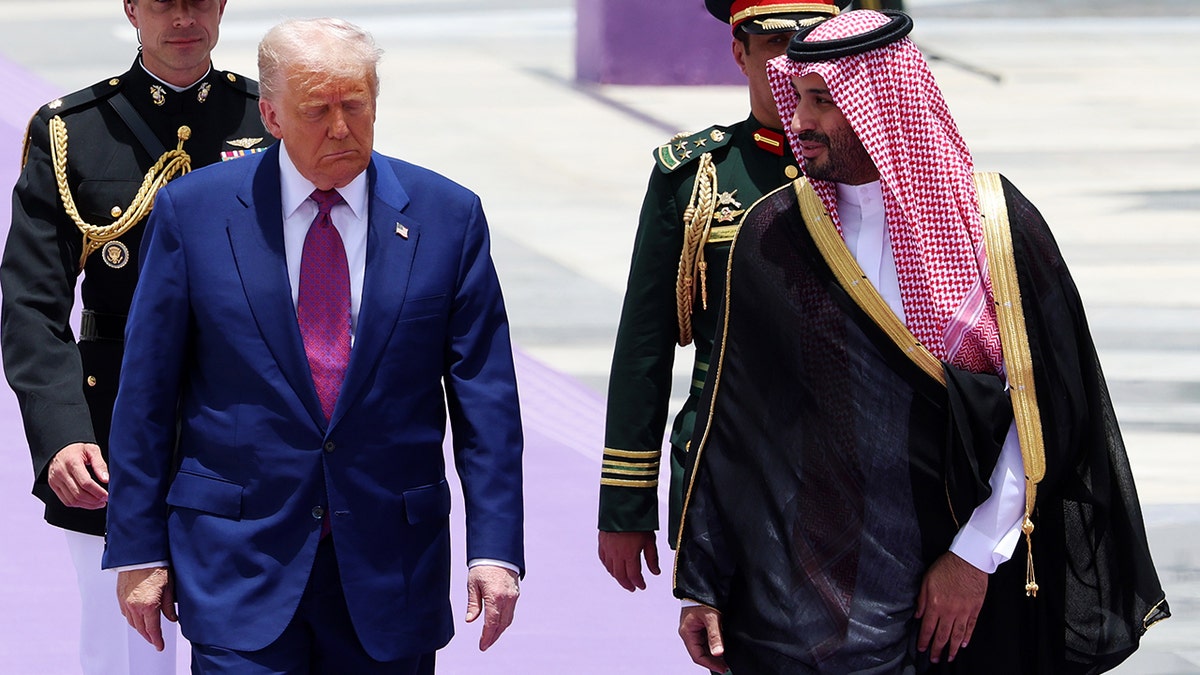
U.S.
President Donald Trump walks with Saudi Crown Prince Mohammed bin
Salman during an official state arrival ceremony at the Saudi Royal
Court May 13, 2025, in Riyadh, Saudi Arabia(Win McNamee/Getty Images)
The official said the U.S. is welcome in Saudi Arabia,
especially regarding Operation Inherent Resolve, the ongoing U.S.-led
campaign against ISIS. Yet, the Saudi position now is "consistent" with
what it was during the 12-day conflict between Israel and Iran in April
2024, the official said.
"Saudi Arabia wouldn’t allow airspace to
be used to target Israel, Houthis, Iran. The position is the same now.
Saudi Arabia wouldn’t allow airspace to be used in a war Saudi Arabia is
not a part of," the official said.
Trump said Friday that the
United States has directly communicated expectations to Iran as pressure
mounts for Tehran to accept a nuclear deal, even as Iranian officials
publicly signal interest in talks.
Asked whether Iran faces a deadline to make a deal, Trump suggested the timeline had been conveyed privately.
"Only they know for sure," he said when pressed that the message had been delivered directly to Iranian leaders.
Trump also tied the growing U.S. naval presence
in the region explicitly to Iran, saying American warships "have to
float someplace" and "might as well float near Iran" as Washington
weighs its next steps.
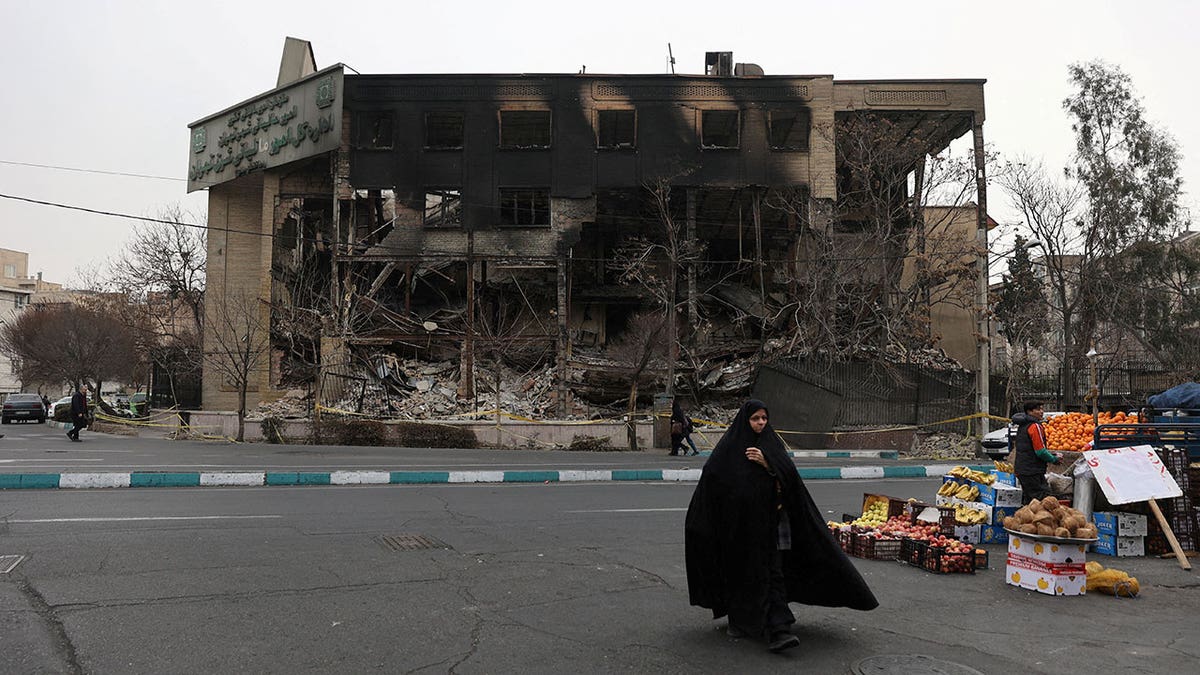
The state tax building burned during Iran's protests on a street in Tehran, Iran, Jan. 19, 2026. (Majid Asgaripour/WANA via Reuters)
Despite
the president’s words that Iran wants to make a deal, the official
cautioned that "Iran always wants to make a deal, but the question is
what kind of deal? Is it acceptable to the U.S.?
"We don’t see it
coming together at this moment," the official said. "Everybody knows the
U.S. is bringing capabilities to the region in general to deal not with
whatever the plan is but whatever the ramification of the plan is."
Regarding
the success of future U.S. actions in Iran, the official said, "There
is always a problem whether you make a decision or don’t. There’s a
balance of … future in the Middle East. We advise the U.S. on a better
outcome at the end, using all means, including diplomatic means, and
advise Iranians too. … We understand that we’re all in this — the U.S.,
Iran and others — and we hope for better results."
The official
said that, in the Gulf allies’ assessment, the Trump administration’s
strikes on Iran’s nuclear assets heavily degraded their capabilities so
that they are "not in the same situation as before."
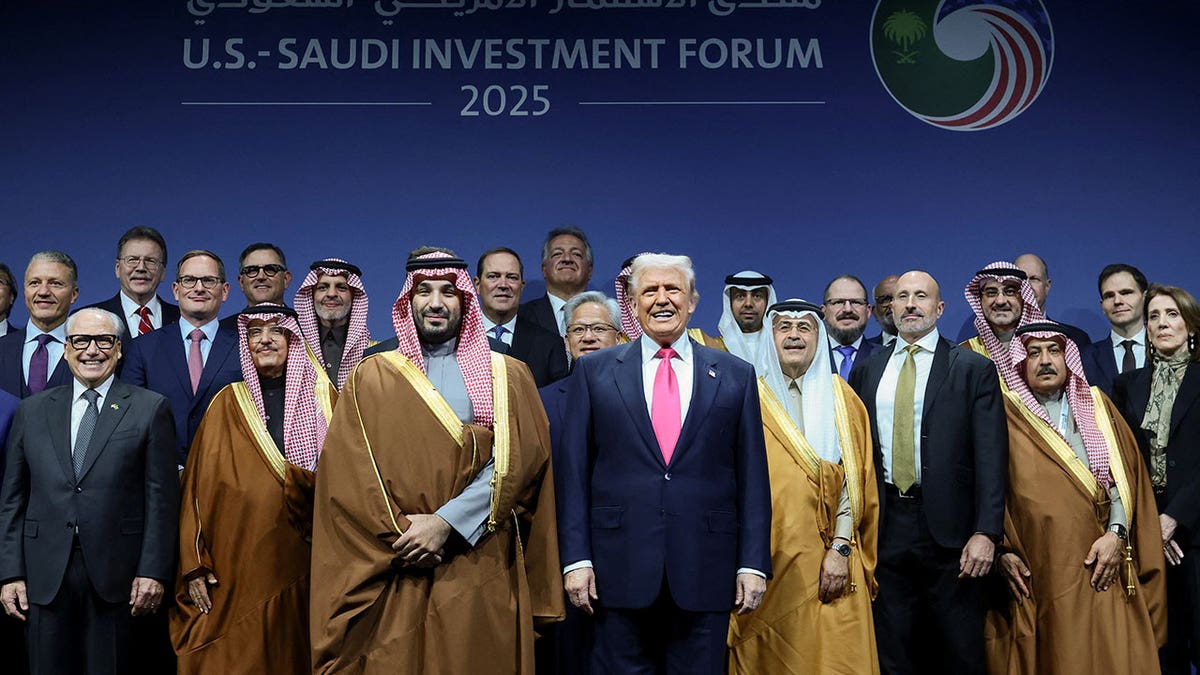
President
Donald Trump poses for a picture with Saudi Crown Prince and Prime
Minister Mohammed bin Salman and other attendees during the U.S.-Saudi
Investment Forum in Washington, D.C., Nov. 19, 2025. (Evelyn Hockstein/Reuters)
That being said, they believe an "off ramp could be reached by Iranians doing the right thing."
"We
want a prosperous country that supports their people. That’s what we
think we should all be doing. Iran has real economic potential, energy. A
lot of talent in Iran and especially abroad who live in other
countries. … There’s a way to get out of it, and Iran could be a very
constructive actor in the region and important actor in the region. I
hope that they get there because the Iranian people deserve a lot."
Though
the U.S. has not shared its objectives or plans, the source said, "I
hope that outcome is for a more stable Middle East, more prosperous."
Peter Pinedo , Jacqui Heinrich is a politics writer for Fox News Digital.
Panama’s Supreme Court decision to force out a Chinese port operator caps the Trump administration’s year-long effort to oust China from the strategic waterway.
Panama’s Supreme Court
decision to boot a Chinese company from the strategic Panama Canal gives
a boost to President Donald Trump’s effort to revive the Monroe
Doctrine in the Western Hemisphere aimed at reducing Chinese influence
in Latin America.
The ruling comes one year after President Trump zeroed in
on Chinese influence in the country and the vital strategic waterway
built by the U.S. more than a century ago. “China is operating the
Panama Canal, and we didn’t give it to China,” Trump said in his inauguration address. “We gave it to Panama, and we’re taking it back.”
The ruling from Panama’s high court caps a year-long legal
battle between the Chinese and Panamanian governments after Chinese
regulators blocked the Hong Kong-based CK Hutchinson shipping company
from selling its stakes in the ports of Balboa on the Pacific Coast and
Cristóbal on the Caribbean side to an American consortium under U.S.
pressure.
First Maduro, now the Panama Canal
“The United States is encouraged by the recent Panamanian
Supreme Court’s decision to rule port concessions to China
unconstitutional,” Rubio said in a statement posted to X after the decision was announced.
In December, the Chinese government released a new policy paper
doubling down on the importance of maintaining and expanding its
influence in Latin America. The government vowed to continue its
commercial cooperation, expand military and security ties in the region,
and push back on new U.S. military deployments.
Just one month later, China has faced major setbacks to its
plans. Earlier this month, the United States captured Venezuelan
dictator Nicolás Maduro, a close ally of Beijing. Now, China’s efforts
to stop CK Hutchinson’s ouster from Panama have been thwarted.
Shortly after the inauguration, President Trump dispatched
the newly confirmed Secretary of State Marco Rubio to Panama, where he told the country’s president that Chinese Communist Party influence over the canal was “a threat” and pressured the government to change it.
A growing threat
In recent years, China has grown its influence
in Latin America, becoming the region’s top trade partner and investing
directly in infrastructure and energy projects. The communist power has
also expanded ties with friendly regimes that can create headaches for
the United States in its own backyard, like Venezuela, Cuba, and
Nicaragua.
Panama itself has also been a key target of Beijing. In 2017, the small Latin American country cut diplomatic ties with Taiwan and formally recognized the Chinese Communist Party government on the mainland. Then, in 2018, Panama was the first country in the region
to sign up for China’s Belt and Road Initiative, an infrastructure
investment program designed to expand China’s influence across the
globe.
The Trump administration viewed this growing influence as a
threat to U.S. interests. Before the high court ruling, a Chinese
company controlled the main ports at both entrances to the canal. In 2018, a consortium of Chinese companies was also awarded a contract to construct a bridge over the canal.
Former CIA operations agent Rick de la Torre told Just the News last year
that the Trump administration was right to focus on the threat posed by
China to the waterway, which is vital for moving U.S. military ships
between the Atlantic and Pacific Oceans without going around South
America.
When the United States originally handed the canal over to Panama in the 1970s, both countries signed a treaty in which Panama promised to preserve the neutrality of the canal. The U.S. also reserved the right to intervene militarily if the neutrality of the canal is threatened.
Under pressure from the U.S. government, CK Hutchison
announced plans to sell the facilities and dozens of ports around the
world to a group led by U.S.-based private investment firm BlackRock, Just the News previously reported.
However, the deal alarmed Beijing, which used the nation's
regulatory approval process to stall the deal. China’s antitrust
regulatory agency launched a probe into the proposed $23 billion sale by
CK Hutchison early last year. The Chinese government demanded its
state-owned shipping company, COSCO, receive a majority stake in the new
consortium controlling the ports.
This prompted private lawyers and Panama’s comptroller to file lawsuits against CK Hutchinson, alleging the company’s contracts violated the interests of the Panamanian government and its taxpayers. Panama’s comptroller alleged that the deal “left $1.3 billion on the table” in the form of tax incentives and benefits granted to the company.
With the high court’s ruling, China’s effort to stop CK
Hutchinson’s ouster has failed. But, this is not the only setback
currently facing China’s efforts to expand its influence in Latin
America.
President Trump’s ouster of Maduro in Venezuela left the Chinese government holding the bag on years of investments in energy projects and political support for the regime, Just the News reported earlier this month.
For China, Venezuela was a significant partner in the
Western Hemisphere, and the recipient of Beijing’s sizable investments
in the country’s oil industry. In return, Beijing imported cheap oil
from Caracas, which had difficulty selling elsewhere under U.S. sanctions.
Since 2016, Chinese investors have put more than $2 billion into Venezuela’s oil industry,
according to a 2023 estimate from the American Enterprise Institute.
Chinese companies remained among the small number of foreign firms still
operating in the country after sanctions were imposed.
But, shortly after Maduro was captured, the U.S. demanded
that his successors cut ties with their three major partners, China,
Russia, and Iran, leaving the status of Chinese investments in the
country unresolved.
Who is Neville Roy Singham? Meet the China-based millionaire allegedly bankrolling Minnesota agitators
As agitators and federal law enforcement continue to clash in Minneapolis,
the funding behind the groups fueling the anti-U.S. Immigration and
Customs Enforcement (ICE) unrest is beginning to come to light.
One
of the alleged financial backers of these agitators is a Chinese
Communist Party advocate traced to a multitude of dark money
organizations known to fuel far-left, CCP-influenced extremism in the
U.S. and across the globe.
Earlier this week, a Fox News Digital investigation found
several organizations are acting as lead voices in physically
mobilizing agitators in Minneapolis, as well as communicating through
multiple channels to encourage agitators to take to the streets in
Minnesota and other cities. The Party for Socialism and Liberation and
The People’s Forum are two of the core groups who allegedly have been
behind facilitating and pushing agitators to organize on multiple
occasions.
Both
organizations are largely subsidized by American former tech mogul
Neville Roy Singham, according to reports and congressional probes.
Despite Singham facing federal investigations stretching back decades, a
former federal prosecutor tells Fox News Digital that the
multi-millionaire's move to China essentially shields him from being
subpoenaed by U.S. authorities.
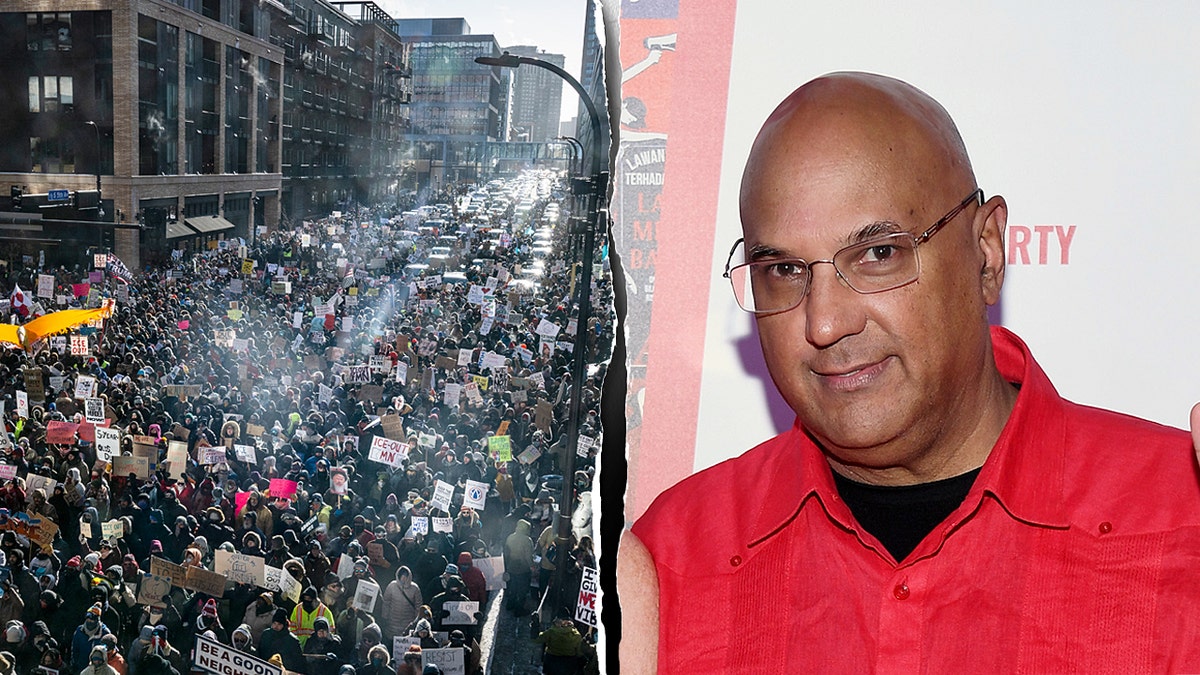
As
unrest escalates in Minneapolis, investigators are uncovering a network
of far-left activist groups allegedly bankrolled by a wealthy U.S.
expat in China with reported ties to Chinese Communist Party–aligned
propaganda efforts.(ROBERTO SCHMIDT / AFP via Getty Images / Photo by Dave Kotinsky/Getty Images for V-Day)
Singham,
therefore, remains virtually untouchable as his dark money networks
continue to wreak havoc on U.S. soil, the former prosecutor added.
Singham
sold his IT consulting company in 2017 for $785 million and moved to
Shanghai was the focus of a 2023 New York Times exposé that unveiled his
alleged connections to the CCP and his determination to finance
extremist groups to embolden his radical ideology. The Times reported
that Singham has funneled over a quarter-billion dollars to dark money
organizations in the U.S. with little to no footprints, and some of
these organizations are vaguely named with office addresses under
suspicious locations like general UPS mailboxes.
The 71-year-old
U.S. citizen turned Shanghai resident reportedly shares office space
with the Maku Group, a Chinese media company that is funded by Singham
and is associated with pro-CCP propaganda, including a mission to "tell
China's story well."
Singham’s first run-in with federal investigations dates back to 1974, when the FBI investigated him for potentially being "engaged in activities inimical to U.S. interests."
Fast-forward
several decades to 2025, when Singham and the organizations he funded
face a slew of congressional investigations from multiple committees in
both the House and the Senate. Committee chairs also sent multiple
letters to top administration officials under the Biden and Trump
administrations pushing for further examination of Singham’s dark money
network.
Last June, the House Oversight Committee, led by Rep.
James Comer, R-Ky., launched an investigation into Singham for his
alleged involvement in funding the anti-ICE riots that took place in Los
Angeles last summer.
Anti-ICE
riots raged in Los Angeles last summer, and Oversight Committee
Chairman Comer pointed to Singham as a potential benefactor for rioters.(AP Photo/Ethan Swope)
"Mr.
Singham, who resides in the People’s Republic of China, has a long
track-record of assisting far-left entities, such as Code Pink, that
oppose U.S. interests and support U.S. adversaries," committee lawmakers
wrote in a letter to Attorney General Pam Bondi.
The Oversight Committee noted that the Party for Socialism and Liberation,
one of the organizations behind the current riots in Minneapolis, "has
organized and is affiliated with a series of destructive protests and
civil unrest," and pointed to Singham’s involvement with the group.
The Party for Socialism and Liberation did not respond to Fox News Digital’s request for comment.
Last
April, the House Ways and Means Committee, led by Rep. Jason Smith,
R-Mo., sent a letter to then-IRS Commissioner Daniel Werfel, inquiring
about "specific tax-exempt organizations that promote CCP propaganda and
related initiatives," including The People’s Forum, another organization that has allegedly been organizing agitators in Minneapolis.
Tensions
escalated between agitators and federal agents following an immigration
enforcement operation on Tuesday, June 3, 2025, in Minneapolis.(Kerem Yücel/Minnesota Public Radio via AP)
"Mr.
Singham is actively fueling CCP propaganda and financing indoctrination
efforts abroad by providing hundreds of millions of dollars to groups
that mix progressive advocacy with CCP talking points," the letter read.
"Despite this foreign activity and engagement with CCP-tied
organizations across the world, Mr. Singham’s American-based nonprofit
organizations continue to do business as usual, supporting political
activity and pro-CCP propaganda."
In July 2024, then-Sen. Marco Rubio,
R-Fla., who now serves as President Donald Trump’s secretary of state,
and Sen. Lindsey Graham, R-S.C., wrote a letter to then-Attorney General
Merrick Garland requesting information regarding any investigations
into organizations Singham is associated with, including The People’s
Forum.
The People’s Forum did not respond to Fox News Digital’s request for comment.
While
there have been numerous investigations launched by lawmakers,
Singham’s residence in China has built a barrier between him and any
subpoena that would bring him before Congress for questioning.
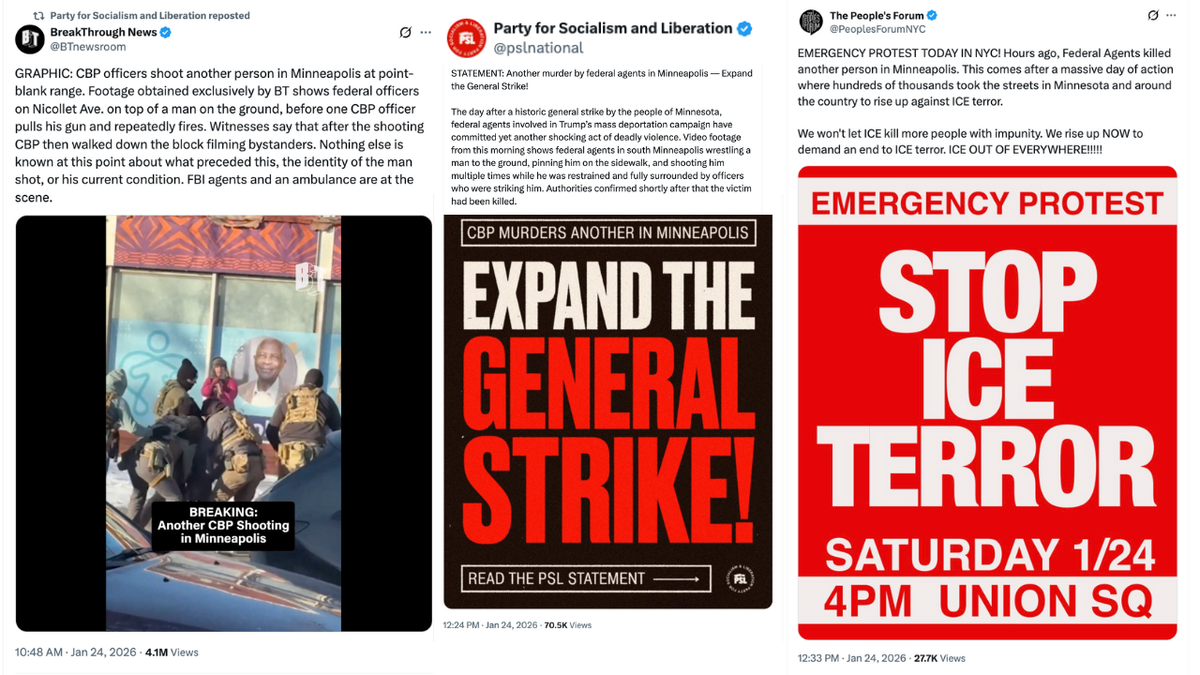
Propagandists
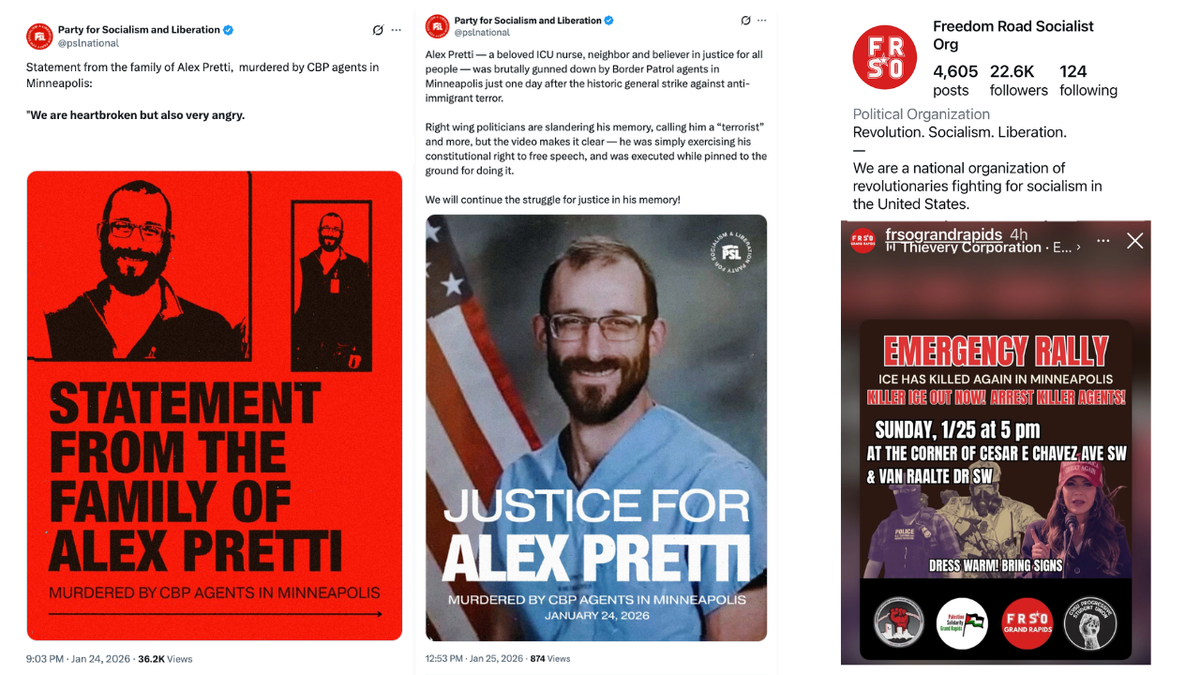
for socialist groups, including BreakThrough News, the Party for
Socialism and Liberation and the Freedom Road Socialist Organization,
sprang to action to demonize federal officials after a killing in
Minneapolis.(BreakThrough News/X, Party for Socialism and Liberation/X, Freedom Road Socialist Organization, X)
"A
subpoena can't be enforced essentially outside of our borders," former
federal prosecutor Andrew Cherkasky told Fox News Digital. "It is very
difficult to get somebody who is overseas to sit in front of Congress or
in some cases to participate in criminal proceedings."
"That
said, if you're an American citizen, hold an American passport, [then]
the State Department does have certain capabilities to essentially force
you back to the homeland," Cherkasky added. "If there's a criminal
prosecution, an indictment, an arrest warrant, it can cause all sorts of
extradition and return to the United States."
Cherkasky, a former
Air Force JAG, also said there is no question that demonstrations
taking place in Minneapolis are without organized, targeted support.
"It's undeniable that the protests that are going on
in Minneapolis are supported by organizations or groups of people that
are essentially collaborating to get these folks out there and engage in
what turns out to be repeated acts of criminal misconduct," Cherkasky
added.
One
of the key questions surrounding Singham’s alleged ties to the CCP and
involvement in American agitators and riots is that the Shanghai
resident is not registered under the Foreign Agents Registration Act
(FARA).
Nearly all the senators and representatives who have
called for further investigation into Singham’s alleged vast dark money
network noted his lack of FARA registration is a cause for concern.
In a letter to Treasury Secretary Scott Bessent,
the House Oversight Committee said they are "investigating CCP
influence operations that may fall within the purview of [FARA] 22
U.S.C. § 611 et seq and other federal laws."
House
Oversight Committee Chairman Rep. James Comer, R-Ky., has been pushing
for further investigation into Neville Roy Singham's finances.(Kevin Dietsch/Getty Images)
Cherkasky
told Fox News Digital that Singham’s lack of registration could have
serious implications, but that it’s difficult to prove Singham's string
of donations and funding due to ambiguity and lack of reporting
requirements from organizations like The Party for Socialism and
Liberation and The People’s Forum.
"When it comes to 501(c)(3)s, the influx of that money isn't reportable,"
Cherkasky said. "In the same way, when you donate to a charity, those
charities don't have to keep a list of the people who are donating, and
so they set up these charities that are really not doing anything
specific, it seems."
"The people who are funding those
organizations try to distance themselves from the actual conduct of the
organizations because they're just giving money," Cherkasky added. "They
don't know what the end goal is, and they try to claim clean hands in
that."
The
Party for Socialism and Liberation turned Alex Pretti into a poster boy
for its protests in quick graphics for its anti-ICE efforts.(Party for Socialism and Liberation/X)
Individuals
on the ground are typically tight-lipped about whether they are being
paid by an outside organization to be in attendance, despite groups like
The Party for Socialism and Liberation and The People’s Forum allegedly
facilitating the actual events.
Fox
News’ Laura Ingraham, while on the ground in Minneapolis, questioned a
woman who was shouting at her. Ingraham asked if the agitator had a job.
"I’m getting paid right now," the woman answered.
Singham did not respond to Fox News Digital’s request for comment.
Preston Mizell is a writer with Fox News Digital covering breaking news. Story tips can be sent to Preston.Mizell@fox.com and on X @MizellPreston
Although the deal was passed by the funding deadline, it departs from the House's appropriations bills enough that it will need to go back to the lower chamber for final approval early next week.
The Senate on Friday night passed
its final appropriations package that will keep most of the federal
government funded through September but includes a resolution that only
keeps the Department of Homeland Security funded for two weeks.
The package was passed in a bipartisan 71-29 vote.
Although the deal was passed by the funding deadline, it departs from
the House's appropriations bills enough that it will need to go back to
the lower chamber for final approval early next week. This means there
will be a partial government shutdown over the weekend.
The deal separates funding for the DHS from five other spending bills
that will fund the government for the rest of the fiscal year, but
included a continuing resolution to keep the DHS funded at its current
levels through Feb. 13.
The other five bills cover the departments of Defense,
Transportation, Housing and Urban Development, Health and Human
Services, Labor and Education.
Misty Severi is a news reporter for Just The News. You can follow her on X for more coverage.
The capture happened after Friday's strike, in which three out of eight Hamas terrorists were killed while leaving a tunnel in Rafah, the military announced.
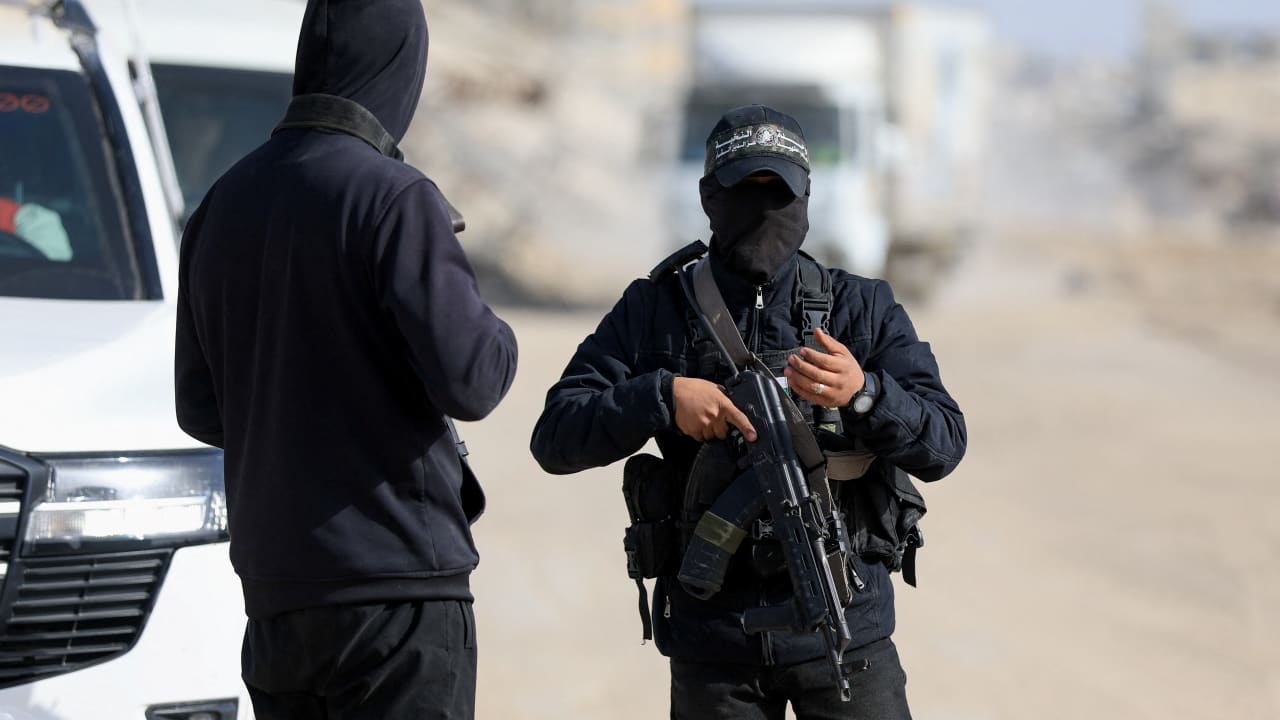
Hamas
terrorists stand at a site as Hamas says it continues to search for the
body of the last deceased hostage, in Gaza City December 8, 2025.(photo credit: REUTERS/DAWOUD ABU ALKAS)
The IDF announced the capture of one of Hamas's top remaining commanders during Friday's operation in Rafah,
where eight terrorists were identified by troops coming up from below
the ground, and were then struck by the Israeli air force, successfully
killing three of them.
After
the strikes, the IDF performed searches in the area and apprehended one
of the fleeing terrorists. He was later identified as a mid-level
commander in Hamas’ Eastern Rafah Battalion.
"IDF
troops, together with the ISA, continue searches and additional
activities in the area in order to locate and eliminate the additional
terrorists," the military said.
According
to reports by Army Radio, the other four terrorists identified as
leaving the tunnels were not captured, and their location remains
unknown.
Hamas
members stand at the funeral of Marwan Issa, a senior Hamas deputy
military commander who was killed in an Israeli airstrike during the
conflict between Israel and Hamas, in the central Gaza Strip, February
7, 2025. (credit: Ramadan Abed/Reuters)
IDF strikes Hezbollah in southern Lebanon
Also
on Friday, the IDF targeted a Hezbollah terrorist in the Seddiqin area
in southern Lebanon, citing several ceasefire violations by the terror
organization.
The
IDF said in a statement that the terrorist took part in attempts to
reestablish military infrastructure sites belonging to Hezbollah.
Strikes in southern Lebanon on Hezbollah infrastructure continued into Friday evening, according to IDF updates.
The
IDF also identified four armed terrorists on Friday near the Yellow
Line, approaching IDF troops in a way that constituted an immediate
threat. The troops alerted the Israeli Air Force, which struck and
successfully killed the four terrorists.
IDF held back during Gaza war to protect hostages' intelligence
During the Israel-Hamas War, the IDF sometimes avoided killing certain Gazan terrorists who knew where Israeli hostages were being held, a senior IDF Intelligence Corps commander reported Thursday.
This
disclosure resolved a two-year mystery of how Israel managed to kill
Hamas’s leaders while not losing the ability to locate the hostages. At
the start of the war, some officials worried that Hamas leaders Yahya
Sinwar and Mohammed Deif might be immune from elimination because they could be the only ones who knew certain hostage information.
“There
is always a dual dilemma” about whether to “let security forces kill
terrorists to remove a threat” versus intentionally avoiding killing
them to continue gaining intelligence from them, or in this case, use
them to maintain updated intelligence and rescue possibilities regarding
hostages, the IDF Intelligence officer said.
The military also hit a weapons storage facility, an arms manufacturing plant and two launch sites.
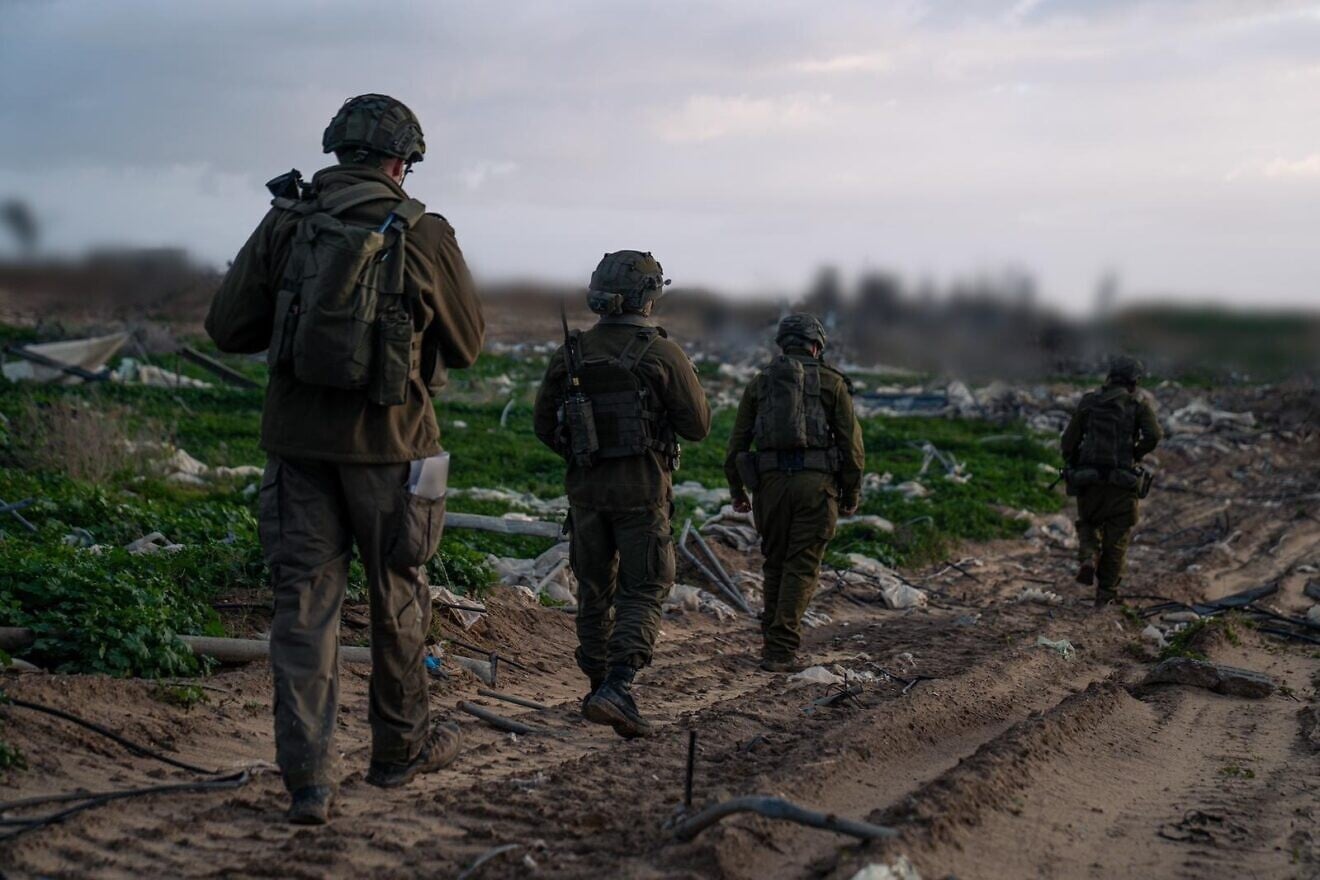
Israeli troops are seen operating in the Gaza Strip, in a photo published on Jan. 30, 2026. Credit: IDF/X.
The Israel Defense Forces said Saturday
that it struck four commanders and additional terrorists from Hamas and
Islamic Jihad across the Gaza Strip, in response to a ceasefire
violation the previous day in which terrorists were identified exiting
tunnels in eastern Rafah.
The military said it also struck a Hamas
weapons storage facility, an arms manufacturing plant and two launch
sites in central Gaza.
“The terrorist organizations in the Gaza
Strip systematically violate international law, brutally exploiting
civilian infrastructure and the Gazan population as human shields for
terrorist activities,” the IDF said.
The military added that Jerusalem views
any violation of the agreement with “utmost seriousness” and will
continue to act against any attempt to carry out terrorist attacks
against IDF troops and civilians of the State of Israel.
IDF soldiers overnight Thursday identified
eight terrorists emerging from underground infrastructure in Rafah,
southern Gaza, prompting an airstrike that killed at least three of
them, the military said on Friday.
The Israeli Air Force carried out
additional strikes against areas where the remaining terrorists
attempted to flee, the IDF added.
Forces operating under Southern Command
remain deployed in accordance with the ceasefire agreement with Hamas
and will continue acting to remove any immediate danger to Israeli
troops, the military said. The ceasefire, which took effect on Oct. 10,
2025, remains in place despite ongoing security incidents.
Israeli Prime Minister Benjamin Netanyahu
said on Tuesday that the military remains focused on completing two core
missions: disarming Hamas and dismantling terrorist infrastructure in Gaza.
“I hear even now the statements that we
will allow the reconstruction of Gaza before demilitarization. That will
not happen,” Netanyahu said.
Speaking to lawmakers at the Knesset,
Netanyahu said Hamas disarmament “will happen—as our friend Donald Trump
said—the easy way or the hard way, but it will happen.”
Senior Hamas official Musa Abu Marzouk, however, told Al Jazeera this week that the group never agreed to disarmament as part of the U.S.-brokered ceasefire framework.
“Not for a single moment did we talk about
surrendering weapons,” Abu Marzouk said, claiming the issue was never
raised in negotiations.
A U.S. official told JNS that Hamas
demilitarization remains central to long-term stability in Gaza and is a
key component of the ceasefire framework.
The official said the U.S.-backed National
Committee for the Administration of Gaza is intended to provide an
alternative governing structure focused on rebuilding civilian life and
stabilizing the territory.
Abu Marzouk also claimed Hamas influenced the composition of the technocratic committee’s membership, telling Al Jazeera that no one could enter Gaza without an understanding with the group.
The competing claims come as Israeli
forces continue operations aimed at preventing renewed terrorist attacks
while maintaining positions consistent with the current ceasefire
framework.
IRAN AFFAIRS: What began as an economic grievance quickly snowballed into demands for change and an end to the Islamic regime that has held the country under its thumb for nearly 50 years.
‘THEY
LOVE Trump, they love America – but right now they feel abandoned, and
it hurts.’ The US president said he has no reason to strike, but
protesters have been asking for US intervention. Here, a man shows a
sign mentioning Trump during a rally in support of nationwide protests
in Iran in Rome.(photo credit: Francesco Fotia/Reuters)
Over the past month, the people of Iran took to the streets to fight for their future.
What began as an economic grievance quickly snowballed into demands for
change, calls for revolution, and an end to the Islamic regime that has
held the country under its thumb for nearly 50 years.
When US President Donald Trump
promised to help protesters, Iranians around the world felt hope that,
finally, change could happen. However, Trump quickly changed his mind,
leaving the people feeling abandoned and isolated.
“They
need the Americans. They depend on the Americans,” Roni Insaz, an
Iranian-born former member of the Islamic Revolutionary Guard Corps,
told The Jerusalem Post, explaining that the US may be the Iranians’ last hope for a better life.
With
Trump’s flip-flopping, the world as a whole has been made to watch with
bated breath, preparing for any and all possible scenarios. The
president said he has no reason to strike so long as the regime halts executions,
which reports within Iran claim have not actually stopped, but
protesters have been begging for US intervention, and Insaz pointed out,
isn’t that reason enough?
“There
is enormous anger among the Iranian people toward Trump. He promised
things, and now they feel he’s backing away,” Insaz said. “They love
Trump, they love America – but right now they feel abandoned, and it
hurts.”
A
man lights a cigarette with fire from a burning picture of Iran's
Supreme Leader Ayatollah Ali Khamenei, as Israelis rally in support of
the nationwide protests happening in Iran, in Holon, Israel, January 14,
2026. (credit: REUTERS/Ammar Awad TPX IMAGES OF THE DAY)
Insaz explained that these protests have highlighted just how far the regime will go to silence the people.
“It’s very difficult for Iranian forces to kill Iranians, because they are the same people,” he told the Post, explaining that in times of mass unrest, the IRGC recruits loyal militias
from across the region – Syria, Lebanon, Afghanistan, and Pakistan –
who don’t have qualms about opening fire into crowds of Iranians.
“They
shoot at free people. You could say that the Iranian police or the
revolutionary forces are not usually the ones who kill like this, and
certainly not 35,000 or 40,000 people in two days. That’s why they bring
in special forces from outside to shoot and kill people,” he said.
The dissapearance of fear from anti-regime protests
What
distinguishes the current wave of protests, Insaz explained, is the
disappearance of fear. Protesters are no longer demanding marginal
improvements or policy shifts; they are calling openly for the
dismantling of the system itself. This shift, he said, marks a point of
no return.
According
to Insaz, the regime understands this reality all too well, which is
why it has responded with unprecedented force. Executions and mass
arrests are not meant solely as punishment, but as deterrence – a
warning to anyone considering joining the uprising.
The
regime’s enlistment of foreign militias and the large-scale murders
that have followed was in part made possible by the enforced digital
blackout, which went into effect on January 8. Internet has only
recently begun to return to the people, and that, Insaz explained,
terrifies the regime.
“They
don’t care about people’s lives, especially the outsiders – they don’t
care at all,” he said. “But they are very afraid that what’s happening
will spread around the world and that people will see the murders.”
When
the IRGC shuts down communications, it’s more than just unplugging a
router, Insaz said. It’s confiscating phones, going door-to-door,
anything it takes to prevent the truth from getting out.
When the Internet is fully restored, he said, the world will see “things we haven’t seen anywhere in the world for many years.”
“I believe there is evidence of genocide in Iran, and I believe we will see it soon,” he said.
‘Pahlavi Barmigardeh’
Even
with the country isolated from the global community, one chant has been
heard echoing across the Iranian diaspora: “Pahlavi Barmigardeh,”
“Pahlavi will return.” The chant is heard alongside “Javid Shah,” “Long
live the Shah,” and it is a call for the crown prince, Reza Pahlavi, to
take his place among his people nearly half a century after his father’s
exile.
“Reza
Pahlavi was a guest in my home,” Insaz shared. “I had a long
conversation with him about Iran – first in 2022 and again in 2024. He
said very clearly that the uprising depends on American support, and
that it will happen.
“If
the Americans give it a boost, it will happen,” Insaz insisted, adding
that he still believes a US strike on Iran could happen in the near
future.
Insaz
emphasized that his hope for US assistance and a better Iran are not
aspirational rhetoric, but a reflection of an entire people.
Despite
decades of state-sponsored hostility, Insaz believes that the narrative
of eternal enmity between Iranians and the rest of the world – namely,
Americans and Israelis – is a political construction, not a social
truth.
“The
Iranian people are good people, strong people,” he said, adding that
many feel genuine affinity toward Israel and the Jewish people. In his
view, that connection is neither new nor theoretical, and the strong
bond that once existed between the two nations could return.
“They
love Israel, they love Jews, and they want peace,” he said. “We could
do very good business together. In the past, during the time of the
shah, there was cooperation, tourism, strong ties. It will happen again,
God willing.”
Still,
his hope is tempered by faith rather than certainty. “With God’s help,
Iran will enter a new state,” he said – a future shaped by the will of
its people rather than the ideology of its rulers.
Without
sustained global pressure, Insaz warned, the regime will interpret
silence as permission, and the violence will escalate accordingly. For
protesters risking their lives in the streets, foreign support is not
symbolic – it is a lifeline.
Born
and raised in Iran, with family and close friends still living under
the Islamic Republic, he described his message as a collective one: a
call for the world to remain engaged, alert, and unwilling to normalize
repression through silence.
Until
then, Insaz insisted, the most urgent demand remains simple: that
Iran’s future not be forgotten, and that the voices of those who seek
peace be heard beyond its borders.
“The
world must not be silent about what is happening in Iran,” he said. “Do
not stop thinking about Iran or its future. That’s what the Iranian
people are asking for today.”
Movement between Gaza and Egypt to resume with Israeli security screening and E.U. supervision.
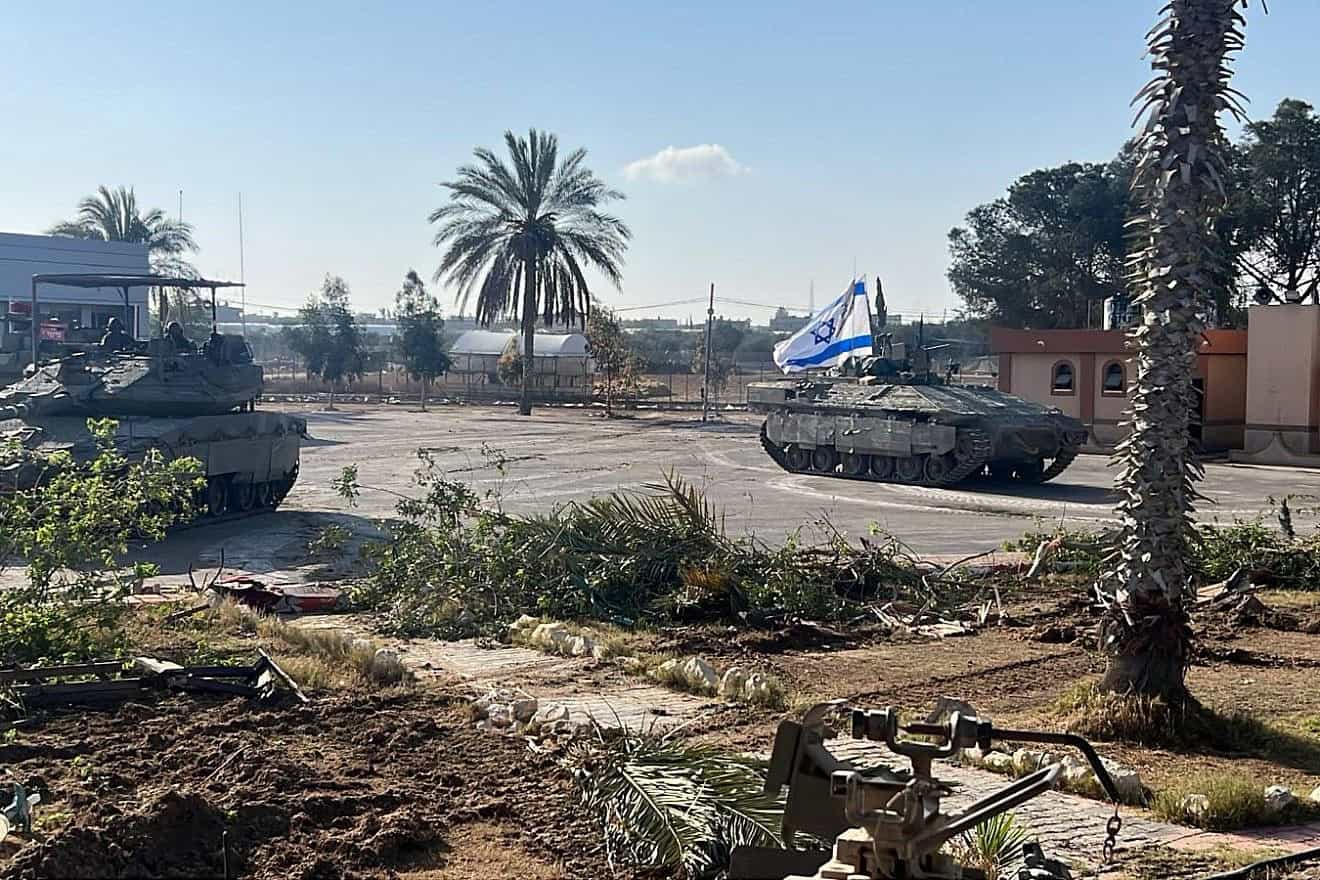
Israeli tanks roll up to the Gaza side of the Rafah Crossing to Sinai, May 7, 2024. Credit: IDF.
Israel will reopen the Rafah Crossing
between the Gaza Strip and Egypt for pedestrian traffic in both
directions on Sunday, according to the Defense Ministry’s Coordinator of
Government Activities in the Territories (COGAT) unit.
In a statement on Friday, COGAT said exit
from and entry into Gaza via Rafah will be conducted in coordination
with Egypt, following prior Israeli security clearance and under the
supervision of a European Union monitoring mission, similar to a
mechanism used in January 2025.
📢UPDATE:
In accordance with the ceasefire agreement and the directive of the political echelon, the Rafah Crossing will open this coming Sunday (February 1st) in both directions, for limited movement of people only.
COGAT said the return of Gaza residents
from Egypt will be permitted only for those who left the enclave during
the war and only after Israeli security approval. The move is part of
the U.S.-brokered ceasefire reached in October 2025 between Israel and
Hamas after two years of war.
In addition to identification and
screening at the crossing by European monitors, an additional screening
process will be carried out in a designated corridor operated by the
defense establishment in an area under IDF control.
According to COGAT data, about 42,000 Gaza
residents left the territory during the war, most of them medical
patients seeking treatment abroad or dual nationals.
Gazans seeking to enter or leave the Strip
will require Egyptian approval, with names forwarded to Israel’s Shin
Bet security service for clearance. Israeli officials said each case
will be reviewed individually, and senior terror operatives will not be
allowed to leave.
Palestinian Authority representatives and
European Union monitors stationed at Rafah are expected to conduct
initial screening of those leaving Gaza.
Israeli supervision of departures to Egypt
will be conducted remotely from a control room, where Israeli officers
will use facial recognition technology to verify that travelers are on
pre-approved lists before allowing passage.
Entry into Gaza from Egypt will include an
Israeli security check at an IDF checkpoint after individuals cross
Rafah, before they are allowed to proceed toward Hamas-controlled areas
inside the Strip.
The Israeli decision was announced despite an upsurge in violence in the Rafah area. The IDF
said on Friday that soldiers overnight identified eight terrorists
emerging from underground infrastructure in eastern Rafah, the southern
Gaza Strip, prompting an airstrike that killed at least three of them.
The Prime Minister’s Office
announced on Jan. 25 that Israel had agreed to reopen Rafah after the
IDF concluded “Operation Brave Heart” to return the remains of Israel
Police Master Sgt. Ran Gvili, which happened the following day.
Probe comes days after DOJ charged three activists — including former CNN anchor Don Lemon — for invading a Christian church service in Minnesota.
The Justice Department has opened a
criminal investigation into an incident this week in which climate
protesters stormed a Jewish synagogue where a Democrat congressman was
speaking, signaling an aggressive effort to protect houses of worship
from vile intrusions from leftist activists.
Attorney General Pam Bondi confirmed the probe in a statement Saturday to Just the News.
“We are investigating this case and will continue to actively investigate any house of worship that is disrupted,” Bondi said.
The decision to probe the intrusion by the group Climate Defiance at a
Long Island synagogue in Roslyn, N.Y., comes days after DOJ charged
three activists — including former CNN anchor Don Lemon — for invading a
Christian church service in Minnesota.
Both incidents involved increasingly aggressive leftist activists who
are protesting the Trump administration’s arrests of illegal aliens
nationwide.
The most recent episode targeted Democratic Rep. Tom Suozzi over his
initial vote to back a GOP-led spending bill that directed more federal
funding to ICE’s crackdown on illegal immigration.
Video footage showed Suozzi was speaking Wednesday night when
activists from Climate Defiance stormed the synagogue with diapers and
kneepads while cursing and making vile comments.
Climate Defiance called Suozzi a “hideous, grotesque, fascist-loving coward” with “blood on his hands” in a social post.
The New York probe will be slightly different than the Minnesota
case, where a worship service was underway. Wednesday's event involved a
speech by a politician hosted by a house of worship.
According to the indictment announced by the U.S. Attorney’s Office for the Eastern District of Michigan, 36th District Court Judge Andrea Bradley-Baskin is one of four defendants charged with conspiracy to commit wire fraud.
Federal prosecutors have indicted a sitting Detroit-area judge and
three associates, accusing them of orchestrating a long-running scheme
to siphon hundreds of thousands of dollars from adults who were legally
deemed unable to manage their own finances.
According to the indictment
announced by the U.S. Attorney’s Office for the Eastern District of
Michigan, 36th District Court Judge Andrea Bradley-Baskin is one of four
defendants charged with conspiracy to commit wire fraud.
Also facing charges are Nancy Williams, attorney Avery Bradley, and Dwight Rashad, all of whom live in Detroit.
Additional
allegations include multiple counts of money laundering, and in
Bradley-Baskin’s case, lying to federal investigators.
According to [Gad] Saad's thesis, empathy becomes misdirected into a type of benevolent altruism that prioritizes the perceived feelings and needs of "marginalized" or external groups at the expense of the survival, security, and interests of one's own group and its values.
According to [Gad] Saad's
thesis, empathy becomes misdirected into a type of benevolent altruism
that prioritizes the perceived feelings and needs of "marginalized" or
external groups at the expense of the survival, security, and interests
of one's own group and its values. The outcome is the weakening, and
ultimately the destruction, of the very civilization that expressed this
emotion.
The problem? This concept of suicidal empathy unfortunately does not work. As the term predicts, it ends up killing its host.
What we observe, however, in many people, is a highly selective
empathy, precisely the opposite of caring about everyone. What shows up
is an exclusive, and exclusionary, concern for certain groups — asylum
seekers, ethnic minorities, people unhappy with their gender, racialized
people (whatever that means), criminals, for example — at the same time
paired with indifference or even open hostility toward other groups
that might be equally minoritized, victimized, or marginalized.
What becomes harder to defend as genuine empathy is the
increasingly common pattern of displaying loud, intense, public
identification with distant victims while simultaneously showing
indifference, contempt or outright hostility toward victims right under
one's nose, here in one's own society, whose suffering is visible and
immediate.
We might be dealing then with a moral posture, a political performance, a selected narrative for virtue or social status.
In short: selective empathy -- with selective hostility or
indifference nearby -- is not "higher", "purer" or "more universal". It
is just a posture wearing empathy's clothes.
Many people seem to be incubating a rage looking for somewhere to
go. Dogmas that admit no dissent provide a perfect vehicle for that.
This new rage appears to have nothing to do with empathy — or even
selective empathy — but more with envy, frustration, and possibly
opportunism, perhaps accompanied by large payments.
When there are real protestors out on the streets risking their
lives, as recently in Iran, there is scant support. What vibrates in
Western outbursts, on the left and on the right, appears to be rage
looking for a cause, and constantly feeding on new dogmas. Sadly, there
seems to be no shortage of them.
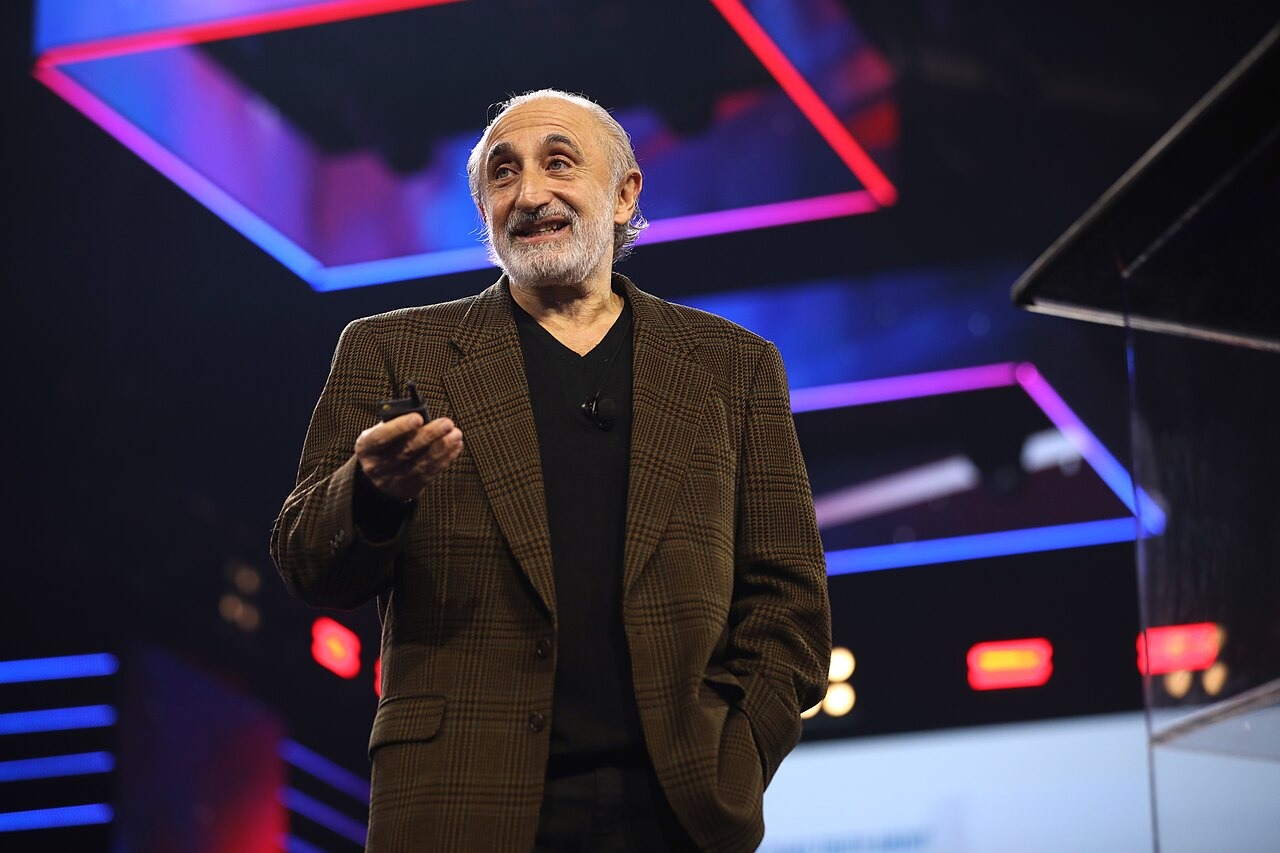
Pictured: Gad Saad speaks at Turning Point USA's AmericaFest
convention on December 18, 2023 in Phoenix, Arizona. (Photo by Gage
Skidmore/Wikimedia Commons)
The theory of "suicidal empathy," taken up and developed by Canadian Professor Gad Saad in his bookSuicidal Empathy: Dying to Be Kind,
describes a psychological and societal condition in which excessive or
misguided compassion leads Western societies — particularly, it seems,
"progressive" ones — to adopt self-destructive attitudes and policies
that will ultimately "succeed" in destroying them. The process, however
well-intentioned, is a form of civilizational suicide.
According to Saad's thesis, empathy becomes misdirected into a type
of benevolent altruism that prioritizes the perceived feelings and needs
of "marginalized" or external groups at the expense of the survival,
security, and interests of one's own group and its values. The outcome
is the weakening, and ultimately the destruction, of the very
civilization that expressed this emotion.
Saad draws on evolutionary psychology to suggest that empathy is a
natural adaptive mechanism designed to promote cooperation within small
groups, such as family or the community. In modern societies, however,
this mechanism has become "hijacked" by big-hearted supporters who take
pride in what they see as a virtue of caring about others.
The problem? This concept of suicidal empathy unfortunately does not work. As the term predicts, it ends up killing its host.
Suicidal empathy, according to Saad, rests on a fundamental
misunderstanding. Empathy, a feeling, can open you up to feel with and
understand another, or you can stay closed, enabling you to stay safely
detached. Half-measures — selective empathy toward only carefully
curated, presumably "deserving" groups — can become something else
entirely: political manipulation, pity, narcissistic preening, virtue-signaling, or emotional tourism.
Empathy can embrace humanity — or in many people, may not exist
whatsoever. "You never really understand a person until you consider
things from his point of view... until you climb inside of his skin and
walk around in it," Harper Lee wrote in To Kill a Mockingbird.
Ideally, empathy might extend to everyone: "Love thy neighbor as
thyself," perhaps impossible to do, is still a noble aspiration.
What we observe, however, in many people, is a highly selective
empathy, precisely the opposite of caring about everyone. What shows up
is an exclusive, and exclusionary, concern for certain groups — asylum
seekers, ethnic minorities, people unhappy with their gender, racialized
people (whatever that means), criminals, for example — at the same time
paired with indifference or even open hostility toward other groups
that might be equally minoritized, victimized, or marginalized.
Consider the case of our Jewish compatriots. It is no exaggeration to
say that the contemporary Western left has grown accustomed to the
mistreatment of American and European Jews, even though they consist of
only the tiniest minority in Europe (only 0.16% of Europe's population) as well as the US (2.3% of the population).
What, then, is the criterion for this so-called "selective empathy"?
We are told: victimhood. Jews are -- based on "evidence" that probably
applies just as well to successful Christians and other non-Jews -- are
deemed "dominant." How is a Jewish child beaten
in the street in Europe, and targeted only for being Jewish,
"dominant"? Because, we are told, Jews are not victims: Look, they say,
at what is happening in Gaza.
European And American Jews, however, have no connection to Gaza, except through the smoky notion of "collective responsibility,"
which holds that any crime committed by one person renders all people
from that group responsible, whether Blacks, Jews, Whites, Asians,
Muslims, non-Muslims, and so on. This notion of collective
responsibility -- as opposed to judging people one-by-one based on
individual merits -- has, even since earliest biblical times, been
considered immoral: Let not the sins of the father be visited upon the children.
Having empathy does not require it to be universal toward everyone —
any more than love, friendship and loyalty are required to be universal.
Empathy, like all emotions, is elastic – one minute you might love
someone, the next minute hate him. You can enjoy the deepest, most
intense love for your spouse and children, but feel only mild
benevolence (or even indifference) toward the rest of humanity; no one
would seriously claim that your feelings are therefore "fake" or "not
real love." You can be profoundly moved by the suffering of abused
children in your own neighborhood while remaining relatively unmoved by
equally terrible suffering occurring in distant countries you have never
visited. That does not make your empathy inauthentic.
Empathy follows exactly the same path. It is probably common to feel
more deeply about those who are physically close (family, friends,
neighbors), those who belong to "our" group (shared language, culture,
history, values, appearance...), and those whose pain we can see, hear
or share directly. The farther someone is removed from us (in space,
time, culture, or identity), the more deliberate mental work might be
required to generate a comparable emotional response.
This is not hypocrisy; it is simply human nature. What becomes harder
to defend as genuine empathy is the increasingly common pattern of
displaying loud, intense, public identification with distant victims
while simultaneously showing indifference, contempt or outright
hostility toward victims right under one's nose, here in one's own
society, whose suffering is visible and immediate.
We might be dealing then with a moral posture, a political performance, a selected narrative for virtue or social status.
In short: selective empathy -- with selective hostility or
indifference nearby -- is not "higher", "purer" or "more universal". It
is just a posture wearing empathy's clothes.
The psychological mechanism of the contemporary Western "left" seems
to be unfolding in two stages. First came the collapse of Marxism in
1989, with the Berlin Wall being dismantled, piece by piece, was also
the main ideology of the left, undergoing deconstruction. Marxism was
the dominant ideological framework of the Western left through much of
the 20th century. In The Age of Extremes (1994), the Communist
historian Eric Hobsbawm argues that Marxism was the dominant
intellectual and ideological framework of the Western left for much of
the twentieth century. He explained that communist parties, socialist
movements, trade unions, and left-wing intellectual circles largely
operated within conceptual horizons shaped by Marxist theory — even when
they were not strictly Marxist in doctrine. In other words, Marxism
structured how the left understood history, capitalism, class, and
political struggle throughout most of the century. The collapse of
Soviet communism in 1989 symbolized the failure of Marxism as a viable
political-economic system. Therefore, the left lost its core ideology
and began searching for replacements.
A hatred of the West, of capitalism, of "inequality," has been around
at least since the writings of Karl Marx. In the West, this rejection
of what exists, and of what has founded our civilizational predominance,
has been a constant—at least since the French Revolution in 1789.
Marxism, later, proposed a supposed "solution" — false and unachievable,
but claiming theoretical, even "scientific," coherence. None of that, however, has ever existed.
This outrage and anger then seized upon a motley collection of
ideological substitutes, some good, such as the abolition of slavery and
universal suffrage; some not good, such as the abolition of borders, radical environmentalism, political Islam,
and the abolition of prisons. What appears lost is the freedom to
disagree. Diverge from these new precepts, and you exit humanity itself.
You become a figure of evil.
Anyone who departs from these fragile dogmas, even marginally, is now
denounced, excommunicated, morally disqualified, and, whenever
possible, socially destroyed. Many people seem to be incubating a rage
looking for somewhere to go. Dogmas that admit no dissent provide a
perfect vehicle for that. This new rage appears to have nothing to do
with empathy — or even selective empathy — but more with envy,
frustration, and possibly opportunism, perhaps accompanied by large payments.
When there are real protestors out on the streets risking their
lives, as recently in Iran, there is scant support. What vibrates in
Western outbursts, on the left and on the right, appears to be rage
looking for a cause, and constantly feeding on new dogmas. Sadly, there
seems to be no shortage of them.
Drieu Godefridi is a jurist (University Saint-Louis,
University of Louvain), philosopher (University Saint-Louis, University
of Louvain) and PhD in legal theory (Paris IV-Sorbonne). He is an
entrepreneur, CEO of a European private education group and director of
PAN Medias Group. He is the author of The Green Reich (2020).