by Noam Lehmann and TOI Staff
Netanyahu uses incident to illustrate dangers of civil war; Ben Gvir likens himself to Irgun leader Begin at separate press event
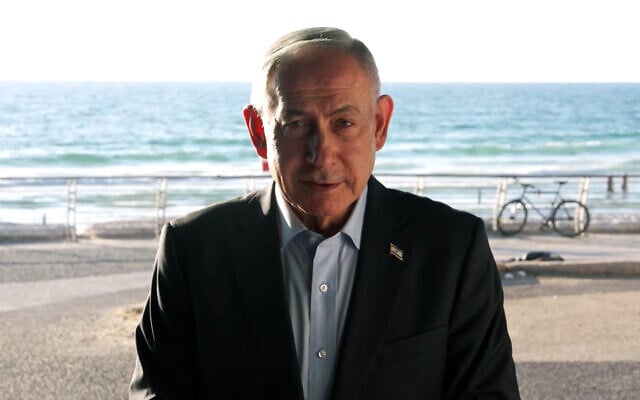 |
| Prime Minister Benjamin Netanyahu speaks from the Israeli coast about the locating of the 1948 vessel Altalena, August 24, 2026. (GPO screenshot) |
Prime Minister Benjamin Netanyahu reveled on Monday in the discovery of the wreck of the Altalena cargo ship, which was sunk amid a deadly 1948 confrontation between Israel’s nascent army and the right-wing Irgun militia, and criticized Israel’s first prime minister, David Ben-Gurion, for ordering the military to attack the vessel.
The Altalena affair was the most prominent incident of violent conflict between Jews during Israel’s War of Independence, and almost pulled the fledgling state into a civil war.
Netanyahu, in his pre-recorded video statement shot on the Tel Aviv promenade overlooking the beach, chose to reopen the bitter wound over Ben-Gurion’s decision to fire on the ship, while simultaneously using the incident to illustrate the dangers of civil war.
Although he was preaching unity, the prime minister also took the opportunity to denigrate his political opponents, and irritated allies by deciding to record a video rather than appear alongside National Security Minister Itamar Ben Gvir at a live press conference on the discovery.
Summarizing the deadly violence in his own words, Netanyahu said that Ben-Gurion had made a “tragic decision to open fire” on the ship while it was “bringing essential weapons to our fighters in the War of Independence.”
“Instead of letting it unload,” he lamented, “the Haganah men on the beach opened fire.”
The Altalena was brought to Israel by Menachem Begin’s right-wing Irgun militia during the country’s War of Independence in June 1948.
With the state and its military only a few weeks old, Ben-Gurion, who was at bitter odds with Begin, demanded that the ship and cargo be turned over to the newly formed IDF, sparking an armed confrontation.
As the ship reached the coast and then ran aground on a sandbank, a standoff ensued that ended in a shootout between Irgun members aboard and IDF and Palmach soldiers on the shore, who were ordered to destroy the vessel. The ship was set ablaze by artillery fire by the forces on the shore under the command of a young Yitzhak Rabin, later the IDF chief of staff and prime minister.
Sixteen Irgun members and three IDF soldiers were killed during the sinking of the Altalena.
The husk of the ship remained visible off the shore for about a year, until it was dragged out to sea and sunk in 1949.
While it is generally accepted that a sovereign state cannot tolerate an independent militia, such as the Irgun, running its own arms supply, the cost of imposing that principle — the death toll, the loss of vital weaponry and the act of Jews fighting and killing Jews — has remained immensely controversial, especially given the left-right political divide that has continued throughout modern Israeli history.
The incident on the shore of Tel Aviv is viewed by many on Israel’s right as an injustice and has become a rallying cry — both about the dangers of internal conflict and violence, and about the ostensible perfidy of the political left.
“Brothers killed brothers” off the coast of Tel Aviv when “the Altalena went up in flames,” Netanyahu lamented, recounting how Begin “stopped the fight” and pledged that “we are not going to have civil war.”
“That’s the lesson of the Altalena,” Netanyahu said.
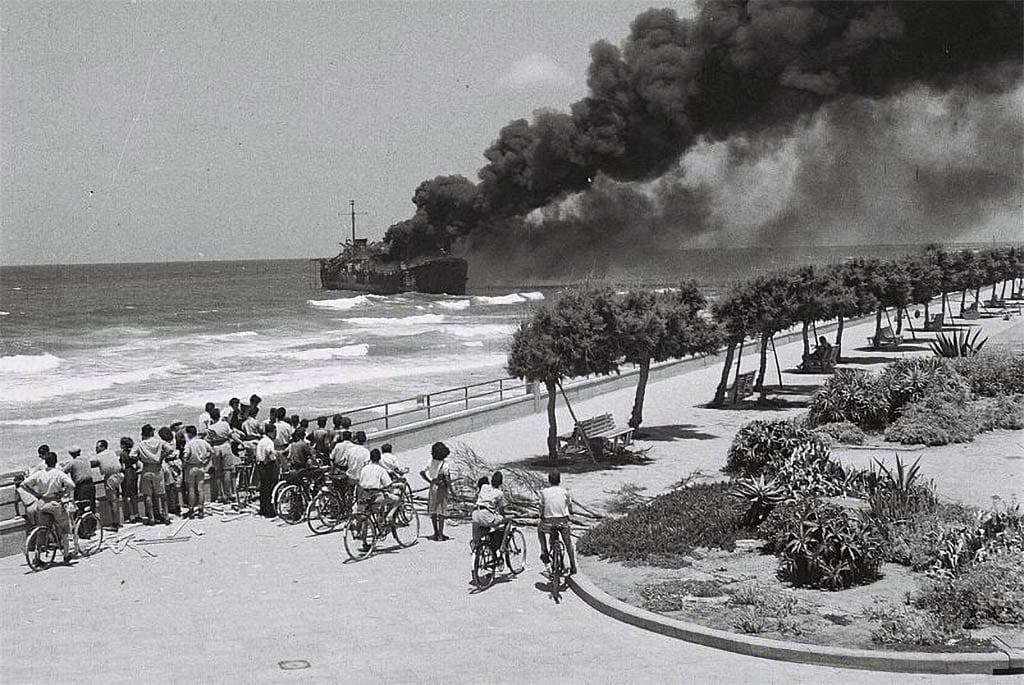
The ship was located by divers early on Monday following a yearslong effort funded by the government. The discovery was announced by Ben Gvir and Heritage Minister Amichai Eliyahu, a member of his ultranationalist Otzma Yehudit party.
Netanyahu said he would order the ship raised from the water and turned into a monument.
“For me, and I am certain for you as well, citizens of Israel, this is an emotional moment, a defining moment,” he said. The ship “will be a tangible symbol for our generation and generations to come.”
Experts have said raising the ship will be difficult and costly, and may prove impossible.
The prime minister praised the Irgun fighters for not escalating the fight to a civil war, and for going on to fight in the War of Independence.
The Irgun would later be absorbed into the Israel Defense Forces, and Begin, who went on to found Netanyahu’s Likud party, said of the affair that his “greatest accomplishment was not retaliating and causing civil war.”
Netanyahu noted that he attends the yearly ceremony commemorating the Altalena’s victims at the site of its destruction, and criticized his opponents for protesting the event over the years.
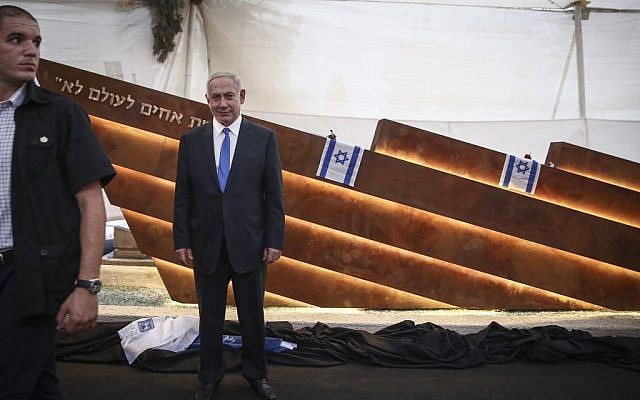 |
| Prime Minister Benjamin Netanyahu attends the unveiling of a new monument to the victims of the 1948 Altalena incident, at Nahalat Yitzhak cemetery in Tel Aviv, October 27, 2016. (Miriam Alster/Flash90) |
“In recent years something absurd has happened,” he said. “During the ceremony, I hear cries of incitement against us from political rivals standing outside and simply desecrating this sacred ceremony. Have they not learned its lesson?”
“This is the lesson, and it’s very simple,” he declared. “We are brothers. Political rivals, yes, but we are brothers. We are of one nation, one future, one fate.”
Toward the end of his video, Netanyahu asserted that he was acting in the spirit of that lesson, and repeated his campaign pledge to establish a “broad national government” following the October 27 election.
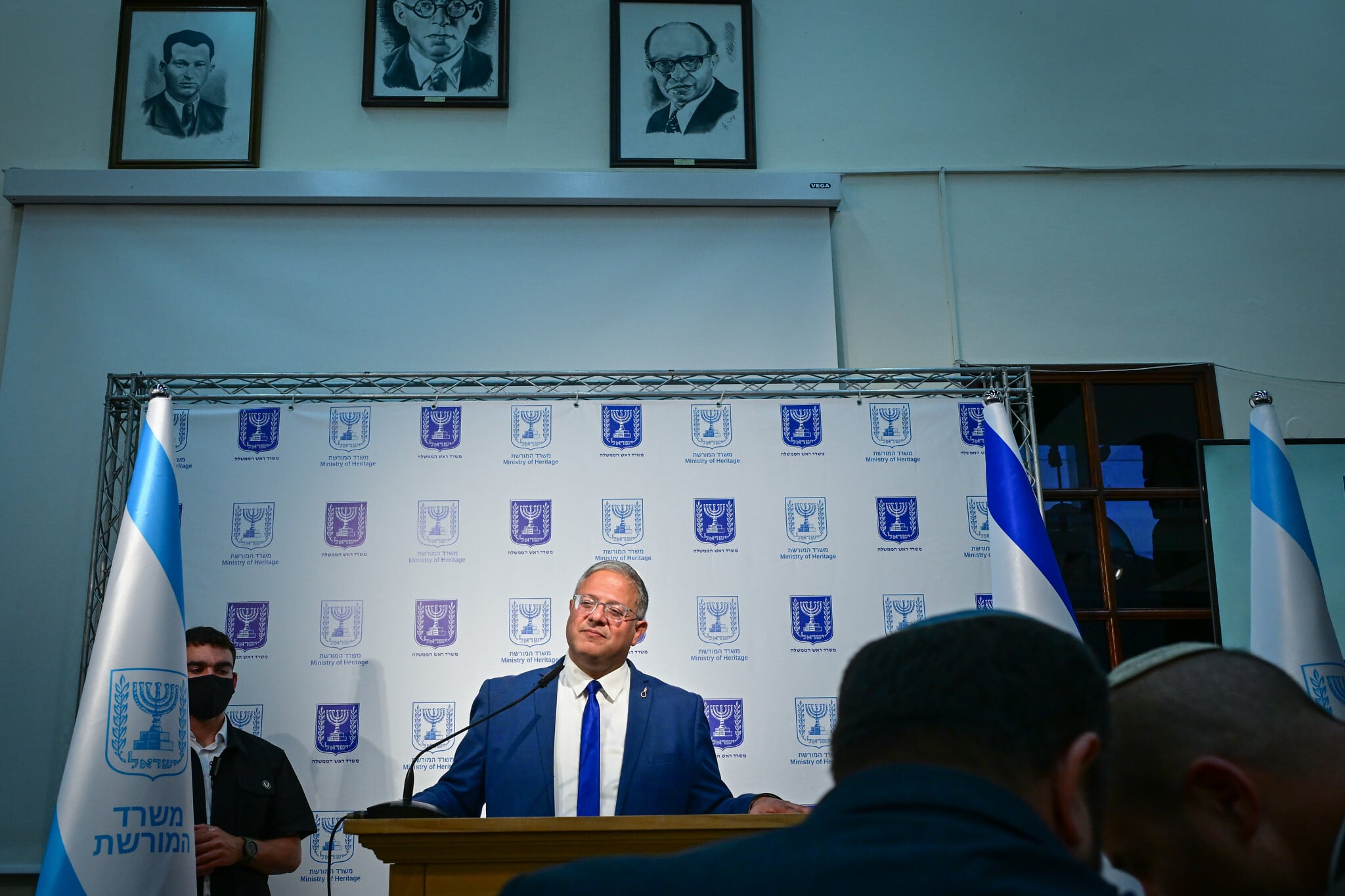
Ben Gvir was forced to delay the start of his press conference as a result of Netanyahu issuing his video. Like Netanyahu, he highlighted the left-right divide present in Israeli society, saying the discovery of the ship closed the “bleeding wound” of what he said was the marginalization of the Israeli right.
The far-right minister spoke at the Etzel Museum — named for the Irgun’s Hebrew acronym — on the beach near Jaffa. He sported a pin in the shape of a noose on the lapel of his suit, in an allusion to his efforts to institute death by hanging for Palestinians convicted of terrorism against Jews.
“For decades they’ve tried to hide this wound, to silence this story,” Ben Gvir said, without specifying who he was referring to.
The Altalena, he said, is “a symbol of the national camp, led by Menachem Begin.”
“In the face of all the prosecution, Menachem Begin held to his truth, with one very clear belief: We are brothers, the entire House of Israel — it doesn’t matter what our origins, color or ethnicity are, or what party we vote for. There will never be a civil war,” Ben Gvir said. “Against our enemies, we must not hesitate, be confused or show compassion. But with our brothers, we need to be together.”
He then appeared to present himself as the modern-day Begin, lamenting that Begin was “familiar with boycott.”
“He knew, intimately, what it tastes like when others don’t want to be photographed with you on the same stage,” said Ben Gvir, who himself was long a pariah in Israeli politics because of his close association with slain extremist rabbi Meir Kahane. The comparison appeared to be a jab at Netanyahu over his decision to stay away from the Otzma Yehudit leader’s press conference.
Sources close to Ben Gvir were cited in Hebrew media as saying that Netanyahu decided to split off from Ben Gvir at the last moment “to avoid contact and a joint photograph.”
The premier’s decision to distance himself from his far-right ally in the run-up to the election was reminiscent of an incident ahead of the last election, in late 2022, when he refused to share a stage with Ben Gvir at a holiday event in Kfar Chabad.
While Netanyahu made no effort to distance himself from Ben Gvir or his views over the past four years in government, Likud under Begin maintained a strict boycott of Kahane, Ben Gvir’s rabbi.
Noam Lehmann and TOI Staff
Source: https://www.timesofisrael.com/pm-hails-finding-of-irgun-arms-ship-altalena-denounces-ben-gurion-for-striking-it-in-1948/
No comments:
Post a Comment