The "Middle East and Terrorism" Blog was created in order to supply information about the implication of Arab countries and Iran in terrorism all over the world. Most of the articles in the blog are the result of objective scientific research or articles written by senior journalists.
From the Ethics of the Fathers: "He [Rabbi Tarfon] used to say, it is not incumbent upon you to complete the task, but you are not exempt from undertaking it."
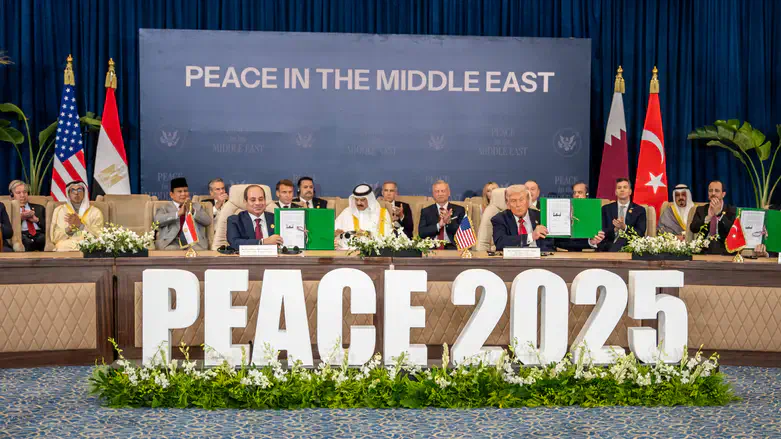
The US and eight nations issue a joint statement backing UN resolution endorsing Trump’s Gaza peace plan, calling it a sincere path to Palestinian statehood and regional stability.
Signing of Gaza Peace Deal in Sharm el-Sheikh Michael Kappeler/dpa via Reuters Connect
The
United States and a coalition of key Middle Eastern and Muslim-majority
nations issued a joint statement on Friday expressing strong support
for a United Nations Security Council resolution aimed at advancing US President Donald Trump’s comprehensive peace plan for Gaza.
The
statement, released by the US Mission to the United Nations, was signed
by the United States, Qatar, Egypt, the United Arab Emirates, Saudi
Arabia, Indonesia, Pakistan, Jordan, and Turkey. It affirms backing for
the resolution currently under consideration, which was “drafted by the
United States after consultation and in cooperation with Council members
and partners in the region.”
The
resolution endorses the “historic Comprehensive Plan to End the Gaza
Conflict” first announced on September 29 and later celebrated and
endorsed during a summit in Sharm El Sheikh.
“We
are issuing this statement as the Member States that gathered during
High-Level Week to begin this process, which offers a pathway to
Palestinian self-determination and statehood,” the countries declared.
“We emphasize that this is a sincere effort, and the Plan provides a
viable path towards peace and stability, not only between the Israelis
and the Palestinians, but for the entire region.”
The signatories concluded by urging swift action: “We are looking forward to this resolution’s swift adoption.”
The statement comes after Russia submitted
a competing draft resolution on Gaza to the Security Council, directly
challenging the US proposal for a two-year mandate establishing a
transitional governance body and an international stabilization force.
Moscow’s
UN mission said in a note to Council members Thursday that its
“counter-proposal is inspired by the US draft,” but aims to offer a
“balanced, acceptable, and unified approach toward achieving a
sustainable cessation of hostilities.”
Russia’s version, seen by Reuters,
requests that the UN Secretary-General identify options for a
stabilization force in Gaza but omits any reference to the “Board of
Peace,” the transitional administration proposed by the US.
Hamas insists that these issues are "up for negotiation" but that it never agreed to demilitarization or the presence of international experts and security forces in the Gaza Strip.
According to these [Hamas] officials, Hamas only
agreed to the first phase of the Trump plan, which calls for Israel to
suspend military operations and release Palestinian prisoners, and for
Hamas to return all Israeli hostages, dead and alive, within 72 hours.
It has been weeks, and Hamas has not yet fulfilled that phase-one
obligation.
What about the part in the Trump plan that talks about the
demilitarization of the Gaza Strip and the deployment of an
"International Stabilization Force" as a "long-term security solution?"
Hamas insists that these issues are "up for negotiation" but that
it never agreed to demilitarization or the presence of international
experts and security forces in the Gaza Strip.
Hamas official Osama Hamdan affirmed on November 10 that his group did not accept all the 20 points of Trump's plan.
By November 12, the terror group had not yet returned the remains
of four hostages, although Israel suspended its military activities and
released hundreds of Palestinian prisoners.
By stating that it needs to launch "negotiations and discussions"
about the implementation of the rest of Trump's plan, Hamas is clearly
seeking to win as much time as ever to enable it to maintain a grip on
the Gaza Strip. As far as Hamas is concerned, the longer the
negotiations continue, the better.
The Hamas official dismissed outright the deployment of international forces in the Gaza Strip.
Hamdan also repeated Hamas's refusal to lay down its weapons in
accordance with the Trump plan. The weapons of the Palestinian terror
groups, he emphasized, will be handed only to the government of a future
Palestinian state after its establishment: "When there's a Palestinian
state capable of protecting its people, it's natural that the weapons
would be handed over to that state. Until then, resistance is a right
that we cannot give up. This issue has not been discussed until now with
the mediators or with the Americans."
This statement by the Hamas official contradicts what Witkoff
recently said: "Hamas has always indicated they would disarm. They've
said so – they said it to us directly during that famous meeting that
Jared [Kushner] had with them."
It is crucial to pay attention to what Hamas leaders are telling their people in Arabic....
For Hamas, the Trump plan is nothing but a temporary ceasefire that
would enable it to wait out the Trump administration, get back on its
feet to rule Gaza again, and resume its Jihad (holy war) to destroy Israel.
Hamas official Osama Hamdan affirmed on November 10 that his group did not accept all the 20 points of Trump's plan. In a podcast interview, Hamdan said that Hamas had accepted only
the first phase of Trump's plan, which calls for Israel to suspend
military operations and release Palestinian prisoners, and for Hamas to
return all Israeli hostages, dead and alive, within 72 hours. It has
been weeks, and Hamas has not yet fulfilled that phase-one obligation.
Pictured: Senior Hamas official Osama Hamdan on the podcast, on November
10, 2025. (Image source: MEMRI)
Did Hamas lie to US President Donald J. Trump when it said that it
had accepted his 20-point plan for ending its war against Israel in the
Gaza Strip? Or is the terror group simply trying to buy time to reassert
control over the Gaza Strip and prepare for more terror attacks against
Israel? Yes and yes. Hamas lied. Hamas is trying to gain time by
arguing that it needs to engage in negotiations and discussions about
the implementation of most parts of the Trump plan.
Since the ceasefire in the Gaza Strip went into effect in early
October, Hamas officials have repeatedly emphasized that they did not
accept all the points mentioned in the Trump plan.
According to these officials, Hamas only agreed to the first
phase of the Trump plan, which calls for Israel to suspend military
operations and release Palestinian prisoners, and for Hamas to return
all Israeli hostages, dead and alive, within 72 hours. It has been
weeks, and Hamas has not yet fulfilled that phase-one obligation.
What about the remaining phases of the plan, which call for the
establishment of a temporary transitional committee consisting of
technocrats and independent figures, as well as international experts,
to govern the Gaza Strip? This committee is supposed to be supervised by
a new transitional international body, the "Board of Peace," chaired by
Trump and including former British Prime Minister Tony Blair, with
other members to be announced.
What about the part in the Trump plan that talks about the
demilitarization of the Gaza Strip and the deployment of an
"International Stabilization Force" as a "long-term security solution?"
Hamas insists that these issues are "up for negotiation" but that it
never agreed to demilitarization or the presence of international
experts and security forces in the Gaza Strip.
Hamas official Osama Hamdan affirmed on November 10 that his group did not accept all the 20 points of Trump's plan.
In a podcast interview, Hamdan, who lives outside the Gaza Strip, said that Hamas had acceptedonly the first phase of Trump's plan.
Hamas has since released all 20 living hostages and the remains of
most of the hostages they killed. By November 12, the terror group had
not yet returned the remains of four hostages, although Israel suspended
its military activities and released hundreds of Palestinian prisoners.
Reminder: all the hostages, dead and alive, were supposed to be
returned within 72 hours of the announcement of the Trump plan in late September.
What Hamdan and other Hamas officials are saying is: "After we return
the remains of the four Israelis, then we can start negotiations and
discussions about the implementation of the rest of Trump's plan."
Notably, the Trump plan was announced after intensive negotiations
between Hamas and Arab and Islamic mediators, as well as direct and
indirect meetings with US envoys Steve Witkoff and Jared Kushner. The
full details of the plan were presented to Hamas, whose leaders finally
signed on to it. Hamas cannot say that its leaders were not aware of the
second and third phases of the plan, especially regarding the
international "Board of Peace," demilitarization, and the deployment of
international security forces in the Gaza Strip.
Hamas's main strategy is evidently to buy time so that it can
reassert control over the Gaza Strip and rebuild its military and
organizational infrastructure. By stating that it needs to launch
"negotiations and discussions" about the implementation of the rest of
Trump's plan, Hamas is clearly seeking to win as much time as ever to
enable it to maintain a grip on the Gaza Strip. As far as Hamas is
concerned, the longer the negotiations continue, the better.
Those who are familiar with Hamas's way of handling things know that
such negotiations, if and when they start, could last for months or
years. Since its violent takeover of the Gaza Strip in 2007, Hamas has
been engaged in endless -- and futile -- negotiations with the
Palestinian Authority about ways to end the rivalry between the two
parties and achieve national unity.
Hamas will likely try to drag out negotiations over the
administration of the Gaza Strip, disarmament and international forces
for another three years, until the Trump administration is replaced by
another administration that Hamas hopes will be less interested in the
Gaza Strip.
Hamdan said
during the interview that when the Hamas representatives went to Egypt
to sign the Trump plan for peace in the Gaza Strip, they had only these
things in mind: a ceasefire, exchanging their hostages for Palestinian
prisoners, reopening the Gaza Strip's borders with Israel and Egypt, and
the entry of unrestricted humanitarian aid. "What we signed was related
to the first phase of the plan, the remaining phases are up for
negotiations and discussions," he claimed.
Hamdan alleged that the US administration was aware that Hamas had
not accepted all the 20 points of the Trump plan. "The Americans agreed
to this," he said. "Our response was very clear."
Hamdan repeated Hamas's rejection of the involvement of an
international body or similar figures in the governance of the Gaza
Strip:
"There is a Palestinian national consensus on rejecting
any non-Palestinian administration. If there's an international
committee that wants to supervise the reconstruction of the Gaza Strip,
that's another story. We agreed on this with all the other Palestinian
factions."
The Hamas official dismissed outright the deployment of international forces in the Gaza Strip:
"We reject international forces that come to replace
Israel. These forces should only be stationed at the borders to ensure
the implementation of the Trump plan and to protect the Palestinians
against Israeli aggression. These forces should have no role inside the
Gaza Strip. We are capable of managing our own affairs and we don't need
guardianship. The negotiations over this still haven't started."
Hamdan also repeated Hamas's refusal to lay down its weapons in
accordance with the Trump plan. The weapons of the Palestinian terror
groups, he emphasized, will be handed only to the government of a future
Palestinian state after its establishment:
"The Palestinian factions that recently met in Cairo made
a clear statement on this issue, that this is a national issue and that
the resistance is tied to our right to establish a Palestinian state
after the liberation. When there's a Palestinian state capable of
protecting its people, it's natural that the weapons would be handed
over to that state. Until then, resistance is a right that we cannot
give up. This issue has not been discussed until now with the mediators
or with the Americans."
This statement by the Hamas official contradicts what Witkoff recently said:
"Hamas has always indicated they would disarm. They've
said so – they said it to us directly during that famous meeting that
Jared [Kushner] had with them."
It is crucial to pay attention to what Hamas leaders are telling their people in Arabic.
The statements of the Hamas official show that the terror group is not
serious about laying down its weapons or relinquishing control over the
Gaza Strip. For Hamas, the Trump plan is nothing but a temporary
ceasefire that would enable it to wait out the Trump administration, get
back on its feet to rule Gaza again, and resume its Jihad (holy war) to destroy Israel.
Shift from famine declaration in Gaza to normalcy happens in the space of a few weeks
For months, headlines warned of an impending famine
in Gaza — images of starving children, shattered infrastructure and
humanitarian collapse filled the news. On Aug. 22, 2025, the Integrated
Food Security Phase Classification (IPC) declared that while full data
was lacking, expert inference indicated famine was underway. Governments pledged aid; humanitarian agencies sounded alarms. Yet today, the word "famine" has nearly vanished from headlines. What happened?
This
is not to deny the human suffering in Gaza; it is to ask difficult,
necessary questions. Was famine averted, exaggerated or politically
reframed?
Famine has been described as a tree swaying in the wind —
at some point it cannot recover and cannot be returned upright. But
Gaza’s "famine tree" never appeared to fully sway. If aid efforts or
local resilience truly prevented catastrophe, where is the evidence? On
August 22, 2025, famine was declared, and the global press carried that
narrative. Then came a shift to the word "starvation." Now, even that
language has faded.
The distinction matters. Famine is a technical
classification grounded in data — household food security surveys,
acute malnutrition rates and mortality. Starvation, by contrast, is a
moral and legal term implying intent; under international law, using
starvation as a weapon constitutes a war crime. In Gaza, this rhetorical
shift occurred before comprehensive data was gathered — an escalation
of accusation without empirical foundation.
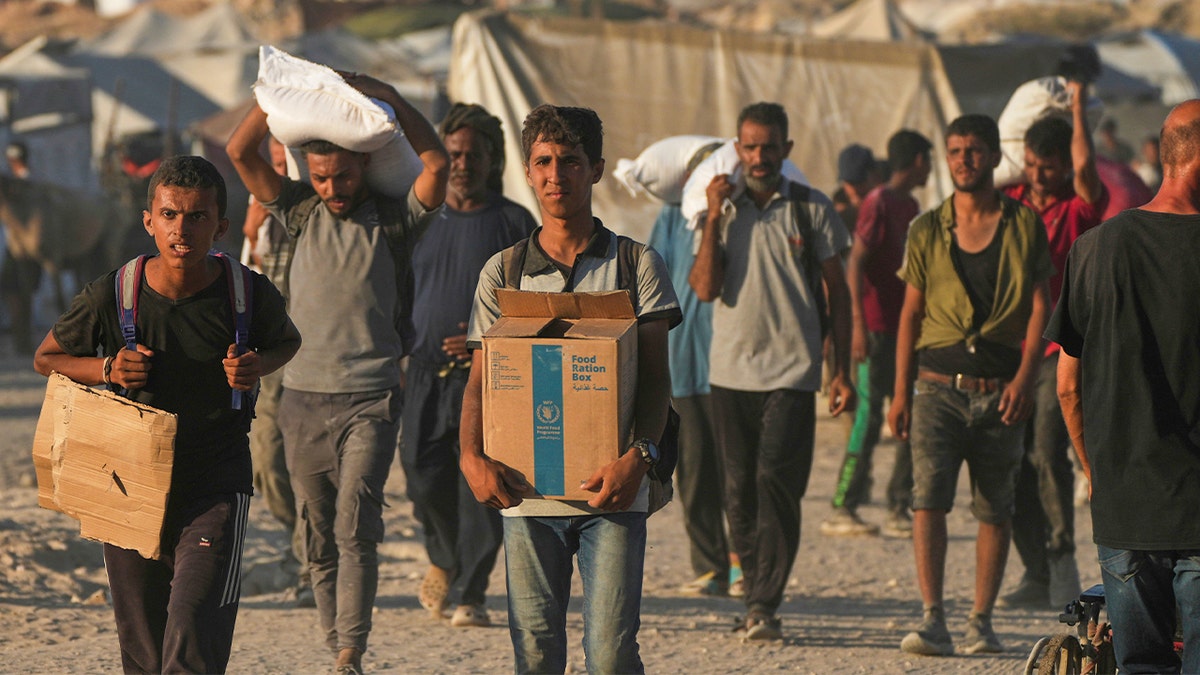
A
Palestinian carries a box of food from the World Food Program as others
carry sacks of flour unloaded from a humanitarian aid convoy that
reached Gaza City from the northern Gaza Strip, Aug. 24, 2025.(Abdel Kareem Hana/AP Photo)
Recovery
from famine typically takes eight to 12 months, even under ideal
conditions with full humanitarian access and functioning medical
systems. Historical precedents — Somalia in 2011, South Sudan in 2017
and Sudan in 2023 — show that malnutrition persists long after headlines
fade. If Gaza
truly met famine standards this summer, the signs would still be
unmistakable: rising mortality, overwhelmed clinics and a generation of
weakened children. Yet no such surge has been confirmed by independent
medical reporting.
Another inconsistency is behavioral. True
famine unleashes chaos — hunger overrides social norms and people fight
to survive. In August, 84% of Gaza aid convoys
were reportedly looted. Yet after the Oct. 10 ceasefire, U.N. 2720 data
show interceptions fell to 6%, and by November, below 1%. Where did the
desperation go? Where is the looting? Where are the crowds of
thousands?
Following the ceasefire, Hamas rapidly reasserted control,
executing accused defectors and projecting an image of order. Recent
videos show bustling markets and calm streets — a façade of normalcy
meant to reinforce legitimacy. Within six weeks, famine conditions
seemingly vanished. Can that be real?
If
famine had truly taken hold, it would not have dissipated so quickly.
Either the crisis was overstated, the data manipulated or public
perception deliberately managed.
We cannot shy away from
uncomfortable questions. Asking what happened to the famine in Gaza is
responsible, not callous. Truth demands transparency, even when it
challenges narratives we’ve grown accustomed to believing.
Under the current agreement, most of the assistance is reserved for purchases from the American defense industry.
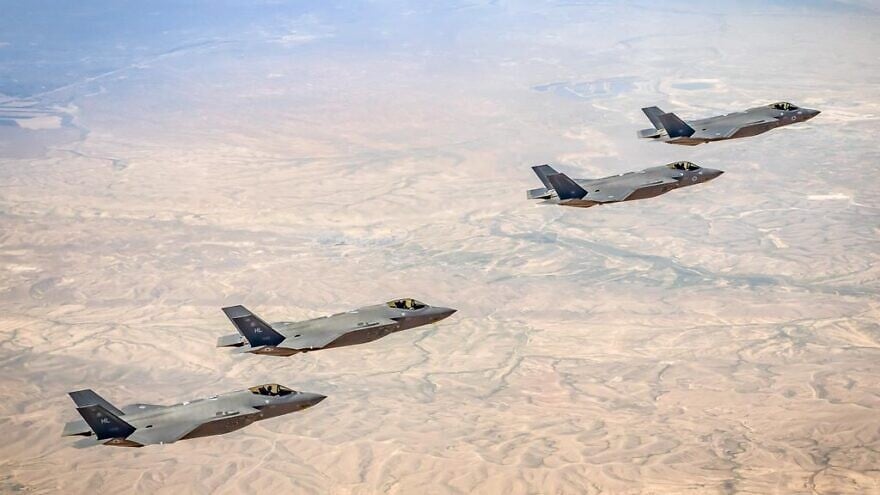
Israeli and American F-35 fighter jets during a joint training exercise. Credit: IDF Spokesperson's Unit.
Israeli officials have begun weighing
significant changes to the long-standing framework of American security
assistance, which for decades has formed a central pillar of defense
ties between Jerusalem and Washington. Prime Minister Benjamin Netanyahu
hinted on Thursday that he intends to reduce Israel’s reliance on U.S.
security aid, saying, “The direction is much greater independence. I
expect to have something to say about this soon.”
For the past 50 years, since the 1973 Yom
Kippur War, the U.S. has transferred a few billion dollars annually to
Israel for defense needs. In the early years, Israel had considerable
freedom in how to use these funds. Over the past decade, however, nearly
the entire annual sum—now roughly $3.8 billion—has been designated for
purchases from the American defense industry, according to the terms of
the current agreement.
As global weapons development evolves,
Israel’s economy has rapidly strengthened, and criticism within the U.S.
of the current aid structure has grown. Against this backdrop, Israeli
officials are increasingly open to rethinking the arrangement. A source
familiar with the discussions told Israel Hayom that debates
are underway in the Israeli defense and diplomatic establishments
regarding what form future American assistance should take.
U.S. administration officials and
pro-Israel members of Congress have recently asked Israel’s ambassador
in Washington, Yehiel Leiter, whether Jerusalem seeks to renew the aid
package. They are seeking clarity because the current agreement expires
in 2028, and both sides want to avoid a gap by beginning negotiations on
a new framework now.
Israel has not yet decided what the
structure of a future agreement should be. A source familiar with the
matter said there is clear openness to “thinking outside the box” to
craft an entirely different model with the administration, in both
substance and duration.
One option under consideration is shifting
from an aid-based model to agreements focused on bilateral economic
cooperation in military technology, which is of high value to both
countries. Another possibility is establishing joint production
frameworks for weapons systems co-developed by the two states.
President Donald Trump initiated the
large-scale Golden Dome project, designed to protect U.S. airspace in
the spirit of Israel’s Iron Dome interceptor. Israeli participation in
that initiative could itself serve as a form of U.S. security
assistance.
A senior official told Israel Hayom
that, in practice, “what is known as U.S. aid to Israel has for many
years essentially been a mechanism enabling the administration to ensure
that American-made weapons are purchased with American funding. Israel
is worth five CIAs to the U.S., and while the money comes from the
American taxpayer, it ultimately cycles back into the U.S. economy. The
public calls it ‘aid,’ but in reality, these are cooperative frameworks.
It may be time to move from an aid model to something different.”
The right’s warnings about Obamacare proved prescient, yet Democrats keep doubling down on a failing system they refuse to admit they broke.
Just over 15 years ago, when the Democrat-controlled House and the
Democrat-controlled Senate were debating the healthcare proposals
offered by the Democrat president, nearly everyone on the political
right was unified in opposition. It may well have been the last time the
right was united on anything, but it was indeed unified and resolute.
Congresswoman Michelle Bachmann (MN) warned that “This monstrosity of
a bill will not only destroy the private healthcare market, it will
lead to massive increases in premiums and rationed care.” Congressman
(and eventual vice-presidential nominee and Speaker of the House) Paul
Ryan (WI) complained that “This bill is a fiscal Frankenstein. It’s a
government takeover that will explode costs and kill jobs.” Senator (and
Republican Leader) Mitch McConnell (KY) insisted that Americans “want
reforms that lower costs, not a trillion-dollar government experiment.”
Right-leaning commentators like George Will and Charles Krauthammer
agreed, not only with each other but with Republicans in Congress as
well. Krauthammer, in particular, argued that President Obama’s promise to “bend the cost curve” down was pure, unadulterated, and extensively documented fantasy. National Review, much maligned among Trump supporters these days, dedicated most of an issue
to exposing and forecasting Obamacare’s fiscal absurdities and the
likelihood that it would result in lower quality of care, increased
taxes, and exploding insurance premiums. Even the Heritage Foundation—in
the news lately for purportedly exacerbating rifts in the conservative
coalition—likewise agreed with everyone in the movement, insisting that
Obamacare was a disaster waiting to happen and would keep none of the
promises that it made, all while destroying what was good and valuable
in the private insurance market.
More than a decade later, when it was clear that the system was in
trouble and that only greater government intervention and spending could
save it, Heritage (in the form of Robert Moffit, Edmund Haislmaier, and
Nina Owcharenko Schaefer) took something of a victory lap, detailing
Obamacare’s manifest failures and arguing that it was long past time to
scrap the whole experiment. “The facts,” the Heritage analysts noted,
“are in.”
The ACA dramatically increased health insurance premiums and cost-sharing in the individual market….
The ACA collapsed insurer competition in the nation’s individual markets….
The ACA failed to meet official enrollment targets in the individual markets….
The ACA is pricing middle-class Americans out of individual market coverage….
The ACA expanded government coverage while wrecking the private individual health insurance market….
The ACA compromised access to care for
persons—including those with preexisting medical conditions—enrolled in
the nation’s individual markets….
The ACA failed—and failed miserably—to attract young people into the exchange insurance pools….
The ACA Medicaid expansion prioritizes
able-bodied adults, many of whom are working, over the elderly, the
disabled, and poor women and children….
The ACA did not, as predicted, “bend the curve” of America’s healthcare spending….
The ACA’s vaunted delivery reforms did not yield the anticipated savings.
Everything Republicans warned would happen did happen. And
the Democrats’ response was to offer a massive “temporary” increase in
subsidies to help paper over the failures. Again, every sentient person
in the country insisted that doing so would be a disaster, that the
subsidies would only increase costs, and that they would not be temporary.
The Democrats didn’t listen, however. They didn’t listen in 2009 and
2010 when Congress initially debated and then passed Obamacare—without a single Republican vote in either house.
They didn’t listen in 2020, when they insisted they needed expanded
subsidies to address the financial hardships created by COVID-19. They
didn’t listen in 2023, when they extended the COVID-era subsidies as
part of the inaptly named Inflation Reduction Act, at a cost of $64
billion. And they’re still not listening now. Indeed, they just
engineered the longest shutdown in American government history because
they have no intention of ever listening or ever admitting that perhaps
the right was absolutely spot-on in its predictions about Obamacare.
Worse still, in addition to sticking their fingers in their ears and
ignoring the experiences of the last decade and a half, the Democrats
are actually blaming the Republicans for all of the healthcare system’s
problems, insisting that the GOP is somehow responsible for their
delusions. As Senator Bernie Sanders, the ideological spirit animal of
today’s Democrats, put it,
“This government shutdown is all about whether Republicans will get
away with raising healthcare premiums by 75% for 20 million Americans
and throwing 15 million people off their healthcare.”
Over the years, countless conservative commentators have played upon
the famous line in the movie “Love Story,” arguing that “being a liberal
means never having to say you’re sorry.” More accurately, they would
note that being a liberal/leftist/statist means never having to say you
were wrong or admit that your utopian dreams were, in reality,
nightmares. This is a feature, not a bug, of leftism. Just as today’s
young leftists insist that communism can work, despite its many
high-profile and bloody failures, because “real communism has
never been tried,” so the Democrats insist that Obamacare can work if
it’s tweaked and adjusted in just the right ways.
Although Jean-Jacques Rousseau shares the title “father of the modern
left” with many of his Enlightenment contemporaries, he clearly did
more than most to undermine and destroy the existing social and
political orders and to discombobulate the West. As Nietzsche argued,
Rousseau was “the greatest revolutionizing force of the modern era.”
Rousseau did not believe in the concept of Original Sin and insisted
that the very idea was invented to keep man oppressed, silenced, and
miserable under the thumb of society’s imperfect institutions.
“Everything is good as it comes from the hands of the creator,” he wrote
in the opening pages of Emile, but “everything degenerates in the hands of man.”
As a result, Rousseau and his followers saw society’s institutions as
the foremost threat to man’s freedom and happiness. If man is good by
nature, yet he behaves poorly under the direction and guidance of
specific institutions, then the institutions, by definition, must be
corrupt. They are clearly the cause of the aberrant behavior and must,
therefore, be reformed—as thoroughly and as frequently as necessary to
enable man to live as he should in a collective society. As the
historian Paul Johnson noted in his Intellectuals, to Rousseau,
society or “culture” was an “evolving, artificial construct….” But it
nevertheless “dictated man’s behavior,” meaning that “you could improve,
indeed totally transform, his behavior by changing the culture and the
competitive forces, which produced it…” In short, according to Rousseau,
one can change the world by successfully changing its institutions—over
and over and over again, until you get it right, without ever having to
say you’re sorry for getting it wrong.
Normal people, of course, think that the institutions created by
Obamacare are destructive, costly, and ultimately ineffective. And we
know they believe this because so many of them said so before the system
was ever put in place. The Democrats disagree, and they will not be
dissuaded from their course by any appeals to theory or experience. They
want to keep the institutions and keep reforming them until they
inevitably find the right formula.
They’ll get it right next time. Trust them. Oh, and in the meantime, pony up.
Stephen R. Soukup is the Director of The Political Forum Institute and the author of The Dictatorship of Woke Capital (Encounter, 2021, 2023)
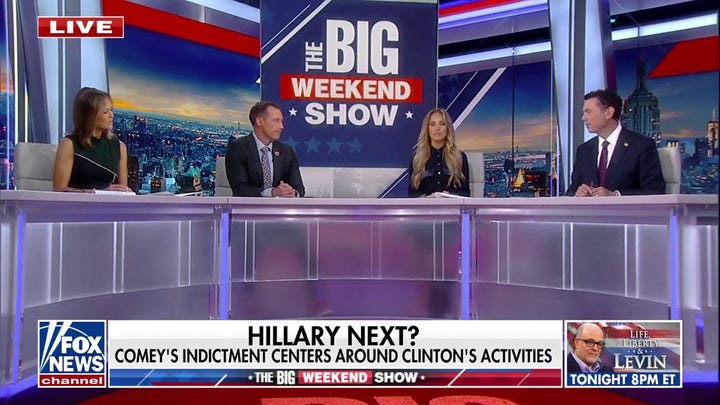
Former FBI director's handwritten notes found in burn bags show he was aware of Hillary Clinton's scheme
In the annals of "smoking gun" documents, the recently revealed handwritten notes by James Comey rank right up there with the infamous tapes that imploded Richard Nixon’s presidency.
Unfortunately,
the ex-FBI potentate is "Nixonian" in a myriad of ways — needy,
narcissistic, vindictive and manipulative. They both professed honesty
but treated truth with utter contempt. Nixon gave us Watergate while
Comey bequeathed the Russia Hoax. Each was forced from office mired in
disgrace.
Alas, there’s one more eerie resemblance. Just as
Nixon tried to sabotage his infamous Oval Office recordings, Comey’s
combustible notes were consigned to an incinerator.
Stuffed
in one of five "burn bags" that were secretly squirreled away in a
locked high security room at the FBI, his self-incriminating scribbles
were supposed to go up in smoke. For reasons unknown or undisclosed,
they did not.
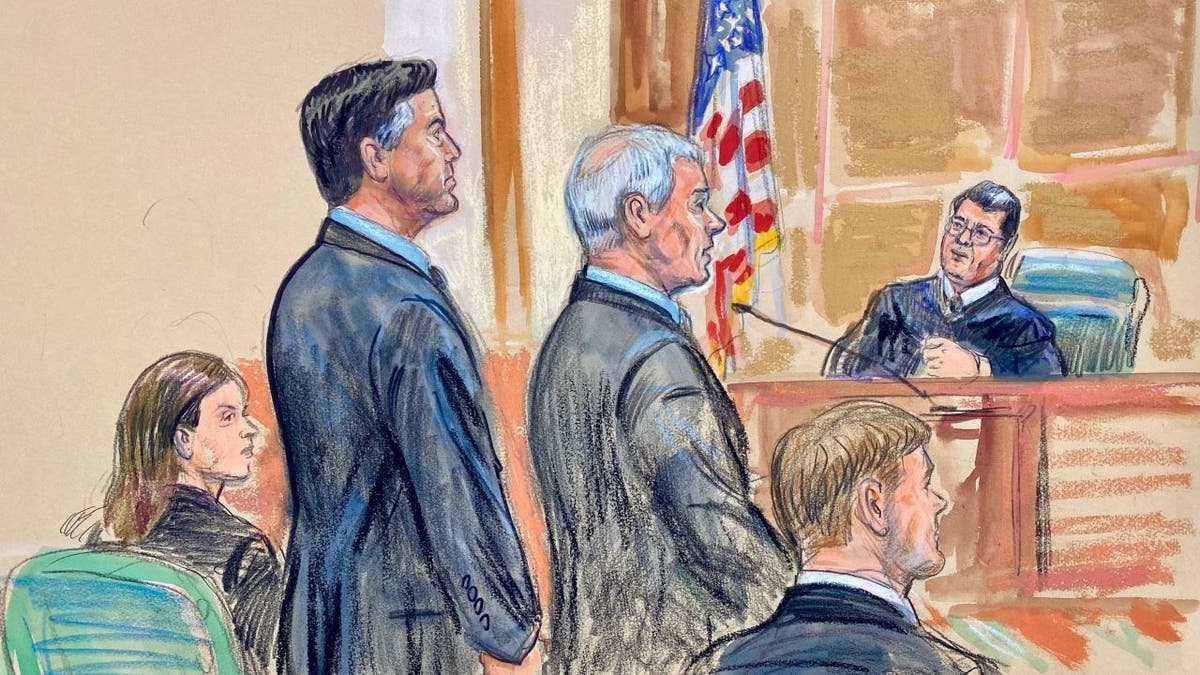
Former FBI Director James Comey is drawn in a courtroom sketch during his October 8, 2025, arraignment in Virginia.(Federal Court, sketch artist Dana Verkouteren)
In
one damning note, Comey confirms what some of us have known and argued
all along — he knew almost at the outset of the Russia collusion
narrative that it was an odious fiction conjured up by former Secretary
of State Hillary Clinton’s campaign and personally approved by her on July 26, 2016.
Clinton’s
objective, according to Special Counsel John Durham’s 2023 report, was
"to vilify Donald Trump by stirring up a scandal claiming interference
by the Russian security services," thereby tipping the upcoming
presidential election in her favor.
When later questioned by
Congress about his knowledge of the epic deceit, Comey claimed an acute
case of amnesia. He feigned no recollection whatsoever of Clinton’s
opprobrious plot to smear Trump.
However, Comey’s missive to
himself puts a conspicuous lie to that testimony. It reads, "HRC plan to
tie Trump." It is not something that anyone would ever forget.
While
it is difficult to discern, the information appears attributable to
"JB," which is almost certainly then-CIA Director John Brennan. This
comports with Brennan’s own declassified handwritten notes that
intelligence communications had uncovered Clinton’s political chicanery.
At an urgent White House meeting, Brennan had disclosed the shocking information to President Barack Obama,
Vice President Joe Biden and Comey. Instead of divulging the truth to
the American public, they all remained mum and watched idly — perhaps
happily — as the hoax gradually morphed into full-blown faux scandal
that nearly toppled Trump’s presidency.
Comey’s notes verify
his awareness of the "Clinton Plan," as it was dubbed. They are written
on an FBI notepad marked "Director" and dated Sept. 26, 2016, which
coincides in time with a meeting of high-ranking U.S. national security
officials that included Brennan and James Clapper, director of National
Intelligence (DNI).
Instead of pursuing Clinton for a criminal
scheme to defraud the government in a presidential election, as U.S.
intelligence officials strongly recommended to the FBI in a "Referral
Memo" on Sept. 7, 2016, the unscrupulous Comey did just the opposite. He
appropriated Clinton’s fabrication to target her opponent.
When
later questioned by Congress about his knowledge of the epic deceit,
Comey claimed an acute case of amnesia. He feigned no recollection
whatsoever of Clinton’s opprobrious plot to smear Trump.
Simultaneously,
Comey concealed the "Clinton Plan" because it was highly exculpatory.
If it became known or if Congress was informed, it would unmask
Hillary’s treachery and exonerate Trump of any wrongdoing in the
collusion fable.
Comey was not about to let that happen. He had
already launched without predicate his dilating investigation of Trump
and was deeply invested in protecting Hillary.
You
will recall that, on July 5, 2016, Comey stood before television
cameras and, absent any authority, inexplicably cleared the presumptive
Democratic nominee of the various crimes that she had clearly committed
in her notorious email fiasco over the deliberate and reckless
mishandling of classified records. But that’s not all.
Comey
also scuttled the bureau’s investigation into suspected criminal
activity surrounding the Clinton Foundation and the millions of dollars
funneled into it from Russian and other foreign sources. Substantial
evidence developed by U.S. attorneys was thereafter buried on his
orders. You can read about it in the Durham Report, pages 78-81.
Former FBI Director James Comey's old notes are coming back to haunt him.(Jonathan Ernst/Reuters)
July 5 was also a pivotal day for another reason, as I explained in my 2018 book, "The Russia Hoax."
At the very moment that Comey was absolving Clinton, his FBI
was furtively meeting with the author of the phony anti-Trump "dossier"
funded by Hillary and Democrats. Although the FBI swiftly debunked
Christopher Steele’s scurrilous document, Comey was undeterred. He
exploited it as a pretext in a malicious attempt to frame Trump for
unidentified crimes he never committed.
Comey's motivation was
obvious. His newly unearthed emails show that he expected Clinton would
win the election. He even bragged that he would soon be working for a
president-elect Clinton who would be "very grateful." His gamble fueled
corrupt acts.
Comey
never imagined that Trump would prevail. So, he politicized his power
and weaponized the FBI to meddle in the presidential contest for the
benefit of Hillary. When his illicit scheme failed and Trump was
elected, Comey doubled down on the collusion hoax in an attempt to
destroy Trump and drive him from office.
This
is what abuse of power looks like. Facts were invented or exaggerated.
Laws were perverted and ignored. The law enforcers became the
lawbreakers. They falsely accused Trump while shielding the real
culprit, Clinton.
Comey’s "smoking gun" notes only came to light
because he recently filed several motions to dismiss his federal
indictment in Virginia for false statements and obstruction of Congress.
Among other things, he ironically asserts vindictive prosecution by
Trump and separately contends that interim U.S. Attorney Lindsey
Halligan’s appointment was improper. The outcome of those matters is
pending.
Prosecutors responded to the first motion by sharing a
trove of documents — many of them classified — discovered in the five
"burn bags."
They were destined for a smoky grave just days
before Trump assumed office again on Jan. 20, 2025, in what can only be
described as a brazen attempt to obstruct justice and commit the crime
of willful destruction of documents under 18 U.S.C. 2071. Who was behind
it, we don’t yet know.
Comey's motivation was obvious. His newly unearthed emails show that he expected Clinton would win the election.
In
addition to the notes that Comey penned, other uncovered records cited
in the court filing further substantiate the government’s charges that
he lied to Congress when he denied authorizing anonymous leaks to the
press in violation of FBI guidelines. He was covertly manipulating media
reporting through a conduit.
After one successful leak, Comey
sent a message to his collaborator stating, "Well done my friend. Who
knew this would. E [sic] so uh fun." (Who knew this would be so
fun.) Deploying a Gmail account, he hid his intrigues under the alias
"Reinhold Niebuhr," a deceased ethicist. There was nothing moral about
what Comey was doing. It was sleazy.
But that’s not all. Among
the "burn bag" contents were materials that reveal the appalling breadth
of the lawfare campaign waged first by the Obama administration and,
later, the Biden administration against Trump and many others. Some of
the documents shed vital light on the January 6 breach of the Capitol, the 2020 election dispute and the FBI’s dubious raid on Mar-a-Lago.
All
of that was leveraged by Special Counsel Jack Smith to ignite the
double indictments against Trump that were eventually tossed. The
evidence is compelling that both prosecutions were politically motivated
to stop him from retaking the White House.
The
genesis of those two cases arose from a secret FBI investigation code
named "Arctic
Frost," approved by Attorney General Merrick Garland and
then-FBI Director Christopher Wray in April 2022. In due time, Smith
surreptitiously obtained nearly 200 subpoenas to capture personal
telephone communications of more than 400 Republicans. Anyone in Trump’s
orbit was targeted, including eight U.S. senators and even media
organizations.
It is no accident that the stunning discovery
of the "burn bags" dovetails with a newly impaneled grand jury
investigation in South Florida that encompasses the whole gamut of
corrupt acts aimed at Trump — from the "Crossfire Hurricane" debacle to
the errant "Arctic Frost" probe. The former evolved into the latter that
led to the misbegotten Smith prosecutions. Altogether, they impacted
three successive presidential elections. More than two dozen subpoenas
are reportedly being issued for the grand jury to consider.
Evidence
of an expansive and ongoing conspiracy to torment Trump will likely be
examined in the context of two federal anti-corruption statutes that criminalize abuses of power,
18 U.S.C. 241 and 242. These civil rights laws make it a felony to
willfully deprive people of their constitutional rights under color of
law or pretense of legal authority.
Additional documents
uncovered and declassified by current DNI Tulsi Gabbard and CIA Director
John Ratcliffe have contributed to the mounting evidence of
manufactured intelligence and criminal wrongdoing that the grand jury
will inevitably evaluate.
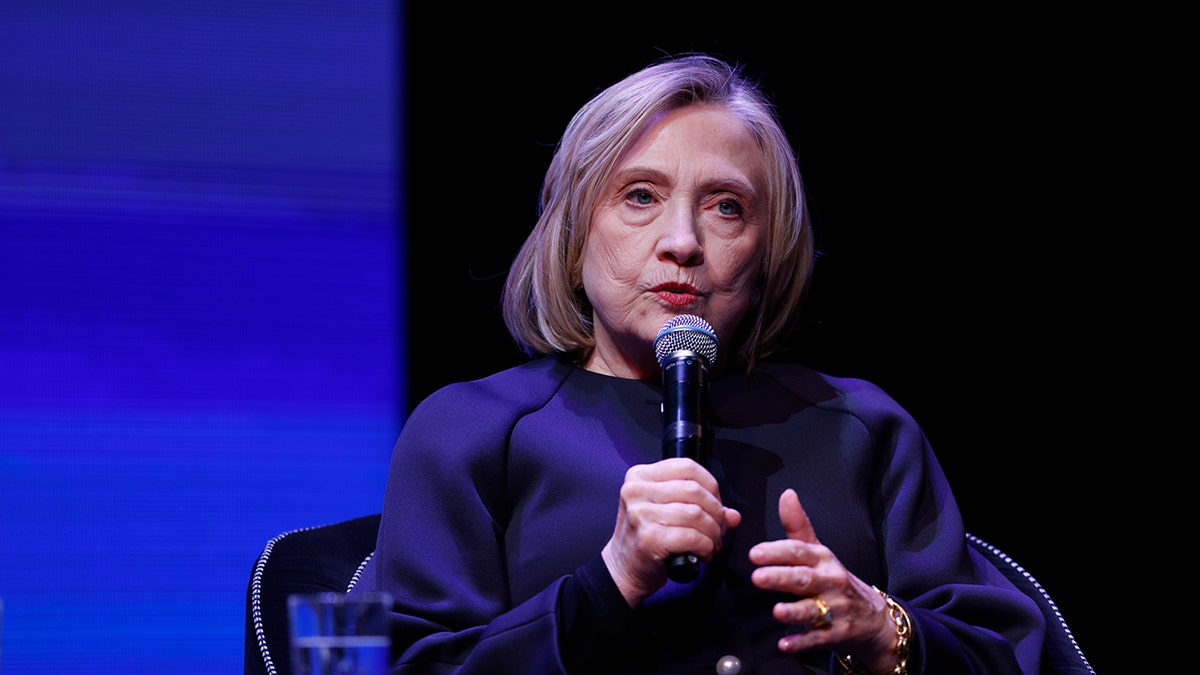
Hillary
Clinton speaks during the "A Special Evening With Hillary Clinton" at
the 74th Berlin International Film Festival at Theater des Westens on
February 19, 2024, in Berlin, Germany.(Franziska Krug/Getty Images)
As
Comey works hard to avoid the Virginia trial that he insists he wants,
his nefarious machinations that instigated the long-running lawfare
campaign will not escape the direct attention of the Florida grand jury.
The same is true of other government actors who mangled facts and
contorted the law to persecute Trump in an unbridled crusade that ran
roughshod over our legal system for nearly a decade.
During that
time, the rule of law came under sustained attack by high government
officials like Comey and so many others who abused their positions of
power to subvert our framework of justice and undermine the democratic
process.
The
enemy is within. Trump was their target … and their victim. And so were
the American people. They were harmed and forced to endure a divisive
national trauma that should never have been. The wounds are still with
us. And so, a reckoning awaits.
Yet, just as Nixon evaded prosecution by courtesy of a pardon, will Comey somehow elude accountability?
Gregg Jarrettis a Fox News legal analyst and commentator, and formerly worked as a
defense attorney and adjunct law professor. His recent book, "The Trial
of the Century," about the famous "Scopes Monkey Trial" is available in
bookstores nationwide or can be ordered online at the Simon &
Schuster website. Jarrett’s latest book, "The Constitution of the
United States and Other Patriotic Documents," was published by Broadside
Books, a division of HarperCollins on November 14, 2023. Gregg is the
author of the No. 1 New York Times best-selling book "The Russia Hoax:
The Illicit Scheme to Clear Hillary Clinton and Frame Donald Trump." His
follow-up book was also a New York Times bestseller, "Witch Hunt: The
Story of the Greatest Mass Delusion in American Political History."
Following inspections, authorities said "the tanker was in violation for carrying unauthorized cargo." They did not provide further details.
This picture released by the US
Navy shows a ship of the Iranian Navy and members of the Iranian forces
boarding civilian tanker WILA en-route to the UAE, in international
waters in the Strait of Hormuz, August 12, 2020(photo credit: US NAVY/HANDOUT VIA REUTERS)
Iran confirmed on Saturday that its Revolutionary Guards had seized a tanker in Gulf waters carrying a cargo of petrochemicals bound for Singapore over alleged violations, Iranian state media reported.
A US official and maritime security sources had said on Friday that Iranian forces intercepted the oil products tanker
and diverted it into Iranian territorial waters. It was the first
report of Tehran seizing a tanker since Israeli-US strikes on Iran in
June.
Iranian
state-run television read a statement from the Islamic Revolutionary
Guard Corps (IRGC) stating that "the tanker was in violation for
carrying unauthorized cargo". It did not provide further details of the
alleged violations.
Tehran seizes Marshall Islands-flagged tanker
The Marshall Islands-flagged tanker,
the Talara, had been sailing off the United Arab Emirates' coast,
maritime sources said, and was carrying a cargo of high-sulphur gasoil
through the Indian Ocean en route to Singapore from Sharjah in the UAE.Flames and smoke rise from the damaged Greek-flagged oil tanker MV
Sounion, which had been on fire since August 23, after an attack by
Houthi terrorists, on the Red Sea, September 15, 2024; illustrative.
(credit: EUNAVFOR ASPIDES/HANDOUT VIA REUTERS)The
vessel's manager, Columbia Ship Management, said it lost contact with
the Talara Friday morning, around 20 nautical miles off the coast of
Khor Fakkan, UAE. It added that it was working closely with relevant
parties, including maritime security agencies and the vessel's owner, to
restore contact.
The ship is owned by Cyprus-based Pasha Finance.
In a statement, the US military said it was aware of the incident and was actively monitoring the situation.
Iran's
IRGC has periodically seized commercial vessels in Gulf waters in
recent years, often citing maritime violations such as alleged
smuggling, technical infractions or legal disputes.
However,
the US official, speaking on condition of anonymity, said the incident
was surprising since Iran had not carried out any such operations in
recent months.
Iran
has curbed its military activities in the region since the 12-day
Israeli bombing campaign in June, which was joined by the United States.
Its last reported seizure of a vessel was in April 2024.
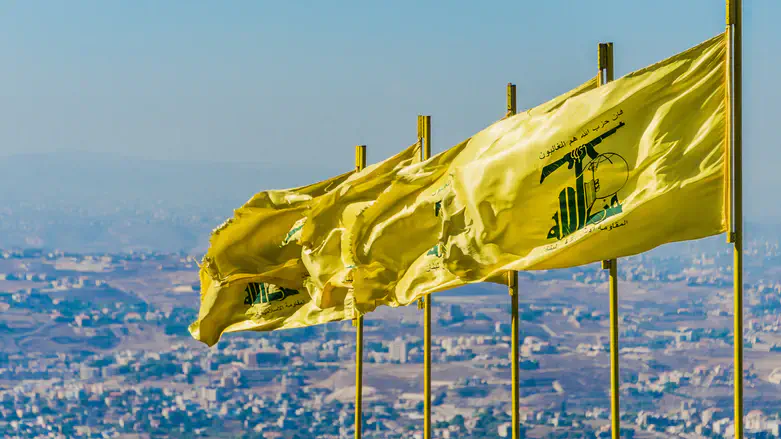
Lebanon imposes strict rules on money transfers under US pressure to cut Hezbollah funding.
Hezbollah flags iStock
Lebanon’s
central bank announced Friday a series of new restrictions on money
changers and transfer companies, in a move widely seen as a response to
mounting US pressure to dismantle Hezbollah’s financial lifelines, AFP reported.
The
decision comes days after a visiting American official declared
Washington’s intent to sever Tehran’s funding to Hezbollah. According to
the US Treasury, Iran’s Revolutionary Guards have funneled over $1 billion to the terror group this year, primarily through Lebanese money exchange firms.
Lebanese
authorities, under growing international scrutiny, are seeking to
disarm Hezbollah, which suffered significant losses in its recent war
with Israel. The US is urging Beirut to accelerate the process amid
concerns of further Israeli military escalation.
In
its statement, the central bank said the measures are part of efforts
“to remove Lebanon from the Financial Action Task Force (FATF) grey
list,” and described them as “the first step in a series of
precautionary measures aiming to strengthen the compliance environment
within the financial sector.”
Lebanon
was added to the FATF’s grey list in October last year, placing it
under increased monitoring for financial irregularities.
The
new regulations apply to “all non-bank financial institutions licensed
by the central bank of Lebanon, including money transfer companies,
exchange bureaus,” and other entities handling foreign currency
transactions. Starting December 1, these institutions must “collect
information and data linked to their customers and operations” for any
transaction of $1,000 or more and report it to the central bank.
Transactions may not proceed until the required data is confirmed.
Hezbollah
has responded with defiance. On Thursday, its parliamentary bloc
condemned “US efforts to tighten the financial siege on Lebanon” and
accused Washington of seeking to impose “financial guardianship” over
the country.
Hezbollah
was also to disarm as part of the ceasefire agreement between Lebanon
and Israel, which went into effect last November.
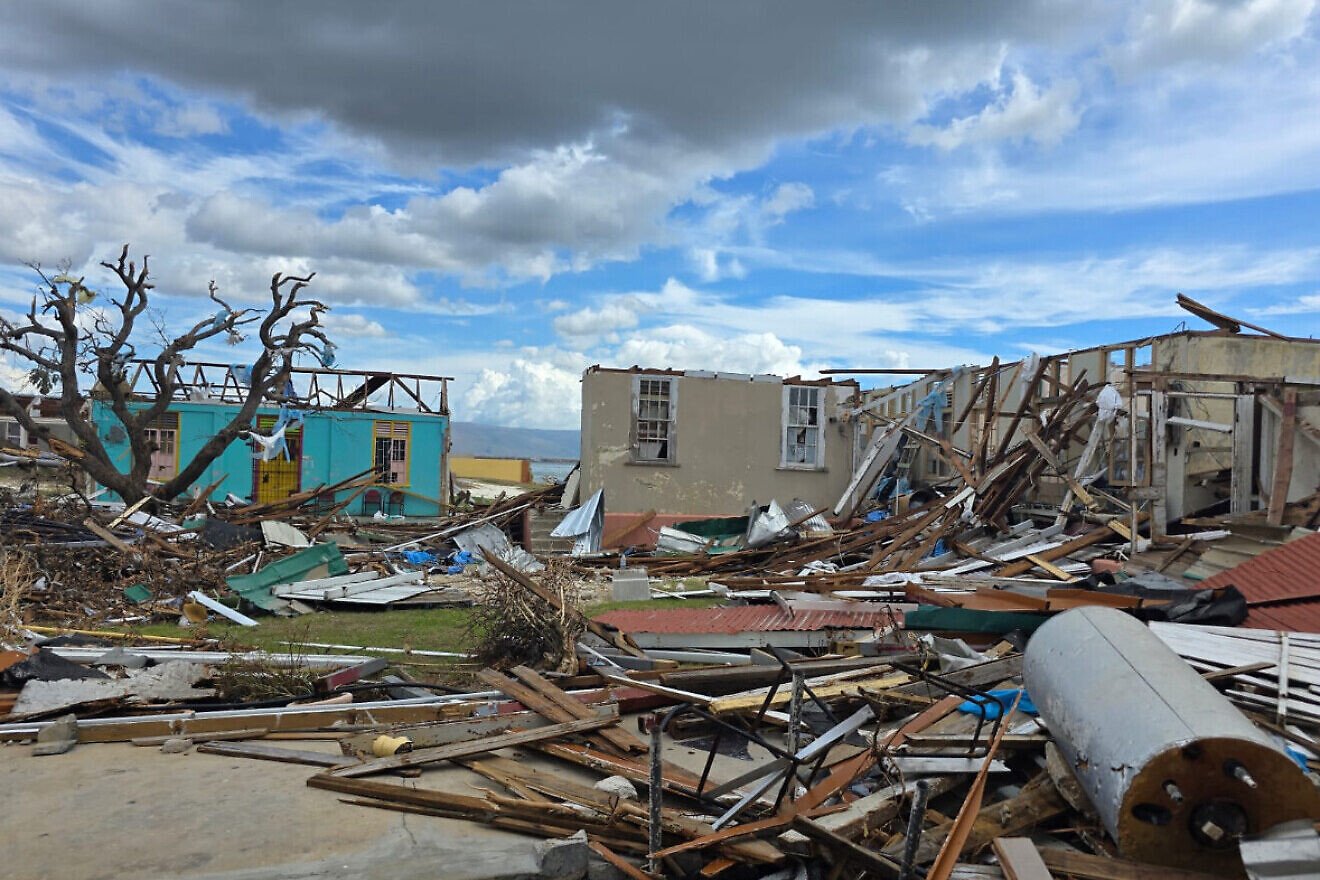
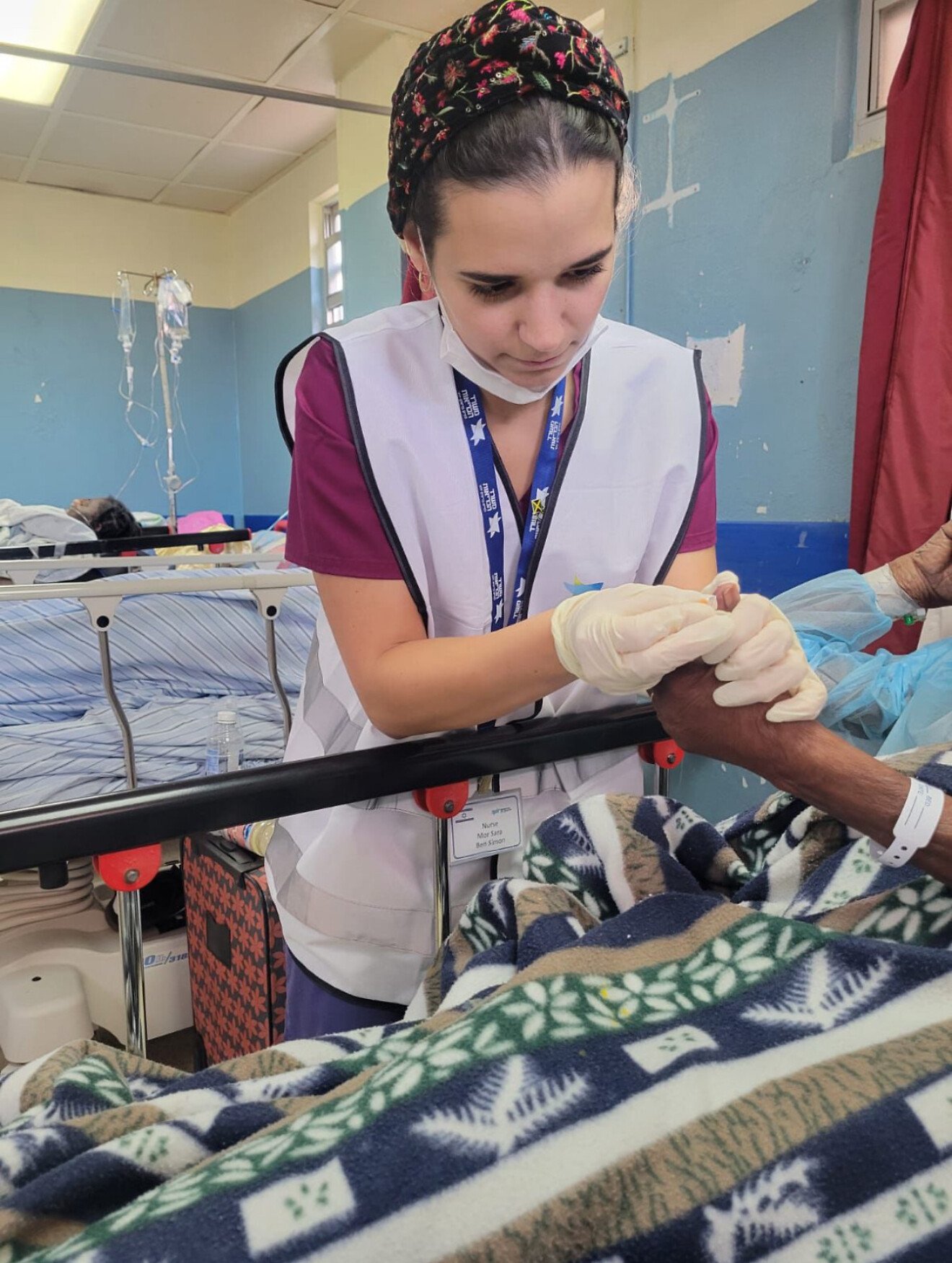
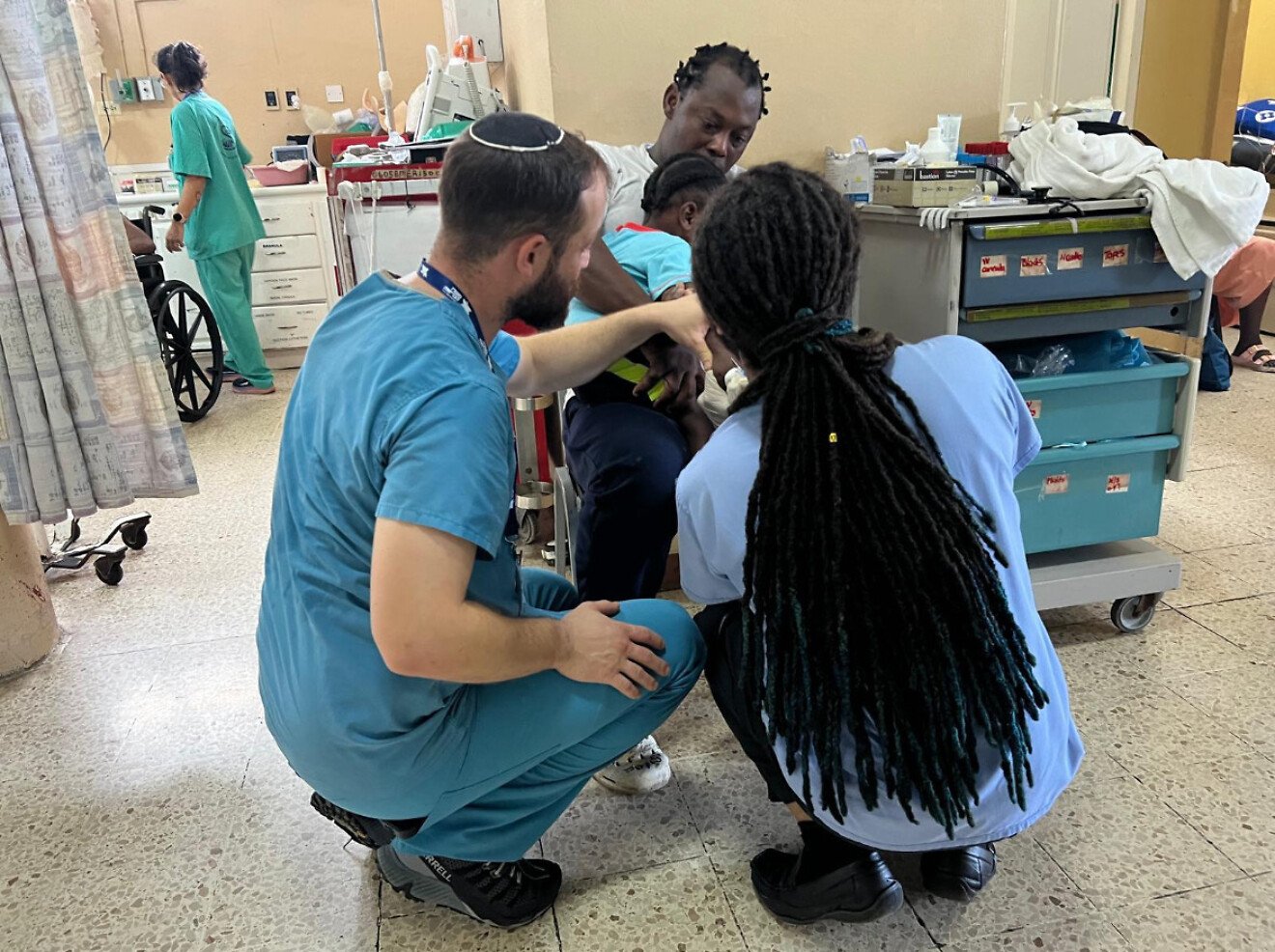
Some 30 Israeli medical professionals are helping Jamaicans in the aftermath of Hurricane Melissa and are changing the way people in the country view the Jewish state, they say.
An Israeli medical delegation helps in Jamaica in the aftermath of Hurricane Melissa in November 2025. Credit: Courtesy.
A woman in her 20s, who had gone a week
without dialysis, collapsed at a hospital in Jamaica, one of two that
are functioning, and where an Israeli delegation is assisting in the
aftermath of Hurricane Melissa.
“We had to resuscitate her, because she
didn’t have access to medicine. We had to ventilate her,” Ofer Merin, a
cardiac surgeon and director-general of Shaare Zedek Medical Center in
Jerusalem, told JNS. “Thank God, we saved her life.”
Merin spoke to JNS from Jamaica, where he is co-leading a delegation of 30 Israeli medical professionals.
The category five storm, which hit the western part of the country on Oct. 28, has killed 45 people, with 15 missing, the Associated Pressreported. It has displaced 30,000 households, per Jamaican officials.
About a third of the country is “devastated,” Merin told JNS.
Merin, who traveled to Haiti in 2010 and
Turkey in 2023 in the aftermath of earthquakes, said that the situation
in Jamaica is different. There are fewer injuries, “but the impact is
probably about a million people,” who had to leave their homes, he said.
“These are areas where houses collapsed.
No electricity. No hospitals. A few hospitals over there collapsed and
are really out of function,” he said. “It’s not something that within
days or weeks could be fixed.”
Instead of going straight to the disaster
zone, as they typically do, the Israelis opted to go to the outskirts of
the zone, where two functioning hospitals were overloaded with patients
from the devastated area, Merin said.
An Israeli medical delegation helps in Jamaica in the aftermath of Hurricane Melissa in November 2025. Credit: Courtesy.
Hundreds of thousands lack access to their
typical community medicine due to the hurricane and showed up to the
hospitals in “really critical condition,” he said.
“You really have to tailor the way you
give assistance by quickly assessing and understanding what the needs
are,” he said. “I think this is probably the biggest strength of our
team. The ability to assess quickly, make a decision and smoothly start
to work.”
The Israelis learned “very quickly” how to
work “shoulder-to-shoulder with the wonderful Jamaican people,” he
said. “Within a day, we gained their trust and started to work.”
Many people think about Israelis in the context of “what’s happening in Gaza,” according to Merin.
An Israeli medical delegation helps in Jamaica in the aftermath of Hurricane Melissa in November 2025. Credit: Courtesy.
“There’s no question that we changed the
way they view us, from the patients we provided care to their families
to the healthcare providers to the Ministry of Health to the Ministry of
Foreign Affairs in Jamaica and the people on the streets,” he told JNS.
When the delegation displays Israeli flags openly on Jamaican streets, people have stopped and thanked them.
“People in Jamaica know that Israel is
here. They give us a lot of credit,” Merin said. “We honestly changed
the way they are viewing Israel, thank God.”
Mashhadani’s school became the target of multiple threats after Hamas’s October 7 attacks, as pro-Palestinian groups took issue with Mashhadani’s co-existence ethos.
A PROTESTER holds a Palestinian
flag, on top of an underground station, at a rally in Berlin, marking a
year since Hamas’s October 7, 2023 attack, last October. Talk to some
Jews, and you will hear them say that Europe has become inhospitable to
Jews, says the writer.(photo credit: Lisi Niesner/Reuters)
The principal of an Arabic school in Berlin,
who has previously expressed opposition to Hamas and installed
Israeli-Palestinian peace programs at the school, was nearly killed on
Friday after being pushed in front of a train, he told the German media
outlet Tagesspiegel on Friday.
Hudhaifa al-Mashhadani told the German
newspaper he was attacked by a man at the Rathaus Neukölln subway
station in the morning, and that the unknown assailant intended to push
him in front of an oncoming train.
Mashhadani confirmed that he has since filed a police report.
Mashhadani,
who is also Secretary General of the German-Arab Council, wrote to the
police: “As the subway arrived and I was about to get into the front car
– the one directly next to the driver – I was suddenly and completely
unexpectedly pushed several times violently from behind, as if someone
wanted to push me in front of the train.”
The attacker also made"threatening hand gestures," Mashhadani said, adding that he believed the attacker recognized him.
Pro-Palestinian
protesters fly Palestinian flags after unveiling a banner reading,
“Never again genocide - Freedom for Palestine”, on top of Brandenburg
Gate in Berlin, Germany, November 13, 2025 (credit: REUTERS/ANNEGRET
HILSE)Following the assault, the school principal
described the incident to friends and acquaintances, and believes to now
has clues about the identity of the attacker.
Attacks against the Berlin pro-coexistence school
Berlin's Governing Mayor Kai Wegner condemned the "cowardly act" on Friday evening.
"Berlin belongs to those who build bridges – not to those who spread hatred," Wegner said.
Mashhadani’s school became the target of multiple threats after Hamas’s
October 7 attacks, as pro-Palestinian groups took issue with
Mashhadani’s co-existence ethos and advocacy for Arab-Israeli exchange.
The school, Ibn Khaldun, has reportedly been under police protection for
months.