Wednesday, July 29, 2026

Hotovely to Arutz Sheva: Netanyahu and Trump 'on the same page' - Yoni Kempinski


by Yoni Kempinski

Speaking with Arutz Sheva from Washington, Ambassador Tzipi Hotovely shares a front-row view into the critical meeting between Prime Minister Netanyahu and President Trump.


Ambassador Tzipi Hotovely, head of the National Public Diplomacy Directorate at the Prime Minister's Office, recapped the meeting between Prime Minister Benjamin Netanyahu and President Donald Trump for Arutz Sheva-Israel National News, saying that it was very positive and focused on key issues.

Speaking from Blair House in Washington following the meeting, Hotovely said the discussion between the two leaders lasted approximately 90 minutes and reflected the close relationship between them.

"Prime Minister Netanyahu said it was one of his best meetings with President Trump," she said. "The relationship between the two leaders is very close."

According to Hotovely, the meeting demonstrated that Israel and the current US administration share the same approach on key security issues, particularly Iran.

"For us, it's quite clear that all the issues that were discussed, Israel and America are on the same page. Israel and this administration are on the same page," she said. "There is no daylight between Israel and the approach, the security approach about Iran."

She said both leaders agreed on the objective of preventing Iran from obtaining nuclear weapons.

"The main thing was to make sure that Iran wouldn't have a nuclear weapon. There are many ways to reach that goal, but the two leaders were sharing all the options, and there are many options to get to this result."

Hotovely added that "the most important thing" for Israelis is knowing "that at the moment, there is no gap between the Americans and us about the approach, about our security, about the regional issues."

She said the leaders also discussed expanding the Abraham Accords and the possibility of additional countries joining the framework.

Hotovely noted that Israel's security zones in Lebanon, Syria, and Gaza were also addressed during the meeting.

"We don't want to be in a situation where we need to change that because Israel needs that for its security," she said.

Asked whether the US merely understands or actively supports Israel's presence in those areas, Hotovely replied, "I can say actually there is a support with what Israel is doing in the security zones in Lebanon and in Gaza and in Syria."

Addressing reports of disagreements between Washington and Jerusalem ahead of the meeting, Hotovely dismissed claims of tensions. "The media loves drama. They don't like good news," she said.

She described the meeting as "a very sincere conversation between two old friends," adding that the outcome "wasn't a surprise" to the Israeli delegation.

"There is a very open conversation, and there are mutual interests," she said.

Hotovely also rejected reports that Netanyahu had traveled to Washington to present new intelligence.

"It is not true. We don't need to come all the way to Washington to deliver intel. We have strong coordination between our agencies, and definitely it wasn't the goal of the meeting."

She said the meeting achieved its objective of confirming the shared Israeli-American position on Iran. "The goal was achieved to understand that we're on the same page about what we want to see when it comes to the nuclear program of Iran. We don't want to see the nuclear program making any progress. We want to make sure Iran won't have nuclear weapons."

"We know that when it comes to our security, we have a strong friend in the White House," she added.

Hotovely also reflected on the funeral ceremony for Senator Lindsey Graham, which Netanyahu and his wife attended during the visit.

"It was very, very emotional," she said, noting the attendance of senators and members of Congress, as well as a private dinner during which the Prime Minister met Graham's sister and successor, Senator Darline Graham.

"I think in general, the legacy of Graham is something that so many people share. So many people are proud of this moral clarity that Lindsey Graham brought to the public discussion about Israel, about the security issues, about the fact that there is evil in the world and you need to fight it."

She added that the ceremony was a meaningful moment for the Prime Minister and his wife. "They felt like people are sharing the values of Lindsey Graham and people are standing behind his legacy for Israel and for all the security needs that both countries have."


Yoni Kempinski

Source: https://www.israelnationalnews.com/news/430959

Follow Middle East and Terrorism on Twitter

Iran to receive hundreds of Chinese shoulder-launched missiles systems in weeks - Reuters


by Reuters

The contract covers the purchase of between 300 and 400 man-portable air defense systems (MANPADS), including Chinese-made QW-12 and FN-16 missiles.


A member of the Bolivarian National Militia holds a Russian-made 9K338 "Igla-S" (SA-18) man-portable air-defense (MANPAD) surface-to-air missile launcher as he takes part in a rally against US military activity in the Caribbean
(photo credit: FEDERICO PARRA/AFP via Getty Images)

Iran is expected to receive within weeks a first shipment out of up to 400 Chinese-made shoulder-fired air-defense missile launchers, three sources familiar with the deal told Reuters, as it rebuilds its defenses amid war with the United States.

The purchase, valued at $60-70 million, is one of Tehran's largest-known efforts to strengthen its short-range air defenses since the outbreak of its war with the US and Israel, which exposed gaps in Iran's ability to protect military sites and strategic infrastructure.

The contract covers the purchase of between 300 and 400 man-portable air defense systems (MANPADS), including Chinese-made QW-12 and FN-16 missiles, the sources said.

The deal was signed with Zhongqing Baoshang International Investment, a Hong Kong-based company that the sources said was acting as an intermediary between the Iranian side and the Chinese supplier.

The sources spoke on condition of anonymity because of the sensitivity of the matter. Iran's foreign ministry did not immediately reply to a request for comment.

A MANPADS (Man-Portable Air Defiance Systems) missile is detonated along the shore facing the Firing Range, east of the Libyan capital Tripoli, on December 11, 2011. A top U.S. official said that a team of U.S. and Libyan bomb-disposal specialists has secured about 5,000 surface-to-air missiles.
A MANPADS (Man-Portable Air Defiance Systems) missile is detonated along the shore facing the Firing Range, east of the Libyan capital Tripoli, on December 11, 2011. A top U.S. official said that a team of U.S. and Libyan bomb-disposal specialists has secured about 5,000 surface-to-air missiles. (credit: ISMAIL ZITOUNY/ REUTERS)

Iran needs to rearm after months of war

China's Foreign Ministry said: "The relevant reports are completely groundless. China has consistently played a role in promoting peace and ending the conflict."

Beijing-based Zhong Qing Bao Shang Group, the parent company of Zhongqing Baoshang International Investment, did not immediately respond to an email request for comment on Tuesday.

Iran needs to rearm after months of fighting in which the US and Israel have struck facilities linked to its missile, drone and air-defense programs, and Tehran responded with barrages of ballistic missiles and drones.

The conflict has highlighted the challenge of defending fixed military and strategic sites against advanced aircraft and precision-guided weapons.

Washington abruptly suspended two weeks of bombardment on Saturday, but President Donald Trump said strikes would resume if negotiations failed to end the five-month-old conflict, which has in theory been in a state of ceasefire since April.

The delivery of hundreds of MANPADS would significantly expand Iran's inventory of short-range air-defense weapons and underscore how military ties with China are deepening.

The sources cautioned that, although the agreement had been signed, delivery schedules, quantities and other implementation details could still change.

Under a plan agreed by the parties, deliveries will initially be by air from Urumqi in western China, then transiting through Pakistan to Iran, according to the sources, who did not clarify whether the transfers would take place by air or by road.

Pakistan’s military public relations wing ISPR said: “Speculations of Pakistan being involved in the supply of Air Defense weapons to Iran from China are absolutely concocted and false." A spokesperson for the Pakistani Foreign Ministry did not respond to requests for comment.

China and Iran explore land routes for delivery

While Iran has invested heavily in the past two decades in missiles, drones and radar, military experts say portable air-defense systems are important because they can be dispersed quickly, operated by small teams and relocated frequently, making them less vulnerable than fixed air-defense batteries.

A European security source said authorities in his country were aware of several contracts under discussion involving the possible sale of QW-series MANPADS to Iran, including QW-12, QW-18 and QW-19 systems.

A second security source, in the Middle East, said Iran had been seeking to purchase QW-12 and QW-18 missiles, but they were unaware that a deal had already been concluded.

The QW-12 and FN-16 are shoulder-fired, infrared-guided surface-to-air missile systems designed to engage low-flying aircraft, helicopters and drones. Their mobility allows them to be deployed rapidly around military installations, energy infrastructure and other sensitive sites.

Defense analysts regard the QW-12 as less capable than newer QW variants, including the QW-18 and QW-19, but say the systems can still provide an effective layer of short-range protection against drones and low-flying targets.

Two Western intelligence sources and an Iranian official said Tehran had also explored the use of overland routes to move Chinese military supplies and dual-use components more discreetly and reduce the risk of disruption.

The procurement highlights the Islamic Republic's continuing reliance on a combination of domestic weapons production and foreign suppliers despite years of sanctions and restrictions on defense-related imports.

Reuters previously reported that Iran was close to securing a separate agreement with China to acquire anti-ship cruise missiles, according to people familiar with those negotiations. Reuters could not determine whether the agreement went through. 


Reuters

Source: https://www.jpost.com/middle-east/iran-news/article-903963?utm_source=activetrail&utm_medium=email&utm_campaign=July292026

Follow Middle East and Terrorism on Twitter

Florida attorney general office launching investigation into Fauci after 'lack of candor' at hearing - Kevin Killough


by Kevin Killough

Dr. Anthony Fauci invoked the 5th Amendment a total of 111 times on Wednesday during testimony before the Senate Homeland Security Committee.


Florida Attorney General James Uthmeier said Wednesday that his office is launching an investigation into Dr. Anthony Fauci following a contentious Senate committee hearing. 

"Fauci's lack of candor to Congress is unbelievable. My office is launching an investigation into Dr. Fauci. It's past time we get the truth of what happened during COVID," Uthmeier said in a post on X

Fauci, the former director of the National Institute of Allergy and Infectious Diseases (NIAID), invoked the 5th Amendment a total of 111 times on Wednesday, during testimony before the Senate Homeland Security Committee.

While Fauci repeatedly cited the 5th Amendment in refusing to answer questions, many lawmakers questioned whether President Joe Biden's sweeping pardon of Fauci had voided his right to refuse to testify.

Sen. Josh Hawley, R-Mo., for instance, referenced the Brown vs. Walker Supreme Court case of 1896, suggesting it was precedent that would have voided Fauci's 5th Amendment claims.

Sen. Rand Paul, R-Ky., moreover, has indicated that his panel will vote on holding Fauci in contempt. 


Kevin Killough

Source:https://justthenews.com/government/federal-agencies/ag-uthmeir-says-his-office-launching-investigation-fauci-after-lack

Follow Middle East and Terrorism on Twitter

The Israel-Lebanon agreement will be won or lost in the first 150 meters - Eyal Dror


by Eyal Dror

If early violations are glossed over to preserve a larger diplomatic process, then the entire strategy will eventually fail.


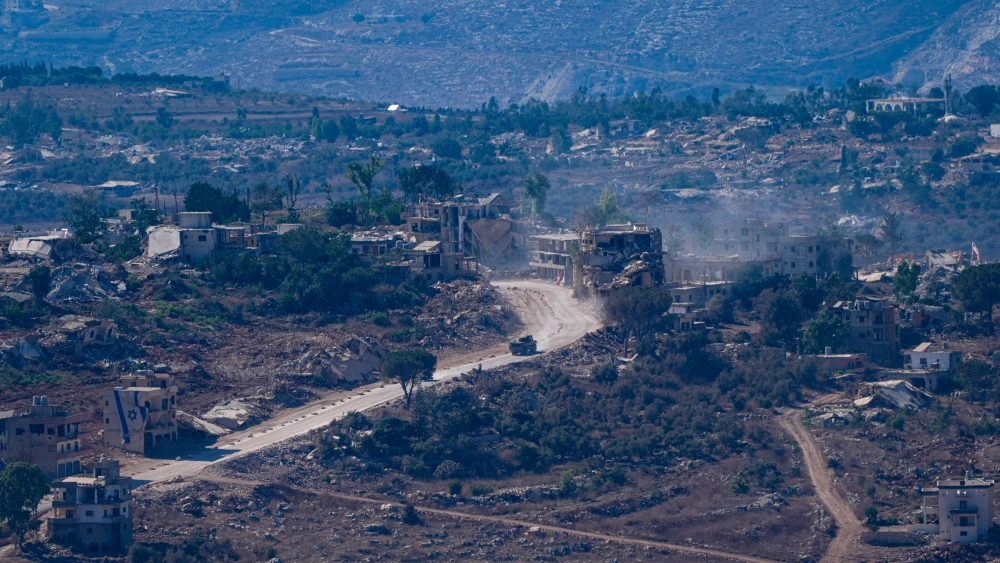
Israeli soldiers inside Southern Lebanon, as seen from the Israeli side of the border, July 26, 2026. Photo by Ayal Margolin/Flash90.
Israeli soldiers are seen inside Southern Lebanon from the Israeli side of the border, July 26, 2026. Credit: Ayal Margolin/Flash90.

Before anyone could determine whether the Lebanese Armed Forces could dismantle Hezbollah’s infrastructure, seize its weapons and establish state sovereignty in Southern Lebanon, the new pilot program designed to provide the Lebanese army with an opportunity to do so encountered its first test.

It did not involve missiles, tunnels or units of Hezbollah’s elite Radwan Force. It involved approximately 150 meters.

On July 21, the Lebanese army began deploying in the village of Zawtar al-Gharbiyeh after the Israeli military withdrew as part of the first stage of a U.S.-brokered framework. Lebanese teams began clearing unexploded ordnance. A neighboring village, Zawtar al-Sharqiyeh, remained inside the Israeli-held buffer zone.

The Israel Defense Forces said Lebanese soldiers and an engineering vehicle crossed barriers and advanced about 150 meters into the security zone near Zawtar al-Sharqiyeh, outside the agreed pilot area and without coordination. Israeli troops fired warning shots, and the Lebanese force withdrew without casualties.

The Lebanese army said its soldiers remained inside Zawtar al-Gharbiyeh and were operating through the prescribed coordination mechanism when Israeli troops opened fire nearby. It described the shooting as an act of aggression that endangered its soldiers and could obstruct the pilot program.

Perhaps this was a navigation error. Perhaps the maps were unclear. Perhaps the vehicle crossed the agreed line unintentionally. Perhaps the Lebanese account is correct. The facts should be investigated immediately through the established mechanism.

But this is not an argument about a 150-meter tactical dispute.

The strategic question is how Israel, Lebanon and the United States will resolve the first disputed incident. Will it be documented, investigated and corrected, or dismissed as a local misunderstanding too small to justify endangering a major diplomatic initiative?

Israel knows this trap well. Quite often, violations of agreements become precedents.

The lesson of Oslo is clear: What is not enforced at the beginning of a process will not be enforced later.

During implementation of the Oslo Accords, I served as an officer in the District Coordination Office (DCO), the joint Israeli-Palestinian coordination mechanism. We handled incidents in which the reality on the ground diverged from agreements signed on paper.

Palestinian security forces violated the Oslo Accords repeatedly and in a variety of ways. One example was the arrest and interrogation of Israeli citizens, particularly Arab Israelis who entered Palestinian Authority territory. These incidents were reported, investigated and discussed through the coordination mechanisms, but in many cases no meaningful consequences followed.

The explanation was familiar: The incident was serious, but not serious enough to risk the process. Palestinian institutions were still learning. The problem should be handled quietly so as not to strengthen the agreement’s opponents.

Thus, violations became the norm due to lack of enforcement. Then, the norm became an operating method. What began as an isolated deviation became permanent reality.

The problem was not only that the Palestinian side violated the agreements. It was also that Israel and the international community convinced themselves that each violation was too small to justify meaningful consequences. The more valuable the process became, the weaker the willingness to enforce it. The weaker the enforcement, the greater the incentive to test Israel’s tolerance.

That is precisely the danger in Lebanon.

Today, the dispute concerns 150 meters. Tomorrow, it could be entry into another area, a weapons warehouse left unsearched because of alleged “local sensitivities,” a Hezbollah operative classified as a civilian or an underground facility that supposedly cannot be found.

Each time, Israel will be told that the incident is minor, the Lebanese army is still building its capabilities, Beirut is under pressure, Hezbollah may react, and a historic agreement should not be derailed over a local malfunction.

Violations became the norm due to lack of enforcement. Then, the norm became an operating method.

That is how agreements erode. They do not always collapse due to one dramatic violation. Often, they are hollowed out by small breaches, each presented as too insignificant to justify a response. Later, the agreement remains on paper while the security reality it was meant to create has disappeared.

The timing of the latest incident was revealing. On the same day, Lebanese President Joseph Aoun met U.S. President Donald Trump at the White House. He spoke about ending the state of hostility, restoring Lebanese sovereignty and securing a full Israeli withdrawal.

Yet while Aoun spoke about sovereignty and state responsibility, the army he supposedly commands described Israeli warning fire as aggression that could impede the pilot program. The Lebanese army’s public response did not acknowledge the need for an impartial investigation. Instead, it immediately shifted responsibility onto Israel.

This is the first test of Aoun’s leadership: It is not about how he speaks about peace in Washington, but whether he can demand discipline, accountability and exact compliance from the Lebanese army when implementation becomes difficult.

Israel has a clear interest in the framework’s success: A stronger Lebanese state, an army acting as the country’s sole sovereign force and the dismantling of Hezbollah’s military power are desirable outcomes. But a White House meeting cannot substitute for performance.

Israel should not be asked to choose between supporting Aoun and protecting itself. In fact, precise enforcement is the only way to give Aoun a genuine chance to succeed. If Israel accepts violations to avoid embarrassment, it will teach both the Lebanese army and Hezbollah that continuation of the process matters more than fulfillment of its terms.

Therefore, Israeli withdrawals must not proceed automatically. Each stage should follow only after the previous one has been completed, verified and proven stable. The Lebanese army must demonstrate not merely symbolic presence, but the willingness and ability to confiscate weapons, close facilities, arrest operatives and prevent Hezbollah’s return.

Every deviation must be documented, investigated and corrected. That does not mean responding to every incident with equal force. Responses can be graduated and proportionate. Enforcement itself, however, cannot be negotiable.

Israel must also retain freedom of action wherever the Lebanese army fails to act. Responsibility for Southern Lebanon can gradually be transferred to Beirut, but promises or good intentions must not replace Israel’s ability to protect its northern communities.

The 150 meters themselves have little strategic importance. What they represent is decisive. If the Lebanese force crossed the line, the breach must be acknowledged and corrected. If unclear maps or an Israeli mistake caused the incident, Israel must correct its procedures. Either way, the facts cannot be blurred to preserve momentum.

If Israel does not insist on enforcing the agreement now, while the process is young and its rules are still being established, it will not be able to enforce it later. After the IDF withdraws and Washington invests political and financial capital, the diplomatic cost of every Israeli response will be far higher.

The lesson of Oslo remains clear: What is not enforced at the beginning of a process will not be enforced later. Those who overlook the first violation to save an agreement will eventually be asked to tolerate far more serious violations to prevent its collapse.

Israel must make the rules clear now: no withdrawal without implementation, no progress without verification and no violation without consequences.


Lt. Col. (res.) Eyal Dror lives with his family in Kibbutz Dafna, a northern Israeli border community near Lebanon. He has served in the Israel Defense Forces for more than 30 years and is an active reserve officer in the Golan Division. He previously founded and commanded “Operation Good Neighbor” on the Israeli-Syrian border. Author of Embracing the Enemy: The Inside Story of Israel’s Secret Humanitarian Mission to Rescue Syrian Civilians From Civil War, he lectures in Israel and abroad on security, the Middle East, humanitarian aid, leadership and communal resilience.

Source: https://www.jns.org/opinion/eyal-dror/the-israel-lebanon-agreement-will-be-won-or-lost-in-the-first-150-meters

Follow Middle East and Terrorism on Twitter

Israel: The World's Heroic Scapegoat - Nils A. Haug


by Nils A. Haug

In its short history, Israel has shown itself to be beyond heroic in defending civilization and the West. Netanyahu has duly earned the title "the Churchill of the Middle East."


  • Israel is continually falsely accused -- often by countries committing enormous war crimes -- of being a "settler-colonialist" nation, of practicing apartheid, and of genocide against Palestinians. It is excoriated in the United Nations, in European parliaments, by the international media, and by so-called human rights groups. None of the allegations against it are true. They cannot even be substantiated with facts or evidence. Not that this matters much to those determined to express their Jew-hate, even if under the guise of "social justice" or other fatuous constructs.

  • It was betrayed even before the start by Britain, which, at the 1921 Cairo Conference, divided the territory of the Mandate for Palestine in two: 22% for the Jews and 78% for the Hashemite kingdom of King Abdullah (now Jordan).

  • According to Jonathan Tobin, "[Vance] warned them that they had no recourse but to accept whatever Trump did..." It is a blessing that we have all had a chance to see who he is now, along with his disastrous Islamabad Memorandum of Understanding with Iran, rather than just before a possible run for president in 2028.

  • Israel is a sovereign nation, entitled to defend its borders and people without permission from anyone.

  • Yesterday, Trump met with Israeli Prime Minister Benjamin Netanyahu in Washington, DC. It will be interesting to see what these two undauntable leaders are cooking up.

  • In its short history, Israel has shown itself to be beyond heroic in defending civilization and the West. Netanyahu has duly earned the title "the Churchill of the Middle East." Israel's cowardly detractors, some of whom refused even to let the US use their airbases for strikes against Iran, whose ballistic missiles threaten them, should take the back seat they deserve and pipe down. It is time for the disparagement to stop.

Why is Israel never allowed to convincingly win wars waged against it? Why is it that Israel should bleed in self-defense while aggressors can walk away claiming victory? Why is it that Israel is frequently used by Western nations as a mere tool for their geopolitical ambitions? And why is it that Israel is blamed when plans set in motion by allies go awry? (Image source: iStock/Getty Images)

Why is Israel never allowed to convincingly win wars waged against it? Why is it that Israel should bleed in self-defense while aggressors can walk away claiming victory? Why is it that Israel is frequently used by Western nations as a mere tool for their geopolitical ambitions? And why is it that Israel is blamed when plans set in motion by allies go awry?

The answer, of course, is that Israel is a convenient scapegoat -- one that is in no position to complain or to sever ties with those claimed allies who constantly abandon it in pursuit of their own ambitions. Israel is obviously seen by major Western powers as a rather insignificant nation, one that can be bullied and manipulated into compliance.

Israel is indeed small, in land area, population and economic power. It does not have natural resources, except for some gas. In the scheme of things, it is not viewed as a major player in world events nor of having much political influence. For the sake of its future, it is seen as desperate to make allies and friends in an alien world – one that largely despises it for succeeding. Israel is thus a nation in a world hostile to its existence, and to Jews in general.

Israel is continually falsely accused -- often by countries committing enormous war crimes -- of being a "settler-colonialist" nation, of practicing apartheid, and of genocide against Palestinians. It is excoriated in the United Nations, in European parliaments, by the international media, and by so-called human rights groups. None of the allegations against it are true. They cannot even be substantiated with facts or evidence. Not that this matters much to those determined to express their Jew-hate, even if under the guise of "social justice" or other fatuous constructs.

History provides the context for this unfair perception. In 1948, as a start-up nation-state in a largely desert region, with no known oil or gas reserves, low on money and military power, and with few nations keen to see the Jewish people re-established in their ancestral homeland, Israel did not have much to bargain with.

Yet, despite all odds – political, military, economic – and with a few people, the tiny state survived, albeit facing countless moments of critical danger. It was betrayed even before the start by Britain, which, at the 1921 Cairo Conference, divided the territory of the Mandate for Palestine in two: 22% for the Jews and 78% for the Hashemite kingdom of King Abdullah (now Jordan).

Shortly thereafter, and despite provisions of the Mandate for Palestine, the British sharply restricted Jewish immigration to the remaining territory before, during, and even after the horrific events of the Nazi-era, thereby denying them freedom and safety in their own land.

When Egyptian President Gamal Abdel Nasser ordered the nationalization of the Suez Canal in 1956, Britain and France persuaded Israel to attack Egypt in order to open the restricted canal, the Straits of Tiran and Gulf of Aqaba. Israel successfully carried out its operation and, in five days, occupied the Sinai Peninsula. Under pressure, however, from the US and USSR, the British, without notifying Israel, declared a cease-fire just as Israel and allied forces were on their way to achieve total control of all of the Suez Canal and Sinai regions.

Israel had to withdraw without meeting all its objectives -- solely due to political pressures outside its control. Nasser's Egypt therefore emerged victorious. This was the last time Israel joined Western powers in battle until 70 years later, when Israel partnered with the US in the still-unfinished Iran campaign.

Upon suspension of the hostilities with Iran, Israel immediately became target of the blame, falsely accused of "dragging'' the US into a war with Iran. Vice-President JD Vance has been quick to criticize Israel repeatedly, notwithstanding its crucial involvement in the successes of the operation. According to Jonathan Tobin:

"[Vance] warned them that they had no recourse but to accept whatever Trump did because 'Donald J. Trump is the only head of state in the entire world who is sympathetic to the nation of Israel at this moment in time, and he happens to be the head of state of the world's superpower.'"

It is a blessing that we have all had a chance to see who he is now, along with his disastrous Islamabad Memorandum of Understanding with Iran, rather than just before a possible run for president in 2028.

Trump seems desperate to present a successfully concluded diplomatic agreement to the world and display his mastery of the "art of the deal" – in reality, as the Iranian regime never complies with agreements, any deal with the current leaders of the Islamic Republic (the Islamic Revolutionary Guard Corps) will be a very bad deal for the US, Israel, and the region. Perhaps he hopes for that elusive Nobel Peace Prize to which he believes he is entitled -- or perhaps he is genuinely trying to work out his next moves so that Iran, as he repeats, "cannot have a nuclear weapon."

Now that Iran's negotiators seem to believe they hold the upper hand, given their attempts to restrict shipping through the Strait of Hormuz, it has become clear that Iran intends to cause as much chaos as possible.

While Israel was not officially consulted over the negotiations and terms of the non-binding MOU, the United States, through the superb diplomacy of Secretary of State Marco Rubio, quietly concluded an exceptional, binding framework deal between Israel and Lebanon, with the goal of restoring the sovereignty of Lebanon under its government by ridding the country of Iran's most powerful terrorist proxy, Hezbollah.

Israel is a sovereign nation, entitled to defend its borders and people without permission from anyone.

Any stalemate that ensues between the US and Iran will nevertheless likely be falsely blamed on Israel, especially if there is a failure in any US "peace deal" with Iran.

The question of what may happen to Israel in the future does not seem to be of major concern to anyone else. After all, Jews have always had to fight their own battles. This is their destiny, for the people of Israel are to be "a people dwelling alone, not reckoned among the nations" (Numbers 23:9).

Yesterday, Trump met with Israeli Prime Minister Benjamin Netanyahu in Washington, DC. It will be interesting to see what these two undauntable leaders are cooking up.

In its short history, Israel has shown itself to be beyond heroic in defending civilization and the West. Netanyahu has duly earned the title "the Churchill of the Middle East." Israel's cowardly detractors, some of whom refused even to let the US use their airbases for strikes against Iran, whose ballistic missiles threaten them, should take the back seat they deserve and pipe down. It is time for the disparagement to stop.


Nils A. Haug is a lawyer, author and columnist. He is member of the International Bar Association, the National Association of Scholars, the Academy of Philosophy and Letters. Among degrees in Law, Philosophy, and English Literature, Dr. Haug holds a M.A.in Jewish Studies (cum laude) and Ph.D. in Apologetical Theology. He is author of 'Politics, Law, and Disorder in the Garden of Eden – the Quest for Identity'; and 'Enemies of the Innocent – Life, Truth, and Meaning in a Dark Age.' His work has been published by First Things Journal, The American Mind, Quadrant, Minding the Campus, Gatestone Institute, National Association of Scholars, Jewish Journal, James Wilson Institute (Anchoring Truths), Jewish News Syndicate, Tribune Juive, Document Danmark, Zwiedzaj Polske, Schlaglicht Israel, and others.

Source: https://www.gatestoneinstitute.org/22750/israel-the-world-heroic-scapegoat

Follow Middle East and Terrorism on Twitter

Trump administration formally bans gain-of-function research - Misty Severi


by Misty Severi

The State and Health and Human Services departments claim that although biomedical research has produced lifesaving vaccines and medical breakthroughs, it must never come at the expense of public safety or national security.


The Trump administration announced Tuesday it has officially banned gain-of-function research, claiming it has the potential to threaten lives and undermine national security if not properly restricted and controlled.

The State and Health and Human Services departments claim that although biomedical research has produced lifesaving vaccines and medical breakthroughs, it must never come at the expense of public safety or national security.

The policy change comes after President Donald Trump signed an executive order last year that banned federal funding for gain-of-function research in countries like China, which is believed to be at the heart of the COVID-19 lab leak in Wuhan.

The two departments said in a joint statement that an "America First approach to scientific research means ensuring that taxpayer dollars are never used to support dangerous gain-of-function research ... in the United States or abroad."

The new policy also prohibits federal support for gain-of-function research, strengthens oversight of other high-risk life sciences research, and restricts funding for research conducted in countries that lack appropriate safety, security, and oversight standards.

"Scientific leadership requires both innovation and responsibility," the departments said. "The United States will continue to support biomedical research that develops vaccines, therapeutics, diagnostics, and other lifesaving medical countermeasures while ensuring that the highest-risk research is subject to rigorous safeguards. 

"We encourage our international partners to join us in ending dangerous gain-of-function research and adopting strong biosafety and biosecurity standards that make the world safer, more secure, and better prepared for future biological threats," they added.

The policy was developed by top officials including Undersecretary of State Tom DiNanno and NIH Director Jay Bhattacharya.


Misty Severi
is a news reporter for Just The News. You can follow her on X for more coverage. 

Source: https://justthenews.com/government/federal-agencies/trump-administration-formally-bans-gain-function-research

Follow Middle East and Terrorism on Twitter

Netanyahu didn’t lose the Democrats for Israel - Jonathan S. Tobin


by Jonathan S. Tobin

Jewish liberals blame Netanyahu for the collapse of support for the Jewish state because it absolves them of not stopping the antisemitic left from hijacking their party.

 

Israeli Prime Minister Benjamin Netanyahu attends a vote at the Knesset in Jerusalem, July 16, 2026. Photo by Yonatan Sindel/Flash90.


Israeli Prime Minister Benjamin Netanyahu is back in Washington this week, and his presence at the Capitol produced the usual round of Bibi-bashing. His arrival set off alarms among two very different American constituent groups that view him with both distaste and fear: the anti-Israel right and Jewish liberals.

The former are angry about something actually true: the strong relationship between Netanyahu and President Donald Trump, as well as the support for the Jewish state to be found among the vast majority of Republicans and conservatives. Jewish liberals are also upset, though most of their complaints are about something that isn’t true: the claim that it was Netanyahu who lost the Democrats for Israel.

The isolationist wing of the GOP worries about Netanyahu. It fears that he will persuade Trump to continue fighting to prevent Iran from getting a nuclear weapon and to stop its support for international terrorism, rather than surrendering to it, as isolationists within the administration—a group apparently led by U.S. Vice President JD Vance—would prefer.

But their real problem is that the majority of Republicans still back Israel. And despite the occasional tensions and policy differences between Trump and Netanyahu, the alliance is not broken.

A scapegoat for liberal failure

Liberals, especially Jewish liberals, also use Netanyahu as a scapegoat. But for very different reasons.

For them, he is the reason why their party hasn’t just gone cool on Israel. As recent congressional votes demonstrated, it is now the anti-Israel party, with the majority of Democrats voting to oppose even the sending of defensive weapons to Israel. That includes the Iron Dome missile-defense system, which has saved countless lives that might have been lost to fire from Hamas in Gaza, Hezbollah in Lebanon, as well as from their Iranian paymasters.

AIPAC has become a punching bag for Democrats. Many of even those who call themselves pro-Israel moderates are now either refusing their support or being asked to return donations after betraying their constituents by siding with leftist, anti-Zionists and voting for the resolution proposed by Rep. Thomas Massie (R-Ky.)—the lame-duck sole anti-Israel member of the GOP caucus—to ban military aid to Israel. Among them was Rep. Jake Auchincloss (D-Mass.), who represents the most Jewish district in New England but, feeling the pressure from the prevalent anti-Israel faction in his party, has joined the ranks of Democrats signaling their opposition to the Jewish state.

His excuse, like that of other Democrats, is to blame it all on Trump and Netanyahu, and the war on Iran. That position makes sense in a strictly partisan context since Democrats feel obligated to oppose anything the president does. But if he was actually interested in defending the security of Israel, it’s difficult to see how he could square that stand with one that regarded efforts to stop Tehran from getting nuclear weapons as a deal-breaker for the alliance. Instead, he seemed to echo the claims of extremists on both ends of the political spectrum by falsely labeling the conflict as being fought only for Israel, rather than something as basic as the common defense of the West against an Islamist terror regime.

Yet Democrats like Auchincloss argue that it’s not their fault that their party has become alienated from Israel. They say it’s because Netanyahu aligned his country with the Republicans.

For a good summary of this thesis, turn to a recent article in The Atlantic—the reliable source of liberal conventional wisdom disguised as intellectual analysis for the inside-the-Beltway crowd—by Franklin Foer, its current resident “expert” on American Jewry. He has written about the post-Oct. 7 surge of antisemitism and what he termed the looming end of a “golden age” of American Jewry. Yet Foer, like many liberals, has it backwards when discussing what happened to the Democrats with respect to Israel.

He claims that Netanyahu—a man who understood America better than any other Israeli leader for having studied and spent many of his formative years in the country—inherited a great relationship. But he allegedly ruined it by embracing Republicans like Trump, and rejecting the good advice and friendship of Democratic presidents like Barack Obama and Joe Biden, and by generally acting and sounding mean to Palestinian Arabs.

Not only does this represent a fraudulent account of the history of the last three American presidencies but also ignores the trend of the last few decades, during which Democrats became increasingly hostile to Israel while Republicans became its most ardent supporters.

During the George W. Bush administration, Jewish Democrats complained nonstop about the GOP boasting of its backing for the Jewish state. But what they really objected to was the reality of a shifting political landscape in which progressives had turned on the Jewish state. Noticing this trend was wrong, since they said it undermined the increasingly shaky bipartisan pro-Israel consensus in Washington.

If Israelis like Netanyahu were willing to be friendly to Republicans, it was because they understood that one party was almost universally interested in promoting the alliance while the other was becoming deeply divided over it. While Democrats openly endorsed Netanyahu’s left-wing domestic opponents, they expected him to shun their GOP rivals in spite of their unabashed embrace of the Jewish state.

More than that, intellectual fashion was shifting inside the United States in a way that ensured that this transformation of opinion on Israel within the left became an unstoppable force. It was during this period that the intersectional left—fueled by toxic ideas like critical race theory, intersectionality and settler-colonialism—completed its long march through American institutions.

Over the course of the last generation, mainstream liberal ideas that embraced Zionism as a just cause were replaced by the notion that Israel and the Jews were “white” oppressors always in the wrong. Meanwhile, the Palestinians and other opponents of Israel, like Iran, were viewed paradoxically as oppressed “people of color” who were always in the right, no matter what they did.

Obama was no friend

Deeply influenced by leftist ideologues, Obama was smart enough not to publicly promote such ideas. But in retrospect, much of what he did in office to exacerbate racial relations at home and alienate the United States from Israel is better understood when placed in this context.

Yet according to Foer, Obama “was unabashedly sympathetic to Israel” and was repaid for it with lectures, sniping and sabotage by Netanyahu. Obama could talk a good game about supporting the Jewish state while running for the presidency in 2008, and again during his re-election year Jewish charm offensive in 2012 (when he pledged to end Iran’s nuclear program during his foreign-policy debate with Republican presidential nominee Mitt Romney). But he spent two terms in the White House doing quite the opposite.

Obama was a pragmatist who knew that he was operating in what was then still a pro-Israel environment in which open hostility to the alliance would have been political poison. But his policies, first hinted at in his infamous Cairo University speech (the highlight of his first Middle East tour, when he pointedly snubbed Israel), during which he falsely compared Israel’s treatment of the Palestinians to the Holocaust, sought to realign the Middle East. His goal was a rapprochement with the Muslim world—specifically, with the Islamist regime in Iran—while relegating Israel to secondary status.

While Foer and other Democrats cite Netanyahu’s 2011 public “lecture” of Obama about Israel’s security as an intolerable affront to the president, they forget its context. The day before, Obama had ambushed Netanyahu by giving a speech declaring the imperative of forcing Israel back to the 1949 armistice lines and the creation of a Palestinian state.

Obama spent eight years in office seeking more “daylight” between the United States and Israel by the constant baiting of Netanyahu on the part of both the president and his staff. Once re-elected in 2012, Obama dropped the pretense that he was Israel’s friend and focused on his primary foreign-policy goal: appeasing Iran. After repeatedly lying to the American public and deceiving the Israelis about his objective, he was able to get Tehran to agree to an accord in 2015 that, far from denying them nuclear weapons, actually guaranteed that they would get them with Western acquiescence.

Democrats treated Netanyahu’s open defiance of Obama on Iran as an insult. Still, it galvanized opposition to a disastrous policy and ultimately paved the way for its reversal by Trump in 2018. Whatever one might think of Netanyahu, his confrontations with Obama were forced on him.

Misunderstanding Israel

As for Netanyahu’s embrace of Trump, Democrats—most especially, liberal Jews—have never seemed to understand that expecting Israelis to adopt their attitudes toward the president, in which he should be treated as beyond the pale, wasn’t just unreasonable. Given that Trump was willing to do more for Israel than any of his predecessors—such as moving the U.S. embassy from Tel Aviv to Jerusalem, recognizing Israeli sovereignty over the Golan Heights and demanding that the Palestinian Authority stop funding terrorism—Netanyahu’s efforts to ingratiate himself with him were the only rational option.

Foer’s claims about the Biden administration are similarly false. According to The Atlantic, Biden did everything possible to back up Israel after the tragedy of Oct. 7, 2023. But while his initial statements and visit to Israel after the attack were the right thing to do and warmly appreciated by the Israelis, he began reversing that stand almost as soon as he took it.

Biden was under enormous pressure from his own party to denounce Israel. Taking their cue from a mainstream liberal media that acted more as Hamas stenographers than honest news gatherers, many Democrats responded to Oct. 7 as primarily a story about Israeli brutality, instead of proof of Palestinian devotion to the cause of eradicating the Jewish state and the genocide of its people. At every stage of the war that ensued, Biden sought to hamstring Israeli efforts to destroy Hamas, even slow-walking weapons deliveries to influence the course of the conflict. The “good advice” Biden offered would have left Hamas strengthened, rather than isolated and defeated. Only in a political environment in which his administration was seen by much of his party as insufficiently hostile to Israel could Biden be viewed as a great friend of the Jewish state after Oct. 7.

Foer also argues that Netanyahu’s harsh attitude to the Palestinians alienated Americans. Like former Obama chief-of-staff Rahm Emanuel, he believes that Israel’s rejection of the two-state solution that Democrats still claim to uphold is a mistake. But that only reflects a profound ignorance among such Jewish liberals about Israeli public opinion.

Israelis may be deeply divided about whether to keep their longest-serving prime minister in office, and Netanyahu may find himself defeated for re-election in October. But they aren’t divided about his policies on war and peace when it comes to the Palestinians and Iran. No conceivable alternative to Netanyahu would be any more willing to endanger his nation with territorial surrenders to a foe that has demonstrated over and over again that it remains uninterested in peace on any terms but the destruction of the one Jewish state on the planet.

Buying into blood libels

Any successor to Netanyahu will have the same problems with a Democratic Party that has been captured by people who have accepted blood libels about Israel committing “genocide.” Even figures once deemed moderates, like California Gov. Gavin Newsom, now think they must parrot these falsehoods to be deemed acceptable by their party’s voters.

Again, this is a claim rooted more in the sort of disinformation about the post-Oct. 7 war that dominated press coverage in which Israel was (and still is) being portrayed as seeking to starve and deliberately kill as many Palestinian people as possible. One can critique Israel’s public information policies; however, the harsh truth is that there is nothing that Netanyahu could have said or done to convince the Democrats’ leftist base that they were being fed lies about Israel’s so-called “war crimes” by mainstream media outlets like The New York Times.

Liberal failure

Netanyahu didn’t lose the Democrats for Israel. He merely adapted to a change in American politics that was the product of forces and factors over which he had no control. More to the point, liberals like Foer are using Netanyahu as a whipping boy for their own failures.

For a generation, critics of the left had warned liberal Jews that they were ignoring the fact that a Democratic Party that was once overwhelmingly pro-Israel was changing. Instead of fighting the forces working so hard to drive a wedge between the Democrats and the Jewish community, they refused to preceive any enemies on the left. Instead, they doubled down on the false notion that antisemitism was solely a problem on the political right, even falsely accusing Trump of being the prime source of its growth.

In the last decade, Jewish liberals, including establishment groups like the Anti-Defamation League, bent their knees to the hard left on issues like the antisemitic Black Lives Matter movement. They embraced false narratives about Islamophobia—which, in practice, merely meant those who noticed Muslim antisemitism—being a problem that was as important as Jew-hatred. They pretended not to notice when hatred for Israel and its supporters by the left-wing “Squad” in the U.S. House of Representatives was gradually being adopted by more and more Democrats.

By the time of the Oct. 7 attacks, pro-Israel liberals found themselves isolated. They claim that Netanyahu is responsible for their plight, though they have no one to blame but themselves. They failed to stop the anti-Israel left when it was weak. Even now, they still rally around institutions like elite American universities that encourage and enable antisemitism rather than join with Trump in trying to force them to reform.

Nothing in politics is forever. It’s theoretically possible that the Democrats will, if they suffer disastrous losses after nominating hard-core leftists who hate Israel in this year’s midterms or the 2028 presidential election, come back to their senses and reject the intersectional left. Whether or not that is possible, focusing on Netanyahu is merely a way for Jewish liberals to ignore their own cowardly surrender of their party.

They have stood by and let a faction that has embraced not just hostility to Israel, but the open Jew-hatred of figures like New York City Mayor Zohran Mamdani and the “Squad,” dictate the Democrats’ positions. If they wish to reclaim it, then they need to stop scapegoating Netanyahu and obsessing about Trump, and start fighting the antisemites in their own party.


Jonathan S. Tobin is editor-in-chief of the Jerusalem News Syndicate, a senior contributor for The Federalist, a columnist for Newsweek and a contributor to many other publications. He covers the American political scene, foreign policy, the U.S.-Israel relationship, Middle East diplomacy, the Jewish world and the arts. He hosts the JNS “Think Twice” podcast, both the weekly video program and the “Jonathan Tobin Daily” program, which are available on all major audio platforms and YouTube. Previously, he was executive editor, then senior online editor and chief political blogger, for Commentary magazine. Before that, he was editor-in-chief of The Jewish Exponent in Philadelphia and editor of the Connecticut Jewish Ledger. He has won more than 60 awards for commentary, art criticism and other writing. He appears regularly on television, commenting on politics and foreign policy. Born in New York City, he studied history at Columbia University.

Source: https://www.jns.org/opinion/column/jonathan-s-tobin/netanyahu-didnt-lose-the-democrats-for-israel

Follow Middle East and Terrorism on Twitter

2025 deadliest year for Jews outside Israel since Buenos Aires bombing, report says - JNS Staff


by JNS Staff

Last year “was one of the most violent years for American Jews on record,” stated Jonathan Greenblatt, of the ADL. “We were targeted an average of 17 times a day.”


The 15 victims of the mass shooting on Bondi Beach during a "Chanukah by the Sea" event in Australia on Dec. 15, 2025. Photo by Rabbi Yossy Goldman.
The 15 victims of the mass shooting on Bondi Beach during a “Chanukah by the Sea” event in Sydney, on Dec. 15, 2025. Photo by Rabbi Yossy Goldman.

Twenty people were murdered in antisemitic attacks in 2025, making it the deadliest year for anti-Jewish violence outside of Israel since the bombing of the AMIA Jewish Community Center in Buenos Aires on July 18, 1994, according to a new report.

The J7 Large Communities’ Task Force Against Antisemitism documented more than 23,000 antisemitic incidents in 2025 across Argentina, Australia, Canada, France, Germany, the United Kingdom and the United States, which are home to more than 90% of Jews.

The number of antisemitic incidents across the seven countries was 136% higher than in 2022, according to the task force, which called antisemitism in these countries “our new normal.”

The 20 murders included 15 people killed at a Chanukah celebration on Bondi Beach in Sydney, two killed at the Heaton Park Synagogue in Manchester, two killed at the Capital Jewish Museum in Washington, D.C. and one killed in Boulder, Colo.

Although reported incidents declined by 33% in the United States in 2025, they remained 131% higher than in 2021, per the report.

Australia recorded the largest increase during that period at 270%, followed by Germany at 215% and France at 124%. Germany had nearly 70 incidents for every 1,000 Jewish residents, the highest per-capita rate among the seven countries and nearly 70 times the U.S. rate.

Anti-Zionism was identified as a central motivation in 48% of incidents in the United Kingdom, 45% in the United States and 23% in Germany.

The report found that in Ireland, the Jewish community of about 2,200 people reported 143 antisemitic incidents in six months. Ireland has no national strategy to combat antisemitism or dedicated security funding for its Jewish community, according to the report.

Jonathan Greenblatt, CEO and national director of the Anti-Defamation League, which helped found the task force in 2023, said that “2025 was one of the most violent years for American Jews on record. We were targeted an average of 17 times a day.”

“This isn’t just an American crisis,” Greenblatt stated. “Every single J7 country remains dramatically above pre-Oct. 7 levels.”

The task force recommended that governments “must stop reacting after Jews are attacked and start acting before, with real security funding, stronger laws and social media platforms that enforce their own rules.”

It also urged technology companies to “strengthen moderation of hate content and increase transparency and cooperation with civil society to counter emerging threats.” 


JNS Staff

Source: https://www.jns.org/news/world/2025-deadliest-year-for-jews-outside-israel-since-buenos-aires-bombing-report-says

Follow Middle East and Terrorism on Twitter

Global and U.S. Reliance on Fossil Fuel Unchanged in 25 Years - Edward Ring


by Edward Ring

Twenty-five years and trillions of dollars later, the world still runs on fossil fuels. The energy transition has changed far less than its advocates claim.


So far this century, worldwide energy use is up nearly 60 percent, and, as anyone living in Western industrialized nations knows all too well, we have spent trillions of dollars to “decarbonize” our economy. And guess what? Our dependence on fossil fuels is unchanged.

To make this assertion, we may cite the world’s most authoritative source for comprehensive information on global fuel consumption, the Statistical Review of World Energy. For more than 75 years, an updated annual report has been released, and with the 2026 issue now available, we have the latest information on what forms of energy are most critical for maintaining human civilization. And in 2025, 86 percent of global energy came from fossil fuels: 33 percent from oil, 25 percent from natural gas, and 28 percent from coal. Nuclear power added 5 percent, hydroelectric power added 3 percent, and all renewables—biomass, biofuel, geothermal, wind, and solar combined—contributed 6 percent.

What’s most remarkable about these statistics is how little they have changed in 25 years. The Statistical Review reported that total fossil fuel consumption in 2000 represented, get ready, 87 percent of the total. Our global civilization’s reliance on fossil fuels has declined by 1 percent over the past 25 years. That’s not even a rounding error.

In the United States, the shift is greater, but not anywhere close to the trajectory demanded by the net-zero lobby. In 2000 we relied on fossil fuels for 89 percent of our total energy, and in 2025 that percentage was still 83 percent. More notable, perhaps, was that total energy consumption in the United States actually dropped slightly, from 95.8 exajoules in 2000 to 93.8 exajoules in 2025.


As the table shows, there are many additional, and very big, nuances to this story. Perhaps the biggest is the contrast between trends describing energy use in the United States compared to what happened in the world over the last quarter-century. To begin with, as noted, even though the U.S. population grew from 282 million to 343 million and U.S. GDP in inflation-adjusted dollars nearly doubled from $13.9 trillion to over $24.1 trillion, total energy consumption actually dropped.

Overall, total world GDP increased from an estimated $79 trillion in 2000 to roughly $180 trillion in 2025, more than doubling, while global population grew by 33 percent, from 6.2 billion to 8.2 billion. At the same time, global energy consumption is up 58 percent in the past 25 years, from 381 exajoules to just over 600 exajoules. But where is this energy coming from?

In the U.S., while total energy use declined slightly, the energy mix changed significantly. Consumption of oil stayed about the same, only dropping 3 percent from 37.6 to 36.4 exajoules. But use of natural gas jumped by 35 percent, while coal consumption dropped by a precipitous 63 percent. In 2000, coal and natural gas contributed almost equally to U.S. energy consumption, at 24.4 exajoules and 23.7 exajoules, respectively. By 2025, the contribution of natural gas to total U.S. energy jumped to 32.9 exajoules, while the use of coal plummeted to 8.7 exajoules. Also during the previous quarter century, nuclear energy in the U.S. actually grew a bit, from 7.5 to 9.0 exajoules, while hydroelectric power generation fell dramatically, from 2.6 exajoules in 2000 to only 0.9 in 2025. Hydroelectric power generation, however, is volatile because it depends on annual rainfall and snowpack.

Which brings us to renewables, which in the U.S. grew from virtually nothing in 2000 to supply 6 percent of the energy used in 2025.

For renewables to go from 0 to 6 percent is impressive, but the big story here is the persistence of fossil fuels. In the U.S., while we reduced our use of fossil fuels a bit, as noted, from 89 percent to 83 percent, for the most part we just flipped sources. We replaced coal with natural gas. But worldwide, the consumption of fossil fuels as a percentage of total energy didn’t change at all, barely dropping from 87 to 86 percent, while in absolute terms the use of fossil fuels exploded. And how the total world mix of fossil fuels changed tells a very different story from what happened in the U.S.

Worldwide consumption of oil dropped in percentage terms, from 39 to 33 percent, but the industry logged huge increases in actual production. In 2000, oil was the dominant source of energy in the world at 147.3 exajoules, and in 2025 it retained that distinction with ease, with consumption rising to 201 exajoules. In absolute terms, the use of gas and coal also grew sharply. Natural gas consumption jumped from 90.3 exajoules in 2000 to 150.7 in 2025, an increase of 67 percent. Coal experienced even greater growth, increasing 79 percent from 92.8 exajoules in 2000 to 166 in 2025.

These are a lot of numbers, but they tell an unequivocal story. If we regard the basic proportions that matter, fossil fuels power human civilization as much in 2025 as they did in 2000, despite trillions of dollars invested in renewables. Compared to fossil fuels, everything else combined is still relatively insignificant. Worldwide, as noted, nuclear power offers 5 percent of global energy; hydroelectricity offers 3 percent, and all renewables combined add another 6 percent.

It is pertinent to wonder how renewables, all of them, can possibly be poised to rapidly replace fossil fuels. Over the past 25 years, renewable sources of energy altogether went from zero to delivering to humanity 35.4 exajoules of energy. During that same 25 years, just the increase in fossil fuel consumption was 187 exajoules; that is, it went from delivering 331 exajoules in 2000 to delivering 518 exajoules. As human population moves toward its predicted peak of 10 billion people around 2050, we are going to need more energy to ensure a prosperous civilization, even if our capacity to efficiently convert energy into wealth improves even more than the U.S. was able to do over the past few decades.

These basic proportions are undeniable and lead to an inescapable conclusion. Fossil fuels are indispensable and are going to be with us for a very long time.

It’s important to recognize that the growth in renewable energy, particularly solar (photovoltaic) electricity, has been impressive. The gains have been exponential. Worldwide photovoltaic output—converting terawatt-hours to exajoules—increased from 1.76 exajoules in 2024 to 2.32 in 2025. Photovoltaic energy output is eleven times greater today than it was only ten years ago. But do we have the resources to accommodate another few decades of exponential growth?

Equally pertinent, total global battery storage capacity, despite 60 percent per year growth over the past ten years, is still, as of 2025, only equal to 1.2 terawatt-hours (ref. page 65 in the 2026 Statistical Review, “Grid-scale battery energy storage systems”). In the context of world energy, that’s nothing. It takes 278 terawatt-hours to equal one exajoule. It’s worth reflecting on this fact.

It means that even if we increased our photovoltaic output by another two orders of magnitude—roughly what would be required to even begin making a replacement-level contribution to global energy production—could we also increase our electricity storage capacity by four orders of magnitude from what it is today? Even multiplying today’s worldwide storage capacity by ten thousand would equal only 45 exajoules. Notice those battery farms going in all over? Imagine 10,000 of them where one of them now stands. That’s what it will take, at a minimum, if the world’s energy economy electrifies and does it while relying on intermittent energy sources. Does the earth have the resources to sustain such growth, and what would be the environmental impact?

These are questions everyone must ask who advocates for a net-zero future. There may be answers to these questions, but to date we don’t know what those answers are. Continuing to develop renewable energy has to take into account its own environmental impact. Biofuel cannot possibly grow much beyond current production unless we want to convert millions of square miles of farms and forests into monocultures of sugar cane and oil palm plantations. Wind energy as well is problematic; it’s a resource hog, a visual and auditory nuisance, and it wreaks havoc on the local environment. Hydroelectric power generation also has limited potential to add much more to our energy mix. Geothermal is a wild card. There are other paths, but they will take time—advanced nuclear fissionartificial photosynthesisspace-based powerfusion.

Meanwhile, policies designed to rapidly phase out fossil fuels are based on wishful thinking, and everyone familiar with basic energy statistics knows this. If proponents of net-zero cannot moderate their position against using fossil fuels, then we must justifiably question their motives.

Photo: Earth from space at night showing North America illuminated by city lights, highlighting urban areas, human activity, and global connectivity against the dark expanse of the universe. 


Edward Ring is a senior fellow of the Center for American Greatness. He is also the director of water and energy policy for the California Policy Center, which he co-founded in 2013 and served as its first president. Ring is the author of Fixing California: Abundance, Pragmatism, Optimism (2021) and The Abundance Choice: Our Fight for More Water in California (2022).

Source: https://amgreatness.com/2026/07/29/global-and-u-s-reliance-on-fossil-fuel-unchanged-in-25-years/

Follow Middle East and Terrorism on Twitter

Back on the Menu? Why a Horrible Little Insect Could Jeopardize RFK Jr’s Quest to Heal America With Red Meat - Raw Egg Nationalist


by Raw Egg Nationalist

Tens of thousands, probably hundreds of thousands, of Americans may now have a meat allergy.


Back in January, Robert F. Kennedy Jr. did something amazing, something I and many others had been hoping he would do. He turned the food pyramid on its head. Or, rather, he turned it the right way up—finally, at long last.

“For decades Americans have grown sicker while healthcare costs have soared,” Kennedy told the assembled press at the White House.

“The reason is clear: The hard truth is that our government has been lying to us to protect corporate profit-taking, telling us that these food-like substances were beneficial to public health.

“Federal policy promoted and subsidized highly processed foods and refined carbohydrates and turned a blind eye to the disastrous consequences. Today, the lies stop.”

The message of the new guidelines is simple: prioritize real foods, especially animal foods, and avoid food made in factories. Eat more protein, eat more saturated fat and cholesterol—the precise foods you were told not to eat before—and eat far fewer grains and carbohydrates, especially of the refined variety. Ditch vegetable and seed oils.

Bottom became top, and vice versa.

Meat was always an essential part of a healthy diet. We just forgot. Our ancestors didn’t need to be told, but right about the time we decided to abandon the wisdom of ages, it was codified and demonstrated, beyond doubt, by a dentist called Weston A. Price in his remarkable book Nutrition and Physical Degeneration (1939). By the 1920s, the long march of industrial foods had begun. The very first processed foods, like refined-wheat products, canned goods, preserved fruits, and syrups, were starting to be eaten in large quantities. The effects were dismal and immediate. At home in Cleveland, at his dental practice, Price saw patients whose mouths were riddled with decay, but not just that. The effects were most pronounced in the children he saw. The very structure of their faces was giving way: jaws, cheeks, and noses were crumbling, marring their appearance and affecting their health in various ways. Many couldn’t breathe properly, and some even suffered behavioral problems too.

Price knew, quite sensibly, it was the novel industrial foods his patients were eating, so after some years he set out on a globetrotting adventure to prove it. He wanted to show that refined industrial diets couldn’t provide the nutrition humans need to develop “perfect health.” For that, he had to find control groups of people who had never eaten a factory-produced food in their lives. Traveling from the Arctic to the islands of the South Pacific, via the Highlands and Islands of Scotland, the Swiss Alps, and the Nile plain, Price encountered small-scale, traditional societies who still cleaved to the ways of their ancestors and ate the same foods, prepared in the same ways. Their faces were beautifully proportioned, they grew up tall and well-muscled, athletic, hale, and hearty. They showed remarkable resistance to disease. Common to all their diets, however much they varied, was an emphasis on nutrient-dense animal foods: fatty cuts of meat, organ meat, blood products, fat products like butter and lard, dairy, eggs, shellfish, and seafood. This was the right way to eat and live.

I often say it, but had Weston Price’s book become the standard textbook for American nutritionists in the 20th century, Make America Healthy Again wouldn’t need to exist. Rates of chronic disease would not have exploded in the way they have, and America would not be the sickest nation on earth, plagued with autism and ADHD, cancer, obesity, diabetes, and irritable bowel syndrome.

So meat is now very much back on the menu, and not a moment too soon. But there are a number of potential flies in RFK Jr.’s delightfully musty tallow-based ointment. One of them is quite unexpected: the growing incidence of meat allergies.

Tens of thousands, probably hundreds of thousands, of Americans may now have a meat allergy. It’s exactly what you think it is. You eat red meat—beef, pork, lamb—and you suffer an allergic reaction. The technical name is alpha-gal syndrome, which refers to a sugar molecule (alpha-gal) that’s found only in red meat. The allergy is transmitted by the lone star tick, so-called because it has a little star on its back. The tick bites you and introduces a compound into your bloodstream that resembles alpha-gal. The immune system reacts to the compound, and—congratulations! Now you can’t eat meat.

If you do, symptoms of the allergy can be relatively mild, but they can also be very unpleasant: nausea, vomiting, and diarrhea. Many won’t know they have the condition because they’ll eat meat with other things, as most people do, and attribute whatever symptoms they have to undercooking or contamination or the meal as a whole.

But the condition can also kill, and it has. In 2024, the U.S. saw the first recorded death from alpha-gal syndrome. A 47-year-old man from New Jersey collapsed and died within hours of eating a hamburger at a barbecue. After his autopsy proved inconclusive, his wife contacted experts at the University of Virginia. They tested blood samples and found the victim had been sensitized to alpha-gal and that he had died from a massive allergic reaction. The researchers asked the wife whether her husband had been bitten by a tick. Yes, she said, he had been bitten on his ankles about a dozen times that summer by chiggers—probably juvenile lone star ticks. Mystery solved.

A second death was announced more recently, of a much younger Australian man.

We’ve only known about alpha-gal syndrome since the early 2000s, when patients taking part in a trial of a new cancer drug began experiencing severe allergic reactions. Most were in the southeastern U.S., a region of the country with large populations of lone star ticks. The earliest case involving the drug was in 2002, but the link to red meat wasn’t made until the end of the decade. Researchers were then able to identify cases stretching back into the 1990s, and they also found anecdotal reports of meat allergies even earlier than that, including in Australia.

The CDC now estimates that around 500,000 Americans suffer from alpha-gal syndrome. Over a 12-year period, between 2010 and 2022, almost 110,000 cases were detected. But the true figure could be much larger. Testing and awareness may be growing—there was a glut of newspaper stories last year—but we’re still in the early stages of really grappling with the condition.

New research suggests as many as 1 in 4 adults in some states now carry antibodies—evidence of a prior immune reaction—for alpha-gal. Researchers tested thousands of blood samples collected between November 2024 and April 2025 from residents of ten states.

The results showed that states with established populations of lone star ticks had the highest percentages of people with antibodies for alpha-gal. Arkansas had the highest levels, with almost 1 in 3—31 percent—of residents carrying the antibodies. Then followed Missouri, with 26 percent.

In five states—Arkansas, Missouri, Kentucky, Tennessee, and Virginia—1 in 4 people could be expected to test positive for alpha-gal antibodies.

The groups with the highest likelihood of having antibodies were older people (55-64), men, and people living in rural areas—as we might expect.

It’s worth remembering that we’re talking about antibodies, which are evidence of a previous immune response to the sugar. This doesn’t mean 25 percent of all people in Arkansas, Missouri, Kentucky, Tennessee, and Virginia have alpha-gal syndrome. What it does mean, though, is that 25 percent of people in those five states have been bitten by a lone star tick and their immune systems are now sensitized to red meat.

The problem: We simply don’t know enough. Does sensitization always develop into the full-blown syndrome? If not, why not? We need more research, fast. We need to know how the condition progresses and if there are triggers that cause it to progress and for symptoms to appear. Pregnancy, for example, can trigger the emergence of a wider variety of “dormant” allergic conditions, including eczema, rhinitis, and even new food allergies, like celiac disease and gluten intolerance.

We need to understand more about the spread of the condition. And, of course, we need to discover ways to stop it: ways to reduce or eliminate lone star tick populations and ways people can avoid being bitten in their own gardens and while enjoying America’s fields, forests, and national parks—and what they should do if they are bitten.

Matters are somewhat complicated by the evidence that the U.S. government has spent the last 70 years of research researching the weaponization of ticks and tick-borne diseases, at places like Plum Island, close to where the very first case of Lyme disease was ever recorded (Lyme, Connecticut). Gain-of-function research into rare tick diseases, like Crimea-Congo hemorrhagic fever (CCHF), is taking place on U.S. soil, right now, with USDA funding.  CCHF has a mortality rate of up to 40 percent and spreads among livestock but can also spread between humans. The main research centers, in Texas and Kansas, are being used to study the transmission of the disease in livestock and develop new mRNA vaccines against it. The virus has never been found in the U.S., so of course a vaccine is needed, and since you need livestock to do it, why wouldn’t you do the research close to two of the most important hubs for livestock in the U.S.? It makes perfect sense—to somebody, at least.

And matters certainly aren’t helped by statements like those of Princeton bioethicist S. Matthew Liao. This strange little man has made the serious claim that humans should be bioengineered to be allergic to meat—to save the planet from climate change, of course. Liao also said humans should be shrunk by 25 percent to reduce their carbon footprint, quite literally. You’ve probably seen the videos of him on X.

I may be wrong, but I don’t think alpha-gal syndrome has anything other than a natural origin. Its spread across the U.S. can be explained, more or less entirely, in terms of the huge growth of white-tail deer and wild turkey populations, the lone star tick’s main hosts or “reservoirs.” Conservation and reforestation, as well as a warmer climate, have allowed the ticks to increase their range enormously and to come into contact with humans far more frequently. The number of deer per square mile on Martha’s Vineyard has doubled in a decade. Over 500 cases of alpha-gal syndrome were reported there in 2024 alone.

Many of the tools we might use against the lone star tick already exist or are in the process of being tested and refined. There’s innovative research taking place to control the spread of mosquito-borne diseases, including the introduction of bacterial species into populations to make them sterile, the use of CRISPR gene editing, and even the use of tiny killer drones to obliterate them in mid-air. Similar work, with far less publicity, is also taking place for ticks. At present, most of it focuses on controlling Lyme disease. There are vaccines against the disease itself and also vaccines that make ticks dismount or block the release of the Lyme pathogen. There are also attempts to target reservoirs for Lyme disease, like white-footed mice, and to genetically modify ticks and stop them from reproducing.

All of these methods could and indeed should be turned towards preventing the spread of alpha-gal syndrome. Every American deserves the right to eat red meat without guilt and without the possibility of a very painful trip to the toilet or worse. 

Photo: Adult Female Lone Star Tick An adult female lone star tick (Amblyomma americanum) crawls on a blade of grass, 2023. Image courtesy CDC. (Photo by Smith Collection/Gado/Getty Images) 


Raw Egg Nationalist (Dr. Charles Cornish-Dale, an Oxford- and Cambridge-educated historian and anthropologist, rose to prominence as “Raw Egg Nationalist.” He has a large social media following, is a bestselling author, has appeared on national television, and has influenced debates on health, fitness, politics, and culture. His latest book is 'The Last Men: Liberalism and the Death of Masculinity.')

Source: https://amgreatness.com/2026/07/29/back-on-the-menu-why-a-horrible-little-insect-could-jeopardize-rfk-jrs-quest-to-heal-america-with-red-meat/

Follow Middle East and Terrorism on Twitter