The "Middle East and Terrorism" Blog was created in order to supply information about the implication of Arab countries and Iran in terrorism all over the world. Most of the articles in the blog are the result of objective scientific research or articles written by senior journalists.
From the Ethics of the Fathers: "He [Rabbi Tarfon] used to say, it is not incumbent upon you to complete the task, but you are not exempt from undertaking it."
"We want to tell you that the hand of the State of Israel will continue to pursue every successor and every person who seeks to appoint a successor," the IDF wrote.
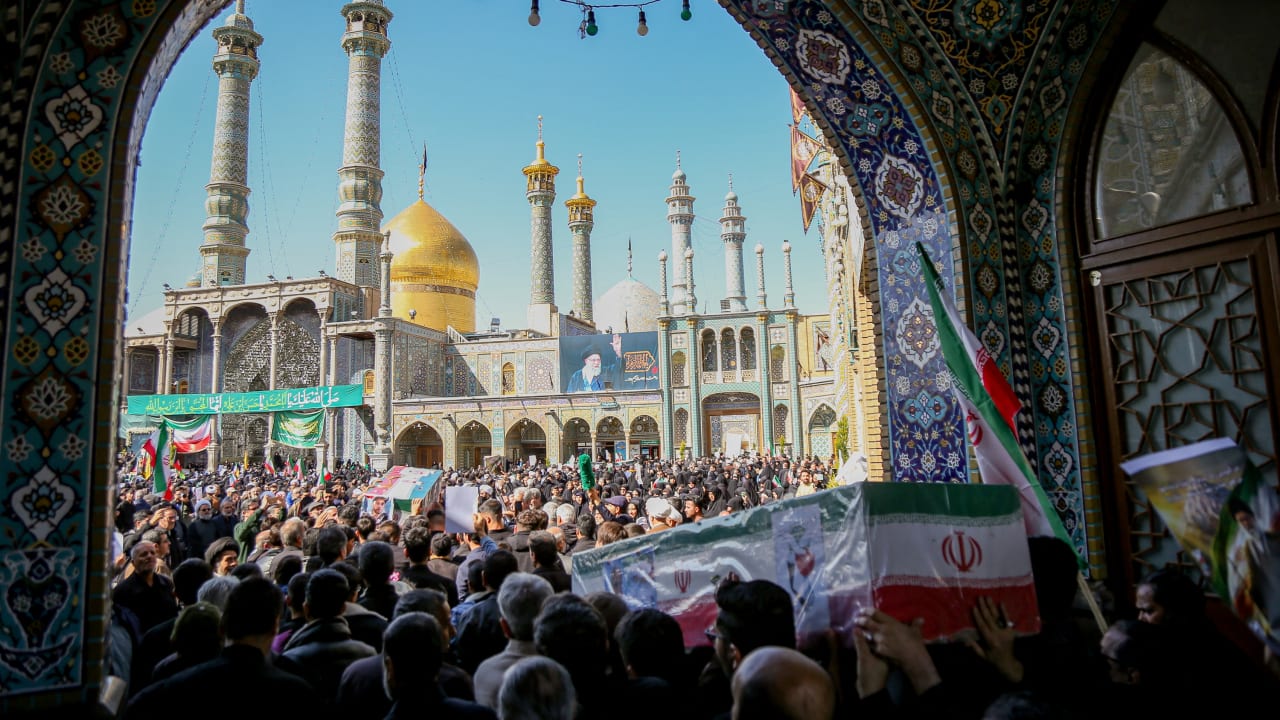
Iranian mourners attend the funeral of those killed in the war with Israel and the United States, in Qom, Iran, March 5, 2026(photo credit: Mehdi ALAVI/ISNA/AFP via Getty Images)
The IDF will continue to pursue every successor to Iran's next supreme leader, the military wrote on X in Farsi on Sunday morning.
"We
want to tell you that the hand of the State of Israel will continue to
pursue every successor and every person who seeks to appoint a
successor," the IDF wrote.
We
warn all those who intend to participate in the successor selection
meeting that we will not hesitate to target you, either. This is a
warning!"
پس از خنثیسازی خامنهای ستمگر، رژیم تروریستی ایران تلاش میکند خود را بازسازی کرده و رهبر جدیدی انتخاب کند.
مجلس خبرگان ایران که دهها سال است تشکیل جلسه نداده، بهزودی در شهر قم گرد هم خواهد آمد. میخواهیم به شما بگوئیم که دست کشور اسرائیل همچنان هر جانشین و هر کسی را که در پی…
Iran reaches majority consensus over new Supreme Leader
Mehr
news agency reported on Sunday that Assembly of Experts member
Ayatollah Mohammadmehdi Mirbagheri said a majority consensus over a
successor to Iran's former Supreme Leader Ayatollah Ali Khamenei has more or less been reached.
He said, though, that "some obstacles" need to be resolved regarding the process, according to the report.
Iranian media said the body tasked with appointing Iran's
supreme leader had a minor disagreement over whether their final
decision must follow an in-person meeting or instead be issued without
adhering to this formality.
“This is a war of redemption that began on October 7,” Ophir Falk, foreign affairs adviser to Prime Minister Benjamin Netanyahu, said.
Palestinians make their way in a devasted neighborhood, amid the ongoing Israel-Hamas conflict, in Gaza City, October 24, 2024.(photo credit: Dawoud Abu Alkas/Reuters)
At dawn on Saturday, Oct. 7, 2023, as rockets and gunmen poured into Israel from Gaza, Hamas
military chief Mohammad Deif declared the Jewish state finished: “To
our brothers in the Islamic resistance in Lebanon, Iran, Yemen, Iraq and
Syria, the day has come.”
The day did come, but not the one Deif imagined.
He’s
dead, along with a generation of fellow Islamist leaders, at the hands
of Israel, which has emerged as a regional hegemon. And Hamas’ principal
benefactor, Iran, is being systematically dismantled. And while the
question of Palestinian statehood was thrust onto center-stage by the
Gaza war, it’s out of focus again as the region’s future is recast by a
joint US-Israeli war on Tehran.
“This
is a war of redemption that began on October 7,” Ophir Falk, foreign
affairs adviser to Prime Minister Benjamin Netanyahu, said. “We took out the Islamist leadership
and commanders across the region, and now we’re removing the
existential threat of the ayatollah’s regime that’s been terrorizing the
world for 47 years.”
Smoke
rises after a reported strike on fuel tanks at an oil refinery, amid
the US-Israeli conflict with Iran, in Tehran, Iran, March 8, 2026
(credit: MAJID ASGARIPOUR/WANA (WEST ASIA NEWS AGENCY) VIA REUTERS)
Israel's international standing tarnished
Many
outside Israel don’t see the connection. For them, the 2023 Hamas
attack and the brutal Gaza war it triggered, killing tens of thousands
of Palestinians and reducing vast portions of the territory to rubble,
are a tale of Israeli oppression and vengeance.
“Forget
normalization,” former Saudi Arabian intelligence chief Prince Turki
al-Faisal told CNN on Wednesday. “This is Netanyahu’s war.”
But
perhaps more importantly, Israel’s actions since Oct. 7 have alienated
many in the US, the country’s most important ally. Last week, Gallup released a poll
that showed for the first time more Americans sympathize with
Palestinians than with Israelis, 41% to 36%. That’s compared to a
54%-31% split in favor of Israel three years ago. Among 18-34-year-olds,
the figures are even starker, barely a quarter favor Israelis.
The
war with Iran has drawn similar bipartisan condemnation, with
politicians and commentators across the political spectrum accusing
Israel of dragging Washington into battle after Secretary of State Marco
Rubio suggested that Israel’s determination to strike the country had
forced the US to act.
In
a further sign of Israel’s precarious place in political discourse,
California Gov. Gavin Newsom, a leading contender for the 2028
Democratic presidential nomination, this week said the US should rethink
its military partnership with Israel. He likened Israel to “an
apartheid state.” That kind of language would’ve been unthinkable for a
leading American politician only a few years ago.
As
the war wears on, it’s also increasing the chance of friction between
the US, which sees it as a conflict of choice, and Israel, which
considers it existential. While US President Donald Trump has repeatedly
floated regime change, his administration has been at pains to say its
targets are military and nuclear, while Israel’s are aimed at the state
and at sparking an internal uprising that will topple the Islamic
Republic.
“It
seems the Israelis have one target list, and the US has another,” said
Richard Clarke, a former White House official and assistant secretary of
state. “I can imagine a couple of weeks from now, the US military
saying we’ve bombed everything we want to bomb, and Trump might declare
we’re over.”
Still,
for most Israelis, polls show more than 80% backing the current war,
the past two-and-a-half years offer a kind of straight line indicating
what they now consider to have been a dangerous complacency that they
successfully overcame in the name of survival.
“October
7 was a national wake-up call,” says Elad Levy, who owns a hair salon
in central Tel Aviv. “We will never again let down our guard. For a lot
of us, it was a kind message from God.”
Oct.
7, 2023, was both the Jewish Sabbath and an Israeli holiday. Thousands
of young people were dancing at a rave in the desert 3 miles (4.8
kilometers) from the Gaza border. On nearby military bases, soldiers
slept in their beds. Israel and Saudi Arabia were close to normalizing
relations, even without the Palestinians in the occupied West Bank and
Gaza getting much in the way of progress toward independence.
Hezbollah
in Lebanon and Hamas in Gaza had tens of thousands of missiles aimed at
Israel, but the assessment was that they were deterred and not about to
fire them. The Houthis of Yemen, despite calling for “death to Israel,”
weren’t firmly on the Israeli intelligence radar; they were deemed too
far away and thus not a serious threat.
But
the shock attack by Hamas brought others: with 250 hostages dragged
into Gaza and gunmen still hiding around southern Israel, militias in
Lebanon, Syria, Iraq, and Yemen fired at the Jewish state in solidarity
with Hamas.
Israel
found itself in a multi-front war for which it was unprepared. It was a
massive shock for Netanyahu, who’d long campaigned as Mr. Security and
touted his unique ability to anticipate threats to the nation.
He’d
been lured, along with most of the security establishment, into
believing that Hamas wouldn’t dare. He’d encouraged Qatar to send money
to Gaza, permitted some Gazans to work in Israel, and boosted Gaza
Islamists as a counterweight to the more secular Palestinian Authority
based in the West Bank. It was a kind of divide-and-conquer strategy to
prevent Palestinian sovereignty.
As
he sprang into action on that day, pale and shaken, Netanyahu was
considered to be done. In the middle of a corruption and bribery trial,
presiding over the worst security lapse in the country’s history, he
would resign or be forced out, according to a chorus of commentators.
Yet
today, Netanyahu, 76, along with Trump, another figure then widely
dismissed as a has-been, are together, in the Israeli leader’s words,
“changing the face of the Middle East.”
That
began in Gaza, which the Israeli military bombarded, leaving more than
72,000 dead, according to the Hamas-run health ministry, sparking a
global backlash and leading to an international arrest warrant for
Netanyahu.
In
Israel, while there has been muted criticism of the war’s conduct, the
overwhelming focus was on freeing the hostages and the legitimacy of a
war against a group that openly seeks Israel’s destruction. The
political battle in Israel was over fighting harder, not pulling back.
Netanyahu’s reinvention
It
was a moment when Netanyahu sought to reinvent himself once again. The
son of a historian, he faced his Neville Chamberlain moment by, many
said, remaking himself as Winston Churchill, persuading his US ally to
join him in defeating his enemy.
He
did that first with President Joe Biden and then with Trump. But those
close to Netanyahu see a different historical figure as a model:
Franklin Roosevelt, US president during the Japanese attack on Pearl
Harbor. Rather than cowering after that failure, Roosevelt turned it
into the basis for US military supremacy and Allied victory over Germany
and Japan in World War II.
Netanyahu
followed a similar path, promising on Oct. 8, 2023, to remake the
Middle East. Israeli security officials say the country was lucky
Hezbollah didn’t invade from the north as Hamas had hoped, instead
limiting itself to shooting missiles over the course of a year.
Methodically,
the Israeli military and intelligence services took on their regional
enemies, killing their leaders and taking out many of their Lebanese
operatives when their pagers blew up in their pockets in a spectacular
2024 attack. A ground incursion into Lebanon followed soon after. There
were numerous air sorties over Syria, Iraq, and Iran.
Israel
also used the opportunity the war presented to further take control of
the West Bank, where Jewish settler violence against Palestinians has
soared, making the prospect of a Palestinian state even more remote.
Israel
is pouring money into its military while many of its young people turn
rightward and more religious. It has remade its security doctrine,
placing troops outside its borders, setting up a department to defeat
the Houthis, and shifting focus from its opponents’ intentions to their
capacity. The aim now is to strike first rather than wait and react to
an attack.
Today,
if Israel sees that an opposing military or militia can threaten it, it
will act preemptively. That’s considered by many a violation of
international law. So far, the US under Trump has backed Israel.
And
global markets have too. After initially plummeting, Israeli assets
rose during the course of the war. Israeli stocks have been among the
world’s best performers since the start of 2025, rising 114% in dollar
terms. Foreign investment has picked up.
In
the past week, stocks have slumped globally, with the war causing an
effective closure of the Strait of Hormuz and oil prices spiking. Yet
the Tel Aviv Stock Exchange 35 Index, the country’s benchmark equities
gauge, gained almost 7% in dollars. It was the world’s second-best
performer, while the shekel strengthened more than any other currency.
Netanyahu is no longer being written off. Even those who despise him suspect he may be reelected this year.
“If
this round ends quickly, Netanyahu will proudly ride it to the ballot
box,” lamented Aluf Benn, editor-in-chief of Haaretz, Israel’s
left-leaning daily newspaper, in a column expressing anger that “the
masses in Israel and the countries of the region have been cast in the
role of cannon fodder and collateral damage.”
Indeed,
many around the globe watch what’s happening in Iran with alarm,
remembering the “forever wars” of the US in Iraq and Afghanistan.
Frustration with the war in countries such as the United Arab Emirates,
where cities like Dubai and Abu Dhabi are being targeted by Iranian
drones and missiles, is rising.
Regional
and military experts say they’re horrified by what they consider poor
planning by Israel and the US for what follows in Iran. That’s only
heightened by reports that Trump may be considering ground troops in
Iran, and by others saying Washington and Israel are working on getting
Kurdish forces to take up arms against the Iranian government.
In
Israel, however, there is cautious optimism, despite ongoing missile
attacks. The broad sense is that the country is in a much stronger
position geopolitically and militarily than two-and-a-half years ago.
And
no matter what emerges in Iran, it will be weaker and less of a threat.
Israel’s ultimate goal is to see a new Iranian government that, like
the monarchy before the 1979 Islamic revolution, has warm relations with
it and the US. Few, whether in Israel or outside, are betting on that
happening soon. There’s just as much chance that Iran is Balkanized,
turned into a failed and lawless state.
Meanwhile,
Israel hopes that Iran’s decision to fire upon Gulf Arab states,
despite most of them not wanting the war and barring US and Israeli
forces from using their airspace for offensive purposes, will win those
countries over to the Jewish state’s side.
That’s
far from guaranteed. Arab populations were appalled by the suffering of
Palestinians during the war in Gaza. And many of their governments are
increasingly concerned about Israel’s military forays abroad.
The
biggest concern for Israel is the growing disillusionment with it in
the US. The fear is that Trump, who faces tough midterm elections in
November, loses patience with the war before Iran’s military capacities
are destroyed. Already, American gasoline pump prices have risen along
with oil prices.
“We need to pray that Trump doesn’t balk,” wrote Ben Caspit in Maariv.
The jets were located at the airport in Isfahan, the city where Israel had previously destroyed Ghadr-class ballistic missiles and their launch platforms.
IRAN'S F-14 fighter jets fly during the annual Army Day military parade in Tehran on April 17, 2012.(photo credit: Atta Kenare/AFP via Getty Images)
The IDF struck over 400 targets throughout Iran over the past day, a military spokesperson announced on Sunday.
Among
the targets the IDF successfully took out were several of Iran's F-14
fighter jets, along with detection and air defense systems which posed a
threat to IDF aircraft.
The jets were located at the airport in Isfahan, the city where Israel had previously destroyed Ghadr-class ballistic missiles and their launch platforms.
Another strike conducted on Friday by the IDF destroyed 16 'Quds Force' aircraft at the Mehrabad airport in Tehran.
A
F-14 Tomcat is being repaired at an overhaul hangar in Mehrabad airport
in Tehran, Iran, on December 18, 2012. (credit: MOHAMMADALI
NAJIB/Middle East Images/AFP via Getty Images)
Iranian F-14's received in 1976
Iran received 79 of the US-made F-14's in 1976 when the country was still ruled by the Iranian Shahs. These were taken by the Islamic Republic after the 1979 Revolution.
The F-14 was retired by the US Navy in 2006, being replaced by the F-18.
The Islamic Republic of Iran is the only country that still uses the twin-engine fighter jet.
Abu Dhabi is "struggling to understand Israeli conduct and the nature of briefings coming out of Jerusalem," a source close to the Emirates told The Post.
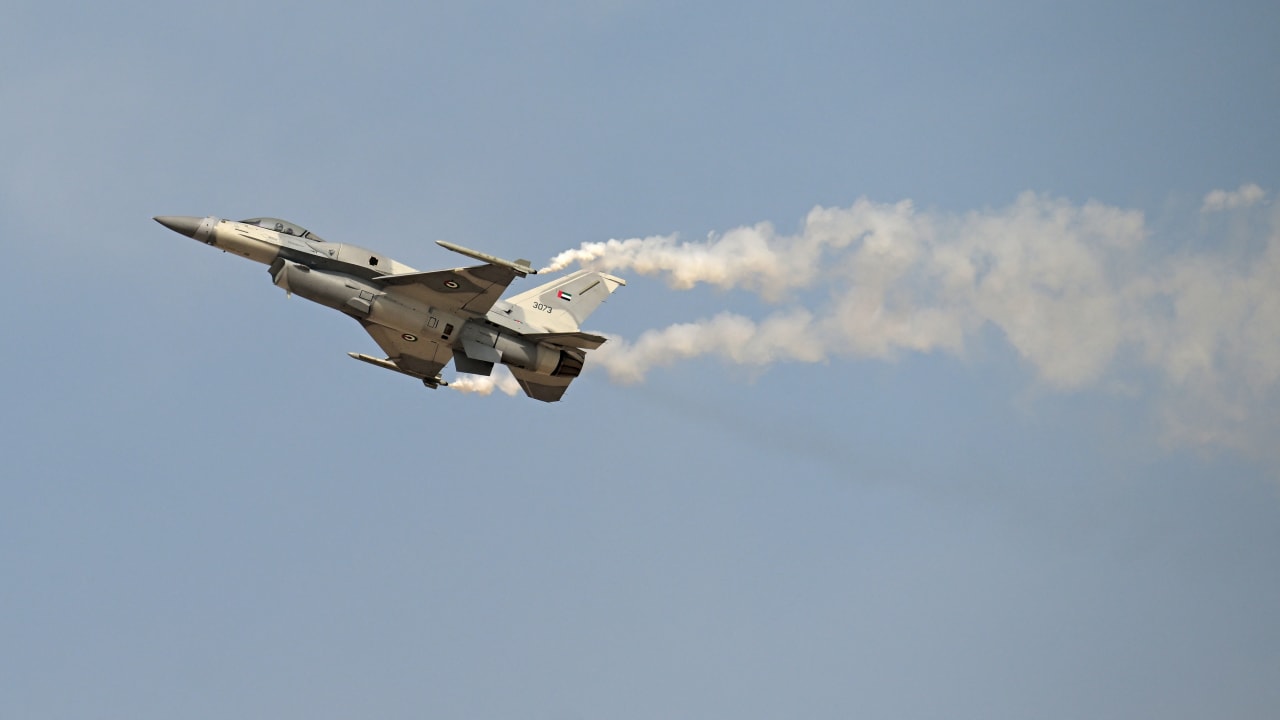
An Emirati Air Force F-16 performs a display flight at
Al-Maktoum International Airport during the Dubai Airshow 2025 in Dubai,
November 17, 2025(photo credit: Giuseppe Cacace/AFP via Getty Images)
A United Arab Emirates senior official denied to The Jerusalem Post
that the country was involved in a strike against an Iranian
desalination facility, contradicting claims made by a source familiar
with the matter to The Post earlier on Sunday.
Abu
Dhabi is "struggling to understand Israeli conduct and the nature of
briefings coming out of Jerusalem," a source close to the Emirates told The Post, accusing Israeli officials of leaking reports of its attack in Iran.
"It
is not appropriate for what is described as a "senior Israeli source”
to speak on our behalf or spread rumors about the actions of another
sovereign state," the source added. "This is a sovereign state that
makes its decisions independently."
It is the Post's
understanding that the UAE would not strike a civilian target to enter
the war, but would target a military site. The IDF has also denied
involvement in the strike.
The United Arab Emirates
was initially said to have struck an Iranian desalination facility on
Sunday, in what would have been its first retaliatory attack against
Iranian drone and missile fire as part of Israel and the US's war on the
Islamic regime.
A
person rides on a scooter as smoke rises in the Fujairah oil industry
zone following a fire caused by debris after interception of a drone by
air defenses, in Fujairah, United Arab Emirates, March 3, 2026 (credit:
REUTERS/AMR ALFIKY)
Furthermore,
Abu Dhabi's Foreign Ministry released a statement reaffirming that the
Gulf state is "acting in self-defense against the brutal and unjustified
Iranian aggression.
"The
UAE emphasizes that it does not seek to be drawn into any conflict or
escalation, but affirms its full right to take all necessary measures to
protect its sovereignty, national security, and territorial integrity,"
the statement read.
"The
UAE will never place the Iranian people in the same basket as the
Iranian regime. The Iranian people are the real victims of that regime
and the ones who suffer the most from its policies," Ali Al Nuaimi,
Chairman of the UAE’s National Defense Committee, said. "As neighbors,
we recognize this reality, and we care about their well-being.”
The alleged strike joined a similar report from last week, in which a senior Western diplomatic source told the Post that Qatar carried out strikes inside Iran last week in retaliation for recent Iranian drone and missile attacks.
Abu
Dhabi had reportedly contemplated whether it should react after it,
along with a host of Gulf nations, was attacked by Iran since Israel and
the US launched strikes on February 28. Last week, authorities in the
United Arab Emirates' Fujairah extinguished a fire caused by debris
after a drone was intercepted by air defenses in the Fujairah oil
industry zone.
A Wall Street Journal report from Friday said that the UAE is considering freezing
billions of dollars' worth of assets belonging to Iran, a move that
would cripple the country's connection to the global economy.
Later on Sunday, the UAE Defense Ministry also announced that the death toll from Iran's attacks had risen to four.
Two Kuwaiti firefighters killed as Iran deals Gulf heavy blows
Along
with the UAE, the governments of Saudi Arabia, Kuwait, and Bahrain
reported Iranian drone attacks in their countries on Saturday and early
Sunday, with a huge fire engulfing a government office block in Kuwait.
In an apparent attempt to cool anger across the Gulf, Iran's President Masoud Pezeshkian apologized to neighboring states for its attacks on US bases in those countries on Saturday.
Donald Trump is betting that decisive force—not endless stalemate—can topple regimes, realign alliances, and compress decades of history into weeks.
“There are decades where nothing happens,” Vladimir Lenin is supposed to have said (but didn’t), “and there are weeks where decades happen.” Welcome to the beginning of March, Anno Domini 2026.
One week ago, on February 28, the United States and Israel commenced
an attack on Iran. At first, it seemed to be merely a ramped-up
continuation of Operation Midnight Hammer, the raid conducted last June
when the United States, following up on Israel’s preliminary attacks, destroyed (“completely and totally obliterated”)
three key nuclear sites at Fordow, Natanz, and Isfahan. It was an
extraordinary operation, in which four B-2 bombers, having flown for 30
hours from the United States, mounted an astonishing precision strike
with fourteen 30,000-pound bunker-buster bombs, together with
submarine-fired Tomahawk cruise missiles.
But Midnight Hammer was merely a preliminary salvo compared to Epic
Fury, the pulverizing assault that the United States and Israel (under
the name “Roaring Lion”) launched last Saturday. The world has not seen
anything like this since 1945, when the United States and its allies
crushed Nazi Germany and Imperial Japan. Having learned from the
aftermath of the Great War that armistice is often but another name for
false victory, President Trump adopted as his motto the phrase that
definitively ended World War II: “unconditional surrender.”
Trump understands, as so many “experts” have failed to understand,
that the object of armed conflict is to win. So often in recent decades,
the United States has embarked on war, or warlike activity, with no
plan for victory. Early on in the War on Terror, for example, the U.S.
located Mullah Omar, the Taliban head honcho who coddled al-Qaeda, in
Afghanistan. The American forces were not, however, allowed simply to
take him out. Restrictive rules of engagement required them to wire back
to Washington to ask permission. By the time the proper authorities
could answer, it was too late. Omar had vanished back into some unknown
cave.
There is nothing like that happening now. Within just four or five
days, virtually all of Iran’s senior leadership has been eliminated.
Then its replacements were eliminated. “Their army is gone,” President Trump said a
few days ago. “Their navy is gone. Their communications are gone. Their
leaders are gone. . . . Their Air Force is wiped out. . . . They have
32 ships. All 32 are at the bottom of the ocean. Other than that,” he
quipped, “they’re doing very well!”
The assault is not just continuing; it is ramping up. Just a few days ago, Israel destroyed a massive underground complex
in the center of Tehran from which the (late) Supreme Leader Khamenei
had planned to conduct the war. As retired Lt. General Keith Kellogg told Fox News,
President Trump is “going after everything. . . . There’s a huge target
list out there, and there’s no restrictions.” Kellogg, noting that he
had never seen an operation like this, said that it’s not “whack a mole”
but “whack a mullah. . . . This is a massive win for the United
States.”
It’s also a massive win for the Iranian people. Just a week ago, the
populace was cowed by the mullahs, their immoral “morality” police, and
the murderous Basij thugs who terrorized the population. Remember, in
January, they maimed and murdered tens of thousands of protesters. Tens
of thousands. Now, a popular game in Iran is sneaking up behind Islamic
regime clerics and knocking off their turbans.
I like to see it. Around the world, exiled Iranians—often alongside
Israelis and other Jews—are demonstrating in favor of President Trump.
In London, a group of Iranians held a vigil, replete with candles and singing of the American national anthem, to honor the six American troops killed in Kuwait by an Iranian drone strike.
In calling for unconditional surrender, Trump is seeking not just regime change. He seeks the destruction of the Islamic
regime that has held Iran in its fearsome grip since 1979, when the
Ayatollah Khomeini flew in from Paris to commence his theocratic reign
of terror. Richard Falk, writing in The New York Times, cheered the event,
predicting that Khomeini would show the world what “a genuine Islamic
government can do.” I agree that Khomeini did just that. But I reckon
that all the bodies he had hung from cranes did not exactly fulfill
Falk’s expectations.
Just a few days after 9/11, when Muslim fanatics slaughtered nearly 3,000 Americans, George Bush told the world
that the word “Islam” meant peace. In fact, it means “submission,” a
bitter truth that the Iranian people have had to learn these past 47
years. Thanks to Donald Trump, that horrible misogynistic death cult is
finally coming to an end. Iran will soon be free from those
turban-headed murderous perverts. Lebanon may soon be free as well. A
story on X reports that Lebanon’s government has just banned all Islamic
Revolutionary Guard Corps activities inside Lebanon. This means that
Hezbollah, one of Iran’s chief terrorist proxies, is on its way out.
Ditto for Hamas and the Houthis.
Meanwhile, halfway around the world in the Western Hemisphere, the
Communist dictatorship in Cuba is entering its final days. The daring
extraction of Nicolás Maduro from Caracas at the beginning of January
cut off Cuba’s supply of oil. Most of the island has been without power
for days. Riots have erupted in Havana. “Down with Communism” is the
refrain. On Thursday, Cuban President Miguel Díaz-Canel said
that he is open to talks with the United States on “any issue” in order
to build “a civilized relationship between neighbors” that is “mutually
beneficial.” In Costa Rica, President-elect Laura Fernández says
that she wants to work with the Trump administration to confront
organized crime in order to avoid becoming ridden with drug cartels in
the way Mexico has been. “Mexico, for me, is a reference point for where
we don’t want to end up.” As I write, Trump is meeting in Miami with El Salvador president Nayib Bukele, Argentina president Javier Milei, and other Latin American leaders at the Shield of the Americas
ceremony. The goal? First, to crush the drug cartels that have been
poisoning Americans for years. Second, to stop the flow of illegal
immigration to the United States. Third, to work together to forge
mutually beneficial commercial and security relationships.
It is difficult to keep up with Donald Trump’s dizzying pace. Since
January 20, 2025, and with ever-increasing velocity, he has been
stuffing decades into weeks. I don’t think there has ever been anything
like it in American history.
Tehran counts on what it believes is an absence of a serious alternative to the present regime... that would force the US, if not Israel, to end up taking to the post-Khamenei leadership in Tehran.
Tehran's calculation is that
Israel and the US cannot long tolerate a large number of casualties,
while the Islamic Republic could do so with its weird doctrine of
martyrdom.
Finally, Tehran assumed that it enjoys the advantage of having a single war goal: survival.
Finally, Tehran counts on what it believes is an absence of a
serious alternative to the present regime... that would force the US, if
not Israel, to end up taking to the post-Khamenei leadership in Tehran.
Some wearers of military caps already dream of doing a Bonaparte,
Iranian style. And some turbaned heads see themselves as the regime's
new "Imam."
Can the US make peace with any figure from an Iranian regime
that it has labeled "terrorist" and an imminent threat to American
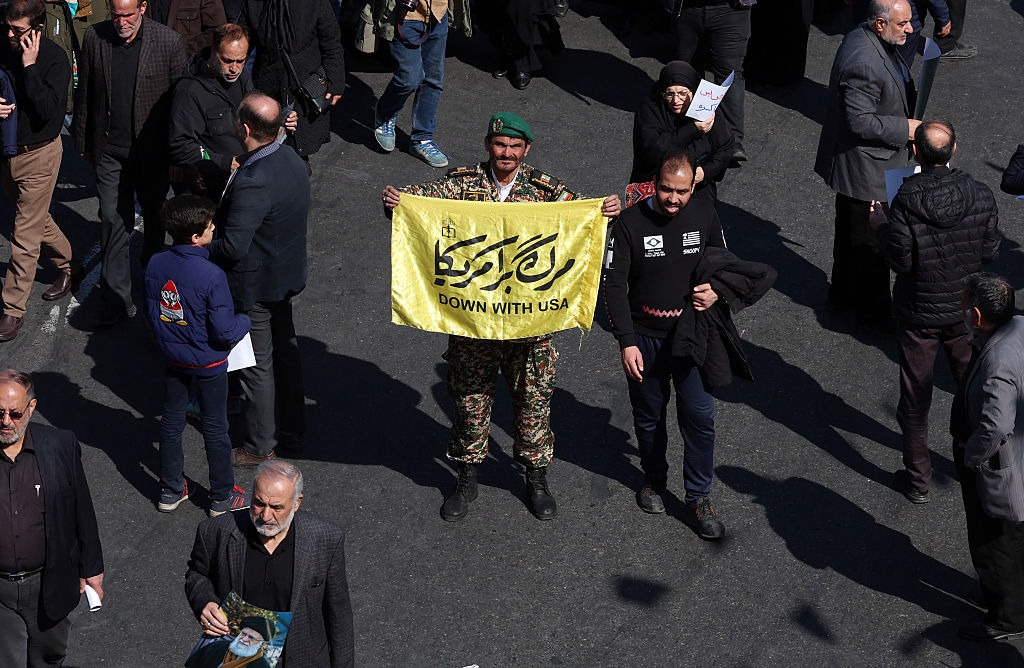
national security? Pictured: A man in military uniform protests against
the United States in Tehran on March 6, 2026. (Photo by AFP via Getty
Images)
On the eve of the current war between the Islamic Republic on one
side and the US-Israel tandem on the other, I speculated about six
scenarios that might take shape.
It now seems that the scenario chosen by Tehran -- or what is left of
its leadership -- is the Samson Option aimed at a long war designed to
spread the conflict until the temple collapses on everyone's head.
The choice of that option was based on several assumptions. The first
was that President Donald Trump has no patience for getting involved in
maze-like situations and that if short and quick success seems
unavailable, he would move to another headline-catching endeavor.
Last June, Trump terminated US involvement in Israel's war against
Iran in just 37 hours by declaring a ceasefire that neither Israel nor
Iran wanted. Trump's sensational Caracas coup lasted only five hours.
The thinking in Tehran was that Israel, too, is nurtured on the
narrative of the Six-Day War or the day-long joyride to Beirut in 1982.
Because of its lack of geopolitical depth, Israel cannot bear the cost
of a long war that would disrupt economic activity as people are rushed
to shelters.
Israel's long engagement in Gaza was possible because after the first
phase of the conflict, Hamas was unable to attack Israeli territory.
Thus, Hamas became an anvil that the Israeli hammer could batter at will
for as long as it wished.
The second assumption was that neither the US nor Israel enjoyed a
privilege that the Islamic Republic leadership enjoys: ignoring public
opinion at home.
In Vietnam, after the Tet Offensive, the US had won the war in
military terms but ended up losing because of widespread opposition at
home and across world public opinion. In 2009, Israel could have
eliminated Hamas in Gaza but stopped midstream because of opposition at
home and pressure from Washington.
Tehran's calculation is that Israel and the US cannot long tolerate a
large number of casualties, while the Islamic Republic could do so with
its weird doctrine of martyrdom.
On Wednesday, Ali Larijani, the man put in charge of national
security by the late Ali Khamenei, claimed that Islamic Revolutionary
Guards Corps (IRGC) forces had killed over 500 Americans in the first
three days of the war. If that is true, which I don't think it is, at
that rate US losses could top 20,000 in just three or four weeks.
The third assumption is that both Trump and Netanyahu have difficult
elections ahead, and once they see they cannot win a clear-cut victory
in sight, they would seek an end to the war, thus allowing the regime to
survive.
The fourth assumption in Tehran was that by attacking most countries
in the region, plus Cyprus, it could send shockwaves beyond the limited
sphere of the conflict. That in turn would persuade many nations to join
the "end the war now" chorus, while the oil price rises, stock
exchanges get jittery and regional countries dedicated to seeking peace
and prosperity panic.
Closing the Strait of Hormuz, although more of a gesticulation than a
serious military move, could also contribute to international unease.
Finally, Tehran assumed that it enjoys the advantage of having a
single war goal: survival. In 1917 Lenin, an unlikely model for
Khamenei, told his Politburo that the aim should be "to survive at any
cost, even for just 100 days."
In contrast, US and Israel seem to have different, though not
necessarily contradicting, goals. The US has talked of reducing Iran's
nuclear program, curbing its missile production and, in a less serious
tone, regime change, while constantly claiming to be open to diplomacy.
Trump has even said that he knows Iranian personalities who could assume
power and make a deal with Washington.
Last June, Trump tweeted "Unconditional Surrender" addressed at
Tehran but sent Steve Witkoff and Jared Kushner to seek indirect talks
with Iranians.
In contrast, Israel seems to be aiming at completely disarming Iran
under any leadership and, if possible, not getting involved in sectarian
wars on a no-tomorrow basis. That would shut Iran out of any equation
in the Middle East for a long time, making Israel a centerpiece in any
new status quo.
Finally, Tehran counts on what it believes is an absence of a serious
alternative to the present regime, with a chunk of the opposition in
exile prepared to quietly swallow the regime's survival in order to
prevent a restoration of constitutional monarchy. And that would force
the US, if not Israel, to end up talking to the post-Khamenei leadership
in Tehran.
Will the Samson Option work for Tehran? My answer is a tentative no.
The key reason it won't work is that it was conceived by Khamenei on
the assumption that he would still be around to fine-tune it and, if
necessary, play his trump card, which is to offer to surrender in
exchange for survival. With Khamenei gone and no one capable of filling
the vacuum, we would have the Samson Option without Samson.
Then there is the fact that Iran's ramshackle economy cannot sustain a
long war. Even if oil gets exported to China and some imports reach
Iran via Turkey, the new leadership is bound to face massive shortages
of essential goods, including foodstuffs and pharmaceutical items.
More importantly, perhaps the factional feuds that have been the bane
of the regime since its inception are likely to intensify. Some wearers
of military caps already dream of doing a Bonaparte, Iranian style. And
some turbaned heads see themselves as the regime's new "Imam." Hours
after Ali-Reza Aarafi was put in front of TV cameras as a possible
"Supreme Guide", other mullahs started moaning about him not being a
descendant of Imam Ali because he wears a white turban as opposed to the
black turban of the "shurafa".
Ahmad Khatami, a deputy speaker of the Assembly of Experts, poured
cold water on Aarafi's ambitions by saying the 88-man group hasn't
chosen a new guide.
At the same time, figures around former President Hassan Rouhani are
musing about ending the war by meeting Trump's key demands. But that too
is easier said than done. Can the US make peace with any figure from a
regime that it has labeled "terrorist" and an imminent threat to
American national security?
Who knows? What we know is that in the meantime people will die.
Gatestone Institute would like to thank the author for his kind permission to reprint this article from Asharq Al-Awsat.
Amir Taheri was the executive editor-in-chief of the daily Kayhan
in Iran from 1972 to 1979. He has worked at or written for innumerable
publications, published eleven books, and has been a columnist for Asharq Al-Awsat since 1987. He graciously serves as Chairman of Gatestone Europe.
The program, Shield of the Americas, is aimed at the coordination of the military, intelligence, and law enforcement of the partnering countries and focuses on the drug trafficking and cross-border crime syndicates of the Western Hemisphere.
President Donald Trump introduced a multinational security initiative
to combat drug cartels in the Western Hemisphere during a summit with
South American leaders in Florida on Saturday.
The program, Shield of the Americas, is aimed at the coordination of
the military, intelligence, and law enforcement of the partnering
countries and focuses on the drug trafficking and cross-border crime
syndicates of the Western Hemisphere.
“The only way to defeat these enemies is by unleashing the power of
our militaries,” Trump said at the event. “We have to use our military.
You have to use your military.”
At the summit, more than a dozen heads of state from the U.S. and South America discussed the strategy of the coalition.
The strategy focuses on intelligence-sharing and operational
collaboration as a way to dismantle the cartels' operational and
structural flow of trafficking and drugs.
Trump said that organized crime syndicates and their activities
should be viewed as a military focus and the equivalent of a cartel
terrorist entity.
Trump has designated the first U.S. special envoy to the coalition,
Kristi Noem, former Secretary of the Department of Homeland Security.
She is expected to work closely with other countries to implement this
initiative.
The shift towards socialism similarly mirrors the Democratic party’s leftward shift, but a deeper look reveals that those favoring "socialism" have no understanding of what it actually means.
Findings from a Fox News poll
released Friday indicate that a historic high of 38% of registered
voters now consider it positive for the country to shift from capitalism
toward socialism, marking an increase from 32% in 2022 and 18% in
2010.
The shifting sentiment towards socialism may not necessarily reflect
fuzzy feelings for its ideals, but rather a lack of understanding of
what those ideals are, according to professor of political science,
Nicholas Giordano. “Sometimes the simplest explanation is the best
explanation. People are gravitating toward socialism because they've
never really been taught what socialism is," Giordano told Just The News.
"Ask any student today to define capitalism or socialism, and you
would be hard-pressed to get a coherent, straightforward response,”
Giordano added.
Anti-Trump sentiment disguised
Another contributor to the recent uptick in socialism's favorability
could be that it's near-inverse, capitalism, is, to some, synonymous
with President Donald Trump. Those who disdain Trump generally prefer
socialism and vice versa.
Trump, a lifelong real estate developer and businessman who built a
brand synonymous with wealth and deal-making, governed as a staunch
advocate for capitalism in his first term by slashing corporate tax
rates from 35% to 21% through the 2017 Tax Cuts and Jobs Act, unleashing a surge in business investment and stock market gains.
Additionally, his deregulatory agenda
throughout both terms—rolling back thousands of pages of federal rules
in energy, finance, and environmental sectors—mirrored the instincts of a
CEO who flexed speed, adaptability, and reduced government interference
over bureaucratic red tape.
Trump has championed his "America First" trade policies, renegotiating deals like NAFTA into the USMCA (Unites States-Mexico-Canada Agreement), and confronting China on intellectual property theft
and unfair subsidies. Trump has consistently sought to protect and
empower American businesses, entrepreneurs and workers in a way that
reflected his decades of experience negotiating high-stakes business
contracts.
Despite this rise in the poll, a clear majority of 61%
still regard such a move as unfavorable. The idea appeals most strongly
to very liberal individuals, younger Democrats, Black voters, and those
under 30, while Republicans, conservatives, older men, and seniors
express the firmest resistance.
Students not equipped to understand effects of socialism
Opinions on capitalism itself are nearly even, with 51% believing it
functions well to some degree and 49% viewing it as ineffective.
While educators aren't equipping students with adequate information
about socialism and communism and their failures, including leading to
the death of some 100 million people globally, those students aren't seeking out information on their own, according to Giordano.
"I also think this is critical: few students today are introduced to
the works of, or even know the names of Adam Smith, Milton Friedman,
Friedrich Hayek, and Thomas Sowell."
These four economists shared similar views, that voluntary exchange,
individual liberty, and decentralized price signals generally produce
greater prosperity, efficiency, and human flourishing than centrally
planned or heavily regulated systems.
Just because one is happy to have a roaring economy -- as we already see with Qatar -- that does not necessarily mean one will be happy with what is already being reported as "concern" about Israel's increased standing in the region.
Now, following the demise of
Iran's Supreme Leader, Ayatollah Ali Khamenei, as well as scores of
other prominent members of the regime, countries that have previously
tried to maintain cordial relations with the ayatollahs face a stark
choice: do they want to maintain their ties with known Islamist
extremists, or forge closer ties with the US and its allies?
What if, however -- Washington and Jerusalem should both carefully note -- they choose both?
With the Iranian threat gone, what would prevent them from complying
with Trump's demands of the moment and enjoying the benefits of
modernity -- and then, when he is no longer in office, continue supporting terrorism, religious extremism and jihad (holy war)?
Just because one is happy to have a roaring economy -- as we
already see with Qatar -- that does not necessarily mean one will be
happy with what is already being reported as "concern" about Israel's
increased standing in the region.
The only GCC member state opposed to confronting Iran was --
predictably -- Qatar, a state that has tried to maintain ties with the
ayatollahs while becoming one of the main backers of Hamas terrorists in
Gaza.
Turkish President Recep Tayyip Erdogan publicly condemned the
joint US-Israeli attack on Iran while saying he is "saddened" by the
elimination of Khamenei and offering his "condolences" to the people of
Iran.
Erdogan's reaction is indicative of the close ties he has
developed with Iran's ayatollahs, and his opposition to the notion of
the emergence of a democratic, Western-aligned government in Tehran.
Turkey, which remains a member of the Nato alliance, has done its
best to undermine the Trump administration's military campaign against
Iran, denying US forces vital access to its air, land and maritime space
to conduct operations against the ayatollahs.
The Trump administration certainly needs to take note of the
long-term hostile conduct of so-called allies such as Turkey, Qatar and
Pakistan as the US and Israel attempt to destroy Iran's nuclear program
once and for all, and especially in rebuilding Gaza.
At the very least, if Turkey is not prepared to support the US
military in times of crisis and no longer acts as an ally -- and is
indeed acting contrary to US interests -- then the White House would do
well to conclude that the US and its allies should cease all military
cooperation with it.
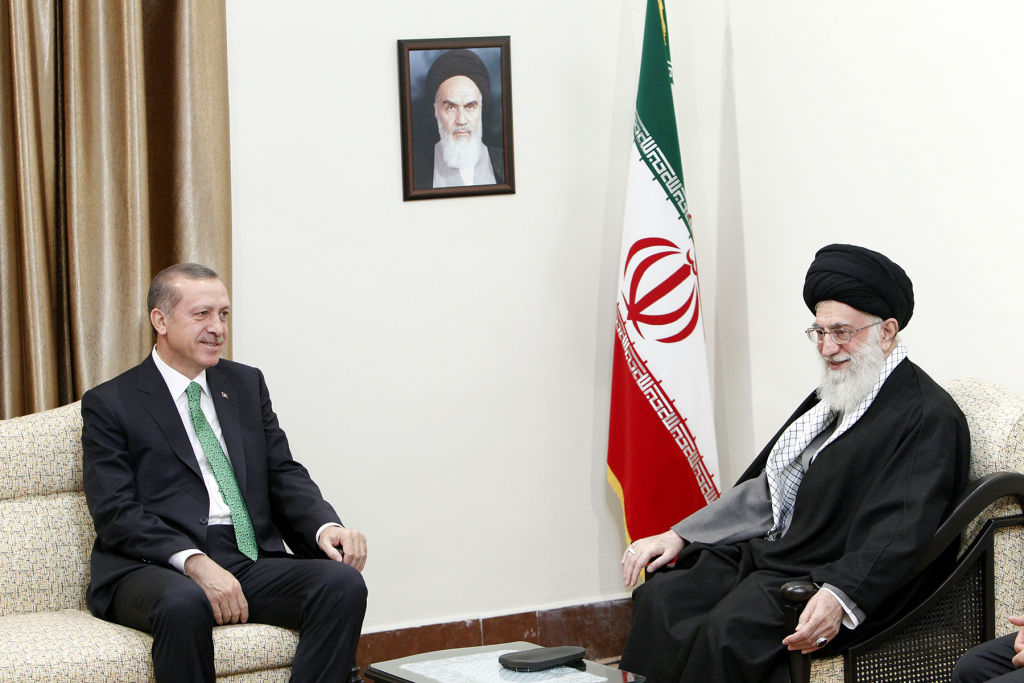
Turkish President Recep Tayyip Erdogan publicly condemned
the joint US-Israeli attack on Iran while saying he is "saddened" by the
elimination of Ayatollah Ali Khamenei and offering his "condolences" to
the people of Iran. Erdogan's reaction is indicative of the close ties
he has developed with Iran's ayatollahs, and his opposition to the
notion of the emergence of a democratic, Western-aligned government in
Tehran. Pictured: Erdogan meets with Khamenei in Tehran on January 29,
2014. (Image source: Iranian Supreme Leader's website/AFP via Getty
Images)
US President Donald J. Trump's decision to launch his devastating
military campaign against Iran's ayatollahs means that countries, such
as Turkey and Qatar, which have previously been ambivalent about their
attitude towards Tehran, will now need to undertake a serious
reappraisal of where their true interests lie.
Prior to Trump launching "Operation Epic Fury", the military campaign
designed to eliminate Iran's ability to produce nuclear weapons,
ballistic missiles or support its proxies once and for all, several
important regional players sought to remain neutral as the tensions deepened between Washington and Tehran over Iran's nuclear programme.
Even though they claimed to be allies of the US, they also sought to
maintain links with the ayatollahs, even when it became abundantly clear
that the Trump administration was determined to confront Iran over its
clear delaying tactics in the recent round of nuclear negotiations.
Now, following the demise of Iran's Supreme Leader, Ayatollah Ali
Khamenei, as well as scores of other prominent members of the regime,
countries that have previously tried to maintain cordial relations
with the ayatollahs face a stark choice: do they want to maintain their
ties with known Islamist extremists, or forge closer ties with the US
and its allies?
How they respond to this dilemma could have vital implications for
their future development. By aligning themselves with the West, they
will have the opportunity to benefit from having access to the exciting
technological revolution taking place in Silicon Valley, involving new
technologies such as artificial intelligence. On the other hand, if they
choose to maintain their ties with extreme Islamist groups, such as the
Muslim Brotherhood and the founders of Iran's Islamic Revolutionary
Guards Corps, they will be left to fend for themselves.
What if, however -- Washington and Jerusalem should both carefully note -- they choose both?
With the Iranian threat gone, what would prevent them from complying
with Trump's demands of the moment and enjoying the benefits of
modernity -- and then, when he is no longer in office, continue supporting terrorism, religious extremism and jihad (holy war)?
Just because one is happy to have a roaring economy -- as we already
see with Qatar -- that does not necessarily mean one will be happy with
what is already being reported as "concern" about Israel's increased standing in the region.
The first suggestion that many Arab leaders may be reconsidering
their neutral status in the conflict between the US and Iran came over a
week ago, when Gulf leaders voiced their condemnation of Iran's "reckless and indiscriminate attacks" on their territory and infrastructure.
Leaders of the Gulf Cooperation Council (GCC), a regional
organisation comprising Saudi Arabia, Bahrain, Kuwait, Oman, Qatar and
the United Arab Emirates, indicated they were giving serious
consideration to exercising their right "to respond to Iranian attacks"
in order to protect regional security and stability.
In an attempt to escalate the conflict, Iran has deliberately
targeted several of its Gulf neighbours, launching missiles and drones
targeting sites in Kuwait, Bahrain, Dubai, Abu Dhabi, Oman, Qatar, and
Saudi Arabia. The attacks are seen by many as a deliberate ploy by the
Iranian regime to pressure pro-Western Gulf states into calling on Trump
and the Israelis to end their military campaign against the ayatollahs.
To judge by the response from Gulf leaders, however, the Iranian ploy
has had the opposite effect, with Arab leaders now giving serious
consideration to abandoning their neutrality and actively giving their
backing to the US military campaign.
The only GCC member state opposed to confronting Iran was --
predictably -- Qatar, a state that has tried to maintain ties with the
ayatollahs while becoming one of the main backers of Hamas terrorists in Gaza.
Qatar's former prime minister and foreign minister, Sheikh Hamad bin Jassim bin Jaber Al Thani, cautioned
that GCC states "must not be dragged into a direct confrontation with
Iran", even though Tehran "violated the sovereignty of the Council's
states and was the aggressor".
Another sign that attitudes in the Arab world were hardening towards Iran's mullahs came with a joint statement
issued by the leaders of Bahrain, Iraq, Jordan, Kuwait, Oman, Qatar,
Saudi Arabia and the United Arab Emirates, saying that "Iran's actions
represent a dangerous escalation that violates the independence of
numerous countries and threatens regional stability. Targeting civilians
and countries not engaged in hostilities is reckless and
destabilizing".
Another important consequence of Iranian aggression is that it has helped to heal
the deepening rift between the UAE and Saudi Arabia, whose relations
had been badly affected by rifts caused by their involvement in the
conflicts in Yemen and Sudan, where the two monarchies have often found
themselves supporting different sides. In a sign of a rapprochement,
Saudi Crown Prince Mohammed bin Salman and the UAE's President Mohammed
bin Zayed spoke for the first time in months.
The shifting geopolitical landscape in the Middle East certainly
makes the position of Turkey, a country that has sought to maintain
strong ties with both Washington and Tehran, look even more exposed,
especially after Turkish President Recep Tayyip Erdogan publicly
condemned the joint US-Israeli attack on Iran while saying he is "saddened" by the elimination of Khamenei and offering his "condolences" to the people of Iran.
Erdogan's reaction is indicative of the close ties he has developed
with Iran's ayatollahs, and his opposition to the notion of the
emergence of a democratic, Western-aligned government in Tehran.
Prior to the launch of Operation Epic Fury, Turkey had joined several
Arab states in trying to negotiate a "diplomatic solution" between
Washington and Tehran.
Turkey's objective in the negotiations was to strike a deal whereby
Tehran would be allowed to preserve elements of its nuclear
infrastructure, thereby keeping open the option of the mullahs being
able to develop nuclear weapons at a future date.
Turkey, which remains a member of the Nato alliance, has done its
best to undermine the Trump administration's military campaign against
Iran, denying US forces vital access to its air, land and maritime space to conduct operations against the ayatollahs.
Pakistan, which sits on Trump's "Board of Peace," despite its failure to recognize Israel, has also been clearly pro-Iran, although carefully framing its objections in terms of international law rather than theology.
The Trump administration certainly needs to take note of the
long-term hostile conduct of so-called allies such as Turkey, Qatar and
Pakistan as the US and Israel attempt to destroy Iran's nuclear program
once and for all, and especially in rebuilding Gaza.
At the very least, if Turkey is not prepared to support the US
military in times of crisis and no longer acts as an ally -- and is
indeed acting contrary to US interests -- then the White House would do
well to conclude that the US and its allies should cease all military
cooperation with it.
Con Coughlin is the Telegraph's Defence and Foreign Affairs Editor and a Distinguished Senior Fellow at Gatestone Institute.
State Rep. James Talarico has made dozens of statements aimed at reclaiming Christianity for the left.
In deep-red Texas, the Democrats have chosen a Senate
candidate whose Christian faith the party hopes will be a potent weapon,
but whose unorthodox views range from God is nonbinary to there are six
sexes.
“God is both masculine and feminine and everything in
between,” said James Talarico, a state representative and, now, the
Democratic nominee for Senate. “God is nonbinary.”
Progressive Christianity may be a hard sell
The statement is part of dozens of claims about God,
Christianity, and morality that Talarico has made on the campaign trail,
and before he ran for higher office, geared towards “[reclaiming] Christianity for the left.”
Talarico is currently a seminary student and affiliated with the PCUSA, a liberal Presbyterian denomination.
The Democrats see Talarico’s firebrand, progressive
Christianity as a promising tool to help flip Texas blue. But,
Republicans were quick to jump on Talarico’s statements, with the subtext that he is unfit for a relatively religious state traditionally considered part of the nation’s Bible Belt.
Christian publications havealso pushed back
on Talarico’s statements and have scrutinized his scriptural
interpretations. One of the most contentious issues for Talarico’s
campaign has been his unapologetic support for abortion rights, which he
also grounds in his interpretation of Christian scripture.
In recent decades, pro-life activism has been powered by a
coalition of evangelical Christians and Catholics who argue that the
bible provides a moral requirement for a right to life. For this reason,
the pro-life movement has advocated for the overturning of Roe v. Wade and abortion restrictions across the fifty states.
"Up to interpretation" Talirico says
“For the past 50 years in this country, the religious
right, a political movement, convinced a lot of Christians in America
that the two most important issues were abortion and homosexuality — two
issues that aren’t really discussed in Scripture. Abortion is never
mentioned,” Talarico said in an interview with Ezra Klein of The New York Times.
Talarico believes, however, that how a Christian should
feel about abortion is up to interpretation, saying that the issue,
alongside homosexuality, is never mentioned in the Bible.
He has controversially used the story of the Virgin Mary to
argue that consent is a fundamental principle of creation, which he
says is consistent with supporting the practice.
“Mary is probably my favorite figure in the Bible, the
mother of Jesus. And you know she is, um, she's an oppressed peasant
teenage girl living in poverty under an oppressive empire as a Jew, and
she has a vision from God that she's going to give birth to a baby who's
going to bring the powerful down from their thrones,” Talarico said on the Joe Rogan podcast.
“But I say all this […] in the context of abortion because
before God comes over Mary and we have the incarnation, God asks for
Mary's consent, which is remarkable. I mean, go back and read this in
Luke. I mean, the angel comes down and asks Mary if this is something
she wants to do, and she says, if it is God's will, let it be done. Let
it be. Let it happen.”
“So to me that is an affirmation in one of our most central
stories that creation has to be done with consent. You cannot force
someone to create. Creation is one of the most sacred acts that we
engage in as human beings. But, that has to be done with consent. It has
to be done with freedom. And to me, that is absolutely consistent with
the ministry and life and death of Jesus. And so that's why I come down
on that side of the issue.”
He concluded by saying, “All I'm saying is that it
shouldn't be assumed that just because you're a Christian, you are
anti-gay or anti-abortion because there are so many Christians out there
who don't subscribe to either of those policy positions.”
"More than two sexes ... in fact there are six"
Talarico’s progressive views also extend to social and
racial issues. During his time in public office, Talarico has been a
vocal proponent of transgender rights, delivering speeches from the
Texas House floor and sermons from the pulpit on that diverge widely
from the majority Christian view.
In a Texas House hearing, Talarico stated that he believes modern science recognizes more than two sexes–using
the biological term, rather than the use of the supposed socially
constructed gender that has become common among progressives.
“[M]odern science obviously recognizes that there are many
more than two biological sexes […] in fact, there are six, which
honestly […] surprised me, too,” Talarico said.
Rather than growing more favorable towards the transgender movement, Christians of all stripes have become increasingly skeptical
of the claims underpinning it. In the most recent nationwide polling
available, 68.5% of both Protestant and Catholic Christians said in 2022
that gender is determined by sex at birth, up nearly 10 points from
59.5% in 2017, according to a Pew Research survey on the subject.
In a series of tweets in 2020,
Talarico said that every white American is a carrier of a “virus,”
racism, and that they must take action to “contain the spread.”
"White skin gives me and every white American immunity from
the virus. But we spread it wherever we go —through our words, our
actions, and our systems. We don’t have to be showing symptoms—like a
white hood or a Confederate flag—to be contagious," he wrote, adding,
"The only cure is diagnosing the virus within ourselves and taking
dramatic actions to contain the spread. The first small step is
proclaiming loudly and unequivocally that #BlackLivesMatter."
Regardless of whether Talarico’s progressive take on Christianity will resonate with Texas voters or not, he will face an uphill battle
to win a statewide race as a Democrat. No politician from the
Democratic Party has won statewide since Lt. Gov. Bob Bullock and
several downballot incumbents won in 1994. In other words, Republicans
have dominated the top of the ballot for three decades.
But, Democrats believe there are signs the Republican
stranglehold on the state may finally crack. In 2018, Democratic senate
candidate Beto O’Rourke came within three points
of incumbent Senator Ted Cruz, a Republican. That year the Democrats
were boosted by opposition to incumbent President Donald Trump. They are
hoping the trend repeats itself in 2026, the first midterm election of
Trump’s second, nonconsecutive term.