Sunday, April 12, 2026

The Trump card the president holds if Iran won’t bend: a naval blockade - John Solomon


​ by John Solomon

Trump used a naval blockade to weaken Venezuela before Maduro’s ouster.


Before he launched a daring military capture of the dictator Nicholas Maduro, President Donald Trump brought the Venezuelan economy to its knees with a naval blockade that strangled the nation’s oil revenues.

If Iran refuses to accept the final deal the United States offered Saturday, Trump could bomb Tehran back to the “Stone Ages” as he vowed. Or he might just reprise his successful blockade strategy to choke an already teetering Iranian economy and ratchet up diplomatic pressure on China and India by cutting them off one of their key sources of oil.

Ironically, the massive USS Gerald Ford carrier that led the Venezuelan blockade is now in the Persian Gulf after a brief hiatus for repairs and crew rest after a deadly fire. And now it joins the USS Abraham Lincoln and other major naval assets.

In short, Trump simply could out-blockade Iran’s hold over the Strait of Hormuz, experts said.

“It would be very easy for the US Navy to exert complete control over what does and does not go up and down the Strait now,” the Lexington Institute’s national security expert Rebecca Grant told Just the News. “I've heard about 10 ships have moved in the last 24 hours. One of them was a reflagged Russian tanker, and we know that cargos have gone out to China, to India, and we've seen some inbound traffic.

“If Iran gets intransigent, then absolutely, the US Navy can set up with great overwater surveillance … and watch everything that goes in and out of that Strait and you'll have to ask the US Navy if you want to move past Kharg Island or past that narrow part by Oman,” she added.

After a marathon peace negotiation, Vice President JD Vance left Pakistan late Saturday without a deal with Iran and declared that the United States had offered its “final and best offer” to Tehran.

Vance told a press conference that American officials negotiated in good faith for 21 hours, and now it is up to Iran to decide whether to accept the final terms approved by President Donald Trump.

“We leave here with a very simple proposal, a method of understanding that is our final and best offer,” Vance said. “We will see if the Iranians accept it.”

The specifics of what the United States offered were not immediately released.

But Vance made clear Iran had not yet agreed to Trump's "central goal": abandoning their development of nuclear weapons.

"We haven’t seen that yet,” Vance said.

With a sand clock waning on the temporary cease-fire, the Trump administration already prepared multiple options if Iran refuses Trump's final offer.

The idea of a naval blockade was first suggested last week by retired Gen. Jack Keane, one of the nation’s top military strategists.

“If the war resumes and after we degrade Iran’s remaining military assets sufficiently, the US military could choose to occupy Kharg — or to destroy it,” Keane wrote it a New York Post column. “Alternatively, the US Navy could set up a blockade, shutting down Tehran’s export lifeline.”

If we preserve Kharg’s infrastructure but take physical control, we’d have a chokehold over Iran’s oil and its economy,” he added. “That’s the ultimate leverage we’d need to seize its ‘nuclear dust,’ or stores of enriched uranium, and to eliminate its enrichment facilities.” 


John Solomon

Source: https://justthenews.com/index%2Ephp/government/security/trump-card-president-holds-if-iran-wont-bend-naval-blockade

Follow Middle East and Terrorism on Twitter
Trump announces blockade of Strait of Hormuz as prez blasts Iran for ‘WORLD EXTORTION’ - Ryan King


​ by Ryan King

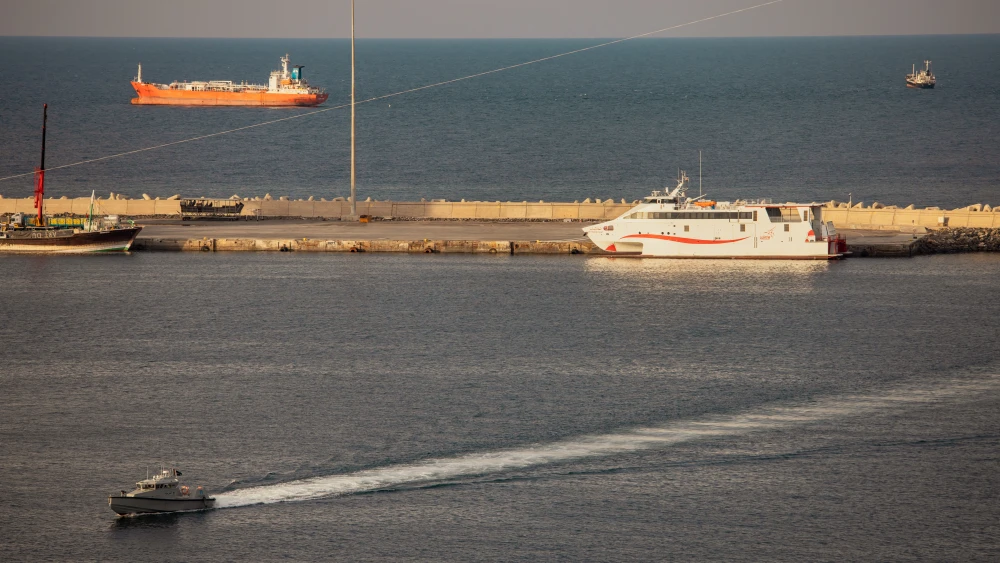
“Effective immediately, the United States Navy, the Finest in the World, will begin the process of BLOCKADING any and all Ships trying to enter, or leave, the Strait of Hormuz,” Trump declared on Truth Social Sunday.


WASHINGTON — President Trump announced that the US will begin a sweeping blockade of the Strait of Hormuz, vowing to fight back against “WORLD EXTORTION” and ensure that no one paying tolls to Iran will get through the critical oil chokepoint.

Trump claimed that negotiations with Iran that concluded Saturday without a deal “went well,” but faulted the Islamic Republic for refusing to budge on its nuclear program, “the only point that really mattered.”

“Effective immediately, the United States Navy, the Finest in the World, will begin the process of BLOCKADING any and all Ships trying to enter, or leave, the Strait of Hormuz,” Trump declared on Truth Social Sunday.

“At some point, we will reach an ‘ALL BEING ALLOWED TO GO IN, ALL BEING ALLOWED TO GO OUT’ basis, but Iran has not allowed that to happen by merely saying, ‘There may be a mine out there somewhere,’ that nobody knows about but them.”

“THIS IS WORLD EXTORTION, and Leaders of Countries, especially the United States of America, will never be extorted.” 


Ryan King

Source: https://nypost.com/2026/04/12/us-news/trump-announces-blockade-of-strait-of-hormuz/

Follow Middle East and Terrorism on Twitter

IDF ordered to increase readiness after Iran talks fall apart—report - JNS Staff


​ by JNS Staff

The Israeli military has reportedly shifted into a protocol similar to those implemented in the days leading up to past campaigns.


Israel Defense Forces Chief of Staff Lt. Gen. Eyal Zamir with Prime Minister Benjamin Netanyahu and Defense Minister Israel Katz at the graduation ceremony for IDF officers, Oct. 30, 2025. Photo by Noam Revkin Fenton/Flash90.
IDF Chief of Staff Eyal Zamir (left) with Prime Minister Benjamin Netanyahu and Defense Minister Israel Katz at the graduation of an IDF officers’ course, October 30, 2025. Photo by Noam Revkin Fenton/Flash90.

Israel Defense Forces Chief of Staff Lt. Gen. Eyal Zamir ordered a heightened state of alert following the collapse of the U.S.-Iran ceasefire talks in Islamabad on Sunday morning, according to Hebrew media reports.

The IDF has shifted into an readiness protocol similar to those implemented in the days leading up to past campaigns against the Islamic Republic, according military sources cited by Ynet, who spoke on condition of anonymity.

As part of Zamir’s directive, the military has been ordered to maintain high operational readiness across all units, shorten response times and address any existing operational gaps. Planning and execution processes are also being accelerated, the sources added.

U.S. and Iranian officials did not reach an agreement after 21 hours of talks in Islamabad, U.S. Vice President JD Vance announced on Sunday morning in Pakistan.

“We’ve had a number of substantive discussions with the Iranians. That’s the good news,” the vice president told reporters. “The bad news is that we have not reached an agreement, and I think that’s bad news for Iran much more than it’s bad news for the United States of America.”

Speaking just hours before Vance’s announcement, Israeli Prime Minister Benjamin Netanyahu said that the campaign against Iran and its regional terrorist proxies was “not yet over” despite “historic accomplishments” during 40 days of fighting.

In a televised address on Saturday night, Netanyahu warned that Jerusalem still has “more to do” and remained committed to eliminating the threat posed by Tehran’s remaining “magazine of missiles” and enriched uranium.

“There is still enriched material in Iran,” noted the premier. And as U.S. President Donald Trump has said, he continued, “it needs to be removed. Either it will be removed by agreement, or it will come out in other ways. But we are working in cooperation between myself and President Trump, and between Israel and the U.S., that is unprecedented. These are achievements that change the entire balance of power.”

An anonymous Israeli source told the country’s Kan News broadcaster after the talks ended that a next round of fighting could see “severe and comprehensive” attacks, including on “national infrastructure, energy facilities and oil production.”

Despite the collapse of the talks, Pakistani media cited sources in Islamabad as saying on Sunday that the two-week ceasefire between Washington and Tehran is expected to remain in place until its scheduled expiry on April 21, coinciding with Israel’s Yom Hazikaron (Memorial Day for Fallen Soldiers and Victims of Terror).

The southern Israeli city of Ashkelon said on Sunday it was canceling Memorial Day ceremonies and Independence Day celebrations, due to be marked on April 22, citing the the “fragile ceasefire and security instability.”

Israel and the United States launched “Operation Roaring Lion/Epic Fury” against the Islamic Republic on Feb. 28. Trump announced on April 7 that he had agreed to a “double-sided ceasefire” after talking to the Pakistani prime minister and field marshal, who “requested that I hold off the destructive force being sent tonight to Iran.”

If the Iranian regime agrees to the “complete, immediate and safe opening of the Strait of Hormuz, I agree to suspend the bombing and attack of Iran for a period of two weeks,” Trump stated last week.


JNS Staff

Source: https://www.jns.org/news/israel-news/idf-ordered-to-increase-readiness-after-iran-talks-fall-apart-report

Follow Middle East and Terrorism on Twitter
Israel pummels Hezbollah’s ‘last stronghold’ in southern Lebanon - JNS Staff


​ by JNS Staff

Lebanon’s official news agency on Sunday described “violent clashes” in the city amid Israeli artillery shelling.


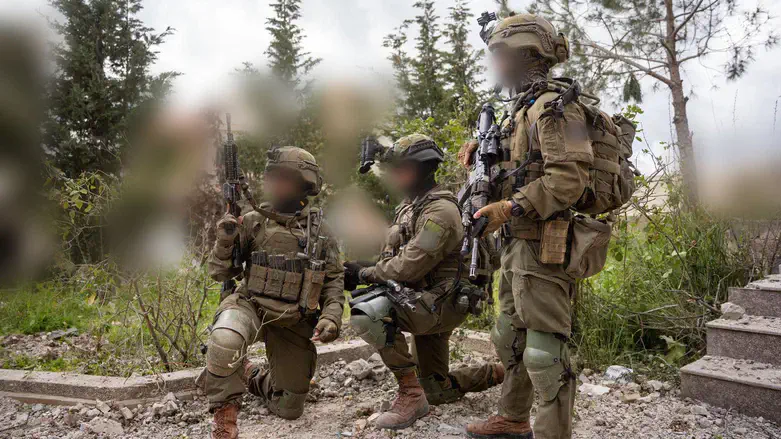
IDF soldiers operating in Southern Lebanon against the Iranian proxy group Hezbollah, April 2026. Credit: IDF.

Israel Defense Forces entered Bint Jbeil, a city in southern Lebanon on Sunday, Israel’s Channel 12 reported. The army has called it the “last stronghold” of the terror group Hezbollah that threatens northern Israeli settlements. It expects to conquer it in the coming days.

Lebanon’s National News Agency on Sunday described “violent clashes” in the city amid Israeli artillery shelling. The IDF said dozens of terrorists have fled to Bint Jbeil, which it has surrounded for several days.

Bint Jbeil is considered a symbol of Hezbollah “resistance.” Its former Secretary-General Hassan Nasrallah delivered his infamous “cobweb” speech from the city on May 26, 2020 during Israel’s evacuation from Lebanon under then-Israeli Prime Minister Ehud Barak.

“This Israel, with its nuclear weapons and most advanced warplanes in the region, I swear by Allah, is actually weaker than a spider’s web,” Nasrallah said. “Israeli society is war-weary and lacks the resilience to endure a bloody conflict or suffer casualties. Israel may appear strong from the outside, but it’s easily destroyed and defeated.”

Nasrallah was eliminated by Israel in Sept. 2024.

Israel has announced it intends to clear southern Lebanon of terrorists up to the Litani River to protect its northern residents. Hezbollah has repeatedly broken its pledge to evacuate its forces from the area, which it agreed to do as part of an Israel-Lebanon ceasefire deal reached in November 2024. On March 2, Hezbollah attacked Israel in solidarity with Iran.

Prime Minister Benjamin Netanyahu announced on April 9 that Israel will hold direct dialogue with Lebanon with a view to disarming Hezbollah.

Israel is reportedly under pressure from the Trump administration to wrap up its operations in Lebanon as part of a ceasefire with Iran announced on April 8, even though it contradicts earlier statements by Israel and the U.S. that the Iran agreement does not include Israel’s actions to bring the terrorist group to heel.

The U.S.-Iran ceasefire itself appears on the ropes as Vice President JD Vance left Pakistan on Sunday after talks broke down with his Iranian interlocutors. “The bad news is that we have not reached an agreement, and I think that’s bad news for Iran much more than it’s bad news for the United States of America,” he said.

Tehran opted “not to accept our terms,” Vance said, speaking alongside Steve Witkoff, U.S. special envoy for peace missions, and Jared Kushner, who advises his father-in-law, U.S. President Donald Trump. 


JNS Staff

Source: https://www.jns.org/news/israel-news/israel-pummels-hezbollahs-last-stronghold-in-southern-lebanon

Follow Middle East and Terrorism on Twitter
Trump's Middle East Strategy: Half-Measures, Full Consequences - Pierre Rehov


​ by Pierre Rehov

Ideologies do not just dissolve when their representatives adopt the codes of diplomacy. They simply put on suits and ties, prepare to say what Western leaders would like to hear and re-enter the international arena through a legitimacy granted by those who once sought to eradicate them.


  • Regimes are destabilized but left standing, Jihadist ecosystems are weakened but not dismantled. Recycled figures from the same ideological mold are repackaged as partners. This sadly makes for half-finished wars presented as advisability.

  • In Syria... Ahmed al-Sharaa, known under his former identity as Abu Mohammad al-Julani — a man once affiliated with Al-Qaeda and long listed with a $10 million American bounty on his head — was welcomed at the White House on November 10, 2025, and, in what was framed as a historic diplomatic opening, publicly described by Trump as a "strong leader."

  • To then legitimize these terrorists under the convenient fiction of ideological conversion is not merely contradictory; it signals to the entire region that time and patience are sufficient to outlast Western resolve.

  • Ideologies do not just dissolve when their representatives adopt the codes of diplomacy. They simply put on suits and ties, prepare to say what Western leaders would like to hear and re-enter the international arena through a legitimacy granted by those who once sought to eradicate them. The former head of Romanian Intelligence, Ion Mihai Pacepa, who defected from the Soviet-bloc to the West in 1978, wrote as early as 2003:

  • "In March 1978 I secretly brought Arafat to Bucharest for final instructions on how to behave in Washington. "You simply have to keep on pretending that you'll break with terrorism and that you'll recognize Israel -- over, and over, and over," Ceausescu told him for the umpteenth time. Ceausescu was euphoric over the prospect that both Arafat and he might be able to snag a Nobel Peace Prize with their fake displays of the olive branch."

  • The central flaw that continues to undermine Western policy seems to be the illusion that eliminating individuals is equivalent to dismantling the system that produces them.

  • Trump's position appears divided between two incompatible premises. On one side is a clear recognition that the Iranian regime is intrinsically hostile, driven by an expansionist vision anchored in a theology that elevates martyrdom above compromise and confrontation above coexistence. On the other side is the temptation -- a recurring wish -- to explore engagement with supposedly "less radical" elements within that same system, as though extremism were a matter of degree rather than a defining principle. This ambiguity is a strategic fault line. As long as Iran's Islamic Revolutionary Guard Corps, the clerical hierarchy, and the ideological infrastructure remain intact, any figure presented as moderate operates within boundaries that preclude genuine transformation. What appears as moderation to Western observers instead often functions as tactical adaptation within an unchanged ideological framework.

  • Half-measures, in this context, represent the most dangerous possible course. They combine the costs of intervention with the failure of restraint: destabilizing adversaries without removing their capacity to rebuild and, in doing so, often strengthening the very dynamics the half-measurists were seeking to contain.

  • If... the objective is seriously to alter the dynamics that perpetuate a conflict — to dismantle the ideological regimes and frameworks that export instability across the region — then partial measures are indistinguishable from failure.

  • American voters, particularly before midterm elections, are unlikely to engage with the subtleties of diplomatic maneuvering or the layered complexities of proxy warfare. Their judgment will rest on visible outcomes: on the coherence between declared objectives and tangible results. In that light, a strategy that delivers disruption without resolution risks being perceived not as prudence but as an abdication of purpose, just another American cut-and-run.

  • There can be no rehabilitation of jihadists under new labels, no reliance on hypothetical "moderates" within revolutionary systems, and no acceptance of partial outcomes as substitutes for structural change. Anything less will ensure that the same threats will persist, reconfigured and reinforced, for the next round of conflict.

Syria's President Ahmed al-Sharaa, a man once affiliated with Al-Qaeda and long listed with a $10 million American bounty on his head, was welcomed at the White House on November 10, 2025 (pictured), and, in what was framed as a historic diplomatic opening, publicly described by Trump as a "strong leader." To legitimize these terrorists under the convenient fiction of ideological conversion is not merely contradictory; it signals to the entire region that time and patience are sufficient to outlast Western resolve. (Image source: Donald Trump/Truth Social/Wikimedia Commons)

There is, in Washington, a recurring temptation: that the Middle East can be managed, contained, adjusted at the margins through economic pressure, surgical strikes, and the careful selection of supposedly "acceptable" figures drawn from within the very systems that generated the chaos. US President Donald Trump, whose instincts have often broken with this practice, now appears perilously close to reproducing it. The issue is not a lack of clarity— he understands the nature of the threat far better than most Western leaders — but the potential failure of an operation halted midway. Regimes are destabilized but left standing, Jihadist ecosystems are weakened but not dismantled. Recycled figures from the same ideological mold are repackaged as partners. This sadly makes for half-finished wars presented as advisability.

In Syria, for instance, Ahmed al-Sharaa, known under his former identity as Abu Mohammad al-Julani — a man once affiliated with Al-Qaeda and long listed with a $10 million American bounty on his head — was welcomed at the White House on November 10, 2025, and, in what was framed as a historic diplomatic opening, publicly described by Trump as a "strong leader."

To then legitimize these terrorists under the convenient fiction of ideological conversion is not merely contradictory; it signals to the entire region that time and patience are sufficient to outlast Western resolve.

Ideologies do not just dissolve when their representatives adopt the codes of diplomacy. They simply put on suits and ties, prepare to say what Western leaders would like to hear, and re-enter the international arena through a legitimacy granted by those who once sought to eradicate them. Former head of Romanian Intelligence, Ion Mihai Pacepa, who defected from the Soviet bloc to the West in 1978, wrote in 2003:

"In March 1978 I secretly brought Arafat to Bucharest for final instructions on how to behave in Washington. 'You simply have to keep on pretending that you'll break with terrorism and that you'll recognize Israel -- over, and over, and over,' Ceausescu told him for the umpteenth time. Ceausescu was euphoric over the prospect that both Arafat and he might be able to snag a Nobel Peace Prize with their fake displays of the olive branch."

Iran is an even more consequential test. The joint U.S.-Israeli strikes that began on February 28, 2026 and eliminated key figures of Iran's regime, including Supreme Leader Ali Khamenei, constituted a shock that briefly opened the possibility of structural break. What followed, however, was not a collapse but rapid recovery: the regime regenerated itself from within its own ideological core and reaffirmed the same doctrines, the same networks, and the same political objectives.

The central flaw that continues to undermine Western policy seems to be the illusion that eliminating individuals is equivalent to dismantling the system that produces them. A regime built on a mix of clerical authority, revolutionary ideology, and paramilitary enforcement cannot be neutralized through decapitation alone; it must be confronted at its structural foundations, or it will simply regrow, often in a more radicalized form.

Trump's position appears divided between two incompatible premises. On one side is a clear recognition that the Iranian regime is intrinsically hostile, driven by an expansionist vision anchored in a theology that elevates martyrdom above compromise and confrontation above coexistence. On the other side is the temptation -- a recurring wish -- to explore engagement with supposedly "less radical" elements within that same system, as though extremism were a matter of degree rather than a defining principle. This ambiguity is a strategic fault line. As long as Iran's Islamic Revolutionary Guard Corps, the clerical hierarchy, and the ideological infrastructure remain intact, any figure presented as moderate operates within boundaries that preclude genuine transformation. What appears as moderation to Western observers instead often functions as tactical adaptation within an unchanged ideological framework.

Events on the ground have already begun to expose the limits of this approach with unforgiving clarity. Despite the loss of senior leadership, Iran intensified its attacks across the region, expanded missile and drone strikes against American military installations and civilian targets in the Gulf states, and contributed to the disruption of maritime routes with direct consequences to global markets and Western interests, all while targeting Israeli cities with cluster bombs attached to ballistic missiles. Such behavior is the predictable outcome of pressure applied without dismantling a system. Partial confrontation, rather than inducing moderation, reinforced the regime's internal cohesion, and allowed it to mobilize part of its population around a narrative of "resistance" while hardening its strategic posture. The leadership that emerged from such conditions appeared less inclined than ever to engage on terms defined by its adversaries.

At the heart of the West's recurring miscalculation lies a deeper cultural and intellectual gap. American strategic thinking, shaped by Enlightenment rationalism and economic pragmatism, tends to assume that actors ultimately seek stability, prosperity, and survival within a framework of material incentives. This assumption encounters its limits when confronted with systems in which ideological or religious imperatives override material considerations. Within such a framework, sacrifice is not a cost but a form of fulfillment, and death itself can be integrated into a narrative of victory. The classical mechanisms of deterrence lose their force in this environment: the underlying calculus is no longer based on cost-benefit analysis but on a hierarchy of values that places transcendence above survival.

Despite decades of hard evidence, Western policy continues to operate as though these regimes could be integrated into a rational order through negotiation and incremental pressure. In reality, these regimes function as ideological engines whose primary objective is not coexistence but expansion — cultural, religious, and geopolitical. Periods of apparent moderation or openness are not indications of transformation; they are designed to relieve pressure, gain time, or reposition assets without altering the ultimate objective. The notion of a stable equilibrium with such systems or the power base in them rests on a misunderstanding of what they regard as their priorities.

The domestic dimension in the US introduces an additional layer of constraint that further complicates the strategic equation. The political coalition that brought Trump back to power is neither uniformly interventionist nor inclined to support prolonged engagements lacking clear, decisive and preferably fast outcomes. For them, even four weeks was too long.

Recent polling indicates that a substantial majority of Americans, including a significant segment of Republican voters, favor a rapid conclusion to the confrontation with Iran even at the cost of incomplete objectives. The findings appear to reflect growing concerns over potential casualties, escalation, and economic repercussions, or the wish for Trump not to have a success. The view creates a narrow and unforgiving window in which decisive action must either achieve structural results or give way to a gradual erosion of political support, with predictable consequences for any long-term improvement in the situation.

Half-measures, in this context, represent the most dangerous possible course. They combine the costs of intervention with the failure of restraint: destabilizing adversaries without removing their capacity to rebuild and, in doing so, often strengthening the very dynamics the half-measurists were seeking to contain. The result is a cycle in which each round of confrontation produces a more resilient and more ideologically entrenched adversary, while Western credibility diminishes step by step.

The broader international environment only amplifies these risks. European leadership, exemplified by figures such as French President Emmanuel Macron, continues to prioritize de-escalation and negotiated solutions, frequently detached from the radical ideological realities that shape the behavior of regional actors. At the same time, Russia and China exploit Western hesitancy to expand their influence, presenting themselves as "neutral" alternative interlocutors while benefiting from the ambivalence of the United States. The cumulative effect is that a clarity of purpose becomes increasingly rare, and decisive outcomes increasingly elusive.

Israel, operating under the immediate pressure of existential threat, adopts a fundamentally different approach. The question, from Jerusalem's perspective, is not whether the Iranian regime can be managed or contained, but whether its continued existence in its current form is compatible with actual long-term security. This view has been shaped by the proximity to nearly 80 years of bombardments, terrorism and historical experience. Where Washington hesitates, Jerusalem calculates for survival.

Stability in the Middle East cannot be achieved by preserving the structures that generate instability or by pretending that actors steeped since birth in jihadist ideology can be easily rebranded. Stability cannot be secured through partial victories or symbolic demonstrations of force that leave intact the mechanisms of radicalization and expansion.

Trump's instinctive understanding that strength must be asserted and that adversaries must be confronted remains fundamentally sound – yet needs to be carried through to its logical conclusion. The result, as seen in Iraq, Libya, Tunisia and Afghanistan, is not peace but a return to the same strategic starting point under less favorable conditions.

If the objective is merely to delay nuclear proliferation or to manage crises episodically, the current approach may produce short-term appearances of success. If, however, the objective is seriously to alter the dynamics that perpetuate a conflict — to dismantle the ideological regimes and frameworks that export instability across the region — then partial measures are indistinguishable from failure.

American voters, particularly before midterm elections, are unlikely to engage with the subtleties of diplomatic maneuvering or the layered complexities of proxy warfare. Their judgment will rest on visible outcomes: on the coherence between declared objectives and tangible results. In that light, a strategy that delivers disruption without resolution risks being perceived not as prudence but as an abdication of purpose, just another American cut-and-run.

Trump has identified the nature of the threat with uncommon clarity. To translate it into lasting strategic success requires refusing the comforting illusions of only half-hearted, fake success. There can be no rehabilitation of jihadists under new labels, no reliance on hypothetical "moderates" within revolutionary systems, and no acceptance of partial outcomes as substitutes for structural change. Anything less will ensure that the same threats will persist, reconfigured and reinforced, for the next round of conflict.


Pierre Rehov, who holds a law degree from Paris-Assas, is a French reporter, novelist and documentary filmmaker. He is the author of six novels, including "Beyond Red Lines", "The Third Testament" and "Red Eden", translated from French. His latest essay on the aftermath of the October 7 massacre " 7 octobre - La riposte " became a bestseller in France. As a filmmaker, he has produced and directed 17 documentaries, many photographed at high risk in Middle Eastern war zones, and focusing on terrorism, media bias, and the persecution of Christians. His latest documentary, "Pogrom(s)" highlights the context of ancient Jew hatred within Muslim civilization as the main force behind the October 7 massacre.

Source: https://www.gatestoneinstitute.org/22423/trump-middle-east-strategy

Follow Middle East and Terrorism on Twitter
Supreme Court’s 2025–2026 term coming to close with handful of blockbuster cases still undecided - Just the News


​ by Just the News

By the time the high court breaks for summer recess, the legal and political terrain of the United States may look markedly different.


As the Supreme Court’s 2025–2026 term comes to a close, a handful of blockbuster cases remain undecided. Legal experts say the outcomes could fundamentally reinterpret core constitutional provisions, shift the balance of power between branches of government and reshape American elections and governance for decades.

From birthright citizenship to the future of independent agencies and voting-rights enforcement, the disputes test foundational assumptions about citizenship, executive authority, minority protections and campaign finance. Below is a guide to the most consequential rulings still expected.

Trump v. Barbara: The Future of Birthright Citizenship

No case pending before the high court carries more immediate constitutional gravity than Trump v. Barbara. Argued on April 1 – in an extraordinary oral argument session attended by President Trump himself – the question for the court is whether Executive Order 14160, signed on the first day of Trump’s second term, comports with the Citizenship Clause of the Fourteenth Amendment.

The order directs federal agencies not to issue citizenship documents to children born in the U.S. if their mother was undocumented or present on a temporary visa, and their father was neither a citizen nor a lawful permanent resident. Roughly 150,000 children a year could be affected.

The amendment clause reads: "All persons born or naturalized in the United States, and subject to the jurisdiction thereof, are citizens of the United States and of the State wherein they reside.” 

Since United States v. Wong Kim Ark (1898), this has been understood to confer citizenship on nearly everyone born on U.S. soil, regardless of parental immigration status.

The administration argues that “subject to the jurisdiction thereof” requires stronger political allegiance, excluding children of undocumented or temporary-visa parents. Challengers, represented by the ACLU, contend this rewrites a 125-year constitutional settlement and that the executive cannot unilaterally alter a provision placed beyond ordinary political control. 

Lower courts have uniformly blocked the order pending litigation.

Oral arguments featured sharp exchanges. Solicitor General D. John Sauer warned of a “new world” of easy global travel enabling “birth tourism.” ACLU attorney Cecillia Wang, who benefited from birthright citizenship as the child of Taiwanese student-visa holders, defended the clause’s historical breadth. A decision is expected by late June or early July and could redefine who counts as a U.S. citizen.

Trump v. Slaughter: The Fate of Independent Agencies and the Administrative State

Argued in December 2025, Trump v. Slaughter may have the broadest long-term impact on federal governance. It directly confronts whether Congress can shield members of independent agencies from at-will presidential removal.

In 2025, Trump fired Federal Trade Commissioners Rebecca Kelly Slaughter and Alvaro Bedoya without cause, despite the FTC Act’s 1914 provision limiting removal to “inefficiency, neglect of duty, or malfeasance in office.” This challenges the landmark 1935 ruling in Humphrey’s Executor v. United States, which upheld such protections for agencies exercising quasi-legislative and quasi-judicial functions.

A ruling for the government could jeopardize independence at the FTC, SEC, NLRB, EEOC, FERC, and potentially others including, in related litigation, even the Federal Reserve. 

Oral arguments suggested skepticism among conservative justices about Humphrey’s Executor’s continued viability amid the agencies’ expanded modern roles. The court has already stayed lower-court reinstatement orders, allowing the firings to stand in the interim. Many observers expect the court's 6-3 conservative majority to narrow or overrule the precedent, further consolidating executive control over the administrative state.

Louisiana v. Callais: Section 2 of the Voting Rights Act in Peril

Louisiana v. Callais could have a profound impact on voting rights. The case began as a challenge to Louisiana’s congressional map under Section 2 of the Voting Rights Act of 1965, which prohibits practices that dilute minority voting strength.

After a lower court found the state’s map diluted Black voting power (black residents comprise about one-third of Louisiana’s population), the legislature enacted a remedial map with two majority-black districts. Non-black voters sued, alleging an unconstitutional racial gerrymander. 

The Supreme Court held oral argument for the first time in March 2025, then ordered reargument and directed briefing on whether creating majority-minority districts – even to remedy a VRA violation – violates the Equal Protection or Fifteenth Amendments. The second argument was held in October 2025.

With the pre-clearance regime already curtailed by Shelby County v. Holder (2013), Section 2 remains the primary federal tool against voting discrimination. A sweeping decision limiting or invalidating it could enable states to redraw maps for Congress, state legislatures and local offices with reduced judicial oversight – potentially reshaping representation ahead of and beyond the 2026 midterms.

NRSC v. FEC: Campaign Finance and the Role of Political Parties

National Republican Senatorial Committee v. Federal Election Commission, argued in December 2025, could have a dramatic impact on money in politics. The case challenges Federal Election Campaign Act limits on coordinated expenditures between national party committees and their candidates.

Party committees may raise large sums from individuals (far exceeding direct contribution limits to candidates), but current rules cap how much they can spend in coordination on items such as shared advertising or strategy. Republican plaintiffs, including the NRSC, NRCC, and then-Senator JD Vance, argue that these limits infringe First Amendment rights to free association and speech.

Opponents warn that striking them would blur the line between party and candidate funding, enabling wealthy donors to effectively channel unlimited resources to specific campaigns via parties. Scholars view it as potentially the most significant campaign finance ruling since Citizens United v. FEC (2010). A decision could flood races with coordinated party spending during the 2026 midterms.

West Virginia v. B.P.J. and Little v. Hecox: Women’s Sports 

In West Virginia v. B.P.J. and Little v. Hecox, the court will opine on the permissibility of state laws banning transgender girls and women from participating in girls’ and women’s sports teams. The opinions are expected to examine whether such bans violate Title IX or the Equal Protection Clause.

A Term Poised to Reshape the Constitutional Landscape

Supreme Court opinions typically arrive in a late-June torrent. This year’s cluster – potentially landing amid the heat of midterm campaigning – could simultaneously redefine citizenship, executive power over regulators, minority voting influence, and election funding rules. 

By summer recess, the legal and political terrain of the United States may look markedly different. 


Just the News

Source: https://justthenews.com/government/courts-law/whats-still-pending-supreme-court

Follow Middle East and Terrorism on Twitter
London police arrest 523 people at protest over Palestine Action ban - Reuters


​ by Reuters

London's Metropolitan Police said in a post on X that people were arrested for showing support for a "proscribed organization."


POLICE OFFICERS detain a protester at 'Everyone Day', a mass vigil and sign-holding event in Trafalgar Square organised by Defend Our Juries to demand the lifting of the ban on Palestine Action, in London, Britain, April 11, 2026.
(photo credit: REUTERS/Jack Taylor)


Police said on Saturday they had arrested 523 people at a protest in London's Trafalgar Square opposing Britain's banning of the Palestine Action group.

London's Metropolitan Police said in a post on X that people were arrested for showing support for a "proscribed organization."

The gathering was the first since London's High Court ruled in February that a ban designating the pro-Palestinian group as a terrorist organization was unlawful. UK Interior Minister Shabana Mahmood has been granted approval to appeal the ruling.

Palestine Action banned after air force base break-in

Lawmakers banned Palestine Action - which accuses Britain's government of complicity in what it says are Israeli war crimes in Gaza - under anti-terrorism legislation last July after some members broke into a Royal Air Force base.

Israel has repeatedly denied any abuses in its war in Gaza.

During Saturday's demonstration, placard-holding protesters, some wearing black and white Palestinian scarves and waving Palestinian flags, sat on the ground or on camping chairs.


Reuters

Source: https://www.jpost.com/diaspora/article-892648

Follow Middle East and Terrorism on Twitter
Trump, Iran, and the Theater of Moral Panic - Roger Kimball


​ by Roger Kimball

Trump’s “outrageous” rhetoric unnerved critics, but it masked a blunt strategy: overwhelm Iran militarily, force leverage at the table, and leave opponents scrambling to keep up.


Pearl clutchers of the world, unite! You have nothing to lose but your credibility. A week ago, on Easter Sunday—Easter Sunday, forsooth!—President Trump horrified delicate souls by issuing this minatory post on Truth Social:

Tuesday will be Power Plant Day, and Bridge Day, all wrapped up in one, in Iran. There will be nothing like it!!! Open the F–kin’ Strait, you crazy bastards, or you’ll be living in Hell – JUST WATCH! Praise be to Allah.

Oh dear, oh dear, oh dear. That meanie used a bad word, called the Iranian mullahs “crazy bastards,” and taunted them by saying, “Praise be to Allah.” How disrespectful can you get?

There was worse to come. On Tuesday, as zero hour approached, President Trump went whole hog. “A whole civilization will die tonight, never to be brought back again. I don’t want that to happen, but it probably will.”

Oh, oh, oh! Can you believe it? He just threatened to destroy the storied civilization of Persia, Cyrus the Great, Darius, and the Achaemenid Empire! The collective knickers of the anti-Trump establishment were twisted tight. He’s an “unhinged madman,” skirled some. “Apply the 25th Amendment and remove him from office,” burped others. Bill Kristol, the smarmy Yoda of the NeverTrump coven, urged top military leaders to disobey any such orders the president might issue. The frenzied knot of moralizing mouthpieces competed mightily to show the world how lustrous their consciences were.

This shoddy bit of holier-than-thou performance art would have been simply funny were it not also such a ghastly symptom of insanity. As usual, The Babylon Bee cut to the chase. “World In Shock As Trump Takes Seemingly Extreme Position To Negotiate Best Possible Deal.” What, did President Trump say those outlandish things as part of his strategy to bring the mullahs to heel? Was Salena Zito once again proven right about the importance of taking Trump “seriously, not literally”? Is it possible that the commander-in-chief knows more about what is happening in Iran than talking heads from the NeverTrump sorority?

While we wait for an answer to that difficult question, we can at least register admiration for the almost balletic dexterity with which those suffering from TDS can pivot. On Tuesday morning, President Trump was a war criminal. By Tuesday night, when he announced a two-week pause in hostilities, he had chickened out, sealed Iran’s victory, and betrayed the Iranian people. Excellent pirouettes, comrades!

Once again, Bill Kristol was William-on-spot with his comment that, by negotiating with what might amount to a new regime in Iran, President Trump was the “mother of all TACOS.” Kristol might be right about the acronym, but its true meaning, as Don Surber observed, is not “Trump Always Chickens Out” but “Trump Always Conquers Opponents.”

Even the most delusional NeverTrump fanatic knows, in his heart of hearts, that what just happened was possibly the most lopsided military victory in history. In 38 days, the United States and Israel destroyed Iran’s military. We eliminated most of its political and military leadership. We then went back to eliminate most of those who replaced the original leaders. We sank Iran’s navy. We pulverized its air force and air defenses. We incinerated most of its ballistic missiles and drones. We flattened the factories where Iran fabricated and assembled those and other weapons. The tally of destruction is impressive. Are the mullahs still in charge? Possibly, but President Trump has suggested he expects to deal with newer, better mullahs.

If things do not work out, President Trump cautioned, U.S. forces remain in place in and around the Persian Gulf. Should a satisfactory agreement not be forthcoming, “then the ‘Shootin’ Starts,’ bigger, and better, and stronger than anyone has ever seen before.” Mere hours after the ceasefire with Iran commenced, Israel launched an extraordinary operation against Hezbollah forces in Lebanon. Some 100 targets were struck simultaneously across Beirut, the Beqaa, and southern Lebanon, killing at least 180 terrorists. To reinforce that point, it was recently reported that an additional 2,000–2,500 Marines are headed to the Gulf from San Diego to join the 2,500 already aboard the U.S.S. Tripoli Amphibious Ready Group. Also, the 82nd Airborne Division is sending in more paratroopers. I am told they all have maps of Kharg Island embroidered on their kit.

Iran claims that it cannot find some of the mines it laid in and around the Strait of Hormuz. No matter, the U.S. Navy will find and clear them. Just today, it was reported that several U.S. Navy ships transited the Strait without any coordination with Iran. Meanwhile, many tankers from Europe are crossing the Atlantic to fill up on American oil.

Across Iran, armed resistance groups are targeting members of the IRGC and Basij militia. “This isn’t just Kurdish or Baluchi fighters in border regions anymore,” one commentator observed. “These attacks are now happening in central, Persian-majority Iran near the so-called holy city of Qom.” From the moment President Trump first announced the attack on Iran, on February 28, he has insisted that the goal of Operation Epic Fury was to crush Iran’s war-making and especially its nuclear-bomb-making capabilities. Regime change was not a stated goal. That, the president said, would be up to the Iranian people themselves. “When we are finished,” President Trump urged, “take over your government. It will be yours to take. This will be, probably, your only chance for generations.” The Iranian negotiators will bluster till the end. Unfortunately for them, that end is nigh. As will be increasingly obvious as the resistance to the Shia fanatics grows, the new Iranian dispensation does not include members of the theocratic death cult that has oppressed Iran for the past 47 years. 

Photo: US President Donald Trump speaks to journalists before boarding Air Force One at Joint Base Andrews, Maryland on April 10, 2026. President Trump is flying to Charlottesville, Virginia to attend a MAGA inc. meeting and dinner at Trump Winery. (Photo by Jim WATSON / AFP) 


Roger Kimball is editor and publisher of The New Criterion and the president and publisher of Encounter Books. He is the author and editor of many books, including The Fortunes of Permanence: Culture and Anarchy in an Age of Amnesia (St. Augustine's Press), The Rape of the Masters (Encounter), Lives of the Mind: The Use and Abuse of Intelligence from Hegel to Wodehouse (Ivan R. Dee), and Art's Prospect: The Challenge of Tradition in an Age of Celebrity (Ivan R. Dee). Most recently, he edited and contributed to Where Next? Western Civilization at the Crossroads (Encounter) and contributed to Against the Great Reset: Eighteen Theses Contra the New World Order (Bombardier).

Source: https://amgreatness.com/2026/04/12/trump-iran-and-the-theater-of-moral-panic/

Follow Middle East and Terrorism on Twitter

Hungarians go to the polls to decide fate of pro-Trump leader Orbán - The Foreign Desk Staff


​ by The Foreign Desk Staff

The outcome of the vote could have political implications, not just in Budapest, but in Brussels, Washington, and Moscow


Voters in Hungary will go to the polls Sunday in the most significant election there in more than a decade, one that could push Donald Trump ally Viktor Orbán out of power for the first time since 2010. 

The vote is being closely watched across the European Union, where Hungary under Orbán has often been the lone dissenting voice on geopolitical matters; in the U.S., where Orbán has been among Trump’s staunchest European allies; and in Russia, where Orbán is seen as the most pro-Moscow voice in the 27-nation EU bloc. 

For the first time since coming into power 16 years ago, election polls predict Orbán, 62, will lose, with centrist Peter Magyar favored to be victorious, though analysts warn that an election-day surprise Orbán victory is not out of the question. 

Polls will close at 7 p.m. local time in Hungary (1 p.m. EST), though results won’t be known for several hours after that, perhaps longer if the vote is close. 


The Foreign Desk Staff

Source: https://justthenews.com/world/europe/hungarians-go-polls-decide-fate-pro-trump-leader-orban

Follow Middle East and Terrorism on Twitter