Saturday, May 2, 2026

Renewed US-Iran hostilities likely, Iranian commander says - JNS Staff


by JNS Staff

The U.S. Defense Department estimates that Tehran has lost almost $5 billion due to the blockade.


USS Abraham Lincoln
The guided-missile destroyer USS Spruance (foregound) sails in front of the aircraft carrier USS Abraham Lincoln (not seen) and behind a cargo ship (in photo’s background) during a transit of the Singapore Strait on Aug. 15, 2024. Credit: Mass Communication Specialist 2nd Class Kassandra Alanis/U.S. Navy Photo.

“A renewed conflict between Iran and the United States is likely,” a senior Iranian military officer said on Saturday in the wake of President Donald Trump’s statement that he was “not satisfied” with Tehran’s latest proposal to end the conflict.

“Evidence has shown that the United States is not committed to any promises or agreements,” AFP quoted IRGC Brig. Gen. Mohammad Jafar Asadi, as saying in an interview published by the Islamic Revolutionary Guard Corps-affiliated Fars News Agency.

Asadi is deputy commander of the Khatam al-Anbiya Central Headquarters, Iran’s highest operational military command, which is responsible for planning, coordinating and controlling joint operations between the Islamic Revolutionary Guard Corps and the Artesh (regular army).

On Friday, Iran’s judiciary chief Gholamhossein Mohseni Ejei said the Islamic Republic had “never shied away from negotiations,” but that it would not accept an “imposition” of peace terms, AFP reported.

Also on Friday, Trump told reporters at the White House that the Iranian regime wants to “make a deal because they have no military left.”

However, Tehran is “asking for things that I can’t agree to,” he added.

The president attributed the stalemate in negotiations to Iran’s “extremely disjointed” leadership, which was effectively decapitated during the joint U.S.-Israeli war on the Islamic Republic launched on Feb. 28.

Speaking at a rally in The Villages, Fla., on Saturday, Trump said that America is “in a war because, I think you would agree, we cannot let lunatics have a nuclear weapon.” 

According to Axios, U.S. Special Envoy Steve Witkoff had submitted a counter-proposal to Tehran that includes a section on its nuclear program, demanding no movement of enriched uranium from bombed facilities or resumption of activity there during negotiations.

Iran’s storage capacity problem

In a separate report on Saturday, Axios said that the U.S. military has denied the Islamic Republic close to $5 billion in oil revenue since imposing a blockade on Iranian ports, according to U.S. Defense Department estimates.

Some 53 million barrels of Iranian oil on 31 tankers are currently stranded in the Gulf waters, the report cited Pentagon officials as saying.

This has prompted Iran to use older tankers as floating storage, with some vessels attempting “a costlier and longer route to deliver oil to China for fear of U.S. maritime interdiction,” the officials added.

Gregory Brew, an analyst with the Eurasia Group, told Axios that Iran is “probably several weeks, or perhaps as much as a month, away from running out of storage.” If that happens, it could be forced to shut down its oil wells, which has the potential to permanently destroy the flow of oil from the ground.

A senior Iranian official told Bloomberg on Saturday that the country has begun curbing production of oil as a result.

However, the report added that Tehran has plenty of experience in dealing with the situation after years of sanctions and economic disruptions. The official was cited as saying that Iranian engineers have learned how to idle wells without lasting damage and restart them quickly.

Hamid Hosseini, spokesman for the Iranian Oil, Gas and Petrochemical Products Exporters’ Association, said, “We have enough expertise and experience. We’re not worried,” the report continued.


JNS Staff

Source: https://www.jns.org/news/world/renewed-u-s-iran-hostilities-likely-iranian-commander-says

Follow Middle East and Terrorism on Twitter

Revealed: Iran damaged most US bases - Nissan Tzur


by Nissan Tzur

At least 16 US military bases damaged, some rendered unusable, across Persian Gulf during war with Iran, CNN report says.


Scene of an Iranian missile strike in Israel
Scene of an Iranian missile strike in Israel                                              Israel Police


Iran caused extensive damage to a large portion of US bases in the Persian Gulf using missiles and drones, according to a CNN investigation.

The report states that Iran struck at least 16 US military bases across eight Gulf countries, representing the majority of US bases in the area. Several of the bases were reportedly hit so severely that they were rendered inoperable.

A US source familiar with the matter told CNN, "I have never seen anything like this at US bases. These were fast and precise strikes, using advanced technology."

Among the key targets reportedly hit was a Boeing E-3 surveillance aircraft, used for monitoring, command and control, and communications for US and NATO forces. The aircraft, which provides a broad operational picture of the Gulf, was destroyed; replacement costs are estimated at $500 million.

Iran also reportedly destroyed advanced US communications equipment at the bases, including satellite dishes used for broadcasting and transmitting information.

Numerous advanced radar systems were also severely damaged during the weeks of fighting. The central command and control facility at Al Udeid base in Qatar, used to manage US Air Force operations across 21 countries, was reportedly hit twice.

A congressional source told CNN that the damage to radar systems was particularly significant: "Our radar systems [are] our most expensive and our most limited resources in the region."

According to a report by the Financial Times, Iran acquired an advanced satellite from China in 2024, which helped it obtain precise intelligence on US targets in the region.

The damage to US bases has reportedly prompted some Gulf states to reconsider their reliance on Washington. A senior Saudi source told CNN, "The war has shown Saudi Arabia--the U.S.'s longest-standing Arab ally--that the alliance with the U.S. cannot be exclusive and it is not, impregnable."


Nissan Tzur

Source: https://www.israelnationalnews.com/news/426421

Follow Middle East and Terrorism on Twitter

Redistricting wars at a glance: Where the states stand after historic Supreme Court ruling - Misty Severi


by Misty Severi

The Supreme Court ruling narrowed the scope of Section 2 of the Voting Rights Act on Wednesday to bar race-based districts, prompting Louisiana to reschedule its upcoming House primaries while the lines are redrawn.


A handful of states began making moves this week to reconsider their congressional maps after the Supreme Court struck down maps in Louisiana, ruling that the maps were an unconstitutional racial gerrymander.

The Supreme Court ruling narrowed the scope of Section 2 of the Voting Rights Act on Wednesday to bar race-based districts, prompting Louisiana to reschedule its upcoming House primaries while the lines are redrawn.

Here are the states that moved this week to begin reviewing their maps:

Alabama: Gov. Kay Ivey ordered a special session of the state legislature next week to pave the way for redistricting.

Florida: The state legislature approved new districts that could help the GOP win up to four new House seats in November.

Louisiana: Gov. Jeff Landry postponed the state's House primaries while the state works on a new congressional map.

South Carolina: Gov. Henry McMaster stopped short of ordering a review Friday but suggested the state might want to review its districts to ensure it is in line with the Supreme Court ruling.

Tennessee: Gov. Bill Lee called for a special session of his state legislature to review their congressional maps. 

Here are states that have also signaled they plan to review maps in the future: 

Georgia: Gov. Brian Kemp said it is too late in the election cycle to redistrict the state for 2026, but the decision requires the state to adopt new maps by 2028.

Mississippi: Gov. Tate Reeves said he is calling for a special session to take place 21 days after the Supreme Court ruling.

Virginia and California have also attempted to redraw their congressional maps, which would favor Democrats, but Virginia's plan is in limbo because it is stuck in a legal battle with the state Supreme Court. 

The U.S. Supreme Court has declined to hear challenges to California's new map. 


Misty Severi
is a news reporter for Just The News. You can follow her on X for more coverage.

Source: https://justthenews.com/politics-policy/elections/these-states-are-looking-enter-redistricting-fight-light-supreme-court

Follow Middle East and Terrorism on Twitter

U.S. debt tops 100% of GDP, 'deeply troubling' for economy, national security - Thérèse Boudreaux


by Thérèse Boudreaux

Out of the $39 trillion total national debt, debt held by the public hit $31.27 trillion on March 31, surpassing the $31.22 trillion in Gross Domestic Product over the past 12 months.


(The Center Square) -

The U.S. national debt is now larger than the entire American economy and is only set to keep growing, further exacerbating the affordability crisis and risking national security.

Out of the $39 trillion total national debt, debt held by the public hit $31.27 trillion on March 31, surpassing the $31.22 trillion in Gross Domestic Product over the past 12 months.

The fact that the national debt has reached 100% of GDP – the highest in history except for the years immediately following World War II – is “deeply troubling,” Romina Boccia, director of budget and entitlement policy at the Cato Institute, told The Center Square.

“Following World War II, we actually had a good reason for having such a high debt, and the government was on a path to reduce that debt after the war ended,” Boccia said. “In this case, we have debt as high as since World War II, except we are on a steep upward trajectory, and it's not driven by a temporary war but by permanent entitlement obligations that are expanding – that's Social Security, Medicare and Medicaid.”

Social Security and Medicare spending alone made up more than 30% of federal outlays in fiscal year 2025, and that spending is projected to continuously increase in the near future.

While some U.S. lawmakers have expressed concern over the unprecedented debt increase, there is little to no action on substantially reducing federal spending.

Yet if Congress does not rein in deficits quickly, current and future generations of American taxpayers will feel the economic brunt of the rising interest costs that servicing the debt requires.

“The reason we concern ourselves with debt to GDP is primarily because of the burden it poses for current and future generations, and that is primarily measured in the interest costs that servicing the debt requires from working Americans and taxpayers,” Boccia said.

“There's strong research indicating that when debt grows to such high levels, above 80% of GDP, it tends to crowd out private sector investment, which reduces economic growth, and therefore economic opportunities, jobs, and higher wages.”

In the immediate term, rising debt worsens affordability by spiking interest costs on Americans’ credit card debts, mortgages, car loans, student loans and more.

“The federal government is using up so much credit in the market that it’s driving up interest costs, and it affects all of us,” Boccia said. “It has these downstream effects.”

The U.S. currently spends more money on financing debt interest costs than it does on national defense – even as high debt ratios directly endanger national security.

“The reason we want governments to maintain low stable debt ratios, preferably below 60% of GDP, is so that they have room, so-called fiscal capacity, to borrow during times of crisis. And that can be a pandemic, a national security crisis, a financial crisis, or an economic recession like we saw in 2008,” Boccia said.

“When governments have that room to borrow for that emergency response, it means that their recessions aren't as severe and they can more easily return to normal economic growth after the crisis ends,” she added. “But when a government enters a crisis already over-leveraged, holding too much debt, they're not able to borrow as much as they otherwise would have in order to weather the crisis, and so the crisis will be more severe.”

In a situation where America is at war, the results would be disastrous.

“If you don’t have the fiscal capacity to respond to a military threat, then you are leaving yourself at risk of not being able to defend yourself,” Boccia said. The national debt is our greatest national security risk.”

Without major changes to federal fiscal policy, the U.S. government will default on its debt in about 20 years, according to Penn Wharton Budget Model estimates


Thérèse Boudreaux

Source: https://justthenews.com/nation/states/center-square/us-debt-tops-100-gdp-deeply-troubling-economy-national-security

Follow Middle East and Terrorism on Twitter

‘Not normal’: lawmaker sees striking similarities in scientist disappearances, wants answers - Steven Richards


by Steven Richards

Rep. Eric Burlison says the federal government should probe the handful of disappearances that involve similar sets of facts, including subjects leaving behind personal belongings.


The lawmaker leading a probe into strange disappearances of the nation’s top scientists says that particular cases share striking similarities that indicate the incidents are “not normal,” he tells Just the News

Rep. Eric Burlison, who chairs a subcommittee of the House Oversight Committee, wants Congress and the executive branch to get to the bottom of a slew of disappearances and deaths of scientists and government employees connected to sensitive research.  

These scientists and employees, at least five so far, were all connected to some of the facilities that carry out some of the government’s most sensitive research. Four of them disappeared in New Mexico, near the government’s Los Alamos National Laboratory. And, their disappearances bear striking similarities that merit a serious inquiry, Burlison told Just the News

“[E]ach one all left their belongings behind, left their phones, their keys, their cars, their wallets, which is just not normal,” Burlison told the John Solomon Reports podcast

“[T]here's a lot of these, while in and of themselves, are very mysterious or sometimes just tragic, it doesn't necessarily mean that there's a connection,” Burlison clarified. But, he said the similarities mean that the cases warrant a close look. 

“To me, what's really disturbing, of the people that have stepped out of their homes and disappeared, those are the ones that I'm keyed into, and I hope the FBI, and I know the FBI, is actually focused on,” he said. 

Last month, President Donald Trump said that the administration was looking into the deaths of at least 10 individuals associated with the most sensitive or cutting-edge scientific programs in the United States. 

"I hope it's random," Trump told reporters outside the White House. "We're going to know in the next week and a half. I just left a meeting on that subject." 

He added, "Some of them were very important people, and we are going to look at it." 

So far, there is no public evidence that the deaths or disappearances of 10 scientists linked to secret nuclear and aerospace research since 2023 are connected. However, speculation, including from lawmakers, has grown after several disappearances in recent months. 

Burlison is specifically interested in probing the disappearances of five scientists whose circumstances bear eerie similarities. 

“[T]hat begins with William Neil McCasland, who is the retired US Air Force General, who walked out of his home without anything except a handgun,” Burlison told Just the News

McCasland disappeared from his home in Albuquerque before noon on Feb. 27, leaving no trace. He left behind his cellphone, prescription glasses, and electronics, but reportedly took a .38-caliber revolver and his wallet. 

His wife, Susan Wilkerson, who had left for a doctor’s appointment earlier that morning, told police dispatchers in a 911 call that she believed her husband “planned not to be found,” The New York Post reported. 

McCasland served in senior Pentagon roles, including leading the Air Force Research Laboratory at Ohio’s Wright-Patterson Air Force Base, a $2.2 billion science and technology program

Police say there is no evidence of foul play, and continue to investigate the disappearance. In March, the FBI reportedly joined the investigation. 

The prior year, in May 2025, retired research and development engineer Anthony Chavez was also seen leaving his home near Los Alamos on foot. He left behind his wallet, keys, and cigarettes and his car was found parked in the driveway. 

Chavez worked at the Dual-Axis Radiographic Hydrodynamic Test (DARHT) facility at Los Alamos, which is involved in nuclear weapons research. During his career, McCasland oversaw some of the nuclear research at Los Alamos. 

Three months later, a government contractor named Steven Garcia, 48, also disappeared from his home in Albuquerque, again leaving on foot and leaving little trace. He left behind his phone, wallet, keys, and car, but brought only a handgun. 

Garcia was a property custodian (a “high-level oversight role with top security clearance, per the New York Post) at the Kansas City National Security Campus’s Albuquerque facility, which builds non-nuclear components of the nuclear stockpile. Police say the investigation into Garcia’s disappearance is still active. 

Another missing employee of Los Alamos has also been linked to the disappearances. But, unlike the other cases, the 53-year-old Melissa Casias was an administrative assistant and not a scientist.

However, like the others, she was last seen walking alone. Casias reportedly left behind her car, keys, wallet, work cellphone, and personal cellphone. Both of her electronic devices were factory reset. 

A private investigator hired by the family believes that Casias was killed by someone close to her, and that it had nothing to do with where she worked, the New York Post reported.  

Burlison is also interested in another disappearance, though this one was in California. Aerospace engineer Monica Jacinto Reza was hiking with two companions in the Angeles National Forest in Los Angeles last June when she disappeared. Reza reportedly vanished right behind her two companions, who have not been publicly identified. 

She worked at Aerojet Rocketdyne and is connected to projects at NASA’s Jet Propulsion Laboratory.

McCasland oversaw and funded Reza’s development of a “super-alloy” known as Mondaloy for use in rockets during his tenure at the head of the Air Force Research Laboratory. 

Burlison told Just the News that even if there is no connection between these disappearances, the government should still probe whether mental health issues played any role, especially if that stress stemmed from their employment at facilities vital to national security.

The lawmaker said that just because the cases are “extremely mysterious,” that does not “necessarily mean that there's something nefarious going on.” 

“It may be that we just have got a lot of stress, we place a lot of stress on these scientists, and as a result they, unfortunately, take their lives,” Burlison said. But, he believes that even if that is the case, it is something that merits “looking into.” 

Last month, the House Oversight Committee launched an investigation into the disappearances. Chairman James Comer said that his panel will probe the disappearances or deaths of at least 10 individuals who were linked to sensitive military, aerospace and physics research projects.

“We’re very concerned about this. This is a national security concern. This would suggest that something sinister may be happening,” Comer said last month.

Comer and Burlison sent letters to Department of Energy Secretary Chris Wright, Department of War Secretary Pete Hegseth, FBI Director Kash Patel, and NASA Administrator Jared Isaacman requesting a “staff-level briefing” on the disappearances by the end of last month.  


Steven Richards

Source: https://justthenews.com/government/congress/not-normal-lawmaker-sees-striking-similarities-scientist-disappearances-wants

Follow Middle East and Terrorism on Twitter

Failed asylum seeker convicted for attack plot on Israeli Embassy in London - Israel National News


by Israel National News

Kuwait-born failed asylum seeker convicted of preparing terrorist acts after attempting to storm London's Israeli embassy armed with knives last May.


Israeli Embassy in London
Israeli Embassy in London                                                                               Foreign Ministry

A Kuwaiti national who entered Britain illegally has been found guilty of preparing terrorist acts after he tried to force his way into the Israeli embassy in London while armed with knives, Sky News reported on Friday.

Abdullah Albadri, 34, was tackled and arrested by armed diplomatic protection officers after leaping onto the embassy fence in Kensington, west London, last May.

Prosecutors told the court that Albadri sought to "exact revenge" for the deaths of children in Gaza by carrying out an attack inside the embassy compound.

On Friday, after nearly 14 hours of deliberation, a jury at the Old Bailey convicted Albadri of preparation of terrorist acts and possession of two bladed weapons.

Albadri had his asylum claim rejected after crossing the English Channel in small boats on two occasions in 2021 and April 2025. He claimed to have been imprisoned and mistreated in Kuwait for his human rights activism.

CCTV footage shown during the trial captured Albadri walking for approximately one hour from Kilburn in northwest London toward the embassy on April 28 last year. He wore dark sunglasses and a distinctive red and white headscarf that covered his head.

Upon arriving at the embassy shortly before 6:00 p.m., Albadri made a salute-like gesture before jumping onto the eight-foot-high metal fence. Two armed officers quickly intervened, grabbing him and pulling him to the ground.

Officers pinned Albadri down and handcuffed him before conducting a search. Body-worn camera footage played in court showed Albadri stating that he had "got my weapons." Police recovered two red-handled 10cm knives with serrated blades, along with several pieces of paper, one of which was described as a "martyrdom note."

When questioned by police, Albadri said: "I wanna make a crime inside there, why are you stopping me?" He continued: "Why didn't you let me in?"

Later recordings from the body-worn video captured him describing the incident as "just a message," before adding: "They need to stop this f****** war on children."

During the trial, Albadri denied preparing to commit an act of terrorism. He claimed the knives were for "personal use" because he was homeless and insisted he never intended to harm anyone, stating it was "against my nature." 


Israel National News

Source: https://www.israelnationalnews.com/news/426412

Follow Middle East and Terrorism on Twitter

China Attacked Meta, So Cut All Tech Links - Gordon G. Chang


by Gordon G. Chang

Xi Jinping is determined to keep Chinese technology in China. America should be at least equally determined to keep American technology in America.


  • The Chinese regime's protection of its AI businesses raises the issue of what America must now do to protect its tech. There are two things. First, America should mirror China's actions....

  • Xi Jinping is determined to keep Chinese technology in China. America should be at least equally determined to keep American technology in America. Therefore, if Americans cannot buy Chinese AI companies, then China should not be allowed to buy American AI companies. Reciprocity has to be reintroduced as the fundamental basis of relations with China.

  • America is ahead of China in AI, so interchanges will generally benefit China, on the principle that water flows downhill.

  • Unfortunately, America's AI lead these days is measured in months, not years. Chinese criminality explains why the U.S. lead has been narrowed.

  • The second thing America should do is not sell any advanced microchips, such as Nvidia's H200 chip, to China.

  • "You want to sell the Chinese enough that their developers get addicted to the American technology stack," Lutnick explained last July to CNBC's Brian Sullivan. "That's the thinking."

  • That "thinking," reasonable on its face then, no longer holds up after the reversal of the Manus deal. Xi has made it clear that he is developing his own tech universe.

The Chinese regime's protection of its AI businesses raises the issue of what America must now do to protect its tech. With China blocking Meta's deal to acquire Manus, Xi Jinping has made it clear that he is developing his own tech universe. Pictured: Illustration of Manus, an autonomous artificial intelligence agent. (Image source: Riccardo Milani/Hans Lucas/AFP via Getty Images)

On April 27, China's National Development and Reform Commission (NDRC) announced it had blocked a foreign acquisition of Manus, the Chinese AI startup.

The one-line statement did not explain the NDRC's reasoning. Nor did it mention that the acquirer was Meta Platforms, which had agreed to acquire Manus for more than $2 billion. Meta had wanted to offer Manus's AI agent, a product the company offers, which can perform skilled work autonomously, across its various platforms.

Manus was founded in China but migrated to Singapore. A number of Chinese startups have moved to the city-state in a technique known as "Singapore-washing" to facilitate, among other things, raising capital.

The Meta-Manus deal was announced in December. In January, the NDRC said it was investigating the acquisition. In March, the two Manus co-founders were barred from leaving China. On April 27, the U.S. social media giant said the acquisition "complied fully with applicable law."

CNBC contributor Dewardric McNeal reports that review of the Manus deal moved from the central government's NDRC to the Communist Party's National Security Commission, which is chaired by Xi Jinping.

"When a transaction is elevated from review by a state economic agency to consideration by a party national security body, the calculus changes," writes McNeal. "At that level, decisions are evaluated through a broader strategic lens that integrates economic resilience, technological development, and geopolitical competition—narrow legal or economic considerations rarely determine the outcome."

In other words, the deal was doomed once the xenophobic Communist Party started to examine the acquisition as a foreign threat.

"The recent decision by the Chinese central government to reverse the merger of Singapore-based Manus by Facebook's parent is part of a large geopolitical picture," Brandon Weichert, senior national security editor of 19FortyFive.com, told Gatestone. "There are, as of now, two visions for artificial intelligence development in the world, one China's and the other America's."

The harsh action by the Communist Party — Meta had already fully incorporated Manus's AI agent into its business — is a sign of China's weakness as much as its strength. As Weichert notes, "Beijing's cancellation of the merger reflects the risk that AI development poses to the Chinese party-state, especially if that development is not fully controlled by the Communist Party."

The Chinese regime's protection of its AI businesses raises the issue of what America must now do to protect its tech. There are two things.

First, America should mirror China's actions, so Washington must force Chinese businesses to divest American tech companies.

Xi is determined to keep Chinese technology in China. America should be at least equally determined to keep American technology in America. Therefore, if Americans cannot buy Chinese AI companies, then China should not be allowed to buy American AI companies. Reciprocity has to be reintroduced as the fundamental basis of relations with China.

The Biden administration had a "small yard, high fence" approach. In other words, the administration did not protect much technology, but what it did protect, it protected with high barriers. Now that China is going to great lengths to keep foreigners out, it is time for the Trump administration to go to a policy of "large yard, high fence."

People say that if a country tries to protect everything, it protects nothing. Perhaps, but if links are severed, protecting everything becomes feasible.

America is ahead of China in AI, so interchanges will generally benefit China, on the principle that water flows downhill.

Unfortunately, America's AI lead these days is measured in months, not years. China's criminality explains why the U.S. lead has been narrowed. On April 23, Michael Kratsios of the White House Office of Science and Technology Policy publicly charged China with the mass theft of American AI. "The U.S. government has information indicating that foreign entities, principally based in China, are engaged in deliberate, industrial-scale campaigns to distil US frontier AI systems," he wrote in a memo shared on social media.

Stopping the theft of intellectual property is hard, but at least the U.S. can make that task easier by cutting links with China.

One of those links is the sale of advanced microchips. The second thing America should do is not sell any advanced microchips, such as Nvidia's H200 chip, to China.

In January, the Trump administration announced it would approve Nvidia's H200 chip for export to China. Commerce Secretary Howard Lutnick this month revealed that so far no H200 sales have been made to that country.

What is the rationale for allowing China to have America's chips? "You want to sell the Chinese enough that their developers get addicted to the American technology stack," Lutnick explained last July to CNBC's Brian Sullivan. "That's the thinking."

That "thinking," reasonable on its face then, no longer holds up after the reversal of the Manus deal. Xi has made it clear that he is developing his own tech universe.


Gordon G. Chang is the author of Plan Red: China's Project to Destroy America, a Gatestone Institute distinguished senior fellow, and a member of its Advisory Board.

Source: https://www.gatestoneinstitute.org/22487/china-attacked-meta

Follow Middle East and Terrorism on Twitter

Virginia Succumbs to Tyrants - Arthur Schaper


by Arthur Schaper

As Virginia falls under one-party Democrat rule and pushes an extreme gerrymander, the Old Dominion’s constitutional order faces its sharpest test in a generation.


The motto of Virginia, the Mother of Presidents, one of our founding colonies, and the birthplace of American Republicanism, is Sic Semper Tyrannis (Thus Always to Tyrants), with Lady Liberty standing over one of them in the state coat of arms.

The Commonwealth initially resisted the genius of the Constitutional Convention of 1787. The republican gentry were not keen on swapping a tyrannical king for a tyrannical federal government. Virginia became the main battleground for the American Civil War. Virginia served as a major heartbeat for the United States of America, since many of the politicians serving in Congress have their second homes in the Old Dominion.

The last time the state went Republican during a presidential election, Bush won the state 53–47. It’s a Southern state, and one would think that Republicans would dominate, but the problems were already breaking out. Bush expanded the surveillance state, then increased the federal bureaucracy with No Child Left Behind, the Department of Homeland Security, and massive spending. Northern Virginia took in more swamp creatures, shifting the state blue in 2008 with no turning back.

Democrats kept chipping away at the once-Republican stronghold: two Democrat US senators, then the executive branches, electing Democratic governors in 2013 and 2017. Virginia was the only state in the South with a Democratic trifecta in 2019, despite Governor Ralph Northam’s abortion depredations and blackface scandal, as well as scandals from the lieutenant governor and the attorney general.

In 2021, Glenn Youngkin turned things around. He, with his Republican executive colleagues, reversed Democratic tyranny and brought some order back to the Commonwealth, cutting the taxes, revoking the DEI madness, and ending the violation of parental rights.

Last year, those four years became a blip on a blue radar. Lieutenant Governor Winsome Sears lost bigly as candidate for governor, throwing away President Trump while uselessly bashing Abigail Spanberger repeatedly over the hateful texts from her attorney general candidate Jay Jones.

Spanberger refused to distance herself from that thug, knowing full well that she could play the long game in an anti-Trump election year. She campaigned on removing ICE from cooperative agreements with state and local law enforcement, but otherwise, she talked a moderate game compared to the craziness of the Biden–Harris administration.

The VAGOP’s weakened reelection efforts failed. Sears could complain all she wanted, but she lost touch with the parent revolution momentum that had brought her Republican colleagues to power in 2021. Combined with the anti-Trump backlash from the government employees on furlough or fired from Trump’s administration of Washington, DC, Virginia Democrats notched a landslide in 2025, winning a record 64 seats in the House of Delegates while still holding a one-seat majority in the state Senate.

Today, the Commonwealth of Virginia is sickly simping for tyrants, with Democrats dominating all three constitutional offices and the General Assembly. Virginia has been Colorado-ed, or Californicated, since the national Democratic machinations and investments have flipped the state in their column, perhaps for good. Democrats have absolute power, and they are using it absolutely, a perverse template for what national Democrats will do once they regain power in Washington.

Governor Spanberger has repealed the previous governor’s order requiring state law enforcement to work with ICE.

Democrats are raising taxes on everything.

Democrats are gutting gun rights left and right.

Democrats are putting the “rights” of criminals ahead of law-abiding citizens.

The legislature just voted to turn over its electoral votes to the popular vote winner in the next presidential election!

Elections have consequences, and the Democratic DC Swamp has swamped Virginia with a radical left-wing onslaught for the foreseeable future. With the trends in other states over the last decade, it looks as though the Virginia Republican Party has lost its chance to retake power for at least a generation, a (hopefully) similar fate to the Democrats in Florida.

There is a special sorrow to this horrific anti-GOP blowout. The Democratic Party has all but embraced communism and anti-Americanism as its credo, and now they hold all the cards. What’s going to happen to the Jamestown settlements? Monticello? Mount Vernon? I fear for the history of our country. Liberal elements already took down and melted the statue of Robert E. Lee. What’s next?

And the Virginia Democratic tyranny just pushed their latest power grab: gerrymandering.

The legislature pushed through this reform, ignoring all constitutional restraints, and put a vote to the people on whether they wanted to transform the current congressional delegation—six Democrats and five Republicans—into a 10-to-1 map favoring Democrats.

This brazen gerrymandering push passed by a bare 1 percent. Virginia voted 52–47 for Kamala Harris, a pretty close vote, and the Democratic presidential nominee has never gotten 55 percent of the vote. How is it fair, just, or democratic to disenfranchise 50 percent of the population in the congressional delegation?

This is not democracy at all. The Democratic Party is in full-on tyrant mode, and they want to ensure that Republicans never forget it.

There is hope, though. A Tazewell County trial judge just struck down the new maps and permanently barred their use. He cited four fundamental constitutional problems with the maps:

  1. The Virginia General Assembly passed the initiative during a special session, when the legislature can only pass legislation explicitly ordered by the governor. The legislature did not have the authority to pass the gerrymandering initiative.
  2. The legislature cannot initiate a voter-approved change to the state constitution without passing the reform in two sessions, and the second passage must take place after an election has intervened.
  3. The referendum vote took place too soon. Those elections must wait 90 days after passage in the General Assembly.
  4. The ballot question itself was misleading, violating the state’s “plain English rule.”
    Here’s the question: “Should the Constitution of Virginia be amended to allow the General Assembly to temporarily adopt new congressional districts to restore fairness in the upcoming elections, while ensuring Virginia’s standard redistricting process resumes for all future redistricting after the 2030 census?”

There is no restoring fairness when nearly half the electorate gets disenfranchised! There is no need to restore fairness to the redistricting process, strictly speaking, since Virginia voters empowered a bipartisan commission to prepare the congressional maps in 2020! They were already fair!

Will the lawsuit stand? Murderous AG Jay Jones has filed an appeal, and the legal challenges are sound. The Virginia Supreme Court initially declined to halt the initiative because it wanted the voters to decide on the matter. The state supreme court should have stopped it since the whole process was flawed from the outset.

There are concerns that the state supreme court justices will not step up and stop this naked, anti-constitutional power grab. The state legislature appoints the justices, and four of them were appointed by Republican legislators, but that does not guarantee they will rule correctly once the challenge comes to their court.

The Old Dominion is dominated by Democrats, and Republicans’ last hope of keeping some order in the state depends on the whims of the state supreme court. County sheriffs are standing with President Trump and pledge to work with ICE, but will that be enough to turn back the Democratic tyranny?

Is this the end of Virginia? 


Arthur Schaper

Source: https://amgreatness.com/2026/05/01/virginia-succumbs-to-tyrants/

Follow Middle East and Terrorism on Twitter

With $1M per body in play, some in Congress asking if organ donors are declared dead too quickly - Sharyl Attkisson


by Sharyl Attkisson

As part of new reforms, HHS Secretary Robert F. Kennedy Jr. recently announced the first time an Organ Procurement Organization has been shut down for unsafe practices.


Some in Congress are pushing ahead with proposed reforms of the organ donation industry. That, after a bipartisan investigation exposed shortfalls, abuses, and even dangers.

Since 1988, more than half a million U.S. organ donors have made 1.1 million transplants possible. 170 million Americans are registered donors, yet more than 100,000 people still wait. Organ Procurement Organizations, OPOs, are nonprofits tasked with managing removal and transfer.

As an industry insider, Nycki Martin became a whistleblower. She’s a former surgical preservation coordinator for Kentucky Organ Donor Affiliates, or “KODA.”

“There are good parts to organ donation, but there's also a very dark side of it,” she told me in an interview.

Take the alarming case of TJ Hoover. In 2021, he was declared brain-dead after a drug overdose. He was prepped for organ donation, even when he repeatedly showed signs of life.

“TJ was taken to have a cardiac catheterization done to look at the quality of his heart as he was becoming an organ donor. His family had consented to that,” Martin says. “During that process, TJ woke up for the very first time in seven days. He was paralyzed and sedated, taken back to the ICU. The family was never told what happened, was never told that he woke up.”

Martin says TJ Hoover was still pushed toward organ removal, overseen by Martin’s then-employer, Kentucky Organ Donor Affiliates (KODA).

But during his “honor walk,” at the hospital as he was wheeled in for organ removal, Martin says he woke up even more. 

“He was more responsive, was tracking with his eyes, looking around,” Martin says. “The family was told by the KODA coordinator that that was just reflexes, and that's not true. He was waking up. So when we got him to the OR, TJ was pulling his knees up to his chest crying, trying to pull out his, you know, endotracheal tube, you know, visibly upset, you know, aware what was going on.”

The procedure to take Hoover’s organs was finally halted — when doctors refused to continue. He survived, though he’s disabled.

KODA, now “Network for Hope,” insists all protocols were followed, and says the accounts “greatly misrepresent” the case. But it has announced reforms and said it’s committed to transparency and rebuilding trust.

Meantime, a shocking review of KODA by the federal government found in 30% of cases, donors showed signs of life after organ removal began, such as response to pain, crying, or gasping— causing the procedures to be aborted.

Oregon Democrat Sen. Ron Wyden spotlighted the issues in a bipartisan investigation.

“This was slap your forehead kind of stuff. I mean, you say to yourself, ‘How can it be?’” he recently told "Full Measure." “Because most of the people who work in this field are good and caring, but there are some bad apples. There hasn't been enough enforcement and there has been, certainly in these kinds of situations you describe, a lack of training and safety."

One issue is likely that a body of a healthy deceased person can have a million dollars worth of organs.

As part of new reforms, Health and Human Services Secretary Robert F. Kennedy Jr. recently announced the first time an Organ Procurement Organization has been shut down for unsafe practices. And he ordered all OPOs to appoint dedicated patient safety officers.

For more on this story, watch "Full Measure with Sharyl Attkisson” Sunday. Attkisson's most recent bestseller is "Follow the $cience: How Big Pharma Misleads, Obscures, and Prevails." 


Sharyl Attkisson

Source: https://justthenews.com/government/congress/dead-or-alive-organ-donations

Follow Middle East and Terrorism on Twitter

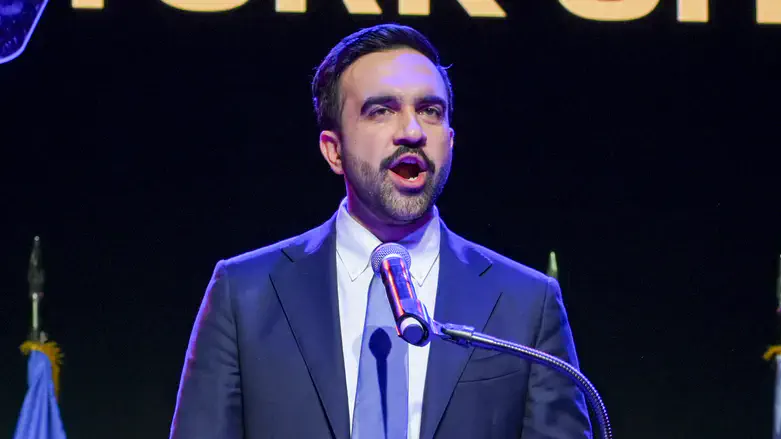
'Show up for Jews too': Jewish group hits back at Mayor Mamdani - Elad Benari


by Elad Benari

Jewish Community Relations Council of New York criticizes Mayor Zohran Mamdani for condemning Israel’s interception of the Global Sumud Flotilla while remaining silent on antisemitic incident in Brooklyn.


Zohran Mamdani
Zohran Mamdani                                                                             Liri Agami/Flash 90

The Jewish Community Relations Council of New York on Friday hit back at New York City Mayor Zohran Mamdani, after he criticized Israel for intercepting a flotilla that was planning to breach the naval blockade of the Gaza Strip.

Mark Treyger, CEO of the organization, ripped Mamdani for criticizing the flotilla interception while remaining mum about an antisemitic outburst this week at the Park Slope Food Coop in Brooklyn.

“This week, it was reported that Jewish New Yorkers were subjected to vile antisemitism at a prominent Brooklyn institution…conduct that likely violates state and local human rights laws and warrants public attention and a response from your administration, including the NYC Commission on Human Rights. Yet I have not seen a word from City Hall about that incident," wrote Treyger.

“Leadership in New York requires the ability to show up consistently for all communities, especially when hate targets them here at home," he pointed out.

“Foundational to advancing any mayoral agenda is ensuring that New Yorkers of every background feel seen, heard, and protected by their mayor, which includes Jewish New Yorkers," stated Treyger.

Mamdani on Thursday criticized Israel’s arrests of activists aboard the Global Sumud Flotilla, calling the arrests unlawful and a violation of international law.

“Last night, Israeli forces intercepted and boarded a humanitarian aid flotilla bound for Gaza in international waters off the coast of Greece - unlawfully detaining more than 175 people, including several New Yorkers," Mamdani wrote in a post on social media.

“My team has been in direct contact with State and Federal partners as we work to confirm the whereabouts and conditions of these New Yorkers," he added.

Mamdani claimed, “This is a brazen violation of international law. Those detained must be released."

The Israeli Navy intercepted the Global Sumud Flotilla on Wednesday evening, finding - as in the cases of previous flotillas - that it was not carrying “humanitarian aid" for Gaza as its organizers had claimed.

Mamdani has long come under fire for his anti-Israel views. During his election campaign, he refused to disavow the phrase “globalize the intifada". He was also called out for criticizing Israel on October 8, 2023 - just one day after the Hamas massacre in southern Israel.

He has repeatedly accused Israel of war crimes in its battle against Hamas in Gaza, and has vowed to arrest Prime Minister Benjamin Netanyahu if he visits New York City.

Mamdani then caused an uproar on his first day in office when he cancelled executive orders related to Israel, which were issued by his predecessor, Eric Adams.

The move cancelled an order signed by Adams in June of 2025 formally recognizing the International Holocaust Remembrance Alliance’s (IHRA) working definition of antisemitism.

Another executive order which was cancelled prohibited mayoral appointees and agency staff from boycotting and disinvesting from Israel.

Mamdani has faced multiple antisemitism controversies since taking office. A recent report indicated that Mamdani's wife, Rama Dawaji, liked several social media posts that praised or appeared supportive of Hamas’s October 7, 2023, massacre.

Last month, Mamdani was introduced at a Ramadan event by a man who called for Hamas to bomb Tel Aviv. 


Elad Benari

Source: https://www.israelnationalnews.com/news/426418

Follow Middle East and Terrorism on Twitter

The Beyachad gamble: Inside the Bennett-Lapid bid to topple Netanyahu - Shimon Sherman


by Shimon Sherman

[T]he Bennett-Lapid alliance is likely merely the first in a long series of political shifts and realignments that will become increasingly common as the elections approach. This particular merger has so far not shown a significant effect on the polling and has so far not pushed the opposition over the 61-seat finish line

 

Former Prime Ministers Naftali Bennett (left) and Yair Lapid and hold a press conference in Herzliya announcing their joint list named “Together” ahead of upcoming elections, April 26, 2026. Photo by Chaim Goldberg/Flash90.

On April 26, former Prime Ministers Naftali Bennett and Yair Lapid announced the merger of the “Bennett 2026" and “Yesh Atid” factions. Speaking from identical podiums at the Dan Accadia Hotel in Herzliya, the two leaders launched a unified electoral list named “Together” (Beyachad). Under the new structural arrangement, Bennett assumes the top position on the Knesset candidates slate, with Lapid ceding his leadership role to take the No. 2 spot.

The initial policy platform introduced during the evening press conference centered on institutional reform. Immediately stated policy goals included the establishment of a State Commission of Inquiry into the October 7 attacks, the imposition of an eight-year term limit for the office of the prime minister, and the implementation of a universal conscription law.

Bennett framed the alliance as a step in overcoming increased polarization in Israel. “The era of division is over,” he declared in his speech. He also positioned the new party as the key to removing Prime Minister Benjamin Netanyahu from office. “After 30 years, it is time to part with Netanyahu and open a new chapter for Israel,” Bennett said.

Lapid positioned his forfeiture of the top position as a necessary concession to secure a victory over Netanyahu’s coalition. “To win the elections, the entire Israeli center must rally behind Naftali Bennett,” Lapid proclaimed.

The announcement of the Bennett-Lapid merger sparked swift and polarized reactions across the Israeli political spectrum.

Within the opposition bloc, reactions ranged from optimism to caution.

Yashar party leader Gadi Eisenkot welcomed the alliance as a step toward their “shared goal” of forming a new government. However, he maintained his political independence, warning that structural reorganization alone was insufficient: “For this victory to happen, we need to bring in more votes; that is our only test. Every union must be judged by that.”

Yisrael Beytenu chairman Avigdor Liberman also praised the move, wishing the new slate success while emphasizing the bloc’s primary objective, saying, “We must remember that the goal is to replace the October 7 government.”

On the opposition’s left flank, The Democrats chairman, Yair Golan, embraced the development. He stated he favored “every unification in the bloc.”

Despite the positive reception of the announcement on the center-left, some analysts view the merger as a tactical misstep. Professor Gideon Rahat, senior fellow at the Israeli Democracy Institute and professor of political science at the Hebrew University of Jerusalem, noted the risk of presenting a single target for the incumbent. “Strategically, I’m not sure that this is the smartest move, because Netanyahu is very good when it comes to one-on-one campaigning. It’s an advantage if he has a clear opponent,” Rahat told JNS.

On the right, the incumbent coalition reacted with uniform hostility. The Likud party released a statement tying the new list to Arab factions, asserting, “In any case, Bennett and Lapid will go with the terrorist-supporting Muslim Brotherhood alliance again.” Finance Minister Bezalel Smotrich dismissed the realignment entirely, remarking, “I’m not telling the left how to split their votes.”

Foundations of the merger

The 2026 Beyachad merger represents the third major structural alignment between Naftali Bennett and Yair Lapid, built upon a long history of collaboration.

Bennett and Lapid have already allied twice to reshape Israel’s government, setting aside ideological differences to consolidate power. In their 2013 “Pact of Brothers,” they refused to join Prime Minister Netanyahu’s coalition independently, forcing a joint entry. This strategic maneuver successfully excluded ultra-Orthodox factions from the government and secured the Finance Ministry for Lapid. Later, in 2021, following four inconclusive elections, they engineered an eight-party coalition spanning far-left, right-wing and Islamist factions. To secure right-wing backing and finalize the coalition, Lapid pragmatically agreed to a rotation agreement, allowing Bennett to serve as prime minister first, while Lapid became alternate prime minister and foreign minister.

The current alliance also brings several pragmatic benefits to both Lapid and Bennett. Before the merger announcement, aggregate polling indicated that Yair Lapid’s Yesh Atid party was facing a severe electoral decline, projected to fall from its 24 mandates in the outgoing Knesset to between four and seven seats, leaving it hovering near the electoral threshold (3.25%, or four seats).

Dr. Gayil Talshir from the Department of Political Science at the Hebrew University noted that this decline drove the timeline. “The initiator of the move is actually Lapid, because Lapid was losing ground,” Talshir told JNS. “In last week’s polls, he got between six and seven mandates, which means that he could have very quickly fallen below the threshold.”

Conversely, Bennett consistently emerged in polls as a highly viable candidate; however, he faced a critical logistical deficit. Having sat out the previous elections, he possessed zero outgoing seats, no active party infrastructure, and no state campaign funding.

The Israeli party financing law distributes state campaign funds through “funding units” tied directly to a party’s representation in the outgoing legislature. With the Central Elections Committee allocating 593 million shekels (about $200 million) for the execution of the 2026 elections (due to be held by Oct. 27), Yesh Atid’s 24 outgoing seats provide a massive financial incentive for the merger.

In this sense, Lapid traded the paramount leadership position to ensure the political survival of his faction, while Bennett gained immediate access to a state-funded campaign apparatus and Yesh Atid’s established, disciplined national field organization. Rahat observed that “one is bringing the votes, the other is bringing the money and the organization. That’s one of the reasons why they are running together.”

Strategically, the alliance also serves as an important measure to consolidate opposition leadership against internal rivals, most notably former IDF Chief of Staff Gadi Eisenkot. Before the Bennett-Lapid merger, Eisenkot’s newly formed Yashar party was actively gaining in the anti-Netanyahu centrist vote, consistently polling at 14 to 15 mandates. Bennett and Eisenkot were competing for the same demographic: security-focused, centrist voters disillusioned with the incumbent government but structurally unwilling to vote for left-wing parties.

By absorbing Lapid’s residual base, Bennett immediately eclipsed Eisenkot’s polling numbers, reestablishing himself as the dominant, hegemonic figure within the opposition bloc. This consolidation serves a crucial perceptual purpose for the electorate.

Talshir explained that “even though in Israeli politics, what is important is getting to the majority out of 120 seats, not the biggest party, the psychological effect is that people want to vote for the winner, which pushes them to the bigger party.”

The urgency of unifying the center is reflected in Lapid’s readiness to make further strategic concessions. He notified Bennett that he was willing to drop to the number No. 3 position on the joint electoral slate if that demotion would guarantee the absorption of Eisenkot’s Yashar faction into the broader Beyachad merger.

While ensuring the Beyahad party dominates the opposition bloc, Bennett has also attempted to minimize bleeding votes from his right flank toward Likud. His alliance with Lapid poses a risk, as Lapid’s support for a Palestinian state might cross a red line for anti-Netanyahu Likudniks who might have sought shelter in Bennett’s party. During their joint campaign event, Bennett assured voters, “We will safeguard the lands of our country and will not hand over a single centimeter to the enemy.” The new party’s color scheme, Blue, White and Green, is also a callback to Bennett’s old Jewish Home party, which was once a bastion of the Religious Zionist movement.

To further sanitize the Beyachad list for right-wing Likudniks, Bennett has promised not to form a coalition with Arab parties. It is important to note that Bennett broke a similar promise made during the 2021 campaign. However, this was only done after Netanyahu’s Likud tried and failed to form a similar alliance.

Impact of the merger

The immediate electoral impact of the Beyachad merger is inconclusive, according to Israel’s primary polling institutions, generating two mutually exclusive models of the 2026 political map.

Most surveys, such as the Kantar or Midgam polls, conducted in the aftermath of the merger, indicate that Beyahad and Likud are still running neck and neck, with most placing them within 1-2 Knesset seats of each other, at around 26 each. Almost every one of these polls further indicates that Bennett and Lapid have 1-2 fewer seats combined than they did separately. Despite this, the new party has effectively left Eisenkot’s Yashar party in the dust with a 7-14 seat lead according to most polls.

However, beneath this topline opposition success, the underlying math remains stagnant. Only one poll (Yossi Taktika) of the eight conducted since the merger has the Jewish opposition with a 61-seat majority, the bare minimum needed to form a coalition. Almost all other polls have neither the coalition nor the opposition able to form a government without the Arab parties. In this sense, the data indicate that the alliance has largely reorganized existing opposition votes into a larger central vessel rather than extracting new defectors from Netanyahu’s incumbent coalition, which remains highly stable at around 50 seats.

This reality is not without precedent. Rahat emphasized the fallacy of unified lists, stating, “It’s very important not to think that if you are united, you’re going to get more support. This is not true. The elections in which we had the Bennett government, they actually ran separately, but all passed the electoral threshold, so they got more seats.”

However, an inverse reality emerges from the data published by Shlomo Filber and his Direct Polls. Unlike the randomized phone sampling employed by traditional firms such as Midgam, Filber relies on SMS text messages and digital respondent panels, leading to significantly different results from other surveys. Filber’s polling company has had Netanyahu’s coalition with a dominant 64-66 seats since August 2025 and above the minimum 61 seats since September 2024. Filber polls in the aftermath of the merger actually indicate that the move had a significant impact on the electoral map, with Bennett and Lapid gaining six seats due to the merger relative to the last poll before the union. However, the Filber poll still has Netanyahu’s coalition at a comfortable 64 seats, with most of Bennett’s new votes coming from Eisenkot.

The accuracy of the Filber polls data has been frequently questioned due to his long-term affiliation with Netanyahu. As a former director-general of the Communications Ministry under Netanyahu and an ongoing state witness in the prime minister’s Case 4000 corruption trial, he is seen as a political operator.

Talshir was blunt in her assessment, stating, “Filber was and is Netanyahu’s right hand ..., his poll numbers are part of the campaign to boost Likud morale.”

However, Filber also has a well-established track record of accurately calling elections. During the 2022 election cycle, Direct Polls was virtually the only major firm to accurately detect the underlying right-wing vote mobilization that delivered Netanyahu’s 64-seat victory, while traditional pollsters consistently and incorrectly projected a 60-60 parliamentary deadlock.

Talshir observed that there is methodological merit to his numbers, noting, “Filber is right in several of his assertions. ... We know that closer to the election, there is an effect of going back home. With people who are traditionally Likud voters, and now say that they may vote for the opposition, the nearer we get to the election, the more chances that they will change their mind.”

Furthermore, she added, “Filber is saying, and rightly so, that the other pollsters don’t have a good feeling of what will happen with the ultra-Orthodox vote, because they always give the ultra-Orthodox fewer seats than they actually get.”

The future of the electoral map

The 2026 electoral map remains highly volatile and is likely to change significantly before the vote. According to Channel 12, a breakaway faction dubbed “Likud Bet” is actively considering breaking off from Likud. This initiative, spearheaded by traditional, institutional right-wing figures, including sitting Likud member of Knesset Yuli Edelstein, shows mounting dissatisfaction with Netanyahu’s leadership in the party.

Furthermore, a broad spectrum of smaller parties, including Benny Gantz’s Blue and White, Bezalel Smotrich’s Religious Zionism and Yoaz Hendel’s newly formed “The Reservists,” are consistently failing to secure the minimum required votes to enter the Knesset while holding several seats’ worth of support between themselves. This threshold crisis practically guarantees an impending wave of secondary mergers before the final party lists are submitted.

In this sense, the Bennett-Lapid alliance is likely merely the first in a long series of political shifts and realignments that will become increasingly common as the elections approach. This particular merger has so far not shown a significant effect on the polling and has so far not pushed the opposition over the 61-seat finish line, though it likely did secure Bennett’s dominant position in that camp. Ultimately, beyond factional positioning, the real impact of this and all other mergers can only be evaluated based on two principles: whether it saved a party from falling below the electoral threshold, and whether it brought in votes from the opposite camp. 


Shimon Sherman is a columnist covering global security, Middle Eastern affairs, and geopolitical developments. His reporting provides in-depth analysis on topics such as the resurgence of ISIS, Iran’s nuclear ambitions, judicial reforms in Israel, and the evolving landscape of militant groups in Syria and Iraq. With a focus on investigative journalism and expert interviews, his work offers critical insights into the most pressing issues shaping international relations and security.

Source: https://www.jns.org/analysis/the-beyachad-gamble-inside-the-bennett-lapid-bid-to-topple-netanyahu

Follow Middle East and Terrorism on Twitter

Thursday, April 30, 2026

Trump rejects proposal to open Strait of Hormuz, says Iran is 'choking like a stuffed pig' - Kevin Killough


by Kevin Killough

Trump had previously stated that the country's oil infrastructure was at risk of exploding due to the lack of storage for its oil production, which the blockade prevents from leaving the country.


President Donald Trump won't accept a proposal that Iran put forth to end the war because it doesn't include a key agreement that the president demands. 

Iran offered to end its blockade of the Strait of Hormuz, but the agreement would leave negotiations on the issues of its nuclear program for a later date. 

Trump told Axios on Wednesday that won't do. 

He said the U.S. blockade is "somewhat more effective" than a bombing campaign. Unnamed sources told Axios he hadn't yet ordered strikes, but a meme the president posted Tuesday morning suggests the possibility is on the table. 

"They are choking like a stuffed pig," Trump said. "And it is going to be worse for them. They can't have a nuclear weapon." 

The president had previously stated that the country's oil infrastructure was at risk of exploding due to the lack of storage for its oil production, which the blockade prevents from leaving the country. 

Trump alsos said Iran wants to lift the blockade, but he won't do it because he doesn't want Iran to have a nuclear weapon.  


Kevin Killough

Source: https://justthenews.com/politics-policy/all-things-trump/trump-rejects-proposal-open-strait-hormuz-says-iran-choking

Follow Middle East and Terrorism on Twitter