The "Middle East and Terrorism" Blog was created in order to supply information about the implication of Arab countries and Iran in terrorism all over the world. Most of the articles in the blog are the result of objective scientific research or articles written by senior journalists.
From the Ethics of the Fathers: "He [Rabbi Tarfon] used to say, it is not incumbent upon you to complete the task, but you are not exempt from undertaking it."
There were “heat risk” forecasts in major cities, including New York, Washington, Philadelphia, Pittsburgh and Atlanta, with some facing the most extreme risk category through Saturday.
Much of the country is experiencing a potentially dangerous heat wave
as the nation prepares for a very special Fourth of July, marking the
250th anniversary of the United States.
Over 160 million people, according to the New York Times,
from Missouri to Maine and south to Mississippi, live in locations that
felt dangerous levels of heat on Thursday, citing the National Weather
Service. There were “heat risk” forecasts in
major cities, including New York, Washington, Philadelphia, Pittsburgh
and Atlanta, with some facing the most extreme risk category through
Saturday.
CNN is reporting that “A dangerous heat wave is
tightening its grip on the East Coast and straining the electric grid
as people seek to cool off in their air conditioned homes and
businesses. The worst conditions are now underway, with many records
already broken, as millions prepare to celebrate the Fourth of July
outdoors.”
The Times reported that the temperature in Central Park reached 100
degrees by 2 p.m., tying its daily record set in 1966. “LaGuardia
Airport in Queens hit 104, surpassing its daily high of 101 from 1966.
It was the same story at John F. Kennedy International Airport, where
the high was 102, breaking the same-day record of 101, also from 1966.”
America 250 has become another front in the culture war, exposing a fundamental divide over patriotism and American exceptionalism.
Earlier this week, I walked
around the Great American State Fair on the National Mall in Washington,
DC. Despite the heavy negative press coverage, I thought it was
impressive and inspiring.
The event boldly portrays American patriotism and
exceptionalism across our great nation to celebrate our country’s 250th
birthday. It runs from June 25 through July 10, featuring more than 150
exhibits from all 56 U.S. states and territories, along with businesses,
innovators, and civic organizations. There is a towering Ferris wheel, a
stage with live music and performances, family-friendly attractions,
military ensembles, flyovers, and daily cultural programming. An
innovation center showcases booths from SpaceX and NASA.
A notable contrast: while the people of France and
several other European countries are suffering from the summer heat
because of their leaders’ environmental extremism, which hates air
conditioners, all 150 exhibits at the Great American State Fair are
air-conditioned.
On July 4th, the celebration will culminate in an
epic Independence Day event featuring the world’s largest fireworks show
over the nation’s capital.
This is just one part of President Trump’s bold
America 250 initiative. He also hosted the UFC Freedom 250 event on the
White House South Lawn—a high-energy night of championship fights
watched cage-side by the president himself alongside his family and UFC
CEO Dana White. And in August, the Freedom 250 Grand Prix will bring
IndyCar racing to the streets of Washington, near the National Mall—the
first motor race of its kind in the nation’s capital, showcasing
American speed, ingenuity, and the thrill of competition around our
iconic monuments.
These large-scale, energetic spectacles are classic
Trump. That is why his many unhinged critics have viciously attacked
these patriotic events saluting our nation’s 250th birthday.
At its core, much of the backlash reflects a deeper
disagreement. Trump’s events celebrate love of country, national pride,
and American achievement—ideas that directly challenge the strain of
anti-American sentiment common on the political left. Many critics view
the United States not as history’s greatest force for peace, prosperity,
and liberty, but as a flawed or villainous power. They tend to see
patriotism itself as problematic.
This perspective was evident in prior
administrations. Under President Biden, aggressive DEI initiatives
reshaped military policies, contributing to a recruitment crisis. Trump
reversed those policies and restored merit-based standards, and military
enlistment has rebounded strongly. Similarly, President Obama’s
“apology tour,” when he traveled the globe to apologize for America’s
supposed history of arrogance and immoral policies, and Obama’s public
skepticism toward American exceptionalism treated our nation’s founding
principles and achievements as sources of shame rather than of pride.
In education, many parents grew concerned about
curricula that emphasized America’s flaws while downplaying the nation’s
founders, the sacrifices of its military, and the principles that have
made the country exceptional. Education Secretary Linda McMahon is now
advancing reforms aimed at closing the federal Department of Education,
returning more authority to states and localities, and promoting
curricula that focus on America’s heritage and accomplishments.
President Trump is restoring patriotism and
traditional values. His America 250 celebration and the Great American
State Fair are central parts of this ambitious effort to reconnect
Americans with the story of our nation’s greatness. The fair does not
lecture or divide—it invites families to celebrate the people,
traditions, innovations, and spirit that make America the greatest
nation on Earth.
Despite the left’s predictable whining and the
media’s relentless negativity, the vast majority of the American people
are with Trump. They want to see their country honored, not torn down.
They want their children to grow up proud of the United States, not
ashamed of it.
Take your family to the Great American State Fair in
DC this week. Bring your children. Ride the Ferris wheel. Explore the
pavilions. Watch the performances. On the Fourth of July, stand together
and witness the historic fireworks that will light up the sky over the
National Mall.
This is what a confident, unapologetic America looks
like. This is Trump and America 250—and it is exactly what our country
needs right now.
Fred Fleitz previously served as Chief of Staff
of the Trump National Security Council. He is vice chair of the America
First Policy Institute. He is the author of North Korea, Nuclear Brinkmanship, and the Oval Office, which was just released by Texas A&M Press.
"[N]umerous of the so-called UN human rights experts who get quoted every day by Reuters, the New York Times and other major media... are taking money direct funding from China, Russia and Qatar. " — UN Watch Executive Director Hillel Neuer, May 28, 2026.
As of 2021, 140 judgments of the European Court of Human Rights referred to reports by UN special rapporteurs.
"[Special Rapporteurs] are treated by leading institutions as
neutral experts and are regularly invited to address prestigious
international forums and academic institutions. Significantly, the UN
affiliation enables them to leverage that authority across social media
and international media appearances, where their statements are
presented as reflecting the voice or expertise of the United Nations." —
From the UN Watch report, "How Politicized UN Rapporteurs are
Subverting Human Rights."
"Neutral"?! This inversion of reality is a huge problem. What so many of these UN rapporteurs do could not be more sordid.
Special rapporteurs Ben Saul and Alena Douhan, for instance, have both received generous funding from Communist China.
"[N]umerous of the so-called UN human rights experts who get
quoted every day by Reuters, the New York Times and other major media...
are taking money direct funding from China, Russia and Qatar. I'll give
a few examples.... We know the extreme case of Francesca Albanese who's
the de facto spokesperson for Hamas, spreads Hamas lies. There's no
accountability. We made complaints. The chair of the UN Committee is
himself a human rights expert who himself took $50,000 from China." — UN
Watch Executive Director Hillel Neuer, May 28, 2026.
"No Palestinian applauded rape in Gaza. No independent
investigation found that rape took place on the 7th of October," Alsalem
lied in November 2025 -- even though UN Special Representative of the
Secretary-General on Sexual Violence in Conflict Pramila Patten released
a 23-page report in March 2024, which concluded that there was "clear
and convincing" evidence of systematic sexual violence committed by
Hamas operatives against Israeli women both on October 7 (much of it
filmed by the terrorists themselves) and later against hostages held in
the Gaza Strip.
The contents of UN Watch's report have received no coverage in mainstream media.
A recent report by UN Watch, "How Politicized UN Rapporteurs
are Subverting Human Rights," found that 13 of the "special
rapporteurs" of the United Nations Human Rights Council, supposedly the
UN's top human rights experts, "have abandoned the role of independent
monitors and are advancing politicized agendas that erode the
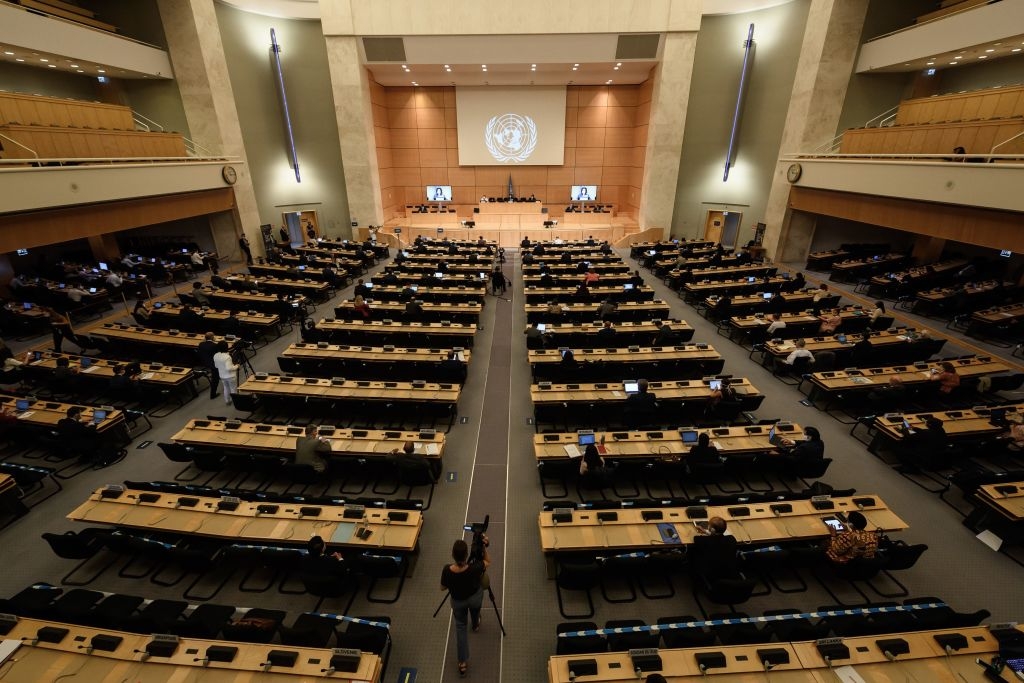
credibility of the international human rights system." Pictured: The UN
Human Rights Council in session on June 30, 2020 in Geneva, Switzerland.
(Photo by Fabrice Coffrini/AFP via Getty Images)
A recent report
by UN Watch, "How Politicized UN Rapporteurs are Subverting Human
Rights," found that 13 of the "special rapporteurs" of the United
Nations Human Rights Council, supposedly the UN's top human rights
experts, "have abandoned the role of independent monitors and are
advancing politicized agendas that erode the credibility of the
international human rights system."
This report matters; the UN's special rapporteurs wield substantial influence. According to the report:
"While their findings are not legally binding, they can
significantly shape public debate, influence UN discussions, and inform
how governments, media, and civil society interpret a wide range of
policy issues and alleged human rights violations. Their reports are
widely treated as credible and authoritative by institutions such as the
International Court of Justice and the International Criminal Court, as
well as by governments, media outlets, universities, and civil society
actors worldwide."
As of 2021, 140 judgments of the European Court of Human Rights referred to reports by UN special rapporteurs. The number is staggering. The report continues:
"[Special Rapporteurs] are treated by leading
institutions as neutral experts and are regularly invited to address
prestigious international forums and academic institutions.
Significantly, the UN affiliation enables them to leverage that
authority across social media and international media appearances, where
their statements are presented as reflecting the voice or expertise of
the United Nations."
"Neutral"?! This inversion of reality is a huge problem. What so many
of these UN rapporteurs do could not be more sordid: Almost all of them
harbor what UN Watch calls "systemic anti-Western ideological bias,"
many of them explicitly refrain from criticizing the world's most
authoritarian states, and they are obsessed with demonizing Israel. Many
of them have been bought by the world's most authoritarian states.
Special rapporteurs Ben Saul and Alena Douhan, for instance, have both received generous funding from Communist China.
According to UN Watch Executive Director Hillel Neuer:
"[N]umerous of the so-called UN human rights experts who
get quoted every day by Reuters, the New York Times and other major
media... are taking money direct funding from China, Russia and Qatar.
I'll give a few examples. Ben Saul, he's a law professor at the
University of Sydney. According to UN documents in 2024 he received
$150,000 from China for his activities. And surprise, surprise, he's the
expert on counterterrorism. He's never said a word to condemn China for
putting a million Uyghur Muslims into camps in the name of
counterterrorism. He hadn't... a word to say about that. Instead, he
attacks Israel and America every single day.
"There's another UN expert, her name is Alena Douhan. She received
$1.3 million from China, Russia and Qatar. And guess what? She wrote
reports praising shielding, apologizing for China, Russia and Qatar. She
went on a Chinese-organized video saying everything is fine with the
Uyghurs. She visited China to say everything is fine with the Uyghurs,
blame the West. And she took $1.3 million.... Extreme ideological bias
in some cases financial corruption in other cases it's an ideological
extremism with no accountability."
Francesca Albanese, "Special Rapporteur on the Occupied Palestinian
Territories," is one of the most extreme examples of how rotten the UN
human rights system has become. According to Neuer:
"We know the extreme case of Francesca Albanese who's the
de facto spokesperson for Hamas, spreads Hamas lies. There's no
accountability. We made complaints. The chair of the UN Committee is
himself a human rights expert who himself took $50,000 from China."
Reem Alsalem, a Jordanian woman who is "Special Rapporteur on
Violence Against Women and Girls," is also among the most problematic
human rights "experts" of the UN. Nearly three years after October 7,
she continues to deny
that Israeli women were sexually assaulted and raped by Hamas and other
Gazan terrorists during their invasion of southern Israel on October 7,
2023. Not only that, but in a March 2024 interview, Alsalem even claimed
with a straight face that she had not heard about missiles being fired
on Israeli cities by Hamas from the Gaza Strip and Hezbollah from
Lebanon.
"No Palestinian applauded rape in Gaza. No independent investigation found that rape took place on the 7th of October," Alsalem lied
in November 2025 -- even though UN Special Representative of the
Secretary-General on Sexual Violence in Conflict Pramila Patten released
a 23-page report in March 2024, which concluded that there was "clear
and convincing" evidence of systematic sexual violence committed by
Hamas operatives against Israeli women both on October 7 (much of it filmed by the terrorists themselves) and later against hostages held in the Gaza Strip.
In April, Amsalem repeated
her lies, saying that the sexual violence against Israelis on October 7
constituted "misinformation" used by Israel to "justify genocide."
Amsalem received
$70,000 from Saudi Arabia in 2024, and the next year $100,000 from the
Gulf Cooperation Council, which comprises Saudi Arabia, Qatar, Kuwait,
Bahrain, Oman, and the United Arab Emirates. Last month she defended
receiving the funds by claiming "that the contributions were disclosed
under UN transparency rules, administered by the UN human rights office,
and did not influence her work," according to UN Watch.
Alice Jill Edwards, "Special Rapporteur on Torture and Other Cruel,
Inhuman or Degrading Treatment or Punishment," on the other hand, has
been praised by UN Watch for her efforts to document and speak up about
the atrocities committed by Hamas on October 7, 2023. Unfortunately, her
colleagues tried to bully her into silence. According to UN Watch:
"U.N. special rapporteur Alice Edwards—one of just two
experts to sign a statement on the October 7 atrocities—says: 'There was
a campaign [by other rapporteurs] to prevent that letter going out.
Weeks of being bullied and deterred from writing it, telling me
everything in it was false.'"
Speaking on a panel at University College London on June 9, 2026, Edwards said:
"That letter is a set of allegations of what happened on
October 7; it was only signed by the Special Rapporteur on summary
extrajudicial killings and me. Some other special rapporteurs and
working groups had wanted to sign on, but they also had been bullied by
others not to sign on, and there was this concerted effort for this
letter not to put on record some allegations that had been received.
There was a campaign to prevent that letter from going out. There were
weeks of being bullied and deterred from writing it and telling me that
everything in it was false."
Edwards also visited the Israeli communities that had been attacked, met hostage families, and watched the footage filmed
by the terrorists themselves during the massacre. "I understand I'm the
only Special Rapporteur who has ever requested to go to the Israeli
mission to see the video and the documented evidence," she said.
The contents of UN Watch's report have received no coverage in
mainstream media. No human rights NGOs have taken the least interest,
nor has any politician, except for one: Lord Alton of Liverpool, who is chair of the UK Parliament's Joint Committee on Human Rights, asked
the UK government for its assessment of the report's damning findings
about the 13 UN special rapporteurs and whether it supports UN Watch's
calls to hold the them accountable and ban outside funding for them. He
received a response that was more than embarrassing, but extremely
telling about the kind of governments that have ascended to power in the
West. Baroness Chapman of Darlington, Minister of State (Development) answered in a written statement:
"The UK continues to welcome the crucial role played by
the United Nations' network of special rapporteurs and experts in
several countries and regions around the world, as well as on specific
issues of concern. However, in order to maintain the confidence of the
international community in those roles, it is important that each
rapporteur or expert upholds the highest standards of independence and
objectivity, and we will always make clear when we believe any
individual has fallen short of those standards."
Despite the looming 2026 midterm
elections and the growing list of congressional responsibilities, a
persistent group of Republicans are vowing to obstruct all U.S. House
business until leadership effectively forces the Senate to take up a
voter ID bill.
Led by Rep. Anna Paulina Luna, R-Fla., the conservative House members
have twice derailed what many consider must-pass bills by trying to use
them as a vehicle for advancing Republicans’ SAVE America Act.
The House recessed early Wednesday after the group tanked a rule to advance the National Defense Authorization Act,
a critical Pentagon funding authorization bill. As of Thursday, the
hardliners say they won’t abandon their strategy, no matter the
collateral damage, when the chamber returns on July 13.
“We are coming up on America’s 250th birthday, and we have feckless
leadership in the Senate refusing to pass the SAVE America Act,” Luna
posted on social media Thursday, lambasting colleagues who “are more
concerned about putting Senators in a ‘tough spot’ on the NDAA than
passing SAVE America.”
“So yes, 1,000%, the rule will go down until you attach the SAVE
America Act. I don’t care who in this chamber hates me for it,” Luna
said, adding that she is “not the only one” with the same intentions.
“We should be doing everything to pass SAVE America. Add it to
reconciliation. Add it to NDAA. Add it to FISA. Add it to every
must-pass bill.”
As Senate Majority Leader John Thune, R-S.D., has made clear numerous
times, however, the House lawmakers’ efforts to force the upper chamber
to pass the bill are mathematically destined to fail.
Senate Democrats have unanimously made clear that they will
filibuster any legislation, no matter how critical, that contains
provisions from the SAVE America Act, which they deem an act of “voter
suppression.”
The bill, currently languishing in the Senate after passing the
House, mandates that Americans display a valid ID to vote in federal
elections and requires people to present proof of citizenship when
registering to vote.
It also necessitates in-person voter registration for federal
elections and directs states to remove all noncitizens from their voter
rolls.
Democrats argue that the in-person registration and proof of
citizenship requirements would unduly burden Americans who are disabled,
live in remote areas, or don’t have access to the correct
documentation.
Under the legislation, people would not be able to register to vote
with only their driver's license, since noncitizens can obtain that.
They would instead need to present documents proving U.S. citizenship,
such as a birth certificate or U.S. passport.
Republicans counter that for Americans without access to
documentation, the bill allows potential voters to issue a sworn
attestation, under penalty of perjury, to their status as a U.S.
citizen.
Once their state verifies their citizenship and confirms their
eligibility, those Americans’ votes would be counted. Existing law for
voter registration in federal elections does not require the state to
officially review or verify citizenship attestations, which Republicans
argue is an election security risk.
President Donald Trump has supported – and in some cases instigated
– Republican rebellion against party leadership over the SAVE America
Act, which he believes will make voter fraud nearly impossible.
Congress has only eight scheduled workdays until recessing again, this time for the entire month of August.
The legislative backlog lawmakers will then confront – mere weeks
before early voting for the midterm elections begins in some states –
includes the NDAA, the federal highway bill, the federal farm bill, FISA
702 reauthorization, and the 12 annual government funding bills.
LEGAL AFFAIRS: Israel now needs to build an entire temporary justice system around a crime that cannot be reduced to a single file, defendant, scene, or legal theory.
There
has not yet been a full accounting for the events of that day in a
criminal courtroom, but a special law has been enacted, over NIS 1
billion approved, and work has begun at Atarot in northern Jerusalem,
where a dedicated military tribunal is slated to be built.
Construction
is only one part of a project in which the harder work is this:
Prosecuting hundreds of defendants for crimes across dozens of
locations.
This
will need to be done while using a vast and developing record of
evidence, a potentially enormous witness pool, classified materials,
security arrangements, and a legal framework with few domestic
parallels.
The
question is, how can the state put the October 7 perpetrators on trial
without overwhelming the courts, abandoning victims and families, or
collapsing under the obligations of a criminal proceeding?
The first trials are not expected to open soon. The Jerusalem Post understands that the current working assumption is that they will not begin before 2028.
In
other words, the task is to build an entire temporary justice system
around a crime that cannot be reduced to a single file, defendant,
scene, or legal theory.
Protesters commemorate 1,000 days since the October 7 Massacre on July 2, 2026. (credit: Chen G. Schimmel)
A framework – not yet a trial
The Knesset approved the October 7 prosecution law in May, creating a special military court in Jerusalem to hear the cases.
This
law covers alleged acts committed between October 7, 2023, and October
10, 2023, as well as offenses allegedly committed against hostages held
in Gaza after that period.
It
was written to allow prosecution under existing criminal statutes and
special offenses – including crimes against the Jewish people, crimes
against humanity, war crimes, murder, rape, abduction, and looting.
It also gives the tribunal, in relevant cases, the authority to impose the death penalty under the legal framework available to it.
The
court will sit in panels of three judges. At least one judge on each
panel must be a president of a military court or a senior district court
judge brought into the military framework.
Further,
while any first-instance judgment may be appealed, a death sentence
would trigger automatic appellate review before a panel headed by a
retired Supreme Court justice, even if the defendant does not file an
appeal.
The law is designed in such a way that it takes into consideration that these are not ordinary terrorism cases.
Custom-made court
In
other words, the court must be secure enough for hundreds of high-risk
defendants, large enough for parallel proceedings, equipped for vast
digital material, and structured for victims and bereaved families who
will have to revisit October 7.
The Post
understands that the planned complex in Atarot is meant to include nine
courtrooms and be able to support up to 15 judicial panels.
A
separate unit is expected to be created within the military court
system, with dedicated judicial, prosecutorial, administrative,
security, technological, and victim-support functions.
On
June 18, Constitution, Law, and Justice Committee chairman Simcha
Rothman said bulldozers had begun preparing the Atarot site. The
announcement marked the first public sign that the law had crossed into
the implementation stage.
Atarot
is close to the Kalandiya crossing and the West Bank. Rothman has said
the location was selected partly to address defense counsel and
prison-transport logistics.
It is the Post’s
understanding that the three major tracks now moving in parallel are
the physical construction of the complex, the creation of a
victim-and-witness system, and the completion and transfer of case files
from the State Attorney’s Office to the military prosecution.
From investigation to military prosecution
The
State Attorney’s Office said in response to a query that it established
a dedicated team as early as October 2023, led by its Southern District
prosecution division, and reinforced by prosecutors from other
districts.
The
team, it said, has been accompanying the investigation into the scenes,
suspects, victims, and events, while preparing legal opinions and
documents required for future proceedings.
In
February, following discussions led by Attorney-General Gali
Baharav-Miara with chief prosecutor Amit Aisman and the military
advocate-general, it was decided that the military prosecution would
handle the cases to completion before the special court.
The Post
understands that the full files have not yet been moved to the military
prosecution. However, a team dealing with the special tribunal began
working already in February, before the final legislation was passed.
It has spent the months since mapping the project’s personnel, infrastructure, procedural, and institutional needs.
The
government approved the budgetary framework for the effort in early
June, allocating more than NIS 1b. for 2026 through 2029.
These
funds are meant to cover not only the court complex, but prosecution
offices, an IDF headquarters facility, staffing, secure transportation,
communications and broadcasting systems, medical services, and other
operational costs.
The
hostage issue was a central constraint on the timing of the cases.
While Israelis remained held in Gaza, the state held off on indictments
amid concern that the suspects could be sought in a future hostage deal.
The
State Comptroller’s Office’s June report criticized the fact that no
October 7-related trial had begun, while noting that this concern had
delayed the process.
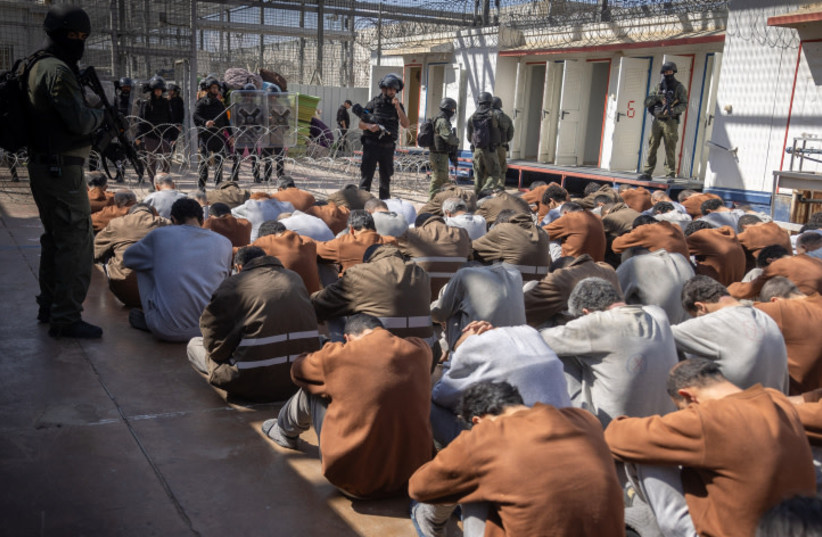
Hamas
terrorists who were caught during the October 7 massacre and during the
IDF operation in the Gaza Strip, seen at a courtyard in a prison in
southern Israel, February 14, 2024 (credit: Chaim Goldberg/Flash90)
What case is the prosecution actually trying to prove?
The first indictments will matter not only because of who appears in them, but because of the narrative they tell.
Maurice Hirsch, a former military prosecutor in the West Bank, said in an interview with the Post
that one of the prosecution’s earliest and most consequential decisions
will be which legal doctrine or doctrines it chooses to pursue.
This
would frame October 7 not only as a series of discrete crimes at
particular locations, but as a coordinated criminal enterprise carried
out by people acting together toward a shared criminal purpose.
If,
for example, the chosen doctrine is a locality-based one,
responsibility could turn principally on what prosecutors prove at a
specific kibbutz, road, home, or festival site.
Under
the Joint Criminal Enterprise doctrine, however, prosecutors could seek
to show that defendants who participated in the broader operation bear
responsibility beyond the precise place where they were apprehended or
the individual act they personally committed.
Which doctrine, or doctrines, are applied at the outset could set the tone and development of the trial.
Hirsch
said the public picture points strongly toward coordination – the scale
of the assault, simultaneous border attacks, weapons, maps,
preparations, and documents reportedly recovered in Gaza will likely all
be factors.
Whether
the evidence supports the use of the Joint Criminal Enterprise doctrine
to the criminal standard required in court is a different question. The
prosecution has not given any indication as to which doctrine direction
it is leaning towards.
That
choice will shape the number of indictments, the evidence disclosed,
the witnesses called, the judges and prosecutors needed, and whether
families must relive the same material in several courtrooms.
Locality-based
cases may be more manageable, and they can make it easier to connect to
particular victims and evidence, Hirsch explained.
Alternatively,
he added, they could produce many proceedings, so while a broader case
might better convey the attack’s coordination strategy, this would
demand proof linking people, planning, and acts across scenes.
The evidence problem
Prosecutors
will have to turn an unusually large and varied body of material into
evidence that can be tested in court: Physical evidence from the scenes,
statements by suspects, survivor and witness testimony, footage
recorded by perpetrators, digital records, and material collected during
military operations in Gaza.
The
challenge will be less the existence of material than the work of
organizing it, determining what can be used, disclosing it to defense
counsel, and tying it to particular defendants and alleged offenses.
On the flip side, the issue might run in the other direction in this case, as many of the victims were murdered.
The Post understands that the anticipated victim-and-witness apparatus is being planned around some 12,000 potential witnesses.
The
military prosecution will need to prepare for its involvement in the
proceedings as the indictments and court structure take shape.
Especially
stark in this regard is the issue surrounding sexual violence. Many
victims were murdered, and some scenes were destroyed or altered in the
chaos of the attack.
Meanwhile,
surviving witnesses may have seen only part of an incident. They may be
asked to testify about events that cannot be reconstructed through a
conventional single-victim, single-scene evidentiary model. This,
without even exploring the role trauma may play regarding the
experiences that can be triggered from such a recall.
In
its May report, the Civil Commission on October 7th Crimes by Hamas
Against Women and Children argued in favor of a cumulative evidentiary
model for sexual and gender-based crimes.
This
would pertain to preserved footage, cross-referenced testimony,
recurring patterns across sites, forensic material, and other records.
That
approach may be relevant to the eventual prosecutions, particularly
where victims were murdered, scenes were destroyed, and surviving
witnesses can testify only to fragments of what they saw.
Prosecutors
will still have to establish the evidence against particular defendants
and particular alleged offenses. Nevertheless, the report argued,
individual incidents can also be assessed within the wider criminal
context of the attack.
The
same tension runs through classified material. Hirsch noted that
prosecutors may face disputes over evidence that is too sensitive to
expose in open court.
That
can create litigation within the litigation: Arguments over whether
material can be disclosed, summarized, protected, or used at all without
damaging an intelligence source or method.
A trial must be built to last
After 1,000 days, the temptation is to measure the project by its visible milestones: A law, a budget, or a building site.
But the real measure will be whether the system can conduct proceedings that are credible and durable.
Hirsch’s
blunt warning is that speed will have limits. “If anyone thinks that
these trials are going to finish quickly, they’re simply deluding
themselves,” he said.
A
criminal prosecution of this scale takes time. The defense must receive
and examine evidence, preliminary claims must be heard, prosecutors
must choose what they can prove, and judges must decide disputed legal
and evidentiary questions.
Each
defendant is entitled to an individual defense, even when the alleged
crimes are among Israel’s most horrific, Hirsch noted.
He
said he fears it could take one to two years before any trial reaches
the point at which a defendant takes the stand – simply to file
indictments, transfer evidence, and complete preliminary stages.
Hirsch
also said the Knesset debates over judicial appointments to the
tribunal, lasting three, five, or seven years, were not a technicality,
as duration may determine whether cases remain coherent from start to
finish.
Comparisons to the Eichmann trial, which have cropped up in public debate, are understandable, but they go only so far.
Adolf
Eichmann was one defendant, tried in one case. Here, the court is
expected to handle hundreds of defendants, different levels of alleged
involvement, and crimes spread across numerous sites.
The
closest comparisons may be the international tribunals created after
Rwanda and the former Yugoslavia, but those were institutions
established after the crimes and were externally imposed courts.
Israel
is attempting to handle these cases through its own court system, using
a mix of existing criminal law and the new October 7 framework.
The
death penalty is part of that legal architecture, but it should not
eclipse the harder question already in front of the prosecution – how to
build charges that are legally sound, individually grounded, and
capable of surviving appeal.
There is no indication yet of whether prosecutors will seek capital punishment in any case.
The
tribunal’s authority to impose it is also separate from the broader
Death Penalty for Terrorists Law championed by National Security
Minister Itamar Ben-Gvir, and does not address what the charging policy
will be.
For
families of those killed, the length and structure of the proceedings
will matter directly. The way the cases are divided could determine
whether relatives are asked to follow one trial or several, how often
they are required to return to court, and how much evidence about the
attacks they will have to hear.
The
work at Atarot is therefore only one part of what still has to be put
in place. The court must be completed, the case material transferred and
organized, indictments prepared, personnel recruited, and arrangements
made for victims, witnesses, defendants, and defense counsel.
A 1,000 days after October 7, those preparations are underway. Yet, the Post understands that the first trials are not expected to begin before 2028.
Yonah Jeremy Bob and Keshet Neev contributed to this report.
Polls show a growing animosity toward the United States among those on the left, and New York Mayor Zohran Mamdani wasn't the only Democrat who used America's 250th birthday to criticize President Trump, White House celebrations, the state of the country and its founders.
New York City Mayor Zohran Mamdani on Friday gave a 15-minute speech
on Friday, while sitting at George Washington's desk, criticizing U.S.
policies.
He wasn't the only Democrat who used America's 250th birthday to
criticize President Trump, the state of the country, and its founders.
Mamdani called the U.S. "a nation of contradictions," the New York Post reported.
While being the wealthiest nation in history, he said, "children go to
sleep at night while the world's first trillionaire hungers for more,"
he said, referring to SpaceX CEO Elon Musk whose net worth hovers near
$1 trillion ever since the company went public last month.
Mamdani also took swipes at Trump, the health insurance industry,
landlords and U.S. foreign policy. The mayor's attitudes reflect a
growing animosity toward the United States among those on the left,
polls show.
An NPR/PBS News/Marist Poll
released on Thursday found that more than half of Democrats said they
are generally "not too proud" or "not proud at all" of being American.
Nearly all Republicans, 93%, said they are generally "proud" or "very
proud" of being American. Only 7% of Republicans shared most Democrats
veiw that they are "not too proud" or "not proud at all" of being
American.
The NPR/PBS News/Marist Poll took place June 8-11, featuring 1,340 adults and had 3 percentage points as its margin of error.
The difference in attitudes was on display in the contrast between Mamdani's speech and President Trump's speech
Friday evening at Mt. Rushmore in South Dakota. Trump called the U.S.
the "most exceptional nation ever to exist" and vowed to never let
communism encroach on its freedoms.
"We are the freest people on earth. We have the most righteous and
enduring Constitution on earth. We are the strongest and most powerful
country on earth. And by the grace of God, the United States of America
is the most successful, most accomplished, most exceptional nation ever
to exist in human history," Trump said.
Members of the media were critical of the speech,
calling it a "rally" for the president. Sawyer Hackett, political
strategist and former communications director for former Rep. David
Price, D-N.C., said Trump was using America's 250th birthday to "divide
America and elevate himself."
California Democratic Rep. Jared Huffman, ranking member of the House Natural Resource Committee, released a 55-page report
on Thursday claiming that Trump "hijacked" what was supposed to a
non-political celebration and made it all about him. The report alleges
that the appropriations Congress approved for the holiday celebrations
were "commandeered" over a period of months into an apparatus for
raising and spending money in service of Trump's image and political
agenda.
"Donald Trump’s hijacking of America's 250th birthday will go down as
one of the most corrupt, brazen abuses of public trust in presidential
history, even by the dubious standards of this administration. As our
country prepared to celebrate a milestone that belongs to every
American, Trump and his operatives launched a hostile takeover of the
bipartisan commission established by Congress to lead the celebration,"
Huffman said in a statement.
Many Democratic states elected not to send officials to the Great
American State Fair held on the National Mall in Washington, D.C., The Hill reported.
Massachusetts, North Carolina, Washington, Illinois, Oregon and
Connecticut all cited budget constraints in their reasons for not
attending. Multiple media outlets, including The Hill and CNN, reported on smaller-than-expected crowd sizes at the fair.
When asked by Fox News Digital
if they were proud to be American citizens, several Democratic
lawmakers said they believe America is an extraordinary country.
However, they coupled that praise with criticism of Trump's policies.
Texas Democrat Al Green declined to express pride in being an American and called for Trump's impeachment.
"I am very proud to tell you that impeachment is an option to remove a reckless, ruthless, lawless president," he said.
Rep. Lloyd Doggett, D-Texas, said that Americans still have a reason
to celebrate America's 250th birthday because they will still oppose
"authoritarianism" and "a would-be king."
Due to the high temperatures on July 4, many daytime events scheduled
for Freedom 250 in Washington, D.C. were postponed or canceled,
including the annual D.C. parade. But aircraft flyovers are planned
throughout the day, as is a "Salute to America" celebration and fireworks show.
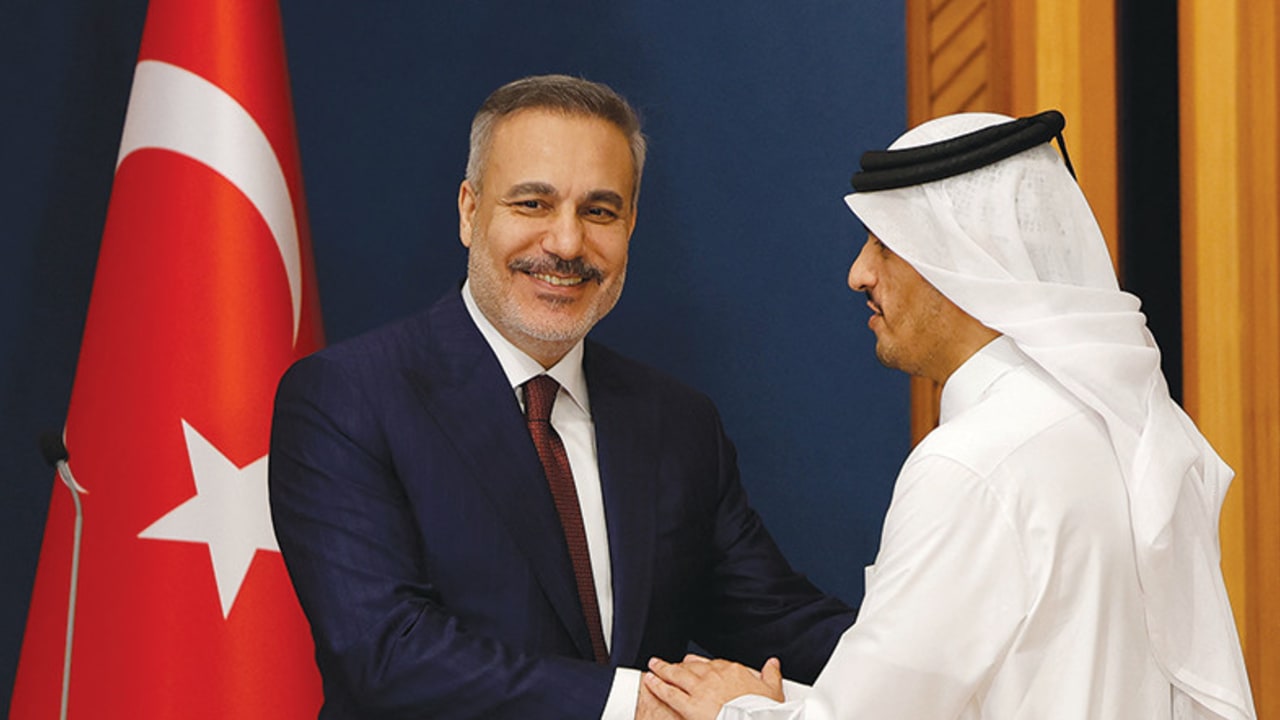
BEHIND THE LINES: Turkey, Qatar, and Pakistan are emerging as a powerful bloc - an alliance openly opposed to Israel.
Turkey’s Foreign Minister Hakan Fidan (left) is greeted by
Qatar’s Prime Minister and Foreign Minister, Sheikh Mohammed bin
Abdulrahman Al Thani, in Doha, in March. (photo credit: KARIM JAAFAR/AFP via Getty Images)
In
the current strategic landscape of the Middle East, one of the most
notable and insufficiently understood elements is the rising influence
of Turkey, and of an emergent Sunni Islamic alliance of which it is part.
In this emergent bloc, Turkey, Qatar, and Pakistan are the core players. Efforts are under way to draw both Saudi Arabia and Egypt toward this axis.
Ankara’s
role, and that of the gathering of which it is part, is notable in that
it combines close relations with the United States and other Western
powers with support for and exploitation of anti-Western Islamist forces
on the ground as a key element of its power-building.
This
is an alliance openly opposed to Israel. The language now routinely
employed by senior Turkish officials with regard to the Jewish state
leaves little room for misinterpretation.
Turkey's
President Tayyip Erdogan meets with Syria's President Ahmed al-Sharaa
on the sidelines of Antalya Diplomacy Forum in Antalya, Turkey, April
17, 2026. (credit: Murat Kula/Turkish Presidential Press Office/Handout
via REUTERS)
Turkish officials call for struggle against Zionism
Turkish President Recep Tayyip Erdogan,
in a recent speech, said that “the genocidal, occupying, expansionist
ideology called Zionism threatens not only me, not only our party, not
only our alliance; it threatens everyone.... When we struggle against
Zionism, we are not waging this struggle for ourselves or for personal
reasons. We are doing it for our own survival and for the survival of
our nation.”
Turkish
Interior Minister Mustafa Ciftci said in a June 6 speech that “just as
we witnessed the liberation of Damascus, Aleppo, and Karabakh, God
willing, one day we will also witness the liberation of Jerusalem.”
But
while politicidal rhetoric is interesting to monitor, what matters most
are the power plays and the strategy for building power on the ground
used by Ankara and its allies.
In
this regard, the potentially contradictory pillars of active support
for Sunni political Islam and jihadi movements, and self-presentation as
an ally of the West should be examined in detail.
Regarding
the first aspect, Turkey offers active support to a variety of Sunni
Islamist and jihadi authorities and organizations in the Levant and
further afield.
The Turkish state is the key backer of the emergent Sunni Islamist regime of President Ahmed al-Sharaa
in Syria. While Sharaa’s Hay’at Tahrir al-Sham movement was not a
direct proxy of Ankara, the Turkish decision to maintain a Syrian
insurgent enclave in northwest Syria against regime and Russian attacks
made feasible Sharaa’s eventual march to Damascus and the destruction of
the Assad regime.
Turkey,
as a result, is the key external player in the new Syria. In an
agreement signed on August 13, 2025, Ankara took on the role of training
and shaping the new Syrian army and security forces. The goal is to
build an army of 200,000 soldiers over the next five years.
Turkey linked to US sanctioned individuals
The
new structures are dominated by Sunni Islamist commanders, including
many directly linked to Turkey and including individuals designated for
financial sanctions by the US Treasury Department because of their
involvement in grave human rights violations.
These
include Abu Hatem Shaqra, whose Turkish-linked Ahrar al-Sharqiya
faction carried out sectarian killings in northern Syria during the war,
including the brutal murder of a female Kurdish politician, Hevrin
Khalaf, in October 2019. Shaqra is today a division commander in the new
armed forces, with Ahrar al-Sharqiya redesignated as Division 86 of the
New Syrian Army.
Other
commanders of this type include Mohammed al-Jassim (Abu Amsha), a
Turkish-aligned commander similarly sanctioned by the US Treasury
Department in October 2023 for his involvement in kidnapping, extortion,
and the forced displacement of Syrian Kurdish residents. Abu Amsha’s
former Suleiman Shah Brigade is now Division 62 of the new army. And so
on.
What
is emerging under Turkish tutelage in Syria is a new phenomenon in the
Middle East – namely, an Islamist-controlled state army.
Simultaneously,
Turkey is the largest trading partner and primary economic anchor of
the new Syrian regime. Turkish exports to Syria are at record levels,
with the two countries targeting an annual volume of trade of up to $10
billion.
Elsewhere
in the Levant, Turkey maintains an active Hamas office in Istanbul.
This office and other Hamas facilities in Turkey play a direct
operational role. That is, they are used to plan and direct attacks and
to move funds. Hamas officials, up to and including the now deceased
former head of the movement’s political bureau Ismail Haniyeh, travel
(or traveled, in Haniyeh’s case) the region on Turkish passports.
In
Lebanon, Turkey has been engaged in quiet and systematic influence
building in recent years, centering on the Sunni northern city of
Tripoli, and the Turkmen community in Akkar.
US
President Donald Trump meets Syrian counterpart Ahmed al-Sharaa in the
White House, Washington, DC, November 10, 2025 (credit: SYRIAN
PRESIDENCY PRESS OFFICE)
The
recent statements by US President Donald Trump regarding a possible
role for the Syrian government in Lebanon appear to reflect the
influence that Turkish positions have on the highest reaches of the US
administration. This influence goes via Special Envoy and US Ambassador
to Turkey Tom Barrack, whose positions often echo those of Ankara.
Special Envoy Steve Witkoff, meanwhile, also frequently adopts positions
reflecting the views of Qatar, Turkey’s close ally.
Regarding
regional alliances, Ankara has over the last decade developed a close
strategic partnership with Qatar, encompassing economic, military, and
diplomatic elements.
Turkey
is a major importer of Qatari natural gas. Turkey maintains a permanent
military base in Qatar. The two countries share the anomalous position
of support for movements of political Islam across the region, together
with close links and involvement with the US and Western countries.
The third component of this “strategic triad” (as a study at Qatar-supported Al Jazeera referred to it) is Pakistan.
Turkey
is Pakistan’s fourth largest source of arms, as Islamabad seeks
alternatives to the West for its source of weaponry (the main exporter
of arms to Pakistan is now China).
Turkey
maintains extensive investments in Pakistan and consistently votes with
Islamabad on issues such as Kashmir in the United Nations. On the
deeper level, the two countries share a similar orientation of
nationalism with an Islamic coloration, and a trajectory of historic
alignment with the West now turning into something else.
While
not linked by formal defense pacts, Turkey, Qatar, and Pakistan have
similar orientations and compatible and mutually beneficial capacities.
Qatar’s vast financial reach, Turkey’s conventional military capacities,
and Pakistan’s nuclear capability together form a powerful combination.
This
triad is now presenting itself as an appropriate mediator in Mideast
conflicts and the right partner for the US in the region for the period
ahead (see Pakistan’s role in the US negotiations with Iran, which
produced the current deeply problematic Memorandum of Understanding, as
an example of the result).
In
practice, the combination of support for political Islam and often for
violent Islamist and jihadi organizations as a tool of power projection,
combined with strong and deep links into Western systems and economies
makes the current government of Turkey and its allies in Doha and
Islamabad a major and emergent challenge both for Israel and for those
wishing to assemble a coherent Western policy on the Middle East and
beyond it.
The attack is part of an ongoing bombardment of Russia's oil infrastructure, which has created a fuel crisis in the fifth year of the country's invasion of Ukraine.
Ukrainian drones struck an oil terminal in St. Petersburg on Saturday, according to Russian officials.
The attack is part of an ongoing bombardment of Russia's oil infrastructure, the Associated Press reported, which has created a fuel crisis in the fifth year of the country's invasion of Ukraine.
Russia shot down 72 Ukrainian drones over St. Petersburg and surrounding region.
Ukrainian President Volodymyr Zelensky called the attack "long-range
sanctions" against Russia and said a military target near the city was
also hit.
Xtend was approached by the government of Venezuela to help rescuers find victims. Its platforms have already helped save the life of one man trapped under the rubble for over 72 hours.
Mexico
City’s Topos Azteca search and rescue brigade has been using Israeli
technology to access areas still too dangerous for humans to enter in
search of victims buried under the rubble in Venezuela’s La Guaira
earthquake sites.
The death toll in Latin America’s largest natural disaster
in decades has risen to over 2,600, and while hopes of finding more
survivors diminish, search and rescue teams are not stopping.
Dozens
of countries have sent personnel to the disaster areas, including
Syria’s White Helmets (the Syria Civil Defense humanitarian aid
volunteer organization). Despite not having diplomatic relations with
Caracas for 17 years, Israel has also sent a team.
Defense and Tech by The Jerusalem Post has learned that XTEND’s
Honey Badger and XTENDER, both unmanned aerial systems (UAS) that work
in tandem, have been critical components in rescue personnel’s ongoing
efforts in the region.
D&T
understands that the use of the systems is part of a special project,
in line with the company’s approach to the Venezuelan government’s
efforts to assist in the complex environment.
A
combination of satellite images shows high-rises in Caraballeda,
Venezuela, before (left) and after the earthquakes that hit the country,
December 28, 2025, and June 26, 2026. (credit: VANTOR/HANDOUT VIA
REUTERS)
XTEND,
headquartered in Tel Aviv and Florida, quickly sent a team to the South
American country. Once there, its members were assigned to a
search-and-rescue team spearheaded by Mexico City’s famous Topos Azteca
search-and-rescue brigade.
Local
reports said that with the help of the two UAS systems, the brigade was
able to rescue a man who had been trapped between a roof and a
collapsed wall, 72 hours after the twin earthquakes of 7.2 and 7.5
magnitude struck the country.
According to XTEND, the Honey Badger is a compact multi-mission drone designed for close-range operations.
The
platform is built to operate in dense urban terrain and areas where GPS
access is disrupted, a challenge facing search and rescue forces in
Venezuela.
Further, the Honey Badger carries modular payloads of up to three kilograms and can be deployed within seconds.
The
system integrates into a three-drone mesh network, enabling operators
to share targeting data and maintain real-time situational awareness.
This
platform has a flight time of roughly 35 minutes and a range of more
than six km. It is powered by XTEND’s XOS operating interface, which the
company described as designed to simplify control and shorten training
time for frontline personnel.
As
for XTENDER, this is a micro tactical intelligence, surveillance, and
reconnaissance (ISR) platform designed for indoor and subterranean
operations where GPS access is limited or unavailable.
The
system is designed to provide forces with immediate situational
awareness in confined spaces, enabling room-clearing, mapping, and
reconnaissance from a safe distance.
According
to XTEND, the platform is impact-resistant and equipped with
floodlights, allowing operators to navigate and gather intelligence in
low-visibility environments.
Weighing
1.2 kg., the drone has a flight time of roughly 10 minutes and a range
of over 1.6 km. It features encrypted communications, sense-and-avoid
functions, and multiple launch options, including ground, hand, and air
deployment.
The
system is intended to enhance surveillance and reconnaissance for those
operating in complex indoor terrain, where traditional automated
systems are less effective, XTEND said.
Like the Honey Badger, XTENDER operates as part of a three-drone mesh team and is powered by the company’s XOS interface.
The
two US-manufactured systems correlate. The Honey Badger enables the
operator to work from a distance in outdoor and urban areas, while
XTENDER goes inside rooms, stairwells, and subterranean spaces, mapping
in real time areas that the GPS system cannot reach.
The
operator commands both UAS platforms. The drones handle navigation and
observation; the human maintains mission intent and rules-of-engagement
authority throughout.
From video games to warzones and natural disasters
XTEND
was founded in 2018 by Aviv and Matteo Shapira, Rubi Liani, and Adir
Tubi. Originally, it was a gaming company that used drone-based extended
reality technology along with virtual reality to simulate flight in
video games.
Following
Hamas’s October 7 massacre, the company shifted toward defense
applications after the founders realized that their technology could
help troops.
It
developed a new concept of operations – an idea proposing how their
drones could serve the end-users – IDF soldiers – by entering the
battlefield before the soldiers did.
Israeli
drone startup XTEND has secured a multi-million-dollar contract from
the US Department of Defense to develop and deliver AI-enabled, modular,
one-way attack drones designed for close-quarter combat. (credit:
XTEND)
The company has since specialized in human-guided autonomous machine systems for defense applications.
XTEND
now delivers next-generation autonomous systems for defense, public
safety, and private security applications built on its battle-proven XOS
operating system.
Its
products leverage remote operations, enabling multiple air, ground, and
maritime drones to execute complex, dynamic missions with immediate
operational readiness.
With
its products, XTEND aims to enable operators to control and interact
with their drones and autonomous ground vehicles for various mission
types, using VR/AR interfaces and AI, including in underground or other
complex environments.
The company has deployed over 10,000 systems worldwide across 30 countries, including the US, Singapore, the UK, Israel, and five combat zones.