by Steven Richards
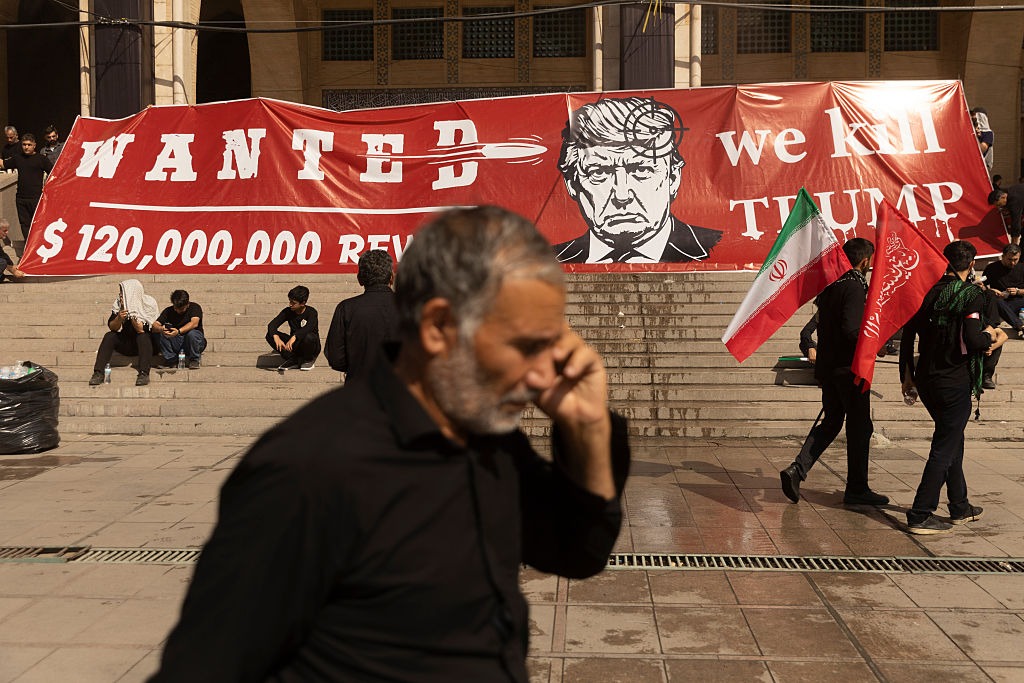
From ramping up economic pressure to surgical strikes, here are the options President Trump has to bring Iran back to the table.
The fragile ceasefire between the United States and Iran
finally broke this week when Tehran’s forces launched missiles at
several commercial vessels transiting the Strait of Hormuz. After the
attacks, President Donald Trump appeared to finally run out of
patience.
"We're gonna hit 'em hard tonight," Trump said Wednesday during the NATO summit in Turkey,
after conceding to reporters earlier that day about the ceasefire, "To
me, I think it's over. I don't want to deal with them."
In response to Iran’s violations of the Memorandum of
Understanding (MOU), which set a timeline for negotiations between
Washington and Tehran over the Iranian regime’s illicit nuclear program,
the U.S. military unleashed a new wave of strikes against Iran’s forces
and facilities. By Thursday, U.S. Central Command said the U.S. has hit approximately 90 targets in airstrikes across Iran.
The quick breakdown in negotiations shows that ending the
war on terms acceptable to the United States may take more time than the
American president had hoped.
Analysts say that Trump still has several options
to pursue his goals – encouraging Iran to denuclearize, reopen the
Strait of Hormuz, and end the conflict – without embroiling the United
States in a protracted or “endless war” of the kind that he railed against from the time he first ran for president in 2016.
Restoring economic pressure
Victoria Coates, vice president at the Heritage Foundation
and former Trump deputy national security advisor, says that the
military strikes are only part of the pressure that the Trump
administration is imposing on Iran, and ultimately it is crippling
economic pressure that can convince Iran to give into U.S. demands.
“We have a president, for the first time, bringing all
three of those things to bear: the economic pressure, the military
pressure, and the diplomatic pressure–simultaneously to bear on Iran,” Coates said in an interview on Fox News’ Hannity.
“From my perspective, the economic pressure, what Secretary
Bessent has done under Operation Economic Fury, is what, ultimately, is
going to destroy Iran,” she continued. “They can’t come back from
what’s happened to them, but that’s only because President Trump was
willing to do the military piece.”
She added, “So we will keep that pressure up, and eventually ... Iran is going to buckle under the pressure.”
Before launching new strikes against Iranian military targets, the Trump administration restored sanctions on Iranian oil
that the Treasury Department had temporarily lifted during the MOU
ceasefire. On Wednesday, the Office of Foreign Assets Control revoked
the license given to Iran to sell its oil freely.
Earlier this year, the administration imposed an oil
blockade on Iran after the failed first-round of talks between Vice
President JD Vance and Iranian officials in Islamabad, Pakistan. The
U.S. Navy prevented ships leaving or sailing to Iran from passing
through the strait – a key international shipping channel for oil and
natural gas. And the administration ordered the military to intercept at
least 12 vessels tied to Iran from April to June.
It remains to be seen whether the American president will reinstate the strict oil embargo. Experts previously told Just the News that a sustained oil embargo would strip Tehran of one of its last streams of revenue, forcing its leaders to choose between a deal or “economic” and “regime collapse.”
Proportional response to Iranian violations
Retired Rear Adm. Mark Montgomery, a senior fellow at the Foundation for Defense of Democracies, told Just the News,
however, that he is skeptical that Iran will ultimately fold to U.S.
demands without ground troops, whether from the United States or armed
insurgents.
“Historically, air-only campaigns cannot change regimes
without armed insurgents on the ground. Examples of this include Kosovo
in 1999 and Libya in 2011,” he said.
Rather, Montgomery believes Trump is trying to avoid
returning to all-out combat operations and instead intends to respond
proportionally to Iranian MOU violations.
“I think Trump wants to avoid a return to full-scale combat
operations and thus has kept his responsive strikes proportional on
target sets appropriate to the Iranian strikes such as maritime and
drone facilities,” Montgomery said.
He also says the United States’ success in shepherding
commercial ships through the strait, outside of Iran’s control, likely
spurred Iran to break the ceasefire to reestablish leverage.
“The challenge is he can’t return to ceasefire conditions
where a number of very large crude carriers can transit through the
southern transit scheme alongside Oman, without Iranian compliance. It's
clear that the success of this route caused Iran to break the ceasefire
and attack merchant ships using the southern transit scheme,” he told Just the News.
The strait has remained one of the main points of
contention between Iran and the United States during the fragile
ceasefire and agreement. The Iranian regime, under heavy bombardment and
facing overwhelming force from both the militarily superior U.S. and
Israel, bet early in the conflict that it could inflict maximum pain on the U.S.'s allies by shutting down the strait and disrupting the global oil markets.
Now that Trump is trying to wind down the conflict, Iran
has persevered in its attempts to secure long-term control over shipping
in the strait. It intends to do so by charging “service fees” and wants
to give China and its other supporters “special privileges” for
standing with the country in “wartime,” Just the News reported earlier this week.
Trump and U.S. officials have reiterated that it would be
unacceptable for Iran to charge tolls or fees for any commercial vessels
transiting the waterway. “No country is allowed to charge tolls or fees
on an international waterway,” Secretary of State Marco Rubio said during a trip to the Middle East last month.
Attempt to preserve the MOU
Other analysts argue that Trump should not back out of the MOU over “skirmishes” in the strait.
“Ending the ceasefire with Iran over skirmishes in Hormuz
would be missing the forest for the trees – and Trump must not make that
mistake. The war with Iran does not and never has served U.S.
interests. It has cost U.S. lives, wasted U.S. treasure and sapped U.S.
military power, all while strengthening Iran by demonstrating its
leverage over the Strait of Hormuz,” said Rosemary Kelanic, the director of the Middle East Program at Defense Priorities, which advocates a more restrained American foreign policy.
“When will President Trump figure out what Americans
already know – that war with Iran isn’t worth it?” she said in a
statement following the collapse of the ceasefire. “Trump fashions
himself a dealmaker. Now is the time to show it by either reaching a
durable settlement with Iran to restore the flow of oil, or failing
that, walking away so at least he does no further harm.”
Trump himself has previously warned about the perils of an
endless conflict with Iran, including out-of-control oil prices and
“economic catastrophe.”
Steven Richards
Source: https://justthenews.com/government/diplomacy/trumps-options-avoid-endless-war-iran-after-ceasefire-collapse
Follow Middle East and Terrorism on Twitter