Tuesday, July 28, 2026

Trump's Saudi Nuclear Horror Show - Khaled Abu Toameh


by Khaled Abu Toameh

Why Trump and Congress Should Reject the US-Saudi Nuclear Deal 


  • The [US-Saudi civilian nuclear] agreement threatens to weaken decades of US non-proliferation policy, ignite a regional arms race, embolden America's adversaries, and create security risks that future generations may be powerless to reverse.

  • The most controversial aspect of the proposed agreement is that it reportedly allows Saudi Arabia to develop domestic uranium enrichment capabilities under safeguards that fall short of the stringent standards previously demanded by Washington. While low-enriched uranium is used to fuel civilian nuclear reactors, the same technology can eventually produce highly enriched uranium suitable for nuclear weapons.

  • "[W]ithout a doubt, if Iran developed a nuclear bomb, we will follow suit as soon as possible." — Saudi Crown Prince Mohammed bin Salman, CBS News, March 15, 2018.

  • These words should have ended any discussion about permitting uranium enrichment on Saudi soil. They reveal that Riyadh views civilian nuclear capabilities not merely as an energy project but also as a potential strategic hedge against Iran.

  • [G]overnments change, regimes fall, alliances split, and today's friend -- even as a member of the Abraham Accords -- may not be tomorrow's ally.

  • [E]xtremist Islamist organizations continue to view the kingdom as both a battlefield and a prize. No one can predict Saudi Arabia's political landscape 20 or 30 years from now. A future period of instability, succession crisis, or regime collapse could deliver sensitive nuclear facilities, technology, or materials to actors whose goals are fundamentally hostile to the United States and its allies.

  • The greatest danger, therefore, is not Crown Prince Mohammed bin Salman or the current Saudi leadership. The greatest danger is the uncertainty surrounding whoever may rule the kingdom decades from now. Nuclear technology lasts far longer than political regimes.

  • The proposed agreement also abandons the "gold standard" that has guided US civilian nuclear cooperation for decades. Under the 2009 US-United Arab Emirates (UAE) nuclear agreement, Abu Dhabi accepted strict conditions that prohibited domestic uranium enrichment and spent-fuel reprocessing while granting comprehensive international oversight. These restrictions significantly reduced proliferation dangers.

  • The Saudi agreement reportedly discards many of these safeguards. It also reportedly does not require Riyadh to adopt the International Atomic Energy Agency's Additional Protocol, which allows inspectors short-notice access to undeclared facilities to detect clandestine nuclear activities.

  • The UAE would likely seek to renegotiate its own agreement. Turkey and Egypt would almost certainly demand similar privileges. Russia and China could use the American precedent to justify weaker safeguards in their own nuclear partnerships across the Middle East and beyond.

  • Instead of strengthening the global non-proliferation regime, the United States would be weakening it with its own hands.

  • Peace with Israel is not a prize awarded by Arab or Muslim countries. It is not something that should require American bribes in the form of nuclear technology or strategic incentives.

  • Peace serves Saudi Arabia's own interests. It enhances regional stability, strengthens economic development, attracts foreign investment, and improves security for all parties. Arab and Muslim states should pursue peace with Israel because it benefits their own people -- not because Washington offers dangerous concessions.

  • The United States should not become the architect of the next Middle East nuclear arms race.
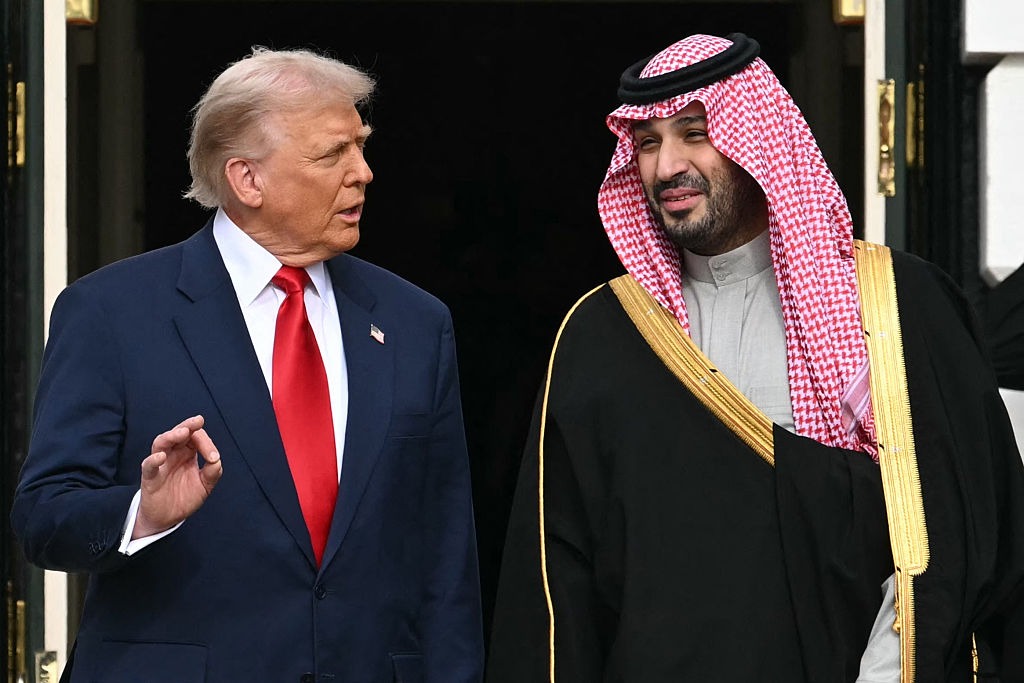
The US-Saudi civilian nuclear agreement threatens to weaken decades of US non-proliferation policy, ignite a regional arms race, embolden America's adversaries, and create security risks that future generations may be powerless to reverse. Pictured: US President Donald Trump greets Saudi Crown Prince Mohammed bin Salman the White House in Washington, DC on November 18, 2025. (Photo by Saul Loeb/AFP via Getty Images)

US President Donald J. Trump's proposed civilian nuclear agreement with Saudi Arabia risks becoming one of the most dangerous strategic mistakes in recent American Middle East policy. Although supporters portray the agreement as a peaceful energy partnership designed to strengthen relations with a key Arab ally, the long-term consequences could be devastating. The agreement threatens to weaken decades of US non-proliferation policy, ignite a regional arms race, embolden America's adversaries, and create security risks that future generations may be powerless to reverse.

Congress and the American public should reject the agreement before it sets a precedent that could undermine global efforts to prevent the spread of nuclear weapons.

The most controversial aspect of the proposed agreement is that it reportedly allows Saudi Arabia to develop domestic uranium enrichment capabilities under safeguards that fall short of the stringent standards previously demanded by Washington. While low-enriched uranium is used to fuel civilian nuclear reactors, the same technology can eventually produce highly enriched uranium suitable for nuclear weapons.

The danger is not theoretical.

Saudi Crown Prince Mohammed bin Salman made his intentions unmistakably clear several years ago. "Saudi Arabia does not want to acquire any nuclear bomb," he said in 2018. "But without a doubt, if Iran developed a nuclear bomb, we will follow suit as soon as possible."

These words should have ended any discussion about permitting uranium enrichment on Saudi soil. They reveal that Riyadh views civilian nuclear capabilities not merely as an energy project but also as a potential strategic hedge against Iran.

Supporters of the agreement argue that the kingdom remains a close American partner and that the deal contains sufficient safeguards. History, however, teaches a different lesson: governments change, regimes fall, alliances split, and today's friend -- even as a member of the Abraham Accords -- may not be tomorrow's ally.

Saudi Arabia has experienced repeated terrorist attacks by al-Qaeda and ISIS. It is also the birthplace of Osama bin Laden, and 15 of the 19 terrorists who carried out the September 11, 2001 attacks were Saudi citizens. Although the Saudi government has consistently denied any involvement in those attacks, the kingdom's history suggests otherwise.

The persistent threat posed by Islamist extremism still exists.

Between 2003 and 2006, al-Qaeda launched a deadly insurgency inside the kingdom, targeting government institutions, foreign residents, and critical infrastructure. ISIS has claimed responsibility for attacks on mosques, security forces, and civilians inside Saudi Arabia.

Although Saudi authorities have largely succeeded in suppressing these groups, their existence underscores an enduring reality: extremist Islamist organizations continue to view the kingdom as both a battlefield and a prize. No one can predict Saudi Arabia's political landscape 20 or 30 years from now. A future period of instability, succession crisis, or regime collapse could deliver sensitive nuclear facilities, technology, or materials to actors whose goals are fundamentally hostile to the United States and its allies.

The greatest danger, therefore, is not Crown Prince Mohammed bin Salman or the current Saudi leadership. The greatest danger is the uncertainty surrounding whoever may rule the kingdom decades from now. Nuclear technology lasts far longer than political regimes.

No American president can guarantee that the House of Saud will rule forever. Political upheaval, internal instability, or even a violent overthrow of the monarchy could one day place uranium enrichment facilities, nuclear scientists, sensitive technologies, and weapons-grade materials into the hands of Islamist terrorists.

Once sensitive nuclear technology escapes state control, it cannot simply be recovered. Terrorist organizations could exploit nuclear expertise or materials themselves or sell them on the global black market to rogue regimes or other non-state actors. Such a scenario would represent an irreversible nightmare for international counterterrorism and non-proliferation efforts.

The proposed agreement also abandons the "gold standard" that has guided US civilian nuclear cooperation for decades. Under the 2009 US-United Arab Emirates (UAE) nuclear agreement, Abu Dhabi accepted strict conditions that prohibited domestic uranium enrichment and spent-fuel reprocessing while granting comprehensive international oversight. These restrictions significantly reduced proliferation dangers.

The Saudi agreement reportedly discards many of these safeguards. It also reportedly does not require Riyadh to adopt the International Atomic Energy Agency's Additional Protocol, which allows inspectors short-notice access to undeclared facilities to detect clandestine nuclear activities.

If Washington lowers its own standards for Saudi Arabia, other countries will inevitably demand identical treatment.

The UAE would likely seek to renegotiate its own agreement. Turkey and Egypt would almost certainly demand similar privileges. Russia and China could use the American precedent to justify weaker safeguards in their own nuclear partnerships across the Middle East and beyond.

Instead of strengthening the global non-proliferation regime, the United States would be weakening it with its own hands.

The agreement also undermines Washington's ability to confront Iran over its nuclear ambitions. For years, successive American administrations have insisted that Iran must never be allowed to enrich uranium without stringent international oversight because enrichment provides a pathway to nuclear weapons. If Saudi Arabia is granted that same capability under less demanding conditions, Tehran will immediately accuse Washington of double standards.

Indeed, Iranian officials have already begun making precisely that argument. Iranian Interior Ministry spokesman Ali Zeinivand recently declared that if a regional arms race begins, Iran would have "more freedom of action than anyone else," while accusing the United States of discrimination by permitting some countries to pursue nuclear capabilities while denying others the same right.

The United States cannot credibly demand that Iran abandon capabilities it is simultaneously willing to grant Saudi Arabia.

The agreement also threatens to trigger a dangerous regional nuclear arms race. Iran has repeatedly indicated that it would respond to Saudi nuclear advances. Turkey has already warned that it may be forced to pursue similar capabilities if Iran acquires nuclear weapons. Egypt would undoubtedly come under pressure to do the same.

Perhaps the most troubling aspect of the agreement is that it separates civilian nuclear cooperation from broader diplomatic objectives.

The Trump Administration views civilian nuclear assistance as leverage to advance normalization between Saudi Arabia and Israel under the Abraham Accords.

Peace, however, should never be purchased through strategic concessions that jeopardize international security.

Peace with Israel is not a prize awarded by Arab or Muslim countries. It is not something that should require American bribes in the form of nuclear technology or strategic incentives.

Peace serves Saudi Arabia's own interests. It enhances regional stability, strengthens economic development, attracts foreign investment, and improves security for all parties. Arab and Muslim states should pursue peace with Israel because it benefits their own people -- not because Washington offers dangerous concessions.

Once uranium enrichment spreads across the Middle East, it cannot easily be contained. Once regional powers begin competing for nuclear capabilities, there may be no turning back. The United States should not become the architect of the next Middle East nuclear arms race.


Khaled Abu Toameh
is an award-winning journalist based in Jerusalem.

Source: https://www.gatestoneinstitute.org/22743/trump-saudi-nuclear-horror-show

Follow Middle East and Terrorism on Twitter

Mamdani bears responsibility for anti-Jewish violence in New York - Jonathan S. Tobin


by Jonathan S. Tobin

Ordinary political speech isn’t incitement to violence. But anti-Zionism—the core purpose of the mayor’s career and that of his followers—delegitimizes Jewish rights and existence.


Mamdani black and white silhouette
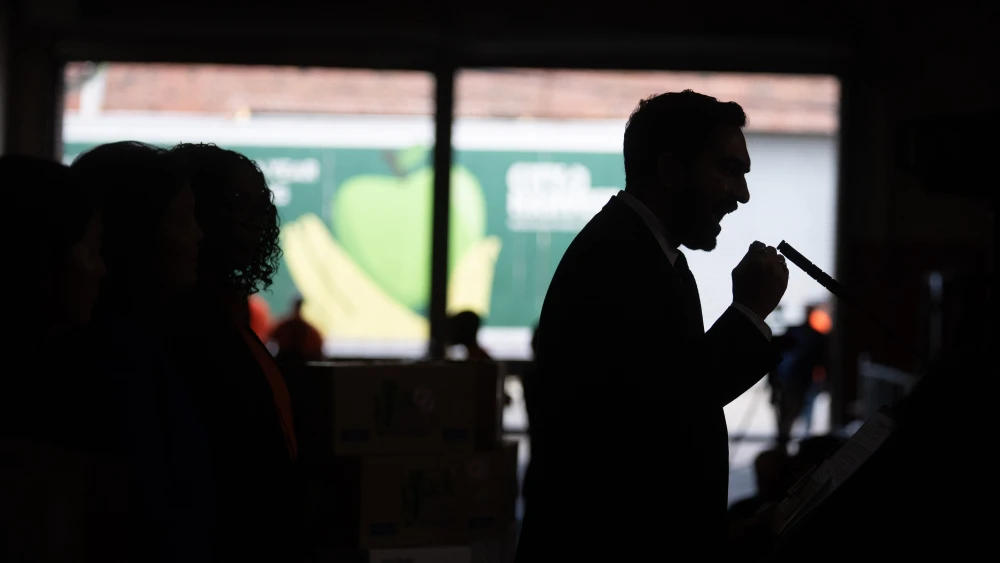
New York City Mayor Zohran Mamdani makes an announcement about five new municipal grocery stores, July 27, 2026. Credit: Michael Appleton/Mayoral Photography Office.


Over the course of the last few decades, as violence seemed to become an accepted fact of American society, casting blame on political opponents for incidents that could often be reasonably described as random acts of deranged persons unrelated to policy debates became a common tactic.

That’s the defense being employed by supporters of New York City Mayor Zohran Mamdani in the wake of the stabbings of two people on Manhattan’s Upper West Side. Only two days earlier, in a direct-to-camera video put out by his office, Mamdani had spewed forth yet another anti-Zionist tirade. In it, he recycled a compendium of blood libels about the actions of the State of Israel to back up his claim that its longtime prime minister, Benjamin Netanyahu, was a “war criminal.”

A disingenuous alibi

Coming as it did as part of a long series of such false accusations that date back to the beginning of his political career, the 34-year-old mayor’s efforts to demonize the one Jewish state on the planet and its American supporters have become part of the fabric of the city’s political discourse.

He’s not alone in doing this. The accusations that what happened during the fighting in Gaza in the aftermath of the Hamas-led Palestinian-Arab terror attacks in southern Israel on Oct. 7, 2023, was “genocide” have been debunked. Still, leftist politicians and mainstream media outlets like The New York Times continue to float the lies about Netanyahu ordering Israeli soldiers to carry out deliberate efforts to starve or wipe out all Palestinians, in addition to a laundry list of other false charges.

The point of this effort isn’t merely to “criticize” Netanyahu or Israel. It’s being done in the context of a boost for the cause that is at the heart of Mamdani’s political career. His support for the eradication of the one Jewish state on the planet is no secret. That this also means backing for the efforts of Hamas and other terrorists to achieve that despicable goal via their intended actual genocide of Israel’s population is left unsaid by the mayor. But it is made obvious by actions such as his wife’s open support for the atrocities of Oct. 7, as well as his specific refusal to condemn the chants heard on college campuses by his fellow anti-Zionists calling for Jewish genocide (“From the river to the sea”) and terrorism against Jews wherever they live (“Globalize the intifada”).

As far as Mamdani backers go, such as the anti-Israel group T’ruah and New York Democratic congressional candidate Brad Landers, to link Mamdani to the stabbings of a kippah-wearing Jewish man outside a synagogue along with an Asian male, by a person shouting Allahu Akbar, is unfair. Mamdani claims to be against antisemitism. Members of Mamdani’s Democratic Socialist faction and leftists of various stripes all say that the mayor’s comments are aimed solely at Netanyahu and Israel, not Jewish New Yorkers.

But their alibi for Mamdani is disingenuous. Anti-Zionists may claim to be merely opposed to the existence of a Jewish state and not in favor of violence against Jews. But if you are part of the only international movement to target the existence of a single country and seek to deny the rights of Jews to sovereignty and self-defense in their ancient homeland, then you are a Jew-hater, not a Netanyahu critic. Add in the dishonest efforts of anti-Zionists to pretend that devotion to the land of Israel—and the necessity of ensuring the survival and thriving of Jewish life there—is not one of the core principles of Judaism, and their case collapses entirely. Anti-Zionism is antisemitism.

Political speech isn’t violence

Yet it’s also true that linking public figures to crimes they had no personal part in committing is a particularly nasty characteristic of modern American politics.

Such smears date back to the earliest days of the republic, when Federalists supporting U.S. President George Washington blamed Thomas Jefferson’s Republicans (ancestors of today’s Democrats) for insurrectionary violence related to tax protests.

It started becoming more routine in American politics more than 30 years ago, when then-President Bill Clinton outrageously and irresponsibly blamed the “angry voices” of his political opponents—a swipe universally believed to be a reference to conservative radio-show hosts like Rush Limbaugh—for the bombing of the Oklahoma City federal building in 1995. Since then, examples of such finger-pointing have included notorious claims like The New York Times’ (ultimately retracted) scandalous and false accusation that former Alaska Gov. Sarah Palin incited a gunman to kill six persons and badly wound Rep. Gabby Giffords (D-Ariz.), who happens to be Jewish, in 2011.

This genre of political vilification became nearly universal on the left after President Donald Trump became an all-purpose scapegoat for anything liberals didn’t like. His coarse rhetoric has been blamed for all sorts of things, though few, if anyone, on the left have thought to hold their own side accountable for leftist attacks, whether the mass shooting of Republicans at a congressional baseball practice session in June 2017 by a supporter of Sen. Bernie Sanders (I-Vt.), violence associated with Antifa activists, the Black Lives Matter movement or even the multiple attempts to assassinate Trump.

Conservatives shouldn’t play that card, though they are entitled to accuse liberals of hypocrisy on this point.

The anti-Trump rhetoric of the Democrats and the left has often crossed the line that separates reasonable critiques of the president and his supporters from efforts to delegitimize and demonize them. One can point to innumerable instances of people posting open support for violence against Trump and conservatives that deserve condemnation.

But to assert that this means that the leaders of the Democratic Party actually support violence against their Republican counterparts is probably going too far. After all, for all of the president’s over-the-top social-media posts and trolling of his opponents, neither he nor GOP leaders are any more responsible for the same sort of support for anti-liberal violence that can be found on the same platforms than the likes of Sanders.

There may be exceptions to this, such as when politicians use public statements to call for violence against their opponents. One such instance was when in 2022 Senate Minority Leader Chuck Schumer directly threatened U.S. Supreme Court Justices Neil Gorsuch and Bret Kavanaugh because of their opinions on abortion. But even the veteran senator understood that he had to take that back—and has spent the past few years denying that he meant what he said.

Anti-Jewish incitement

As a general rule, a difference exists between the lamentable mainstreaming of harsh rhetoric from the governing class on both sides of the political aisle and what Mamdani has been doing in just the months he has been in office. And that is why—though it might often be wrong to blame American politicians for the bad behavior of those they influence—Mamdani cannot evade responsibility for the atmosphere of fear that pervades Jewish New York since he became mayor in January.

Blood libels against Jews and the Jewish state are not the same thing as political combat between conservatives and liberals or Republicans and Democrats. We may be living through a hyper-partisan moment in American political history where the advent of social media and the bifurcation of the press have created a spirit of heightened antagonism that pervades the public square. As troubling as that may be, the notion that violence is an expected or even regular part of electoral behavior or governing, akin to those in banana republics or dictatorships, remains beyond the pale in the United States.

Americans may be angry about many issues and increasingly given to intemperate rhetoric about each other. But during and after some of the most bitterly contested elections in U.S. history, such as the ones we’ve seen in the last decade, no widespread political violence ensued.

Politicians high and low need to be careful about saying anything that could be interpreted as a license to attack their opponents, even though many on both sides of the aisle have been guilty of such statements during this time. But to date (and hopefully, for the foreseeable future), U.S. politics will remain a peaceful activity in which the rule of law prevails, even if the way people discuss it gets more hyperbolic and dangerous with each passing year.

Ideologies that justify hate

By contrast, the tradition of anti-Jewish violence, including genocidal attempts to wipe them out, dates back two millennia—and continues to this day. From ancient Roman wars and mass murder during medieval times to the pogroms of the 17th century and those of the last 150 years up to the Holocaust, antisemitic bloodshed is a historic fact.

Add to that Hamas’s genocidal cause, taped for all to see on Oct. 7.

All of this is to say that while it’s possible to assert that hyperbolic accusations against Republicans or Democrats are just political speech, credibly playing that sort of game when it comes to false accusations against Jews and the Jewish state of singular crimes against humanity is another thing entirely.

Those who seek to kill Jews have often used various pretexts to justify their murderous intentions—whether it was ideas about deicide, Nazi racism, Marxist dialectic about Jews and capitalism, “bourgeois nationalism” or Islamist ideas about wiping out resistance to the spread of their fanatical faith.

In recent years, a new “woke” variant of that same hate justifying the demonization of Jews arose under the banner of “anti-racism” as Jews and their state have been falsely accused of being “white” oppressors whose eradication will help bring on the end of oppression everywhere. This intersectional doctrine, rooted in toxic ideas about critical race theory and settler-colonialism, has gained widespread acceptance on the American left and been echoed on the extreme right as well.

The red-green alliance

But Mamdani’s public statements go beyond theoretical anti-racist and intersectional appeals that have become a familiar aspect of life in the American academy. Anti-Jewish violence has become more prevalent in the United States since Oct. 7, as murderous attacks in Washington, D.C., and Boulder, Colo., in the spring of 2025, preceded by an attempted firebombing of Pennsylvania Gov. Josh Shapiro’s official residence in Harrisburg on Passover. And that’s not to mention the targeting of Jewish students and faculty on college campuses.

Mamdani’s career embodies the red-green alliance of Marxists and Islamists that has endangered Jewish life in Europe and elsewhere in a way that is far more pervasive than what has happened in the United States. Support for his attempt to revive failed Marxist economic theories in New York reflects a profound ignorance of history and the disasters that led to totalitarianism and mass murder in the 20th century under the banner of that false secular faith. At the core of Mamdani’s rise has been his devotion to the cause of anti-Zionism and war against the existence of the State of Israel.

Let it be perfectly clear: Criticism of Netanyahu or his government isn’t antisemitism. Israel is a democracy; its own citizens criticize it every day, just as Americans complain about their government. And whether the world—and many Diaspora Jews—like it or not, Israelis voted in their political representatives in the last election. One doesn’t have to argue that Netanyahu or Israel is above criticism to comprehend that the big lie that it has carried out “genocide” against Palestinians is the justification for anti-Jewish violence.

When placed in the context of woke and Marxist ideas about the downfall of Israel and Zionism being the magic key to defeating global injustice, it becomes a license for even the most murderous attacks on Jews, such as the unspeakable crimes that Rama Duwaji Mamdani openly cheered after Oct. 7. Advocating for an outcome such as the end of the Jewish state, which can only be achieved by eliminating everyone in it, such rants cannot be considered ordinary or even hyperbolic political speech.

Such speeches filled with extreme and unproven charges whose purpose is to depict Israel as beyond the pale, such as the one that Mamdani made last week after admitting that he couldn’t legally arrest Netanyahu when he visits New York for the U.N. General Assembly in September, are not innocent expressions of opinion. They are part of a campaign of incitement whose only purpose is the delegitimizing of anyone who supports Israel, such as is the case with the overwhelming majority of Jews in New York. Indeed, Mamdani made that clear when he justified the siege of a Manhattan synagogue in November by an anti-Zionist mob because he falsely accused those within it of violating international law by facilitating the return of Jews to it.

When leftists persist in trying to libelously blame the rise of antisemitism in the United States on Trump and Netanyahu—in New York and anywhere Mamdani’s violent rhetoric is justified—that is called mainstreaming a pretext for anti-Jewish violence.

The mayor’s anti-Zionist crusade isn’t one more instance of a politician going beyond the normal give-and-take of debate. It’s part of a hate movement directly linked to murderous attacks on Jews. Those who defend it aren’t protecting free speech. Nor are they acting as a check on unfair attempts to associate innocent people with crimes they never imagined, let alone committed. It’s granting a permission slip for an ideology that has only one intended outcome, in which the shedding of Jewish blood is the goal, not a by-product of rhetoric.


Jonathan S. Tobin is editor-in-chief of the Jerusalem News Syndicate, a senior contributor for The Federalist, a columnist for Newsweek and a contributor to many other publications. He covers the American political scene, foreign policy, the U.S.-Israel relationship, Middle East diplomacy, the Jewish world and the arts. He hosts the JNS “Think Twice” podcast, both the weekly video program and the “Jonathan Tobin Daily” program, which are available on all major audio platforms and YouTube. Previously, he was executive editor, then senior online editor and chief political blogger, for Commentary magazine. Before that, he was editor-in-chief of The Jewish Exponent in Philadelphia and editor of the Connecticut Jewish Ledger. He has won more than 60 awards for commentary, art criticism and other writing. He appears regularly on television, commenting on politics and foreign policy. Born in New York City, he studied history at Columbia University.

Source: https://www.jns.org/opinion/column/jonathan-s-tobin/mamdani-bears-responsibility-for-anti-jewish-violence-in-new-york

Follow Middle East and Terrorism on Twitter

Report: Iran intensifying efforts to assassinate Israeli officials - Israel National News


by Israel National News

Iran is reportedly seeking to attack both current and former officials in an effort to achieve a psychological victory over Israel.


Iran 

Amidst ongoing tensions with Iran, senior Israeli officials, including several cabinet ministers, have been informed in recent days that Tehran is intensifying its efforts to physically target senior Israeli figures-both current and former officeholders-in an attempt to achieve a strategic and psychological victory.

According to a report by Channel 12 News, Israel's security establishment believes that while Iran's motivation to target senior Israeli officials is not new, there has been a noticeable increase in both the scope of its efforts and the number of attempts to carry out such attacks in recent weeks.

In response to these assessments, the Shin Bet has recently strengthened security measures surrounding a number of senior Israeli officials.

The report also said that, for security reasons and on the recommendation of security officials, the departure time of the Wing of Zion government aircraft for the United States was kept secret. In addition, its departure was relocated to Nevatim Airbase.

The latest report follows the announcement by the Mossad last week that it had foiled an attempt by Iran's Ministry of Intelligence to infiltrate an operational terrorist cell into Israel with the aim of assassinating senior Israeli officials.

According to a statement from the Prime Minister's Office, the operation was thwarted through cooperation between the Mossad, the Shin Bet (Israel Security Agency), and intelligence and security services from several foreign countries.

The Mossad said that in recent years, Iran's Ministry of Intelligence and the Islamic Revolutionary Guard Corps (IRGC) have led a global terror campaign targeting Israeli and Jewish interests. In recent months, they have intensified efforts to carry out attacks inside Israel.

The agency added that dozens of Iranian-linked terror networks have been disrupted in recent years and that, over the past two years, authorities have also uncovered attempts to recruit Israeli citizens to carry out missions on behalf of the Iranian regime.

According to the statement, the operation relied on criminal proxy networks that recruited individuals capable of entering Israel to gather intelligence and later carry out terrorist attacks. International cooperation exposed both the operational infrastructure and the Iranian Ministry of Intelligence officers directing it.

The Mossad identified Thérot Ozkor, known by the alias "Philip," who had been living in France, as the individual recruited to establish an operational cell composed of foreign nationals and infiltrate it into Israel. According to the statement, he was recruited by two criminal proxies-Baba Mahu-Zadeh Haji Jafan ("Babak") and Mahmat Nadim Yiğit ("Nadim")-who reside in Iran and operate under the direction of Iran's Ministry of Intelligence.

The statement added that "Philip" traveled to Iran several times, where he met with his handlers and received payment for advancing the operation. International investigations also uncovered links between Babak and Nadim and their handlers within the Iranian Ministry of Intelligence, who were identified as Asadollah Behzad Oskhari, Vahid Matzoumi, Mohammad-Hossein Zoghi, and Hamid Ghasemi.

According to the Mossad, Behzad Oskhari played a central role in the Iranian Ministry of Intelligence's efforts to carry out terrorist attacks against Israeli and Jewish targets and was killed during Operation Rising Lion.

The statement also noted that "Philip" was expelled from France because of his involvement in planning the terrorist operation, while Babak and Nadim continue to operate from Iran and remain persons of interest to intelligence agencies around the world.

The Mossad and Shin Bet stressed that they will continue working with international partners to detect and thwart terrorism and espionage targeting Israeli and Jewish interests, both in Israel and abroad, and to bring all those involved to justice.


Israel National News

Source: https://www.israelnationalnews.com/news/430902

Follow Middle East and Terrorism on Twitter

Congressional committee issues subpoenas to organizations tied to China-linked Dem megadonor - Ashe Short


by Ashe Short

The latest subpoenas raise the question of whether U.S. tax law — which grants tax exemptions and shields charitable donor identities — can be used to route foreign money into domestic political activity. At the heart of it, questions abound whether the far-left outfits have violated the Foreign Agents Registration Act (FARA).


House Ways and Means Committee Chairman Jason Smith, R-Mo., has issued subpoenas to three tax-exempt organizations tied to socialist megadonor Neville Roy Singham, an American multimillionaire living in Shanghai with ties to the Chinese Communist Party.

The subpoenas have been served, a spokesperson for Smith’s office told Just the News, on BreakThrough News, Tricontinental and The People’s Forum, all three of which are funded, at least in part, by Singham. The subpoenas come after nearly a year of the Committee’s attempts to get answers from the three non-profit organizations regarding foreign influence in U.S. nonprofits.

Hundreds of millions in campaign funding concealed

“For months, the Ways and Means Committee has been investigating how the Chinese Communist Party has been taking advantage of our country’s laws through its tax-exempt sector to sow chaos and division here in the United States,” Smith said in a statement. “Public reporting has traced hundreds of millions of dollars from Neville Roy Singham – a tech mogul living in Shanghai – that was funneled through a web of shell companies and donor-advised funds that concealed the true source of the money before it reached these organizations.”

The subpoenas request documents showing whether the organizations have received or transmitted funds connected to foreign nationals or foreign entities, contracts between those nationals or entities, documents and communications between employees and Singham or foreign nationals about the organization.

“Three non-profits connected to Mr. Singham – BreakThrough News, Tricontinental, and The People’s Forum – have stonewalled the Ways and Means Committee’s investigation. That ends now,” Smith said in his statement. “These subpoenas will compel the production of the documents they have withheld for months and will help expose how America’s tax laws and charitable sector may have been exploited to advance the CCP’s influence operations inside the United States. The American people deserve to know whether the CCP has exploited America’s tax-exempt sector to advance its agenda. These subpoenas will allow the Ways and Means Committee to identify the networks that exploit our tax laws, and further expose the urgent need for legislation to close those loopholes for good.”

Just the News reached out to each nonprofit that reportedly received subpoenas, but none responded prior to press time.

Singham under federal grand jury investigation

The congressional subpoenas are the latest move against Singham, who is also under federal investigation by a grand jury in New York for possible violations of tax and foreign agent laws, Just the News previously reported. Acting U.S. Attorney General Todd Blanche authorized the grand jury to issue subpoenas as part of an investigation into Singham and his financial network. The investigation was launched by U.S. Attorney Jay Clayton for the Southern District of New York.

The grand jury revelation came shortly after a Just the News investigation into People’s Forum. At the time, the Center to Advance Security in America (CASA) had filed a complaint with the IRS seeking a probe of the organization’s finances. Just the News has not at this time been able to verify whether that subpoena has been personally served on Singham.

"People's Forum Inc. is the tax-exempt fiscal sponsor of many progressive and radical organizations, including the Venceremos Brigade, which engage in demonstrations often crossing the threshold from protected speech into illegal activity, including many which have resulted in arrests, violence against police officers, and interference in federal immigration enforcement," CASA Director James Fitzpatrick told Just the News at the time. 

"We believe the many potentially illegal activities that People's Forum has engaged in are grounds for a potential revocation of their tax-exempt charitable status. An immediate and full IRS investigation is appropriate to make this determination," he added.

In addition to the House Ways and Means Committee and New York, last April, Sen. Chuck Grassley, R-Iowa, as chairman of the U.S. Senate Judiciary Committee, sent a letter to FBI Director Kash Patel and then-Attorney General Pam Bondi requesting an investigation into whether People’s Forum violated the Foreign Agents Registration Act (FARA) by not registering as a foreign agent based on its alleged connections to China. 


Ashe Short

Source: https://justthenews.com/government/congress/congressional-committee-issues-subpoenas-organizations-tied-china-linked-dem

Follow Middle East and Terrorism on Twitter

Trump administration plans to spend hundreds of millions to counter growing Chinese influence - Kevin Killough


by Kevin Killough

The administration notified Congress last week that it intends to spend nearly $176 million to replace outdated and undersea telecommunications cables in the Caribbean and Central America.


The Trump administration is preparing to spend hundreds of millions of dollars on programs aimed at countering China's growing influence around the world. 

The administration notified Congress last week that it intends to spend nearly $176 million to replace outdated and undersea telecommunications cables in the Caribbean and Central America, the Associated Press reported

The administration has been raising concerns about China's influence in the Americas. It pushed back on Chinese ownership of ports at both ends of the Panama Canal, infrastructure projects in the region, and Chinese investment in the telecommunications sector. 

The State Department is also considering spending nearly $500 million on programs in Africa and Asia. The programs are designed to "reclaim diplomatic leverage" against China through investments in areas where the U.S. has cut foreign funding over the past two years. 

China's economic activities in the Western Hemisphere pose risks to U.S. national and economic security, an unnamed State Department official told the Associated Press.  


Kevin Killough

Source: https://justthenews.com/government/diplomacy/trump-administration-plans-spend-hundreds-millions-counter-growing-chinese

Follow Middle East and Terrorism on Twitter

Productivity is booming — but AI may not be the reason - Neil Irwin


by Neil Irwin

Companies are achieving more output per person-hour of labor because they are making better use of existing capital, a provocative new analysis finds — not, at the moment at least, by making major use of AI.


Illustration of a man in a business suit and a robot running inside of two connected gears.
Illustration: Lindsey Bailey/Axios

AI appears to improve workers' efficiency in a number of sectors. The U.S. has experienced a surge in economy-wide productivity in the last couple of years. But the former isn't necessarily driving the latter.

The big picture: Companies are achieving more output per person-hour of labor because they are making better use of existing capital, a provocative new analysis finds — not, at the moment at least, by making major use of AI.

  • AI advances may be generating substantial micro-level gains in some sectors, but so far are not the driver of one of the most important macro trends of the last couple of years, finds Ernie Tedeschi, chief economist at Stripe.

State of play: A surge in labor productivity — after a couple of decades of subpar improvement — has been one of the best pieces of news about the U.S. economy in the last few years.

  • Over the last year, output per hour worked is up 2.5%, compared with 1.6% annually over the last 20 years, Tedeschi wrote.
  • That may sound like a small gap, but if sustained over just a few years, that higher productivity would compound, making incomes and output per worker much higher.

Yes, but: Tedeschi noted that while labor productivity is up, total factor productivity — not just output per hour of work but output per hour of work and unit of capital — is little changed.

  • Looking across industries, he finds that while sectors with high AI adoption do have higher productivity growth, that trend predates the pandemic — before high-quality large language models were widely used.
  • Rather, he finds, the higher output is coming from higher usage of existing capital.

Zoom in: "Think longer runs of factories already built, more utilization of server racks and GPU clusters already paid for, and more occupancy of existing hotel rooms," Tedeschi wrote.

  • "Economists call this 'capital intensity' or 'utilization.' Higher capital utilization represents real economic gains, but it's not the same as microproductivity."

Of note: None of that precludes the possibility that AI advances will generate major productivity gains in the not-too-distant future, as companies work through the workflow and choke points that have restrained their potential.

The bottom line: "It looks likelier and likelier that the U.S. is in a period of high productivity growth, and that AI is part of the story," Tedeschi tells Axios.

  • "But we need to be sober about how it's playing a role, because that will help us discern whether AI is just a temporary blip on the growth path or something more persistent and transformational." 


Neil Irwin

Source: https://www.axios.com/2026/07/28/ai-labor-productivity-stripe

Follow Middle East and Terrorism on Twitter

A 'Respected' Medical Journal's War Against Doctors - Gerald M. Steinberg


by Gerald M. Steinberg

[T]he pro-Hamas lobby is circulating a mass petition calling for the expulsion of the Israeli Medical Association from the World Medical Association.


  • [T]he pro-Hamas lobby is circulating a mass petition calling for the expulsion of the Israeli Medical Association from the World Medical Association.

  • The petition – which blames the Israeli doctors for alleged bias and omits any mention of Hamas' war crimes – was amplified in June by once-respected UK medical journal The Lancet, clearly crossing the line between professional medical publication and blatant propaganda.

  • Far from providing medical evidence or reflecting professional ethics, the petition, as echoed by The Lancet, recycles political slogans and ancient blood libels, accusing Israel of "genocide" and the destruction of Gaza's health system. Of course, there is no mention of the overwhelming evidence of Hamas's systematic militarization of hospitals and other civilian medical facilities – all actual war crimes.

  • In promoting this campaign, The Lancet copied the accusations of fringe activist NGOs including the People's Health Movement (PHM), Doctors for Gaza (Artsen voor Gaza), and the "Health Advisory Council" of the so-called Jewish Voice for Peace. Even a cursory review makes clear that the petition touted by this ostensible medical journal is not remotely about medical ethics.

  • By parroting these NGOs and violating fundamental requirements for a scientific journal, The Lancet does not make even a minimal attempt to examine their credibility and embrace of terror.

  • Unsurprisingly, this isn't the first time journal editor Richard Horton has used The Lancet to publish anti-Israel propaganda. From 2001 to 2014, a majority of the publication's output regarding Israeli and Palestinian issues – 58.3% of its 264 items – took the form of political commentary rather than medical research.

  • The Lancet dismisses any mention of Hamas' responsibility for Gaza's medical plight as mere Israeli claims, despite extensive documentation.

  • Additionally, neither this medical journal nor the NGOs leading the petition have ever asked any other civilian medical associations to condemn their home states' military operations. The list includes Russia, China, Iran, Turkey, Sudan, and other actual violators of human rights and international law.

  • With Horton and The Lancet again at the forefront of a hate directed at Israeli doctors, and under the thin facade of scientific publishing, an effective response is necessary that will get the attention of the journal's Dutch publisher, Elsevier.

The pro-Hamas lobby is circulating a mass petition calling for the expulsion of the Israeli Medical Association from the World Medical Association. The petition – which blames the Israeli doctors for alleged bias and omits any mention of Hamas' war crimes – was amplified in June by once-respected UK medical journal The Lancet, clearly crossing the line between professional medical publication and blatant propaganda. (Photo by Loic Venance/AFP via Getty Images)

Among the many orchestrated campaigns to demonize Israel, the targeting of Israeli doctors and medical professionals under the false flag of "human rights" is one of the most transparently cynical. Specifically, the pro-Hamas lobby is circulating a mass petition calling for the expulsion of the Israeli Medical Association from the World Medical Association.

The petition – which blames the Israeli doctors for alleged bias and omits any mention of Hamas' war crimes – was amplified in June by once-respected UK medical journal The Lancet, clearly crossing the line between professional medical publication and blatant propaganda.

Far from providing medical evidence or reflecting professional ethics, the petition, as echoed by The Lancet, recycles political slogans and ancient blood libels, accusing Israel of "genocide" and the destruction of Gaza's health system. Of course, there is no mention of the overwhelming evidence of Hamas's systematic militarization of hospitals and other civilian medical facilities – all actual war crimes.

In promoting this campaign, The Lancet copied the accusations of fringe activist NGOs including the People's Health Movement (PHM), Doctors for Gaza (Artsen voor Gaza), and the "Health Advisory Council" of the so-called Jewish Voice for Peace. Even a cursory review makes clear that the petition touted by this ostensible medical journal is not remotely about medical ethics. Instead, it's one more part of the heinous effort to isolate and delegitimize Israeli institutions in the wake of Hamas's October 7 massacre. In essence, this is another front of Hamas's war against the people and institutions of the Jewish state.

By parroting these NGOs and violating fundamental requirements for a scientific journal, The Lancet does not make even a minimal attempt to examine their credibility and embrace of terror. For example, PHM's newly-appointed global coordinator, Aziz Rhali, publicly celebrated October 7 as "Victory Day," and participated in mob violence supporting "Palestinian resistance" immediately afterward. He has also expressed support for Hezbollah, and its late leader, arch-terrorist Hassan Nasrallah.

Unsurprisingly, this isn't the first time journal editor Richard Horton has used The Lancet to publish anti-Israel propaganda. From 2001 to 2014, a majority of the publication's output regarding Israeli and Palestinian issues – 58.3% of its 264 items – took the form of political commentary rather than medical research. This culminated in the 2014 publication of a notorious "Open Letter for the People of Gaza," a propaganda screed whose hate-filled co-authors (doctors) had emailed colleagues a message entitled "CNN Goldman Sachs & the Zio Matrix" that promoted a video featuring white supremacist Ku Klux Klan leader David Duke among other antisemitic materials.

After calls for Horton's removal gained high visibility, he embarked on an Israel apology tour and vowed change. He even published a special edition on Israeli medical advances. But following Hamas' October 7 atrocities, he regressed to his old poisonous ways, culminating in last month's NGO-led boycott petition. The articles repeating accusations of "war crimes" including "genocide" have no legal or factual basis, and were obviously fabricated to divert attention from Hamas's mass slaughter. Doing its part in this theater of the absurd, The Lancet dismisses any mention of Hamas's responsibility for Gaza's medical plight as mere Israeli claims, despite extensive documentation.

Additionally, neither this medical journal nor the NGOs leading the petition have ever asked any other civilian medical associations to condemn their home states' military operations. The list includes Russia, China, Iran, Turkey, Sudan, and other actual violators of human rights and international law. The petition's premise is thus a glaring double standard.

The consequences of this trajectory extend well beyond Israel. As politics increasingly overtakes scientific institutions, physicians and researchers are pressured to conform to ideological and immoral litmus tests unrelated to medicine. As a result, academic journals, professional associations, and humanitarian organizations risk becoming seen by serious medical professionals as simply another form of mass manipulation.

With Horton and The Lancet again at the forefront of a hate directed at Israeli doctors, and under the thin facade of scientific publishing, an effective response is necessary that will get the attention of the journal's Dutch publisher, Elsevier. At its core, The Lancet is a business like any other, and when readers stop reading, subscribers pull their subscriptions, top researchers stop submitting articles, and advertisers go elsewhere, the leadership change will follow.

Prof. Gerald Steinberg is founder and president of the NGO Monitor research institute, and professor emeritus of political science at Bar Ilan University.


Gerald M. Steinberg

Source: https://www.gatestoneinstitute.org/22749/lancet-israeli-medical-association

Follow Middle East and Terrorism on Twitter

Fauci, vast majority of scientists he consulted didn't believe 'wet market' COVID origin: 'diary' - Greg Piper


by Greg Piper

Ten of 12 scientists on call that produced the "Proximal Origin" paper thought that "deliberate insertion was possible," Fauci's alleged notes say in regard to COVID-19 spike protein binding to human receptors.


Neither Anthony Fauci nor the vast majority of scientists consulted by the then-director of the National Institute of Allergy and Infectious Diseases accepted the Chinese "wet market" theory of COVID-19 origin in early 2020, before they changed the official consensus in the "Proximal Origin" paper several weeks later, according to purported Fauci diary entries published by Sen. Rand Paul, R-Ky.

"It now appears using epi data and genomic data that the first infection was in early December and was not connected to the market," Fauci allegedly wrote in his personal notes Jan. 26, 2020 after the Chinese health minister said the novel coronavirus was spreading asymptomatically.

"Remember, early on the Chinese were saying that there is no human to human transmission and all the original 27 cases were from the market," Fauci allegedly wrote, referring to the Huanan Seafood Wholesale Market about 12 kilometers from the Wuhan Institute of Virology, the prime suspect for the lab-leak theory. "Now we know the market was not the source, it was the amplifier."

Fauci's alleged Feb. 1, 2020 personal notes recount the phone call that eventually produced the Proximal Origin paper, which concluded natural origin was the only credible explanation for COVID's emergence.

Only two of a dozen scientists on the call were "sure that this could occur naturally and we should not waste our time and divert effort to pursue this," Fauci said, referring to the possibility that SARS-CoV-2's unusual ability to easily infect humans was engineered. One of those two worked on gain-of-function research, he said.

According to Fauci, "the rest felt that deliberate insertion [virus engineering] was possible and given the fact that Dr. Zheng-Li Shi at the University of Wuhan has been working for years in GOF in coronaviruses to allow adaptation of the spike protein to bind to the human ACE2 receptor, we could not let this go."

Paul has not answered Just the News on the nature of Fauci's purported diary, reproduced in Paul's 1,141-page document titled "Tony's Diary Package," published Saturday afternoon. The entries begin Dec. 30, 2019.

"Dr. Anthony Fauci took meticulous notes about his work," Paul's preface reads. "He made note of conversations, decisions, and his thoughts about actions taken by politicians and other officials. This is his own historical record containing almost-daily entries," many of which "completely undermine the official narrative that Fauci and other public health officials espoused." 


Greg Piper

Source: https://justthenews.com/politics-policy/coronavirus/fauci-vast-majority-scientists-he-consulted-didnt-believe-wet-market

Follow Middle East and Terrorism on Twitter

Will Israel’s elections turn on the military draft? - Yisrael Medad


by Yisrael Medad

Nearly three years of war have highlighted the insufficient participation of certain sectors of society in the nation’s critical needs.


Thousands of men and boys from the Sanz Chassidic Jewish dynasty protest outside the military prison near Kfar Yona, in central Israel, against the jailing of seminary students who failed to comply with an army recruitment order, July 16, 2026. Photo by Tal Gal/Flash90.

Despite their importance, election campaigns can have the potential of centering on what appears to be a matter of crucial concern, but really isn’t. In fact, a good public-relations consultant can create an issue where there is none. Even more, he can hide an issue or deep-file it, away from too much public attention.

For example, it is assumed that the main theme in the campaigns of the various parties for election to Israel’s 26th Knesset—the polling day is scheduled for Oct. 27—will be Haredi enlistment into Israel’s military. Nearly three years of wars and battles on multiple fronts have highlighted the insufficient participation of this sector of society in the nation’s critical needs.

However, if manpower alone is the critical factor, then other societal elements should be focused on besides, perhaps, reviewing the system of exemptions, including medical, psychological and special categories of endeavors such as sports, music, acting and otherwise.

The Arab population also comes into play. In January 2025, a Knesset committee was informed that if universal enlistment were to be put into place, at least 10,000 Arab males would be potential recruits, and just more than double that figure if females were included.

Since the main parties using the issue of insufficient participation from the Haredi populace refer to themselves as democratic, liberal and progressive, one could question why their demand is limited solely to the uber-religious.

One answer is that Israelis have had enough trouble with the Haredim and their demonstrations. A second, obviously, is that even those who are left of center realize that a serious security issue exists. For them, so-called “apartheid” in the military is tolerable.

A third, and more pressing element, is that the Haredim do not serve and yet still receive social-welfare payments, tax benefits and so forth. In short, it is costing too much to tolerate their slack. Besides, their economic structure is simply one of not contributing to the state’s needs, combined with creating one that is too imbalanced and unproductive, since most females who support their families work in education. That said, their schools are also notoriously weak in teaching general subjects that would prepare them for better jobs.

There is an additional factor. Earlier in July, the senior spiritual leader of the non-Chassidic, Lithuanian ultra-Orthodox (Haredi) sector, Rabbi Dov Lando, was heard speaking in conversation with the heads of the Mir Yeshiva. Lando was upset at members of the Religious Zionist (“knitted kippah”) community who push for the enlistment of ultra-Orthodox yeshivah students.

The Haredim have never accepted Zionism, and despite the financial inflow from the state, remain extremely uncomfortable with the situation. Their level of ideological sensitivity becomes irregular when they have to face their pre-state opposition to Zionism, coupled with the state’s success ever since, even in Torah learning.

Lando involved himself, of all things, in the intricacies of military strategy and tactics from his point of view based in halachah, Jewish law. If the state sends soldiers to fight and kill—not purely for life-saving survival, but for “the sake of the country’s honor”—then it amounts to “outright murder,” he said. Religious Zionists who insist on Haredi enlistment are therefore “wicked people” who are “inciting murder.”

The ruckus (a term of extreme understatement) that broke out was grist for the media mill. Even Israeli Prime Minister Benjamin Netanyahu, whose political moves have displayed near-unctuous subservience to his Haredi coalition partners, expressed displeasure at Lando’s words while praising soldiers from the Religious Zionist camp.

Diatribes from the opposition parties, of course, were sharper, if not derogatory. Besides potential monetary sanctions—Yesh Atid head Yair Lapid, now politically aligned with former Israeli Prime Minister Naftali Bennett, even suggested denying Haredim the right to vote—no sensible and practicable plan to encourage them to increase their induction into military service has been presented.

That situation leaves official Israel no choice but to engage Haredim on the theological level of what Jews have done when independent in their homeland. Messaging needs to be formulated in convincing them that being in the Israel Defense Forces is indeed a mitzvah. It is a Jewish thing to be done. To be a part of a Jewish military framework is a good thing.

Abraham, or rather Avram, did battle to rescue his nephew Lot. As recounted in Genesis, Chapter 14: “He called out the 318 trained men born in his household and went in pursuit as far as Dan.” North of Damascus, the enemy was attacked and routed. Even the non-Jewish Melchizedek, king of Salem, was impressed, uttering: “Praise be to God most high, who delivered your enemies into your hand.”

Moses beat up and killed an Egyptian to protect a fellow Jew we are informed in Exodus 2:11-12. Joshua brought down the walls of Jericho; the prophet Samuel decapitated Agag, a king of the Amalekites; and Yael drove a tent peg through Sisera’s head. David led a band of 37 mighty warriors.

Even in the lands of exile, Jews fought and were trained in the military arts, such as Mar-Zutra II, a Jewish exilarch in the late fifth century C.E. He took up arms and led a revolt against the Sasanian rulers in 495 C.E., achieving seven years of political independence.

Some Haredi leaders have viewed military activity in a positive vein, such as Rabbi Tzvi Kalischer, who demanded in 1862 the formation of a Jewish military guard for the security of those returning to Zion, and Akiva Yosef Schleshinger agreed with that and published so in his 1873 book, Ḥevrah Maḥazirei ‘Aatarah le-Yoshnah.

All this, though, is not for a period of elections. What voters should be focused on is which coalition will assure the state’s security, and which government will fulfill Jewish and Zionist fundamentals. Who should be in the cabinet that will keep the country able to confront enemies and assure friends and diplomatic alliances? And which prime minister can truly represent the idea of a return to Zion. 


Yisrael Medad

Source: https://www.jns.org/opinion/column/yisrael-medad/will-israels-elections-turn-on-the-military-draft

Follow Middle East and Terrorism on Twitter

Monday, July 27, 2026

Trump is a puzzle, but he’s standing firm on Iran and the Saudis - Jonathan S. Tobin


by Jonathan S. Tobin

The president’s refusal to appease Tehran, along with his insistence that Riyadh recognize Israel if it wants a nuclear program, are potential political liabilities. But both stands are right.


Marine one
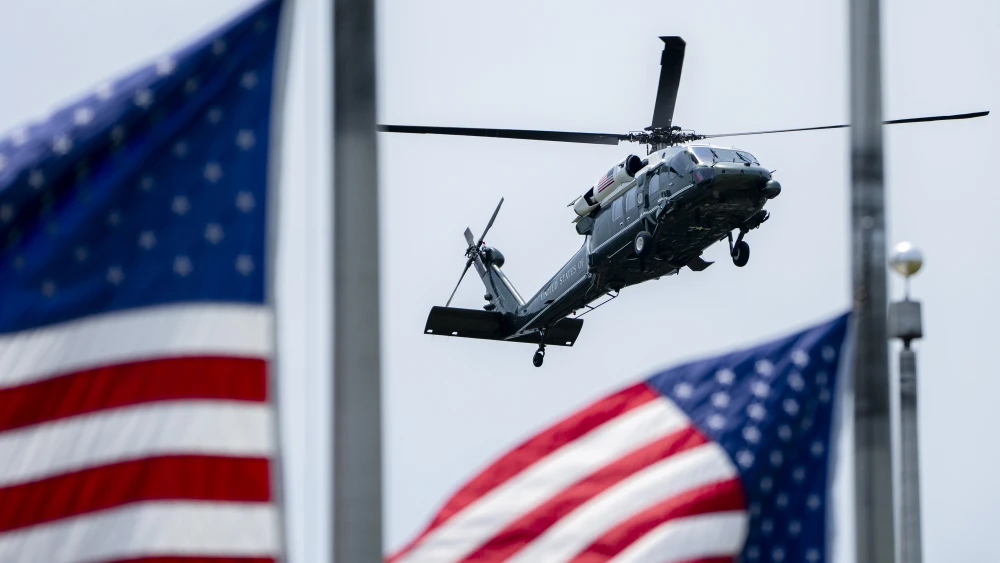
U.S. President Donald Trump departs the Ellipse on Marine One in Washington, D.C., en route the U.S. Army War College in Carlisle, Pa., July 15, 2026. Credit: White House intern Austin DeSisto/White House.

As a man who has always prided himself on his unpredictability, President Donald Trump has achieved at least one goal in the Middle East of late. Few, if any, among his supporters or detractors (and perhaps not even the president himself) know exactly what he’s going to do next. As he zig-zags his way through the ongoing war with Iran while navigating the sometimes fractious relations with America’s main allies in the region—Israel and Saudi Arabia—he is, if nothing else, keeping friends and foes guessing.

But while it’s difficult to be sure where this is all heading, even his critics should concede that, for all of his erratic public statements and course shifts over the past few months, for the time being, Trump isn’t taking the expedient or even popular path with respect to the war. For the moment, he’s actually doing the right thing.

An unpopular war

That’s not the way most members of Congress see it. Democrats are united against his policies and the war. Republicans fear that the fallout from the conflagration is going to hurt them in the fall midterm elections; in fact, they are starting to worry about that more than being in Trump’s bad graces, with some even crossing the aisle to make their stance known.

The president’s declining poll ratings also demonstrate the war’s unpopularity, which has kept gas prices high for the past five months.

At the same time, the Iranians remain committed to their drive to achieve a nuclear weapon, and buoyed by opposition to the renewed war against them, rejected a U.S. ceasefire offer this week.

Meanwhile, the Saudis, who seem to be of two minds about the conflict, think that Trump double-crossed them. They’re angry because he first signed an accord that could let them enrich nuclear fuel. Then, only a day later, he said the deal was contingent on them joining the Abraham Accords and formally recognizing Israel.

For those who claim that Trump is an unprincipled cynic, his stand on both Iran and the Saudis makes no sense. After all, if doing the popular thing was his priority, he would have ended the conflict with Iran. An attempt by some in Congress to pass a war powers resolution that would hamstring the administration’s ability to carry on the fight has, to date, failed. It’s a reflection of the general lack of enthusiasm for a war the president struggles to explain clearly as much as it is about anti-Trump partisanship.

If he wanted to shore up America’s standing with a major ally in the Middle East that is also one of the world’s leading oil producers, then he might not have thrown a monkey-wrench into the nuclear agreement with Riyadh.

But Trump, who realizes that the final two years of his term in office could be turned into a nightmare if the Democrats win the midterms, chose not to do either of those things.

The war against Iran continues with no letup in sight. U.S. forces have been pounding Iranian targets for the last two weeks. Meanwhile, Tehran’s leaders continue to menace shipping in the Strait of Hormuz. They also continue to strike at America’s Arab friends in the region, including Jordan, Iraq, Kuwait, Bahrain, the United Arab Emirates and Oman, while conspicuously not targeting the two most powerful countries allied with Washington: Israel and Saudi Arabia.

Taking him seriously, not literally

Undeniably, Trump’s statements on the war have been all over the place.

One day, he’s predicting that Iran will soon come to its senses and make a deal with him over its nuclear project and perhaps other outstanding issues that he can accept. Only a few days later, he’s declaring that the deal the United States struck with them in June is “over”—and that the regime’s leaders are “scum” or “sick people being led by sick individuals” and that “negotiations are a waste of time” with them. That’s after having said only a month ago that the same bunch was a group of “very rational people.”

Part of the problem is that Trump watchers, especially in the media and among his political opponents, keep forgetting the basic insight about him that journalist Salena Zito famously wrote in 2016 and which remains true today: “The press takes him literally, but not seriously; his supporters take him seriously, but not literally.”

The point isn’t that he engages in hyperbole, as well as pays little attention to whether his statements are measured or entirely accurate. His threats, like his praise, are merely talking points and negotiating tactics.

Sometimes, that’s deeply unfortunate. His comments earlier this year that encouraged the Iranian people to revolt against their corrupt Islamist tyrants, saying “help was on the way” when it was not, were a tragic mistake. The result was that tens of thousands of protesters were slaughtered by a regime still in place.

Rejecting appeasement

But for all of his inconsistency, Trump still gets the big picture on Iran right.

He ended the joint Israeli military campaign against Iran in April with a ceasefire out of impatience with Tehran’s resilience, despite overwhelming losses, mainly because the hike in gas prices was a blow to the GOP’s hopes of holding onto Congress this fall. And he sent Vice President JD Vance, along with foreign-policy envoy Steve Witkoff and presidential adviser/son-in-law Jared Kushner, to Switzerland to negotiate a pact to end the war while allowing him to claim that he had also ended the Iranian nuclear threat.

Predictably, this exercise in essentially repeating past administration’s mistakes failed. The notion, put forward by Vance—that ending the war was a priority and that the United States could trust the Islamists to keep their word on nuclear issues—was soon exposed as a colossal blunder. Iran had no more intention of giving up its nuclear ambitions than it had of ceasing its role as the world’s leading state sponsor of terrorism, locked in a generational war against the West.

Trump could have accepted this humiliation. Indeed, all the experts urged him to do so because they argued that Iran could not be defeated. It was, they said, a struggle in which America’s refusal to accept any economic pain or even minimal casualties was matched against Tehran’s capacity to continually escalate the conflict and tolerate almost unlimited destruction. That’s something, establishment voices say, that makes them invincible.

But so far, Trump isn’t buying it.

He gave the Iranians a chance to make a deal that was extremely favorable to them. Had they abided by the Memorandum of Understanding negotiated by Vance, it would have been a triumph for the regime and a defeat for the United States. But, like former Presidents Barack Obama and Joe Biden, Vance learned that the Islamists don’t want a favorable settlement. They will never give up their quest for regional hegemony or their mission of spreading their brand of fanatical Islam across the globe. The difference between this administration and its predecessors is that the man in the Oval Office isn’t willing to accept that kind of humiliation.

While he may be deeply frustrated with the failure of the military campaign to bring the regime to its knees as quickly as he would like, he is equally determined not to give up and let a terrorist regime have its way.

Trump entered politics primarily as a critic of the failed “forever” wars in Afghanistan and Iraq. Although he is sensitive to critics who claim that he’s repeating the mistakes made by former President George W. Bush in those two unwinnable conflicts, he understands that while the United States might have been able to walk away, albeit disgracefully, from those battles, Iran is a different story.

The Islamic Republic has been at war with the United States since the Islamist regime seized power in 1979. It is responsible for killing hundreds of Americans and launching wars that caused the deaths of exponentially more people around the region, including the one that followed the Hamas-led Palestinian Arab assault in southern Israel on Oct. 7, 2023. Its nuclear ambitions are a direct threat to the United States as well as other countries in the Middle East.

Contrary to the arguments of those who claim that Washington can simply walk away from this problem—whether articulated by liberal pundits who hate Trump and are allergic to the exercise of U.S. power or antisemitic conspiracy-mongers like former Fox News host Tucker Carlson, who have become Islamist cheerleaders—this is a conflict where the defense of U.S. interests requires the defeat of America’s antagonist. Far from an illegal or immoral foreign adventure, it is a just war that needs to be fought to a successful conclusion.

Kicking the can down the road for a successor to deal with a dilemma that will almost certainly be harder to solve might lower fuel costs for now, as well as preclude any further casualties and bad press. But it would also be irresponsible and dangerous.

Ultimately, Trump may not stay the course on Iran. But for the moment, he is acting, if not always speaking, as if he knows that he must not let the Islamists triumph. The fighting will have to keep going until there is a government in Tehran that will accept American terms and be forced to abide by them.

It’s also true that Trump may have already concluded that his administration’s worries about the midterms won’t be fixed by letting the Iranians win. Whatever political capital he expended on the issue is, at this point, spilt milk and cannot be retrieved by adopting appeasement. Having lost a war to terrorists will be worse for the Republicans in November than to still be fighting one that is far from popular.

Standing his ground on Iran will be a better position for him and the GOP than waving the white flag. And in doing so, he will actually be rising to his responsibility of defending his nation and the West.

Saudi nuclear deal

The same is true for his reversal on the deal with the Saudis.

The Saudi monarchy was initially quietly in favor of the U.S.-Israeli war on Iran, which poses as great a threat to Riyadh as it does to Jerusalem. But it got cold feet once the Gulf states began to be hit by Iran, coupled with attacks on shipping that disrupted the oil trade.

Their interest in a nuclear deterrent to Iran—and approving the start of a nuclear project for the Saudis has no other purpose other than that—may be understandable. In a world where the United States punts on stopping the Iranian nuclear threat, this might seem rational. But save for Vance’s neo-isolationist rants, it has never been something Trump accepted as an option.

In contrast to Obama and Biden, Trump has rightly sought to maintain close relations with a nation that is—its flaws as an Islamist autocracy notwithstanding—key to keeping Iran in check and a Middle East that is friendly to the West. But giving it a pathway to nuclear weapons (safeguards in the proposed agreement with the United States notwithstanding) is frankly insane. There is always the possibility that the current leadership embodied by Crown Prince Mohammed bin Salman (MBS), who wants to modernize if not democratize his country, might be toppled by his radical foes. It is equally true that even under its current conservative leaders, the Saudis ought not to be trusted with the ultimate weapon.

Many in Israel and in the United States believe that it is only a matter of time before the Saudis join the Abraham Accords. But that sort of optimism, which was widespread after the normalization agreement was crafted in 2020, is almost certainly wrong.

The Saudis may have a relatively friendly relationship with Israel. They are tacit allies with it against Iran and open to the economic benefits of commerce with the Jewish state. But MBS and other Saudi leaders don’t need to extend themselves much further than that and rock the regional boat; they feel their current relationship with Israel is just fine.

Moving to full recognition and the exchange of embassies will bring them more problems than benefits. The core identity of the Saudi regime is inextricably linked to the Wahhabi sect of Islam, and its status as the guardian of the Muslim holy places in Mecca and Medina. That’s an insuperable obstacle to normalization. Moreover, their enthusiasm for closer ties with Jerusalem rises and falls in direct relation to the threat level from Tehran, which, as long as Washington is dedicated to ending the nuclear peril, is low.

By demanding normalization, Trump is essentially spiking the nuclear deal with the Saudis. Like the MoU with Iran, the pact with Iran was always a terrible idea. While there is clearly a faction inside the administration that, motivated by neo-isolationist sentiment, wants to retreat from the Middle East and likely pushed for this fiasco, Trump knew better.

Again, there is a political cost to this decision.

It is entirely possible that alienating Riyadh could contribute, either directly or indirectly, to oil-supply decisions that could contribute to rising prices—political poison for Trump. But to his credit, again he did the right thing after flirting with an unforced error that would have been a potential disaster.

Big picture decisions

Trump’s Middle East policies continue to be a mix of keen insight and puzzling decision-making. For example, his closeness with Turkey’s leader Recep Tayyip ErdoÄŸan has led to mistaken policies with respect to the Kurds and Syria that are undermining the struggle against Iran and its terrorist auxiliaries.

And his on-again, off-again bromance with Israeli Prime Minister Benjamin Netanyahu is deeply frustrating for friends of the Jewish state and those who understand the stakes involved in nurturing the alliance between the two nations. Going back and forth from rightly praising Israel for fighting side by side with America against common foes—and then, inappropriately, using the prime minister as a scapegoat for the lack of immediate success against Iran—only encourages the war’s critics, and antisemites on the right and the left.

When looking at the big-picture decisions the president is making, the errors aren’t as serious as his determination to keep fighting against Iran and not to let the Saudis go nuclear, despite the potential political costs. Focusing on his inconsistent day-to-day statements on the war only adds to the confusion. But so long as he is standing his ground on Iran and protecting U.S. interests rather than doing the politically expedient thing, Trump deserves far more praise than criticism. 


Jonathan S. Tobin, editor-in-chief of the Jerusalem News Syndicate, a senior contributor for The Federalist, a columnist for Newsweek and a contributor to many other publications. He covers the American political scene, foreign policy, the U.S.-Israel relationship, Middle East diplomacy, the Jewish world and the arts. He hosts the JNS “Think Twice” podcast, both the weekly video program and the “Jonathan Tobin Daily” program, which are available on all major audio platforms and YouTube. Previously, he was executive editor, then senior online editor and chief political blogger, for Commentary magazine. Before that, he was editor-in-chief of The Jewish Exponent in Philadelphia and editor of the Connecticut Jewish Ledger. He has won more than 60 awards for commentary, art criticism and other writing. He appears regularly on television, commenting on politics and foreign policy. Born in New York City, he studied history at Columbia University.

Source: https://www.jns.org/opinion/column/jonathan-s-tobin/trump-is-a-puzzle-but-hes-standing-firm-on-iran-and-the-saudis

Follow Middle East and Terrorism on Twitter