The "Middle East and Terrorism" Blog was created in order to supply information about the implication of Arab countries and Iran in terrorism all over the world. Most of the articles in the blog are the result of objective scientific research or articles written by senior journalists.
From the Ethics of the Fathers: "He [Rabbi Tarfon] used to say, it is not incumbent upon you to complete the task, but you are not exempt from undertaking it."
The Islamic-socialist political transformation Obama spent years helping to cultivate could finally be coming to pass.
Here it is, the second half of 2026, and America is in the midst of a
marked political shift. From the perspective of anyone with even a
modicum of pattern recognition, it appears that the Islamic-socialist
political transformation Obama spent years helping to cultivate could
finally be coming to pass.
The former president saunters around as if he’s retired from the
day-to-day work of being the coolest ex-president. But as someone who
has monitored his every word and deed since the first day he imposed his
smarmy attitude on America, I’d argue this man continues to be hard at
work assisting all things Islamic socialist in nature.
Let’s review: while the horrors of 9/11 were still raw, newly elected
Obama began dismantling the Bush-era counterterrorism framework. Within
days, the 44th president prohibited CIA interrogation practices used after 9/11 and restricted interrogations in armed conflicts to techniques authorized in the U.S. Army Field Manual.
Soon afterward, he demanded the closure of CIA detention centers,
declared waterboarding torture, and ordered the Guantánamo Bay detention
facility closed.
Why?
Then, true to form, in April 2009, Obama’s administration changed the
vocabulary surrounding terrorism. Homeland Security secretary Janet
Napolitano described terrorist attacks as “man-caused disasters.” The “Global War on Terror” became “Overseas Contingency Operations,” while Obama’s Justice Department abandoned the term “enemy combatant.”
Correct me if I’m wrong, but Muslim jihadists declared war on America, not the other way around.
On April 7, 2009, Obama’s Department of Homeland Security released an assessment of right-wing extremism.
The report warned, among other things, of extremist recruitment
targeting military veterans and of movements surrounding contentious
issues such as racism, abortion, and immigration. The treatise seemed
designed to divert attention from a gangrenous wound to a blackhead.
Seeking what he called “a new beginning between the United States and Muslims around the world,” weeks later, Obama jetted to Cairo.
Opening with “Assalaamu alaykum,” he discussed Western colonialism and
America’s role in Iran’s 1953 coup, commiserated over Palestinian
suffering, praised Islamic civilization, and defended the hijab. Then he
declared that “Islam is a part of America,” and asserted that as U.S.
president it was his responsibility to combat negative stereotypes of
Islam.
Clearly, Obama needs a refresher on the fourteen centuries of
military conflict between Muslim and Christian powers, spanning wars
from the early Islamic conquests and the Crusades to the Ottoman
expansion into Europe and, in the modern era, the rise of jihadist
movements. What he always fails to mention is Islam’s brutal
sword-driven conversions imposed on the world for nearly fourteen
centuries. The Center for the Study of Political Islam estimates that Muslim conquests have been responsible for 270 million deaths and counting.
In November 2009, Attorney General Eric Holder
announced that Khalid Sheikh Mohammed and four other accused 9/11
conspirators would be prosecuted in civilian federal court in Manhattan
rather than tried by a military commission at Guantánamo Bay.
Then came Park51.
Given the historical symbolism critics associated with mosques erected
in the wake of Islamic conquest, Obama’s defense of Muslims’ right to
build the Islamic center near Ground Zero further cemented the
impression that his instinct was to consistently defend Islam against
its American critics. It appeared as though Obama was defending the
Muslims’ right to raise their leg like a dog on a fire hydrant by
constructing the Park51 Islamic center near Ground Zero.
From 2011 to 2013, the Obama administration engaged with Mohamed Morsi’s Muslim Brotherhood government in Egypt. In 2012, Obama told the U.N., “The future must not belong to those who slander the prophet of Islam.”
Babies born alive after botched abortions can be left to die, but
slandering the prophet who married a six-year-old girl is a big no-no in
Obama’s world.
Obama spent years emphasizing that ISIS, which wages war in the name of Islam, was separate from Islam. Yet at the 2015 National Prayer Breakfast,
he did not hesitate to seize the opportunity to draw a moral
equivalence between Islamist atrocities and the Crusades, the
Inquisition, slavery, and Jim Crow.
If we consider “fundamental transformation” in the context of Obama’s
defense of Islam, the essence of his presidency takes on a whole new
perspective.
In 2015 and 2016, while visiting American mosques, Obama again emphasized Muslims’ place in America. He championed the Iran nuclear agreement, which gave a nuclear-ambitious, “Death to America”-Iran access to tens of billions of dollars in previously restricted assets.
It was the Obama administration that reached a $1.7 billion settlement
with Iran, including $400 million in Iranian funds held by the United
States and approximately $1.3 billion in interest. Separately, the
implementation of Obama’s Iran nuclear deal lifted nuclear-related
sanctions and gave Iran access to roughly $50 billion in previously restricted Iranian foreign reserves -- which is akin to handing Lizzie Borden a barrel of sharpened hatchets.
After leaving office, Obama appeared to be enjoying a celebrity
retirement -- kitesurfing with Richard Branson, vacationing with
celebrities, attending sporting events, and making television
appearances. Yet politically, he has never truly disappeared.
In my world, the people we choose to stand beside reveal what we are willing to stand for.
In 2025, when Democratic socialist darling Zohran Mamdani won the New
York City mayoral race, Obama reached out to offer to be his “sounding board.” For what, pray tell? How to successfully establish the Muslim call to prayer in the five boroughs?
Mamdani, a longtime supporter of all aspects of the Palestinian cause, has accused Israel of genocide in Gaza, and said, if he could, he would honor the International Criminal Court warrant for Israeli Prime Minister Benjamin Netanyahu.
Then in 2026, another progressive Muslim politician, Abdul El-Sayed,
defeated the Democratic establishment candidate in Michigan’s Senate
primary. So what does Obama do? Just as he did with Mamdani, he calls Abdul El-Sayed.
Like Mamdani, El-Sayed also calls Netanyahu a “war criminal,” has
accused Israel of genocide, questioned whether Israel should exist as a
Jewish state, opposed U.S. support for Israel against Iran, supported
defunding the police, and called for abolishing ICE. He has also
associated with streamer Hasan Piker, who infamously said, “America deserved 9/11.”
Association alone does not prove agreement. However, continued,
selective association can reasonably invite questions about support.
Obama’s decision to become publicly involved with these newer
progressive figures raises questions, especially when pattern
recognition is applied to his chronological tendency to embrace
progressive politics and repeatedly defend Islam against its critics.
Barack Obama’s presidency began with an extraordinarily rapid
transformation of the language and policies surrounding post-9/11
terrorism. Seventeen years after Cairo, he is now publicly engaging with
progressive Islamist politicians whose positions on Israel, policing,
immigration, and socialism sit far to the left of mainstream America.
Thus, the question isn’t whether these policies, statements, and
associations constitute a collection of unrelated political decisions
spanning seventeen years, but rather what they reveal about what Obama’s
efforts have really been about all along.
A progressive Islamist worldview now sits at the heart of today’s
Democrat Party -- and Barack Hussein Obama remains one of its most
influential architects.
Tehran believes its path to
victory is not necessarily through defeating the United States
militarily, but through managing the confrontation until President
Donald Trump's term ends in January 2029.
For the remaining time of Trump's presidency, the regime plans to
play a familiar game of opening and closing the waterway, dangling
intermittent negotiations, employing intermediaries, walking up to the
table and then walking away. Before anyone notices, two years will have
passed.
The only priority is surviving Trump.
Iran's regime evidently plans to control who passes, under what
conditions, and to impose fees or "navigational services" the minute
Trump leaves office.
The wealth that Iran would obtain by extorting global energy
markets would reinvigorate its support for proxy militias and terrorist
groups, and, above all -- with continuing help from China, Russia, and
North Korea -- the regime's ultimate insurance policy: its nuclear
program, which is now reportedly tucked under Pickaxe Mountain.
Are free nations prepared to accept an expansionist revolutionary
theocracy that wholly rejects Western norms and violates freedom of
navigation as the permanent gatekeeper of a key maritime shipping
chokepoint? Probably.
That is the peril of leaving the job half-finished. Trump's
campaign has already inflicted severe damage. Allowing the regime to
stay in place to continue developing nuclear weapons and asserting
control over the Strait of Hormuz and Bab al-Mandab at the mouth of the
Red Sea would squander that advantage.
The necessary objective is unconditional surrender, not some bogus deal.
The only responsible response is to deny the regime the
opportunity. Continue the economic pressure, resume the military
pressure, remove every layer of leadership, support those inside and
outside Iran ready to end the theocracy's rule, and refuse any outcome
short of complete unconditional surrender. With anything less, Trump
will go down in history as having ushered in a far more dangerous world.
The wealth that Iran would obtain by extorting global energy
markets would reinvigorate its support for proxy militias and terrorist
groups, and, above all -- with continuing help from China, Russia, and
North Korea -- the regime's ultimate insurance policy: its nuclear
program, which is now reportedly tucked under Pickaxe Mountain.
Pictured: A Fattah ballistic missile is displayed during the annual
military parade in Tehran, on September 22, 2023. (Photo by AFP via
Getty Images)
For decades, the Iranian regime has guarded its strategic intentions
behind ambiguity, denials and carefully calibrated statements. Its
current strategy has now become unusually explicit. Recent comments
attributed to Majid Shakeri, an adviser to Iranian Parliament Speaker
Mohammad Bagher Ghalibaf, suggest
that Tehran believes its path to victory is not necessarily through
defeating the United States militarily, but through managing the
confrontation until President Donald Trump's term ends in January 2029.
Shakeri described the approach as maintaining a state of neither war nor peace and exercising
"strategic patience" and "getting along with him [President Trump]
until his term ends." It is a strategy that Washington and its allies
should take seriously.
The original American and Israeli war aim was the regime's unconditional surrender
and strategic defeat — crippling its military capacity, eliminating key
leadership layers, and forcing genuine surrender on nuclear, missile,
and regional aggression issues. Tehran has since redirected the fight
onto the Strait of Hormuz. For the remaining time of Trump's presidency,
the regime plans to play a familiar game of opening and closing the
waterway, dangling intermittent negotiations, employing intermediaries,
walking up to the table and then walking away. Before anyone notices,
two years will have passed.
This is a regime that prolonged its war with Iraq for eight grisly
years; it knows how to extend conflict. Because Iran's leaders do not
care about the suffering of their own people — evident in ongoing
executions, suppression of protests, and indifference to economic pain —
it will absorb sanctions, oil revenue losses, and hardship that would
collapse most governments. Selling oil or not selling oil is secondary.
The only priority is surviving Trump.
Control of the Strait— through which roughly one-fifth of the world's
traded oil normally passes — has become Iran's "golden weapon,"
eclipsing even the nuclear file as the central bargaining chip. Iranian
officials have repeatedly stated
that the waterway will not return to its pre-war status as an open
international passage. Iran's regime evidently plans to control who
passes, under what conditions, and to impose fees or "navigational
services" the minute Trump leaves office.
Negotiations open and close; memoranda of understanding are signed
and then violated; attacks on shipping resume when leverage needs
refreshing. The regime has turned a military confrontation aimed at its
own survival into a prolonged contest over a global energy chokepoint.
It took nearly five decades for a U.S. president to emerge who was
willing to take decisive military action against the Islamic Republic.
Tehran calculates — correctly — that another leader with the
determination of President Trump is unlikely to appear soon again.
Perhaps the regime counts on the possibility of a Democrat-controlled
Congress after the midterm elections this November, which the regime
seems to will have no political appetite for sustained pressure.
The wealth that Iran would obtain by extorting global energy markets
would reinvigorate its support for proxy militias and terrorist groups,
and, above all -- with continuing help from China, Russia, and North
Korea -- the regime's ultimate insurance policy: its nuclear program,
which is now reportedly tucked under Pickaxe Mountain.
Are free nations prepared to accept an expansionist revolutionary
theocracy that wholly rejects Western norms and violates freedom of
navigation as the permanent gatekeeper of a key maritime shipping
chokepoint? Probably.
Iran could eventually arm its proxies with nuclear capabilities and
proliferate the regime's longstanding practice of targeted
assassinations -- since 1979, littered
with the elimination of dissidents, political opponents, and
foreigners. Even family members and close associates have not been spared.
A triumphant, wealthier, and eventually nuclear-armed Iran would go on a
full-scale campaign of revenge against Americans, Israelis, and Iranian
opposition figures.
That is the peril of leaving the job half-finished. Trump's campaign
has already inflicted severe damage. Allowing the regime to stay in
place to continue developing nuclear weapons and asserting control over
the Strait of Hormuz and Bab al-Mandab at the mouth of the Red Sea would
squander that advantage.
The necessary objective is unconditional surrender, not some bogus deal.
This outcome will likely require systematically removing successive
layers of hardline leadership until the structure collapses. New
hardliners installed in the military and security apparatus who seek revenge need to be neutralized. The regime cannot be permitted to recover.
The global order of freedom of navigation that has underpinned
Western democracies and open commerce would be permanently altered. The
only responsible response is to deny the regime the opportunity.
Continue the economic pressure, resume the military pressure, remove
every layer of leadership, support those inside and outside Iran ready
to end the theocracy's rule, and refuse any outcome short of complete unconditional surrender. With anything less, Trump will go down in history as having ushered in a far more dangerous world.
Dr. Majid Rafizadeh is a political scientist, Harvard-educated analyst, and board member of Harvard International Review. He has authored several books on the US foreign policy. He can be reached at dr.rafizadeh@post.harvard.edu
America reversed a slump and began increasing oil output in 2008, but it was Trump who saw the significance and raced to high production levels. It is no coincidence that in the middle of his first term, America became the world's No. 1 energy producer.
And where was China in the rankings last year? Sixth place, with 4.3 million barrels per day.
The other half of oil dominance is refining capacity. The Economist
calls China the world's second-largest oil refiner, which by
implication means that publication believes the U.S. is the largest.
America reversed a slump and began increasing oil output in 2008,
but it was Trump who saw the significance and raced to high production
levels. It is no coincidence that in the middle of his first term,
America became the world's No. 1 energy producer.
When the U.S. is determined to use its vast power over energy, there is no way that Beijing can manage oil prices.
The Economist declared on August 9 that "China Is
Now the World's Great Oil Power," but that title belongs to the United
States of America. The U.S. has been the world's largest producer of
crude oil for eight straight years, from 2018 through 2025, and will
almost certainly retain that crown indefinitely. And where was China in
the rankings last year? Sixth place, with 4.3 million barrels per day.
Pictured: Oil rigs dot the countryside in Pyote, Texas, on March 17,
2026. (Photo by Brandon Bell/Getty Images)
"China Is Now the World's Great Oil Power," The Economistdeclared on August 9.
So, what is the significance of this pronouncement? The world's oil
power is also the world's energy power. The world's energy power, in
turn, is a leading contender for the world's dominant power. "Energy is
the foundational brick of the global economy," Jonathan Bass, the CEO of
Argent LNG, told Gatestone.
China, the world's largest importer of crude oil, exerts great leverage over markets, but The Economist is nonetheless wrong.
The "Great Oil Power" is the United States of America. The U.S. has been the world's largest producer of crude oil for eight straight years, from 2018 through 2025.
Moreover, the U.S. will almost certainly retain that crown
indefinitely. Last year, the U.S. produced 13.6 million barrels of oil
and lease condensate per day.
The country in second place was not even close. Russia produced 9.9
million barrels per day, and thanks to Ukraine's punishing attacks on
refineries, Russia's production will almost certainly decline this year.
Last month, the International Energy Agency dropped its 2026 forecast of Russian output to 8.9 million barrels per day and its 2027 forecast to 8.8 million.
The U.S., by contrast, is forecast to produce 13.7 million barrels per day this year and 14.2 million next year.
And where was China in the rankings last year? Sixth place, with 4.3 million barrels per day.
The other half of oil dominance is refining capacity. The Economist
calls China the world's second-largest oil refiner, which by
implication means that publication believes the U.S. is the largest.
Many rankings, however, give China a narrow lead in refining capacity over the U.S.
In view of all this, why did the Economist proclaim China the
world's dominant oil power? Because of its ability to influence prices.
The publication points out that oil prices did not climb as much as
analysts had feared during this year's Iran war because Beijing was able
to both depress demand inside China and draw upon its petroleum
reserve, believed to be the world's largest.
"The Iran war has shown that, in practice, China can singlehandedly
stabilize the global oil market over a period of many months," the Economist
wrote. "Leaders of the increasingly fractious oil cartel can only dream
of doing the same." Buyers, unlike producers, cannot form an OPEC-like
group, but, according to the magazine, China's "central planners can act
unilaterally on the orders of one man, President Xi Jinping."
As a result, an oil-trading boss, in comments to the Economist, called China "the new OPEC."
There were, it seems, other factors reducing Chinese demand, such as a
faltering economy. China's economy is not growing anywhere near the
4.3% pace reported for this year's second calendar quarter. Furthermore,
China was able to control prices by purchasing sanctioned oil at large
discounts from Iran and Russia.
In any event, China can set oil prices only in the American-led
international system. "In his first term, President Trump embraced a
pro-energy policy to take advantage of recent advances in American oil
and gas production," KT McFarland, deputy national security advisor
then, told me. "American energy companies developed new engineering,
mapping, and drilling techniques. We could now discover and extract
abundant amounts of oil and natural gas cheaper, cleaner, faster, safer,
and more reliably than other suppliers."
Trump knew he not only could make America energy independent, he also
realized that by selling oil and gas, he could influence others.
America reversed a slump and began increasing oil output in 2008, but
it was Trump who saw the significance and raced to high production
levels. It is no coincidence that in the middle of his first term,
America became the world's No. 1 energy producer.
Not surprisingly, Trump returned to his first-term energy policy just
hours after taking the oath of office the second time. On the first day
back in the Oval Office, the 47th president issued an executive order declaring a "national energy emergency."
Demand for energy will only increase. "The U.S. now controls the
world's light switch," Bass said this month, "and it will continue to
control the switch for the indefinite future because Trump believes in
drilling, fracking, and refining to the max." That, Bass said, "will
give America enormous leverage over the world."
China will continue to be influential in oil markets, but it will
always be working within the context of an American world. After all,
the reason China had to cut demand was the American attack on Iran and
the blockades of the Strait of Hormuz imposed on April 13 and July 14.
If the United States had imposed the blockade at the beginning of
hostilities on February 28 and had not decided to lift it in June, China
might not have had the ability to keep a lid on energy prices during
that period.
Let us, nevertheless, assume that Chinese officials in fact have the pricing power the Economist
believes they possess. That means they can raise energy prices at any
time, perhaps at a moment intended to target, say, the U.S.
It is way past time, therefore, to undermine China's pricing power.
Trump can do that in many ways, but they all begin with making sure that
the Chinese no longer continue to take sanctioned oil from, among
others, Iran. When the U.S. is determined to use its vast power over
energy, there is no way that Beijing can manage oil prices.
The Trump nuclear deals with Saudi Arabia and South Korea represent a modernized and pragmatic path with both nations.
The recent U.S.-Saudi nuclear deal, which will allow Riyadh to build
nuclear power reactors and enrich uranium for reactor fuel, represents
President Trump’s leadership in strengthening and developing America’s
relationship with Saudi Arabia and promoting stability in the Middle
East. It is also a long-overdue modernization of how the United States
should share peaceful nuclear technology with trusted partners and will
deliver major wins for U.S. industry. Like the nuclear deal with South
Korea, the Saudi deal keeps sensitive nuclear technology under American
influence rather than ceding it to rivals.
Both nuclear deals are a matter of trust. South Korea is a model
member of the Nuclear Non-Proliferation Treaty (NPT) and an ironclad
U.S. ally. Saudi Arabia is a critical partner in a volatile region. By
moving forward with these agreements, the United States is demonstrating
confidence in close partners that have repeatedly proven their
reliability.
Saudi Arabia is seeking peaceful nuclear power to diversify its
energy mix, free up oil for export, and support its broader economic
transformation. The U.S. and Saudi Arabia have signed agreements that
position American firms—led by companies such as Westinghouse with its
AP1000 reactors—to design, build, and help operate those plants. This is
a multi-decade, multi-billion-dollar opportunity. U.S. companies will
construct the reactors and related infrastructure on Saudi soil.
American technology, engineers, and supply chains will be at the center.
High-paying jobs and industrial capacity will be created in the United
States.
This deal also locks out Russia and China from spreading their less reliable nuclear technology with weaker safeguards.
The U.S.-Saudi nuclear deal includes provisions for a joint study on
the economics of fuel production, with the possibility that U.S. firms
would build and operate a Saudi uranium enrichment facility under strict
controls. This would require Saudi Arabia to honor its NPT obligations
and permit IAEA monitoring of all of its nuclear facilities.
This new nuclear partnership is also a major gesture of strategic
goodwill by President Trump to encourage Saudi Arabia to join the
Abraham Accords and normalize relations with Israel.
By offering Riyadh a high-value, long-term economic and technological
partnership with the United States, Trump is creating a powerful
incentive for Riyadh to take the final diplomatic steps toward full
diplomatic relations with Israel. Such a historic agreement would
promote stability in the Middle East and prosperity between the two
nations. Its benefits are especially clear in the aftermath of Iran’s
escalating threats to the region, including its massive drone and
missile attacks against both countries since January.
Trump is taking a similar approach to increased sharing of peaceful
nuclear technology with South Korea. Seoul is a model NPT member, a
steadfast U.S. ally facing nuclear-armed North Korea and a rapidly
expanding Chinese navy, and a global leader in shipbuilding and civilian
nuclear technology. South Korea already operates advanced conventional
submarines and a sophisticated nuclear power sector that supplies
roughly 30 percent of its electricity. It needs nuclear-powered attack
submarines for credible deterrence in the Indo-Pacific—vessels that can
remain submerged for months and patrol at sustained high speeds.
South Korea also needs access to the full nuclear fuel cycle (uranium
enrichment and reprocessing) so it can produce its own reactor fuel,
manage spent fuel stockpiles more effectively, produce high-assay
low-enriched uranium for advanced reactors, including small modular
reactors (SMRs), and become an exporter of complete nuclear solutions.
Producing its own fuel rods would also save South Korea money and
reduce its reliance on Russian-supplied uranium, which currently
accounts for roughly a third of the enriched uranium it imports. South
Korean President Lee Jae-myung has cited that dependence as a key reason
for pursuing domestic enrichment.
The new U.S. nuclear agreements with both countries require
modernized “123 agreements”—treaties the U.S. has signed with many
nations to share nuclear technology—that prohibit uranium enrichment,
reactor fuel reprocessing, or access to the full nuclear fuel cycle.
These prohibitions no longer make sense when dealing with close partners
facing acute threats. Moreover, Japan, Germany, the Netherlands,
Brazil, and others already possess fuel-cycle capabilities under IAEA
safeguards. South Korea and Saudi Arabia should also have access to this
technology.
Moreover, rigid U.S. denial of these technologies does not prevent
nuclear proliferation; it merely drives our allies toward less reliable
suppliers and leaves the United States with less visibility and less
leverage. Structured sharing, American industrial leadership, robust
safeguards, and mutual trust can counter this. The Trump approach will
expand peaceful nuclear energy, create economic value at home, advance
regional diplomacy—including Saudi-Israeli normalization—and keep
sensitive technology under the highest standards of safety and
nonproliferation.
Critics are naturally raising concerns that these agreements will
undo U.S. agreements and policies that have successfully restricted the
spread of nuclear technology with weapons applications. Such critics
include many Democrats as well as some Republicans. This criticism is
ironic given that the Biden administration unsuccessfully tried to
negotiate a similar arrangement with Saudi Arabia. Moreover, criticism
that the Trump nuclear deals pose unacceptable proliferation threats
ignores the fact that there are other, less scrupulous players standing
ready to sell nuclear technology with little or no proliferation
protections. The alternative to U.S.-led cooperation is not nuclear-free
regions; it is regions in which others set the terms.
The Trump nuclear deals with Saudi Arabia and South Korea represent a
modernized and pragmatic path forward with both nations. They deserve
strong congressional support.
Fred Fleitz previously served as chief of staff of the Trump National Security
Council. He is the author of North Korea, Nuclear Brinkmanship, and the
Oval Office, which was just released by Texas A&M Press.
About $32.1 trillion of the debt is held by the public, while roughly $7.7 trillion represents intragovernmental holdings.
The U.S. national debt is approaching $40 trillion, highlighting the
growing fiscal challenges facing the federal government as Washington
continues to run large budget deficits.
Gross federal debt stood at about $39.83 trillion as of Aug. 5,
according to the Senate Joint Economic Committee. About $32.1 trillion
was debt held by the public, while roughly $7.7 trillion represented
intragovernmental holdings.
The debt has continued climbing after the government crossed the $39
trillion threshold in March. The Committee for a Responsible Federal
Budget said the milestone came as the federal deficit was approaching $2
trillion.
The pace of borrowing has remained substantial in fiscal 2026. The
federal government recorded a $432 billion deficit in July, bringing the
deficit for the first 10 months of the fiscal year to approximately
$1.8 trillion, according to Treasury data.
The 10-month total had already surpassed the entire deficit recorded during fiscal 2025.
Rising borrowing costs are adding another layer of pressure. At a
Treasury auction this week, the yield on 30-year government bonds
reached about 5.22%, the highest level in roughly 25 years.
House Judiciary Committee Chairman says defensive briefing FBI gave him in 2020 portraying Biden allegations as Russian disinformation was "BS."
House Judiciary Committee Chairman Jim Jordan tells Just the News
the recently revealed FBI operation known as Round River was an effort
to obstruct congressional investigators from getting to the truth about
Democrat corruption and to interfere in the 2020 election to help Joe
Biden win. "It's ridiculous what happened, and it's just wrong," he
declared.
"This wasn't an investigation that was being run by the FBI and the
intel community. This was an operation, an operation, I think, to
protect Joe Biden as he was running for president," Jordan said in a
wide-ranging interview on the Just the News, No Noise television show.
The powerful committee chairman and Ohio Republican was reacting to
news reported Thursday morning that newly declassified documents show
the FBI had 14 confidential informants reporting derogatory evidence on
Biden during the 2020 election but embarked on an effort to dismiss that
evidence of a corrupt Ukrainian energy company enriching his family as
"Russian disinformation."
Dismissed evidence out of hand
One of the documents showed that Jordan was listed by the FBI and spy
agencies as "a conduit" of Russian disinformation along with Attorney
General Bill Barr, Secretary of State Mike Pompeo, Sens. Chuck Grassley
and Ron Johnson, as well as other prominent conservatives.
A 2025 U.S. intelligence community review of the Round River
operation raised concerns that FBI analysts put politics over national
security and didn't even bother to determine if the Ukraine allegations
were true before dismissing them as Russian propaganda.
Jordan revealed he was given a defensive briefing in 2020 by the FBI
suggesting the Biden allegations he was investigating were Russian
disinformation and said he found it laughable.
"That was BS. That's what we were thinking," he said.
The bigger scheme: "Get us to be quiet"
Asked if he thought the briefing and Round River operation were an
effort to obstruct Congress in its investigation of the Biden family,
Jordan answered: "I do. I think they were trying to get us to be quiet."
"You can see it in the bigger scheme where it was the 51 former Intel
officials who did that crazy letter saying the (Hunter Biden) laptop
was Russian disinformation ... when in fact they had it, and they knew
it was already his laptop, and they knew it was authentic for goodness'
sake," he noted.
"It was an operation to, I believe, continue this effort that we saw
from the Wray FBI, and before that the Comey FBI, and others in the
intel community to hurt President Trump and, in this case, help
presidential candidate and then, you know, future President Biden," he
added.
Jordan recently referred former CIA Director John Brennan for
possible prosecution for lying to Congress in connection with the
alleged Russia collusion and said he is confident that newly confirmed
Attorney General Todd Blanche will get to the bottom of wrongdoing and
punish responsible people.
"I have been very impressed with Todd Blanche, the best Attorney
General I've ever worked with," Jordan said. "I do believe he is
committed to getting to the truth and holding people accountable.
"I do think it's important to hold people accountable and to dig in
all this, and I trust that Todd Blanche is going to," he added.
A spreadsheet that was recovered from U.S. intelligence
agency files and made public Wednesday by the White House Government
Transparency Task Force shows that spy agencies and the FBI created a
list of more than six dozen prominent organizations, Americans or
foreigners who became figures in the Biden family Ukraine scandal and
the 2019 impeachment proceedings against President Donald Trump.
"Targets" and "Conduits"
The spreadsheet neatly divided figures along political
lines, with Democrats like the Bidens, Hillary Clinton, John Kerry,
Barack Obama and George Soros listed as victimized “targets” of Russian
disinformation and conservatives like Fox News, One America News, filmmaker Michael Caputo and Trump lawyer Rudy Giuliani as “conduits” for disinformation.
The FBI also labeled two of President Donald Trump’s
first-term Cabinet secretaries, Pompeo and Barr, as well as Republican
Sens. Chuck Grassley, Ron Johnson and Lindsey Graham and House GOP
committee chairmen Devin Nunes and Jim Jordan as “conduits” even while
they all investigated whether the allegations of corruption against the
Biden family were true.
The designations were part of a secret counterintelligence
operation codenamed “Round River” that was launched during the 2020
election by a task force of FBI analysts claiming to be fighting “malign
foreign influence” in the 2020 election, according to an administration
official.
The Foreign Influence Task Force (FITF), based in FBI
headquarters, concurred with each of the assessments in the spreadsheet
with a “no objection” designation, the documents state.
Many of the Americans were identified as potential
candidates for defensive briefings, though the spreadsheets and
documents found so far do not identify how many Americans ultimately
were given such briefings.
In some ways, the Round River operation is a mirror opposite of the Russia collusion probe
known as Crossfire Hurricane in which the FBI pursued unsubstantiated
allegations spread by Democrats that Trump and his allies conspired with
Vladimir Putin to hijack the 2016 election. In Round River, FBI
analysts sought to dismiss significant evidence in the bureau's
possession, including Hunter Biden's own laptop, pointing to possible
corruption by the Bidens.
Documents released by the White House earlier this month
exposed an investigation in 2017 codenamed “Oxferd Comma” alleging the
newly elected president Trump may have been acting as a Russian asset
when he fired then-Director James Comey even though the bureau’s own
evidence overwhelmingly showed at the time there was no collusion with
the Kremlin.
Remarkably, the effort to portray the Bidens' scandals as
Russian disinformation came even though confidential human sources
working for the FBI and other agencies began reporting a steady stream
of concerns starting in 2015 that Ukraine was possibly targeting the
future first family for influence, the memos show. The FBI has
identified at least 14 informants who were providing derogatory
information on the Bidens, according to an FBI letter made public
Wednesday.
In that letter to the White House Government Transparency
Task Force, FBI Director Kash Patel said the Foreign Influence Task
Force was terminated on his watch and its activities are now under
investigation.
Operation Round River a political tool, not a national security issue
He said he shared concerns cited in a 2025 Director of
National Intelligence memo declassified on Wednesday that Round River
was used as a political tool to neutralize an alleged corruption
narrative about Biden, the Democrats' 2020 presidential nominee, rather
than to address true national security threats.
“While our internal review of the FITF is not yet complete,
we are investigating whether the FITF used information learned from the
Round River assessment to undermine or influence ongoing investigations
by only focusing on the subset of CHS’s (Confidential Human Sources)
involving the Bidens,” Patel wrote, according to the letter reviewed by Just the News.
“We remain concerned that defensive briefings to Congress
may have been overly focused on just Biden and Ukraine rather than the
balanced picture of all foreign threats,” he added.
Patel said the bureau is “firmly committed to identifying,
investigating and holding accountable all abuses” that occurred during
the Round River operation and to ensure “that future counterintelligence
operations remain focused exclusively on legitimate foreign threats and
are never used to advance political narratives."
Just the News Editor's Note: John Solomon is on leave as
Editor-in-Chief of Just the News while working as the chairman of the
White House Government Transparency Task Force as an unpaid special
government employee. His name appeared in the spreadsheet released
Wednesday as a potential "conduit" of Russian disinformation
Leftist candidate Abdul El-Sayed defeated U.S. Rep. Haley Stevens, D-MI., in the Michigan Senate primary.
(The Center Square) -
With the wins of socialist,
progressive and moderate Democrat candidates in recent midwestern
primaries, top leaders in the party are embracing “unity” with the
far-left wing of their party.
Former Detroit public health official and progressive candidate Abdul
El-Sayed defeated U.S. Rep. Haley Stevens, D-MI., in the Michigan
Senate Primary.
State Sen. Mallory McMorrow, D-Royal Oak, also ran for the Senate seat, but dropped out weeks before the election.
Both Stevens and McMorrow were quick to endorse the candidate they both targeted for his views in the weeks before.
“What is most important now is that we recognize that for all of the
differences we may have had in this primary, that those differences pale
in comparison to the contrast that we face in November,” McMorrow said
after the Senate race was called.
Among other top Democrats from across the country, Illinois Gov. J.B.
Pritzker has made calls to winning candidates in recent primaries.
“After an election I often call the victors and those who lost in the
elections just to say ‘congratulations on your victory,’ or, ‘I went
through an election where I lost some number of years ago. It's a hard
thing to do.’ I always remind people who are losing in Democratic
primaries as I did, it's really important to go and support the victor,”
Pritzker said.
He said he wants Democrats to keep their eye on winning in the elections to win back a majority in Congress.
Pritzker wouldn’t go as far to back socialist candidates outright.
“I don't think it's a matter of ideological differences. I do think
it's a matter of team fight versus team cave and I think the voters want
people who are going to go to Washington and fight for them,” Pritzker
said.
Michigan isn’t the only midwestern state to embrace the party’s “unity” approach following their primaries.
Both in Minnesota and Wisconsin, the Democratic-Farmer-Labor Party
and Democrats respectively followed a similar playbook Wednesday.
Minnesota DFL U.S. Senate nominee Peggy Flanagan in Minnesota said in
a statement that the party’s unity in their state would help Democrats
earn a majority in the Senate, despite her party already holding both
seats.
State Rep. Francesca Hong, D-Madison, a Democratic Socialist
Wisconsin gubernatorial candidate, lost her race to the more moderate
David Crowley, the Milwaukee County executive.
Crowley said this week he plans to do a “unity tour” with his more radical counterpart.
“We're going to be getting together relatively soon to actually start our unity tour,” Crowley said Tuesday night.
Crowley said later in the week to note that he wouldn’t be embracing
some of Hong’s policies, such as a moratorium on data centers.
His general election opponent, U.S. Rep. Tom Tiffany, R-Wi., said he
would back widely bipartisan supported restrictions on data centers –
including ending tax incentives, ensuring no rate hikes and heavier
regulation on construction.
In many primary races, turnout for Democrats has been higher than
anticipated. Pritzker attributed the turnout to Republicans choosing to
take Democrat ballots this year.
“As to why progressives are winning in some places, and not, you
know, maybe some in others, Democrats are seeing this huge turnout again
because whoever it is that's articulating a message that they're going
to go to Washington and fight for people,” Pritzker said.
IDF reportedly conducted additional strikes early Sunday morning • IDF: Three soldiers wounded in strike from explosive Hezbollah drone
Two IDF company commanders at Beaufort Castle, southern Lebanon, July 12, 2026.(photo credit: JONATHAN SPYER)
The IDF struck a Hezbollah headquarters in the Ansar area
in southern Lebanon overnight Friday, after terrorists seriously
wounded three IDF soldiers in an attack near the Ali al-Taher Ridge.
Israeli
forces conducted additional strikes at the ridge in the early hours of
Sunday morning, according to according to Israeli media citing local
reports.
The
Prime Minister’s Office said in a statement, “This morning, Hezbollah
violated the ceasefire in Lebanon by attacking our soldiers in the
security zone, which protects Israeli communities just across the
border. The Hezbollah attack seriously injured three of our soldiers.
The IDF responded by striking the Hezbollah terror headquarters that
ordered the attack.”
The
IDF later said that the three soldiers were wounded by an explosive
drone launched by Hezbollah. They were evacuated to receive medical
treatment at a hospital, and their families were notified.
Additionally,
the IDF Spokesperson’s Unit and the PMO said in separate statements
that civilians were also unintentionally killed in the strike.
IDF
soldiers operate in southern Lebanon against Hezbollah terrorists,
published March 20, 2026. (credit: IDF SPOKESPERSON'S UNIT)
The
IDF said that its strike killed several Hezbollah terrorists –
including Ali Samir Al-Haj Hassan, a battalion commander in Hezbollah’s
Radwan Force unit. However, the military noted that, at the time of the
strike, Hassan’s family was with him inside the headquarters.
IDF, PMO says military was unaware of civilians present in Hezbollah HQ during strike
“It
should be emphasized that the family members were not the target of the
strike,” the IDF wrote in a statement. “The strike was specifically
directed at Hassan, who was a lawful target under international law. The
terrorist used his family as human shields, hiding alongside them
inside the military headquarters.”
The PMO said that it had been unaware that Hezbollah put civilians in the Hezbollah military compound.
“Only
later did the IDF learn that Hezbollah deliberately put civilians in
that military compound. Hezbollah is willing to do anything, including
using its own civilians as human shields, to falsely accuse Israel of
deliberately targeting civilians, which the IDF clearly did not.”
At least 11 people were killed in the strikes, Lebanon’s Ministry of Public Health said.
Lebanon's Aoun, Nawaf say that IDF strikes violate US-backed ceasefire
Lebanese President Joseph Aoun condemned
“ongoing Israeli attacks” in southern Lebanon, which he said were in
‘violation of the Framework Agreement’ in a post from his office’s
X/Twitter account on Saturday morning.
دان رئيس الجمهورية العماد جوزاف عون الاعتداءات الاسرائيلية المستمرة على مناطق الجنوب ولا سيما على منطقة النبطية ومحيطها، وخروقاتها المتكررة لاتفاق الإطار ولعمل مجموعة التنسيق العسكرية وللقوانين الدولية بحماية المدنيين ما ادى إلى استشهاد عائلة كاملة من بلدة أنصار. واعتبر الرئيس…
Lebanese Prime Minister Nawaf Salam
also responded to the IDF strikes, calling on Israel to “halt its
military escalation” in Southern Lebanon in a post to X on Saturday.
“The
responsibility for dealing with any military structures, if they exist
on Lebanese territory, lies exclusively with the Lebanese state, through
the Lebanese army and its legitimate institutions, and their existence
does not grant Israel the right to violate Lebanese territory or
endanger civilians,” Salam said.
إنّ التصعيد الإسرائيلي الذي تشهده منذ فجر اليوم مدينة النبطية وبلدة أنصار ودير الزهراني والقرى المجاورة، وما رافقه من غارات وقصف كثيف وترهيب للأهالي في منازلهم، امر بالغ الخطورة ويقوّض مساعي تثبيت الاستقرار في الجنوب. إنّ شهداء الغارة الإسرائيلية على بلدة أنصار السبعة ليسوا «بنية…
“Israel
must halt this escalation. For the security of our people and their
right to life on their land are not subject to negotiation or
bargaining,” he added.
In response to the attacks, Hezbollah said that IDF strikes in southern Lebanon would be “met accordingly.”
“This
Israeli escalation, through the targeting of civilians and the
expansion of the areas being targeted, reflects the desire and intention
of the enemy’s criminal prime minister, Netanyahu, to escalate the war
in order to bolster his domestic political standing, serve his electoral
objectives, and appease the far Right,” the terror group wrote in a
statement on Telegram.
“The
Israeli enemy must understand clearly that its attacks, violations, and
attempts to impose a new reality cannot continue and will be met
accordingly, in defense of Lebanon, its people, its sovereignty, and its
national dignity.”
In
response to the IDF and PMO’s announcements that three soldiers were
wounded, US Ambassador to Israel Mike Huckabee called Hezbollah “pure
evil.”
Iran's proxies are pure evil. Hezbollah severely wounds @IDF soldiers knowing @Israel will respond. Hezbollah rounds up children to put in the military zone b/c they want them to be in harm's way. @IsraeliPM affirms what US observes in Lebanon & in Gaza w/ Hamas. https://t.co/Eedhr8q5H8
— Ambassador Mike Huckabee (@GovMikeHuckabee) August 15, 2026
Ongoing push for trilateral framework agreement
Negotiations between Israel and Lebanon have remained in a state of flux since the trilateral framework, agreed upon by Israel, Lebanon, and the United States, was signed in June.
The
agreement, which aims to encourage diplomatic relations between the two
neighboring countries, remains uncertain as the IDF continues to
maintain its presence in Southern Lebanon, while Hezbollah refuses to
disarm.
On the official site Congress.gov, the following appears: “The United States requested Tamimi’s extradition in 2017, but Jordan’s Court of Cassation ruled that the extradition treaty was invalid.”
Alham Tamimi.(photo credit: REUTERS)
While
the United States is celebrating its 250th anniversary of independence,
the parents of a teenager with American citizenship, murdered 25 years
ago in an atrocity whose perpetrator, Ahlam Tamimi, was released from
prison in 2011 by the Israeli government in the Schalit deal, have since
then been pleading with the US authorities to follow their own laws and
legal decisions to bring the murderer to justice in an American court.
“Justice,”
a word repeated three times in America’s Declaration of Independence.
The third time is regarding the Americans’ “British brethren” as having
been “deaf to the voice of justice...”
But
have the tables turned? Is it the US that has become deaf to the voice
of justice demanded by Frimet and Arnold Roth, the parents of Malka
Chana – Malki – a justice they have been pursuing for 15 years?
Their
fervent dedication and resolve have been up against powerful people in
Israel, Jordan, and the US. It is a story of obfuscation and pain, with
only an occasional glimmer of hope and light.
With Tamimi free and living the life of a celebrity in Jordan, as we wrote in Part I, the Roths took their case to Washington.
US
DOJ also took up the case of murdered American tourist Kristine Luken.
Pictured: Stabbing attack survivor Tal Hartuv [Kay Wilson] hugs Luken’s
parents in Jerusalem District Court, 2011. (credit: FLASH90)
Arnold
Roth: “Because Americans had been murdered at Sbarro, we hoped that a
rarely invoked federal law, Section 2332a of Title 18 of the United
States Code, might apply to get Tamimi back behind bars in the US.”
The
other American citizen murdered in Sbarro was Shoshana Yehudit
Greenbaum, 31, a teacher originally from LA and living in Passaic, New
Jersey. An only child, she had arrived in Israel with her husband for
six weeks of graduate studies and was pregnant with their first child at
the time of her death.
Chana
Tova Chaya Nachenberg, of Modi’in, also an American, was 31 at the time
of the attack. Severely wounded, she was in a coma for almost 22 years
and succumbed to her wounds on June 1, 2023. Therefore, earlier letters
and articles refer to only two American citizens who were murdered in
the attack.
Section
2332a is a federal criminal statute titled “Use of weapons of mass
destruction,” including “against a US national outside the United
States.” The weapons can include “bombs, grenades, certain rockets,
certain missiles, mines, similar devices... and if death results, shall
be punished by death or imprisoned for any term of years or for life.”
“From
our research,” said Roth, “we learned that Jordan and the US entered
into an extradition treaty in 1995 and that it was active; fugitives had
been extradited.”
In
March 2012, news emerged from the Arab media that Tamimi was about to
start hosting a TV show of her own. This was the trigger that got Roth
to engage with the American authorities. A New York lawyer who had
become a trusted adviser arranged for them (Roth and the lawyer) to
travel together to Washington to meet with senior figures in the
Department of Justice (DOJ) and the FBI.
Roth:
“We met behind closed doors. There was an emotional feel to the room. I
urged them in the name of justice and decency to apply Section 2332a
and get Tamimi brought to Washington for trial. I then screened a video
that Frimet had recorded the night before on my cellphone. My sense was
that they were touched.”
The
meeting ran for about 90 minutes. By the end, Roth said, he received
assurances that something was going to be done. “But we’re not going to
be able to tell you anything,” he was told, “until we can tell you
everything.”
Regarding
her role, Frimet Roth added, “Traveling overseas is hard for me because
I am the principal carer of our youngest child, who is now 31. She
lives with us at home, and her profound disabilities mean I have to do
everything for her 24/7. For me, travel is not an option.”
The Jordan-US treaty, provided to the Magazine
in its entirety (15 pages long), states, in simple language, that both
countries must extradite individuals charged with or convicted of
extraditable offenses, and any offense punishable by more than one year
of imprisonment in both countries is extraditable. This includes serious
crimes such as terrorism, crimes against heads of state, hijacking, and
narcotics trafficking.
The
Roths heard nothing further from the DOJ for several years. In early
2016, Roth was invited to Congress to testify before Ron DeSantis’s
House Oversight Committee on National Security.
“What
none of us in the chamber realized was that a criminal complaint had
been issued against Tamimi in the District Court of the District of
Columbia 15 months after our 2012 meeting with the DOJ leadership.”
The fact that in 2013 the Department of Justice filed charges against Tamimi in federal court is confirmed by the DOJ Archives.
But then, Arnold Roth said, “It promptly sealed them for the following four years.”
Frimet confirmed, “Our request was honored, but years went by before we learned that.”
PROUD PARENTS Arnold and Frimet Roth at Malki’s bat mitzvah, 1997. (credit: Courtesy Roth family)
March 2017: The Tamimi criminal case is revealed
In
March 2017, weeks into the first Trump presidency, the US government,
Roth surmised, concluded that keeping the charges secret was no longer
helping its efforts to obtain Tamimi’s custody. The Justice Department
unsealed the charges.
When
making the charges public in a media presentation, acting assistant
attorney-general Mary McCord described Tamimi as “an unrepentant
terrorist,” and the FBI simultaneously placed her on its Most Wanted
Terrorists list.
How did the Roths learn about the unsealing of the charges?
Arnold:
“Five years had passed since I brought my challenge to the Department
of Justice, and they seemed ready and willing to take it on. But nothing
had happened other than Tamimi’s weekly TV shows that were seen
everywhere in the world. She was the embodiment of Islamist pride in
jihad.
“Then,
in March 2017, there was a phone call from Washington. Frimet and I
were asked to meet a delegation a few days later here in Jerusalem. No
details, no headline, no sense of what was on the agenda.
“We
arrive and see the family of the other murdered American woman, people
with whom we had become friends. Everyone else in the room was from
Washington – a delegation made up of seven or eight prosecutors and
investigators.
“We
were somewhere between elated and puzzled by what we heard next. Elated
because they said, ‘Three hours from now, there’s going to be a press
conference, and we’re announcing that Tamimi has been charged. Sorry, we
couldn’t tell you, but they [the charges] were issued four years ago.’
We learned she was being immediately named to the FBI Most Wanted
Terrorists list.
“Heading
home, we began puzzling over things that were not said. For instance,
they’re charging her and making her an FBI Most Wanted, but no reward
was mentioned. Was that normal? At home, I checked the FBI website and
saw that all the Most Wanted Terrorists had serious rewards attached to
their names and mugshots. Not Tamimi.
“They
confirmed that Jordan has an active extradition treaty with the US, and
we wondered why no actual extradition to Washington had come up, and we
wondered why we aren’t hearing that she’s being extradited to
Washington tomorrow afternoon on the 4:30 p.m. flight out of Amman?”
He
continued, “Six days after the DOJ announcement of the Tamimi charges,
we saw reports that Jordan’s highest court had handed down a ruling in a
hearing we had not known about – a determination that Jordan’s treaty
with the United States, made in 1995 between [US president Bill] Clinton
and King Hussein, is invalid. That Tamimi cannot be extradited. End of
case, and the decision is not appealable.
“What
gradually became clear but [was] unreported by any news channel,” said
Roth, “was that the so-called invalidity was a Jordanian failure.
Jordanian law required the treaty to be ratified by the parliament, and
it wasn’t. They had failed to do it.
“But
the defect, if that’s what it was, could be cured by Jordan – only by
Jordan. But Jordan didn’t fix it and will not fix it, because, as we
came to understand, it’s not a defect; it’s a fig leaf, a small and
shabby one. But it’s done the job for the past nine years. I’m not aware
of anyone publicly calling Jordan to account for its sleight of hand.”
On
the official site Congress.gov, the following appears: “The United
States requested Tamimi’s extradition in 2017, but Jordan’s Court of
Cassation ruled that the extradition treaty was invalid.”
In
January 2018, the State Department’s Rewards for Justice program
announced a reward of up to $5 million for information leading to
Tamimi’s arrest or conviction. This also appears on Rewards for Justice,
a US government site. Roth said the award was announced, “after a lot
of frustrated pushing on our part.”
In
November 2019, the State Department said that “the United States
regards the extradition treaty as valid.” More than two and a half years
after Jordan said it was invalid? The wheels of justice spin slowly.
I
asked Arnold Roth whether Secretary of State Marco Rubio or any of his
predecessors had responded to his requests to press for Jordanian
compliance with the treaty.
Roth:
“For the next few years, no senior official from the State Department,
in any administration, ever responded to us on any aspect of this.”
A letter from King Hussein
Roth
said, “The situation gets darker. It’s 2019, and in one of the very
rare conversations I had with a junior desk officer in the State
Department some weeks after the invalidity was announced, I learned that
Jordan actually did ratify the treaty, and ‘we have the documents.’
“But
getting a hold of that important document took months of filing
applications under FOIA, the Freedom of Information Act. And when that
failed, we eventually sued the government in 2020.”
Among
the documents delivered to the Roths’ lawyers in stages, starting in
early 2021, was a letter that had been signed by the late King Hussein
in 1995, addressing the US government (see graphic).
I
asked about the other documents. Roth explained, “Scores of documents,
almost all massively redacted... all dealing with aspects of the treaty
process.”
King
Hussein’s letter blew the lid off Jordan’s Court of Cassation ruling
invalidating the extradition treaty, a ruling that directly contradicts
the clear intention of King Hussein, who had taken the treaty so
seriously that he added this letter to it.
Roth
explained: “The letter was part of the process of each of the two
countries certifying to the other that their own legal and
constitutional treaty requirements had been met.”
Officially
translated by the US State Department, it says, “With the help of God
and His guidance, we, Hussein I, having reviewed the Extradition Traety
[sic], signed in Washington on March 28, 1995, between the Government of
the Hashemite Kingdom of Jordan, and the Government of the United
States of America, do hereby declare our agreement to and ratification
of that Traety in whole and in part. We further pledge to carry out its
provisions and abide by its Articles, and we, God willing, shall not
allow its violation.”
Thanks to the Roths’ FOIA submission and subsequent suing of the US government, this letter was made public.
“The
Jordanian court that had declared the treaty void and unenforceable
back in 2017 said nothing about any letter like this. Didn’t even hint
at its existence,” Roth said. “But if we hoped revealing a formal 1995
letter from the revered King Hussein would change how Jordan’s 2017
violation of the treaty looked to the media, to Congress, to the
Jordanians, we were disappointed.”
He
said that starting just four months after Tamimi returned in 2011 to
her homeland, Jordan, her TV show "began being beamed throughout the
Arabic-speaking world via an Islamist satellite TV network, glorifying
Islamist terrorism. It continued being produced and disseminated weekly
from a studio in Jordan’s capital for the next four years.
“This
is significant since Jordan has a notably unfree media. Nothing goes to
air in Jordan unless it gets green-lighted by the Royal Hashemite
Court.”
Roth shared with the Magazine
reports (verified online) from two organizations: Reporters Without
Borders and Freedom House. According to them, journalism in Jordan is
controlled and constrained by the government, so Tamimi couldn’t
continue to disseminate her venom and promotion of terrorism without the
approval of the Jordanian government – the same government that has a
peace treaty with Israel.
Significantly,
Abdullah II became the king of Jordan on February 7, 1999, the day his
father, King Hussein, who had signed both the treaty and the additional
treaty letter in 1995, died. Abdullah II would have been well aware of
Tamimi’s broadcasts.
Abdullah II comes to America
The
Roths, distraught, took their battle to the media. King Abdullah II was
scheduled to meet then-president Joe Biden on July 18, 2021.
In
a column hosted on Bari Weiss’s Substack on July 2, 2021, Arnold wrote,
“President Biden, we beg you: press [Abdullah II] to live up to
Jordan’s promise by extraditing Ahlam Tamimi. Let her stand trial for
murdering innocent Americans – one of them, my child.”
In
the same column, regarding the Most Wanted Terrorists list, he wrote:
“The other fugitives on this list are, not surprisingly, all in hiding.
But the investigators and prosecutors at the DOJ and the FBI know
exactly where Tamimi lives.”
On July 18, 2021, the Roths published an open letter in The Wall Street Journal, which appeared on the same day Abdullah was hosted by Biden in the White House.
They
wrote of Tamimi, “For five years in Jordan, she hosted a Hamas-produced
terror-inciting television show called Breezes of the Free. She
appeared frequently at public events and on Jordanian television.
Students of the Arab world’s premier graduate school for journalists
named her their ‘success model.’ Last month a prominent pan-Arab news
site made her a weekly columnist.”
Roth said there was no response from the Biden administration.
When
asked if there had been any direct contact with the Trump
administration, Roth said they had been in contact with US Ambassador
Mike Huckabee since May 2025.
Huckabee told the Magazine,
“My visit with the Roth family touched me in a profound way and
personal way. They gave me a photo of Malki, and I have kept it framed
in my office since that day, so there is not a day that goes by that I
fail to think of the injustice to her and her precious family.
“One of my goals as ambassador is seeing justice done. Malki would be 40 years old this year.”
Roth
said he and Frimet have stayed in touch with a small handful of US
officials in the past year and hope this will lead to something
concrete. He declined to be more specific.
Roth:
“We lost our child, and so many other families experienced the same
painful and horrifying thing, a quarter of a century ago. The woman who
had the central role in this carnage is... a recognizable icon across
the Arab and the Islamic worlds, and she’s smart and capable enough to
use that celebrity to keep pushing a frightening message.
“I
don’t care to protect the guilty or overlook the failures. As a cause
that should have united people across political, religious, and national
divisions, getting Tamimi to US justice has helped some of us
understand that leadership is vastly overrated, and we have serious
problems in our midst. I am among those who have seen the light.
“I
can translate that into what I think it says about America’s political
culture today. There are lessons to be internalized about how the fight
to defeat terror is nowhere near as effective as we need it to be.
“But
for me,” he stressed, “the central message is a Jewish one. I think of
our brothers and sisters in America’s Jewish communities who take pride
in the values we cherish in common, and in our history of overcoming
evil, as being the people who need to know this.”
“There
are bright spots, of course,” Roth said, calling Huckabee’s “clear-eyed
comments and gracious support” exemplary. In fact, in an X post on
Sunday, Huckabee shared a link to the DOJ page offering up to $5 million
for information assisting in Tamimi’s capture.
Ambassador Rabbi Yehuda Kaploun, the US special envoy on antisemitism, also posted the link.
Did the US go after any other terrorists who took American lives in Israel?
Arnold:
“Tamimi was the first case in which a US criminal provision was applied
to a murder by terrorists outside the US. But not the only one.
“Another
case, undertaken by the DOJ around the same time as the Tamimi one,
concerns the murder of Kristine Luken, an American Christian tourist
murdered in an especially barbaric way by Arabs in the forested hills
outside Jerusalem. Her tour guide, my friend Tal Hartuv [who changed her
name from Kay Wilson], was shockingly injured but survived.
“The
difference between the two instances is that Kristine Luken’s killers
were already serving time in an Israeli prison when those charges were
issued, while Malki’s killer was already obscenely free. Other American
criminal prosecutions of Arab terrorists may be underway now via the
same law, but I don’t know about them.”
Were Kristine’s killers freed by Israel?
Arnold:
“One of the two was, yes, in the October 2025 transaction in which
thousands of Arab prisoners walked free so that Hamas would hand over
the remaining hostages and hostage bodies from Gaza.
“Terrorists
being freed in extortionate deals are always a catastrophe. Doing such
deal is wrong. That it falls to the families of victims to fight for
justice to be done is wronger still.”
Dealing with the State Department
Arnold: “Pressing the US to act has been a strange experience.
“No
one ever says we’re wrong to expect American justice to be done. No one
speaks in Tamimi’s defense, obviously. No one says it’s wrong to press
Jordan to live up to its treaty obligation. No one argues with us that
this has all gone very badly since the Justice Department decided to get
Tamimi into a Washington courthouse.
“But the reality – thwarted justice until today – speaks louder than those many words.
“Politics
is politics, and people wielding power rarely own up to doing the wrong
thing. So when I say fighting for justice has gotten us treated badly,
and when I point out that the actions of those in government contradict
the values they profess, pushback is inevitable.
“‘What
about those declarations we made?’ I imagine them saying. ‘Didn’t we
call for justice? Didn’t we say we wouldn’t stop until it was achieved?’
“So,
yes, when the US, which for us has usually meant the State Department,
issued statements, these included some of the right words – but in total
they have been empty, meaningless mantras.
“I
don’t mean to sound partisan in the US political sense here. The
shallow statements and the failure to act have been true of both
Republicans and Democrats.”
(It’s
worth noting that Israel has its own multi-partisan issues. The 1993
signing of the Oslo Accords, for example, under a Labor government,
brought on an extreme increase in terror that persisted in both Labor
and Likud majority governments. The Sbarro attack happened under Likud
PM Ariel Sharon.)
Roth
preferred not to name individuals, but when pressed, consented to talk
in detail about one difficult interaction that lasted for months.
Roth:
“Both by direct mail and via news platforms and social media, we have
addressed ourselves to people at the level of president on down for
years. This almost never produces a reaction, but in 2022 it did.
“A
fax turned up in our home towards the end of 2022, addressed personally
to us but passed along via the US Embassy in Jerusalem a month after
the date it was faxed.
“It
was signed by Victoria J. Nuland, undersecretary of state for political
affairs and a powerful figure in the State Department. But we were
startled by how she was writing in the names of president Biden,
secretary of state Antony Blinken, and national security advisor Jake
Sullivan.”
The letter, which Roth shared with the Magazine,
opened with condolences and then “Ahlam al-Tamimi must be held
accountable for her role in the terrorist attack that claimed the life
of your daughter and 14 others. The US government remains fully
committed to bringing Tamimi to the United States to face federal
terrorism-related charges in US courts. The US government is pursuing
all viable options,” and so on.
And
then a clear statement of intent: Bringing Tamimi to US justice “is a
foremost priority for the United States. We will stay in contact with
you regarding our ongoing efforts to ensure Tamimi is held accountable
for her despicable crimes.”
The
message seemed clear and unambiguous. “Foremost priority” must have
meant something. And while staying in touch was the opposite of what the
Roths had experienced, here was a commitment that the three most
important people in the saga – Biden, Blinken, and Sullivan – were going
to keep on doing it.
The
Roths responded with a letter to Nuland; it got no reply. Then another.
And eventually 11 letters, they say, all sent to Nuland in the five
months after her fax. And not a single response, then or ever. Also, no
one stayed in touch. Nuland left the State Department in March 2024, and
the Roths knew to stop bothering her, Arnold said.
‘All men are created equal’ – unless you’re a Jew?
The
Taylor Force Act, which demands stopping economic aid to the
Palestinian Authority until it ends payments to those who commit acts of
terrorism and to the families of dead attackers, was signed into law in
the US only in 2018.
Taylor
Force, a former US Army officer and veteran of Iraq and Afghanistan,
during a school study-abroad trip, was stabbed and killed by a
Palestinian terrorist in Jaffa in 2016.
He was not the first American citizen killed by Palestinians terrorists in Israel, but he was a non-Jewish American.
In
an article published on July 30, 2026, on the website of the Jerusalem
Center for Security and Foreign Affairs, titled “Did the PA’s
‘Pay-for-Slay’ Policy Facilitate the October 7
Massacre?” Lt.-Col. (res.) Maurice Hirsch writes, regarding terrorists
released in the Schalit deal, “Shortly after their release, the PA
decided to allocate $5 million for a ‘Presidential gift as token of
honor to prisoners... to all the released prisoners... both to those
released to their homes and to those who were expelled.’”
According to Hirsch, in 2025, NIS 395,970,000 was awarded to imprisoned and released terrorists.
According
to Palestinian Media Watch, as reported in The Jerusalem Post on
January 28, 2026, as of that date, Tamimi “has received around NIS
1,158,000 in pay-for-slay payments since she was first incarcerated.”
Jordan
has extradited or surrendered three terrorists to the United States in
the past. None of those had been guilty of murdering Israeli Jews.
Eyad
Ismoil (aka Iyad Isama’il Al-Najim), a Jordanian citizen charged with
being part of the plot to destroy the World Trade Center in 1993, fled
back to Jordan, was captured by Jordanian police in August 1995, and
then extradited to the US. He was convicted in November 1997 and
sentenced in April 1998 to 240 years' imprisonment in a maximum-security
penitentiary. According to a DOJ bulletin published on October 1, 1995,
this was an official extradition.
Mohammad
Zaki Amawi had both US and Jordanian citizenship. According to a US
Court of Appeals document, “On February 19, 2006, FBI agents flew to
Jordan and arrested Amawi.” He was flown to the US and convicted in
2008.
He
was one of three men who stood trial in Ohio, sentenced to prison terms
“for conspiring to commit terrorist acts against Americans overseas,
including US military personnel in Iraq, and other terrorism-related
violations.”
In Amawi’s case, the sentence given was “20 years of incarceration followed by life on supervised release.”
Nader
Saadeh of Rutherford, New Jersey, who had dual US-Jordanian
citizenship, was apprehended on arrival in Amman and jailed there for
three months before authorities sent him to America in August 2015 to
the FBI.
In
2018, he was sentenced to 10 years in prison, to be followed by a
lifetime of supervised release, for conspiring to provide material
support to ISIS.
Congressmen demanding justice
On
April 30, 2020, Greg Steube, a Republican member of the House of
Representatives from Florida, whose jobs in Congress included judiciary
oversight and veterans’ affairs, sent a letter to Dina Kawar, ambassador
of the Hashemite Kingdom of Jordan, serving in Washington.
The letter, more than two pages long, was signed by Steube and six other Republican congressmen.
Steube had been a captain in the US Army and an army judge advocate in the General’s Corps; he served in Iraq.
Three
of the other six signees had also served in the US military. Especially
notable was Brian Mast of Florida, who had been a combat engineer in
the US Army, lost both legs while serving in Afghanistan, and was
awarded the Bronze Star and Purple Heart. Today, he is chairman of the
House Foreign Affairs Committee.
In
the letter, Steube revisited the details of Tamimi’s atrocity and the
outrageous fact that she is treated as a celebrity in Jordan and
continues to use her exalted platforms to promote terror.
And then he wrote:
“US
Federal charges were first brought against Tamimi in mid-2013. The US
then delivered a formal extradition request under the treaty between our
two countries that had been signed in Washington on March 28, 1995, and
that entered into force on July 29, 1995. The Hashemite Kingdom
refused. It continues to refuse to do so until today. This is a matter
of grave and growing concern to the Congress and to all Americans. The
American view concerning the treaty is that it is certainly valid. It
continues to be listed in the US government’s authoritative Treaties in
Force document.
“On
March 14, 2017, Justice Department officials in Washington, DC,
officially announced US Federal terrorism charges against Tamimi and
added her the same day to the FBI’s Most Wanted Terrorists list. There
is a $5 million State Department reward for her capture and conviction.”
Steube, as far as is known, never received an official response to his letter.
On
April 14, 2022, a bill was introduced in the House of Representatives
by Steube: “To limit assistance to Jordan until the Government of Jordan
recognizes the validity of the 1995 extradition treaty between the two
countries, and for other purposes.”
Apparently, it stayed in committee and never became law.
“Regarding the Steube initiative,” Roth said, “those efforts for a Tamimi
extradition came to a screeching halt on a particular day in June 2022.
Steube’s office broke off contact with us overnight and never took up
the issue again. I don’t think he’s ever made a public comment about
Tamimi or Jordan since then.”
The Magazine
could not locate any further Steube involvement in the case, and he did
not reply to our query submitted via his official website.
The
EMET (Endowment for Middle East Truth) organization, reportedly behind
the Steube effort, after recapping the fact that the US asked for
Tamimi’s extradition and the Jordanian government refused, writes:
“The Jordanian government is the third-largest recipient of US foreign aid and receives $1.275 billion annually.
“In
December of 2019, the US government passed Public Law 116-94, the most
recent Appropriations Bill which states, in regard to foreign
appropriations, ‘None of these funds, provided by this Act may be used
to provide assistance to the central government of a country which has
notified the Department of State of its refusal to extradite to the
United States any individual indicted for a criminal offense for which
the maximum penalty is life imprisonment without the possibility of
parole, or for killing a law enforcement officer.’”
What pressure did the US government bring to bear on Jordan
to have Ismoil extradited? Why did FBI agents not fly to Jordan to pick
up Tamimi, as they did with Amawi? If they pressured Jordan, why is
that same pressure not being applied now?
EMET
founder and president Sarah Stern wrote: “[A]s long as the United
States turns a blind eye to the murderers of American citizens, we [the
US] will be reinforcing their resolve against the United States.”
Arnold
Roth said, “I understand people who see us as bitter and angry. But
we’re constructive and optimistic even when facing hard developments. If
we’re harsh, it’s because we see things around us that need to be
condemned. And also changed.
“There’s
a wonderful charity that exists today in Malki’s memory – the Malki
Foundation – that achieves small victories against tough realities. It’s
there because we lost our sweet daughter. It won’t bring her back, but
the good it achieves helps us stay focused on the good in our lives.”
He
added contemplatively, “Several influential people from Israel’s think
tanks have told me, more or less in patronizing words, over the years
that there’s a fundamental fact we need to get into our heads. ‘The
longest border Israel has is our eastern border with Jordan. All along
that border, armed Jordanian forces stand on guard. And their guns?
Those are pointed at their own people, and so we have peace. Can we get a
better situation than that?’
“I
try to point out that Jordan is near the top of the table of
antisemitic sentiment, even by Middle East standards. And what has
Jordan’s government done to address that? Has it fixed the schoolbooks
with their hateful messaging about Israel? Have they prepared their
people for a future of peaceful relations with Jews and Israelis?
“Right now, Israel is spending $1.5b. to create a much more fortified fence along the border with Jordan.”
“Is that because we have a peaceful border?
“And
even if the answer is yes, should we be allowing them to turn Tamimi
into an icon of hateful bigotry, an inspiration to more terror? Is there
a case for exempting Jordan from accountability for holding on to a
fugitive murderer of Americans? For trampling a cornerstone treaty with
its far-and-away most important ally, the United States?
“That this woman remains a toxic celebrity is the dangerous outcome of a long line of bad decisions.”
At the time of this writing, there are no answers to Roth’s questions.
Next
week in Part Three: The involvement of US ambassadors to Israel, the
American Jewish leadership’s response, and the additional tragedy that
struck the Roth family when their son-in-law, Naftali Yonah Gordon, fell
in battle in this current war.
Toby Klein Greenwald is an award-winning journalist and theater director and the co-founder and editor of WholeFamily.com.
Her current theater project is Heroines! Songs & Soliloquies for
the Soul with Raise Your Spirits Theatre, about heroic women of Oct. 7.
 From 2011 to 2013, the Obama administration engaged with Mohamed Morsi’s Muslim Brotherhood government in Egypt. In 2012, Obama told the U.N., “The future must not belong to those who slander the prophet of Islam.”
Babies born alive after botched abortions can be left to die, but
slandering the prophet who married a six-year-old girl is a big no-no in
Obama’s world.
From 2011 to 2013, the Obama administration engaged with Mohamed Morsi’s Muslim Brotherhood government in Egypt. In 2012, Obama told the U.N., “The future must not belong to those who slander the prophet of Islam.”
Babies born alive after botched abortions can be left to die, but
slandering the prophet who married a six-year-old girl is a big no-no in
Obama’s world.
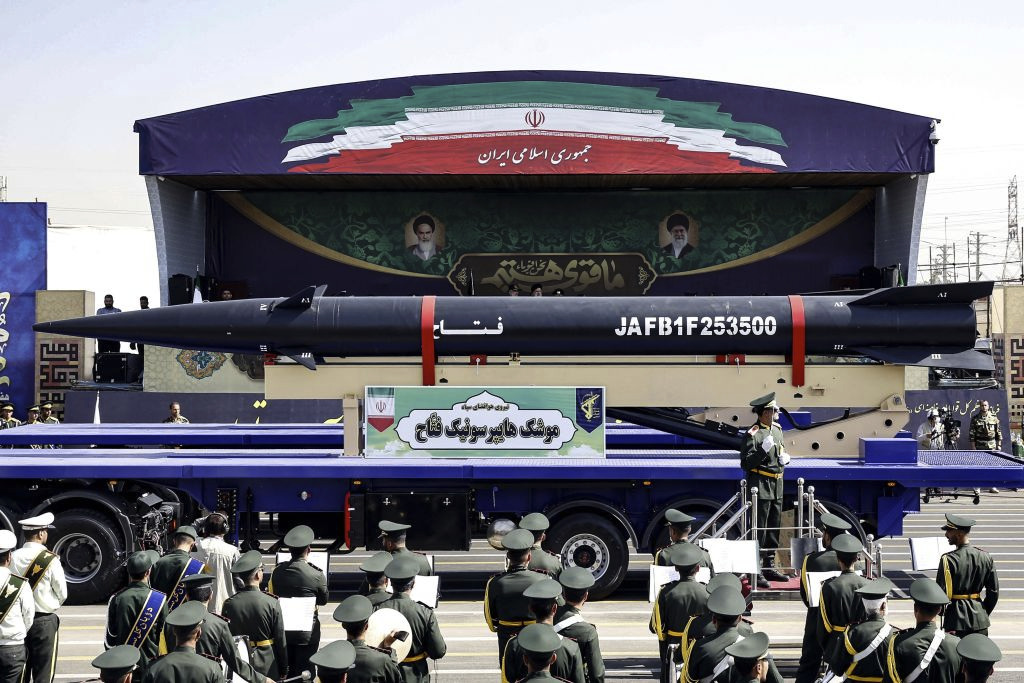
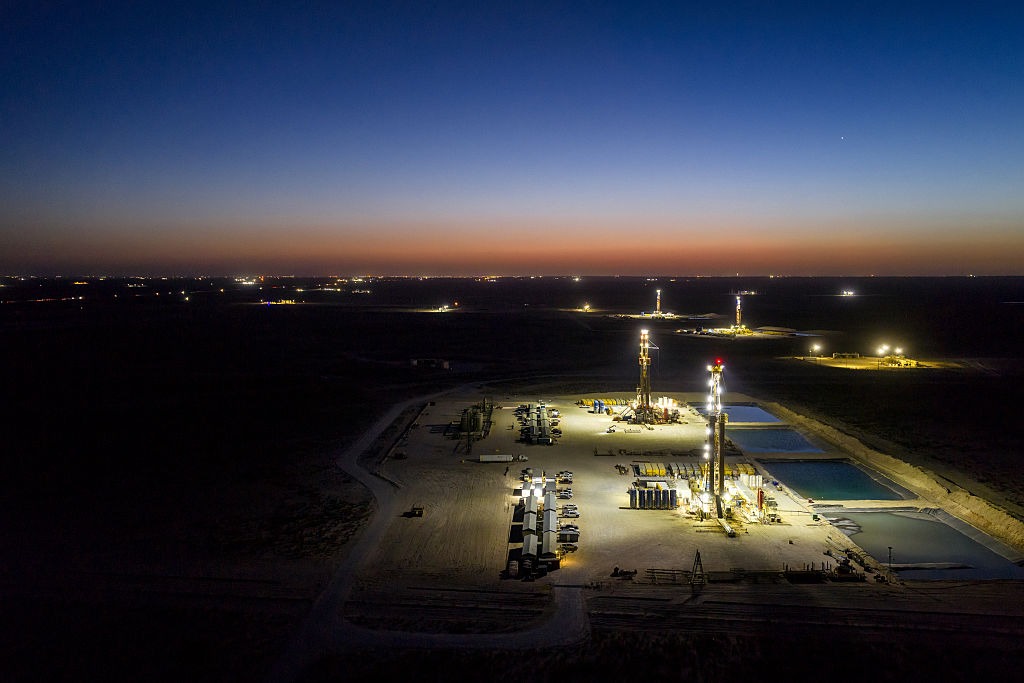


![US DOJ also took up the case of murdered American tourist Kristine Luken. Pictured: Stabbing attack survivor Tal Hartuv [Kay Wilson] hugs Luken’s parents in Jerusalem District Court, 2011.](https://images.jpost.com/image/upload/f_auto,fl_lossy/c_fill,g_faces:center,h_537,w_822/733736)
