JERUSALEM – Beginning Oct. 7,
when Hamas terrorists used remote controlled drones to disarm tanks and
knock out surveillance cameras during its surprise attack on Israel,
through to last week, when a Hezbollah drone from Lebanon landed
directly in an army base in northern Israel,
unmanned aerial vehicles (UAVs) are increasingly becoming part of the
weapons arsenal used by Iranian-backed non-state players in their war
against the Jewish state.
While Israel has in
place what it calls "an aerial defense array" – used multiple times over
the past three months to thwart "hostile aircraft" from Gaza and
Lebanon – as UAVs become easier to obtain, manufacture, enhance and
weaponize, Israel, as well as other countries around the world, are
racing to contend with an ever more lethal form of combat that is
already outpacing existing military defense systems.
"The
Israeli – and the U.S. – militaries have been using drones for a long
time, especially in counterterrorism, for intelligence gathering or for
precision strikes in order to distinguish between civilians and
fighters," Dr. Liran Antebi, program director of advanced technologies
and national security at the Institute for National Security Studies in
Tel Aviv, told Fox News Digital.
US IMPOSES NEW ROUND OF SANCTIONS ON NETWORK INVOLVED IN IRAN’S DRONE PRODUCTION
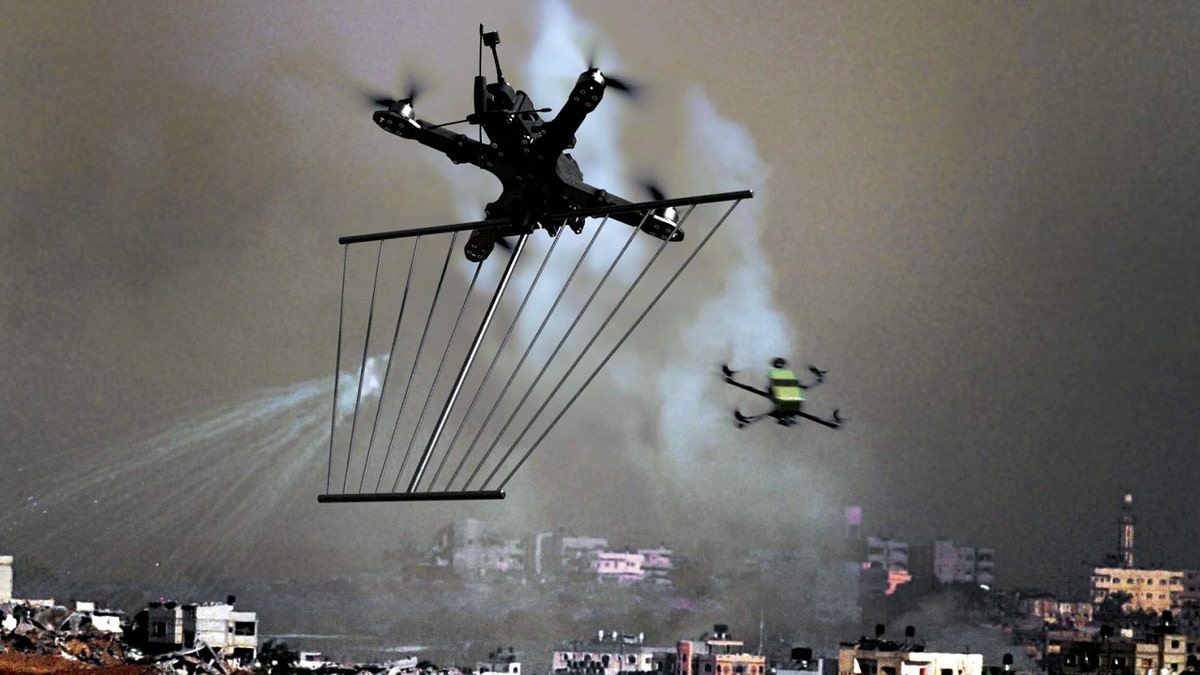
Xtend’s
Griffon Counter UAVs, with speeds of up to 93.1 miles per hour, and AI
technology are being used by the IDF to identify and kill rogue drones.
(Extend.) (Xtend)
"However,
what was once the silver bullet used by democracies in counterterrorism
and to act in more ethical ways, is now in the hands of terrorists or non-democratic states and is being used in the opposite way," she said.
According
to Antebi, ISIS was already a huge fan of UAVs when it waged jihad in
Iraq and Syria a decade ago. Now, more sophisticated, and much more
lethal armed drones, are taking center stage in global conflicts, most
recently in the ongoing Ukraine-Russia war. In some cases, Russian
soldiers have used military grade UAVs, including those created by Iran, to strike right in the heart of civilian populations.
In
response, Ukrainian President Volodymyr Zelenskyy recently declared a
plan to produce a million drones this year to fight back against Russia.
And Russia, according to reports, is also increasing its drone stocks,
including stepping up purchase of the Iranian-designed Shahed 136
suicide drone, a move that could have direct impact and increase the
capabilities of groups such as Hamas and Hezbollah, as well as the
Houthi terror group in Yemen, which is also considered a proxy of
Tehran.
"While Israel is considered one of the world’s leaders
in producing and using high-quality drones and UAVs, as well as a
leading country in the field of counter systems to fight against those
technologies, it has not been very effective at implementing those
defense mechanisms," Antebi said, using Hamas’ Oct. 7 attack as an
example.
IRAN PRAISES HOUTHI PROXY GROUP RAIDING US MILITARY ASSETS, ISRAEL: 'SUPPORT TO THE RESISTANCE FRONT'
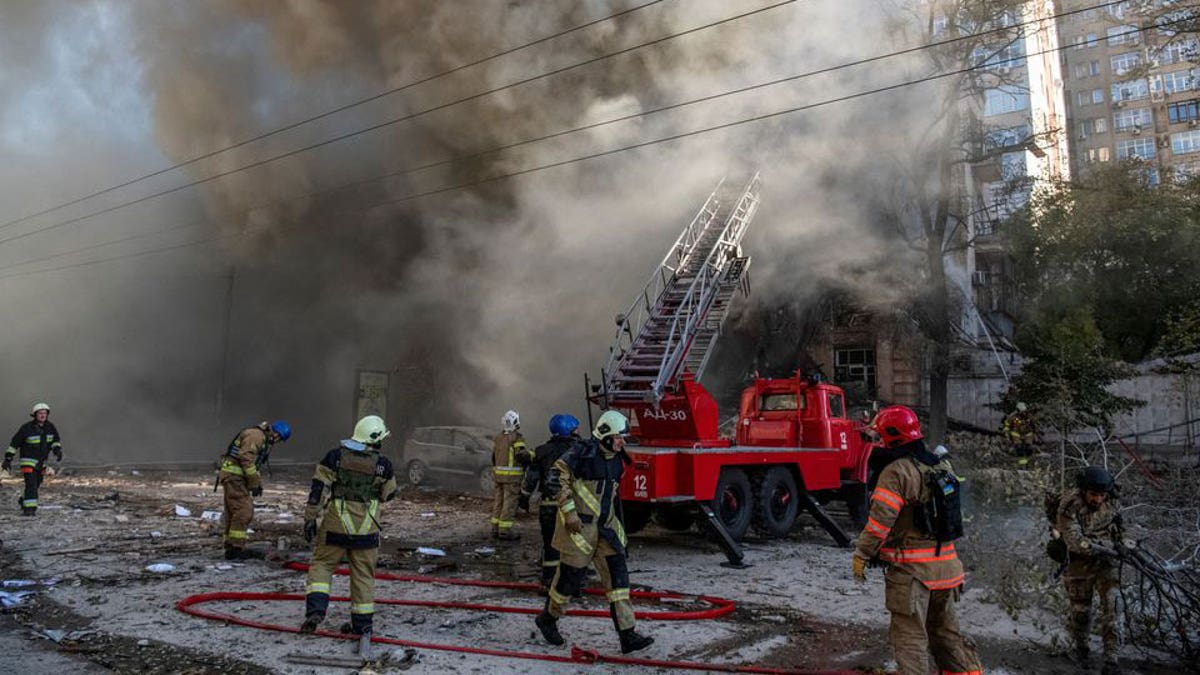
Firefighters
help a local woman evacuate from a residential building destroyed by a
Russian drone strike, which local authorities consider to be
Iranian-made Shahed-136, in Kyiv, Oct. 17, 2022. (Reuters/Vladyslav Musiienko)
She
said that since the start of the current Gaza war, Hamas, Hezbollah and
even the Houthis, had used all manner of UAVs to strike Israel, ranging
from enhanced "off-the-shelf" drones to more sophisticated
military-grade UAVs, capable of dropping bombs or of self-exploding.
"What
we have not seen yet in our arena are the larger UAVs capable of
launching missiles, which we know Iran is already producing," Antebi
said. "We also haven't seen any FPV (first person view) drones yet,
which we also know are being used in Ukraine."
Unlike ordinary
drones, which are operated using a mobile phone or tablet and can be
easily tracked using existing defensive technology, FPVs are operated
with VR goggles and are much more difficult to detect and intercept.
Tal
Mimran, from the Cyber Security Research Center in the Faculty of Law
at Hebrew University, told Fox News Digital, that the use of armed
drones, even the simplest ones, by non-state actors was a game-changer
for Israel – as well as for other Western democracies with conventional
armies bound by international law.
"When we think of an army like
the U.S., Israel, the U.K., a drone is a technical weapon that is used
alongside more significant tools such as airplanes or helicopters, but
when it comes to a weaker state, and specifically non-state actors, it
is a strategic change," he said, adding that Iran’s training of terror
groups in the art of drone warfare was "closing the gap between Israel
and rogue groups such as Hamas or Hezbollah."
ISRAEL-HAMAS WAR: IDF UNCOVERS EVIDENCE OF HAMAS DEVELOPING PRECISION MISSILE CAPABILITIES WITH IRAN'S HELP
Houthi
security troops ride a vehicle after guarding a gathering for an
address by the group's leader inside Al-Sha'ab Mosque on Nov. 14, 2023
in Sana'a, Yemen. (Mohammed Hamoud/Getty Images)
While
Israel has in place a multibillion-dollar rocket and missile air
defense system designed to respond to attacks on multiple fronts and
which can easily take down the relatively crude rockets lobbed by Hamas,
the midrange rockets and missiles possessed by Hezbollah and even the
longer-range ballistic missiles fired in recent weeks by the Houthis
from Yemen, smaller, more nimble threats from armed or exploding drones
are still a challenge.
"Israel deals very well with a missile
spread and the Iron Dome can intercept some of the drones," said Mimran.
"But there is no doubt this is a game changer."
Already,
the situation appears to be changing. Earlier this month, for the first
time, the Israeli army said that it used an advanced drone in a
precision strike against a Hamas target inside Gaza. Until now, Mimran
said the military had refrained from using offensive drones to fight
Hamas, even though they had been used on the northern front, in Lebanon
and Syria. But that approach might change if the northern front opens
up.
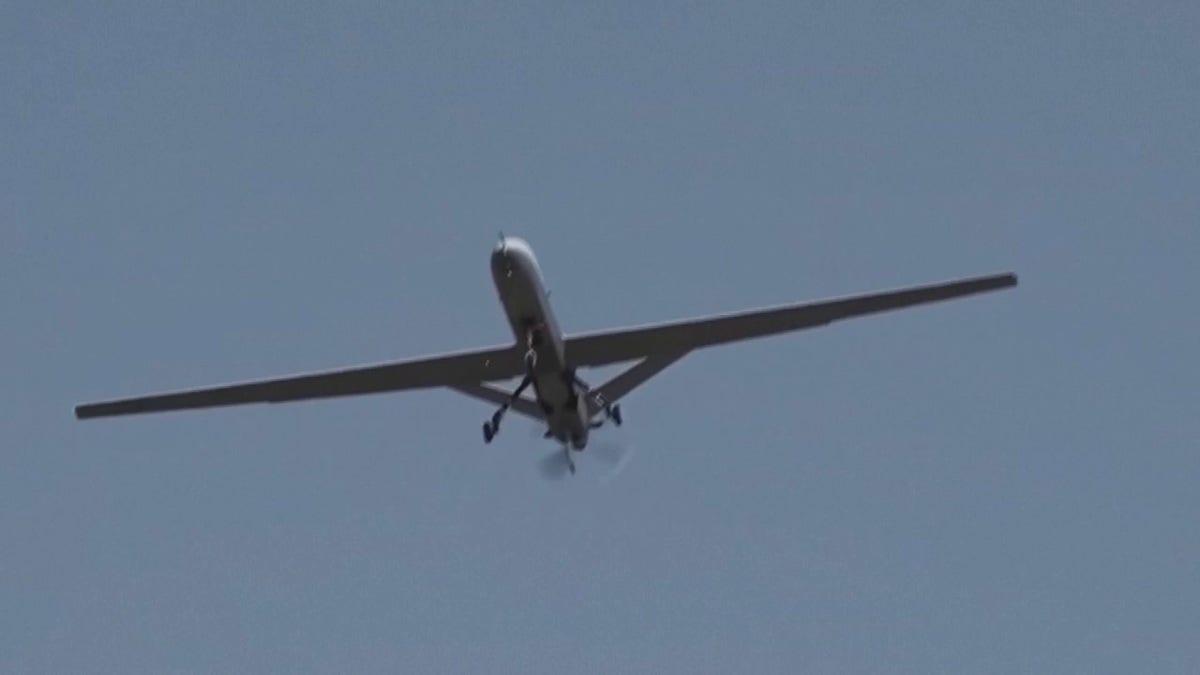
Iran showed video of a Shahed drone in flight, Feb. 24, 2023. (IRINN via AP)
"We
might see new things that we haven't seen until now," said Mimran,
referring to Israel’s capability of sending a "swarm of drones" with
technology developed by Israeli defense company Elbit. It is also very
possible, he added, that Hezbollah too has the capacity of sending
hundreds, if not thousands, of drones at one time "creating chaos like
we have never seen before in these parts."
Aviv Shapira,
co-founder and CEO of Xtend, a company developing drones for the defense
market, said it was just a matter of time before the threat of drones
became global.
HEZBOLLAH CLAIMS IT DOESN'T WANT EXPANDED WAR WITH ISRAEL AFTER LAUNCHING DRONE ATTACK ON ISRAELI ARMY BASE
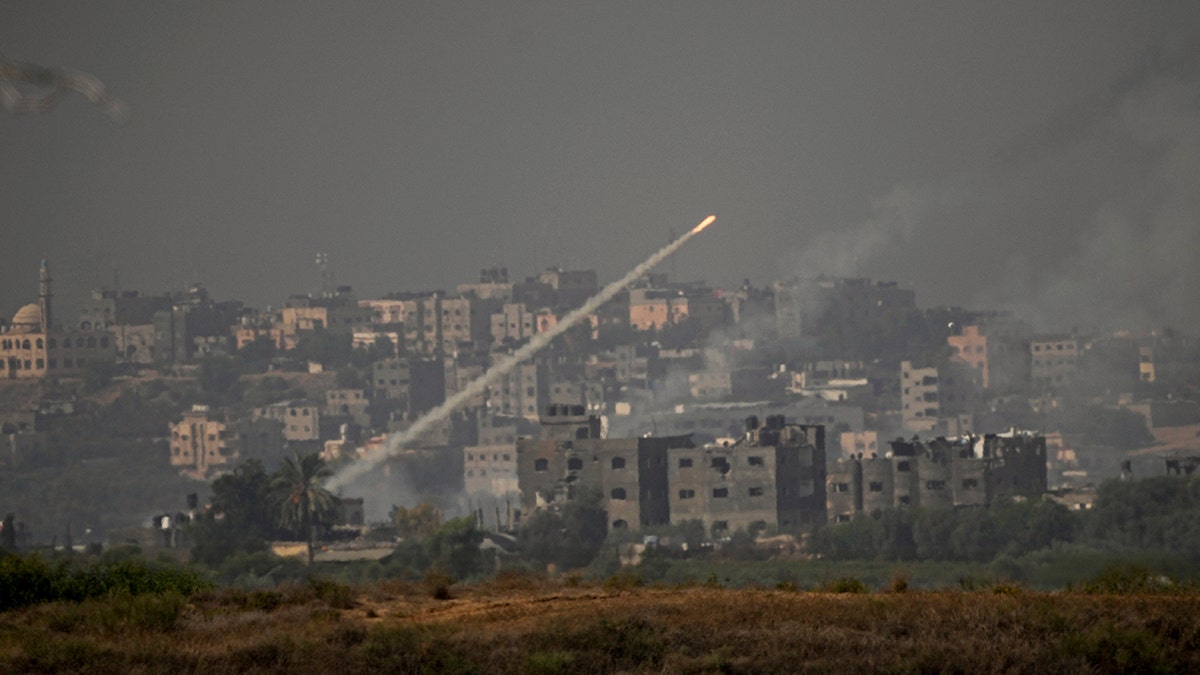
Rockets are fired toward Israel from the Gaza Strip, as seen from southern Israel, Oct. 23, 2023. (AP Photo/Ariel Schalit)
"It
will happen all over the world and right now, no one knows how to deal
with it," said Shapira, whose company began developing racing drones for
the gaming industry but was soon commissioned for military purposes.
"In the U.S. there are so many anti-terror measures in place, but now
it is possible for anyone to suddenly take a drone, without a radio [and
therefore not trackable] and use it in an attack."
He said that
until now, defense companies were focused on developing advanced cyber
measures to counter armed drones, but as tethered or pre-programmed UAVs
become more common, there was a need for a new type of defense
systems.
"The problem is that you don’t know where these drones
are coming from because they are so small and they cannot be stopped
with jamming devices," said Shapira, whose company worked with the
Israeli army to tackle the previous Hamas threat of incendiary balloons
and kites that were causing havoc a few years ago.
IRAN, RUSSIA, SLAM US-UK JOINT STRIKES ON YEMEN’S HOUTHIS, WARN OF ‘INSTABILITY IN THE REGION’
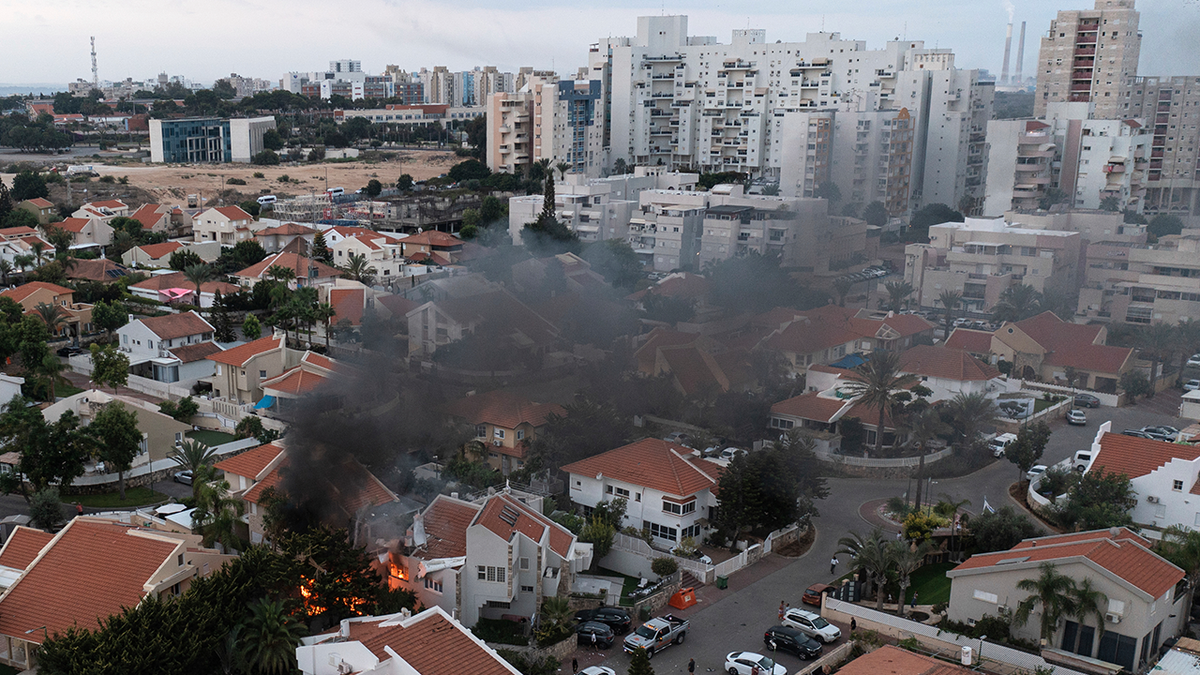
Smoke rises after a rocket fired from the Gaza Strip hit a house in Ashkelon, southern Israel on Oct. 7, 2023. (AP)
"These
drones don’t have radio communications, so the only way to mitigate
this problem is to physically intercept them," he said. "That means
either shooting them down, using laser or technology like we have
developed, which involves a high-speed drone that catches other drones
with a net"
According to Shapira, Xtend’s Griffon Counter UAV,
with speeds of up to 93 mph, flies faster than any other drone currently
available and can be programmed to operate autonomously, using AI, to
identify a "rogue drone and kill it."
And, he added, the
technology is so simple to use that it does not require a soldier or
extensive training, but anyone can learn to operate it in less than 30
minutes.
However, Antebi, who is also a researcher of advanced
technologies in warfare, warned that the development of all new
technologies – defensive or offensive – ran the risk of having a
"boomerang effect."
"There are a lot of startups and technology
companies creating amazing technologies that can change the world for
good, but we also have to be aware that the bad guys also want to use
those technologies and they are capable of using them for bad," she
said.
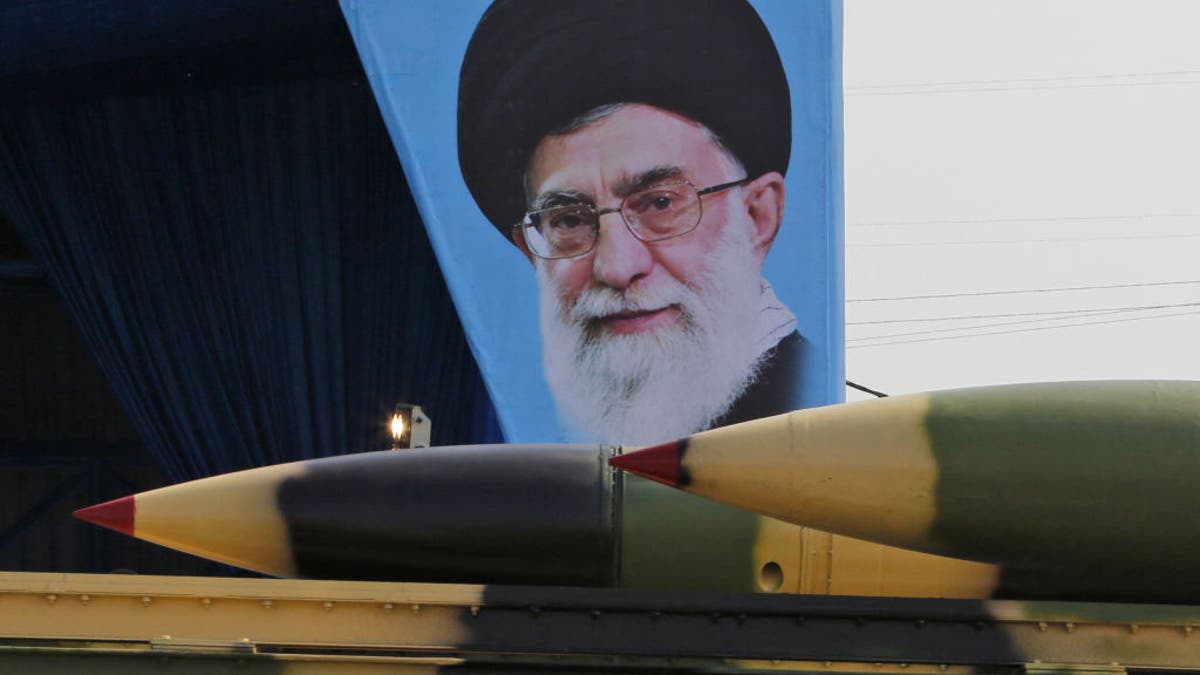
An
Iranian military truck carries surface-to-air missiles past a portrait
of Iran's supreme leader during a parade on April 18, 2018, in Tehran. (Atta Kenare/AFP via Getty Images)
For
Mimran, a broader concern, particularly in terms of drone warfare, is
that currently there are no international guidelines, regulations or
benchmarks.
"While there have been some global campaigns aimed at trying to ban the use of drones in wars,"
he said. "The ideological gaps between the West and the rest of the
world are becoming so large that there is no way for the international
community to sit together and think of appropriate regulation or rules
of the game for this kind of weapon."