Saturday, November 9, 2024

Trump Victory Media Roundup: Establishment Goes Through the Stages of Grief - Robert Spencer


by Robert Spencer

Will the Left now back away from the insanity, hatred, and deviance it has embraced?


[Want even more content from FPM? Sign up for FPM+ to unlock exclusive series, virtual town-halls with our authors, and more—now for just $3.99/month. Click here to sign up.]

Donald Trump has been reelected, and the self-appointed arbiters of acceptable opinion in the establishment media are struggling to adjust to new realities. As they do so, they’re giving us a textbook display of what it looks like to go through most of the classic stages of grief: denial, anger, depression, and acceptance. And even though Trump’s victory was comprehensive and inarguable, we know from long experience that they’re going to have the hardest time with that last one.

Denial was on abundant display on Monday, the day before the election, when PBS told us happily that “Harris has a 4-point lead over Trump in final PBS News/NPR/Marist election poll.” NBC crowed: “Trump’s once enthusiastic crowds dwindle in election’s closing days.” The UK’s Express took aim at a supposedly failing candidate, saying: “Donald Trump baffles with incomprehensible ramble as North Carolina rally fails to fill up,” and “Donald Trump suffering ‘memory lapse’ and ‘butchering’ speeches ahead of election.”

See? It was going to be all right. PBS quoted Lee Miringoff of the Marist Center for Public Opinion, assuring jittery leftists that we were in for a repeat of 2020: “We’ve gone through all of this to get back to… pretty much where you ended up four years ago.”

When that didn’t happen, the anger began. On Wednesday morning, the New York Times was full of headlines revealing the Paper of Record’s barely concealed rage that the American people had dared to reject their expert guidance. Voters had made a bad choice and needed to be scolded, and the Times was ready with the wagging finger.

“Donald Trump Returns to Power, Ushering in New Era of Uncertainty,” one headline warned. “America Hires a Strongman,” said another. The rest of the world was unhappy with our recklessness: “Four More Years of Unpredictability? The World Prepares for Trump’s Return.” The Washington Post was just as enraged, noting on its homepage that Trump “Becomes second president to win nonconsecutive terms, first felon.”

The classic stage of grief that follows anger is bargaining, but the leftist media blew by that one completely. These people, after all, are the ones who polarized and embittered American political discourse in the first place, painting Trump in such lurid terms that massive segments of the population are utterly terrified at the prospect of this neo-Hitler returning to the Oval Office. They’re not interested in compromise or any kind of bargaining; as always, they’re out for total control and the absolute destruction of those whom they consider their enemies.

And yet their foremost enemy defeated them. So they skipped right on to the next stop in the grief scale: depression. “Democrats in disbelief at Trump’s win,” lamented the WaPo. “The mood at Harris’s watch party at Howard University started joyful but turned darker,” the Post reported sadly. “At 12:45 a.m., Cedric L. Richmond, the co-chair of the Harris-Walz campaign, came to the microphones to tell the crowd that the vice president would not speak until the morning. The remarks are expected to be her concession speech.” Violins up. 

MSNBC, meanwhile, had massive sads over what Trump might do now, and the fact that there didn’t seem to be any way to stop him: “We can expect Trump will pardon the Jan. 6 rioters and summarily fire the prosecutors who tried to hold him accountable. Having been immunized by the Supreme Court, he may instruct the Department of Justice to go after his political opponents. He will likely abandon Ukraine and begin the process of weakening our alliances. A newly empowered Trump can, if he wishes, go about trying to gut or kill Obamacare outright, while also trying to impose massive new tariffs on the economy.”

But surely, decent folk could stop Bad Orange Man, no? No: “We also know that the guardrails will not be sufficient, because they were not before. If they had been, none of this would have happened. Neither the impeachment process nor the justice system blocked his return to power. And now the ultimate guardrail has failed.” Yeah, you’re going to have to put up with a president who doesn’t share your socialist internationalist values; cry harder.

Amid all the lamentations, there was at least one hint of the final stage. Former Sen. Claire McCaskill showed it, however grudgingly, on MSNBC’s “Morning Joe,” saying: “I think we have to acknowledge that Donald Trump knows our country better than we do.”

This is not to say that McCaskill was giving Trump credit for political acumen; she was just saying that the country itself was as evil as Bad Orange Man. “I think he figured out that anger and, frankly, fear were way more powerful than appealing to people’s better angels. Anger and fear were going to work in this election. Whether you’re afraid of immigrants or afraid of people who are trans, he figured that out. And I think we all thought everyone’s better angels would prevail. Turns out the angels went on vacation since Donald Trump came down the escalator, and they haven’t returned.”

In those graceless and insulting words, however, there was a glimmer of acceptance. McCaskill may have been the first establishment leftist to admit, however backhandedly, that Trump might know something they don’t. Could this be the pathway to the left backing away from the insanity, hatred, and deviance it has embraced, and coming back to something close to reasonable values? Nah. Not a chance. But at least they are beginning to realize what happened to them on Tuesday.


Robert Spencer is the director of Jihad Watch and a Shillman Fellow at the David Horowitz Freedom Center. He is author of 28 books, including many bestsellers, such as The Politically Incorrect Guide to Islam (and the Crusades), The Truth About Muhammad, The History of Jihad, and The Critical Qur’an. His latest book is Muhammad: A Critical Biography. Follow him on Twitter here. Like him on Facebook here.

Source: https://www.frontpagemag.com/trump-victory-media-roundup-establishment-goes-through-the-stages-of-grief/

Follow Middle East and Terrorism on Twitter

Thursday, November 7, 2024

Trump win sparks mad scramble among European leaders to curry favor, Pope silent, Zelensky hopeful - Eric J. Lyman and Franklin Bitz


by Eric J. Lyman and Franklin Bitz

From across the political spectrum, European leaders were quick to pat the former and future president on the back.


Donald Trump’s dramatic victory in Tuesday’s election sparked a mad scramble among European leaders eager to start out on the good side of the next U.S. president. 

But many remained worried about what a new Trump presidency may bring.

From across the political spectrum, European leaders were quick to pat the former and future president on the back.

France’s Emmanuel Macron – who had a love-hate relationship during Trump’s previous term in the White House – was the first leader to tip his hat to Trump. He did so before the race had been officially called and even before Macron’s rival, opposition leader Marine Le Pen, whose policies and style more naturally align with Trump’s.

Italy’s Giorgia Meloni and Hungarian leader Viktor Orban – both reportedly vying to become Europe’s main “Trump Whisperer” – were also quick to reach out. 

Meloni, who Macron beat to the punch by a few minutes, offered her “most sincere” congratulations, casting the relationship between the countries as one of “'sister’ nations, linked by an unshakable alliance, common values, and a historic friendship.” 

Orban, meanwhile, called Trump’s triumph the “biggest comeback in U.S. political history.”

Other leaders ranging from center-left leader Keir Starmer in the U.K. to Germany’s centrist chancellor, Olaf Scholz, also congratulated Trump. 

But that doesn’t mean praise for Trump was universal.

In London, The Spectator, the weekly British political and cultural news magazine. said that Trump’s victory was the “worst nightmare” for Ursula von der Leyen, the president of the European Commission. 

She clashed with Trump during his first term. Von der Leyen has been an advocate of European autonomy when it comes to U.S.-financed security, but she is evidently not relishing the prospect of hurrying that process along with Trump in the White House. 

Still, von der Leyen nodded to the Trump victory and called for “a strong trans-Atlantic agenda” that supports the needs from both sides of the Atlantic.

In the Vatican City, Pope Francis – a regular commentator on big geopolitical developments who in September gave Vice President Kamala Harris a lukewarm endorsement in calling her the “lesser evil” in the presidential race – was conspicuously silent on Trump’s victory as of late Wednesday.

But the biggest disappointment with the election outcome was probably from Ukraine’s Volodymyr Zelensky, whose country is nearing the three-year mark of its war against Russia. 

Like most other leaders, Zelensky paid homage to the U.S. leader, saying he hoped for “strong bipartisan support for Ukraine in the United States.” But the conventional wisdom is that Trump will either cut or dramatically curtail economic and military aid for Ukraine, forcing Zelensky to the negotiating table with Russia’s Vladimir Putin with a weak hand.  

On Thursday, European leaders will meet in Budapest in a summit organized by Hungary’s Orban in a suddenly-important gathering that is likely to reshape relations between the U.S. and Europe

The fact that the summit will take place in the Hungarian capital is not insignificant: Orban is Russia's most vocal supporter in the European Union, and, starting Thursday, he will probably look to shift Europe’s foreign policy away from Ukraine.

For its part, Russia issued measured support for the new Trump administration, with the Kremlin noting that while U.S.-Russia ties were at a low point, Russian officials were “open to dialogue” with the Trump White House.


Eric J. Lyman and Franklin Bitz

Source: https://justthenews.com/world/europe/trump-win-sparks-mad-scramble-among-european-leaders-curry-favor-pope-silent-zelensky

Follow Middle East and Terrorism on Twitter

With a Republican Senate in hand, Ron Johnson promises spending clawbacks and health agency probes - Steven Richards


by Steven Richards

Johnson wants to clawback unspent funds from Biden-era programs and expose big-dollar corporate capture at federal health agencies.


Senator Ron Johnson, R-Wis., is planning sweeping accountability and increased investigations now that Republicans seized control of the upper chamber in Tuesday’s elections. Those plans include a promise to work quickly to slash government waste from the Biden era and to investigate the corporate capture of big health agencies. 

Johnson is slated to chair the Senate Homeland Security Committee Subcommittee on Oversight where he will possess newfound authority from the majority, including subpoena power and a larger staff.  

Johnson shared his plans on Wednesday’s episode of the “Just the News, No Noise” TV show after GOP control of the Senate became clear, with a projected majority of 52 or more votes. 

“It's about exposing the truth,” Johnson said of his plans for accountability. 

Big Food, Big Pharma

“I often say, I'll be like a mosquito in the nudist colony. It's a target rich environment,” he joked. “But listen, I've written more than 60 oversight letters to Department of Defense, our federal health agencies in terms of what happened on COVID, vaccines, vaccine entry, that's going to be a big focus of what I want to do.”

“Take a look at the capture of these federal health agencies, other federal agencies, by big corporate interests, whether it's big [agriculture], big food processing, Big Pharma—again, this is the corruption of the system. When you have government that's massive, the entities that government regulates figure out a way to capture that government,” he explained. 

"That's what's happened, to the detriment in the American public. So, that would be our focus…expose that corporate capture that corporate corruption of our federal health agencies,” he added. 

Johnson has been critical of federal health agencies for helping to suppress lab-leak theories about COVID-19 and promoting vaccines while discounting potential side effects. He has spearheaded an effort to obtain data from the Centers for Disease Control and Prevention about adverse side effects of the COVID-19 vaccines, but was stonewalled while he was in the minority. 

In that same vein, Johnson also promised that his committee would work hand in hand with Elon Musk on plans to improve government efficiency and cut waste from the federal bureaucracy. He highlighted Musk’s streamlining of the X workforce when he purchased the company, then known as Twitter before Musk rebranded it. 

“I would love to work with Elon Musk in terms of making government far more efficient. I mean, I love what he did at X, you know, went in there, but got rid of 80% of their staff. And seems like X is working pretty well now,” Johnson said. “But again, we need a complete overhaul of the federal government. We need to shrink its size, its cost and its scope, its influence over our lives.” 

Republicans are projected to take control of the Senate with potentially sizable margin. With results for four contested races outstanding, Republicans currently lead in two, which would put their majority at 54 seats and give Johnson and his fellow committee and subcommittee chairs new powers to compel documents and testimony from federal agencies.  

Johnson also laid out proposals to claw back funding from COVID-19 era excess, whether as part of widespread relief packages or the signature spending initiatives from the Biden administration, like the Inflation Reduction Act. 

“Everything we can claw back, we should,” Johnson said. 

$145 billion

President-elect Donald Trump, set to begin his second non-consecutive term in January, has also proposed clawing back unspent funds. “It actually sets us back, as opposed to moves us forward. And [I will] rescind all unspent funds under the misnamed Inflation Reduction Act,” Trump told the Economic Club of New York in September. 

Much of the money in different pools from the act, including direct spending on climate and energy projects—up to $145 billion—has yet to be officially disbursed to recipients, making them vulnerable to clawbacks from the likely Republican Congress.

Similarly, up to $9 billion in clean energy rebates are unlikely to be awarded before the end of the Biden administration, making them likewise vulnerable. 

Earlier this year, Politico reported that “hundreds of billions” of dollars of the total $1.6 trillion in spending from key Biden-supported legislation have yet to be disbursed, and that federal agencies were unlikely to be able to do so before the election. 

Assassination probes

From the minority, Johnson helped lead Republicans during the committee’s bipartisan preliminary probe into the first assassination attempt against then candidate Trump at a political rally in Butler, Pennsylvania. However, Johnson was sharply critical of the Biden Department of Homeland Security and the Secret Service for slow walking responses to requests for documents. 

In the immediate aftermath of the incident in July, Johnson’s office released preliminary findings from its own, separate investigation into the attempt. 

It is possible that Johnson’s committee will pursue a deeper probe into the Secret Service, an agency about which many Republicans still have concerns after a second assassination attempt against Trump in the same election cycle. 

Retaking the Senate is only the first step—a new Republican leader for the chamber will have great influence on how far Johnson’s proposals or investigations could go. 

When long time Senate Republican leader Mitch McConnell, R-Ky., announced he was stepping down from the role after nearly two decades, it sparked a race to replace him. Currently, three candidates are standing for election to the role by their fellow Republican Senators. 

They include Senator John Cornyn of Texas and GOP Whip John Thune of South Dakota, who remain the most likely candidates to replace McConnell. Florida Senator Rick Scott is also running as a McConnell critic from outside Senate leadership and advocating on behalf of a more conservative wing of senators. However, his candidacy is seen by insiders as a long shot. 

 
Steven Richards

Source: https://justthenews.com/accountability/republican-senate-hand-ron-johnson-promises-spending-clawbacks-and-health-agency

Follow Middle East and Terrorism on Twitter

For Taiwan, Trump's 'protection' money may mean new and early big ticket arms deals - Reuters


by Reuters

Trump, who won the US election, unnerved Taiwan, which is claimed by China, by saying that Taiwan should pay the US for defense and that it took semiconductor business away from America.


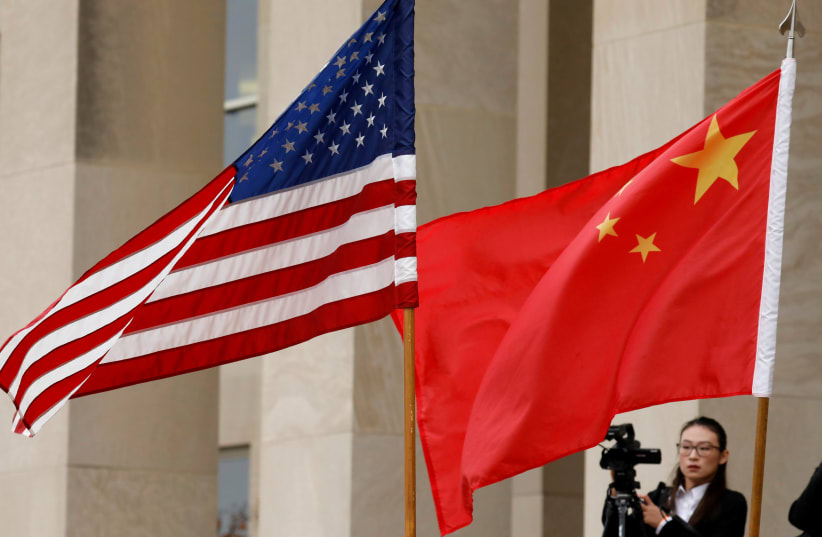
US and Chinese flags are seen before a meeting between senior defence officials from both countries at the Pentagon in Arlington, Virginia, US, November 9, 2018.  (photo credit: REUTERS/YURI GRIPAS/FILE PHOTO)
US and Chinese flags are seen before a meeting between senior defence officials from both countries at the Pentagon in Arlington, Virginia, US, November 9, 2018.
(photo credit: REUTERS/YURI GRIPAS/FILE PHOTO)

Taiwan may demonstrate that it takes Donald Trump's "protection" money demand seriously with large and early new arms deals, showing that it is not looking for a free ride and is determined to show Washington its resolve to spend to defend itself.

Trump, who won a second term as president this week, unnerved democratically governed Taiwan, which is claimed by China, by saying that Taiwan should pay the US for its defense and that it had taken semiconductor business away from America.

"Watch for Taiwan on the defense side to try and start engaging them on a big arms package - to do something significant, very large," Rupert Hammond-Chambers, president of the US-Taiwan Business Council, which helps broker defense exchanges between Washington and Taipei, told Reuters, adding it could come in the first quarter of next year.

"But think of it as a down payment, an attention-getter," he said. "They'll stack up several big platforms and big buys of munitions."

The US is already Taiwan's most important arms supplier, although Taiwan has complained of an order backlog worth some $20 billion. A new order, almost $2 billion of missile systems, was announced last month.

 FORMER US president and current presidential candidate Donald Trump returns to the podium after a commercial break at the debate with incumbent President Joe Biden in Atlanta last week. Biden was in need of a helping hand, and Trump should have extended it, says the writer.  (credit: BRIAN SNYDER/REUTERS)
FORMER US president and current presidential candidate Donald Trump returns to the podium after a commercial break at the debate with incumbent President Joe Biden in Atlanta last week. Biden was in need of a helping hand, and Trump should have extended it, says the writer. (credit: BRIAN SNYDER/REUTERS)

Taiwan, whose government rejects Beijing's sovereignty claims, has faced repeated military pressure from China, including a new round of war games last month.

Taiwan's foreign ministry, in a written report to lawmakers on Thursday, said China might try and test the US during the presidential transition with more drills, hacking attacks or other forms of psychological warfare.

One former US official said he assessed it was "highly likely" that Taiwan would move quickly to attempt to broker a major arms deal with the US to get the Trump administration onside and counter any lingering inclination he has that Taiwan fleeced the US on semiconductors.

"They will want to solidify their fealty quickly to lock in Trump's interest," the person said of Taiwan, speaking anonymously to be able to talk freely.

Taiwan's defense pact with Washington ended in 1979 along with official diplomatic relations, so it does not directly pay for US forces based on its soil, unlike Japan and South Korea.

On Thursday, Taiwan Foreign Minister Lin Chia-lung avoided answering questions from reporters about what protection money for the United States might look like but told lawmakers that defense spending, now around 2.5% of GDP, would increase.

"The trend is for it to keep rising," he said.

Taiwan's defense ministry referred Reuters to comments on Wednesday by Deputy Defence Minister Po Horng-huei in parliament that Defence Minister Wellington Koo had made it very clear Taiwan's determination to defend itself will never change.

"It is our responsibility to maintain stability in the Taiwan Strait," Po said.

Friends of Taiwan 

Several names being considered for top jobs in the new US administration are strong supporters of Taiwan, including former Secretary of State Mike Pompeo, who, after leaving office, called for formal diplomatic relations with Taiwan, and former National Security Adviser Robert O'Brien, who visited Taiwan last year.

On Wednesday, O'Brien tweeted his thanks to Taiwan President Lai Ching-te for his congratulations to Trump and the cheering officials in Taiwan, although Lai's office said there were no plans for a call between him and Trump.

One Taiwan-based security source, also speaking on condition of anonymity given the matter's sensitivity, said that if people like O'Brien or Pompeo got top jobs, it would be "fantastic" for Taiwan, but that Taiwan also needed to show it took defense spending seriously.

"Trump asking for protection money is probably the jolt Taiwan needs to really ramp up its defense spending," the official said, adding a new arms deal in the new year would be an excellent way of showing Trump it would do so.

Trump won fans in Taiwan during his first term in office, first by speaking to then-President Tsai Ing-wen shortly after winning the election, and then with arms sales, visits by cabinet members to Taipei, and a strong line on China.

Vincent Chao, who was a spokesperson for Lai's presidential campaign and is a regular visitor to the United States, said all possible candidates being discussed publicly for Trump's Secretary of State and defense secretaries are considered "Taiwan friendly."

"When it comes to Trump, people say it is about what he does, not what he says," Chao said, referring to Trump's comments on Taiwan during the campaign. "There's no need for Taiwanese to worry. We should have confidence."

 
Reuters

Source: https://www.jpost.com/breaking-news/article-827953

Follow Middle East and Terrorism on Twitter

Can Syria’s Assad be distanced from Iranian-Hezbollah influence? - Yaakov Lappin


by Yaakov Lappin

Even a partial reduction of the Iranian presence in Syria would be a gain for Israel.


Syria's President Bashar al-Assad, (R) and Iranian counterpart Ebrahim Raisi exchange documents after signing a memoranda of understanding on "long-term strategic cooperation" in Damascus, Syria, May 3, 2023. Photo by Borna News/Matin Ghasemi/Aksonline ATPImages/Getty Images.

As Israel continues to degrade Iranian and Hezbollah capabilities in Lebanon, Syria and Iran itself, Syrian President Bashar al-Assad faces growing pressure to manage Tehran’s presence within his borders. 

How will Assad respond to the changing balance of power in the region, which has dramatically reduced the power of the Iranian-led jihadist axis? An axis that he depended on to rescue him during the Syrian civil war, and which is currently attempting to turn Syria into an additional war front against Israel (an effort that has been significantly hampered by years of Israeli airstrikes, going back to 2011). 

Professor Eyal Zisser, vice rector of Tel Aviv University and chair of its contemporary Middle East history department, believes that “Assad will not give up the connection with Iran, which helped him survive the civil war,” but that on the other hand “he does not want the Iranians to drag him into a confrontation with Israel.” 

Speaking to JNS on Tuesday, Zisser assessed that Assad might even welcome a limit to Iran’s influence within Syria, since too prominent an Iranian presence could provoke Israeli attacks on his regime. However, he continued, while Assad could conceivably follow through with some reduction of Iran’s presence in Syria, it is unlikely that he would completely disconnect from Tehran. 

On October 12, the London-based Syrian Observatory for Human Rights (SOHR) reported that Syria’s 4th Division, led by Maj.-Gen. Maher al-Assad, the president’s brother, had implemented measures designed to avoid Israeli airstrikes. “The command of the 4th Division has ordered subordinated troops not to move weapons or host Hezbollah and Iranian-backed militia members within the headquarters and bases of the 4th Division,” according to SOHR. 

Additionally, these orders restricted forces from targeting U.S. troops in Syria, as well as attacks on the Golan Heights in Israel from 4th Division sites, according to the report.

Hezbollah’s Golan File is a unit designed to create a network of proxy terrorist cells, bases and surveillance posts in southern Syria, while Hezbollah’s Southern Command in Syria works to create Hezbollah infrastructure in the area, including in Syrian military and observation posts. 

In recent days, the Israeli Defense Forces notably targeted significant threats posed by Iranian and Hezbollah activities in Syria.

On Monday, the IDF confirmed a strike against what it said were Hezbollah intelligence facilities in Syria. The operation was directed against the organization’s central intelligence branch, which includes a specialized network under the command of Hezbollah’s head of intelligence, Hassan Ali al-Zaima, who, alongside Hashem Safieddine, the late head of Hezbollah’s Executive Council, was killed in Beirut’s Dahiyeh area in September.

Mahmoud Mohammed Shaheen, Hezbollah’s long-serving head of intelligence in Syria, was also eliminated in the strike, representing a major setback for Hezbollah’s operational intelligence capabilities. 

The IDF stated that Shaheen’s elimination constituted “a further degradation of Hezbollah’s intelligence capabilities,” and that the strikes on Tuesday severely hindered Hezbollah’s intelligence assets in Syria.

These attacks are part of a broader Israeli strategy aimed at eroding the military capabilities of Iran’s regional allies and Tehran’s entrenchment in Syria. 

During a webinar held by the Jewish Institute for National Security of America (JINSA) on Oct. 27, IDF Maj.-Gen. (ret.) Yaacov Ayish, former Israeli military attaché in Washington D.C., stated that Israel’s Oct. 26 airstrike in Iran was significant for other players in the region as well.

Ayish noted the destruction of Iranian S-300 air defense systems in that attack, systems that are considered a “very expensive, scarce commodity nowadays, and not only in Iran … also in Lebanon, Syria, the Ukraine-Russia war and elsewhere.” 

Israel’s destruction of these systems in Iran sends a message to others in the region, including the Assad regime, about their vulnerability to Israeli strikes, which could influence their behavior regarding Iranian-Shi’ite terrorist entities on their soil.

Russia, for its part, which depends on Iran for missile and drone deliveries amid its ongoing invasion of Ukraine, continues to operate its Khmeimim airbase on the Syrian coastline, in northwest Syria. The Alma Center, an Israeli research center specializing in northern threats to the Jewish state, has assessed in recent months the Russian-controlled base, which forms the main Russian military presence in Syria, could be used to help transfer Iranian weapons to Syria as part of Moscow’s quid pro quo arrangement with Iran. 

At the same time, during the Oct. 27 JINSA webinar former Israeli national security adviser IDF Maj. Gen. (ret.) Yaakov Amidror stated that the Russians would not “interfere actively” with any Israeli strikes, adding that they do not want to be placed in a position that shows that their “systems do not work.”

Ultimately, even a reduction by Assad of the Iranian presence in specific areas would represent a gain for Israel, not only at the tactical threat level but also as an expression of the waning power of the Iranian-led Shi’ite axis in the Middle East.


Yaakov Lappin is an Israel-based military affairs correspondent and analyst. He is the in-house analyst at the Miryam Institute; a research associate at the Alma Research and Education Center; and a research associate at the Begin-Sadat Center for Strategic Studies at Bar-Ilan University. He is a frequent guest commentator on international television news networks, including Sky News and i24 News. Lappin is the author of Virtual Caliphate: Exposing the Islamist State on the Internet. Follow him at: www.patreon.com/yaakovlappin.

Source: https://www.jns.org/can-syrias-assad-be-distanced-from-iranian-hezbollah-influence/

Follow Middle East and Terrorism on Twitter

Knesset passes law allowing deportation of terrorists’ families - David Isaac


by David Isaac

The new law empowers the interior minister to deport family members of terrorists who had advance knowledge of attacks but failed to report it.


A discussion on the state budget at the Knesset assembly hall in Jerusalem, March 12, 2024. Photo by Yonatan Sindel/Flash90.

The Knesset plenum voted 61 to 41 on Wednesday to pass a law allowing the deportation of terrorists’ families. It applies to first-degree family members, including parents, siblings and spouses.

The law empowers Israel’s interior minister to eject from Israel those family members who can be proven to have known of attacks beforehand but who did nothing to warn the authorities. 

It also allows the minister to deport family members who expressed support for or incited acts of terrorism.

As the law’s explanatory section notes, since Hamas’s Oct. 7, 2023, massacre, cases of incitement by those holding Israeli citizenship or permanent residency have risen, and the law is intended to serve as a deterrent.

Maurice Hirsch, director of the Initiative for Palestinian Authority Accountability and Reform at the Jerusalem Center for Public Affairs, told JNS that the law’s passage provides “another important provision to combat terror.”

Hirsch, who helped draft the bill, served as the director of the Military Prosecution for Judea and Samaria and as head of the Advisory Committee to the interior minister for subjects related to the Law of Citizenship, including the cancellation of citizenship.

“The days in which the terrorists wantonly murder people and by their actions enrich their families and raise their social status within their communities are over,” Hirsch said.

“With the passage of the law, the terrorists and their families are put on notice that the State of Israel will no longer tolerate the widespread support for terror, and that their actions are going to have potentially harsh consequences,” he added.

Terrorists want to “enjoy the fruits” of their violence, he noted.

They receive stipends from the Palestinian Authority’s “Martyrs Fund,” which pays terrorists and their families monthly salaries for carrying out attacks. Arab citizens of Israel who engage in terrorism also receive these payments.

Terrorists’ families also enjoy higher status in Palestinian society, which glorifies terrorism, said Hirsch.

“In most societies, people involved in terrorism are spewed out and condemned. In Palestinian society, it’s a mark of honor, of success, that you are the family member of a terrorist,” he told JNS.

The bill strikes at the heart of these incentives, he added.

“If the family is deported, it can’t enjoy the benefits or the glory,” he said.

Deportation isn’t permanent under the law. For those holding Israeli citizenship, it’s seven to 15 years, while for those with permanent resident status it’s 10 to 20 years.

The law takes into account the 1961 Convention on the Reduction of Statelessness, which seeks to prevent people being stripped of citizenship. Even though the convention has a provision for canceling the citizenship of those who engaged in acts of disloyalty to the state, the law allows the deported individuals to retain citizenship.

The law was put forward by Knesset members Hanoch Milwidsky and Eliyahu Revivo of the Likud, and Almog Cohen of Otzma Yehudit, among others.

Oded Forer of Israel Beiteinu, an opposition party, also supported the bill.

However, it didn’t enjoy as much support as anticipated. Almog said at an Oct. 29 Knesset House Committee meeting that he expected the bill to garner the support of more than 80 of the 120 MKs.

The reason had nothing to do with the law itself, but rather a decision by the opposition parties on Wednesday to cease all cooperation with the government following the firing of Defense Minister Yoav Gallant on Tuesday.

The opposition declared that in protest, it would oppose all bills presented by the coalition, even those related to the war effort or benefits for IDF reservists.

Israel Beiteinu almost immediately broke with this decision, however. It did not vote against but instead abstained on the deportation law. One of its members, the aforementioned Forer, did vote in favor.


David Isaac

Source: https://www.jns.org/knesset-passes-law-allowing-deportation-of-terrorists-families/

Follow Middle East and Terrorism on Twitter

Californians crack down on theft, drug crime, replace Los Angeles District Attorney - Kenneth Schrupp


by Kenneth Schrupp

Los Angeles shoplifting increased 62% in 2023 alone, which Hochman blamed on Gascon and Prop. 47, under which thefts under $950 were rarely-prosecuted misdemeanors.


(The Center Square) - Californians voted by wide margins to crack down on theft and drug crime, passing Proposition 36 and replacing Los Angeles District Attorney George Gascon with former U.S. federal prosecutor Nathan Hochman.

Prop. 36, which passed with the support of 70.4% of voters as of the time of publication, allows for prosecutors to pursue felony charges for serial thieves and major drug crimes after Prop. 47, passed in 2014, made many only chargeable as misdemeanors that would be rarely prosecuted. Prop. 36 also created a new class of crime called “treatment-mandated felony” that would allow individuals to complete mental health or substance abuse treatment instead of going to prison; this portion of the measure is targeted at the state’s homeless population, which includes many individuals who refuse services and treatment for addictions and disorders.

Prop. 36 was backed by many prominent Democrats, including San Francisco Mayor London Breed, who late in her term embraced a tough-on-crime position as her rivals caught up to, and could replace her as mayor in the coming days as the city’s ranked-choice votes are tabulated. Backers also included San Jose Mayor Matt Mahan, and San Diego Mayor Todd Gloria, who appears to have relatively narrowly fended off an independent challenger.

Prop. 36 was opposed by California Gov. Gavin Newsom and Los Angeles District Attorney George Gascon, who authored Prop. 47 and was up for re-election against former federal prosecutor Nathan Hochman. Gascon formerly served as San Francisco District Attorney before moving to run for LA DA and handing the reins to his hand-picked successor, Chesa Boudin, who ultimately was recalled from office by San Francisco voters.

Los Angeles shoplifting increased 62% in 2023 alone, which Hochman blamed on Gascon and Prop. 47, under which thefts under $950 were rarely-prosecuted misdemeanors.

Hochman’s campaign received record funding, reaching the legal fundraising cap of $2.5 million. As of the time of this article’s publication, Hochman was leading with 61.46% of the vote, while Gascon had 38.54%.

“The voters of Los Angeles County have spoken and have said enough is enough of D.A. Gascon’s pro-criminal extreme policies; they look forward to a safer future,” said Hochman in a victory statement on X. “As D.A., I look forward to representing all of the people, whether they voted for me or not, since their safety will be my responsibility.”

 
Kenneth Schrupp

Source: https://justthenews.com/nation/states/center-square/californians-crack-down-theft-drug-crime-replace-los-angeles-district

Follow Middle East and Terrorism on Twitter

'Nobody Talks About It': Jihadi Terrorists Continue to Ravage Africa - Uzay Bulut


by Uzay Bulut

"Who is funding these groups? Who is arming and enabling them to the extent that they are more powerful than the forces of sovereign states? What powerful and monied entities are supporting the advance of jihad in Africa?" — Robert Spencer, director of Jihad Watch, October 27, 2024.


  • According to reports, since 2009, Muslims, inspired by Boko Haram, have murdered more than 150,000 Christians in Nigeria.

  • Chad, Libya, Sudan, the Central African Republic, Cameroon, Nigeria and Niger all struggle with jihadist insurgencies.

  • "The persistent and growing strength of violent extremist organizations in the Sahel threatens to exacerbate the humanitarian crisis and spread instability across Africa, posing significant security and financial risks to the United States and Europe. The continuing collapse of international counterterrorism support, as well as weakening leadership in regional efforts, has created a vacuum in which violent extremism can expand." — Council on Foreign Relations, October 23, 2024.

  • The ongoing civil war in Sudan between the Sudanese Armed Forces and the Rapid Support Forces, for example, poses a serious threat to Chad's stability. As Sudan's civil war escalates, it fuels further turmoil in the region.

  • "The conflict, which has spread to 14 of the 18 states in Sudan, has killed and wounded tens of thousands of civilians, displaced nearly 8 million people and forced two million more to flee to neighboring countries." — UN Office of the High Commissioner for Human Rights, September 6, 2024.

  • The civil war in Sudan has driven around 700,000 refugees into Chad, creating a humanitarian crisis and impeding trade between the two countries.

  • "Unless there is a coordinated effort to implement comprehensive political, economic, and social reforms alongside military campaigns against Boko Haram, the extremist group's ideology is likely to continue to gain ground." — Open Doors, March 2024.

  • As a result of jihadi violence by terror groups in sub-Saharan Africa, 16.2 million Christians have been forcibly displaced. An Open Doors report quotes Pastor Barnabas, who lives in a displaced persons camp in Nigeria: "Millions of Christians are displaced, here in Nigeria. Millions of Christians are displaced in Africa. The news doesn't care about it, politicians don't talk about it, governments don't talk about it, global politics don't talk about it. Nobody talks about it."

  • "Who is funding these groups? Who is arming and enabling them to the extent that they are more powerful than the forces of sovereign states? What powerful and monied entities are supporting the advance of jihad in Africa?" — Robert Spencer, director of Jihad Watch, October 27, 2024.

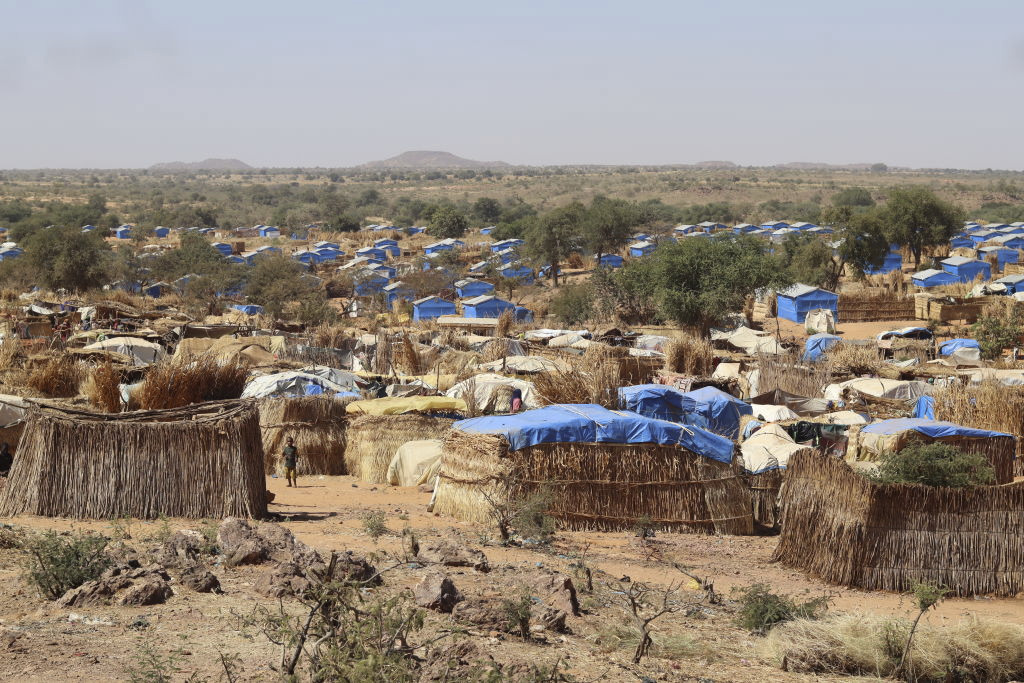
Chad, Libya, Sudan, the Central African Republic, Cameroon, Nigeria and Niger all struggle with jihadist insurgencies. The civil war in Sudan has driven around 700,000 refugees into Chad, creating a humanitarian crisis and impeding trade between the two countries. Pictured: The Ourang refugee camp in Adre, Chad, inhabited by refugees who fled the civil war in Sudan, photographed on December 7, 2023. (Photo by Denis Sassou Gueipeur/AFP via Getty Images)

While much of the world media and human rights groups are fixated on the war being waged on Israel by Iran and its Hamas/Hezbollah/Houthi proxies, Islamic jihadist terrorists continue to ravage Africa.

At least 40 Chadian soldiers were killed in a terrorist attack on October 26-27 on a military base in Chad's Lake Region, according to a government statement that blamed the attack on the jihadist Boko Haram group. Reuters added:

"Chad is an important ally for French and U.S. forces aiming to fight jihadists in the Sahel, which has become the epicentre of global terrorism under attack by factions loyal to al Qaeda and Islamic State."

The area around Lake Chad, which lies along the borders of Chad, Nigeria, Cameroon and Niger, is targeted by Islamist insurgencies -- by the Islamic State West Africa Province (ISWAP) and Boko Haram -- which began a terror campaign in northeast Nigeria in 2009 and spread to Chad.

Boko Haram and ISWAP have since 2009 created severe security problems in the region. They have sent suicide bombers across Nigeria's border with Chad, and murdered many civilians and Chadian soldiers. On May 22, 2022, for instance, ISWAP terrorists abducted and murdered three Christians in Chad's Litri region, near the border with Nigeria.

In 2020, the security situation in Chad took a drastic turn for the worse, according to the Africa Centre of Strategic Studies, with Boko Haram killing 98 Chadian soldiers and wounding dozens more in Bohoma, on March 23, 202o.

Following this attack, the Chadian armed forces launched an offensive aimed at eliminating the jihadist insurgents from Chad. However, continuing terrorist attacks since then suggest that Boko Haram and ISWAP are gaining force, posing increasing risks to regional stability.

Boko Haram, founded in northeastern Nigeria, has, since 2009, carried out countless assassinations and massacres there. The group seeks the universal implementation of Islamic sharia law. According to reports, since 2009, Muslims, inspired by Boko Haram, have murdered more than 150,000 Christians in Nigeria.

According to the US government's National Counterterrorism Center,

"Boko Haram, which refers to itself as 'Jama'atu Ahl as-Sunnah li-Da'awati wal-Jihad' (JASDJ; Group of the Sunni People for the Calling and Jihad) and 'Nigerian Taliban'—other translations and variants are used—is a Nigeria-based group that seeks to overthrow the current Nigerian Government and replace it with a regime based on Islamic law. It is popularly known in Nigerian and Western media as 'Boko Haram,' which means 'Western education is forbidden' (the word boko is a holdover from the colonial English word for book). The group, which has existed in various forms since the late 1990s, suffered setbacks in July 2009 when clashes with Nigerian Government forces led to the deaths of hundreds of its members, including former leader Muhammad Yusuf...

"Boko Haram's capability increased in 2014, with the group conducting near-daily attacks against Christians, security and police forces, the media, schools, politicians, and Muslims perceived as collaborators. Boko Haram continued to raise its international profile in 2015, pledging allegiance to the Islamic State in Iraq and the Levant (ISIL) in March—and publicly using the name "ISIL-West Africa Province" and similar variants—and conducting simultaneous suicide bombings in N'Djamena, Chad, in June—the first such attack in that country's capital.

"Boko Haram's violence—including the kidnapping of 276 schoolgirls in Borno State, Nigeria, in April 2014—brought international condemnation and in February 2015 provoked a large regional CT [counterterrorism] offensive against the group that displaced it from the majority of its strongholds in Nigeria. Nonetheless, Boko Haram remains resilient, conducting attacks in neighboring Cameroon, Chad, Niger, as well as Nigeria, emphasizing the threat it poses to Western and regional interests."

Chad, Libya, Sudan, the Central African Republic, Cameroon, Nigeria and Niger all struggle with jihadist insurgencies.

The epicenters of the violence and humanitarian disaster in Africa are in the Liptako-Gourma and Lake Chad basin subregions, notes a report by the Council on Foreign Relations (CFR). Liptako-Gourma is in the central Sahel, in the borderlands of Burkina Faso, Mali and Niger. According to the report:

"The persistent and growing strength of violent extremist organizations in the Sahel threatens to exacerbate the humanitarian crisis and spread instability across Africa, posing significant security and financial risks to the United States and Europe. The continuing collapse of international counterterrorism support, as well as weakening leadership in regional efforts, has created a vacuum in which violent extremism can expand. Organizations including Jama'at Nusrat al-Islam wal Muslimeen (JNIM), Islamic State in the Greater Sahara (ISGS), Islamic State in the West African Province (ISWAP), and others have already taken advantage of that vacuum, using countries in the region as platforms to launch indiscriminate attacks on government forces and civilians alike...

"Notable attacks targeting the Radisson Blu Hotel in Mali, the Splendid Hotel in Burkina Faso, and L'Etoule du Sud Hotel in Ivory Coast in 2015 and 2016 demonstrated the extent of the Islamist threat to the Sahel and West Africa. In September 2016, the Islamic State in the Greater Sahara (ISGS) surfaced in Burkina Faso, launching its first major attack on a border post near the Burkinabe city of Markoye.

"In 2017, several al-Qaeda affiliates merged to form Jama'at Nusrat al-Islam wal Muslimeen (JNIM). The emergence of ISGS and JNIM have intensified violence in the Sahel. Both JNIM and ISGS have pushed farther south in Liptako-Gourma, threatening the security of West Africa's relatively stable coastal states. JNIM has more recently gained control over territory in northern and central Mali, while ISGS has been confined to northern Burkina Faso and western Niger due to clashes with JNIM that began in 2020.

"Violent extremism in the Lake Chad Basin at the intersection of Cameroon, Chad, Niger, and Nigeria prevailed in the same period with the reemergence of Boko Haram in northern Nigeria."

Chad's stability is intrinsically linked to the stability of neighboring nations. The ongoing civil war in Sudan between the Sudanese Armed Forces and the Rapid Support Forces, for example, poses a serious threat to Chad's stability. As Sudan's civil war escalates, it fuels further turmoil in the region.

"The conflict, which has spread to 14 of the 18 states in Sudan, has killed and wounded tens of thousands of civilians, displaced nearly 8 million people and forced two million more to flee to neighboring countries," according to the UN's Office of the High Commissioner for Human Rights.

The civil war in Sudan has driven around 700,000 refugees into Chad, creating a humanitarian crisis and impeding trade between the two countries.

In the context of the escalating Boko Haram and ISWAP jihad in Chad, the security of Christians in the country is increasingly threatened, reports Open Doors, an international human rights organization:

"These jihadist groups are known for targeting religious minorities, including Christians, in their quest to establish an Islamic State.

"Christian women are subject to sexual violence by Islamic militants. A country expert explained: 'There have been reports of Christian women being kidnapped and forced into marriage across parts of the nation where Boko haram militia have wreaked havoc. ... particularly in rural areas and in internally displaced people's camps.'

"Christian men and boys in Chad are most vulnerable to persecution from Islamic militant groups. Some have reportedly been abducted, forced to convert to Islam and be recruited to join the ranks of jihadist groups to serve as fighters.

"According to a source, men and boys, particularly in Eastern Chad are 'forced to organise self-defence groups, arming themselves primarily with spears, knives, poison-tipped arrows, etc. in order to discourage and defend against militia attacks in the absence of any substantial military or police presence provided by the Chadian government. Boys are also compelled to sleep in the open fields and watch over animals to try to prevent them from being stolen by armed militias.'"

In addition to the jihadist insurgency, Christians in Chad also suffer from persecution on a societal level, according to Open Doors.

Islam first came to Chad in the 11th century but did not become a national religion until the 16th and 17th centuries when the country had become established as a route for the Islamic slave-trade.

Although Chad is officially a secular republic, Islam is today the majority religion (56% of the population) and pervades the whole of society, causing some Chadians to show hostility and intolerance towards Christians, whom they regard as "infidels," reports Open Doors. There are over 6 million Christians in the country (35% of the population). According to Open Doors:

"The influence of Islamic extremism is quite pervasive in Chad. In collaboration with Arab nations, numerous schools, universities and mosques are being established to spread radical Islamic ideologies. This has catalyzed the radicalisation of specific segments of the population, creating an increasingly hostile environment for Christians...

"The rise of Islamic militancy in the Sahel region has profound implications for Chad, particularly for its Christian population and other minority religious communities. This surge in extremism not only empowers militant groups but also influences other Islamic factions within Chad to adopt more conservative Islamic doctrine...

"Unless there is a coordinated effort to implement comprehensive political, economic, and social reforms alongside military campaigns against Boko Haram, the extremist group's ideology is likely to continue to gain ground."

As a result of jihadi violence by terror groups in sub-Saharan Africa, 16.2 million Christians have been forcibly displaced. An Open Doors report quotes Pastor Barnabas, who lives in a displaced persons camp in Nigeria:

"Millions of Christians are displaced, here in Nigeria. Millions of Christians are displaced in Africa. The news doesn't care about it, politicians don't talk about it, governments don't talk about it, global politics don't talk about it. Nobody talks about it."

As Robert Spencer, the director of Jihad Watch, said in an October 27 interview with this writer:

"Jihad groups in several countries in Africa confront and defeat government military forces on a regular basis. This raises several questions that no one seems able or willing to answer: Who is funding these groups? Who is arming and enabling them to the extent that they are more powerful than the forces of sovereign states? What powerful and monied entities are supporting the advance of jihad in Africa?"


Uzay Bulut, a Turkish journalist, is a Distinguished Senior Fellow at Gatestone Institute. She is also a senior researcher at the African Jewish Alliance.

Source: https://www.gatestoneinstitute.org/21098/jihadi-terrorists-ravage-africa

Follow Middle East and Terrorism on Twitter

Harris Was Always Doomed - Victor Davis Hanson


by Victor Davis Hanson

Harris’s campaign was crippled by her ties to unpopular policies, Biden administration failures, authenticity issues, and a contentious nomination process.


The presidential race was not unpredictable, as the now once again discredited polls swore to us.

Instead, the great Trump comeback victory was clear by the last weeks of the campaign.

The Republicans had made massive gains in voter registrations since 2020, when Trump had lost the Electoral College by only a few thousand strategically placed votes.

Republicans began to master the transition to non-Election Day balloting—first engineered by the left in 2020 under the pretext of COVID.

They not only vastly exceeded their early/mail-in voting totals of 2020, but by Election Day, they often outpaced Democrats.

For months, it was widely reported, albeit grudgingly, that there were large defections in Hispanic and African American voters from Harris.

The betting odds over the last three weeks usually favored Trump.

Harris simply could not run on anything she had so emphatically promoted in the past—given these left-wing, unpopular, and failed policies had no majority support.

So, the chameleon Harris renounced her prior 30 years of earlier radical advocacies that, along with her race and gender, had forced Joe Biden in 2020 to select her as vice president.

There was no way Harris could still support banning fracking, defunding police, opposing border security and the wall, or calling for mass amnesties and an end to the border patrol.

Nor could Harris still promote racial reparations, ending private health care insurance, or advocating for higher income and capital gains taxes and a wealth tax.

Much less could Harris still boast of wanting mandatory “buyback” or confiscation of some semi-automatic weapons—including entering private homes to seize them.

So given all that, Harris simply flipped—and serially lied about who she was, renouncing her entire political career.

Indeed, Harris began to copycat Trump’s own positions. And so, she never convinced the electorate that she would not flip back to her earlier radicalism once elected or even in defeat finishing out her vice presidential term.

There were three damning realities that even if Harris had been a gifted politician and an adept speaker, she could never have changed.

One, Harris was preposterously running as a turn-the-page, new-generation candidate.

But why had she not sought to implement such a “new chapter” for the prior 45 months as an incumbent vice president, especially while in office during the campaign itself?

Voters knew the answer: the entire Biden-Harris tenure was a far left-wing utter disaster, one for which the radical Harris 1.0 had for three-plus years claimed co-ownership.

Two, why did Harris avoid all impromptu interviews and the media for most of the campaign—only to reverse course and seek out reporters when her polls eroded?

Did it hurt Harris more to avoid the media—or meet with them and thus confirm her inanity to millions of viewers and listeners?

Three, why did Harris serially lie to America that Joe Biden was hale and vigorous—until hours before his senility prompted leftist donors and party insiders to force him off the ticket?

And why could she not declare her independence from the historically unpopular Biden?

Harris instead chose to terrify voters to vote against a demonized and “fascist” Trump rather than to vote for Harris and her make-believe agendas.

But even in demonizing Trump, the maladroit Harris hit a wall.

By campaign’s end, Trump’s favorables were often higher than her own.

His prior four years as president polled higher than the current Biden-Harris train wreck.

Trump, the purported “racist,” won more Hispanic and black voters than past “moderate” Republicans like Bob Dole, John McCain or Mitt Romney.

It was hard to damn Trump as a crazy fascist when iconic liberal figures, like Robert Kennedy or Jr., Tulsi Gabbard, were campaigning for him.

Trump had reinvented the Republican Party by substituting ecumenical, middle-class solidarity for polarizing racial tribalism. Elitist Democrats were left to cater to the interests of their well-off and very rich donors as well as the subsidized poor.

Finally, workaholic Donald Trump campaigned nonstop for two years, won all the primaries, and was endorsed by his two chief primary rivals.

In contrast, the Harris “nomination” was the product of a coup that, in 48 hours, removed from the ticket an incumbent president, nullified the will of his 14 million primary voters, and coronated Harris, who had neither won nor ever entered a primary.

That late July forced abdication of Biden lent an air of illegitimacy to Harris’s candidacy, as well as truncating the time available to campaign.

Finally, Harris’s first major decision was to nominate as her vice president the buffoonish and inept Tim Walz. His radicalism, serial lying, and herky-jerky “weirdness” proved a force multiplier of her own mediocrity.

In contrast, the calm, empathetic, and astute J.D. Vance eviscerated Walz in their sole debate and did the same to the media.

Add it all up—and Harris and her star-crossed candidacy were simply and rightly doomed.


Victor Davis Hanson

Source: https://amgreatness.com/2024/11/07/harris-was-always-doomed/

Follow Middle East and Terrorism on Twitter

Israel signs deal to acquire 25 F-15 fighter jets from Boeing - Reuters


by Reuters

The $5.2 billion agreement was part of a broader package of US aid approved by the US administration and Congress earlier this year and included an option for 25 additional aircraft.


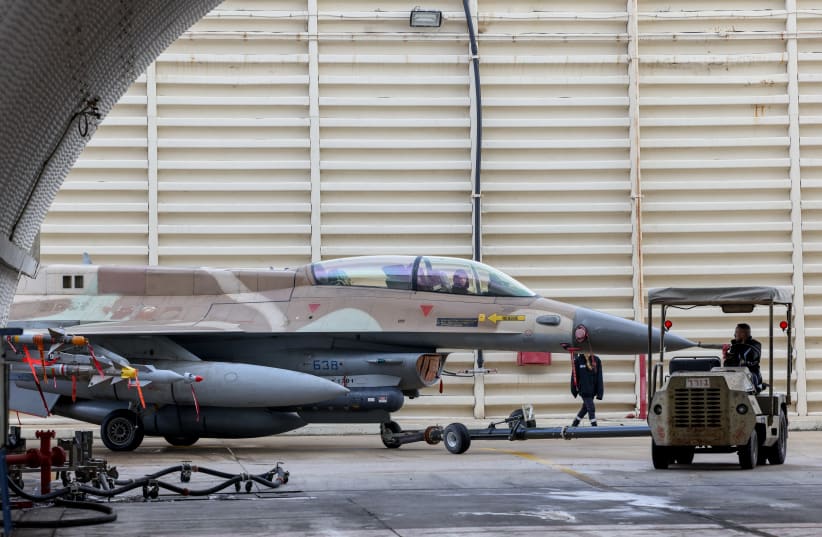
Israeli air force technicians working on a F-16 Fighting Falcon in Ramat David Airbase, northern Israel, January 14, 2024.  (photo credit: David Cohen/Flash90)
Israeli air force technicians working on a F-16 Fighting Falcon in Ramat David Airbase, northern Israel, January 14, 2024.
(photo credit: David Cohen/Flash90)

The Israeli Defense Ministry said on Thursday it had signed an agreement to acquire 25 next-generation F-15 fighter jets from Boeing Co.

It said the $5.2 billion agreement was part of a broader package of US aid approved by the US administration and Congress earlier this year and included an option for 25 additional aircraft.

Increased advantages

The aircraft will be equipped with weapons systems integrated with existing Israeli weapons as well as having increased range and payloads.

"These advantages will enable the Israeli Air Force to maintain its strategic superiority in addressing current and future challenges in the Middle East," the ministry said in a statement.

Delivery of the F-15 aircraft will begin in 2031, with 4-6 aircraft to be supplied annually, it said.

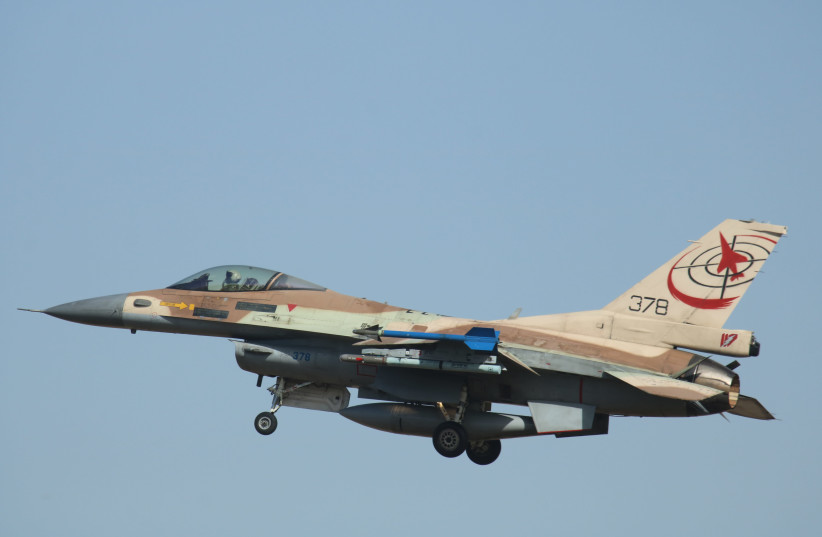
F-16 fighter jet of the 117th First Jet Squadron (credit: DAVID WEINRICH)Enlrage image
F-16 fighter jet of the 117th First Jet Squadron (credit: DAVID WEINRICH)

"This F-15 squadron, alongside the third F-35 squadron procured earlier this year, represents a historic enhancement of our air power and strategic reach - capabilities that proved crucial during the current war," the director general of the defense ministry, Eyal Zamir, said in the statement.


Reuters

Source: https://www.jpost.com/breaking-news/article-827955

Follow Middle East and Terrorism on Twitter