The modern iteration of the militant Antifa movement draws its name, symbolism, and inspiration from Antifaschistische Aktion
— a project of the German Communist Party in the 1920s and 1930s which
targeted center-left parties as the true fascist enemy and aided in the
rise to power of Adolf Hitler and the Nazi Party.
Antifaschistische Aktion was founded in 1932 by the
Communist Party of Germany (KPD), which viciously opposed the more
moderate leftist Social Democratic Party of Germany (SPD), dividing the
opposition and directly contributing to the successful rise of the
National Socialist German Workers' Party (NSDAP) — the Nazi Party — and
the eventual establishment of Hitler’s dictatorship.
The first Trump Administration repeatedly sought to go
after the far-left American movement known as Antifa, and now, in the
wake of violent anti-ICE protests and the assassination of Charlie Kirk,
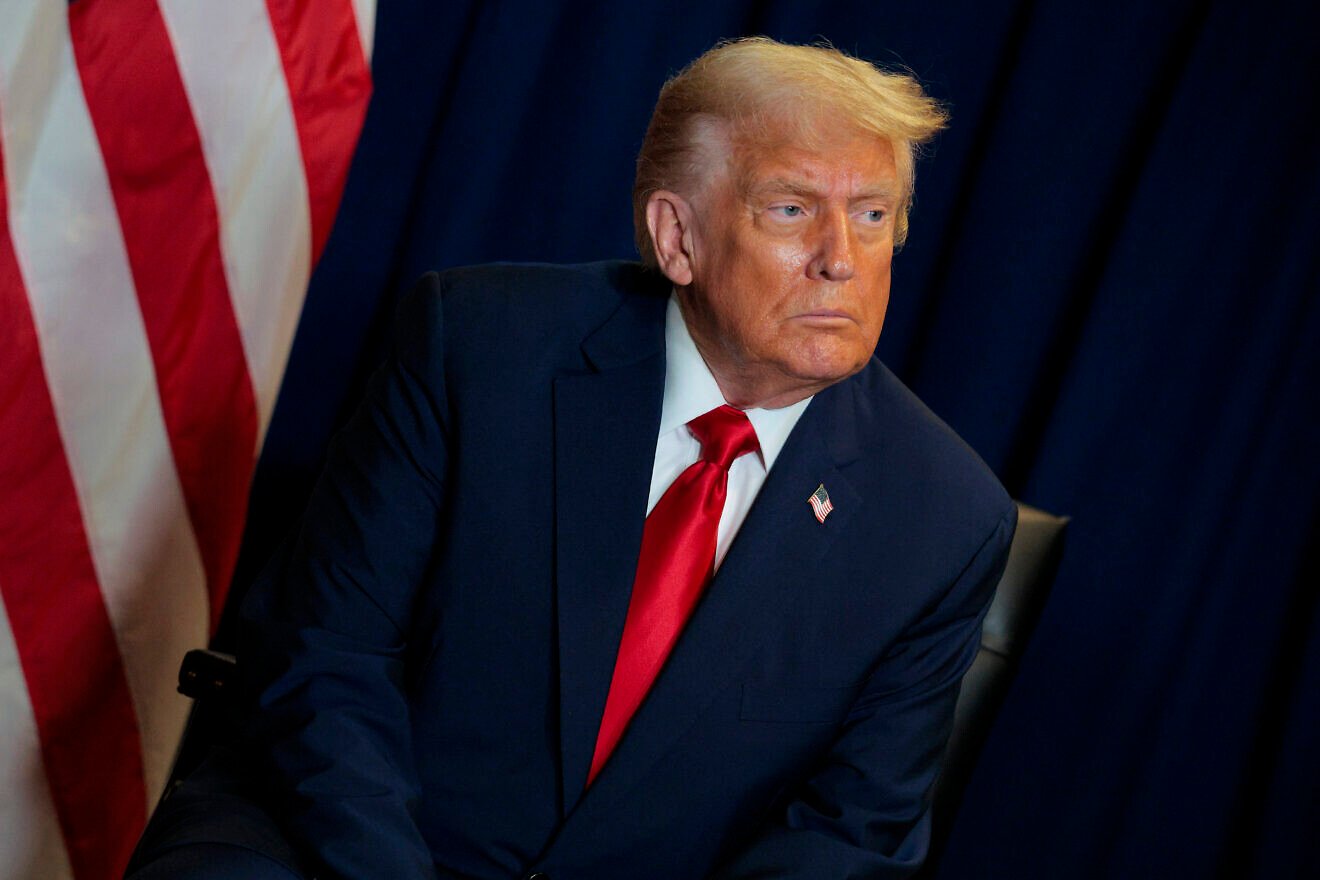
President Donald Trump has designated Antifa as a “domestic terrorism organization.”
The modern iteration of Antifa seeks to burnish its anti-fascist bona-fides by linking itself through its name and its two-flagged banner
to purported efforts by Antifaschistische Aktion to oppose Hitler and
the Nazis, but the actual history of Germany’s Antifa movement is much
more complicated than that.
Modern "Antifa": Rewriting history
The German Left was deeply divided during the years between
the First and Second World Wars, as the SPD often attempted to defend
the Weimar constitution and to preserve some of the Weimar Republic’s
democratic institutions against both a Nazi fascist state and a
Communist one, while the radical KPD, subordinated by Joseph Stalin's
Comintern, sought a Soviet-style revolution in Germany.
The democratic German Weimar Republic, established in the
wake of Germany’s defeat in World War One, was beset by massive economic
problems flowing from the Great Depression, intense hyperinflation,
political instability, and constant street battles between paramilitary
groups, including those backed by Communists and Nazis. The German
Antifa played a key role in the German Communist Party’s successful
efforts to kneecap the SPD, contributing to Hitler and the Nazis
managing to seize power amidst a divided and demoralized opposition.
Mark Bray, the author of Antifa: The Anti-Fascist Handbook, wrote
in his 2017 book that “over the past decades, antifa have
self-consciously adopted interwar anti-fascist symbols like the two
flags of the Antifaschistische Aktion.”
Richard J. Evans, the author of The Third Reich in Power, argued
that "the Communists' violent revolutionary rhetoric, promising the
destruction of capitalism and the creation of a Soviet Germany,
terrified the country's middle class who knew only too well what had
happened to their counterparts in Russia after 1918.”
Evans wrote that "appalled at the failure of the government
to solve the crisis, and frightened into desperation by the rise of the
Communists, they began to leave the squabbling little factions of the
conventional political right and gravitate towards the Nazis instead."
Antifa originated with German Communist Antifaschistische Aktion
Antifa originated with the German Communists, who labeled
anyone to their right politically as “fascists” — including the leftwing
SDP, who were dubbed “social fascists.”
Bernd Langer, the author of 80 Years of Anti-Fascist Action, contended
that “antifascism is more of a strategy than an ideology” and that “it
was introduced in Germany in the 1920s by the Communist Party of Germany
as an anti-capitalist battle cry.”
Langer’s pamphlet, published by Germany's Association for
the Promotion of Anti-Fascist Literature and translated using Google
Translate, stated
that “fascism and antifascism were introduced into the political
vocabulary by the KPD as undifferentiated, polemical battle terms” and
that “the communists understood antifascism to mean anticapitalism.”
Thus, Langer said, “for the KPD, all other parties were fascist,
especially the SPD.”
Langer said
the flag since adopted by Antifa was created by the German Communist
Party: “The emblem with the double flags symbolizing the KPD and SPD (of
course, this always meant only the SPD base, not the party as such) in a
lifebelt bearing the inscription ‘Antifaschistische Aktion’
(Anti-Fascist Action) appeared from this point on in virtually all KPD
publications and demonstrations.”
“The double flags now represent a radical, anti-capitalist
symbolism, also used by groups and initiatives that have little to do
with autonomous movements,” Langer wrote.
“It has become an emblem used across the scene, distinguishing itself
from state-supporting antifascism and standing for a militant politics.”
David Karvala, currently a spokesperson for Unity Against Fascism and Racism, said
that “the strategy of Antifascist Action can only be understood in the
context of the policy of the German Communist Party at the time, which
in turn was framed by Stalinism.”
Karvala noted
that Stalin’s strategy was to declare that “all of Europe was in the
hands of fascism” despite the fact that “in Germany the establishment
parties — the Christian Democrats and the Social Democrats — were still
in charge.” But “this was no problem for the Stalinist theory,” Karavala
wrote, noting that “they were simply branded as fascists” or “social
fascists.”
An article in The Jerusalem Post noted
that “a 1932 photo of KPD headquarters in Berlin prominently displayed
the double-flagged Antifa emblem among other Communist symbols and
slogans.” The article added
that “in a photo from the 1932 Unity Congress of Antifa in Berlin, the
double-flagged banner shared space with the hammer and sickle and with
two large cartoons. One supported the KPD; the other mocked the SPD,
Germany’s Social Democratic Party.”
German Communists relentlessly targeted leftwing Social Democrats over Nazis
The Soviet Union was the sponsor of Communist revolutionary
movements in the 1920s and 1930s, and Josef Stalin, Soviet General
Secretary of the Communist Party from 1922 to 1952 and premier
considered non-Communist leftwing movements to be fascist.
Stalin declared
in 1924 that “Fascism is the bourgeoisie’s fighting organization that
relies on the active support of Social-Democracy” and that
“Social-Democracy is objectively the moderate wing of fascism.”
The reported mantra
of Ernst Johannes Fritz Thälmann — the leader of the German Communist
KPD and Stalin’s man in Germany — was that “the Social Democratic forest
should not be overlooked when looking at the National Socialist trees.”
Eve Rosenhaft, a historian of modern Germany, wrote:
“The Communists' policy underestimated the specific threat from the
National Socialist Party and insisted that the primary attack be
directed against the Social Democrats, the majority working-class party
known in KPD parlance as 'social fascists'. As a consequence, so the
classic argument goes, the labour movement was divided and incapable of
resisting the rise of the Nazis.”
“That so patently absurd a policy should have been
possible, historians of the 1940s, 1950s, and early 1960s explained by
reference to the 'Stalinization' of the KPD. This process, going on
throughout the mid-1920s, was said to have made the KPD increasingly
monolithic and subservient to the interests of the Soviet political
leadership as reflected in the policies of the Communist International,
or Comintern,” Rosenhaft wrote.
“By implication the German party was a puppet of Moscow,
the KPD rank and file puppets or passive victims of their leaders — and
the movement as a whole presented an image of lifelessness and endless
jargon-ridden tedium,” she continued.
Kavala argued
that “during the rise of Hitler the KPD, in general, fought against the
Nazis, but always from the viewpoint that the SPD was an enemy as or
more dangerous than the fascists themselves.”
Karvala also wrote
that “under pressure from Moscow, the KPD leadership quickly made it
clear that Antifa would oppose not only the Nazis but also the SPD.” The
German Communist Party declared
in July 1932 that “Anti-Fascist Action means untiring daily exposure of
the shameless, treacherous role of the SPD and ADGB [socialist trade
union] leaders who are the direct filthy helpers of fascism.”
German historian Hans Coppi Jr., who wrote The KPD in the Antifascist Two-Front War, stated
that the 11th Plenum of the Executive Committee of the Communist
International in April 1931 “resulted in the KPD downplaying the threat
posed by the Nazis.” He wrote that “this dogmatic, ultra-left position”
of prioritizing the battle against the SDP over the battle against the
Nazis “led to a diminished perception of the real danger posed by the
Nazi movement.”
Coppi, according to a book translated using Google
Translate, was the son of KPD member parents whose father had joined the
anti-fascist so-called Red Orchestra.
“The KPD saw itself as the only revolutionary force capable
of halting and destroying fascism. … This claim to exclusive
anti-fascist representation ultimately rendered the fight against the
unstoppable rise of German-style fascism ineffective, but also prevented
a cross-party mass movement that could have halted the advance of
National Socialism,” Coppi wrote.
“The KPD, committed to the revolutionary transformation of society, was
no longer capable of forming alliances with other anti-fascist forces
that rejected this goal.”
Langer stressed
that “the KPD was a member of the Comintern from the outset and
transformed within a few years into a Stalinist party, ideologically,
logistically, and financially dependent on the Moscow headquarters.”
The German Communist Party’s Unity Congress of the Anti-Fascist Action took place in July 1932, with Langer writing that “this was intended to be the grand launch of an initiative aimed at defeating both the SPD and the NSDAP.” Langer noted
that “in later years, KPD historiography emphasized only the fight
against the NSDAP, but that is only half the truth: anti-fascism was
always also a fundamentally anti-capitalist strategy.”
Langer said
that “the emergence of the Antifascist Action took place within the
well-known substantive/strategic concept of the ‘united front’ policy as
defined by the Comintern and did not mark a break with the anti-social
democratic line” and noted that “the Antifascist Action was the
communist counter-foundation to the Iron Front” — the SDP-led group
which a Cambridge University analysis described as “an antifascist organization that resisted the rise of the Nazis in the dying days of the Weimar Republic.”
Opposing "The Iron Front"
Indeed, even the author of The Anti-Fascist Handbook admitted
that Antifaschistische Aktion was formed as a direct response to the
strength of the Iron Front, which had sought to combat the threat that
both Communists and Nazis posed to the survival of the Weimar Republic.
“The popularity of the Iron Front prompted the KPD to form
Antifaschistische Aktion as a network of factory cells, neighborhood
groups, apartment blocks, and other geographical associations,” Bray wrote.
“Rank-and-file social democrats were welcomed into Antifaschistische
Aktion, but the KPD was still instructing its operatives ‘to sabotage
the Iron Front at every turn.’ … Ultimately the socialists and
communists were too preoccupied with each other to recognize that the
Nazis were not simply a new variant of traditional counterrevolution.”
The Marxist magazine Cosmonaut also acknowledged
that German Communists were focused on hurting their more moderate
leftwing opponents rather than solely on stopping a fascist takeover of
Germany.
“While the right was unifying behind the Nazis during the
1928-1933 period, the KPD devoted its resources to fighting both the
Social-Democrats and the Nazis,” Cosmonaut wrote.
“The KPD leadership did advocate action against the SPD, and even
reached out to Nazi rank-and-file workers for an alliance against the
SPD Union leadership.”
German Communists backed the Nazi coup in Prussia
The German Communists had a history of sometimes
collaborating with the Nazis, and even helped the Nazis conduct a coup
in Prussia against the SDP just a year or so ahead of Hitler’s takeover
of Germany.
“At times, the KPD came worryingly close to the Nazis,” Karvala wrote.
“In the Land, or region, of Prussia, in summer 1931, the Nazis began a
campaign to overthrow, through a referendum, the SPD’s regional
government. Initially the KPD refused to support them, but after the
intervention of Moscow, the party supported the fascist campaign.”
The Social Democrats, led by Otto Braun, had led Prussia
for years, but “in the summer of 1931, the Communists had formed a
common front with the Nazis with the object of overthrowing Braun’s
government,” according to the History of the International, written by Julius Braunthal, the Secretary of the Socialist International in the 1950s.
Just before the Prussian coup by the Nazis in 1932, Thälmann had declared:
“The SPD’s position in the Prussian state machine is like an iron ball
and chain around the feet of German workers [...] Today the Social
Democrats are the most active factor in creating Fascism in Germany.”
The German Communist Party’s newspaper in November 1931 had published a letter
to the “fellow workers” of the Nazi Party, arguing that “as honest
fighters against the hunger system, the proletarian supporters of the
NSDAP have joined the United Front of the proletariat and carried out
their revolutionary duty.”
Karvala noted
that, in May 1932, the German Communist Party also “organized a public
meeting with the participation of a Nazi speaker and three hundred NSDAP
supporters.”
The Nazis and the Stahlhelm — which German History in Documents and Images describes
as a “right-wing veteran’s paramilitary group” during the Weimar
Republic — pushed for the anti-SDP coup in Prussia, and the German
Communists joined in their effort.
“In mid-July 1931, at Moscow's urging, the KPD suddenly
supported the referendum initiated by the Stahlhelm and the NSDAP
against the Social Democratic government in Prussia under Otto Braun,”
Coppi wrote.
“The controversial decision was justified by the argument that it now
opened up an opportunity to reach anti-capitalist National Socialist
supporters.”
Braunthal wrote
that “the Communist party leaders considered the removal of the Social
Democratic Party in Prussia as a happy event” and noted that “for eleven
months before the coup, they had worked with the Nazis in a campaign to
overthrow this government.”
Stalin and the German Communists not concerned by Hitler’s ascent to power
Once Hitler came to power in early 1933, the German Communist Party self-assuredly insisted:
“After Hitler, we will take over!” This never came to pass, although
after the war, East Germany became a communist state upon its
establishment as the German Democratic Republic (GDR) on October 7,
1949.
“Whereas the Social Democrats considered Fascism to be a
deadly threat to the whole labor movement, Stalin looked on it as a
historic instrument for the destruction of Social Democracy. He was not
at all disturbed by Hitler’s menacing seizure of power,” Braunthal wrote.
“In September 1932, when the Nazi tide was rapidly growing, he rejected
all thoughts of a tactical understanding with the Social Democrats for a
common struggle against Fascism. He was convinced that Hitler must come
to power first before a victory could be expected for Communism.”
The Praesidium of the Soviet-led Communist International
said after Hitler’s political victory in March 1932 that “the current
calm after the victory of Fascism is only temporary.” The Communist
International wrongly predicted: “Inevitably, despite Fascist terrorism,
the revolutionary tide in Germany will grow… The establishment of an
open Fascist dictatorship, which is destroying all democratic illusions
among the masses and freeing them from the influence of the Social
Democrats, will speed up Germany’s progress toward the proletarian
revolution.”
“Thus, even under Fascist rule, Social Democracy still
featured in Communist propaganda as the ‘chief enemy’ of the workers,”
Braunthal wrote.
Thälmann declared in 1932 that “nothing could be more fatal for us than to opportunistically overestimate the danger posed by Hitler-fascism.”
After the Reichstag Fire and the Enabling Act in 1933, which solidified Hitler’s hold on power, Langer wrote
that “left-wing organizations were crushed, and civil liberties were
suspended” but that “even in this situation, the struggle between the
KPD and SPD did not cease.” Even with Hitler in charge, Langer said,
“the Comintern steadfastly clung to its theory of social fascism.”
“The consequence of theory of Social Fascism was disastrous
for the German party and Communists movements around the world,”
Karvala wrote.
“By January 1933 Hitler's Nazi party had ascended to power. Hitler made
no distinction between the parties of the Left and by March both
Communists and Social Democrats were arrested. Even then the Comintern
did not retract its accusation that ‘Social Democracy was Social
Fascist.’ The Comintern succeeded in fragmenting the German working
class.”
Amidst Hitler’s ensuing crackdown on all non-Nazi Parties —
including the German Communists and the SDP — the German Communists
nevertheless put out a May 1933 resolution celebrating the destruction
of the Social Democrats at the hands of the Nazis.
“The total removal of Social-Fascists from the state
machine and the brutal suppression of Social Democratic organizations
and their press can do nothing to change the fact that Social Democrats
were, and still remain, the chief prop of the capitalist dictatorship,”
the German Communists declared. “The Nazis beat the Social Democrats as they would beat a faithful dog who had outlived his usefulness.”
German Communist leader Fritz Heckert still insisted
at the end of 1933 that “there is only one real enemy — that is the
fascist bourgeoisie and Social Democracy, its principal social support.”
“Since the end of the 1920s, the Communist Party of Germany
had been following the ‘ultra left’ party line in Moscow, which damned
the Social Democrats as ‘social fascists’ and regarded them, indeed, as
the main obstacles to a proletarian revolution,” Evans wrote. “Nothing that happened in 1933 or 1934 changed this.”
White House: "Antifa as a Terrorist Threat”
The truth about Antifa’s origins as a German Communist
effort that enabled the rise of the Nazis likely complicates the
antifascist messaging that the modern Antifa movement in the U.S. seeks
to promote.
Trump’s frustration with Antifa and other extreme left activist groups comes after months of nationwide street movements opposing crackdowns on illegal immigration — including protests which often spiraled into violent riots
in parts of Los Angeles and elsewhere. But the president’s frustration
seemed to boil over following the murder of Kirk, the popular
conservative influencer and Trump’s ally and friend, by an accused
shooter whose ammunition included anti-fascist messaging.
The rifle casings belonging to accused Kirk assassin Tyler Robinson were, according to law enforcement, engraved with antifascist and anti-Nazi phrases as well as apparent sexualized online memes and video game references. One bullet casing
was inscribed with the phrase, “Hey fascist! Catch!” while another
included the lyrics to a song popular with the Antifa movement, although
there is no public evidence that Robinson was an Antifa member.
The 31-year-old Kirk and Trump have both been compared to fascists and Nazis by figures on the left for years, and Hillary Clinton earlier this month promoted a book by American Federation of Teachers President Randi Weingarten titled "Why Fascists Fear Teachers," with the book taking aim at Trump. Failed presidential candidate and former Vice President Al Gore earlier this year compared President Donald Trump’s administration to Nazi Germany.
Trump declared
last week that Antifa is “a militarist, anarchist enterprise that
explicitly calls for the overthrow of the United States Government, law
enforcement authorities, and our system of law” as he labeled the group a
“terrorist threat.”