Saturday, December 7, 2024

Hezbollah begins rebuilding militarily, financially - JNS Staff


by JNS Staff

Iran's Lebanese terror proxy has begun restoring its capabilities after more than a year of war with Israel.


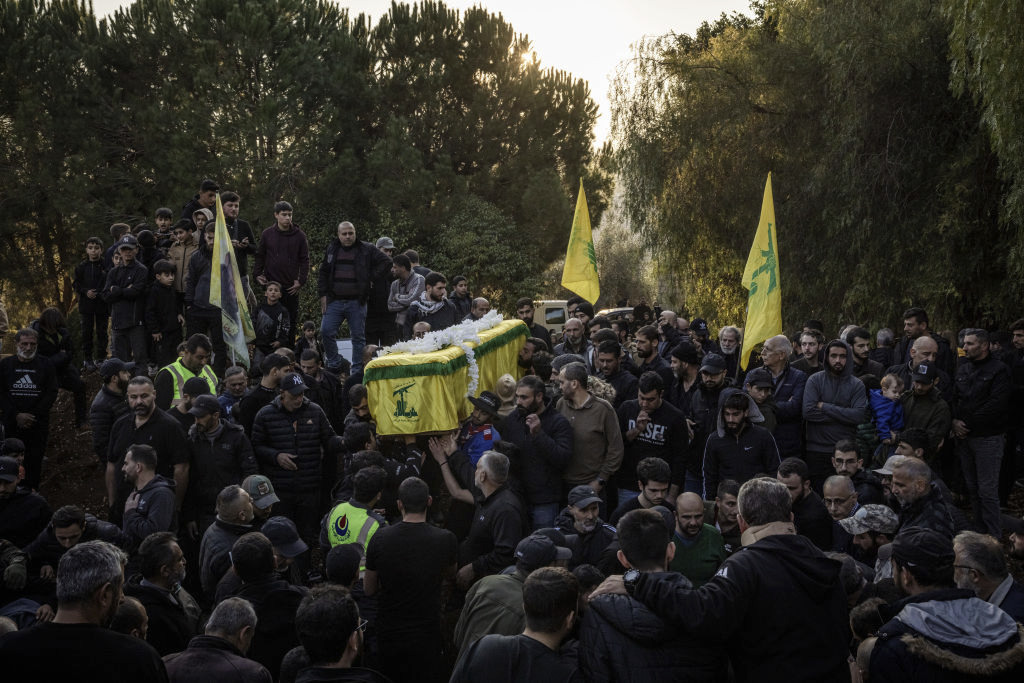
A picture of a terrorist and a Hezbollah flag lie on a temporary grave as civilians and terrorists are exhumed for relocation  in Tyre, Lebanon, on Dec. 4, 2024. Photo by Ed Ram/Getty Images.
A picture of a terrorist and a Hezbollah flag lie on a temporary grave as civilians and terrorists are exhumed for relocation in Tyre, Lebanon, on Dec. 4, 2024. Photo by Ed Ram/Getty Images.

The Lebanese Shi’ite terrorist organization Hezbollah has already begun rebuilding its military capabilities and financial operations, just over a week since a ceasefire with Israel went into effect after 13 and a half months of war.

While the IDF’s aerial and ground offensives severely degraded the Iranian proxy’s terrorist infrastructure and forces, according to U.S. intelligence estimates, Hezbollah has started recruiting new fighters, boosting domestic weapons production and looking for ways to continue smuggling arms in via Syria.

Reuters cited a senior American official, an Israeli official, and two U.S. lawmakers briefed on the intelligence in its reporting published on Wednesday.

According to the terms of the Nov. 27 ceasefire agreement, Hezbollah is prohibited from rearming.

Hezbollah lost more than half of its weapons stockpiles and thousands of fighters during the war with Israel, according to American assessments. However, it has not been destroyed, with the sources saying that it still has thousands of short-range rockets and will try to rebuild using weapons factories in neighboring countries with transportation routes into Lebanon.

One of the lawmakers told Reuters that Hezbollah has been “temporarily weakened” and its command-and-control capabilities diminished. However, the lawmaker notes, “This organization is built to withstand disruption.”

Washington is particularly concerned about Syria, where Turkish-backed jihadist terrorist groups recently launched offensives in Aleppo and Hama, in a major challenge to the Assad regime and its Iranian and Russian backers. Israel continues to target Hezbollah smuggling routes in Syria and at the Syrian-Lebanon border and to disrupt Iranian weapons shipments via Syria.

A senior U.S. official revealed that Washington is urging Syrian President Bashar Assad to restrict Hezbollah’s activities, with other regional countries being enlisted to assist in this effort. Reuters reported earlier this week that the U.S. and the United Arab Emirates discussed the possibility of lifting sanctions on the Assad regime, provided, among other conditions, he halts the weapons supply routes to Hezbollah.

Hezbollah officials assert that the group will maintain its “resistance” against Israel. However, sources in Lebanon indicate that Hezbollah’s primary focus at the moment is on rebuilding and restoring homes damaged by Israeli airstrikes in Southern Lebanon and Beirut.

Hezbollah’s financial system

Meanwhile, Saudi-owned, London-based pan-Arab newspaper Asharq Al-Awsat reported that Hezbollah has begun assessing repairs to its financial arm, Al-Qard al-Hassan, which was heavily damaged by Israeli attacks during the war.

The Iranian proxy plans to pay housing grants through the bank to repair the homes of families impacted by the war. Each family may receive $12,000 for rent and home repairs.

Despite, suffering severe blows in an Israeli aerial operation on Oct. 21, the bank resumed operations a week after the ceasefire.

The Saudi newspaper highlighted that “the announcement of the bank’s resumed operations contradicts Israeli claims of its destruction.” However, a source close to Hezbollah confirmed that the group had suffered significant financial losses during the war. The source further explained that the funds for rehabilitation will not come from Al-Qard al-Hassan’s resources, but from recent financial transfers from Iran to Hezbollah.

Iran transferred $1 billion via a regional intermediate on the first day of the ceasefire, which Hezbollah plans to use for its rehabilitation efforts.


JNS Staff

Source: https://www.jns.org/hezbollah-begins-rebuilding-militarily-financially/

Follow Middle East and Terrorism on Twitter

Ukraine: Bleeding an Ally - Thaddeus G. McCotter


by Thaddeus G. McCotter

NATO’s rationale of "bleeding Russia’s military" through prolonged aid to Ukraine turns allies into expendable pawns, undermines moral credibility and ignores the devastating human cost.


Throughout Russia’s invasion of Ukraine, the Biden administration and our NATO allies have offered numerous rationales for the initial and subsequent tranches of billions of dollars in military and economic support for our ally. Some are more plausible than others, but one rationale, in particular, should never be a consideration at any time.

Growing more prevalent as the war continued, this rationale belies NATO’s self-proclaimed concern and support for an ally and, in the eyes of the world, undermines the peaceful professions of the collective security organization at the very time it is engaging in its reason for existence: countering Russian aggression in Europe.

In Western nations, there is overwhelming support for defeating and deterring Russian aggression and, if possible, deposing Putin. Playing upon this sentiment, NATO has increasingly put forward the rationale that continued aid to Ukraine “is bleeding the Russian military.” What could possibly be amiss with this statement?

To bleed the Russian military, one must also bleed the Ukrainian people. And the Ukrainians and the rest of the world know it.

Some may attempt to justify this rationale by claiming the brave Ukrainian people are okay with this formulation and/or can intuit that there is an implicit recognition that, somehow, NATO actually cares about their losses as much as Russian casualty counts. To do so strains credulity, evinces a lack of understanding of human nature, and exhibits an absence of sympathy, let alone empathy, for suffering Ukrainians on the part of proponents of this rationale. In short, this rationale turns our flesh-and-blood allies into abstractions in a strategic tussle between NATO and Russia (and its international abettors, such as the PRC, North Korea, and Iran). In the real world, this rationale is calloused to the war’s human cost.

To wit: A family member working in Chicago came across a co-worker bent over her desk, softly sobbing. Hoping to comfort her, the family member asked the woman what happened. Through the tears streaming down her face, she replied in her still distinct accent that, while she’d just been notified her fiancĂ© had been killed fighting Russians in Ukraine.

Do you think she received any comfort knowing he died bleeding Russia’s military?

For the more hardened among us, such losses are the price of “great power” competition. Yet, such a rationale diminishes NATO in the eyes of current and prospective allies and emboldens its enemies. Who wants to sign up to be the next expendable pawn in a great power competition?

In fact, regarding pushing away potential allies and, indeed, hardening present enemies, there is a historical irony at work, circa August 1, 1944—the Warsaw Uprising.

Per The National World War II Museum of New Orleans:

The Warsaw Uprising was catastrophic and had lasting impacts for decades to come. The lack of Soviet support, coupled with the fact that Nazi leaders used untrained SS troops to suppress the uprising, proved disastrous for the AK [Polish Home Army] and civilians living in Warsaw. Altogether, Polish losses during the uprising included 150,000 civilian deaths and about 20,000 Home Army casualties. The German forces lost an estimated 10,000 troops. Fighting stopped on October 2, 1944, with the formal surrender of the AK, but during the next three months, German forces demolished much of what was left of the city and deported 650,000 civilians to a labor camp south of Warsaw. According to the historian Maciej Siekierski, when Soviet troops finally “liberated” Warsaw in January of 1945, “Poland’s capital was a vast desert of hollow-shelled buildings and rubble.

Delaying and denying assistance, Stalin was cynically allowing his nominal allies, the Poles, to bleed his enemy, the Germans; and all the while he was calculating how much easier it would then be post-war to subjugate Poland beneath the totalitarian Soviet yoke. (This, of course, occurred after no one came to aid the intrepid Jewish Poles who led the Warsaw Ghetto uprising.)

While NATO lacks Stalin’s devious endgame for Poland, the “bleed Russia’s military” rationale nevertheless damages the collective security alliance because it suggests a casualness in its price tag that includes a war-ravaged Ukraine being turned into “a vast desert of hollow-shelled buildings and rubble.” It is an excuse for NATO’s failure to successfully facilitate a Ukrainian victory and for Western governments’ failure to define realistic, achievable war aims, let alone craft an acceptable—if not agreeable—off-ramp for the carnage. Honestly, how much more blood needs to be shed?

There will be those who will dismiss noting the harm of the “bleed Russia’s military” rationale as a trivial complaint. Yet, it speaks to the larger issue that the U.S. foreign policy establishment and our NATO allies have become too rigidly ideological and too abstract in their thinking. (See the attempted reconstruction of Afghanistan and Iraq.) It needs to be more political, more practical—and, yes, be more understanding of and empathetic to all the peoples involved. (See the successful reconstruction of Germany and Japan.)

Speaking of practicality, just how much of our military hardware have we diverted from other allies to support Ukraine? The American weaponry being expended in Ukraine will need to be replenished. How many of these new weapons will require parts made in communist China or other nations? What happened to the manufacturing base that once armed the “Arsenal of Democracy?” Questions abound as to who is bleeding whom.

Yet, that is for another day. Presently, suffice it to say: do not speak in the abstract to build support for continuing to wage a proxy war that bleeds your enemy, your ally, and yourself.

***

An American Greatness contributor, the Hon. Thaddeus G. McCotter (M.C., Ret.) served Michigan’s 11th Congressional district from 2003-2012 and served as Chair of the Republican House Policy Committee. Not a lobbyist, he is a frequent public speaker and moderator for public policy seminars and a Monday co-host of the “John Batchelor Radio Show,” among sundry media appearances.


Thaddeus G. McCotter

Source: https://amgreatness.com/2024/12/07/ukraine-bleeding-an-ally/

Follow Middle East and Terrorism on Twitter

Pete Hegseth: Who Dares, Wins - Gary Bernsten


by Gary Bernsten

When Pete Hegseth is confirmed as Secretary of Defense, he will be a forceful agent of change for the betterment of the United States of America.


The abridged version of a famous Machiavelli quote, “Nothing is more difficult or dangerous than to attempt to change the order of things,” is in full view as we watch the process of confirming President Trump’s Secretary of Defense. When Pete Hegseth is confirmed as Secretary of Defense, he will be a forceful agent of change for the betterment of the United States of America.

President-elect Trump’s nominee, retired Army National Guard Major and Fox News host Peter Hegseth, is receiving considerable fire amid allegations of misconduct while CEO of Concerned Veterans for America (CVA).

I am writing this article because I was one of the founding members of CVA. I am an Air Force veteran and retired senior operations officer and chief of station in the Central Intelligence Agency. While at the CIA, I held major field command positions and was a senior manager in the CIA’s Counter-Terrorism Center (CTC). I led the CIA’s largest paramilitary element on the ground during the invasion of Afghanistan in 2001, seizing Kabul, initiating the battle of Tora Bora, and leading teams around the globe in several dangerous crises. I worked hand in glove with the most important elements of the National Security Council, the Department of Defense, the Department of Justice, and the FBI to secure and safeguard American interests. Based on 30 years of this experience and my personal knowledge of Pete Hegseth, I have no doubt that he will excel as Secretary of Defense.

CVA Backstory

Concerned Veterans for America (CVA) was created by a small group of veterans and one non-veteran who had all worked together in the failed 2008 presidential campaign of Senator John McCain. In 2011, a member of that team contacted me and told me he had funding to create a nationwide veterans organization focused on addressing veteran needs, educating the public, and building support for those ideas.

CVA was created as a 501(c)(3), and I was asked to be its first CEO. I did not accept the position, as it would have required me to relocate to the Washington, D.C., area and I had just bought a home in Florida. I was also busy managing a security company in Afghanistan. I was then asked whether I would agree to become the Southeast Coordinator for CVA and work under Pete Hegseth. He was twenty years my junior but had served in Iraq, Afghanistan, and GITMO.

I read some articles by Hegseth, had seen him interviewed on television, and went to Washington, D.C., to meet him and the team. He was humble, direct, and smart. It was clear to me that he was policy-driven and capable, though only in his mid-30s. He was familiar with my published work and that of many others involved in counterterrorism and the war against Islamic radicalism. And critically, in our earliest discussions, he made it clear that he understood that taking care of our veterans’ medical needs was paramount.

He made healthcare the immediate focus of CVA. His vision matched the core values of the organization. While I was focusing on building out a solid ground game, Pete was challenging VA shortcomings, holding their feet to the fire on behalf of American veterans. As a concerned veteran, I was impressed.

Pete recruited other veterans like me who had significant national security backgrounds to build out the national organization. This was the very thing required of his position. He met with policymakers and funding sources who could move our organization forward.

We held dozens of events together over several years. We drank coffee by the gallon, but I never witnessed any performance impaired by alcohol. In fact, he handled a situation well that involved an employee who did have an alcohol-related incident. That man had a drinking problem and had made a pass at a female coordinator under his supervision. As I addressed the situation, I called Pete. After I described what happened, Pete was decisive. He asked me to place the employee in rehab, reassign him, and counsel him against ever doing that sort of thing again. We placed a letter in the employee’s personnel file and protected the female employee’s privacy and interests. This demonstrates Pete’s decisiveness, concern, and responsibility for CVA and its personnel. These decisions were made in a single day.

Senators interested in the moral compass of CVA should consult other senior managers from the organization. I will provide any interested senator with the names and contact information of people who conducted dozens of events and worked closely with Pete Hegseth for several years.

One policy issue addressed by Hegseth garnering much attention is his stated opposition to women in combat. Looking to the Afghan conflict ‘Operation Enduring Freedom’ as a recent example, women made up approximately 10 percent of the force on the ground. They are in theatre and add great value as pilots, medical personnel, and intelligence personnel. Their work is high quality, but using them in combat arms needs to be addressed honestly.

The reality is very few men are capable of serving in a line infantry and combat arms-oriented unit. The demands on soldiers and Marines in terms of strength and physical endurance are beyond what civilians can comprehend. In college football or NFL practice, participants arrive fresh, work out for three to five hours, then take a shower and go home and sleep. In a line infantry element, significant and exhausting physical efforts go on day after day, hour after hour, with almost no sleep. Soldiers and Marines may be in battle for extended periods of time fighting for their very lives. There surely are a minuscule number of women in the country with the ability and desire to serve in the arduous conditions of battle; however, this number is so small that it makes writing policy on the matter difficult. Pete Hegseth’s view on the matter is formed by recent deployments. It better represents reality than the current Secretary of Defense, Lloyd Austin, the SecDef who helped surrender Afghanistan disgracefully and needlessly to an untrained and unorganized gang. Pete Hegseth would never have allowed such a surrender.

In 2016, I endorsed candidate Donald J. Trump. I was the fourth and final speaker before Sarasota County GOP Chairman Joseph Grutters would present candidate Trump at his first Florida rally at the Sun Dome in Tampa. Endorsing Trump created a conflict with the 501(c)(3) status of CVA, so I resigned in order to campaign freely for Trump.

I have held senior positions in the national security apparatus during times of combat and crisis. I have seen what is required of an effective leader, and I know Pete Hegseth will be an effective leader. Though not seeking employment, I would have no hesitation serving under Pete Hegseth if he were the Secretary of Defense. He has sound judgment on policy, management, and national security priorities. When making policy, he will remember the lessons of Armed Forces veterans who recently served in combat zones. Members of the U.S. Senate, I recommend you vote to confirm him.

***


Gary Bernsten is a retired CIA officer and best-selling author. He is the recipient of the CIA’s Distinguished Intelligence Medal and Intelligence Star. He is a veteran of the United States Air Force. After retirement from the CIA, he worked in Afghanistan for the Joint IED Defeat Organization (JIEDDO) in support of the 173d Airborne Brigade Combat Team in Regional Command East combating the networks that employed IEDs (roadside bombs) that caused 80 percent of U.S. combat casualties. He also worked for Concerned Veterans for America (CVA).

Source: https://amgreatness.com/2024/12/07/pete-hegseth-who-dares-wins/

Follow Middle East and Terrorism on Twitter

Make Persia Great Again - Majid Rafizadeh


by Majid Rafizadeh

Without the oppressive ruling mullahs, Iran could once again be a force for good, both domestically and globally.


  • Unlike Iran's regime, the country's people are overwhelmingly pro-American and pro-Jewish -- sentiments rooted in a historical alliance that made Iran the closest ally of both Israel and the United States before the mullahs came to power. The regime's anti-American and antisemitic stance is an affront to the true nature of its citizens, who yearn for peace and global partnership.

  • Without the oppressive ruling mullahs, Iran could once again be a force for good, both domestically and globally. Freed from their brutal rulers, the Iranian people could channel their immense talent and potential into rebuilding their nation as a thriving hub of innovation, culture and prosperity. This revival would not only uplift Iran but also finally bring peace and stability to the Middle East and beyond, setting an example of what a liberated, flourishing nation can achieve.

  • Finally, there should be no negotiations, deals or trades with the regime. Such engagements only empower and legitimize the mullahs while undermining the people's struggle for freedom.

  • The time has come to support the cause of the Iranian people and ensure that this great nation, with its rich history and boundless potential, rises once more – without mullahs.

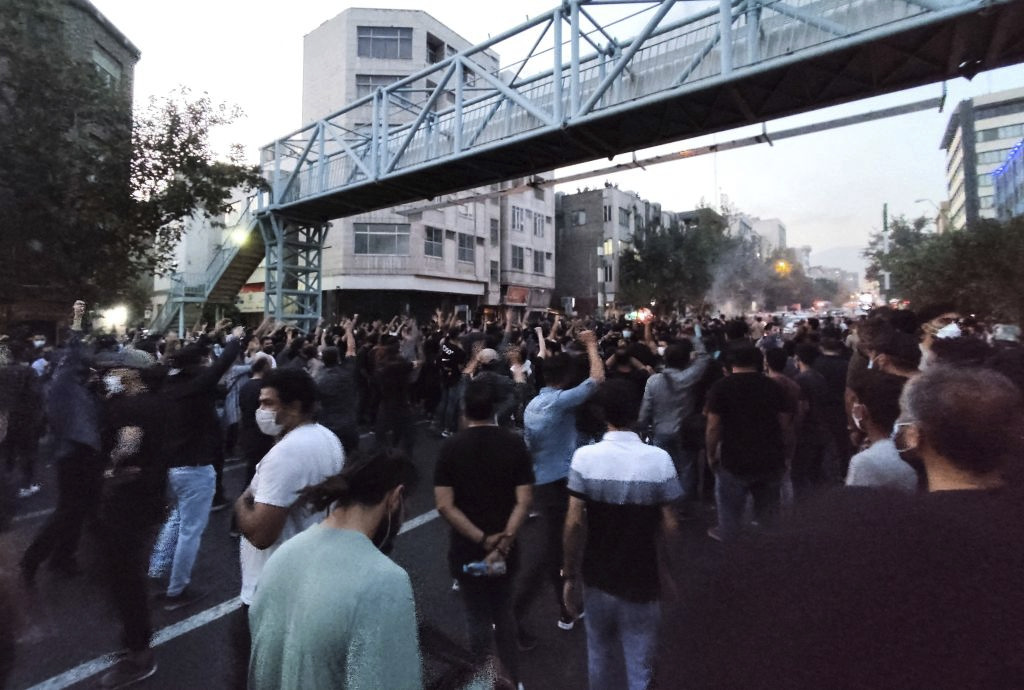
Without the oppressive ruling mullahs, Iran could once again be a force for good, both domestically and globally. Freed from their brutal rulers, the Iranian people could channel their immense talent and potential into rebuilding their nation as a thriving hub of innovation, culture and prosperity. Pictured: Iranians protest the murder of 22-year-old Mahsa Amini, murdered by police while in custody, in Tehran on September 21, 2022. (Photo by AFP via Getty Images)

Historically known as Persia, Iran stands as one of the most illustrious civilizations in human history. For centuries, it was a beacon of cultural, scientific and political advancements, earning respect and admiration across the globe. This legacy of greatness persisted until 1979, when a group of Islamic fundamentalists, obsessed with religion, hijacked a revolution that drastically altered the nation's trajectory.

The mullahs seized control, installing a theocratic Islamist regime that has since ruled with an iron fist — arguably one of history's most brutal and oppressive reigns. The proud heritage of a nation that once symbolized enlightenment and progress has been overshadowed by a reign marked by suppression, regression and fear.

What the people of Iran longed for during the 1979 revolution was democracy, freedom and the opportunity to thrive in a modern world. Yet, with astonishing speed, the mullahs seized their aspirations, transforming a country celebrated as a regional hub of hope, prosperity, and progress into an economically and politically bankrupt state. For more than four decades, the Islamist regime has steered Iran toward ruin, not only dismantling its potential but also weaponizing its resources for militant agendas that sow chaos far beyond its borders. The contrast between what Iran was and what it has become under this regime is both tragic and stark.

Ironically, Iran's current regime stands in direct contrast to the values and character of the majority of the Iranian people. The Iranian populace is largely democratic in spirit, open-minded and highly educated, as evidenced by their repeated uprisings against the dictatorship. In recent years, several nationwide protests have erupted, demonstrating the people's resilience and their desire to reclaim their country. However, each of these movements has been met with unimaginable brutality.

Unlike Iran's regime, the country's people are overwhelmingly pro-American and pro-Jewish -- sentiments rooted in a historical alliance that made Iran the closest ally of both Israel and the United States before the mullahs came to power. The regime's anti-American and antisemitic stance is an affront to the true nature of its citizens, who yearn for peace and global partnership.

Israeli Prime Minister Benjamin Netanyahu, in a powerful message directed at the Iranian people, recently captured this sentiment. He distinguished between the oppressive regime and the citizens of Iran:

"When Iran is finally free—and that moment will come a lot sooner than people think—everything will be different. Our two ancient peoples, the Jewish people and the Persian people, will be at peace."

His words, which resonated deeply among the citizens of Iran, emphasized the shared history and potential for renewed friendship between these two great nations once the regime falls.

The call to "Make Persia Great Again" reflects the collective will of the Iranian people to reclaim their nation's dignity and restore its historical prominence. Yet, the regime continues to suppress its own people, not to mention those around them. The facade of Iran created by the regime is so utterly disconnected from the aspirations of its citizens.

Beyond the domestic repression, the regime has also become a global menace, forging ties with Venezuela's Tren De Aragua criminal organization, which is active in more than 16 states in the US; supporting terrorist proxy groups in Lebanon, Yemen and the Gaza Strip, which are attacking Israel; arming Russia in its war on Ukraine, and making alliances with authoritarian regimes in Africa to plunder their resources and expand Iran's reach.

This network of chaos and terror underscores the extent to which the regime misuses Iran's assets, perpetuating instability instead of fostering development and peace.

Without the oppressive ruling mullahs, Iran could once again be a force for good, both domestically and globally. Freed from their brutal rulers, the Iranian people could channel their immense talent and potential into rebuilding their nation as a thriving hub of innovation, culture and prosperity. This revival would not only uplift Iran but also finally bring peace and stability to the Middle East and beyond, setting an example of what a liberated, flourishing nation can achieve.

What must be done to bring about this change? First, the West must take decisive action to weaken the regime politically and economically. The most stringent sanctions should be enforced to cut off Iran's oil and gas revenues, with strict penalties for any country that violates these measures. Second, targeted operations should neutralize the regime's nuclear facilities, ensuring that it cannot develop nuclear weapons. Third, military strikes on key military and oil infrastructure could send a strong message that the world will no longer tolerate belligerence. Fourth, the global community must unequivocally support the Iranian people, pledging solidarity if they rise against their oppressors. Finally, there should be no negotiations, deals or trades with the regime. Such engagements only empower and legitimize the mullahs while undermining the people's struggle for freedom.

The time has come to support the cause of the Iranian people and ensure that this great nation, with its rich history and boundless potential, rises once more – without mullahs. "Make Persia Great Again."

 
Dr. Majid Rafizadeh is a scholar, strategist and advisor, Harvard-educated analyst, political scientist, board member of Harvard International Review, and president of the International American Council on the Middle East. He has authored several books on the US Foreign Policy and Islam. He can be reached at Dr.Rafizadeh@Post.Harvard.Edu

Source: https://www.gatestoneinstitute.org/21180/make-persia-great-again

Follow Middle East and Terrorism on Twitter

The Race for Nuclear Fusion Energy, the Clean Fuel of the Future: Will China Eat America's Lunch? - Lawrence Kadish


by Lawrence Kadish

The good news is that nuclear fusion, which is produced through nuclear reactors, tokamaks, leaves absolutely no residue.


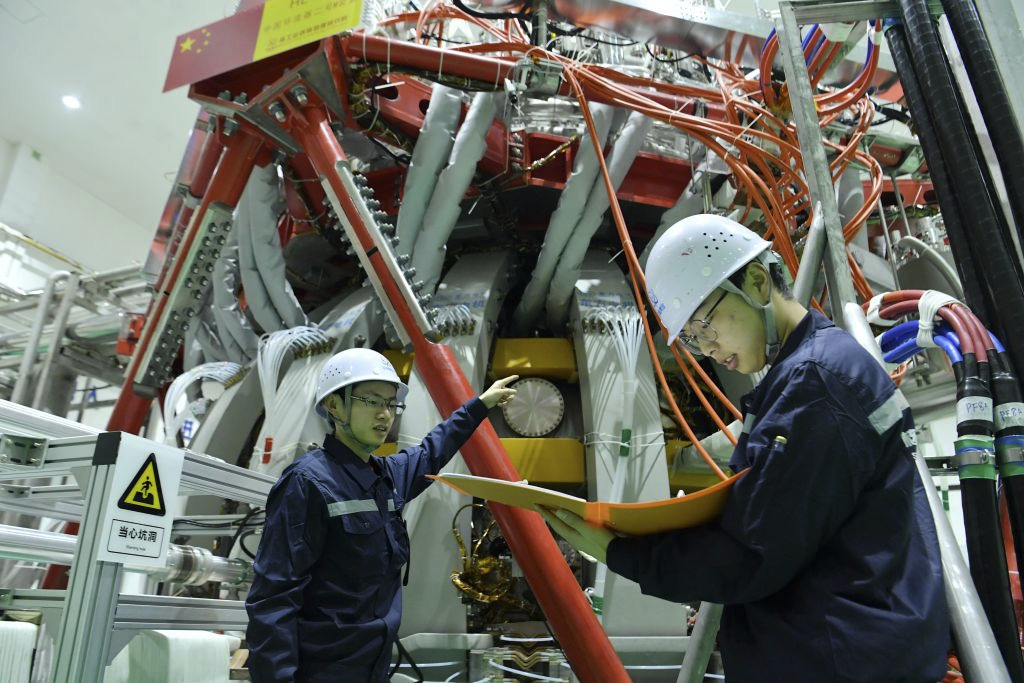
China, with at least three tokamak fusion reactors, is speeding along to win the clean nuclear energy race – and its lucrative markets. Pictured: China's HL-2M nuclear fusion device, at a research laboratory in Chengdu, on December 4, 2020. (Photo by STR/AFP via Getty Images)


The clean energy breakthrough everyone has been wishing for finally is here! It may not be quite ready for prime time, but a quiet nuclear-fusion energy race is underway and cannot come soon enough.

The problem is that China seems to be winning it, not the United States or the West.

It is nuclear fusion -- making atoms collide, rather than splitting them, or fission -- when two atoms are forced to combine into one new atom at extremely hot temperatures. "In order for fusion to occur on the very hot gas -- or plasma," notes euro-fusion.org, "the plasma must be heated to temperatures in excess of 150 million degrees Celsius [320 million degrees F]. " The sun does it without a container -- their combined new weight comes to less than each atom had separately.

This differential becomes a burst of energy that leaves no nuclear residue while functioning as if one had in one's car a gallon of gas which could run it for 20 years. Fusion energy produced four times the power of fission energy, and when harnessed could be used as fuel for expeditions into outer space. Soon we shall presumably be able to say goodbye to expensive, combustible, warm-weather-only and not-very-far lithium batteries, and instead travel unpollutingly along on tiny bundles of captured energy.

The good news is that nuclear fusion, which is produced through nuclear reactors, tokamaks, leaves absolutely no residue.

The bad news is that -- apart from needing further development and affordability -- the Chinese Communist Party (CCP) seems already to be working at warp-speed to develop this new form of energy for commercial and other use. China's regime has reportedly allocated $1.5 billion annually to this effort, which would appear hardly enough, but is still nearly twice as much as the US is investing.

The CCP, moreover, has also reportedly been able to remove the most major drawback: a troublesome resin that impeded the fusion by lowering the temperature needed in the reactor, an impediment that was possibly overcome last month by changing the fuels and using the magnetic fields inside the tokamak -- "the device that uses magnetic fields to confine a plasma" -- to divert the plasma into a chamber the shape of a "cored apple."

In the US, entrepreneurs such as Elon Musk at Tesla and Sam Altman, CEO of OpenAI (the parent company of ChatGPT), have also been in this race to harness nuclear-fusion energy. Tesla bought SolarCity in 2006, originally to explore energy storage, but apparently also produce nuclear fusion energy. Altman took a nuclear energy company public for $500 million. One of his companies reportedly "has already secured a permit from the Department of Energy to build its first microreactor at the Idaho National Laboratory."

Meanwhile, other entrepreneurs have been exploring hydrogen-generated energy. At least for now, however, it seems that the method is carbon-intensive and converting the hydrogen into energy might still require more energy than it can produce.

Meanwhile, China, with at least three tokamak reactors, is speeding along to win the clean nuclear energy race – and its lucrative markets:

"China's Experimental Advanced Superconducting Tokamak (EAST) fusion reactor on 28 May achieved another world record by maintaining a plasma temperature at 120 million decrees Celsius for 101 seconds and at 160 million Celsius for 20 seconds, a major step toward the test run of the fusion reactor. EAST is located at the Hefei Institutes of Physical Science of the Chinese Academy of Science (ASIPP) in Hefei. It is one of three major domestic tokamaks now in operation in China."

It is intensely to be hoped that the incoming administration will not allow China to eat America's lunch.


Lawrence Kadish serves on the Board of Governors of Gatestone Institute.

Source: https://www.gatestoneinstitute.org/21182/race-for-nuclear-fusion-energy

Follow Middle East and Terrorism on Twitter

Thursday, December 5, 2024

Arabs No Longer Buying the Lies of Hamas, Hezbollah - Bassam Tawil


by Bassam Tawil

Instead of admitting their defeat, both in the Gaza Strip and Lebanon, the terrorists, at the behest of Iran's mullahs, are continuing to sell imaginary victories to the Arabs to encourage them to join the Jihad (holy war) against Israel.


  • "Where is the victory? How much did it cost? What defeat is more terrible than such losses? How can one claim victory in the face of a massacre that has destroyed all the logic of resistance? It's not too late to ask Hezbollah to explain its unilateral and deadly decision to open the confrontation [with Israel] under Iran's cover." — Nabil Bou Monsef, prominent Lebanese journalist, kataeb.org, November 27, 2024.

  • Over the past 14 months, Hamas and Hezbollah have dragged the Palestinians and Lebanese into wars that have claimed the lives of thousands of people -- all to serve their patrons in Iran. Instead of admitting their defeat, both in the Gaza Strip and Lebanon, the terrorists, at the behest of Iran's mullahs, are continuing to sell imaginary victories to the Arabs to encourage them to join the Jihad (holy war) against Israel.

Hamas and Hezbollah have dragged the Palestinians and Lebanese into wars that have claimed the lives of thousands of people -- all to serve their patrons in Iran. Instead of admitting their defeat, both in the Gaza Strip and Lebanon, the terrorists continue to sell imaginary victories. Pictured: The funeral of five Hezbollah terrorists in Kherbet Selem, Lebanon, on December 3, 2024. (Photo by Ed Ram/Getty Images)

After the recent ceasefire deal with Israel, supporters of the Iran-backed Lebanese terrorist group Hezbollah claimed "victory." Some celebrated the alleged victory by firing guns into the air and flashing V signs. Many Arabs, however, saying that Hezbollah had lost hundreds of its members, including top leaders, and caused significant damage to Lebanese homes and the country's economy, have been mocking the terrorist group.

Hezbollah's hasty declaration of "victory" is similar to that of Hamas, Iran's Palestinian terrorist proxy in the Gaza Strip. After earlier rounds of fighting with Israel that severely damaged the Gaza Strip's civilian and military infrastructure, Hamas commanders would typically emerge from the debris and proclaim "victory."

Like Hezbollah, many Palestinians and Arabs mocked Hamas for its fake wins. Even now, Hamas continues to pretend that it is winning the war, which began when the terrorist group invaded Israel on October 7, 2023, murdering 1,200 Israelis, many of whom were tortured, burned alive or beheaded. Countless others were raped, and 240 were kidnapped to the Gaza Strip, where 101 – many of whom are dead -- are still held captive.

Commenting on Hamas's claim of "victory," Egyptian political analyst Abdul Latif Al-Manawi wrote:

"I was not surprised when [Hamas leader Khaled Mashaal] announced Hamas's victory in the Gaza war. He said: 'Our losses are tactical, our enemy's losses are strategic, and victory is coming.' Is this how Mashaal sums up a whole year of devastation inflicted on the Palestinian people? If Mashaal means what he says, we have to ask him: Do the tactical losses he refers to include the war victims who have reached more than 42,000 Palestinians? Do they include more than 80,000 [Palestinians] who were injured? Do they include more than 90% of the Gaza Strip's population who have been displaced from their homes and neighborhoods that were razed to the ground? Victory, Khaled Mashaal, is not like this. Victory is realizing the extent of your power, and using it at the right time and in the right way. Victory is not bringing back the era of illusory speeches and false victories."

Hezbollah declared war on Israel the day after the October 7 atrocities committed by Hamas terrorists, and thousands of "ordinary" Palestinians, against Israelis living near the border with the Gaza Strip. Hezbollah leaders said then that they would stop their rocket and drone attacks against Israel only if it ended the war against Hamas in the Gaza Strip. They also said that they would not withdraw their terrorists north of the Litani River in southern Lebanon.

The ceasefire agreement, reached on November 27, stipulates that Hezbollah, or any other armed group in Lebanon, will not carry out any offensive action against Israel, regardless of the situation in the Gaza Strip. The agreement also requires Hezbollah terrorists to withdraw to the north of the Litani River. Hezbollah, in other words, has agreed to disconnect itself from the war in the Gaza Strip and to withdraw its men from the border with Israel.

This reversal is precisely why many Arabs cannot understand Hezbollah's claim of "victory," especially in light of the elimination of most of the group's top political and military leaders, including Hassan Nasrallah, killed by an Israeli airstrike on his bunker in Beirut last September.

Prominent Lebanese journalist Nabil Bou Monsef scoffed at Hezbollah's false victory and pointed out that the war the group brought on Lebanon has caused terrifying scenes of destruction. He accused Hezbollah of engaging in self-delusion, linking Lebanon to regional arenas (the Gaza Strip) and "throwing Lebanon into a catastrophic massacre."

"Where is the victory?" Bou Monsef asked.

"How much did it cost? What defeat is more terrible than such losses? How can one claim victory in the face of a massacre that has destroyed all the logic of resistance? It's not too late to ask Hezbollah to explain its unilateral and deadly decision to open the confrontation [with Israel] under Iran's cover."

Further reactions of Arabs to Hezbollah's purported victory include:

Tunisian philosopher Khaled Mansour:

"Hezbollah's claim of victory over Israel is a farce and a mockery of the minds of the Lebanese and a 'political shamelessness' that is both laughable and disgusting!"

Lebanese student Lina al-Bayati:

"Hezbollah: We achieved victory over the enemy. The party was uprooted from its roots, not a single one of them remains. Where is the victory? No one knows."

Lebanese lawyer Omar El-Yafi:

"This is the text of Hezbollah's surrender that the Lebanese state agreed to, which stipulated that there would be no weapons on Lebanese territory except in the hands of the Lebanese army, in addition to other conditions, including the withdrawal of Hezbollah elements to the north of the Litani River. Where is the divine victory that these victors celebrate?"

Egyptian political analyst Subhi Ibrahim:

"The worst defeat for Hezbollah militias in the black history of destruction and thousands of deaths, and yet, with all impudence, some of its supporters raise banners and the victory sign!!! Where are you, you shameless folks???"

Lebanese social media activist Fouad Tarabay:

"Despite the killing of [Hassan] Nasrallah and most of the leaders of Hezbollah, 3,500 dead, 20 billion in material losses, 1.5 million displaced, and 46,000 housing units destroyed, they (Hezbollah) still say 'we won.' They fire their guns in celebration and raise the victory sign after the humiliating ceasefire agreement. What a complete farce and deception."

Saudi writer Imad al-Rimal:

"Hezbollah celebrates victory just as Saddam Hussein celebrated his victory in Kuwait [in 1990]. Hezbollah will hold a victory demonstration in Lebanon, with the funeral of Hassan Nasrallah. It doesn't matter how many were killed, what was destroyed, or the crushing defeat. What matters is that the minds of the flocks of sheep that follow Hezbollah remain in a state of denial of the reality."

Social media user Abu Al-Ahrar:

"What kind of victory are you talking about? This is considered a defeat. Hezbollah rose up to support Gaza and said it will not stop until the siege on Gaza is lifted. How is this victory when Israel has eliminated all the leadership of Hezbollah? This is not called victory, but defeat."

Iraqi political activist Tamara Alkhazarji:

"After the surrender: Hezbollah supporters roam the streets, raising pictures of Hassan Nasrallah, as a way of expressing the joy of victory, as they believe. This is the case of totalitarian parties in the Middle East, where they try to promote every defeat as a crushing and historic victory for them."

Yemeni politician Ali Albukhaiti:

"Hezbollah has surrendered, yet there are those who call it a victory!

"Rather, [the ceasefire] was done on Israel's terms, not Hezbollah's terms:
- Hezbollah's withdrawal to the north of the Litani River.
- Disengagement from Gaza.
- The presence of international supervision south of the Litani River.
- Lebanese army control of the border.

"Were these Hezbollah's conditions or Israel's conditions? What happened was almost a surrender by Hezbollah, while saving face."

Clearly, many Arabs are no longer fooled by the lies and propaganda of Iran's terror proxies in the Middle East. Over the past 14 months, Hamas and Hezbollah have dragged the Palestinians and Lebanese into wars that have claimed the lives of thousands of people -- all to serve their patrons in Iran. Instead of admitting their defeat, both in the Gaza Strip and Lebanon, the terrorists, at the behest of Iran's mullahs, are continuing to sell imaginary victories to the Arabs to encourage them to join the Jihad (holy war) against Israel. The good news is that many Arabs are evidently aware of the lies and deceptions of Hamas and Hezbollah.


Bassam Tawil is a Muslim Arab based in the Middle East. His work is made possible through the generous donation of a couple of donors who wished to remain anonymous. Gatestone is most grateful.

Source: https://www.gatestoneinstitute.org/21168/hamas-hezbollah-lies

Follow Middle East and Terrorism on Twitter

Trump voices the moral clarity on hostages the world needed - Jonathan S. Tobin


by Jonathan S. Tobin

The president-elect’s threat—“There will be all Hell to pay in the Middle East”—if Hamas didn’t release its captives before his inauguration sent a message to Iran.


GOP presidential candidate and former President Donald Trump takes photos with the family of Edan Alexander at the Ohel in Queens, N.Y., the resting place of Rabbi Menachem Mendel Schneerson (the Lubavitcher Rebbe), one year after the Hamas-led terrorist attacks and kidnappings in southern Israel, Oct. 7, 2024. Photo by Michael M. Santiago/Getty Images.

We don’t know yet what impact President-elect Donald Trump’s bombshell statement about the fate of the Israeli hostages still held by Hamas will be. But in one post on his Truth Social site, he neatly summarized what has been lacking in terms of American leadership when it comes to the fight against Iranian-funded Islamist terrorism for the past four years.

Trump’s post—with its characteristic bombastic tone and use of capital letters for emphasis—was very different from the public statements of the Biden administration foreign-policy team in recent months on the same topic or that of any other world leader. The United States has condemned Hamas, but in the last year has been primarily focused on pressuring Israel to give up its campaign to eliminate the terrorists and agree to a ceasefire with only a partial release of the hostages. That would effectively hand the perpetrators an undeserved victory for the massacre of 1,200 men, women and children in Israel on Oct. 7, 2023.

Instead, Trump put the onus for achieving the release of the hostages—something all decent people should support—on the Palestinians. They were responsible for that rampage of mass murder, torture, rape and kidnapping. But by specifying that the “All HELL TO PAY” would be felt throughout the Middle East, he was also sending a powerful message to Hamas’s foreign backers. Iran, as well as nominal U.S. allies like Qatar and Turkey, who have provided the terrorists with aid and diplomatic cover are also now on notice to secure the hostages’ freedom lest they, too, face Trump’s wrath once he returns to the White House on Jan. 20.

It’s true that the Biden administration has been working on trying to broker a deal that would lead to the release of at least some of the 101 hostages (approximately 60 are believed to be alive) that are still unaccounted for. But there has been no such unambiguous message from Washington about what it expects from the Hamas terrorist organization or its allies in the Muslim and Arab worlds. Instead, and in keeping with its consistent efforts to undermine and topple the government of Israeli Prime Minister Benjamin Netanyahu since Israelis elected it in November 2022, Biden has wanted Netanyahu to make concessions that wouldn’t return all the hostages at once and that would hand over Gaza to the weak and corrupt Palestinian Authority, which has, despite its rivalry with Hamas, never condemned the atrocities that took place on Oct. 7. That is a formula to ensure that Hamas would soon return to power there, leaving Israel in as much danger as it was when the Palestinians started this war.

Wanting Israel to ‘finish’ and win

Trump has made no secret of his desire for a clean slate in the Middle East when he takes office, with Israel having completed its wars against both Hamas in the south and Hezbollah to the north. While that puts Netanyahu on notice that the next administration is hoping not to be distracted from its domestic priorities by conflict in the Middle East, Trump was equally clear that he had no compunctions about the severity of Israeli military actions in Gaza or Lebanon. He just wants the Israelis to “finish” and achieve “victory” over Hamas—an idea that the Biden team has consistently opposed. Once that victory is achieved, Trump is obviously hoping to pick up where he left off when he left office four years ago by building on the 2020 Abraham Accords, which normalized relations between Israel and four Arab and Muslim-majority nations.

Many of Trump’s critics were predictably appalled by his hostage post because of its tone and what they consider to be his bias in favor of Israel and against the Palestinians. Despite starting the war with barbaric atrocities and sticking to their goal of wiping Israel off the map and committing genocide against the Jews, Hamas and its supporters—a category that includes what may well be a majority of Palestinians as well as their cheerleaders in the international media and on American college campuses—expect themselves to be depicted as the sole victims in the conflict.

Biden’s willingness to kowtow to that mindset has undermined his administration’s efforts to end the war.

He did so in part out of an instinctual desire to curry favor with the international community, which is prejudiced against the Jewish state. It also reflected a feckless desire to curry favor with Muslim and Arab-American voters prior to the November presidential election. Much to the dismay of Democrats, that gambit failed. Many of them chose not to vote for Vice President Kamala Harris against Trump largely out of spite because they and others in his party’s left-wing intersectional base deemed Biden, who zigzagged between support for the Jewish state’s right of self-defense and harsh criticism of its exercise of that right, insufficiently anti-Israel.

No matter his motivation, the mixed signals sent by Biden, and later by Harris as well, about the war only served to encourage Hamas to refuse to negotiate seriously. Rather than acknowledge defeat and end the suffering of the Palestinian population of Gaza that they used as pawns and human shields, the terrorists stuck to their demands that a ceasefire would entail a return to the pre-Oct. 7 status quo, where they would be in charge in Gaza. And they did this while claiming that it was Israel’s fault for refusing to surrender to them.

Sadly, that false claim has been echoed by some of Netanyahu’s domestic political opponents. The anti-Bibi resistance largely hijacked the cause of the hostage families. These partisans have sought to place all the blame for their remaining in captivity on the prime minister who had to balance their plight against his obligation not to endanger other Israelis by paying a price for their freedom that would lead to more Oct. 7-like assaults.

While Israelis remain deeply divided about Netanyahu, there’s no sign that this debate extends to his policy of carrying the war to Hamas and Hezbollah. There is a broad consensus that Hamas cannot be allowed to threaten Israel again. And there will be no way to do that if the Israel Defense Forces don’t maintain a presence inside the Gaza Strip even after the mopping up of the remaining Palestinian terrorists is eventually finished.

Biden stiffened Hamas’s resolve

Whether they intended to or not, Biden’s and Harris’s often severe criticism of Israel’s conduct of the war as being too harsh or resulting in too many Palestinian casualties only stiffened the resolve of the remnants of Hamas and other terrorist movements in Gaza. Combined with their continuing desire to appease rather than to confront Iran and their ineffectual response to the terrorist attacks being conducted by their Hezbollah and Houthi proxy forces, the administration’s pressure on Israel made the goal of a hostage deal at any price even less likely.

Iran is key to solving this puzzle, as is the behavior of Turkey and Qatar, the Gulf state that is a major supporter of Hamas and Tehran while also playing the hand of serving as an American ally. Hamas’s remaining cadres are confident that as long as they retain foreign support, they need not consider giving up a hopeless struggle not just to hold onto parts of Gaza but to eventually destroy Israel.

Yet everything Biden has done in the Middle East has been tainted by his administration’s ongoing desire to avoid antagonizing Iran. That was reflected in their attitudes towards Hezbollah’s control of Lebanon and their warnings to Israel to avoid strikes on Iran’s nuclear program or its ability to ship oil even after Tehran directly attacked Israel twice in 2024. This is a policy that everyone on Biden’s team has treated as a priority dating back to their time working for President Barack Obama and his efforts to achieve a rapprochement with Tehran while creating more “daylight” between Washington and Jerusalem.

Sending a warning

Trump’s threats may not be enough to convince Hamas to give up their fight to hang on in Gaza. But they have given the Iranians, as well as Qatar and Turkey, a lot to think about. Whether or not they succeed in the short term, the president-elect has served notice to the region that those who have enabled the continuation of the war on Israel that began last Oct. 7 may be forced to pay a very high price for continuing to do so.

What does that mean?

Certainly, it will entail a return to the “maximum pressure” campaign on Iran that Trump employed to bring its economy to its knees before he left office in January 2021. Their plight was only relieved by Biden’s foolish lifting of sanctions on Tehran and transferring billions of dollars in formerly frozen funds to the Islamist regions. But the ayatollahs and their Islamic Revolutionary Guard Corps shock troops must also worry about the threat of a “green light” from Trump to Israel to take out their nuclear program and capacity to ship oil to foreign customers who are keeping the regime afloat.

It is also a warning to Qatar and Turkey that they, too, might suffer from Trump’s disfavor.

Rather than being a weakness, Trump’s blunt talk on issues of foreign policy, coupled with his unpredictability and unwillingness to brook insults from rogue states, are some of his greatest strengths when operating on the international scene. It is also crucial to understanding why events such as Russia’s invasion of Ukraine, as well as the Oct. 7 attacks enabled by Iran, didn’t happen on Trump’s watch.

Moreover, it was also Trump’s moral clarity on the conflict between Israel and the Palestinians that led to his success in expanding the circle of peace via the Abraham Accords. Only by making it crystal clear that Israel had America’s full backing could Muslim and Arab nations be persuaded to drop their resistance to normalizing relations with the Jewish state. Rather than set the region on fire, Trump’s move of the U.S. embassy from Tel Aviv to Jerusalem—plus the recognition of Israeli sovereignty on the Golan, the legality of Jewish communities in Judea and Samaria, and by holding the Palestinian Authority accountable for their support for terrorism—brought the region closer to peace.

More threats, less appeasement

Some people are put off by Trump’s bluster and disinterest in diplomatic niceties. But it is precisely a return to his unorthodox style that enabled him to ignore the advice of the foreign-policy establishment and its self-styled “experts” who have been wrong about the Middle East for decades.

What the world needs is more Trumpian threats and less of Biden’s blind faith in multilateralism, appeasement of Iran and diplomacy for its own sake. Whether or not his demand for the prompt release of hostages held captive for a full 14 months, including a baby, is heeded, his return to the White House is good news for supporters of Israel. It’s also a reason for those who have been enabling the terrorists to reconsider their vile and ultimately foolish stand.


Jonathan S. Tobin is editor-in-chief of JNS (Jewish News Syndicate). Follow him @jonathans_tobin.

Source: https://www.jns.org/trump-voices-the-moral-clarity-on-hostages-the-world-needed/

Follow Middle East and Terrorism on Twitter

Amnesty International genocide allegations are 'unfounded,' US State Dept. says - Hannah Sarishon


by Hannah Sarishon

"People are entitled to draw their own conclusions. We disagree with the conclusions of such a report," the State Department Deupty Spokesperson said.


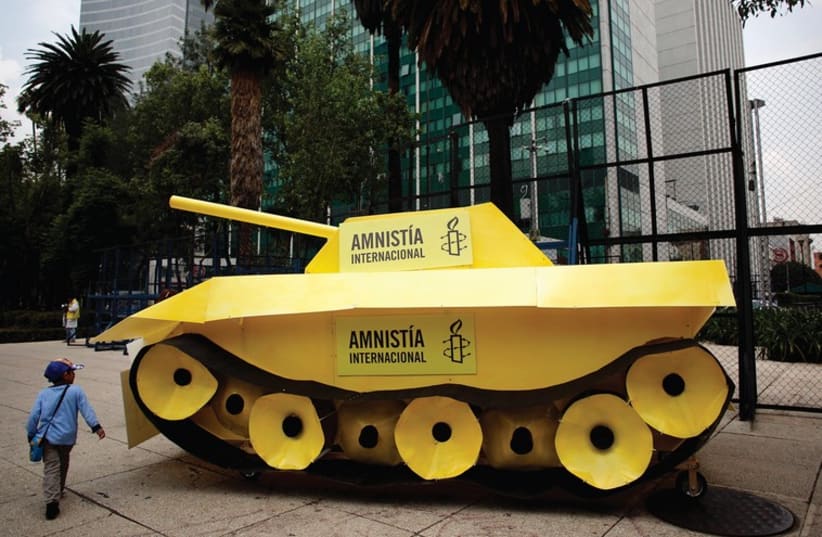
A child walks around a fake tank parked outside the US embassy during a protest held by Amnesty International in Mexico City. (photo credit: REUTERS)
A child walks around a fake tank parked outside the US embassy during a protest held by Amnesty International in Mexico City.
(photo credit: REUTERS)

The State Department maintained it's continuing to find that allegations of Israel committing genocide in Gaza are unfounded as Amnesty International released its report on Thursday claiming there's enough evidence that Israel is committing genocide against Palestinians. 

"People are entitled to draw their own conclusions. We disagree with the conclusions of such a report," State Department Principal Deputy Spokesperson Vedant Patel told reporters during a news briefing on Thursday afternoon. "We have said previously and continue to find that the allegations of genocide are unfounded.

Reporters pressed Patel relentlessly over the Department's process for gathering information and the irrefutability of the Department's determinations. 

Patel insisted civil society organizations like Amnesty International, human rights groups, and NGOs continue to play a vital role in providing information and analysis related to Gaza and "what's going on."

"But as I've said before," Patel said, "...that we do not, and have not concurred with these past findings regarding genocide."

 The logo of Amnesty International is seen next to director of Mujeres En Linea Luisa Kislinger, during a news conference to announce the results of an investigation into humans rights abuses committed in Venezuela during protests against President Nicolas Maduro in Caracas, Venezuela February 20, 2 (credit: REUTERS/CARLOS JASSO)Enlrage image
The logo of Amnesty International is seen next to director of Mujeres En Linea Luisa Kislinger, during a news conference to announce the results of an investigation into humans rights abuses committed in Venezuela during protests against President Nicolas Maduro in Caracas, Venezuela February 20, 2 (credit: REUTERS/CARLOS JASSO)

However, Patel added, that does not change or alter the continued concern the US has as it relates to the humanitarian situation in Gaza, and it does not change the US' continued concern as it relates to the conflicts' impact on civilians and civilian casualties. 

Concerns over humanitarian aid

"We continue to stress at every turn that there is a moral and strategic priority for Israel to comply with international and humanitarian law. And that is something we are going to continue to raise with partners in the region and with Israel," Patel said. 

Patel said that ultimately, the best thing that can happen for improvement in humanitarian conditions in Gaza and for the release of the remaining hostages is for the parties to work toward an agreement to stop the war. 


Hannah Sarishon

Source: https://www.jpost.com/international/article-832225

Follow Middle East and Terrorism on Twitter

UN’s diplomatic failure: Why the two-state solution won’t bring peace to Israel - JPost Editorial


by JPost Editorial

The UN’s two-state solution rhetoric fails to address Palestinian terrorism and Israel’s security needs.


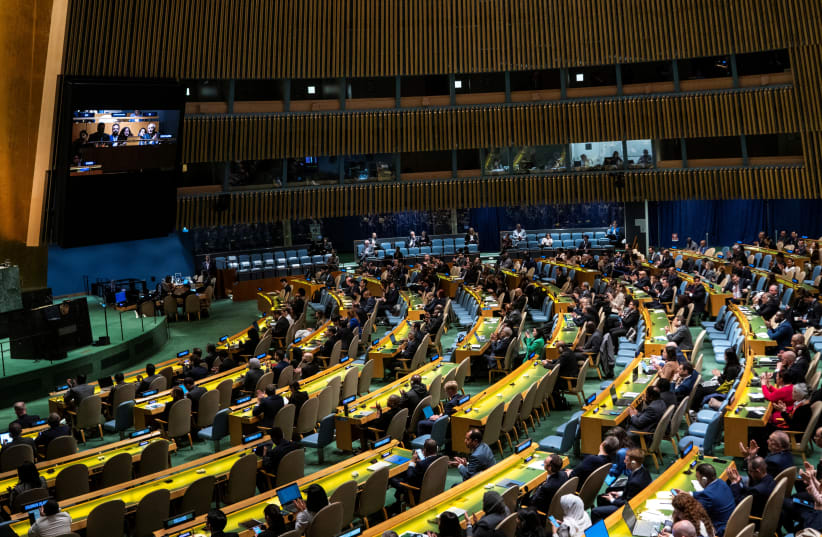
Delegates react to the voting results during the United Nations General Assembly vote on a draft resolution that would recognize the Palestinians as qualified to become a full UN member, in New York City, US May 10, 2024. (photo credit: Eduardo Munoz/Reuters)
Delegates react to the voting results during the United Nations General Assembly vote on a draft resolution that would recognize the Palestinians as qualified to become a full UN member, in New York City, US May 10, 2024.
(photo credit: Eduardo Munoz/Reuters)

‘Insanity is doing the same thing repeatedly and expecting different results,” Albert Einstein once allegedly stated. And as we approach 2025, here we go again.

The United Nations General Assembly announced it will host a June conference to discuss the two-state solution, a decades-old proposal for the Israeli-Palestinian conflict. UNGA President Philémon Yang announced the initiative with grandiose rhetoric, urging both parties to recommit to negotiations and a peaceful resolution.

“After more than a year of war and suffering, realizing this vision is more urgent than ever before,” Yang said. He described the ongoing denial of Palestinian statehood as a perpetrator of violence and despair, effectively giving carte blanche to Palestinian violence against Israelis – comments that echo what UN Secretary-General Antonio Guterres stated last October, merely weeks after Hamas terrorists crossed Israel’s border and raped, mutilated, murdered and kidnapped over 1,000 civilians, including women and children, and soldiers. 

“It is important also to recognize the attacks by Hamas did not happen in a vacuum,” Guterres famously said.Yang claimed the two-state solution ensures Palestinian self-determination while safeguarding Israel’s security.

But the announcement, while dressed in the language of hope, reeks of hollow moral grandstanding that ignores the realities on the ground and the UN’s culpability in perpetuating this conflict.

The two-state solution, long the UN’s focus, consistently fails due to Palestinian leadership’s refusal to recognize Israel and ongoing corruption and incitement. Instead of addressing these issues, the UN has acted as an enabler.

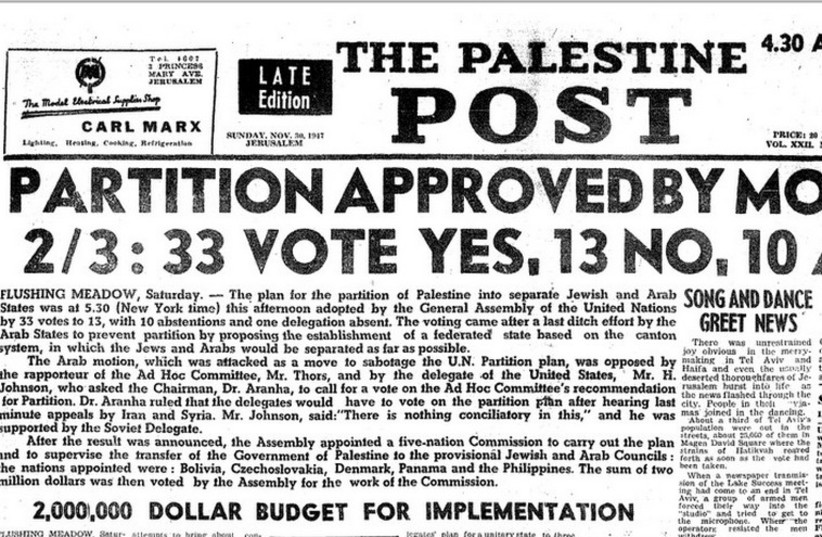
This Week in History: The UN Partition Plan announced (credit: ARCHIVE)Enlrage image
This Week in History: The UN Partition Plan announced (credit: ARCHIVE)

Sticking to the status quo

The truth is stark: the two-state solution has become a diplomatic euphemism for maintaining the status quo. While Yang stressed dialogue, he conspicuously omits any serious critique of the Palestinian Authority’s kleptocratic governance or Hamas’s terrorist regime in Gaza. No state should be expected to negotiate under fire, yet Israel is routinely pressured to do so as rockets fall on its cities and its citizens are slaughtered.

Yang’s comments praising the Palestinian struggle and decrying Israeli actions betray a glaring bias. While he stresses the importance of dialogue, he omits the fact that Israel has faced unrelenting attacks. The UNGA’s tendency to vilify Israel while excusing Palestinian extremism makes any serious discussion about peace a farce.

Reut Shapir Ben Naftaly, representing Israel on Tuesday, also called out the hypocrisy, stating that in the coming week, the Assembly would host three meetings focused on the Middle East, centered on resolutions that exhibit a “blatant disregard for the truth.” She emphasized that, following October 7, the UN’s deeply entrenched anti-Israel bias has been glaringly exposed.

Yang’s remarks, with their selective moral outrage, ignore the hundred-plus Israeli hostages still held in Gaza whose plight has been sidelined in global discourse. It seems the UN’s commitment to human rights skips over Israeli victims when crafting its narratives.

The planned June conference will likely follow the UN’s usual script: a parade of resolutions condemning Israel, sanctimonious speeches, and no real accountability for Palestinian leadership or their terrorist proxies. If the UN truly wanted to contribute to peace, it would focus on dismantling terror networks, ensuring that aid reaches civilians instead of fueling violence, and genuinely supporting Israel’s right to security.

The hypocrisy surrounding this upcoming conference is particularly apparent when considering recent history. As the UN decries Israel, it continues to fund entities and initiatives in Palestinian territories with little oversight, allowing resources to be siphoned into terror infrastructure (UNRWA anyone?). 

The result? Billions in aid funneled into a society where martyrdom is celebrated, and peace is an afterthought. Meanwhile, Israel is expected to negotiate with a partner that not only denies its right to exist but actively seeks its destruction.

The UN was founded on the principle of safeguarding peace and protecting human rights. But its treatment of Israel underscores how far it has strayed from these ideals.

The June conference is a charade, a testament to the UN’s irrelevance in achieving peace in the Middle East. The organization has shown that it lacks both the will and the credibility to address the conflict. Israel, meanwhile, will continue to fight for its survival.


JPost Editorial

Source: https://www.jpost.com/opinion/article-832052

Follow Middle East and Terrorism on Twitter
Syrian rebels enter Hama, pushing army from key city and freeing hundreds of prisoners - Reuters


by Reuters

Rebels said they had taken districts in the city's northeast and had seized the central prison, freeing detainees.


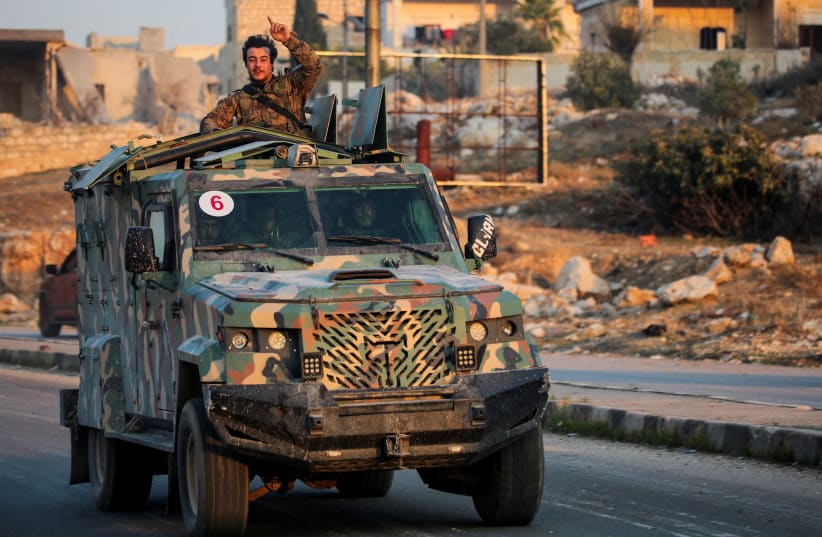
A rebel led by the Islamist militant group Hayat Tahrir al-Sham stands in the back of a vehicle in al-Rashideen, Aleppo province, Syria November 29, 2024. (photo credit: REUTERS/Mahmoud Hasano)
A rebel led by the Islamist militant group Hayat Tahrir al-Sham stands in the back of a vehicle in al-Rashideen, Aleppo province, Syria November 29, 2024.
(photo credit: REUTERS/Mahmoud Hasano)

Syrian rebels ousted pro-government forces from Hama on Thursday, bringing the insurgents a major new victory after a lightning advance across northern Syria and dealing a new blow to President Bashar al-Assad and his Russian and Iranian allies.

The Syrian army said it was redeploying outside the city "to preserve civilians lives and prevent urban combat" after what it called intense clashes.

Rebels said they had taken districts in the city's northeast and had seized the central prison, freeing detainees.

Qatari state-run media Al Jazeera television broadcast what it said were images of rebels inside Hama, some of them meeting civilians near a roundabout while others drove in military vehicles and on mopeds.

The rebels took the main northern city of Aleppo last week and have since pushed south from their enclave in northwest Syria.

 Opposition forces advancing in Syria, Dec. 1, 2024. (credit: Muhammad Eido/The Media Line)Enlrage image
Opposition forces advancing in Syria, Dec. 1, 2024. (credit: Muhammad Eido/The Media Line)

Their capture of Hama, which had remained in government hands throughout the civil war triggered by a 2011 rebellion against Assad, will send shockwaves through Damascus and fears of a continued rebel march south.

Hama lies more than a third of the way from Aleppo to Damascus, and its capture would open the road for a rebel advance on Homs, the main central city that functions as a crossroads connecting Syria's most populous regions.

Hama is also critical to the control of two major towns with big minority religious communities - Muhrada, home to many Christians, and Salamiya, where there are many Ismaili Muslims.

Although Hama had not previously been taken by rebels during the war, it was historically a center of opposition to the Assad dynasty's rule.

As his forces swept into Hama the main insurgent commander Abu Mohammed al-Golani issued a video statement warning against any involvement by the other main regional force that is backed by Iran - Iraq's Hashd al-Shaabi militias.

"We urge him (Iraq's prime minister) again to keep Iraq away from entering into the flames of a new war tied to what is happening in Syria," Golani said.

Golani referred to that bloody episode in his statement, saying "the revolutionaries have begun entering the city of Hama to cleanse that wound that has persisted in Syria for 40 years."

What factions are involved?

The most powerful rebel faction is the militant Sunni Islamist Hayat Tahrir al-Sham (HTS), the former al Qaeda affiliate in Syria. Golani, its leader, has pledged to protect Syria's religious minorities and has called on them to abandon Assad, but many remain fearful of the insurgents.

On Wednesday, Golani visited Aleppo's historic citadel, a symbolic moment for rebels who were driven out of the city in 2016 after months of siege and intense fighting, their biggest defeat of the war. Aleppo was Syria's biggest city before the war.

HTS and the other rebel groups are trying to consolidate their rule in Aleppo, bringing it under the administration of the so-called Salvation Government they established in their northwestern enclave.

Conditions in Aleppo 

Aleppo residents have said there are shortages of bread and fuel, and that telecoms services have been cut.

The rebel forces advancing on Hama have included a Turkey-backed insurgent coalition called the Syrian National Army, which holds a strip of territory along the Syrian-Turkish frontier, rebel sources said.

Turkey, which designates HTS as a terrorist organization, has long been the biggest external backer of other rebel factions and its role will be critical to the future of any enlarged insurgent region in Syria.

Ankara has denied having taken part in the rebels' sudden sweep into Aleppo last week.

 
Reuters

Source: https://www.jpost.com/breaking-news/article-832156

Follow Middle East and Terrorism on Twitter