Saturday, June 15, 2024

Israel-Iran alliance: Jerusalem's arm sales to the Islamic Republic during Iran-Iraq War - Alex Winston


by Alex Winston

Clandestine Israeli sales of military equipment helped turn the tide of the war and prevent Iran from falling to Saddam’s forces.
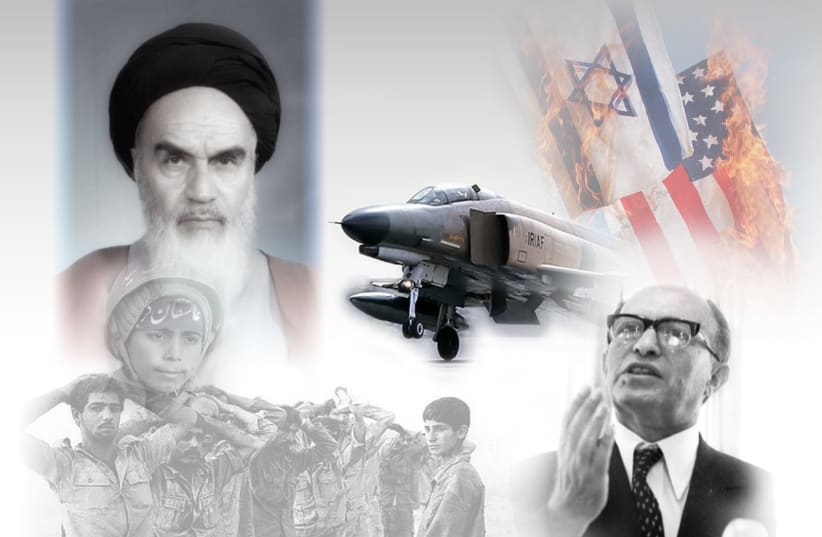
 

Snapshots illustrating the relationship between Israel and Iran (photo credit: Dan Hadani collection/National Library of Israel, DAVID YAPHE, Public domain/Amir Ali Javadian, REUTERS, Wikimedia Commons)
Snapshots illustrating the relationship between Israel and Iran
(photo credit: Dan Hadani collection/National Library of Israel, DAVID YAPHE, Public domain/Amir Ali Javadian, REUTERS, Wikimedia Commons)

More than three decades after his death, the shadow of Ayatollah Ruhollah Khomeini is still cast into the deepest corners of Iran. The man who founded the Islamic Republic of Iran after the overthrow of Shah Mohammad Reza Pahlavi in 1979 led the country for its first decade, transforming a 1,300-year-old monarchy into a country ruled by Sharia law, the ayatollahs, and a formidable military – the Islamic Revolutionary Guard Corps.

After the Shah fled into exile, the fledgling republic turned its back on the Western-leaning outlook of its former monarch, and Khomeini oversaw the descent into a fiercely religious society, and the evolution of a personality cult that exists to this day.

“Israel viewed its security in the region as being one in which you needed to build alliances with a non-Arab state, in the periphery of the Middle East, in order to balance the immediate neighborhood of Arab states,” said Trita Parsi, founder and former president of the National Iranian American Council and author of Treacherous Alliance: The Secret Dealings of Israel, Iran, and the United States. 

“Iran was the most important peripheral state, not just because of its military might but also because it had access to oil, which Israel of course was in dire need of, since the Arab states wouldn’t sell it” to them, he told the Magazine. “From the Shah’s perspective, it was always very strategic, but it wasn’t as permanent as the Israelis thought it would be. The Israelis had this perception that the enmity with the Arabs would essentially be eternal – and the thought that Arab-Persian tensions were of the same nature and, as a result, Iran would more or less be a permanent ally.”

Most of Khomeini’s decade in power was spent beating the anti-imperialist drum, possibly being the first one who referred to the United States as the “Great Satan” and Israel as the “Little Satan.” It was also spent battling the forces of Saddam Hussein after Iraq invaded Iran in September 1980, a mere 18 months after the revolution.

The Iran-Iraq War began due to a mix of historical, political, and territorial disputes. Central to these disputes was the Shatt al-Arab waterway, a crucial economic and strategic boundary between the two nations. After the Iranian revolution, Hussein saw an opportunity to capitalize on Iran’s internal socio-political turmoil. He aimed to weaken his larger eastern neighbor and settle the territorial disputes to Iraq’s advantage. Additionally, the ideological clash between Iran’s new Shi’ite Islamic theocracy and Iraq’s secular Ba’athist regime further intensified the animosity between the two countries.

The Iran-Iraq War

HUSSEIN’S AMBITIONS to establish Iraq as the dominant regional power and prevent the spread of Iran’s revolutionary ideology, which threatened to inspire Shi’ite uprisings in Iraq, also played a crucial role. Historical Arab-Persian rivalries added to the tensions. The involvement of external powers, with both superpowers and regional allies providing varying degrees of support, further fueled the conflict. 

These factors culminated in Iraq’s invasion of Iran on September 22, 1980, starting a protracted and devastating war that lasted eight years, resulting in a significant loss of life and economic damage for both nations.

Despite the fierce anti-Western feeling that permeated Iran at this time, as the revolutionary fervor grew and grew, military help was on hand for the fledgling Islamic Republic from an unlikely source – Israel.

Clandestine Israeli sales of military equipment helped turn the tide of the war and prevent Iran from falling to Saddam’s forces, which was of huge concern to Israel at the time.

Despite the apparent ideological chasm between the Islamic Republic of Iran and the Jewish state, Israel became one of its primary suppliers of military equipment. This relationship extended beyond mere arms sales: Jerusalem also sent military instructors to Iran and, in return, received vital intelligence that proved instrumental in its own military operations. One notable instance was the Iranian intelligence that aided Israel in executing Operation Opera, the 1981 airstrike that destroyed Iraq’s Osirak nuclear reactor – a cornerstone of Iraq’s nuclear ambitions.
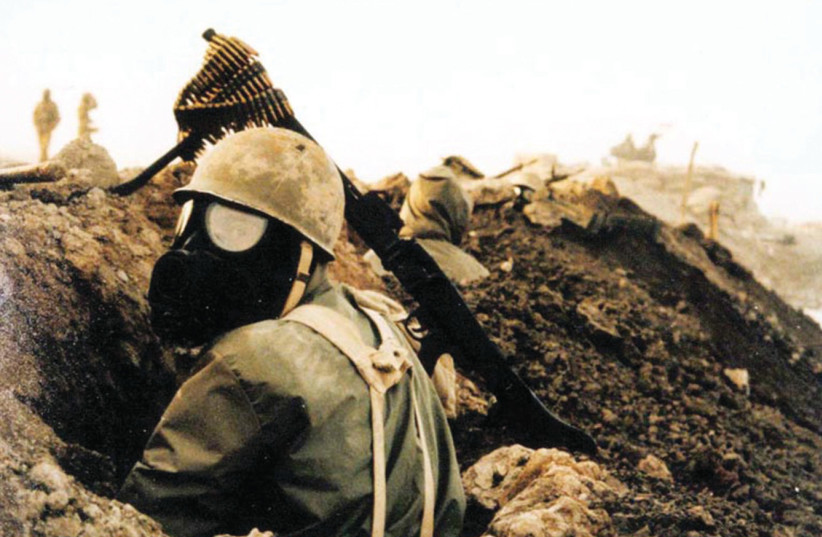
 IRANIAN SOLDIER equipped with gas mask and M1 helmet during the war. (credit: WIKIPEDIA COMMONS)Enlrage image
IRANIAN SOLDIER equipped with gas mask and M1 helmet during the war. (credit: WIKIPEDIA COMMONS)

In 1979, “The [Iranian] revolutionaries come in, and they have a very, very hostile view of Israel, seeing it as an imperialist outpost to American imperialism, as well as [seeing] an ideological religious dimension to it,” Parsi told the Magazine. “But the actual geopolitical circumstances that had given birth to the relationship, which was the common threat from the Arab states and the Soviet Union, had not changed. In fact, from the Iranians’ perspective, it had [become] amplified because Iran was now at odds with the US – even though its military was entirely dependent on US spare parts.

“Israel quickly found out that it had this trump card with Iran because it was one of the few states to have access to American spare parts and was willing to sell them to Iran, in violation of US sanctions. The revolutionaries viewed Israel as the lesser of [two] evils in the context of the war with Saddam.”

THE MOTIVATIONS behind Israel’s support for Iran were multifaceted. Strategically, Israel sought to counterbalance Iraq, which was considered a significant regional threat. By strengthening Tehran, Jerusalem aimed to create a bulwark against Iraqi power and influence. Furthermore, Israel hoped to re-establish a foothold in Iran, a connection that had been severed with the 1979 overthrow of the Shah, one of its key allies.

One important byproduct of this clandestine relationship was the facilitation of Jewish emigration from Iran and the protection of the Jews who remained there. The covert support helped ensure the safe passage of Persian Jews to Israel and the United States, securing their freedom from potential persecution.

“What happened back then was that the Israelis played the military card, reaching out to high-ranking people in the Iranian military who they, of course, had contact with during the Shah’s reign,” Parsi explained. “They tried to find ways to sell weapons and show strategic utility with the new regime, [but] it wasn’t particularly successful. The point was, though, that the Israelis were trying, even before the Iraq war started.

“Israel was trying to show that in a world in which the Iranians were turning against the United States – which meant they had bad relations with both superpowers [the US and the Soviet Union] – Israel could still help Iran,” he said. “It was trying to signal that message to the Iranians. I don’t think it was particularly successful at the time, and I don’t think the Iranians were really focusing on arms that much at that moment. But it is what later brought about the Iran Contra scandal.”

The sales

Despite the secrecy, the logistics of these operations were extensive and complex. The first major arms deal occurred in early 1980, when Israel sold a large number of F-4 Phantom fighter jet tires to Iran. This initial transaction was negotiated through back channels, as the Iranian government sought military equipment it could no longer obtain from the US due to sanctions imposed after the 1979 hostage crisis, when Iranian students seized the American embassy and detained more than 50 Americans. The net profit from these sales contributed to a significant slush fund within the Israeli intelligence community, which grew over the years.

The onset of the war saw Iraq launching a full-scale invasion of Iran. Under immense pressure, Tehran desperately needed military supplies, particularly American and British-made equipment, which formed the backbone of its arsenal from the Shah’s era. 

In response, Israel increased its support. Following the first mission in early 1980, a second one took place in October, resulting in additional arms deals. On October 24, 1980, shipments of Scorpion tank parts and 250 F-4 jet tires were dispatched to Iran. Concurrently, other military supplies stored in Europe were clandestinely shipped to Iranian ports like Chabahar, Bandar Abbas, and Bushehr. These shipments included spare parts for F-4 jets, helicopters, and missile systems.

AND HOW did Iran’s new leader – the ayatollah who lived a simple life on a simple diet on garlic, yogurt, and onions – view his dealings with the “Little Satan”?

“I interviewed one of Khomeini’s close advisers in regard to the arms sales that Israel provided,” Parsi recounted. “One of the generals had approached Khomeini – because of the arms embargo, it was very difficult to get hold of weapons – and he declared to Khomeini that they had actually managed to secure a significant arms shipment. But there was just one problem – the sellers were Israeli. Khomeini was quiet for a couple of seconds, and then he said, ‘If you find these weapons, do you have to ask who the seller is?’ and the general said no. And Khomeini said, ‘Well, problem solved.’”

Jimmy Carter was the American president at the time. A New York Times article from August 1981 discussing the October transactions stated: “Carter officials and diplomatic sources familiar with the Israeli-American discussions the previous year [1980] said that the Israelis yielded to American pressure to not continue their military relationship with Iran until the hostages were freed.

“Diplomatic sources, in discussing Israel’s motivations, said that prime minister Menachem Begin was willing to provide spare parts to Iran because of an overwhelming Israeli desire not to see Iraq win the war that began last September,” the Times article said.

“The other reason for Mr. Begin’s actions, despite Iran’s fierce anti-Israeli policy, is his concern about the 60,000 Jews living in Iran,” it said. “The Israelis fear that they could be subject to repression at any time and that contact between Israel and Iran helps the Jews in Iran.”

Nachman Shai, the spokesman for the Israeli embassy in the US at the time, told the Times: “Our position is that Israel does not provide information on purchases of sales of weapons.”

THE US position during the early years of the Khomeini regime was largely influenced by the 1979 hostage crisis and Carter’s presidency. On November 4, 1979, Iranian students seized the American embassy and detained more than 50 Americans as hostages, many of them diplomats. They were held for 14 and a half months (444 days) until January 20, 1981. The Iran hostage crisis undermined Carter’s ability to conduct foreign policy and was one of the factors contributing to his election defeat to Ronald Reagan in November 1980.

Upon discovering the Israel-Iranian transactions, the Carter administration exerted pressure on Israel to halt future sales while the United States was negotiating for the release of the hostages. However, with Reagan’s ascendancy to the presidency in 1981, the dynamic shifted. Israel sought and received covert consent to continue supplying Iran with American-made military equipment despite the Reagan administration’s public opposition to such sales.

The Carter administration “opposed the sales very strongly: “I think at one point, Carter publicly warned Israel about it,” Parsi stated. “Carter imposed an arms embargo, including on spare parts. What happened was that Reagan came in and kind of turned a blind eye to what the Israelis were doing. 

“In 1982, [then-Israeli defense minister] Ariel Sharon on NBC News openly stated that Israel was providing weapons or selling weapons to Iran because it was important to try to bring Iran back into the West[ern sphere of influence], so openly admitting it on American TV kind of indicated the Israeli leaders’ knowing that they were violating the embargo while knowing that there wouldn’t be much of the consequences from the Reagan administration,” the National Iranian American Council founder said.

“What the Americans were driven by was anger because of the hostage crisis. Iran had humiliated the United States and had turned it into an enemy.”

IN THE first year of large-scale arms sales in 1981, Israel sold $75 million worth of arms under Operation Seashell, including anti-tank guns and shells. This operation involved using Cyprus as a transit point, with Argentine airline Transporte Aéreo Rioplatense initially transporting the arms by air – and later, following a mid-air collision incident, by ship. Additionally, Yaakov Nimrodi, Israel’s military attaché in Tehran from 1955 to 1979, signed a $136 million arms deal with Iran’s Ministry of National Defense that year, which included advanced weaponry such as Lance and Hawk missiles.

Maj.-Gen. Avraham Tamir, who worked in the Israeli Defense Ministry, told The New York Times in 1991 that “Every month, we gave a list of American weapons and American spare parts we’d like to sell to Iran.

“In the years 1981 and 1982, weapons with US components were sold to Iran based on an understanding with [then-US secretary of state Alexander] Haig,” he said: “Then it was stopped.”

Israeli intelligence established a covert operation in New York to facilitate these transactions. However, when it became apparent that Israel was also selling sophisticated American military equipment without explicit consent, the operation had to be relocated to London by 1983.

A New York Times article from March 1982 stated that “According to documents – telex messages, contracts and bills of lading – $100 million to $200 million in arms, spare parts, and ammunition were delivered to Iran from Western Europe in the last 18 months. The intelligence sources said the documents indicated that about half of this was being supplied or arranged by Israel, and the rest by freelance arms merchants, some of whom may also have connections with Israeli intelligence.”

The article further mentioned that “Non-American sources supplied the initial information about the flow of arms from Israel to Iran. It appears that their principal motive was to discredit the government of Ayatollah Ruhollah Khomeini by showing that his war effort against Iraq was being helped by Israel. Along with the United States, Israel is a prime target of Iranian antagonism.”

BY 1982, Israel’s sales to Iran included sophisticated weapons systems, prompting complaints from international observers. West German chancellor Helmut Kohl raised concerns about Israeli arms sales worth $500 million to Iran. Despite the official stance of the Reagan administration, which rescinded its consent for arms sales following evidence of violations, Jerusalem continued to sell arms to Tehran. These sales were facilitated through a global network managed from London, involving private arms dealers and shell companies.

Arms were also supplied to Iran by Libya, Syria, and North Korea, and were of Soviet origin. The US hoped to counter the Russian influence in the region as the Cold War played out in the early years of the Reagan administration.

Throughout the early 1980s, Israel’s arms sales to Iran were substantial. Estimates from the Jaffe Institute for Strategic Studies at Tel Aviv University suggested that Israel sold around $500 million worth of arms annually, including aircraft spare parts, artillery, and ammunition. These sales were predominantly financed by Iranian oil. Arms dealer Ahmad Haidari claimed that a significant portion of Iran’s weaponry early in the war came from Israel, which enabled the Iranian air force to conduct sorties and strategic strikes against Iraq.

Despite the newspaper articles, media coverage, and TV appearances by Israeli officials, the dealings between the Jewish state and Iran were seemingly kept largely under wraps in the Islamic Republic.

“It was really largely hushed up,” Parsi told the Magazine. “One of the people who apparently had leaked it was executed. And, you know, the pragmatism of having to do whatever they needed to do to be able to win the war was there in the background, but it wasn’t really acknowledged that this actually had happened. There wasn’t much of a conversation publicly, and they controlled the media and ways in which they could just essentially shut them down.”

The Iran Contra Affair

From 1985 to 1986, Israel’s role in the Iran-Contra Affair highlighted the complexity of its involvement with Iran. High-level discussions between Israeli and Iranian representatives sought to open an arms channel with the United States.

The affair was a significant political scandal during the Reagan administration. It involved the secret sale of arms to Iran, despite the arms embargo, with the aim of securing the release of American hostages held by Hezbollah in Lebanon. Proceeds from these sales were then illegally diverted to support the Contra rebels in Nicaragua, who were fighting the Left-wing socialist Sandinista government (which also came to power in 1979, some six months after the Iranian Revolution). This was in direct violation of the Boland Amendment, which prohibited US aid to the Contras.

The scandal came to light in November 1986, leading to extensive media coverage and congressional hearings. The hearings revealed the depth of the administration’s involvement in the covert operations and resulted in several indictments and convictions, although many were later overturned or those guilty were pardoned.

Just as the Iran hostage crisis hurt the Carter administration, the Iran-Contra Affair had significant political repercussions for the Reagan administration, damaging its reputation and raising questions about presidential oversight and the conduct of foreign policy.

Even as the Iran-Contra scandal unfolded, Israeli arms shipments to Tehran continued, including a high-profile case in 1986 where individuals with ties to Israel were arrested for attempting to sell $2.6 billion worth of arms to the Islamic Republic. Despite these controversies, Israel’s support for Iran during the Iran-Iraq War remained a critical and complex aspect of its foreign policy, driven by strategic, economic, and humanitarian considerations.

“There was a very fierce fear [on the Israeli side] that as soon as US-Iran relations would be patched up, the Iranians would cut them out and deal directly with the US,” Parsi explained. “It became clear to them that their only utility was to be able to bring relations to the United States. This, of course, was the beginning of Israeli opposition to any US-Iranian relations.”

The Iran-Contra Affair led to changes in how covert operations were conducted and increased oversight mechanisms. The scandal remains a critical example of the complexities and potential abuses in US foreign policy.

The end of the war

The Iran-Iraq War dominated much of Khomeini’s decade in power. It was a bloody conflict, marked by the use of chemical weapons, other weapons of mass destruction, the use of child soldiers, and war crimes. About half a million people are thought to have died in the conflict, and relations between Iran and Iraq did not really warm until the fall of Saddam Hussein in 2003, although the US presence in the region was not welcomed by the Islamic Republic. 

Khomeini died in 1989, but his successor, Ayatollah Ali Khamenei, continued his policy of subverting the Jewish state in support of the Palestinians. Rhetoric from Iran regularly states how Israel should be “wiped off the map.”

“In 1989, when Khomeini died, there were comments in Israel that this may be an opportunity for the Israelis and the Iranians to re-establish a relationship,” Parsi said. “In the Israeli mindset, the belief was that Iran was a critical state, and if we could just have relations, it would be much better for Israel’s geopolitical situation – which made sense at the time, as Saddam Hussein was still very powerful. That was a different geopolitical reality than today.

“The Israeli position changed dramatically in 1991-1992 when Saddam was defeated [in the Gulf War], the Soviet Union collapsed, and the geopolitical factors that had pushed Israel and Iran together throughout all those years had suddenly evaporated,” Parsi said. “Now the effort has become to make peace with the surrounding Arab states and resolve the Israeli-Palestinian issue.”

AS THE dust settled on the Iran-Iraq War, the arms sales between Israel and Iran highlighted a pragmatic but ultimately unsuccessful attempt at diplomacy. Today, the legacy of these secret dealings lingers, with the two nations on the brink of open conflict. The missed opportunity for a more stable relationship continues to cast a shadow over the region’s future.

Instead, Iran found itself going down the path of Islamism that it continues to spread and fund to this day – coming to a head just a few weeks ago on April 13, when Tehran launched a direct attack on the Jewish state. It launched around 170 drones, over 30 cruise missiles, and more than 120 ballistic missiles toward Israel in response to the alleged Israeli assassination of an Iranian general in Damascus.

The Israeli sales of weapons to the Islamic Republic during the Iran-Iraq War could be viewed in hindsight as Iran doing whatever it must do to secure victory and Israeli attempts to broker diplomatic relations with a newfound enemy. It should also be viewed, perhaps, as a missed opportunity because now, some 30 years later, the two countries are closer to war than they have ever been.


Alex Winston

Source: https://www.jpost.com/middle-east/iran-news/article-806039

Follow Middle East and Terrorism on Twitter

Thursday, June 13, 2024

A Half-Century of Appeasing Iran - Bruce Thornton


by Bruce Thornton

The suicidal cost of blinding ourselves to the Mullahs' true world view.


[Order David Horowitz’s new book, America Betrayed, HERE.]

A measure of how feckless and dangerous the Biden administration’s Iran policy has become, was blatantly obvious last week. The International Atomic Energy Agency finally censured Iran for violating the terms of the so-called “Iran nuclear deal” that Barack Obama signed with several European countries in 2015. As the Wall Street Journal asked, “What took so long? The answer, we’re sorry to say, is U.S. opposition. Credit to the U.K., France and Germany for pushing the rebuke anyway, and winning President Biden’s reluctant support at the last minute, when he had no other way to stave off the embarrassment of defending Iran.”

Embarrassment indeed, when three of Nato’s richest military skinflints show more spine than the U.S. did. Biden’s appeasement may be the reductio ad absurdum of nearly 50 years of Western nations “running scared of Tehran,” as Daniel Pipes put it, since the Islamic revolution.  For all those decades, a nation viable only by dint of possessing the world’s third largest oil reserves–– and a ruthless totalitarian government so hated by its people that only murderous force and cruelty can keep its clerical leaders alive––is treated by the West as though it were a peer rival one must approach with cautious solicitude.

First in the catalogue of appeasement came the sacrifice of the Shah, a geostrategically reliable and loyal ally, who like his father was a reformer in the mold of Turkey’s Kemal Ataturk. Next came the abandonment of Iran despite the unpunished kidnapping of our embassy staff, and the subjection of Iran’s citizens to committed jihadists led by the Ayatollah Khomeini.

An esteemed Shia cleric, Khomeini’s tracts and sermons featured traditional Islamic doctrines like “Kill the unbeliever” and “Islam is the religion of blood for the infidel.” More ominously, he promised, “We shall export our revolution to the whole world,” and jihad will be waged “[u]ntil the cry ‘There in God but Allah’ resounds over the whole world.’” And so it has, as Iran and its proxies have terrorized this a critical region.

From that point on, there followed numerous failures to punish Iran’s aggression against the “Great Satan,” as Khomeini dubbed the U.S. Iran’s shock-troops and trained proxies murdered 241 of our military personnel in Beirut, serially kidnapped our citizens and government officials, and incessantly facilitated attacks on our soldiers in Afghanistan, Iraq, and Syria. Indeed, the Mullahs struck at every flash-point in the region, including Hamas’s murders, rapes, brutalizing, and kidnappings of hostages in the October 7 terrorist attacks. Only the blind or willfully ignorant can fail to trace the role of serial appeasement in inviting and furthering these assaults on our security and interests.

The Obama-Biden appeasement, however, has come with a new risk. Both presidents did not just fail to vigorously check Iran’s nuclear ambitions and aggression, but paid them billions of dollars that subsidized both the Mullah’s development of nuclear weapons; and their arming with missiles, drones, and other materiel jihadist terrorist gangs in Lebanon, Gaza, Syria, and Yemen. Perhaps more dangerous, Iran is now collaborating with China and Russia, selling oil to China at a discount, and providing drones, ammunition, and other weapons to Russia, offsetting the weapons and cash the Nato nations have been providing Ukraine.

But Biden has gone even farther with his groveling to Tehran. Earlier this month his foreign       policy crew lobbied against voting for the IAEA’s censure of Iran, which triggers “snap-back” sanctions against Iran’s oil sales, though we should note the sanctions will still have to be approved by the Western signatories to the nuclear deal. As we’ve already seen, the U.S. actively lobbied European and other countries to abstain on the censure vote.

Showing at least some realist fiber, Seth Mandel writes in Commentary, “European diplomats have warned that failure to take action would undermine the authority of the IAEA, which polices nonproliferation of nuclear weapons. They say it also weakens the credibility of Western pressure on Iran. And they are frustrated over what they see as U.S. efforts to undermine their approach.”

More disturbing, we now know that Iran is on the brink of manufacturing bombs. According to the AP,  the IAEA “believes that Iran has further increased its stockpile of highly enriched uranium and criticized Tehran for continuing to bar the agency’s officials from accessing or monitoring Iranian nuclear sites.” AP also reported that Iran “has an estimate 62.3 kilograms (137.3 pounds) of uranium enriched to up to 60% fissile purity. That amounts to an increase of 6.7 kilograms” since last September. That enrichment to 60% purity is one short, technical step away from weapons-grade levels of 90%. Nonproliferation experts have warned in recent months that Iran now has enough 60%-enriched uranium to reprocess into fuel for at least one nuclear bomb.”

This is serious news lost in the political drama of a presidential election intensified by NeverTrump hysteria and the Dems’ panic over one of the worst presidential candidates in history. Given the geopolitical leverage possession of nuclear weapons can give even to a gangster-state like North Korea, the thought of an apocalyptic cult from a religion that for 14 centuries preyed on the West, a faith with a proud record of conquest and occupation, suggests there’s a real danger that Iran’s leaders would not be deterred by earthly punishment from using such weapons against their enemies and our regional allies, especially Israel.

Finally, we must ask why such obviously dangerous appeasement has persisted for half a century. One answer lies in representative governments––whose citizens can vote on how money is spent, and punish politicians at the ballot box––consistently preferring butter over guns. When such states make a habit of redistributing tax dollars to entitlements for political clients, the funds available for the military and defense spending necessarily grow scarce, as the Nato nations, including the U.S., have demonstrated during the post-Cold War period.

Another contributor to appeasement has been the century-long dominance of the “rules-based international order” of foreign policy idealism’s fossilized tenets that “diplomatic engagement,” international law and treaties, economic sanctions, and multinational institutions like the UN can substitute for lethal force. An ancillary of this doctrine is the Wilsonian ideal, enshrined in the Versailles Treaty, that “national self-determination” and liberal, rights-based democracies are the default governing paradigm for an astonishingly complex diversity of nations.

The first appeasement of Iran was a reflection of this simplistic and arrogant assumption. When the Ayatollah Khomeini took over the protests against the Shah, our foreign policy mavens saw it as a typical antiimperialist struggle for democracy and human rights. But the revolution was more akin to the 16th century Reformation than to our Revolution. Unfortunately, our foreign policy analysts seemed to know and care little about Islam’s history and doctrines.

If they had, they would not have looked to Western political and cultural ideals like socialism, nationalism, secularism, or liberal democracy for the revolution’s dominant motivation. Instead, they would instead have listened to historian Bernard Lewis: “From the beginning of Western penetration in the Islamic world, until our own day, the most characteristic, significant, and original political and intellectual responses to that penetration have been Islamic. They have been concerned with the problems of the faith and community overwhelmed by infidels.”

Yet despite the gruesome lesson of 9/11, Western foreign policy is still dominated by the specious mantra “nothing to do with Islam,” and the privileging of Western notions like national self-determination and human rights. That’s why the Nato nations keep alive the failed “two nations living side-by-side” solution for stopping the Palestinian Arabs’ faith-sanctioned eliminationist violence against Israel––despite over a century of Palestinian Arabs’ murdering Jews.

This hatred of Israel––one shared by Western progressives and leftists––has been a powerful facilitator of appeasement. It provides a ready-made scapegoat for secularized governments that downplay religious motives, and don’t take faith as seriously as they do material causes like a lack of voting or human rights or thriving economies––the summum bonum of today’s secularized West.

Hence, they dismiss as cranks or “heretics” theorists of jihad like Hassan al-Banna, who in 1928, two decades before the birth of Israel, created the Muslim Brotherhood, the most consequential influence on modern jihadism. “It is the nature of Islam,” he wrote, “to dominate not to be dominated, to impose its laws on all nations, and to extend its power to the entire planet.” This dictum better explains the West’s “bloody borders” with Islam than the supposed desire for political institutions and practices imported from the infidel West.

So only two cheers for the Europeans, since we know that sanctions, if they even happen, should be only an adjunct to sustained, overwhelming, mind-concentrating force. But until we take such Islamic orthodox passionate beliefs seriously in our foreign policy calculations, and acknowledge their profound differences with our world view, we will continue to appease and misinterpret Iran’s leaders and their ambitions to seek weapons of mass destruction.


Bruce S. Thornton is a Shillman Journalism Fellow at the David Horowitz Freedom Center, an emeritus professor of classics and humanities at California State University, Fresno, and a research fellow at the Hoover Institution. His latest book is Democracy’s Dangers and Discontents: The Tyranny of the Majority from the Greeks to Obama.

Source: https://www.frontpagemag.com/a-half-century-of-appeasing-iran/

Follow Middle East and Terrorism on Twitter

Hunter Biden’s court-verified laptop files will be at the center of his upcoming tax trial - Steven Richards


by Steven Richards

The mainstream media and Permanent Washington called the laptop a hoax and "Russian Disinformation" for more than a year. What was once called a conspiracy theory turned out to be true, and the abandoned laptop's contents will continue to plague the first son.

With the authenticity of Hunter Biden’s laptop having been verified again – this time in court – data extracted from it about the first son’s long-history of tax problems will likely be key to federal prosecutors in Biden's upcoming tax evasion trial.

The contents of the hard drive, obtained and authenticated by the FBI as early as December 2019 will show the first son’s tax delinquency and unsuccessful efforts to settle his massive debts with the IRS while continuing to spend beyond his means, according to emails obtained from the laptop by Just the News.

Biden was charged in the Central District of California by Department of Justice Special Counsel David Weiss with three felony and six misdemeanor tax offenses late last year for failing to file and pay several tax returns from 2016 to 2019. The first son’s tax problems began in 2014, but the statute of limitations on potential charges for 2014 and 2015 was permitted to expire by incurious federal prosecutors.

The indictment filed in California uses information from those tax years to show a pattern in Biden’s tax avoidance by citing that very first tax return. Though Biden did successfully file a return for 2014, according to the indictment, he failed to report any of his income from the Ukrainian energy company Burisma Holdings at the time.

Hunter Biden’s lawyer, Abbe Lowell, did not respond to a request for comment from Just the News.

You can read the indictment below:

An email discussion three years later, between Hunter Biden and his former partner showed an effort to amend Biden’s 2014 return to reflect the discrepancy between his reported and actual income.

“2013 and 2014 were normal years where your income was based pretty much solely on income from Rosemont Seneca and Boies. In 2014 you joined the Burisma board and we still need to amend your 2014 returns to reflect the unreported Burisma income,” Eric Schwerin wrote to Biden. “That is approximately $400,000 extra so your income in 2014 was closer to $1,247,328.”

The "Boies" referred to is the law firm of Boies Schiller Flexner LLP, where the younger Biden worked, obtaining lucrative contracts for the firm. 

According to the indictment, Hunter Biden also failed to pay his full tax liability in 2015. Though he accurately reported his income in 2015, Biden stopped making periodic payments to the agency in March 2018 for his outstanding tax liability from that year. According to the indictment, he still owed $106,020 to the IRS for 2015 when he halted payments.

Hunter Biden’s failure to pay taxes, the indictment suggests, stems from his profligate spending and “extravagant lifestyle.” Schwerin’s email suggests he was aware of Hunter Biden’s apparent spending problem.

According to Biden's autobiography "Beautiful Things," this was during what he characterized as a time where his descent into drugs and alcohol was deep. One book reviewer said it "make(s) one feel exposed to something like degradation porn."

“Of the $1,300,000 in cash you received you had to pay $751,294 in taxes. Since you couldn’t have lived on approximately $550,000 a year you ‘borrowed’ some money from RSB in advance of payments,” Schwerin wrote, referring to Hunter Biden’s Rosemont Seneca company. “FYI, in 2014 and 2015 you also had expenses beyond the norm because you renovated the house.”

In an earlier April 2016 email, Schwerin told Hunter Biden that he had overdrawn his advances from the RSB company to cover his lifestyle. “For the first 10 months of 2015, you drew down approximately $413,000 from RSB. Therefore you drew down $51,835 more than you should have,” Schwerin wrote. “If RSB counts the first 10 months of Burisma payments as income to you, they should send you the $245,498 - $51,835 or $193,663 which could be put towards your tax liabilities for 2015.”

April 2016 is also when Hunter Biden and his partners recognized that his business entanglements and related tax issues could present a problem, spurred by SEC and Justice Department scrutiny of his partner Devon Archer, who was accused of orchestrating a scheme to defraud investors and a Native American tribal entity.

Archer, and another of Biden’s partners, Jason Galanis, were ultimately charged for the tribal bond fraud scheme the following month. Galanis pleaded guilty and was sentenced to 189 months in prison, and Archer was convicted and sentenced to one year and a day in 2018 in connection with the scheme led by Galanis. The U.S. Supreme Court denied his appeal in January of this year.

“Hunter and I talked briefly this morning and feel good with where we are on the taxes and the narrative regarding that. We will work with our CPA and with Dennis, the RSB CPA, to make sure that Hunter extension filing on Monday reflects income from Burisma and Rosemont Realty in 2015. In addition, we will begin the process of amending the 2014 returns to reflect the Burisma payments from 2014,” Schwerin wrote Biden and Biden’s lawyer, George Mesires, in one email.

“Given that I will be out of the country starting Monday we wanted to make sure any time we spend between now and the 20th focused mostly on the main issues that the SEC and DOJ are concerned with - the emails, proof of payments out of RSB and talking points for your proffer - and not let ourselves get overly bogged down in the minutiae of tax issues that might not even come up in the immediate,” he added. “We feel like we have a good story to tell there and have a good handle on that now.”

According to the indictment Hunter Biden either failed to file a return or pay his income tax owed for subsequent years, until 2019. During this period, Biden continued to rake in millions from Burisma and his joint ventures with Chinese businessman Ye Jianming, the founder of CEFC China Energy.

A March 15, 2019, email, one of the latest found on the laptop before the first son left the device at a computer repair shop, shows that Biden continued to spend large sums of money even as he owed thousands of dollars in taxes.

“The bills in orange are of concern. Red is urgent.  It will be another week before Burisma money.  Please let me know if there is a new plan for paying these bills or if there is more information that you need,” Katie Dodge, an assistant to Biden wrote to him.

Some of the bills listed in the email include a $24,262.99 chase credit card bill, a $10,000 American Express credit card bill, and a $395 insurance bill for a $142,000 Porsche sports car given to him by a Kazakh businessman.

Despite the significant evidence of Hunter Biden’s failure to pay the taxes he owed, what the indictment does leave out is any mention of President Joe Biden’s role in his son’s business dealings, which is also indicated by the very same email evidence the prosecutors possessed.

IRS whistleblowers Gary Shapley and Joseph Ziegler, who brought concerns to the House Ways and Means Committee last year about irregularities in the Hunter Biden tax investigation, said that U.S. Attorney David Weiss’ office prevented any thorough investigation of the elder Biden’s role.

The two whistleblowers testified that pursuing evidence related to Joe Biden was “off the table” and that they were prevented from investigating any financial transactions between father and son that would normally be investigated. House Republicans reported that Joe Biden did indeed receive payments from his son and brother on separate occasions, likely funded by foreign money.

“Did your gut tell you that Joe Biden was benefiting in any way from any of Hunter’s criminal proceeds?” Rep. Mike Kelly, R-Penn., asked Shapley last year.

“We were interested in following leads that went to Joe Biden – President Biden – not because he was Vice President, but because in any normal investigation, if you see financial transactions between son and father, and email correspondence going back and forth, text messages, and WhatsApp messages, in every investigation we have ever worked, we would follow those leads to the father,” Shapley replied.

“We’ll never know because we weren’t allowed to investigate…For example, we wanted to go and say, 'location data – we want to look into that.' And you know, it just wasn’t supported, and things just fell off the priority list,” he continued.


Steven Richards

Source: https://justthenews.com/government/courts-law/hunter-bidens-court-verified-laptop-will-be-center-his-upcoming-tax-trial

Follow Middle East and Terrorism on Twitter

House committee subpoenas 15 Biden Cabinet secretaries to hand over documents on voter mobilization 'scheme' - Brianna Herlihy


by Brianna Herlihy

Rep. Bryan Steil called Biden's executive order an 'attempt' to 'tilt the scales ahead of 2024'


FIRST ON FOX: A House committee is issuing subpoenas to 15 executive agencies in the Biden administration related to constitutional concerns with one of Biden’s executive orders and the departments' implementation. 

In March 2021, Biden signed Promoting Access to Voting, which states that "executive departments and agencies should partner with State, local, Tribal, and territorial election officials to protect and promote the exercise of the right to vote, eliminate discrimination and other barriers to voting, and expand access to voter registration and accurate election information."

The plan has already come under scrutiny from Senate Republicans, who have called it a federal "voter mobilization" effort with "potentially partisan impacts."

Rep. Bryan Steil, R-Wis., chairman of the Committee on House Administration, is subpoenaing Biden’s 15 cabinet secretaries for their detailed plans for carrying out the order just five months out from the November election. 

TOP GOP SENATORS SLAM BIDEN ADMIN FOR 'HIDDEN' PLANS ON FEDERAL GET-OUT-THE-VOTE EFFORTS

BRYAN Steil

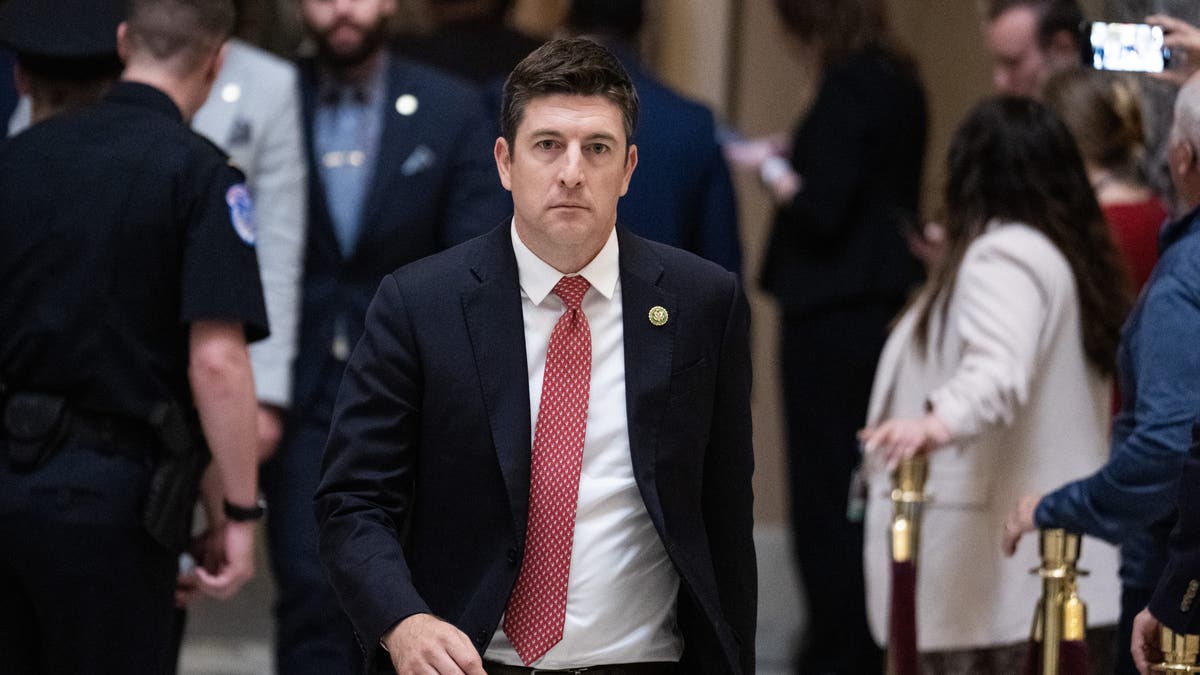
Rep. Bryan Steil, R-Wis., in the U.S. Capitol Oct. 3, 2023.  (Getty Images)

"The Committee has concerns about the implementation of E.O. 14019, particularly regarding its compatibility with provisions of the National Voter Registration Act (NRA) of 1993," Steil told the agencies in a subpoena letter. 

"Congress delegates to federal agencies specific functions and missions, which by law they are required to follow. Congress's delegation of authority to HUD does not include using funds and resources to provide Americans with voter registration materials," he said.

"Moreover, E.O. 14019 requires every federal agency to submit a strategic plan outlining how the agency can promote voter registration and voter participation.  

"Over the last few months, some agencies have taken actions that were likely outlined in their strategic plans. Examples include the Department of Education's new federal work-study requirements, and the Small Business Administration's entrance into a voter registration agreement with Michigan," Steil explained. 

"Both of those actions and the actions of other agencies raise substantial questions and concerns, some of which may be answered by access to the strategic plans drafted by the agencies." 

Steil added that the committee is considering legislation that would repeal E.O. 14019 and require the agencies' strategic plan to be submitted to Congress. 

"As the Committee continues to investigate this issue, the strategic plans and other documents requested will inform the Committee on what additional legislation, if any, needs to be considered to clarify that the NRA does not enable executive branch agencies to focus on voter registration," he wrote. 

DOJ’S ELECTION PLAN RAISES THREAT OF ‘SELECTIVE ENFORCEMENT’ AGAINST RED STATES, WATCHDOG WARNS

Rep. Bryan Steil, voting booth split image

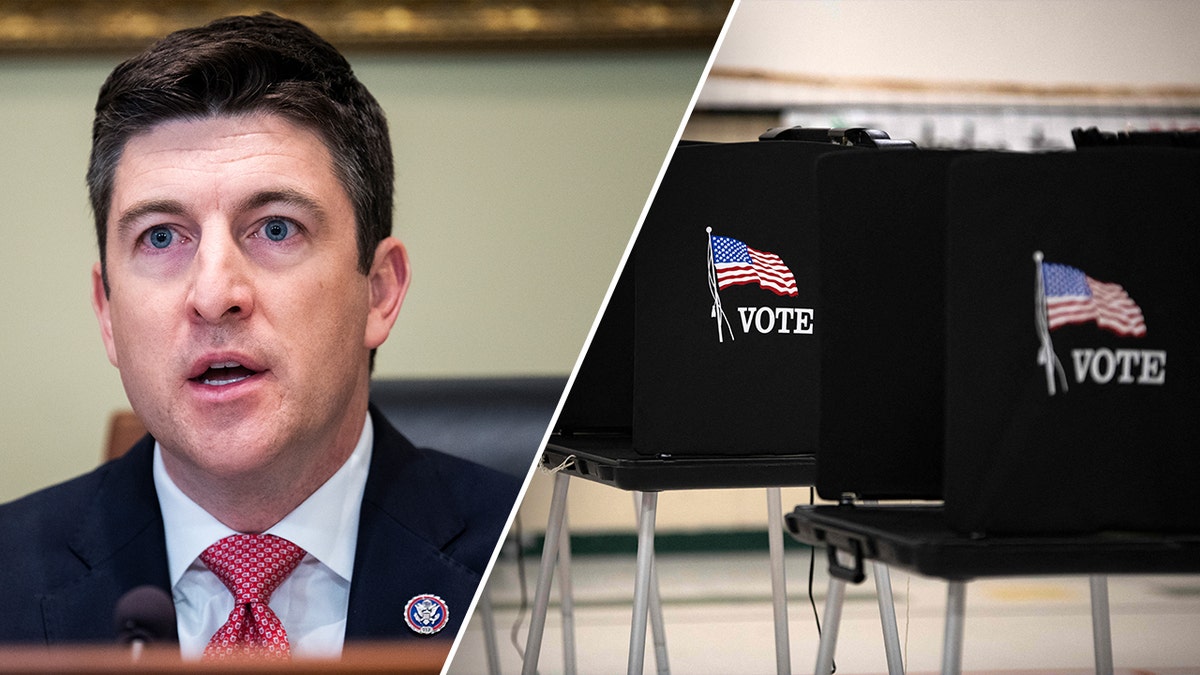
House Administration Committee Chairman Rep. Bryan Steil (Getty Images)

Included in the subpoena list are the Department of Commerce, Homeland Security, Department of Defense, Justice Department, Department of Education, Department of Energy, Health and Human Services, Housing and Urban Development, Department of Interior, Department of Labor, Office of Management and Budget, Department of State, Department of Transportation, Treasury Department and the Department of Agriculture. 

A spokesperson for OMB told Fox News Digital Thursday the agency has not been served with a subpoena.

In a statement to Fox News Digital, Steil called the executive order a "scheme" to carry out "partisan activities" for which Congress did not appropriate funds.

"Elections are partisan, but our election administration should never be partisan. Allowing federal employees from the Biden administration to flood election administration sites threatens election integrity and reduces Americans’ confidence," Steil said. 

"This executive order is another attempt by the Biden administration to tilt the scales ahead of 2024. I will continue working to provide transparency and accountability on this administration’s latest scheme as Congress did not appropriate taxpayer funds for partisan activities."

BIDEN’S GET-OUT-THE-VOTE EXECUTIVE ORDER CHALLENGED, HEADING TO SUPREME COURT: 'TARGET WELFARE POPULATIONS'

In November, top Republican senators pushed the Biden administration for answers about its "voter mobilization" efforts and said they were stonewalled by the White House for months. 

Sen. Bill Hagerty, R-Tenn., sent a letter with 23 senators, co-signed by top leadership, including Senate Minority Leader Mitch McConnell, R-Ky., admonishing President Biden for his administration’s "failure to respond" to their inquires about the executive order on Promoting Access to Voting.

"This policy directive merits congressional oversight both as a general matter and under the Antideficiency Act," the lawmakers wrote, reiterating their request for how federal agencies planned to carry out the executive order, including a request for copies of their plans submitted to the White House. 

Biden gives gun safety remarks

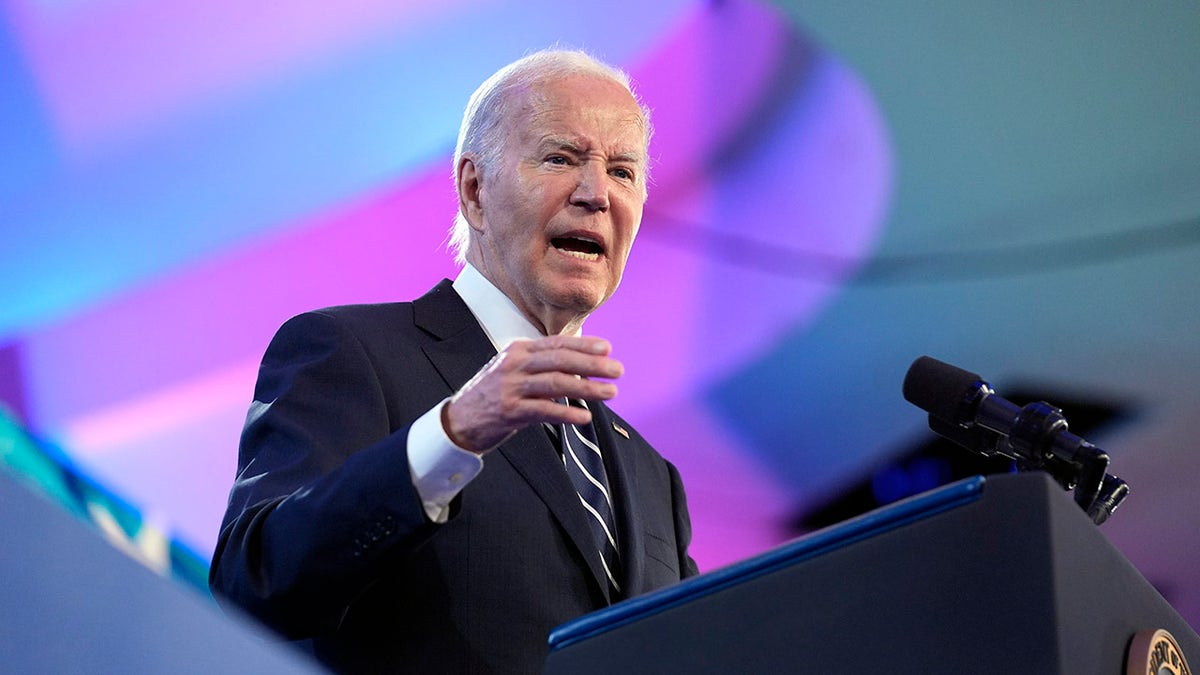
President Biden speaks to Everytown for Gun Safety Action Fund's Gun Sense University at the Washington Hilton June 11, 2024, in Washington.  (AP Photo/Evan Vucci)

In April, a lawsuit challenging the executive order alleged it targeted key demographics to benefit the president’s political party and his own re-election.

Tarren Bragdon, president and CEO of the Foundation for Government Accountability, which filed an amicus brief in a case now pending before the 3rd Federal Circuit, said "it’s no wonder Team Biden is using their authority and resources to target welfare populations with a federally funded get-out-the-vote effort.

"If they are allowed to fully execute their plan, it could swing the election outcome." 


Brianna Herlihy is a politics writer for Fox News Digital.

Source: https://mail.google.com/mail/u/0/#inbox/FMfcgzQVwxGQNJMdKjVLLXvSbBtRmdvV

Follow Middle East and Terrorism on Twitter

Poll: Most Voters Think Old Joe’s Mental Decline is Real - Robert Spencer


by Robert Spencer

What was their first clue?


[Order a copy of Robert Spencer’s forthcoming book, Muhammad: A Critical Biography, by clicking here.]

Three-plus years into Old Joe Biden’s disastrous performance as the ostensible president of the United States, he is giving us more evidence of his mental decline practically every time he makes a public appearance. To list all of his mental lapses, incomprehensible statements, and displays of cognitive vacancy would take more space than this column and indeed the whole of PJ Media has available.

And now, finally, even low-information voters are waking up to what is going on: a new poll shows that even as the leftist political and media elites continue to prattle about his “stutter,” the American people aren’t buying it. Increasing numbers know that Old Joe ain’t home.

The pollsters at Rasmussen Reports noted on Monday that “a majority of voters perceive him as losing his mental sharpness.” The latest Rasmussen survey shows that “57% of Likely U.S. voters think that, over time, Biden is getting less and less mentally sharp. Thirty-three percent (33%) disagree.”

Wait a minute. Thirty-three percent think Old Joe is not any less mentally sharp than he was back in the palmy days when he was plagiarizing papers at law school, stealing speeches from a British socialist leader, or assassinating the character of Clarence Thomas? What planet are these people living on? Or are they just so desperately afraid of Bad Orange Man, whom they have been brainwashed to think will do all the things to destroy “our democracy” that the Biden regime is actually doing, that they just can’t bring themselves to admit the blazingly obvious?

It is, in fact, not a good advertisement for universal suffrage that fully 33% of likely voters would vote for SpongeBob SquarePants for president if he had a “D” after his name. Old Joe could even pass on to the great beyond and meet the real Big Guy, and a massive segment of the American electorate would still pull the lever for him rather than a living and breathing human being with an R after his or her name. It’s a tribal thing, as well as an awareness of the fact that one party is more likely to keep the DEI scam and the federal handout gravy train going more enthusiastically than the other, although the real difference between the parties gets narrower all the time.

Nevertheless, the number of Americans who are aware that Old Joe is an empty husk is growing, and the people who are running the Biden regime can do nothing about it, for all Biden has to do is stand still to prove that nobody is home. The Juneteenth celebrations at the White House on Monday, which Matt Margolis ably dissected here, were a case in point. Amid a scene of truly Dantescan ludicrousness, featuring a bearded man in a glittering gown and apprentice figurehead Kamala Harris cackling maniacally, Old Joe stood stock still, apparently having lost all awareness of where he was or what he was supposed to be doing until George Floyd’s brother came to the rescue and snapped the Most Powerful Man In The World out of his trance-like vacancy.

Nothing improved for Old Joe on Tuesday. After America’s First Son Hunter Biden was convicted on gun charges, Biden, filled with fire, spoke in rapid-fire fashion to Moms Demand Action For Gun Sense In America. “We need you!” the old corruptocrat shouted off his teleprompter. “We need you to overcome the unrelenting opposition of the gun lobby, gun manufacturers, and so many politicians when they oppose gun lobby legislation.”

Then the lies and distortions started. Political commentator Greg Price noted that Biden “claims he was a professor at UPenn, which he never was; claims he taught a constitutional law class on the second amendment, which he never did; says that you couldn’t own a cannon when 2A was implemented, which you could; and ends by failing miserably to say the phrase ‘the tree of liberty is watered with the blood of patriots.’”

Indeed. To laughter from his sycophantic audience, Biden said, “You couldn’t own a cannon during the Civil War.” Even if that were true, it would have nothing to do with the Second Amendment, which was ratified seventy years before the Civil War began. Old Joe was mixing up his historical conflicts.

Then he continued, “No, I’m serious. Think about it. How much urrr heard this phrase?” Then he adopted a deep, stentorian voice, in order to mock the patriotic sentiment he then attempted to quote: “The blood of liberty —” and he paused, as the sycophants guffawed — “washes those — gimme a break!” The crowd laughed and applauded, as Old Joe went into his borscht belt comedian mode and insisted, “No, I mean it! Seriously!”

Yeah, this sinister old authoritarian puppet is a real laugh riot. But more Americans are catching on to what is going on, and they aren’t laughing.


Robert Spencer is the director of Jihad Watch and a Shillman Fellow at the David Horowitz Freedom Center. He is author of 28 books, including many bestsellers, such as The Politically Incorrect Guide to Islam (and the Crusades), The Truth About Muhammad, The History of Jihad, and The Critical Qur’an. His latest book is Muhammad: A Critical Biography. Follow him on Twitter here. Like him on Facebook here.

Source: https://www.frontpagemag.com/poll-shows-most-voters-think-old-joes-mental-decline-is-real/

Follow Middle East and Terrorism on Twitter

SCOTUS showdown? Democrat-appointed judges gut free speech for students, GOP appointees protect them - Greg Piper


by Greg Piper

Author of President Obama's drone-strike memo says schools can prohibit expression like "only two genders" because it "assertedly demeans characteristics of personal identity," even if done "passively, silently, and without mentioning any specific students."


With a Supreme Court decision any day now on the First Amendment boundaries of governments pressuring social media platforms to censor disfavored narratives, two federal appeals courts have now reached opposite conclusions on how far schools can go to restrict student speech, setting up a likely trip to the high court.

Middleborough Public Schools is not violating student Liam Morrison's rights by prohibiting him from wearing shirts that say there are "only two genders" – and after his first punishment, "censored genders" – as his response to the Massachusetts district's encouragement to students to express LGBTQ messages, the 1st U.S. Circuit Court of Appeals ruled Sunday.

In doing so, the Boston-based court narrowly construed the Supreme Court's seminal 1969 precedent known as Tinker, which famously declared that students do not "shed their constitutional rights to freedom of speech or expression" –  in that case, wearing antiwar black armbands – "at the schoolhouse gate."

Tinker doesn't protect expression that "assertedly demeans characteristics of personal identity, such as race, sex, religion, or sexual orientation," even if done "passively, silently, and without mentioning any specific students," according to the three-judge panel, all appointed by Democratic presidents, claiming to follow a "long line of authority" in previous rulings.

They portrayed Morrison's widely held view, based on the immutability of sex, as an invitation to cause disruption when expressed, giving school districts in Maine, Massachusetts, New Hampshire, Rhode Island and Puerto Rico nearly limitless authority to censor a viewpoint held by ideologically varied groups, from conservative Christians to gender-critical feminists.


The unanimous panel, with no concurrences, construed its decision against the eighth-grader, who was in seventh grade when he wore the shirts and got punished, as an exercise in judicial restraint. 

"The question here is not whether the T-shirts should have been barred," says the opinion by Chief Judge David Barron, previously a Justice Department lawyer known for secretly advising the president who later nominated him that Barack Obama could legally kill Americans by drone strike. "The question is who should decide whether to bar them – educators or federal judges."

The 8th Circuit ruled the opposite last October, issuing an injunction against an Iowa school district's policy prohibiting refusal to "respect" a peer's gender identity, with the St. Louis-based court saying it flatly violated Tinker. 

That three-judge panel, with two Republican appointees, said schools cannot regulate student speech as an "invasion of the rights of others" because it is "merely offensive to some listener."

"The court’s decision is not only a threat to the free speech rights of public school students across the country, but a threat to basic biological truths," the Massachusetts Family Institute, which represents Morrison with the Alliance Defending Freedom, said on X.

"We are still deciding our appeal options," a spokesperson for ADF, which has overwhelmingly won cases that went to SCOTUS, told Just the News on Tuesday. It could ask for a full-court rehearing or petition the Supreme Court, which is sensitive to circuit splits.

"The school actively promotes its view about gender through posters and ‘Pride’ events, and it encourages students to wear clothing" that affirms its view, senior counsel David Cortman said. "Our legal system is built on the truth that the government cannot silence any speaker just because it disapproves of what they say."

Barron said the government could do exactly that to student speech, and used Cortman's own words against him.

The lawyer conceded at oral argument in February that administrators could prohibit a shirt reading "All Trans Kids Are Retarded" – a hypothetical by Judge Ojetta Rogeriee Thompson – as "fighting words."

"We do not use that ['retarded'] language lightly, but the example clarifies that all parties agree that there are messages so overtly and highly demeaning of a personal characteristic," including "religious, racial, and sex- and sexual-orientation-related slurs," that schools can prohibit on clothing "based solely on its words, even if no specific students are targeted," a footnote reads.

Barron cited a 7th Circuit injunction against an Illinois school district for prohibiting a shirt reading "Be Happy, Not Gay" because that court found the message was only "tepidly negative," distinguishing it from demeaning messages that "strike a person at the core of his being" because their personal characteristics are "unalterable" or "deeply rooted."

The ADF spokesperson agreed with two hypotheticals posed by Just the News, that Barron's logic means 1st Circuit school districts can prohibit shirts that say "Jesus didn't rise" because it would question the salvation of Christian students or "Mohammed is not a prophet" as an attack on a central figure of Muslim students' faith.

Eight groups or coalitions filed friend-of-the-court briefs in favor of Morrison, identified as "L.M." in court filings but his full name in media appearances, at the 1st Circuit, including 16 Republican attorneys general and the Foundation for Individual Rights and Expression. 

The ACLU of Massachusetts' brief asked the appeals court to reject the "rights of others" analysis by U.S. District Judge Indira Talwani, calling it a "legal error" because Massachusetts law exceeds First Amendment protections for student speech and the district didn't argue Morrison's expression "qualified as bullying."

By claiming invasion-of-rights applies to speech that makes "a group of potentially vulnerable students ... not feel safe," Talwani did not "adequately distinguish between alleged feelings of unsafety and mere offense or hurt feelings, which cannot justify suppression of student speech," the ACLU-MA said.

It asked the 1st Circuit to remand the case to Talwaini to consider whether the school can meet the other Tinker exception, for "speech [that] caused or was reasonably forecast to cause substantial and material disruption."

Barron's opinion does not appear to cite any outside brief but nods toward the ACLU's argument without remanding the case to Talwani.

"We affirm the District Court's rulings, albeit on somewhat different grounds," the chief judge wrote, noting it has held "the rights-of-others limitation applies in the case of bullying, even when there is no physical invasion of any kind."

While acknowledging SCOTUS said school districts have to meet a "demanding" standard to rely on the rights-of-others limitation in the off-campus, profane-cheerleader case known as Mahanoy, Barron invoked 9th and 10th Circuit rulings that approved bans on calling homosexuality "shameful" and simply drawing a Confederate flag.

Though the 7th Circuit said "Be Happy, Not Gay" could not be prohibited, it cited evidence that "adolescent students subjected to derogatory comments about such characteristics may find it even harder than usual to concentrate" and set off a chain reaction of insults between students that "deterior[ate] the school's ability to educate its students."

The "psychological effects" caused by some expression could lead to "a decline in students' test scores, an upsurge in truancy, or other symptoms of a sick school – symptoms therefore of substantial disruption," Barron said, quoting the 7th Circuit.

A footnote refers to an earlier 7th Circuit ruling, Muller, that distinguishes between adult and child psychology. An adult "Christian can tell the Jew he is going to hell" but "it makes no sense to say that the overly zealous Christian" child must be allowed to do the same to a Jewish classmate, which "could crush a child's sense of self-worth."

Mahanoy does not require a school to "be certain" but just cite facts that "might reasonably lead school officials to forecast substantial disruption," Barron wrote, quoting the 7th Circuit. "Tinker does not require school officials to wait until the horse has left the barn before closing the door," he said, quoting the 6th.

"The material-disruption limitation has served as a workable doctrinal means of accounting for the concerns that arise in this context and that Tinker requires us to assess," the opinion says. "It usefully permits the depth of the expression's disruptive impact on the learning environment to be evaluated in relation to myriad school contexts and the myriad forms that assertedly demeaning speech may take."


Greg Piper

Source: https://justthenews.com/government/courts-law/scotus-showdown-democrat-appointed-judges-gut-free-speech-students-gop

Follow Middle East and Terrorism on Twitter

Arrest of allegedly ISIS-linked suspects adds terror fears to open border crisis - Ben Whedon


by Ben Whedon

"How much longer will we let this madness continue?" House Homeland Security Committee Chairman Mark Green asked.


While authorities, security experts, and conservative border hawks have long warned that the ongoing security situation at the southern border could permit entry by hostile actors, the recent arrest of multiple suspects linked to the Islamic State has reignited fears of potential terrorist activity.

Authorities this week arrested a group of suspects with suspected links to the Islamic State across multiple major American cities, including Philadelphia, New York, and Los Angeles, ABC News reported. The individuals in question reportedly crossed the southern border last year after originally traveling from Tajikistan. The suspects reportedly raised no security concerns upon their initial entry but authorities ultimately turned up links to the Islamic terror group.

All three cities in which the arrests occurred are "sanctuary cities" and it is not known at this time whether local law enforcement assisted with the raids.

"Over the last few days, ICE agents arrested several non-citizens pursuant to immigration authorities. The actions were carried out in close coordination with the FBI's Joint Terrorism Task Forces,” the FBI and Department of Homeland Security said in a statement. “The individuals arrested are detained in ICE custody pending removal proceedings. As the FBI and DHS have recently described in public and partner bulletins, the U.S. has been in a heightened threat environment. The FBI and DHS will continue working around the clock with our partners to identify, investigate, and disrupt potential threats to national security."

Tajikistan has become a hotbed of terrorist recruiting activity in recent years and Tajik nationals are among the suspects in the Crocus City Hall massacre near Moscow in March. While the arrests have renewed scrutiny of the border situation in light of the security risks, such warnings have been mounting throughout the Biden administration’s tenure.

“Almost weekly we are getting reports that someone with terrorist ties or other major criminal connections has been released into our country by the Biden administration and allowed to roam free for months or even years,” House Homeland Security Committee Chairman Rep. Mark Green, R-Tenn., said in a press release.

“Such bad actors exploiting our borders used to be the exception—it’s quickly becoming the rule under President Biden and now-impeached Secretary Mayorkas,” he added. “It’s only a matter of time before one of these individuals connected to a terrorist group is involved in something devastating on U.S. soil, and this administration will be responsible. How much longer will we let this madness continue?”

Scope of illicit entry

U.S. Customs and Border Protection have reported 9.9 million nationwide encounters from fiscal year 2021 through April 2024. At the southwest land border alone, that figure stood at 8.1 million over the same period. 

It is not, however, the southwest border that has prompted the largest amount of security concern, but the northern border. CBP data reveals that the agency has reported 172 Terrorist Screening Dataset (TSDS) encounters at points of entry on the northern border in fiscal year 2024 thus far. By contrast, a mere 24 occurred at points of entry on the southern border in the same period. In fiscal year 23, moreover, authorities reported 564 total encounters, of which 484 were at the northern border. 

TSDS encounters between points of entry, however, were noticeably higher at the southern border, with 80 such incidents being reported thus far in fiscal year 2024. By contrast, only 1 TSDS encounter occurred between ports of entry on the northern border.

Amid a noteworthy surge in TSDS encounters in mid-2023, Rep. Mike Rogers, R-Ala., said that "[w]hile the Biden Administration conveniently avoids even thinking about the Southern border, terrorists understand fully that the border is a point of weakness for our country.”

"Biden’s open border policy is a dangerous vulnerability for our national security, and these numbers only prove that terrorists are exploiting that weakness,” he added.

Means of entry

At least one of the suspects reportedly entered the U.S. via the CBP One app, according to NBC News. The app is run through the Department of Homeland Security and permits would-be entrants to the United States to schedule an appointment at a point of entry to face processing.

The app has come under fire over alleged use by cartels in human trafficking operations as well as its reported vulnerability to VPNs to allow users to circumvent geographic restrictions. A report from the House Homeland Security Committee in October of last year drew further concern in light of the DHS’s high rate for granting parole to applicants from hostile nations through the app.

Between Jan. 12, 2023, and Sept. 30, 2023, the app processed 278,431 appointments, resulting in roughly 95.8% securing entry into the U.S. via parole. Of particular concern to the panel were the high rates of admission for foreigners from hostile nations such as Afghanistan, Iran, Belarus, China, and Venezuela.

DHS admitted 94% of the 20,948 Russians who made appointments through CBP One in that period. It further admitted 93% of the 246 Afghans, 97% of the 57,381 Venezuelans, 98% of 801 Belarusians, 88% of 18 Iranians, 88% of 36 Chinese, and 82% of 2,279 Uzbeks.

"Secretary [Alejandro] Mayorkas has utterly abused the CBP One app in his quest for open borders,” Chairman Mark Green, R-Tenn., said at the time. "These numbers are proof that Mayorkas' operation is a smokescreen for the mass release of individuals into this country who would otherwise have zero claim to be admitted.”

"At a time when global tensions are rising, and our enemies are growing bolder, releasing tens of thousands of these people into our communities—especially when they have not received adequate, if any, vetting—is irresponsible,” he added.


Ben Whedon

Source: https://justthenews.com/government/security/thurarrest-allegedly-isis-linked-suspects-compounds-terror-fears-amid-open

Follow Middle East and Terrorism on Twitter