Saturday, December 13, 2025

In first, IDF calls off attack on Hezbollah after Lebanese army springs into action - Yonah Jeremy Bob


​ by Yonah Jeremy Bob

In early 2025, top IDF sources told The Post that the Lebanese army was doing a much improved job in eliminating left-over Hezballah weapons and positions in southern Lebanon.


A sign on the border between Israel and Lebanon reads 'Stop! border ahead,' in northern Israel, November 16, 2025
(photo credit: AYAL MARGOLIN/FLASH90)


In an unprecedented move, the IDF has called off an attack almost in real time against Hezbollah in response to the Lebanese army’s swift action to deal with the situation, the military said on Saturday night.

At around 3 p.m. on Saturday, the IDF issued a standard warning for an attack against Hezbollah forces located inside a residential area, in this case, the southern Lebanese village of Yanouh.

Usually, within hours of such a warning, which gives civilians time to evacuate, the air force strikes the targets.

However, in this case, the IDF issued an unprecedented second message at around 6:30 p.m., stating that shortly after its public warning, the Lebanese army requested time to address the issue. Next, the IDF said that the Lebanese Armed Forces had deployed to the area to address the matter.


The military said that it is keeping an eye on whether the Lebanese army comprehensively deals with the Hezbollah threat in Yanouh.

Early this year, top IDF sources told The Jerusalem Post that the Lebanese army was doing a much-improved job in eliminating remaining Hezbollah weapons and positions in southern Lebanon.

However, in recent months, IDF sources told the Post that this trend had reversed, prompting the IDF to take more aggressive action in Lebanon.

Israel has expressed hope that the Lebanese army’s actions in this and other cases will be more serious so as to roll back Hezbollah and make it unnecessary for the IDF to undertake a larger operation against the terrorist group to prevent it from rearming.

IDF strikes in southern Lebanon earlier in the week

The military also announced that it struck southern Lebanon on Friday. It added that the strikes were carried out on Hezbollah training compounds as part of an ongoing military campaign to target and eliminate violations of the peace agreement between Israel and Lebanon.

“The IDF struck a training and qualification compound used by Hezbollah’s Radwan Force to conduct training and courses for the organization’s terrorists,” the statement said, noting that another training camp was struck earlier this week.

As part of the training conducted in the compound, the army said, terrorists underwent shooting exercises and additional training on the use of various types of weapons, intended for planning and executing terrorist attacks against IDF troops and Israeli civilians.

This comes as the IDF has increased its operations around the northern border. In strikes on Monday, the military targeted another training camp, military structures, and a missile launch site.

Corinne Baum and Shoshana Baker contributed to this report.


Yonah Jeremy Bob

Source: https://www.jpost.com/middle-east/article-880150

Follow Middle East and Terrorism on Twitter

Trump admin discusses possibility of terror-related sanctions on UNRWA - Mike Wegenheim


​ by Mike Wegenheim

U.S. Secretary of State Marco Rubio described the longtime U.N. agency as a “subsidiary of Hamas.”


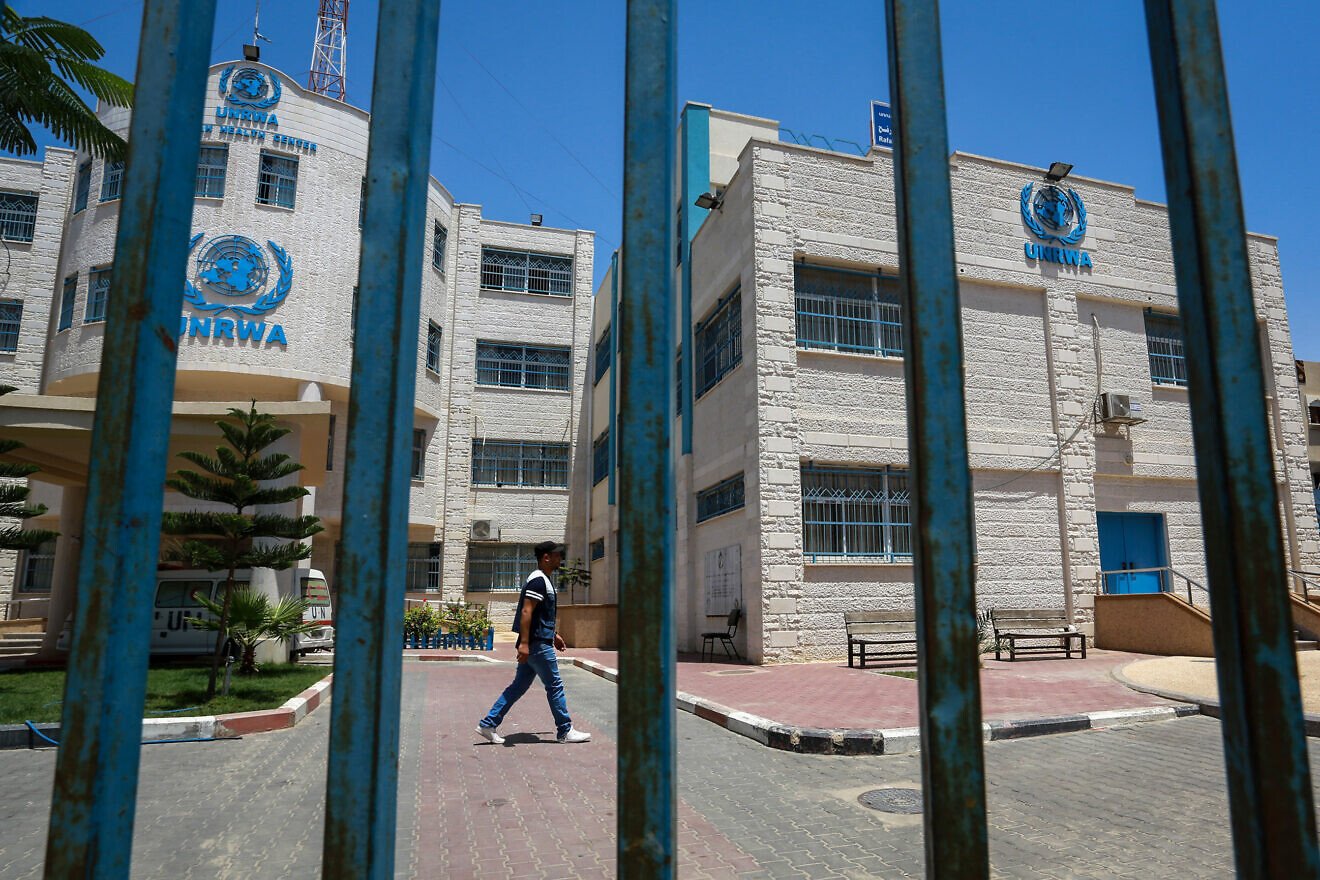
The United Nations Relief and Works Agency (UNRWA) building in Rafah in the southern Gaza Strip, July 26, 2018. Credit: Abed Rahim Khatib/Flash90.


Trump administration officials are currently in talks to impose terror-related sanctions on the U.N. Relief and Works Agency for Palestine Refugees (UNRWA), which has long been accused of complicity with Hamas and Palestinian Islamic Jihad and serving as cover for their terror activities, according to a Reuters report.

As discussions within the U.S. State Department are ongoing, it is not clear whether the focus is on imposing sanctions on the entire agency or on certain officials. Nor is it clear which sanctions, including asset freezes and travel bans, are under consideration, sources with direct knowledge of the matter told the outlet.

In October, U.S. Secretary of State Marco Rubio described UNRWA as a “subsidiary of Hamas.” He said there is no role for the entity to play in delivering aid in Gaza amid concerns that UNRWA was actively or passively diverting aid to Hamas.

According to Reuters, one possibility the State Department has considered is declaring UNRWA a foreign terrorist organization—a decision that would severely isolate the agency financially. However, the outlet’s sources said it is unclear whether that option is a serious one.

Criticism of the U.N. agency intensified after multiple UNRWA employees were documented taking part in Hamas-led terrorist attacks on Oct. 7, 2023, leading to the United States and other countries and entities freezing donations. Israel officially banned the agency and its operations in January.

The United Nations has said it conducted a thorough investigation into allegations lodged against the agency and that appropriate action has been taken. Israel and others have questioned the veracity of those claims; at the same time, voluntary international funding for the agency has stalled.

Sanctions levied by the United States would severely curtail the ability of other nations to provide funding for or cooperate with UNRWA without running afoul of U.S. law, putting the agency’s existence at risk.

William Deere, director of the UNRWA office in Washington, told Reuters that the agency would be “disappointed” if such talks were taking place, and that potentially labeling UNRWA a foreign terrorist organization would be “both unprecedented and unwarranted.”

A State Department official told Reuters in response to its report that UNRWA is a “corrupt organization with a proven track record of aiding and abetting terrorists.”

“Everything is on the table,” the official said. “No final decisions have been made yet.”


Mike Wegenheim

Source: https://www.jns.org/trump-admin-discusses-possibility-of-terror-related-sanctions-on-unrwa/

Follow Middle East and Terrorism on Twitter

President Trump's Farsighted Policy on Venezuela, Iran's 'Second Home' in the Americas - Majid Rafizadeh


​ by Majid Rafizadeh

Allowing Iran to entrench itself in the Western Hemisphere would only create a hostile foothold from which it could coordinate operations, support proxy groups, and control regional dynamics with near impunity.


  • Venezuela functions both as a forward operating base and as an insurance policy for the regime, safeguarding its operatives and extending its reach.

  • Allowing Iran to entrench itself in the Western Hemisphere would only create a hostile foothold from which it could coordinate operations, support proxy groups, and control regional dynamics with near impunity.

  • President Donald J. Trump's policy on Venezuela is not only strategically sound but necessary to finally put a stop to Iran's explicit plans for the U.S.

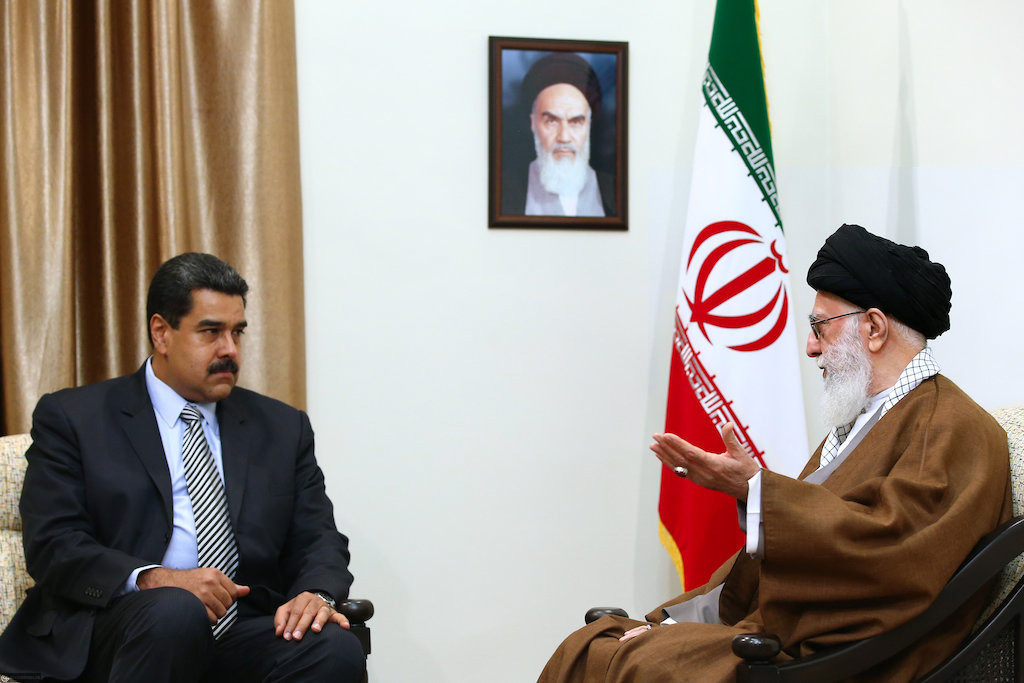
The partnership between Iran and Venezuela is not symbolic — it is deeply functional, encompassing military cooperation, intelligence sharing, support for proxy groups, and opportunities for illicit trade, all of which bolster Iran's global reach while challenging U.S. interests. Pictured: Venezuelan President Nicolás Maduro meets with Iran's Supreme Leader Ayatollah Ali Khamenei on October 22, 2016, in Tehran. (Image source: khamenei.ir)

Iran has recently come out publicly, voicing strong support for Venezuela against the United States. Its statement reflects a deep strategic and military relationship that serves multiple interests for Tehran. The Iranian regime openly views its partnership with Venezuela as a rare foothold in the Western Hemisphere, a staging ground for influence, and a safe haven for key figures and networks. The relationship encompasses military cooperation, intelligence sharing, support for proxy groups, and opportunities for illicit trade, all of which bolster Iran's global reach while challenging U.S. interests.

Venezuela can, in effect, be viewed as a prized extension of Iranian power — a "second home" where Iran can operate relatively freely, project influence close to the United States, and maintain strategic depth far beyond its borders.

The Iranian regime's fondness for Venezuela is rooted in several ideological and strategic advantages. Militarily, Venezuela allows Iran to experiment with logistics, training and potentially the deployment of drone and missile capabilities in the Americas. Intelligence-sharing between the two countries, far from Iran's territory, facilitates coordination with allied groups such as Hezbollah and other proxies.

Politically, Venezuela serves as an additional approach into Israel's backyard. Just as Tehran openly backs Hamas and Hezbollah near Israel, it now enjoys a safe platform near the United States where it can extend asymmetric pressure. In addition, Venezuela's weakened state institutions, opaque financial systems, and corrupt governance make it fertile ground for illicit operations, including narcotics trafficking and criminal networks, which Iran can leverage to sustain its wider geopolitical ambitions. This combination of intelligence, military and financial utility makes Venezuela a critical hub for the regime's global strategy.

The role of Venezuela as a sanctuary for Iranian elites only accentuates its strategic value. During moments of internal crisis in Iran, particularly during its so-called "12-day war" with Israel, reports surfaced that high-ranking Iranian officials were actively exploring safe havens abroad, with Venezuela emerging as a viable destination.

The prospect of having Iranian operatives and mullahs so close to the United States should create justifiable concerns: it allows Tehran to maintain influence and operations from a location that is geographically advantageous, politically aligned, and relatively insulated from Western oversight. Venezuela functions both as a forward operating base and as an insurance policy for the regime, safeguarding its operatives and extending its reach.

The partnership between Iran and Venezuela is not symbolic — it is deeply functional, encompassing military, intelligence and criminal domains. Isaias Medina III, who served as legal adviser for Venezuela's Permanent Mission to the United Nations until he resigned in 2017 over Venezuelan President Nicolás Maduro's human rights abuses, recently told Fox News:

"Iran's partnership with the rogue Venezuelan narco-dictatorship is far from a principled stand for 'sovereign rights' under the U.N. Charter. It is a calculated strategy serving mutual interests in criminal enterprise and asymmetric warfare, posing a direct and evolving threat to U.S. national security.... This is a partnership for power, not principles. Iran's engagement centers on deepening military, criminal, and intelligence cooperation that blatantly disregards international norms."

From a U.S. strategic perspective, the partnership between Venezuela and Iran highlights the importance of applying consistent pressure on both regimes. The Trump administration's policy of applying maximum pressure on the Maduro regime addresses directly with the danger posed by Venezuela serving as a strategic base for Iranian operations. Allowing Iran to entrench itself in the Western Hemisphere would only create a hostile foothold from which it could coordinate operations, support proxy groups, and control regional dynamics with near impunity. Pressure on Venezuela is therefore inseparable from pressure on Iran. The two regimes contribute to one another's survival and reinforce each other's strategic objectives.

By continuing to hold Maduro's regime accountable and maintaining strong sanctions and diplomatic pressure, the United States is constructively addressing a threat that extends well beyond Venezuela and directly confronts Iran's ambitions in America's backyard.

Venezuela represents a multifaceted asset for the Iranian regime: a sanctuary for its elites, a hub for intelligence and military cooperation, and a platform for illicit networks that undermine regional and global security. Iran's deepening engagement with Venezuela is designed to expand its reach, further its interests, and challenge U.S. influence.

President Donald J. Trump's policy on Venezuela is not only strategically sound but necessary to finally put a stop to Iran's explicit plans for the U.S.


Dr. Majid Rafizadeh is a political scientist, Harvard-educated analyst, and board member of Harvard International Review. He has authored several books on the US foreign policy. He can be reached at dr.rafizadeh@post.harvard.edu

Source: https://www.gatestoneinstitute.org/22111/trump-policy-venezuela-iran

Follow Middle East and Terrorism on Twitter

In echoes of Minneapolis, whistleblower says Maine company bilked Medicaid dollars - Steven Richards


​ by Steven Richards

The company was founded by a Somali immigrant who later tried to run for office in his home country and allegedly sent money to fund a paramilitary force.


A health services contractor in Maine founded by a Somali immigrant is now accused by a whistleblower of defrauding the state’s Medicaid program, raising concerns in Congress that fraud in government programs is more widespread than previously known.

The recent charges from last month connected to a $1 billion fraud ring among Somali immigrants in Minneapolis, Minnesota, have focused renewed attention from lawmakers on rooting out fraud in federally-funded programs across the country. 

Just days after the Minnesota fraud ring surfaced in the national conversation, a whistleblower who worked for a health services contractor in Maine came forward in a public interview and alleged the company, Gateway Community Services, defrauded the state’s Medicaid program for years. 

The company was founded by Abdullahi Ali, a Somali-American who also ran for office, a position equivalent to governor, in a Somali state. At the time, he was serving as Gateway’s executive director. 

Rep. James Comer, R-Ky., Chairman of the House Oversight Committee, says that he plans to probe the cases in both Minnesota and Maine to determine whether similar fraud using public dollars exists elsewhere. He believes there is a high chance his committee will find more.  

“This does appear that it's a very organized scheme in multiple states with groups of Somalis,” Comer said in an interview with NewsNation, which first aired the whistleblower's allegations. “I would go out on a limb and say this is happening in other states with other social programs with other groups," Comer said.

Democratic governors refusing to cooperate

Comer noted that the Trump administration is intent on rooting out fraud in these federally funded programs, but a refusal by states run by Democratic governors to turn over key data threatens to hamper the effort. His committee’s probe, Comer warned, would rely on congressional subpoena power to compel information if any state or entity refuses to turn over requested information. 

"Minnesota could be and hopefully is the worst offender, but there are other blue states run by Democrat governors who refuse to turn over any data, not only to Congress, but to the cabinet secretaries like [Agriculture Secretary] Brooke Rollins, who are trying to get a handle on programs like SNAP,” Comer told the Just the News, No Noise TV show on Tuesday. 

"If anyone that has received correspondence from us thus far requesting information, if they don't turn over that information, then they will get a subpoena. And we're serious about this. We're not going to back down," he added. 

State charged for services never performed

The whistleblower in the Maine case, Christopher Bernardini, came forward in an interview with NewsNation earlier this week, recounting what he observed when he worked for Gateway Community Services as its self-described “billing guru” from May 2018 until April 2025. 

Bernardini said the company presided over a system in which false records were filed about client visits. He alleges that the company manipulated an electronic monitoring system designed to track staff visits to low-income and disabled clients, but staff never actually made those visits. Afterwards, Gateway charged Maine’s Medicaid program despite never performing the stated services. 

“I just couldn’t fathom it — I thought we were helping people; I thought this was all on the up-and-up,” Bernardini told NewsNation in an exclusive interview. “I have a passion for helping people and I thought that we were doing the right thing this whole time.” 

Bernardini said he grew disillusioned with his work when he “saw how they were swindling people” and when “I had clients calling me to tell me their staff hadn’t shown up and I was told to bill those hours anyway. 

“It just got worse and worse until I started really putting up a stink,” he said. 

Gateway founder Ali responded to the accusations of fraud in a post to X, according to NewsNation. The post appears to have been deleted, and his account appears to be locked

“I make no apologies for building a successful business in Maine, working hard to earn a living, earning my PhD, giving back to my Maine community, and running for office in Jubaland,” he wrote, according to The Hill. “I am proud to contribute my hard-earned $ to support my people back home. America is a nation of laws—you cannot change facts by fabricating false stories. I am proud Somali-American.” 

Ali started Gateway Community Services in 2015 in Portland, Maine. It is a for-profit company that provides behavioral health services that include mental health counseling and services for children with intellectual disabilities. Gateway, along with its sister nonprofit organization, Gateway Community Services Maine, employs more than 250 people across the state, the Portland Press Herald reported in a profile of Ali last year. 

Allegations dating back to 2022

Gateway first came to the attention of the state’s Medicaid system’s integrity unit years ago, NewsNation reported. On March 22, 2022, the company received a notice of violation from the Medicaid system, known as MaineCare, alleging the government had overpaid for Gateway’s services by more than $900,000. The estimate was later revised down to just over $770,000.  The state believed it had overpaid Gateway because documentation did not have matching start and stop times and there were missing signature dates. 

While Ali led the company, he also unsuccessfully ran for political office in his native Somalia, the presidency of one of the country’s southern provinces, Jubaland. In an interview with Kenyan media, Ali bragged that he had raised funds for the Jubaland-Somali army–a paramilitary force–providing them with resources to help buy “weapons, bullets and food.” The admission raised concerns he had funneled taxpayer money into the African country, the Maine Wire reported earlier this year. 

Bernardini told NewsNation the questionable activity ramped up during the COVID-19 pandemic when the federal government made available close to $1 trillion as part of the Paycheck Protection Program. 

“Once the PPP loan stuff started going on, this one really ticked me off because, all of a sudden, I started seeing these staff come aboard. They’d be on board for two or three weeks,” Bernardini said. 

“No hours worked. I’d put in their training hours. That's because, again, I was doing the time cards and I started seeing bonuses, $2,000 bonuses, going to these staff that had only been with us for two weeks. Never worked a shift with a client and yet the PPP loan comes, they’re giving $2,000 away like they’re lollipops at a doctor’s office and I’m like, ‘Where the hell’s my $2,000 bonus, I’ve been here six, seven years.’”

All of this prompted Bernardini to submit a tip to the Maine State auditor’s office in the Spring of 2024. He said he was asked to provide information for the audit several times. However, Gateway ended Bernardini’s contract in April 2025. 

“I’ve been waiting patiently for this to blow up, and I knew it would eventually,” Bernardini said in the interview. “I only wish I would have spoken up sooner.”

More than $1 billion of misused taxpayer funds

Renewed scrutiny on the massive fraud ring among Somali immigrants in Minneapolis came after the 77th defendant associated with a taxpayer-supported food program was indicted late last month, opening the door for the Maine case to break through.

The details of the vast fraud, which prosecutors estimate totals around $1 billion dollars, have been reported for years, including by Just the News on several occasions. At the center of the fraud is a Minneapolis nonprofit, Feeding Our Future, which established feeding sites across the city in collaboration with local businesses. 

The Justice Department first charged 47 people in a $250 million scheme involving the nonprofit in 2022, Just the News previously reported. Then-FBI Director Christopher Wray said the defendants "went to great lengths to exploit a program designed to feed underserved children in Minnesota amidst the COVID-19 pandemic, fraudulently diverting millions of dollars designated for the program for their own personal gain.” 

Attorney General Merrick Garland, who served during the Biden administration, called it the largest pandemic-era fraud scheme ever identified. 

But, the more prosecutors dug in, the more fraud they said they uncovered, both related to Feeding Our Future and in other places among the city’s Somali community, the New York Times reported. The investigations have led to almost 60 convictions, 77 indictments, and identified more than $1 billion of misused taxpayer funds in the state.

The 77th defendant in the food welfare program scheme was indicted last month, and his case gives a sense of how systemic and organized the fraud schemes have beenJust the News reported. 

Federal prosecutors said Ousman Camara was indicted on nine charges alleging fraud, federal programs bribery, and money laundering. He was the owner of K’s Dollar Grocery and Deli, a small storefront grocery store in north Minneapolis. In August 2015, the Agriculture Department disqualified Camara and his store from food stamps due to suspected fraud. 

In September 2020, prosecutors alleged, Camara enrolled K’s Grocery in the Federal Child Nutrition Program under the sponsorship of Feeding Our Future. In 2020 and 2021, Camara fraudulently claimed to be serving meals to 1,000 children a day, seven days a week, at his site when he wasn’t. In all, Camara claimed to have served more than 300,000 meals to children, for which he claimed to be entitled to more than $1 million in Federal Child Nutrition Program reimbursement, authorities said. 

He then allegedly used those funds on his lifestyle, paying his credit card bills, and buying a building in north Minneapolis. He also sent some of the money out of the country, prosecutors said. 


Steven Richards

Source: https://justthenews.com/accountability/whistleblowers/echoes-minneapolis-whistleblower-says-maine-company-bilked-medicaid

Follow Middle East and Terrorism on Twitter

From Kyiv to the Golan: The Ukraine-Russia war’s unseen impact on Israel - opinion - David Ben-Basat


​ by David Ben-Basat

The Ukraine war is reshaping Israel’s security, diplomacy, and society, empowering Iran, changing alliances, and redefining the challenges ahead.


Russian President Vladimir Putin chairs a meeting in Moscow this week. Russia is so consumed by the war with Ukraine that it struggles to maintain its military presence in Syria and turns a blind eye to Iranian activity, says the writer.
(photo credit: SPUTNIK/REUTERS)

When the first shot was fired in February 2022, few imagined that the war between Russia and Ukraine would drag on for so long, reshape the geopolitical landscape of the Middle East, influence Europe, and unsettle the stability of an entire region. As the war continues, it is becoming clear that Israel is not merely watching from the sidelines. Even discreetly, it finds itself at the center of power struggles that will shape its political, security, and social future.

The war has weakened Russia both economically and militarily. Moscow – deeply entangled in the European theater – has become more dependent than ever on its partnerships in the East, foremost among them Iran. This dependency grants Tehran dangerous room to maneuver: transferring advanced weapons, upgrading missile systems, empowering terror proxies, and continuously studying Russian combat tactics in preparation for a future confrontation with Israel.

For years, Russia’s presence in Syria served as a stabilizing factor and a partial check on Hezbollah’s military buildup. Today, however, Russia is so consumed by the war that it struggles to maintain its military presence in Syria and turns a blind eye to Iranian activity that poses a direct threat to Israel.

One of the war’s most troubling aspects is the sheer volume of advanced weaponry entering the battlefield. Anti-tank systems, attack drones, night-vision equipment, and sophisticated combat technology are finding their way to “black markets.” Similar leaks occurred after the wars in Yugoslavia and Libya, but this time, the scale is far greater.

Western intelligence warns that state-of-the-art arms are seeping out of the Ukrainian arena into the Middle East. In a reality where Hezbollah, the Houthis, and other terror groups are adopting advanced tactics, the cost of Israeli mistakes is rising. Jerusalem must prepare for a battlefield in which the enemy is not only better equipped but also learning in real time from one of the most significant wars of recent decades.

 Russian President Vladimir Putin shakes hands with Iranian President Ebrahim Raisi during a meeting on the sidelines of the Shanghai Cooperation Organization (SCO) summit in Samarkand (credit: REUTERS)
Russian President Vladimir Putin shakes hands with Iranian President Ebrahim Raisi during a meeting on the sidelines of the Shanghai Cooperation Organization (SCO) summit in Samarkand (credit: REUTERS)

Israel must preserve its operational freedom in Syria

The war in Ukraine is not only a military conflict; it is also a battle for perception. Kyiv is conducting an unprecedentedly effective international campaign. Israel, which must preserve its operational freedom in Syria on one hand while maintaining strong ties with the West on the other, finds itself walking a tightrope.

The Jewish state’s caution, rooted in existential security considerations, has been received in parts of Europe as problematic ambiguity. Russia views any expression of Israeli support for Ukraine – even purely humanitarian – as a deviation and a political stance. This creates diplomatic pressure on Jerusalem and a constant struggle to maintain a balanced policy that does not always work to Israel’s benefit.

Roughly 1.2 million Russian speakers live in Israel: some from Russia, some from Ukraine, and others from former Soviet republics. The war has exposed a deep emotional rift within this community. Many Ukrainian immigrants have lost family, homes, and memories. Meanwhile, Israelis of Russian origin often feel unfairly blamed or pressured to apologize for policies that are not theirs.

In community groups, in the media, and within families, this divide is present and, in some cases, widening. Yet, alongside the tension, a renewed sense of solidarity has emerged, as veteran immigrants from the former Soviet Union help integrate new arrivals. Humanitarian aid is organized quickly, and personal connections serve as a reminder that all are ultimately part of Israeli society.

The welcome waves of immigration since 2022 have brought Israel highly skilled professionals in technology, medicine, engineering, and research. Many possess advanced expertise. The country now faces an opportunity: to integrate these newcomers into hi-tech, education, industry, and scientific research, strengthening its competitive advantage, especially as many Israelis have chosen to live abroad.

The IDF is closely studying the war’s tactics: decentralized combat, the massive use of drones, and electronic warfare. The conflict has become a live laboratory in which global powers test weapons and technologies. Observing and rapidly adopting these methods are not only nation-states but also organizations hostile to Israel.

This reality demands rapid investments in cyber capabilities, counter-drone systems, multi-domain operations, and real-time intelligence. The IDF must update its operational doctrine dynamically, as whatever proves effective in Ukraine will eventually reach Israel’s own arena, sooner or later.

The war in Ukraine is a reminder that in a globalized world, no conflict is truly distant. A missile fired in Kyiv reverberates in Haifa and Ashdod. Every shift in Moscow-Tehran relations affects the Israel Air Force’s freedom of action. 

And every immigration wave reshapes and revitalizes Israeli society.

For immigrants from the former Soviet Union, this war shakes their identity, their families, and their childhood memories.

For Israel, it is a test of national resilience, diplomatic wisdom, and the ability to anticipate the future and adapt to it.


David Ben-Basat is CEO of Radios 100FM, an honorary consul and deputy dean of the Consular Diplomatic Corps, president of the Israeli Radio Communications Association, and formerly a broadcaster for IDF Radio and NBC.

Source: https://www.jpost.com/opinion/article-880068

Follow Middle East and Terrorism on Twitter

Israel's global standing slowly recovers as diplomatic tsunami begins to recede - Herb Keinon


​ by Herb Keinon

NATIONAL AFFAIRS: Israel's international standing is shifting, moving from isolation to slow, uneven recovery as global engagement grows.


Has there been a slight shift this week in Israel’s diplomatic outlook? Here, Prime Minister Benjamin Netanyahu and German Chancellor Friedrich Merz speak to the media during a joint press conference in Jerusalem on Sunday.
(photo credit: Ariel Schalit, pool/AFP via Getty Images) 

If the opposition had wanted to stage a Knesset debate on the collapse of Israel’s international standing, the ideal moment would have been last summer.

That was when country after country rushed to recognize a Palestinian state, when the “starvation in Gaza” narrative saturated global media, and when images of suffering in Gaza dominated front pages from London to La Paz.

In that moment of near-constant diplomatic turbulence, a debate declaring Israel isolated and adrift would have captured the prevailing mood.

Instead, that debate – under the rubric of a “40-signatures debate” obligating Prime Minister Benjamin Netanyahu to respond – took place on Monday, several months after the storm’s peak had passed. The timing felt off. The script belonged to another season – before the Trump-brokered October ceasefire in Gaza and as Israel was contemplating a full military onslaught on Gaza City.

“The subject of your heated discussion, members of the opposition, is what you are calling the so-called collapse of Israel’s international standing,” Netanyahu said at the outset of his Knesset remarks. “What a detachment from reality. What recycled, worn-out slogans.”

Prime Minister Benjamin Netanyahu speaks at a 40 signatures debate, at the plenum hall of the Knesset, in Jerusalem, on December 8, 2025 (credit: CHAIM GOLDBERG/FLASH90)
Had this debate occurred in June or July, when Israel’s diplomatic standing seemed to be deteriorating by the week, it would have echoed a palpable global sentiment.

Yet here it was taking place in December, days after the European Broadcasting Union (EBU) voted overwhelmingly to allow Israel to participate in the Eurovision Song Contest; hours after the first visit to Israel in months by the elected leader of a major European country, Germany’s Chancellor Friedrich Merz; on the eve of a warm phone call with India’s Prime Minister Narendra Modi; and just before Washington invited Netanyahu for what will be his sixth meeting this year with US President Donald Trump.

It was a debate that made sense in the summer, but far less so now, given how much the diplomatic picture – largely because of the Trump-brokered ceasefire – has shifted.

None of this is to suggest that Israel’s diplomatic challenges have evaporated. Far from it. The criticism remains intense. Public opinion in many European capitals has hardened. The images from Gaza still carry enormous weight abroad. But what the opposition framed Monday as a collapse looks, from the vantage point of this week’s developments, more like a slow, uneven process of recovery.

Israel's Eurovision inclusion, German visit: A sign of slow, uneven recovery

Consider the past 10 days alone. Signs of this shift appeared in an unlikely arena: Eurovision. Under immense pressure, the EBU – which oversees the annual song contest – decided to keep Israel in the 2026 competition.

Five countries – Spain, Ireland, Slovenia, the Netherlands, and Iceland – pulled out in protest, but the institution itself refused to place Israel in the pariah category. Had it done so, the symbolic rupture would have been profound. Instead, broadcasters across Europe signaled that banning Israel was a line too far.

For a continent where street protests routinely feature virulently anti-Israel slogans and chants, and where several governments moved toward unilateral recognition of a Palestinian state, that decision was far from a given. Germany played a central role, making clear that if Israel were banned, it would stay away as well.

Then, just two days later – though entirely unrelated – Merz landed in Israel, a not insignificant diplomatic gesture. Only months ago, Germany, whose postwar identity is intimately bound to Israel’s security, embargoed certain weapons destined for Gaza, a move that rattled Jerusalem.

Yet the embargo was followed by something wholly different: the deployment two weeks ago of Israel’s Arrow 3 missile defense system on German soil. As Netanyahu said during his press conference with Merz, “Germany has long worked for Israel’s defense, but Israel, the Jewish state, 80 years after the Holocaust, now works for the defense of Germany.”

Merz did not pretend that disagreements with Jerusalem had vanished. He spoke candidly of a “dilemma,” balancing Israel’s right to self-defense with Germany’s commitment to “human dignity” and the “rule of law.” But he also emphasized that the weapons embargo was a moment, not a doctrine.

“Circumstances have since changed,” he said. Germany’s core commitment to Israel, he added, “applies today, it applies tomorrow, and it applies forever.”

His visit underscored that Germany remains the key actor preventing the EU from sliding toward punitive measures. Berlin may continue voicing concerns about Gaza and Judea and Samaria, but its strategic alignment with Israel has not fractured – a reality his visit made plain.

Israel's luck in Latin America improves with restored Bolivian ties

If developments in Europe pointed to limits on Israel’s isolation, events in Latin America suggested that even ruptured ties can be repaired.

In Washington on Wednesday, Foreign Minister Gideon Sa’ar and Bolivia’s Foreign Minister Fernando Aramayo signed a communiqué formally restoring relations after a 16-year break.

The rupture, driven largely by the far-left ideological bent of successive Bolivian governments reaching back to when Evo Morales became president in 2006, had long seemed beyond repair. Yet political winds shift, and in October they shifted in Bolivia when centrist candidate Rodrigo Paz won the presidency.

Sa’ar called him the next day, and the road to renewal opened. “Today we are ending the long, unnecessary chapter of separation between our two nations,” Sa’ar said at the signing ceremony.

Bolivia is the first but perhaps not the last. Elections loom in Chile, Brazil, and Colombia, each with the potential to reshape bilateral relations.

Chile votes on Sunday, with right-wing candidate Jose Antonio Kast favored over the Left’s Jeannette Jara. President Gabriel Boric charted a distinctly anti-Israel line, something Kast is expected to reverse.

All this highlights how Israel’s diplomacy in Latin America is fragile and deeply dependent on individual leaders. Argentina stands today as one of Jerusalem’s closest allies not because of structural forces, but because its president, Javier Milei, is personally committed to that partnership. That was not the case under his predecessor.

Brazil swung from hostility to warmth, then back to hostility, as power shifted from Dilma Rousseff to Jair Bolsonaro, then back to Luiz Inácio Lula da Silva. It could shift again after the 2026 elections.

And Colombia, long Israel’s closest ally in South America, severed relations after Gustavo Petro – a former Marxist guerrilla – took power in 2022. Elections there in 2026 could dramatically alter the trajectory once more.

The region remains volatile, but the picture is no longer one of uniform deterioration with regard to Israel. If anything, it is beginning to tilt, however slightly, in Israel’s favor – a trend illustrated by Bolivia’s renewal of ties.

Across the world, India provided another stabilizing counterweight.

On Wednesday, Indian Prime Minister Modi tweeted – in English and Hebrew – after speaking with Netanyahu: “Spoke with my friend Prime Minister Netanyahu. We reviewed progress in the India-Israel Strategic Partnership and agreed to further strengthen our cooperation. Also reaffirmed our shared commitment to zero tolerance for terrorism.”

Netanyahu cited the call in his Knesset speech as evidence that Israel’s diplomatic horizon is not nearly as bleak as it is portrayed, and said he will meet Modi soon.

“India, a huge country with a billion and a half people, also wants to strengthen ties with us,” he said.

For Israel, a country facing immense diplomatic pressure, that kind of public reaffirmation from the world’s largest democracy matters.

All of this made the Knesset debate – one that might have made sense in the summer – feel out of step with the present moment. Netanyahu stressed that point.

The prime minister highlighted his upcoming meeting with Trump on December 29 in Mar-a-Lago and his regular conversations with Russian President Vladimir Putin, saying the latter were critical for safeguarding Israel’s interests in the north. He pointed to this, as well as Merz’s visit and his calls with Modi, as evidence of ongoing engagement with the world’s “great powers.”

And he noted that the government had just approved more than NIS 2 billion for the Foreign Ministry to fight anti-Israel propaganda.

The truth about Israel's wartime international isolation

The premier’s critics were not persuaded. They argue that none of this erases the broader erosion of Israel’s standing in the world or the intensity of criticism from both allies and adversaries.

And they are not wrong. The floodwaters have not receded. Israel still faces legal challenges in The Hague, protests across Europe, widespread delegitimization efforts, and a global public that has grown increasingly skeptical of its military actions.

But the picture is more complex than “collapse.” This week illustrated that international isolation is neither uniform nor inevitable.

In some arenas – Germany, India, parts of Latin America – Israel is holding its ground and beginning to regain lost territory. In others – like Eurovision – allies are pushing back against efforts to exclude it. The diplomatic tide triggered by the war is no longer rising uncontrollably; in several places, it is beginning, however slowly, to ebb.

If the summer was the season of anxiety, this moment is one of recalibration. Recovery is not restoration. It is slower, subtler, and more fragile. But it has begun. And this week, for the first time in many months, Israel could look across the global landscape and see more than just setbacks. It could see footholds – some small, some symbolic, some strategic – from which to begin rebuilding.


Herb Keinon

Source: https://www.jpost.com/israel-news/politics-and-diplomacy/article-880071

Follow Middle East and Terrorism on Twitter

Tucker Carlson and the Qatar First Republicans are sabotaging Trump - Jonathan S. Tobin


​ by Jonathan S. Tobin

Americans fawned over the emirate at the Doha Forum love fest for the home office of Islamist terror. They’re setting the president up for a fall as well as fueling antisemitism.


Qatar's Prime Minister and Minister for Foreign Affairs Sheikh Mohammed bin Abdulrahman bin Jassim Al-Thani, attends a session on the opening day of the Doha Forum, an annual diplomatic conference, in Doha on Dec. 6, 2025. Photo by Mahmud Hams/AFP via Getty Images.


Placed in the broad context of history, the Doha Forum held earlier this month by the Emirate of Qatar doesn’t matter much. It’s neither the first nor the last time that a tyrannical regime bent on exporting a vicious ideology aimed at destroying Western civilization put on a show for the world. But the Qataris had good reason to think that they scored yet another public relations triumph last week as the world flocked to the Persian Gulf state to fawn upon them at an event whose theme was not ironically titled “Justice in Action: Beyond Promises to Action.”

That a vicious authoritarian regime whose long record of human-rights abuses and financial support for Islamist terrorism would have the chutzpah to put on an event about achieving international justice could be dismissed as something of a bad joke. But like so much of what passes for public affairs discourse at shindigs such as these, the ability of the hosts to pretend to be legitimate actors in international diplomacy and even human-rights advocacy is no joke.

The most troubling aspect wasn’t just this latest success for Qatar’s massive investment in an information operation designed to launder their reputation and bolster an invidious effort to undermine the defense of the West. It’s the way that their efforts may be tilting the scales toward appeasement of Islamists inside a Trump administration that is debating whether or not to sanction the Muslim Brotherhood.

A massive influence operation

The Doha Forum is but a small part of the Qatari regime’s efforts to convince Americans to view them as valued allies, rather than the primary engine of the Islamist threat to the United States and its allies. It spends billions to influence politicians and even congressional staffers, as well as buy university Middle East studies programs. It also fosters strategic investment designed to make friends who become indebted to them. That’s done both by bailing out people like President Donald Trump’s Middle East envoy Steve Witkoff and pouring money into schemes floated by those close to the president, like his son-in-law, Jared Kushner, and his son, Donald Trump Jr.

Kushner, who is Jewish and one of the chief architects of the 2020 Abraham Accords, which brokered diplomatic recognition of Israel by four Muslim-majority nations, was not among those last week who had the red carpet rolled out for them in Doha. But a lot of other influential people were there.

Along with leaders from Europe and the Middle East, Americans such as Trump’s son and his friend—celebrity podcaster Tucker Carlson—were featured speakers. They were joined by the likes of Jared Cohen, the head of the Goldman Sachs Global Institute, and the still prominent though politically irrelevant Hillary Clinton. The long list of political personalities included U.S. Ambassador to Turkey Thomas Barrack (who stated that Israel only “claimed” to be a democracy and endorsed authoritarian monarchy as the best form of government for much of the world in Doha), CNN’s Christiane Amanpour, financier Omeed Malik (who is the younger Trump’s business partner and the chief funder of Carlson’s current Internet podcast) and U.N. special rapporteur Francesca Albanese, who was sanctioned by the Trump administration for her anti-Jewish, anti-American propaganda campaign.

Ironically, of those Western figures who spoke in Doha, the one who made the most sense or—at least did the least to embarrass her country—was Clinton. Under hostile questioning from Rami Agrawal, the Israel-bashing editor-in-chief of Foreign Policy magazine, she doubled down on previous comments she made at an Israel Hayom event, where she insisted that the willingness of young Americans to believe the big lie that Israel was committing genocide in Gaza was the result of misinformation spread on the internet.

Other than that honest evaluation of a deplorable situation, almost everything else that came out of the forum should be understood as part of a sophisticated effort to further the very same deluge of pro-Hamas propaganda that largely emanates from Qatar. While in the past, the Gulf State has largely depended on the hugely influential Al Jazeera network that dominates the airwaves in the Arab and Muslim world, it has a new outlet that does its bidding, aimed directly at U.S. audiences and most specifically Trump voters: the Tucker Carlson Network.

Tucker Carlson shills for Doha

Carlson’s fawning interview with the prime minister of Qatar was the most widely shared media clip from the forum and, along with other comments made there, illustrated just how far-gone the former Fox News host is in his willingness to shill for the emirate.

We can chuckle at this supposed advocate for both Christian nationalism and Trump’s “America First” foreign policy, boasting of his purchasing a home in a country where religious freedom for non-Muslims is highly restricted and foreign workers are treated like serfs.

But he also used the interview to help spread their false talking point that Qatar’s financial support for Hamas was the idea of the United States and Israel. That’s a blatant lie that ignores the fact that the emirate is both the host and the chief funder for the Muslim Brotherhood, from which Hamas emanated, and that it has provided a safe haven for leaders of the Islamist terrorists.

Carlson—who has become more and more open about expressing his own antisemitism and hatred for Christian Zionists, and even the entire idea of a Judeo-Christian heritage that is the foundation of Western civilization—has no shame about being a flak for a regime that devotes its oil wealth to spreading Islamist extremism among Muslim communities in the United States and higher education. Although financiers tied to Qatar have helped fund his post-Fox career, he boasts that he hasn’t received any money from the emirate.

His praise for societies that practice sharia law is repulsive to any freedom-loving American. But it does fit in with his current stance, in which he will platform and give softball interviews to just about anybody—no matter where they fit on the political or international spectrum—that share his hatred for Israel and the Jews. That list now includes someone like Albanese, who is also a vicious opponent of the United States.

The questions that the Islamist love fest in Doha raises are not so much about Carlson’s lost integrity or the motives of people like the president’s namesake, but the success that they are having in pushing the pro-Qatar agenda inside the Trump administration.

Qatar gains ground inside the GOP

The dithering inside the White House about designating the Qatari’s Muslim Brotherhood pets as terrorists is already raising alarms among some Republicans, who are worried about the way supporters of the administration are wavering on the issue. Sen. Ted Cruz (R-Texas), a frequent target of Carlson because of his support for Israel and opposition to Iran, noted that a House bill sponsored by Republicans aimed at enshrining the designation of the Brotherhood in law was gutted in committee without any help from leftist opponents of the administration.

Just as bad was the announcement that FBI director Kash Patel had signed a Memorandum of Understanding with Qatar about expanded intelligence-sharing, joint training and security cooperation. Given Qatar’s role in the very terrorist activity the FBI is supposed to guard Americans from, this isn’t just an outrage. It’s a betrayal that could well come back to haunt Washington in the future.

All of this isn’t simply a matter of who is winning the debate about the Brotherhood and Islamist terror. It also raises serious questions about whether the Trump administration is willing to fight the growing hostility to Israel and antisemitism on the political right, or if it is going to be part of it.

Last week, Vice President JD Vance denied that Jew-hatred is “exploding” on the right. He wasn’t wrong to say that the Republican Party and the conservative movement aren’t currently “extremely antisemitic.” Yet given his unwillingness to disavow the comments and actions of his close friend and ally Carlson, plus the extremists he platforms, that’s not something for which he can claim credit.

While the Democratic Party seems to have surrendered to its left-wing base, which has embraced blood libels about Israel committing “genocide” in Gaza, and those who spread such lies, like New York City mayor-elect Zohran Mamdani, most Republican officeholders and the GOP base of evangelical Christians oppose them.

Undermining ‘America First’

Nevertheless, Carlson’s ability to remain within Trump’s inner circle is shocking but unsurprising given his close ties with both Vance and Donald Jr. But coupled with the willingness of other conservative influencers like Megyn Kelly and Matt Walsh to either express neutrality or endorse aspects of the antisemitic ravings of the former cable-news host, and even more extreme figures like Candace Owens and Nick Fuentes, it is a troubling sign about the future of the Republicans.

While these figures claim that they are supporters of Trump’s “America First” foreign policy, they must now be understood as speaking for a Qatar First faction on the right. Those who now fall under this category are united only by their willingness to undermine the West, if it also somehow hurts Israel and the Jews.

It is one thing for Trump to embrace a transactional relationship with Qatar if he believes they are doing America’s bidding by helping him achieve a ceasefire in Gaza or otherwise deter Iran and other American foes. But by allowing his administration to be compromised by Qatar’s information operation, he’s calling into question whether he is letting the emirate undermine his goals of opposing Iran, eradicating Hamas and expanding the Abraham Accords, and thus ridding the region of a threat to the United States as well as Israel.

While Carlson and his ilk are fond of raising dual-loyalty canards about supporters of Israel, it is they who are the ones who are being bought by foreign influencers and helping to sabotage U.S. foreign policy to advance the agenda of a hostile nation and an international Islamist movement. Those who want to defend America need to recognize that the best way to ensure U.S. security is to kick the Qatar First wing of the GOP out of any position of influence in Washington. If not, the administration will not only be abandoning its obligation to fight against antisemitism, it will be surrendering the national interest to anti-Western forces who will torpedo Trump’s second-term agenda.


Jonathan S. Tobin is editor-in-chief of the Jewish News Syndicate, a senior contributor for The Federalist, a columnist for Newsweek and a contributor to many other publications. He covers the American political scene, foreign policy, the U.S.-Israel relationship, Middle East diplomacy, the Jewish world and the arts. He hosts the JNS “Think Twice” podcast, both the weekly video program and the “Jonathan Tobin Daily” program, which are available on all major audio platforms and YouTube. Previously, he was executive editor, then senior online editor and chief political blogger, for Commentary magazine. Before that, he was editor-in-chief of The Jewish Exponent in Philadelphia and editor of the Connecticut Jewish Ledger. He has won more than 60 awards for commentary, art criticism and other writing. He appears regularly on television, commenting on politics and foreign policy. Born in New York City, he studied history at Columbia University.

Source: https://www.jns.org/tucker-carlson-and-the-qatar-first-republicans-are-sabotaging-trump/

Follow Middle East and Terrorism on Twitter

Israel hands mediators list of PIJ terrorists with knowledge of Ran Gvili’s location - Danielle Greyman Kennard


​ by Danielle Greyman Kennard

In addition to the names of terrorists, Israel reportedly handed over a map with locations relevant to the search for Gvili’s remains.


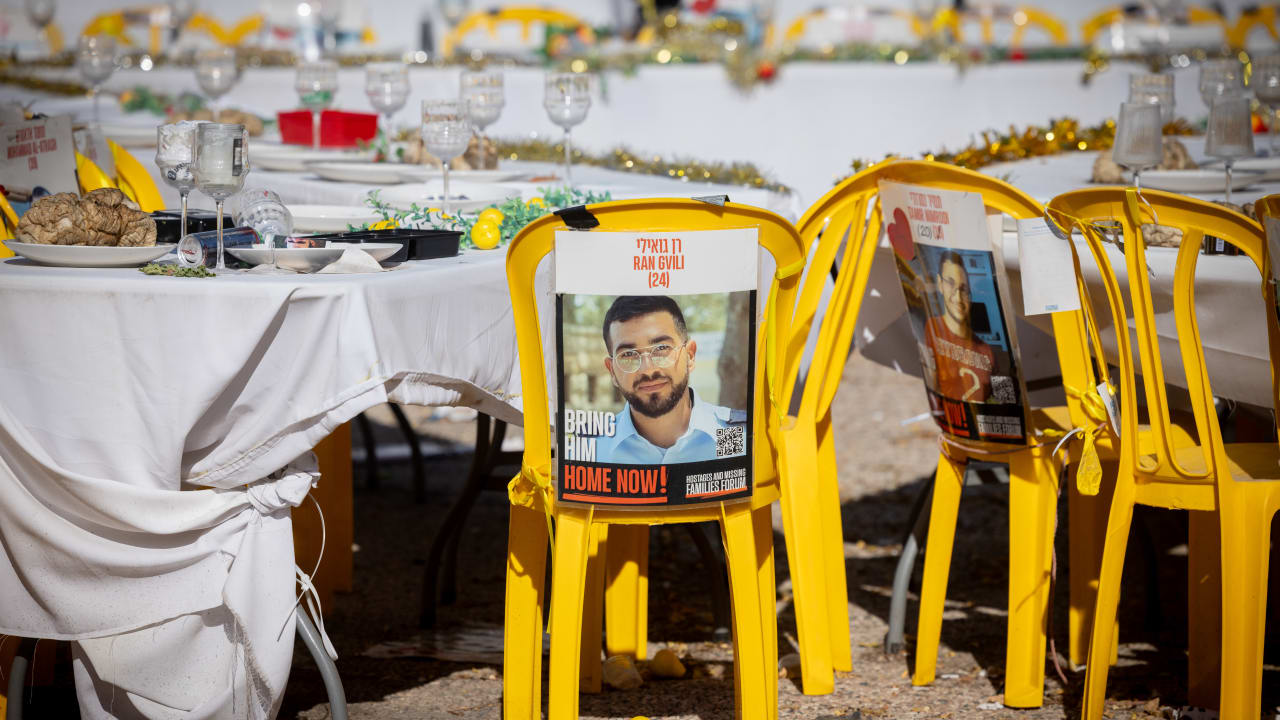
Posters of Ran Gvili, whose body is still being held captive by Hamas in Gaza, seen at Hostage Square in Tel Aviv. December 02, 2025.
(photo credit: MIRIAM ALSTER/FLASH90) 

Israel handed over a list of names of Palestinian Islamic Jihad terrorists with the knowledge of St.-Sgt.-Maj. Israel handed over Ran Gvili’s location to mediators, N12 News reported on Friday.

In addition to the names of terrorists, Israel reportedly handed over a map with locations relevant to the search for Gvili’s remains.

Israel has received several leads about Gvili's burial site over recent weeks, sources familiar with the details told Maariv on Thursday.

Gvili, who was murdered on October 7 and whose body was taken to the Gaza Strip, is the final hostage remaining in the Palestinian territory.

A billboard in Times Square calls for the release of Ran Gvili, the last remaining hostage in Gaza. (Screenshot) (credit: SCREENSHOT/JTA)
Hamas and PIJ "know where Gvili's remains are located, and have the ability to find them. The problem is they are not motivated to do so," a security source told Maariv. "We believe they can put in more effort."

"If Islamic Jihad really wants it, Ran Gvili will be home in a short time," an Israeli source told N12. 

Hamas blames Israel for its failure to return final Gaza hostage

Jerusalem is reportedly confident that the information will help locate Gvili’s remains faster once the weather from Storm Byron fully clears. However, Hamas officials claimed that Israel had already killed the terrorists with knowledge of Gvili’s location, sources in the terror group told Asharq Al-Awsat.

The sources claimed that his remains were likely buried in one of three or four places in the neighborhoods of A-Shuja'iya or A-Zaytoun, east of Gaza City, where searches have already taken place.

Hamas official Khaled Mashal accused the international community of a double standard in a Telegram announcement on Friday, while complaining of delays in enacting the second phase of the US truce agreement. 

“There is a double standard in the international community. They are waiting to see how many Israeli bodies remain, while ignoring the large number of Palestinian victims and missing persons. Furthermore, Israel is concealing the fate of the prisoners it holds.”

Itzik Gvili, the father of Gvili, said at a rally in Tel Aviv on Friday night, “This week's Torah portion is about Jacob, who refused to be comforted because Joseph was alive. I feel the same way. I am Jacob, and for me, Ran is still alive. It is hard for me to accept people saying ‘of blessed memory.’ For me, until I get him back, he is alive. Even though they announced his death, I do not accept it. 

“Just as Ran went to save the people and went to save the country, today the country and the people need to save him, not give up, and keep him in our minds. We, the Gvili family, embrace each and every one of you.” 


Danielle Greyman Kennard

Source: https://www.jpost.com/israel-news/article-880194

Follow Middle East and Terrorism on Twitter