Saturday, January 10, 2026

When Caracas cracked: How the US broke through Venezuela's Iranian, Russian, and Chinese defenses - Anna Ahronheim


​ by Anna Ahronheim

MILITARY AFFAIRS: Venezuela’s military arsenal, sourced from Russia and Iran fail under technologically and operationally superior US attack.


OPERATION ABSOLUTE Resolve offered a harsh real-world test of the military hardware Venezuela had accumulated over the years from Iran, Russia, and China. Here, a Russian-made Venezuelan Air Force Sukhoi Su-30MKV is displayed during the 2025 Venezuela Industrial Aviation Expo at Libertador Air Base
(photo credit: FEDERICO PARRA/AFP via Getty Images)


The overnight US operation that seized Venezuelan President Nicolás Maduro in Caracas this past week will be studied for years as a case of overwhelming technological and operational superiority defeating a heavily armed but brittle defense system.

Operation Absolute Resolve also offered a harsh real-world test of the military hardware Venezuela had accumulated over the years from Iran, Russia, and China – a mix of air defenses, fast boats, drones, and small arms that, in theory, was meant to deter, or at least complicate any foreign intervention.

In practice, though, it did not stop a meticulously planned US strike package backed by cyber operations, electronic warfare, and precision targeting.

US raid break through defenses

According to reports, US special operations forces arrived at Maduro’s compound in downtown Caracas just after 2 a.m. local time, supported by helicopters, fighter jets, and bombers striking air defenses and other targets in the Venezuelan capital and several coastal states. 

Social media was full of videos showing explosions in the capital and large fireballs in the night sky as air defenses attempted to respond.

Employees stand near rubble after a US airstrike destroyed a TV and telephone tower in El Hatillo, on the outskirts of Caracas, Venezuela, January 4, 2026
Employees stand near rubble after a US airstrike destroyed a TV and telephone tower in El Hatillo, on the outskirts of Caracas, Venezuela, January 4, 2026 (credit: REUTERS/Maxwell Briceno)

By the time the raid ended, Maduro and his wife, Cilia Flores, had been captured by the United States and flown out of the country to a US warship, then on to New York City to face a range of federal charges, including narcoterrorism.

“Last night and early today, at my direction, the United States armed forces conducted an extraordinary military operation in the capital of Venezuela. … It was an operation against a heavily fortified military fortress in the heart of  Caracas to bring outlaw dictator Nicolás Maduro to justice,” US President Donald Trump said during a news conference from his Mar-a-Lago residence in Palm Beach, Florida, on Saturday.

Foreign military buildup

For years, Venezuelan officials had portrayed their arsenal, much of it sourced from Moscow and Beijing, with newer additions linked to Tehran, as a shield against exactly this kind of operation. 

As part of a broader defense partnership, Caracas had bought Russian air defense systems, combat aircraft, armored vehicles, and small arms; while China supplied radars, communications gear, and other dual-use technologies. Iran supported Venezuela’s development of unmanned aerial systems like the Mohajer and other asymmetric capabilities.

These systems were marketed domestically as a way to raise the cost of any American intervention and give Venezuela the ability to respond through both conventional and unconventional means.

But the American raid exposed the limits of that approach.

According to US accounts in the media, the operation followed months of preparation that included building a replica of Maduro’s compound and studying his daily habits in detail, a level of mission rehearsal that dramatically reduces the advantage of static defenses.

When the strike commenced, special operations helicopters flew at low altitudes into the heart of Caracas while US jets and bombers hit pre-selected targets, including air defense sites and other key nodes across the capital and three coastal states.

Cyber operators and intelligence agencies disrupted the city’s power supply, plunging large parts of Caracas into darkness and further degrading command and control.

In this combat environment, Venezuelan systems, regardless of origin, faced clear disadvantages. Air defenses that depend on radar and centralized command networks are highly vulnerable to coordinated kinetic and cyber strikes.

Even capable systems can be blinded or suppressed if their sensors are jammed, their power cut, and their nodes attacked simultaneously. Photos shared on social media showed the destruction of various air defense systems, including at least two Russian-made Buk-M2E belonging to Venezuela’s Air Defense Command.

“And then, we saw three nights ago in downtown Caracas in Venezuela, as nearly 200 of our greatest Americans went downtown in Caracas. Seems those Russian air defenses didn’t quite work so well, did they?” Hegseth said during a visit to Newport News Shipyard.

US Air Force Gen. Dan Caine, chairman of the Joint Chiefs of Staff, called it “an audacious operation that only the United States could do.”

“What I witnessed last night was sheer guts and grit, gallantry and glory of the American warrior,” said US Secretary of War Pete Hegseth. “This is about the safety, security, freedom, and prosperity of the American people. This is America first; this is peace through strength – and the United States War Department is proud to help deliver it.”

Iranian drones

According to some reports, one of the UAVs that played a role in the operation was the RQ-170, a low-observable intelligence, surveillance, and reconnaissance drone manufactured by Lockheed Martin’s Advanced Development Programs, or Skunk Works.

In 2011, Iran downed one of them by allegedly using a cyberattack. Tehran then reverse-engineered the technology to produce its own knock-offs of the advanced UAV. But Iranian-linked capabilities, particularly drones and other asymmetric systems, were ill-positioned to play any big role during the American operation.

According to a press release by the US Treasury Department, “Since 2006, Iran and Venezuela have coordinated Iran’s provision of Qods Aviation Industries’ (QAI) Mohajer-series UAVs for Venezuela, which are re-branded in Venezuela as ANSU-series UAVs.”

Iranian Mohajer-6 strike drones, also used by Russia in Ukraine since 2022, were reportedly deployed at the El Libertador airbase near the city of Maracay. The airbase, outside the capital, is also home to the country’s remaining American-made F-16 fighter jets.

These unmanned aerial vehicles (UAVs) – assembled in Venezuela using Iranian designs – are best suited for surveillance, harassment, or extended campaigns against adversaries that have to operate in exposed or predictable ways.

According to the US Army’s Operational Environment Data Integration Network (ODIN) training portal, the Mohajer-6 was Iran’s first drone to enter series production and was first used during the Iran-Iraq war. There have been several variants developed since it was first unveiled.

The Qods Mohajer-6 is a persistent Intelligence Surveillance Target Acquisition and Reconnaissance (ISTAR) UAV capable of carrying a multispectral surveillance payload and/or up to two precision-guided munitions. It has a wingspan of 10 m., a maximum range of 200 km. with an endurance of up to 12 hours, a maximum flight altitude of about 5.5 km., and has a maximum take-off weight of about 600 kg.

However, they are far less useful against a short, concentrated, surprise operation where the attacker controls the timing, tempo, and electronic environment, similar to what took place in Caracas.

Last week, the US government announced sanctions on Venezuela’s Empresa Aeronautica Nacional SA (EANSA), which locally manufactures the Mohajer UAVs and known locally as Arpia or ANSU-100.

Accountability for Iran and Venezuela

“Treasury is holding Iran and Venezuela accountable for their aggressive and reckless proliferation of deadly weapons around the world,” said US Undersecretary of the Treasury for Terrorism and Financial Intelligence (TFI) John K. Hurley.

“We will continue to take swift action to deprive those who enable Iran’s military-industrial complex access to the US financial system,” he clarified.

In his statement, Hurley also said, “Iran’s ongoing provision of conventional weapons to Caracas constitutes a threat to US interests in the Western Hemisphere, including the Homeland, and the United States will use all available measures to prevent this trade.”

While Iran has been selling weaponry to Venezuela for at least two decades, The Jerusalem Post has learnt that Israeli intelligence in the IDF never really dealt with the issue of Iranian weapons transfers to Venezuela.

“That was never part of our operational reality,” one former officer said, but “I wouldn’t be surprised if drones were involved. We’ve already seen Iran export drones to Russia.”

Another senior industry source, who spent decades in the Israeli military, said that Iranian weaponry should not be belittled.

Rising Lion

Operation Absolute Resolve was also a reminder of how Iranian systems were unable to identify and prevent Israeli fighter jets and UAVs from striking deep within the Islamic Republic during the 12-Day War in June, known in Israel as Operation Rising Lion.

Yuval Steinitz, chairman of the board of Rafael Advanced Defense Systems, told the Post in an earlier interview that the war between the two arch-enemies “was a clear demonstration of advanced technology that gave Israel an edge.

“Technology doesn’t only give an advantage, but the utmost supremacy over our enemies,” he said.

“In the first 20 seconds, top Iranian officials were all killed. And within 48 hours, Israel gained complete air supremacy over Iran. While we are a little country, we showed superpower capabilities,” Steinitz explained.

According to a senior defense industry source, in both operations, air superiority allowed troops to carry out quick, successful missions. Both Israel and the US also targeted senior commanders, with the IAF targeting senior military Islamic regime command, while the Americans targeted Maduro.

Neither Israel nor Iran deployed a significant amount of ground troops, and absolutely no traditional battlefield engagements; rather, the war was carried out with long-range ballistic missiles, precision air-to-ground munitions, cyber attacks, unmanned aerial vehicles (UAVs), and more autonomous systems.

“Even when all the signs point to an attack, you can still achieve tactical surprise,” the first senior defense industry source told the Post.

“The goal of an opening strike is to knock the other side off balance for hours or even days, creating the window needed to continue the mission,” said the defense industry source. “Because the Americans had to fly special forces in – on V-22s, and none were fired upon, it’s clear they first secured air superiority, just as Israel did in its opening strikes.”

“The difference is that Israel targeted both air-defense systems and senior military command structures simultaneously. That’s what gave us air superiority for the entire duration of the conflict.

“The Americans didn’t do that here,” the source said. “Washington wanted to minimize damage and preserve the functioning of Venezuelan institutions for the day after. The real question is: Who will govern Venezuela once Maduro is removed? The US didn’t want to dismantle the military, only to conduct a surgical extraction strike against Maduro himself.”

According to the second senior defense industry source, the electronic-warfare and spectrum-dominance aspects were very similar in the two operations, six months apart.

“When you’re flying helicopters and V-22s, you can never be certain every air-defense system is down. You saturate the air with EW to protect your platforms.”

The heavy use of electronic warfare and spectrum dominance provided superiority in limited areas for a limited amount of time. That allowed aerial platforms to fly into hostile environments without too many threats, the second source explained.

Israel, he said, needs to keep investing in air superiority in order to protect warfighters in future battlefields.

Comparing the operation in Caracas and the attack on Iran, the first source explained, “Israel didn’t need helicopters or special-forces insertions. We flew fighter aircraft because we weren’t extracting anyone. The Americans deliberately created localized chaos around Maduro’s removal to reduce friction for their special-forces teams.”

Israel has “operated in extremely dense air-defense environments, relying on EW, spectrum dominance, and exploiting system limitations,” he added, pointing to Russian systems in Syria and other neighboring countries.

Russia and China

According to the source, while there haven’t been many Chinese systems in the Middle East, this will likely change as “Russia doesn’t have the budget or bandwidth to keep supplying Iran. Much of Iran’s air-defense arsenal is based on Russian and Chinese systems, or on Iranian versions cannibalized from them. These systems have been widely proliferated across the Middle East.”

A senior defense industry source said, “In Venezuela, assuming the systems were Russian or Chinese, there were strong EW capabilities, but most were destroyed by American Standoff missiles before they posed any real threat.”

Venezuela is said to have at least two Russian S-300VM long-range surface-to-air missile systems: the S-400, and several Buk-M2E SA-17 medium-range surface-to-air missile systems.

Russian and Chinese platforms suffered from another critical disadvantage – they were embedded in a military that had been hollowed out by years of economic collapse, corruption, and politicization.

Even sophisticated hardware requires rigorous maintenance, training, spare parts, and realistic exercises to remain effective, and in Venezuela’s case, much of the Russian-supplied equipment reportedly suffered from poor readiness and limited pilot and crew proficiency, factors that no amount of foreign hardware can easily fix.

When the US operation began, Venezuelan forces faced simultaneous shocks, loss of power in key areas, attacks on air defenses, the sudden appearance of helicopters over the capital, and strikes across multiple states that would challenge even a well-maintained and well-trained military.

The US side, by contrast, leveraged its advantages in intelligence, surveillance, reconnaissance, cyber capabilities, and precision airpower. Around 150 jets took off from 20 airbases as part of the broader operation, underscoring the scale of the US effort and the intensity of the opening blows against Venezuelan defenses.

In such conditions, individual weapons systems, whether purchased from Russia or China or provided with Iranian assistance, are less decisive than the overall ability of a state to absorb shock, maintain situational awareness, and coordinate a coherent defense.

It would be an oversimplification to say that the foreign-supplied weapons were useless, but they were ultimately ineffective in fulfilling their most important political purpose: protecting the regime and its leadership from forcible removal.

The fact that American forces were able to penetrate deep into Caracas, fly through defenses, reach Maduro’s heavily guarded presidential compound, and extract him by helicopter, all in a few hours in the middle of the night, is the clearest possible measure of their failure in strategic terms.

The operation in South America that took place less than a year after Israel’s Operation Rising Lion and Operation Midnight Hammer that targeted Iran’s nuclear project, also made it clear that the technology so vaunted by the Iranian regime could not match the superiority of Western technologies.

The operation in Caracas underscored a reality that both the United States and Israel demonstrated in their recent campaigns: Modern conflict is decided less by the volume of hardware a state acquires and more by the sophistication, integration, and readiness of the forces that employ it.

For the customers buying weaponry from Iran, Russia, and China, this event is yet another cautionary tale about how their exported systems are subpar when they come up against top-tier adversaries.

Venezuela’s reliance on foreign-supplied systems proved no match for a coordinated, multi-domain assault built on advanced US technologies that fused cyber operations, electronic warfare, and precision airpower, much as Iran’s defenses collapsed under Israel’s technologically driven campaign months earlier.


Anna Ahronheim

Source: https://www.jpost.com/defense-and-tech/article-882802

Follow Middle East and Terrorism on Twitter

Pentagon touts success of Caribbean Sea blockade in deterring 'dark fleet' oil vessels - Misty Severi


​ by Misty Severi

"In the past 24 hours alone, at least seven 'dark fleet' oil vessels have turned around to avoid interdiction—because they know we mean business," Parnell wrote on X.


War Department spokesman Sean Parnell said Friday night that the War Department's blockade in the Caribbean has been effective in deterring “dark fleet” oil vessels in the past 24 hours.

President Donald Trump ordered a "complete and total" blockade of oil tankers moving in and out of Venezuela last month, which has resulted in the seizure of at least five oil tankers.

Parnell said in a social media post that the blockade remains in effect, even after the United States last week extracted Venezuelan President Nicolás Maduro from the country, and that it has been "very effective." 

"In the past 24 hours alone, at least seven 'dark fleet' oil vessels have turned around to avoid interdiction—because they know we mean business," Parnell wrote on X. "The days of letting criminal activity run rampant in our hemisphere are OVER thanks to President Trump and [War] Secretary [Pete] Hegseth. 

"The Department of War, alongside our interagency partners, will hunt down and interdict ALL dark fleet vessels transporting Venezuelan oil at the time and place of our choosing," he added.

Trump previously claimed Venezuela is using "stolen" oil to finance itself and to fund actions including terrorism, human trafficking, murder and kidnapping.


Misty Severi is a news reporter for Just The News. You can follow her on X for more coverage  

Source: https://justthenews.com/government/security/pentagon-touts-success-caribbean-sea-blockade-deterring-dark-fleet-oil-vessels

Follow Middle East and Terrorism on Twitter

Keane warns Iranian regime to take Trump 'dead serious' on protest killing threat amid ongoing demonstrations - Stephanie Samsel


​ by Stephanie Samsel

Retired general says Iran at 'weakest point' in 45 years as anti-regime demonstrations enter second week 


Fox News senior strategic analyst Jack Keane, a retired general, gave a grave assessment of the state of the Iranian regime amid its crackdown on anti-government protests and hinted at what could come next Friday on "Special Report."

"If I was in the Iranian regime, I would take President Trump dead serious here," Keane warned.

On Friday, President Donald Trump warned in a Truth Social post that the U.S. is "locked and loaded and ready to go" if the Iranian regime shoots and kills protesters.

His message comes as anti-regime demonstrations enter their second week and at least 44 protesters have been killed by Iranian security, according to the National Council of Resistance of Iran.

IRAN PROTESTS PROMPT NEW TRUMP WARNING OVER DEADLY GOVERNMENT CRACKDOWNS

Keane declared the Iranian regime is at its "weakest point" in 45 years with "no prospect of recovering."

Noting Trump’s warning under "no uncertain terms," Keane listed other key differences about the anti-regime protests that stood out to him from previous demonstrations in Iran.

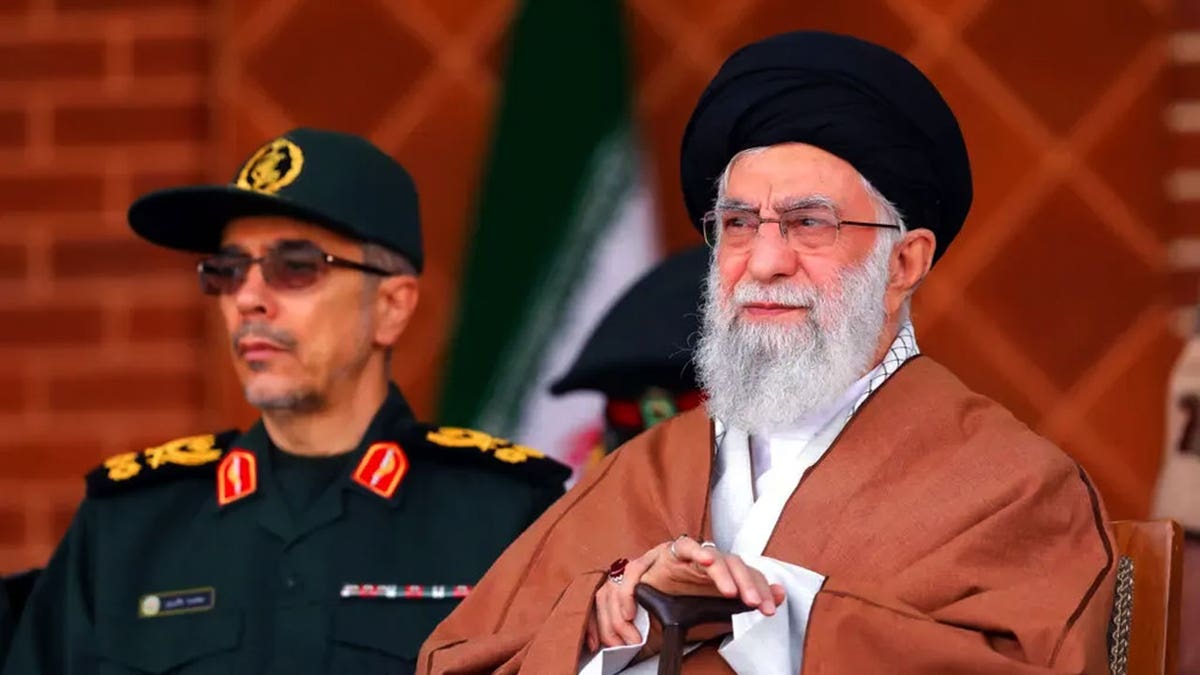
Iran's Supreme Leader, Ayatollah Ali Khamenei

Iran's Supreme Leader, Ayatollah Ali Khamenei sits next to a senior military official in Iran. (Getty Images)

"Politically, [the Iranian regime] can't meet the social and political and economic aspirations of the people. Economically, they're in the tank, to be sure, and with no prospect of recovering," Keane added.

IRANIAN MILITARY LEADER THREATENS PREEMPTIVE ATTACK AFTER TRUMP COMMENTS

"And, militarily, they just lost a war. They've lost their platform in Syria. Their proxies are, by and large, decapitated and almost eliminated, to be sure," he added. "The result of all of that is they are in a fundamentally weak position, and it's serious in terms of the regime."

The retired U.S. Army general connected his assessment of the Iranian regime to civilian protests.

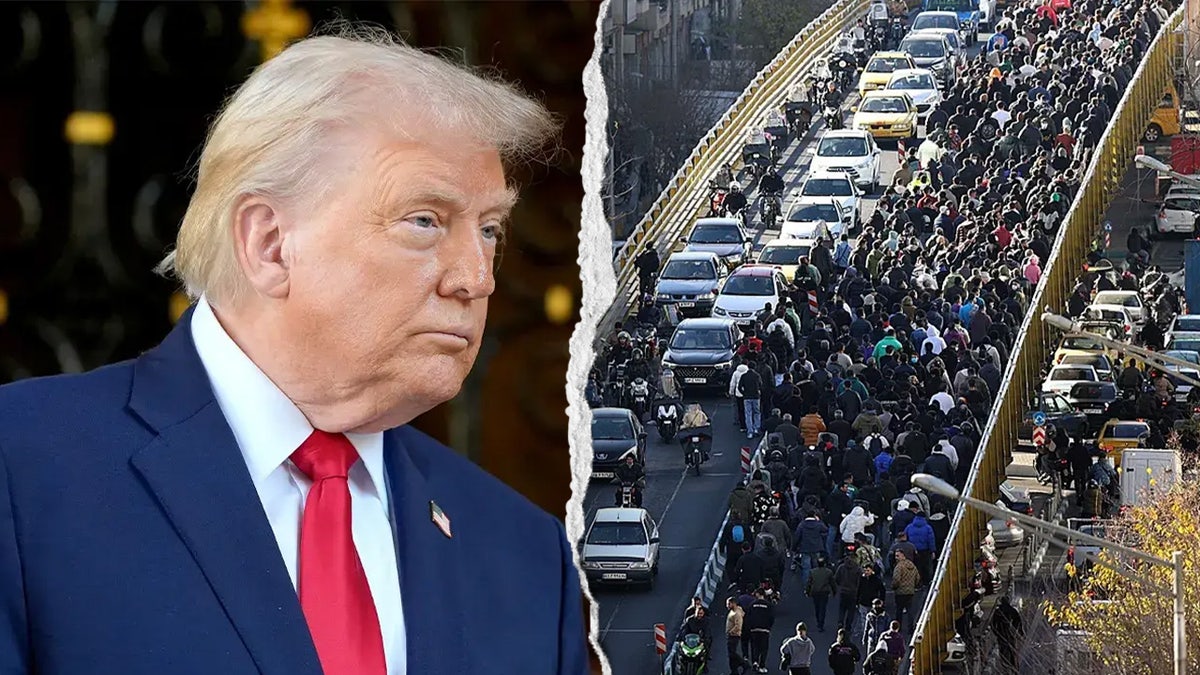
Trump and Iranian protest split

Anti-Iran regime protests grow across the country as the Trump administration boosts demonstrators offering support. (Alex Brandon/AP ; Fars News Agency via AP)

"And when you have that, it also breeds discontent and breaks down trust and unity because people begin to fear about their own survival," he explained.

IRANIAN SUPREME LEADER BLAMES TRUMP FOR INCREASINGLY INTENSE DEMONSTRATIONS

When Fox News anchor Bret Baier asked Keane what he thought about the probability of "some kind of strike" from the U.S. or Israel in support of anti-regime protesters happening soon, he did not offer a definitive answer.

"I think I would take the president serious," he replied. "I have no insight into what they're thinking, but I'm listening to what they are saying. And he's dead serious."

CLICK HERE TO DOWNLOAD THE FOX NEWS APP

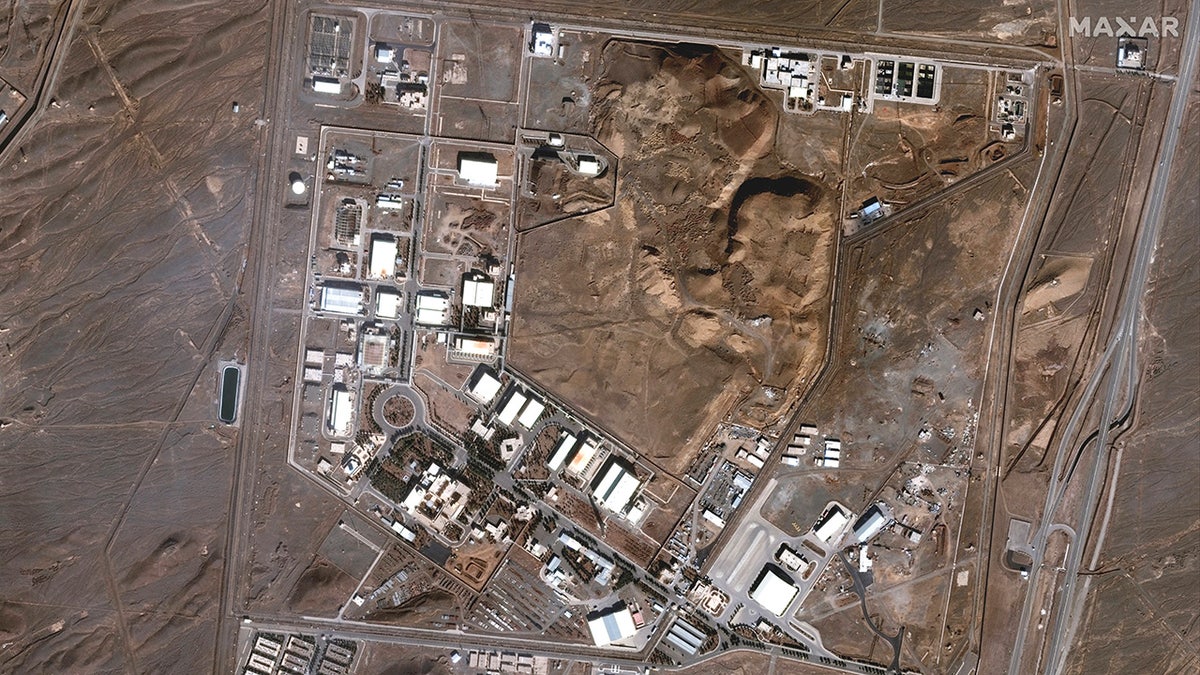
Doubling down on his assertion, Keane appeared to refer to the U.S. military’s obliteration of Iran’s nuclear enrichment sites in 2025.

Image shows the Natanz nuclear facility before it was largely destroyed by Israel.

This satellite image provided by Maxar Technologies shows the Natanz nuclear site in Iran Jan. 24, 2025.  (Maxar Technologies/AP)

"Anybody at this point that doesn’t take President Trump serious when he’s saying something like this, given the last year, is certainly reckless and irresponsible," he stressed.


Stephanie Samsel is a digital production assistant at Fox News Digital. She has previously written for Campus Reform and the Media Research Center, covering political bias in education and entertainment. Follow her on X @StephSamsel.

Source: https://www.foxnews.com/media/keane-warns-iranian-regime-take-trump-dead-serious-protest-killing-threat-amid-ongoing-demonstrations

Follow Middle East and Terrorism on Twitter

Inside the Trump administration’s effort to quickly reach audiences behind media walls in Venezuela, Iran - Andrew Mark Miller


​ by Andrew Mark Miller

Kari Lake, senior advisor for the US Agency for Global Media, spoke to Fox Digital about the hours after the chaos broke out 


FOX NEWS EXCLUSIVE: As protests erupted in Iran and a dramatic U.S. operation unfolded in Venezuela, the U.S. Agency for Global Media (USAGM) moved quickly to push information into some of the world’s most tightly controlled media environments, the agency’s head, Kari Lake, told Fox News Digital in an interview.

In the early morning hours of Jan. 3, reports began to trickle out about a law enforcement operation carried out by the U.S. military to remove Venezuelan dictator Nicolás Maduro, prompting USAGM, the agency responsible for broadcasting U.S. news in areas where press freedom is restricted, to take immediate action. 

"I found out about the situation in Venezuela, the incredible bravery of our service members who extracted Maduro," Lake said. "And the minute I heard about it, I had the team down in Miami that operates our office of Cuba broadcasting on the phone."

Lake described a rapid expansion of coverage, with the agency ramping up broadcasts, expanding language services and surging personnel within hours to reach audiences via Radio Martí and Martí Noticias out of Miami, broadcasting directly into Cuba, Venezuela, and across Latin America.

TRUMP DISCUSSES EXPANSION OF DRUG CARTEL CRACKDOWN, ISSUES GRIM WARNING TO IRAN

Trump alongside pro-Venezuela protesters

Venezuelans living in Peru celebrate near the Venezuelan Embassy in Lima on Jan. 3, 2026, after President Donald Trump (left) announced that U.S. forces captured Venezuelan leader Nicolas Maduro. (Getty Images)

"They were immediately deployed into the newsroom and they started coverage right away, bringing out exactly what was happening," Lake explained. "They were covering it in Spanish to the folks in Cuba, and then we also have affiliates all around the Caribbean. We're taking our broadcast and pushing it in and pumping it in so that more people in Cuba were able to hear it."

"When people in Cuba hear that Maduro has been taken down, it gives them hope that they too can one day have that freedom. What we want to see is the people rising up and saying, we want freedom, we want conditions that are improved. We don't want to live this way any longer. So we've been doing incredible nonstop coverage."

USAGM’s Voice of America carried Trump’s major addresses on Venezuela live while covering the latest developments, congressional reaction, and responses within Venezuela, reaching more than 6.6 million global audience impressions.

IRAN REGIME CUTS NATIONWIDE INTERNET ACCESS AS PROTESTS CLAIM 44 LIVES ACROSS MAJOR CITIES

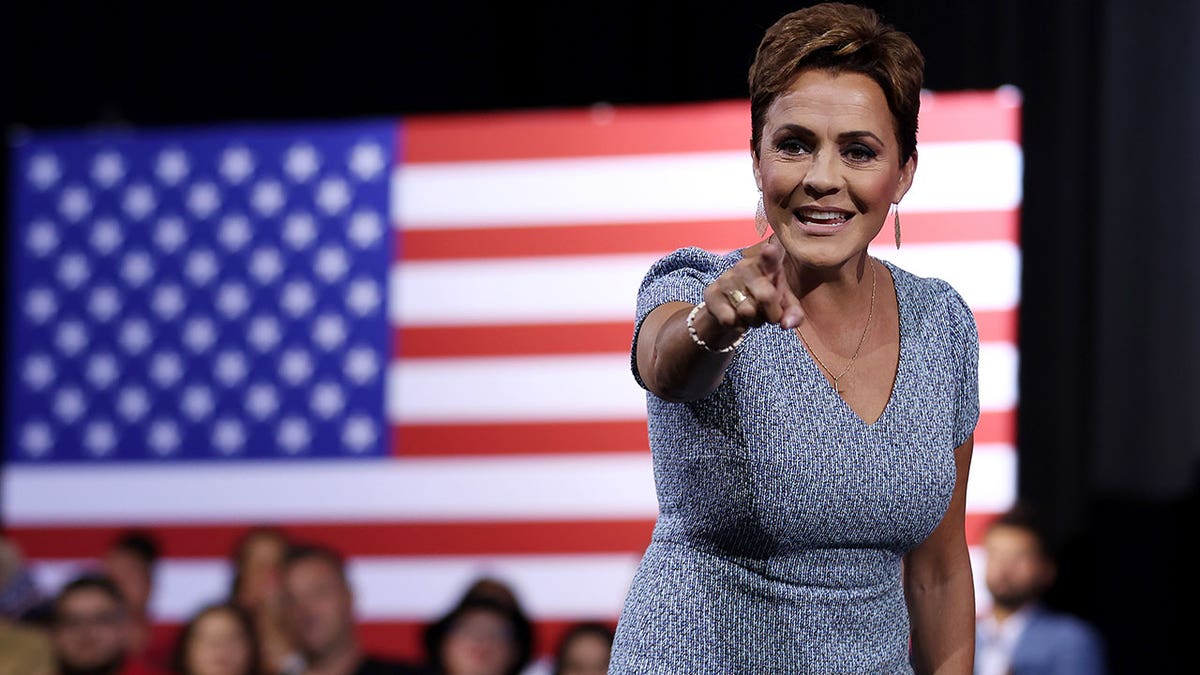
Acting U.S. Agency for Global Media VEP Kari Lake points at the camera with an American flag behind her.

Senior Advisor for the U.S. Agency for Global Media Kari Lake.

Roughly a week before explosions rocked Venezuela during the Maduro extraction, USAGM sprung into action in another global crisis when protests erupted on the streets of Iran as citizens mobilized against the Khomeini regime in one of the world’s most media-restricted regions.

Lake spoke to Fox News Digital about how her team took action in that instance as well and immediately began trying to reach as many Iranians as possible with U.S.-backed coverage.

"Think about the people on the ground in Iran," Lake said. "Iranian people have been subjected to such horrible conditions with a dictator and a regime that has been just cruel for 47 years. They don't get fair media. They don't get honest coverage over there. We've been able to provide them with honest coverage."

"We're working to get more of it in. We're hiring contractors to up our coverage and add more additional hours to coverage. What we're watching on the streets in the country of Iran is historic. The people are rising up saying we don't care anymore. We have to get our freedom back and we're there to do that coverage."

After protests erupted in Iran, the USAGM moved quickly to expand coverage through Voice of America’s Persian-language service, significantly increasing satellite television programming aimed at Iranian audiences. Over the first 12 days of unrest, the service added seven additional hours of live broadcasts, including two hour-long primetime breaking newscasts on Jan. 3 and Jan. 4, while extending its regular evening newscasts from one hour to two as demonstrations spread.

IRANIAN MILITARY LEADER THREATENS PREEMPTIVE ATTACK AFTER TRUMP COMMENTS

Iran protests

Iranian protesters try to take control of two cities in western Iran as nationwide unrest continues, with demonstrators chanting "Death to Khamenei" in the streets. (Getty)

As the unrest continued, VOA’s Persian-language service also ramped up its digital and social media footprint, publishing 52 web stories focused on the protests by Jan. 7. During that same period, the service pushed more than 1,700 pieces of content across six social media platforms, including over 170 user-generated videos sent from inside Iran that showed demonstrations and documented the regime’s crackdown.

The surge in coverage, according to the agency, resulted in a surge in audience engagement in the form of VOA’s Persian website recording a record 1.69 million daily visits on Dec. 28. Over the first 12 days of protests, video views jumped more than 160 percent and article views rose nearly 80 percent, driving a total of roughly 13 million visits to the site during that period representing a 15% increase.

Lake told Fox News Digital that there is overlap between their Iran and Cuba coverage, explaining that they are pumping information about what’s happening in Venezuela to the people of Iran.

"People in Iran are very interested in what happened in Venezuela, and so we're using both our Office of Cuba broadcasting with our Persian Farsi language services, and we're kind of combining forces and making sure that everyone realizes, everybody living under these regimes realizes that the people are rising up all over the world right now."


Venezuelan President Nicolas Maduro

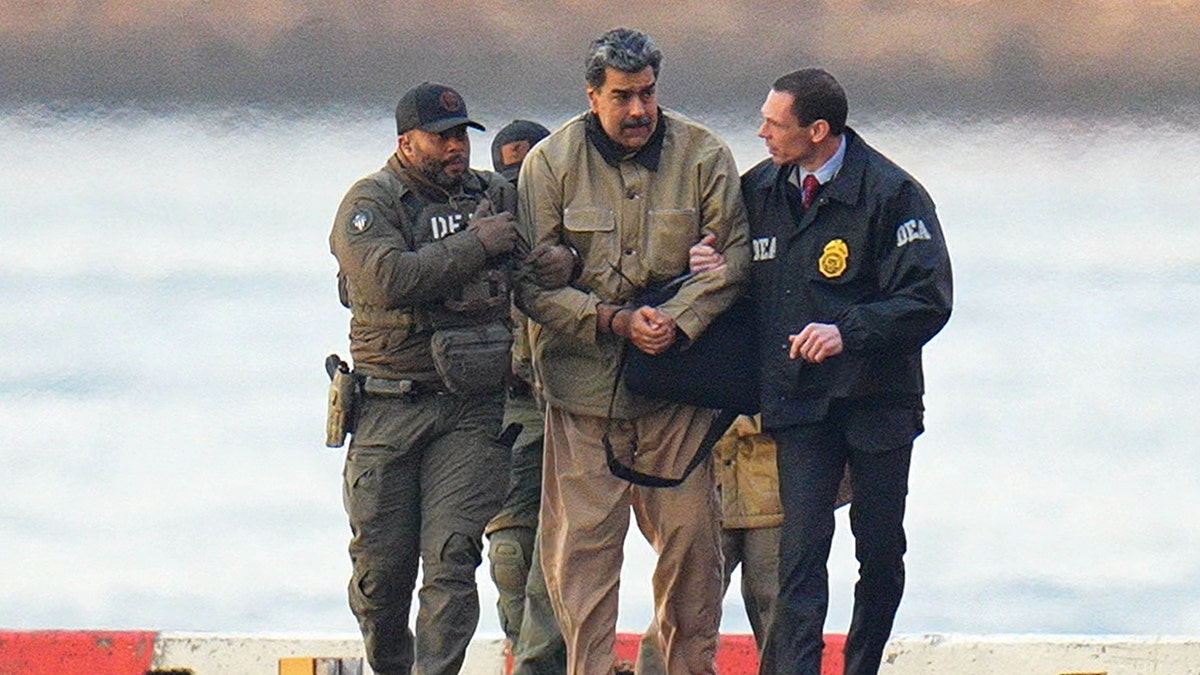
Nicolas Maduro is seen in handcuffs after landing at a Manhattan helipad, escorted by heavily armed Federal agents as they make their way into an armored car en route to a Federal courthouse in Manhattan on Jan. 5, 2026, in New York City. (XNY/Star Max/GC Images via Getty Images)

"This is such a historic moment and the people in Cuba know what's happening in Venezuela. The people in Cuba now know what is happening in Iran and vice versa. Iran realizes what happened in Venezuela and what's happened in Cuba as well. It's amazing. We're at the precipice, I believe, of not only just a peaceful world, but one where the people are free in places where they haven't experienced that lovely feeling of freedom for a long time. I'm happy with the work that we're doing. We're doing it with a smaller staff and it shows that the federal government doesn't have to be bloated, slow-moving dinosaur anymore."

Lake’s reference to the agency no longer being a "dinosaur" stems from her efforts to streamline an agency she says was wasting taxpayer dollars and not delivering a message across the world that was defending America’s interests.

"We came into the agency and I had a very tough job to go in and right-size the agency," Lake explained, telling Fox News Digital that the previous administration's USAGM was inefficient and at times put out messaging that was not "aligned" with the best interests of American foreign policy.

"It was bloated. The president put out an executive order saying, ‘bring this agency down to its statutory minimum,’ which means, go back to what is statutorily required and not more than that. Get rid of the bloat and just do what's statutorily required and we were able to do that, and our detractors sued us and said, oh, you'll never be able to cover the news. What happens if a big story breaks?"

"Well, I worked in the media for 30 years," Lake said. "I know that when a big story breaks, you ramp up coverage and that's exactly what we've done."


Andrew Mark Miller is a reporter at Fox News. Find him on Twitter @andymarkmiller and email tips to AndrewMark.Miller@Fox.com.

Source: https://www.foxnews.com/politics/inside-trump-administrations-effort-quickly-reach-audiences-behind-media-walls-venezuela-iran

Follow Middle East and Terrorism on Twitter

Iranian doctors say hundreds killed in protests, hospitals in Tehran enter crisis mode - Tobias Holcman


​ by Tobias Holcman

Both TIME Magazine and the BBC reported hundreds of protesters killed in Iran, with several hospitals in Tehran entering crisis mode due to an overflow of wounded patients.


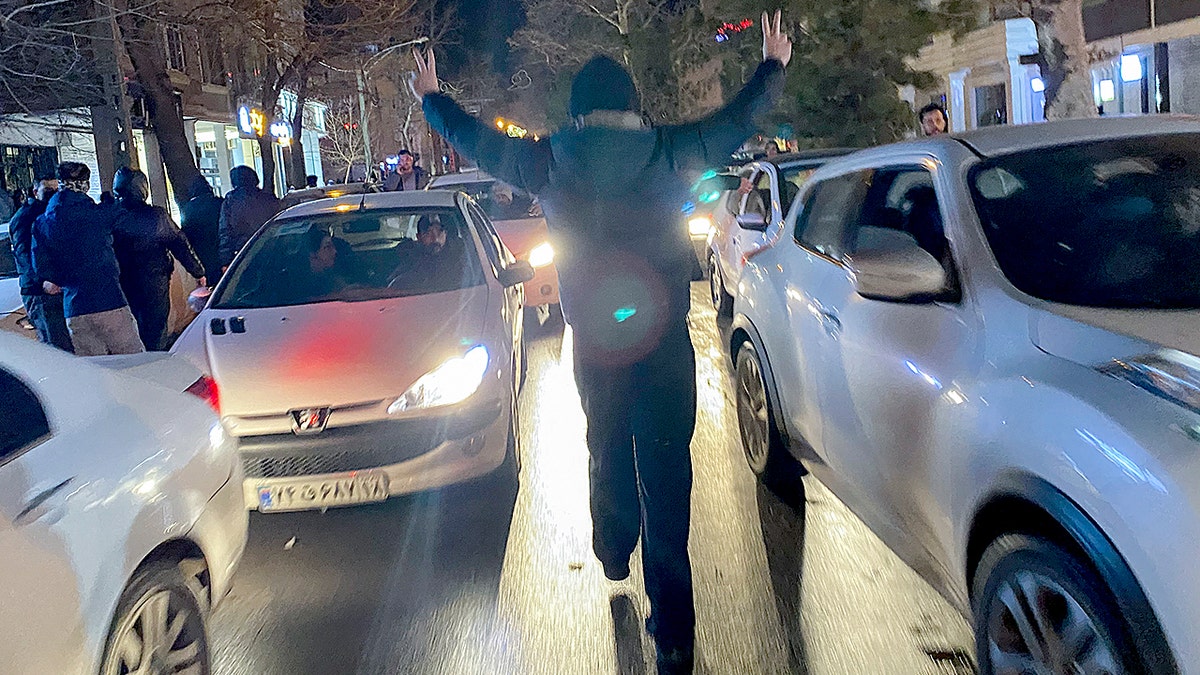
Iranians gather while blocking a street during a protest in Kermanshah, Iran on January 8, 2026.
(photo credit: Kamran / Middle East Images / AFP via Getty Images)


Hundreds of people were reportedly killed during the ongoing protests in Iran, according to Iranian doctors reporting from the country to TIME Magazine and the BBC.

The TIME report mentioned that a doctor from Tehran, who spoke on condition of anonymity, stated that Iranian hospitals have recorded some  217 protesters killed since the protests began two weeks ago.

According to the doctor, most of the victims were killed by live ammunition, and authorities are removing the deceased from the hospitals.

The BBC report assured that two other doctors reported critical situations in the Iranian capital, with hospitals going into crisis mode and not enough surgeons to cope with the influx of patients.

The first doctor, who contacted the BBC via the Starlink satellite internet service, said that Farabi Hospital, Tehran's main eye treatment center, was overwhelmed with wounded patients and had gone into crisis mode.

Protesters gather as vehicles burn, amid evolving anti-government unrest, in Tehran, Iran, in this screen grab obtained from a social media video released on January 9, 2026.
Protesters gather as vehicles burn, amid evolving anti-government unrest, in Tehran, Iran, in this screen grab obtained from a social media video released on January 9, 2026. (credit: Social Media/via REUTERS)

Another medic from a hospital in the south-west city of Shiraz told the BBC on Thursday that a large number of people were brought into the hospital, many of them with gunshot wounds, and that the hospital didn't have enough manpower to treat everyone.

The TIME report also mentioned that one of the deadliest events was recorded on Friday night, after at least 30 people were killed outside a northern Tehran police station when security forces sprayed machine gun fire at protesters.

Neither TIME nor the BBC confirmed that it was able to verify the reports, mainly due to the total internet blackout imposed in Iran by the Islamic Republic regime. 

The Iranian army vowed in a Saturday statement to safeguard the country's national interests, strategic infrastructure, and public property, amid widespread anti-government protests, Reuters reported.

Reuters also reported that the Islamic Revolutionary Guard Corps (IRGC), the Islamic Republic's main paramilitary force, warned that "safeguarding the revolution's archivements and the country's security is a red line."

Crown Prince Pahlavi calls for two more days of protests

After his last message urging protesters to gather on Thursday and Friday nights in several cities, the Iranian Crown Prince Reza Pahlavi called for two more days of protests to pursue "the revolution's victory."

“I ask all of you today and tomorrow, Saturday and Sunday (January 10 and 11), this time, from 6 p.m., to come to the streets with flags, images, and national symbols and claim public spaces as your own,” the statement read.

“Our goal is no longer merely to come to the streets; the goal is to prepare for seizing the centers of cities and holding them.”

Pahlavi also urged US President Donald Trump to "be prepared to intervene to help the people of Iran" in light of the escalating protests and the internet blackout imposed by the Ayatollah's regime.

Shoshana Baker contributed to this report.


Tobias Holcman

Source: https://www.jpost.com/middle-east/iran-news/article-882883

Follow Middle East and Terrorism on Twitter

Thank You President Trump for Bravely Standing with the Iranian and Venezuelan People, and for Freedom and Peace - Majid Rafizadeh


​ by Majid Rafizadeh

What distinguishes Trump's position is not rhetoric, but resolve. For years, Western leaders have issued statements of "concern" while avoiding any action that might inconvenience their diplomatic calculations or economic interests. President Trump broke from that spinelessness.


  • President Donald J. Trump has emerged as the first leader to stand decisively, openly, and courageously with the Iranian people themselves — against the dictatorship, against repression, and in favor of genuine freedom, democracy and peace.

  • What distinguishes Trump's position is not rhetoric, but resolve. For years, Western leaders have issued statements of "concern" while avoiding any action that might inconvenience their diplomatic calculations or economic interests. President Trump broke from that spinelessness.

  • More importantly, Trump sent a direct warning to the Iranian regime: if it continues to kill innocent protesters, he will "rescue" them: the United States will not stand idly by. This is the opposite of a call for war; it is deterrence in the service of peace -- a warning designed to prevent bloodshed, signaling to all violent regimes that massacres will not be tolerated or ignored.

  • Thank you, President Trump, for standing with the oppressed, for choosing people over tyrants, and for reminding the world that peace is not achieved by silence in the face of evil, but by courage in defense of individual freedom. May the Iranian, Venezuelan, Gazan and Cuban people -- and others held hostage by cutthroat leaders -- achieve their long-denied dream of freedom, democracy, and peace. God bless you, President Trump.

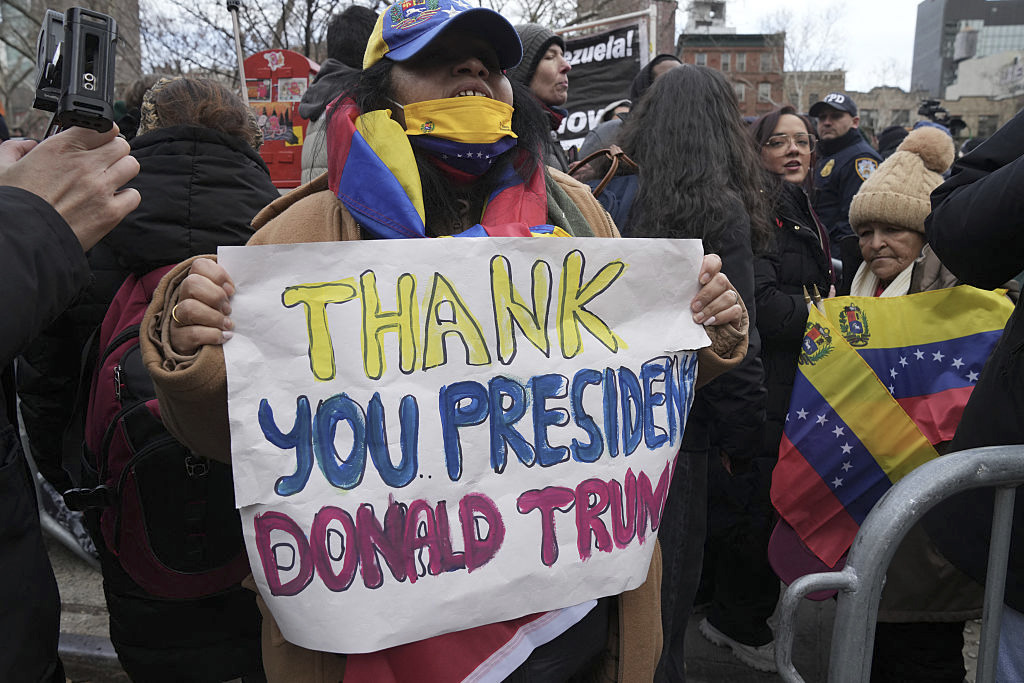
Pictured: A demonstrator outside the Daniel Patrick Moynihan United States Courthouse after ousted Venezuelan president Nicolas Maduro attended his arraignment hearing on January 5, 2026 in New York. (Photo by Bryan R. Smith/AFP via Getty Images)

Over the past decade, the Iranian people have turned out again and again against one of the most entrenched and brutal dictatorships in the modern world. From students and workers to women, minorities, and the urban poor, Iranians have poured into the streets demanding dignity, freedom, and a government that represents them rather than ruling them through fear.

These uprisings have been nationwide, sustained and extraordinarily courageous, often carried out in the face of live ammunition, mass arrests, torture and executions. Yet despite the clarity of the Iranian people's demands and the scale of the regime's violence, no European country, no self-described democratic power, and no U.S. administration claiming to champion freedom and human rights has ever stood with them in a meaningful way -- until now.

President Donald J. Trump has emerged as the first leader to stand decisively, openly, and courageously with the Iranian people themselves — against the dictatorship, against repression, and in favor of genuine freedom, democracy and peace.

What distinguishes Trump's position is not rhetoric, but resolve. For years, Western leaders have issued statements of "concern" while avoiding any action that might inconvenience their diplomatic calculations or economic interests. Trump broke from that spinelessness. He made it unmistakably clear that in Iran, the United States stands with the oppressed Iranian people, not with the ruling clerics who have hijacked the country.

More importantly, Trump sent a direct warning to the Iranian regime: if it continues to kill innocent protesters, he will "rescue" them: the United States will not stand idly by. This is the opposite of a call for war; it is deterrence in the service of peace -- a warning designed to prevent bloodshed, signaling to all violent regimes that massacres will not be tolerated or ignored.

This posture represents a moral clarity long absent from international politics. In theory, the United Nations exists explicitly to prevent mass atrocities of civilians through principles such as the "Responsibility to Protect." In practice, the UN has repeatedly failed. When thousands of civilians in Iran and Venezuela were murdered in confrontations with repressive regimes, and thousands of civilians in Ukraine and Israel killed by hostile foreign powers, the international response amounted to little more than press releases and closed-door meetings. No protection was offered, no accountability imposed, and no deterrence established. Trump, by contrast, has stepped into the vacuum left by international institutions. By warning regimes directly, he assumed the role that the global community has refused to play: defending civilians against states that wage war on their own population.

Previous U.S. administrations, during earlier nationwide protests, particularly under the Obama administration, when Iranians desperately looked to the United States for moral leadership, many Iranians openly asked whether President Barack Obama stood with them or with the ruling clerics. The response they received was silence. The administration's priority at the time was negotiating a bogus nuclear agreement and lifting sanctions to enable Iran's nuclear build-up, even if that meant overlooking the bloodshed in Iran's streets. Human rights were subordinated to diplomacy, and the Iranian people were treated as an inconvenience rather than as central actors in their own struggle for freedom. European governments, eager to preserve trade ties and economic engagement while turning a blind eye to repression, followed a similar path. The message to Iranians was that commercial interests mattered more than their lives.

Trump reversed that message. He did not wait weeks or months, or balance his words to appease Iran's regime. He stood immediately and unambiguously with the Iranian people from the very first days of unrest. Speed matters. For protesters risking everything, early international support means the difference between hope and despair. No leader in recent history has responded so directly or forcefully to the Iranian people. For the first time, they heard a powerful voice from the outside saying, clearly and without ambiguity: you are not alone.

Now, if Europe and other Western democracies truly believe in freedom, human rights, and the rule of law, they need to prove it when it is costly, not only when it is convenient. Issuing generic statements while maintaining business as usual with Tehran exposes the most repulsive hypocrisy. The Iranian people see this clearly. European governments need to decide whether they will stand with a people demanding freedom or continue prioritizing trade deals with a regime that survives through torture, repression and mass-executions.

The Iranian regime's survival strategy is brutally consistent. Whenever protests erupt, it responds with overwhelming force. Security services fire on crowds, conduct mass arrests, extract forced confessions, and use torture to instill fear. The year 2025 saw the hangings of more than 1,500 Iranians. The objective is not merely to suppress a particular protest, but to crush the very idea of resistance. That is why words alone are insufficient. A credible deterrent is essential. A clear military warning -- with follow-through -- that mass killings will trigger consequences, can save lives by forcing the regime to reconsider the cost of violence. Such a warning does not escalate conflict; it restrains it by telling regimes that there is a line they cannot cross.

Equally refreshing is Trump's response to communications. One of any brutal regime's most effective tools is its ability to shut down the internet during moments of unrest. By cutting their citizens off from one another and from the outside world, these regimes create an environment in which abuses can occur unseen and unchallenged. Access to the internet in moments like these is a lifeline. It allows protesters to organize, to document atrocities, and to alert the world in real time. Any serious commitment to freedom must include concrete efforts to keep communication channels open.

Supporting democratic change in Iran, Venezuela and elsewhere is a strategic necessity for the West. Many current regimes that pose as friends but are secretly hostile to Western interests -- such as Qatar, Turkey and Pakistan -- actively support terrorists, undermine regional stability, and quietly align themselves with other authoritarian powers against democratic nations. A free and representative Iran, Venezuela, Cuba and Gaza would serve as stabilizing forces in the Middle East, the Western Hemisphere and beyond. Helping people there achieve the governments they seek is an investment in long-term peace and security, not a risk to it.

Trump's stance toward the Iranian and Venezuelan people reveals great leadership in moments of moral clarity. By standing openly with those demanding freedom, by warning violent regimes against killing their own citizens, and by refusing to hide behind empty diplomatic language, he is demonstrating the courage that everyone else lacked. This is what it means to be a true advocate of peace — not one who merely speaks about it, but one who acts to prevent injustice and bloodshed. For that, the Iranian and Venezuelan people have been heard: history will take note.

Thank you, President Trump, for standing with the oppressed, for choosing people over tyrants, and for reminding the world that peace is not achieved by silence in the face of evil, but by courage in defense of individual freedom. May the Iranian, Venezuelan, Gazan and Cuban people -- and others held hostage by cutthroat leaders -- achieve their long-denied dream of freedom, democracy, and peace. God bless you, President Trump.


Dr. Majid Rafizadeh is a political scientist, Harvard-educated analyst, and board member of Harvard International Review. He has authored several books on the US foreign policy. He can be reached at dr.rafizadeh@post.harvard.edu

Source: https://www.gatestoneinstitute.org/22185/trump-iranian-venezuela

Follow Middle East and Terrorism on Twitter

Iran opposition figure says victory is ‘very near’ as protests spread, urges Trump to get involved - Nicholas Ballasy


​ by Nicholas Ballasy

"You have proven and I know you are a man of peace and a man of your word. Please be prepared to intervene to help the people of Iran," he wrote on X


Reza Pahlavi, the exiled son of Iran’s last monarch, issued an urgent appeal on social media calling on U.S. President Donald Trump to provide support as nationwide protests against the Islamic Republic’s leadership continue across Iran.

There have been at least 65 deaths during the protests, according to reports from inside Iran. 

In a message posted on the social platform X, Pahlavi described the situation in Iran as “urgent,” highlighting a recent nationwide internet and communications blackout and what he said were threats of violent repression from the Iranian regime. 

He asked President Trump to be prepared to “intervene to help the people of Iran,” but he did not specify what form that support should take. 

"You have proven and I know you are a man of peace and a man of your word. Please be prepared to intervene to help the people of Iran," he wrote on X on Friday.

Pahlavi’s comments come amid widespread demonstrations that began in late December and have spread to all of Iran's provinces.

The protests, initially triggered by economic grievances, have reportedly expanded to include other political demands. 

Pahlavi said he is "preparing to return to the homeland so that at the time of our national revolution's victory, I can be beside you, the great nation of Iran." 

"I believe that day is very near," he also said. 
 
Trump addressed the situation in Iran on Friday.

"We're watching the situation very carefully. I've made this statement very strongly that if they start killing people like they have in the past, we will get involved," he said. "And that doesn't mean boots on the ground, but it means hitting them very, very hard where it hurts." 


Nicholas Ballasy

Source: https://justthenews.com/world/middle-east/iran-opposition-figure-says-victory-very-near-protests-spread-urges-trump-get

Follow Middle East and Terrorism on Twitter

The Digital Services Act: A Mechanism of Mass Censorship - Drieu Godefridi


​ by Drieu Godefridi

The US House Judiciary Committee has denounced this system as one of "organized censorship," in which the EU effectively "arms" NGOs to compel American technology companies to remove content that is lawful in the United States but deemed "problematic" in Europe.


  • According to critics, this framework [the European Union's Digital Services Act (DSA)] effectively forces American platforms to act as "speech police" on behalf of the EU, under the constant threat of severe sanctions. In doing so, the DSA produces extraterritorial effects that extend well beyond Europe. This point is crucial: any American user of X, for instance, can be sanctioned by X for expressing opinions on the platform. In practice, the DSA is thus applied to all Americans. This requirement constitutes a clear instance of the normative imperialism that has characterized the EU for the past 20 years.

  • The only conceivable technical alternative would be the creation of separate platforms — an X-USA and an X-EU — which would amount to a denial of the very idea of a global network and of the internet itself.

  • The US House Judiciary Committee has denounced this system as one of "organized censorship," in which the EU effectively "arms" NGOs to compel American technology companies to remove content that is lawful in the United States but deemed "problematic" in Europe.

  • Fines could reach up to 6% of a company's global turnover, amounting to potentially billions of euros for firms such as Meta or Google. In cases of non-cooperation, platforms even face the possibility of a temporary ban within the EU.

  • This environment of stringent enforcement strongly encourages platforms to over-moderate content in order to minimize regulatory risk, leading to the removal of content that is perfectly legal. We are speaking here of approximately eight million posts deleted per month in the European Union, not including complete bans, such as those imposed on Russian media outlets.

  • Illegal content is treated as the top priority. Defined by the EU and national legislation, it includes hate speech (such as incitement to violence based on race or religion), terrorist content, child sexual exploitation material, counterfeit goods, and dangerous products.... Yet the central problem remains: "hate" itself is never defined in law.

  • It must be stressed that disinformation itself is not illegal. The DSA therefore mandates the active censorship of content that is lawful -- but merely displeasing to the European Princes and their legions of censors.

  • American freedom of speech cannot survive a "Big Brother" DSA.

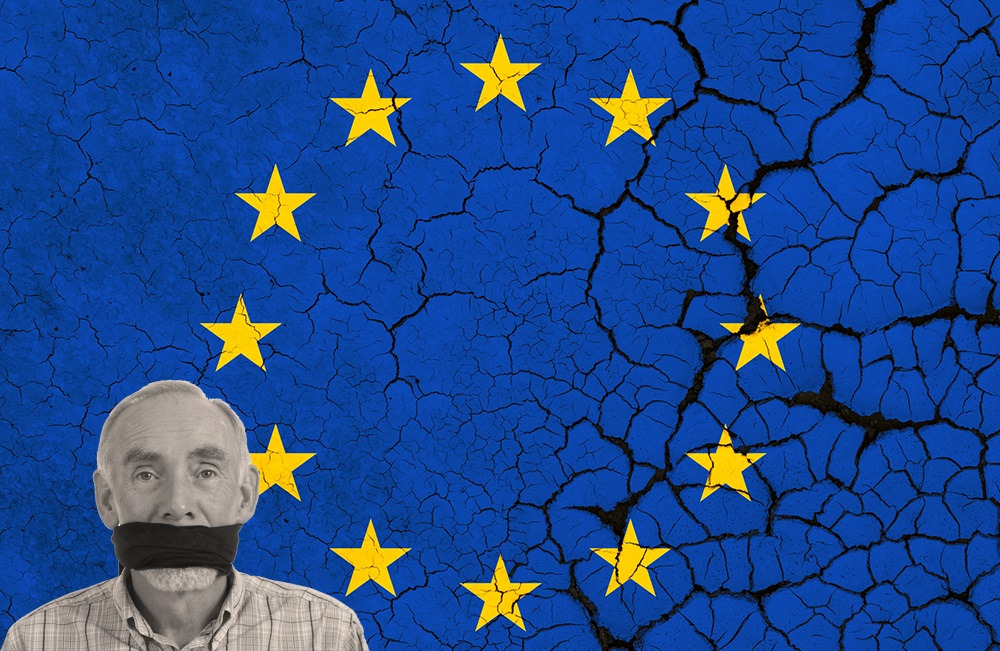
According to critics, the European Union's Digital Services Act (DSA) effectively forces American platforms to act as "speech police" on behalf of the EU, under the constant threat of severe sanctions. In doing so, the DSA produces extraterritorial effects that extend well beyond Europe. This point is crucial: any American user of X, for instance, can be sanctioned by X for expressing opinions on the platform. (Images source: iStock)

The Digital Services Act (DSA), adopted by the European Union in 2022 and fully applicable since February 2024 to "very large online platforms" (VLOPs) such as X, Facebook, TikTok, and Google, is not officially presented as an instrument of "organized censorship." Formally, it is purported to be a regulatory framework intended to govern digital services in order to protect users from illegal content, systemic risks, and opaque platform practices.

However, a growing number of critics — particularly in the United States, including Elon Musk and several Republican members of Congress — describe the DSA as a mechanism of mass censorship. In their view, it imposes heavy bureaucratic oversight on freedom of expression and enables selective repression of dissenting opinions.

From the outset, it must be emphasized that the DSA applies to all digital intermediaries (platforms, hosting providers, and related services), albeit with obligations that intensify significantly for VLOPs, which are defined as platforms with more than 45 million monthly users in the EU.

Who censors? (The actors involved)

Censorship—rebranded as "moderation" — is not exercised first by the European Union or by national governments. Instead, it is delegated to the platforms themselves, under strict regulatory supervision from national administrative authorities. The result is a decentralized but highly regulated system, which critics describe as a bureaucratic "industrialization of moderation."

Digital platforms constitute the primary enforcers. They are required to actively moderate content and, for VLOPs formally designated by the European Commission, the obligations are particularly onerous. These platforms must conduct assessments of "systemic risks," such as the dissemination of disinformation -- and implement proactive measures, including detection algorithms and large teams of human moderators. Platforms with fewer than 45 million monthly users in the EU are subject to lighter requirements, but must nonetheless respond to users' reports.

According to critics, this framework effectively forces American platforms to act as "speech police" on behalf of the EU, under the constant threat of severe sanctions. In doing so, the DSA produces extraterritorial effects that extend well beyond Europe. This point is crucial: any American user of X, for instance, can be sanctioned by X for expressing opinions on the platform. In practice, the DSA is thus applied to all Americans. This requirement constitutes a clear instance of the normative imperialism that has characterized the EU for the past 20 years.

The only conceivable technical alternative would be the creation of separate platforms — an X-USA and an X-EU — which would amount to a denial of the very idea of a global network and of the internet itself. As a result, platforms are structurally compelled to apply the DSA not only to European users, but also to Americans and, ultimately, to users worldwide.

The European Commission acts as the central supervisor for VLOPs. It ensures compliance by launching investigations, demanding access to data, and imposing fines. In December 2025, for example, it imposed a €120 million fine on X for an alleged lack of transparency in moderation practices, particularly concerning "blue checkmarks" -- alleged verifications of authenticity -- which were accused of potentially promoting disinformation. This enforcement model raises serious concerns regarding the separation of powers: the European Commission designs and enacts the DSA, and then proceeds to enforce it itself.

In addition, the EU designates "trusted flaggers" — typically NGOs — whose alerts must be treated as a priority by platforms. The official list of trusted flaggers includes organizations identified as left-wing or far-left, such as HateAid in Germany and UNIA in Belgium.

Each EU member state also appoints a national Digital Services Coordinator (DSC)—for example, ARCOM in France or BNetzA in Germany — to supervise non-VLOP platforms and coordinate with the EU. These authorities handle local complaints and impose sanctions. The result is a decentralized enforcement network in which the most restrictive countries, notably Germany and France, exert disproportionate influence through their radical national laws on "hate speech." This dynamic leads to a downward harmonization of freedom of expression across the entire European Union: content flagged in one country is effectively flagged for the entire EU.

Finally, any individual may report content through the "notice-and-action" mechanism. Trusted flaggers, accredited by the DSCs, enjoy privileged status: their reports are prioritized and frequently result in rapid removals of any content they deem questionable or inaccurate. Recently, the United States went so far as to ban entry into the country for five Europeans—including former European Commissioner Thierry Breton and several activists — for their role in exerting pressure on American online platforms.

In short, American social media platforms form the first line of censorship, but they operate within a clear chain of command emanating from the EU and European national governments, which impose transparency quotas, audits, and permanent oversight.

The US House Judiciary Committee has denounced this system as one of "organized censorship," in which the EU effectively "arms" NGOs to compel American technology companies to remove content that is lawful in the United States but deemed "problematic" in Europe.

How does it work? (The mechanisms)

The DSA establishes a highly structured process that its critics describe as industrial in nature, mass-producing content moderation in the manner of a bureaucratic assembly line.

First, the notice-and-action mechanism allows any individual to report allegedly illegal content. Platforms are required to review such reports "promptly," often within 24 to 48 hours in emergency situations. If the content is deemed illegal, removal is mandatory. For VLOPs, automated tools — artificial intelligence and algorithmic detection systems — are also used to scan content.

Second, VLOPs are subject to mandatory systemic risk assessments. These platforms must conduct annual audits addressing risks such as misinformation, harm to mental health or threats to democratic processes, and must propose mitigation measures, such as deprioritizing suspect viral posts. For example, TikTok, after a DSA investigation into risks posed to minors, was required to remove features considered "addictive." The European Commission may at any time demand access to internal data and launch formal investigations, as it has done with X regarding advertising practices and the presence of bots.

Third, platforms are subject to extensive transparency obligations. They must provide a statement of reasons for every content removal (Article 17 of the DSA), publish semi-annual moderation reports — such as the figure of 41.4 million pieces of content removed in Europe between January and June 2025 — and offer internal and external mechanisms for appeals, including mediation and judicial review. In practice, however, these reports are opaque and appeal procedures are slow, which strongly incentivizes preventive censorship.

The EU and national DSCs also conduct investigations, including techniques such as "mystery shopping" to test compliance, as in the case of alleged sales of illegal products on e-commerce platforms such as Temu. Fines could reach up to 6% of a company's global turnover, amounting to potentially billions of euros for firms such as Meta or Google. In cases of non-cooperation, platforms even face the possibility of a temporary ban within the EU.

This environment of stringent enforcement strongly encourages platforms to over-moderate content in order to minimize regulatory risk, leading to the removal of content that is perfectly legal. We are speaking here of approximately eight million posts deleted per month in the European Union, not including complete bans, such as those imposed on Russian media outlets.

Based on what criteria? (The foundations of "moderation")

The criteria underpinning content moderation are neither uniform nor clearly defined. Instead, they rely on existing EU and national laws, rendering the system vague and highly susceptible to abuse. Terms such as "hate" are never precisely defined, allowing for expansive and discretionary interpretation.

Illegal content is treated as the top priority. Defined by the EU and national legislation, it includes hate speech (such as incitement to violence based on race or religion), terrorist content, child sexual exploitation material, counterfeit goods, and dangerous products. For example, investigations have targeted Temu for selling toxic toys or so-called "pedophile dolls."

Yet the central problem remains: "hate" itself is never defined in law. Labeling a politician as a right-wing extremist, for instance, could arguably be considered hateful, yet such expressions are never targeted by the DSA or its enforcement apparatus. By contrast, establishing potential links between Islamic immigration and anti-Semitism or political violence is routinely classified as "hateful."

In reality, "hate" has no coherent legal meaning and serves primarily as a pretext for censoring opinions that deviate from left-wing orthodoxy. In the United States, "A state may not forbid speech advocating the use of force or unlawful conduct unless this advocacy is directed to inciting or producing imminent lawless action and is likely to incite or produce such action." Speech is protected by the First Amendment.

A second category concerns "systemic risks," applicable only to VLOPs. This is the most elastic and dangerous category, encompassing harm to minors through addictive or violent content, and what is broadly labeled as "disinformation." Examples of disinformation include allegedly false information about elections or public health, and algorithmic manipulation. Such content is not necessarily illegal but is considered "harmful" if amplified, leading to measures such as deprioritization of posts about COVID-19 or vaccines deemed false.

It must be stressed that disinformation itself is not illegal. The DSA therefore mandates the active censorship of content that is lawful -- but merely displeasing to the European Princes and their legions of censors.

In 2025, one hundred free speech experts warned that the DSA would lead to a "dislocation" of global free speech.

American freedom of speech cannot survive a "Big Brother" DSA.


Drieu Godefridi is a jurist (University Saint-Louis, University of Louvain), philosopher (University Saint-Louis, University of Louvain) and PhD in legal theory (Paris IV-Sorbonne). He is an entrepreneur, CEO of a European private education group and director of PAN Medias Group. He is the author of The Green Reich (2020).

Source: https://www.gatestoneinstitute.org/22180/digital-services-act-censorship

Follow Middle East and Terrorism on Twitter