Saturday, December 27, 2025

Trump launches 'powerful and deadly' strikes on ISIS in Nigeria for the killings of Christians - Just the News Staff


by Just the News Staff

The Christmas night airstrikes in northwest Nigeria are targeting ISIS militants he accused of “viciously killing” innocent Christians. He said there will be “many more if the slaughter of Christians continues.”


President Donald Trump announced on Truth Social that the U.S. had launched Christmas night airstrikes in northwest Nigeria targeting ISIS militants he accused of “viciously killing” innocent Christians. He said there will be “many more if the slaughter of Christians continues.” 

“Tonight, at my direction as Commander in Chief, the United States launched a powerful and deadly strike against ISIS Terrorist Scum in Northwest Nigeria, who have been targeting and viciously killing, primarily, innocent Christians, at levels not seen for many years, and even Centuries!,” the post reads. 

“I have previously warned these Terrorists that if they did not stop the slaughtering of Christians, there would be hell to pay, and tonight, there was. The Department of War executed numerous perfect strikes, as only the United States is capable of doing. Under my leadership, our Country will not allow Radical Islamic Terrorism to prosper. May God Bless our Military, and MERRY CHRISTMAS to all, including the dead Terrorists, of which there will be many more if their slaughter of Christians continues.” 


Just the News Staff

Source: https://justthenews.com/world/africa/trump-launches-powerful-and-deadly-strikes-isis-nigeria-killings-christians

Follow Middle East and Terrorism on Twitter

How Iran's Sanctions-Evasions and Willing Support Retinue Keep It Alive - Majid Rafizadeh


by Majid Rafizadeh

Iran's continued oil exports depend on countries that are prepared to ignore sanctions, interpret them loosely, or exploit enforcement gaps. The central role in this system is played by China, which purchases large volumes of discounted Iranian oil, assuring China of a steady flow of oil and Iran of a steady flow of cash. So long as demand exists, Iran will try to find ways to supply it.


  • The regime has learned that sanctions are only as effective as their implementation. Over time, the regime has institutionalized sanctions evasion, embedding it into state policy and delegating it to the Islamic Revolutionary Guard Corps (IRGC) and affiliated economic networks. This has turned evasion from an improvised response into a permanent survival machine.

  • Iran's continued oil exports depend on countries that are prepared to ignore sanctions, interpret them loosely, or exploit enforcement gaps. The central role in this system is played by China, which purchases large volumes of discounted Iranian oil, assuring China of a steady flow of oil and Iran of a steady flow of cash. So long as demand exists, Iran will try to find ways to supply it.

  • Grounding Iranian airlines would sever a key logistical lifeline for sanctions evasion and regional influence. This requires sanctioning not only Iranian carriers but also foreign companies and governments that provide aircraft parts, maintenance, insurance, fuel, and airport services. Without these inputs, Iran's aviation network cannot function.

  • Equally important is imposing consequences on countries and companies that enable Iran's oil exports. Sanctions must extend beyond Iranian entities to include buyers, refiners, shippers, insurers, and financial institutions that knowingly facilitate these transactions. Enforcement must be multinational, leaving no safe jurisdiction for intermediaries. If oil-sanctions evasion becomes costly and risky for buyers and service-providers, Iran's primary revenue source will shrink dramatically.

  • As long as the Iranian regime can evade sanctions, it will continue to strengthen and project power. Sanctions that are porous cannot seriously weaken the regime. To truly constrain Iran, the focus must shift to stopping the mechanisms that allow it to freely operate — its aviation network, oil exports, front companies, and all the regime partners that obligingly enable it.

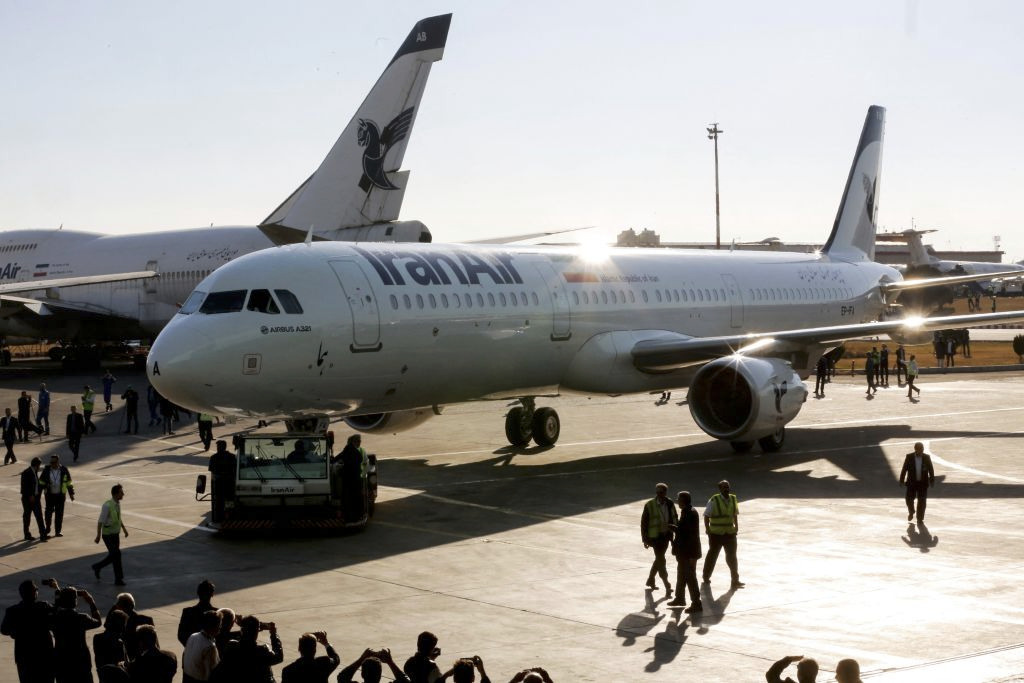
Iran's aviation sector is not merely civilian infrastructure but a strategic tool used to sustain the regime politically, economically, and militarily. Iranian airlines allow Tehran to move money, equipment, personnel, and goods across borders while bypassing traditional trade channels that are heavily sanctioned. Pictured: A new Airbus A321 airliner arrives at Tehran's Mehrabad International Airport during the delivery of a batch of planes to the Iranian state airline Iran Air, on January 12, 2017. (Photo by Atta Kenare/AFP via Getty Images)

No matter how many sanctions are imposed on the Islamic Republic of Iran, its regime continues to survive, adapt and expand its influence. This endurance is not the result of economic strength or internal legitimacy, but of a carefully constructed system designed to evade restrictions, exploit loopholes, and rely on foreign actors willing to ignore or undermine international enforcement.

As long as the Iranian regime can breathe through these openings, sanctions alone will not weaken it; instead, the regime will continue to fund repression at home, empower militant proxies abroad, and project dominance across the region.

At the heart of Iran's sanctions survival strategy is a clear understanding of global enforcement limits. The regime has learned that sanctions are only as effective as their implementation. Over time, the regime has institutionalized sanctions evasion, embedding it into state policy and delegating it to the Islamic Revolutionary Guard Corps (IRGC) and affiliated economic networks. This has turned evasion from an improvised response into a permanent survival machine.

Iran's aviation sector is not merely civilian infrastructure but a strategic tool used to sustain the regime politically, economically, and militarily. Iranian airlines allow Tehran to move money, equipment, personnel, and goods across borders while bypassing traditional trade channels that are heavily sanctioned. Iran exploits gaps in international oversight to keep its fleets operating despite restrictions on aircraft sales, spare parts, insurance, and maintenance.

Iranian airlines also function through a web of front companies, falsified registrations, and indirect procurement networks. Aircraft parts and services that should be blocked under sanctions are often acquired through third parties, shell corporations, or intermediaries operating in countries with weak oversight or political sympathy toward Tehran.

Aviation is, in addition, crucial to Iran's external alliances, particularly with sanctioned or anti-Western regimes; Flights to countries such as Venezuela exemplify how Iran uses air routes not simply for commerce but for strategic cooperation among isolated states. These routes provide channels for the exchange of goods, expertise, and financial arrangements that, under sanctions, would otherwise be impossible. By maintaining these aviation links, the Iranian regime ensures that isolation is never absolute and that alternative geopolitical ecosystems remain open.

Beyond aviation, oil exports remain the single most critical source of income for Iran's regime. Even though sanctions are explicitly designed to cut off this revenue stream, Iran has repeatedly demonstrated that, without full global compliance, oil embargoes are only partially effective. Tehran has constructed a shadow oil economy that relies on concealment, mislabeling, ship-to-ship transfers, and complex logistics networks that disguise the true origin of its crude. Tankers, to obscure accountability, may sail with transponders turned off, change names and flags, or transfer oil at sea.

These practices succeed only because Iran has willing buyers. Iran's continued oil exports depend on countries that are prepared to ignore sanctions, interpret them loosely, or exploit enforcement gaps. The central role in this system is played by China, which purchases large volumes of discounted Iranian oil, assuring China of a steady flow of oil and Iran of a steady flow of cash. So long as demand exists, Iran will try to find ways to supply it.

Iran has also increasingly coordinated with other sanctioned or semi-isolated states, including Venezuela, to exchange crude oil, refine products, or share logistical infrastructure. In this parallel economic system, sanctioned regimes support one another, reducing the impact of Western pressure, undermining the value of sanctions as a deterrent and normalizing defiance of international norms.

Another core element of Iran's survival strategy is its extensive use of front companies and shell corporations, designed to conceal ownership, disguise transactions, and create plausible deniability for businesses and governments that interact with Iranian interests. Front companies often appear as legitimate trading firms, logistics providers, or financial intermediaries, but in reality are controlled directly or indirectly by the Iranian state or the IRGC. Through these structures -- frequently based in jurisdictions that offer secrecy, lax regulation, or political reluctance to confront Iran -- the regime conducts trade, secures financing, and moves money across borders with reduced visibility.

Iran's aviation industry uses similar corporate networks, which are instrumental in weapons smuggling and military procurement. Dual-use goods, missile components, drone technology, and conventional weapons are acquired through civilian trade channels that mask their final destination. Iran's ability to arm its proxies depends on these covert supply chains. They blur the line between economic activity and military logistics and enable the flow of weapons and technology.

To stop this cycle, sanctions enforcement must shift from symbolic -- fictitious -- pressure to the systematic suffocation of the Iranian regime. One of the most urgent steps is to focus aggressively on Iran's aviation sector. Grounding Iranian airlines would sever a key logistical lifeline for sanctions evasion and regional influence. This requires sanctioning not only Iranian carriers but also foreign companies and governments that provide aircraft parts, maintenance, insurance, fuel, and airport services. Without these inputs, Iran's aviation network cannot function.

Equally important is imposing consequences on countries and companies that enable Iran's oil exports. Sanctions must extend beyond Iranian entities to include buyers, refiners, shippers, insurers, and financial institutions that knowingly facilitate these transactions. Enforcement must be multinational, leaving no safe jurisdiction for intermediaries. If oil-sanctions evasion becomes costly and risky for buyers and service-providers, Iran's primary revenue source will shrink dramatically.

As long as the Iranian regime can evade sanctions, it will continue to strengthen and project power. Sanctions that are porous cannot seriously weaken the regime. To truly constrain Iran, the focus must shift to stopping the mechanisms that allow it to freely operate — its aviation network, oil exports, front companies, and all the regime partners that obligingly enable it.


Dr. Majid Rafizadeh is a political scientist, Harvard-educated analyst, and board member of Harvard International Review. He has authored several books on the US foreign policy. He can be reached at dr.rafizadeh@post.harvard.edu

Source: https://www.gatestoneinstitute.org/22150/iran-sanctions-evasion

Follow Middle East and Terrorism on Twitter

Sharaa's Syria stands at political impasse as Aleppo violence reflects deep divisions - Jonathan Spyer


by Jonathan Spyer

BEHIND THE LINES: The Turkish foreign minister said, “We see that the SDF has no real intention of making significant progress in the negotiations on integration with the Damascus administration.”


CLASHES IN the north Syrian city of Aleppo left two civilians dead this week, after fighters associated with the Syrian National Army fired on the Kurdish-majority neighborhoods of Sheikh Maksoud and Ashrafiyeh, according to sources close to the Kurdish-led Syrian Democratic Forces.
(photo credit: Mahmoud Hassano/Reuters)


Clashes in the north Syrian city of Aleppo left two civilians dead this week. They broke out after fighters associated with the Turkish-backed Syrian National Army (SNA) fired on the Kurdish majority neighborhoods of Sheikh Maksoud and Ashrafiyeh, according to sources close to the Kurdish-led Syrian Democratic Forces (SDF).

The Asayish, the SDF’s internal security force, which is deployed in the two neighborhoods, responded to the fire. For its part, SANA, the official Syrian government news agency, asserted that the SDF had initiated the exchanges. 

The clashes immediately followed a visit by Turkish foreign minister Hakan Fidan to Damascus, where he met with his Syrian counterpart, Assad Shibani. In the course of the visit, Fidan harshly criticized the SDF for its failure to rapidly integrate into the armed forces of the government of Syrian President Ahmed al-Sharaa. 

At a joint press conference with Shibani, the Turkish foreign minister said, “We see that the SDF has no real intention of making significant progress in the negotiations on integration with the Damascus administration.”

He added that “the fact that the SDF carries out some of its activities in coordination with Israel currently represents a major obstacle in the discussions being held with Damascus.” 

Soldiers from the Syrian Democratic Forces stand in front of the detainees before the first exchange operation between the Syrian Democratic Forces and the Syrian government in Aleppo, Syria, April 3, 2025. (credit: REUTERS/MAHMOUD HASSANO)
There is no evidence of any relationship of coordination between the SDF and Israel. The claim is made, fairly obviously, with the intention of seeking to delegitimize the SDF in the Syrian context, where contacts with Israel remain a taboo. 

But the Turkish foreign minister’s comments were instructive in that they indicated Turkey’s continued focus on the Syrian issue – and in particular Ankara’s ambition to bring about the reunification of the country under centralized rule from Damascus.

Syria integration stalls as year-end deadline looms

Turkey continues to regard the US-aligned SDF as indistinguishable from the Kurdish Workers Party (PKK), which Ankara designates as a terrorist organization. 

An agreement has been in place since March 10 this year, which establishes the ambition that the SDF should integrate into the new armed forces of the Syrian Transitional Government. But negotiations intended to finalize the details of integration have failed to produce an agreement.

A deadline for agreeing on a plan for the integration of the SDF was set for the end of this year. But with talks stalled, there appears to be no prospect of it being met. 

The deadlock comes despite claims earlier this year that a breakthrough was imminent. According to reporting at that time, an agreement according to which the SDF would join the New Syrian Army to form a separate division, comprising three brigades which would be deployed in the current area of SDF control, was close to being agreed.

Since Sharaa’s visit to the US, however, no further progress has been made. A senior SDF official, Aldar Khalil, interviewed by al-Monitor website on November 28, said:

“We then understood that before going to Washington, they wanted to create an image that things are moving so that when President Trump asked them, they could respond, ‘Things are moving.’ They are trying to buy time, and they refuse to sign a document listing any of the terms they say they have agreed to. We want signatures.”

Neither this week’s clashes nor the stalling of the negotiations should come as a surprise. The impasse between the Syrian National Government and the SDF reflects the diametrically opposed nature of their respective projects. 

The Damascus government wants a unitary, centralized, declaredly Arab Syria, as is laid out in Sharaa’s constitutional declaration of March 13. According to this document, Islam will form the country’s official religion and be its main source of legislation. 

The SDF, meanwhile, a secular force, favors a decentralized system while maintaining freedom of religious worship in the 30% of Syria under their control. The issue of women’s rights and representation forms a central element. 

It is difficult to see two such entities successfully coexisting, let alone merging by consensus into a single unit. Rather, the natural state of affairs between these two authorities would be a kind of zero-sum game, in which the advancement of the one must surely be contrary to the will and the interests of the other.

Behind the declarations of peaceful intentions, this is precisely the dynamic that prevails.

Sharaa and the HTS began the year with a very strong hand. Having achieved a swift and relatively bloodless seizure of power, the new Syrian president met with Trump in May and appeared to be rapidly on the way to consolidating his rule over the entirety of the country. 

At that time, many analysts predicted that the US partnership with the SDF, forged during the war against ISIS, belonged to an earlier period and would soon be terminated.

According to this view, the remaining US forces in Syria would soon be redeployed, as the new government extended its authority across the country. A number of events, however, have taken place in the course of the year, which have served to impede this process. 

Firstly, three episodes of bloody ethno-sectarian violence have occurred. In February, it was directed against the Alawi population in the western coastal area, and then in May – and on a much larger scale in July – against the Druze in the south. 

The involvement of elements of the new government’s security forces in sectarian massacres, and the apparent intention of Damascus to re-badge some notorious jihadi leaders as commanders in the new armed forces, have slowed enthusiasm for the new authorities.

The UK, for example, this week announced sanctions against two pro-government militia leaders implicated in the violence this year – Mohammed al-Jasim and Saif Boulad ‘Abu Bakr.’ Both men are currently registered as commanders in the New Syrian Army, commanding divisions 62 and 76, respectively. 

The recent killings of three US service personnel by a member of the new government’s security forces while deployed with the latter in the Palmyra area have further led to skepticism. 

None of this shows any signs of bringing about a major change in the American-and-Western outlook toward the government in Syria. But it does add a layer of ambiguity. This, in turn, increases the disinclination on the part of the SDF toward relinquishing any hard power capacity to Damascus, given recent events, along with a growing hope that such concessions may not be necessary. 

Ultimately, everything depends on the stance of the United States. The forces available to Damascus are currently not strong enough to issue a general challenge to the SDF. The Turks, meanwhile, their foreign minister’s harsh words notwithstanding, cannot undertake any military operation without at least a tacit nod from the US.

Given the presence of US forces in the SDF-controlled area, the continued partnership of the US with the SDF against ISIS, and, not least, the presence of tens of thousands of ISIS prisoners in SDF-managed detention facilities, such approval is unlikely to be imminent.

The stance of the US in the period ahead remains unpredictable. For now, at least, further localized clashes between Damascus’s forces and those of the SDF seem likely. In the longer term, the likelihood that the current Islamist authorities in Damascus will fail to bring about stability and ordered government looks set to play to the SDF’s advantage. 


Jonathan Spyer

Source: https://www.jpost.com/middle-east/article-881418

Follow Middle East and Terrorism on Twitter

Russian missile and drone strike hits Kyiv ahead of key Ukraine-U.S. talks - Nicholas Ballasy


by Nicholas Ballasy

The overnight assault targeted multiple districts across Kyiv, including residential areas and critical energy infrastructure, Ukrainian officials say


Russian forces launched a large-scale barrage of missiles and drones against Ukraine’s capital early Saturday, killing at least one civilian and injuring dozens as explosions rocked the city for hours just one day before high-level talks between Ukraine and the United States. 

The overnight assault targeted multiple districts across Kyiv, including residential areas and critical energy infrastructure, Ukrainian officials said. Emergency crews responded to fires and collapsed buildings, with more than 20 people reported wounded, among them children, and extensive damage to power and heating systems amid freezing winter conditions, AP News reported.

Ukraine’s leadership condemned the attack as a stark reminder of Russia’s campaign of pressure on civilian life, even as diplomatic efforts continue. President Volodymyr Zelenskyy accused Moscow of choosing violence over dialogue, while noting that talks with U.S. counterparts were scheduled to begin Saturday in Florida to discuss security guarantees, territorial disputes and a proposed peace framework, according to AP News.

The Russian Defense Ministry described the operation as a “massive strike,” saying it involved long-range precision weapons, including hypersonic Kinzhal missiles, and claimed it targeted military-industrial facilities and infrastructure used by Ukrainian armed forces. 


Nicholas Ballasy

Source: https://justthenews.com/world/russian-missile-and-drone-strike-hits-kyiv-ahead-key-ukraine-us-talks

Follow Middle East and Terrorism on Twitter

Judge orders California to stop hiding gender transitions from parents, disclose parental rights - Greg Piper


by Greg Piper

President George W. Bush nominee questions Democratic attorney general's competence as a lawyer, given his arguments. SCOTUS considering petitions from Florida to Maine to review school districts' parental exclusion policies.


California often portrays itself as leading the nation on important liberal policy issues, from authorizing same-sex marriage over the will of voters to utilizing its massive population to set de facto national environmental standards that are stricter than federal policies.

Now it's getting dragged into teeing up a national standard for public schools' obligations to employees and parents when it comes to students expressing "gender incongruence" on campus, thanks to a two-and-a-half-year-old class action lawsuit and petitions to the Supreme Court to review similar policies in MassachusettsFlorida and just this week Maine.

U.S. District Judge Roger Benitez, repeatedly slurred by name by Democratic Gov. Gavin Newsom for other rulings, granted summary judgment to parents and teachers against the state's so-called gender secrecy policies, which allegedly conceal from parents their children's gender identity at odds with sex, including by muzzling employees.

The President George W. Bush nominee approved their motion for a class-wide permanent injunction, two months after certifying a class and four subclasses and a month after threatening to sanction officials for "misleading" Benitez by falsely claiming the state was no longer enforcing gender-secrecy policies so that he would moot the case.

He has consistently ruled against the Golden State, citing the "significant, adverse, life-long social-emotional health consequences" that can flow from social transitioning in denying motions to dismiss nearly a year ago.

The injunction applies to Attorney General Rob Bonta, State Superintendent Tony Thurmond and State Board of Education members, prohibiting them from using the state constitution, statutes, "regulations or guidance" or the "newly produced PRISM cultural competency training" to mislead parents about their children's "gender presentation at school."

It also bans them from using children's preferred names and gender pronouns that "do not match the child’s legal name and natal pronouns" when the parent "has communicated their objection to such use."

Finally, the injunction stops state officials from overriding an "employee’s conscientious or religious objection" to using students' preferred names and pronouns "while concealing that social gender transition" from parents, and from interfering when employees seek to tell parents that their children have "manifested a form of gender incongruity." 

Benitez also ordered officials to put a parental-rights statement in a "prominent place" on any "state-created or approved instruction on the gender-related rights of student and faculty," including PRISM materials.

It says they have a "federal constitutional right to be informed if their public school student child expresses gender incongruence" and that teachers and staff have the same right to "accurately inform" parents of this. These federal rights overrule state and local laws, regulations and policies "to the contrary," the statement concludes.

Bonta botched his "legal constructs" by arguing that the plaintiffs are asking California to "magnanimously permit a sort of federal constitutional exemption," Benitez wrote, paraphrasing Bonta's argument. Rather, they seek to force the state to "respect their enduring federal constitutional rights as citizens of the United States," the judge said.

"California’s education policymakers may be experts on primary and secondary education but they would not receive top grades as students of Constitutional Law," Benitez said, implying that by defending "an unwarranted aggrandizing of a student’s state-created right to privacy," Bonta had raised doubts about his own competence as a lawyer.

Bonta's office has already filed an appeal with the 9th U.S. Circuit Court of Appeals and "will also be requesting that the Ninth Circuit stay the district court’s injunction pending that appeal," a spokesperson for the office wrote in an email.

"We are committed to securing school environments that allow transgender students to safely participate as their authentic selves while recognizing the important role that parents play in students’ lives," the spokesperson said.

The California Department of Education, which Thurmond leads, declined to comment on "pending litigation" when asked for its response to the ruling, the injunction's conditions and the reasoning of Benitez. 

"This victory is not just ours," teachers Elizabeth Mirabelli and Lori Ann West, the original plaintiffs, said in a statement distributed by their lawyers at the Thomas More Society. "It is a win for honesty, transparency, and the fundamental rights of teachers and parents."

Subsequent plaintiffs, teachers and parents, used pseudonyms due to the "severe harassment and retaliation" faced by Mirabelli and West, TMS said. "They never sought to be the face of this fight, yet their courage has transformed the lives of families and educators not only in California but perhaps the entire country," Executive Vice President Peter Breen said. 

Special counsel Paul Jonna warned that state and local officials who continue to enforce the policies, as California allegedly did by moving the requirements to the secret PRISM training from a public FAQ page after it got sued, will "face severe legal consequences."

The Liberty Justice Center praised the ruling for "its clarity and its rejection of the state’s framing" and cited its own work to "stop this model in California before it spreads nationally" and "reestablish durable constitutional limits on the role of the state in family life."

Bonta missed the legal deadline to appeal a ruling for LJC's client, Chino Valley Unified School District, that upheld the constitutionality of its parental notification policy when students request to change their official or unofficial school records. Chino Valley is now suing to block California's AB 1955, which claims "existing law" prohibits parental notification.

Schools have 'no personal investment in a student’s health'

The thorough record produced in the California challenge could help SCOTUS in deciding whether to accept any of a number of petitions to review school district policies that allegedly give students veto power over their parents knowing how they present at school.

The most recent was filed Monday by the Goldwater Institute on behalf of Amber Lavigne, who alleged her gender-confused 13-year-old's Maine school district socially transitioned the girl behind Lavigne's back, even giving the girl a chest binder to flatten her breasts, despite a written policy explicitly requiring parental involvement.

While Lavigne alleged "either there was an unwritten de facto policy that school employees followed" or that the district "has now made the withholding of information the de facto policy" by defending employees who transitioned the girl, the 1st U.S. Circuit Court of Appeals dismissed the suit on the grounds that there were "obvious alternative explanations."

That deepens a 5-3 split in the federal appeals courts over whether courts can rely on a "probable alternative explanation" to dismiss a case for failure to plausibly allege a violation, or can only dismiss "if the plaintiff’s explanation is itself implausible," the petition says.

Lavigne also asks SCOTUS to answer a deeper question: "Whether a parent’s fundamental constitutional rights include the right to be notified when public schools affirmatively recognize and facilitate a child’s gender transition." (The 1st Circuit had no GOP-appointed active judges until last month, making it a magnet for litigation against President Trump's policies.)

The answer for Benitez was an unequivocal "yes" in the California case.

Parents have a right to "gender information" based on the 14th Amendment's substantive due process clause and First Amendment's free exercise clause, he said. Religious teachers have a right to "provide gender information" to parents under free exercise, and all teachers to "communicate accurate gender information" under the free speech clause, he said.

"Long before Horace Mann advocated in the 1840’s for a system of common schools and compulsory education, parents have carried out their rights and responsibility to direct the general and medical care and religious upbringing of their child," deemed a "principle of general applicability" in this year's parental rights precedent Mahmoud, the opinion stated.

While teachers historically "informed parents of physical injuries or questions about a student’s health and well-being" and are legally obligated to do so, as when a sexual assault occurs at school, "California state policymakers apparently do not trust parents to do the right thing for their child" when the issue is gender identity, Benitez wrote.

State officials wrongly portray parents as "the harassers from whom students need to be protected" when they express gender incongruence, and unlike parents, "have no personal investment in a student’s health" and "will not be exposed to a lifetime of a student’s mental health issues" stemming from their "gender nonconfirmity," he said.

Benitez said even the state's expert witnesses agree that "four of the five probable outcomes will be positive" if parents are "informed early on (as is their right) after a student says or dresses in a way that suggests a non-conforming gender identity," and that even the fifth outcome — parental disagreement — "is a valid reaction."

He gave particular weight to the testimony of transgender child psychologist Erica Anderson, who frequently collaborates with LJC on briefs and said hiding social transitions from parents is "a grave mistake" because, in Anderson's clinical experience, it leads to "a rupture and serious problems with the child."


Greg Piper

Source: https://justthenews.com/politics-policy/education/judge-orders-california-stop-hiding-gender-transitions-parents-disclose

Follow Middle East and Terrorism on Twitter

Ex-War Department official warns terrorists may one day aerosolize fentanyl, praises Trump move - John Solomon


by John Solomon

Former WMD official David Lasseter noted that Russian security forces in 2002 accidentally killed 130 hostages during a Chechen terrorism incident when they pumped a gaseous form of fentanyl into a theater hoping to anesthetize the terrorists. The formula was too strong and was lethal to many.


The booming illicit fentanyl trade has made deadly opioid ingredients far more accessible around the globe, greatly increasing the risk that a terror group or rogue state actor will one day try to aerosolize the drug to create mass casualties, a former top Department of War official told Just the News

Former Deputy Assistant Secretary of Defense for Countering Weapons of Mass Destruction David F. Lasseter, praised President Donald Trump's declaration this month of fentanyl as a weapon of mass destruction, saying it would create powerful new tools to fight the current drug cartels' scourge that has killed hundreds of thousands of Americans, and would equip U.S. security agencies to counter future efforts to create an aerosolized fentanyl weapon that could kill millions.

Weaponizing fentanyl

"Look, this is a scourge on American society, but it also has really significant impacts if it is weaponized," Lasseter said in a wide-ranging interview Tuesday night on the Just the News, No Noise television show. "And the chemicals in illicit fentanyl and its precursors have wreaked havoc, as we've talked about on the health side. But there's really some significant concerns about what it could do if it weaponized."

Lasseter noted that Russian security forces in 2002 inadvertently killed 130 hostages during an alleged Chechen terrorism incident when they pumped a gas form of fentanyl into a building, hoping to anesthetize the terrorists but made the formula too strong as to be lethal to many.

"I've been asked, you know, has it been weaponized? Can it be weaponized? I always point back to the 2002 incident in Russia, where Chechen terrorists took over a movie theater and the Russian security forces didn't want to go in against 40 heavily armed Chechen terrorists," he explained. 

130 hostages killed as collateral damage of fentanyl-related gas

"So what did they do? They used a fentanyl analog. They pumped it through the ventilation system, really in a desire to incapacitate the terrorists and those inside," he added. "But what happened when they went in was, after killing the terrorists that were there, they ended up being about 130 hostages dead because of the impact and the severity of this chemical."

The Russian incident, he said, gives terrorists or other bad actors a template for a possible aerosolized fentanyl bomb, especially two decades later when the precursor chemicals are far more available because of the drug cartels' mass production.

"If you think about that from a weaponization standpoint, if an aerosolized form like that was used to poison water supplies or even food, it is significant," he said. "And we've seen with the proliferation of other illicit materials and those that could be made into weapons of mass destruction. It's a significant thing."

The possibility that fentanyl could one day be aerosolized as a weapon was studied by the National Defense University in 2019, just as America's street-level opioid crisis was beginning. It urged Western nations to adapt that Chemical Weapons Convention treaty to add fentanyl as a weapon, something that has not yet happened.

Nations have not recognized use of fentanyl gas as a war crime

"It is clear that there is at least a risk that fentanyl compounds could be used as chemical weapons. To mitigate that risk, the CWC Conference of States Parties should adopt the position advanced by Australia, Switzerland, and the United States, among others, that the aerosolized use of central nervous system–acting agents, like fentanyl, for law enforcement is inconsistent with the Chemical Weapons Convention," the report concluded.

"The Department of Defense also should continue to advance its understanding of fentanyl compounds as potential chemical weapons and how to counter them and be prepared to produce and field material and non-material countermeasures with U.S. forces at such time that the threat intelligence may merit," it added.

Lasseter said the fact that fentanyl is not yet listed in the chemical weapons treaty doesn't mean it isn't banned by international law because the treaty outlaws the use of any chemicals designed to intentionally inflict mass casualties.

"We could look at the Chemical Weapons Convention, they would all say, 'Oh, well, it's not, you know, it's not listed. It's not in violation.' Well, I always point to the general provision, and that's the general purpose criterion, that if a chemical is used as a weapon, it is, it is in violation of the Chemical Weapons Convention," he said.

That said, Trump's order this month is likely to ratchet up international pressure to view fentanyl as an aerosolized weapon threat, he added.

"The President took a big stand here, and I think he made the right choice," he said. "You know, we used to hold these up in the Pentagon. It's a sugar packet, five grams or so (of fentanyl) that can kill hundreds of people if weaponized," he added. "And so, you know, the President pointed to numbers, small numbers in the executive order that can kill an individual if consumed. But if weaponized, it could kill a lot more." 


John Solomon

Source: https://justthenews.com/government/security/friex-war-department-official-warns-terrorists-may-one-day-aerosolize-fentanyl

Follow Middle East and Terrorism on Twitter
Trump preparing landmark new policy to spur up to 12 million new and affordable homes, adviser says - Amanda Head


by Amanda Head

Housing costs are a major part of the "affordability" issue facing many Americans. President Trump is hoping his new plans will relieve much of that financial pressure.


One of the most pressing issues facing Americans in the war against unaffordability is the lack of suitable, purchasable, affordable housing. President Donald Trump appears poised to ameliorate that crisis with a new policy that could spur 12 million new homes to be built, a top adviser says.

"The President has the opportunity in front of him to create possibly the largest housing boom in US history. And I think he has the tools and the personality to accomplish [and] the plans to accomplish it," Morris Davis, the recently departed Chief Housing Economist for the White House Council of Economic Advisers, told Just The News

The United States is facing a persistent housing shortage, with estimates ranging from 3 to 5 million homes needed overall, and up to 7.1 million affordable rental units lacking for extremely low-income households as of late 2025. 

This supply deficit transpired after decades of underbuilding, has driven home prices to record highs and severely worsened affordability, leaving about one-third of households spending more than 30% of their income on housing.

High mortgage rates around 6 to 7% and elevated rents have frozen the market, pushing existing-home sales to their lowest levels in 30 years and delaying first-time buyers' entry until a median age of 40

Morris, who now serves on the Board of Directors of construction technology company BOXABL, spoke to this specific issue and said, "There are some ideas that are being discussed that are both on the demand side and supply side. The demand side is that the Fed has to lower interest rates. Mortgage rates are too high. With the new Fed chairman, interest rates and mortgage rates will come down. That's part of the equation."

Despite some recent increases in inventory and slight cooling in price growth, experts warn the affordability crisis remains deep, with structural issues like zoning restrictions and construction constraints likely to prolong the shortage into the coming years. 

Davis also explained the inventory solution: "The other part of the equation that's a necessity, is to create more houses. And we think that the President has the capacity with the right plan to create 12 million new houses over the next 10 years. What that will do is make housing attainable for young families."

Trump has attributed high housing costs partly to immigration, stating that a “major factor” in driving up housing costs was the “colossal border invasion” during the Biden years, and claiming that his deportation policies are “freeing up inventory for Americans.” 

Pew Research cites that the illegal immigrant population in the U.S. is close to 14 million as of July 2023. If those individuals share homes with an average of three other people, that's 3.5 million abodes being utilized by this population. 

Trump: "aggressive housing reform plans"

In Trump's address to the nation on December 17, he pledged to announce “some of the most aggressive housing reform plans in American history” next year to tackle the affordability crisis. Additionally, the Trump administration has floated plans like utilizing federal lands for affordable housing construction, cutting regulations to boost supply, and exploring mortgage relief options like lower interest rates through Federal Reserve influence.

Regulatory and permitting relief has been a hallmark of both of Trump's non-consecutive terms. During Trump's first term in office, he mandated that for every new regulation, the applicable entity or agency must remove two. Supercharging that policy for his second term, the rule is now that for every new regulation, ten must be eliminated. 

Furthermore, the SPEED Act (H.R. 4776, formerly known as the Standardizing Permitting and Expediting Economic Development Act), which was passed by the House of Representatives on December 18, reforms the National Environmental Policy Act (NEPA) to streamline federal permitting processes for infrastructure, energy, mining and other projects, which proponents, including Trump, argue will help increase housing supply by reducing regulatory delays and blockades.

Regulators add hurdles to home-buying

Morris also cited a jarring 2021 study conducted by the National Association of Home Builders that found that on average, regulations imposed by government at all levels account for $93,870 of the final price of a new single-family home built for sale. 

Morris explained, "Some of that's permitting delays. Some of that's impact fees, fees that builders are charged because if they need roads or sewers, or there's some disruption. Some of that is taxes." He warned that with the over $90,000 estimated in 2021 with inflation, it's now over $100,000 in extra costs to build a single family home. "That's why no one can afford a house."

The last time the U.S. experienced a housing boom was following the passage and implementation of the "G.I. Bill," officially the Servicemen's Readjustment Act of 1944, which provided World War II veterans with benefits including education funding, unemployment compensation, and government-guaranteed low-interest home loans, often with no down payment required.

These VA-backed loans made homeownership accessible to millions of returning veterans who previously could not afford it, dramatically increasing demand for new housing in the postwar years. The surge in demand fueled a massive housing construction boom, particularly in suburban developments, fueling rapid suburbanization and the expansion of the American middle class during the 1940s and 1950s. 


Amanda Head

Source: https://justthenews.com/nation/economy/americas-housing-problem-meets-creative-solutions-12-million-more-homes-new-year

Follow Middle East and Terrorism on Twitter

Israel's West Bank building spree is an ideological course correction - Michael Freund


by Michael Freund

For too long, Israel allowed international pressure to dictate Jewish life in Judea and Samaria. Terror flourished, deterrence eroded, and our enemies inevitably interpreted restraint as weakness.


A general view shows new buildings in the Jewish settlement of Kadim in the West Bank, earlier this year.
(photo credit: NASSER ISHTAYEH/FLASH90)
For decades, Israel was told that its construction in Judea and Samaria was the issue that stood in the way of peace; that bricks and mortar, families, and schools were the obstacles. The Jewish state froze building starts, uprooted communities, dismantled thriving towns, and even expelled Jews from their homes in the naive belief that territorial retreat would buy legitimacy and security. It did neither.

But over the past three years, a quiet and historic revolution has taken place: Israel has returned to building. And it has done so at a record pace.

On December 11, the security cabinet approved 19 new Jewish communities in Judea and Samaria, a bold move championed by Finance Minister Bezalel Smotrich and Defense Minister Israel Katz. It includes the rebuilding of Ganim and Kadim in northern Samaria, both of which were forcibly evacuated in 2005 as part of the so-called Disengagement Plan.

The decision brings to 69 the number of new Jewish communities in Judea and Samaria that have been authorized or legalized since the current government was sworn in on December 29, 2022. After years of vacillation, Zionism is once again advancing where it matters most: in the heart of our ancestral homeland.

Settlers celebrate the opening of a new outpost with Finance Minister Bezalel Smotrich, in Jabal Jweihan, near Hebron, West Bank, December 22, 2025 (credit: WISAM HASHLAMOUN/FLASH90)

More than a building spree

This is far more than a building spree. It is a strategic and ideological course correction.

For too long, Israel allowed international pressure to dictate Jewish life in Judea and Samaria. The result was predictable: Terror flourished, deterrence eroded, and Israel’s enemies inevitably interpreted restraint as weakness. The past three years have sent a different message altogether, namely that the Jewish presence in Judea and Samaria is neither temporary nor negotiable.

The decision to authorize the rebuilding of Ganim and Kadim is particularly significant. Their restoration is both a practical and a symbolic repudiation of the warped logic that led to Israel’s 2005 pullout from northern Samaria and Gaza. Rebuilding these communities is an act of historical justice, one that is long overdue.

Yet despite this inspiring trajectory, it is unfortunately necessary to acknowledge a sober reality. Two months ago, US President Donald Trump declared that he would not allow Israel to formally annex Judea and Samaria, stating that it “will not happen.”

For many Israelis and supporters of Israel who remember Trump’s recognition of Jerusalem and the Golan Heights, this was a jarring statement. It suggested that even friendly administrations still believe they have veto power over Jewish self-determination in our own land.

Annexation may be delayed by diplomacy, but sovereignty is not only declared on paper. It is built on the ground. Roads, homes, schools, synagogues, and industrial zones shape reality far more powerfully than press conferences in Washington. If formal annexation is off the table for now, then Israel must do what Zionism has always done best: create irreversible facts on the ground.

History offers a clear lesson. Every inch of Israel’s internationally recognized territory began as a “fact on the ground” contested by diplomats and denounced by critics. Tel Aviv, Jerusalem, the Galilee, and the Negev were not handed to the Jewish people by benevolent powers; they were built, defended, and settled, often in defiance of international opinion. Judea and Samaria are no different.

Moreover, the security argument is unassailable. Israel’s narrow coastal plain, home to the majority of its population and infrastructure, lies exposed beneath the hills of Samaria. Relinquishing control of this high ground would be national suicide. Jewish communities in Judea and Samaria are not ideological luxuries; they are strategic necessities that anchor Israel’s defensive depth and prevent the creation of a hostile Palestinian terror state overlooking Ben-Gurion Airport.

When Israel stops hesitating

The past three years have demonstrated what happens when Israel stops hesitating. Jewish settlement expands, deterrence strengthens, and the narrative shifts. Instead of begging for approval, Israel acts, and the world adjusts. That is how sovereignty works.

This momentum must not be squandered.

Israel’s leadership should accelerate planning approvals, expand infrastructure investment, and encourage Jewish population growth across Judea and Samaria. Bureaucratic bottlenecks that still treat Jewish building as an exception rather than a right must be dismantled. The message should be unmistakable: Jewish life in Judea and Samaria is permanent and irreversible.

Those who warn that continued settlement expansion will foreclose future diplomatic options miss the point entirely. The purpose of Zionism is not to preserve theoretical possibilities for foreign diplomats but to secure the Jewish future. Peace, if it comes, will not result from Israeli retreat but from Arab recognition that the Jewish people are here to stay.

Trump’s reluctance to endorse annexation may disappoint, but it should also clarify Israel’s task: If declarations are constrained, then construction must accelerate.

Zionism was never about waiting for permission. It was about responsibility to our ancestors who dreamed of returning to the Land of Israel; and to our children, who deserve a secure and sovereign future.

The past three years have proven that when Israel chooses resolve over retreat, history bends in our favor. The challenge now is simple: Keep building, keep settling, and keep shaping facts on the ground until what is already true in practice is finally acknowledged in law.

To those who fear expansion, I pose a simple challenge: Name a people in history who prospered by relinquishing territory crucial to their security and heritage. The answer is none.

Jewish settlements in Judea and Samaria are not the obstacle to peace. They are a pillar of Jewish resilience and deterrence. A peaceful future will emerge not from retreat but from strength and rootedness.

So let Israel’s leaders seize this moment to entrench our people’s presence and further expand Jewish communities in Judea and Samaria. The land was ours long before foreign capitals tried to restrict us. It will remain ours for as long as Jews walk this Earth, until the end of time. 


Michael Freund served as the deputy communications director under Prime Minister Benjamin Netanyahu.

Source: https://www.jpost.com/opinion/article-881307

Follow Middle East and Terrorism on Twitter

Israel becomes first UN member state to recognize Somaliland, Netanyahu declares - Danielle Greyman-Kennard, Reuters


by Danielle Greyman-Kennard, Reuters

Netanyahu congratulated Somaliland President H.E. Abdirahman Mohamed Abdillahi and praised his leadership and commitment to security, stability, and peace.


Prime Minister Benjamin Netanyahu officially recognized the Republic of Somaliland as an independent and sovereign state
(photo credit: PRIME MINISTER'S OFFICE)


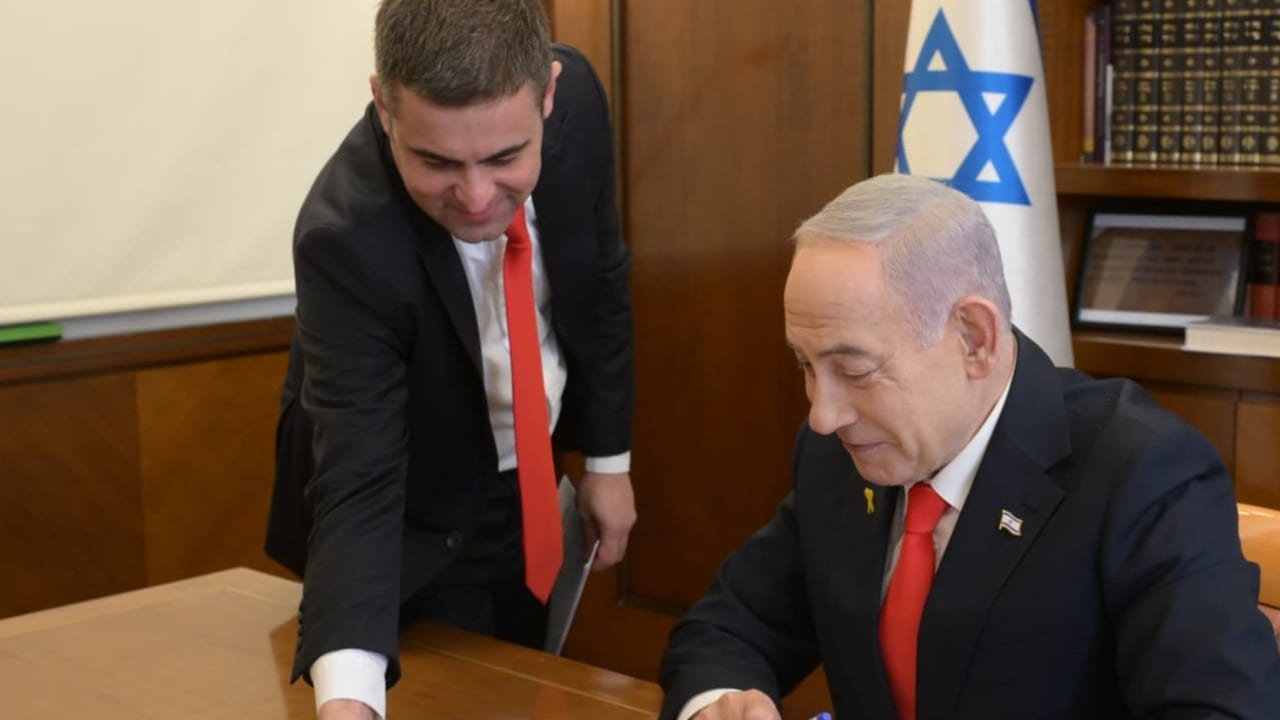
Prime Minister Benjamin Netanyahu officially recognized Somaliland as an independent and sovereign state, the Prime Minister’s Office announced on Friday, making Israel the first UN member state to recognize the nation as a sovereign state.

Together with Foreign Minister Gideon Sa’ar and Somaliland’s president, Netanyahu signed a joint and mutual declaration on Friday.

Netanyahu congratulated Somaliland President H.E. Abdirahman Mohamed Abdillahi and praised his leadership and commitment to security, stability, and peace. 

Netanyahu also invited Abdillahi to make an official visit to Israel. Netanyahu said the declaration “is in the spirit of the Abraham Accords, signed at the initiative of President Trump.”

Prime Minister Benjamin Netanyahu officially recognized the Republic of Somaliland as an independent and sovereign state (credit: PRIME MINISTER'S OFFICE)
Abdullahi said in a statement that Somaliland would join the Abraham Accords, calling it a step toward regional and global peace. He said Somaliland was committed to building partnerships, boosting mutual prosperity and promoting stability across the Middle East and Africa.

The 2020 accords were brokered by Trump’s first administration and included Israel formalizing diplomatic relations with the United Arab Emirates and Bahrain, with other countries joining later.

Israel's future talks with Somaliland under new declaration

Abdillahi thanked Netanyahu for his role in the declaration and expressed his appreciation for Israel's efforts in combating terrorism and advancing regional peace.

Netanyahu also expressed gratitude to Sa'ar, the Mossad, and its Director, David Barnea, for their contribution to advancing recognition between the two countries. 

Netanyahu concluded by wishing the people of Somaliland success, prosperity, and freedom.

Israel will focus on collaboration in agriculture, health, technology, and the economy in its relations with Somaliland, the office stated.

Sa'ar later posted on social media, "I was glad to speak just now with the President of Somaliland Abdirahman Mohamed Abdullahi, on this important day for both countries. 

"Over the past year, based on an extensive and ongoing dialogue, relations between Israel and Somaliland have taken shape. Following the decision of @IsraeliPM Benjamin Netanyahu and the President of Somaliland, Abdirahman Mohamed Abdillahi, today we signed an agreement on mutual recognition and the establishment of full diplomatic relations, which will include the appointment of ambassadors and the opening of embassies. 

"We will work together to promote the relations between our countries and nations, regional stability, and economic prosperity. I have instructed my ministry to act immediately to institutionalize ties between the two countries across a wide range of fields."

Somaliland's foreign ministry wrote in response, "Somaliland’s moment has arrived. Momentum is building. Stay tuned for official announcements."

Somaliland has enjoyed effective autonomy - and relative peace and stability - since 1991 when Somalia descended into civil war, but the breakaway region has failed to receive recognition from any other country.

Over the years, Somalia has rallied international actors against any country recognizing Somaliland.

The former British protectorate hopes that recognition by Israel will encourage other nations to follow suit, increasing its diplomatic heft and access to international markets.

In March, Somalia and its breakaway region of Somaliland also denied receiving any proposal from the United States or Israel to resettle Palestinians from Gaza, with Mogadishu saying it categorically rejected any such move.


Danielle Greyman-Kennard,Reuters

Source: https://www.jpost.com/israel-news/article-881475

Follow Middle East and Terrorism on Twitter

Few on the 'Far Right' Turn Against the Jews - Pierre Rehov


by Pierre Rehov

Candace Owens, Tucker Carlson and Nick Fuentes represent regress masquerading as rebellion. They do not speak for the right; they speak for themselves and for the algorithms that reward outrage and sounding outrageous.


  • Normalize the slur here, wink at a trope there, then insist critics are "overreacting." That is how the ideological poison spreads.

  • When someone habitually slanders Jews and then complains of being "silenced," the right needs to respond. Criticism is not censorship, decency does not require "consensus," and the Jewish people are not "clicks."

  • Candace Owens, Tucker Carlson and Nick Fuentes represent regress masquerading as rebellion. They do not speak for the right; they speak for themselves and for the algorithms that reward outrage and sounding outrageous.

  • Many, maybe most, prominent people on the right — from President Donald Trump to Pastor John Hagee to Thomas Sowell to Marco Rubio — stand with Israel because they stand with the West, with victims of jihad, and with a commitment to preserve the values of individual freedom, equal justice under the law and freedom of speech. The right should say so — clearly, repeatedly and without apology — and should quarantine the grifters who would trade civilization's cause for "clicks."

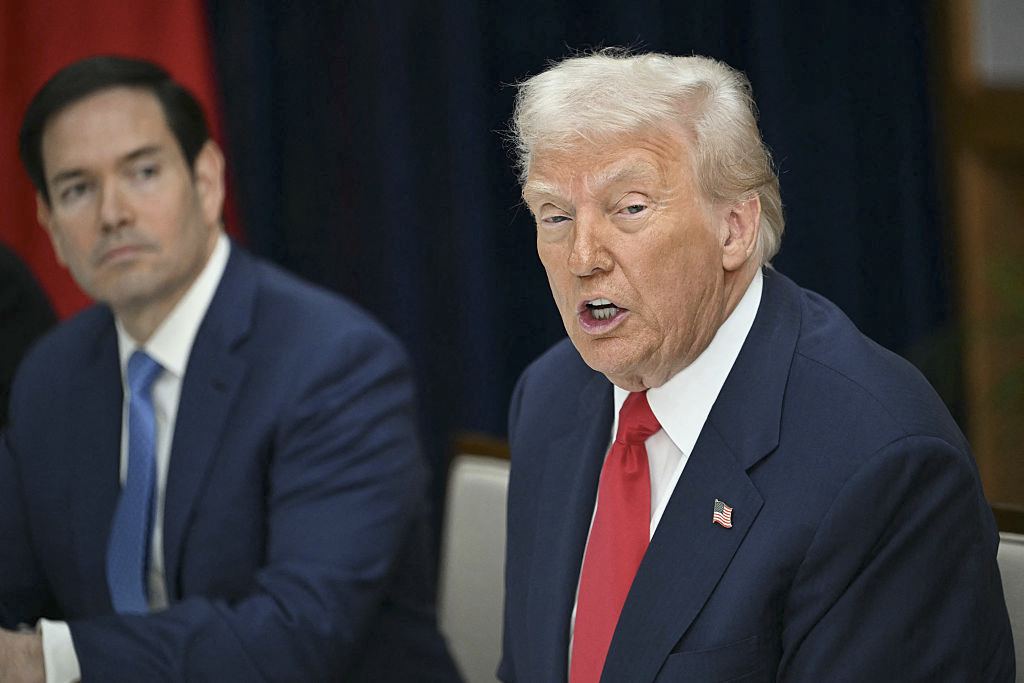
Many, maybe most, prominent people on the right — from President Donald Trump to Pastor John Hagee to Thomas Sowell to Marco Rubio — stand with Israel because they stand with the West, with victims of jihad, and with a commitment to preserve the values of individual freedom, equal justice under the law and freedom of speech. The right should say so — clearly, repeatedly and without apology — and should quarantine the grifters who would trade civilization's cause for "clicks." Pictured: Trump and Rubio, at a meeting with China's President Xi Jinping in Busan, South Korea, on October 30, 2025. (Photo by Andrew Caballero-Reynolds/AFP via Getty Images)

It's back. Not the left's usual anti-Israel vitriol — but a creeping, winking strain of anti-Jewish hostility rising inside corners of the American "right." This chill is often dressed up as "anti-globalism" or "just asking questions" -- about Israel. There is nothing new about recycling century-old tropes, flirting with blood libels, or mainstreaming a Holocaust denier because he brings clicks. The American right — at its best — defends the Judeo-Christian foundations of the West, honors facts, allies, and moral clarity. This heritage means standing with Israel and against antisemites, even when they pretend to be on the side of all that is "good."

Start with Candace Owens. Sometime during 2023–2024 she crossed line after line — defending Kanye West ("Ye") after his antisemitic rants, insinuating medieval slanders, and taunting Jews who objected — until the Daily Wire website publicly ended its relationship with her in March 2024. It was not about "free speech," it was about a pattern of tolerating intolerance that would not have been accepted if it had been aimed at any ethnic group other than Jews.

By late 2024, the watchdog group StopAntisemitism, citing a dossier of repeat offenses, dubbed Owens its "Antisemite of the Year." Normalize the slur here, wink at a trope there, then insist critics are "overreacting." That is how the ideological poison spreads.

Now consider the Tucker Carlson moment. On Oct. 27, 2025, on his show, he hosted Nick Fuentes — a open white supremacist and Holocaust denier. Carlson's interview allowed Fuentes' antisemitic bile and even bizarre praise of both Adolf Hitler and Josef Stalin to waft by without pushback. The immediate reaction on the right was significant: many serious conservatives complained.

Daily Wire host Ben Shapiro called the interview what it was and blasted Carlson's posture as "intellectual cowardice." That critique from most of the mainstream right told young viewers: this is a red line.

Institutional confusion made things worse. The president of the Heritage Foundation, Kevin Roberts, initially defended Carlson publicly; the resulting backlash — again, from many on the right — was swift. Even mainstream broadcast outlets framed the episode as a dividing line: are we a movement that tolerates Jew-haters, or one that draws red lines?

If you want a picture of the broader reach, the website Tablet captured it crisply: antisemitism on parts of the right, they wrote has metastasized under an "anti-globalist" mask, where new slurs and code words — "globalist cabal", "Israel first", "Soros" — do the same work older slurs did. Tablet also seem to view on the Carlson-Fuentes moment as a test for Jewish and conservative institutions.

What about Candace Owens's defenders who insist she was "canceled for criticizing Israel"? Not at all. Major outlets chronicled months of explicitly antisemitic provocations, not a good-faith policy dispute. Even the media sympathetic to "anti-establishment" voices noted the obvious: there is a canyon between arguing to cut foreign aid and amplifying blood-libel smears.

To its credit, the American right has no shortage of adults in the room. Many intellectuals, Jewish advocates, and elected Republicans openly condemned the Carlson-Fuentes stunt. You could watch the split in real time: one faction explained that freedom of speech does not require private companies and organization to provide a platform for unreconstructed bigots; the other faction accused "the establishment" of "silencing us."

Here is a test for readers: does your "anti-globalism" end up obsessing over Israel or "the Jews" every time? If yes, it is not policy analysis — it is a tell about you. By contrast, a responsible America-first position can argue about budgets, missions and burdens without smuggling in scapegoats. That is the difference between Marco Rubio's hawkish clarity on Hamas and Fuentes's "Groyper" circus.

The fact is that Republican support for Israel remains high, even though younger cohorts are more skeptical. Pew Research in April 2025 found solid GOP confidence in Israel's leadership and warmer views of Israelis than Democrats expressed. In October, Pew found the same partisan gap, even as overall U.S. favorables toward Israel declined. The point: when far-right influencers target Jews, they are out of step with rank-and-file Republican voters — and not speaking for them.

Contrast the fringe with actual governance. President Donald Trump moved the U.S. Embassy to Jerusalem (2018), recognized Israeli sovereignty on the Golan Heights (2019), and brokered the Abraham Accords — historic normalization agreements reshaping the strategic map. Those facts remain the gold standard for a pro-ally foreign policy grounded in U.S. interests.

The momentum has continued. Fox New reporting from this year details efforts to expand the Abraham Accords — with new candidates openly discussed — precisely because strength plus moral clarity wins respect in the region. Whatever one's partisan leanings, anti-terror alignment and normalization advanced when Washington projected resolve rather than courting applause in European salons.

If you want the mirror image from the other side of the aisle, consider how leftist media outlets have covered the Carlson-Fuentes interview. The Nation warned that elements of right-wing anti-Zionism are curdling into open antisemitism and explicitly cited the Heritage/Carlson controversy as symptomatic. You do not have to endorse that magazine's broader politics to acknowledge that when both Tablet and The Nation criticize the same sewer, it probably stinks.

One more word about Owens: When someone habitually slanders Jews and then complains of being "silenced," the right needs to respond. Criticism is not censorship, decency does not require "consensus," and the Jewish people are not "clicks."

Meanwhile, serious national security policy continues: confronting jihadist groups, backing Israel's right to self-defense, and leveraging diplomacy (the Abraham Accords) to isolate terrorists. That framework does not require romanticizing any foreign government. It does require rejecting those who would turn "Zionist" into a slur and "globalist" into a dog whistle for "Jew."

Bottom line: Candace Owens, Tucker Carlson and Nick Fuentes represent regress masquerading as rebellion. They do not speak for the right; they speak for themselves and for the algorithms that reward outrage and sounding outrageous. Many, maybe most, prominent people on the right — from Trump to Pastor John Hagee to Thomas Sowell to Rubio — stand with Israel because they stand with the West, with victims of jihad, and with a commitment to preserve the values of individual freedom, equal justice under the law and freedom of speech. The right should say so — clearly, repeatedly and without apology — and should quarantine the grifters who would trade civilization's cause for "clicks."


Pierre Rehov, who holds a law degree from Paris-Assas, is a French reporter, novelist and documentary filmmaker. He is the author of six novels, including "Beyond Red Lines", " The Third Testament" and "Red Eden", translated from French. His latest essay on the aftermath of the October 7 massacre " 7 octobre - La riposte " became a bestseller in France.As a filmmaker, he has produced and directed 17 documentaries, many photographed at high risk in Middle Eastern war zones, and focusing on terrorism, media bias, and the persecution of Christians. His latest documentary, "Pogrom(s)" highlights the context of ancient Jew hatred within Muslim civilization as the main force behind the October 7 massacre.

Source: https://www.gatestoneinstitute.org/22133/right-turn-against-jews

Follow Middle East and Terrorism on Twitter