by Khaled Abu Toameh
These Arab and Muslim heads of state will only take action against Islamist terrorists when they pose a threat to their regimes, security and stability.
The Arab and Muslim countries, including Pakistan, will not disarm Hamas.
Pakistan -- which does not recognize Israel and does not regard Hamas as a terrorist organization –- was the first country to recognize Iran's Khomeini regime in 1979, just as, in 1947, Iran was the first country to recognize Pakistan's independence. Since then, not only has Pakistan had far closer relations with Iran than with Israel, but, after the Gaza War in 2023, has repeatedly called for Muslim nations to "unite against Israel."
Meanwhile, it is simply not realistic to assume that the Palestinian terror groups will voluntarily hand over their weapons.
These Arab and Muslim heads of state will only take action against Islamist terrorists when they pose a threat to their regimes, security and stability.
The Gaza Strip does not need peacekeepers and monitors. US President Donald J. Trump himself came up with the solution months ago, as he did this week for Venezuela: "We're going to run the country until such time as we can do a safe, proper and judicious transition. So we don't want to be involved with having somebody else get in, and we have the same situation that we had for the last long period of years."
Developers would rush in to create Trump's original vision of a "Gaza Riviera": "Gaza would be under U.S. trusteeship for around ten years 'until a reformed and deradicalized Palestinian Polity is ready to step in its shoes.'"
Those Palestinians in Gaza who wish to leave would be able to do so without fear of being threatened or shot. The US could make sure that any terrorists who refused completely to disarm would, as Trump warned about "bad hombres" in Mexico be "taken care of." If there are legitimate concerns about US troops being put in harm's way, perhaps Gaza's neighbor to the east might help out.
Above all, Trump the master builder could oversee the successful development of some of the world's most magnificent real estate, as he said about Venezuela: "We are going to have our very large United States oil companies go in, spend billions of dollars, fix the badly broken infrastructure... and start making money for the country."
Change the word "oil" above to "real estate development" for Gaza, and Trump will have delivered the most far-reaching peace ever in history -- twice -- to two separate hemispheres.
Arab and Muslim countries might object: it ruins their chances of attacking Israel more easily after Trump leaves office. That is precisely why a pervasive US or Israeli presence in Gaza is the only way to ensure the success of peace in Gaza, peace in the rest of the Middle East, and a spectacular future for the peaceful Palestinians who remain.
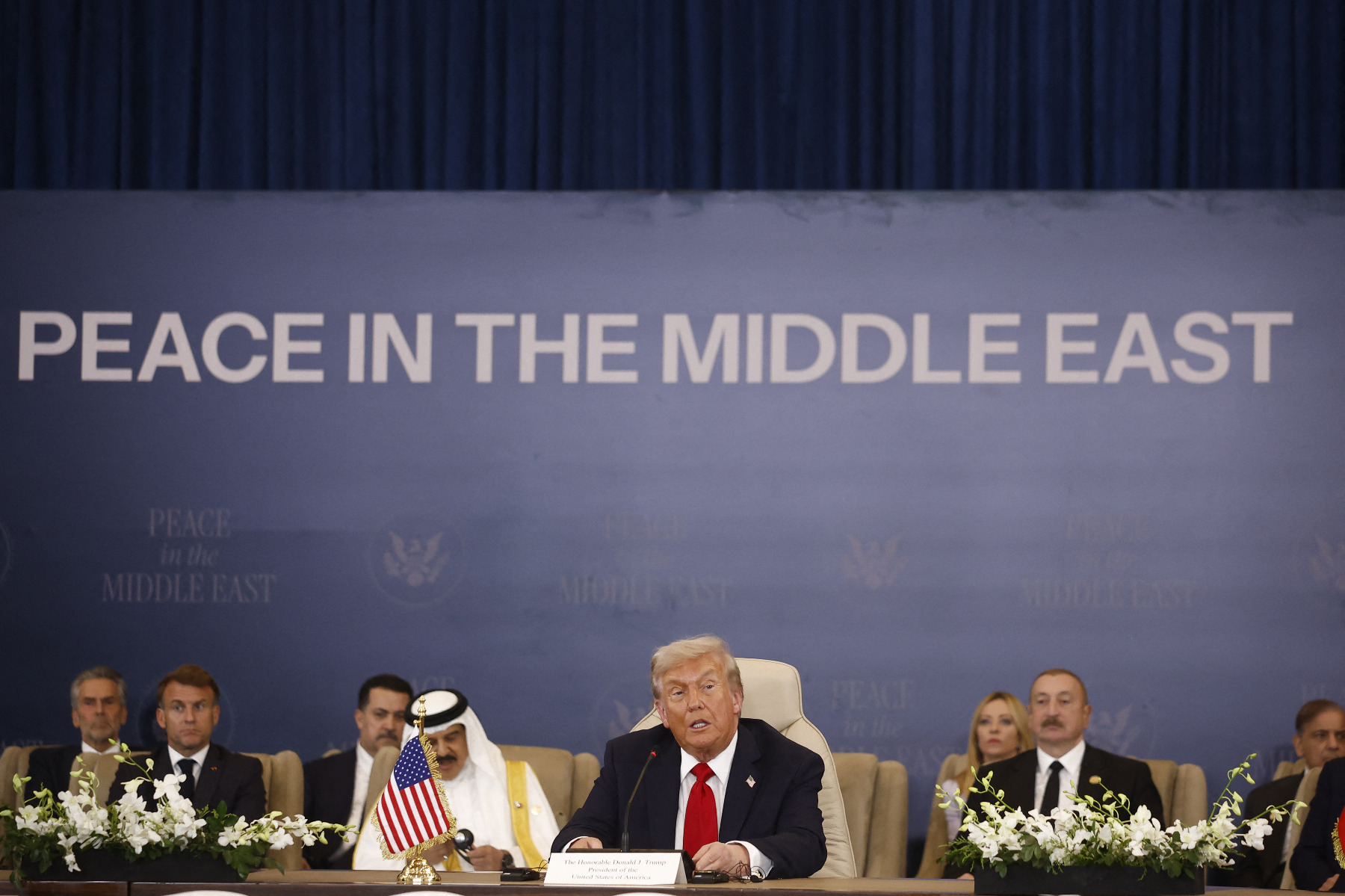
The Arab and Muslim countries, including Pakistan, will not disarm Hamas.
Pakistan -- which does not recognize Israel and does not regard Hamas as a terrorist organization –- was the first country to recognize Iran's Khomeini regime in 1979, just as, in 1947, Iran was the first country to recognize Pakistan's independence. Since then, not only has Pakistan had far closer relations with Iran than with Israel, but, after the Gaza War in 2023, has repeatedly called for Muslim nations to "unite against Israel" (such as here, here and here).
In a recent interview, Egyptian Foreign Minister Badr Abdelatty was asked about the issue of disarming the Iranian-backed terrorist group -- in accordance with the second phase of US President Donald Trump's 20-point peace plan for ending the war in the Gaza Strip.
Abdelatty replied:
"Trump's plan talks about restricting and surrendering weapons, not disarming them. These are matters that will be agreed upon between the Palestinian factions. I believe there is a possibility, within the framework of an understanding between the factions, of reaching a formula that includes the gradual surrender of weapons within a Palestinian-Palestinian framework."
Trump's plan, however, explicitly calls for the disarming of Hamas and all Palestinian armed groups:
"Hamas and other factions agree to not have any role in the governance of Gaza, directly, indirectly, or in any form. All military, terror, and offensive infrastructure, including tunnels and weapon production facilities, will be destroyed and not rebuilt."
The requirement for Hamas and these groups to relinquish their weapons and for the Gaza Strip to be "demilitarized" is a core condition for moving into the second phase of the plan:
"Once all hostages are returned, Hamas members who commit to peaceful co-existence and to decommission their weapons will be given amnesty."
Abdelatty seems to be counting on the next sentence in Trump's plan as "wiggle room" to sidestep the "destroyed and rebuilt" admonition:
"There will be a process of demilitarization of Gaza under the supervision of independent monitors, which will include placing weapons permanently beyond use through an agreed process of decommissioning, and supported by an internationally funded buy back and reintegration program all verified by the independent monitors."
Notably, so far no Arab country has expressed readiness to help in the disarmament of the Palestinian terror groups, including Hamas, through Trump's proposed International Stabilization Force (ISF). Jordan's King Abdullah II recently warned that the Arab countries would reject being asked to "enforce" peace in the Gaza Strip if deployed there under Trump's plan:
"What is the mandate of security forces inside of Gaza? And we hope that it is peacekeeping, because if it's enforcing, nobody will want to touch that. Peacekeeping is that you're sitting there supporting the local police force, the Palestinians, which Jordan and Egypt are willing to train in large numbers, but that takes time. If we're running around Gaza on patrol with weapons, that's not a situation that any country would like to get involved in."
The Jordanian monarch, in other words, is notifying Trump flat-out that he should not count on Jordan or other Arab countries to be part of a security force that is willing to engage Palestinian terror groups and confiscate their weapons. True, in mid-2025 the entire 22-member Arab League endorsed a declaration that calls for Hamas to disarm, release all Israeli hostages, and end its rule in the Gaza Strip. It is one thing to issue a statement calling on the terror groups to lay down their weapons, but it is another actually to participate in such a mission. The Arab leaders appear afraid of facing a backlash by the Arab street, where anti-Israel sentiments and sympathy for the Palestinian "resistance" -- meaning terrorism against Israel -- remain as strong as ever.
A poll published by the Doha-based Arab Center for Research & Policy Studies found that 67% of Arabs believe that Hamas's October 7, 2023 attack on Israel was a "legitimate resistance operation." Another 69% of respondents expressed their solidarity with Palestinians and Hamas, while 59% said that there would be no possibility for peace with Israel.
Egyptian foreign minister shares King Abdullah's stance on the role of the ISF in the Gaza Strip. Asked whether Egypt and other Arab countries would join the force, Abdelatty replied:
"We are engaged in serious and positive dialogue with the American side because this force must be peacekeeping, not peace enforcement, and there is a vast difference between the two. Peacekeeping means focusing on monitoring the extent to which both parties to the ceasefire agreement adhere to it, in addition to assisting in the operation of the crossings. Enforcing the law or maintaining internal public order are the inherent responsibilities of the Palestinian police, who must be deployed within the Gaza Strip. Egypt certainly supports the formation of the international force, and there are various frameworks for providing logistical and technical support to this force. We are certainly involved in command and control operations, and Egypt is represented on the Civil-Military Committee in Kiryat Gat in southern Israel, which was established to monitor the implementation of the Sharm el-Sheikh agreement."
The Egyptian position on the issue of disarming Hamas leaves no room for ambiguity. Egypt does not want to be part of such an effort.
First, Egypt believes that this issue should be agreed upon "within the framework of an understanding between Palestinian factions." The Arab countries, according to the Egyptian foreign minister, should not be meddling in the internal affairs of the Palestinians. He is suggesting, apparently in all seriousness, that Hamas, Palestinian Islamic Jihad and other Palestinian terror organizations that support the "armed struggle" meet to discuss the possibility of laying down their weapons and halting the fight against Israel. This, of course, would happen only if hell freezes over.
Second, the Egyptian foreign minister says he believes that there should be a "gradual surrender of weapons" in the Gaza Strip. Abdelatty evidently does not understand the "rush" to disarm Palestinian terror groups -- whose stated goal is to murder Jews and destroy Israel, as demonstrated on October 7. A "gradual surrender of weapons" is a process that could last for years, allowing the terror groups to rearm, regroup, rebuild their military capabilities, and launch their next attack on Israel.
Third, while the Arab states support the deployment of international troops in the Gaza Strip, they insist that its mandate should be limited to peacekeeping: merely acting as a buffer between the Israeli army and Hamas, presumably to keep Israel at bay, and facilitating humanitarian aid rather than enforcing security by force or disarming the Palestinian terror groups. The Arabs seemingly would like to copy in the Gaza Strip the failed model of the 1978 United Nations Interim Force in Lebanon (UNIFIL), which failed to prevent the Iran-backed Hezbollah's military buildup (150,000 rockets and missiles) and entrenchment in southern Lebanon.
Meanwhile, it is simply unrealistic to assume that the Palestinian terror groups will voluntarily hand over their weapons.
On December 29, 2025, Hamas's armed wing repeated that it would not surrender its weapons. "Our people are defending themselves and will not give up their weapons as long as the occupation remains," the group's new spokesman said in a video.
It is equally unrealistic to assume that the Palestinian Authority, headed by Mahmoud Abbas, has the will or ability to disarm Hamas. Like the Arab heads of state, Abbas does not want to be seen as an Israeli or American puppet acting against the Palestinian "resistance." Reminder: the PA ruled the Gaza Strip between 1994 and 2007 but was unable to disarm Hamas and other Palestinian terror groups. In the summer of 2007, Hamas toppled the PA regime, ousted it from Gaza, and seized full control of the Gaza Strip.
The Arab states, Turkey, Egypt and Pakistan, do not, frankly, view Hamas as a direct threat to their national security: Hamas operates only against Israel. That is another reason they are opposed to taking part in disarming Hamas. These Arab and Muslim heads of state will only take action against Islamist terrorists when they pose a threat to their regimes, security and stability.
The Gaza Strip does not need peacekeepers and monitors. US President Donald J. Trump himself came up with the solution months ago, as he did this week for Venezuela:
"We're going to run the country until such time as we can do a safe, proper and judicious transition. So we don't want to be involved with having somebody else get in, and we have the same situation that we had for the last long period of years."
Developers would rush in to create Trump's original vision of a "Gaza Riviera":
"Gaza would be under U.S. trusteeship for around ten years 'until a reformed and deradicalized Palestinian Polity is ready to step in its shoes.'"
Those Palestinians in Gaza who wish to leave would be able to do so without fear of being threatened or shot. The US could make sure that any terrorists who refused completely to disarm would, as Trump warned about "bad hombres" in Mexico be "taken care of." If there are legitimate concerns about US troops being put in harm's way, perhaps Gaza's neighbor to the east might help out.
Above all, Trump the master builder could oversee the successful development of some of the world's most magnificent real estate, as he said about Venezuela:
"We are going to have our very large United States oil companies go in, spend billions of dollars, fix the badly broken infrastructure... and start making money for the country."
Change the word "oil" above to "real estate development" for Gaza, and Trump will have delivered the most far-reaching peace ever in history -- twice -- to two separate hemispheres.
Just as a US trusteeship "safe, proper and judicious transition" is the only solution for a successful Venezuela, it is the only realistic solution for a successful Gaza, as well.
Arab and Muslim countries might object: it ruins their chances of attacking Israel more easily after Trump leaves office. That is precisely why a pervasive US or Israeli presence in Gaza is the only way to ensure the success of peace in Gaza, peace in the rest of the Middle East, and a spectacular future for the peaceful Palestinians who remain.
- Follow Khaled Abu Toameh on X (formerly Twitter)
Khaled Abu Toameh is an award-winning journalist based in Jerusalem.
Source: https://www.gatestoneinstitute.org/22176/trump-solution-for-gaza

No comments:
Post a Comment