Thursday, January 23, 2025

Trump admin's first steps in Mideast: Saudi ties, sanctioning Houthis - analysis - Seth J. Frantzman


by Seth J. Frantzman

The US doubles down on Middle East strategy: Trump designates Houthis as terrorists while increasing communication with Saudi Arabia.
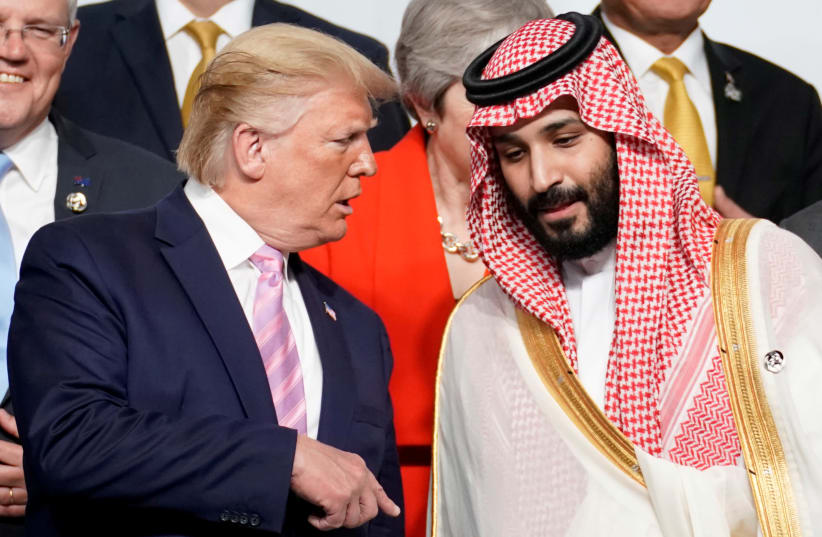
 

FILE PHOTO: U.S. President Donald Trump speaks with Saudi Arabia's Crown Prince Mohammed bin Salman during photo session with other leaders and attendees at the G20 leaders summit in Osaka, Japan, June 28, 2019 (photo credit: REUTERS/KEVIN LAMARQUE/FILE PHOTO)
FILE PHOTO: U.S. President Donald Trump speaks with Saudi Arabia's Crown Prince Mohammed bin Salman during photo session with other leaders and attendees at the G20 leaders summit in Osaka, Japan, June 28, 2019
(photo credit: REUTERS/KEVIN LAMARQUE/FILE PHOTO)

The new US administration is spotlighting its first priorities in the Middle East. US President Donald Trump spoke to Saudi Crown Prince Mohammed bin Salman on Wednesday, the first phone call with a leader in the Middle East, according to reports.

This is important because it also comes as the US is re-designating the Iranian-backed Houthis as terrorists. Taken together, this can be seen as returning to the pillars of policy of the first Trump administration when Saudi Arabia was a close friend, and the Houthis were seen as terrorists.

It should be recalled that the Biden administration sought to take the Houthis off the list of terrorist groups in the region. This was despite the fact that the Houthis never moderated or changed their policy. After the Hamas attack on Israel, the group began attacking Israel and attacking shipping. This has wreaked havoc in the region. In recent months, the Houthis stepped up their attacks on Israel with numerous ballistic missile attacks on Israel.

Trump designated the Houthis as a terrorist group on January 22 via executive order. The executive order refers to them as Ansar Allah. “This order sets in motion a process by which Ansar Allah, also known as the Houthis, shall be considered for designation as a Foreign Terrorist Organization, consistent with section 219 of the INA (8 U.S.C. 1189),” the White House statement notes.

It says the group is backed by Iran’s Islamic Revolutionary Guard Corps Quds Force (IRGC-QF) and says that Iran has trained and armed the Houthis. It says the group has fired on US Navy warships “dozens” of times in the last two years.

 HOUTHI MILITARY spokesman Yahya Saree delivers a statement in Sanaa, Yemen, last month.  (credit: KHALED ABDULLAH/REUTERS)
HOUTHI MILITARY spokesman Yahya Saree delivers a statement in Sanaa, Yemen, last month. (credit: KHALED ABDULLAH/REUTERS)

“Since seizing most Yemeni population centers by force from the legitimate Yemeni government in 2014-2015، the Houthis have launched numerous attacks on civilian infrastructure, including multiple attacks on civilian airports in Saudi Arabia, the deadly January 2022 attacks on the United Arab Emirates, and more than 300 projectiles fired at Israel since October 2023.

 The Houthis have also attacked commercial vessels transiting Bab al-Mandeb more than 100 times, killing at least four civilian sailors and forcing some Red Sea maritime commercial traffic to reroute, which has contributed to global inflation,” the executive order notes.

The order goes on to say that the US will work with “regional partners to eliminate Ansar Allah’s capabilities and operations, deprive it of resources, and thereby end its attacks on U.S. personnel and civilians, U.S. partners, and maritime shipping in the Red Sea.”

A long history of conflict 

The new designation has raised eyebrows in the Gulf. It should be recalled that the Houthis tried to take over Yemen’s port of Aden in 2015, and this triggered an intervention by Saudi Arabia and other countries. However, the civil war in Yemen, with the Saudis on the side of the government against the Houthis, became a difficult war.

The Houthis targeted Riyadh with ballistic missiles and attacked Saudi Arabia with drones. Iran used this as a test bed for its missiles and drones. Eventually, a ceasefire was signed, and the countries involved in the war all sought to distance themselves from it. They also felt the US and the West were not being supportive enough.

Now, voices are rising that say that the new order by the White House could isolate the Houthis and weaken them. According to experts who spoke to the UAE media Al-Ain Al-Akhbariya, “disastrous repercussions will befall the Houthi militias following this classification, including the group losing its participation in a comprehensive peace process, and it will allow the Yemeni government and its regional and international allies to make a decisive military decision to end the coup.”

For the first time in a while, there is optimism. Al-Ain quotes Yemeni politician Khaled Salman, who said the designation is “a prelude to dismantling the Houthi entity attached to the Iranian body, and a prelude to the process of breaking the last nail and depriving Iran of waging war to defend it through tools.”

Salman told Al-Ain that the classification is “a blow to the Houthis who practiced three-dimensional trade, blackmailing major shipping companies, smuggling weapons to terrorist groups, collaborating with them, and striking at the interests of the West and the economies of Washington’s allies from Saudi Arabia to Egypt.” This is a step toward dismantling the group.

This may be too optimistic a belief, but clearly, the White House is putting wind in the sails of the region. It is part of a wider effort of the new Trump doctrine, which is designed to bolster friends and allies.

The new US Secretary of State, Marco Rubio, spoke with Israeli Prime Minister Benjamin Netanyahu and discussed the importance of deterring Iran. Gulf media sees this as another pillar of Trump’s policy, designating Houthis and backing Saudi Arabia and Israel. These are important moments.

Saudi Arabia is celebrating the tenth anniversary of King Salman assuming power this week. Meanwhile, Riyadh has also indicated it could invest up to $600 billion in the US, according to a report in the Associated Press about a phone call with Trump. 

Other issues are in motion in the region. Steve Witkoff, Trump’s special envoy, is expected to come back to the region soon. He may visit Gaza to see the ceasefire up close, according to reports. His recent comments in an interview with Fox News have raised eyebrows in some pro-Israel circles. What is important now is that the ceasefire deal continues and hostages continue to be released on time. 

 
Seth J. Frantzman

Source: https://www.jpost.com/middle-east/article-838886

Follow Middle East and Terrorism on Twitter

For Peace in the Middle East, Trump Must Move the US Al-Udeid Air Base from Qatar to the United Arab Emirates - Robert Williams


by Robert Williams

Trump would achieve the release of all the hostages if he were only to hint that it is conceivable that the CENTCOM base could be relocated out of Qatar. In fact, he owes this to the Saudis and the Emiratis, who are his true allies. If Trump clings to Qatar and Erdogan against these allies, he should not then wonder why his true allies, the Saudis and the Emiratis, are drifting towards America's adversaries, China and Russia" — Yigal Carmon, MEMRI, January 9, 2025.


  • "This is Qatar's classic game: support the Islamist terrorists and then present itself as a mediator, liaison, and even peacemaker – the arsonist playing firefighter. As in Afghanistan, as in Egypt in 2010, and as in every Muslim country. In every Muslim country where there is a battle between the Islamists and the secularists, Qatar supports the Islamists, as in Gaza supporting Hamas for years, building its military might and enabling October 7." — Colonel Yigal Carmon (ret), MEMRI, January 21, 2025.

  • [Syria's de facto leader Ahmed Hussein al-Sharaa], who claims to have broken completely with Al Qaeda, apparently did so only because of strategic disagreements, not because he suddenly abandoned its plan to create an Islamic state in Syria.

  • Hurrying to the next scandal, the Biden administration practically threw itself at Sharaa's feet. It rushed to meet with the terrorist leader, then immediately removed the $10 million bounty for his arrest, without even waiting to see what he would do.

  • The US cannot continue to reward terrorism. President Donald J. Trump would do well to declare as a Foreign Terrorist Organization the Muslim Brotherhood, which is the font of all Sunni Islamist terrorism and is effectively promoted worldwide by Qatar's television bullhorn, Al-Jazeera. Trump would also be well-advised to move American forces completely out of Qatar's enormous Al-Udeid Air Base, headquarters of the US Central Command, move them to the United Arab Emirates, and effectively cut ties with Qatar, a country "pretending to be an ally."

  • "Biden failed miserably. Trump should not recycle Biden's approach, and should recognize that Qatar and Erdogan are enemies despite their incredible skill in presenting themselves as friends, and as firefighters when they are actually arsonists. Trump would achieve the release of all the hostages if he were only to hint that it is conceivable that the CENTCOM base could be relocated out of Qatar. In fact, he owes this to the Saudis and the Emiratis, who are his true allies. If Trump clings to Qatar and Erdogan against these allies, he should not then wonder why his true allies, the Saudis and the Emiratis, are drifting towards America's adversaries, China and Russia" — Yigal Carmon, MEMRI, January 9, 2025.

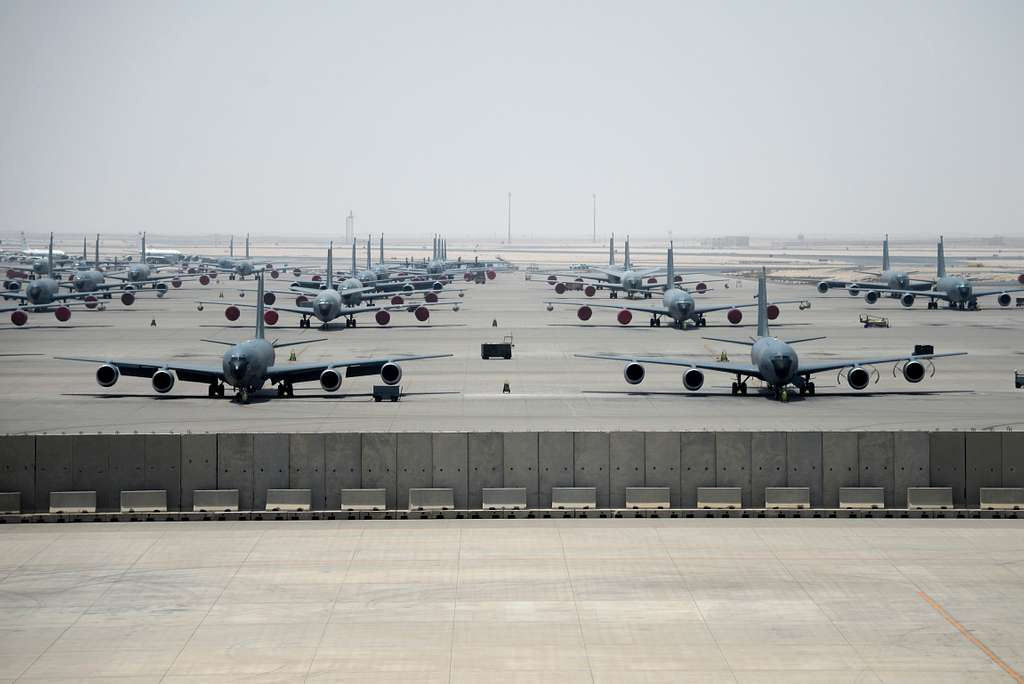
The US cannot continue to reward terrorism. President Donald J. Trump would be well-advised to move American forces completely out of Qatar's enormous Al-Udeid Air Base, headquarters of the US Central Command, move them to the United Arab Emirates, and effectively cut ties with Qatar. Pictured: U.S. Air Force KC-135 Stratotankers sit on the ramp of the 379th Air Expeditionary Wing at Al-Udeid Air Base on Aug. 19, 2017. (Photo by U.S. Air National Guard/Master Sgt. Andrew J. Moseley)

Qatar, the world's foremost terrorist state, which seems never to have met an Islamist terrorist entity it did not support -- from Hamas and the Muslim Brotherhood to Al Qaeda and ISIS -- has gained yet another win. It is Syria, the latest country seized in a hostile Islamist takeover by the formerly Al Qaeda affiliated organization Hay'at Tahrir al-Sham (HTS), led by Ahmed al-Sharaa, formerly known by his "nom de guerre," Abu-Mohammed al-Jolani.

Throughout Sharaa's decades-long career as a terrorist -- from being a close associate of Abu Musab al-Zarqawi, the leader of Al Qaeda in Iraq, to founding Al Qaeda's branch in Syria, the Jabhat al-Nusra (Nusra Front), which he led from 2012-2017, to forming HTS as a conglomerate of various jihadist groups -- Qatar has been a constant factor. The Qataris have financially supported Al Qaeda wherever it went -- Afghanistan, Iraq, Syria -– so the final victory of Sharaa, is an even greater victory for Qatar, proving that its "investment" paid off.

Qatar's State Security Chief Khalfan Al-Kaabi visited Damascus on December 12, 2024, just days after President Bashar al-Assad fled the country on December 8, following HTS's final offensive. In no time, the Qataris reopened their embassy in Syria.

According to Yigal Carmon of MEMRI:

"Qatar is a big winner in the Syrian revolution, having supported the U.S.-designated terrorist organization Hay'at Tahrir Al-Sham (HTS) and its leader Abu Muhammad Al-Joulani (formerly ISIS and Al-Qaeda and now Muslim Brotherhood) who has a $10 million bounty on his head. This is Qatar's classic game: support the Islamist terrorists and then present itself as a mediator, liaison, and even peacemaker – the arsonist playing firefighter. As in Afghanistan, as in Egypt in 2010, and as in every Muslim country.

"In every Muslim country where there is a battle between the Islamists and the secularists, Qatar supports the Islamists, as in Gaza supporting Hamas for years, building its military might and enabling October 7."

Sharaa, who claims to have broken completely with Al Qaeda, apparently did so only because of strategic disagreements, not because he suddenly abandoned its plan to create an Islamic state in Syria. His current group, Hay'at Tahrir Al-Sham, came about when, in 2017, his Jabhat al-Nusra merged with other Syrian jihadist groups. The US State Department in 2018 added HTS to Jabhat al-Nusra's existing 2012 designation as a foreign terrorist organization, and advertised a $10 million bounty for Sharaa's arrest. After HTS conquered Syria, the Biden administration immediately rescinded the bounty.

What has been playing out in Syria since then can only be described as shameful and embarrassing for Western leaders. All it took was for Sharaa to sport a suit and trim his beard for them to flock to Damascus to kiss his newly "moderate" ring.

Flashback: The same international community also believed that the Taliban would become "moderate" if the US just negotiated with it seductively enough. The result is that today, women and girls have been completely erased from Afghan society, not allowed to study, work, go out of the home, seek medical care, or even be seen from the street through a window.

The entire process was funded by the Biden administration through the United Nations, according to the US Special Inspector General for Afghanistan Reconstruction John Sopko:

"Since Aug 2021, UN has purchased, transported, & transferred at least $2.9 billion to Afghanistan using international donor contributions. U.S. is the largest international donor, having provided about $2.6 billion in funding for UN, other public international org. (PIOs) and NGOs operating in Afghanistan... More than $1.7 billion of that funding came from #StateDept and #USAID to support humanitarian activities implemented by PIOs and NGOs, including the UN, the World Bank, and the Colombo Plan...

That is in addition to the $7 billion worth of military equipment that the US left behind to fall into the hands of the Taliban. Sopko made it clear in November that aid cannot be provided to Afghanistan without it falling into the hands of the Taliban. The US taxpayer, in short, is funding the Taliban.

Hurrying to the next scandal, the Biden administration practically threw itself at Sharaa's feet. It rushed to meet with the terrorist leader, then immediately removed the $10 million bounty for his arrest, without even waiting to see what he would do.

According to Assistant Secretary of State Barbara Leaf, who met with Sharaa in Damascus:

"I would characterize the discussion as quite good, very productive, detailed.... we've been hearing this for some time, some very pragmatic and moderate statements on various issues from women's rights to protection of equal rights for all communities, et cetera."

Whoa. Is the ongoing intimidation, vandalism, violence and discrimination carried out by Sharaa's jihadist goons against Christians in Syria since taking power "equal rights for all communities"? Is the appointment of Anas Hassan Khattab, a former Al-Qaeda commander and a UN-designated terrorist, to head Syria's General Intelligence Service "very pragmatic"?

"We will judge by deeds," Leaf added, "not just by words. Deeds are the critical thing,"

The Biden administration has had over 20 years' worth of deeds by Sharaa during his service for Al Qaeda from which to judge. Sharaa and his cohorts effectively ruled Idlib Province in northwest Syria from 2017 to December 2024. Here is what they did there, according to author and journalist Jonathan Spyer:

"[W]hat was established was a repressive, authoritarian statelet ruled in accordance with Islamic Sharia law. Women were required to wear the hijab, music and alcohol was banned. No opposition was permitted to the edicts of HTS. Non Muslims and women were not allowed to be present in the representative bodies established. Al-Jolani, the organisation's leader, was essentially the de facto dictator of the province. In his prisons, incarceration without trial and the practice of torture were routine.

"There is every reason to believe that the system developed by al-Jolani's 'Syrian Salvation Government' in Idleb will now be installed throughout the country, or at least in those parts of the country he controls (30 per cent of Syria remains in the hands of the Syrian Kurdish forces). This week he even appointed his 'prime minister' from those days, Mohammed al-Bashir, as the interim prime minister in Damascus."

The Biden administration was not stupid, nor are other Western governments that rushing to ingratiate themselves with the Syrian jihadist leader. All of that history is well-known. It is just that they made it a matter of policy to support Islamist terrorists over the rights of women, Christians, Kurds, Druze and other Syrians.

On the other hand, what could anyone expect from the Biden administration, which again and again rewarded Qatar for its terrorist role in supporting virtually every Islamist organization that promotes the Muslim Brotherhood doctrine throughout the world? In January 2022, then President Joe Biden even designated Qatar a "major non-NATO ally," and elevated them to "Strategic Partners" of the US later that year. In January 2024, just months after the Qatari-sponsored Hamas atrocities in southern Israel on October 7, 2023, Biden "quietly" entered into an agreement with Qatar that extended the US military presence in the Gulf state for another 10 years.

Qatar is also the largest foreign funder of American universities -- nearly $5 billion, which could possibly be used to "suggest" a sizeable gold mine of questionable information.

In the spring of 2024, then Secretary of State Antony Blinken offered Qatar oversight of the ill-fated US-built floating pier in Gaza. Before the pier swiftly disintegrated in rough seas, journalist Daniel Greenfield wrote:

"The Trojan pier is not only about bypassing Israel, but also Egypt. The administration's vision is that the new arrangement will allow it to directly move materials into Gaza without having to get permission from either Israel or Egypt. And that's a major victory for the terrorists."

In the summer of 2024, the Biden administration reached a plea deal with the mastermind of the 9/11 attacks, Khaled Sheikh Mohammed (KSM), a terrorist who received a safe haven and a government job in Qatar. He used it as a base for his global terrorist undertakings, including the 1993 World Trade Center bombing, the plot to assassinate Pope John Paul II, the 2002 murder of American journalist Daniel Pearl and assorted other crimes. When the CIA tracked KSM down to Doha, Qatar in the mid-1990s, the Qatari ruling family made sure that he was quickly bundled to safety. According to the plea deal, KSM, and two other 9/11 terrorists, agreed to plead guilty on condition that the US government would not seek the death penalty.

The US cannot continue to reward terrorism. President Donald J. Trump would do well to declare as a Foreign Terrorist Organization the Muslim Brotherhood, which is the font of all Sunni Islamist terrorism and is effectively promoted worldwide by Qatar's television bullhorn, Al-Jazeera. Trump would also be well-advised to move American forces completely out of Qatar's enormous Al-Udeid Air Base, headquarters of the US Central Command, move them to the United Arab Emirates, and effectively cut ties with Qatar, a country "pretending to be an ally."

As MEMRI's Yigal Carmon explained on January 9:

"Biden failed miserably. Trump should not recycle Biden's approach, and should recognize that Qatar and Erdogan are enemies despite their incredible skill in presenting themselves as friends, and as firefighters when they are actually arsonists. Trump would achieve the release of all the hostages if he were only to hint that it is conceivable that the CENTCOM base could be relocated out of Qatar. In fact, he owes this to the Saudis and the Emiratis, who are his true allies.

"If Trump clings to Qatar and Erdogan against these allies, he should not then wonder why his true allies, the Saudis and the Emiratis, are drifting towards America's adversaries, China and Russia."


Robert Williams is based in the United States.

Source: https://www.gatestoneinstitute.org/21341/move-us-military-from-qatar

Follow Middle East and Terrorism on Twitter

Iran’s Ayatollahs Expand Encroachment on US Hemisphere (the Caribbean Sea) - Yoram Ettinger


by Yoram Ettinger

After more than four decades of systematic penetration of Latin America, Iran is reaching its full geopolitical potential in the Western Hemisphere, prepositioning military assets and armaments in the region.


Will the Monroe Doctrine be revitalized in the face of the growing military, economic and diplomatic entrenchment of Iran’s Ayatollahs throughout Latin America?! The Ayatollahs aim to undermine the strategic posture of the US in its own “soft underbelly,” and bring “The Great American Satan” to submission. Against this alarming background, can the US afford to persist in its diplomatic option toward Iran, or revert to President Trump’s maximum pressure economic sanctions, which were proven reversible, while refraining from the irreversible regime-change?!

*”After more than four decades of systematic penetration of Latin America, Iran is reaching its full geopolitical potential in the Western Hemisphere, prepositioning military assets and armaments in the region. Tehran’s goal is to bring the fight to the United States…. Venezuela’s Armed Forces is the first Latin American military to have armed drones in its inventory, courtesy of Iran. In 2021, Venezuela began receiving shipments of Iran-made precision-guided short-range missiles that will likely be used to arm the drones….”    

*The Warsaw, Poland-based Defense Industry Europe reports that “Iran’s supply of military systems to Venezuela creates grave concerns in South America. Iranian-made Zolfaghar-class missile boats (a modified version of the North Korean IPS-16) armed with Nasr-1 anti-ship missiles were observed during a July 24, 2023 naval parade in Venezuela [Do the Ayatollahs intend to export the Houthi piracy in the Red Sea to the Caribbean Sea and the Venezuela-Guyana territorial conflict?]. The Iranian defense industry is using straw companies to obtain dual-use components used in their locally manufactured military systems…. Iran is using Venezuela as its front base in South America, intending to target American interests….”

*The Riyadh-based Journal for Iranian Studies indicates that “Iran’s significant and growing presence in Latin America, [is noticed] among governments with adversarial relationships with the United States. [There is] a progression of Iran-Latin American cooperation from diplomatic, cultural and commercial ties to the signing of military agreements and the export of Iranian military technology, notably drones…. to Latin America, which represents a critical region for US national interests and security…. A drone production factory was established [in Venezuela] over a decade ago during Hugo Chavez’s tenure…. These commercial and military agreements help Iran circumvent international sanctions and the 2007 UN arms embargo, providing a venue for Iranian companies affiliated with the [US State Department terror-designated] Islamic Revolutionary Guard Corps to establish a presence beyond Iranian borders, notwithstanding the sanctions…. Bolivian Defense Minister, Edmundo Novillo, disclosed that the [Iran-Bolivia] agreement entailed provisions for acquiring drones and boats aimed at monitoring regional borders…. [He] underscored Bolivia’s need for maintenance services for its aircraft and helicopters [paid for by lithium], acknowledging the technical expertise offered by Iran in this regard….”    

*According to the NYC-based The Latin Times, “Iran is increasing its military presence in Venezuela…., establishing a [predator] drone development base at the El Libertador Air Base, where training is carried out for Venezuelan military personnel…. Iran’s Mahan Air, makes direct flights between Caracas and Tehran, violating international sanctions by transporting Venezuelan gold in exchange for Iranian oil….”

*Iran’s Ayatollahs have expanded their Latin American footprint toward the Caribbean Sea in collaboration with Venezuela’s Nicolas Maduro, militarily, economically and diplomatically, supporting Maduro’s territorial claim in Guyana (in defiance of an 1899 US-led arbitration agreement), which Maduro considers as a US proxy. In fact, the accelerated US-Guyana military cooperation, has been in response to Venezuela’s growing military presence along the border with Guyana, which includes Iranian assistance with the construction of an airstrip and training ground next to the Guyana border.

*Iranian (as well as Russian and Chinese) support has bolstered Maduro’s military threat to occupy Guyana’s Essequibo region, which is the size of Florida (2/3 of Guyana’s area). Essequibo’s territorial waters have a bearing on the access from the Caribbean Sea to the Atlantic Ocean, and the illicit maritime trade conducted there with the involvement of Iran’s Ayatollahs and Hezbollah.

*Essequibo is rich in off-shore oil and natural gas deposits (mostly discovered in the mid-2010s), gold, bauxite, diamonds and additional natural resources.  As reported by a 2023 report of the UN Economic Commission for Latin America and the Caribbean, significant ExxonMobile’s oil discoveries are projected to make Guyana the world’s 4th largest offshore oil producer by 2035, surpassing countries like the US, Mexico and Norway. In addition, Guyana’s oil has a major competitive advantage in the hydrocarbon market, with most of its oil resources being light crude with lower-than-average carbon emissions and low extraction cost.

* 46 years of the self-destructive US diplomatic option toward Iran’s Ayatollahs, and 40 years of reversible economic sanctions against Iran, including President Trump’s maximum pressure crippling sanctions, have failed to moderate Iran’s Ayatollahs. This failure has demonstrated that the only way to end the Ayatollahs’ rogue conduct, and thus minimizing the level of wars and terrorism, is through an irreversible regime-change.  

Support Appreciated


Yoram Ettinger

Source: https://theettingerreport.com/irans-ayatollahs-expands-encroachment-on-us-hemispherethe-caribbean-sea/

Follow Middle East and Terrorism on Twitter

ICC preparing for ‘worst-case scenario’ under potential Trump sanctions - JNS


by JNS

“The concern is the sanctions will be used to shut the court down, to destroy it rather than just tie its hands,” an ICC official said.


The International Criminal Court in The Hague, on Aug. 6, 2022. Credit: Choinowski via Wikimedia Commons.

Weeks after the U.S. House of Representatives voted to sanction the International Criminal Court in The Hague, in part due to the court’s arrest warrants of Israeli Prime Minister Benjamin Netanyahu and former Israeli Defense Minister Yoav Gallant, the ICC said it is bracing itself for even harsher economic sanctions from U.S. President Donald Trump, according to The Guardian.

Multiple ICC sources claimed that they feared Trump would not wait for the legislation but “launch a swift assault” via executive orders. The court is preparing for a “worst-case scenario,” where Washington not only imposes sanctions on individuals but against the entire institution.

“The concern is the sanctions will be used to shut the court down, to destroy it rather than just tie its hands,” an ICC official said. (JNS has reached out to the ICC for confirmation).

Trump previously issued sanctions against former ICC prosecutor Fatou Bensouda and one of her top officials during his first term in 2020.

Israel does not fall under the official jurisdiction of the ICC; however, chief prosecutor Karim Khan, who is under investigation for sexual misconduct, has insisted that he still has jurisdiction over the country.


JNS

Source: https://www.jns.org/icc-preparing-for-worst-case-scenario-under-potential-trump-sanctions/

Follow Middle East and Terrorism on Twitter

We Built It. We Paid for It. It’s Ours. - Daniel Oliver


by Daniel Oliver

Reagan’s claim—'We built it, we paid for it, it’s ours'—resonates as America confronts China’s growing influence over the strategic Panama Canal.


Back in 1978, William F. Buckley Jr. engaged in a two-hour televised debate with Ronald Reagan, at the time the former governor of California and future president of the United States, on whether or not to ratify two treaties that would give the Panama Canal to Panama. People who don’t know the canal’s history might say “give back” the Panama Canal to Panama, but in fact the canal had never belonged to Panama—as Reagan made clear during the debate—and therefore it couldn’t be given “back.”

There were other debaters (James Burnham, George Will, Admiral Zumwalt, Pat Buchanan, inter alia), but the chief antagonists were Buckley and Reagan.

Some months after the debate, driving up the road to Rancho del Cielo, Reagan’s ranch near Santa Barbara, Buckley passed three signs Reagan had posted alongside the road: “We Built it.” “We Paid for it.” “It’s ours.”

Those signs summed up, more or less, at least part of Reagan’s position in their televised debate.

It is instructive to revisit the debate now in light of what President Trump has proposed: taking back the canal because, he says, the United States is being ripped off by Panama. Whether he really believes that only he knows, and his proposal sounds like, at least, the opening salvo in what may be a long discussion on the future of the canal: the first bid in the art of another deal.

But the real problem, which Trump will get to in time, is the security of the canal, which is now being threatened by the Chinese.

We, the U.S., built the canal. People had tried for decades to build a canal there. And failed. But the U.S. succeeded.

Buckley was surprisingly and uncharacteristically blasé about the fragility of Panamanian responsibility and more concerned about what not giving the canal to Panama would say about the United States.

Not so Reagan. As he said during the debate: “The Panama Canal Zone is not a last vestige of colonialism wrested from the Republic of Panama by force and coercion. Our navy did not intervene to bring about the secession of Panama from Colombia, nor did it then intimidate Panama into granting the United States the Canal Zone in perpetuity. Without the canal, there wouldn’t be a Panama. Panama tried more than 50 times to free itself from Colombia. No shots were fired. The revolution was bloodless, and it came about because Panama wanted us to build a canal.”

But there’s more: we paid for it. Reagan said, “We went into the zone and bought in fee simple all the privately owned land from the owners, including even homestead claims and squatter’s rights. I’ve seen the figure for those purchases set at $16.3 million. This should answer the charges of some treaty advocates that we have no claim to ownership of anything in Panama. We built a sanitation system for their cities. We built bridges, highways, and a water and power system. Our greatest contribution, of course, was the elimination of disease—mainly yellow fever—which had killed more than 20,000 of the French workers on the canal.”

In other words, we didn’t build only the canal; we built Panama.

But that, we will be told, was then. What about now?

Now the world has changed.

Fox News reports: “Chinese companies have been increasingly involved in infrastructure, electricity, and logistics around the canal. Huawei, the Chinese technology company, provides digital and telecommunications products and services throughout the country.”

The Atlantic Council notes: “[I]f costs continue to rise, and if China continues to expand its presence around the canal, then there may be louder calls to resurrect the Roosevelt Corollary to the Monroe Doctrine. This corollary asserts the United States’ right to intervene in the region to ensure stability and prevent foreign interference.”

And who can doubt that President Trump would be a fan of the Roosevelt Corollary?

Panama claims that the fees it charges the U.S. are its normal fees. Nevertheless, those fees have a huge impact on U.S. shipping because of the amount of U.S. shipping that goes through the canal. Trump considers them to be exorbitant.

The Atlantic Council also notes: “Panama’s willingness to relinquish critical economic control of strategically significant areas and infrastructure—a hallmark of China’s Belt and Road Initiative strategy—casts doubt on Panama’s resolve and capacity to effectively safeguard the canal’s neutrality as agreed to in the treaty. The costs of a neutrality breach are significant enough that the United States may be justified in taking preemptive action.”

General Laura Richardson, commander of the U.S. Southern Command, said in 2022, “Flying along the Panama Canal and looking at all the state-owned enterprises from the PRC [People’s Republic of China] on each side of the Panama Canal, I worry . . . they look like civilian companies or state-owned enterprises that could be used for dual [i.e., military as well as civilian] use.”

Buckley’s position in the debate was strangely internationalist: “In a situation of hostility short of the exchange of missiles, we would desire mobility through the canal. That mobility is more easily affected if we have the cooperation of the local population.” And “The treaties create incentives for Panama to manage the canal responsibly.”

Perhaps, but how likely is that cooperation now given the growing influence of China?

Buckley did recognize the possibility of future danger, saying that the treaties “explicitly grant us the authority to intervene should the canal’s operations or neutrality be threatened.” But he was silent on the difficulties of undoing the treaties.

Reagan seems to have been more prescient: although the danger from China in 1978 was not even a small cloud on the horizon, he seems to have sensed the possibility—perhaps the likelihood—that powerful forces might, or would, arise that would threaten the U.S.’s ability to use the canal. Clearly, Reagan was correct in his surmise.

Now, almost a half-century later, Donald Trump, seeing the danger from China and wanting to act before China’s position becomes unassailable, may be channeling his inner Ronald Reagan as he prepares us for dealing with China.

As Trump considers what to do, or if he has already decided to take back the canal, he should remind America that, in Reagan’s words, “We built it. We paid for it. It’s ours.”

***

Daniel Oliver is Chairman Emeritus of the Board of the Education and Research Institute and a Director of the Pacific Research Institute for Public Policy in San Francisco. In addition to serving as Chairman of the Federal Trade Commission under President Reagan, he was Executive Editor and subsequently Chairman of the Board of William F. Buckley Jr.’s National Review.

Email Daniel Oliver at Daniel.Oliver@TheCandidAmerican.com.

 
Daniel Oliver

Source: https://amgreatness.com/2025/01/23/we-built-it-we-paid-for-it-its-ours/

Follow Middle East and Terrorism on Twitter

Trump guts Biden’s climate agenda in no-holds-barred deluge of pro-fossil fuel executive orders - Kevin Killough


by Kevin Killough

Experts say Trump's unleashing of American energy may play out like Trump's return to the White House. It will face many challenges and opposition, but in the end American consumers stand to benefit.


Only hours after being sworn into office, President Donald Trump carried out a series of executive orders terminating much of former President Joe Biden’s climate agenda, which includes declaring an “energy emergency.” 

The breadth of the decisions may well be the most dramatic shift in U.S. energy policy since the response to the ban on oil exports from Arab members of the Organization of Petroleum Exporting Countries in 1973. 

Biden had signed a number of executive orders after being sworn into office, such as adding the U.S. back into the Paris Agreement, a nonbinding international agreement to limit greenhouse gas emissions to keep temperatures from rising more than 1.5 degrees Celsius above pre-industrial levels. From there, much of his climate agenda rolled out in a series of rulemaking actions over the past four years, including appliance efficiency standards, a pause on liquified natural gas export permits, and the EPA’s power plant rule

Trump’s “energy emergency” includes support for the mining of critical minerals for national security, emergency approvals for energy resources on public lands and facilitating the building of energy infrastructure. In a separate executive order, Trump set forth rules for developing energy resources in Alaska. 

Another order encourages exploration and production on offshore drilling, a revocation of one of Biden’s final anti-fossil fuel actions. The order also rescinds many of Biden’s climate-related executive orders. Trump also pulled the U.S. back out of the Paris Agreement

Hindsight

Jeff Reynolds, senior editor for Restoration News, said that Trump’s abrupt and unambiguous departure from Biden’s climate agenda may be the result of hindsight. While Trump understood the importance of energy and a friendly regulatory environment, Reynolds said, he was perhaps more patient in his first term. But that was before seeing how far the left would go once it had Biden in the White House. 

“Now he knows where the bodies are buried, and he’s ready to take a meat axe to everything that got in his way the first time,” Reynolds said. 

Trump’s deluge of pro-fossil fuel executive orders demonstrates he intends to make good on “drill, baby drill” campaign promises, but David Blackmon, an energy analyst who publishes his work on his Energy Absurdities” Substack, told Just the News that it’s unlikely the U.S. will see increases in production. 

Robert Rapier, a chemical engineer and editor in chief of Shale Magazine, said in an interview last month, low gas prices don’t encourage more production. Oil prices had been hovering at around $70 per barrel since September, which is a point where, Rapier said, oil companies weren’t likely to make investments in more production. Since New Year’s Day, prices have risen over $70 per barrel, but they will have to stay there for some time before producers consider increases. The U.S. Energy Information Administration forecasts production rising only slightly higher than consumption, with lower prices through 2026. 

Lawfare

The other challenge to implementing Trump’s “energy emergency” is a wave of expected lawsuits from environmental groups, which have enormous resources at their disposal. Various groups, including EarthJustice, whose motto is “Earth needs a good lawyer,” have issued statements condemning Trump’s orders. 

Carole Holley, Earthjustice’s managing attorney for the Alaska Office, suggested in a statement that the group would seek legal action over Trump’s actions. 

“The Trump administration’s agenda for Alaska would destroy valuable habitats and subsistence hunting and fishing grounds while furthering the climate crisis. EarthJustice and its clients will not stand idly by while Trump once again forces a harmful industry-driven agenda on our state for political gain and the benefit of a wealthy few,” Holly said. 

There’s also no guarantee that the next president will be as friendly toward oil and gas as Trump. Just as easily as Trump can sign executive orders, his successor can do the same. Some experts argue Trump should take steps to prevent another president from overturning his orders. 

For example, Tom Pyle, president of the Institute for Energy Research, told Restoration News that the Paris Agreement could be submitted to the Senate for consideration as a treaty. Due to its costs and obligations, some experts argue it is a treaty requiring two-thirds Senate approval. It would likely fail to get ratified. 

Build, baby, build

Blackmon said that what will likely happen under Trump is investments in infrastructure. 

“I don't think we're going to see a big drilling boom. I think it's going to be more of a ‘build, baby build’ boom. We need a significant amount of additional natural gas pipeline capacity, including new LNG export facilities and the infrastructure that supplies them,” Blackmon said. 

The trend toward refineries shutting down, which has driven up fuel costs, may also reverse, Blackmon said. Besides the regulatory hostility of the Biden administration, ESG pressures have depleted options for financing of fossil fuel projects. 

However, congressional investigation and a series of high-profile lawsuits alleging violations of antitrust laws led banks and investment firms to flee climate groups over the last month. While ESG critics are skeptical that these firms have completely surrendered their anti-fossil fuel agendas, there’s likely less zeal behind it. The firms may also be less likely to coordinate activities and risk being seen as colluding. This could open up more lending options for energy projects. 

While Trump’s executive orders only mentioned coal in its definition of energy resources, some expect that he may work to overturn the EPA’s power plant rule. Should Trump’s nominee to head the EPA, former New York GOP Rep. Lee Zeldin, be confirmed, the agency will be led by someone who is expected to align with that goal. 

Likewise, Rep. Carol Miller, R-W.V., and four other GOP representatives, including Rep. Harriet Hageman of Wyoming, relaunched the Congressional Coal Caucus. Among their goals is ending the moratorium on federal coal leasing and rolling back the EPA’s power plant rule. 

However Trump’s abrupt unleashing of American energy plays out, many experts say it will be better for consumers. Reynolds said America’s growth after living under Biden’s climate agenda will be like Trump’s comeback story. 

“Trump was defeated. He was canceled. They threw the entirety of the weight of all of the government against him. And he's come back. His redemption story is one for the ages,” Reynolds said. 

 
Kevin Killough

Source: https://justthenews.com/politics-policy/energy/trump-guts-bidens-climate-agenda-no-holds-barred-deluge-pro-fossil-fuel

Follow Middle East and Terrorism on Twitter

Biden Justice Department 'manipulated' crime data to fit Democrats' narrative: retired police officer - Sarah Rumpf-Whitten


by Sarah Rumpf-Whitten

Biden administration claimed violent crime rate in US was at 50-year low


A law enforcement expert is poking holes in the now-former Biden administration Department of Justice's repeated claims that violent crime sank to a 50-year record low, saying the agency "manipulated data" to reach its conclusion.

In 2024, the Biden administration repeatedly claimed that violent crime was at a 50-year low, based on FBI statistics. The FBI defines the following as "violent crime": murder, manslaughter, rape, robbery and aggravated assault.

But Ken Alexandrow, a security expert who served for 26 years as a Nashville, Tennessee, police officer, said the former administration "manipulated data" to reach a certain outcome. 

"The way crime statistics are developed is that police departments around the nation send all their category 1 crimes, which are violent crimes, to the FBI. And then the FBI develops nationwide statistics," Alexandrow said. "But the changes happen when a new administration comes in, and they change the reporting conditions."

DOJ RELEASES FINAL VIOLENT CRIME NUMBERS FOR BIDEN ADMINISTRATION

Joe Biden

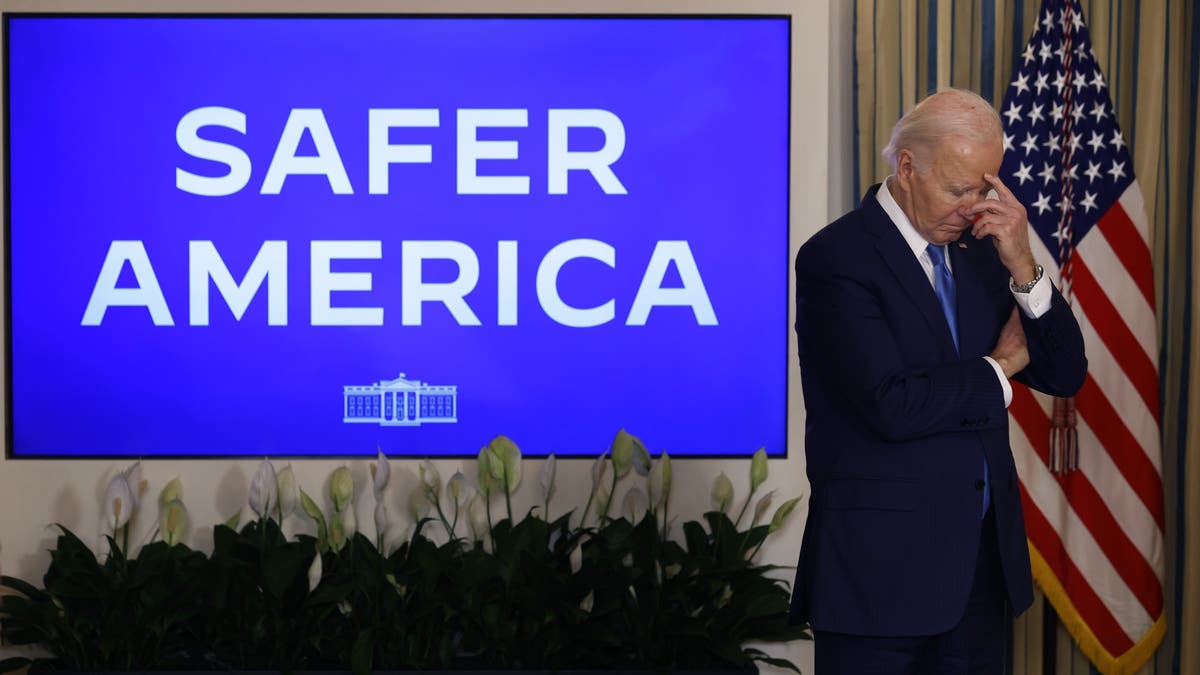
Then-President Joe Biden listens to his introduction before speaking to police chiefs from across the country and members of his administration at the White House on Feb. 28, 2024. (Chip Somodevilla/Getty Images)

Change of reporting programs

The Biden administration did just that, Alexandrow alleged. He said the administration changed reporting from the Uniform Crime Reporting (UCR) program to the National Incident-Based Reporting System (NIBRS).

"If you ask anybody on the street, no one will tell you that they feel safer or that crime is going down. However, it's the job of any leader, whether they're local, state or federal, to make your constituency feel safe. So how can we do that? Well, several police chiefs and city managers have been in trouble for manipulating stats," he said.

BIDEN-HARRIS ADMIN SAYS CRIME IS DOWN, BUT INDEPENDENT DATA SHOWS VIOLENT CRIME UP ACROSS 66 CITIES

Alexandrow, who founded Agape Tactical LLC, said police departments will remove "pieces of the pie" to show constituents that crime is going down.

"A city may remove domestic murders one year, and then the next they'll remove drug-related murders so they're taking two pieces of the pie out," he said. "So to manipulate their statistics, they take sections of the population out to prove that they're doing their job."

"The government has done the same thing by changing the way that crime is reported," he said.

North-Korea-Identity-Theft

(AP Photo/Andrew Harnik/File)

Percentage of police departments not reporting

He said that in 2023, 70% of police departments that were reporting under the UCR program stopped reporting under the NIBRS program.

FBI QUIETLY UPDATES CRIME DATA TO SHOW BIG JUMP IN VIOLENCE UNDER BIDEN-HARRIS ADMIN: ‘SHOCKING’

"And keep in mind, those are cities, including L.A., Chicago and New York City, along with 45% of Florida departments, not reporting," he said. "When you have these major cities not reporting, you're going to have a tremendous drop in crimes and, therefore, your statistics and your percentages will drop."

"When you have these major cities not reporting, you're going to have a tremendous drop in crimes …"

— Ken Alexandrow, founder of Agape Tactical
Merrick Garland

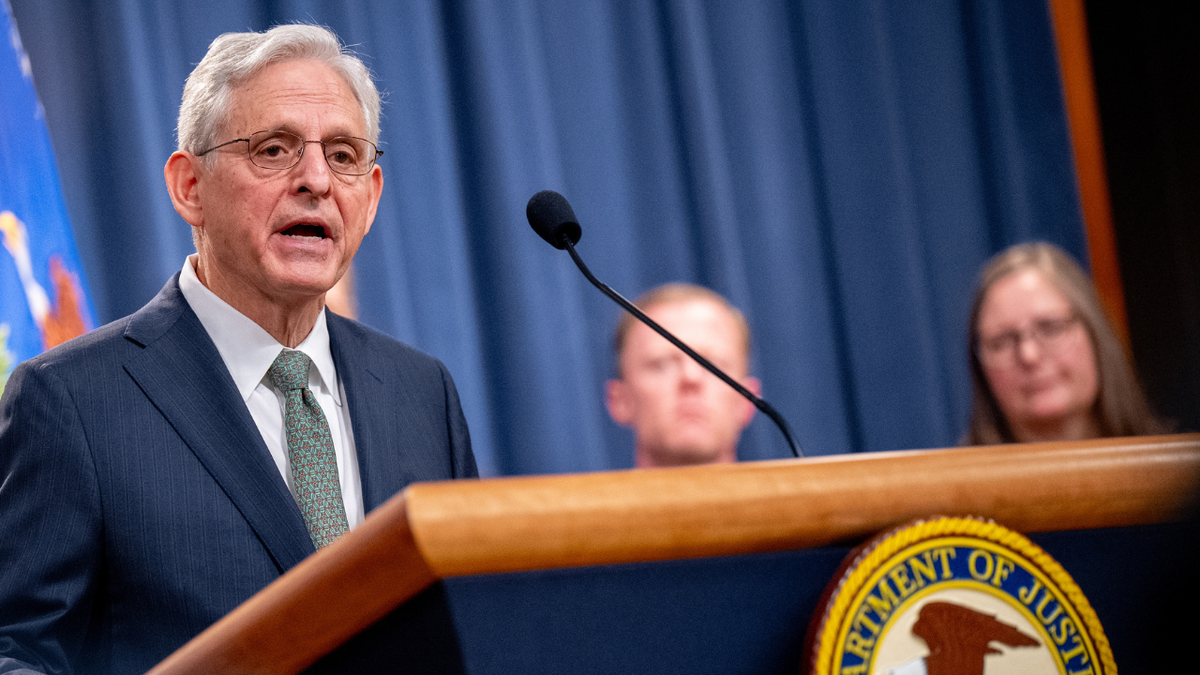
Then-Attorney General Merrick Garland speaks during his farewell ceremony at the Department of Justice in Washington on Jan. 16, 2025. (Nathan Posner/Anadolu via Getty Images)

In 2024, the Biden-Harris' DOJ reported a 17.5% decrease in murder rates. There was also a 7.1% decrease in rape, 3.6% decrease in aggravated assault and 7.8% decline in robbery over the first three quarters of the year. 

Between 2021 and 2022, violent crime decreased by 1.7%, which became a 3% decrease between 2022 and 2023; and through the second quarter of 2023 to 2024, it went down by 10.3%. In the same time period, the murder rate went down by 6.1%, starting from 2021 to 2022, by 11.6% in 2023 and finally by 22.7% in 2024.

The DOJ noted that the data was from 85 cities. They did not specify which cities reported.

HOMICIDES ARE PLUNGING IN BIDEN'S LAST YEAR COMPARED TO TRUMP'S: REPORT

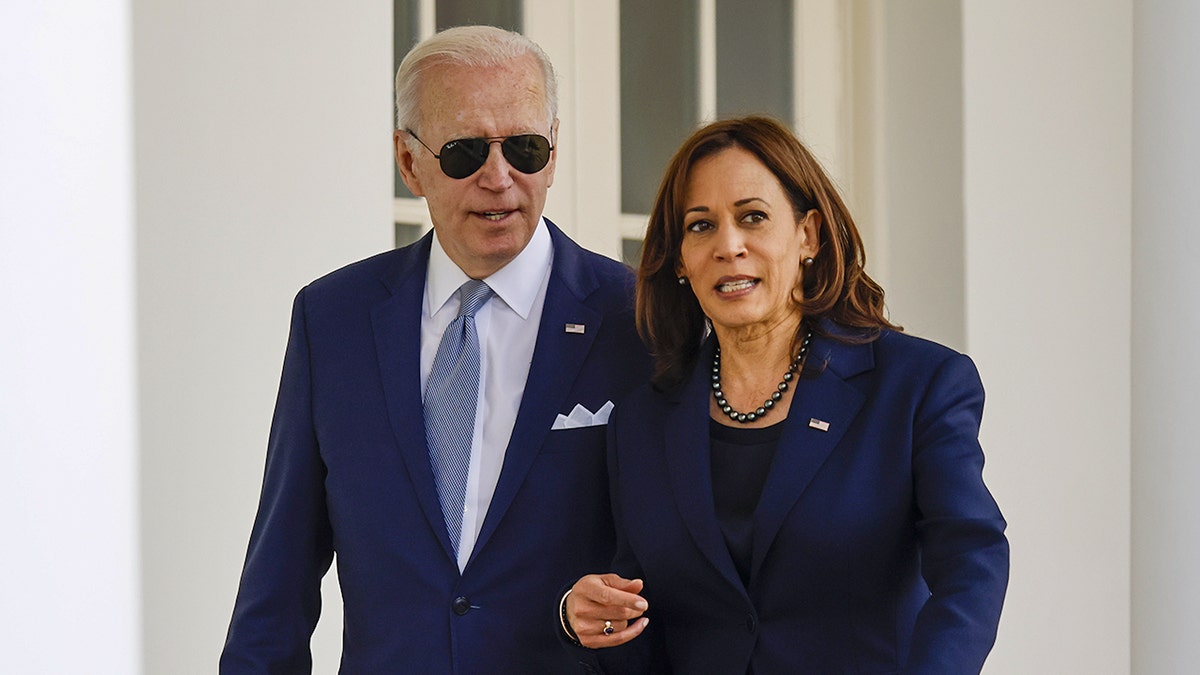
President Biden and Vice President Harris appear to be chatting as they walk through the Colonnade of the White House in Washington, D.C.

Then-President Joe Biden and then-Vice President Kamala Harris are shown at the White House on April 11, 2022. (Ting Shen/Bloomberg via Getty Images)

Biden admin previously shifting crime stats

In 2022, the Biden administration's FBI quietly updated its crime data to show an increase in violent crimes despite previous data showing violent crimes had fallen that year, which was touted as a victory for the administration.

The data was lauded by Democrats and the media as part of a turning point for crime woes in the U.S. after the crime wave of 2020, when defund-the-police protests and riots swept the nation and the pandemic’s stay-at-home orders upended daily life.

Fox News Digital has reached out to the DOJ, the New York City Police Department, the Los Angeles Police Department and the Chicago Police Department for comment.

Fox News' Emma Colton contributed to this report.


Sarah Rumpf-Whitten is a U.S. writer for Fox News Digital and Fox Business.

Source: https://www.foxnews.com/us/biden-justice-department-manipulated-crime-data-fit-democrats-narrative-retired-police-officer

Follow Middle East and Terrorism on Twitter

Automakers, drunk on EV mandates, may have Biden hangover with Trump zeroing in on the rules - Kevin Killough


by Kevin Killough

Now, the automakers, who were already losing billions on EVs, could be in more trouble, depending on how much EV sales were buoyed by the mandates the automakers were counting on.


Automakers have been backtracking on their EV goals over the past year as consumer interest failed to keep up with the vision automakers had. That vision appears to have been born from the idea that if the federal government mandated people drive electric cars, then people would buy them. 

Not only did consumers rebel against this EV future, they voted for a candidate who had vowed throughout his campaign to end the Biden-Harris administration’s EV mandate. On Monday, President Donald Trump made good on the promise, signing the “Unleashing American Energy” executive order. Among other things, it eliminates the EV mandate in order to “promote true consumer choice.” 

Now, the automakers, who were already losing billions on EVs, could be in more trouble, depending on how much EV sales were buoyed by the mandates the automakers were counting on. 

“I think the EV mistake has basically crippled the U.S. automotive industry, and unless there are bailouts, I can’t see these guys surviving,” Jack Lifton, executive chairman of the Critical Minerals Institute told Just the News

Scaling back

Trump’s order revokes a non-binding goal Biden had set in 2021 to make half of all new cars sold to be electric by 2030. In order to block the EPA’s tailpipe emissions standards, which by some estimates would require 66% of all new cars sold in the U.S. to be electric by 2032, Trump would have to work with the EPA to rewrite its rules. Either that or Congress could legislate the rule away. 

While most consumers still want gas-powered cars, EV adoption rates continued to climb last year. According to Cox Automotive’s Kelley Blue Book, EV sales jumped 15.2% year over year in the last quarter of 2024, and full-year EV sales reached 1.3 million, an increase of 7.3% in 2023.

Automakers, however, had expected sales volumes to be much higher, and when they weren’t keeping pace, they began realigning their EV targets with what consumers appear to want. Ford had planned to invest 40% of its capital budget in electric vehicle lines, but in August, that was brought down to 30%. The company also scrapped plans for a three-row electric SUV. 

General Motors had planned to sell only zero-emission vehicles by 2035. Last July, the company said it was pushing back the opening of an EV manufacturing plant in Michigan to mid-2026, and pausing plans for an electric line in its Buick brand. Stellantis also scaled back its EV targets last fall and temporarily suspended production of an EV Fiat 500 due to sluggish demand. 

Meanwhile, the automakers have also been losing billions on their EV bet. Ford, which separates its EV business from other parts of the company, lost $3.7 billion in the first three quarters of 2024. General Motors expects to narrow its losses on EVs this year by $2 billion to $4 billion.

All-electric Rivian lost $75,563 on every EV it sold in the third quarter, rivaling the $58,391 that Ford lost for each EV it sold, according to energy expert Robert Bryce. Despite these losses, Bryce reports, the Department of Energy Loans Program Office gave the carmaker a $6.57 billion loan guarantee.

All electric Tesla saw its net income rise in the third quarter of 2024 to nearly $2.17 billion, or 62 cents a share, up from $1.85 billion, or 53 cents a share, a year ago. However, Politico reports that the automaker earned $10.7 billion over 10 years selling credits from government climate programs designed to encourage automakers to switch to EVs. This funding stream accounted for 33% of the company’s profits. If Congress repeals the program, that could impact Tesla’s profits considerably. 

Still profitable

Bryce told Just the News that, while the losses on EVs suggest automakers are having serious financial problems, they remain profitable as a result of the revenues from sales of their gas-powered vehicles. Ford, for example, reported net income of $896 million for the third quarter of 2024, or 22 cents per share, and it forecast year-end $10 billion in adjusted earnings before interest and taxes. 

Bryce said it’s too soon to know how Trump’s executive orders will impact the industry. 

Lifton, who has decades of experience in the auto manufacturing sector, acknowledged that some have called his claims of an automaker collapse “crazy” because the industry is profitable. He explains that his prediction is based on what happens if the automakers face limited or expensive financing options. 

By his estimation, investment in EVs in the U.S. to date has been $146 billion. Ford, for example, invested billions in a battery plant in Michigan, which has faced local opposition as well as complications over the involvement of a Chinese company the Pentagon blacklisted earlier this month. 

“On their balance sheet it shows a billion-dollar investment. In fact, it’s a loss. The plant’s never going to be built. They’re preparing the site, they spend a billion,” Lifton said. 

The automotive industry is the largest user of cash in the world, he explained. It takes $3 billion from the time they design a vehicle to the time they start production. 

“Their working capital is astronomical,” he said, but they aren’t the largest return on capital. 

"It’s a mess"

The problem, he said, will come when they go to the bank to finance new production of internal-combustion engine vehicles, after dropping $146 billion on EVs that don’t get produced. 

“The banks are going to say, ‘But you don't have any collateral. You've used it all up on all these dead plants,” Lifton said. 

The banks will either deny the lending, or they’ll raise interest rates, Lifton predicts. On a $100 billion loan, 7% interest is a considerable hit, when automakers might have previously received financing at 1% or 2%. 

“So it's a mess. My prediction is you're going to see the retirement of the management of both Ford and General Motors in the next couple of years. They fell for the government trying to manipulate the market. It didn't work,” Lifton said. 

The EPA’s regulations still stand, and repealing them won’t be as easy as signing an executive order. Likewise, there are many state-level incentives and regulations, which could prop up consumer interest in EVs. 

What is certain is that a 100% EV adoption rate won’t likely be realized for decades, if ever. Realigning to what car buyers want, as opposed to what the Biden-Harris administration wanted, is going to be costly for the automakers.


Kevin Killough

Source: https://justthenews.com/politics-policy/energy/automakers-drunk-ev-mandates-may-have-biden-hangover-trump-zeroing-rules

Follow Middle East and Terrorism on Twitter

The Addicted, Petty, and Hysterical Left - Victor Davis Hanson


by Victor Davis Hanson

Years of leftist hysterics and hollow attacks on Trump had desensitized voters, leaving the public weary, dismissive, and ultimately handing Trump a resounding 2024 victory.


Donald Trump won the 2024 election in part because the left’s hysterical style of attacking Trump no longer worked.

After a decade of this unhinged furor, it proved worthless in winning public support—and for two simple reasons.

One, after years of Russian collusion hoaxes, the laptop disinformation farce, and the warped lies about the “suckers” and “fine people on both sides”—the shrill left became predictable.

So, the bored public began tuning them out, switching channels, hitting the mute button, and pulling the plug.

Like the deleterious effects of inflation that eventually render a currency worthless, nonstop hectoring, hysterics, pontification, and distortion finally made all such criticisms of Trump mostly as valueless as 1930s German marks.

Second, the wearied public never heard reasoned counterarguments from the likes of a Rachel Maddow. Instead, on spec, she kept mouthing, “The walls are closing in” on Trump.

Joe Biden did not explain why his open border was a better idea than Trump’s closed one. He preferred mumbling about “semi-fascists!” and “ultra-MAGA!”

The Never Trumpers did not critique the Trump deficits. Instead, they hammered away that Trump was Hitler, or Mussolini, or Putin—or just a dangerous dictator or autocrat.

Angry retired generals never demonstrated why Trump was, in their view, an existential threat to democracy. Instead, they shouted nonstop in op-eds and interviews that he was a fascist, Nazi-like, no different from the guards at Auschwitz, a pathological liar, and should be summarily removed.

Worn-out voters began to understand these psychodramas were substitutes for substantive criticism or occasions for legitimate debate.

Indeed, the exhausted public finally concluded that the hysterics increased in direct proportion to the poverty of the charges.

So, what did ten years of such derangement achieve for the left?

Trump now has control of the White House and both houses of Congress operate under Republican majorities.

The Supreme Court is mostly conservative. Almost all of Trump’s issues—the border, immigration, the economy, foreign policy, and crime—poll well over 50 percent.

No matter, the left is still hammering away at the trivial and irrelevant—and remains paralyzed in furor and hysterics.

When Snoop Dogg performed for the Trump inauguration, Ann Navarro of The View, in racist fashion, called the African-American rapper “a trained seal.”

When Pete Hegseth went before the Senate for confirmation as Secretary of Defense nominee, Democrats asked almost nothing about nuclear strategy, recruitment shortfalls, or a paucity of artillery shells.

Instead, what followed were animated gotcha lectures about Hegseth’s prior adultery.

No sooner had Hegseth finished his successful audit than the left rounded up his former sister-in-law, now divorced from his brother.

A hardcore Democrat, she confessed she wanted his nomination rejected. She further claimed—with no evidence—that she had “heard” from his ex-wife that Hegseth was a wife-beater.

His former wife immediately denied the charges. She pointed to their prior divorce settlement that recorded neither had ever lodged such a complaint against the other.

Next, the left went after Elon Musk. Recently, he had finished an address by touching his heart and then extending his arm out to the crowd.

To the left, that greeting now became proof of a “Nazi salute.”

Yet in no time, the internet cited photos of Hillary Clinton, Barack Obama, and Elizabeth Warren all extending their stiff arms out in identical fashion to Musk.

We were next told by critics that Donald Trump was not technically president because he did not place his left hand on the Bible as he swore his presidential oath.

The Constitution, of course, demands no such act. But it does explicitly state that no religious test shall be required to hold public office.

During a National Prayer Service for newly sworn-in President Trump, the Episcopal bishop of Washington D.C., Mariann Budde, hijacked the sermon. She rebuked Trump—sitting right in front of her—because he supposedly had portrayed illegal aliens and transgendered children “in the harshest of lights.”

Budde later bragged that had she used the occasion to sandbag Trump with a “one-on-one conversation.”

She talked grandly of mercy, but not of the thousands of Americans who have been physically assaulted or attacked by illegal aliens, or tens of thousands of deaths due to illegally imported fentanyl, or the unfairness of open borders to legal immigrant applicants, or the suffering of our citizen poor when their social services are overwhelmed by some 12 million illegal entries of the last four years.

In sum, the left wants no debate because they know voters have rejected what they saw and suffered during the last four years of the Biden administration.

Forgetting nothing, learning nothing, like zombies, leftists keep screaming banalities. But like addicts and their feel-good fixes, their hysterics only further turn off the public as they destroy themselves.

 
Victor Davis Hanson

Source: https://amgreatness.com/2025/01/23/the-addicted-petty-and-hysterical-left/

Follow Middle East and Terrorism on Twitter

Katz: Jenin op will put end to resurgence of Iran-backed terrorism - Akiva Von Konigsveld


by Akiva Von Konigsveld

"We will not allow the arms of the Iranian octopus and radical Sunni Islam to endanger the lives of the [Israeli] residents and establish an eastern terrorist front against the State of Israel," said the Israeli defense minister.


An Israel Defense Forces military vehicle alongside a Palestinian ambulance in the Samaria city of Jenin, Jan. 21, 2025. Photo by Jaafar Ashtiyeh/AFP via Getty Images.

Jerusalem’s ongoing counter-terror operation in the northern Samaria city of Jenin marks a change in Israel’s security strategy in the area, Israeli Defense Minister Israel Katz said on Wednesday.

Katz visited the military command post in the area of the IDF’s Menashe Territorial Brigade on Tuesday to monitor the progress of the operation.

“‘Operation Iron Wall’ in the Jenin refugee camp will be a shift in the IDF’s security doctrine in Judea and Samaria,” the defense minister stated in remarks published by his office on Wednesday morning.

“A high-intensity operation to eliminate terrorists and the camp’s terror infrastructure—without the resurgence of terror into the camp once the operation ends—is lesson number one from the method of repeated raids in the Gaza Strip,” the statement continued.

“We will not allow the arms of the Iranian octopus and radical Sunni Islam to endanger the lives of the [Israeli] residents and establish an eastern terrorist front against the State of Israel,” Katz added, vowing, “We will strike hard at the arms of the octopus until they are severed.”

On Tuesday night, an unnamed senior security force told the Channel 14 News broadcaster that the large-scale campaign against Iranian-backed terrorist groups in northern Samaria could take months.

“When it ends, the terror camps will cease to exist. What we did in Gaza, we will do to them as well; we will leave them in ruins,” the source said.

The Israel Defense Forces announced in a statement on Wednesday morning that it “attacked terrorist infrastructure from the air, hit multiple terrorists and destroyed explosive devices in Jenin.”

“Over the past 24 hours, the forces have hit more than ten terrorists. In addition, air strikes were carried out on terrorist infrastructure in the area and many explosive devices that terrorists had planted on roads were destroyed,” the IDF stated. “The forces continue the operation.”

According to the Palestinian Authority Ministry of Health, at least nine people were killed by Israeli security forces in Jenin throughout the day on Tuesday, and more than 40 were said to have been wounded.

The Ynet outlet reported that the Israel Defense Forces carried out a drone strike on a Jenin terror cell that was in the process of planting explosive devices.

“Operation Iron Wall” includes the IDF, Israel Security Agency (Shin Bet) officers and Border Police, according to an army statement on Tuesday.

Hebrew media reported that four IDF battalions were participating in the operation, amounting to several hundred ground troops.

The IDF entered Jenin immediately after P.A. police left the area, according to Arab reports. Earlier this week, it was reported that Ramallah struck a deal with the Iranian-backed Jenin Battalion terror coalition, ending a rare month-long P.A. operation in the city.

Israeli ground forces entered the city with the stated goal of preserving Jerusalem’s ability to swiftly act against terrorist groups in Jenin, known among Palestinians as the “Martyrs’ Capital” due to the significant number of suicide bombers that have emanated from the area.

The Israel Hayom daily reported that the counter-terror raid was first planned for December, but postponed at the request of the political echelon after the P.A. launched its Jenin operation.

“At the direction of the Security Cabinet, the IDF, Shin Bet and Israel Police today launched a large and significant military operation to eradicate terror in Jenin—’Iron Wall,'” Israeli Prime Minister Benjamin Netanyahu’s office said in a statement on Tuesday afternoon.

“This is another step towards the goal we have set—strengthening security in Judea and Samaria. We are acting systematically and resolutely against the Iranian axis wherever its arms reach—in Gaza, Lebanon, Syria, Yemen and Judea and Samaria,” the PMO added.

In August, while serving as Jerusalem’s foreign minister, Katz called for “the temporary evacuation of Palestinian residents and whatever steps are required” amid an uptick in terror attacks emanating from Jenin.

The Islamic Republic of Iran is working “to establish an eastern terrorist front” in Judea and Samaria, charged Katz, following its proxy model in Lebanon with Hezbollah and the Gaza Strip with Hamas, by “financing and arming terrorists and smuggling advanced weapons from Jordan.”


Akiva Von Konigsveld

Source: https://www.jns.org/katz-jenin-op-will-put-end-to-resurgence-of-iran-backed-terrorism/

Follow Middle East and Terrorism on Twitter