by Majid Rafizadeh
By buying vast amounts of Iranian oil at discounted rates, Beijing gives Tehran the hard currency it needs to fund Hezbollah, Hamas, the Houthis and other regional militias. The oil exports also permit Iran to stave off an economic crisis at home and avoid the financial collapse that sanctions on Iran alone were supposed to produce.
Iran uses Iraq not just as a military platform but as a financial artery, moving funds through banks, exchanging currencies, and availing itself of corrupt networks to bypass sanctions. Without pressure on Iraq to clean up these financial tributaries, Iran enjoys a back door that keeps it stomping ahead even while under international pressure. It is a door the West has left open for far too long.
Lebanon's weakness has allowed the Iranian regime to turn the country into its most important forward base – felicitously right on the border of Israel.
By buying vast amounts of Iranian oil at discounted rates, Beijing gives Tehran the hard currency it needs to fund Hezbollah, Hamas, the Houthis and other regional militias. The oil exports also permit Iran to stave off an economic crisis at home and avoid the financial collapse that sanctions on Iran alone were supposed to produce.
Turkey, Qatar, Iraq, Lebanon, Yemen, China and other states that allow Iran to maneuver are providing Tehran with exactly what it needs to get back on its feet: safe geography, cash, energy markets, financial loopholes, proxy shelters, and diplomatic cover.
Stopping the bellicosity of Iran's regime requires a broader vision. Only when the external lifelines of Iran's regime are cut will it finally feel the full weight of international pressure. Only then can the Iranian people and the region move toward stability, security and freedom, safe from Iran's destructive reach.
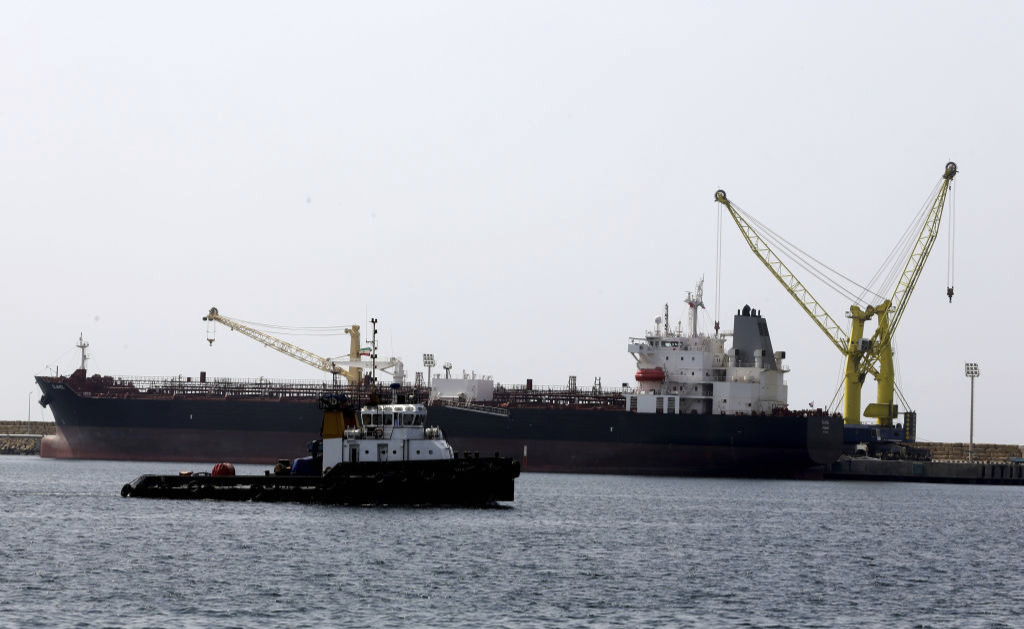
While everyone is focusing on Gaza, Russia and Ukraine, Iran has stealthily been rebuilding its war machine.
One of the most effective ways to slow the remilitarization of Iran's brutal regime is not only to put direct pressure on the regime itself but also to target the countries that allow it to operate freely, fund its proxies, and expand its influence.
Iran's regime survives largely because it has external support that enables it to move money, find recruits, transfer weapons, and, after every round of sanctions, rebuild its war machine. If these countries that are allied with Tehran were to face real consequences for enabling Iran's ability to rearm and reassert itself, the threat it could pose would dramatically shrink. Disempowering Iran requires cutting off not just its internal power, but also the foreign platforms that help it to finance itself, operate, and grow.
Iran's networks across the Middle East demonstrate how deeply the regime depends on other countries to advance its agenda. Recent discoveries of Hamas activity in Turkey exposed that the group has been using Turkish territory as a logistical and financial hub, benefiting from Iran's sponsorship and direction. Findings by Israel reveal that individuals affiliated with Hamas have been fundraising, operating, and coordinating from Turkey -- using the country as a safe bridge to move money and connect its proxy networks.
The case appears part of a larger pattern: Iran identifies countries where the rule of law is weak, political cover is available, and financial systems can be exploited, then builds layers of infrastructure there. When these countries do not face consequences from the international community, Tehran knows that even when pressure builds at home, it can still expand abroad.
Iran's proxies are still anchored in states that reinforce their presence.
In Iraq, militias backed by Iran have for years operated with impunity, shaping security, the economy and the political landscape. These militias control border crossings, smuggling routes, and major economic contracts, giving Tehran a revenue stream and influence far beyond its borders. Iran uses Iraq not just as a military platform but as a financial artery, moving funds through banks, exchanging currencies, and availing itself of corrupt networks to bypass sanctions. Without pressure on Iraq to clean up these financial tributaries, Iran enjoys a back door that keeps it stomping ahead even while under international pressure. It is a door the West has left open for far too long.
In Lebanon, an even clearer example, Hezbollah essentially functions as a branch of Iran while controlling ports, security agencies, border crossings and a large part of the country's political system. Lebanon's weakness has allowed the Iranian regime to turn the country into its most important forward base – felicitously right on the border of Israel. Hezbollah receives funding, training and weapons from Iran, then uses Lebanon's political paralysis to keep itself from being held to account.
If no one applies pressure on Lebanon's political elites and institutions, which tolerate and often enable Hezbollah's dominance, Iran will continue enjoying its permanent military stronghold in the country.
Outside the Middle East, China has been keeping Iran's regime in the style to which it is accustomed by purchasing large amounts of Iranian oil – especially when sanctions are in place and when the international community attempts to reimpose additional restrictions. By buying vast amounts of Iranian oil at discounted rates, Beijing gives Tehran the hard currency it needs to fund Hezbollah, Hamas, the Houthis and other regional militias. The oil exports also permit Iran to stave off an economic crisis at home and avoid the financial collapse that sanctions on Iran alone were supposed to produce. When Iran has a world power delighted to buy its oil unconditionally, sanctions lose their strength at the exact moment when the international community is trying to suffocate its unneighborly regional behavior.
Turkey, Qatar, Iraq, Lebanon, Yemen, China and other states that allow Iran to maneuver are providing Tehran with exactly what it needs to get back on its feet: safe geography, cash, energy markets, financial loopholes, proxy shelters, and diplomatic cover. The current sanctions regime is not working, and Tehran knows it.
The solution is unsurprisingly straightforward: the European Union needs to join the United States in applying direct, coordinated, and consistent political and economic pressure, not just on Iran but on the governments, companies and institutions that help Iran circumvent restrictions. When those countries realize that empowering Iran's regime comes at the cost of losing access to the entire US and EU markets, their calculus might change.
No country will most likely sacrifice the benefits of trading with the West just to help Tehran continue to destroy the Middle East. The pressure needs to be heavy enough that governments in Turkey, Qatar, Iraq, Lebanon and even China are forced to reconsider whether the relationship with Iran is worth the enormous economic risks.
Stopping the bellicosity of Iran's regime requires a broader vision. Only when the external lifelines of Iran's regime are cut will it finally feel the full weight of international pressure. Only then can the Iranian people and the region move toward stability, security and freedom, safe from Iran's destructive reach.
Follow Majid Rafizadeh on X (formerly Twitter)
Dr. Majid Rafizadeh is a political scientist,
Harvard-educated analyst, and board member of Harvard International
Review. He has authored several books on the US foreign policy. He can be reached at dr.rafizadeh@post.harvard.edu
Source: https://www.gatestoneinstitute.org/22128/cut-off-iran-foreign-support

No comments:
Post a Comment