by Emanuel Fabian
Plans being drawn up for large-scale op, with terror group seen as unlikely to give up weapons otherwise; for now, IDF holding tight on Yellow Line, amid ‘endless’ tunnel demolition
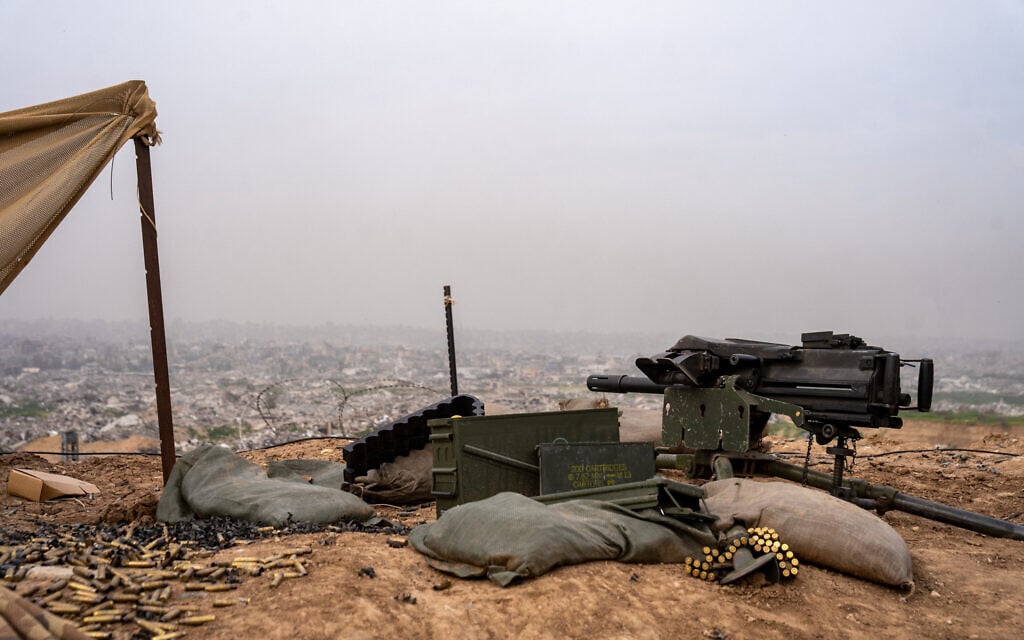 |
A view of Gaza City's Shejaiya neighborhood from an
Israeli army position in the Gaza Strip, February 9, 2026. (Emanuel
Fabian/Times of Israel) |
SHEJAIYA, Gaza Strip — Four months into a ceasefire with Hamas, the Israeli military is drawing up plans for a renewed offensive in the Gaza Strip to disarm the terror group by force, The Times of Israel has learned.
The US-brokered ceasefire plan reached in October foresees the demilitarization of Gaza, including the disarmament of Hamas, along with a gradual withdrawal of Israeli forces from the Strip. However, implementation of the plan has remained unclear, with Israeli officials increasingly believing that stripping Hamas of its weapons will be impossible without the Israel Defense Forces taking action.
Should hostilities renew, fighting is liable to be more intense and more widespread than previous rounds, as Israeli forces will no longer constrained by the presence of hostages on Gazan soil.
Prime Minister Benjamin Netanyahu and US President Donald Trump have both insisted that the terror group must give up its weapons in the near future. Trump has repeatedly asserted that Hamas “promised” to lay down its arms, and has threatened the group over the issue.
However, at least publicly, Hamas has never agreed to lay down its arms.
Israel also believes that left unchecked, the terror group will remain in power in the Strip and try to rebuild its militarily strength while tightening its grip on areas under its control. The military this month said that since the start of the ceasefire, Hamas “has violated the agreement and focused its efforts on restoring its military capabilities.”
Last month, a senior Israeli security official said that it was looking increasingly likely that the Israel Defense Forces would have to act militarily against Hamas to disarm it, as the military believed the terrorist organization will not do so of its own accord.
The official said the goal of disarming Hamas would be attainable by force, but would likely take many years.
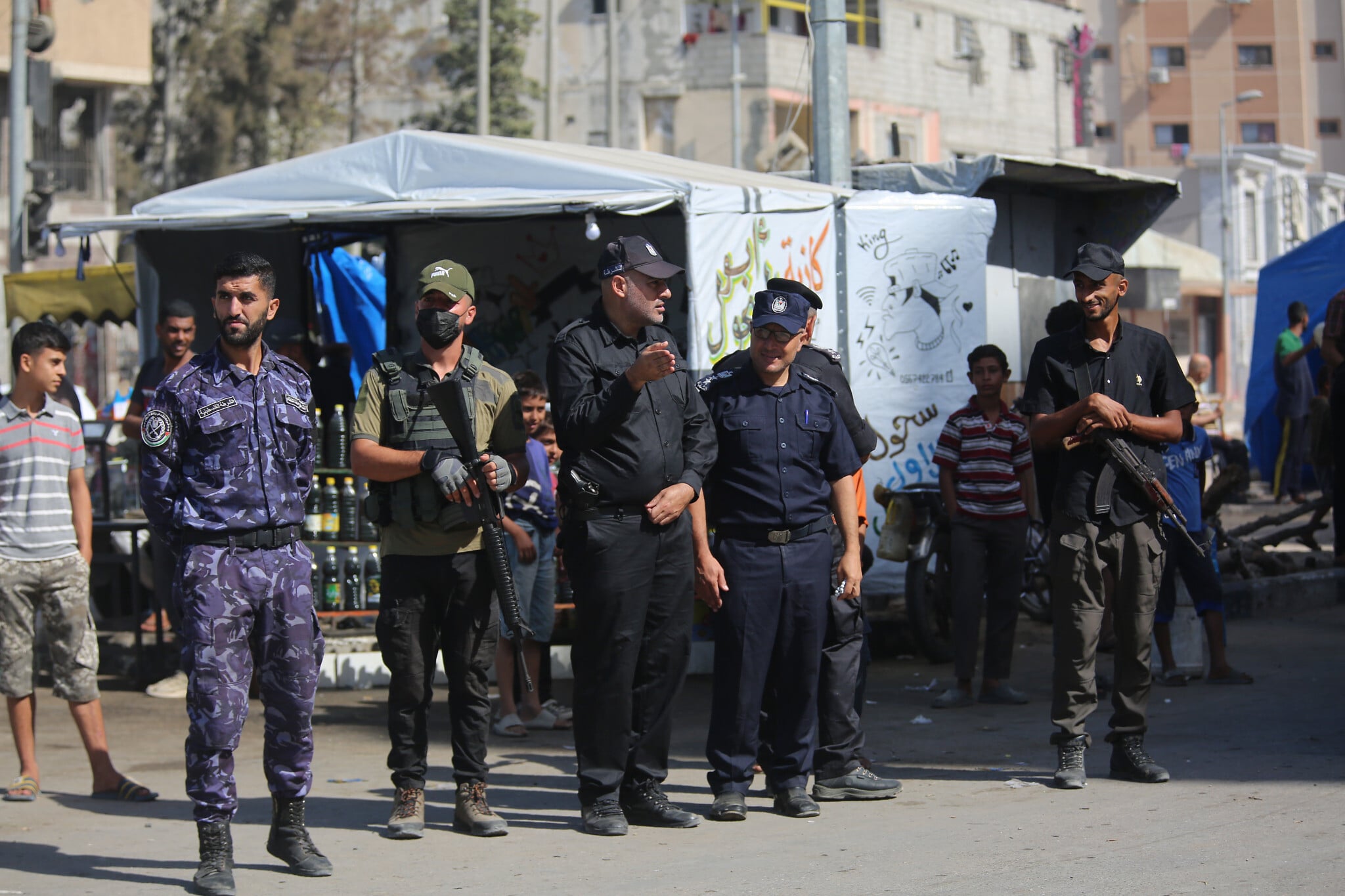
In recent weeks, the IDF’s Southern Command has been building plans for a series of potential operations in the Strip should the political leadership instruct the military to disarm Hamas by force, The Times of Israel has learned.
Hinting at the military’s offensive plans, Defense Minister Israel Katz this month said that Israel was “determined” to disarm Hamas, threatening to “dismantle” the terror group if it doesn’t agree to lay down its arms.
“After we have completed the objective of bringing back all of our hostages, we are determined to complete the disarmament of Hamas and the full demilitarization of Gaza,” Katz said. “If Hamas does not disarm in accordance with the agreed framework, we will dismantle it and all of its capabilities.”
Such an offensive aimed at disarming Hamas — should it go ahead — could be far more intense than the IDF’s operations in the Strip throughout the two years of war that began on October 7, 2023. The military has stressed throughout the war that it planned its operations in Gaza with the hostages in mind, even though some were still harmed by Israeli actions.
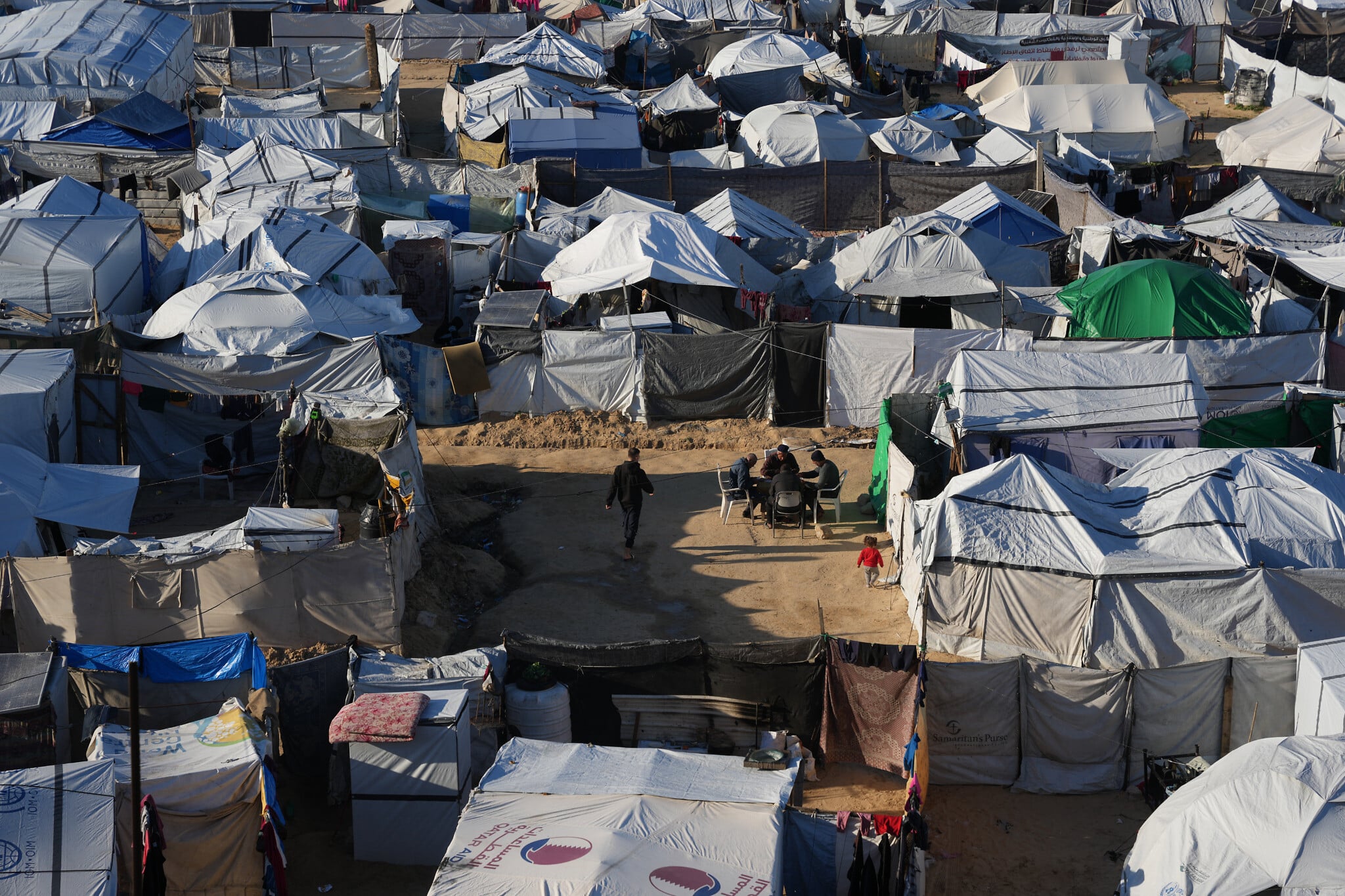
The IDF would also be expected to operate in areas of Gaza where ground troops have not set foot amid the war, including Deir al-Balah in the Strip’s center and the Mawasi area on the southern coast.
The IDF did not operate in those areas mainly due to the potential risk to the hostages, as well as the large concentration of Palestinians there following Israeli evacuation orders from other areas of the Strip.
But Israel could still be constrained by the Trump administration, which has made the Gaza ceasefire a centerpiece of its Board of Peace initiative. Any renewal of large-scale fighting could upend Trump’s Gaza plan and threaten the support of its international backers.
In October, Trump indicated that he would allow Israel to resume fighting in Gaza if Hamas doesn’t uphold the terms of the hostage deal. However, with the return of all the hostages, it is unclear if Trump still holds this position and would allow Israel to carry out a full-scale offensive against Hamas.
Holding down the Yellow Line
Until Hamas disarms, Israel is not expected to withdraw its troops from the Strip or approve any rebuilding efforts in the war-torn territory, leaving the ceasefire agreement in limbo.
Israeli troops currently hold 53% percent of the Strip, with most of the approximately 2 million Gazans in the remaining 47% of the enclave under ostensible Hamas control.
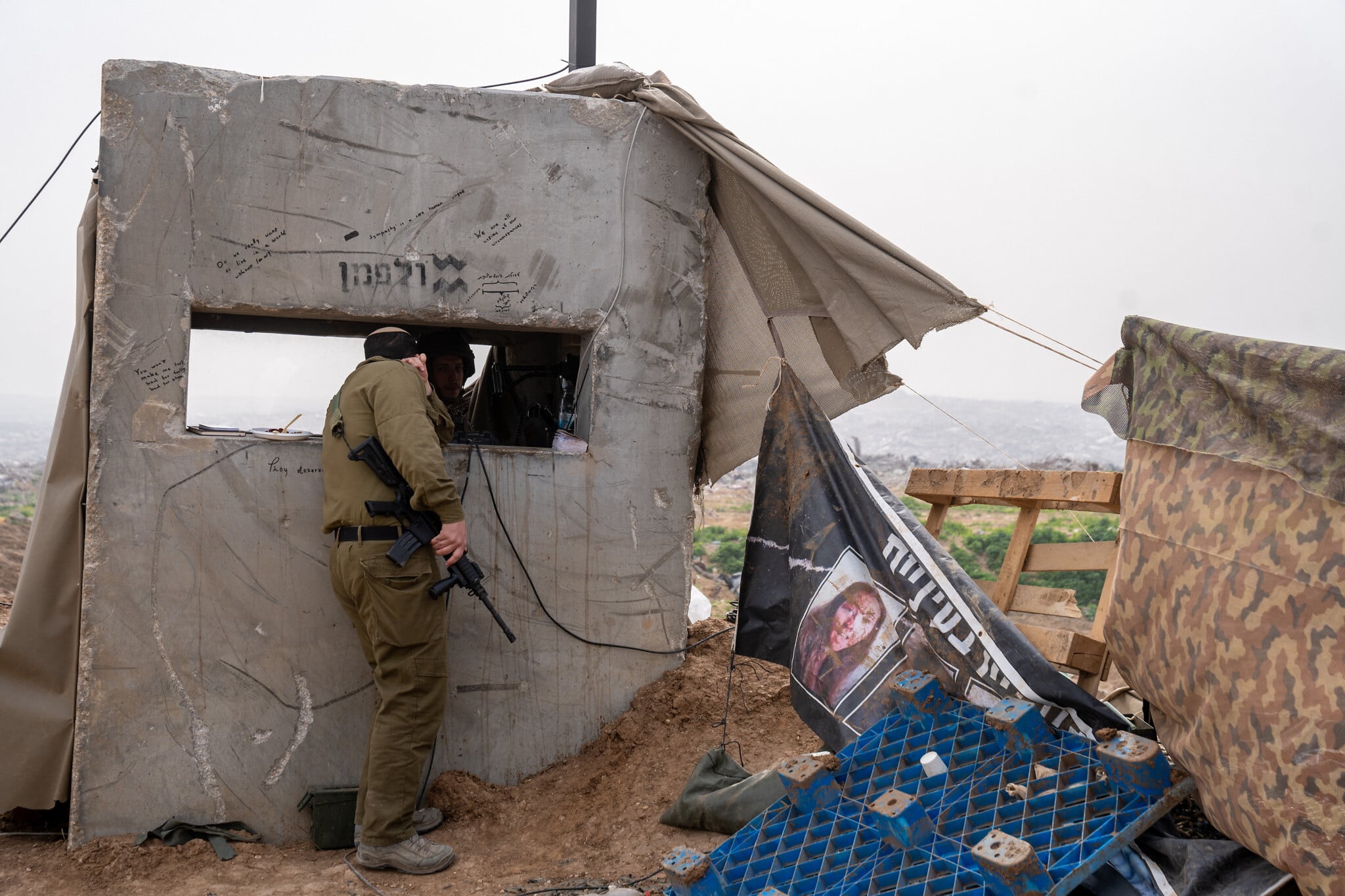
During a visit to a forward army outpost in Gaza City’s Shejaiya neighborhood on Monday, commanders told The Times of Israel that Hamas was continuing to test the IDF by sending operatives across the ceasefire line to attack troops.
Since the start of the ceasefire in October, the IDF has said it has killed dozens of terror operatives and other suspects who have crossed the Yellow Line — demarcating where the military withdrew to in the Strip — and approached troops. Such incidents have taken place on a near-daily basis.
Last week, a reservist officer was seriously wounded by gunfire carried out by Palestinian gunmen against troops who were operating near the Yellow Line in Shejaiya. In response, the military launched a series of strikes against Hamas.
“No one is allowed to cross the Yellow Line. Whoever crosses is destroyed or eliminated at that moment,” said a battalion commander in the Alexandroni Reserve Infantry Brigade during Monday’s visit.
The reservist forces stationed at the outpost seemed relatively relaxed, despite the recent attack by gunmen that left one of their company commanders wounded, though such incidents, including last week’s, have taken place during operations by troops closer to the Yellow Line, rather than at the outpost, which stood several hundred meters east of the ceasefire boundary.
A vast landscape of rubble could be seen stretching out toward Gaza City, and deeper in the Strip there was a skyline of partially crumbled but still-standing structures.
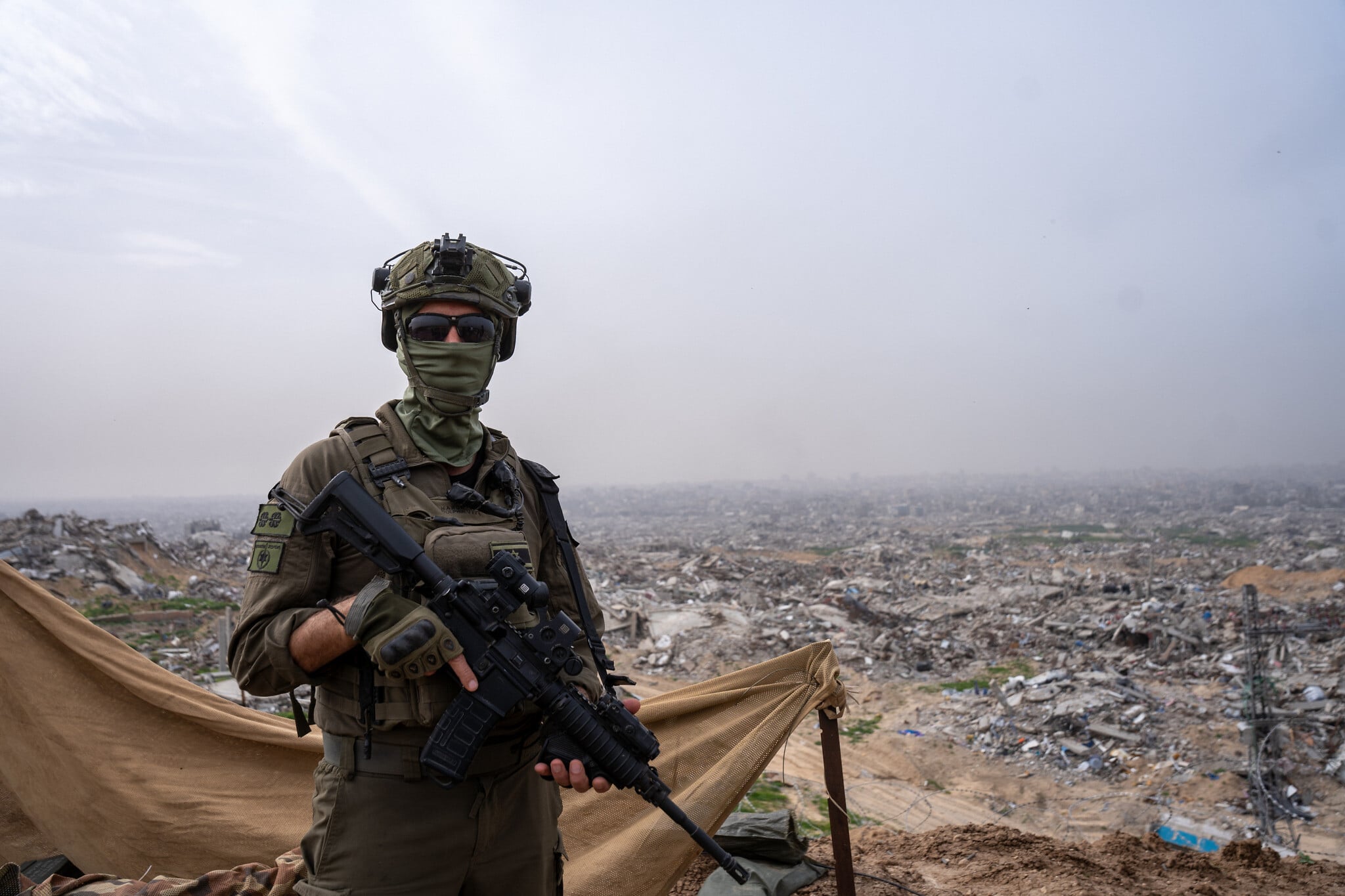
The Yellow Line itself, marked by bright yellow concrete blocks placed inside the mangled urban landscape, was not visible to the naked eye due to overcast conditions.
According to the commander, the terror group had been forcibly sending civilians across the line to test the Israeli response.
Hamas “knows that we don’t shoot at women and children, even those who are unarmed,” he said.
“If they don’t pose a threat, they won’t die. So [Hamas] is trying to take advantage of that,” he added.
“A terrorist who crosses the Yellow Line will die. Will we kill children? Of course we won’t. But no one is [crossing the Yellow Line] for no reason.”
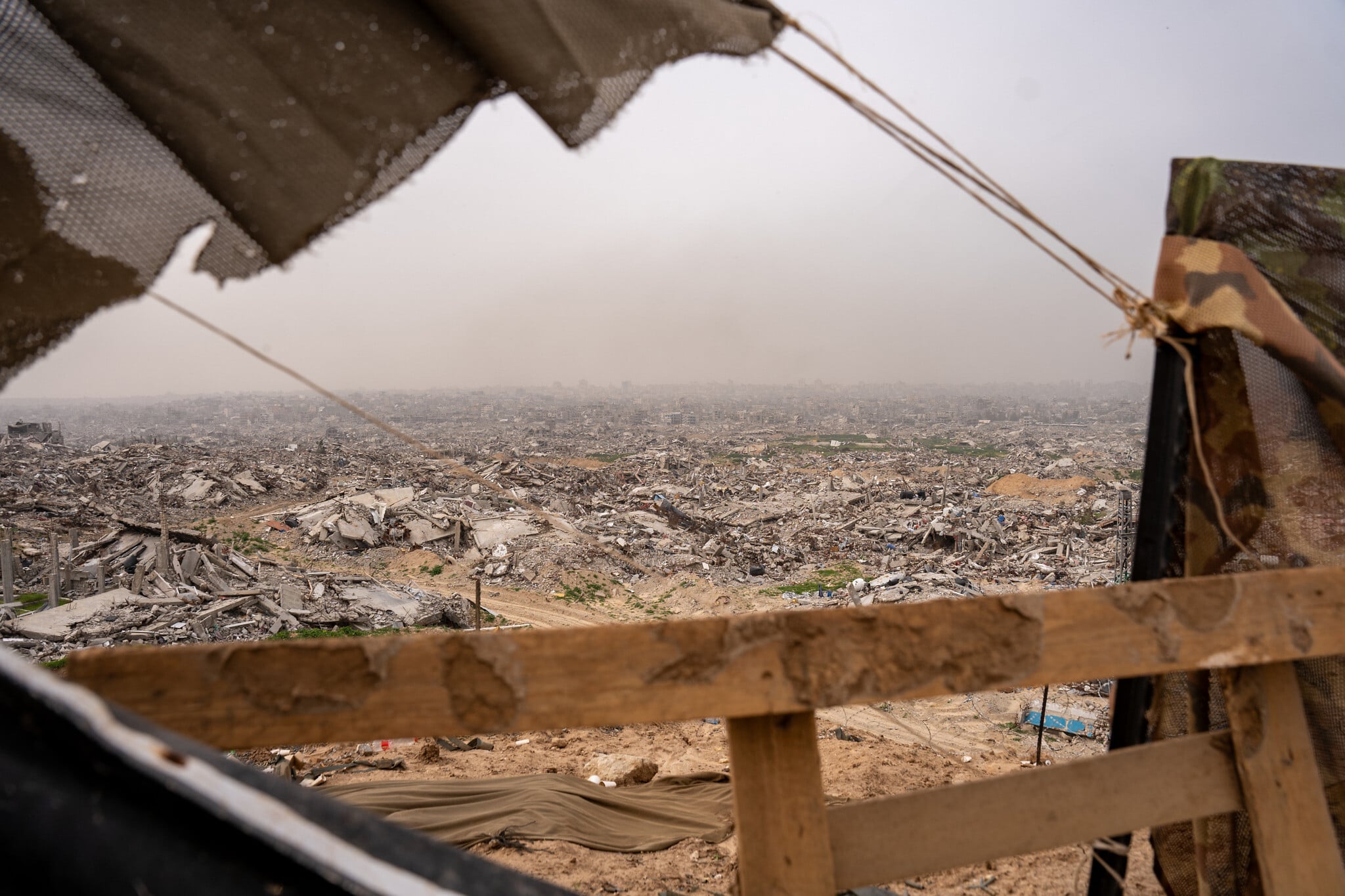
Within the IDF-held territory of the Strip, the military was continuing to work on demolishing Hamas’s tunnels, a task that some soldiers described as “endless.”
The military believes that at least 60% of Hamas’s tunnels in Gaza are still intact, though the percentage could be higher, as the army does not know how many underground routes it has not yet found.
“We have defensive lines that we are deployed along,” the battalion commander said, adding that he was “not concerned” about the fact that “most” of Hamas’s tunnels still exist in the territory.
“We are here on the defensive lines to monitor anyone advancing on the ground or underground,” he added. “We have several defensive lines that are meant to prevent any crossing of the fence, any crossing of this line of outposts.”
Emanuel Fabian
Source: https://www.timesofisrael.com/idf-readying-new-gaza-offensive-to-disarm-hamas-by-force/

No comments:
Post a Comment