by James Genn
"This is a genocide in the making," and Iranian protesters need help to neutralize elements the regime has used to brutalize its own citizenry, Crown Prince Reza Pahlavi told Hugh Hewitt.
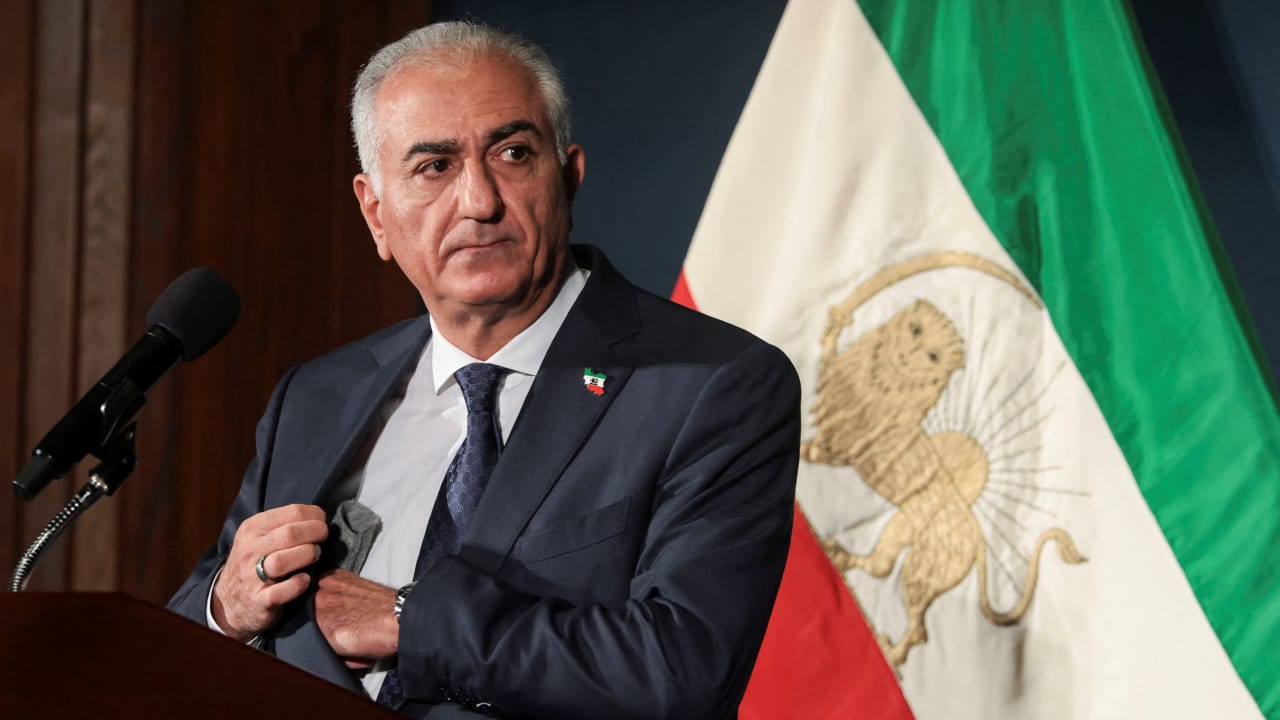 |
The Islamic Regime's clampdown on protesters, including the shooting of unarmed civilians, is a "genocide in the making," Iranian Crown Prince Reza Pahlavi told radio host Hugh Hewitt on Monday.
Prince Reza Pahlavi joins Hugh to discuss the immediate and medium-term future for Iran and the choice before @POTUS https://t.co/1DAYr2PLvt
— HughHewittShowLinks (@HHSLinks) February 9, 2026
Hewitt notably served as the former president and CEO of the Richard Nixon Foundation and former deputy director of the Office of Personnel Management under the Reagan administration.
"What do you hope to see [US President Donald] Trump order our military and America to do right now?" Hewitt asked the prince.
"When you are fighting an occupying force that has taken a whole country hostage, and people are on the streets unarmed as civilians demanding liberation from this tyranny and hoping for freedom, and at the time they are being shot on the streets by military machine guns, and basically war instruments, this is no longer a fair fight. This is a genocide in the making," he responded.
The only thing that will "equalize the playing field" for protesters is "assistance that is needed to neutralize elements that the regime has used against its own citizenry to brutalize them the way they have," Pahlavi affirmed.

"This means targeting the regime's top apparatus of repression - the Islamic Revolutionary Guard Corps," he continued.
"Only a military intervention at this point could level the playing field. This is the reason why the Iranian people have been anxiously waiting for the action that [Trump] has promised he will do in support of the Iranian people," he stated, implicitly urging Trump to carry out military strikes against the regime, and the IRGC in particular.
Pahlavi hopes Trump will prove he is 'no Barack Obama'
The crown prince urged the Iranian people to "hang in there." He added that they hope Trump will stay true to his word, "and that he's no [former US president] Barack Obama...[that] he believes in what he says, and he's a man of peace, and ultimately will help the Iranian people get rebuilt," Pahlavi said.
The Islamic Regime has been "devastating not only to Iran and Iranians, but has been a source of chaos and instability since its inception... the most hostile regime against America as opposed to a country that was always with America, and certainly not at all on the same wavelength as [the Trump administration," he told Hewitt.
Hewitt to Pahlavi: How many Iranians have been killed during the anti-regime protests?
Hewitt asked Pahlavi how many Iranians he estimates have been killed during the recent weeks of anti-regime protests that erupted nationwide.
"The number [varies] between 36,500 [and] about 40,000 - that's the last estimate that we've had. It could be higher than that, because there's still ongoing arrests happening," Pahlavi replied.
"They are killing people in hospitals. They are finishing them off on their wounded beds. They are arresting doctors or anybody rendering assistance to the victims. Who knows how much the total numbers will be, but the most conservative figure so far has been over 36,000, unfortunately," he added.
Hewitt replied that he would adopt that number going forward.
Could the Iranian military launch successful retaliatory attacks against possible US, Israeli strikes?
Following these two questions, Hewitt queried the prince about the risks posed by the US and its allies if they conduct military strikes on Iran, referencing threatening propaganda videos published by the regime, including an AI video demonstrating how they would strike the USS Abraham Lincoln carrier strike force.
"First of all, we saw how the Iranians attempted to respond to the Israeli attack [in June] by targeting Israel with missiles and drones, and I don't think that was quite a successful campaign, if you look at the actual result of that," he affirmed.
"If this is the might of the Iranian forces, and if they hit before they [US and Israel] have a chance to strike, I very much doubt that... they actually have the capacity to do that," referring to the AI-generated video that showed the Iranian military destroying the USS Abraham Lincoln.
Iranian military is 'saber-rattling' in desperation
"There's no other military in this world that can neutralize that than the American military, [especially when receiving] help [from] some of its allies. I think that's just basically saber-rattling as a desperate regime that's on its last leg wants to create doubt as to whether or not they need to be intervened against," he added.
The "liberty of the Iranian people" is in the balance, Pahlavi continued, "but it's to put a complete end to a regime that has only raised havoc in the region. The best way to do that is to make sure that at this time, you don't just wound the beast, but go for the full kill," he emphasized.
This would mean that the regime would be left without the possibility of retaliation, he continued. "This deployment [of US forces] is not a simple target practice - it is clearly much more in-depth and much more complex than everything we've seen before outside of a full world war-level deployment - this is serious!" he added.
Hewitt asked Pahlavi how to respond to the isolationists within the American conservative establishment who are attempting to restrain the Trump administration from taking military action against any country.
Pahlavi compares Khamenei's nuclear goals to Adolf Hitler, Nazi regime
"If America had not gone to war during World War II, what would have been the outcome of the Nazi's victory, or Hitler getting his hand on the atom bomb? Who knows what history would look like right now?" Pahlavi queried, implying a link between the goals of Adolf Hitler and Iranian Supreme Leader Ayatollah Ali Khamenei, particularly in seeking nuclear weapons capabilities.
"Americans have to realize that this is a regime that has been the root cause of instability in the region, has been the biggest enemy of America and its allies vs a nation that has proven time and again that it doesn't have any hostility vs its neighbors," he continued, noting that many of Iran's neighbors, particularly Israel, are US allies, and that Iran has threatened to wipe "an entire nation from the face of the earth," referencing the State of Israel.
"Iranians have not only a friendly attitude towards our neighbors, but particularly with Israel, because I think the two nations on this planet that can claim that they have a Biblical relationship happen to be the people of Iran and the people of Israel," he said, referencing comments he has also made previously about the ties between ancient Persian emperor Cyrus the Great and the Jews within the Persian empire at that time.
Pahlavi discusses political transition process, possible military defectors' support
Hewitt then asked Pahlavi about the practicalities of any transition away from the Islamic Regime's political system, particularly if any others within Iranian politics would be prepared to aid him in the transition toward "a dawn of freedom."
"All Iranian democratic secular forces" believe in four core principles, Pahlavi responded. These are "Iran's territorial integrity, a clear separation of religion from government as a prerequisite to democracy, the importance of individual liberties and equality of all citizens under the law, and the right for [the] Iranian people to determine their own future by means of free election at the ballot box," he elaborated.
Pahlavi noted that he has been asked to, and accepted, to lead a transitional movement, but states that he would not be doing this alone.
"I'm doing it with the broadest possible coalition of democratically-minded Iranians who may vote differently at the very end for the final outcome, but they believe that this is the only process that will take us to where we need to be. And in that, we have the broadest coalition ever of Iranian democratic forces within Iran, and of course, within the international community and Iranian ex-pats," he explained.
Hewitt then redirected the answer towards whether there might be members of the military who would be willing to aid Pahlavi in "establishing a monopoly of force so that there wasn't a civil war," noting that imperial air force generals met with Islamic Revolution leader Ayatollah Ruhollah Khomenei in 1979.
Pahlavi highlighted his campaign over the past year to provide potential defectors, including from the military, a secure means to communicate intentions, with a platform launched approximately six months ago.
"To this day, we have over 160,000 people who have applied. Many of them are members of the security forces, the military forces, the civilian bureaucracy that have reached out to us, that they're willing to play a role in making sure that we can all share in that transition - they want to be part of the solution," he clarified.
Hewitt pressed further, asking if Pahlavi and his sources have notices fissures within the regime, particularly between the IRGC and Iranian military, which operate separately from each other.
"This is nothing new. Remember that the IRGC was created as a parallel military or militia to contain the military that the revolutionary regime of Khomeini could never trust - that started in the early 80s," he answered.
"As a result, [the IRGC] became more and more of a parasitic mafia to control many aspects of Iran's economy... basically, they're in full control of most aspects of the nation," he added.
"The military, on the other hand, considers itself much more a professional army and a national army, so the divide between the IRGC and military was there from the beginning," he noted.
Pahlavi then further denounced the IRGC by commenting that it does not have the name "Iran" in the title, with the "I" standing for Islamic.
"That is an aberration," he emphasized.
James Genn
Source: https://www.jpost.com/middle-east/iran-news/article-886178

No comments:
Post a Comment