by Lazar Berman
Recent moves by Saudi Arabia against the UAE and toward Qatar and Turkey, along with a rise in antisemitism in the Saudi press, have alarmed many, but these processes are not new
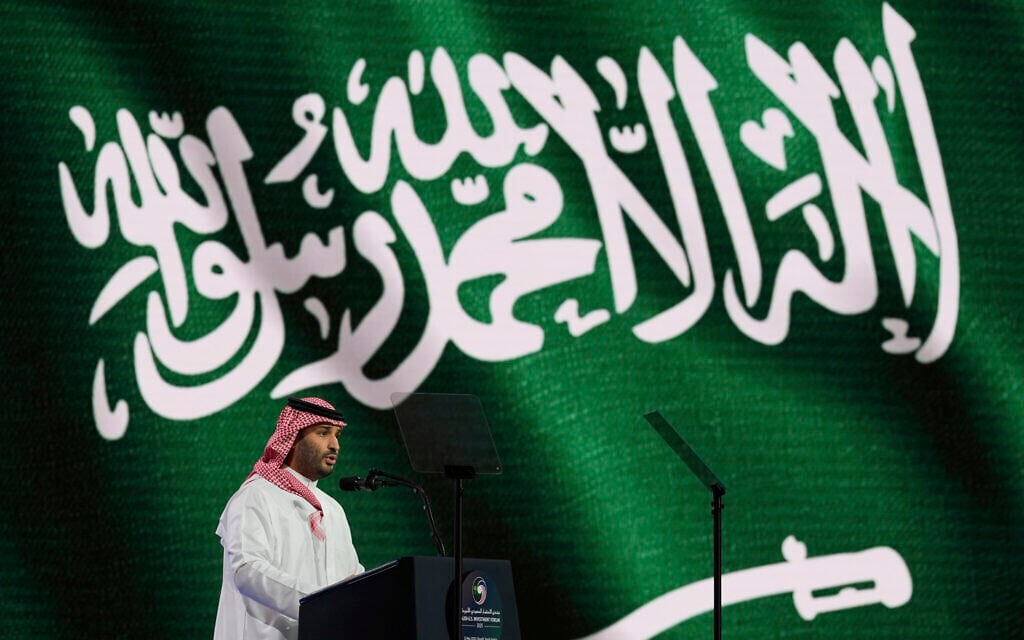 |
| Saudi Crown Prince Mohammed bin Salman speaks at the Saudi-US Investment Forum at the King Abdulaziz International Conference Center in Riyadh, Saudi Arabia, May 13, 2025. (AP Photo/Alex Brandon) |
After years of viewing Saudi Arabia as a keystone in the pro-American alliance in the Middle East, many observers have raised the alarm in recent months over a worrying shift in the kingdom’s posture.
Under powerful Crown Prince Mohammed Bin Salman, Saudi Arabia has been regarded as undeniably autocratic, but also a bulwark against hostile Iran-backed proxies and Muslim Brotherhood blocs.
And there was an assumption that the Saudis would normalize ties with Israel in the near future.
“We are at the cusp of an even more dramatic breakthrough,” said Prime Minister Benjamin Netanyahu at the United Nations, 16 days before Hamas invaded southern Israel on October 7, 2023, “a historic peace between Israel and Saudi Arabia.”
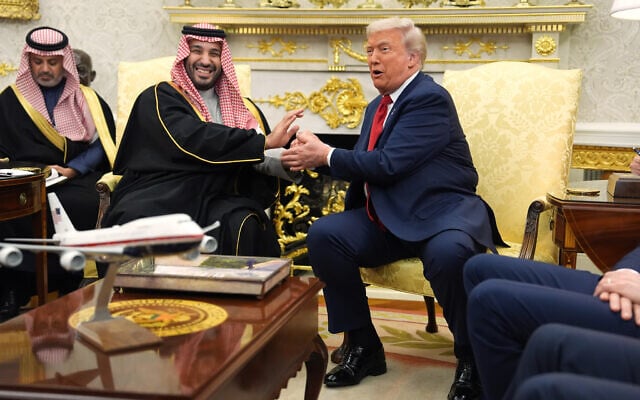
US President Donald Trump repeatedly expressed hope that Riyadh would join the Abraham Accords during his first term. After the October 2025 ceasefire in Gaza, Trump reportedly told MBS that he expected him to move toward normalization with Israel now that the fighting was over.
The war in Gaza has hardened MBS’s position for an Israel deal, but it was still seen as highly likely once the fighting ended.
That optimistic assessment has turned into a growing concern in recent months that not only is normalization an Israeli pipe dream, but that Riyadh is actively turning toward a regional Islamist axis led by Turkey and Qatar.
But the concern over the kingdom moving into the arms of Islamists is overblown, and fundamentally misreads both the structure of Middle East geopolitics and Saudi interests.
“That’s really far-fetched,” said Moran Zaga, Gulf scholar at MIND Israel. “It’s hard to describe what Saudi is doing as alliances, except what it does with Pakistan. It exploits opportunities; it’s signaling — mainly signaling to the United States, Israel and the UAE — that it has other partners.”
“It’s hard to describe what Saudi is doing as alliances, except what it does with Pakistan. It exploits opportunities; it’s signaling— mainly signaling to the United States, Israel, and the UAE— that it has other partners.”
“There are changes,” conceded Yoel Guzansky, senior researcher at the Institute for National Security Studies. “But they’re not ideological. Saudi Arabia hasn’t joined an alliance. There is no such alliance.”
“Saudi Arabia is hedging,” he said.
An Islamic NATO?
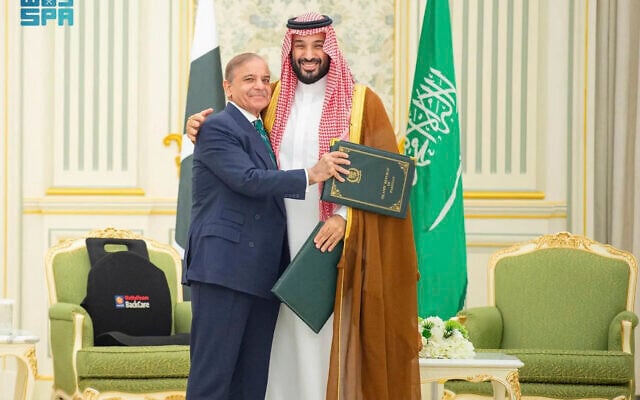
Analysts fretted over an emerging “Islamic NATO” as Bin Salman signed a strategic mutual defense agreement with Pakistan in September. Then in January, Bloomberg reported that Turkey was seeking to join the pact, which would have brought together Saudi Arabia’s deep coffers, Pakistan’s nuclear weapons and Turkey’s advanced military power.
Those military discussions took place amid diplomatic processes that set off the same alarms.
Eight-and-a-half years after he cut diplomatic ties with the energy-rich emirate next door, MBS sat with Qatari leader Tamim bin Hamad Al Thani in December to sign a series of defense, transportation and investment deals. Bilateral trade is up over 600 percent since the restoration of ties in 2021, and the two Gulf countries have been aligning on regional issues as well, including in Syria and Gaza.
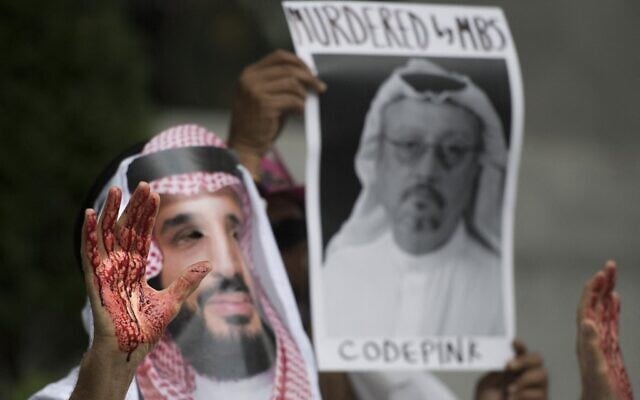
Not long ago, MBS and Turkish President Recep Tayyip Erdogan were also regional rivals in a relationship marked by distrust. In 2018, Saudi agents killed and hacked apart dissident journalist Jamal Khashoggi at their embassy in Istanbul, likely on the orders of MBS. Erdogan leveled that accusation publicly, writing in The Washington Post — the influential publication where Khashoggi’s writing was published — that “the order to kill Khashoggi came from the highest levels of the Saudi government.”
Turkey and Saudi Arabia also clashed around regional conflicts, including in Sudan, Syria and Libya.
Now, the two regional powers are pursuing a steady reconciliation process.
On Tuesday, MBS hosted Erdogan, a leading Israel critic and Hamas backer, in Riyadh. In a joint statement, the two agreed to strengthen economic and defense ties and blasted Israel over Gaza and its recognition of Somaliland.
As Saudi Arabia seemed to move toward Qatar and Turkey, its long-simmering rivalry with the United Arab Emirates — a close regional partner of Israel’s — flared up.
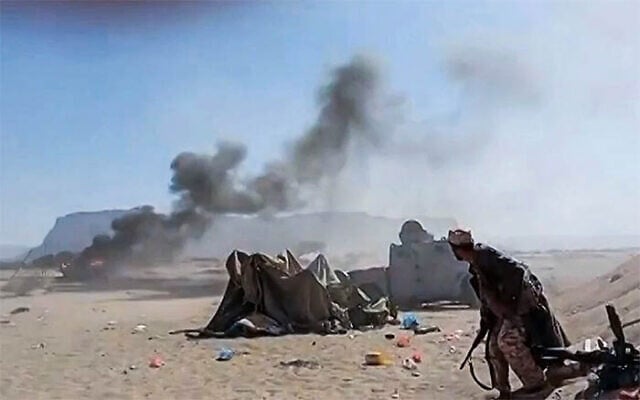
In December, tensions between the two Gulf powers spilled into the open in Yemen, once a theater of cooperation, as UAE-backed separatists pushed forces aligned with the Saudi-backed internationally recognized government out of two large provinces. In response, the Saudis carried out strikes on a Yemeni port over what it claims were weapons shipments from the UAE. The next day, Abu Dhabi announced it was pulling its remaining forces out of Yemen after Saudi Arabia backed a call for Emirati forces to leave within 24 hours, and the UAE-backed militia collapsed soon after.
Saudi Arabia and the UAE also back opposing sides in the Sudanese civil war, with Abu Dhabi supporting secessionists there as well. While the UAE is widely believed to have backed Israel’s recognition of Somaliland, Somalia is in talks with Riyadh about a military pact and cancelled port agreements with the UAE.
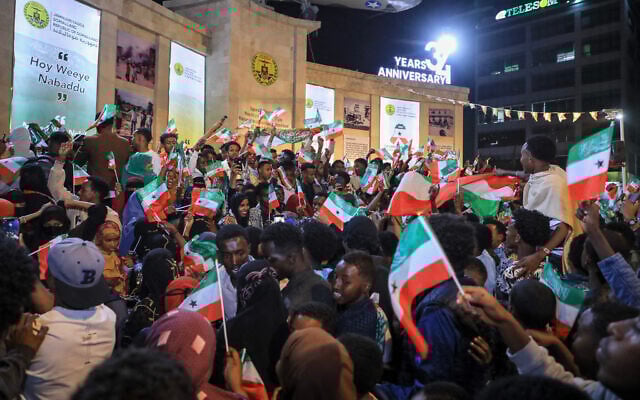
The two Gulf rivals engaged in a media war as well, in which Israel-bashing featured prominently. Saudi state-owned Al-Ekhbariya TV accused the UAE of “investing in chaos and supporting secessionists.” A prominent academic charged the UAE — and the “imposter from Abu Dhabi” — with throwing itself “into the arms of Zionism” and serving as “Israel’s Trojan horse in the Arab world.”
Saudi clerics launched into antisemitic sermons, as headlines in the kingdom attacked “the Zionist entity” and its ostensible Emirati enablers.
The UAE didn’t respond directly, but many believe that it pushed anti-Saudi articles and sentiments in Israeli and Jewish outlets and organizations.
The Anti-Defamation League released a statement saying that it is “alarmed by the increasing frequency and volume of prominent Saudi voices — analysts, journalists and preachers — using openly antisemitic dog whistles and aggressively pushing anti-Abraham Accords rhetoric, often while peddling conspiracy theories about ‘Zionist plots.'”
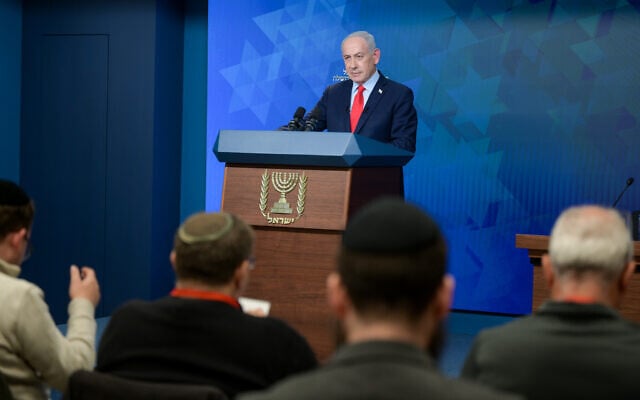
Israeli leaders are well aware of the trend. Netanyahu said last week that he is closely following Riyadh’s ostensible shift toward Turkey and Qatar.
“We expect from anybody who wants normalization or peace with us that they not participate in efforts steered by forces or ideologies that want the opposite of peace,” Netanyahu said at a press conference in response to a question by The Times of Israel.
Such efforts “reject the legitimacy of the State of Israel, and nurture all kinds of forces that attack the State of Israel,” said Netanyahu, going on to say that he’d be “happy to have a normalization agreement with Saudi Arabia,” provided “they want normalization and peace with a secure and strong Israel.”
Explaining Saudi behavior
The tendency to view the Middle East as a region with clear competing alliances — pro-Western, Islamist, Iran-centric — fails to capture the complex nature of Middle East politics.
“Qatar isn’t exactly in a single camp — it’s in many camps,” said Guzansky. “This whole division into camps is artificial, superficial, too dichotomous. Life is gray, it’s complex.”
Much of the alarm over a perceived recent Saudi realignment seems to stem from a lack of awareness that many of the stances in question have existed for years.
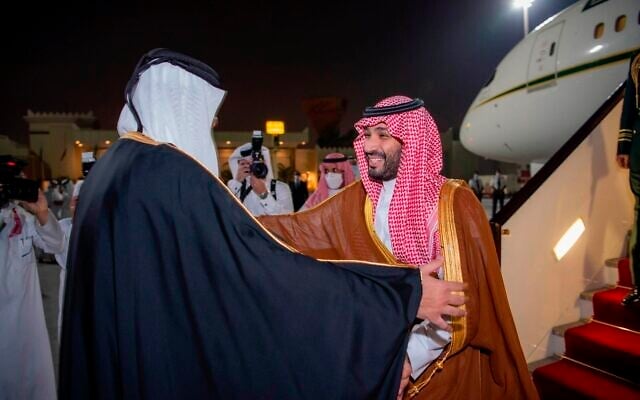
Since 2021, when Qatar was readmitted into the Gulf Cooperation Council, MBS has been improving his relationship with Doha. He has been pursuing a similar process with Turkey’s Erdogan as well.
“This is a long process that’s been happening over the last five years,” said Guzansky. “Saudi Arabia is strengthening relations with Qatar. That’s not from today.”
“Saudi Arabia is strengthening ties with states it used to have some level of confrontation and competition with,” he explained. “There’s a regional pattern.”
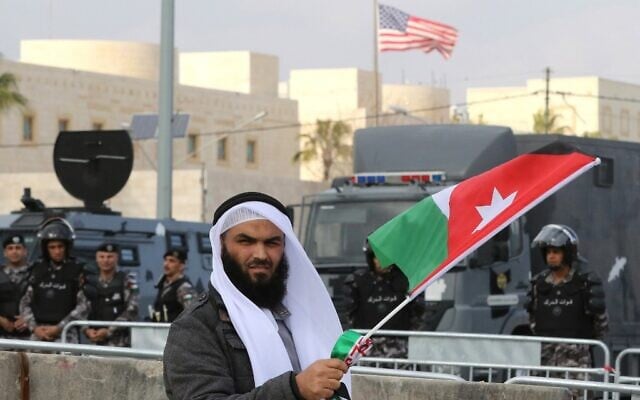
Moreover, Saudi Arabia isn’t about to run toward an ostensible Muslim Brotherhood axis. Riyadh outlawed the organization in 2014, listing it as a terrorist organization.
“It’s true that over the years Saudi Arabia has been more pragmatic in its ties with Muslim Brotherhood-affiliated groups in the region, for example, in Yemen,” Guzansky explained. “But that’s a pragmatic approach. It doesn’t mean they like the Muslim Brotherhood.”
And other countries have also strengthened ties with Turkey in recent years. Israel enjoyed a period of warming relations until the October 7 attacks, and the UAE enjoys far more extensive economic ties with Ankara than Saudi Arabia does.
At the same time, it’s hard to deny that the intensity of the rivalry with the UAE and the rhetoric around Israel and Jews has changed recently.
“There’s no question there’s been a shift,” said Michael Makovsky, president and CEO of the Jewish Institute for National Security of America, “though I suspect it’s more tactical and thus could shift back.”

There are a number of possible explanations for the shift in recent weeks.
MBS’s NEOM, a megaproject to build a planned city, has been a massive waste of money thus far, and low oil prices have put some strain on the Saudi economy. Turning the focus to the alleged sins of Israel and the Jews is a time-honored way for Middle Eastern autocrats to distract the public and turn domestic anger away from the government.
MBS might also have concluded that normalization with Israel is simply not realistic, with some fighting in Gaza ongoing and images of devastation so fresh.
The personal rivalry between MBS and Emirati leader Mohammed Bin Zayed could also be driving much of the Saudi behavior of late.
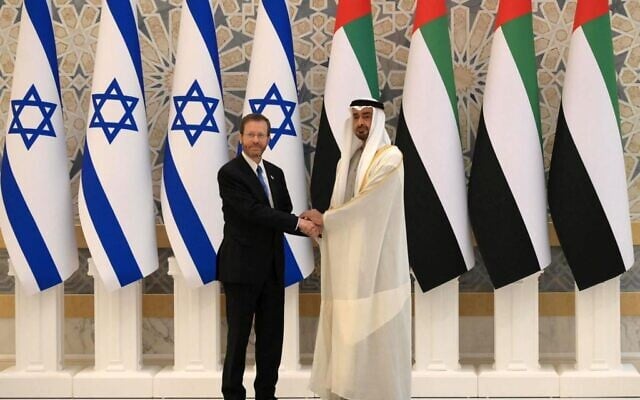
MBZ, more than two decades older, seemed to be a mentor for the Saudi prince when he shot to power, guiding cooperation on confronting political Islam and the Iranian threat, and serving as a model for moving his economy away from a dependence on oil revenues.
But an economic rivalry, feelings of betrayal, and a Saudi belief that the larger country should be the preeminent partner have strained the personal relationship.
That is not the same as a wholesale regional realignment.
In any event, a decisive shift would come with real costs for Saudi Arabia: “MBS seems to have made his bed in liberalizing his country internally, attracting more foreign investment and changing its international image, which could be undermined by a real Saudi shift,” said Makovsky.
Positive signs from Saudi
The Saudi-UAE rivalry is real and well-established, but that doesn’t mean it can’t be tamped down in the near future.
“There is still space for reconciliation between them, and the dynamic could change given a change of tone and alignment of positions,” said Zaga. “And it could even lead both sides to climb down from the tree and return to cooperation. So there’s a very high probability, and I wouldn’t immediately bury the relationship.”
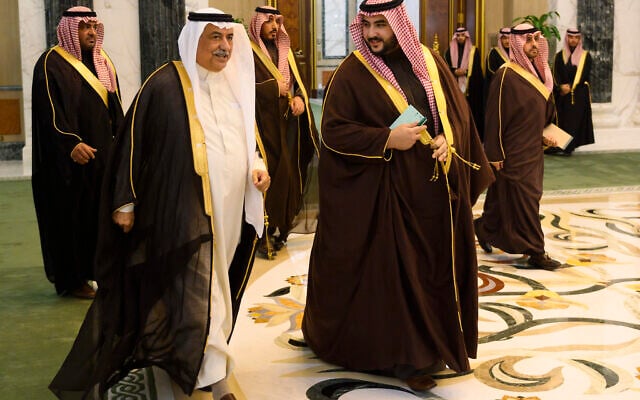
The Saudis have also gone out of their way to alleviate concerns about a shift in the direction of hostility toward Israel and Jews.
Saudi Defense Minister Khaled bin Salman met with Jewish leaders and regional experts last week, a meeting that was well-received.
“It reflects well on the Saudis and their interest in maintaining close ties with the pro-Israel American community,” said Makovsky, who was in a separate meeting with the minister that day. “It’s also a good sign, and suggests this shift might be tactical and temporary.”
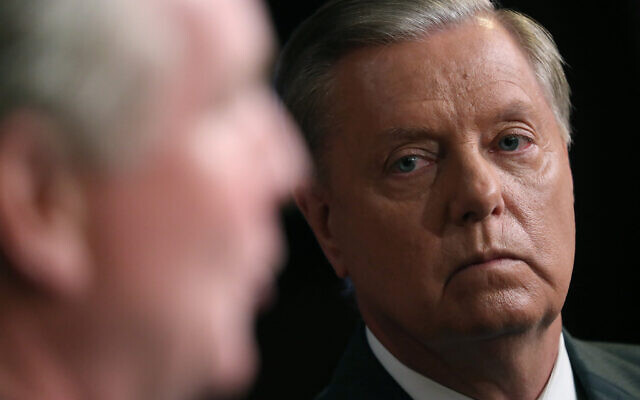
US Senator Lindsey Graham, who recently called for the Saudis to halt their “attack” on the UAE, changed his tune after meeting with KBS.
As previously stated, I am trying to work with the administration and regional partners to prevent a bloodbath in Syria against our Kurdish allies. It is now time for the region to change their ways and man up for decency.
To Saudi Arabia: I have tried to work hard to chart a…
— Lindsey Graham (@LindseyGrahamSC) January 27, 2026
“Saudi Arabia is saying things I don’t agree with right now,” he said in a statement after the meeting.
“My engagement with Saudi Arabia over the past two days has given me a sense of confidence that the Kingdom — while it has its own interests — is on a path toward the light, not the darkness.”
Saudi Arabia may even have perceived encouragement for its recent policies from the White House.
“The more Saudi Arabia showed itself as being the friend and ally of the US, the more its strategy became harsher on Israel,” pointed out Hussain Abdul-Hussain of the Foundation for Defense of Democracies. “They were emulating the way Qatar and Turkey deal with this.”
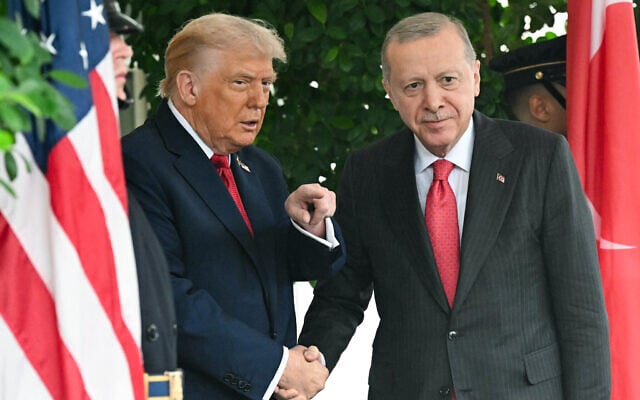
“Qatar and Turkey have been able to get away with bashing Israel day and night and getting under Israel’s skin and supporting Hamas and the Muslim Brotherhood and all these forces,” Abdul-Hussain continued. “While at the same time, Don [Trump] Jr. visits the Doha Forum and says, ‘We need more allies like Qatar,’ or President Trump receives Erdogan and showers him with praise.”
“The Saudis looked at this, and they thought, if this is working for the Qataris and the Turks, then why can’t it work for us?”
There are costs domestically and regionally to allying with Israel. Bashing Israel relieves pressure from puritanical Salafists in the kingdom who are furious at MBS’s liberalizing reforms, while giving countries hostile to Israel more reason to cooperate with the Saudis.
“The Trump administration has given MBS reason to believe such a shift, whether tactical or strategic, is acceptable, or at least would not invite any real costs, because of America’s chumminess with Islamist radicals in the region — Qatar, Turkey and Syria,” concurred Makovsky.
None of this means that normalization is off the table. But it does indicate that Saudi Arabia isn’t going to rush into a deal with Israel, especially when it has far more to gain from the Jewish state’s regional rivals.
Israel’s government, with far-right members, hasn’t exactly made it easier in recent years for MBS to conclude that a peace deal would bring more benefits than costs right now.
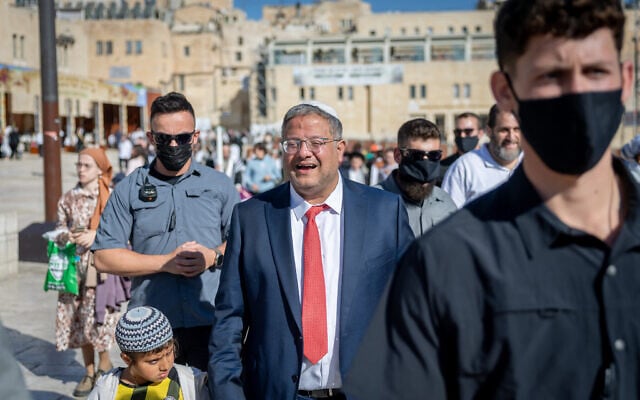
“Saudi Arabia is wary of Israel — sees us as a somewhat less responsible actor in the region,” said Guzansky. “[National Security Minister Itamar] Ben Gvir goes up to the Temple Mount and says, ‘It’s ours.’ Smotrich says, ‘Go ride on camels.'”
“Saudi Arabia looks at this government and says, ‘This can’t happen now,'” he continued. “We need to look at what we are doing, not just blame the Saudis for ‘going with the Muslim Brotherhood’ and that kind of nonsense.”
Lazar Berman
Source: https://www.timesofisrael.com/relax-mbs-isnt-aligning-with-islamists-he-also-isnt-normalizing-with-israel-soon/

No comments:
Post a Comment