The "Middle East and Terrorism" Blog was created in order to supply information about the implication of Arab countries and Iran in terrorism all over the world. Most of the articles in the blog are the result of objective scientific research or articles written by senior journalists.
From the Ethics of the Fathers: "He [Rabbi Tarfon] used to say, it is not incumbent upon you to complete the task, but you are not exempt from undertaking it."
CENTCOM acted following Tehran’s attack on a tanker, targeting surveillance, communications, air defenses, drones and minelayer capabilities.
An F/A-18E Super Hornet launches from
the USS Abraham Lincoln, deployed with the U.S. 5th Fleet in the Middle
East, on June 10, 2026. Credit: U.S. Navy.
U.S. forces struck 10 Iranian military targets in and near the Strait of Hormuz overnight, U.S. Central Command said on Sunday, in response to a drone attack on a commercial tanker.
In
an apparent reference to the same attack, the U.K. Maritime Trade
Operations Centre, a Royal Navy arm with a regional office in Dubai,
said on Saturday that it had received a report of a tanker in the Strait
of Hormuz being hit by an “unidentified projectile.” The crew was
unharmed and no environmental damage was reported, although the vessel
sustained damage to its bridge, UKTMO said.
CENTCOM said that U.S.
Navy and Air Force aircraft targeted surveillance infrastructure,
communications systems, air defenses, drone storage sites and minelayer
capabilities after Iran launched a one-way drone that hit the
Panama-flagged M/T Kiku around 4:30 a.m. ET. The vessel was carrying more than two million barrels of crude.
U.S. Navy and Air Force fighter jets conducted strikes tonight on 10 Iranian military targets at multiple locations in and near the Strait of Hormuz for Iran's drone attack on M/T Kiku. pic.twitter.com/Z0TLZRqmF6
In a post on his Truth Social platform on Sunday, U.S. President
Donald Trump warned of further military action if Iran continues
attacks.
“United States aircraft just struck Iranian missile and drone storage locations, and coastal radar sites, for violating the Cease Fire Agreement,
AGAIN! It is very possible that they will never learn!” Trump wrote.
“There may come a point when we are no longer able to be reasonable, and
will be forced to militarily complete the job that we very successfully
started. If that happens, the Islamic Republic of Iran will no longer
exist!”
Tehran had been given an opportunity to honor the
ceasefire but “elected not to,” CENTCOM said on Sunday, adding that
commercial traffic through the waterway continues and warning that U.S.
forces “remain vigilant, lethal, and ready.”
The United States and
Israel launched a major joint operation against Iran on Feb. 28,
targeting the regime’s leadership, nuclear facilities and other
strategic military infrastructure. By late June, Washington and Tehran
had signed a memorandum of understanding establishing a ceasefire
framework and 60‑day negotiations on a comprehensive peace agreement.
Iranian
Foreign Minister Abbas Araghchi, speaking at a news conference in
Baghdad on Sunday, warned that any move to challenge Tehran’s handling
of navigation in the Strait of Hormuz would “increase the tensions” and
“delay” its reopening, despite the ongoing talks to end the war, France 24 reported.
He
urged all sides to stick to the memorandum of understanding governing
the waterway and “not to allow this MoU to deviate from its course” and
called for a new regional security framework with Gulf countries
“without the presence or interference” of outside powers.
Iraq’s
Foreign Minister Fuad Hussein, meeting Araghchi in the capital, said it
was important to reopen the strait and lift the U.S. naval blockade on
Iran, stressing that Baghdad does not support expanding the war to Gulf
states and does not back attacks on Iran.
Saturday’s American military strikes followed Friday’s U.S. action tied to a separate Iranian attack on the M/V Ever Lovely a day earlier.
“U.S. aircraft struck Iranian missile and drone storage locations and coastal radar sites after Iran hit M/V Ever Lovely
on June 25 with a one-way attack drone,” CENTCOM stated at the time.
“The Singapore-flagged cargo ship was exiting the Strait of Hormuz along
the Omani coast at the time of Iran’s attack.”
Iran said on
Saturday it attacked U.S.-affiliated military targets in the Middle East
in response to renewed American strikes against it the previous day,
while Bahrain confirmed it had been attacked by Iranian drones in the
early morning hours.
Hezbollah chief Naim Qassem said on Saturday that the US-brokered agreement was a humiliating concession that undermined Lebanese sovereignty.
Hezbollah supporters block the old airport road in the southern
suburbs of Beirut, with burning tires to protest against the trilateral
agreement that was signed between the US, Israel and Lebanon on June
27, 2026.(photo credit: Ibrahim AMRO / AFP via Getty Images)
Hezbollah supporters rioted in Beirut over the weekend following the signing of an agreement between Israel and Lebanon
on Friday that aims to secure an Israeli withdrawal from Lebanese
territory and the disarmament of the Iran-backed terrorist group,
according to Lebanese media reports and footage of the unrest.
What began as motorcycles driving through Beirut
with Hezbollah and Iranian flags eventually turned into tire burnings,
blocking off main roads, including those leading to Beirut’s airport,
and the burning of signs calling on the prioritization of Lebanese
sovereignty.
Posters
leading to the airport, which previously read “Thank you Iran” but were
changed to “Lebanon first” last week, were set alight.
While the agreement has been celebrated by several regional powers, including Jordan and the United Arab Emirates, Hezbollah has firmly rejected the deal as “null.”
Hezbollah
chief Naim Qassem said on Saturday that the US-brokered agreement was a
humiliating concession that undermined Lebanese sovereignty.
Hezbollah
Secretary-General Naim Qassem gives a televised speech from an unknown
location in this still image obtained from a video released December 5,
2025; illustrative. (credit: Al Manar TV/REUTERS TV/via REUTERS )
“We
did not leave the battlefield in the most difficult circumstances, and
we will not leave it,” he said, asserting that the terrorist group would
not abide by the agreement and continue its attacks in violation of
Lebanon’s domestic laws.
Prime
Minister Benjamin Netanyahu said the agreement allows Israeli forces to
remain in southern Lebanon if Hezbollah fails to disarm, in line with a
Lebanese law enacted in March prohibiting non-state actors from bearing
arms.
Fadlallah: Agreement unenforceable without 'civil war'
Hezbollah
lawmaker Hassan Fadlallah said Lebanese authorities would not be able
to enforce the agreement unless "they go to civil war," repeating
similar threats made by Qassem in May.
Lt.-Col.
(res.) Sarit Zehavi, founder and president of the Alma Research and
Education Center, previously told The Jerusalem Post that despite
significant gains by Israel, the group and its supporters still have the
power to destabilize Lebanon
Hezbollah
would confront any measure taken by Lebanese authorities and would hold
on to its weapons even more, adding that the group's opposition was
"serious" and would not allow authorities to implement their commitments
on the ground, Fadlallah said, according to Hezbollah-affiliated media
site Al Mayadeen.
The issue of Lebanese sovereignty
The
issue of Lebanese sovereignty has become increasingly contentious in
recent months after Hezbollah renewed hostilities with Israel following
the killing of Iran's former supreme leader, Ayatollah Ali Khamenei, a
decision that drew criticism from Lebanon's political leadership.
The
attacks from Hezbollah led to a renewed Israeli presence in Lebanon,
forcing the displacement of around 20% of the country’s population,
according to UN figures.
Iran’s
attempts to include Lebanon in its Memorandum of Understanding with the
United States were also broadly painted as further Iranian interference
in Lebanese affairs.
Democrats worked the system to avoid accountability while weaponizing that same system against Republicans.
For more than a decade, Democratic party politicians have escaped
accountability for their conduct through a series of favorable actions
taken by other Democrats and members of the government.
The party has accomplished this in several ways while weaponizing the government against Republicans – particularly President Donald Trump – at the same time.
Presidential pardons
The easiest avenue to avoid potential prosecution is through
presidential pardons. President Joe Biden took this a step further by
providing advance pardons to certain political figures who were likely
to be the subject of investigations once a Republican president entered
office.
The most well-known example is Biden’s own son Hunter, who was
convicted on federal firearms charges and pleaded guilty to tax
offenses. In the closing days of his presidency, Biden pardoned
his son not only for the crimes he had been convicted of and pleaded
guilty to, but any crimes he “may have committed or taken part in”
between January 1, 2014, through December 1, 2024. Biden had repeatedly
said he would not issue a pardon for his son, but went back on his word.
This was not the only pardon of its kind from Biden. Around the same time, he issued similar pardons
for former NIH director Anthony Fauci, other members of Biden’s family,
and anyone who investigated the January 6th riot at the U.S. Capitol,
most notably U.S. Sen. Adam Schiff, who has been accused of approving the leaking of classified information to smear Trump, Just the News previously reported.
Ignoring the letter of the law
On July 5, 2016, then-FBI Director James Comey cleared
Hillary Clinton of criminal wrongdoing for using an unsecure and
private email server to transmit classified information. Even though the
law said intent is irrelevant, Comey claimed otherwise, saying he found no intentional misconduct and therefore would not charge Clinton.
“[A]lthough there is evidence of potential violations of the statutes
regarding the handling of classified information, our judgment is that
no reasonable prosecutor would bring such a case,” Comey said at the
time.
He gave his speech shortly after then-Attorney General Loretta Lynch met with former President Bill Clinton on a Phoenix tarmac.
Letting the statute of limitations run out
When the IRS tried to investigate Hunter Biden’s failure to pay taxes, they were obstructed from accessing evidence, Just the News previously reported.
IRS supervisory criminal investigative agent Gary Shapley told Congress
in 2023 that the FBI had testimony and text messages that showed Joe
Biden likely met with Hunter Biden’s Chinese business partners, but was
shut down from investigating.
“Based on guidance provided by the prosecutors on a recurring basis
to not look into anything related to President Biden, there is no way of
knowing if evidence of other criminal activity existed concerning
Hunter Biden or President Biden,” Shapley testified.
In the matter of Hunter, Shapley and another IRS agent, who were
later granted whistleblower status, said they had compelling evidence
that Hunter failed to pay taxes for years, but were blocked from further
investigation. The statute of limitations was allowed to expire on any
charges Hunter might have faced for those crimes.
“It was a conscious decision by DOJ to let that run,” Shapley
testified. “They could've had them extend '14 and '15, but they said no
[…] Letting a statute of limitations expire in an active criminal
investigation is not normal.”
Activist judges dismissing cases
In November 2025, Judge Cameron McGowan Currie – a Bill Clinton
appointee – dismissed legal cases against Comey and former New York
Attorney General Letita James, arguing that Trump’s appointment of
Lindsey Halligan as interim U.S. attorney was unlawful, PBS reported.
Another federal judge – Obama-appointed U.S. District Judge Lorna
Schofield – also dismissed subpoenas against James issued by the U.S.
Attorney for the Northern District of New York for the same reason, Just the News previously reported.
In a similar fashion, grand juries in overwhelmingly Democrat
jurisdictions have also declined to prosecute Democrats, including a
grand jury in Alexandria, Va., and Norfolk, Va.
Conversely, grand juries in heavily Democratic New York City indicted
Trump on 34 felony counts for payments to porn actress Stormy Daniels
after she alleged an affair with the business mogul prior to the 2016
election. The alleged crimes Trump faced were misdemeanors,
but Democrats in the state elevated them to felonies by claiming the
“hush money” constituted an unreported campaign expenditure.
A New York state jury also determined
that Trump defamed E. Jean Carroll by defending himself against her
uncorroborated accusations of rape. That same jury determined Trump did
not rape Carroll, but still claimed he sexually abused her, even though
no evidence exists to support her claim and Carroll claims to not even
remember the year the alleged incident took place.
A slap on the wrist
In rare cases, a Democrat will face punishment for weaponization of the government, but it more often than not will be minor.
Kevin Clinesmith, who pleaded guilty to falsifying a document used to continue spying on Trump’s 2016 campaign, faced
five years in prison and a fine of up to $250,000. He ended up
receiving one year of probation and 400 hours of community service.
The judge in the case, James Boasberg, argued that he didn’t believe
Clinesmith meant to deceive when he purposefully altered an email
showing that former Trump aide Carter Page had worked with the CIA.
Clinesmith removed that information, making it appear as though Page had
no reason to engage with anyone from Russia, fueling the federal
government’s investigation into Trump’s campaign.
"Mr. Clinesmith likely believed that what he said was true," Boasberg
wrote in his ruling, adding, "I do not believe he was attempting to
achieve an end he knew was wrong." The judge claimed that "it is not
clear to me that the fourth FISA warrant would not have been signed but
for this error […] even if Mr. Clinesmith had been accurate about Mr.
Page’s relationship with the other government agency, the warrant may
well have been signed, and the surveillance authorized."
Biden was "a sympathetic, well-meaning, elderly man with a poor memory"
When it was discovered that Joe Biden, as vice president under Obama,
kept classified documents in his garage at his home and shared them
with an author, he avoided prosecution when Special Counsel Robert Hur
said a jury was unlikely to convict. It "would be difficult to convince a
jury that they should convict him — by then a former president well
into his eighties — of a serious felony that requires a mental state of
willfulness," Hur wrote in his decision, Just the News previously reported.
"Mr. Biden would likely present himself to a jury, as he did during
our interview of him, as a sympathetic, well-meaning, elderly man with a
poor memory," Hur added.
Conversely, Trump was indicted
for storing classified documents at his Florida resort, even though as
president he had the authority to declassify those documents.
Silicon Valley school district knew Supreme Court requires parental notice and opt-out for materials that undermine parents' religious instruction, and went through months of talks before it "abruptly flipped," suit says.
One of the major hubs of Silicon Valley is knowingly violating a year-old Supreme Court precedent requiring school districts to notify parents before they expose students to "LGBTQ+-inclusive" materials,
from health to math class, and let them opt out, according to a new
lawsuit by the religious liberty firm who secured the precedent.
Sunnyvale School District held multiple meetings about the high court's ruling last year in Mahmoud v. Taylor and
recognized its legal obligations, as elaborated by the California
Department of Education, while pledging it would seek to persuade
parents to let their children experience materials such as a how-to book
on becoming a drag queen, Becket's lawsuit on behalf of Justin and Rose Taylor says.
But after "months of cordial conversation" with Church of
Jesus Christ of Latter-day Saints members Justin and Rose Taylor about
opting out their two children under age 10, the district "abruptly
flipped" its reading of Mahmoud, telling the Taylors it only
applies to the "specific set of facts" SCOTUS considered and that state
law supersedes the precedent, according to Becket.
"Sunnyvale has now affirmatively disclaimed its
constitutional responsibility" to give parents notice and opt-out from
instruction that "substantially interferes with the religious
development of their children," the suit says, quoting the June 2025
SCOTUS ruling.
It includes more than 100 pages of exhibits,
including pages from the books shown to students, the Taylors'
correspondence with Cumberland Elementary Principal Shana Riehl and
District Director of Student Support Services Paul Slayton from
September through January, and Slayton's surprise rejection letter Feb. 2
with the district's bespoke interpretation of Mahmoud.
“The Constitution doesn’t come with a California carveout,"
yet the district is trying to "override the Taylors’ clearly protected
parental rights while paying lip service to the very diversity the
Taylors represent," Becket counsel Michael O’Brien said.
A Becket spokesperson told Just the News it will
seek personal liability for individual defendants – Riehl, Slayton,
Superintendent Gudiel Crosthwaite and all school board members – for
violating "clearly established" law, the threshold for revoking the
qualified immunity of public officials. It plans to file a motion for
preliminary injunction "in the coming days."
The district didn't respond to Just the News queries.
Drag queen lessons from 'Lil Miss Hot Mess'
The lawsuit elaborates on the exact LGBTQ materials Sunnyvale uses, some of which it shares with the district that lost Mahmoud, Maryland's Montgomery County Public Schools, reportedly the most religiously diverse county in America.
They include Pride Puppy, which celebrates Pride Parade fixtures including the pioneering transgender prostitute Marsha Johnson, and Prince & Knight, about a fairy-tale same-sex wedding.
The Hips on the Drag Queen Go Swish, Swish, Swish invites children to dance like a drag queen to the melody of "The Wheels on the Bus." Its author, Harris Kornstein, said the book grew out of his Drag Queen Story Hour work as "Lil Miss Hot Mess," and he hopes it will inspire children to become drag queens "when they grow up."
The most destabilizing book for children may be Jack (Not Jackie),
whose protagonist decides she is a boy because she enjoys boys' toys,
clothes and activities, and whose sister gradually overcomes her
resistance to "Jack" identifying as a boy.
Home to headquarters for Yahoo and LinkedIn, and satellite
campuses for Google, Amazon and Meta, Sunnyvale isn't alone in allegedly
seeking a way around the precedent obtained by Becket on behalf of
Muslim, Christian and Jewish parents against Maryland's MCPS, for which it paid them $1.5 million.
Both the Golden State and school districts quickly recognized Mahmoud as a threat to their efforts to inculcate LGBTQ messages in children without parental input, the suit says.
Within weeks of the decision, the California Department of Education told school districts
they now must notify parents and allow opt-outs when they adopt
"policies or curricular materials" that they have "reason to know" will
undermine and interfere with students' religious development as sought
by their parents, citing Mahmoud.
The precedent applies to "an elementary classroom
curriculum that incorporated LGBTQ+ themed storybooks," the state said
Aug. 6. Riverside Unified didn't look for an exception, creating an online opt-out form, the suit notes.
The Sunnyvale Board of Education held a meeting in August
2025 to discuss the precedent, with Superintendent Crosthwaite
presenting the state guidance. A month later, the board adopted a resolution that acknowledges "legal opt-out provisions may exist" but pledges to "remind families of the richness of what 'opting in' provides."
A week after that board meeting, the Taylors sent detailed
instructions to Principal Riehl on excusing their children from any
setting, whether classroom, library or field trip, in which
"LGBTQ+-inclusive" storybooks and "similar materials" are used. They
must be given "a neutral alternative activity without academic penalty,
stigma, or unexcused absences."
Riehl and Slayton, the director of student support
services, communicated in apparent good faith with the Taylors over the
next four months while emphasizing the district's response to the ruling
was a work in progress.
"Our typical 'opt out' process is not functional for
Mahmoud v. Taylor yet and, quite frankly, legal council [sic] is still a
bit confused as to ho [sic] to formally respond to these requests as
they're so new," Slayton wrote Jan. 28. Two days later, he said he'd
have a "final draft today" incorporating the Taylors' requests for
"additional clarification" on some items.
Using the district's official letterhead, and making no
reference to their months of talks, Slayton dropped a bomb on the
parents days later: No notification or opt-out would be granted.
"Sunnyvale School District follows California state law and
Board-adopted policy," which require "representation of LGBTQ+
individuals and families" in the "core academic program," he wrote.
"This content is not optional and is not subject to parent opt-out
provisions."
Mahmoud "addressed a specific set of facts in
another state and does not create a general or automatic right for
parents to opt their children out of required curriculum," Slayton
wrote. "It also does not override California's statutory requirements
governing instructional content."
Hence, the district is "not granting opt-outs from
LGBTQ+-inclusive curriculum or storybooks that are part of our adopted
educational program," he said, citing "further review."
Slayton emailed them Feb. 3 with the formal determination
letter, dated the day before, dismissing their months of work on an
"individual implementation plan" because the district determined a
"formal opt-out from these specific materials does not align with
Sunnyvale School District’s core instructional framework and our
commitment to a unified curriculum."
"We understand that this represents a shift from our previous working sessions," Slayton said.
Justin Taylor replied: "By shift, I think you mean a 180."
The suit concludes with a demand for the nuclear option: not only injunctions forcing the district to honor Mahmoud for
the Taylors, and nominal and compensatory damages, but also punitive
damages for acknowledging and then allegedly flouting precedents.
"Because of this case’s factual similarity to Mahmoud"
and the high court's application of the precedent to the Mirabelli
decision blocking gender secrecy policies in California schools, the
Taylors have "more than enough legal authority to clearly establish that
Defendants’ denial of notice and opt-outs violates parental rights,"
the suit also says.
[P]ersecution of Christians by extremists is growing. The report posits that such persecution is not random but rather systematic, and takes place irrespective of language, ethnicity, or location.
[A]rmed groups have
repeatedly raided villages, killing residents, burning homes, churches,
and crops, and forcing survivors to flee into the surrounding areas.
Entire communities have been obliterated. Many displaced families are
unable to return: attackers reportedly seized farmland and target those
who try to come back. — International Christian Concern, February 13,
2026, Nigeria.
Pakistan's Federal Constitutional Court granted custody of
13-year-old Christian girl, Maria Shahbaz, to a 30-year-old Muslim man
accused of kidnapping, forcibly converting, and marrying her. The court
rejected her official birth certificate and ignored prior findings that
the marriage was illegal, instead accepting her statement that she
converted and married voluntarily—despite claims from her family and
lawyer that it was made under coercion. Rights advocates and the girl's
family criticized the ruling, pointing to evidence that the marriage
certificate was fake and raising concerns about police inaction and
possible collusion. They argue the girl had been in the suspect's
custody for months, making any statement unreliable. — Morning Star
News, February 1, 2026, Pakistan.
[A] blind Christian man, Nadeem Masih, was denied bail by the
Lahore High Court after being charged under Pakistan's blasphemy laws,
which carry the death penalty. He has been in custody since August 2025
after his arrest. Police accused him of making insulting remarks about
the Prophet Muhammad. His lawyer argues that the case is built on
inconsistent statements, questionable timing, and evidence that
contradicts the official police account... — Morning Star News, February
4, 2026, Pakistan.
"Blasphemy accusations are increasingly weaponized to incite mob
violence, displace marginalized groups and seize their property with
impunity." — Morning Star News, February 4, 2026, Pakistan.
[A] Christian leader and former Muslim, Dedi Saputra, was
arrested, based on a TikTok video. Saputra had answered a question about
religious conversion by stating that Muhammad had only one wife before
becoming a prophet, but a dozen wives afterward. Despite the historical
accuracy of the statement (corroborated by a Suara Muhammadiyah
magazine article), the Aceh Islamic Sharia Office and several Islamic
youth organizations reported him for "religious defamation" and "hate
speech," and claimed that the video "hurt the feelings of Muslims" and
"sparked unrest." — Morning Star News, February 27, 2026, Indonesia.
In Rome, a 35-year-old man was arrested in St. Peter's Basilica
after attempting to enter the church while carrying flammable liquids
and ignition devices during a major Mass led by the pope. — The
Observatory on Intolerance and Discrimination against Christians in
Europe, February 3, 2026, Italy.
[A]t least 20 Yemeni Christians were arrested or abducted from
their homes or off the street. While some are confirmed in Houthi-run
prisons, others have "disappeared" and face potential torture or
execution for their faith. Yemen is officially 99-100% Muslim;
conversion to Christianity under Yemeni law is punishable by death. —
International Christian Concern, February 17, 2026, Yemen.
[R]ecent legislation poses an "existential threat" to non-Muslim
representation. Parliament Bill No. 419, enacted Jan. 28, voided all
sectoral certifications...." — International Christian Concern, February
17, 2026, Philippines.
[A] Lebanese-born evangelist... was assaulted while preaching in
the streets of Utrecht. A group of Muslim men interrupted his preaching,
shouting Islamist slogans such as "Allah is one" and "Jesus is a
human." The situation escalated when one of the men, apparently
attempting to assert dominance, struck Elyas before bystanders
intervened to stop the violence. — L'Observatoire de la
Christianophobie, February 22, 2026, The Netherlands.
Khaled explicitly vowed to go on a killing spree—"I will kill
everything I see before me, women, children, and everything." He also
insulted Christianity as the "dirtiest religion," [and] refers to
Germany as a "Nazi land".... Despite numerous criminal complaints for
insults, threats, and property damage (such as smashing glass bottles in
the town hall parking lot), West Hesse police have only conducted
"threat talks" (Gefährderansprachen) but, as no "serious crimes"
have been committed, apparently see no legal basis yet for an arrest. —
L'Observatoire de la Christianophobie, February 27, 2026, Germany.
Jameel Masih, a 14-year-old Christian boy, forcibly converted to
Islam, is being held in illegal custody by a Muslim landlord.... Minor
children from minorities are often converted to ensure permanent control
over them as laborers. — Morning Star News, February 27, 2026, Pakistan.
Because their father is registered as Muslim, NADRA [National
Database and Registration Authority] has also been blocking his five
children from registering as Christians on their National Identity Cards
(CNICs). Without these cards, the children are barred from education,
banking, voting, and government assistance. Human rights advocates
highlight that the brick kiln sector uses financial advances (debt
bondage) to trap illiterate Christian workers, thereby making them
vulnerable to forced religious identity changes. The Masih family,
living in extreme poverty, lacks the means for the lengthy court battles
required... Attempting to renounce a Muslim identity in Pakistan
carries severe risks and can trigger mob violence or accusations of
blasphemy that can result in death. — Morning Star News, February 18,
2026, Pakistan.
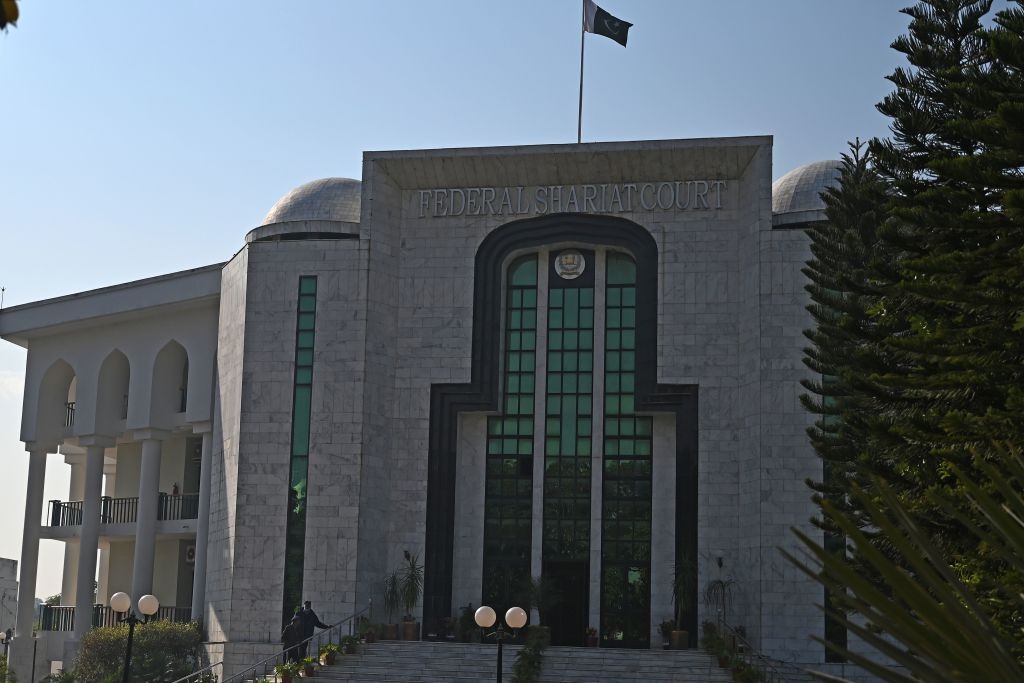
On February 3,Pakistan's Federal Constitutional Court
granted custody of 13-year-old Christian girl, Maria Shahbaz, to a
30-year-old Muslim man accused of kidnapping, forcibly converting, and
marrying her. Pictured: The seat of Pakistan's Constitutional Court, in
Islamabad. (Photo by Aamir Qureshi/ AFP via Getty Images)
The following are among the murders and abuses Muslims inflicted on Christians throughout the month of February 2026.
The Muslim Slaughter of Christians
Nigeria: According to a Feb. 13report,
more than 100 Christians were killed and more than 90,000 displaced
after months of coordinated attacks on rural communities since September
2025. In areas such as Takum, Ussa, and Donga, armed groups have
repeatedly raided villages, killing residents, burning homes, churches,
and crops, and forcing survivors to flee into the surrounding areas.
Entire communities have been obliterated. Many displaced families are
unable to return: attackers reportedly seized farmland and target those
who try to come back.
A Feb. 10 report
detailed that Christian communities, amid ongoing kidnappings and
killings, continue to live in fear. In one instance, more than 160
Christians were abducted during church services—particularly in regions
of Kaduna state. A Catholic priest, Bobbo Paschal, was released after
spending 61 days in captivity after his abduction during an attack in
which another church member was killed and others were taken hostage.
On Feb. 6, nine Catholic worshippers were kidnapped
in Benue State during a night prayer vigil at a mission station. Armed
terrorists stormed the church and abducted them to an unknown location,
prompting calls for prayer and urgent rescue efforts from the local
diocese.
On Feb. 7, coordinated terror attacks
on multiple predominantly Christian villages in Taraba State left some
70 people dead. Homes were burned, food supplies destroyed, and property
looted, forcing many residents to flee into nearby bushes or
neighboring areas. Community leaders reported that at least 35 churches
were vandalized or destroyed; a pastor was among those killed. One
person was abducted; many others remain missing.
Survivors said there was no visible security presence during the attack, thereby leaving the community defenseless.
According to a Feb. 6 report,
Fulani herdsmen killed a Christian pastor, Rev. Bulus Madaki, along
with his daughter and son-in-law during an ambush in Plateau State. Only
the 3-month-old granddaughter, despite suffering a severe machete gash,
survived, but is an orphan.
On Feb. 1, in Niger State, armed militants carried out coordinated attacks, targeting
Christians. The terrorists burned a police station, destroyed homes,
kidnapped several residents, and later set fire to an evangelical church
belonging to the United Missionary Church of Africa. The violence also
extended to Mashegu, where a Catholic convent and nearby clinic were
attacked; the nuns managed to escape, but the medical facilities were
looted and severely damaged.
Democratic Republic of Congo: On Feb. 6, in the northeastern region, Islamist militants carried out coordinated attacks that killed at least 24 Christians,
while burning homes and spreading violence across the North Kivu
Province. The Islamic State Central Africa Province (ISCAP) went on to
announce the massacre
of "21 Christians ... praise be to Allah." They added, "Let the
Christians of Africa know there is no security for you except by Islam
or jizya." Since late 2024, ISCAP has reportedly killed many
hundreds of Christians in the area, and worsening an already severe
humanitarian crisis.
Separately, on Feb. 1, Muslim terrorists of the Allied Democratic Forces (ADF) devastated
the village of Mamove and its nearby communities.The terrorists killed
at least eight Christians, burned homes, shops, and vehicles, destroyed
the local economy and displaced residents. The terror and destruction
left communities paralyzed with widespread fear, hunger, and
trauma—especially among children who had witnessed the violence. Many
Christians lost their only sources of income, and local leaders have
expressed anger and frustration at the lack of response from
authorities.
Muslim Abduction of Christian Girls
Pakistan: On February 3, Pakistan's Federal Constitutional Court granted custody
of 13-year-old Christian girl, Maria Shahbaz, to a 30-year-old Muslim
man accused of kidnapping, forcibly converting, and marrying her. The
court rejected her official birth certificate and ignored prior findings
that the marriage was illegal, instead accepting her statement that she
converted and married voluntarily—despite claims from her family and
lawyer that it was made under coercion. Rights advocates and the girl's
family criticized the ruling, pointing to evidence that the marriage
certificate was fake and raising concerns about police inaction and
possible collusion. They argue the girl had been in the suspect's
custody for months, making any statement unreliable.
Separately, according to a Feb. 20 report, 14-year-old Christian girl Sataish Maryam was abducted
from her home in Punjab. Her family says she was forcibly converted to
Islam and married to a 26-year-old Muslim man, Ali Haider. Despite the
family providing a birth certificate proving she is a minor, a
magistrate handed the girl over to Haider. Police reportedly failed to
include charges of child marriage, statutory rape, or forgery in the
official report. The family is facing armed intimidation from the
perpetrators to withdraw their complaint, while their legal team is
petitioning the High Court to challenge the "fabricated" conversion and
marriage documents.
Egypt: According to a Feb. 16 report, Silvana Atef, a Christian minor from Fayoum, disappeared
and later appeared in a video claiming to have converted to Islam.
Under Egyptian law, because she is under 18, she lacks the legal
capacity to change her religious status. In the video, a woman standing
behind Silvana refers to Christians as "kuffar" (infidels). Lawyers
argue this constitutes sectarian incitement and points to coercion by an
older man allegedly involved in her disappearance. Although the
prosecution reportedly ordered her placed in a social care institution,
her family found no record of her presence there. The facility
reportedly claimed they do not accept Christian residents. The family
fears authorities are waiting for Silvana to turn eighteen this coming
March, at which point her change of religion would become legally
permanent. After staging a silent protest for transparency at the
Prosecutor General's office, several family members, including Silvana's
uncles, were detained by police until the following evening. The family
continues to demand why Silvana has not been returned to her legal
guardians and why her current location remains undisclosed despite a
prosecutorial order. According to some, the incident sends a troubling
message to Coptic families: all Coptic girls effectively have no
protection from the state.
Muslim Attacks on Christian Freedom: Apostates, Blasphemers, and Evangelists
Uganda: According to a Feb. 19 report, a 62-year-old Muslim, Ahammada, killed his 33-year-old son,
Juma, after the son converted to Christianity. The father, after luring
his son outside their home, used a panga (long knife) to stab him to
death. According to the victim's wife, Nangobi, the murder appeared
premeditated: the father fled immediately and may have had help
escaping. The couple had faced ongoing threats from family members after
converting from Islam, she said:
"My father-in-law together with other family members have been insulting us... promising to kill all of us for leaving Islam."
The victim, a father of four young children, died, despite efforts to
get him to a hospital. As of the report, police had not conducted an
investigation.
Separately, on Feb. 8, a group of masked men violently attacked
two pastors, John Michael Okoel and Abraham Omoding, as they returned
from a night prayer meeting near Pallisa. The masked men, armed with
sticks and knives and dressed in Islamic attire, accused them of
blasphemy and trying to convert Muslims before beating them severely,
leaving one unconscious and the other with serious injuries, including a
fractured arm and lost teeth. In the words of Pastor Okoel,
"They began accusing us of lying about Allah, preaching
that Allah has a Son and converting their brothers and sisters. Before I
could respond, one of them, Ali Kitaali, slapped me, cut me near my
mouth and hit my knee and hand. I fell unconscious."
The attack only stopped when a passing vehicle approached, causing
the Muslims to flee, after which the pastors were taken for medical
treatment.
Egypt: On Feb. 23, an Egyptian court rejected
the appeal of Coptic Christian Augustinos Semaan and upheld his
five-year prison sentence for "contempt of religions" (blasphemy) under
Article 98(f) of the Penal Code. Semaan, a scholar of comparative
religion with a master's degree in theology and affiliated with a
prominent YouTube channel, was convicted for statements he made
defending Christianity and critiquing Islam. The core of the case was
his assertion that Islam was spread by force while Christianity was
spread by preaching and love. Semaan's lawyers argued the conviction
violated freedom of religion and belief. They stated that his trial fell
far short of the minimum standards of justice: defense lawyers were not
notified of the referral to trial, nor given copies of the
investigation or the initial ruling. The defense also proved the arrest
report had been falsified — its date shows it had been written a full
week after the arrest. Citing the Egyptian Constitution and Criminal
Procedure Code, they challenged the legality of monitoring Semaan's
social media accounts without a warrant. part of his defense team, the
Egyptian Initiative for Personal Rights (EPPR), condemned the verdict as
unconstitutional: Article 98(f) "undermines
the right to equality and non-discrimination, impedes the right to a
fair trial and the right to defense, and opens the door to inquiring
into citizens' beliefs."
In a separate incident, according to a February 16 report,
converts to Christianity in Egypt face significant challenges and risks
when attending church: official identity cards list religion, and most
converts are still registered as Muslim. Since many churches require ID
checks for security, this can expose converts or prevent them from
entering, thereby forcing them to rely on methods such as attending less
strict churches, using personal connections, or informally proving
their faith. Many also live in secrecy within their families and
communities, as openly converting can lead to social hostility or even
violence.
Pakistan: On February 4, a blind Christian man, Nadeem Masih, was denied bail
by the Lahore High Court after being charged under Pakistan's blasphemy
laws, which carry the death penalty. He has been in custody since
August 2025 after his arrest. Police accused him of making insulting
remarks about the Prophet Muhammad. His lawyer argues that the case is
built on inconsistent statements, questionable timing, and evidence that
contradicts the official police account, including claims that key
witnesses reported the incident long after it allegedly took place.
Masih's family maintains that the accusation followed a dispute with
local park contractors who had previously harassed and exploited him.
They allege that after he was taken into custody, he was beaten and
coerced. Despite his disability, education, and role as the sole
provider for his family, the court rejected bail on the grounds that he
might flee or influence witnesses.
In a separate Feb. 5 report,
a court acquitted two Christian nurses, Mariam Lal and Navish Arooj, of
blasphemy charges after nearly four years. The women were arrested in
2021 after accusations by a Muslim colleague that they had desecrated an
Islamic sticker at a hospital. Although released on bail after five
months, they remained in hiding following threats while their case
proceeded. The case is notable because lower courts in Pakistan rarely
acquit blasphemy cases due to social pressure and security risks. Rights
groups state that such laws are often misused to target minorities,
sometimes leading to violence, intimidation, or personal exploitation.
Despite their acquittal, concerns remain about the women's safety and
ability to rebuild their lives. According to Human Rights Watch,
"Blasphemy accusations are increasingly weaponized to
incite mob violence, displace marginalized groups and seize their
property with impunity."
South Sudan: According to a Feb. 24 report, Mosab Haroon
Ahmed, a 31-year-old Sudanese refugee at the Gorom Refugee Settlement
near Juba, is facing credible death threats
after converting from Islam to Christianity. Ahmed's conversion
triggered immediate hostility from Muslim extremists within the camp:
"After I believed in Jesus, radical Muslims started to persecute me and
other converts," he said.
When his family in Darfur, Sudan, was notified of his change of faith
to Christianity, they disowned him and approved his killing in
accordance with strict Islamic views on apostasy. "My family wants me
dead," Ahmed said.
Fearing an "honor killing" or mob violence, he has since taken refuge
inside a church. The local pastor confirmed that as extremists are aware
of Ahmed's whereabouts, he is in constant danger.
In a different episode, on Feb. 19, Pastor Lino Pasquale of the Hai Baraka Pentecostal Church was abducted
while fishing. His body was discovered six days later; church leaders
said he was "targeted and killed by an unknown gunman." The incident
follows the assassination of Rev. Christopher Maring, a senior leader of
the Africa Inland Church, who was shot and killed at his home in a Juba
suburb on January 14, 2026. Leaders of the Sudan Pentecostal Church
(SPC) expressed heartbreak over the loss of a "faithful shepherd,"
calling his murder a "heinous and targeted killing."
Indonesia: On Feb. 18, a Christian leader and former Muslim, Dedi Saputra, was arrested,
based on a TikTok video. Saputra had answered a question about
religious conversion by stating that Muhammad had only one wife before
becoming a prophet, but a dozen wives afterward. Despite the historical
accuracy of the statement (corroborated by a Suara Muhammadiyah magazine article), the Aceh Islamic Sharia Office and several Islamic youth organizations reported
him for "religious defamation" and "hate speech," and claimed that the
video "hurt the feelings of Muslims" and "sparked unrest." Advocates accused the police of favoritism and focusing on "managing citizens' faith" rather than protecting constitutional religious freedom.
Muslim Attacks on Christian Churches
USA: On Feb. 28, San Francisco police arrested
51-year-old Sadat Mousa for defacing a church with swastikas,
antisemitic language, and anti-gay slurs. Damage to the property is
estimated to exceed $20,000. While not officially confirmed by police, a
social media account matching the suspect's name and location contains
several extremist posts. These include reposts calling for violence
against Jewish people, praise for Hamas, and the slogan "Palestine from
the river to the sea." The suspect's social media presence reportedly
includes messages disparaging
Christianity, such as "learn from your bloody Jesus," and assertions
that Palestinians "will never share heaven with the devils."
Syria: On Sunday, Feb. 1, a Muslim man, carrying a Koran and chanting "Allahu akbar," entered the Melkite Greek Cathedral of Al Zaitoun (the Patriarchate headquarters) before the Sunday Mass.
Two weeks later, on Sunday, Feb. 15, a Muslim man entered the Syriac
Catholic Church of Our Lady of Deliverance in Qatana town, where he
began to utter "offensive remarks about their faith."
The intruder also repeatedly recited a verse from the Koran, causing fear and panic among the worshippers present in the church.
Armenia: According to a February 11 report,
an Armenian church in Vaghuhas, in the Artsakh region
(Nagorno-Karabakh), was vandalized in January 2026. The Church of Saint
Mary was reportedly desecrated, with visible damage including a broken khachkar,
a traditional carved stone cross, an important symbol of Armenian
Christian heritage. The incident reflects ongoing cultural and religious
site damage in the region, where tensions have led to repeated
destruction of historical and religious landmarks.
Italy: According to a Feb. 22 report, the Church of San Sepolcro in Piacenza is facing nightly "escalations"
of vandalism, littering, and property damage. Beyond the accumulation
of alcohol bottles and trash, the building itself has been targeted.
Vandalism includes cracked structural columns, smashed planters,
uprooted cobblestones, and bricks ripped out of the exterior walls.
Parish priest Iuri Ursachi attributes the behavior to a specific group
of youths, noting a lack of respect for the religious site: "The fault
always lies with the same group of boys, mostly North-Africans." He
recounted confronting them by asking, "Do you act like this in your
mosque?"
A separate group of teenagers stormed
the San Pietro Viminario parish center during an event with local
families. The teenagers vandalized the premises, then occupied the
cloister garden. For months, the same group has been responsible for
property damage, public disturbances (firecrackers and moped racing),
and physical harassment—including spitting in the face of a teenage
girl.
Finally, on February 2 in Rome, a 35-year-old man was arrested in St.
Peter's Basilica after attempting to enter the church while carrying
flammable liquids and ignition devices during a major Mass led by the
pope. Security stopped the man before he could enter, thereby preventing
a potential catastrophe to the large crowd present. Authorities believe
the suspect is linked to earlier arson attacks on churches in Rome,
including San Giacomo in via del Corso and San Lorenzo in Lucina.
Nigeria: On Feb. 1, Muslim bandits launched an early-morning raid
on Agwara community in Niger State, attacking a police station, burning
part of a United Methodist church, and abducting at least five people.
In a separate incident, on Feb. 26, arsonists targeted St. Mary's Catholic Church in Katchuan Iruan. They set fire
to the sacristy and completely destroyed all the church's historical
and religious records. In addition, two vehicles parked on the premises
were burned.
Democratic Republic of Congo: On the night of February 15–16, unknown assailants broke into and desecrated
a Catholic church in Bule. They tore off the church shutters, forced
open the tabernacle, and scattered the consecrated hosts on the floor.
General Muslim Abuse of Christians
Yemen: According to a Feb. 17 report, at least 20 Yemeni Christians were arrested or abducted
from their homes or off the street. While some are confirmed in
Houthi-run prisons, others have "disappeared" and face potential torture
or execution for their faith. Yemen is officially 99-100% Muslim;
conversion to Christianity under Yemeni law is punishable by death. The
state and various ruling entities do not officially recognize any
Christian minority. The current indigenous church grew after the
martyrdom of foreign missionaries by Islamic extremists: In 2002, an
Islamic jihadist killed three American missionaries at Jibla Baptist
Hospital to "cleanse his religion and get closer to God." In 2012
Al-Qaeda killed an American teacher in Taiz for "spreading
Christianity." In 2016, Islamic State gunmen killed four nuns and 12
others at a home for the elderly in Aden. By 2017, nearly all foreign
missionaries had left Yemen, yet various Christian ministries observe
and report on the Yemeni situation.
Iran: According to a Feb. 19 report,
although fewer Christians were sentenced in 2025 (73) compared to 2024
(96), the sentences became significantly harsher, totaling 280
cumulative years in prison. The state officially labeled many of them as
"Mossad mercenaries" and accused them of acting under a "Zionist
Christian evangelization movement" trained by the U.S. and Israel.
Persecution intensified significantly in 2025: 254 Christians were
arrested — nearly double the 139 arrests recorded in 2024. 90% of cases
were brought under Article 500, which criminalizes "propaganda contrary
to the holy religion of Islam." The government also increasingly
criminalized the possession of imported Bibles. A Christian convert,
Aida Najaflou, was sentenced to 17 years for "evangelism, prayer, and
celebrating Christmas." She was charged with "propaganda against the
regime" and "acting against national security." Despite sustaining a
spinal fracture in prison, she was reportedly returned to her cell on a
stretcher and denied a proper hospital recovery period. Najaflou's case
is one of many. According to the report, Christian prisoners face
serious mistreatments, including "denial of healthcare, psychological
torture, and even physical abuse."
Another February 5 report
highlights the tightly restricted conditions a small Orthodox Christian
community experiences. Services are rare, limited mostly to Holy Week,
and must be conducted in Greek to avoid accusations of proselytism. The
community cannot freely perform sacraments such as baptisms or
marriages, and visits by the clergy are infrequent. Believers are
therefore to wait years for full participation in religious life.
Priests must move discreetly, wear civilian clothes and limit their
movements for safety. Some individuals, officially considered Muslims,
practice Christianity in secret, putting themselves at serious risk if
discovered. Fr. Nikiforos illustrated the situation:
"On Saturday night, after the end of the Resurrection
service, two people of Iranian origin approached me secretly. They
begged me to give them Holy Communion after the rest of the faithful had
left the church. They lived in Tehran and, to the outside world, they
were considered Muslims! The fact that they had received Holy Communion
must not become known, because in that case their lives would be in
danger. Although officially considered Muslims, they had been baptized
as Orthodox Christians during a previous visit to an Orthodox country."
Philippines: A Feb. 17 report
disclosed that Christian settler leaders in the Bangsamoro Autonomous
Region in Muslim Mindanao (BARMM) warned the Senate that recent
legislation poses an "existential threat" to non-Muslim representation.
Parliament Bill No. 419, enacted Jan. 28, voided all sectoral
certifications, forcing more than 260 Christian settler groups to
re-register within a strict 15-day deadline, thereby erasing "the
hard-won legitimacy" of their organizations. Leaders also opposed
replacing sector-managed "reserved seats" with region-wide elections,
arguing it reduces minority protections to a "popularity contest" and
risks a "tyranny of the majority." They warn disenfranchisement could
undermine missionary security, economic rights, and the region's
inclusive "Tri-People" framework.
Netherlands: According to a Feb. 22 report, Elyas, a Lebanese-born evangelist who has lived in the Netherlands for 26 years, was assaulted
while preaching in the streets of Utrecht. A group of Muslim men
interrupted his preaching, shouting Islamist slogans such as "Allah is
one" and "Jesus is a human." The situation escalated when one of the
men, apparently attempting to assert dominance, struck Elyas before
bystanders intervened to stop the violence. Police arrived and dispersed
the group, although it remains unclear if the attacker was arrested.
Germany: A 35-year-old Afghan man attacked
three Jehovah's Witnesses at Würzburg Central Station, attempting to
stab a 68-year-old man and assaulting two others. Bystanders, including
an off-duty police officer, subdued him before serious injuries
occurred.
Separately, according to a Feb. 27 report, since 2024, a 34-year-old Syrian man named Khaled K. has been terrorizing
the Hessian municipality of Kriftel. He has sent to the city
administration more than 100 emails filled with anti-Christian insults,
hatred toward Germans, and misogyny. At the beginning of 2026, the
threats escalated. Khaled explicitly vowed
to go on a killing spree—"I will kill everything I see before me,
women, children, and everything." He also insulted Christianity as the
"dirtiest religion," referred to Germany as a "Nazi land," and insulted
Jesus and Mary in the most vulgar terms. Despite numerous criminal
complaints for insults, threats, and property damage (such as smashing
glass bottles in the town hall parking lot), West Hesse police have only
conducted "threat talks" (Gefährderansprachen) but, as no "serious crimes" have been committed, apparently see no legal basis yet for an arrest.
Pakistan: Jameel Masih, a 14-year-old Christian boy, forcibly converted to Islam
, is being held in illegal custody by a Muslim landlord, Muhammad Boota
Bajwa. Due to extreme poverty, Jameel was sent five years ago. to work
at Bajwa's cattle shed. The family was paid only in grain—roughly 200 kg
of wheat annually (worth about $58)—a practice rights activists
describe as bonded labor. On February 22, after the family managed to
bring Jameel home briefly, Bajwa and two armed men reportedly attacked
the parents and forcibly snatched the boy back. The family later saw a
TikTok video of Jameel wearing an Islamic cap while Muslim hymns were
playing. Local residents confirmed the boy had been converted to Islam.
Activist Napolean Qayyum notes that minor children from minorities are
often converted to ensure permanent control over them as laborers.
In a different incident, according to a Feb. 18 report, Sadiq Masih, a Christian brick kiln worker in Punjab, was coerced into converting to Islam
and changing his name to "Muhammad Sadiq" years ago while indebted to
an employer. Although he remains a practicing Christian, the National
Database and Registration Authority (NADRA) refuses to correct his
records. Because their father is registered as Muslim, NADRA has also
been blocking his five children from registering as Christians on their
National Identity Cards (CNICs). Without these cards, the children are
barred from education, banking, voting, and government assistance. Human
rights advocates highlight that the brick kiln sector uses financial
advances (debt bondage) to trap illiterate Christian workers, thereby
making them vulnerable to forced religious identity changes. The Masih
family, living in extreme poverty, lacks the means for the lengthy court
battles required to prove "clerical error," leaving them trapped in a
Muslim legal identity they do not profess. Attorney Lazar Allah Rakha
notes that while conversion to Islam is processed easily, conversion from
Islam (apostasy) is treated with suspicion and effectively blocked by
administrative policy. Attempting to renounce a Muslim identity in
Pakistan carries severe risks under Section 295-A (outraging religious
feelings) and can trigger mob violence or accusations of blasphemy that
can result in death.
About this Series
While not all, or even most, Muslims are involved, persecution of
Christians by extremists is growing. The report posits that such
persecution is not random but rather systematic, and takes place
irrespective of language, ethnicity, or location. It includes incidents
that take place during, or are reported on, any given month.
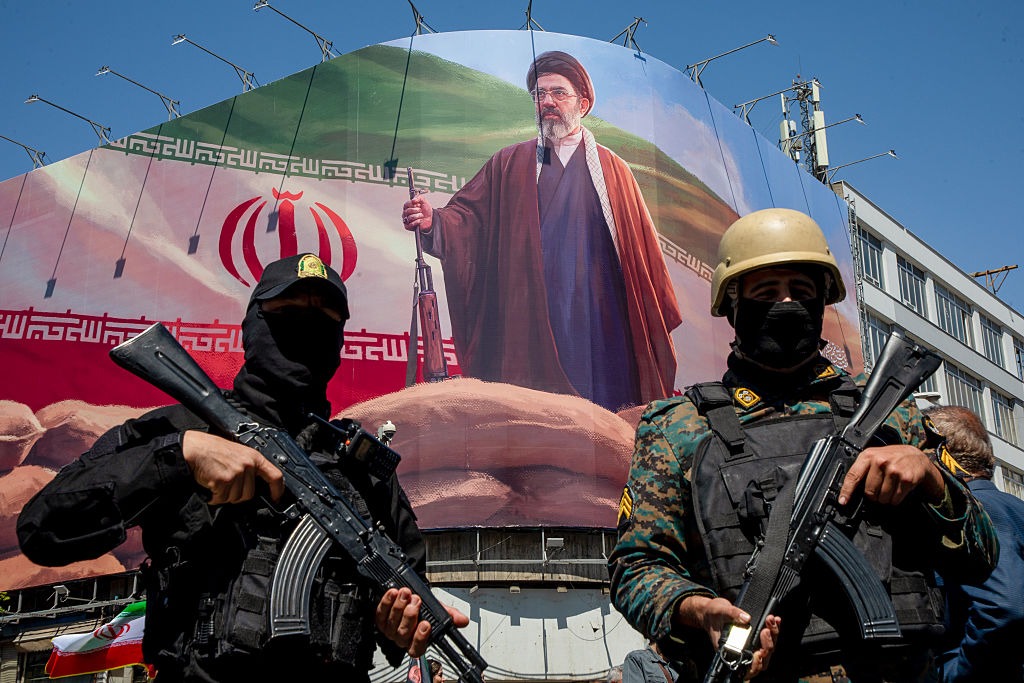
The solution to the "Iran problem" isn't money; it is good governance. And that requires a change of regime beyond what Trump pretends has already happened.
The solution to the "Iran problem" isn't money; it is good governance.
And that requires a change of regime beyond what Trump pretends has
already happened. Pictured: Members of the Iranian security forces stand
under a billboard of Iran's Supreme Leader Mojtaba Khamenei on April 9,
2026 in Tehran, Iran. (Photo by Majid Saeedi/Getty Images)
Whether or not the 60-day diplomatic ping pong between the Trump
administration and remnants of the Islamic Republic produces anything
resembling peace, one thing is clear: There will be no shower of gold
over Iran as the faction taking part in the talks pretend.
The faction that unites the remnants of the Rafsanjani cartel with
some erstwhile foes among the military-security mafia is beating the
drums about Iran gaining access to frozen assets, estimated at over $100
billion in 22 countries, shoveling money by imposing tariffs on ships
passing through the Strait of Hormuz and starting to export crude on a
no-tomorrow basis.
But the pièce de résistance in this imaginary banquet is the
$300 billion carrot waved by President Donald Trump as an alternative to
the stick of bombing Iran back to the Stone Age.
Put those mouth-watering figures together and you are talking of a $1 trillion bonanza.
Thus, it is no wonder why many in the United States and elsewhere are
concerned that such a boost to Iran's moribund economy could speed up
its long-time plans to develop nuclear weapons and longer-range missiles
to export revolution to the region and beyond.
Some of those expressing that concern are Trump's political foes,
such as the hedge-fund guru Bill Ackman, a leading donor to the Democrat
Party.
Others include anti-American pundits in Europe, not to mention some
Israelis who feel Trump has let them down. Some figures in the Iranian
opposition in exile are also concerned that their hope of gaining power
with American support is waning.
As often was the case with matters regarding Iran's weird regime,
this time too one could say we've been there, seen that, and bought the
T-shirt.
Rewind to 2015 and President Barack Obama's disastrous "nuke deal" with the mullahs known as JCPOA.
Tehran headlines quoted then President Hassan Rouhani saying, "The
Wall of Sanctions Has Fallen!"; implying that Jericho is ours.
Commentators claimed the Islamic Republic will have so much money it
wouldn't know how to spend it.
Tehran ended up getting only $1.7 billion in the form of greenbacks
smuggled in Samsonites. In exchange, Iran was to be put under the
tutelage of the so-called 5+1 posse of powers for 15 to 25 years.
Joe Biden too waved a carrot in the shape of an $8 billion in Iranian
frozen assets in South Korea. The money was transferred from Seoul to a
bank in Qatar on its way to Iran but never reached there.
A year later, Qatar announced that it had charged $1 billion to
"host" the money. Last week, it was announced that the money would be
transferred to the Central Bank of Pakistan on its way to Iran, after a
slimming diet that reduced its size by a further $1 billion as "for
sundry banking and insurance charges." Vice President JD Vance,
portraying the Swiss talks as "constructive," promised to speed up the
transfer as Pakistanis salivated about getting their cut.
The truth is that releasing Iran's frozen assets doesn't depend on Trump's say-so.
It would require the agreements of more than 40 countries, including
the European Union 27, that must lift the "snapback" mechanism they
reactivated last summer. What the biggest holder of Iranian frozen
assets - China - might do is anyone's guess. So far, it has refused cash
payments, insisting Iran buy Chinese goods instead.
At some point, one would also need a new UN Security Council
resolution, the eighth on Iran, to loosen the string purse across the
globe.
The risk for Iran in that case is that the Trump administration -
anxious to avoid being branded as an extension of the Obama-Biden
disaster - might seek a resolution under Chapter VII of the UN Charter
that would expose Iran to UN-sanctioned military action in case of its
violation.
This is why Vance speaks of a "mandatory" rather than a merely
recommending resolution of the type that endorses apple pie and
motherhood.
In such a case, the resolution may be vetoed by either China or
Russia or both, dispersing the cloud of peace fomented by Trump and his
imaginary "good guys" in Tehran.
If Trump were not as clueless in diplomacy as he appears to be, one
might even think that he has a Machiavellian plan to get Tehran to
commit itself to what the US demands, more than it did in 2015, but
allow it no chance of cheating without facing another war this time
sanctioned by the UN.
Now let's suppose that the Trump-Vance duo really wants to save the
Islamic Republic from the consequences of half a century of
mischief-making, incompetence and crime and help them get $300 billion.
The question is: where would that money come from?
Iran's Arab neighbors, including the Qataris and the Omanis, didn't
invest a penny there when there was no tension. Same as Turkey. More
than 50 French companies, including Total and Peugeot, arrived with big
plans for investment, carried out feasibility studies and did some
preliminary work but ended up fleeing when the faction that had signed
with them was sidelined by the faction that hadn't.
Dozens of companies from Germany, South Korea, Malaysia, and Sweden
have had similar experiences with Iran. Even Russia hasn't been able to
invest in the Iranian economy.
In 2004, the British HSBC bank planned to open a branch in Tehran but
thought better of it when it became clear the IRGC wanted to use it to
funnel funds to Hezbollah and its political siblings in Iraq and Syria.
Since 1979, Iran has earned over $1.2 trillion from oil and other
exports and squandered it on useless projects such as a nuclear one that
hasn't produced a single watt of electricity, building 12,000
kilometers of tunnels; larger than the whole of Qatar, to hide missiles
and drones, financing Hamas and other "proxies," massacring Syrians,
creating Hezbollah cells in Europe, the US, Canada and Latin America.
The solution to the "Iran problem" isn't money; it is good
governance. And that requires a change of regime beyond what Trump
pretends has already happened.
Gatestone Institute would like to thank the author for his kind
permission to reprint this article in slightly different form from Asharq Al-Awsat.
Amir Taheri was the executive editor-in-chief of the daily Kayhan
in Iran from 1972 to 1979. He has worked at or written for innumerable
publications, published eleven books, and has been a columnist for Asharq Al-Awsat since 1987. He graciously serves as Chairman of Gatestone Europe.