Wednesday, January 18, 2012

Israel decision on attacking Iran 'far off'?


by Rick Moran

So says Ehud Barak, Israel's defense chief. But there are two ways one can interpret that statement.

1. It may be a ruse to lull the Iranians into a false sense of security; or

2. Consensus in the cabinet on whether to go ahead and bomb the nuke facilities is lacking.

I lean toward the latter. Washington Post:

Israeli Defense Minister Ehud Barak said Wednesday that Israel was "very far off" from making a decision on a possible strike on Iranian nuclear facilities. The remarks appeared to be part of an effort to allay American concerns that Israel is preparing for an attack despite Washington's objections.

Barak was interviewed on Army Radio on the eve of a visit to Israel by the chairman of the U.S. Joint Chiefs of Staff, Gen. Martin Dempsey. Dempsey is scheduled to arrive Thursday for talks with Barak and the Israeli army chief of staff, Lt. Gen. Benny Gantz, and possibly also with Prime Minister Benjamin Netanyahu. It will be Dempsey's first official trip to Israel since assuming his post in September.

[...]

Israel, which views Iran's nuclear program as an existential threat, has repeatedly hinted that it could take military action should international sanctions fail to halt what it says is an effort to develop atomic weapons.

Asked in the radio interview whether the United States had pressed for advance notice of a possible Israeli strike on Iran, Barak said: "We haven't made a decision to go ahead with this matter. We have no date for making decisions. The whole thing is very far off...I don't want to provide estimates. It's certainly not urgent...I don't suggest that we deal with this as if it's about to happen tomorrow."

Barak added that both Washington and Israel "respect one another's freedom of decision."

I used to think that Israel cared about what Obama thought of their plans to attack Iran. Not anymore. Recent statements by Prime Minister Netanyahu appear to dismiss the possibility that Israel would accept a US veto over their actions. If the price of getting rid of Iran's nuclear threat is good relations with the Obama administration, the Israelis appear perfectly willing to pay that price.

But consensus in the cabinet still eludes the Iran hawks. I don't think there's any way Netanyahu initiates an attack if he's got a divided government. How that consensus can be reached will just have to await developments.

Rick Moran

Source: http://www.americanthinker.com/blog/2012/01/israel_decision_on_attacking_iran_far_off.html

Copyright - Original materials copyright (c) by the authors.

Soros Firsters Bash Israel


by Daniel Greenfield

When the far left took on the far right’s habit of referring to Jews who don’t support their drive for the destruction of Israel as “Israel Firsters” they forgot one important thing. To accuse someone else of being unpatriotic, you have to be able to assert your own patriotism. To accuse someone else of dual loyalty, you first have to be loyal to the United States.

The Muslim bloggers at the Center for American Progress, an Obama Administration think tank funded by George Soros, a Nazi collaborating billionaire, along with a secret list of other rogue titans, have no such credibility, not because they are Muslim, but because they have a long record of undermining and attacking American national defense and national security. The Soros Shadow Party may use the name “American” in organizations such as the Center for American Progress or the New America Foundation but those groups are invariably Anti-American.

When Zaid Jilani, a blogger at the Center for American Progress, uses “Israel Firsters,” no one bothers to ask him the obvious question. What country does he put first? It certainly isn’t the United States whose foreign policy Jilani has blamed for Muslim terrorism against America. When making that argument Zaid Jilani claimed, “saying that instantly gets you labeled a Blame America Firster or some other kind of nonsense.”

Jilani, like most of his colleagues, is indeed a Blame America Firster. The Center for American Progress is really The Center for Blaming America First, which gives it very little credibility when it decides to tar anyone to the right of them, a wide swath of the populace that covers anyone who doesn’t believe that all our problems with Islamic terrorism are due to a few million Jews living in the 9 miles between Tel Aviv’s view of the Mediterranean and the West Bank’s Muslim terrorist encampments filled with people so angry and hate-filled that they could only find work as Jihadists or blogging at the Center for American Progress.

But when Jilani complained two years ago that Americans irrationally hate and smear Pakistan, no one called him a Pakistan Firster. When he wrote last year, “As a Pakistani-American, I’ve grown up caught between two worlds: the United States, the rich country that is the world’s lone superpower, and Pakistan, the troubled land of my parent’s birth (sic)” and concluded with an observation of the book he was discussing that “the motivations of Al Qaeda were obscured or misinterpreted in the major media narratives about the attacks, and that the terrorists viewed themselves as retaliating against American foreign policy,” he had done far more to earn the label of a Pakistan Firster than any of his targets had to earn the label of Israel Firster.

Ali Gharib, another Center for American Progress blogger, accused a Republican Senator who supported sanctions against Iran of not caring about anyone but Israel. But Gharib, CAP’s point man on opposing sanctions on Iran, cares mainly about Iran acting like, dare one say it, an Iran Firster. What kind of sanctions on Iran is Gharib opposed to? Any sanctions really. An extensive Think Progress post by him last month warned against barring American companies that do business through Iran’s central bank. Iran’s central bank CBI is government owned and finances its terrorist activities. Its governor is a stooge of genocidal lunatic Mahmoud Ahmadinejad. Opposing bipartisan sanctions that would undermine the Iranian regime and its leading madman is not exactly the behavior of a great patriot.

Obviously Zaid Jilani has a special feeling for Pakistan as Ali Gharib, who describes himself as a “Proud Iranian-American,” does for Iran, yet there is nothing productive to be gained by tarring them with such labels as Pakistan Firster or Iran Firster. Name-calling does nothing to enhance the dialogue; neither do accusations of treason. It’s not unreasonable for Jilani and Gharib to have special sympathies for the countries of their ancestry or to engage in special pleading on their behalf, even if that pleading is thinly disguised as analysis. What is ridiculous is for them to go on the warpath against anyone who doesn’t share their national hatreds for Israel by accusing them of being Israel Firsters.

But the antics of Zaid Jilani and Ali Gharib tell us more about the Center for American Progress and the willingness of the left to descend into stereotypical bigotry that is inconsistent with their own program in order to demonize the opposition. Faiz Shakir, the editor of CAP’s Think Progress blogs where Jilani and Gharib’s writings appear, admitted in an email that some of the language used was anti-Semitic, but it isn’t really the language that is the issue.

The Center for American Progress is the brain of the Obama Administration, the think tank whose talking points feed back and forth out of the White House and into the media. Its attitude that anyone who defends Israel is the enemy speaks volumes about the ideological tenor in the highest offices of this government. Jilani and Gharib are at CAP because they fit its agenda and CAP fits the agenda of its corrupt billionaire backers. And it’s that agenda, more than the slurs of some of CAP’s bloggers who are doing the dirty work that they are paid to do, that should really worry anyone who cares about the future of this country and the free world.

George Soros has said, “It is a sort of disease when you consider yourself some kind of god, the creator of everything, but I feel comfortable about it now since I began to live it out.” In 2003 we all began living out Soros’ power mad fantasies when he declared that the central focus of his life was to force Bush out of office. That same year the Center for American Progress came into being under the impetus and with the financial backing of America’s newest self-made god.

Taking the loot of a Nazi collaborator to smear the United States of America is an ugly enough thing that denies those who let the dirty money cross their palms the right to spout on about patriotism. It is even uglier when a man who described his role in the Holocaust as the most exciting time in his life enlists flunkies to spread his hatred of Jews and the Jewish state.

The most damning allegation to be made is “Soros Firster.” Soros has always looked after his own interests first. His delusions of grandeur lead him to place himself above the world and ordinary mortals. And those who serve him in his Shadow Party and pursue his agenda have no loyalty to any country or creed. They are Soros Firsters.

Daniel Greenfield, a Shillman Journalism Fellow at the Freedom Center, is a New York writer focusing on radical Islam.

Source: http://frontpagemag.com/2012/01/18/soros-firsters-bash-israel/

Copyright - Original materials copyright (c) by the authors.

Ron Paul’s Absurd ‘Golden Rule’


by Joseph Klein

Congressman Ron Paul showed in the January 17th Fox News debate why he would be so dangerous as president and commander-in-chief. He believes, in a twist on the Judeo-Christian Golden Rule, that our Islamist enemies are only assaulting us because we assaulted them first. Sorry, appeaser-in-chief Paul, but the Koran commands devout jihadists to use whatever means are necessary to destroy all infidels, no matter what we have done or plan to do to them.

As part of an exchange involving the appropriate response to al Qaeda and their Taliban supporters, Paul exclaimed:

My point is, if another country does to us what we do others, we’re not going to like it very much. So I would say that maybe we ought to consider a golden rule in — in foreign policy. Don’t do to other nation… what we don’t want to have them do to us.

Paul even offered the absurd analogy comparing our killing of the mass murderer Osama bin Laden on Pakistani soil, where he was provided a sanctuary, to the Communist Chinese government deciding to go after a Chinese dissident seeking freedom in the United States. Newt Gingrich properly labeled this comparison “utterly irrational.”

Ron Paul may have some good ideas on reining in the power of the Federal Reserve and on the need to control federal spending. But he is clueless in dealing with our Islamist enemies. He either does not understand or refuses to believe the ideology that drives them. They want to kill us because our nation is governed on the basis of principles derived from Judeo-Christian beliefs including the true Golden Rule. They hate us because of who we are, not for any alleged harm that we’ve ever caused them.

Only three years after the United States won its independence, when there was no Jewish state for Muslims to resent, and no American troops on Muslim soil, Thomas Jefferson, then U.S. ambassador to France, and John Adams, then U.S. Ambassador to Britain, learned from a Muslim ambassador to Britain why the Muslims were so hostile towards Americans. Jefferson and Adams were attempting to negotiate a peace treaty with the Muslim “Barbary pirates,” an exercise that ultimately proved to be futile.

As Jefferson and Adams later reported to Congress, the Muslim ambassador explained to them that Islam

Was founded on the Laws of their Prophet, that it was written in their Koran, that all nations who should not have acknowledged their authority were sinners, that it was their right and duty to make war upon them wherever they could be found, and to make slaves of all they could take as Prisoners, and that every Musselman [Muslim] who should be slain in Battle was sure to go to Paradise.

All that Ron Paul needs to do is take a look at the Koran itself, cited by that Muslim ambassador more than 200 years ago, to understand the source of the jihadist ideology that we are still fighting today.

Here is a sample:

• “Kill the disbelievers wherever we find them.” (Koran, 2:191)

• “O ye who believe! Take not the Jews and the Christians for your friends: They are but friends to each other.” (Koran 5:51)

• “Shall I tell you who, in the sight of God, deserves a yet worse retribution than these? Those [the Jews] whom God has rejected and whom He has condemned, and whom He has turned into monkeys and pigs because they worshiped the powers of evil.” (Koran 5:60)

• “I will inspire terror into the hearts of unbelievers: you smite them above their necks and smite all their fingertips off of them.” (Koran, 8:12)

• “So when the sacred months have passed away, then slay the idolaters wherever you find them, and take them captives and besiege them and lie in wait for them in every ambush, then if they repent and keep up prayer and pay the poor-rate, leave their way free to them; surely Allah is Forgiving, Merciful.”

• “[F]ight those who believe not in Allah nor the Last Day, nor hold that forbidden which hath been forbidden by Allah and His Messenger, nor acknowledge the religion of Truth, (even if they are) of the People of the Book [Christians and Jews], until they pay the Jizya with willing submission, and feel themselves subdued.” (Koran, 9:29)

• “When we decide to destroy a population, we send a definite order to them who have the good things in life and yet sin. So that Allah’s word is proven true against them, then we destroy them utterly.” (Koran, 17:16-17)

Islamist apologists argue that the Koran also contains verses calling for tolerance and understanding. If the verses written while Muhammad was living in Mecca, where he and his followers were then surrounded by much stronger non-Muslim populations, constituted the entirety of the Koran, they may have had a point. However, the milder verses were superseded by the far more war-like and intolerant verses written during Muhammad’s time in Medina where he successfully launched his jihad of conquests against non-believers, especially against Jews who refused to convert to Islam. Moreover, when one examines the real meaning of jihad according to Muhammad from other primary sources such as Bukhari (the Hadith, which are oral traditions relating to the words and deeds of Muhammad), the fact is that 97% of the jihad references are about war and 3% are about so-called inner struggle.

Sayyid Qutb, an Egyptian author, educator, and the leading Islamic scholar who was a member of the Egyptian Muslim Brotherhood in the 1950s and ’60s, wrote:

It may happen that the enemies of Islam may consider it expedient not to take any action against Islam, if Islam leaves them alone in their geographical boundaries to continue the lordship of some men over others and does not extend its message and its declaration of universal freedom within their domain. But Islam cannot agree to this unless they submit to its authority by paying Jizyah, which will be guarantee that they have opened their doors for the preaching of Islam

Islam has the right to take the initiative…this is God’s religion and it is for the whole world. It has the right to destroy all obstacles in the form of institutions and traditions … it attacks institutions and traditions to release human beings from their poisonous influences, which distort human nature and curtail human freedom.

Those who say that Islamic Jihaad was merely for the defense of the “homeland of Islam” diminish the greatness of the Islamic way of life.

This is the ideology that inspired Osama bin Laden and his replacement as the current leader of al Qaeda, Ayman Zawahiri. A “die or submit” ideology is the antithesis of the Golden Rule that is so central to Judeo-Christian beliefs. If Iran, al Qaeda or other jihadists were ever armed with nuclear bombs, we would face an existential threat. Yet Ron Paul believes that the solution is to simply pretend the threat only exists because of our own foreign policy.

In my previous article on Ron Paul’s dangerous foreign policy views, I discussed Paul’s perverted moral equivalency version of the Golden Rule in dealing with the Iranian theocracy. Referring to the U.S.-Iranian conflict and justifying Iran’s pursuit of nuclear weapons (which he simultaneously denies is happening), Paul said during the August 11, 2011 GOP presidential debate in Iowa:

It’s been going on and on because we just plain don’t mind our own business. That’s our problem…Why wouldn’t it be natural that they might want a weapon? Internationally, they’d be given more respect.

Again, to be charitable, Paul is way out in left field. The fanatics ruling Iran today do not believe in the Golden Rule as we understand it in the West. They believe instead in a “golden age” when the big Satan (the United States) and the little Satan (Israel) will be destroyed. This will hasten the arrival of the 12th Imam, otherwise known as the Mahdi, whom Iran’s rulers look to as Islam’s messianic savior.

For example, Ayatollah Khamenei linked Israel and the United States together as the mortal enemies of the 12th Imam and declared through a spokesman in August 2009:

We have to train honest forces that can stop the obstacles that may hinder the coming of the Mahdi like the United States and Israel.

The spokesman described Ayatollah Khamenei, Iran’s supreme leader, as “a direct representative” of the Mahdi and said following his orders is like “obeying the guided one.

Ron Paul is on a fool’s gold mission in believing that applying the Golden Rule in dealing with our Islamist enemies will lead to any result other than the killing of many more innocent Americans.

Joseph Klein

Source: http://frontpagemag.com/2012/01/18/ron-pauls-absurd-golden-rule/

Copyright - Original materials copyright (c) by the authors.

U.S. May Release Senior Taliban Terrorists


by IPT News

The Obama administration is considering releasing five top Taliban jihadists from custody at Guantanamo Bay in hopes of negotiating a peace agreement with the Afghan terrorist movement. Secretary of State Hillary Clinton said last week that administration is in "the preliminary stages" of testing whether talks with the Taliban can succeed.

President Obama plans to withdraw virtually all U.S. troops from Afghanistan by 2014. Last month, Vice President Joe Biden told an interviewer that "the Taliban per se is not our enemy."

Republican presidential frontrunner Mitt Romney blasted Obama's approach to the Taliban, declaring that "The right course for America is not to negotiate with the Taliban while the Taliban are killing our soldiers." Yet one of Romney's top foreign policy aides has reportedly advocated a negotiating approach that is similar to Obama's.

According to a recent report in The Hindu, radical Islamist cleric and Muslim Brotherhood spiritual guide Yusuf al-Qaradawi has served as a "key mediator" in U.S.-Taliban negotiations.

The Taliban's recent announcement that it plans to open a political office in Qatar meets a longstanding U.S./NATO condition for discussing Afghanistan's future with the terror group. Earlier this month, reports indicated that Washington had agreed to transfer the five Taliban leaders from U.S. custody to Afghan President Hamid Karzai's government.

At some point, they could be set free.

Another report indicated the jihadists would be transferred to Qatar, a nation with a poor record on combating terrorism and a suspected link to the 9/11 attacks.

The strategy is fraught with peril as previous experience has shown. Still, the State Department has made finding a negotiating address for the Taliban a top priority.

In November 2010, an imposter posing as a Taliban representative stole several hundred thousand dollars from Western officials trying to woo the group into joining negotiations. In September, a suicide bomber disguised as a Taliban peace envoy blew up former Afghan President Berhanuddin Rabbani, head of a government council seeking a political solution with insurgents.

But analysts say that demands from the Taliban, which ruled Afghanistan from 1996-2001 and provided training facilities for the 9/11 hijackers, may be too risky. The five Taliban leaders "have provided critical support to the integration of the Taliban into al-Qaida both politically and militarily," said Bill Roggio, managing editor of the Long War Journal and a senior fellow with the Foundation for Defense of Democracies (FDD). "They were part of forging ties with al-Qaida before and after 9/11."

Given the fact that none of the five have renounced al-Qaida or jihadism, their release from custody makes no sense "if we want to leave behind an Afghanistan not controlled by al-Qaida," Roggio told the Investigative Project on Terrorism.

The State Department refused to speak publicly about the possible release of the Taliban officials. White House spokesman Jay Carney declined comment when asked recently about possible terrorist releases. He did reiterate President Obama's commitment to close the Guantanamo Bay facility.

History shows that Afghan officials, including Karzai (who is now demanding that Washington turn its prison facilities in Afghanistan over to his government in a month), have been "personally involved" in releasing other terrorists detained by the United States from prison, said Thomas Joscelyn of FDD.

He points to an Aug. 6, 2009 cable originating at the U.S. Embassy in Kabul, which noted that the Bush and Obama administrations were vexed by Karzai's willingness to release dangerous prisoners. U.S. officials have repeatedly emphasized to Afghanistan's attorney general "the need to end interventions by him and President Karzai, who both authorize the release of detainees pre-trial and allow dangerous individuals to go free or re-enter the battlefield without ever facing an Afghan court."

Joscelyn obtained Joint Task Force-Guantanamo (JTF-GTMO) memos from 2008 evaluating the five high- risk jihadists the Taliban wants freed from Guantanamo. In each case, military intelligence officials concluded the detainee was too dangerous to release. The five are former Taliban Deputy Intelligence Minister Abdul Haq Wasiq; Taliban Army Chief of Staff Mullah Mohammed Fazi; the organization's former governor of Herat province, Mullah Khairullah Khairkhwa; Mullah Norullah Noori, a former Taliban military commander and governor; and Muhammad Nabi, one of the Taliban's top financiers. Read profiles here and here. Some highlights:

  • Mullah Mohammed Fazi

Fazi was a top Taliban commander before his capture in November 2001. According to JTF-GTMO, he cooperated with Abdel Hadi al Iraqi, who led the 055 Brigade–Osama bin Laden's chief fighting force, which served with Taliban units.

Fazi would likely rejoin the Taliban if released from U.S. custody "and establish ties with elements participating in hostilities against U.S. forces in Afghanistan," JTF-GTMO warned.

Fazi is also wanted by the United Nations in connection with war crimes, including the murders of thousands of Afghan Shiites.

  • Mullah Norullah Noori

Noor (also wanted by the U.N. for anti-Shiite atrocities) had ties to Mullah Omar, the Taliban's Supreme Leader, as well as to senior al-Qaida members. He fought alongside al-Qaida as a Taliban military general and was involved in fighting U.S. forces in late 2001.

  • Abdul Haq Wasiq

A task force threat assessment found that Wasiq "was central to the Taliban's efforts to form alliances with other Islamic fundamentalist groups to fight alongside the Taliban against U.S. and Coalition forces after the 11 September 2001 attacks." Wasiq arranged al-Qaida training of Taliban operatives that was reportedly conducted by Hamza Zubayr, a senior terrorist killed during the September 2002 raid in which 9/11 organizer Ramzi Binalshibh was captured.

  • Mullah Khairullah Khairkhwa

Joscelyn quoted U.S. officials at Guantanamo as stating that Khairkhwa was a major drug trafficker who oversaw one of bin Laden's training facilities. A JTF-GTMO file on Khairkhwa said that following 9/11, he "represented the Taliban during meetings with Iranian officials seeking to support hostilities against U.S. and Coalition forces."

  • Muhammad Nabi

In a Jan. 23, 2008 memo, JTF-GTMO analysts said Nabi had been a senior Taliban official who served as a "member of a joint al Qaeda/Taliban…cell in Khowst and was involved in attacks against U.S. and Coalition forces" and "facilitated the smuggling of fighters and weapons."

If any of the five are released by the United States, Joscelyn said, they may well follow the example of Mullah Abdul Qayum Zakir, a former detainee who was released from Guantanamo in December 2007 and became a senior Taliban commander targeting and killing U.S. soldiers on the battlefield – a position he holds today.

"This misguided 'peace' effort may well help the Taliban replenish its leadership ranks," Joscelyn said.

Even State Department officials – "the most dovish part of the U.S. government" – do not sound very optimistic about the prospect of successfully negotiating with Taliban, Joscelyn noted, with one recently estimating the chances of success at just 30 percent.

Indeed, even as Washington courts the Taliban, feuding Taliban factions in Afghanistan and Pakistan responded positively to an initiative from one of al-Qaida's top commanders, Abu Yahya al-Libi, who persuaded them to put aside differences and create a new military alliance against NATO and U.S. forces in Afghanistan. At a recent meeting, al-Libi reportedly won a promise from Pakistani Taliban officials to send fighters to Afghanistan to wage jihad against "U.S.-led infidel forces."

Roggio, who closely monitors events on the battlefield, says current trends are not favorable to the U.S. and NATO efforts to stabilize the country. In large swaths of Afghanistan, the Taliban "seizes control once the sun goes down" and government and Western forces have ended their patrols, he said. The fact that many Afghan travelers find it necessary for their own safety to disguise themselves as Taliban supporters is another troubling indicator of the security situation in the country today.

He believes President Obama's insistence on a 2014 withdrawal date for U.S. forces is undermining Washington's credibility in dealing with allies and foes. Some members of Congress have sent classified letters challenging the tentative plan to release the Taliban prisoners and some have raised the possibility of blocking the transfer by attaching amendments to unrelated legislation.

"I think that, ultimately, the fact that the U.S. is pulling back troops is an important message for [the Taliban]—that they are winning," Roggio said. "The Taliban will use this to keep their forces on the battlefield. Telling them that we're on the way out tells them that time is on their side."

All of this is happening at a time when there are close to 100,000 U.S. troops in Afghanistan, he said, adding: "It doesn't take a lot of imagination to see what's likely to happen if American troops are gone two years from now."

IPT News

Source: http://www.investigativeproject.org/3387/us-may-release-senior-taliban-terrorists

Copyright - Original materials copyright (c) by the authors.

Tuesday, January 17, 2012

Jewish Rights to Palestine


by Eli E. Hertz

Nick Clegg, Deputy Prime Minister of Britain, called Israeli settlements "deliberate vandalism" at a press conference Tuesday, January 10, 2012.

Nick Clegg is turning international law on its head - attempting to rewrite history.

The quotes below reflect the current degree of ignorance and occasional just plain antisemitism when it comes to Israel, the only free and democratic country in the Middle East.

Great Britain was entrusted in 1922 by the League of Nations with the responsibility to administer Palestine - the area between the Jordan River and the Mediterranean Sea, in accordance with the provisions of the articles of the Mandate for Palestine." The following two articles are the most relevant:

Article 5: "The Mandatory shall be responsible for seeing that no Palestine territory shall be ceded or leased to, or in any way placed under the control of the Government of any foreign power."

Article 6: "The administration of Palestine ... shall encourage ... close settlement by Jews on the land, including State land and waste land not required for public purpose."

"When it is asked what is meant by the development of the Jewish National Home in Palestine, it may be answered that it is not the imposition of a Jewish nationality upon the inhabitants of Palestine as a whole, but the further development of the existing Jewish community, with the assistance of Jews in other parts of the world, in order that it may become a centre in which the Jewish people as a whole may take, on grounds of religion and race, an interest and a pride. But in order that this community should have the best prospect of free development and provide a full opportunity for the Jewish people to display its capacities, it is essential that it should know that it is in Palestine as of right and not on sufferance. That is the reason why it is necessary that the existence of a Jewish National Home in Palestine should be internationally guaranteed and that it should be formally recognized to rest upon ancient historic connection."

Winston Churchill
British Secretary of State for the Colonies
June 1922

Lord Caradon, former British Ambassador to the UN, and the principal author of UN Security Council Resolution 242, made it clear in 1974:

"It would have been wrong to demand that Israel return to its positions of 4 June 1967. ... That's why we didn't demand that the Israelis return to them and I think we were right not to."

Eli E. Hertz

Source: http://www.mythsandfacts.com

Copyright - Original materials copyright (c) by the authors.

Ending the Palestinian "Right of Return"


by Daniel Pipes

Between 1967 and 1993, just a few hundred Palestinians from the West Bank or Gaza won the right to live in Israel by marrying Israeli Arabs (who constitute nearly one-fifth of Israel's population) and acquiring Israeli citizenship. Then the Oslo Accords offered a little-noted family-reunification provision that turned this trickle into a river: 137,000 residents of the Palestinian Authority (PA) moved to Israel in 1994-2002, some of them engaged in either sham or polygamous marriages.

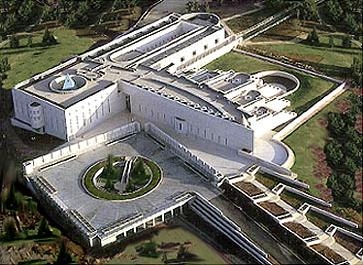
The Israeli Supreme Court building in Jerusalem.

Israel has two major reasons to fear this uncontrolled immigration. First, it presents a security danger. Yuval Diskin, head of the Shin Bet security service, noted in 2005 that of 225 Israeli Arabs involved in terror against Israel, 25 of them, or 11 percent, had legally entered Israel through the family unification provision. They went on to kill 19 Israelis and wound 83; most notoriously, Shadi Tubasi suicide-bombed Haifa's Matza Restaurant in 2002 on behalf of Hamas, killing 15.

Second, it serves as a stealth form of Palestinian "right of return," thereby undermining the Jewish nature of Israel. Those 137,000 new citizens constitute about 2 percent of Israel's population, not a small number. Yuval Steinitz, now the finance minister, in 2003 discerned in PA encouragement for family reunification "a deliberate strategy" to increase the number of Palestinians in Israel and undermine its Jewish character. Ahmed Qurei, a top Palestinian negotiator, later confirmed this fear: "If Israel continues to reject our propositions regarding the borders [of a Palestinian state], we might demand Israeli citizenship."

In response to these two dangers, Israel's parliament in July 2003 passed the "Citizenship and Entry into Israel Law." The law bans Palestinian family members from automatically gaining Israeli residency or citizenship, with temporary and limited exemptions requiring the interior minister to certify that they "identify with Israel" or are otherwise helpful. In the face of severe criticism, then-Prime Minister Ariel Sharon affirmed in 2005 that "The State of Israel has every right to maintain and protect its Jewish character, even if that means that this would impact on its citizenship policy."

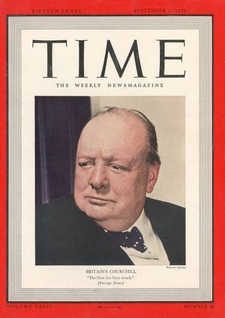
Winston Churchill in 1939.

Only 33 of 3,000 applications for exemptions, according to Sawsan Zaher, an attorney who challenged the law, have been approved. Israel is hardly alone in adopting stringent requirements for family reunification: Denmark, for example, has had such rules in place for a decade, excluding (among others) an Israeli husband from the country, with the Netherlands and Austria following suit.

Last week, Israel's Supreme Court, by a 6-5 vote, upheld this landmark law, making it permanent. While recognizing the rights of a person to marry, the court denied that this implies a right of residency. As the president-designate of the court, Asher Dan Grunis, wrote in the majority opinion, "Human rights are not a prescription for national suicide."

This pattern of Palestinian emigration toward Jews goes back almost to 1882, when European Jews began their aliyah (Hebrew for "ascent," meaning immigration to the land of Israel). In 1939, for example, Winston Churchill noted how Jewish immigration to Palestine had stimulated a like Arab immigration: "So far from being persecuted, the Arabs have crowded into the country and multiplied till their population has increased."

In brief, you didn't have to be Jewish to benefit from the Zionists' high standard of living and law-abiding society. One student of this subject, Joan Peters, estimates that a dual Jewish and Arab immigration "of at least equal proportions" took place between 1893 and 1948. Nothing surprising here: other modern Europeans who settled in underpopulated areas (think Australia or Africa) also created societies that attracted indigenous peoples.

Gay parade, Tel Aviv, 2010: how many Palestinians among them?

This pattern of Palestinian aliyah has continued since Israel's birth. Anti-Zionist they may be, but economic migrants, political dissidents, homosexuals, informants, and just ordinary folk vote with their feet, preferring the Middle East's outstandingly modern and liberal state to the PA's or Hamas' hell holes. And note how few Israeli Arabs move to the West Bank or Gaza to live with a spouse, though no legal obstacles prevent them from doing so.

The Supreme Court's decision has momentous long-term implications. As Eli Hazan writes in Israel Hayom, "The court ruled de jure but also de facto that the state of Israel is a Jewish state, and thus settled a years-long debate." The closing of the back-door "right of return" secures Israel's Zionist identity and future.

Mr. Pipes (www.DanielPipes.org) is president of the Middle East Forum and Taube distinguished visiting fellow at the Hoover Institution of Stanford University.

Source: National Review Online; http://www.danielpipes.org/10524/palestinian-right-of-return

Copyright - Original materials copyright (c) by the authors.

Sanctions on Iran Starting to Bite?


by Max Boot

News from Iran is that the new sanctions on its oil industry and Central Bank enacted by Congress over President Obama’s protests are already starting to bite—even before the European Union finalizes its own embargo of Iranian oil. The Wall Street Journal reports:

Iran’s rial currency has declined 40 percent to 55 percent against the dollar on the black market since December. Iranian inflation, meanwhile, now exceeds 20 percent a month, according to the Central Bank. While the rial has been falling for almost a year, the latest drop appeared to be triggered by a recent U.S. announcement that it would penalize companies that do business with Iran’s Central Bank, and a proposed plan to ban Iranian oil purchases in the European Union later this year.

That’s certainly good news on some level although no one can be happy about the economic suffering being inflicted on the Iranian people who have no say in their leaders’ attempts to acquire nuclear programs. But will these sanctions be enough to deter the mullahs from going nuclear? Perhaps so, if the sanctions galvanize social unrest that threatens the ayatollahs’ hold on power. But I am not especially hopeful that will be the case.

As the Journal notes, the examples of Cuba, North Korea and Iraq under Saddam Hussein​ are not encouraging: all three countries faced years of crippling sanctions (decades in the case of the first two) yet their leaders’ hold on power was not seriously challenged. Instead, as the Journal writes, the result was “a populace that is poor and dependent on state welfare.”

This is the flip side of the argument that opponents of bombing Iran’s nuclear installations often make: Such strikes, they claim, will only lead the people to draw closer to their rulers. But that could also be the effect of sanctions. The difference is that, whatever their impact on Iranian popular opinion (impossible to predict), strikes would at least deliver short-term benefits by setting back Iranian nuclear efforts. Sanctions could simply be ineffectual.

Max Boot

Source: http://www.commentarymagazine.com/2012/01/17/sanctions-on-iran-and-strikes/

Copyright - Original materials copyright (c) by the authors.
The Golden Age of Islam - A Second Look


by Richard Butrick

The period from the death of Muhammad through the 13th Century marks the glory days of the Islamic empire. It was a period of commerce, industry and intra-cultural synergies and a flourishing of the sciences, art, medicine and architecture. It was the epitome of what civilization should be. Just ask Obama. In his 2009 Cairo speech the president said that Islam "carried the light of learning through so many centuries, paving the way for Europe's Renaissance and Enlightenment," and praised the "innovation in Muslim communities that developed the order of algebra; our magnetic compass and tools of navigation; our mastery of pens and printing; our understanding of how disease spreads and how it can be healed."

While Central Europe languished in the Dark Ages of ignorance, fear and superstition following the collapse of the Roman Empire in the 5th century (so the story goes), it was the Islamic world that carried the torch of Classical civilization to a Europe finally stumbling out of the Dark Ages in the 15th century.

By contrast the Islamic world flourished during the Dark Ages: by the 13th century, both Africa and India had become great centers of Islamic civilization, and soon after, Muslim kingdoms were established in the Malay-Indonesian world while Chinese Muslims flourished throughout China.

Islam therefore is a religion for all people from whatever race or background they might be: Islamic civilization is based on a unity which stands completely against any racial or ethnic discrimination. Such major racial and ethnic groups as the Arabs, Persians, Turks, Africans, Indians, Chinese and Malays in addition to countless smaller units embraced Islam and contributed to the building of Islamic civilization.

Moreover, so the story goes, Islam was not opposed to learning from the earlier civilizations and incorporating their science, learning, and culture into its own world view. Each ethnic and racial group that embraced Islam made its contribution to the one Islamic civilization to which everyone belonged.

The global civilization created by Islam also succeeded in activating the minds and thoughts of the people who entered its fold. As a result of Islam, the nomadic Arabs became torch-bearers of science and learning. The Persians, who had created a great civilization before the rise of Islam, nevertheless produced even more science and learning in the Islamic period than before. The same can be said of the Turks and other peoples who embraced Islam. The religion of Islam was itself responsible not only for the creation of a world civilization in which people of many different ethnic backgrounds participated, but it also played a central role in developing intellectual and cultural life on a scale not seen before.

Quite a story. And it is a story being fed to US students from k-12 on through graduate schools. Quite a story? More like a fairy tale.

Victor Davis Hanson has taken down Obama's version of the Golden age of Islam:

In his speech last week in Cairo, President Obama proclaimed he was a "student of history." But despite Mr. Obama's image as an Ivy League-educated intellectual, he lacks historical competency in both facts and interpretation. … Obama … claimed that "Islam . . . carried the light of learning through so many centuries, paving the way for Europe's Renaissance and Enlightenment." [In fact] medieval Islamic culture … had little to do with the European rediscovery of classical Greek and Latin values. Europeans, Chinese, and Hindus, not Muslims, invented most of the breakthroughs Obama credited to Islamic innovation. … Much of the Renaissance, in fact, was more predicated on the centuries-long flight of Greek-speaking Byzantine scholars from Constantinople to Western Europe to escape the aggression of Islamic Turks. Many romantic thinkers of the Enlightenment sought to extend freedom to oppressed subjects of Muslim fundamentalist rule in eastern and southern Europe.

Andrew Bostom has skewered the myth that Cordoba was a model of ecumenism:

Expanding upon Jane Gerber's thesis about the "garish" myth of a "Golden Age," the late Richard Fletcher (in his Moorish Spain) offered a fair assessment of interfaith relationships in Muslim Spain and his view of additional contemporary currents responsible for obfuscating that history:

The witness of those who lived through the horrors of the Berber conquest, of the Andalusian fitnah [ordeal] in the early eleventh century, of the Almoravid invasion — to mention only a few disruptive episodes — must give it [i.e.: the roseate view of Muslim Spain] the lie.

The simple and verifiable historical truth is that Moorish Spain was more often a land of turmoil than it was of tranquility. … Tolerance? Ask the Jews of Granada who were massacred in 1066, or the Christians who were deported by the Almoravids to Morocco in 1126 (like the Moriscos five centuries later). … In the second half of the twentieth century a new agent of obfuscation makes its appearance: the guilt of the liberal conscience, which sees the evils of colonialism — assumed rather than demonstrated — foreshadowed in the Christian conquest of al-Andalus and the persecution of the Moriscos (but not, oddly, in the Moorish conquest and colonization). Stir the mix well and issue it free to credulous academics and media persons throughout the Western world. Then pour it generously over the truth … in the cultural conditions that prevail in the West today, the past has to be marketed, and to be successfully marketed, it has to be attractively packaged. Medieval Spain in a state of nature lacks wide appeal. Self-indulgent fantasies of glamour … do wonders for sharpening its image. But Moorish Spain was not a tolerant and enlightened society even in its most cultivated epoch.

Serge Trifkovic also has a general take-down of the overblown account of the accomplishments and comity of the Islamic Golden Age in his FrontPage article, The Golden Age of Islam is a Myth.

And now we have Emmet Scott, in a soon to be released study, Mohammed & Charlemagne Revisited: An Introduction to the History of a Controversy, advancing the thesis that Rather than preserving the Classical heritage, the expanding Islamic empire destroyed it and brought about the Dark Ages.

Armed with new archaeological evidence, Scott makes the compelling case, originally put forward in 1920 by Henri Pirenne, a Belgian historian, that Classical civilization did not collapse after the fall of the Roman empire but was gradually attrited by the onslaught of Arab armies and raiders. The Islamic Golden Age came close to permanently destroying the classical humanistic culture of the West.

Hanson has pointed out the factual errors in Obama's paean to Islam's Golden Age. Andrew Bostom has skewered the myth that Cordoba was a model of ecumenism Trikovic has shown that the continuation of learning, science, technology of the "Golden age of Islam" prospered in spite of Islam and not because of Islam and now we have Emmet Scott skewering the myth that the Golden Age of Islam saved Classical humanistic Western culture. What is next? The glory of Sharia?

Richard Butrick

Source: http://www.stonegateinstitute.org/2757/golden-age-of-islam

Copyright - Original materials copyright (c) by the authors.
Abbas: After The Peace Process


by Khaled Abu Toameh

Palestinian Authority President Mahmoud Abbas is now preparing for the day after the formal death of the peace process.

Abbas is conducting negotiations with three different parties simultaneously: Israel, Hamas and the international community.

His policy now is to shoot in all directions in the hope of hitting as many birds as possible. This strategy, however, has so far failed to score significant gains.

The negotiations Abbas is conducting with Hamas are intended to create a joint Palestinian strategy in the aftermath of the failure of the peace process with Israel.

Abbas is hoping that Hamas will endorse his plan for a popular and non-violent intifada against Israel that would win the backing of the international community.

He also wants various international bodies to impose economic and political sanctions on Israel as a way of forcing the Israeli government to accept his demands, which are, above all, a full withdrawal from the West Bank, the Gaza Strip and East Jerusalem.

The Palestinian Authority wants to see an "Arab Spring" in the West Bank and Gaza Strip against Israel. It would like to see tens of thousands of Palestinians launch mass protests against Israeli soldiers and settlers.

Abbas does not want to see suicide bombings and other forms of terror attacks against Israel: he believes they are counterproductive and do not help the Palestinians achieve their goals, especially the establishment of an independent Palestinian state with East Jerusalem as its capital and the "right of return" for refugees -- who, according to the United Nations Relief and Works Agency, now number nearly five million, or approximately the entire Jewish population of Israel -- to their original homes inside Israel.

But Abbas's plan has so far won the support of only a few Hamas leaders, particularly those based in Syria.

Most of the Hamas leaders in the Gaza Strip are strongly opposed to the idea of a popular intifada and insist on pursuing the "armed struggle" against Israel.

Abbas's representatives are talking with Israelis in Jordan about the possibility of resuming direct negotiations between the two sides, the Palestinians and Israel. The talks in Amman seem to be going nowhere as Abbas continues to stick to his demand that the very matters to be negotiated instead be handed over up front, such as that Israel freeze settlement construction and accept the pre-1967 lines as the future borders of a Palestinian state. Abbas has said he wants the Israeli government to stop all construction in the settlements and Jewish neighborhoods in east Jerusalem, and to have Israel recognize the 1967 "borders" as the basis for a two-state solution.

In other words, Abbas is saying that Israeli refusal to comply with his demands is what is hindering the resumption of the peace negotiations.

Palestinian officials in Ramallah say they agreed to go to the Amman talks mainly because of pressure from the Jordanians, Americans and some Europeans. After three meetings, the Palestinians are already talking about the "failure" of the talks in Jordan due to Israeli "intransigence."

The Palestinian Authority is also saying that it cannot accept any Israeli presence along the border between the West Bank and Jordan. Nor is it willing to accept the idea of having settlement blocs in the West Bank.

The gap between Israel and the Palestinians remains as wide as ever, which why neither side has illusions about the prospects of resuming the peace process. The two parties are also aware that there is almost nothing the Obama Administration can do months before a US presidential election.

While Abbas is talking to Israel and Hamas separately, he is also pursuing his efforts with the international community in a bid to impose a unilateral solution on Israel.

Abbas is still threatening to resume his efforts unilaterally to achieve Palestinian membership in the UN.

Khaled Abu Toameh

Source: http://www.stonegateinstitute.org/2763/abbas-after-peace-process

Copyright - Original materials copyright (c) by the authors.

Out of Options in Egypt


by Daniel Greenfield

Back during the early days of the Tahrir Square protests I wrote:

59 percent of Egyptian Muslims want democracy and 95 percent want Islam to play a large part in politics. 84 percent believe apostates should face the death penalty. That is what Egyptian democracy will look like. A unanimous majority that wants an Islamic state and a bare majority that wants democracy. Which one do you think will win out? A democratic majority of the country supports murdering people in the name of Islam. Mubarak’s government does not execute apostates or adulterers. But a democratic Egypt will. Why? Because it’s the will of the people.

Here we are almost a year later and we have gotten the democratic Egypt that anyone who understood the realities of the region should have expected. An Egyptian parliament divided between the Salafists and the Muslim Brotherhood, which is a country divided between the Islamists who want to chop off heads now and the Islamists who think that it’s wiser to consolidate their power before chopping off heads.

The purpose of this article is not to berate the leftists and leftover neo-conservatives who supported the overthrow of Mubarak in the name of democracy. It’s a waste of breath and time. Ideologues who are committed to an ideology that explains the world in a way that seems moral and right do not stop what they are doing just because the consequences are disastrous.

Now they want us to intervene in Syria. Who else wants us to intervene in Syria? The Emir of Qatar, better known as the man behind Al Jazeera, which pushed the whole Arab Spring lie into an international myth to overthrow non-Islamist regimes across the region. The Emir is tipping his hand a little transparently by calling for troops to invade Syria instead of sitting back and letting his Al-Jazeera propagandists do the hard work of selling the West on an independent democracy movement, but the pro-democracy crowd isn’t paying attention.

They didn’t pay attention no matter how many times they were told that the Muslim Brotherhood was the dominant force behind the “pro-democracy uprising” and that they would be the beneficiaries if Mubarak were overthrown. It was all just noise to them. Democracy would conquer all and the same Twitter activists they were so chummy with would write the new constitution.

So here we are down the long road and Egyptian democracy wears a sword and a burqa. “I’ve got to hand it to the MB. They have played this revolution like a fiddle. And still do. Brilliant work.” That quote comes from Sandmonkey, one of the favorite activists of a lot of the bloggers and pundits endorsing the removal of Mubarak. There’s no more room for illusions. Supporting the removal of Mubarak was a mistake and it’s time to admit it and look at the available options.

Option 1. Pretend the Muslim Brotherhood or some wing of it is moderate. This is the approach on the left which is busy explaining that the Muslim Brotherhood is our best hope for restraining the Salafists and that the moderate Salafists are the best hope for restraining the extremist Salafists. These are the people who locked up with a tribe of cannibals would start dividing the cannibals into moderates and extremists, and feeding the moderates their own fingers to keep the extremists at bay.

Option 2. Pretend that the Brotherhood will comply with the democratic process long enough for Egyptian liberals to get their act together and start winning elections. Let’s call this strategy reading Locke to the cannibal tribe. And it comes from the same people who thought El Baradei would be ushering in a new age of democracy in Egypt right about now.

Option 3. Back the Egyptian military and support their use of whatever means necessary to stay in power and exercise absolute power. Not a pretty sentence I know. It means backing the people behind the virginity tests and plenty of things uglier than that. It means doing what we were doing all along, backing Arab dictators who sneer at human rights and rob the country blind. It’s also the only option on the table.

Now I don’t just mean it’s the only option on the table if you’re worried about the rise of Islamists and the transformation of Egypt into another Iran. I mean it’s the only option that actually exists.

You can support the Muslim Brotherhood, the Egyptian military, or El Baradei and a magic troop of dancing democracy gnomes, and the end result will still be another dictatorship backed by a secret police that terrorizes dissidents and robs the country blind. That’s the only form of government that exists across the Muslim world.

There are minor variations in this form of government. In Iran the oligarchy that runs the country and robs it blind is explicitly Islamic. In Egypt it’s military. In Turkey it’s a group of Islamist tycoons. In Afghanistan it’s a bunch of warlords. The details don’t matter that much, except that the Islamists use some of that money they steal to finance terrorism against us and they’re usually more repressive than the secular or semi-secular alternative.

There is no option on the list that turns Egypt into a secular state with respect for human rights. It was never going to happen. It’s not going to happen now. If the Muslim Brotherhood does put the military in its place and takes complete control, then it will just be one oligarchy replacing another. And the oligarchy will have a short distance to go because it already exists. Either way protesters will be beaten bloody and the secret police, most of the same secret police, will be out there dealing with dissidents.

Option 3 is the only real option and it isn’t a promising one. The Brotherhood genie is out of the bottle and the Egyptian military is not the secular force that the Turkish military was. It has no real interest in restraining the Brotherhood which is its leverage against us and any of our democracy projects. Nevertheless it’s the only option on the table because the Obama alternative is to continue pushing for Egyptian democracy which feeds power directly to the Brotherhood, as opposed to backing the military which feeds power to the Brotherhood indirectly.

When things have been screwed up enough there are no longer any good options. There is only a list of lesser evils. To true believers in the universally salvific powers of democracy, allowing the Muslim Brotherhood to claim power is a lesser evil to admitting that maybe the ballot box reflects the will of the people, not some spiritual power that grants human rights and freedom for all. They are all for giving the process more time to work. Which it will. It will go on working the same way.

Whatever veneer of law and secularism that Egypt had was not innate, it was carried over from its colonial period. The Egyptian military and some of Cairo’s wealthy families and intellectuals were somewhat more modern because they were Western influenced, not because they represented some indigenous wellspring of modernity. Democracy brought out the will of the people for Islam. More democracy means more Islam.

Given democracy the Palestinian Arabs chose Hamas. Given democracy the Tunisians chose the Islamist Ennahda thugs. Given democracy the Egyptians chose the Salafists and the Brotherhood. The pattern is not hard to make out. The process can continue with the same exact results over and over again until we get it. Not until they do. We will run out of skyscrapers and children before they realize that Islam isn’t the answer to all their problems and ours.

As long as most Muslims go on believing that their rights and societies are best safeguarded by Islam rather than by a system that protects individual rights without prejudice than this process will repeat itself endlessly. And that is their problem, our problem is keeping ourselves safe while they experiment with using texts written by mass murdering bigoted rapists as the basis for a civil society.

The Bush era idea that doing what is best for them will also be best for us is wrong on multiple levels. Our first duty is to do what is best for us, which is truer than ever because there is nothing really that we can do which is best for them. Only they can make those choices which will uplift them. And until they make those choices and are ready to join the community of civilized peoples, then our only task is to do what is best for our peoples and our nations.

There is nothing wrong with supporting tyranny in Egypt, if the alternative is an even worse tyranny briefly sanctified by the ballot box. There is nothing wrong with shutting down a process which will see Egypt’s remaining Christians purged and its women locked away. There is nothing wrong with slamming the door on those who would kill us because their holy book tells them it is their path to paradise. There is nothing wrong with supporting a regime that will not make war against us, no matter how undemocratic it might be. Our first duty is not to alien democracies of terror, it is to our own lives and freedoms.

Daniel Greenfield

Source: http://frontpagemag.com/2012/01/17/out-of-options-in-egypt/

Copyright - Original materials copyright (c) by the authors.