Wednesday, August 14, 2024

Massive cyberattack rocks Central Bank of Iran, computer system paralyzed - report - Bar Shefer, Avi Ashkenazi, Jerusalem Post Staff


​ by Bar Shefer, Avi Ashkenazi, Jerusalem Post Staff

According to reports, all the computer systems of the banks in Iran were paralyzed following the cyber attack.


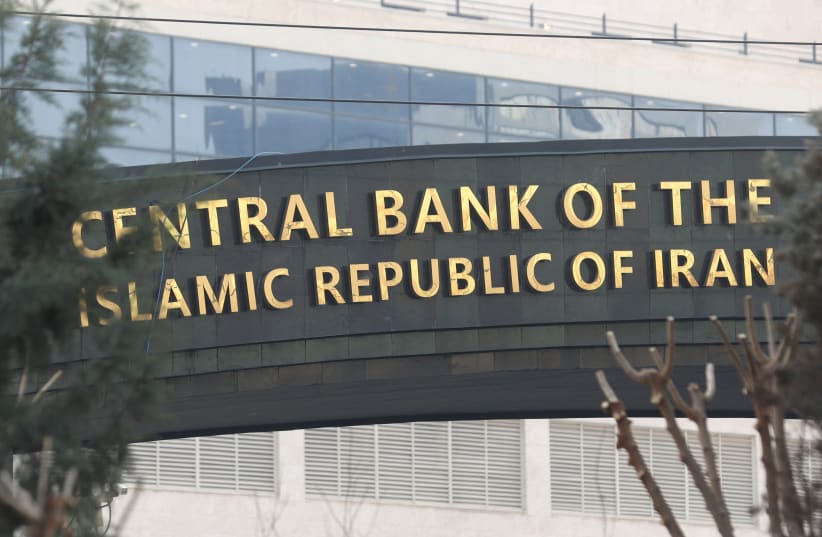
The sign of the Central Bank of the Islamic Republic of Iran is seen in Tehran, Iran January 25, 2023.   (photo credit: Majid Asgaripour/WANA (West Asia News Agency)/Handout via REUTERS)
The sign of the Central Bank of the Islamic Republic of Iran is seen in Tehran, Iran January 25, 2023.
(photo credit: Majid Asgaripour/WANA (West Asia News Agency)/Handout via REUTERS)

The Central Bank of Iran (CBI) and other banks were targeted on Wednesday as part of a significant cyber attack that led to widespread disruptions in the country's banking system, Iran International reported.

According to reports, all the computer systems of the banks in Iran were paralyzed following the cyber attack. Initial estimates indicated that this could be one of the largest-ever cyberattacks against Iranian state infrastructure.

A signal to Iran?

The cyber attack is most likely a signal from the Western countries to Iran, that is, conveying a message that demonstrates how Iran can be harmed. 

 Hands are seen interfering with cyber code (Illustrative). (credit: PIXABAY)Enlrage image
Hands are seen interfering with cyber code (Illustrative). (credit: PIXABAY)

The last cyber attack carried out against Iranian institutions took place last December when a significant part of the gas stations in the country were damaged as part of a cyber attack, which the Iranians attributed to Israel and the US.

Israeli media later reported that a paper had been stuck onto ATM machines in Iran, which read, "Dear customers, it is impossible to withdraw money from this ATM. This is because all of Iran's national budget and resources have been allocated to the wars and the corrupt religious leaders of the Islamic Republic regime. "We are very sorry."

According to Iran International later on Wednesday, data was stolen during the attack. 

This is a developing story.


Bar Shefer, Avi Ashkenazi, Jerusalem Post Staff

Source: https://www.jpost.com/breaking-news/article-814715

Follow Middle East and Terrorism on Twitter

Internal strife: Iran's delayed retaliation to Israel sparks rift within terror proxies - report - Jerusalem Post Staff


​ by Jerusalem Post Staff

Iran’s call for restraint after recent assassinations has angered Hezbollah, Hamas, and other allies, causing a heated rift in Tehran.


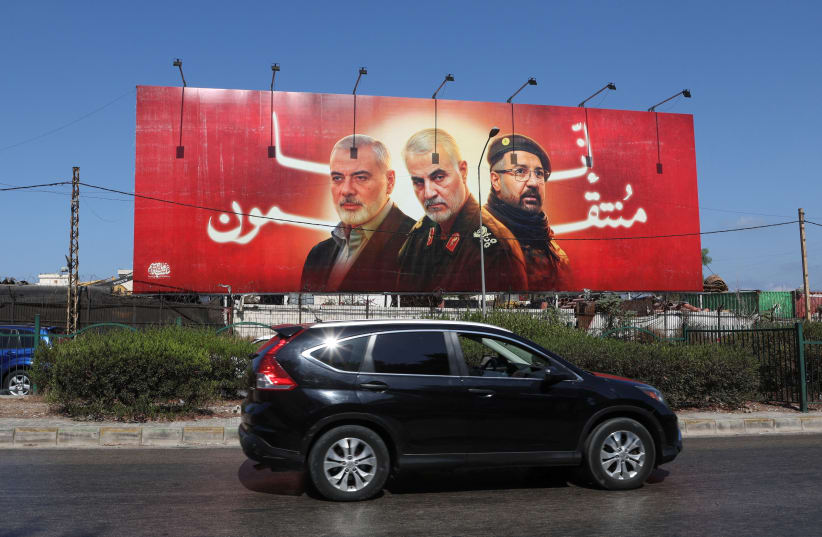
A car drives past a poster depicting late Hamas leader Ismail Haniyeh, top commander of Iran's Quds Force Qassem Soleimani and Hezbollah top commander Fuad Shukr in Beirut, Lebanon, August 5, 2024.  (photo credit: MOHAMED AZAKIR/REUTERS)

A car drives past a poster depicting late Hamas leader Ismail Haniyeh, top commander of Iran's Quds Force Qassem Soleimani and Hezbollah top commander Fuad Shukr in Beirut, Lebanon, August 5, 2024.
(photo credit: MOHAMED AZAKIR/REUTERS)

Iran has angered its allies, particularly Hezbollah and Hamas, by once again urging caution in responding to Israel after the assassinations of high-ranking Hezbollah terrorist Fuad Shukr and Hamas political leader Ismail Haniyeh, the Kuwaiti newspaper al Jarida reported on Wednesday.

According to the report, while Iran has recently signaled a willingness to delay its response to Haniyeh's assassination, a source within the Iranian Revolutionary Guard's Quds Force revealed to the Kuwaiti news outlet that a heated meeting took place on Sunday in Tehran between representatives of Iran's regional allies and the Revolutionary Guard leadership.

This meeting exposed a significant rift, the report noted, which escalated into a verbal clash and ended with some allies storming out in anger.

The source told al Jarida that representatives from Hezbollah, Hamas, the Palestinian Islamic Jihad, various Iraqi factions, and the Houthis attended the meeting to coordinate a response to Israel.

According to the source, Revolutionary Guard representatives urged the allies to hold off on retaliation, at least until after the conclusion of hostage negotiations in Gaza, set to end on Thursday.

 A war between Israel and Iran (illustrative) (credit: INGIMAGE)Enlrage image
A war between Israel and Iran (illustrative) (credit: INGIMAGE)

However, Iran's allies felt that the timing was ideal to launch an all-out assault on Israel, even if it meant confronting those who defend it, including American forces in the region. The source noted that the Iranian delegation made it clear that pursuing such an aggressive strategy would ultimately play into Israel's hands.

Allies debate targeting Israeli leaders

Instead, the Iranians proposed a "tit-for-tat" approach, according to al Jarida’s report, suggesting that any assassination of resistance figures should be met with retaliatory assassinations of Israeli leaders.

During the meeting, the Hamas representative demanded the assassination of Israeli Prime Minister Benjamin Netanyahu in retaliation for Haniyeh’s death, warning that Hamas would not support the Iranian proposal otherwise, al Jarida noted.

Hezbollah representatives, on the other hand, expressed concerns about the risks of continued restraint, fearing that some of their members might act independently and carry out uncoordinated attacks. They insisted that, following the attack on Beirut's southern suburbs, it was time to retaliate by targeting Haifa and Tel Aviv.

The source also revealed Tehran’s growing concern that its allies might launch attacks without coordinating with Iran, forcing it to deal with the consequences - much like what Hamas did on October 7, but potentially on a more dangerous scale, according to al Jarida’s report.


Jerusalem Post Staff

Source: https://www.jpost.com/middle-east/iran-news/article-814689

Follow Middle East and Terrorism on Twitter

China Is Now Goading Iran into Attacking Israel - Gordon G. Chang


​ by Gordon G. Chang

China's President Xi Jinping, apparently adopting the views of Mao Zedong, has been promoting "chaos" to pave the way for worldwide Chinese rule. Wang Yi in his call on the 11th to Tehran made a bold chaos move.


  • As countries around the world pressure Iran not to strike Israel — Tehran blames the Jewish state for the bomb that killed Haniyeh on July 31 — China was, in effect, publicly goading Iran to act.

  • Hamas is a proxy of Iran. Iran's regime believes that it is no one's proxy, but the Chinese seem to think that Iran is indeed theirs.

  • First, there is Beijing's direct economic lifeline to the ailing Iranian economy.

  • Beijing also provided diplomatic cover for the assault on Israel. Propaganda support may have been even more important: Some 96.5% of the videos on Hamas carried on the Chinese-owned social media platform TikTok support the terrorist group. China's Communist Party uses that platform to amplify favored narratives.

  • [T]he [Gulf] region is now especially concerned about the flood of Chinese weapons into the hands of Iran and its terrorist proxies. Regional leaders should be: All three of Iran's main proxy groups—Hamas, Hezbollah and the Houthis — fight with Chinese arms.

  • China's President Xi Jinping, apparently adopting the views of Mao Zedong, has been promoting "chaos" to pave the way for worldwide Chinese rule. Wang Yi in his call on the 11th to Tehran made a bold chaos move.

  • China, from all indications, wants more war in the world's most war-torn region.

As countries around the world pressure Iran not to strike Israel — Tehran blames the Jewish state for the bomb that killed Haniyeh on July 31 — China was, in effect, publicly goading Iran to act. (Image source: iStock/Getty Images)

China's Foreign Minister Wang Yi on August 11 told Iran's acting foreign minister that Beijing supports the Islamic Republic defending its "sovereignty, security, and national dignity." Wang said that killing Hamas's Ismail Haniyeh, the terrorist group's political leader, in Tehran violated Iran's sovereignty and threatened regional stability.

As countries around the world pressure Iran not to strike Israel — Tehran blames the Jewish state for the bomb that killed Haniyeh on July 31 — China was, in effect, publicly goading Iran to act.

Why would the Chinese foreign minister do that? Perhaps because Beijing believes that its proxy, Iran, is losing a war and has to act fast.

Hamas is a proxy of Iran. Iran's regime believes that it is no one's proxy, but the Chinese seem to think that Iran is indeed theirs.

Whether Iran is China's claw or not, Tehran could not have launched the October 7 war without the direct and indirect support of the Chinese state.

First, there is Beijing's direct economic lifeline to the ailing Iranian economy. Last year, when Iran's crude oil exports reached a five-year high, China took about 90% of the volume, according to Kpler, a European research firm. It appears that strong Chinese demand was the reason for the increase in Iranian production.

Beijing also provided diplomatic cover for the assault on Israel. Propaganda support may have been even more important: Some 96.5% of the videos on Hamas carried on the Chinese-owned social media platform TikTok support the terrorist group. China's Communist Party uses that platform to amplify favored narratives.

There is another telltale sign. "The proof of Iran's status as a Beijing proxy is the continual flow of both Chinese weapons to Iran and Chinese components for Iran's own arms," Jonathan Bass of InfraGlobal Partners told me this month. "Everybody in the region knows this."

Bass, who since October 7 has spoken to senior leaders of Arab League states and four of the six members of the Gulf Cooperation Council, said the region is now especially concerned about the flood of Chinese weapons into the hands of Iran and its terrorist proxies. Regional leaders should be: All three of Iran's main proxy groups—Hamas, Hezbollah and the Houthis — fight with Chinese arms.

Why is China now promoting war in the Middle East? Beijing's approach to the region has fast evolved in the past half decade. Not long ago, Chinese policymakers had traditionally tried to maintain a balancing act by developing relationships with all sides and steering clear of the region's multiple conflicts.

Beijing, as a result, gained influence but was little more than a bystander as the United States dealt with the tough issues. Chinese diplomats, therefore, were on the sidelines as the Trump administration reshaped the region with the four Abraham Accords, pacts with two Gulf states, Bahrain and the United Arab Emirates, and two in nearby North Africa, Sudan and Morocco. The result, peace with Israel, was historic.

China countered with two landmark deals of its own, one in March of last year between Saudi Arabia and Iran and the other on July 23, when Beijing got 14 Palestinian factions, including arch rivals Hamas and Fatah, to sign the Beijing Declaration, a unity pact, in the Chinese capital.

China, until the killing of Haniyeh, seemingly was driving events in the Middle East, but it now looks as if Beijing's green light for an Iranian attack on Israel is an attempt to stop an unfavorable trend.

Clearly, the Chinese need to do something. Hamas, which had won favor in Beijing, is in disarray. The group was able to appoint a successor to Haniyeh faster than many suspected, but it is losing control of Gaza, as Amir Bohbot of the Jerusalem Post reported on August 11. Israel's military successes, among other factors, have considerably weakened the organization.

Moreover, the U.S. is rushing military assets to bolster its already considerable forces in the region. On the August 11, U.S. Defense Secretary Lloyd Austin ordered Carrier Strike Group 3 to expedite its transit to the Middle East. He also dispatched the USS Georgia, an Ohio-class guided-missile submarine, to make its way there. China cannot match American firepower in the region, and neither can its friend, Russia.

Ultimately, it is still the United States that wields power in the Middle East. Yes, at one point, it looked as if America was withdrawing. After all, the U.S., as it became the new Saudi Arabia, needed the region less. America has now pumped more crude oil than any other nation in history, for six years in a row. The U.S. produces more natural gas than any other nation. China tried to fill what it perceived to be a vacuum.

Yet just because America doesn't need the region does not make China powerful there. China's successes, its two big pacts, have proved to be somewhat imaginary. There has been, for example, little follow-up on the Saudi-Iranian agreement, one reason the Biden administration may be making progress on its own deal with Riyadh. Furthermore, the Beijing Declaration has already cratered in record time due in large part to the stunning killing of Haniyeh.

China apparently thought it was being clever in disrupting the Middle East with proxy war. When proxies falter, however, so do their masters. China is now faltering.

So China is now gambling. At the moment, China's newest gamble is emboldening Tehran: Iran's foreign ministry repeated Wang Yi's words on August 13 when the regime rejected calls from Britain, France, Germany and Italy not to hit Israel.

China's President Xi Jinping, apparently adopting the views of Mao Zedong, has been promoting "chaos" to pave the way for worldwide Chinese rule. Wang Yi in his call on the 11th to Tehran made a bold chaos move.

China, from all indications, wants more war in the world's most war-torn region.


Gordon G. Chang is the author of The Coming Collapse of China and China Is Going to War, a Gatestone Institute distinguished senior fellow, and a member of its Advisory Board.

Source: https://www.gatestoneinstitute.org/20855/china-goading-iran-attack-israel

Follow Middle East and Terrorism on Twitter

Green-lighting Starlink in Gaza could be start of strategic move - Yaakov Lappin


​ by Yaakov Lappin

Israel seeks to balance security and humanitarian needs, and promote alternatives to Hamas rule.


Entrepreneur and X owner Elon Musk. Source: Facebook.

Israel’s recent decision to permit Elon Musk’s Starlink to provide satellite internet service to a Gaza field hospital, which was built by the United Arab Emirates, represents a shift in the ongoing war that could have more significance than meets the eye.

Tech entrepreneur Musk posted on X on Aug. 10 that he hopes “to do more to help people in Gaza,” three weeks after his company began providing internet services, facilitating video medical consultations at the Rafah hospital. Musk thanked the UAE for its involvement in the project.

Israel’s Communications Ministry approved the initiative in February, in a reversal of a previous policy to deny Starlink access in Gaza.

The decision to reverse the earlier policy was driven by changing conditions in the Strip and a desire to reach a delicate balance between humanitarian considerations, operational needs and broader geopolitical calculations that could invite outside actors from the region and the private sector to play bigger roles in post-war Gaza, observers in Israel said.

Moshe Fuzaylov, a research associate at the Misgav Institute for National Security and Zionist Strategy, who previously held senior roles in the Shin Bet, told JNS that the earlier Israeli policy was driven by concerns about Hamas using Starlink’s services to facilitate its terrorist operations.

“Hamas, as Israel’s central adversary in Gaza, relies heavily on communication infrastructure to transmit information, issue commands and coordinate military actions,” Fuzaylov explained.

The Israeli government, at the start of the conflict, feared that providing unrestricted internet access would enable Hamas to maintain robust communication, complicating Israel’s efforts to disrupt and dismantle its operational capabilities.

Moreover, there were significant concerns about hostile actors using the internet to support Hamas through disseminating live video of terrorist actions or distributing fake news aimed at harming Israeli morale or framing Israel negatively.

Fuzaylov added, “By connecting to an uncontrolled internet network, external actors might attempt to support Hamas or provide assistance through digital means, such as transferring funds, coordinating operations or sharing classified information.”

This risk extended to cyberattacks on Israeli infrastructure or the leaking of sensitive data.

However, as the war evolved, so too did Israel’s assessment of the situation. After extensive deliberations, Israel agreed to allow Starlink to operate under strict conditions, primarily for humanitarian purposes.

This shift was driven by the recognition that the extensive Israeli presence in Gaza during the conflict provided an operational environment where the benefits of controlled internet access outweighed the risks, according to Fuzaylov. “The services are now primarily allowed for humanitarian purposes, such as in hospitals and other facilities that are pre-approved by Israeli security authorities,” he said.

The UAE and Gaza’s future

Looking beyond immediate security concerns, the role of the United Arab Emirates in Gaza’s future has also surfaced recently.

The UAE, with its vast wealth and extensive experience in infrastructure development, could become a key player in reconstruction efforts in a post-Hamas Gaza Strip.

Fuzaylov elaborated on the potential role of the UAE, suggesting that the country could—after Israel met its war goals—be instrumental in a “Marshall Plan” for Gaza.

He highlighted several areas where the UAE could make a significant contribution.

“The UAE can assist in rebuilding Gaza’s infrastructure, particularly in the health, education and communication sectors,” Fuzaylov said.

He noted that the UAE’s involvement could include building hospitals, restoring water and electricity infrastructure, and establishing industrial zones to support a more advanced local economy.

Fuzaylov emphasized that the UAE could ensure that humanitarian aid reaches the civilian population without inadvertently strengthening Hamas. “Projects like the hospital, operated in cooperation with Starlink, could be placed under international supervision to prevent the cynical exploitation of resources for military purposes,” he said.

Furthermore, he noted, in line with its commitment to the Abraham Accords, the UAE has gained valuable experience in changing a school curriculum and altering attitudes that were once hostile to Israel, and could inject this experience into facilitating cultural changes in Gaza after Hamas is eliminated as a ruling regime.

“Cooperation with the UAE could be an important key in the long-term recovery program for Gaza,” Fuzaylov said, “a plan that can serve both Israel’s strategic interests and those of moderate Sunni countries in the region, as well as the humanitarian needs of the local population. An Israeli connection to moderate regional Sunni states holds the potential of banishing the foothold of Iran, the sworn enemy of states like the UAE, Saudi Arabia, Jordan and Israel.”

‘First defeat Hamas’

Professor Eyal Zisser, vice rector of Tel Aviv University and holder of the Yona and Dina Ettinger Chair in Contemporary History of the Middle East, also sees the UAE’s involvement as crucial. “The Emiratis can certainly play a role and are willing to, but first, Hamas must be definitively defeated,” Zisser stressed.

As long as Hamas remains in control, it will resist any efforts to reshape Gaza’s landscape, he said.

 Zisser argued that Israel’s shift on Starlink’s involvement is mainly driven by public relations considerations, adding that “in any case, it is possible to monitor [internet traffic], and this also surely serves public relations vis-à-vis Musk.

“From the start, Israel permitted such activities—the use of internet and media in Gaza here and there—so that we would not be pushed into the corner in the United Nations Security Council and by the United States administration, and to reduce exposure to charges of harming the civilian population. This also facilitates medical and humanitarian assistance,” Zisser said.

Meanwhile, Israel’s own relationship with Starlink appears to extend beyond the question of Gaza, with Ynet reporting on June 26 that Israel’s Finance and Communications ministries have been “examining the feasibility of using Starlink’s satellite services in case of disruptions in Israel’s internet connectivity due to an escalation on the northern front.

“Government officials have emphasized the necessity of deploying Starlink’s satellites to ensure a stable internet connection during prolonged power outages,” the report continued.


Yaakov Lappin is an Israel-based military affairs correspondent and analyst. He is the in-house analyst at the Miryam Institute; a research associate at the Alma Research and Education Center; and a research associate at the Begin-Sadat Center for Strategic Studies at Bar-Ilan University. He is a frequent guest commentator on international television news networks, including Sky News and i24 News. Lappin is the author of Virtual Caliphate: Exposing the Islamist State on the Internet. Follow him at: www.patreon.com/yaakovlappin.

Source: https://www.jns.org/green-lighting-starlink-in-gaza-could-be-start-of-strategic-move/

Follow Middle East and Terrorism on Twitter

US allegedly presented Tehran list of Mossad agents involved in Haniyeh assassination - report - Jerusalem Post Staff


​ by Jerusalem Post Staff

The delegation sought to deliver messages to Tehran in order to de-escalate the tensions in the region between Iran and Israel.


Iranians gather for the funeral procession of assassinated Hamas chief, Ismail Haniyeh in Tehran, Iran, August 1, 2024. (photo credit: Majid Asgaripour/WANA/via Reuters)
Iranians gather for the funeral procession of assassinated Hamas chief, Ismail Haniyeh in Tehran, Iran, August 1, 2024.
(photo credit: Majid Asgaripour/WANA/via Reuters)

An unnamed source in Iran's Supreme National Security Council told Kuwaiti newspaper al Jarida that a high-ranking American security delegation, mediated by Oman, secretly traveled to Tehran, the Kuwaiti paper wrote on Wednesday. 

Fox News reported that the delegation allegedly sought to deliver messages to Tehran in order to de-escalate the tensions in the region between Iran and Israel, al Jarida noted in their reporting of the story. 

The mission was reportedly to convey to Iran's Supreme Leader Ali Khamenei that the Biden-Harris administration was "kept in the dark" by Israel's Prime Minister Benjamin Netanyahu over the assassinations of Hamas's Ismail Haniyeh and Hezbollah's Fuad Shukr. Israel took responsibility for the assassination of Shukr but has yet to comment on the death of Haniyeh in Tehran. 

Allegations behind the death of Hamas leader Haniyeh 

Haniyeh was killed by an explosive device that was smuggled into his guesthouse in Tehran, the New York Times reported, and the Jerusalem Post independently confirmed. The bomb was hidden in June and utilized remote technology. 

An earlier report by The Telegraph alleged that the Mossad hired Iranian security agents to plant explosives in Haniyeh's room, citing two unnamed Iranian officials in the report. The same report stated that the agents left the country but maintained a close source in Iran. 

 A billboard with a picture of newly appointed Hamas leader Yahya Sinwar is displayed on a building in a street in Tehran, Iran, August 12, 2024. (credit: MAJID ASGARIPOUR/WANA/REUTERS)Enlrage image
A billboard with a picture of newly appointed Hamas leader Yahya Sinwar is displayed on a building in a street in Tehran, Iran, August 12, 2024. (credit: MAJID ASGARIPOUR/WANA/REUTERS)

Fox News also reported on the recent development, noting that the American delegation was speculated to arrive in Iran through Turkey, landing at the Payam-e-Khorram Airport in Karaj last Thursday and engaging in a two-hour meeting with Iranian officials before returning to Turkey. 

Allegedly, the American delegation presented a list with the names of ten Mossad agents within Iran whom the Americans believed were involved in the assassination, directly or indirectly.

Al Jarida said that the Americans would have reportedly done this as a "good faith" initiative in response to Israel's strikes, which were carried out without American coordination. 

Yonah Jeremy Bob contributed to this report 


Jerusalem Post Staff

Source:https://www.jpost.com/middle-east/iran-news/article-814793

Follow Middle East and Terrorism on Twitter

The Demographics of Realignment - Edward Ring


​ by Edward Ring

This election, non-white voters, along with their non-Hispanic white counterparts, will have an opportunity to decide between two visions of the future.


It has become a truism among right-of-center voters in America that as the percentage of non-Hispanic whites in the population decreases, the percentage of registered Democrats increases. This truism is shared, of course, by the progressive left in America. That might lead one to conclude that if Democrats wanted to turn America into a one-party nation, they would do everything in their power to increase the percentage of voters who are not “non-Hispanic whites.”

There is evidence to support this truism. For example, in 1970, the population of California was 80 percent non-Hispanic whites, with Republican governor Ronald Reagan and both houses of the state legislature controlled by Republicans. That was the last year Republicans had a trifecta in the state. Today, California’s population of non-Hispanic whites has declined to 34 percent, and the state is under the absolute control of Democrats. They have held both houses of the state legislature since 1997, and apart from Schwarzenegger’s anomalous presence from 2004 through 2010, the state hasn’t had a Republican governor since 1998.

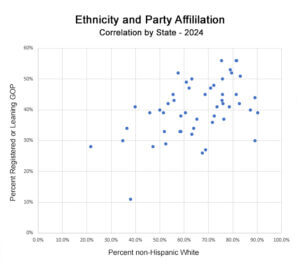
Bearing in mind that correlation is not necessarily causation, here’s a nationwide look at the correlation between the percentage of non-Hispanic whites and the percentage of “GOP-leaning” voters. Using data from the US Census Bureau and Gallup, the scatter diagram below depicts party preference on the vertical axis and the non-Hispanic white population on the horizontal axis. You don’t have to perform a regression analysis to see a strong correlation. Generally speaking, the higher the percentage of whites in any US state, the higher the percentage of GOP voters, and the lower that percentage of whites, the lower the percentage of GOP voters.

Just as correlation may not equate to causation, actions may not be motivated by certain truisms. But with another American presidential election just a few months away, it may be productive to speculate as to what might constitute additional, much deeper motivations. It’s not enough to claim Democrats want to import millions of non-white voters at the same time as Democrats relentlessly demonize white Republicans as racist bigots living on stolen land. That’s all true, and it attracts votes for Democrats, but it is surface phenomena.

Democrats are part of a uniparty that used to include a majority of Republican politicians. Up until 2016, most Americans accepted what was always a false illusion of a competitive two-party system. To be sure, there was debate around the edges of policy. However, there was a consensus that embraced mass immigration for reasons that were purely pragmatic and economic.

Government agencies at all levels welcomed the new programs that would have to be funded to assist new immigrants. Private businesses welcomed the influx of workers willing to accept low wages. Investors welcomed the inevitable shortages—abetted by the useful idiocy of environmentalist extremists—which drove up the value of their portfolio assets. In general, as our population grows, government grows, the economy grows, and monopolies grow. Most of this growth, however, has harmed the middle class. It has also denied upward mobility to America’s low-income communities and youth.

But beginning in 2016, the illusion of competition between the traditional parties has been shattered, and over the past eight years, the Republican party has systematically purged its RINOs. As a result, for the first time in modern history, Americans have a choice this November. It is a choice that has growing support from non-whites.

Democrats today are comprised of two very distinct groups. At the top, there are donors and constituents who are white liberals who are either affluent enough to be exempt from the economic challenges that most Americans face today, or they are actively profiting from it. At the bottom are millions of Americans who have become dependent on government aid to survive. But will America’s non-whites continue to believe that their poverty is caused by Republican racists, and that only by voting for Democrats can they hope to survive economically?

According to voting data over the past few elections, this narrative is wearing thin. In 2012, the Latino vote for uniparty stooge Mitt Romney was 27 percent. In 2016, Trump increased that to 29 percent, and in 2020, Trump got 32 percent from Latinos. After surging earlier this year, the Kamala Harris candidacy has allegedly derailed Trump’s momentum with Latinos, but even so, as of August 5, Trump’s support in battleground states among Latinos was up to 37 percent. Some polls earlier this year had Trump ahead of Biden among Latinos.

Even the almost universal support for Democrats among blacks has been eroding. Romney attracted a dismal 6 percent of the black vote in 2012, and Trump increased that to 8 percent in 2016. But by 2020, Trump increased his share of the black vote to 12 percent. As for this election, until Kamala Harris replaced Biden as the Democratic nominee, polling was consistently estimating that Trump’s support among black voters had risen to 23 percent.

Asian voters are also defecting, and some indicators suggest by a lot over the last few elections. Exit polling in 2016 had Asian support for Trump at 18 percent, whereas in 2020, that had risen to 31 percent. A July 2024 poll reported Asian voter support for Trump holding at 31 percent, although that was before Harris replaced Biden as the Democratic candidate.

Overall, recent decades of data on voter behavior confirm that non-whites overwhelmingly support Democrats, but the data also shows that support dropping every election cycle. More to the point is that since 2016, something fundamental has changed. Republicans in 2024 are a fully transformed party, capable of offering a genuine choice. RINOs are now the exception, not the rule.

This time, non-white voters, along with their non-Hispanic white counterparts, will have an opportunity to decide between two visions of the future. If they vote Republican, they are supporting merit-based, controlled immigration. They are supporting a crackdown on environmentalist extremism, along with an all-of-the-above energy strategy that will lower the cost of living. They are supporting law and order, including cracking down on fentanyl dealers and declaring war on drug cartels. They are supporting deregulation to enable businesses large and small to flourish, creating millions of jobs. And they are supporting peace in the world.

Or they can support a pair of race and gender-baiting career demagogues, who will do none of the above.

If Republicans can convey this new reality, that they are the party of peace and prosperity, and Democrats are the party of endless war and an economy rigged to benefit bureaucrats and billionaires, they will break the cycle. What Democrats offer Americans this year is not a future anyone should want, regardless of their origins.

Demographic trends in America may indeed trigger a realignment, but it may not be the one that Democrats have long taken for granted.

 
Edward Ring

Source: https://amgreatness.com/2024/08/14/the-demographics-of-realignment/

Follow Middle East and Terrorism on Twitter

Harris hypocrisy? VP digs in on both sides of issues as she tries to revise past liberal rhetoric - Ben Whedon


​ by Ben Whedon

“Our country is becoming a very dangerous place, and she is a radical left San Francisco liberal, and now she's trying to … she wants to be more Trump than Trump, if that's possible,” Trump said.


Since Vice President Kamala Harris emerged as the Democratic standard bearer late last month, her campaign has been roiled by evolving policy positions, some of which have seemingly placed her on both sides of key issues ranging from immigration to the taxation of workers' tips.

Prior to becoming President Joe Biden’s running mate in 2020, she ran for the party nomination herself on a largely left-wing platform, advocating for positions that prompted observers to call her "the most liberal member of the Senate," standing in demonstrable contrast to her current approach. Some changes in her platform and messaging have addressed keynote issues of her political rivals, namely immigration and border security.

Former President Donald Trump, for his part, remarked that the platform changes amounted to Harris casting herself as a comparable candidate to him.

“Our country is becoming a very dangerous place, and she is a radical left San Francisco liberal, and now she's trying to … she wants to be more Trump than Trump, if that's possible,” he said in a recent X space with platform owner Elon Musk. “I don't think it's possible, but she wants to be more Trump than Trump.”

Fueling that quip, in particular, has been her chameleonic posture on border issues, as well as her embrace of one of Trump’s keynote campaign pledges not to tax tips. But the Harris campaign faces a broader issue with policy flip-flops that go beyond mere "recalibration" for a wider audience and seemingly incompatible representations of the candidate and her running mate as individuals.

Harris has yet to have had an unscripted press conference about her positions or given an interview.

“[I]t's quite a transformation when you think about all of the different positions that she's flip-flopping on right now, whether it is a mandatory gun confiscation program, whether it's Medicare for all, whether it's now she does want to be the border czar, and has some ideas on how to stop the invasion that she has unleashed,” Republican National Committee Chairman Michael Whatley said on the “Just the News, No Noise” television program.

“I think the key question you've got to ask: ‘is she now saying that the Harris Biden administration has been wrong on all of these key issues over the last four years, or is she saying that there's an election coming up and we need to go pander to the voters?’” he went on.

The “border czar” 

Biden tapped Harris to serve as border czar in early 2021, though her office highlighted that she was focused on dealing with the root causes of migration and cooperation with Latin American countries on the issue. While media outlets referred to her as the “border czar” at the time, her ascent to the top of the Democratic ticket led to widespread efforts from the media to memory-hole the appointment, claim there was no such "title" and downplay her connection to ongoing situation at the southern border. That crisis has proved a weak point for the administration and a potentially viable avenue of attack for her Republican opponents.

Speaking on the “Just the News, No Noise” television show, Rep. Warren Davidson, R-Ohio, suggested that Democrats were “redesigning a whole new product ahead of this election” by trying to revise Harris’s record.

“And they brought in Kamala Harris, and they're like, ‘Well, what can we do? Well, first we have to delete the past. We have to delete references to the fact that she had the most far left voting record of any senator, including left of Bernie Sanders, who describes himself as a socialist or a Democratic socialist, and they had to delete things like she was the border czar, because they know the border has been a disaster,’” he said.

After denying the title of “border czar,” however, Harris has now promised to crack down on the border and to address both transnational drug cartels and traffickers, often highlighting her past record as a prosecutor.

“We know our immigration system is broken and we know what it takes to fix it: comprehensive reform. That includes strong border security and an earned pathway to citizenship,” she said a rally in Glendale, Ariz., Politico reported. “I was attorney general of a border state. I went after the transnational gangs, the drug cartels and the human traffickers… I prosecuted them in case after case and I won, so I know what I’m talking about.” She further vowed to hire additional border agents and pursue a comprehensive crackdown on drug and human trafficking at the southern border in a recent campaign ad

The tough rhetoric does not have her detractors convinced, however, and Trump himself has suggested her posturing on the issue does not reflect her actual stance.

“She wants to have open borders, and now she's going like, she's tough on the border. It's such a lie. Yeah, this is simply not true,” he told Musk.

During the 2019 Democratic primary, Harris also endorsed decriminalizing border crossings. Later on, however, she expressed support for some of President Joe Biden’s recent executive orders restricting asylum claims with the aim of reducing such crossings.

“No tax on tips”

Trump announced his "no tax on tips" plan during a campaign rally in Las Vegas in June. The move appeared to resonate with service industry workers and Harris ultimately endorsed the same idea in August.

“It is my promise to everyone here that, when I am president, we will continue our fight for working families of America, including to raise the minimum wage and eliminate taxes on tips for service and hospitality workers,”” Harris said at a rally at the University of Nevada-Las Vegas.

“How long will it be before Kamala Harris comes out with another TRUMP policy [?]” Trump responded. “Everyone is waiting to see what idea, or policy of mine, she will copy next.”

Harris’s adoption of the policy signals more than mere imitation. Rather, it stands in direct contrast to the Biden administration’s ongoing efforts to boost compliance with tip reporting for taxation purposes. Harris cast the tie-breaking vote for the Inflation Reduction Act, which explicitly taxed workers' tips.

The Department of the Treasury in 2023 introduced the Service Industry Tip Compliance Agreement (SITCA) program in order to "take advantage of advancements in point-of-sale, time and attendance systems, and electronic payment settlement methods to improve tip reporting compliance."

White House press secretary Karine Jean-Pierre on Monday indicated that Biden “supports eliminating taxes on tips for service and hospitality workers” and would sign legislation to that effect, according to the Daily Mail.

I.D. requirements to enter rallies, but not voting

Harris drew considerable accusations of hypocrisy in recent days over reports that her campaign had required attendees at a Friday rally in Arizona to RSVP and present a government-issued I.D. in order to attend.

Yet Harris has vehemently opposed what she called "suppressive voter ID laws, racial gerrymandering, voter roll purges, precinct closures and reduced early-voting days” when attacking election integrity measures in battleground states such as Georgia. She has further said that such practices are “laser-targeted toward communities of color.”

Even more confusing, in 2019, moreover, she advocated for the use of paper ballots as a means of securing elections in light of alleged Russian interference in the 2016 presidential contest, quipping that “Russia can’t hack a piece of paper.”

Walz’s false military record: "He misspoke"

Harris’s choice of Gov. Tim Walz, D-Minn., as her running mate earlier this month opened the campaign up to additional scrutiny, this time over his fabricated military record.

Walz served in the Minnesota National Guard and has often touted his military career as part of his political persona. He came under metaphorical fire, however, over his representations of himself as having served in a war, "carrying a weapon of war" and misrepresenting his rank on discharge, prompting the campaign to issue a clarification claiming he “misspoke.”

“We can make sure that those weapons of war, that I carried in war, is the only place where those weapons are at,” Walz said in a 2018 clip.

"In making the case for why weapons of war should never be on our streets or in our classrooms, the Governor misspoke,” the campaign said in a statement. “He did handle weapons of war and believes strongly that only military members trained to carry those deadly weapons should have access to them.”

But such was not the only issue surrounding Walz’s record. The governor has, for years, claimed he retired as a command sergeant major, though he only held the rank temporarily and was demoted.

Walz "retired as a master sergeant in 2005 for benefit purposes because he did not complete additional coursework at the U.S. Army Sergeants Major Academy," Minnesota National Guard State Public Affairs Officer Army Lt. Col. Kristen Augé confirmed to Just the News earlier this month.

The campaign subsequently amended his biography to reflect that he did not retire as a command sergeant major, but still emphasized his work with veterans, Politico reported.

“The son of an Army veteran who served as a command sergeant major, Walz was the ranking member on the House Veterans Affairs Committee, where he passed legislation to help stem veterans’ suicides,” Walz’s campaign biography reads.

In 2018, he attracted scrutiny after retired members of the Minnesota National Guard criticized Walz for retiring when he learned his battalion was scheduled for deployment to Iraq.

Just the News sought comment from the Harris campaign which was not responded to.

Ben Whedon is an editor and reporter for Just the News. Follow him on X.

Source: https://justthenews.com/politics-policy/wedharris-hypocrisy-vp-digs-both-sides-key-issues

Follow Middle East and Terrorism on Twitter

Target Musk: X owner’s Trump embrace puts him in crosshairs of left’s ‘disinformation’ machine - Natalia Mittelstadt


​ by Natalia Mittelstadt

The left doesn’t "want to emphasize the role of influential billionaires on their side because a lot of their talking points involve being against wealthy individuals," Mike Benz of the Foundation for Freedom Online said.


Elon Musk, owner of X, has repeatedly been criticized for threatening democracy by stating his political views on his social media platform while government officials use social media censorship on other platforms to prevent what they consider to be election misinformation.

Musk’s interview of former President Donald Trump on Monday triggered numerous news articles and political letters regarding his handling of election information on X.

However, the media and government officials have promoted some election involvement by other Big Tech platforms and billionaires, as they worked with social media platforms to censor election information.

Leading up to and following Musk’s interview with Trump, multiple media outlets criticized the tech billionaire’s involvement in elections.

On Tuesday, Musk reposted a screenshot of negative news headlines regarding his interview with Trump.

“A wall of negative headlines was so predictable,” Musk wrote, later adding, “All this does is drive even more people to listen to the conversation themselves and realize how much the legacy media lies to them!”

Ahead of the interview, The Guardian published a story on Monday headlined, “Elon’s politics: how Musk became a driver of elections misinformation.” U.S. News and World Report had an article last week with the headline, “X-Factor: How Elon Musk Is Influencing the Presidential Election.” Germany’s Deutsche Welle ran a story last week titled, “How Elon Musk uses X to meddle in world politics.” An NBC News article from last week was headlined with “Elon Musk's misleading election claims have accrued 1.2 billion views on X, new analysis says.”

The Guardian claimed that because of Musk’s ownership of X, elections officials’ fear has come true regarding “a rampant spread of misinformation that would lead to threats and harassment and undermine democracy.”

NBC News’ article noted that an analysis by the nonprofit Center for Countering Digital Hate found that there have been “50 instances this year when Musk posted election claims that have been debunked by independent fact-checkers but spread widely on the app anyway.”

Government officials and politicians have also targeted Musk for election disinformation on X. European Union Commissioner for Internal Market Thierry Breton on Monday posted a letter on X, suggesting that the content of the Trump interview could potentially be relevant to an ongoing probe of X. However, Breton did not receive approval from the president of the European Commission, according to the body on Tuesday.

Last week, five secretaries of state sent a letter to Musk, demanding he make changes to his Grok chatbot after it gave false election information.

The secretaries, all but one of whom are Democrats, said that hours after President Biden announced he was dropping out of the presidential race, "false information on ballot deadlines produced by Grok was shared on multiple social media platforms."

The letter recommended that the solution be to follow OpenAI's example, which included programming ChatGPT "to direct users to CanIVote.org - a nonpartisan resource from professional election administrators of both major parties - when asked about elections in the U.S."

Following the X interview between Musk and Trump, the United Auto Workers Union on Tuesday announced that it had filed federal labor charges against both the Tesla CEO and the former president over alleged worker intimidation.

The union pointed to the Monday interview, saying that "Trump and Musk had a rambling, disorganized conversation on Monday evening in front of over one million listeners in which they advocated for the illegal firing of striking workers."

However, while Musk has been the target of critical headlines, another tech billionaire is receiving favorable ones.

Earlier this month, the Washington Post published an article with the headline, “Without Zuckerberg money, limited private funding available for elections.” The story noted how Meta CEO Mark Zuckerberg is staying out of this election cycle, in contrast to 2020 when he donated most of the $350 million that the Center for Tech and Civic Life granted to local elections offices for election administration.

The nonprofit has claimed its 2020 election grants — colloquially known as "Zuckerbucks" — were allocated, allegedly without partisan preference to make voting safer amid the pandemic. However, a House Republican investigation found that less than 1% of the funds were spent on personal protective equipment. Most of the funds were focused on get-out-the-vote efforts and registrations.

While CTCL claims that more grants were awarded to counties won by former President Donald Trump than President Joe Biden, the nonprofit gave larger grants and more money per capita to Democratic counties than to Republican ones. Trump won more than five times as many counties as Biden in 2020.

Amid controversy surrounding the disproportionate resources funneled to Democratic jurisdictions and claims that the imbalance helped sway the election in Biden's favor, 28 states have either restricted or banned private funding of election offices, according to Capital Research Center.

Meanwhile, Facebook itself has interfered with U.S. elections almost 40 times since 2008, according to a study conducted by the Media Research Center.

Government officials have repeatedly worked with social media platforms and Big Tech to censor what they consider to be election mis- and disinformation, particularly during the 2020 and 2022 elections.

In Maricopa County, Ariz., during the 2022 elections, a plan was drafted to monitor and combat election disinformation. The plan suggested the county “should partner with people whose opinions are respected, whose values of democracy we share, and whose reach is greater—or different in important ways—than ours.”

The county previously told Just the News that the plan “was a draft document of ideas that were brought up in a meeting but never implemented.”

On the national level, Congress has investigated election censorship by social media companies with the federal government.

In February 2023, House Oversight and Accountability Committee Chairman James Comer, R-Ky., alleged that Big Tech giants such as Twitter are "under the control of people who are hostile to the fundamental American principles of free speech" and colluded with federal agencies to censor stories embarrassing to President Joe Biden and his family. 

Comer said his investigators had substantiated that there was "coordination between the federal government and Big Tech to restrict protected speech and interfere in the democratic process" that began even before Twitter famously censored New York Post stories in October 2020 about the contents of Hunter Biden's now infamous laptop.

Mike Benz, executive director of Foundation for Freedom Online, told Just the News on Tuesday that the media and Democrats “don’t want to emphasize the role of influential billionaires on their side because a lot of their talking points involve being against” wealthy individuals. Therefore, “when the system is on their side, it’s a self-own.”

However, the left has “lost some of their billionaire assets this time around,” he added, as Zuckerberg isn’t privately funding election administration this year as he did in 2020.

Also, Trump has had “many Silicon Valley investors that he didn't have in 2020,” Benz said, which has helped him amid his criminal and civil lawsuits.

Musk buying X is “a nightmare” for the heads of social media platforms since they “had total information control” from about 2017 until 2022. Now that “information can flow freely on X,” it can be spread to other social media platforms, Benz explained.

“Elon is very unique from many angles,” including being a “universally beloved figure outside of politics,” so the media “don't know what to do with him, other than try to cut him down to size,” he noted.

 
Natalia Mittelstadt

Source: https://justthenews.com/politics-policy/elections/target-musk-x-owner-ridiculed-election-opinions-while-election-censorship

Follow Middle East and Terrorism on Twitter

Tear Down the Walz - Larry Sand


​ by Larry Sand

Calamity Kamala’s VP choice is a progressive nightmare.


Many political pundits had opined that Pennsylvania Gov. Josh Shapiro would be Kamala Harris’s best running mate. He’s a moderate who hails from a swing state that could push the Democrats into the White House in November. But being pro-Israel and pro-school choice disqualified him.

Instead, Harris picked far-leftist Tim Walz as her running mate. The Minnesota governor’s “accomplishments” align with the Bernie Sanders/Gavin Newsom playbook. For example, even though Minnesota already has the fifth-highest top income tax rate among the states, 9.85% on earnings above $193,000 for a single filer, Mr. Walz added a 1% surtax on net investment income above $1 million while reducing deductions, and the governor wanted more.

He has made an estimated 81,000 illegal immigrants in the state eligible for driver’s licenses, along with health insurance through the MinnesotaCare program.

As a fervent believer in “climate action,” Walz has mandated that public utilities generate 80% carbon-free electricity by 2030, ramping up to 100% by 2040. He subsidizes electric vehicles by “requiring EV charging infrastructure within or adjacent to new commercial and multi-family buildings.”

Minnesota now has one of the nation’s most permissive abortion statutes, with essentially no limits and no age consideration for minors.

During the COVID craze, Walz was a hysteric of the highest order. He forced masks onto children as young as five, placed strict limits on outdoor gatherings, and encouraged Minnesotans to report their neighbors for violations of social distancing rules.

Additionally, he spent much of the state’s allotment of federal COVID funds on items that had little or nothing to do with the pandemic.

For example, Walz oversaw the use of more than $4.3 million to cover parking costs at state facilities for state employees and visitors. The state used $1 million to fund a study on the feasibility of paid family leave, and another $1 million to fund a statewide gun safety ad campaign. Another $7.8 million was distributed to homeless shelters in Minneapolis to cover ongoing costs.

Conflating Bernie Sanders and Mr. Rogers, he revealed his core beliefs when he asserted, “One person’s socialism is another person’s neighborliness.”

Walz is particularly deplorable on education spending. Showing his “neighborliness,” he signed a universal school free breakfast and lunch bill in 2023 that feeds all students on the taxpayers’ dime. (Socialists never acknowledge that, as the late Milton Friedman explained, there is no such thing as a free lunch—or breakfast, for that matter.)

He signed a bill into law that provided $2.2 billion in new funding for K-12 education, a significant hike in the state’s education expenditures—about $400 per student per year more than the previous outlay. Additionally, he passed record spending in early child care and learning last year. As part of a $1.3 billion package of childcare spending for families and providers, Walz used $316 million to boost wages for childcare providers.

Walz approved an additional $650 million for higher education to implement new programs for financial aid and workforce initiatives in the 2024-25 school year. He also passed the North Star Promise program, which provides free college for students—including illegal immigrants—who have a family income under $80,000.

In addition to being a spendaholic, Walz is an active proponent of all the trendy woke education and gender issues. As Heritage Foundation scholars Jay Greene and Jason Bedrick note, Walz championed the creation of a Diversity, Equity, and Inclusion Center at the Minnesota Department of Education “to build toward an education system committed to anti-racism.”

As governor, Walz signed an executive order that ensured minors could undergo gender-affirming care treatments ranging from surgery to speech therapy that “support a transgender or nonbinary person in their gender transition.” He doubled down by directing state agencies “to refuse approval of health plans that do not cover gender-affirming care and to investigate any complaints about denial of gender-affirming care.”

On a similar note, Walz signed into law what the LBGTQ rights group GLAAD calls a “trans refuge bill,” explaining that it “protects transgender people and their families from legal repercussions for traveling to Minnesota to receive transgender health care.” He also ensured that pro-trans/anti-female policies were incorporated into schools. In particular, the governor fought to allow biological males to compete in female school sports.

Walz earned the moniker “Tampon Tim” by signing into law a bill that places “free” tampons and menstrual pads in all school restrooms, including those for boys. As the bill’s sponsor explained: “Not all students who menstruate are female. We need to make sure all students have access to these products.”

In backing the bill, Walz endorsed the idea that boys could go into girls’ bathrooms and vice versa.

This past May, Walz signed a law barring parental groups from removing books or materials from Minnesota school libraries based on content, calling the parental efforts “regressive.” Walz apparently thinks that educators’ whims-du-jour, trumps the role of mothers and fathers.

All the above has many parents aghast.

Parents Defending Education senior adviser and Virginia mother Michele Exner said Walz’s education record has created setbacks for Minnesota families and students. “Since he has been in office, national testing scores have steadily declined, and the state’s education system ranking has taken a nosedive since 2018. His radical progressive policies have prioritized menstrual products in boys’ bathrooms over tackling the education losses his own policies created.”

Not surprisingly, Walz, a former high school teacher, and American Federation of Teachers member is worshipped by the teachers’ unions. National Education Association president Becky Pringle heartily endorsed him, calling him an “exceptional choice.”

But AFT president Randi Weingarten couldn’t contain herself. “We’re so excited…we have known him for years as a social studies teacher, as a vet, as a union member, as a congressman, as a governor, he cares about working people. We’ve seen it. He knows how to get things done. It is such a great day for America that we’re going to have Kamala Harris and Tim Walz on the ticket for the future, for freedom, for opportunity, for America, for American families.”

Then, in a press release, the ebullient Weingarten gushed, “Gov. Walz has been an unabashed champion for families, for public education, for educators and other workers throughout his life in public service. He knows the promise of public education. He shares our commitment to solving problems and forging a future in which all Americans can get ahead, not just get by.”

Weingarten added, “Walz and Harris are about opportunity and freedom—the freedom to join a union, the freedom to thrive, to make our own healthcare decisions, to be free from gun violence. They will stand up for the middle class against a weak, dark, dystopian alternative that wants to send us back to the past.”

In the first 24 hours after Vice President Harris announced Walz as her running mate, her team raised some $36 million, her deputy campaign manager said, adding that teachers were the top profession among the donors.

Former Education Secretary Betsy DeVos issued a warning about Walz after Weingarten’s exuberant praise, simply and precisely asserting on X, “Anyone who makes Randi this excited is a 5-alarm fire for parents and students.”

Republicans need to get busy. Very busy. The Harris-Walz ticket would be an unmitigated disaster for our country.

***

Larry Sand, a retired 28-year classroom teacher, is the president of the non-profit California Teachers Empowerment Network – a non-partisan, non-political group dedicated to providing teachers and the general public with reliable and balanced information about professional affiliations and positions on educational issues. The views presented here are strictly his own.

Source: https://amgreatness.com/2024/08/14/tear-down-the-walz/

Follow Middle East and Terrorism on Twitter

IDF, Palestinians clash in Tubas, marking another West Bank terror escalation - analysis - Seth J. Frantzman


​ by Seth J. Frantzman

The northern West Bank sees rising tensions as Palestinian terror groups expand operations near Tubas, prompting Israeli drone strikes.


The damage caused from an Israeli military raid in the Tubas, in the northern West Bank, August 14, 2024 (photo credit: NASSER ISHTAYEH/FLASH90)
The damage caused from an Israeli military raid in the Tubas, in the northern West Bank, August 14, 2024
(photo credit: NASSER ISHTAYEH/FLASH90)

Clashes between the IDF and Palestinian gunmen in Tubas and Tammun in the northern West Bank represent another escalation by various terrorist groups to expand the area they operate in.

This is part of a wider trend of armed groups – some of them linked to Hamas, Palestinian Islamic Jihad, Fatah’s al-Aqsa Martyrs Brigades, or various local “battalions” – to take over areas in the northern West Bank. Their tactics are changing as they acquire more weapons and develop more explosive devices.

Tammun sits on hill country that is a 40-minute drive southeast of Jenin. It is near the large town of Tubas. This area is near a series of large streams and wadis that run down to the Jordan Valley. In essence, Tammun is one of a line of towns that threatens the Jordan Valley.

Southeast of Tammun, the landscape spills out into a series of small communities, including the settlement of Hamra and the Palestinian village of Jiftlik, and then reaches the Jordan Valley. If Palestinian armed groups can control this area, they will have easier access to the Jordan Valley and may be able to smuggle weapons to threaten traffic on its key roads.

“As part of counterterrorism activity in the Jordan Valley area, an aircraft struck a number of armed terrorists in the area of the town of Tammun,” the IDF reported Wednesday. The IDF issued this short statement, but the terrorist groups clearly see these clashes as more important.

A Palestinian man checks a car damaged in an Israeli raid, in Tubas, in the West Bank, August 14, 2024 (credit: REUTERS/RANEEN SAWAFTA)Enlrage image
A Palestinian man checks a car damaged in an Israeli raid, in Tubas, in the West Bank, August 14, 2024 (credit: REUTERS/RANEEN SAWAFTA)

A long article at Al Mayadeen, a Beirut-based, pro-Iranian news channel, examined the clashes around Tammun. The “resistance,” a general term for Palestinian armed groups and for Iranian-backed proxies, “confronts a military aggression on Tubas and Tammun with explosive devices and bullets... and the occupation bombs the area with drones,” the report said.

The use of a drone strike in the area of Tubas is a new development. The IDF has been using drone strikes and airstrikes more frequently in the West Bank over the past year. This is because the terrorists are growing and innovating. Several years ago, it would have been major news if a drone was used in a strike in the West Bank.

'Gazafication'

This represents the “Gazafication” of the northern West Bank. The terrorist groups and Iran, which backs them, want to turn Tulkarm, Kalkilya, Jenin, and now Tubas into a kind of new Gaza. In their concept, they will slowly wrest control of this area from the Palestinian Authority and seek to carve out a contiguous zone of conflict.

They will use any vacuum of control to build more improvised explosive devices and to carpet some urban areas with these weapons. The IDF has been active against this kind of threat in areas such as Nur Shams, near Tulkarm.

But ultimately, the terrorist threat continues to grow, and shooting attacks are more common.

“Factions” in the area confronted the IDF with rifles, “bullets and explosive devices, and fierce clashes erupted,” Al Mayadeen reported, adding that “resistance fighters detonated explosive devices in the occupation vehicles in the Wadi area in the city of Tubas, which led to the damage of a military vehicle.”

“The Qassam Brigades in Tubas announced in a statement that its fighters, along with their brothers in the resistance factions, are engaged in violent clashes with the occupation forces storming the city of Tubas,” the report said.

“Al-Quds Brigades-Tubas Battalion” was one of the terrorist units in the area, it said.

“In turn, the Al-Aqsa Martyrs Brigades-Tubas ambushed an Israeli force in the Wadi Tayasir area [and] targeted it with bullets and explosive devices,” Al Mayadeen reported.

It said the IDF had used a “Zik drone,” which is a Hermes 450, in the clashes. This was the first time an IDF drone was used in a strike in this area, the report said.


Seth J. Frantzman

Source: https://www.jpost.com/israel-hamas-war/article-814688

Follow Middle East and Terrorism on Twitter