Thursday, April 3, 2025

Fossil fuels promote health and prosperity, experts say during Natural Resources Committee hearing - Kevin Killough


by Kevin Killough

Flipping the narrative: Dr. Kevin Dayaratna, senior research fellow with the Heritage Foundation, argued that research shows that the correlation between higher energy consumption and quality of life are a "universal pattern."


A House Committee on Natural Resources hearing Wednesday concerning American energy dominance had Republicans examining the role of affordable, reliable energy from fossil fuels in improving the U.S. economy, health and the federal budget.

Democrats and the minority witness, however, argued that building out wind and solar, as attempted by the Biden-Harris administration, would bring down energy costs, improve energy reliability, and protect Americans’ health.

“Today’s hearing on so-called energy dominance presents us with a clear choice. We double down on fossil fuels that pollute our communities and drive up costs for working Americans, or we invest in a clean energy future that creates jobs, strengthens national security, and lowers household energy bills for decades,” Rep. Maxine Dexter, D-Ore., said. 

Effect of fossil fuels from a wider perspective

Although she is neither a meteorologist nor an economist, Dexter said she based her position on her credentials as a pulmonary critical care physician. Dexter also said that pollution from the use of fossil fuels hurts lower income communities the most and leads to “higher rates of asthma, cancer and other life-threatening illnesses.” 

Entities opposing "The Green New Deal," such as the Heritage Foundation have commissioned research papers that come to a different conclusion. In "Climate Change, Ozone, and Asthma: Is There a Connection?," medical and environmental researchers said that "The ozone–asthma hypothesis is not founded on proven biological plausibility of ozone causing asthma symptoms or development of asthma."

Dr. Kevin Dayaratna, senior research fellow with the Heritage Foundation, disputed this outlook on the overall impact of fossil fuels. “Access to affordable and reliable energy is not just a convenience, it's the foundation of a thriving society — from brewing a morning cup of coffee to powering life saving hospital equipment to conducting this very hearing. Energy is woven into every aspect of modern life and throughout history,” Dayaratna said. 

Dayaratna said that the Heritage Foundation’s research has shown that historically, there’s a “universal pattern” across all nations that higher energy consumption leads to higher markers of human improvement, including life expectancy, access to clean water, per-capita income and decreased infant mortality rates. 

A Heritage Foundation analysis, Dayaratna said, examined the impacts of energy policies that the Biden administration had enacted as a means to phase out the use of fossil fuels, including halting oil and gas leases on federal lands and electric vehicle mandates. The analysis found that over an 18-year period, these policies would have resulted in an average employment shortfall of 1.2 million jobs, income losses for a typical family of four exceeding $5,000 per year, and a total GDP loss to the country of $7 trillion. 

The Heritage researchers then measured the impacts to the climate that would result from these costs. Using the models from the Intergovernmental Panel on Climate Change, a U.N. consortium of the world’s leading climate scientists, the analysis determined that if the U.S. somehow eliminated 100% of all fossil fuel use, which Dayaratna called a “highly unrealistic scenario,” the reduction in global warming would be less than 0.23 degrees Celsius, which is roughly 0.41 degrees Fahrenheit. 

Renewable technology's contribution scrutinized

Megan Gibson, senior attorney for the Southern Environmental Law Center, argued that instead, the best route to affordable, reliable energy is through the buildout of wind and solar energy, backed up by battery storage. Gibson said that in 2024, 90% of new utility scale capacity came from wind, solar and battery storage. “These technologies are now the cheapest, fastest-to-deploy sources of power,” Gibson said. 

Gibson said that during a heat wave last summer, solar and batteries supplied 25,000 megawatts in Texas, which she said kept the lights on in Texas that day. In her submitted testimony, Gibson elaborated on that claim. 

During the Aug. 20 heat wave, the total demand in Texas was 86,000 megawatts. The testimony cites an article on the website of GridLab, a 501(c)3 charity that helps implement renewable energy policies. Energy consumption is traditionally measured in watt-hours, but the GridLab article refers to "watts." Assuming the figures in watts are actually watt-hours, according to the article, solar and batteries accounted for 29% of the total on that day. 

The bulk of Texas’ electricity, however, is generated from natural gas, coal and nuclear. So, while solar and batteries played a role in satisfying electricity demand on Aug. 20, the primary generators "keeping the lights on" were fossil fuels and nuclear. In supporting her claim that renewables drive down costs, Gibson referred to a study by Energy Innovation, which advocates for the wind and solar industry. Energy Innovation LLC is a for-profit San Francisco-based energy and environmental policy firm, owned by its employees and leadership. The study found that 99% of coal plants are more expensive to run than to replace with wind and solar power. 

The study based its analysis on figures from the U.S. Energy Information Administration’s “Levelized Costs of New Generation Resources in the Annual Energy Outlook 2022.” The report explicitly states that the figures in the report are limited, and making direct comparisons “across technologies [is] problematic and misleading as a method to assess the economic competitiveness of various generation alternatives.”

Gibson: "China racing ahead"

Gibson also claimed that by not advancing wind and solar energy, the U.S. was losing a race with China. “China is racing ahead in clean energy production. If we slow down now, we risk seeding American leadership in the very industries that will power the global economy,” Gibson said. 

While China has installed a lot of renewable capacity, according to a report from the International Information Agency, the country nonetheless consumes 40% more coal than the rest of the world combined, most of which is for power generation. “China’s influence in global coal market trends is unparalleled by any country for any type of fuel, with China’s share of global coal consumption now standing at 58%,” the IEA states in its “Global Energy Review 2025” report. 

Seeking solutions

Resident Commissioner Pablo José Hernández of Puerto Rico, a Democrat, said that fossil fuels are driving the “climate crisis” and asked Gibson about how renewables can bolster community energy resilience after natural disasters. He also said that Puerto Rico is facing a shortage this summer of 800 megawatts of capacity. 

“I'll be very transparent. I'll take whatever I can find in terms of energy sources to prevent power outages in the summer, even if tomorrow we discovered the dirtiest source of energy in the history of the world. Obviously, it doesn't have to be that way if we had to find a temporary solution to that generation problem. Could renewables be an alternative, given the ease of scaling them up quickly?” Hernández said. 

Gibson said that wind, solar and batteries are easier and faster to scale up in response to such crises than fossil fuel infrastructure. “I'm not an engineer, but I'm sure that there are people smarter than me that could provide that answer to you. But I will say that again, it's faster and cheaper, period. That's what the evidence shows,” Gibson said. 

Glen Sweetnam, an electrical engineer and distinguished fellow with the Energy Policy Research Foundation, disputed Gibson’s suggestion. He recommended that the island nation could more easily satisfy its energy demands with a floating gas turbine on a barge. “People who need power rapidly on the order of 800 megawatts, if you bring a gas turbine on a barge and use that, you can hook right into the grid,” Sweetnam said. The fuel could be provided, he said, with a liquefied natural gas barge, which he said is easy to lease. 

“That is something that we have heard and that I believe the administration is considering. And like I said, I'm more interested in solving the problem right now than necessarily in the issue of energy,” Hernández said. 

The hearing highlighted a large gulf between Democrats and Republicans on what energy policy in the U.S. should look like, and the only common ground is the end goal of those policies: “We can agree that making energy prices more affordable for all Americans is something we can all get behind,” Rep. Mike Collins, R-Ga., said. 


Kevin Killough

Source: https://justthenews.com/politics-policy/energy/fossil-fuels-promote-health-and-prosperity-experts-argue-during-natural

Follow Middle East and Terrorism on Twitter

Hungary defies ICC, welcomes Netanyahu with military honor guard - David Isaac


by David Isaac

During Netanyahu's visit, a senior Cabinet minister announced that Budapest would be withdrawing from the International Criminal Court.


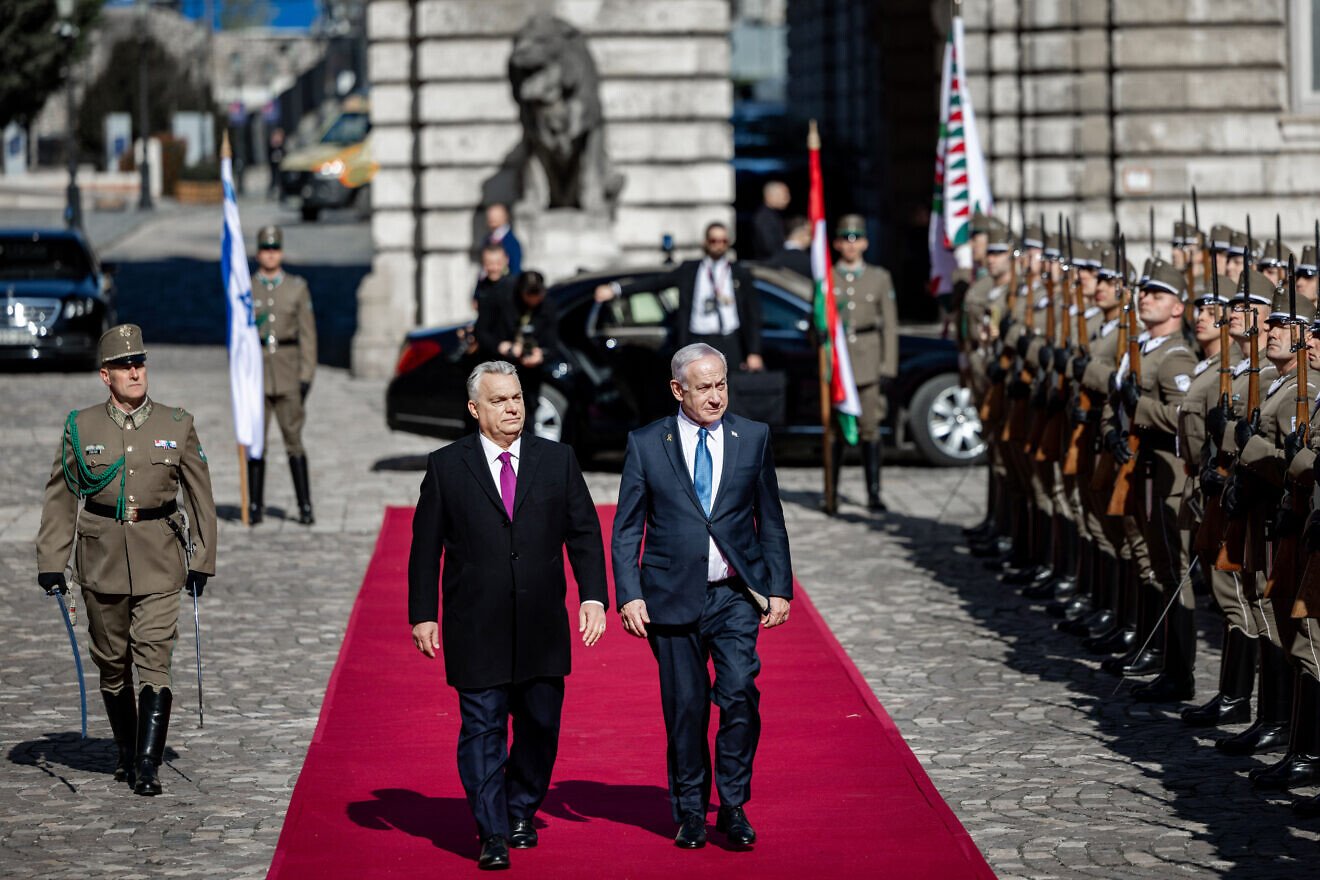
Hungarian Prime Minister Viktor Orbán receives Israeli Prime Minister Benjamin Netanyahu in Budapest on April 3, 2025. Photo by Janos Kummer/Getty Images.

Israeli Prime Minister Benjamin Netanyahu was welcomed with full honors in Budapest on Thursday, where he met with Hungarian Prime Minister Viktor Orbán.

The visit, most notable for Hungary’s defiance of an arrest warrant for Netanyahu put out by the International Criminal Court (ICC), began with a lavish ceremony at Buda Castle, the historic complex of the Hungarian kings, and included a brass band and military honor guard with cavalry.

Hungary announced on Thursday it would leave the ICC.

Orbán’s resistance to the ICC fits neatly with his broader foreign policy, popular with Hungarians, of refusing to submit to European Union diktats on a host of issues, most especially immigration, rejecting E.U. demands that Hungary open its borders to asylum seekers.

During a joint press conference following the ceremony, Orbán described the Jewish state as “an anchor in the Middle East,” expressing hope that Netanyahu “can guarantee the security of Israel and your right to self-defense.”

Hamas’s Oct. 7, 2023, cross-border massacre in Israel “undermined the security of the entire world,” Orban said, adding that Jerusalem “can count on Hungary in the future as the impenetrable European bastion of Judeo-Christian culture.”

Netanyahu told Orbán: “You support Israel. Proudly. Unstintingly. You stand with us at the E.U., you stand with us at the U.N., and you’ve just taken a bold and principled decision on the ICC.”

“We will smash the Iranian… terror axis, which threatens not only us but Europe and many of our neighbors in the Middle East. We’re committed to doing so, and by doing that, we are also protecting Europe,” the prime minister stated. “Maybe there are some in Europe who don’t understand this, but Viktor Orbán understands this.”

Orbán, having earlier posted a message on X welcoming Netanyahu to the country, calling it “the safest place in Europe,” pressed that theme at the press conference, noting that Hungary’s Jewish community was the third largest in Europe.

While antisemitism has reached levels “never before seen” in Western Europe, in Hungary, no Hamas flags are waved, he said. “In Hungary, there is zero tolerance for antisemitism.”

The reason antisemitism is on the rise in Western Europe is due to mass illegal immigration, he said, adding that Hungary will never accept such migration.

Rabbi Menachem Margolin, chairman of the European Jewish Association (EJA), told JNS, “We must acknowledge and honor governments that protect their Jewish community and support the state of Israel. Hungary stands out in Europe for its practical and consistent support of its Jewish community and the Jewish state.”

Netanyahu also met with Hungarian President Tamás Sulyok at the Presidential Palace.

Netanyahu landed in Hungary in the early hours of Thursday morning for a four-day visit at the invitation of Orbán.

“Welcome to Budapest, #BenjaminNetanyahu!” Hungarian Defense Minister Kristóf Szalay-Bobrovniczky posted to social media, greeting Netanyahu at the airport with a military honor guard.

Orbán invited Netanyahu in November, a day after the International Criminal Court issued an arrest warrant for the Israeli premier and his former defense minister Yoav Gallant.

Although Hungary is a signatory to the ICC and obliged to act on its warrants, Orbán wrote in a Nov. 22 letter to Netanyahu that he was “shocked” by the court’s “shameful decision.”

He vowed it would have “no impact whatsoever on the Hungarian-Israeli alliance and friendship” and extended an invitation to Netanyahu, promising his country “will ensure your safety and freedom.”

The ICC has no enforcement arm and relies on member states to carry out its warrants.

During Netanyahu’s visit, a senior Cabinet minister announced that Budapest would withdraw from the International Criminal Court.

“The withdrawal process will begin on Thursday, in line with Hungary’s constitutional and international legal obligations,” a spokesperson for Gergely Gulyás, minister of the Hungarian Prime Minister’s Office, wrote on X.

When the ICC first announced the arrest warrants, Orbán told Hungarian public broadcaster Kossuth Radio that it was “fundamentally wrong” and an “outrageously brazen” political decision that would lead to “the discrediting of international law,” The New York Times reported .

The ICC issued the warrants against Netanyahu and Gallant for crimes against humanity and war crimes allegedly committed from at least Oct. 8, 2023, until at least May 20, 2024, the day the prosecution filed the applications for warrants.

In a separate statement, the court ordered the arrest of Mohammed Deif, the commander of Hamas’s “military” wing, who according to the Israel Defense Forces was killed in an airstrike on July 13.

Netanyahu wants to undermine the ICC’s decision by “flying to places where there’s no risk of arrest, and in doing so, he’s also paving the way to normalize his future travels,” Moshe Klughaft, an international strategic consultant and former adviser to Netanyahu, told AFP.

“His ultimate goal is to regain the ability to travel wherever he wants,” he said.

This is the second international visit for Netanyahu since the ICC issued its warrants. In February, he visited the United States to meet with U.S. President Donald Trump.

On Feb. 6, Trump sanctioned the ICC via executive order for its arrest warrants against Netanyahu and Gallant. The sanctions hit ICC officials, employees and their immediate family members with financial penalties and visa restrictions.

The ICC has initiated “illegitimate and baseless actions targeting America and our close ally Israel,” the executive order stated.

The court’s “malign conduct” threatens “to infringe upon the sovereignty of the United States and undermines the critical national security and foreign policy work of the United States government and our allies, including Israel.”

Orban first floated the idea of quitting the ICC after Trump’s executive order. “It’s time for Hungary to review what we’re doing in an international organization that is under U.S. sanctions,” the Hungarian leader tweeted in February.  

Netanyahu is scheduled to conclude his visit to Hungary on Sunday.


David Isaac

Source: https://www.jns.org/hungary-defies-icc-welcomes-netanyahu-with-full-military-honors/

Follow Middle East and Terrorism on Twitter

Hiring freezes, impacts on exports: Israeli companies prepare for Trump's tariffs - Eve Young


by Eve Young

"There will be effects, primarily through decreased foreign demand and higher import costs," Danny Brietman, the CEO of Bimeniv Investment House and Bimeniv Finance College said.


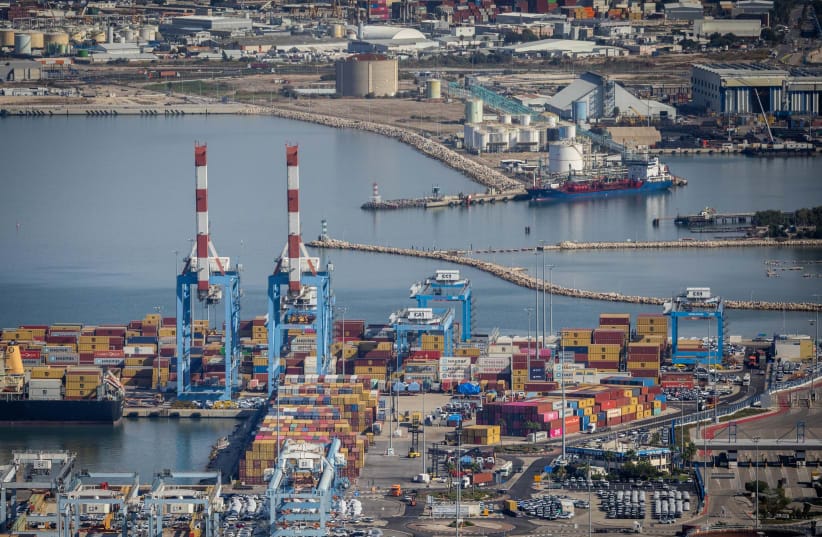
View of the Haifa Port. November 17, 2024. (photo credit: YONATAN SINDEL/FLASH90)
View of the Haifa Port. November 17, 2024.
(photo credit: YONATAN SINDEL/FLASH90)

Heads of Israeli companies braced for the impacts of sweeping tariffs announced by the Trump administration Wednesday, with some enacting temporary non-critical hiring freezes, and others reconsidering strategic business plans.

US President Donald Trump said on Wednesday that he would impose a 10% baseline tariff on all imports to the United States and higher duties on some of the country's biggest trading partners, in a move that ratchets up a trade war that he kicked off on his return to the White House.

The new policy includes a 17% tariff on Israeli goods exports.

"From our recent conversations with Israeli high-tech CEOs and entrepreneurs, a recurring pattern has emerged. The first companies affected or shifting into a reassessment mode are manufacturing companies," said Inbal Horesh, the CEO of Gifthead.

Horesh added that she is seeing "slight movement," among companies with manufacturing companies "entering a state of 'cautious waiting'—a temporary freeze on non-critical hiring and [making] an effort to understand the implications before making new decisions."

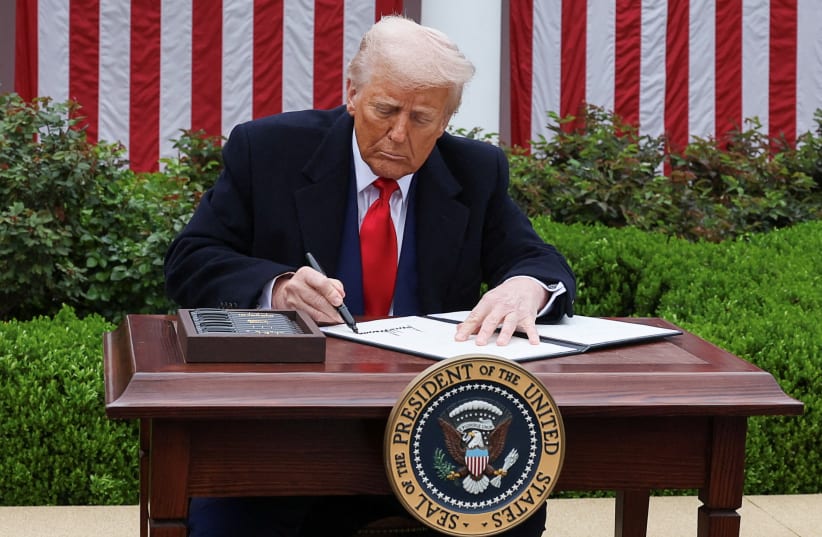
US President Donald Trump signs an executive order on tariffs, in the Rose Garden at the White House in Washington, DC, US, April 2, 2025 (credit: REUTERS/LEAH MILLIS/FILE PHOTO)Enlrage image
US President Donald Trump signs an executive order on tariffs, in the Rose Garden at the White House in Washington, DC, US, April 2, 2025 (credit: REUTERS/LEAH MILLIS/FILE PHOTO)

Horesh stressed that this is "not a moment for panic," but a time to "build action plans with several backup scenarios."

Tom Koren, the CEO of Exelera - a subsea cable and digital infrastructure provider, said that he does not anticipate a significant impact on Israeli exporters.

"Many businesses have likely already accounted for tariff increases in their risk assessments, meaning that companies currently operating in the US market will not see drastic changes," he said.

Nimrod Zvik, the CEO of Marom – Project 360, said that the tariffs and their consequences may affect Israel's construction and real estate markets.

Key Israeli construction and infrastructure companies who provide technological solutions in these industries all operate in the US, he explained, saying that they now face new challenges posed by the tariffs.

"The increased tariffs are expected to hurt the profit margins of these companies, complicate exports, and make American projects that were once profitable less viable."

There is also a concern that the tariffs could slow technological developments, delay investments, and reduce competition, he said, adding that these "could affect innovation levels, supply chain timelines, and construction costs in Israel."

Assa Drori, the Chief Risk Solutions Officer at Okoora, said that the tariffs will "reduce the attractiveness of exporting goods from Israel to the US, as many other economic competitor countries face lower tariff rates than Israel."

"Additionally, the imposition of tariffs is expected to strengthen the dollar against the shekel in the medium term, leading to price increases in Israel and making it more difficult for the Bank of Israel to lower interest rates."

Drori added that "fortunately, most of Israel’s exports to the U.S. consist of services— some 62% of total exports in 2024, mainly from the high-tech sector—which are not subject to tariffs."

This means that the impact on this sector will be minimal, he said.

Erez Menashe, CEO of Crown Neuromarketing, said that the decision has led to concerns for his client companies in the US and impacted their strategic business decision.

Decreased foreign demand, higher import costs

"Some are reconsidering whether to open branches in the US or instead focus solely on the EMEA (Europe, the Middle East and Africa) region, distancing themselves from the American market," he said.  

Danny Brietman, the CEO of Bimeniv Investment House and Bimeniv Finance College said that he is "seeing an immediate reaction in the financial markets—sharp declines in stock indices, especially for companies highly sensitive to international trade and cyclical economies."

He added that while it does not seem to be causing a "severe slowdown" at this point, "there will be effects, primarily through decreased foreign demand and higher import costs."

"There are no winners in trade wars—only losers. The primary risk is a wave of uncertainty, a slowdown in business activity, inflationary pressure, and the potential for a recession. All of these put pressure on the capital market in the short term," he added.

Reuters contributed to this report. 


Eve Young

Source: https://www.jpost.com/israel-news/article-848724

Follow Middle East and Terrorism on Twitter

Iran has ‘several hundred’ missiles left in its arsenal - Yaakov Lappin


by Yaakov Lappin

Tehran threatens missile strikes after Trump issues a nuclear ultimatum and deploys B-2 bombers.


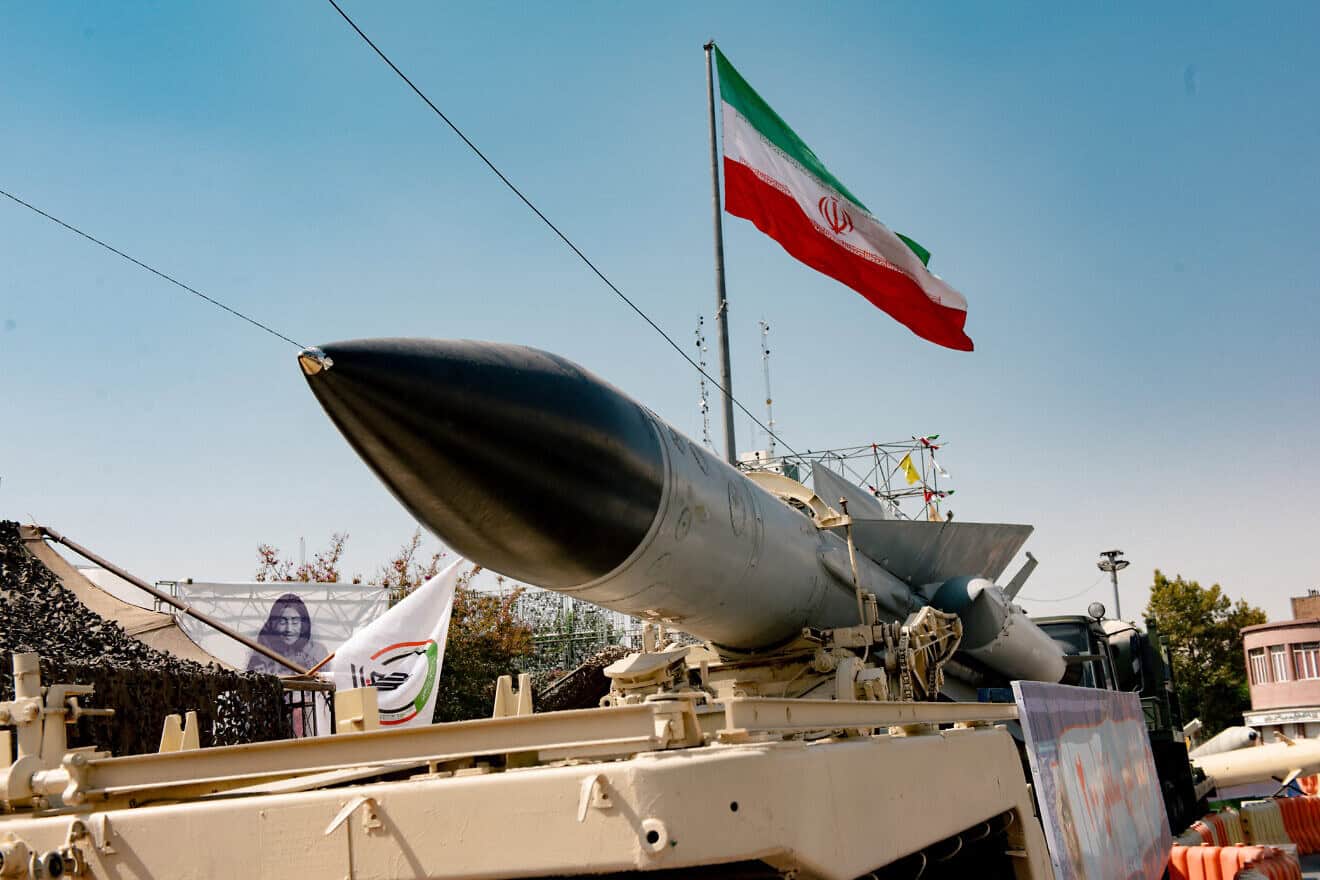
An S-200 surface-to-air missile system is on display as heavy weaponry, including ballistic missiles, air defense systems and unmanned aerial vehicles, are showcased during an exhibition in Baharestan Square in Tehran, Sept. 26, 2024. Photo by Hossein Beris/Middle East Images/AFP via Getty Images.

As U.S. President Donald Trump gives Iran a two-month ultimatum regarding its nuclear program and moves heavy stealth bombers into position to warn Tehran about the consequences of failing to reach a deal, it has increased its threats to fire missiles in response. 

Trump issued a stark warning to Tehran during an NBC News interview on March 30, saying, “If they don’t make a deal, there will be a bombing.”  

Iranian President Masoud Pezeshkian responded the same day, saying, “Direct negotiations have been rejected, but Iran has always been involved in indirect negotiations, and now too,” while confirming that Supreme Leader Ayatollah Ali Khamenei is allowing indirect contacts.

The Ayatollah regime has used Iran’s underground missile infrastructures in recent days to issue threats, with the state-run Tehran Times stating on March 31 that “Iranian missiles are loaded onto launchers in all underground missile cities and are ready for launch.” 

RADM. (ret.) Dr. Eyal Pinko, a senior researcher at the Begin Sadat Center for Strategic Studies at Bar Ilan university, who served in the Israeli Navy for 23 years, estimated on Wednesday that Iran has “several hundred missiles” left in its arsenal, after firing some 300 missiles and drones at Israel on April 13, 2024, and another 200 missiles on October 1, 2024, constitution two of the largest missile strikes in history. 

The attacks featured some of Iran’s most advanced missiles, including the liquid-fuelled Emad, a variant of the Ghader missile (itself a variant of the Shahab 3), the Khorramshahr 2 missile (a solid-fuel missile based on the Fateh 110), and likely use of the Fatah 1 Iranian hypersonic missile. 

Israel’s Arrow 3 missile defense system intercepted the majority of the threats in both attacks, with the assistance of the United States and regional states, which also downed some of the threats. 

Israel responded on Oct. 26 with broad waves of strikes in Iran, targeting Iran’s air defense systems and missile solid fuel factories, as well as, according to media reports, a site at Parchin linked to the nuclear program.  

 “The Iranians produced hundreds—many hundreds—of missiles, of different types and ranges,” Pinko told JNS on Thursday. He added that “in the Iranian ballistic missile industry, more than ten thousand  engineers work in its various factories.”

Iran’s missile development, Pinko said, reflects and understanding of “the Israeli defense array that is built on three layers,” he noted. “There’s the Arrow system, David’s Sling, and Iron Dome. They understand the limitations and capabilities in general.” 

Pinko added that Iran developed missiles with warheads that split off in the air as well as a missile “that looks like three or four missiles” due to dummy warheads, designed to make it more difficult for radar systems such as Arrow’s Green Pine to identify the true threat.

Pinko warned that Iranian warheads  “maneuver as they enter the atmosphere and start flying a certain path, not just falling like a regular ballistic missile.”

The Iranian ballistic missile launch network “is mostly mobile,” said Pinko, with mobile launchers, but also anchored by “silo sites buried in the ground.” Iran has built a network of tunnels under heavy concrete around the country, where they store all the missiles.

Iran can “fuel the missiles, prepare them, and do all the pre-launch checks inside the sites,” before rapidly launching above ground, and retreating underground, said Pinko. “They raise the missile on the launcher, three or four minutes, fire, and after a few minutes, once the launcher has cooled, they return underground.”

Defeating this network, Pinko stressed, would depend on “knowing where the tunnels are—entrances, exits, and their paths,” and would require the use of “very hard bunker-penetrating bombs,” noting that such a campaign would be “not trivial at all.”

Jonathan Ruhe, director of foreign policy at the Washington D.C.-based Jewish Institute for National Security of America, told JNS that Iran’s arsenal of medium-range ballistic missiles (MRBMs) capable of striking Israel was already limited and had been significantly degraded by the Israeli operations in October 2024. “Presumably the number is worryingly low from Iran’s perspective,” Ruhe said, “even before its two major strikes last year.”

He noted that Iran’s reliance on a limited number of launchers added to its challenge. “Iran only has a finite number of launchers for these MRBMs, and the aboveground launch preparations for attacks can be detected fairly readily by the United States and Israel, as we saw twice last year.”

Looking ahead, now that Iran’s network of proxies has been severely degraded, Ruhe assessed that “Iran likely will focus on making its ballistic missiles more survivable against Israeli defenses, prioritizing quality over quantity by necessity.” He said Iran would try “to improve the maneuverability of its warheads, and to aim entire barrages at single targets.” According to Ruhe, “Iran’s October strike was more effective than its strike on Israel last April.”

Ruhe also pointed out the unique vulnerability of U.S. bases and Arab allies in the Gulf, compared to Israel. “Iran has lots of short-range ballistic missiles (SRBM) that can be launched in a ‘bolt from the blue’ from its underground missile cities at U.S. bases and other targets throughout the Gulf and Iraq,” he said. “Unlike with Israel, many of these targets lack sophisticated, multi-layered defenses like Arrow and David’s Sling.”

Asked whether Iranian underground missile cities would be targeted in a future confrontation, Ruhe said, “‘Missile cities’ with ballistic missiles and anti-ship cruise missiles very likely would be targets, since these are Iran’s primary retaliatory capabilities.” He added that “other nodes of Iran’s missile production chain could be targeted as well, like Israel did last October.”

Ruhe affirmed that the regional air defense network had improved since Israel’s integration into CENTCOM, the U.S. military organization in the Middle East, in 2021, enabling “Israel and Arab countries to coordinate on detecting and intercepting Iranian launches.” Though better integration is still needed, he said the collective response to Iran’s massive attacks last year “provided great proof of concept.”

Iran released new video footage on March 25 showing a massive underground missile facility, the fourth of its kind revealed publicly this year, according to the Washington D.C.-based Foundation for Defense of Democracies. The video featured Maj. Gen. Mohammad Bagheri, Tehran’s Armed Forces chief of staff, and Brig. Gen. Amir Ali Hajizadeh, commander of the IRGC Aerospace Forces, surveys rows of ballistic missiles.

Bagheri stated, “Iran’s iron fist is … ten times stronger than True Promise I,” [the name of the April 2024 attack by Iran against Israel] adding that “all the dimensions that are required for generating a [military] capability that is 10 times [stronger than] the one deployed during Operation True Promise II [the October 1 2024 attack, have] been created.”

The facility displayed various ballistic missile types, including the Ghadr H, Emad, Haj Qassem, Kheibar Shekan, Sejjil, and the Paveh land-attack cruise missile. Several of these were used in the April and October 2024 Iranian missile attacks against Israel.

Amid speculation about possible strikes, the U.S. Air Force confirmed on March 31 that B-2 Spirit bombers had arrived at Naval Support Facility Diego Garcia, with the U.S. Air Force Global Strike Command noting that the bombers would support operations “to deter, detect and, if necessary, defeat strategic attacks against the United States and its allies.”

The B-2 is capable of deploying the MOP/GBU-57 bunker buster bomb, a 13.6-ton precision-guided munition that can penetrate up to 60 meters of reinforced concrete – an unmatched capability in conventional Western arsenals.

Meanwhile, Israel continues preparing for escalation. On March 31, Maariv reported that there was consensus across Israel’s security leadership that “Iran is vulnerable,” and that “Israel will not allow Iran nuclear weapons.” However, they also reportedly warned that Tehran may “decide to attack Israel out of distress and despair.”


Yaakov Lappin is an Israel-based military affairs correspondent and analyst. He is the in-house analyst at the Miryam Institute; a research associate at the Alma Research and Education Center; and a research associate at the Begin-Sadat Center for Strategic Studies at Bar-Ilan University. He is a frequent guest commentator on international television news networks, including Sky News and i24 News. Lappin is the author of Virtual Caliphate: Exposing the Islamist State on the Internet. Follow him at: www.patreon.com/yaakovlappin. 

Source: https://www.jns.org/iran-has-several-hundred-missiles-left-in-its-arsenal/

Follow Middle East and Terrorism on Twitter

Trump tariffs on Israel a regression in trade relations: Israeli officials, businesses react - Amichai Stein, Eve Young, Jerusalem Post Staff


by Amichai Stein, Eve Young, Jerusalem Post Staff

Officials said they were convinced that Israel's decision to cancel Israeli tariffs on US imports would prevent US tariffs on Israel.


US President Donald Trump signs an executive order on tariffs, in the Rose Garden at the White House in Washington, DC, US, April 2, 2025 (photo credit: REUTERS/LEAH MILLIS/FILE PHOTO)
US President Donald Trump signs an executive order on tariffs, in the Rose Garden at the White House in Washington, DC, US, April 2, 2025
(photo credit: REUTERS/LEAH MILLIS/FILE PHOTO)

Israeli economic officials expressed shock overnight Wednesday at the Trump administration's decision to impose a 17% tariff on Israel, calling the decision "unjustified."

The duty on Israel is part of a sweeping set of tariffs announced by US President Donald Trump on Wednesday in which he will impose a 10% baseline tariff on all imports to the United States and higher duties on some of the country's biggest trading partners, in a move that ratchets up a trade war that he kicked off on his return to the White House.

Officials added that they were convinced that Israel's decision to cancel Israeli tariffs on US imports would prevent US tariffs on Israel.

"It's going to be hard," officials said, adding that they will "work to change the decision," which they called unjustified.

US President Donald Trump delivers remarks on tariffs in the Rose Garden at the White House in Washington, DC, US, April 2, 2025 (credit: REUTERS/CARLOS BARRIA)Enlrage image
US President Donald Trump delivers remarks on tariffs in the Rose Garden at the White House in Washington, DC, US, April 2, 2025 (credit: REUTERS/CARLOS BARRIA)

$3 billion economic hit

Israel's Finance Ministry said that they are "studying President Donald Trump's decision and its impacts on The State of Israel," in cooperation with the business sector.

Finance Minister Bezalel Smotrich said that the ministry has been "analyzing its impact on the economy across various sectors and engaging in discussions with the industry and economic leaders."

He added that he will convene Finance Ministry officials to discuss next steps.

Citi economist Michel Nies estimated a potential hit to Israel's economy of as much as $3 billion, or 0.6% of GDP.

Dr. Ron Tomer, president of the Manufacturers Association of Israel, said that if the decision stands, it is "a regression in the trade and investment relationship between the countries, especially considering the long-standing and deep, loyal friendship between the two nations."

"The president's decision to apply tariff policy to Israel could harm Israel's economic stability, deter foreign investment, and weaken the competitiveness of Israeli companies in the US market."

"We hope and believe that the decision will be short-lived, and we will work with the Ministries of Finance and Economy to reverse it," Tomer said.

'Unclear decision'

He called the decision unclear and said the association was working to understand the motivation behind the move.

He added that the US claim that Israel imposes a 33% tariff on American goods is "puzzling," adding that this means "the US decision to impose 17% tariffs on Israeli goods remains unclear."

He added that the association hopes and believes that the decision will be short-lived and said that it will work with the Finance and Economy Ministry to make this the case.

The association called for "intensive negotiations" between Israel and the US to change the decision or "at least reduce its scope."

The Israel Export Institute said that the tariffs present a significant challenge for Israel, especially in non-exempt industries, but noted that exemptions "provide a stable foundation for continued economic economic cooperation."

"Israel will need to focus diplomatic and economic efforts on minimizing the damage and finding new opportunities in other markets."

The institute also noted that over 60% of Israeli exports to the US are business services, which they said would not be impacted by the new policy.

It said that the US is Israel's biggest and most important trade partner, highlighting that in 2024, trade between the countries stood at USD 55 billion, 70% of which was Israel export and 30% of which was import.

Israel had already moved to cancel its remaining tariffs on US imports on Tuesday.

Israel and the US signed a free trade agreement 40 years ago, and around 98% of goods from the U.S. are now tax-free. The finance ministry noted that tariff collection from US imports - mainly in the agricultural sector - stands at about 42 million NIS a year.

The institute stressed that, while it is still studying the policy, recent reports indicated that there will be exemptions to the tariffs for significant branches of Israeli export, including pharmaceuticals and semiconductors.

A Finance Ministry official said the announced 17% tariff on certain Israeli goods was lower than those on many other countries.

Speaking on condition of anonymity due to the sensitivity of the issue, he said it was derived from a calculation based on Israel's $8 billion trade surplus with the US, in which Israeli goods exports to the US were some $17 billion in 2024.

The official noted that while the issue was still unclear, tariffs likely do not include services and that about half of Israeli exports are high-tech services. High-tech comprises 20% of Israel's GDP.

But it will likely impact diamonds, machinery, electrical and medical equipment, the official said, urging the prime minister and finance minister to negotiate with Trump officials to try and reduce the tariff to no more than 10%.

The association said it would work on formulating strategies to cope with the new situation and seek new export markets, and called for continued intensive negotiations between Israel and the U.S. to bring about a change in the decision or at least reduce its scope.

The new policy will directly impact Israel's hi-tech sector, said Karin Mayer Rubinstein, CEO of Israel Advanced Technology Industries - an umbrella organization for Israeli hi-tech and life sciences.

"At this stage, there are more questions than answers, and we are waiting for the publication of the final rules that will define the scope of the measure and its practical implementation," she added.

"If the tariffs apply to software products as well, particularly Software as a Service (SaaS) – the main area of activity for many Israeli high-tech companies – this move could fundamentally alter how Israeli companies approach the American market and even discourage potential investors and customers. 

Reuters contributed to this report. 


Amichai Stein, Eve Young, Jerusalem Post Staff

Source: https://www.jpost.com/international/article-848631

Follow Middle East and Terrorism on Twitter

Jihad Rising in Africa While the West Averts its Eyes - Charles Jacobs and Uzay Bulut


by Charles Jacobs and Uzay Bulut

Local jihadist organizations go by different names, but the ideology that drives them is the same: Every one of them deeply believes that Allah wants him to wipe the world clean of the kuffar (infidels).


  • Jihadists are murdering, raping, torturing, kidnapping, enslaving, and, in some instances, burning people alive — across Africa, and now in Syria.

  • Local jihadist organizations go by different names, but the ideology that drives them is the same: Every one of them deeply believes that Allah wants him to wipe the world clean of the kuffar (infidels).

  • More than 16.2 million Christians in Sub-Saharan Africa have been driven from their homes by jihadi violence and conflict, reports the human rights organization Open Doors.

  • Women and girls are abducted, forced into "marriage," forced to convert to Islam, raped, and subjected to forced labor. Several girls have been forced to act as suicide bombers or human shields at the hands of jihadis.

  • In Sudan, a current genocide includes race-based slaughter of indigenous Africans by Arab jihadists... with the RSF forces targeting ethnic African minorities for extermination... According to the organization "Operation Broken Silence," more than 150,000 civilians are estimated to have already perished from violence and hunger.

  • In Libya, slavery, forced labor and human trafficking are still widespread, as seen in video evidence of an auction of sub-Saharan Africans in the country.

  • In Somalia, no area is safe for Christians... [al-Shabaab] maintains a commitment to eradicating Christianity from Somalia and often murders Christians on the spot.

  • Nigeria has seen a dramatic increase in the abduction of Catholic priests, seminarians and religious women — for ransom, as Vatican News noted.

  • All decent people.... need urgently to address this question: Why does the liberal West turn a blind eye when Islamic jihadists abduct, abuse, rape, enslave, forcibly convert or murder millions of darker-skinned people in Africa and the Middle East? A refusal to address such lethal moral blindness signifies that the West has chosen a path to its own demise, and will be abandoning countless innocents as it goes.

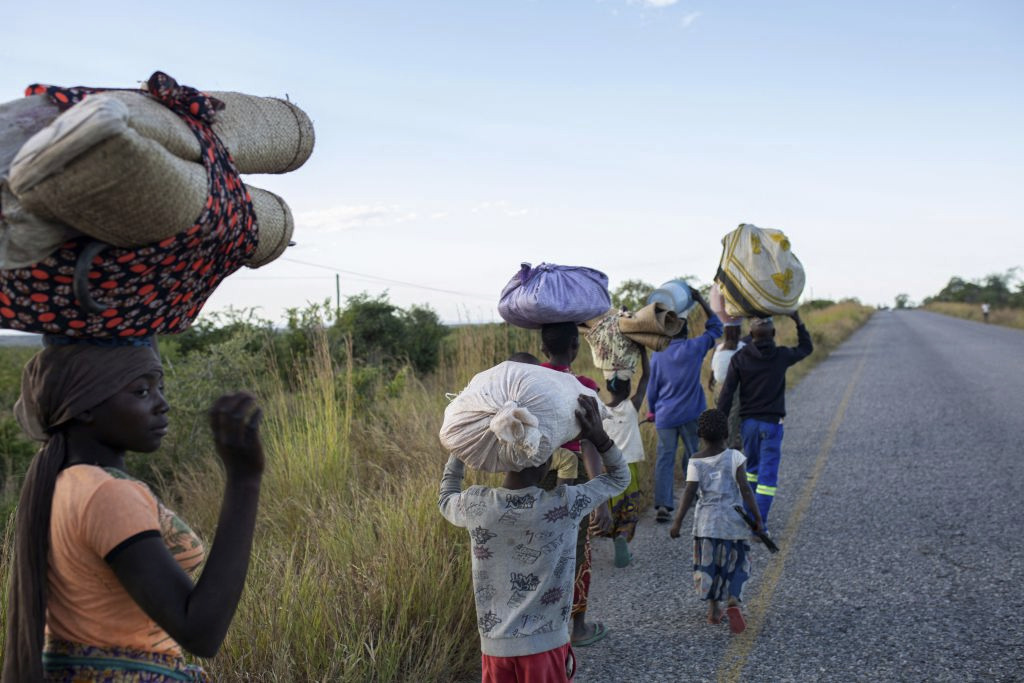
In Mozambique, a majority-Christian country, the rise of Islamist extremism in the north, especially in regions such as Cabo Delgado, has made life increasingly perilous for Christian communities. Islamists there unleashed a wave of violence, targeting Christian places of worship, abducting pastors and murdering many Christians. Pictured: Displaced persons from the town of Impire in Cabo Delgado, on June 14, 2022, flee from jihadists who attacked their community. (Photo by Alfredo Zuniga/AFP via Getty Images)

Jihadists are murdering, raping, torturing, kidnapping, enslaving, and, in some instances, burning people alive — across Africa, and now in Syria. Recent videos posted on X show that Syrian Islamists are doing to Alawites what Hamas did to Jews living near Gaza. Christians, Druze and Yazidis in Syria — like their non-Muslim or non-Arabized counterparts in Africa— fear they may be next.

The al-Qaeda-affiliated Hayat Tahrir al-Sham (HTS) terrorists, led by Ahmed Hussein al Sharaa, who conquered Damascus in December 2024, are going from door to door in western Syria and massacring religious minorities in cruel, sadistic ways. Social media posts show Alawite men, women and children shot at close range. According to Greek Member of European Parliament Nikolas Farantouris, who recently visited Syria, "Reliable data indicate 7,000 massacres of Christians and Alawites and unprecedented atrocities against civilians." The death toll is still rising.

Syria is just the most recent country targeted by Islamic jihadists. For years now, in at least 12 countries in Africa, jihad has been spreading. Local jihadist organizations go by different names, but the ideology that drives them is the same: Every one of them deeply believes that Allah wants him to wipe the world clean of the kuffar (infidels). In Nigeria, Sudan, the Democratic Republic of Congo, Burkina Faso, Central African Republic, Cameroon, Niger, Somalia, Mozambique and Libya, among others, Islamic militants massacre civilians, the vast majority of whom are Christians, leading to widespread terror, insecurity and displacement.

More than 16.2 million Christians in Sub-Saharan Africa have been driven from their homes by jihadi violence and conflict, reports the human rights organization Open Doors. Such violence includes murder, physical injury, rape, abduction, theft of property and destruction of homes and farmland. Christians are being dispossessed of their land and means of livelihood. Millions of them now live in displaced-persons camps. Women and girls are abducted, forced into "marriage," forced to convert to Islam, raped, and subjected to forced labor. Several girls have been forced to act as suicide bombers or human shields at the hands of jihadis.

On February 13, seventy Christians were beheaded by jihadists in the Congo, now one of the most dangerous countries for non-Muslims due to escalating jihadist violence. Church leaders are targeted, abducted, tortured and murdered. Christian villages have been burned down, and pastors, priests and lay Christians abducted by the Islamist "Allied Democratic Forces" and other armed factions. Churches, convents and Christian schools have been vandalized and looted by militiamen. From January to June of 2024, Islamic militants murdered 639 Christians in various incidents, including beheadings and shootings, according to a report released by the Middle East Media Research Institute (MEMRI).

In Sudan, a current genocide includes race-based slaughter of indigenous Africans by Arab jihadists. The war in Sudan is between two Muslim forces — the Sudan Armed Forces (SAF), the country's official military, and the Rapid Support Forces (RSF), a regional paramilitary group created by a previous military regime. Arab supremacy against the indigenous, non-Arabized Sudanese people drives both sides, with the RSF forces targeting ethnic African minorities for extermination. They are responsible for committing sexual violence on a large scale in areas under their control, including the gang rape, abduction and detention of victims in conditions that amount to sexual slavery, as the UN Independent International Fact-Finding Mission for the Sudan documented in a detailed report. Most of the victims are non-Arabs, particularly the Masalit people.

Innocent civilians have been murdered for their race in Sudan. Towns and villages are being destroyed. According to the organization "Operation Broken Silence," more than 150,000 civilians are estimated to have already perished from violence and hunger. Nearly 25 million Sudanese — half of the country's population — are facing high levels of acute food insecurity. Roughly 15 million people have been forced to flee their homes or have left Sudan as refugees. That is nearly one in three of all Sudanese. Nearly 80% of the country's healthcare system is not functioning. Roughly 90% of schools are closed.

In Libya, slavery, forced labor and human trafficking are still widespread, as seen in video evidence of an auction of sub-Saharan Africans in the country. Today, Sharia law is strictly upheld: for a Muslim to convert to Christianity is a crime punishable by death. In one reported case, a Christian convert from a Muslim background received a death sentence in September 2022 and remains imprisoned while his case is pending with the Supreme Court. If a Libyan woman is suspected of being interested in Christianity, she faces house arrest, sexual assault, forced marriage or even death. Foreign Christians, especially those from sub-Saharan Africa, are also targeted by Islamist militant and criminal groups in Libya. These groups kidnap and sometimes brutally murder Christians. Even if they avoid such a fate, sub-Saharan African Christians face harassment and threats from radical Muslims in Libya.

In Cameroon's Far North region, Islamic terrorists — specifically Boko Haram and the Islamic State West African Province (ISWAP) — regularly attack, trying to carve out an Islamic caliphate in Cameroon's most volatile region. Christians who live in these areas are targeted for violence, abduction and murder. Churches have been set on fire and church leaders and seminary students kidnapped, as corroborated by reports from the US State Department. Armed groups often occupy churches, turning sacred spaces into arenas of conflict.

In Somalia, no area is safe for Christians. However, Christians are most at risk in areas under the control of radical Islamic militants such as al-Shabaab. A violent Islamist terrorist group, al-Shabaab controls large swaths of the country, where it enforces a strict form of Sharia (Islamic law). It maintains a commitment to eradicating Christianity from Somalia and often murders Christians on the spot. In March 2024, for instance, al-Shabaab militants reportedly murdered six Christian men.

In Burkina Faso, the rise of Islamic radicalism has forced Christians to flee. Cities that used to be safe are now at risk of attack. In areas where militant groups are active, Christians risk being kidnapped, displaced or murdered and their churches destroyed. For fear of jihadists, hundreds of churches have been closed. In August 2024, at least 500 people in the central part of Burkina Faso were murdered when jihadists opened fire on civilians.

Jihadist violence continues to escalate in Nigeria. Raids by Muslim Fulani militants, multiple groups of armed bandits, and terror groups such as Boko Haram and ISWAP have devastated Christian communities in the country. In shockingly brutal attacks, these terrorists also destroy the homes, churches and livelihoods of non-Muslims. Tens of thousands of Christians have been murdered and thousands of women and girls have been abducted and subjected to sexual violence. In addition to being forcibly "married," girls abducted by terrorists have reportedly been used as human shields or as leveraged commodities in negotiations.

Church leaders are specific targets of Islamists. Vatican News, the news portal of the Holy See, reported on recent cases of abductions and murders of Catholics in Nigeria. Speaking on behalf of Nigeria's Bishop Gabriel Dunia, of Auchi Diocese, the diocesan spokesman Fr. Peter Egielewa said 21-year-old Major Seminarian Andrew Peter "was gruesomely murdered by the abductors." On March 5, Ash Wednesday, Fr. Sylvester Okechukwu of Kafanchan Diocese was also murdered by kidnappers. In the last two months, Nigeria has seen a dramatic increase in the abduction of Catholic priests, seminarians and religious women — for ransom, as Vatican News noted.

Mali is another African nation ravaged by a jihadist insurgency. The Islamic insurgency that devastated the north of Mali in 2012 continues to have massive repercussions for the country. Islamists instituted a strict Sharia regime in the north, demolishing churches and assaulting Christians, Open Doors reports. As a result, many Christians have lost their homes and been forced to flee the region. Islamist persecution has rendered many regions in the country uninhabitable for Christians. Those living in areas controlled by Islamic militants have been denied access to water and land to grow crops. The jihadist violence is spreading southward, and the country's institutions are rapidly collapsing, further playing into the hands of jihadist groups.

In Mozambique, a majority-Christian country, the rise of Islamist extremism in the north, especially in regions such as Cabo Delgado, has made life increasingly perilous for Christian communities. Islamists there unleashed a wave of violence, targeting Christian places of worship, abducting pastors and murdering many Christians. The objective of these groups is to establish a strict Islamic state, making Christians a specific and vulnerable target. In 2024, there were numerous reports of abductions across areas of the country where jihadists and their gunmen exert influence. Christian homes and businesses were frequently targeted and set on fire, contributing to the ongoing displacement and economic destabilization of the region.

Over two weeks in January of 2024, for instance, Islamic State-affiliated terrorists attacked several villages in the Mocímboa da Praia district. The attacks began on January 3 in the village of Ntotoe, where three Christians were murdered, and more than 60 homes and a church burned down. Subsequent attacks in Chimbanga and another village resulted in the murder of six more Christians and the destruction of over 110 homes.

A near continent-wide jihad has set Africa aflame, yet the West averts its eyes. Its "human rights" movements and mainstream media mostly avoid noticing victims — especially black victims whom it had historically and instinctively championed. The willful blindness to black suffering — imposed very often by non-blacks — has been called hypocritical, but this strange behavior needs a deeper, more serious analysis.

All decent people — including especially those who are partisans, even activists, in "human rights" movements — need urgently to address this question: Why does the liberal West turn a blind eye when Islamic jihadists abduct, abuse, rape, enslave, forcibly convert or murder millions of darker-skinned people in Africa and the Middle East? A refusal to address such lethal moral blindness signifies that the West has chosen a path to its own demise, and will be abandoning countless innocents as it goes.


Dr. Charles Jacobs is President of the African Jewish Alliance.Uzay Bulut, a Turkish journalist, is a Distinguished Senior Fellow at Gatestone Institute and a senior researcher at the African Jewish Alliance

Source: https://www.gatestoneinstitute.org/21526/jihad-in-africa

Follow Middle East and Terrorism on Twitter

All the Ukrainian Known Knowns - Victor Davis Hanson


by Victor Davis Hanson

A Ukraine-Russia ceasefire looms, with Trump pushing deals, Zelenskyy negotiating leverage, and Putin weighing risks—while the West quietly concedes it never had a real plan to win.


Aside from the rhetoric, there is a growing consensus among Western diplomats, military analysts, military officers, heads of state, and even much of the media about how to end the endless Ukrainian war.

A proposed peace will see a DMZ established somewhere along an adjusted 1,200-mile Ukraine-Russia border. Tough negotiations will adjudicate how far east toward its original borders Russian forces will be leveraged to backstep.

Publicly in the U.S. and covertly in Europe, all accept that a depleted Ukraine will not have the military strength to retake Crimea and the Donbas.

In 2014, both were absorbed by Russia during the Obama administration. Neither that administration nor any since has advocated a military effort to reclaim them.

Loudly, the U.S.—and again quietly Europe—concedes that Ukraine will not be in NATO—a confirmation that Russia will use to justify to its people its disastrous invasion, and even many Ukrainians will accept.

How will the West deter Putin from his inevitable agenda of reclaiming lost Soviet territory and Russian-speaking peoples? For now, his army is exhausted, its arsenals depleted, and its reputation shattered.

In the future, a commercial corridor, anchored by concessions to American and international mining concerns, will supposedly serve as a tripwire to deter Putin from attacking in-the-way noncombatant Americans.

More practically, Ukrainian forces will be kept fully armed. They have already inflicted perhaps a million causalities on Putin’s forces—possibly five times the dead, wounded, and missing that the Russians lost to the Taliban over that entire decade-long misadventure in Afghanistan.

If Trump can coax even a ceasefire, the oddly bellicose left will still rail about “Munich” and Trump as “Putin’s puppet.”

But after perhaps 1.5 million total Ukrainian and Russian dead, wounded, sick, and missing, transatlantic leftists will quietly admit they never had any realistic plan to win by fighting Russia to the last Ukrainian.

And they certainly were not willing—despite what they claimed in their spasms of braggadocio—to send U.S., U.K., European, or NATO ground troops into Eastern Ukraine.

Trump has faced criticism for his volatile, art-of-the-deal approach to Ukrainian diplomacy over the last 10 weeks.

Lost in such criticism is that the Biden administration did not even try to end the war. Instead, in the LBJ-style of “light at the end of the tunnel,” it parroted the great “spring offensive” to come. And when that gambit disastrously failed, it resorted to the banal blank check of “as long as it takes.”

Western leaders simplistically thought that sending more arms, money, and Ukrainians into the cauldron would eventually break Russia—30 times larger than Ukraine, 10 times richer, over four times more populous, and far less bothered by the mounting toll of its greater losses.

In addition, we even know the likely course of negotiations to end the slaughter.

As soon as Trump pressures Zelenskyy for a ceasefire and a rare minerals mining concession, Putin smells an advantage. So, he digs in and orders his generals to double down on terror strikes for advantage.

And then, once Trump sees that scolding Zelensky empowers Putin to back off from a ceasefire, he turns on Putin and puts far greater pressure on him: a secondary embargo on all who buy Russian oil that even the “on to Moscow” crowd had never envisioned.

Once Putin seems to agree, then Zelenskyy thinks he was had and wants a better mining deal or reconsideration of NATO or more sophisticated weapons—until Trump reminds him that the despised U.S., not his beloved Europeans, is his only route to a shaky peace.

So, we know the negotiations will have a yin and yang until there is no solution other than a ceasefire leading to a Korean-peninsula-like hot peace.

Putin always preferred to exploit the Obamas and Bidens of the world. And he did so in 2014 and 2022, rather than the mercurial, unpredictable, and ultimately dangerous Trump, during whose tenure he stayed put within his borders.

He also knows that for all the talk of his puppet Trump, the latter killed hundreds of the Wagner group, pulled out of an asymmetrical missile deal, first sent offensive weapons to Ukraine, sanctioned Russian oil and oligarchs, warned the Germans not to deal with Putin on the Nord Stream II pipeline, and bombed into extinction ISIS of Iraq, Abu Bakr al-Baghdadi, and Qasem Soleimani.

So, Putin knows that India, China, and others who buy his oil will not if he reneges on his willingness for a ceasefire.

If and when peace comes, we can already foresee the misinformation that will follow: Trump deserves no credit. Zelenskyy remains the true hero. A now hollowed-out Russia was the real winner.

The only mystery?

Since when did the anti-war left prefer an endless and horrific war to a difficult, messy peace?


Victor Davis Hanson is a distinguished fellow of the Center for American Greatness and the Martin and Illie Anderson Senior Fellow at Stanford University’s Hoover Institution. He is an American military historian, columnist, a former classics professor, and scholar of ancient warfare. He has been a visiting professor at Hillsdale College since 2004, and is the 2023 Giles O'Malley Distinguished Visiting Professor at the School of Public Policy, Pepperdine University. Hanson was awarded the National Humanities Medal in 2007 by President George W. Bush, and the Bradley Prize in 2008. Hanson is also a farmer (growing almonds on a family farm in Selma, California) and a critic of social trends related to farming and agrarianism. He is the author of the just released New York Times best seller, The End of Everything: How Wars Descend into Annihilation, published by Basic Books on May 7, 2024, as well as the recent  The Second World Wars: How the First Global Conflict Was Fought and Won, The Case for Trump, and The Dying Citizen.

Source: https://amgreatness.com/2025/04/03/all-the-ukrainian-known-knowns/

Follow Middle East and Terrorism on Twitter

Donald Trump through the eyes of Confucius and Cicero - Stephen B. Young


by Stephen B. Young

Confucius and Cicero would judge Trump by virtue or appetite—does he lead with principle or personal gain, and can such a leader uphold moral governance?


What kind of a person is Donald Trump? Now that for two months he has personalized the office of the president, we have new facts to consider in coming up with a description of his inner orientation towards life and reality.

Both Confucius and Cicero make such an analysis an either/or proposition, at the risk of oversimplification.

Confucius advised that people come in only two sorts—one living by principle and the other not living by principle.

The first kind of person he called junzi, or “ennobled” in their character. The other kind of person he called xiaoren, or “small-minded,” a “little, petty, mean-spirited” person.

Confucius said, See what a person does. Mark their motives. Examine in what things they rest. How can a person conceal their character?

His remarks as recorded in The Analects are:

The mind of one having ennobled character is conversant with righteousness; the mind of the little person is conversant with gain.

Those ennobled in their character think of virtue; the small-minded think of comforts.

So, looking at his performance in office, do we consider Donald Trump to be a junzi or a xiaoren?

Confucius asked, if an ennobled person abandons virtue, how can they retain their ennoblement?

He insisted that the ennobled person does not, even for the space of a single meal, act contrary to virtue.

Confucius predicted that those who possess virtue, when they exercise government, may be compared to the North Star, which keeps its place and all the stars turn to it.

He added that he who acts with a constant view to his own advantage will be much murmured against.

He observed that the ennobled person acts before he speaks and afterwards speaks according to his actions.

Cicero’s bi-modal criteria for character were either domination by appetite or discipline of appetite.

He wrote, it is our duty to respect, defend, and maintain the common bonds of union and fellowship subsisting between all the members of the human race. (De Legibus 153)

Now we find that the essential activity of the spirit is twofold : one force is appetite, which impels a man this way and that ; the other is reason, which teaches and explains what should be done and what should be left undone. The result is that reason commands, appetite obeys.

The appetites, moreover, must be made to obey the reins of reason and neither allowed to run ahead of it nor, from listlessness or indolence, to lag behind ; but people should enjoy calm of soul and be free from every sort of passion. As a result, strength of character and self-control will shine forth in all their lustre. (De Officiis 103)

For he who knows himself will realize, in the first place, that he has a divine element within him and will think of his own inner nature as a kind of consecrated image of God. (De Legibus 365)

Those of us who are not influenced by virtue to be good men but by some consideration of utility and profit are merely shrewd, not good. (De Legibus 343)

Curse the one who separated utility from justice.

For in proportion as anyone makes his own advantage absolutely the sole standard of all his actions, to that extent he is absolutely not a good man; therefore, those who measure virtue by the reward it brings believe in the existence of no virtue except vice. (De Legibus 35)

The question that must arise in our minds after reading these insights of Cicero and Confucius is whether or not a person of appetite (Cicero), a little person (Confucius), can effectively implement the CRT principles for moral capitalism and moral government.

Cicero provided us with an example of such failure in a letter he wrote to his friend Atticus in 59 BC as the Roman Republic was starting to collapse. In this letter Cicero exposed the social force that was dissolving the sustainability of the Roman Republic. The first triumvirate of Pompey, Crassus, and Caesar had been in power for several months.

Cicero wrote:

The truth is that the present regime is the most infamous, disgraceful, and uniformly odious to all sorts and classes and ages of men that ever was … They hold nobody by good will …

Popular sentiment has been most manifest at the theater and the shows … [an] actor attacked poor Pompey quite brutally: ”To our misfortune, you are great” (Magnus)—there were a dozen encores … When Caesar entered, no one clapped.

We are held down on all sides. We don’t object any longer to the loss of our freedom. … All with one accord groan of the present state of affairs, yet no one does or says a thing to better it.” The only one to speak or offer open opposition is young Curio.

All this only makes sadness the greater for we see that the sentiment of the community is free, while its virtue is in chains.” [dolor est maior, cum videas civitatis voluntatem solutam, virtutem adligatam]

(Some years ago now, the CRT adopted Cicero’s standard as its motto: Virtus non adligata—“Virtue“ is not chained.”

In another letter to Atticus of Feb 27, 49 BC, Cicero speaks of his ideal public servant, who would not let the Republic down:

Just as a fair voyage is the object of the pilot, health of the physician, and victory of the general, so our statesman’s object is the happiness of his countrymen—to promote power for their security, wealth for their abundance, fame for their dignity, virtue for their good name. This is the work I would have him accomplish, the greatest and noblest in human society.


Photo: ZEBULON, GEORGIA - OCTOBER 23: Republican presidential nominee, former U.S. President Donald Trump looks on during a roundtable with faith leaders at Christ Chapel on October 23, 2024 in Zebulon, Georgia. Trump is campaigning across Georgia today as he and Democratic presidential nominee, U.S. Vice President Kamala Harris attempt to win over swing state voters. (Photo by Anna Moneymaker/Getty Images)

 
Stephen B. Young

Source: https://amgreatness.com/2025/04/03/donald-trump-through-the-eyes-of-confucius-and-cicero/

Follow Middle East and Terrorism on Twitter