Monday, September 21, 2026

How Hamas Controls the Story Coming Out of Gaza - Khaled Abu Toameh


by Khaled Abu Toameh

When Palestinians blamed Israel, the cameras kept rolling. When Palestinians blamed Hamas, the cameras were turned off.


  • Azaiza revealed details about how journalists operated under Hamas rule. He described an environment in which journalists were pressured to suppress criticism of Hamas and, in some cases, to stop filming when Palestinians expressed anger toward the terrorist group.

  • These are not allegations coming from an Israeli government official or a pro-Israel advocacy organization. They are admissions by a Palestinian journalist who became internationally famous for documenting the war.

  • When Palestinians blamed Israel, the cameras kept rolling. When Palestinians blamed Hamas, the cameras were turned off.

  • He acknowledged that stepping outside this framework exposes journalists to intense backlash, including organized online campaigns, accusations of treason, and physical intimidation inside Gaza.

  • He openly acknowledged that initially he struggled with whether to publish material showing Palestinians criticizing Hamas. He said he had never seen a Gaza journalist publish such material. He also disclosed that he grew up supporting Hamas and that Hamas's ideology and the culture of "resistance" were part of his childhood environment.

  • This is a remarkable admission. It helps explain why the outside world has heard relatively little from Gaza about Hamas's responsibility for the suffering of Palestinians under its rule. It also raises an obvious question: How much of the story coming out of Gaza has been shaped not only by what journalists saw but also by what they believed they were permitted to show?

  • Azaiza's account should therefore prompt media organizations that used his work – and the work of other Gaza-based journalists as well as journalists covering other terrorist entities and their sponsors – to examine their own reporting practices. Who supplied the information? Who was present when it was gathered? What material was not published? Were journalists pressured? Were interviews conducted freely? Were Palestinians allowed to criticize Hamas on camera? Most importantly, did international media organizations independently verify claims coming from a territory controlled by a terrorist organization?

  • Azaiza's interview is ultimately a warning about the dangers of accepting any side's narrative without scrutiny.... It should be a wake-up call.

  • The question is no longer simply what the cameras show. It is also what they do not show.
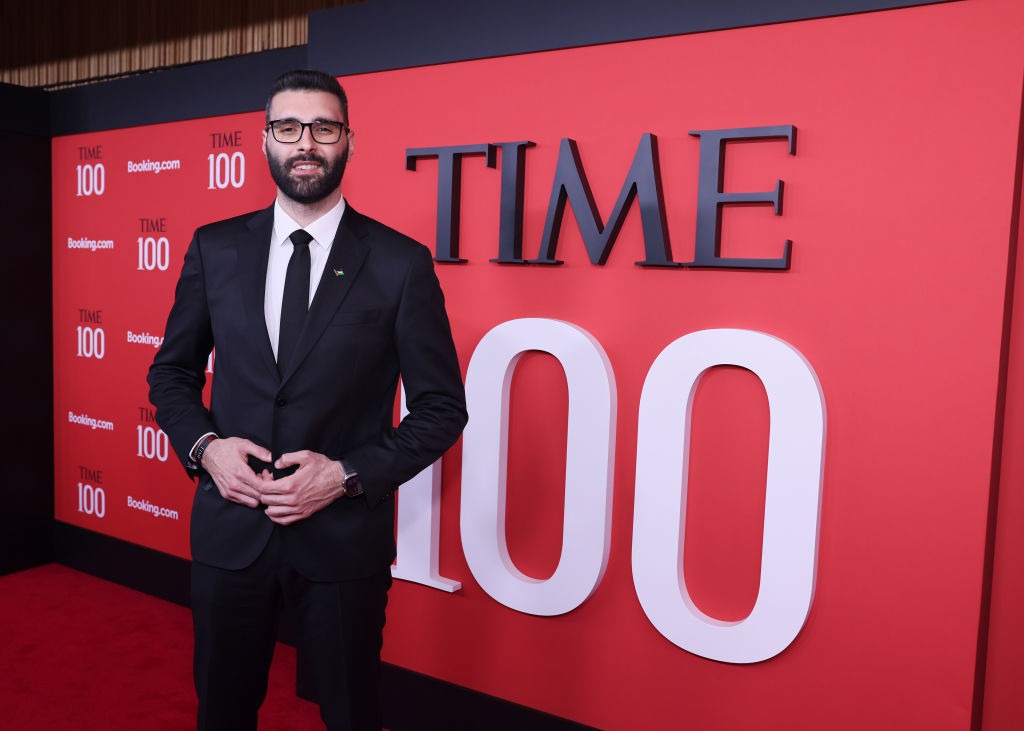
Palestinian journalist and photographer Motaz Azaiza recently revealed details about how journalists operated under Hamas rule. He described an environment in which journalists were pressured to suppress criticism of Hamas and, in some cases, to stop filming when Palestinians expressed anger toward the terrorist group. Pictured: Azaiza attends the 2024 TIME100 Gala at Lincoln Center on April 25, 2024 in New York City. (Photo by Jemal Countess/Getty Images for TIME)

For more than two decades, the international community has been hearing that Palestinian journalists in the Gaza Strip are providing the world with an unfiltered account of what is happening there.

A recent interview with Palestinian journalist and photographer Motaz Azaiza should make anyone who has accepted that claim without question think again.

Azaiza is hardly an obscure figure. His images from Gaza reached millions of people around the world. He was named one of TIME magazine's "100 Most Influential People," received international awards, and became one of the most recognizable Palestinian voices documenting the Gaza war.

That is what makes his recent revelations so important.

Azaiza revealed details about how journalists operated under Hamas rule. He described an environment in which journalists were pressured to suppress criticism of Hamas and, in some cases, to stop filming when Palestinians expressed anger toward the terrorist group.

These are not allegations coming from an Israeli government official or a pro-Israel advocacy organization. They are admissions by a Palestinian journalist who became internationally famous for documenting the war.

Azaiza described a WhatsApp group called "SMART" that was managed by a Hamas-affiliated media official connected to the Rafah border crossing between the Gaza Strip and Egypt. Such structures ensure that content circulated among press workers aligns with approved messaging before reaching wider audiences.

Perhaps even more revealing was his description of what happened when Palestinians themselves criticized Hamas. Azaiza described a scene in which people emerging from an ambulance shouted criticism at Hamas ("May God take revenge on Hamas"), and onlookers or Hamas members actively forced him to turn off his camera.

What does that mean?

When Palestinians blamed Israel, the cameras kept rolling. When Palestinians blamed Hamas, the cameras were turned off.

Azaiza said that Hamas enforces a selective narrative – claiming victory or ownership over military acts while deflecting internal blame or civilian grievances – making it difficult for independent media to show the raw, unfiltered reality on the ground. He acknowledged that stepping outside this framework exposes journalists to intense backlash, including organized online campaigns, accusations of treason, and physical intimidation inside Gaza.

International audiences have often been told that the images coming out of the Gaza Strip represented an unfiltered record of Palestinian suffering.

Azaiza's account, however, suggests that the picture was considerably more complicated: journalists were operating inside a political environment in which criticism of Hamas could carry consequences.

He openly acknowledged that initially he struggled with whether to publish material showing Palestinians criticizing Hamas. He said he had never seen a Gaza journalist publish such material. He also disclosed that he grew up supporting Hamas and that Hamas's ideology and the culture of "resistance" were part of his childhood environment.

This is a remarkable admission. It helps explain why the outside world has heard relatively little from Gaza about Hamas's responsibility for the suffering of Palestinians under its rule. It also raises an obvious question: How much of the story coming out of Gaza has been shaped not only by what journalists saw but also by what they believed they were permitted to show?

Journalism conducted under intimidation cannot automatically be treated as independent journalism. The distinction is especially important because foreign news organizations have frequently depended on Gaza-based journalists, photographers, translators, and "fixers" for information that they could not obtain themselves.

If the Palestinian journalists are operating under pressure from Hamas, the implications extend far beyond Palestinian media. The influence can reach international media organizations that use their material.

A foreign correspondent or editor sitting in a newsroom thousands of miles from Gaza may believe he or she is receiving a credible eyewitness account from an independent local journalist. If the local journalist is subject to Hamas pressure, self-censorship or organized monitoring, the foreign outlet may unknowingly become dependent on a narrative that has already been filtered.

This is how an Islamist terrorist group can influence the international information environment without having to control every foreign newspaper or television station.

Azaiza's revelations are also significant because of what he said about the Hamas-led October 7, 2023 massacre in Israel. He said that he filmed Israeli hostages being beaten by Palestinian crowds after they were kidnapped to the Gaza Strip. He said he chose not to publish the footage because he feared that publication could allow Israel to identify the people involved.

This raises an uncomfortable question for the international media: How much footage from October 7 and its aftermath was never published because Palestinian journalists feared the consequences of showing what happened? Furthermore, it raises an even broader question about the distinction between documenting history and protecting a political narrative.

Azaiza's account should therefore prompt media organizations that used his work – and the work of other Gaza-based journalists as well as journalists covering other terrorist entities and their sponsors – to examine their own reporting practices. Who supplied the information? Who was present when it was gathered? What material was not published? Were journalists pressured? Were interviews conducted freely? Were Palestinians allowed to criticize Hamas on camera? Most importantly, did international media organizations independently verify claims coming from a territory controlled by a terrorist organization?

These questions matter not only because of the Gaza war but also because of the credibility of journalism itself. Azaiza's account offers a possible explanation for one of the most striking features of the coverage from Gaza: the extraordinary visibility of Palestinian suffering accompanied by comparatively little visibility of Palestinian anger toward Hamas.

Azaiza's interview is ultimately a warning about the dangers of accepting any side's narrative without scrutiny. He is telling us that there was another reality behind the camera – a reality in which criticism of Hamas could disappear from the screen, journalists could face intimidation, and a Hamas-linked network could help manage the narrative. That should not be dismissed as a minor footnote. It should be a wake-up call.

Palestinian political analyst Ahmed Fouad Alkhatib commented on September 18:

"Motaz Azaiza, a Gazan journalist evacuated during the war and someone who has personally attacked me, is finally saying the blunt truth. Gaza‑based 'journalists,' whether tied to Al-Jazeera, Hamas, foreign outlets, or social media, systematically self‑censored and hid anti‑Hamas sentiments inside the Strip. Their mission was to maintain a narrative centered solely on Israel and to erase any dissent, criticism of Hamas, or diversity in Palestinian views. Azaiza describes how he struggled with supposed 'journalists' who shut off their cameras whenever Gazans condemned Hamas or tried to hold it responsible for the catastrophe it brought upon them, from October 7 to the ruinous 'resistance' mythology that followed. So to anyone repeating the line that Gaza had 'more journalists killed than WWII and Vietnam combined,' think carefully about who and what you are calling a journalist in territory fully controlled by a violent extremist organization responsible for severe harm and repression."

Azaiza's interview proves something important: that the process by which information emerged from Gaza was not as independent as many people assumed. The situation has not changed, because most Gazans continue to live under Hamas rule. The question is no longer simply what the cameras show. It is also what they do not show.


Khaled Abu Toameh
is an award-winning journalist based in Jerusalem.

Source: https://www.gatestoneinstitute.org/22869/gaza-hamas-controls-media-story

Follow Middle East and Terrorism on Twitter

The Muslim Brotherhood: Follow the Money - Ahmed Charai


by Ahmed Charai

Follow the money. Map the networks. Establish the evidence. Expose illicit finance. Cut the financial lifelines. That is where the next phase of the fight should begin.


  • How extensive are the transnational financial networks connecting Muslim Brotherhood affiliates, front organizations and designated terrorist organizations such as Hamas?

  • [O]n September 1, the Justice Department announced that the FBI had seized more than $560,000 in cryptocurrency intended for Hamas while disrupting fundraising and recruitment infrastructure.

  • What have we not yet found?

  • The objective is straightforward: follow the money. Who raises it? Who receives it? Which charities transfer it? Which businesses and financial intermediaries move it? Where are the common directors, donors and beneficiaries? Where does the money cross jurisdictions? Most importantly, where does it ultimately end?

  • The same questions deserve to be asked inside the United States

  • There may be organizations and networks today that remain legal, dispersed and apparently disconnected until financial relationships, common intermediaries or organizational connections reveal a larger architecture.

  • President Trump should give Gorka, Dahdouh and the broader counterterrorism team a larger mandate to help coordinate this effort across the U.S. government and with America's partners abroad.

  • Follow the money. Map the networks. Establish the evidence. Expose illicit finance. Cut the financial lifelines. That is where the next phase of the fight should begin.

How extensive are the transnational financial networks connecting Muslim Brotherhood affiliates, front organizations and designated terrorist organizations such as Hamas? Follow the money. Map the networks. Establish the evidence. Expose illicit finance. Cut the financial lifelines. That is where the next phase of the fight should begin. Pictured: The logo of the Muslim Brotherhood.

Words can kill. Washington knows that radical narratives can prepare the ground for radical action. But ideology alone does not sustain organizations, build international networks or finance operations. They need money. And recent actions by the U.S. government raise a question that deserves much greater attention: How extensive are the transnational financial networks connecting Muslim Brotherhood affiliates, front organizations and designated terrorist organizations such as Hamas?

This is no longer a theoretical question. The evidence is beginning to emerge. In June, the Justice Department charged a San Diego resident with allegedly raising approximately $600,000 through purported humanitarian campaigns and diverting part of those funds toward Hamas. The allegations remain to be proven in court. In July, the U.S. Treasury said it had exposed a "multi-layered" structure in which Muslim Brotherhood affiliates and Hamas-directed front organizations operated transnational fundraising channels, using charitable facades and underground banking networks to move and disguise funds across jurisdictions. Then, on September 1, the Justice Department announced that the FBI had seized more than $560,000 in cryptocurrency intended for Hamas while disrupting fundraising and recruitment infrastructure.

These cases lead to a fundamental question: What have we not yet found?

The Trump administration has already moved from debate to action, designating specific Muslim Brotherhood branches and targeting financial networks that U.S. authorities say connect Brotherhood affiliates with Hamas. But designation should not be the end of the strategy. It should be the beginning.

At the National Security Council, Sebastian Gorka, Deputy Assistant to the President and Senior Director for Counterterrorism, and Nancy Dahdouh, Director for Counterterrorism, Global Jihadi Movement–Sunni Threats, have worked directly on this challenge. They know the subject, have helped make the case inside the administration, and have contributed to moving the issue from debate to concrete action.

The challenge now is to build on the progress already achieved and develop a coordinated strategy capable of identifying and disrupting the broader financial architecture behind these transnational networks. Treasury, State Department, Justice, the FBI and the intelligence community already possess formidable authorities and capabilities. The NSC can play an essential role in ensuring that these capabilities become part of a coherent strategy against networks that recognize neither bureaucratic boundaries nor national borders.

If the networks are transnational, the response must also be transnational. Washington should deepen cooperation with trusted governments, intelligence services and financial authorities in Europe, the Middle East, Africa and Asia. The objective is straightforward: follow the money. Who raises it? Who receives it? Which charities transfer it? Which businesses and financial intermediaries move it? Where are the common directors, donors and beneficiaries? Where does the money cross jurisdictions? Most importantly, where does it ultimately end?

The same questions deserve to be asked inside the United States. America's charitable and nonprofit system provides extraordinary freedom to raise money for religious, humanitarian and social purposes. Federal authorities should examine, where evidence warrants it, whether anyone is exploiting those protections, nonprofit status or charitable fundraising to conceal financial flows that ultimately benefit designated terrorist organizations. The issue is not religion. The issue is conduct, money and evidence.

Treasury has already provided reasons to look deeper. It has described charitable facades, underground financial networks, intermediaries and cross-border structures associated with Hamas and Muslim Brotherhood affiliates. The next phase therefore should not simply be another list of designations. It should be an effort to map the architecture.

That means identifying organizations that may appear unrelated but share financial intermediaries, directors, donors, beneficiaries or foreign partners. It means examining the ultimate destination of funds rather than stopping at their declared humanitarian purpose. And it means connecting information held by different American agencies with intelligence and financial information available to trusted foreign governments.

This is where American power is unique. The international role of the dollar, the reach of the American financial system, Treasury's sanctions authorities, American intelligence capabilities and Washington's relationships with governments around the world provide the United States with extraordinary instruments to expose illicit financial networks wherever the necessary legal jurisdiction exists.

There may be organizations and networks today that remain legal, dispersed and apparently disconnected until financial relationships, common intermediaries or organizational connections reveal a larger architecture. We should not assume those connections exist. But neither should we wait for another attack to discover them. We should find out whether they exist through methodical investigation and evidence.

October 7 demonstrated again the consequences of underestimating networks, intentions and capabilities. Washington now has an opportunity to move upstream. President Trump should give Gorka, Dahdouh and the broader counterterrorism team a larger mandate to help coordinate this effort across the U.S. government and with America's partners abroad.

The principle is not complicated. Words matter. Networks matter. But organizations cannot survive without resources.

Follow the money. Map the networks. Establish the evidence. Expose illicit finance. Cut the financial lifelines. That is where the next phase of the fight should begin.

This article was originally published in the Jerusalem Strategic Tribune. 


Ahmed Charai is the Chairman and CEO of World Herald Tribune, Inc., and the publisher of the Jerusalem Strategic Tribune, TV Abraham, and Radio Abraham. He serves on the boards of several prominent institutions, including the Atlantic Council, the Center for the National Interest, the Foreign Policy Research Institute, and the International Crisis Group. He is also an International Councilor and a member of the Advisory Board at the Center for Strategic and International Studies.

Source: https://www.gatestoneinstitute.org/22868/muslim-brotherhood-money

Follow Middle East and Terrorism on Twitter

Prosecutors zero in on John Brennan’s role in Trump-Russia collusion narrative in conspiracy case - Steven Richards


by Steven Richards

Federal prosecutors will likely examine ex-CIA Director John Brennan’s pivotal role at the beginning, in the middle, and during the aftermath of the Trump-Russia investigation as part of the grand conspiracy probe.


With the confirmation that former CIA Director John Brennan received a subpoena to testify in the ongoing “grand conspiracy” weaponization probe based in Florida, prosecutors appear to be zeroing in on how the ex-spy was at the beginning, middle, and aftermath of the Trump-Russia collusion narrative. 

Brennan is currently a senior national security and intelligence analyst for NBC and MSNBC, and according to one speakers' bureau, Brennan's speaking fee typically ranges from $50,000 to $75,000. His security clearance was officially revoked by President Trump in January of last year.

The former director’s lawyer confirmed in a court filing in a separate case – Brennan’s lawsuit against the federal government to preserve records related to investigations of him – that Brennan was subpoenaed by a federal grand jury in Fort Pierce, Florida where prosecutors are trying to build a grand conspiracy case arguing President Donald Trump and his allies were deprived of their civil rights in a decades-long saga of weaponized intelligence and law enforcement statements.  

Violation of Trump's civil rights and Brennan's false statements to Congress being probed

According to the filing, government prosecutor Kurt Olsen told Brennan’s counsel the probe is “far-reaching” and includes “issues at Mar-a-Lago and beyond.” It is aimed at assessing whether Trump’s civil rights were violated. The prosecutor reportedly told Brennan’s lawyer he was also the “subject” of a separate investigation for alleged false statements to Congress. 

“Mr. Olsen explained that Director Brennan was a ‘target’ of the narrower investigation, and the investigation for which he was now being subpoenaed was the ‘more wide-ranging conspiracy,’ as to which our client was a ‘subject.’ However, he explained that the narrower investigation was ‘still viable,’ and that the issues in the narrower investigation might also be part of the larger investigation, such as being overt acts,” Brennan’s lawyer wrote. 

You can read the filing below: 

Statutes of Limitations overcome by "ongoing conspiracy"

These revelations about the direction of the grand conspiracy probe provide the most detail about how prosecutors appear to be following an outline the FBI began assembling last summer. Shortly after taking the helm at the FBI, Director Kash Patel quietly launched an investigation into the decade of Democratic Party and deep-state antics ranging from phony allegations of Russia collusion to Jack Smith targeting the president. The conspiracy approach allows prosecutors to tie alleged criminal events currently covered by statutes of limitations to older events by treating them as part of an ongoing conspiracyJust the News reported at the time. 

John Brennan’s actions at the beginning, middle, and end of the Trump-Russia collusion investigation and narrative is likely to feature prominently in the questions prosecutors will want him to answer in front of the grand jury. 

Brennan’s fingerprints were on the opening of the federal probe that became the Crossfire Hurricane investigation into Trump and his campaign. Brennan previously testified to Congress in 2017 that the U.S. Intelligence Community had gathered evidence of contacts between the Trump campaign and the Russian government by July 2016 to initiate an investigation. It was at that point, he told lawmakers, that the CIA set up a special group with both the FBI and the NSA to probe alleged Russian efforts to interfere in the 2016 election. 

Brennan hid from Congress and the public Hillary Clinton's personal approval to gin up a bogus Russia scandal

"I encountered and am aware of information and intelligence that revealed contacts and interactions between Russian officials and US persons involved in the Trump campaign that I was concerned about because of known Russian efforts to suborn such individuals,” Brennan said. “And it raised questions in my mind again whether or not the Russians were able to gain the cooperation of those individuals.”

What Brennan did not tell congressional investigators at the time was that he was personally made aware of intelligence that same month that then-Democratic presidential candidate Hillary Clinton personally approved a project to gin up a bogus Russia scandal against her GOP opponent, according to Special Counsel John Durham. Durham had probed the handling of the Trump-Russia investigation. Brennan even briefed President Barack Obama and senior administration officials on Clinton’s plan, but, not only did Obama's team fail to stop it, it allowed the FBI to push the investigation into the same allegations raised by the campaign, Durham noted.

Durham ultimately concluded in his final report that the FBI had no verified intelligence or evidence when it opened the Crossfire Hurricane probe of President Donald Trump's campaign in the summer of 2016. Durham also found the FBI and Justice Department failed to follow their own standards and allowed the probe to persist with a questionable basis under the Foreign Intelligence Surveillance Act. 

“Neither U.S. law enforcement nor the Intelligence Community appears to have possessed any actual evidence of collusion in their holdings at the commencement of the Crossfire Hurricane investigation,” Durham wrote. 

Revised and contradicting assessments

The Trump-Russia allegations being probed by the Intelligence Community were later incorporated into the well-known December 2016 assessment from the CIA, the FBI, and the NSA that concluded with “high confidence” that Russian leader Vladimir Putin “ordered an influence campaign in 2016” and that Russia worked to “undermine public faith in the U.S. democratic process, denigrate former Secretary of State [Hillary] Clinton, and harm her electability and potential presidency” and “developed a clear preference for President-elect Trump.” 

The FBI and CIA also expressed with “high confidence” that Putin had “aspired to help” Trump’s election chances in 2016 by “discrediting” Clinton and publicly contrasting her unfavorably to him.” The NSA had a “moderate confidence” in this. 

These conclusions differed drastically from a similar assessment conducted just about three months earlier, when the Intelligence Community made no mention of Russia’s alleged animosity towards Clinton nor of its supposed preference for Trump, included no discussion of the Kremlin allegedly seeking to sink Clinton’s candidacy and elevate Trump’s chances, and generally attributed Russian efforts to a generalized desire to undermine the legitimacy of the U.S. election or the legitimacy of the next presidential administration. But, after Clinton lost the election to Trump, the tone would shift dramatically in that second assessment. 

In 2025, the CIA released an eight-page “lessons learned” review which concluded that “the decision by agency heads to include the Steele Dossier in the ICA ran counter to fundamental tradecraft principles and ultimately undermined the credibility of a key judgment.” The review sharply criticized Brennan for allegedly joining with anti-Trump forces in the FBI in pushing to include the baseless anti-Trump dossier authored by ex-British spy Christopher Steele in the December assessment.

Brennan was referred for prosecution last year

The House Judiciary Committee last year formally referred Brennan for prosecution, alleging he gave false testimony in 2023 about his role in trying to bring the discredited Steele Dossier into the assessment. Director of the Central Intelligence Agency John Ratcliffe also sent a criminal referral on Brennan to the FBI following his CIA "lessons-learned" review earlier in July.

After his tenure as CIA director, Brennan continued to stand by the Intelligence Community conclusions over which he presided, even as evidence emerged that called into question the basis for the investigation into the president. 

At the height of Robert Mueller's probe of alleged Russian collusion, for example, he wrote an op-ed for The New York Times in which he said President Trump’s claims of “no collusion” were “hogwash.” The retaliatory screed came after the president revoked Brennan’s security clearance. 

“The only questions that remain are whether the collusion that took place constituted a criminally liable conspiracy, whether obstruction of justice occurred to cover up any collusion or conspiracy, and how many members of ‘Trump Incorporated’ attempted to defraud the government by laundering and concealing the movement of money into their pockets,” Brennan wrote, arguing Trump’s revocation of his security clearance was designed to silence those who dared to challenge him. 

Brennan's excuse: "He may have received bad information"

Eventually, when Mueller found that there was no evidence Trump or his associates colluded with Russia in the 2016 election, Brennan said he may have received bad information. “I don't know if I received bad information, but I think I suspected there was more than there actually was,” he said in an interview on MSNBC. But, he told host Joe Scarborough, that he still believed there were inappropriate communications between members of the Trump campaign and Russia. 

Brennan, and his former Obama administration colleague Director of National Intelligence James Clapper, co-authored another op-ed last year defending the conclusions of the 2016 ICA. “While some external critiques have noted that parts of the Russia investigation could have been handled better, multiple thorough, years long reviews of the assessment have validated its findings and the rigor of its analysis,” they wrote. 

Time will tell whether Brennan and Clapper's protestations of innocence pass the straight-face test. 


Steven Richards

Source: https://justthenews.com/government/courts-law/prosecutors-zero-john-brennans-role-trump-russia-collusion-narrative

Follow Middle East and Terrorism on Twitter

White House launches 'TRUMP TV' stream following controversial ban of major news outlets - Jonah Davidov, Idan Kweller


by Jonah Davidov, Idan Kweller

Critics, including members of mainstream media, are deriding the move as an attempt to establish "state media."


US President Donald Trump boards Air Force One on September 16, 2026 at Joint Base Andrews, Maryland.
(photo credit: Anna Moneymaker/Getty Images)


The White House launched a live broadcast platform on YouTube called TRUMP TV: The Essentials Station at 7 p.m. ET on Monday, following US President Donald Trump's decision to ban a number of mainstream news organizations from the White House press pool.

The livestream, which launched with a recording of America's 250th anniversary speech by Trump at Mount Rushmore, has been derided by critics, including members of mainstream media, as an attempt to establish "state media."

Trump framed the platform, which was launched after TV networks boycotted the administration following his ban, as a way to bypass "fake news" media outlets and communicate directly with the American public.

he White House issued a statement on Monday defending Trump’s decision to ban CNN, Politico, and MS NOW from White House grounds. The statement argued that while the First Amendment protects the media's right to publish, it "does not grant them a right to a permanent press pass, a seat in the briefing room, or a spot in the press pool."

The White House asserted that restricting press access is not a new precedent, citing a series of instances from the Obama and Biden administrations where, it claimed, news outlets and journalists faced similar restrictions or bans from coverage.


First Amendment lawsuit filed against White House

"No president is required to host a hostile outlet on White House grounds," the statement concluded. "Access has always been a privilege, and President Trump is enforcing that rule."

In a post on Truth Social, Trump wrote: "As expected, Fake News CNN, Politico (who should give back the $8 million grant given by the US Government to keep them afloat!), and MS NOW (formerly MSDNC!), have filed a lawsuit to get access to the White House - and to your President, ME!"

"They got a great judge for themselves, a man who previously ruled in favor of Jim Acosta, who now seems to have vanished from the face of the earth," Trump continued. "The judge’s name is Tim Kelly, and unfortunately, he was appointed by 'Trump.'"

Trump went on to attack the press: "In other words, almost certainly, and as usual, we will appeal, because Fake News media figures and publications - who write only negative things and damage our national security by publishing false and defamatory stories based on unknown 'sources' - should not be given access to the most important office in the world."

"It's called the Oval Office, and it must be treated with politeness, respect, and dignity - not desecrated by third-rate clowns who intentionally distort, twist, and demean everything they write or publish," the president wrote. "Almost every story about me, or anything related to me, is negative, wrong, and in many cases, dangerous for our country! No matter how great my achievements are, they minimize and dismiss them."

Streaming 24/7.

Live at 7PM. 👀📺 pic.twitter.com/ax9obEH4sf

— The White House (@WhiteHouse) September 21, 2026

"With such corrupt and crooked press, how did I win by such a landslide? Because the media has zero credibility, and that is a very bad thing for our country!" Trump taunted. "Why should I give 'access' to people like this? Maybe Judge Kelly can explain that!"

'Fake News is a threat to democracy'

"In any case, it is my duty to fight for the success and security of our country. Fake News is a threat to democracy, and I will do whatever it takes to ensure the United States thrives," he concluded.

During a joint press conference with the president, New York City Mayor Zohran Mamdani addressed the ban on these outlets: "Yes, I told the President that we will host an event right here on the lawn with all members of the press, and that's something I believe in. As far as I'm concerned, everyone should be here - regardless of their stance or their criticism of us."

At the same press conference, Trump continued his attack: "It's interesting, because they said they were going to boycott me, but they never actually boycott me, so I wasn't particularly worried about it. Look at all this media."

The president added: "No, I'm only doing this because I think the media also has a responsibility. And you know, I won in a landslide. I won the election in a landslide. I've done great things. I've done many great things. I settled eight wars."

Finally, Trump said, "I think these media outlets have a duty to be fair. And if they are fake news, I truly believe I have a responsibility not to allow them into another very special house." 


Jonah Davidov, Idan Kweller

Source: https://www.jpost.com/american-politics/article-909222

Follow Middle East and Terrorism on Twitter

Federal appeals court revives Missouri's GOP friendly redistricting map, despite SCOTUS ruling - Misty Severi


by Misty Severi

The new 2025 map, which was used in the state primaries last month, favors Republicans in a 7-1 split by erasing Democratic Rep. Emanuel Cleaver’s Kansas City-based district.


A federal appeals court ruled Monday that Missouri must use its Republican-favored 2025 redistricting map in November, despite the Supreme Court declining twice this month to intervene in the dispute.

The Supreme Court allowed a decision from the Missouri Supreme Court to take effect earlier this month, which ordered Missouri Secretary of State Denny Hoskins to use the 2022 map that favored Republicans in a 6-2 split.

The new 2025 map, which was used in the state primaries last month, favors Republicans in a 7-1 split by erasing Democratic Rep. Emanuel Cleaver’s Kansas City-based district, according to Politico.

The 8th Circuit Court of Appeals ruled the new map causes the least amount of confusion for voters this year because they have already used the map this year, but it allowed redistricting opponents one week to get relief from the Supreme Court.

“For approximately one year, Missouri operated under the 2025 map," the panel majority wrote. "During that time, Missourians filed to run for Congress, met candidates, watched campaign advertisements, received campaign mail and voted under the 2025 map. 

"Any confusion stems from the last-minute decision by a state court to switch the congressional map," it added.

The ruling comes after experts believed the Supreme Court's latest decision would be the end of the push to use the 2025 redistricting map, but the 8th Circuit judges said last week that they interpreted it as a call to action by the justices.


Misty Severi is a news reporter for Just The News. You can follow her on X for more coverage.

Source: https://justthenews.com/government/courts-law/federal-appeals-court-revives-missouris-gop-friendly-redistricting-map

Follow Middle East and Terrorism on Twitter

FBI director says AI has helped bureau prevent school shootings across half dozen states - Nicholas Ballasy


by Nicholas Ballasy

“AI, when used lawfully, is a critical tool to triage data. For far too long the institutional morass in D.C. rejected the advancements of technology,” Patel says


FBI Director Kash Patel said on Saturday that the bureau is increasingly using AI to stop crime such as school shootings.

Patel made a statement earlier this year about the FBI thwarting a school shooting plot in North Carolina following a “tip” that came through AI software.

“We’ve done it in North Carolina and about half a dozen other states to prevent school shootings since I’ve been in the seat,” the FBI director said on Fox News. “AI, when used lawfully, is a critical tool to triage data. For far too long the institutional morass in D.C. rejected the advancements of technology.”

Patel said he has sharply increased the use of AI at the bureau. 

“I have increased the use of AI in the FBI by 605 percent,” Patel said. 

He added that the FBI is going to work with its partners and "look at databases and collect information and get DNA and then get these threats back out to the field and stop people from killing children at schools." 


Nicholas Ballasy

Source: https://justthenews.com/government/federal-agencies/fbi-director-says-ai-has-helped-bureau-fight-crime

Follow Middle East and Terrorism on Twitter

Texas Gov. Abbott orders a halt on all data center permits - Bethany Blankley


by Bethany Blankley

Monday’s action was the fourth directive Abbott has issued in four months related to data centers.


(The Center Square) -

Gov. Greg Abbott on Monday issued another directive on data center expansion, directing the Texas Commission on Environmental Quality (TCEQ) to halt all permits sought by data centers until state agency audits are completed.

It’s the fourth directive he’s issued in four months related to data centers.

It was issued as many Texans continue to express widespread opposition to data centers being built across the state, citing water usage among other concerns.

“This action is consistent with my whole-of-government approach to ensure Texans’ natural resources and way of life are protected,” Abbott said. “Data center projects must cover all electrical infrastructure costs, result in lower residential electrical bills, and complete” all required state agency audits.

In June, Abbott ordered state regulators to audit data center companies prior to approving permits to ensure they “pay for their electric infrastructure instead of shifting costs onto Texas families and small businesses, reuse their own water, reduce the cost of electricity for Texans, do not disrupt residential neighborhoods to preserve Texas’ quality of life, and pay their own way and eliminate reliance on outdated taxpayer-funded incentives,” The Center Square reported.

In August, he issued his second directive ordering the Public Utility Commission of Texas (PUCT) and Electric Reliability Council of Texas (ERCOT) to conduct a comprehensive verification and audit of all data centers advancing through ERCOT’s interconnection process. The agencies must complete the audits before any data center project moves forward, he said.

Not soon after, dozens of companies said they would comply with his directive, The Center Square reported.

However, that wasn’t enough once Abbott learned from state regulators that not all data centers were following state law.

Earlier this month, he issued a third directive requiring data centers to follow the law, this time calling for penalties to be enforced by the Texas Water Development Board (TWDB). In this directive, he said data centers “appear to have committed civil and criminal violations by failing to provide” the TWDB with information about water usage as required by Texas Water Code, The Center Square reported.

He ordered the TWDB to impose legal consequences for past and future failure to comply with state law and to partner with ERCOT to obtain additional water-use information. he also required data centers to provide detailed information about their water consumption, water supply source and implementation of water-efficient technologies. Any data center project that fails to complete the audit process must be denied interconnection to the state grid, Abbott said.

“Simply put, Texans must come first,” he said. “Data centers must pay their own way, protect our grid and water, and complete the ERCOT and TWDB audits. Until they do, TCEQ will issue no permits sought by data center projects.”

In his fourth directive, Abbott ordered the TCEQ “to halt all permits sought by data centers.”

Throughout the audit process, he said, “the PUC, ERCOT, and TWDB will determine the impact of data centers upon grid reliability and security, and upon the water resources needed by our communities.”

Because the agencies need the audit information to make informed decisions, “no state agency shall move forward with regulatory approvals related to data center development until it is acquired,” he said.

As ERCOT and TWDB conduct audits, TCEQ must ensure that its permitting decisions align with his directives, including receiving sufficient information from pending audits and time to thoroughly review all proposed permits, Abbott said.

TCEQ is required to give his office an update on compliance with his directive by Oct. 19.

Abbott also said he will work with the legislature next year to eliminate financial incentives for data centers that he and the legislature created. Roughly 10 years ago, bipartisan legislation was enacted that created billions of dollars in tax breaks and other incentives to multi-million and billion-dollar data center companies. State lawmakers have also recently backtracked on their previous support for the tax breaks, The Center Square reported.

Abbott’s latest directive appears to partially fulfill a request by state Rep. Gina Hinojosa, D-Austin, who is challenging him in this year's race for governor. She has called on Abbott to issue an emergency executive order to place a moratorium on all new data center development.

Under Abbott, Texas has surpassed Virginia with the greatest data center construction in the U.S., according to a Houston Business Journal analysis. 


Bethany Blankley

Source: https://justthenews.com/index%2ephp/nation/states/center-square/abbott-orders-halt-all-data-center-permits

Follow Middle East and Terrorism on Twitter

Trump approval drops to career-low 32% as GOP support erodes over Iran war, inflation - poll - Reuters


by Reuters

The Reuters poll found voters leaning away from supporting Trump's fellow Republicans in the November 3 midterm elections that will determine control of Congress for the next two years.


U.S. President Donald Trump looks on during a campaign rally with North Carolina Republican Senate candidate and former RNC Chairman Michael Whatley at Gastonia Municipal Airport on September 16, 2026 in Gastonia, North Carolina.
(photo credit: Anna Moneymaker/Getty Images)


US President Donald Trump's approval rating fell to 32% - the lowest of his political career - as his fellow Republicans soured on his handling of the cost of living amid the unpopular Iran war, a new Reuters/Ipsos poll found.

The poll, completed on Sunday, was conducted over a four-day period that saw Trump throw three major news organizations out of the White House and muse that Washington's iconic Kennedy Center for the Performing Arts - named after slain President John F. Kennedy - could be torn down if Trump's own name could not be added to it.

It found voters leaning away from supporting Trump's fellow Republicans in the November 3 midterm elections that will determine control of Congress for the next two years.

Trump's overall approval was down from a reading of 35% in last week's Reuters/Ipsos poll, with support among his own Republicans down to 73% from 82% a week earlier.

Trump returned to the White House in January 2025 on promises to tame inflation and end foreign wars. In a Reuters/Ipsos poll conducted in the hours after he was sworn in, he enjoyed a 47% approval rating.

US President Donald Trump is seen aboard Air Force One checking a Kennedy Center large printout after landing at Joint Base Andrews, Maryland on September 16, 2026.
US President Donald Trump is seen aboard Air Force One checking a Kennedy Center large printout after landing at Joint Base Andrews, Maryland on September 16, 2026. (credit: BRENDAN SMIALOWSKI/AFP via Getty Images)

Just 17% of respondents in the new poll approved of his handling of the cost of living - the top issue Americans say will determine how they vote in November.

Iran takes a toll

Dissatisfaction among Republicans on inflation has been growing since Trump launched the war on Iran in February, which has pushed gasoline and diesel prices sharply higher. Now for the first time, Republicans who disapprove of Trump's handling of the cost of living outnumber those who give him a thumbs up - 51% to 44%.

Trump's approval rating is lower than any recorded for his Democratic predecessor, Joe Biden, whose presidency was also marked by surging inflation and who ultimately ended his reelection bid after a poor debate performance heightened concerns about his age. Biden's low was 35%, reached in late October 2024.

Only 34% of the most recent poll respondents approve of the strikes on Iran. The conflict has cut the world off from a significant slice of the oil and gas produced in the Middle East, and threatens to stoke higher inflation in the US and elsewhere as businesses pass on higher fuel costs to consumers.

Trump initially said the conflict would last a few weeks and that Iran needed to be bombed to stop it from developing nuclear weapons. Earlier this month, the Republican leader pledged the war would end "immediately after" the election. But Iran has shown no sign of giving up, and in recent weeks Tehran and its allies have threatened further disruptions to oil markets.

Some 82% of poll respondents - including nine in ten Democrats and three-quarters of Republicans - said the conflict would likely go on for an "extended period of time."

Democrats trump Republicans in midterm polls

The Reuters/Ipsos poll showed registered voters in the poll picked Democrats over Republicans - 43% to 35% - when asked how they would vote in the midterms. The 8-point gap was the biggest lead for Democrats in Reuters/Ipsos polling this year. For Republicans, losing control of either chamber could complicate Trump's agenda in the last two years of his term.

The poll results on congressional voting plans provide an overall view of which party Americans nationwide want to see ​in charge in Congress, though the results don't capture all the nuances of the state-by-state and district-by-district contests that determine control of the ​Senate and House of Representatives.

Trump remains popular among Republicans on the issue of immigration - with 79% of his party backing him - but only 36% of Americans overall support his approach to the matter, and 55% disapprove. Some Republican allies in Congress have warned that his aggressive campaign to deport people in the country illegally risks alienating voters with family who recently immigrated to America, like some Hispanics.

Some 35% of poll respondents approve of Trump's approach to fighting crime, compared to 50% who disapprove.

The Reuters/Ipsos poll was conducted online and gathered 1,277 responses from US adults nationwide. It had a margin of error of 3 percentage points. 


Reuters

Source: https://www.jpost.com/american-politics/article-909216

Follow Middle East and Terrorism on Twitter

Syria grows increasingly concerned about suspicious explosions near Aleppo - Seth J. Frantzman


by Seth J. Frantzman

If the explosions continue, suspicion will continue to grow. Levant24 has highlighted that the Aleppo explosion is the fourth this month.


An explosion takes place in an area controlled by Israel in southern Lebanon, as seen from the edge of Zawtar al-Gharbiyeh, Lebanon, July 23, 2026.
(photo credit: Mahmoud Hasano/Reuters)


Syrian authorities are investigating an explosion near Aleppo that occurred overnight on Sunday. It is the latest mysterious explosion in Syria, one of several that apparently occurred at an arms depot in the last two weeks. Most commentators agree that while one or two accidental explosions are possible, the recent ones appear to fit a pattern.

Syrian state media noted that “an explosion struck a Syrian Arab Army weapons depot near al-Eis in southern Aleppo countryside early Monday, with the Defense Ministry opening an investigation into the cause, as authorities secured the site and emergency teams responded in surrounding areas.”

The report added that the authorities were investigating “the causes of explosions at several military sites, the latest of which occurred at a weapons depot near the town of al-Eis. The ministry said that protecting military personnel and civilians, establishing the facts, and determining responsibility were priorities, adding that measures would be taken based on the investigation’s findings to protect personnel and military sites and prevent similar incidents.”

Syria is trying to transition to stability after years of war.

The US-backed Syrian Democratic Forces recently dissolved themselves and are integrating into the Syrian security forces. As the country unifies, one of the challenges has been combining various armed units under a unified command.

The aftermath of a deadly car bomb in Syria's Idlib Province, September 1, 2026.
The aftermath of a deadly car bomb in Syria's Idlib Province, September 1, 2026. (credit: Screenshot/X/@AlekhbariahSY)

Syria was divided from 2011 to early 2026. Some areas were controlled by the same group throughout much of this time. For instance, the government of Syria is largely staffed by members of Hayat Tahrir al-Sham (HTS) which ran Idlib for many years.

As the country transitioned, it became necessary to rebuild its armed forces. Syria needs a modern army to keep security threats, such as ISIS, in check. For instance, last week an ISIS cell south of Damascus engaged in a firefight with members of the Interior Ministry. Syria also needs to standardize the new integrated units that include thousands of SDF fighters.

Uncertainty, concern growing in Syria

As all this takes place, there is uncertainty and concern in Syria. The explosions at arms depots lead to rumors. At the recent site of an explosion, which lit up the night sky near Aleppo, military police were deployed. SANA says “engineering units began securing the site and surrounding areas. Civil Defense officials separately reported four people injured amid a series of explosions in the al-Hadaba area west of al-Eis. Emergency teams evacuated residents from nearby homes and closed roads leading to the area.”

The Damascus-Aleppo highway had to be closed as well. “The Ministry of Emergency and Disaster Management warned residents against approaching the area because of the risk of shrapnel and unexploded ordnance, urging them not to return to evacuated areas until authorities declare them safe.”

Arab News noted last week that “Syrian authorities on Saturday said an explosion of unknown origin killed 11 people at a military site in the eastern province of Deir Ezzor the previous day.”

“The defense ministry held a funeral procession for 11 of its martyrs, who were killed in an explosion at one of the Syrian Arab Army sites” in Deir Ezzor province, the official SANA news agency said.

Arab News also noted that “several such blasts have previously occurred at arms depots in Syria, which is emerging from more than a decade of civil war following the toppling of longtime ruler Bashar Assad in late 2024. Earlier this month, an explosion at an arms depot in the northwest killed 14 people.”

Suspicion to grow if explosions continue

If the explosions continue, suspicion will continue to grow. Levant24 has highlighted that the Aleppo explosion is the fourth this month.

The explosions come amid some tensions with Israel and between Israel and Turkey. In August, Israel carried out an airstrike on a Syrian military base.

“Israel and Syria agreed to a status quo in security matters, which Syria was on the verge of breaching by permitting Turkish troops to deploy at an airbase near Aleppo,” Israel’s Prime Minister’s Office noted on August 18. 


Seth J. Frantzman

Source: https://www.jpost.com/middle-east/article-909204

Follow Middle East and Terrorism on Twitter

The Ones Who Walk Away from AI - Stephen Soukup


by Stephen Soukup

Utilitarianism may be “logical” and mathematical, but it is also destructive and tyrannical.


Almost exactly a month ago—about a fraction of a second before the issue exploded into the public consciousness—I attempted to address the moral peculiarities of “Effective Altruism,” the philosophy-based behavioral code that animates and governs the lives of the tech elites who dominate AI. In retrospect, that column was not my finest. It was a bit of a mess, criticizing Anthropic CEO Dario Amodei and his family for their connections to Effective Altruism, Effective Altruism for its foundation in the consequentialist/utilitarian tradition, and Pope Leo XIV for appearing to lend Anthropic the backing of the Catholic Church by inviting Chris Olah, the company’s head of interpretability research, to the public unveiling of Magnifica Humanitas, the Pontiff’s encyclical on AI. In short, in an attempt to discredit the entirety of the Effective Altruism movement, I failed to pick a single target and, as a result, failed to make a particularly effective case against any of it.

Given that, I want to take a second bite of that apple today, focusing specifically on consequentialism/utilitarianism, which, by traditional Western standards, is a moral abomination. Utilitarianism provides the ethical foundations of Effective Altruism, which should profoundly concern the rest of us, particularly at this moment, when the Effective Altruists are trying to enlist the support of the federal government to slow the development of AI and to put them and their allies in charge of what does or does not constitute “responsible” progress moving forward. Even without tying utilitarianism to Peter Singer, the best-known contemporary utilitarian ethicist and a lightning rod for monstrous ideas, the moral code it produces can be demonstrated to be grotesque.

What follows here is an illustration I have used before and that long-time readers of mine will surely recognize. Nevertheless, it addresses the moral flaws in the utilitarian scheme more effectively than any other argument I’ve seen, making its repetition amazingly useful.

In 1973, the science-fiction legend Ursula K. Le Guin penned a short story titled “The Ones Who Walk Away from Omelas.” The story is inarguably one of her best—haunting and enduring. In it, Le Guin describes the city of Omelas, a utopia filled with laughter, music, love, and, above all, happiness.  Everyone in Omelas is joyous. They are content, absolutely, completely, and undeniably fulfilled. Well, almost everyone….

Le Guin also describes a setting far away from the joy and happiness of the rest of the city, far away from the light, the happiness, and the love:

In a basement under one of the beautiful public buildings of Omelas, or perhaps in the cellar of one of its spacious private homes, there is a room.  It has one locked door, and no window.  A little light seeps in dustily between cracks in the boards, secondhand from a cobwebbed window somewhere across the cellar.  In one corner of the little room, a couple of mops, with stiff, clotted, foul-smelling heads, stand near a rusty bucket.  The floor is dirt, a little damp to the touch, as cellar dirt usually is.

In this room lives a child.  “It looks about six, but actually is nearly ten.  It is feeble-minded. Perhaps it was born defective, or perhaps it has become an imbecile through fear, malnutrition, and neglect.” The child lives in squalor, scared to death, nearly starving, and with no human contact or support. Le Guin writes, “The terms are strict and absolute; there may not even be a kind word spoken to the child.”

Why is the child there?

They all know it is there, all the people of Omelas.  Some of them have come to see it, others are content merely to know it is there.  They all know that it has to be there.  Some of them understand why, and some do not, but they all understand that their happiness, the beauty of their city, the tenderness of their friendships, the health of their children, the wisdom of their scholars, the skill of their makers, even the abundance of their harvest and the kindly weathers of their skies, depend wholly on this child’s abominable misery….

There is nothing they can do.  If the child were brought up into the sunlight out of that vile place, if it were cleaned and fed and comforted, that would be a good thing, indeed; but if it were done, in that day and hour all the prosperity and beauty and delight of Omelas would wither and be destroyed.  Those are the terms.

I first used the Omelas analogy just over 10 years ago, in a piece for the now-defunct (and badly missed) Culture of Life Foundation on the trials, travails, and death of British baby Charlie Gard. In that piece, I noted that the story of Omelas and its suffering child was Le Guin’s critique of consequentialist ethics, specifically, the morality of utilitarianism, the brainchild of the Enlightenment-era English philosopher Jeremy Bentham. Bentham was a proto-Progressive, a perpetual reformer, someone who (as I noted in my previous column on AI) did not believe in natural rights and was unconcerned about the risks associated with the tyranny of the majority—one of the most obvious and unavoidable consequences of the utilitarian calculus.

In that calculus, the measure of an act’s righteousness is its outcome. Consequentialist/utilitarian morality is not measured by an action’s consistency with Creator-endowed rights or, for that matter, with any of the commands of a higher authority; it is not assessed by an action’s adherence to an eternal truth, a responsibility, or a duty; it is, rather, measured by its effect on society as a whole, by the “greatest happiness principle.”  Acts that produce greater happiness and greater pleasure and that decrease aggregate suffering are moral, while those that do the opposite are immoral.

In the case of Charlie Gard—who had a mitochondrial defect that most doctors considered fatal but which some doctors thought could be improved by new treatments—the greatest happiness principle demanded that Charlie be taken off life support, lest other infants with borderline fatal conditions get the wild idea that they too could bleed the British National Health Service of its precious funding.

Sadly, Charlie was hardly the last child to be killed “euthanized” using utilitarian logic. I won’t say it happens all the time, but it does occur far more frequently than most people think. Just this past week, for example, the Dutch government publicly confirmed that late last year, a two-year-old was put down, “despite independent doctors initially concluding that the child was ‘not continuously suffering unbearably’ and that reasonable alternatives remained.” Such is life in the Netherlands, where “Infant euthanasia has been practised…for many years” and “before a recent law change, only newborns and children over twelve” could be euthanized.

The utilitarian ethical scheme that undergirds Effective Altruism contradicts both the foundations of Western morality and the foundations of the American experiment.

In 1984, not long after he survived an assassination attempt, but decades before he would suffer from the pain and indignity of Parkinson’s disease, Pope Saint John Paul II penned an apostolic letter titled Salvifici Doloris (On the Christian Meaning of Human Suffering) in which he explained that in the Christian tradition, suffering is both unavoidable (a relic of man’s sinful nature) and spiritually valuable. Suffering enables people to become “sharers in the sufferings of Christ.”  Personal suffering, offered in faith and love, participates in the redemptive work of the Cross. As a result, suffering is not meaningless.  It can purify souls, draw victims closer to Christ, foster solidarity, and contribute to the salvation of others. Suffering can and should be tempered where it can be by compassion and justice, but it must also be acknowledged as an integral part of the human experience.

Ironically, even though Bentham’s utilitarian “reforms” were widely influential and widely adopted and were introduced at the same general historical moment as the American Declaration of Independence and Constitution, the two schools of thought could not be more opposite. Bentham’s rejection of natural law and his tacit embrace of the tyranny of the majority both place him—and utilitarianism, by extension—into direct conflict with the American founding principles. Utilitarianism may be “logical” and mathematical, but it is also destructive and tyrannical. As James Madison put it in Federalist No. 51:

It is of great importance in a republic not only to guard the society against the oppression of its rulers, but to guard one part of the society against the injustice of the other part. Different interests necessarily exist in different classes of citizens. If a majority be united by a common interest, the rights of the minority will be insecure….

Justice is the end of government. It is the end of civil society. It ever has been and ever will be pursued until it be obtained, or until liberty be lost in the pursuit. In a society under the forms of which the stronger faction can readily unite and oppress the weaker, anarchy may as truly be said to reign as in a state of nature, where the weaker individual is not secured against the violence of the stronger;

I could go on, I suppose, but already I risk making the type of mess I made in my last attempt to address Effective Altruism. Just know that, in sum, it and its moral foundation are cruel, potentially ugly, and contravene the moral traditions of both Western Civilization and the great American experiment.

Photo: AI company Anthropic 06 May 2026, USA, San Francisco: Anthropic CEO Dario Amodei appears at an event organized by the AI company. Photo: Andrej Sokolow/dpa (Photo by Andrej Sokolow/picture alliance via Getty Images)


Stephen Soukup is the Director of The Political Forum Institute and the author of The Dictatorship of Woke Capital (Encounter, 2021, 2023)

Source: https://amgreatness.com/2026/09/21/those-who-walk-away-from-ai/

Follow Middle East and Terrorism on Twitter