Saturday, January 3, 2026

NYC rabbis alarmed by Mamdani’s first actions, appointments as mayor - Debra Nussbaum Cohen


by Debra Nussbaum Cohen

“Wherever anti-Zionism has been normalized, it has led to an increase of hostilities toward Israel and the Jewish people,” Rabbi Ammiel Hirsch told JNS. “I would welcome the mayor waking up one day and understanding that.”
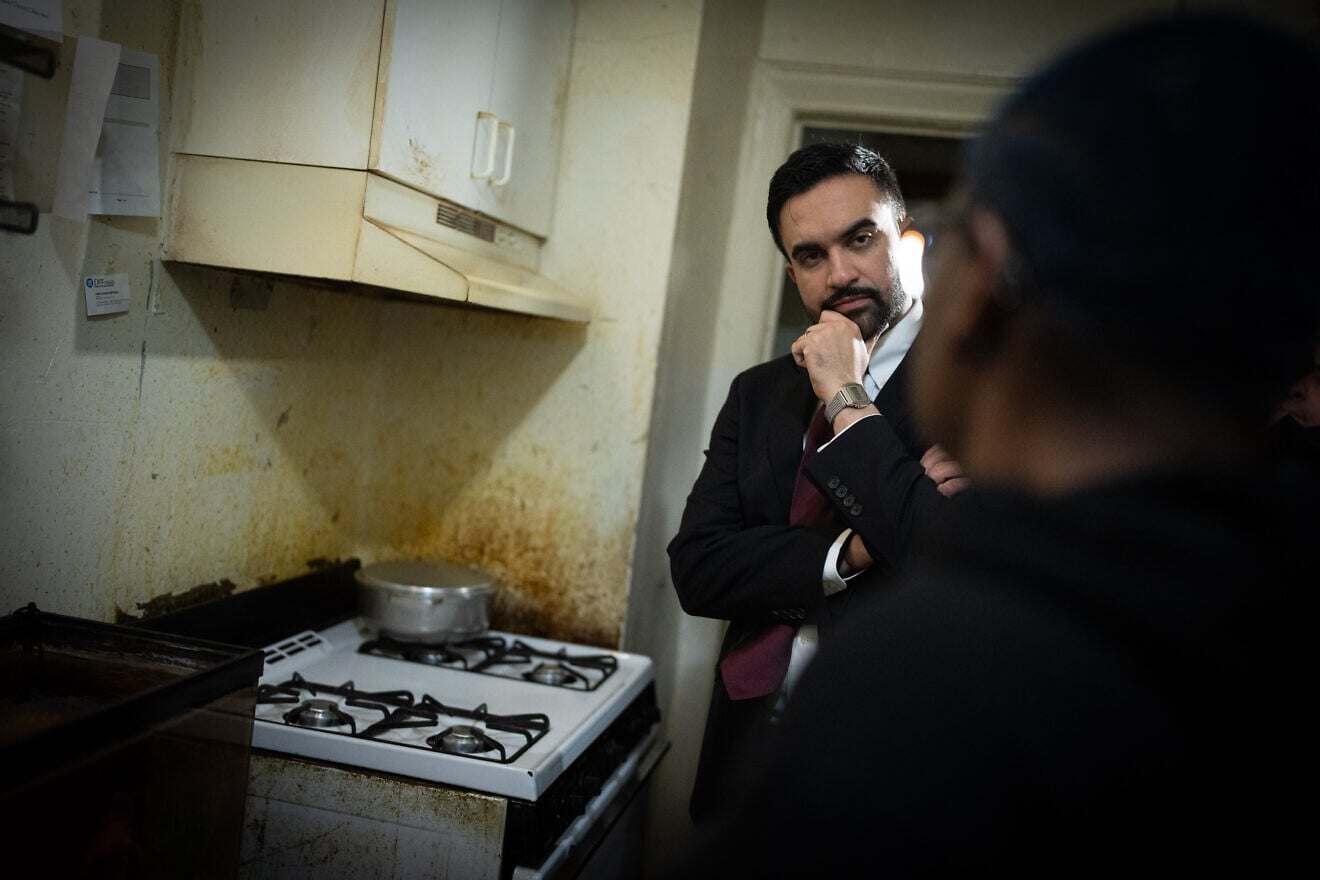
 

New York City Mayor Zohran Mamdani on Jan. 1, 2026. Credit: Michael Appleton/Mayoral Photography Office.

Within moments of Zohran Mamdani’s swearing in as New York City mayor at midnight on Jan. 1, Rabbi Ammiel Hirsch called JNS from Jerusalem, explaining that his worries about the safety of Jewish New Yorkers, due to Mamdani’s longstanding anti-Zionism and pledges to institute anti-Israel municipal policies, continue unabated.

Hirsch, with other rabbis, had two long meetings with the then mayor-elect in the months leading up to the inauguration, as Mamdani actively pursued connections with many of New York’s Jewish leaders. Several of the latter had warned publicly that his views, if put into practice as mayor, would pose dangers for Jewish New Yorkers by leading to more antisemitism, which has already increased dramatically since Oct. 7.

The New York City area is home to about 1.3 million Jews, second only to Israel’s greater Tel Aviv area.

Hirsch published a video in November addressing Mamdani directly.

“You call Zionism, the liberation movement of the Jewish people, a racist project and a colonial enterprise,” the rabbi said in the video. “You support Students for Justice in Palestine and co-founded its Bowdoin College chapter, a group that rejects co-existence and seeks the dismantling of Israel altogether. You have never disavowed these views. The opposite. You’ve doubled down on them.”

“Overwhelmingly, New York Jews support Israel and consider the Jewish state to be an important component of their Jewish identity,” he added in the video.

Hirsch told JNS that “the belief that Israel has no right to exist is an illiberal and intolerant ideology.” 

The senior rabbi of the Stephen Wise Free Synagogue on Manhattan’s Upper West Side, which has some 860 member households, is also president of the New York Board of Rabbis, which has more than 800 members representing every denomination of Judaism. Mamdani met with the board’s executive leadership on Dec. 11. 

“In every case, in every place, wherever anti-Zionism has been normalized, it has led to an increase of hostilities toward Israel and the Jewish people,” Hirsch told JNS. “I would welcome the mayor waking up one day and understanding that.”

Mamdani’s early appointees and policy choices as mayor are not inspiring confidence among leading New York City rabbis.

In his inauguration address, Mamdani told Jewish New Yorkers, “I will protect you.” He also suggested in an executive order that he intends to keep the Mayor’s Office to Combat Antisemitism, which his predecessor Eric Adams created in May 2025 in the wake of a surge in anti-Jewish hate crimes. The office issued its first annual report on Dec. 30.

But Mamdani also repealed the city’s adoption of the International Holocaust Remembrance Alliance’s working definition of Jew-hatred,  which includes most forms of anti-Zionism, and his predecessor’s executive orders barring city officials and entities from boycotting Israel and calling for safe zones free of protesters near synagogues and other houses of worship.

While campaigning, Mamdani pledged to divest the city’s nearly $295 billion in managed pension funds from any investments in Israel and to oust the Technion: Israel Institute of Technology from the city’s Roosevelt Island, where it partners with Cornell University to offer a dual degree master of science program at the jointly-created Cornell Tech campus. He also said he would arrest Israeli Prime Minister Benjamin Netanyahu if the premier came to New York.

The New York City comptroller—and not the mayor—has control over pension investments, and experts say that Mamdani could not arrest Netanyahu in the manner he has pledged to do. Still, Mamdani’s messages have been read by much, though not all, of New York’s Jewish community as aggressively anti-Israel. To most mainstream rabbis, that is the same as antisemitic.

Mamdani is affiliated with the Democratic Socialists of America, which shortly after his victory published a document stating that “Zohran wasn’t afraid to say boldly what his voters and the majority of Americans believe: that Palestine should be free, and that the U.S. shouldn’t be complicit in Israel’s genocide.”

Days before his inauguration, Mamdani appointed attorney Ramzi Kassem as the city’s chief counsel. Kassem, 47, as a student, wrote anti-Israel articles for his campus newspaper and co-founded the City University of New York law school group Creating Law Enforcement Accountability and Responsibility. 

With other lawyers from the group, Kassem represented Mahmoud Khalil, a Columbia University graduate detained by immigration authorities for leading the anti-Israel encampment at the university. Khalil was released after a federal judge found his detention unconstitutional, and he subsequently filed a lawsuit against the Trump administration, claiming $20 million in damages.

According to the ADL’s “Mamdani Monitor,” which is tracking appointments, policy decisions and statements by the city’s first Muslim mayor, 20% of the more than 400 appointees to his transition committees were linked to anti-Israel groups or “have a documented history of making anti-Israel statements.”

Mamdani has yet to name a Jewish liaison. Josh Binderman, who served in that role during the mayoral campaign, declined comment to JNS about whether he will stay on.

‘We need to build strong coalitions’

Rabbi Marc Schneier, spiritual leader of the Hampton Synagogue, a Modern Orthodox congregation on Long Island, has been outspoken about his opposition to Mamdani’s mayoralty. Schneier sees the new mayor as part of a Democratic Socialists of America “master plan to bifurcate Israel from the Jewish community,” he told JNS. 

“The demonization of Israel and antisemitic tropes like saying that Israel engages in apartheid and genocide only lead to antisemitic attacks,” Schneier said. (Mamdani’s spokeswoman responded to protesters blocking Jews from entering Park East Synagogue in Manhattan, where Schneier’s father is the longtime rabbi, by saying that Jews shouldn’t violate international law by hosting pro-Israel events in shuls.)

Mamdani won the election with just under 51% of the vote. That reportedly included 33% of the Jewish vote, despite strong efforts by some rabbis to persuade congregants to vote for a different candidate. Among voters between 18 and 29, 75% voted for Mamdani, including Jewish young voters, exit polls and analyses indicated.

The most prominent rabbi to support the mayor’s candidacy has been Rabbi Sharon Kleinbaum, senior rabbi emerita of Congregation Beit Simchat Torah, the world’s largest LGBT synagogue. 

The Reconstructionist rabbi is also a co-founder of the liberal Zionist group New York Jewish Agenda and director of the Beacon, a project of Union Theological Seminary, which is organizing citizens to advocate for “compassionate democracy.”

“I am a Zionist, and he knows that,” Kleinbaum told JNS of Mamdani. “We have had a lot of discussions about Israel. I do not believe that he is personally antisemitic and am willing to be in discussions with him.” 

Kleinbaum backed him publicly during his campaign and spoke at one of his final campaign rallies in the Forest Hills neighborhood of Queens. 

She is supporting Mamdani because “he can inspire a new generation to be involved in good government, and New York desperately needs that right now.” 

“Jews are safe when there is a strong democracy that protects minorities, and democracy is strong when Jews are safe,” she said. “We need to build strong coalitions. We can’t be isolated as Jews.”

A New York City government official, who spoke anonymously to protect his job, told JNS that vociferous opposition to Mamdani in some quarters is working against Jewish interests. “They’re breaking up their own coalition by being so extreme,” he said.

Mamdani found support in Williamsburg, Brooklyn, among Satmar Chassidim, united in their shared anti-Zionism. In October, he visited two sukkahs in the fervently religious community—each hosted by the leader of a different faction of the famously fractious Satmar community. 

In December, Mamdani joined thousands of Satmar men in a Brooklyn armory, where they celebrated the 81st anniversary of their founder, Rabbi Joel Tetlebaum’s escape from Nazi-occupied Europe. Mamdani’s campaign later posted a clip of the event on the mayor’s Facebook page.

The mayor’s Jewish outreach tour has not been enough to assuage the concerns of many leading New York rabbis.

“I used to be very concerned” about the prospect of a Mayor Mamdani, Rabbi Shaul Robinson, senior rabbi of the Manhattan Modern Orthodox congregation Lincoln Square Synagogue, told JNS. “Now I am extremely concerned.”

‘Anti-Zionism central to his candidacy’

Rabbi Elliot Cosgrove, spiritual leader of Park Avenue Synagogue, a prominent Conservative congregation in Manhattan, has been another of Mamdani’s most vocal opponents. Cosgrove is also vice president of the New York Board of Rabbis and rabbinical adviser on interfaith affairs for the Anti-Defamation League.

Cosgrove gave a widely viewed sermon in October, in which he said, “I believe Zohran Mamdani poses a danger to the security of the New York Jewish community.”

“Mamdani’s refusal to condemn slogans like ‘globalize the intifada,’ his denial of Israel’s legitimacy as a Jewish state, his call to arrest Israel’s prime minister should he enter New York and his thrice repeated accusation of genocide” in the recent mayoral debate, he added in the sermon, “for these and so many other statements past, present and unrepentant, he is a danger to the Jewish body politic of New York City.”

Speaking with Mamdani multiple times over the past few months has not allayed his concerns, Cosgrove told JNS. 

“It isn’t only the Zionist community, but New York is home to more Israeli expats than any city outside of Israel itself,” he said. “His anti-Zionism was central to his candidacy.”

“We’ll wait and see what he operationalizes,” the rabbi added. “Regardless, it is deeply problematic that his rhetoric gives a green light to those who would intimidate the Jewish community of New York by word and by deed.”

The Hampton Synagogue’s Schneier has longstanding ties with Muslim leadership overseas and in the United States and takes members of his 500-household congregation annually to an Arab or Muslim country. This year it was to Azerbaijan. In previous years, it was Saudi Arabia and Bahrain.

Schneier told JNS that most of the Arab world has endorsed the notion of a two-state solution, or an official Palestinian entity beside Israel, which implicitly recognizes Israel’s right to exist.

“When it comes to supporting Israel and the two-state solution, this is what they believe, while the mayor of the city of New York, with the second largest Jewish population in the world, won’t even accept Israel’s right to exist,” he said. “It’s just twisted. It is sad that so many, including Jews, are falling for this.” 


Debra Nussbaum Cohen

Source: https://www.jns.org/nyc-rabbis-alarmed-by-mamdanis-first-actions-appointments-as-mayor/

Follow Middle East and Terrorism on Twitter

Thursday, January 1, 2026

Iranian Basij member, several protesters reported killed on fifth day of nationwide protests - Danielle Greyman Kennard


by Danielle Greyman Kennard

Human rights groups have claimed that several demonstrators were killed when authorities used live fire to disperse protests.


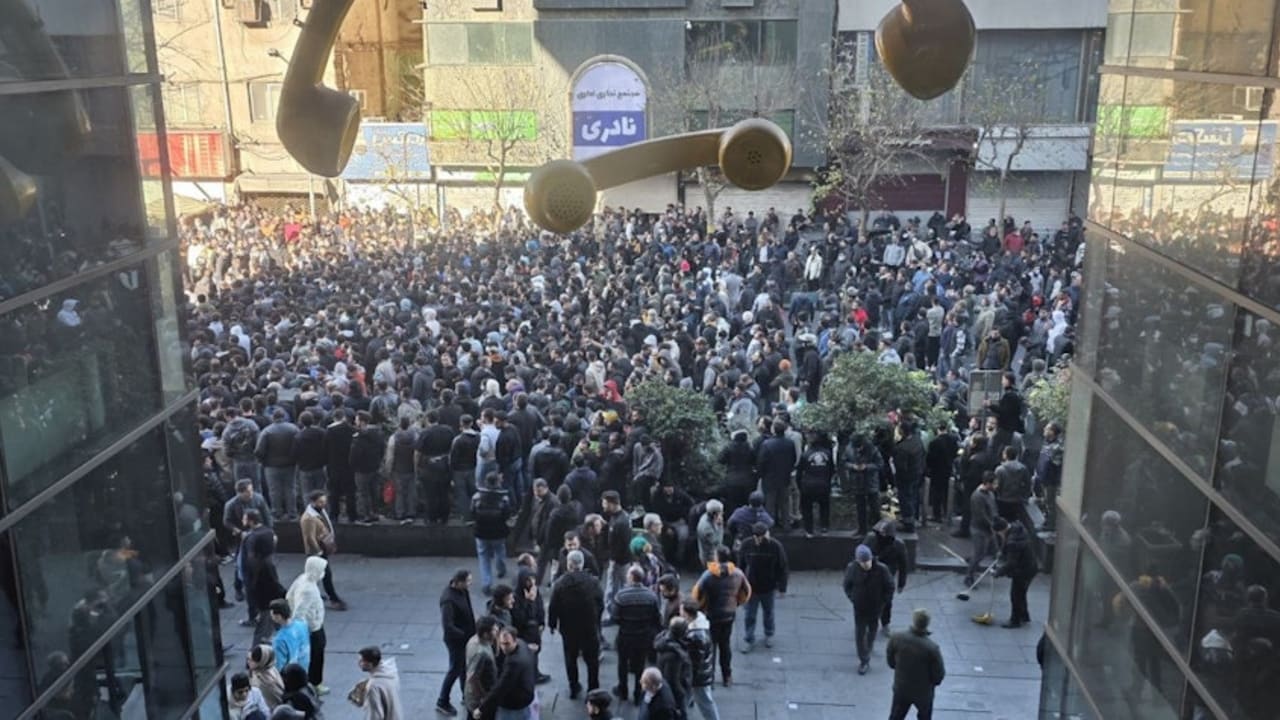
Iranians protest on a main street in Tehran, December 30, 2025
(photo credit: SOCIAL MEDIA/VIA SECTION 27A OF THE COPYRIGHT ACT)


As of Wednesday night, the fourth night of protests, Tehran has confirmed the death of one person, though human rights groups have claimed that several demonstrators were killed when authorities used live fire to disperse protests on Thursday.

At least two people were killed in the Lordegan, a source told the Islamic Republic of Iran News Network.

On Wednesday night, the protests escalated to a new peak with the first reported fatality acknowledged by state media. A member of the paramilitary Basij militia,  which is regularly deployed to suppress unrest, was killed.

The Basij is a volunteer paramilitary force fiercely loyal to Supreme Leader Ayatollah Ali Khamenei and affiliated with the Islamic Revolutionary Guards Corps, which said in a statement that 13 of the militia members had been injured.

The Hengaw human rights group reported that authorities killed Dariush Ansari Bakhtiariwand with live fire during a protest in Isfahan province on Wednesday night.

Hengaw also reported that a number of people were killed when authorities opened fire on a demonstration in Lordegan.

Blurry footage obtained by the dissident newspaper site Iran International allegedly shows regime forces threw tear gas into crowds at a market in Tehran. The violent dispersal method has been documented across several provinces since protests broke out over the rial's collapsing value.

Other footage shared by the dissident site reportedly revealed regime forces firing onto crowds, though neither the video nor the report could be verified.

 Iran detains protesters while maintaining image of diplomacy

While Iran’s leadership has maintained a reasonable tone in public statements, activists and journalists have been detained and released with little communication. Universities, central hubs of protest activity, have been targeted by authorities, with some reports indicating that students involved in the activities were taken by men in plain clothes.

Iranian president Masoud Pezeshkian, who benefited from having a reputation as a reformist during his presidential run, affirmed on Thursday, "The problem of people's livelihoods in the country is visible, and the main culprits are us, managers and officials; we must play our part in solving these problems by correcting our behavior," Tasnim reported. This came after he claimed on Monday that he “instructed the Minister of Interior to hear their (the protesters') legitimate demands.”

Government spokesperson Fatemeh Mohajerani also promised on Thursday that the regime would hold a direct dialogue with representatives of trade unions and merchants to address issues relating to inflation.

Despite the public promises, reports indicate that an unknown number of people were taken by authorities. The human rights group Hengaw said demonstrators had been detained on Wednesday in the western provinces of Kermanshah, Khuzestan, and Hamedan.

Meanwhile, footage shared by BBC Persian saw a young man dragged away by a group in plain clothes from Shahid Beheshti University, where student groups had earlier been recorded chanting anti-regime slogans.

Telegram channels associated with student groups also reported that Tehran University student council member Sarira Karimi was arrested by regime forces, along with two other students, and later released at 4 am on Thursday.

"Security officers have temporarily detained these three students at the private home of the Karimi family and have confiscated their identification cards and documents. The students have also been informed that they will be summoned to provide explanations in the coming days via an anonymous call," according to the Amir Kabir student newsletter.

The same newsletter reported that Hassan Mousavi, a Sociology student at Shahid Beheshti University, was arrested at his home in Tehran's Heravi neighborhood and that nothing had been heard about his whereabouts or conditions since. Two other student activists from Tehran University were also reportedly arrested.

More concretely, the political editor of Iran’s Etemad newspaper, Mehdi Biek, was held for more than 24 hours by the regime, without information being provided to his family, and released on Tuesday. It remains unclear why authorities detained Biek, who was covering the protests, though this is not the first time that Tehran arrested him.

“The question is, why are some institutions concerned about domestic journalists reporting on the protests for the rights of people whose backs are bent under the burden of high prices?” Biek’s wife wrote on X.

 Iran looks to create a distraction from its failing economy

Officials told Maariv journalist Avi Ashkenazi that they were preparing for Iran to potentially launch an attack on Israel, particularly as the regime’s hold over the Iranian people is challenged.

“The Iranian government has set its own priorities: first, to reestablish an offensive posture against Israel before dealing with Iran’s economic distress, water shortages, and welfare problems,” a senior military source told Maariv.

Ashkenazi wrote, “Although Tehran lacks the ability and desire to enter another war with Israel now, it may feel cornered.”

This comes as Tehran has spent the last several days pointing blame at “enemy inducements.”

Islamic Revolutionary Guard Corps (IRGC) Brig.-Gen. Ali Akbar Pourjamshidian, the security and law-enforcement deputy to the interior minister, was quoted in state-affiliated media as saying, “In my opinion, a large part of the currency problems and fluctuations is affected by the psychological atmosphere of the market.

The enemy is desperately seeking to take advantage of the created atmosphere. People should be aware of this issue and not be influenced by the enemy’s insinuations. The market should continue its work peacefully, and people should not worry.”

The IRGC also attributed the dissent to “cognitive warfare, psychological operations, and narrative creation.”“Despair, instilling fear, and encouraging surrender to the enemy in the current circumstances are clear examples of seditious behavior,” it said.

Reuters and Jerusalem Post Staff contributed to this report. 


Danielle Greyman Kennard

Source: https://www.jpost.com/middle-east/iran-news/article-881953

Follow Middle East and Terrorism on Twitter

Israel military speeds up war preparations amid Iran protests - JNS Staff


by JNS Staff

Israel's political echelon reportedly views the protests as a "dramatic event," and the military is preparing for the possibility of Tehran launching a surprise attack.


A large anti-Israeli banner portraying an image of a Palestinian terrorist is erected in Palestine Square in Tehran, Dec. 31, 2025. Photo by Atta Kenare/AFP via Getty Images.

The Israel Defense Forces is expediting preparations for a multi-front war with Iran in light of the internal unrest in the Islamic Republic, Hebrew media reported on Wednesday.

The preparations, which are part of the military’s multi-year plan extending roughly to 2030, anticipate conflict involving Iran, Lebanon and Judea and Samaria, according to Israel’s Channel 12 News.

A senior Israeli official told the outlet that while Jerusalem was refusing to comment on the protests in Iran, which entered their fifth day on Thursday, the political echelon sees it as a “dramatic event.

“It is too early to know the consequences,” the official told the outlet.

The report said that Israeli Prime Minister Benjamin Netanyahu held “discussions and consultations” regarding the demonstrations during his visit to the United States, which is scheduled to end on Thursday.

The IDF’s developing war plans reportedly include the possibility that the Islamic regime’s leaders will decide to attack the Jewish state to prevent their overthrow at the hands of the Iranian people.

A large-scale “surprise war” with Tehran and its regional terror proxies could for the first time also include Israeli attacks “in and from” outer space, according to the report.

Netanyahu told Newsmax on Tuesday that Iran’s leaders have “robbed their people of the future” and that change would “come from within.”

“It’s up to the Iranian people, and we understand what they’re going through, and we’re very sympathetic to them,” he told the channel.

The regime’s leadership is cracking down on expressions of widespread dissent over the country’s spiraling economic crisis, which has left the national currency at an all-time low of 1.4 million rials to a U.S. dollar.

Iran International reported that the crackdown on protesters continued on Thursday morning, with regime forces opening fire and deploying tear gas at Tehran’s central fruit and vegetable market.

Iranian authorities confirmed on Thursday that a member of the Basij, a paramilitary force within Tehran’s Islamic Revolutionary Guard Corps, was killed during a rally in the country’s western Lorestan province.

The Basij member was “martyred … at the hands of rioters during protests in this city in defense of public order,” a local official said. Another 13 Basij members and police officers reportedly suffered injuries.

A government building in the country’s south was also vandalized by demonstrators on Wednesday, Iranian authorities told local media.

Iran has seen repeated waves of protests since 2009 over a host of issues, including the religious oppression practiced by its theocratic rulers. The latest have reportedly become the biggest protests since 2022, when the death of Mahsa Amini, 22, in regime custody triggered mass rallies.

Ali Shamkhani, an adviser and representative of Supreme Leader Ali Khamenei, earlier this week alluded to an attack in the wake of the meeting between Netanyahu and U.S. President Donald Trump.

“Under Iran’s defense doctrine, some responses are determined even before the threats reach the implementation stage,” Shamkhani wrote in Hebrew on X. He added: “Iran’s missile and defense capabilities are uncontrollable and do not require authorization. Any aggression will be met with a severe, immediate, and unexpected response.”

It appeared shortly after Trump said he would “knock the hell out of” Iran if the regime attempted to rebuild nuclear sites targeted in June. 


JNS Staff

Source: https://www.jns.org/israel-military-speeds-up-war-preparations-amid-iran-protests/

Follow Middle East and Terrorism on Twitter

Katz tells IDF to be ready for Oct. 7-style attacks in Judea and Samaria - JNS Staff


by JNS Staff

The military’s operations in northern Samaria over the past year led to a drop of more than 80% in terrorism, the defense minister said


Israeli soldiers during a counter-terror raid in Balata, outside Nablus in central Samaria, Nov. 19, 2023. Photo by Nasser Ishtayeh/Flash90.

Defense Minister Israel Katz instructed the military on Wednesday to prepare for the possibility of a large-scale terrorist infiltration in Judea and Samaria, similar to Hamas’s Oct. 7, 2023, cross-border massacre.

Katz’s announcement followed the minister’s visit to the Judea and Samaria Division headquarters near the town of Beit El, just north of Jerusalem.

Katz said he ordered top Israel Defense Forces and Israel Border Police commanders to prepare a response to an Oct. 7-style attack “by jihadist elements” on towns in Judea and Samaria and along the security barrier.

During the visit, Katz received a briefing and held a security assessment with Deputy Chief of Staff Maj. Gen. Tamir Yadai, OC Central Command Maj. Gen. Avi Bluth, Judea and Samaria Division commander Brig. Gen. Kobi Heller and Judea and Samaria Border Police Cmdr. Niso Guetta.

Katz told participants that IDF operations in northern Samaria over the past year had been effective, leading to a drop of more than 80% in terrorism in the area. The counter-terror campaign included evacuating residents, targeting terrorists and maintaining an ongoing Israeli military presence.

According to the defense minister, the operations should be duplicated in additional cities and villages under control of the Palestinian Authority.

He said that as in Lebanon, Syria and the Gaza Strip, Israeli forces would remain on the ground in P.A.-controlled areas of Judea and Samaria to “serve as a clear buffer between the population and terrorist elements.”

Katz ordered officials to move ahead as quickly as possible with plans to relocate several IDF military bases to Samaria’s north, calling it a “historic correction” with both security and settlement significance, and saying it would strengthen security and Jerusalem’s grip on the region.

More than two in three Israeli Jews fear that Palestinian terrorists based in Judea and Samaria could carry out a significant terrorist attack similar to the Oct. 7 massacre, according to a survey the Jerusalem Center for Security and Foreign Affairs published on Feb. 18, 2025.

In September 2024, prosecutors filed an indictment against a member of a terrorist squad based in the northern Samaria city of Jenin who made plans to carry out an Oct. 7-style attack in nearby Jewish communities.

The indictment accused Osama Bani Fadl and other terrorist operatives of making serious preparations for a mass slaughter of Jewish residents of northern Samaria, including by infiltrating villages atop vehicles.

Fifty-eight percent of Israeli Jews believe that the civilian communities in Judea and Samaria contribute to Israel’s security, according to a poll the Jewish People Policy Institute (JPPI) published on March 11.

Nearly 70% of Israeli citizens want Jerusalem to extend its full legal sovereignty over the region, according to a survey from January 2025. 


JNS Staff

Source: https://www.jns.org/katz-tells-idf-to-be-ready-for-oct-7-style-attacks-in-judea-and-samaria/

Follow Middle East and Terrorism on Twitter

Iran in shutdown as protesters storm governor's office, crowds chant 'Death to Khamenei' - Emma Bussey


by Emma Bussey

Businesses, universities and government offices closed under government order as economic crisis fuels violent protests


Iran ground to a near standstill Wednesday as businesses, universities and government offices closed under a government-ordered shutdown amid protests caused by a growing political and economic crisis.

A 21-year-old volunteer member of Iran’s paramilitary Revolutionary Guard was killed Wednesday in a western province, Iranian state media reported, marking the first death among security forces during the protests.

The death was reported in Kouhdasht, a city in Iran’s Lorestan province roughly 250 miles west of Tehran.

Saeed Pourali, a deputy governor in the Lorestan province, said the guard member "was martyred … at the hands of rioters during protests in this city in defense of public order," according to Iranian Student News Network.

IRAN REPORTEDLY DEVELOPING CHEMICAL, BIOLOGICAL MISSILE WARHEADS AS PROTESTS SPREAD OVER COLLAPSING ECONOMY

Iran protests

Iranian protests force nationwide shutdown as President Masoud Pezeshkian closes businesses and offices across 21 provinces amid mounting public anger. (MEK)

Video footage circulating online and shared by the People’s Mojahedin Organization of Iran (MEK) shows intense clashes between protesters and security forces in cities, including Shiraz, Isfahan, Kermanshah and Tehran.

In the videos, protesters chant anti-regime slogans and confront security forces in crowded streets.

Footage included scenes of screaming and apparent gunfire, with demonstrators throwing objects and shouting, "Death to the Dictator" and "Proud Arakis, support, support."

Additional footage shared by MEK shows crowds chanting, "Death to Khamenei!" and "Shame on you, shame on you!" as anger appears to spread across the country, with a particular focus on bazaar-led protests in Tehran.

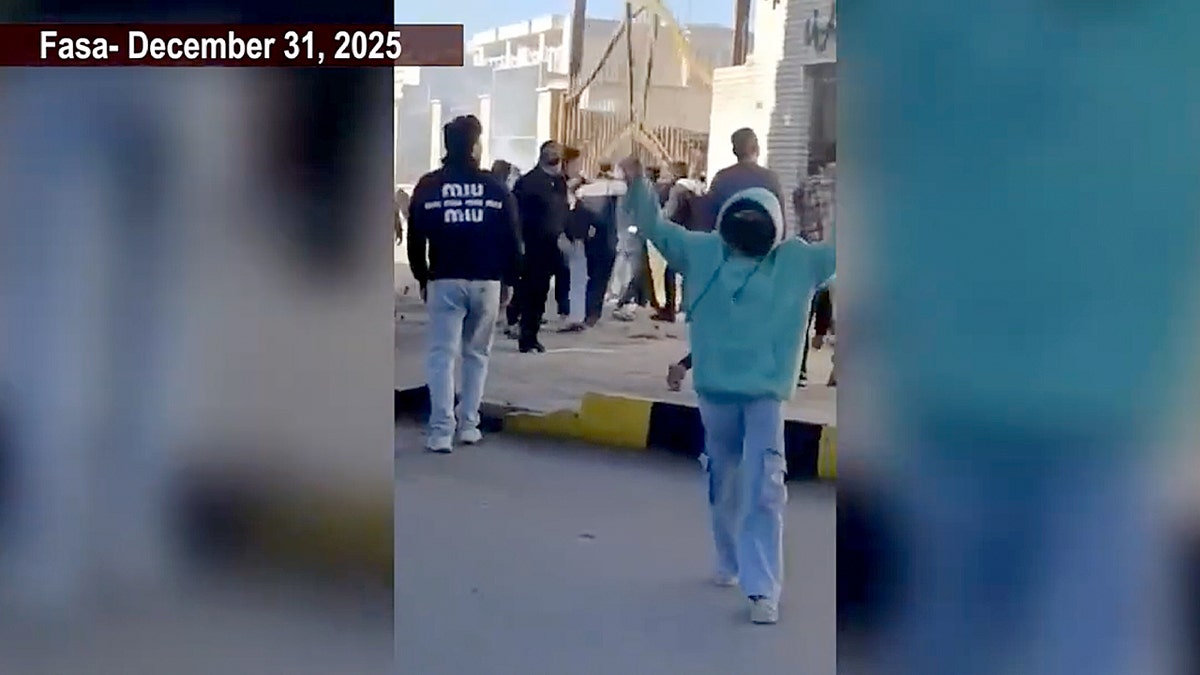
Some of the most dramatic scenes were reported in the city of Fasa in south-central Iran. Video circulating online shows demonstrators hurling objects at the gates of a government complex and shaking them until they opened.

Opposition groups also reported that protesters stormed the governor’s office, prompting Islamic Revolutionary Guard Corps forces to open fire, per Reuters.

IRANIAN PRESIDENT SAYS HIS COUNTRY IS AT 'TOTAL WAR' WITH THE US, ISRAEL AND EUROPE: REPORTS

Iran protest

Widespread protests grip Iran as President Pezeshkian faces mounting economic and political crisis. (MEK)

Military helicopters were seen flying over the city, apparently to intimidate residents and prevent the unrest from spreading.

In Kermanshah, in western Iran, bazaar merchants were seen confronting security forces while chanting, "Dishonorable, dishonorable," according to video footage.

The one-day shutdown affected 21 of Iran’s 31 provinces, including Tehran, as President Masoud Pezeshkian sought to contain mounting public anger fueled by inflation, currency instability and declining living standards.

IRAN KILLING SPREE CONTINUES AS REGIME SETS NEW RECORD FOR 2025 EXECUTIONS, DISSIDENT GROUP SAYS

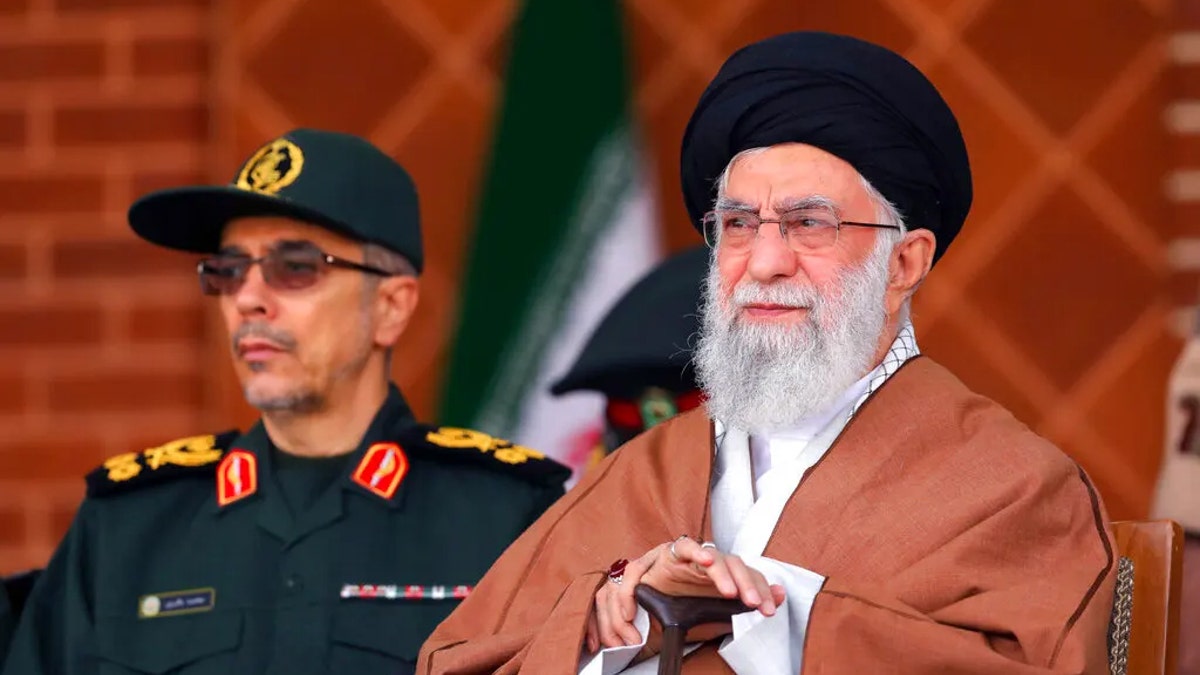
Iran's Supreme Leader, Ayatollah Ali Khamenei

Iran's Supreme Leader, Ayatollah Ali Khamenei, sitting next to a senior military official in Iran. (Getty Images)

Demonstrations, strikes and clashes with security forces continued for a fourth consecutive day in cities across the country.

The unrest has unfolded alongside a series of high-level leadership changes that have added to uncertainty.

On Wednesday, Pezeshkian appointed Abdolnaser Hemmati, a former economy minister, as the new head of Iran’s central bank after the resignation of Mohammad Reza Farzin.

State media quoted the president as acknowledging the role was "extremely difficult and complex," warning that the new central bank chief would face intense pressure and criticism amid ongoing economic turmoil, according to IRNA.

Separately, Supreme Leader Ayatollah Ali Khamenei announced the appointment of IRGC Brig. Gen. Ahmad Vahidi as deputy commander in chief of the Revolutionary Guards.


Emma Bussey is a breaking news writer for Fox News Digital. Before joining Fox, she worked at The Telegraph with the U.S. overnight team, across desks including foreign, politics, news, sport and culture. 

Source:https://www.foxnews.com/world/iran-shutdown-protests-intensify-amid-leadership-shake-up-deepening-crisis

Follow Middle East and Terrorism on Twitter

Why Israel and Trump Should Be Cautious About Pakistani Troops in Gaza - Anna Mahjar-Barducci


by Anna Mahjar-Barducci

For Israel, the implications are clear. A Pakistani role in Gaza could undermine efforts to dismantle Hamas's military infrastructure. In a mission intended to stabilize Gaza and dismantle Hamas, entrusting security to a state that openly legitimizes the terror group risks transforming the stabilization force into a Trojan horse for Hamas's survival.


  • Pakistan does not officially recognize Israel, and has never designated Hamas as a terrorist organization. It may well have an interest in making sure that Hamas can continue its "resistance" -- meaning terrorism.

  • These examples demonstrate how freely Hamas operatives function within Pakistan. Allowing Pakistani troops into Gaza would therefore pose serious infiltration and counterintelligence risks. Unlike a genuinely neutral peacekeeping force, Pakistani soldiers may be unwilling — or ideologically disinclined — to confront Hamas. In a worst-case scenario, some elements could covertly assist Hamas fighters in evading disarmament.

  • Pakistani media have reported that Islamabad does not wish to be perceived as a "B-team of the Israeli military focused solely on disarming Hamas." Such statements underscore the likelihood of operational friction and divided loyalties on the ground.

  • Another major risk involves intelligence leakage.... Reports have previously alleged ISI involvement in facilitating Hamas outreach across South Asia, including visits to Bangladesh and Pakistan-occupied Jammu and Kashmir to energize jihadist networks.

  • For Israel, the implications are clear. A Pakistani role in Gaza could undermine efforts to dismantle Hamas's military infrastructure. In a mission intended to stabilize Gaza and dismantle Hamas, entrusting security to a state that openly legitimizes the terror group risks transforming the stabilization force into a Trojan horse for Hamas's survival.

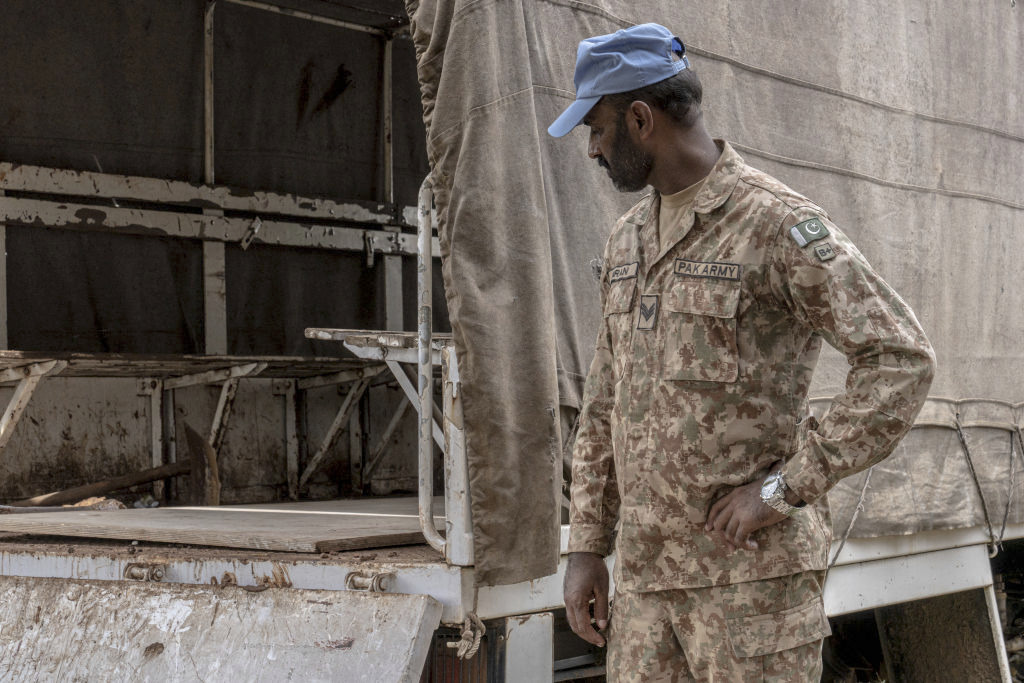
A Pakistani role in Gaza could undermine efforts to dismantle Hamas's military infrastructure. In a mission intended to stabilize Gaza and dismantle Hamas, entrusting security to a state that openly legitimizes the terror group risks transforming the stabilization force into a Trojan horse for Hamas's survival. Pictured: A Pakistani soldier on a UN peacekeeping force in Kamanyola, Democratic Republic of Congo on February 28, 2024. (Photo by Glody Murhabazi/AFP via Getty Images)

Israeli officials report that three countries have agreed to Washington's request to participate in a postwar Gaza "International Stabilization Force" (ISF). The identities of all three have not been disclosed, though Indonesia may be one of them. Earlier reports also identified Pakistan as a possible contributor to the ISF.

In addition, Pakistan does not officially recognize Israel, and has never designated Hamas as a terrorist organization. It may well have an interest in making sure that Hamas can continue its "resistance" -- meaning terrorism.

Given the sensitivity of any postwar security arrangement in Gaza, the credibility and neutrality of participating forces are critical. A closer examination of Pakistan's record raises serious concerns about whether it can play a constructive or impartial role in such a mission.

Pakistan's military and its primary intelligence agency, the Inter-Services Intelligence (ISI), have long been accused of maintaining relationships with Islamist militant organizations. For decades, the ISI helped nurture Pakistan-based groups such as Lashkar-e-Taiba (LeT) and Jaish-e-Mohammed (JeM), both of which espouse ideologies closely aligned with Hamas. These links cast doubt on Pakistan's ability to confront Hamas in a postwar Gaza environment.

Since the October 7, 2023 massacre, Pakistan's posture toward Hamas has become increasingly encouraging. Hamas representatives have been allowed to operate freely on Pakistani soil, participate in public events, and build alliances with Pakistan-based terror outfits. Such behavior directly undermines Western efforts to isolate Hamas and raises questions about whether the United States should continue to regard Pakistan as a "major non-NATO ally."

One figure illustrating this trend is Naji Zaheer, the current Hamas special representative in Pakistan. After October 7, Zaheer significantly intensified his political activity, working openly to build legitimacy and support for Hamas. He has appeared as a guest of honor at major events and has become a regular presence at anti-Israel rallies and conferences.

On December 8, 2024, Zaheer attended the inflammatory "Death to Israel" conference in Peshawar. Addressing the gathering, he framed the Gaza war as a "war of Islam" that would continue "until Israel is eliminated and the Jews flee."

While Zaheer's activities highlight Hamas's grassroots mobilization within Pakistan, the involvement of Khaled Qaddoumi — the Hamas special representative in Tehran — points to something even more troubling: institutional and political endorsement. Since October 2023, Qaddoumi has actively participated in rallies and events hosted by Pakistani institutions, signaling official tolerance and, at times, tacit support.

In January 2024, Pakistan's Upper House of Parliament hosted Qaddoumi in a formal session. Senator Mushahid Hussain of the Pakistan Muslim League (Nawaz), one of the three major mainstream political parties in Pakistan, emphasized the significance of welcoming Qaddoumi. Hussain stated that the Senate "takes pride" in hosting him, and praised Hamas as a "democratically elected organization," referring to Qaddoumi as a "mujahid" representing Palestinian aspirations. He further declared that Pakistan had been the first Muslim country to donate $1 million to the Hamas government and lauded the "Palestinian mujahideen of Hamas" for shattering "the myth of Israeli impregnability."

This level of parliamentary reverence reflects a deep ideological alignment with Hamas. Equally alarming are Pakistan's ties to jihadist groups that openly link their struggles to Hamas's cause. Organizations such as Pakistan-based JeM and LeT have explicitly framed their "jihad" against India as part of the same Islamist campaign Hamas wages against Israel.

That convergence became unmistakable in February 2025 at a conference in Pakistan-held Kashmir titled "Kashmir Solidarity and Hamas Operation Al-Aqsa Flood." Hamas representatives, including Qaddoumi, shared the stage with UN-designated terrorist leaders from JeM and LeT. Speakers publicly vowed to coordinate closely with Hamas, uniting their respective conflicts under a pan-Islamist banner.

These examples demonstrate how freely Hamas operatives function within Pakistan. Allowing Pakistani troops into Gaza would therefore pose serious infiltration and counterintelligence risks. Unlike a genuinely neutral peacekeeping force, Pakistani soldiers may be unwilling — or ideologically disinclined — to confront Hamas. In a worst-case scenario, some elements could covertly assist Hamas fighters in evading disarmament.

These concerns are not hypothetical. Pakistani media have reported that Islamabad does not wish to be perceived as a "B-team of the Israeli military focused solely on disarming Hamas." Such statements underscore the likelihood of operational friction and divided loyalties on the ground.

Another major risk involves intelligence leakage. If deployed in Gaza, Pakistani units could quietly pass sensitive information to Hamas or its regional backers under the guise of cooperation. Reports have previously alleged ISI involvement in facilitating Hamas outreach across South Asia, including visits to Bangladesh and Pakistan-occupied Jammu and Kashmir to energize jihadist networks.

For Israel, the implications are clear. A Pakistani role in Gaza could undermine efforts to dismantle Hamas's military infrastructure. In a mission intended to stabilize Gaza and dismantle Hamas, entrusting security to a state that openly legitimizes the terror group risks transforming the stabilization force into a Trojan horse for Hamas's survival. 


Anna Mahjar-Barducci

Source:https://www.gatestoneinstitute.org/22169/pakistani-troops-gaza

Follow Middle East and Terrorism on Twitter

Thanks to Trump's 'Peace' Plan, Hamas Even Has Time to Hold Elections - Khaled Abu Toameh


by Khaled Abu Toameh

Here is what the Trump administration needs to understand: Hamas, like ISIS, as a deeply committed terrorist organization, has no right to exist. Its military, civilian, and political infrastructure needs to be completely dismantled and destroyed. Unfortunately, this is the only way to achieve security and stability in the Middle East and prevent another October 7-style massacre against Israel.


  • [T]he Iran-backed Palestinian terror group Hamas is planning to elect a new leader for its political bureau and replace many of its members who were killed during the fighting with Israel. Hamas's goal: to show the world that it is not going anywhere; that it now, because it holds an internal election, should be considered a legitimate, respectable government, and that it solidly intends to maintain its control of the Gaza Strip, in violation of US President Donald J. Trump's 20-point peace plan.

  • The terror group has simply exploited Trump's ceasefire plan to rearm, regroup and consolidate its civilian and military control in areas of the Gaza Strip in which Israeli forces are not present since the ceasefire agreement took effect. For Hamas, Trump's plan is just another temporary ceasefire that allows it to entrench its position and restock its military capabilities.

  • "Hamas understood that overt control of the Strip would deter the international community from transferring the funds required for reconstruction, delay the rebuilding of the Strip and could spark civilian unrest, and therefore signaled its willingness to transfer the civilian administration to a Palestinian technocratic government, while refusing to disarm." — The Meir Amit Terrorism Information Center, November 3, 2025.

  • Here is what the Trump administration needs to understand: Hamas, like ISIS, as a deeply committed terrorist organization, has no right to exist. Its military, civilian, and political infrastructure needs to be completely dismantled and destroyed. Unfortunately, this is the only way to achieve security and stability in the Middle East and prevent another October 7-style massacre against Israel.

Hamas seems more concerned about choosing new leaders in an internal election than about rebuilding the Gaza Strip. The Trump administration needs to understand that Hamas, like ISIS, as a deeply committed terrorist organization, has no right to exist. Its military, civilian, and political infrastructure needs to be completely dismantled and destroyed. Pictured: Two previous leaders of the Hamas political bureau, the late Yahya Sinwar (2nd R) and the late Ismail Haniyeh (L), on March 27, 2017 in Gaza City. (Photo by Mahmud Hams/AFP via Getty Images)

As part of its effort to emerge as a legitimate actor in the Palestinian arena in the aftermath of the war in the Gaza Strip, the Iran-backed Palestinian terror group Hamas is planning to elect a new leader for its political bureau and replace many of its members who were killed during the fighting with Israel. Hamas's goal: to show the world that it is not going anywhere; that it now, because it holds an internal election, should be considered a legitimate, respectable government, and that it solidly intends to maintain its control of the Gaza Strip, in violation of US President Donald J. Trump's 20-point peace plan.

According to a report in the Saudi-owned newspaper Asharq al-Awsat:

"Hamas is moving in the coming days to elect a new head of its political bureau, in an effort to fill a leadership vacuum left by the killing of its former chief, Yahya Sinwar, who died in October 2024 during clashes he fought alongside his fighters in the southern Gaza city of Rafah."

The newspaper quoted unnamed sources in Hamas as saying that the election for the group's political bureau chief would take place next week or within the first 10 days of January 2026.

"According to the sources, electing a new head of the political bureau aims to bolster internal stability and reassurance, and to send a clear message to the outside world world that the movement remains cohesive and retains a leadership cadre capability of managing all affairs and taking decisions by full consensus within the political bureau, as was the case before the assassinations carried out [by Israel] during the war....

"They noted that several members of the political bureau in Gaza have already been tasked with managing various portfolios. The sources said members of the political bureau killed by Israel inside Gaza have been temporarily replaced by others to carry out their duties."

The report comes as the US administration is preparing to implement the second phase of Trump's plan, which calls for replacing the Hamas government with a committee of independent Palestinian technocrats under the supervision of an international "Board of Peace" headed by the US president himself.

Hamas seems more concerned about electing new leaders than rebuilding the Gaza Strip. Moreover, it seems more concerned about filling vacant positions inside the Gaza Strip than stepping down and allowing other Palestinians or foreigners to manage the affairs of the Palestinians there.

By replacing members of its political bureau killed by Israel inside the Gaza Strip, Hamas is making it clear that it plans to stay in power and views itself as a lawful partner in any future administration.

Although Hamas officials have reportedly expressed readiness to hand over the Gaza Strip to a new committee of "apolitical figures," the terror group clearly has no intention of laying down its weapons or vanishing.

The leaders of Hamas feel safe holding elections because they are living comfortably in Qatar, which has long been a significant source of political and financial support for both the Muslim Brotherhood and Hamas.

After their October 7, 2023 invasion of Israel, in which more than 1,200 Israelis and foreign nationals were murdered, Hamas leaders should not be permitted to feel safe enough to even think about holding elections for their political bureau. They should not be allowed to think that because they are sitting in Qatar, they enjoy immunity and would never be held accountable for the worst massacre perpetrated against Jews since the Holocaust.

There is no future for the Gaza Strip so long as Hamas is standing on its feet. The terror group has simply exploited Trump's ceasefire plan to rearm, regroup and consolidate its civilian and military control in areas of the Gaza Strip in which Israeli forces are not present since the ceasefire agreement took effect. For Hamas, Trump's plan is just another temporary ceasefire that allows it to entrench its position and restock its military capabilities.

According to the Meir Amit Intelligence and Terrorism Information Center:

"[D]espite the severe blow to Hamas' civilian leadership and the destruction of civilian infrastructure in the Gaza Strip throughout the war, Hamas managed to quickly regain almost full control over the areas it held, activating government mechanisms and attempting to provide basic services, while also using force against the Gazans as a means of deterrence. Hamas understood that overt control of the Strip would deter the international community from transferring the funds required for reconstruction, delay the rebuilding of the Strip and could spark civilian unrest, and therefore signaled its willingness to transfer the civilian administration to a Palestinian technocratic government, while refusing to disarm. Nevertheless, Hamas' absolute control over government institutions and the provision of services, including at the local level, will leave it with significant influence, even if an alternative body is established to manage the Strip in accordance with the second stage of the American plan."

Here is what the Trump administration needs to understand: Hamas, like ISIS, as a deeply committed terrorist organization, has no right to exist. Its military, civilian, and political infrastructure needs to be completely dismantled and destroyed. Unfortunately, this is the only way to achieve security and stability in the Middle East and prevent another October 7-style massacre against Israel.


Khaled Abu Toameh is an award-winning journalist based in Jerusalem.

Source: https://www.gatestoneinstitute.org/22172/hamas-internal-election

Follow Middle East and Terrorism on Twitter

Hezbollah given 'final chance' to disarm by Qatar, Turkey, and Egypt - Jerusalem Post Staff


by Jerusalem Post Staff

Disarmament would "spare Lebanon an Israeli strike" that would "deepen the gap" between Hezbollah and the Lebanese people, an Asharq Al-Awsat report noted.


A man holds a weapon next to a poster with an image of late senior Hezbollah official Hashem Safieddine, in Lebanon, November 27, 2024
(photo credit: REUTERS/THAIER AL-SUDANI) 

Egypt, Qatar, and Turkey gave Hezbollah a "final chance" to disarm and surrender its weapons to the Lebanese government, Saudi-owned outlet Asharq Al-Awsat reported on Wednesday, citing Lebanese ministerial sources.

As per the report, the three nations heavily involved in mediation efforts told the Lebanese terrorist organization that a move to disarm would "spare Lebanon an Israeli strike" that would "deepen the gap" between Hezbollah and the Lebanese people.

Trump to Israel: Strike Hezbollah if necessary 

The reported message to Hezbollah follows The Jerusalem Post's Tuesday confirmation that US President Donald Trump gave Israel approval to strike Hezbollah "if necessary."

During a Monday meeting with Prime Minister Benjamin Netanyahu at Mar-a-Lago, Trump was quoted as saying that "if the Lebanese army doesn’t succeed in disarming them, and Israel believes an action is the necessary thing to do [then the US backs Israel]," according to a source familiar with the details who spoke to the Post.

US President Donald Trump and Israeli Prime Minister Benjamin Netanyahu hold a press conference after meeting at Trump’s Mar-a-Lago club in Palm Beach, Florida, US, December 29, 2025. (credit: REUTERS/JONATHAN ERNST)
Further, the US president reiterated his position that "Hezbollah must be completely disarmed" during the meeting.

Last month, Lebanese Prime Minister Nawaf Salam said his country was close to completing the disarmament of Hezbollah south of the Litani River by the end of the year, one of Israel's key demands as part of the ceasefire agreement along the northern border.

Amichai Stein contributed to this report.


Jerusalem Post Staff

Source: https://www.jpost.com/middle-east/article-882016

Follow Middle East and Terrorism on Twitter

Doctors Without Borders advanced anti-Israel narrative, maintained terror ties - JPost exclusive


by JPost exclusive

The well-known medical organization is one of several dozen NGOs prohibited from operating in Gaza and the West Bank since January 1.


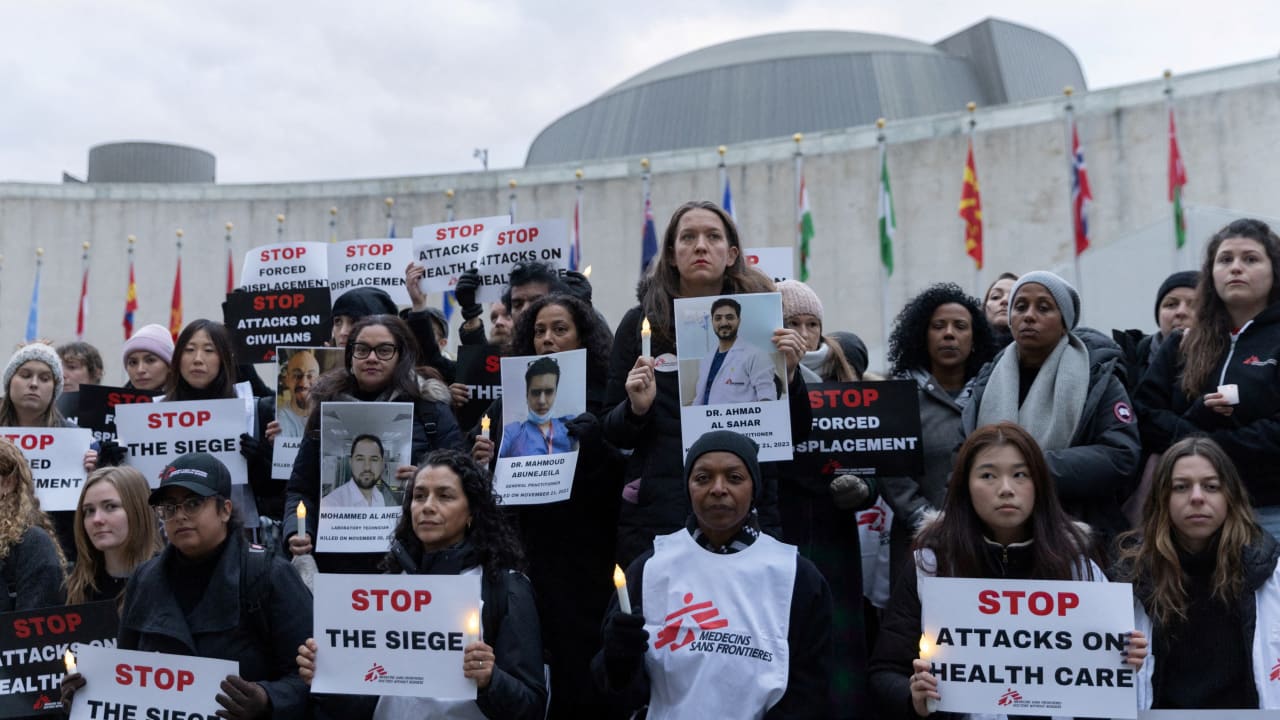
PEOPLE AFFILIATED with Doctors Without Borders/Medecins Sans Frontieres (MSF) hold signs during a vigil to honor colleagues and others who have been killed during the war in Gaza outside the United Nations Headquarters in New York City, US, December 6, 2023.
(photo credit: REUTERS/JEENAH MOON)


Doctors Without Borders (MSF) "practiced advancing an extreme anti-Israeli narrative under the guise of humanitarian activity," claimed Israeli ministry documents viewed exclusively by The Jerusalem Post.

The well-known medical organization is one of several dozen NGOs prohibited from operating in Gaza and the West Bank since January 1. Israel announced the move on Monday, and has been met with significant international outrage.

In a letter to the media on Wednesday, Minister of Diaspora Affairs and Combating Antisemitism, Amichai Chikli, claimed that security investigations determined that employees of certain international organizations operating in Gaza were directly involved in terrorist activity.

With regards to Doctors Without Borders (MSF) specifically, Chikli claims it maintained active ties to designated terrorist organizations: in June 2024, a Palestinian Islamic Jihad operative was identified as an MSF employee, and in September 2024, another MSF employee was identified as a Hamas sniper. Chikli added that, "despite repeated and explicit demands," the organization did not provide full transparency regarding the identities, roles, and activities of those individuals.

Under Israel's current regulatory framework, licenses can be revoked for the following reasons: participation in efforts to delegitimize the State of Israel; legal warfare against IDF soldiers; Holocaust denial; and denial of the October 7 massacre. As shown, revocation is explicitly permitted for organizations that are actively pro-BDS, including MSF.

VIEW OF humanitarian supplies for Gaza, with the logos of Medecins Sans Frontieres (Doctors Without Borders) and World Health Organization, stored at the Egyptian Red Crescent warehouses storing aid, in the Egyptian border town of El-Arish, Egypt, April 8, 2025. (credit: REUTERS/Benoit Tessier/Pool/File Photo)
"Israel will not allow humanitarian frameworks to be exploited for terrorism," said Chikli. "The message is unequivocal: humanitarian aid is welcome; terror under the guise of humanitarianism is not."

Documents viewed by the Post shed more light on the reasoning behind the ban on MSF: the most well-known and arguably the most reputable of the banned groups.

One reason cited in the documents is that none of the four MSF branches that registered in 2025 for a license to operate in Gaza passed the check. MSF Spain, Belgium, France, and the Netherlands allegedly failed to provide comprehensive staff lists, including details of Palestinian employees, as explicitly mandated by the registration guidelines.

MSF accused of terrorist ties

Israel assessed that the MSF branches were operating "under the pretext of humanitarian activity," while "in practice advancing an extreme anti-Israeli narrative, maintaining affiliations with terrorist entities, promoting boycotts, and willfully disregarding the registration obligations."

What terror ties are MSF accused of maintaining? Israel's Inter-Ministerial Team said it identified substantial indications of direct or indirect affiliations between MSF Belgium and terrorist organizations. An MSF employee in Gaza, Fadi Al-Wadiya, was revealed to be a senior operative of Islamic Jihad and an expert in rocket systems, as evidenced in the MSF Belgium report and corroborated by IDF publications.

Another staff member, Mahmoud Abunejeila, has publicly expressed support for the Popular Front for the Liberation of Palestine (PFLP).

Under Section 7.1(3) of the guidelines, Israel can deny an organization that has members who are terror operatives or who maintain ties with a proscribed terror group.

With regard to MSF France, Israel claims it has an "explicit agenda promoting political boycotts and arms embargo against Israel." It cited MSF France's calls for an end to military support to Israel, as well as public support for BDS events. MSF France has also repeatedly accused Israel of "genocide" and "ethnic cleansing" as well as intentional starvation of the people in Gaza. Israel found this to be "contrary to the neutrality expected" and thus grounds for denial.

"Such narratives, when disseminated by an international humanitarian body, carry dangerous implications: they undermine Israel’s legal standing, fuel hostile initiatives in diplomatic and legal arenas, and serve as a catalyst for campaigns of boycotts, sanctions, and isolation," the documents read.

MSF Belgium has also accused Israel of crimes against humanity, and, according to Israel, presents the Jewish state as "systematically oppressive, colonial and discriminatory." The documents accused MSF Belgium of aiming to "undermine the very status of the State of Israel as a democratic state."

Following an assessment of all of the above, the Inter-Ministry Team concluded that MSF's operations are an "extremely high risk level" and "pose significant exposure to the security of Israel." The documents cited the organization's failure to comply with basic registration requirements as further evidence of bad intentions and a lack of transparency.

As an alternative to the MSF branches, the documents recommend expanding the entry of professionals and teams from other health and medical organizations that "meet regulatory requirements and adhere to the principles of neutrality and transparency." It lists IMC, MedGlobal, and UK-MED as potential alternatives.

MSF International said on Wednesday that the Palestinian health system is "decimated, essential infrastructure is destroyed, and people struggle to meet basic needs."

"People need more services, not less. If MSF and other INGOs lose access, hundreds of thousands of Palestinians would be cut off from essential care," it said.

The IDF, however, disputed this, saying that the banned groups have produced only 1% of the aid and that many of them have been banned throughout the war, such that the current ban changes nothing on the ground.

Overall, the 24 organizations that have not been banned are producing 99% of the total aid volume, according to Israel, the IDF added.


JPost exclusive

Source: https://www.jpost.com/israel-news/defense-news/article-882019

Follow Middle East and Terrorism on Twitter