by Robert Williams
MBZ's long-term project is not ideological and not transactional. It is developmental. His vision of governance is anchored in four pillars: modernity, competence, coexistence, and scientific advancement.
[T]wo leaders have reshaped the strategic map with a clarity rarely seen in this era: United States President Donald J. Trump and United Arab Emirates President Sheikh Mohamed bin Zayed Al Nahyan (MBZ).
MBZ's long-term project is not ideological and not transactional. It is developmental. His vision of governance is anchored in four pillars: modernity, competence, coexistence, and scientific advancement.
This is why the UAE has become a regional pioneer in space exploration, renewable energy, and peaceful nuclear development. It is why the country became the third in the world — after the United States and China — to invest at scale in artificial intelligence, signing multibillion-dollar agreements to accelerate the technological transformation of its economy.
MBZ understood that a modern Middle East cannot be built by capitulating to militancy.
His reforms stand in stark contrast to the ideological rigidity of groups such as the Muslim Brotherhood, whose governance models have produced paralysis, institutional weakness, and repeated humanitarian disasters. Where they promote confrontation, MBZ promotes capacity-building. Where they elevate dogma, he elevates human development.
The Nobel Peace Prize has often been awarded to symbolic acts or aspirational visions. But the Middle East today demands something different: recognition of leaders whose decisions produced tangible pathways to peace, stability, and human survival. Trump and MBZ did not simply speak about peace; they engineered it.
The Nobel Peace Prize should acknowledge both. History surely will.
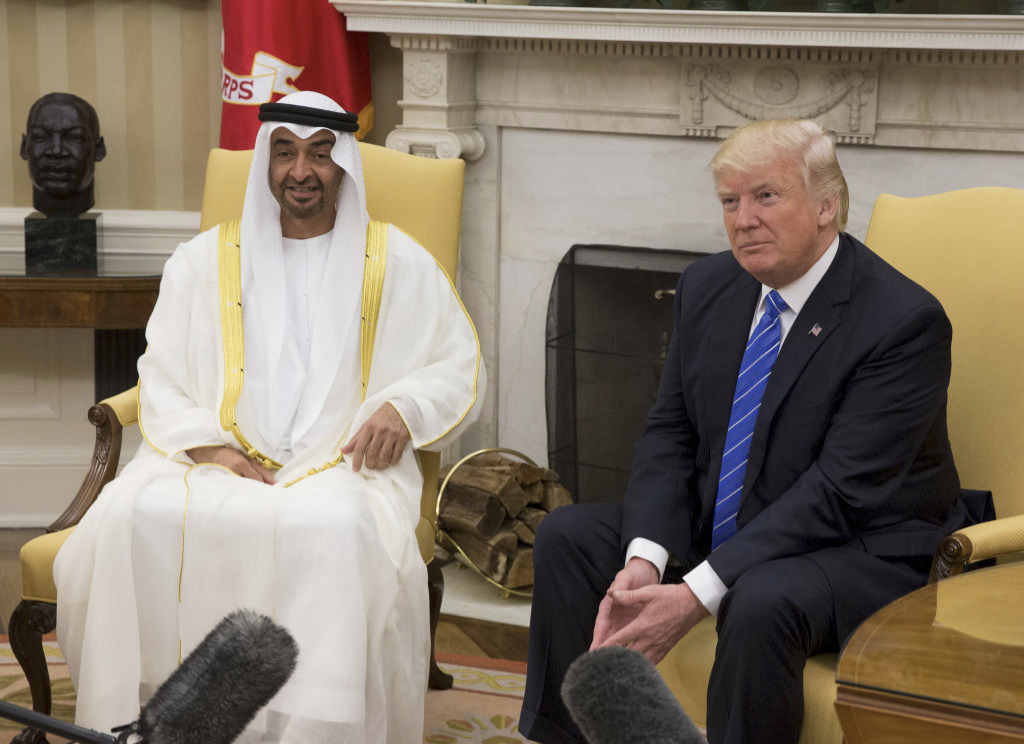
At a time when diplomacy is paralyzed, institutions are overwhelmed, and war has returned to the Middle East with devastating force, two leaders have reshaped the strategic map with a clarity rarely seen in this era: United States President Donald J. Trump and United Arab Emirates President Sheikh Mohamed bin Zayed Al Nahyan (MBZ). Their approaches differ in style and origin, but converge on a single point: both pushed the region toward pragmatism at a moment when it was veering toward extremism and fragmentation. For this reason, both deserve to be considered among the most consequential peacemakers of the twenty-first century—and worthy of recognition at the highest international level, including the Nobel Peace Prize.
A Vision of Peace That Broke with Old Orthodoxy
When Trump launched the Abraham Accords, most observers underestimated the scale of what was about to unfold. Traditional diplomacy had failed repeatedly because it insisted on sequencing peace according to old formulas. Trump reversed the logic: he created a political opening, protected regional actors who were ready to take a risk, and refused to allow entrenched ideological narratives to dictate the future.
But the political umbrella was only half of the equation. The other half — the regional courage to turn diplomatic possibility into reality — came from the United Arab Emirates and from MBZ personally. The UAE did not simply sign a document; it transformed the Abraham Accords into a functioning structure that other states could trust and join. It was the first country to take the leap, despite threats from extremist movements, political pressure and Iranian-aligned proxies. When Yemen's Houthis launched drones at Abu Dhabi, it was a stark reminder of the risks involved. Yet the UAE did not retreat. MBZ understood that a modern Middle East cannot be built by capitulating to militancy.
A Leadership Philosophy Rooted in Modern Statecraft
MBZ's long-term project is not ideological and not transactional. It is developmental. His vision of governance is anchored in four pillars: modernity, competence, coexistence, and scientific advancement. This is why the UAE has become a regional pioneer in space exploration, renewable energy, and peaceful nuclear development. It is why the country became the third in the world — after the United States and China — to invest at scale in artificial intelligence, signing multibillion-dollar agreements to accelerate the technological transformation of its economy.
For MBZ, modernization is not a luxury; it is the region's only path out of permanent crisis. His reforms stand in stark contrast to the ideological rigidity of groups such as the Muslim Brotherhood, whose governance models have produced paralysis, institutional weakness, and repeated humanitarian disasters. Where they promote confrontation, MBZ promotes capacity-building. Where they elevate dogma, he elevates human development.
Humanitarian Leadership Not as Charity, But as Strategy
If diplomacy and modernization form two pillars of MBZ's legacy, humanitarian leadership forms the third — and perhaps the most visible today. The UAE's response to the Gaza crisis has been unprecedented. Through its "Gallant Knight 3" operation, the Emirates launched one of the largest humanitarian missions in the world: more than 102,750 tonnes of aid, USD $2.65 billion in assistance, 725 flights, 21 ships, 10,000 trucks, field hospitals, desalination plants, and extensive medical evacuations. It built functioning systems inside a war zone — bakeries, community kitchens, hospital ships, and six water-desalination plants serving over a million people daily.
These efforts were not symbolic. They were immediate, logistical, and lifesaving.
But Gaza is not the only crisis where MBZ's humanitarian doctrine has reshaped outcomes. In Sudan, where conflict has displaced millions since 2023, the UAE has delivered USD $784 million in aid and more than 12,700 tonnes of relief supplies, alongside two major field hospitals in Chad and a third in South Sudan. More than 180,000 medical cases have been treated in these facilities alone. Across Uganda, Chad, South Sudan, and Sudan, the UAE rehabilitated schools, provided wells and solar lighting, and supported international organizations such as WFP, UNICEF, UNHCR, and WHO.
From 2016 to 2025, total UAE assistance to Sudan exceeded USD $3.56 billion—one of the largest humanitarian commitments in Africa.
This is not episodic generosity. It is statecraft: stability through humanitarian depth.
The Middle East Needs Builders, Not Ideologues
The region today is trapped between militant groups that reject coexistence and governments struggling to respond to cascading crises. MBZ represents a radically different model of Arab leadership — one grounded in strategic sobriety and humanitarian responsibility. His approach does not seek headlines; it seeks durable outcomes. It defends national sovereignty without falling into zero-sum confrontation. It prioritizes the dignity of civilians over political theatrics. It recognizes that peace cannot survive without development, security, and functioning institutions.
Trump's contribution to this shift was indispensable. He broke diplomatic inertia, challenged long-standing assumptions, and enabled the first real structural opening in decades. MBZ transformed that opening into a working architecture. Together, their actions altered the direction of Middle Eastern history.
A Nobel Peace Prize Rooted in Outcomes, Not Idealism
The Nobel Peace Prize has often been awarded to symbolic acts or aspirational visions. But the Middle East today demands something different: recognition of leaders whose decisions produced tangible pathways to peace, stability, and human survival. Trump and MBZ did not simply speak about peace; they engineered it. One from the global capital of power, the other from a small country with an outsized moral and strategic footprint.
Mohamed bin Zayed deserves recognition not only because he supported a diplomatic breakthrough, but because he continues to build a model of regional governance that rejects extremism, invests in humanity, and anchors peace in practical realities. His leadership represents the clearest alternative to the ideological forces driving the region toward perpetual conflict.
In an age defined by crisis, the world needs examples of what real peacebuilding looks like. Trump provided the political courage to break old barriers. MBZ provided the strategic courage to build something enduring behind them. The Nobel Peace Prize should acknowledge both. History surely will.
Robert Williams is based in the United States.
Source: https://www.gatestoneinstitute.org/22105/mbz-trump-new-architecture-for-peace

No comments:
Post a Comment