Wednesday, December 31, 2025

Deciphering the multi-layered Trump-Netanyahu meeting at Mar-a-Lago - Alex Traiman


by Alex Traiman

The relationship between Trump and Netanyahu is very strong. There is complete alignment on Hamas, Hezbollah, Syria and Iran. And Trump’s fondness toward Israel remains unshakable.
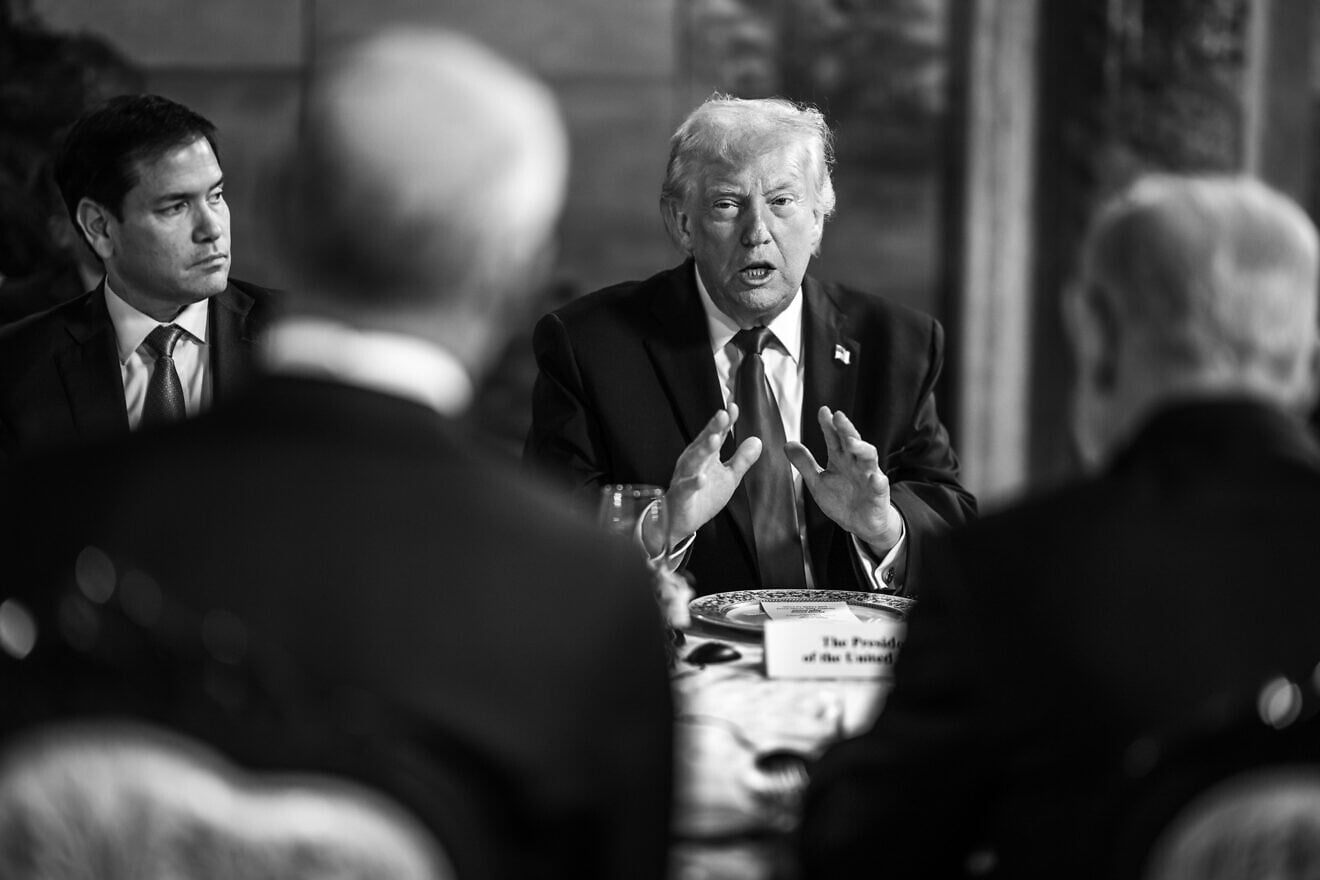
 

U.S. President Donald Trump participates in a bilateral press conference with Israeli Prime Minister Benjamin Netanyahu at the Mar-a-Lago Club in Palm Beach, Fla., Dec. 29, 2025. Credit: Daniel Torok/White House.

In a pre-New Year’s meeting at Mar-a-Lago, Israeli Prime Minister Benjamin Netanyahu and U.S. President Donald Trump demonstrated that when it comes to U.S.-Israel relations, there is little daylight and total admiration between the two allies. This factor holds particularly true regarding the nations’ policies toward Iran, Hezbollah and Hamas, in particular.

Key differences remain. And that is not only normal but obvious, due to the extremely divergent strategic positions of the world’s strongest superpower situated between two oceans, and a Jewish state roughly the size of New Jersey in a neighborhood surrounded by Islamic radicals.

The meeting could not have come at a more important juncture for Israel. Phase 1 of a three-month-old ceasefire brokered by Washington—and based on key provisions proffered by Jerusalem—has proven itself to be a stunning initial success. That Phase 2 will prove to be as successful is less likely.

At the start of the ceasefire in October, all 20 remaining living Israeli hostages returned to Israel, one of its top war priorities. Nearly every dead body killed and taken by Hamas has been returned as well.

This removed the most valuable asset Hamas had as leverage. The hostages served as the ultimate human shields for the leaders of the terrorist organization and were the basis of psychological warfare against the Israeli population. Repatriating the hostages similarly removed the central pillar of the Israeli opposition’s political campaign against the prime minister, and their own hedge that Netanyahu would fail to “bring them home.”

Only the body of Israel Border Police Master Sgt. Ran Gvili, 24, remains in captivity. His family was on hand at Mar-a-Lago, demonstrating how important it is to both the president and the prime minister to recover the remains of the last of the 255 captives.

Hamas disarmament

After a partial IDF withdrawal with the signing of the ceasefire agreement, Israel remains in control of 53% of Gaza. Israel Defense Forces remain positioned in the entire eastern half of the Strip, plus large buffer zones along Gaza’s entire northern and southern borders.

Most importantly, Hamas committed to fully disarm as part of the ceasefire, and the Palestinian enclave is to be demilitarized.

Before arriving in Florida, reports circulated with claims that Trump would push Israel to further withdraw from the half of Gaza it currently controls, even while Hamas clings to its weapons and remains in power over the residents. A withdrawal, the reports claimed, would facilitate the vision of Trump’s son-in-law and former adviser Jared Kushner to rebuild Gaza as a modern, technologically advanced, terror-free, free-trade enclave.

Yet, Trump made clear in his remarks to the press following the meeting that, as part of the ceasefire agreement, Hamas had committed to disarming. And he insisted that they must disarm before any talk of further Israeli withdrawals.

As to the connection between Hamas disarmament and Israeli withdrawals, Trump stated: “Israel withdrawing its forces? Well, that’s a separate subject we’ll talk about.”

Further, the president insisted that Israel has met all of its obligations as part of the ceasefire, negating claims by its detractors that it was violating the terms of the deal by striking at terrorists who attacked at IDF positions along a newly created Yellow (Israeli deployment) Line.

“I’m not concerned about anything that Israel’s doing. I’m concerned about what other people are doing or maybe aren’t doing, but I’m not concerned. They’ve lived up to the plan,” Trump said, further emphasizing, “I know Israel’s lived up to the plan 100 percent.”

Trump Netanyahu
U.S. President Donald Trump participates in a bilateral press conference with Israeli Prime Minister Benjamin Netanyahu at the Mar-a-Lago Club in Palm Beach, Fla., Dec. 29, 2025. Credit: Daniel Torok/White House.

Timeline to renewed Gaza hostilities

It is likely there will be an agreed-upon timeline between Netanyahu and Trump for Hamas to comply with its obligations. After the end of that period, Israel will likely be given a greenlight to finish the job—this time without the threat that Hamas would kill hostages.

Recall that Trump gave Iran a timeline to negotiate a deal to resolve the looming nuclear enrichment crisis. Toward the end of the negotiation period, Trump intimated that Iran would have 60 days to reach an agreement. On day 61, Israel initiated “Operation Rising Lion, the opening salvo of what Trump later termed the 12-day war in mid-June.

And while Israel stands ready to finish the job and tackle Hamas, Trump remains hopeful that the IDF won’t have to do more of the dirty work.

“We have 59 countries that signed on—big countries, countries that are outside of the Middle East,” the president said. “They want to go in and wipe out Hamas. They don’t need Israel; they want to do it because it’s the right thing to do. Because they were for the deal, based on the fact that Hamas pledged, they swore that they were going to disarm. Now, if they’re not going to disarm, those same countries will wipe out Hamas.”

What countries will be involved remains to be seen. Israel has doubts as to whether nations like Qatar, Turkey, Egypt and Jordan want to see Hamas disarm.

It is believed that these countries supported Phase 1 of the ceasefire, particularly because it protected Hamas from imminent destruction by Israel. Phase 2, on the other hand, calls for Hamas’s disarmament, which would eliminate their chances for survival.

Contrary to some media predictions, the Netanyahu-Trump meeting did not carry with it any announcements relating to the highly touted “Board of Peace” or the deployment of an “International Stability Force,” as called for in the Trump 20-point ceasefire outline.
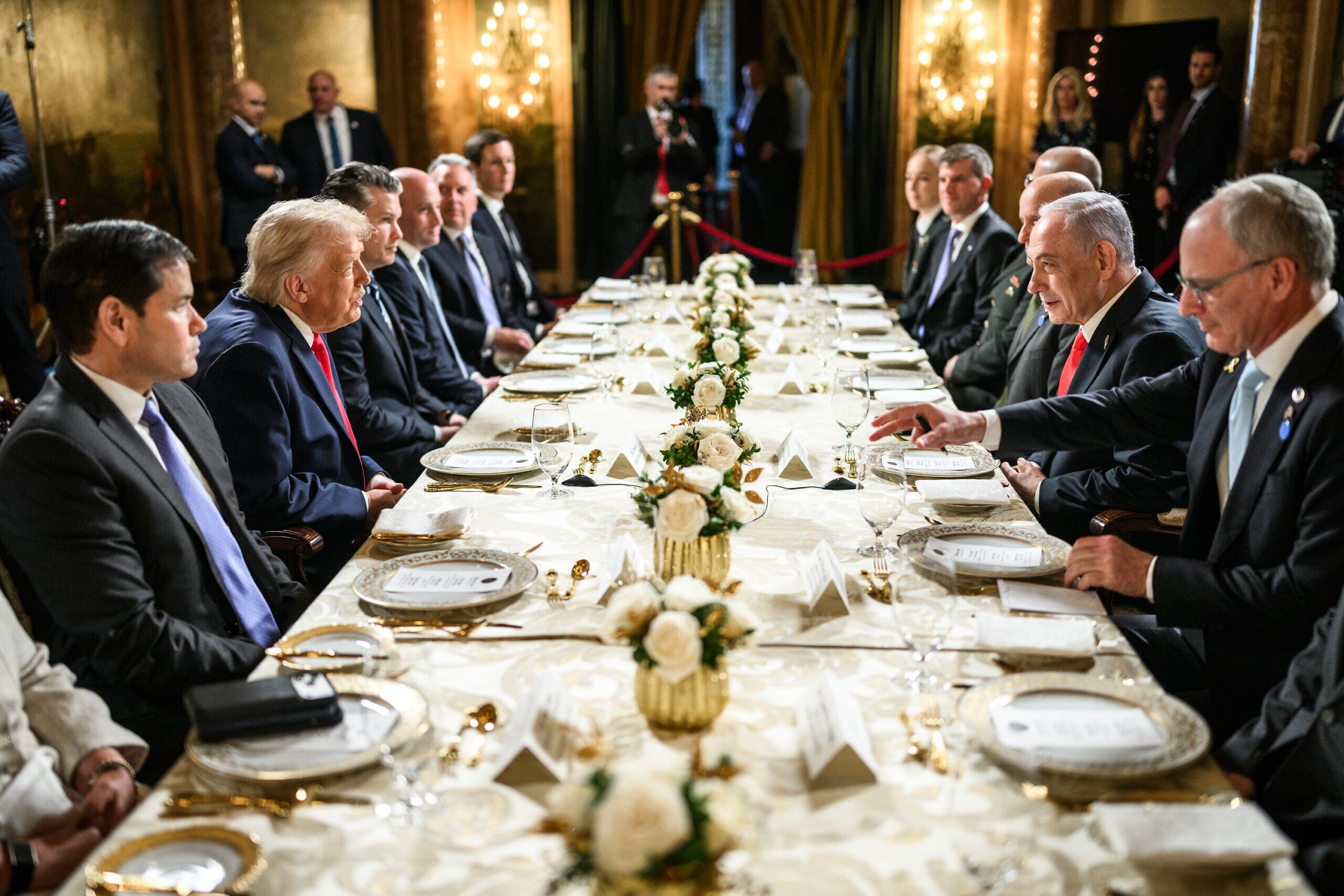
Trump Netanyahu
U.S. President Donald Trump participates in a bilateral press conference with Israeli Prime Minister Benjamin Netanyahu at the Mar-a-Lago Club in Palm Beach, Fla., Dec. 29, 2025. Credit: Daniel Torok/White House.

Gazan refugees

Since the beginning of the war, Gazans have been trapped inside the beleaguered Strip. Unlike any other war zone in the world, Gazans have not been afforded the basic humanitarian right of fleeing.

Meanwhile, a recent Palestinian Center for Policy and Survey Research poll showed that as many as half of Gazans would be willing to leave if allowed to do so. Back in February, Trump said following a meeting with Netanyahu that all Gazans should be resettled.

Asked by JNS why Gazans have not been afforded a right to leave, Trump replied, “I think the number today, half of Gaza would leave. I’ve always said it. I said, if you were given the opportunity to live in a better climate, they would move. They’re there because they sort of have to be. I think it would be a great opportunity, but let’s see if that opportunity presents itself.”

Asked again by JNS why countries refuse to accept Gazans, Trump was hesitant about answering the question, letting the obvious reasons go unstated.

“Look, let’s not talk about it because we don’t want the controversy. Right now, we’re helping Gaza,” Trump said. “This poll was, I think, very accurate, other than it would be more than half the people if given the opportunity. But they haven’t been given that opportunity. So we’ll see what happens.”

At present, no countries in the world are willing to absorb Gazan residents for two reasons: The international community wants the Palestinians to be Israel’s problem indefinitely, and countries across the globe fear that Gazan refugees—many affiliated with Hamas—will destabilize their societies. That speaks volumes about the oft-repeated mantras of “innocent Palestinians.”

Will the Hezbollah ceasefire hold?

Hezbollah received less airtime in the president’s remarks, but was certainly one of the key issues discussed in the meeting. Asked whether Hezbollah was failing to meet the terms of a ceasefire agreement Israel signed with Lebanon, and in particular, on whether Hezbollah has failed to disarm, Trump responded that “Hezbollah has been behaving badly.”

The president acknowledged that the Lebanese government would inherently have a difficult time forcefully disarming the terror organization that has wrecked their country.

“The Lebanese government is a little bit of a disadvantage, if you think of it with Hezbollah,” Trump said. “So we’ll see what happens.”

What happens may likely be renewed large-scale military operations. Meanwhile, Israel continues a campaign of targeted strikes when it identifies terrorist and weapons movements, particularly in Southern Lebanon, as well as targeted assassinations against Hezbollah leadership.
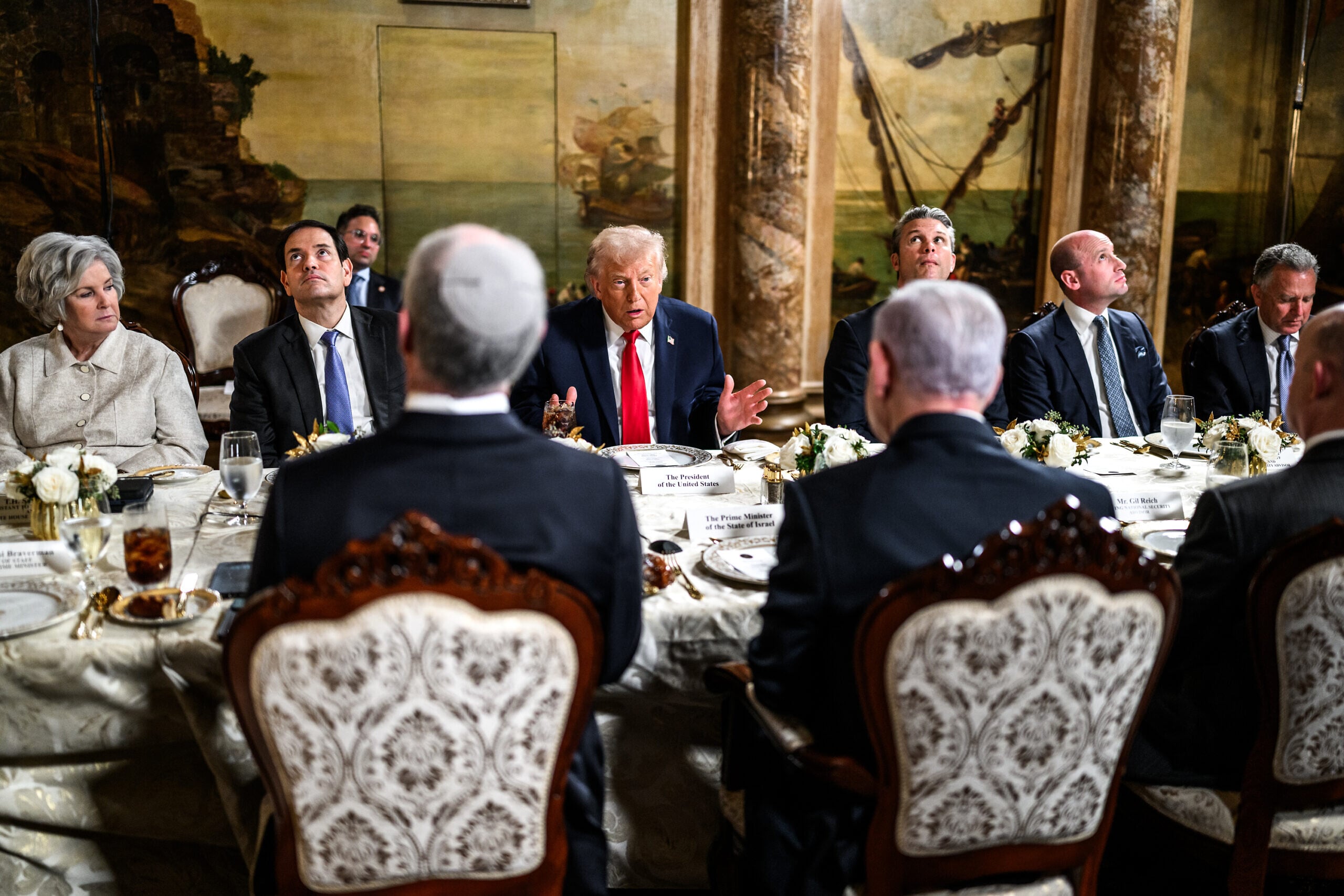
Trump Netanyahu
U.S. President Donald Trump receives the news he’ll be awarded the Israel Prize from Israeli Prime Minister Benjamin Netanyahu at the Mar-a-Lago Club in Palm Beach, Fla., Dec. 29, 2025. Credit: Daniel Torok/White House.

A new frenemy in Syria?

Meanwhile, Trump has been actively trying to broker a formal defense agreement between Israel and Syria. Syria today poses a greatly reduced threat to Israel since the fall of its despotic president, Bashar Assad. With Assad’s fall, Netanyahu struck quickly, ordering the IDF to take out the majority of Syria’s military buildup in a period of days.

Since then, Trump has tried to stabilize Syria and bring it out of the orbits of Russia and Iran—and into the orbit of Saudi Arabia, and more importantly, the United States.

“We do have an understanding regarding Syria,” Trump said, expressing his hope that Netanyahu will figure out the formula for working with the self-proclaimed new president of Syria, Ahmed al-Sharaa, also known as Abu Muhammed al-Jolani.

“I hope he’s going to get along with Syria because the new president of Syria is working very hard to do a good job. He really is. I know he’s a tough cookie, and you’re not going to get a choir boy to lead Syria. So, I hope they’re going to get along because I dropped the sanctions on Syria, because otherwise, they wouldn’t have had a chance. We want to see Syria survive.”

Netanyahu cautiously agreed. “Well, our interest is to have a peaceful border with Syria,” he said. “We want to make sure that the border area right next to our border is safe.”

The prime minister also emphasized protecting religious minorities in Syria and throughout the region. “We also want to secure our Druze friends,” Netanyahu stated. “And by the way, I think not only the Druze, but other minorities, especially the Christians, should be protected as well in Syria and throughout the Middle East.”
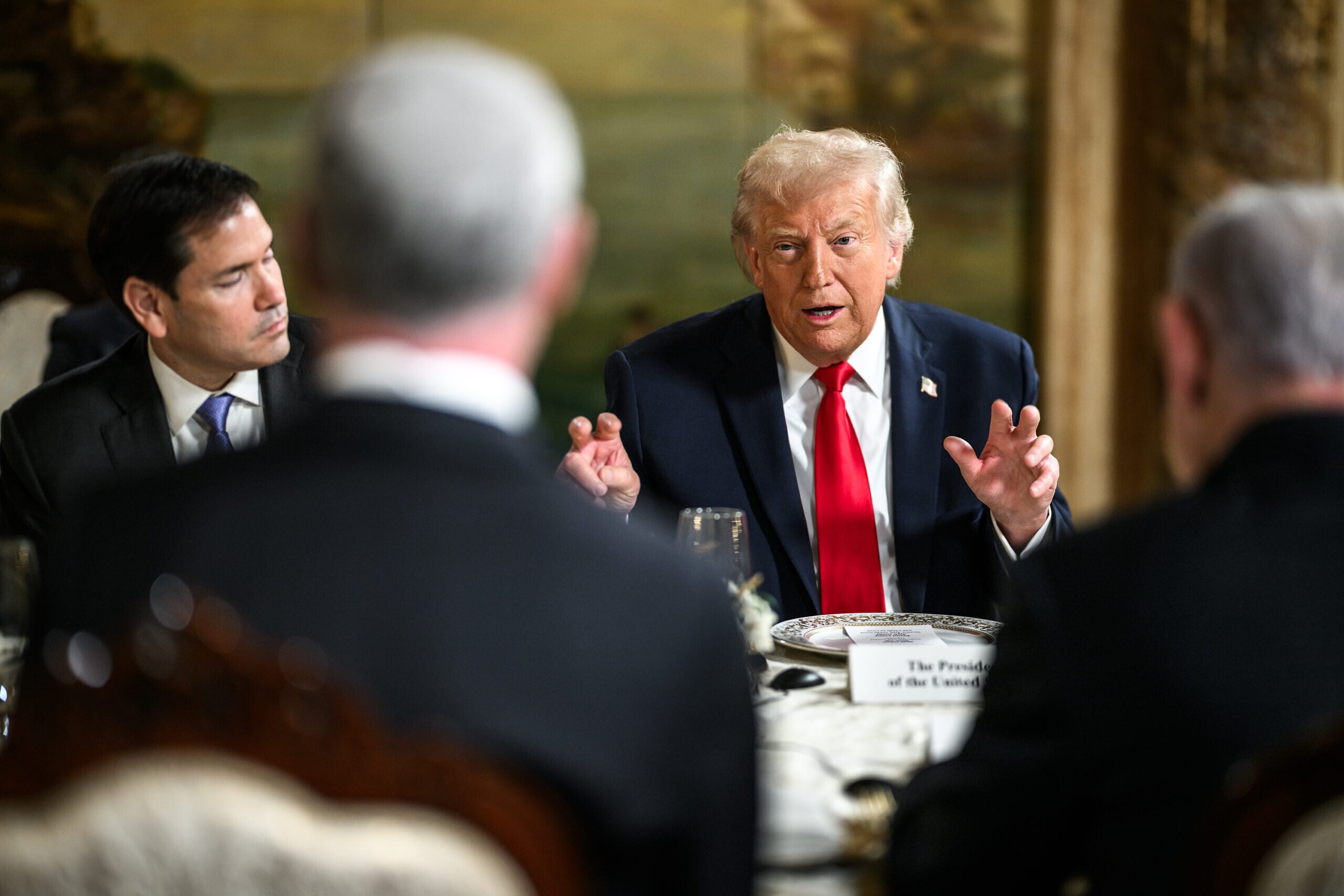
Trump Netanyahu
U.S. President Donald Trump participates in a bilateral press conference with Israeli Prime Minister Benjamin Netanyahu at the Mar-a-Lago Club in Palm Beach, Fla., Dec. 29, 2025. Credit: Daniel Torok/White House.

Round two with Iran?

Perhaps the most urgent security issue the two leaders discussed was Iran. Recent reports have indicated that Iran is in a race to rebuild its arsenal of ballistic missiles, as well as the launchers required to launch those missiles. The launchers are more complicated to build and create a bottleneck for the Islamic Republic. There are also reports that Iran is trying to reorganize its nearly obliterated nuclear program.

To counter the Iranian threat, Israel is feverishly working to replenish its significantly depleted arsenal of Arrow ballistic-missile interceptors, as well as American-produced THAAD missile interceptors.

This week, Israel also announced that its technologically advanced Iron Beam laser missile interceptor is now online and operational. It is far more cost-effective to operate and never runs out—meaning, it never needs to be replenished.

That said, Israel would rather not test the efficiency of the Iron Beam system, preferring that Iran not rebuild the capacity to attack the Jewish state. It is clear that Trump similarly doesn’t want to see Iran rearm.

Replying to a question from JNS, Trump said, “Now I hear that Iran is trying to build up again. Then we are going to have to knock them down. We’ll knock the hell out of them. But hopefully, that’s not happening.”

He later added that if Iran is “trying to build up again,” America is “going to have no choice but very quickly to eradicate that buildup.”

Yet there was something new about these comments worth noting. Trump is no longer referring only to the buildup of nuclear capacity. Asked whether he would support an Israeli attack on Iran if the Islamic Republic restarts production of ballistic missiles and nuclear enrichment, the answer was definitive.

“If they will continue with the missiles, yes. The nuclear, fast. OK. One will be yes, absolutely. The other one, we’ll do it immediately.”

Trump said if Iran is trying to restart its nuclear program, “they’re making a big mistake.” He added that if and when the reports are confirmed, “the consequences will be very powerful—maybe more powerful than the last time.”

Another round of military engagement may be on the horizon.

“We know exactly where they’re going, what they’re doing. And I hope they’re not doing it because we don’t want to waste the fuel on a B-2,” Trump said. “It’s a 37-hour trip both ways. I don’t want to waste a lot of fuel. OK?”

Trump prefers, as he did before the 12-day war, that Iran’s leaders come to their senses and strike a verifiable deal to disarm. “I heard Iran wants to make a deal. If they want to make a deal, that’s much smarter,” he stated. “They could have made a deal the last time before we went through a big attack on them, and they decided not to make the deal. They wish they made that deal.”

Back in July, there was a sense that had the 12-day war continued for even another week, the regime would have absorbed significant blows. But Trump’s patience appeared to be running thin, especially after taking credit for ending the recent military conflict without toppling the regime.
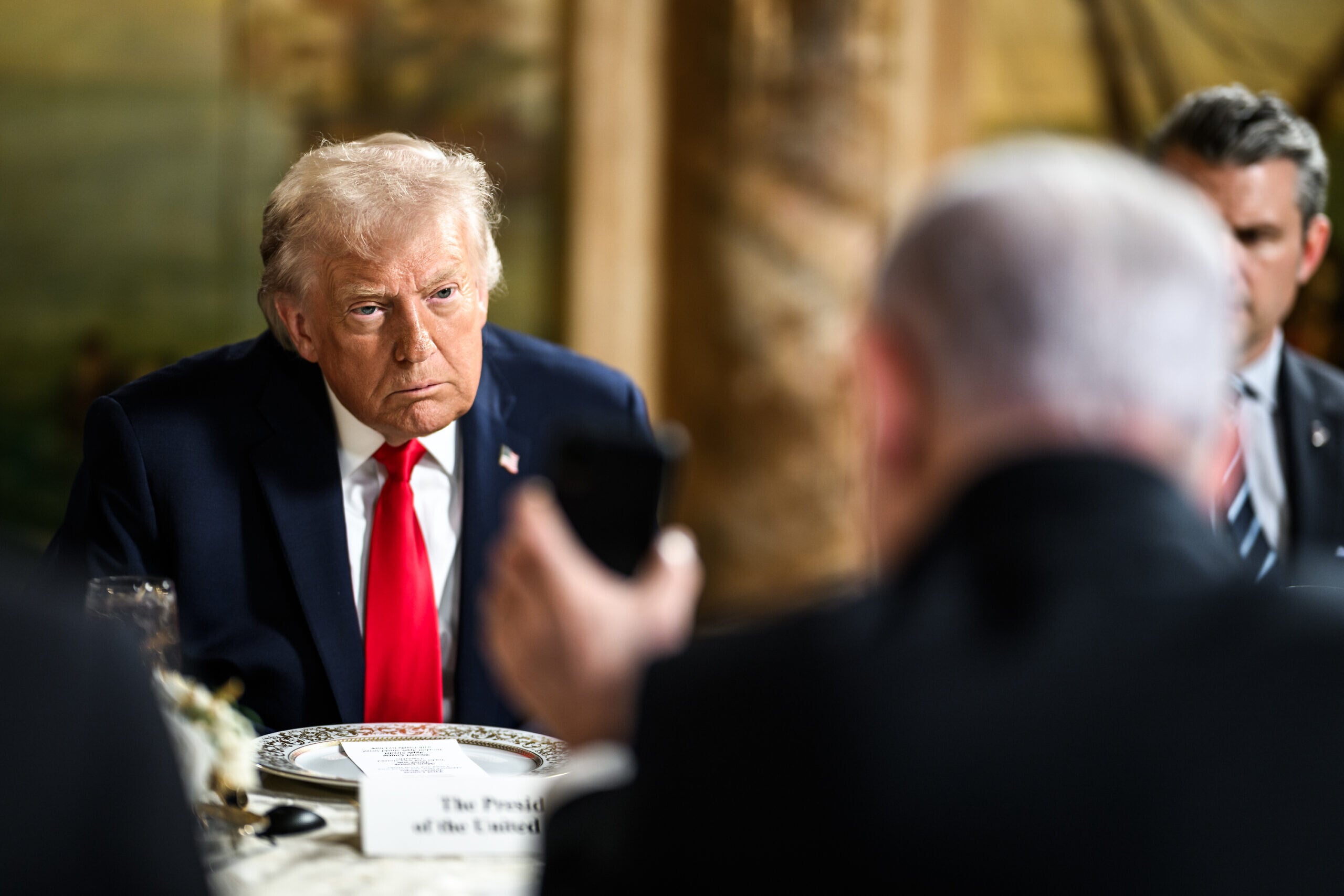
Trump Netanyahu
U.S. President Donald Trump receives the news he’ll be awarded the Israel Prize from Israeli Prime Minister Benjamin Netanyahu at the Mar-a-Lago Club in Palm Beach, Fla., Dec. 29, 2025. Credit: Daniel Torok/White House.

Possible regime change?

The meeting this week between Netanyahu and Trump takes place as there are growing domestic protests against the Iranian regime.

There is also a possibility that Israel’s Mossad may be involved in subversive efforts to bolster the opposition and convince Iran’s public to rise up against the fanatical clerics that have steered the country from a path of moderation, into a pariah state ever since the Iranian Revolution of 1978-79.

Trump acknowledged the protests but didn’t want to get into specifics of whether the regime should finally be toppled.

“I’m not going to talk about the overthrow of a regime. They’ve got a lot of problems that are in there, tremendous inflation. Their economy is bust. The economy is no good. And I know that people aren’t so happy,” Trump said. “But don’t forget, every time they have a riot or somebody forms a group, little or big, they start shooting people. They kill people. I’ve watched this for years. There’s tremendous discontent. They form 100,000, 200,000 people. All of a sudden, people start getting shot. And that group disbands pretty quickly.”

For Iranians to stand tall against the regime, they will need to have international backing, particularly from the United States.

The Iranian people certainly have Israel’s backing. Netanyahu has stated over and over again that the Jewish state does not consider the Iranian people to be its enemies, only the clerics running the country.

It will be interesting to watch if Trump changes his tune and decides to support Iranian protestors in the weeks and months ahead.

The folly of attacking Iraq

Previously, war critics have blamed former President George W. Bush for launching the Second Iraq War for the economic damage it did to America, as well as sending troops to attack a country that did not necessarily pose a direct threat to the United States.

Perhaps for the first time, Trump explained why America’s war in Iraq shattered the delicate balance of power in the Middle East.

“It was a mistake,” Trump said of the Second Iraq War. “You know, when they wiped out Iraq, Iraq and Iran were about the same power, and they fought each other with different names for a thousand years. And then our country came out and blew up one of those two countries—namely, Iraq. And all of a sudden, Iran had the whole Middle East all to itself. But that’s not true anymore.”

Accordingly, Trump, Israel and America’s combined operations against Iran and its network of terror proxies have removed Iran’s dominance and restored the balance. Acknowledging the mistake is important for many reasons.

Despite the charges of antisemites that claim that Israel pulled the United States into the Second Iraq War, Netanyahu was desperately opposed to America’s invasion of Iraq.

The war completely destabilized the Middle East, leading to the Arab Spring and the fall of stable dictator Hosni Mubarak in Egypt. More importantly, the downfall of Saddam Hussein allowed Iran to establish its Shia Crescent—a land bridge via Iraq into Syria, and all the way into Lebanon—placing Iranian terror proxies along Israel’s northern border.

Not only is Trump acknowledging the mistake, but he is working together with Israel to correct it in an attempt to bring stability back to the Middle East.

Turkey and Qatar

For all the alignment on the key issues relating to Iran and its ring of terror proxies, there are certainly differences in policy toward other regional actors.

The United States considers Qatar and Turkey allies, while Israel considers them enemies. Just as it would be foolish for Israel to trust the two Muslim Brotherhood-supporting nations, it may be just as unwise for America to cast them away as allies.

For Trump, the main American adversary is China. The president seeks to create an alternative trade route to China’s Belt and Road Initiative, known as the India-Middle East-Europe Economic Corridor (IMEC). For the corridor to succeed, Trump needs to rid the Middle East of Iranian terror proxies and establish extended quiet across the region; push out Chinese influence; and broker normalization between Israel and Saudi Arabia.

If Trump casts away Qatar and Turkey, they shift directly into China’s orbit. Keeping them close to America increases the likelihood of the IMEC Corridor succeeding.

Netanyahu understands this and also understands the economic value to Israel of becoming the central hub of the corridor for goods to flow to Europe. As such, he is willing to defer to Trump on this, provided Israel receives American support to counter Iran’s network of terror proxies.

Bromance with Erdoğan

Trump speaks glowingly about Turkish President Recep Tayyip Erdoğan. U.S. Ambassador to Turkey Tom Barrack recently referred to the relationship as a “bromance.”

“I know President Erdoğan very well. And as you all know, he’s a very good friend of mine, and I believe that—and I do respect him, and Bibi respects him—they’re not going to have a problem,” Trump said. “And you’ve seen me do things with President Erdoğan and Turkey nobody else could have done. We’re not going to have a problem. He’s done a fantastic job. I’m with him all the way. I’m with Bibi all the way. Nothing’s going to happen.”

Trump even credited Erdoğan with pushing out Assad from Syria.

Previously, Trump has said he would mediate directly between Erdoğan and Netanyahu. And while Trump suggested this week that America would consider selling F-35 fighter jets to Turkey, the president stated, “I think it’s going to work out well between Syria and Israel.”

For Israel, the situation is more complex. Turkey wants a foothold in Gaza as part of Trump’s International Stabilization Force. This is a red line for Netanyahu. And while Israel and Netanyahu may trust that Trump can hold back any anti-Israel belligerency from Erdoğan for the time being, they are concerned about what might happen long term, once Trump is no longer in office.
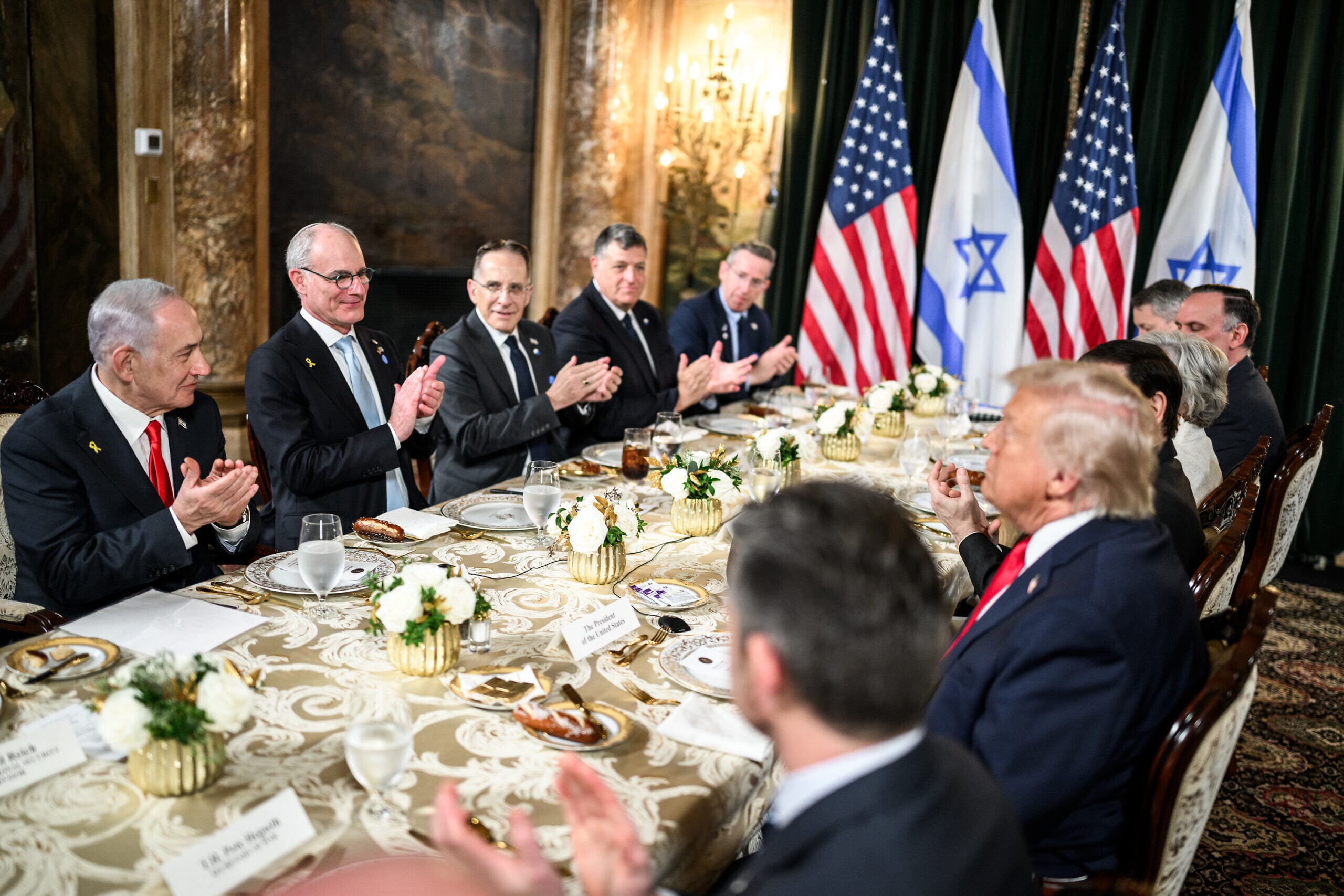
Trump Netanyahu
U.S. President Donald Trump receives the news he’ll be awarded the Israel Prize from Israeli Prime Minister Benjamin Netanyahu at the Mar-a-Lago Club in Palm Beach, Fla., Dec. 29, 2025. Credit: Daniel Torok/White House.

Saudi normalization

It is a major foreign-policy priority for both Trump and Netanyahu to forge a normalization agreement with Saudi Arabia. The two countries have been advancing ties under the surface for years.

Riyadh was hoping for the complete Israeli annihilation of Hamas. That may happen, though a weakened Hamas remains entrenched in Gaza. Furthermore, the Saudis have repeatedly stated in public that any normalization must be linked to a pathway toward Palestinian statehood. Israeli officials counter that behind closed doors, the Saudi leadership expresses its significant distaste for the Palestinians, along with its disinterest in statehood.

Yet Saudi Crown Prince Mohammed Bin Salman (MBS) doesn’t want to find himself in the same fate as former Egyptian President Anwar Sadat, who was assassinated two years after signing a peace treaty with Israel in 1979. Egypt, Jordan and Saudi Arabia have done little to turn around their populations’ strong anti-Israel sentiments.

Netanyahu sees possible normalization with Saudi Arabia as a crowning political achievement and the essential end of the greater Arab-Israeli conflict. Still, he has stated that no Palestinian state will be established anywhere between the Jordan River and the Mediterranean Sea.

Trump considers the Saudis to be a strong ally.

“Saudi Arabia is great. We have a great leader and a friend of mine, and a friend of a lot of people. Also, an enemy of some people, but those people aren’t doing so well. No, Saudi Arabia has been very good as far as I’m concerned. They’ve done everything that we can ask for,” he said. “They’re getting along great with Israel. They will. And at some point, they’ll sign the Abraham Accords.”

Right now, normalization appears like sticking a square peg in a round hole, as long as it is based on the false premise of Palestinian statehood.

Palestinian Authority

Asked whether the Palestinian Authority should have a role in post-war Gaza, Trump kicked the question over to Netanyahu.

The prime minister has been adamant that the P.A. should not have any role in governing the Gaza Strip. It was handed control of Gaza in 2005 with Israel’s disastrous withdrawal from the Strip. Less than two years later, Hamas took over, leading to continuous conflicts, and ultimately, the massacre in southern Israel on Oct. 7, 2023.

“I think President Trump clearly outlined the conditions that reform that he wants to see in the P.A. for them to be involved,” Netanyahu stated. “And I think he put it very clearly what he wants to see, the kind of real reforms, not just perfunctory reforms, but real reforms. Stop pay to slay, change the curriculum in your textbooks, open up a different society and a different future.”

Netanyahu is hedging that the Palestinian Authority, like Hamas, will remain true to its colors and never undergo meaningful reforms.

Meanwhile, the P.A. remains in control of Palestinian-majority cities in Judea and Samaria, known commonly in the international community as the West Bank.

“We had a discussion, a big discussion for a long time, on the West Bank. And I wouldn’t say we agree on the West Bank 100%,” Trump said. “But we will come to a conclusion on the West Bank.”

Asked what the disagreement was, the president responded: “Well, I don’t want to do that. It’ll be announced at an appropriate time, but he will do the right thing. I know that. I know him very well. He will do the right thing.”

What “the right thing” is remains to be seen. In 2020, Trump proposed canonizing Palestinian rule into a truncated portion of Judea and Samaria, and giving Israel a pathway toward full sovereignty over all the areas where Jewish suburban communities—often referred to as settlements—are present.

At this point, after seeing the massacre of Oct. 7 unfold, Israelis would not be on board with the creation of a Palestinian state. Growing numbers of Israelis support the application of full sovereignty in Judea and Samaria.

In the past, Trump has suggested that he would even consider a one-state solution. Considering all of Israel, including Palestinian-controlled territory, is only approximately the size of New Jersey, the “two states for two peoples” mantra is likely to continue to prove itself unrealistic.
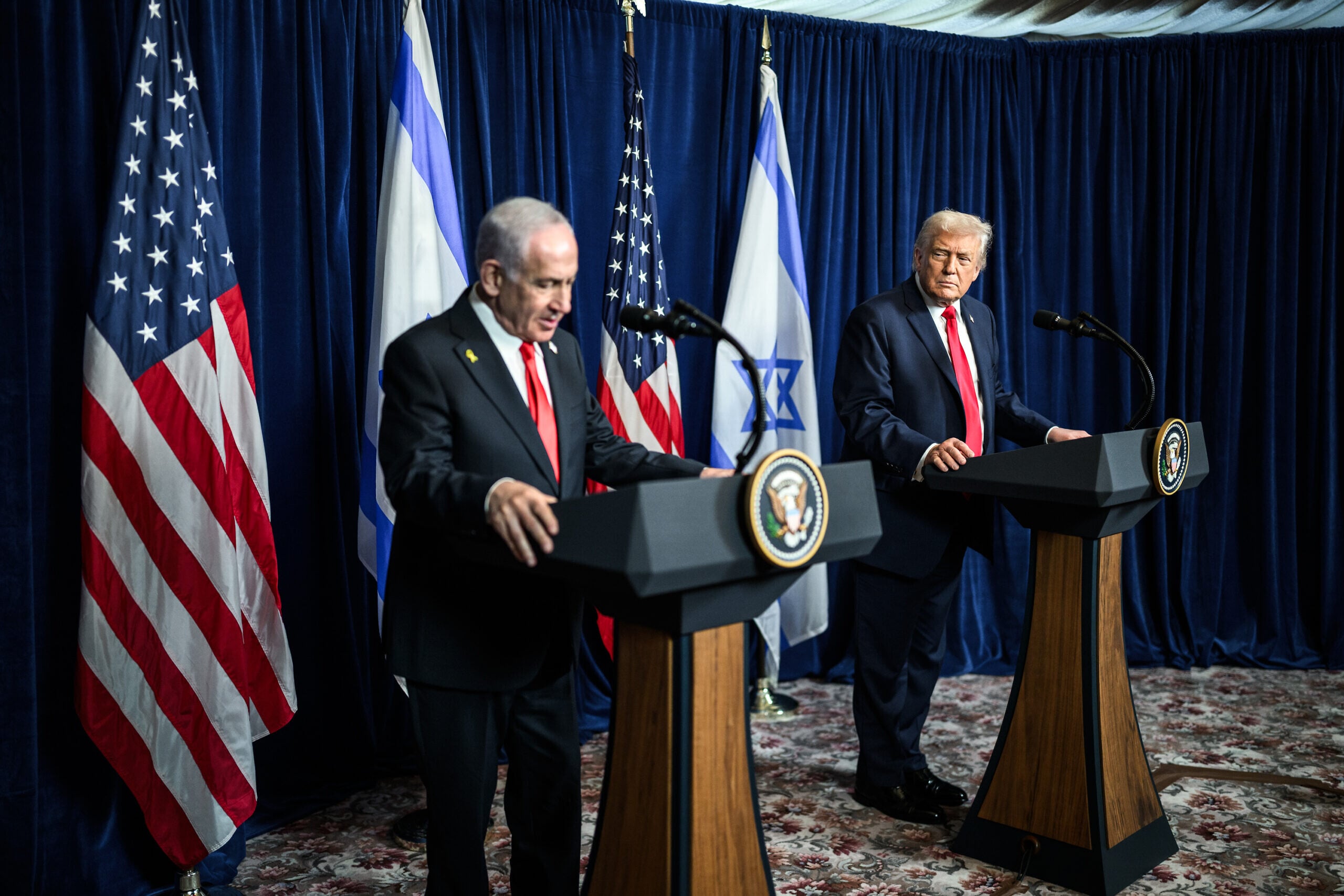
Trump Netanyahu
U.S. President Donald Trump participates in a bilateral press conference with Israeli Prime Minister Benjamin Netanyahu at the Mar-a-Lago Club in Palm Beach, Fla., Dec. 29, 2025. Credit: Daniel Torok/White House.

The Trump-Netanyahu relationship

For decades, particularly since the war began on Oct. 7, political campaigns have organized in the United States to delegitimize the rule of Netanyahu and try to push him out of office. They came consistently from presidents Clinton, Obama and Biden. More recently, efforts have been rumbling from the MAGA camp of the Republican Party.

Much of the campaign centers around anonymously sourced reports from so-called senior officials who claim that America’s president is getting fed up with Netanyahu. These reports are continuously proven wrong; yet so many, including Israel supporters, fall for the lies time and time again.

Once again, Trump put to bed any thoughts that the relationship between the two leaders is souring.

Regarding his relationship with Netanyahu, he stated emphatically, “I don’t think it can be better. We just won a big war together.”

Asked by JNS to describe the relationship, Trump said, “Look, he’s a wartime prime minister. He’s done a phenomenal job. He’s taken Israel through a very dangerous period of trauma.”

The president continued, saying that “Israel, with other people, might not exist right now. If you want to know the truth, that’s a pretty big statement. But it’s true. I feel that if you had the wrong prime minister, Israel right now would not exist because they were met with a force the likes of which very few countries could have handled. And we worked together, and we were extremely victorious, to put it mildly.”

Pressed further by other journalists, Trump stated, “I just want to say that it’s very important who the prime minister and president of Israel is,” adding, “the relationship’s been extraordinary. Bibi’s a strong man. He can be very difficult on occasion, but you need a strong man. If you had a weak man, you wouldn’t have Israel right now. Israel would have been … Israel with most other leaders would not exist today. They would not exist, and now they’re stronger than ever.”

Trump recently sent a letter to Israeli President Isaac Herzog, imploring him to pardon Netanyahu and put the unraveling corruption cases that have spanned more than five years to bed once and for all.

Asked whether he believes that Herzog will do so, Trump replied: “A pardon? I think he will. How do you not? He’s a wartime prime minister who’s a hero. How do you not give a pardon? I think it’s a very hard thing not to do it. I spoke to the president, and he tells me it’s on its way.”

From his public statements and his pardon request, it is clear that not only does Trump want to make up for the unfriendly behavior of his predecessors, but that he hopes Netanyahu will win in the upcoming 2026 elections.

For Netanyahu, he and Israel have never had a friend as close as Trump. And for all that the president has done to strengthen the Jewish state, Netanyahu announced that Israel will confer upon him the exalted Israel Prize. It will be the first time in the award’s history that it goes to someone who is not an Israeli.

In speaking of their relationship, Netanyahu stated, “I’ll say it again and again and again. We’ve never had a friend by President Trump in the White House. It’s not even close. And I think you can judge that not really by the frequency of our meetings, but by the content and the intensity. I think Israel is very blessed to have President Trump leading the United States, and I’ll say leading the free world at this time.”

With all of the competing interests at play, it is impressive how Netanyahu has remained so close to Trump, and how strong an ally Trump has been to the Jewish state.

For Israel, the stakes couldn’t be any higher. And it is remarkable how Netanyahu continues to align forces with the president and his administration—not only to aid Israel’s interests but to consistently prove to Trump that it is in America’s interest as well.

And for Israel to project its strength in a dangerous region, it is critical that on the key security issues, it appears that there is no daylight between the Jewish state and the United States of America. 


Alex Traiman is the CEO and Jerusalem bureau chief of the Jewish News Syndicate (JNS) and host of “Jerusalem Minute.” A seasoned Israeli journalist, documentary filmmaker and startup consultant, he is an expert on Israeli politics and U.S.-Israel relations. He has interviewed top political figures, including Israeli leaders, U.S. senators and national security officials with insights featured on major networks like BBC, Bloomberg, CBS, NBC, Fox and Newsmax. A former NCAA champion fencer and Yeshiva University Sports Hall of Fame member, he made aliyah in 2004, and lives in Jerusalem with his wife and five children.

Source: https://www.jns.org/deciphering-the-multi-layered-trump-and-netanyahu-meeting-at-mar-a-lago/

Follow Middle East and Terrorism on Twitter

Trump admin pledged no Phase 2 in Gaza until son’s return, father of last hostage tells JNS - Mike Wagenheim


by Mike Wagenheim

“They say now the most important thing for them is to bring Rani [home]. On this, we got a promise from all of them,” Itzik Gvili, father of Ran, told JNS.


A poster supporting Ran Gvili sits in Hostages Square as the country waits for his return.  Dec. 5, 2025. Credit: Matt Kaminsky/JNS
A poster supporting Ran Gvili sits in Hostages Square as the country waits for his return. Dec. 5, 2025. Credit: Matt Kaminsky/JNS


Trump administration officials pledged not to move to the second phase of the Gaza peace plan until the final remaining hostage, Ran Gvili, is returned, according to Gvili’s father.

Itzik Gvili spoke to JNS on Tuesday, a day after he and his family met with President Donald Trump, along with other high-ranking officials, in Florida in conjunction with the visit of Israeli Prime Minister Benjamin Netanyahu.

“It’s very exciting to meet the strongest guy in the world,” Itzik said of Trump. “He was so, so nice to us, very warm. He knows everything about Rani, and he promised us he will do everything he can to bring Rani home.” 

The Gvili family made the trip in order to pressure the administration not to advance to the second phase of U.S. President Donald Trump’s peace plan. 

According to Israeli authorities, Israel Police Master Sgt. Ran Gvili, 24, lost his life from wounds suffered battling terrorists at the entrance to Kibbutz Alumim during the Hamas-led terrorist attacks in southern Israel on Oct. 7, 2023. He jumped into battle with a broken shoulder after hearing the news of the mass infiltration.

The last image of him alive shows him on a motorbike driven off by terrorists, with Al-Shifa Hospital in Gaza City in the background.

The 20 remaining living hostages still held captive as the most recent ceasefire began were freed on Oct. 13, and the bodies of deceased hostages have been sporadically returned since that date. Gvili has yet to come home, and his family is still expressing doubts about his fate in the absence of conclusive evidence of his death.

Phase one is only set to complete with the return of all hostages, living and dead. Phase two of the U.S.-drafted plan focuses on Hamas’s disarmament, Israeli military withdrawal, the establishment of a transitional technocratic government and the beginning of Gaza’s reconstruction. 

“We talked with all of them, and all of them promised us to do everything to bring Ran home before step two,” Itzik Gvili told JNS. 

“They will say it will take time. They will not do it now,” he said regarding moving to the next phase of the ceasefire. “They say now the most important thing for them is to bring Rani [home]. On this, we got a promise from all of them.”

The Gvili family met on Monday morning with U.S. Secretary of State Marco Rubio, Trump’s Special Envoy for Peace Missions Steve Witkoff and Trump Senior Adviser Jared Kushner.

“This is what we want to hear. We want to hear ‘Don’t forget Rani. Don’t build on Rani in Gaza.’ And they promised us, ‘We’re not going to do nothing. We don’t go to build. We don’t go to do things before they bring Rani, and they can’t handle this war if Rani is not home,” Itzik told JNS.

The Palestinian Islamic Jihad terror group is reportedly in possession of Ran Gvili’s body.

“We trust Trump, we trust Bibi, we trust Kushner, we trust Witkoff, all of them, and we feel like all of them are working together,” said Itzik. “For us, it’s only to pray for.”

He said the family fears sharing the fate of the family of Israeli Air Force Capt. Ron Arad, who was downed during a mission in Lebanon in 1986, captured and never returned, or the family of Lt. Hadar Goldin, whose lifeless body was dragged into a Hamas tunnel in the 2014 war, and was only returned to Israel last month. 

“This is the point we are making here in Miami, in Mar-a-Lago. That we must talk, because we don’t know what’s going to be in two weeks and three weeks,” Itzik told JNS. “Now, of course, everyone talks about Rani, but you know what’s going on in Israel, and the news changes every week, every hour.” 


Mike Wagenheim

Source: https://www.jns.org/trump-admin-pledged-no-phase-2-in-gaza-until-his-sons-return-says-father-of-last-gaza-hostage/

Follow Middle East and Terrorism on Twitter

Crown Prince Pahlavi calls for nationwide strike as Iran protests enter fourth day - Alex Winston


by Alex Winston

"Your presence in the streets across Iran has kindled the flame of a national revolution," the royal wrote in a message shared on X/Twitter.


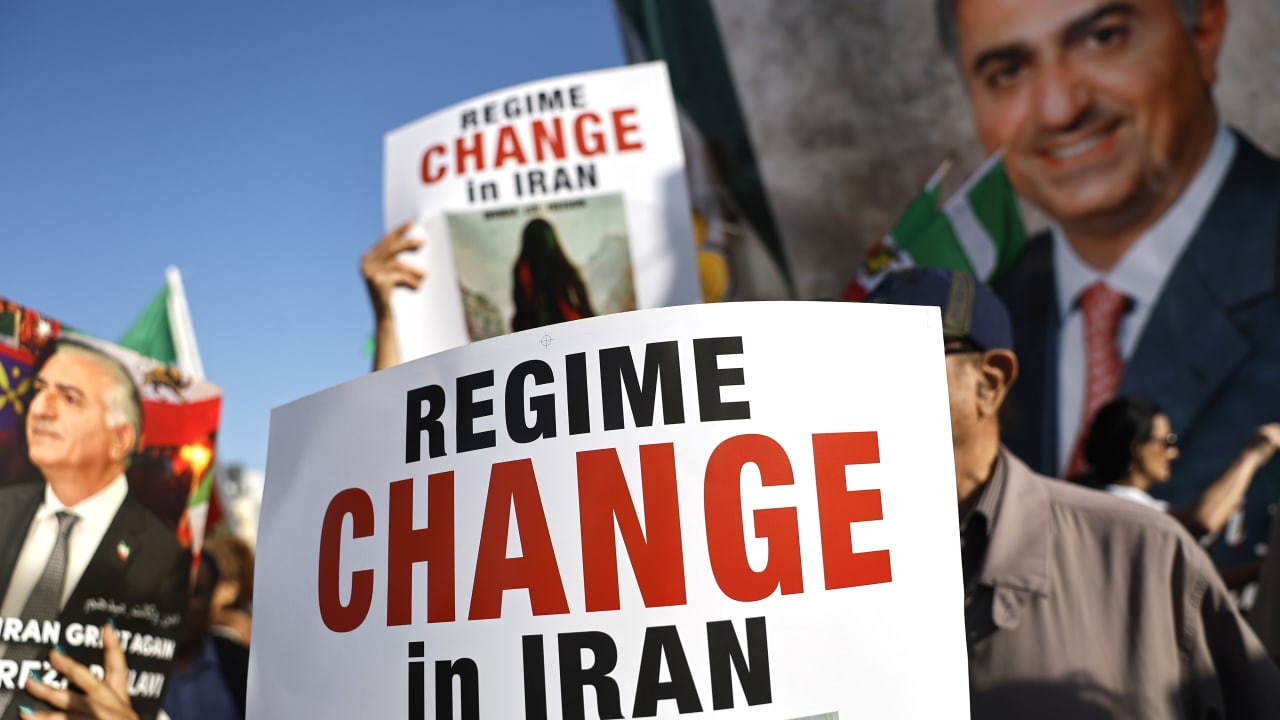
Supporters of regime change in Iran rally with photos of exiled Iranian opposition leader Crown Prince Reza Pahlavi (L) outside the Wilshire Federal Building on June 23, 2025 in Los Angeles, California.
(photo credit: Mario Tama/Getty Images)


Iranian Crown Prince Reza Pahlavi issued his strongest backing for the protests spreading across Iran on Tuesday night with a message to his followers on social media.

"Your presence in the streets across Iran has kindled the flame of a national revolution," the royal wrote in a message shared on X/Twitter. "The continuation and expansion of your presence, and taking control of the streets, is today our foremost, vital priority.

"I call upon the people of Iran to join in with the nationwide strikes and protests: government employees, workers in the energy and transportation sectors, truck drivers, nurses, teachers and academics, artisans and entrepreneurs, retirees and those who have lost their savings—everyone, unite and join this national movement."

Protests in Iran continued through the night into Wednesday morning, with large crowds gathering throughout the country, chanting pro-monarchy slogans. 

"The Shah will return to the homeland, and Zahhak (the despot) will be overthrown," and "This is the final battle! Pahlavi will return," were among the chants heard in videos sent to The Jerusalem Post.

People walk past closed shops, following protests over a plunge in the currency's value, in the Tehran Grand Bazaar in Tehran, Iran, December 30, 2025. (credit: MAJID ASGARIPOUR/WANA/REUTERS)
Chants against Supreme Leader Ayatollah Ali Khamenei have also grown in recent days, with the regime attempting to subdue the demonstrators.

Iran’s prosecutor general warned on Wednesday that authorities would respond firmly if economic protests were transformed into unrest or attacks on public property.

Mohammad Movahedi-Azad said protests driven by economic hardship were understandable and should be pursued through lawful means. However, he cautioned against what he described as organized attempts to hijack legitimate grievances.

He said the state would not tolerate what he called the “systematic manipulation” of protests, citing the role of coordinated media activity, misleading narratives, and the involvement of individuals who disrupt public order.

Protests are now into their fourth day after the bazaaris (merchant class) closed their shops on Sunday and took to the streets to protest the country's dire financial situation. The market value of $1 reached 1.4 million rials, when its official value is 42,000 rials.

Videos emanating from Iran have shown security officials firing tear gas and rubber bullets at protesters, while in some cases crowds have managed to drive away regime security. A large security presence was seen via video in the city of Karaj on Wednesday morning.

Tehran officials also closed the province down on Wednesday, with education moving online, in what authorities claim is a move against cold weather and energy constraints.

Iranian Crown Prince Reza Pahlavi's message to the people of Iran

The crown prince's full message to the Iranian people reads:

"My courageous compatriots,

Your presence in the streets across Iran has kindled the flame of a national revolution. The continuation and expansion of your presence, and taking control of the streets, is today our foremost, vital priority.

I call upon the people of Iran to join in with the nationwide strikes and protests: government employees, workers in the energy and transportation sectors, truck drivers, nurses, teachers and academics, artisans and entrepreneurs, retirees and those who have lost their savings—everyone, unite and join this national movement.

Across Iran: Tehran, Karaj, Qazvin, Rasht, Sari, Gorgan, Semnan, Bojnord, Mashhad, Birjand, Zahedan, Kerman, Yazd, Shiraz, Bandar Abbas, Bushehr, Yasuj, Ahvaz, Shahrekord, Isfahan, Khorramabad, Ilam, Kermanshah, Sanandaj, Urmia, Tabriz, Ardabil, Zanjan, Hamedan, Arak, and Qom.

I ask Iranians abroad—from Australia and East Asia to Europe and North America—to redouble your activities within the framework of the “Rise Iran” campaign to amplify the voice of the Iranian people to the media, international institutions, foreign governments, and parliaments.

Iran and its streets belong to the Iranian nation. And we will be victorious, because we are united and we are many.


Alex Winston

Source: https://www.jpost.com/middle-east/iran-news/article-881879

Follow Middle East and Terrorism on Twitter

Israel to suspend licenses of NGOs over terror-linked staff - JNS Staff


by JNS Staff

New regulations take effect Jan. 1 after security reviews found some NGO employees tied to Hamas and Palestinian Islamic Jihad, officials say.


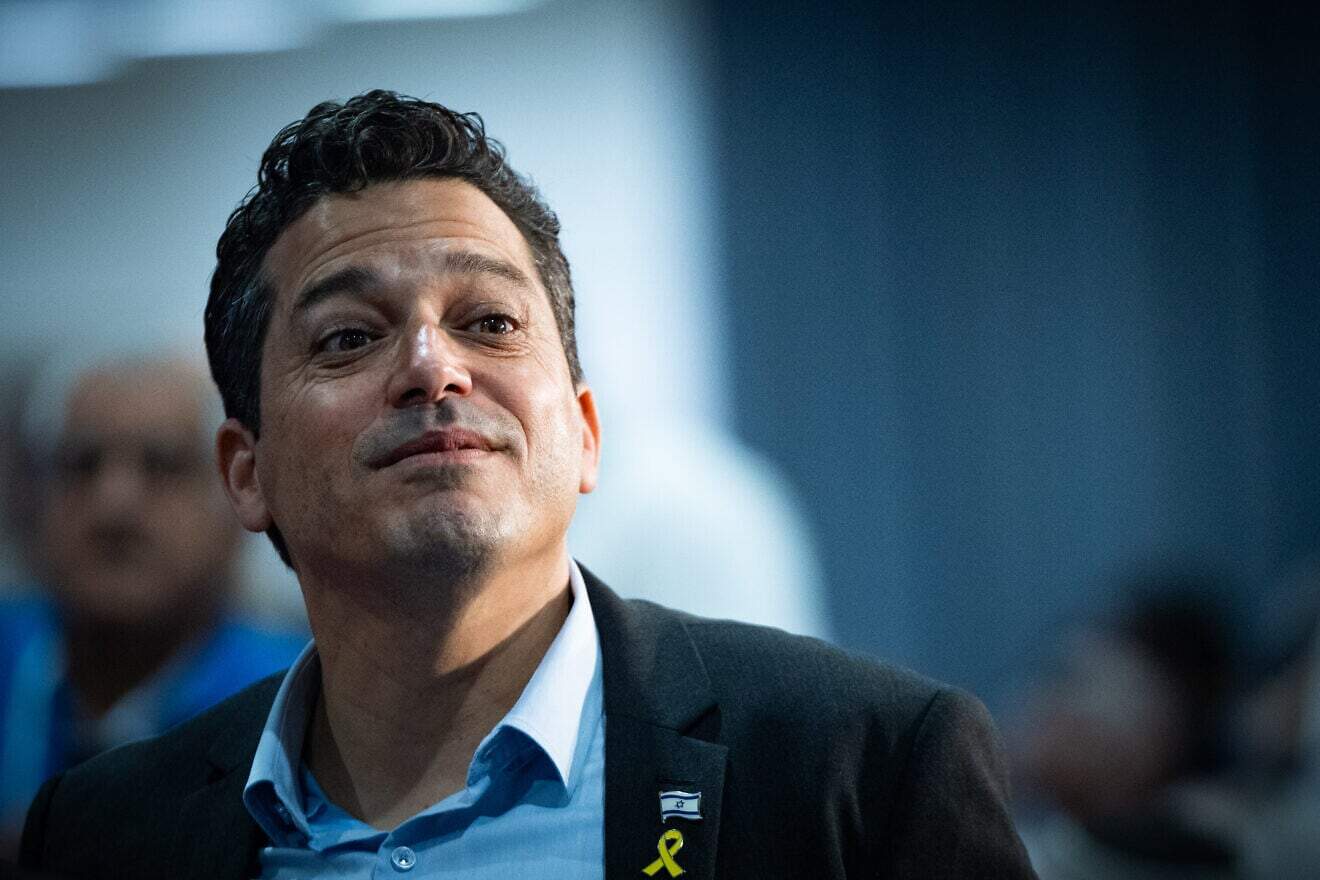
Amichai Chikli, the Israeli minister of Diaspora Affairs and Combating Antisemitism, attends a conference organized by his ministry at the International Convention Center in Jerusalem, March 27, 2025. Photo by Yonatan Sindel/Flash90.

Israel will begin enforcing updated regulatory measures on international non-governmental organizations starting Jan. 1, 2026, suspending the licenses of groups “that have failed to meet required security and transparency standards,” the Ministry of Diaspora Affairs and Combating Antisemitism announced on Tuesday.

The move follows security findings that employees of several international NGOs operating primarily with the Palestinian population were involved in terrorist activity, according to an interministerial review process led by the Diaspora Affairs ministry.

“Security reviews revealed that employees of certain organizations were involved in terrorist activity. In particular, investigations determined that individuals affiliated with Doctors Without Borders (MSF) were linked to terrorist organizations, including the Palestinian Islamic Jihad and Hamas (one identified as a Hamas sniper),” the ministry said in a press release.

“Despite repeated requests, the organization failed to provide full disclosure regarding the identities and roles of these individuals,” it added.

According to the government, fewer than 15 percent of international NGOs reviewed were found to violate the regulatory framework, primarily due to refusal to provide complete and verifiable information about employees—requirements intended to prevent terrorist infiltration into humanitarian structures.

The affected organizations were given 10 months to regularize their licenses, including a three-and-a-half-month extension from September through Dec. 31, 2025, but failed to comply. Organizations notified of license revocation must cease operations by March 1, 2026.

Israeli officials emphasized that the measures will not disrupt humanitarian aid to Gaza. Assistance continues to be delivered through approved and vetted channels, including United Nations agencies, bilateral partners and compliant humanitarian organizations. The NGOs affected represent a small fraction of overall humanitarian activity, the government said.

The updated framework requires full transparency regarding personnel, funding sources and operational structures. Engagement in activities such as delegitimization of Israel, legal action against Israel Defense Forces soldiers, Holocaust denial or denial of the Oct. 7, 2023, Hamas atrocities also constitutes grounds for license revocation.

The process is being coordinated with the Ministry of Defense, Ministry of Foreign Affairs, the National Security Council, the Coordinator of Government Activities in the Territories and the Israel Security Agency.

“I am proud that the government has entrusted my ministry with leading this effort to prevent the exploitation of humanitarian frameworks for terrorist purposes,” said Diaspora Affairs Minister Amichai Chikli. “Humanitarian assistance is welcome—the exploitation of humanitarian frameworks for terrorism is not.” 


JNS Staff

Source: https://www.jns.org/israel-to-suspend-licenses-of-ngos-over-terror-linked-staff/

Follow Middle East and Terrorism on Twitter

India to procure 1,000 SPICE air-to-surface missiles from Israel's Rafael as part of arms package - Dean Shmuel


by Dean Shmuel

India is the biggest customer of Israeli defense industries, accounting for about 34% of all exports between 2020 and 2024.


Rafael's SPICE missile
(photo credit: RAFAEL ADVANCED DEFENSE SYSTEMS)


India's Defense Acquisition Council (DAC), headed by Defense Minister Rajnath Singh, yesterday approved extensive procurement for an overall $8.7 billion.

Among the many arms included in the deal are SPICE 1000 guidance kits (SPICE 1000/Light Hail) manufactured by Israeli company Rafael Advanced Defense Systems, according to reports in the Indian media.

SPICE is a family of precise and autonomous air-to-ground weapon systems, with a range of up to 100 kilometers, with three types of bombs of different weights. SPICE 1000 weighs about 500 kilograms, and the entire system, developed by Rafael, has won the Israel Defense Prize.

The uniqueness of the SPICE family is the ability to navigate and home in on the target autonomously, independently of GPS, using an electro-optical homing head that incorporates an innovative mathematical algorithm, which compares the target image to what it sees in real time and thus achieves extremely high hit accuracy of less than three meters.

India's fighting with Pakistan in May highlighted the country's need for arms in diverse systems in general and from Israel in particular. This was clearly reflected in early November when the Director General of the Defense Ministry, Maj. Gen. (res.) Amir Baram, signed a memorandum of understanding (MoU) to strengthen security cooperation with his Indian counterpart, Rajesh Kumar Singh.

Rampage missile fired from a fighter jet (credit: IAI)

Israel defense industries biggest customer

According to the Stockholm International Peace Research Institute (SIPRI), India is the biggest customer of Israeli defense industries, accounting for about 34% of all exports between 2020 and 2024.

Last month, the IDRW website reported that a delegation from the Indian Defense Ministry had secretly arrived in Israel, to reach agreements that would lead to India procuring Israel Aerospace Industries (IAI) Air LORA ballistic missiles and Rafael's Ice Breaker cruise missiles, but would also manufacture them itself.

Previous reports in India have already indicated that India wants Air LORA missiles following the great success of the Rampage missiles in the recent fighting with Pakistan.

Rampage has a range of about 250 kilometers, and the Indian Air Force uses it on Sukhoi 30 and MiG 29 aircraft. Rampage is very accurate, but its range is about 150-250 kilometers, which puts Indian fighter jets at risk against Pakistani defense systems made in China. In contrast, Air LORA has a range of about 400 kilometers, and with it fighter jets can hit targets, without endangering themselves from advanced air defense systems.

Air LORA, developed at IAI's MLM plant, is designed to hit missile sites, military bases and air defense systems. The missile weighs about 1,600 kilograms, flies at supersonic speed, and uses satellite navigation that is protected from jamming. One of its most notable advantages is the "launch and forget" method, meaning it is launched to the target and does not need to be guided along the way. Its warheads are diverse and can be designed to hit soft targets or bunkers. With a range of about 400 kilometers and a strike radius of only about ten meters, it is expected to allow India to hit any Pakistani base.

India is also interested in the Rafael's Ice Breaker cruise missile, which is designed for attacks at ranges of about 300 kilometers against land and sea targets. The missile is effective in all weather conditions, can function well in environments saturated with electronic warfare, and has infrared (IIR)-based navigation and missile guidance capabilities, which, through AI, can acquire and identify targets.


Dean Shmuel

Source: https://www.jpost.com/defense-and-tech/article-881868

Follow Middle East and Terrorism on Twitter

How Gazan medical professionals were complicit in hostage captivity, sexual assault - Zina Rakhamilova


by Zina Rakhamilova

If medical professionals can participate in terror without accountability, then the laws meant to protect humanity have been hollowed out from within.


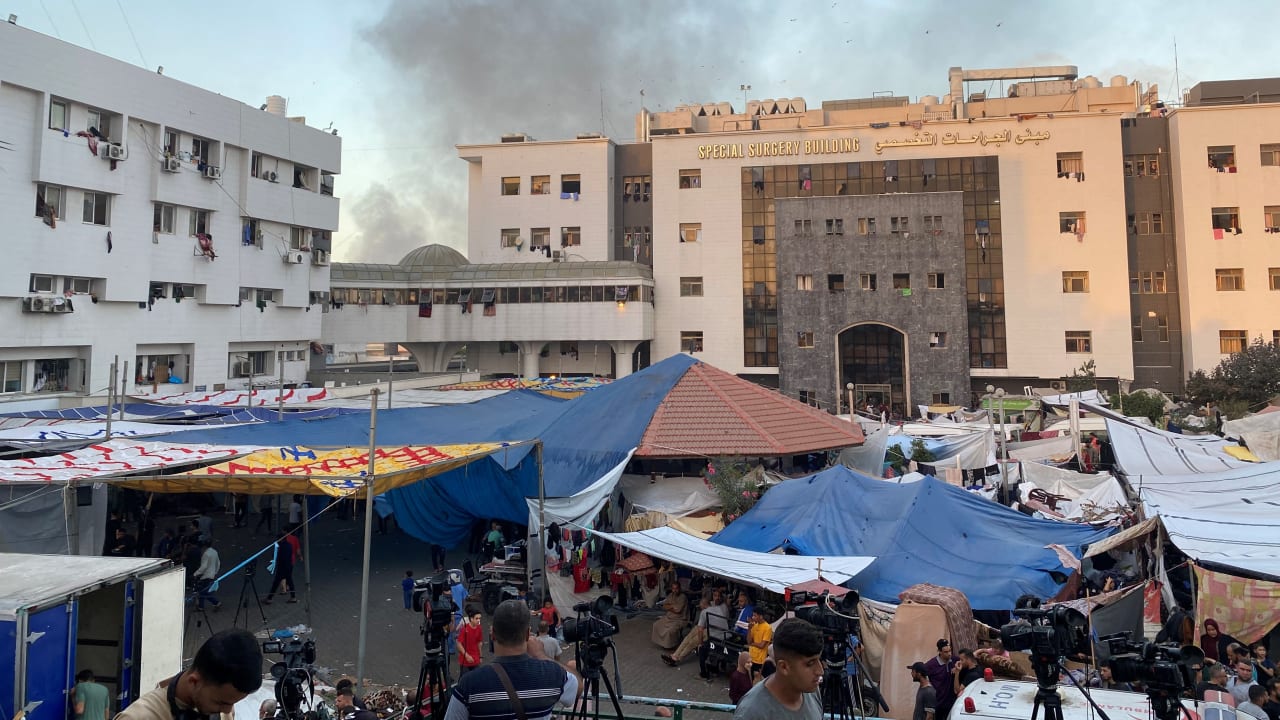
 Smoke rises as displaced Palestinians take shelter at Al Shifa hospital, amid the ongoing conflict between Hamas and Israel, in Gaza City, November 8, 2023.
Smoke rises as displaced Palestinians take shelter at Al Shifa hospital, amid the ongoing conflict between Hamas and Israel, in Gaza City, November 8, 2023.
(photo credit: REUTERS/DOAA ROUQA)


We have spent the better part of the last two years being inundated with propaganda and disinformation pushed by Hamas and amplified by its supporters around the world. But the greater crime lies not only in terrorists and those who cheer them.

It lies in the silence and inaction of human rights organizations and international health bodies that were created to prevent exactly these kinds of abuses. Their failure to respond meaningfully to Hamas’s crimes against Israelis and against the Palestinian people is a betrayal of the very principles they claim to uphold.

Romi Gonen's testimony

Last weekend, former Israeli hostage Romi Gonen spoke publicly for the first time about her time in Hamas captivity. Her testimony confirmed what many feared, but what made it especially disturbing was not only what happened to her but who inflicted part of that harm.

Gonen revealed that during the 471 days she was held hostage, she was sexually assaulted four times, with the third assault being the most severe. Within the first four days of her captivity, before any Israeli response and before a single IDF soldier had entered Gaza, the first man to sexually assault her was a nurse, someone tasked with treating her bullet wound.

It has been a recurring pattern in Gaza for medical professionals, teachers, and journalists to use their positions as a cover for involvement in terror organizations. We know that hostages were held by Gazans working in ordinary professions in this way, but it is especially horrifying to learn that someone entrusted with her care used his position to abuse her. After the assault, Gonen was forced to continue living in the same house as the man who had violated her.

 A views shows a room in the damaged Al Shifa Hospital after Israeli forces withdrew from the hospital and the area around it following a two-week operation, amid the ongoing conflict between Israel and Hamas, in Gaza City April 2, 2024.  (credit: REUTERS/DAWOUD ABU ALKAS)
A views shows a room in the damaged Al Shifa Hospital after Israeli forces withdrew from the hospital and the area around it following a two-week operation, amid the ongoing conflict between Israel and Hamas, in Gaza City April 2, 2024. (credit: REUTERS/DAWOUD ABU ALKAS)
That detail should have triggered international outrage. It didn’t.

Gonen’s testimony matters not because it is singular but because it fits a growing and deeply troubling pattern. Medical professionals in Gaza, doctors, nurses, hospital staff, were not merely passive bystanders to Hamas’s crimes. In multiple documented cases, they were active participants in hostage-taking, abuse, concealment, and even murder.

A pattern of abuse

This is not an accusation made lightly. Every humanitarian organization, particularly those operating in Gaza, must be outraged that terrorists are masquerading as health professionals and participating in this corrupt system.

There have been multiple documented cases of this kind of abuse. The first involves former hostage Noa Marciano, who was kidnapped from the Nahal Oz base. Her body was recovered by the IDF shortly after her death, but it was only years later that it was revealed she had been killed by a Gaza doctor who injected air into her veins and even filmed her death.

Emily Damari, who was kidnapped from Kibbutz Kfar Aza, was held inside Shifa Hospital by a physician who forced her to call him “Dr. Hamas.”

Then there is Dr. Marwan al-Hams, a physician at a hospital in Rafah, who handled the body of IDF soldier Hadar Goldin who was killed by Hamas in 2014, knowing it was hidden for years in a tunnel beneath the city.

Another example is Dr. Ahmed al-Jamal, a physician who also worked at a local mosque. He held Israeli hostages Andrey Kozlov, Shlomi Ziv, and Almog Meir Jan inside his family home in Nuseirat alongside his son, who had written for Al Jazeera. Both were known to have ties to Hamas and both were killed by the IDF in June 2024 during a rescue operation of those hostages.

The weaponization of medical protections

These are not fringe allegations. They are documented cases that expose a grim reality: Humanitarian and medical protections, some of the most sacred principles in international law, were deliberately weaponized.

International humanitarian law exists to shield medical professionals so they can save lives without fear. Hamas understood this. And it exploited that protection, embedding terror within hospitals, clinics, and homes labeled as civilian or humanitarian spaces. When doctors become jailers, when nurses become abusers, when hospitals become holding cells, the moral and legal framework designed to protect civilians collapses.

What this war has made painfully clear is that humanitarian and health organizations often turn a blind eye when the victims are Jewish. Legacy media outlets scrutinize Israel’s actions against a non-state terror group that embeds itself in civilian infrastructure and exploits aid for profit, yet they barely acknowledge the role some Gaza-based medical professionals played in hostage abuse and killings.

Gonen described repeated sexual harassment and assault, constant threats, and psychological terror. She recounted how her captors refused to let her use the bathroom alone, punished her every time she resisted harassment, and ultimately, how one captor took advantage of her during his final hours of guarding her before she was moved into the tunnels.

She has spoken about the long aftermath: the PTSD, the way ordinary sounds trigger memories of captivity, and the cruel misconception that once hostages return home, their suffering is over.

The suffering doesn’t end. While the release of hostages brought relief to their families and the public, it marked only the beginning of a long and difficult journey toward recovery.

What makes Gonen’s testimony especially significant is not only what it reveals about Hamas but also what it exposes about the international system’s failure to respond. October 7 victims came from 35 different countries, so this was never solely Israel’s tragedy. The entire world should have taken responsibility for the citizens affected.

And yet, Israel has largely been left to shoulder the burden alone, militarily, diplomatically, and morally.

The world lacks a coherent framework for responding when non-state terror organizations commit mass sexual violence and hostage-taking while hiding behind civilian infrastructure and humanitarian status. Existing mechanisms, including the Responsibility to Protect doctrine, have proven weak, politicized, or selectively enforced.

Countries that host, fund, or legitimize terror groups, like Qatar or the regime in Iran, must be held accountable. Human-rights organizations must confront uncomfortable facts, even when they complicate preferred narratives. If medical professionals can participate in terror without accountability, then the laws meant to protect humanity have been hollowed out from within.

And if the world refuses to confront that, October 7 will not remain a tragedy of the past: It will become a blueprint for terrorist groups in the future.


Zina Rakhamilova is a co-founder and CEO of Social Lite Creative, a digital marketing firm that specializes in geopolitics.

Source: https://www.jpost.com/opinion/article-881795

Follow Middle East and Terrorism on Twitter

Rep. Omar is center stage in massive Minnesota fraud scandal for her support of abused programs - Steven Richards


by Steven Richards

Worse than Walz? Omar’s pandemic-era MEALS Act was later exploited by more than 70 defendants who stand accused of using meals program money for personal expenses or to send overseas.


Rep. Ilhan Omar, D-Minn., was at the forefront of expanding federal funding for pandemic-era food and childcare programs. Those programs are now at the center of fraud allegations among the Somali immigrant community in her home state. 

Omar, who represents a congressional district with a sizable Somali population in Minneapolis, championed the MEALS Act in 2020 at the height of the pandemic and offered an amendment that would allow the federal government the ability to grant waivers to state governments for increased costs. 

Omar introduced the Act with the goal of removing oversight barriers to the expansion of federally funded state meals programs amid the school closures of the COVID-19 pandemic. The legislation allowed the Department of Agriculture to waive requirements, including for increased federal costs. 

Omar's MEALS Act opened the door to fraudsters

It was because of these waivers that Minnesota is now facing scrutiny for allegedly mismanaging federal funds, including by distributions to the “Feeding Our Future” program, which is linked to fraudulent activity by more than 70 defendants. Federal prosecutors say this particular scheme cost taxpayers $250 million after defendants allegedly appropriated the meals program funding for personal use or to send overseas during the COVID-19 pandemic. 

Despite the controversy, Omar doubled down on her prior support for the MEALS Act. When asked whether she regretted that vote in light of the prosecutions, she said: “Absolutely not, it did help feed kids.”

"The largest pandemic-era fraud identified": Garland

The Justice Department first charged 47 people in a $250 million scheme involving the nonprofit in 2022, Just the News previously reported. Then-FBI Director Christopher Wray said the defendants "went to great lengths to exploit a program designed to feed underserved children in Minnesota amidst the COVID-19 pandemic, fraudulently diverting millions of dollars designated for the program for their own personal gain.” 

Attorney General Merrick Garland, who served during the Biden administration, called it the largest pandemic-era fraud scheme ever identified. 

But the alleged fraud targeting the meals program is only part of the rampant fraud impacting Minnesota’s welfare system with its genesis in the Somali immigrant community there. The New York Times reported last month that the fraud likely totals more than $1 billion in misused taxpayer funds.

In 2021, two men were named in a search warrant related to the Feeding Our Future fraud scheme, Ahmed Ghedi and Abdihakim Ahmed, associates of Safari Restaurant and Event Center. Both men donated a total of $5,400 to Omar’s congressional campaign. Omar also held her 2018 congressional victory party at the restaurant. 

Both men later pleaded guilty to charges related to the fraud. Omar’s chief of staff told the local Sahan Journal that her campaign used that money to donate to local food shelves after the fraud was made known.  

Former Omar campaign staffers plead guilty

Additionally, a former associate of Omar’s campaign, Guhaad Hashi Said, pleaded guilty in August to running a fake food site called Advance Youth Athletic Development, where he claimed to have served 5,000 meals a day but pocketed $3.2 million from the food program, Just the News previously reported.

Alpha News reported that Said worked for Omar's campaigns in 2018 and 2020 "overseeing voter mobilization as an 'enforcer.'”  

Scrutiny in Minnesota again vaulted to the forefront shortly after the Christmas holiday when a viral video appeared to show empty daycare centers in Minneapolis that were recipients of state grants. The online video, released by conservative independent reporter Nick Shirley, shows in-person visits to several licensed childcare centers in Minneapolis. 

In a visit to one of the facilities that has garnered the most attention, Shirley’s footage shows no children or visible activity at the location despite records indicating it is supposed to serve nearly 100 children and has received millions of dollars in state support, Just the News reported. The facility, on Nicollet Avenue in Minneapolis, stood out further because of a sign that misspells “Learning” as “Learing.” 

The son of the facility owner pushed back on Shirley’s video, claiming that the independent journalist’s visit came before business time for the daycare to open for the day. 

“Do you go to a coffee shop at 11 p.m. and say, ‘Hey, they’re not working’?” Ibrahim Ali, who claimed he was the facility manager, argued in a statement to The New York Post. He further told the Post that there were 16 kids inside the daycare center on Monday when he was interviewed. 

However, one local told the outlet that “We’ve never seen kids go in there until today.

“That parking lot is empty all the time, and I was under the impression that place is permanently closed,” the person told the Post

Tikki Brown, commissioner of the new Minnesota Department of Children, Youth, and Families, also pushed back on the accusations of rampant fraud, but said the department would take concerns of fraud seriously. 

“While we have questions about some of the methods that were used in the video, we do take the concerns that the video raises about fraud very seriously,” she said. “There have been ongoing investigations with several of those centers. None of those investigations uncovered findings of fraud.” 

Open, not open, then open again

Despite the kids flowing into the Quality Learning Center on Monday, Brown said that the facility had reportedly closed for good last week. A spokesperson for the Minnesota DCYF later told Newsweek that they learned on December 19 that the daycare had closed but after following up later, learned on December 29 the daycare decided to remain open. 

Omar has long called for increasing federal funding for such daycare services managed by individual states. She proposes universal pre-K, childcare subsidies for low-income families, and universal school meals, according to her campaign website.  

Walz was warned in 2024

State auditors warned Minnesota Governor Tim Walz in February 2024 that his team did not have adequate protections for the taxpayer money it was sending out the door to nonprofit groups and workers, more than two years after the first charges in the Feeding Our Future fraud scheme were filed. 

The auditors found “pervasive noncompliance” inside the Walz administration with grant management policies that were “signaling systemic issues regarding grants oversight.” Specifically highlighting the meals program, the auditors said that the Minnesota Department of Education “should take additional steps to verify information provided in support of sponsorship applications submitted by high-risk applicants.” 

Walz defended his administration, saying there was no state employee “implicated” in the wrongdoing. “There’s not a single state employee that was implicated in doing anything that was illegal. They simply didn’t do as much due diligence as they should have,” said Walz, according to MPR News.

More investigations to come

Later that year, the U.S. Department of Labor announced that Walz’s state had lost $430 million by overpaying unemployment benefits during the pandemic. While it had a lower percentage of improper payments than many other states, the sizable total loss alarmed some members of the State Legislature, especially Republicans.

The widespread concerns of fraud prompted the House Oversight Committee to launch an investigation earlier this month into Walz’s management of federally funded state benefit programs, primarily during the COVID-19 pandemic. 

Committee Chairman James Comer, R-Ky., said his probe would focus on what he described as “widespread fraud in Minnesota’s social services programs under Governor Tim Walz’s watch, the state’s efforts to cover it up, and retaliation against whistleblowers who sought to protect taxpayer dollars.” 

The committee sent letters to Minnesota Governor Tim Walz and Attorney General Keith Ellison, seeking “documents, communications, and records as part of the Committee’s investigation,” according to a press release. Those letters demanded that Walz and Ellison had until December 17, 2025, to provide the requested information to the Oversight Committee. 

The committee set a December 17 deadline for responses. It is unclear whether Walz replied to the committee in time. Ellison sent a letter to Comer on that date stating his commitment to investigate fraud and turning over some of the data the committee requested, but also said that other data, especially about ongoing fraud investigations, is “privileged” and “non-public.

Last week, Comer announced that his committee would be expanding its probe into the possible fraud in Minnesota's social programs, including probing whether the state attempted to cover up the fraud scheme and/or retaliate against whistle-blowers who exposed problems in the taxpayer-funded programs, Just the News reported.  


Steven Richards

Source: https://justthenews.com/accountability/waste-fraud-and-abuse/ilhan-omar-caught-middle-minnesota-fraud-concerns-support

Follow Middle East and Terrorism on Twitter