by Leo Feierberg Better
Success can be attributed to the simplicity of its LTD system, allowing for easier operation by clients because it can be quickly removed and replaced in the field without requiring specialized tools
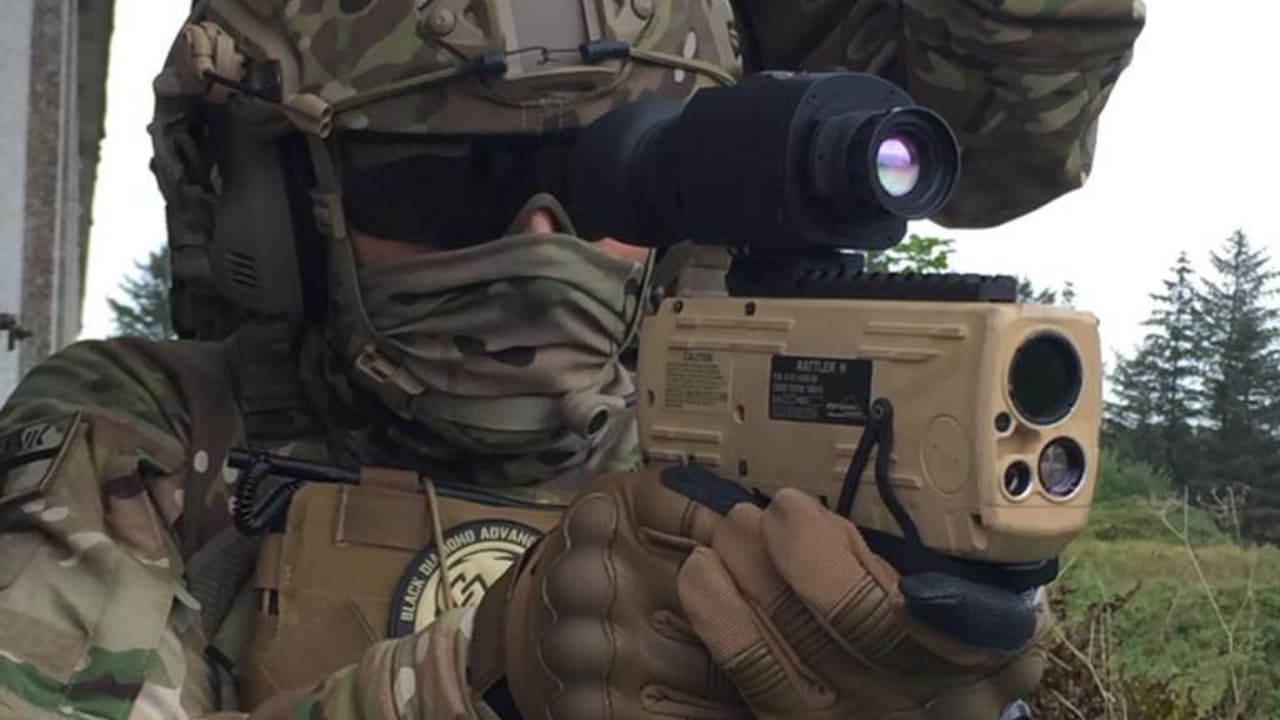 |
In 2025 Elbit Systems more than doubled its previous annual sales for its Laser Target Designator (LTD) systems, reflecting rising demand as militaries across the world increasingly rely on precision-guided targeting and networked battlefield systems.
LTDs use laser beams to precisely mark a target, allowing compatible weapons to lock onto and strike it accurately. All six of Elbit’s LTD systems for use on land and in the air “meet NATO laser‑coding standards, enabling smooth coordination among coalition forces,” the company stated.
“Targeting with laser designators is something that takes place a lot on the modern battlefield,” an Elbit official told Defense & Tech by The Jerusalem Post, pointing to the growing need to strike mobile targets and fleeting target opportunities. “This is the main advantage of using a laser designator.”
In 2025, Elbit recorded strong sales for both land and air-based systems.
On airborne platforms, the company saw integration of its systems “into stabilized turrets and sensor systems to enhance targeting accuracy for ISR, close air support, and strike missions.”
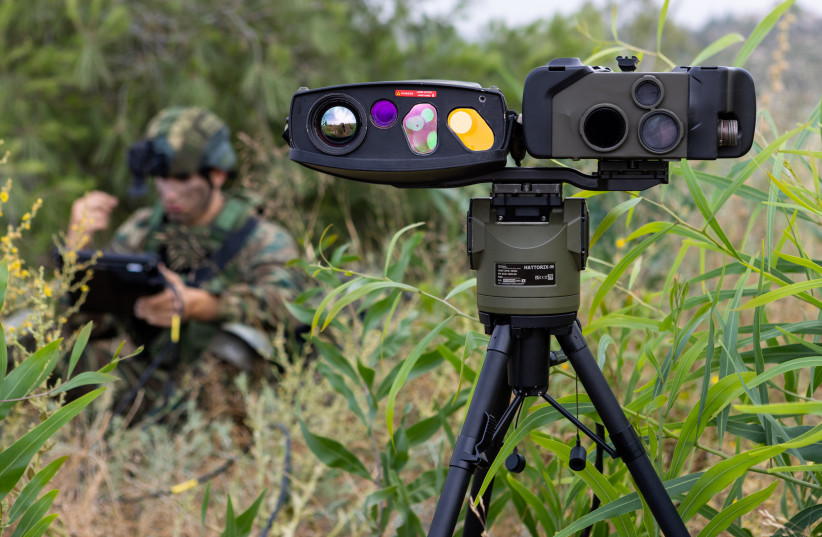
According to the official, airborne laser designation is particularly suited for tracking moving targets. “For air applications, it's more for mobile targets and identifying opportunities,” he said, describing scenarios in which intelligence identifies a specific vehicle and an airborne payload equipped with sensors, cameras, and a laser designator locks onto the target and guides a munition from an aircraft or UAV to close the strike loop.
On land, the LTD systems, which are network-enabled, interface with C4I suites. C4I, which stands for Command, Control, Communications, Computers, and Intelligence, “allows users to share target and laser data securely and in real time – tightening coordination, improving situational awareness, and shortening the sensor‑to‑shooter cycle.”
Ground-based designation, however, requires a clear line of sight as well as familiarity with terrain, the official noted, making coordination and positioning critical to land operations.
Part of Elbit’s success could be attributed to the simplicity of its LTD system. According to the company, the system contains “a single‑LRU, plug‑and‑play design.” A line-replaceable unit, known as an LRU, allows for easier operation by clients because it can be quickly removed and replaced in the field without requiring specialized tools or returning the entire system for maintenance.
The surge in demand also reflects broader shifts in warfare, particularly the proliferation of drones. “The whole battlefield has changed. We have a lot of drones in the field,” the official told D&T. Missions that were once conducted by large UAVs or ground teams with standalone designators are increasingly being carried out by smaller unmanned systems equipped with integrated laser capabilities.
Nevertheless, the official emphasized that the technological barrier to entry remains high.
“It requires a huge investment in R&D,” he said, pointing out that developing a laser designator capable of delivering precise energy to an exact point requires large research investments.
“There are not many companies in the world capable of doing that. We are one of the largest companies in the world to bring this kind of laser designation.”
The laser capabilities are part of Elbit's ISTAR division, which also develops laser range-finders integrated into vehicle sights, airborne payloads, and electro-optical systems. Knowing a precise range, the official said, remains fundamental to battlefield effectiveness.
Looking ahead, the official said the technological focus is on miniaturization and power efficiency. “Today, what is important is to build a very small laser with very high energy,” he said, describing ongoing efforts to reduce size and weight while maintaining output performance.
As militaries adapt to drone-heavy battlefields and shorter sensor-to-shooter cycles, demand for efficient and networked laser designators may increase in the future.
Leo Feierberg Better
Source: https://www.jpost.com/defense-and-tech/article-886677

No comments:
Post a Comment