The "Middle East and Terrorism" Blog was created in order to supply information about the implication of Arab countries and Iran in terrorism all over the world. Most of the articles in the blog are the result of objective scientific research or articles written by senior journalists.
From the Ethics of the Fathers: "He [Rabbi Tarfon] used to say, it is not incumbent upon you to complete the task, but you are not exempt from undertaking it."
A former US State Department official called the idea of Iran severing global internet access permanently "plausible and terrifying."
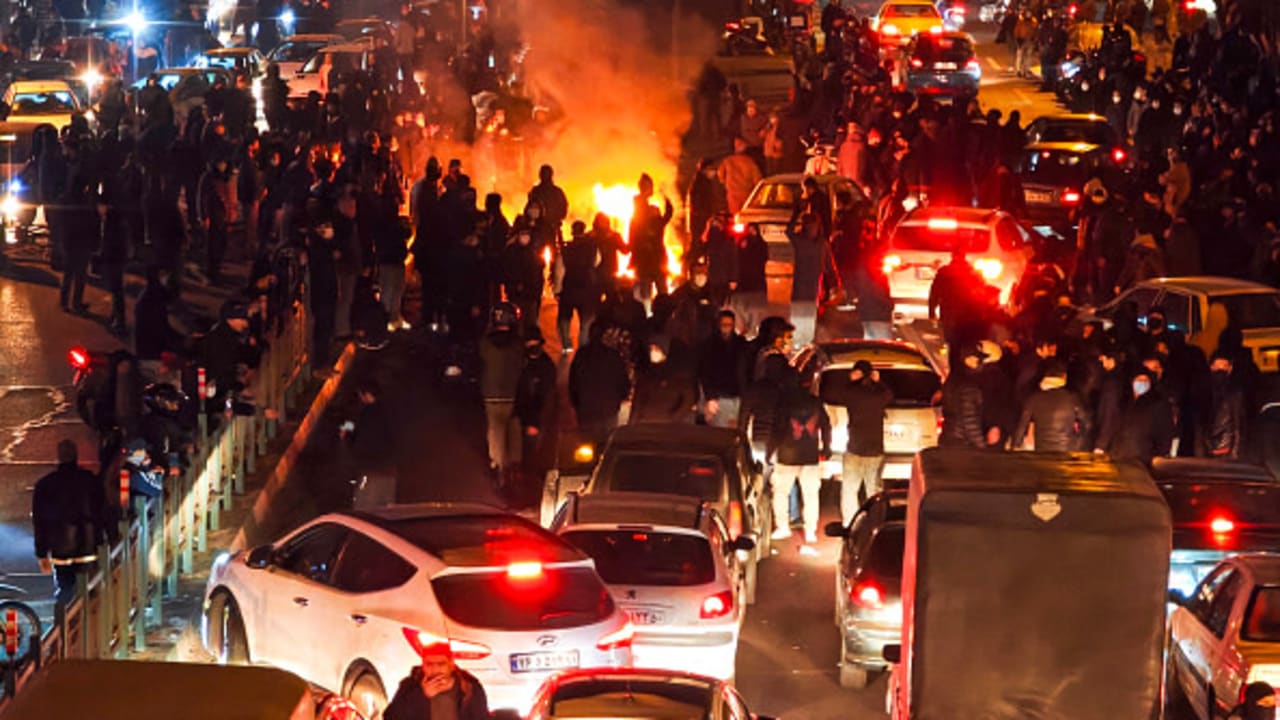
People gather during protest on January 8, 2026 in Tehran, Iran.(photo credit: Anonymous/Getty Images)
Iran is planning to limit global internet access to specific vetted individuals and will cut off all other Iranians from the rest of the world, The Guardian reported on Saturday, citing a Filterwatch report monitoring Iran's internet censorship.
"The
Islamic Republic has abandoned its traditional model of mass internet
censorship in favor of a new, far darker strategy: 'Absolute Digital
Isolation," Filterwatch wrote, citing a number of sources in Iran.
Even
Iranians with security clearance or those who have passed government
checks would only be allowed filtered access to the global internet,
according to Filterwatch leader Amir Rashidi.
Iran's global internet access was severed on January 8, amid escalating protests.
According to Filterwatch, this shutdown was not an impulsive decision
but the result of planning, which differs significantly from past
internet shutdowns.
While
the global internet was blocked during the 2019 and 2022 protests, the
National Information Network (NIN) remained online, enabling local apps
and essential services to function. The NIN was shut down, along with
privileged SIM cards and landline telephone networks, in the initial
phase of this 2026 shutdown.
A
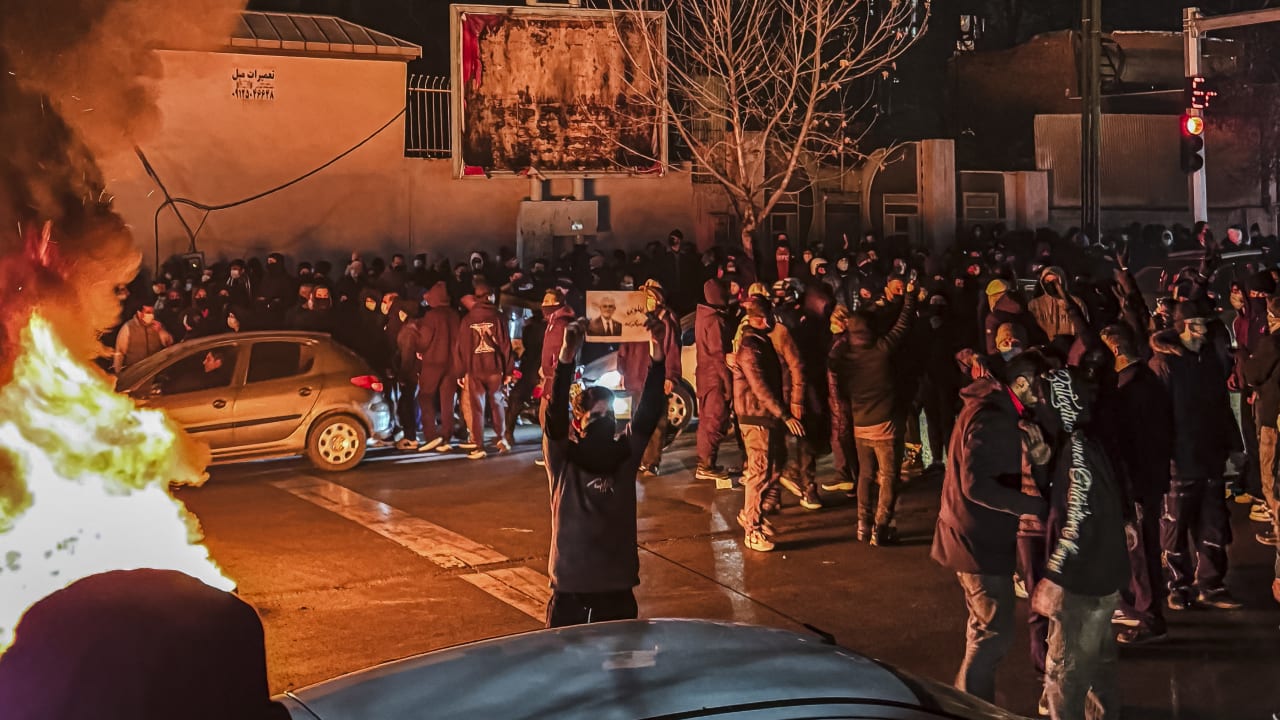
protester waves the pre-Islamic Revolution Iranian flag outside UN
headquarters during a United Nations Security Council meeting on Iran in
New York on January 15, 2026. (credit: ANGELA WEISS / AFP via Getty
Images)
Will Iran shut off the internet permanently?
Iran
has been working towards a separate national internet since 2009,
establishing the Supreme Council of Cyberspace in 2012. While they
developed the domestic network, the regime also implemented a
sophisticated filtering system to limit global internet access to only a
select few, a practice known as whitelisting.
The
national internet allows Iranians to access websites and applications
"purpose-built" by the regime, including messaging services and search
engines, the Guardian wrote.
A
former US State Department official called the idea of Iran severing
global internet access permanently "plausible and terrifying." However,
he also warned that it would be costly.
“It’s
not out of the question that they’re going to do it, but seeing these
situations unfold, the economic impact and the cultural impact will be
really massive. And they may overplay their hand," the official said.
Reports from UK officials suggest Iran used chemical substances to control protesters. Alleged delayed health reactions lead to deaths days later, sparking international concern.
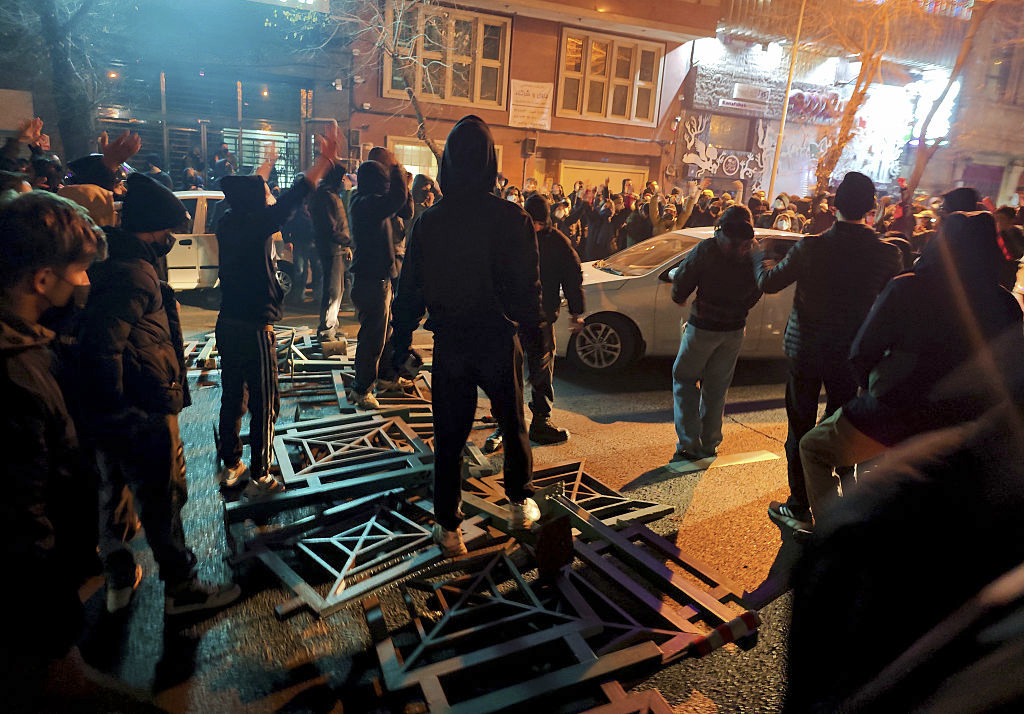
Iranians gather while blocking a
street during a protest in Tehran, Iran on January 9, 2026. The
nationwide protests started in Tehran's Grand Bazaar against the failing
economic policies in late December, which spread to universities and
other cities(photo credit: MAHSA/Middle East Images/AFP via Getty Images)
Reports from UK officials have raised serious concerns that Iranian security forces may have used chemical weapons or toxic substances to suppress dissent throughout the country.
The
claims were reported on Saturday during a special broadcast on the
British news network GB News, which cited an internal document described
as “credible." However, it has not yet received official confirmation
from Western intelligence sources.
Bill Esterson, a member of the British Labour Party’s
foreign policy team, presented information on GB News from a report
detailing the situation in one of Iran’s major cities. The report
highlights several disturbing issues on the ground in Iran.
Prisons
are reportedly facing severe overcrowding due to a wave of arrests of
protesters, and courtrooms are reportedly crowded with the families of
detainees, while lawyers have been denied entry, effectively preventing
legal representation for those who have been arrested.
The
most alarming aspect of Esterson’s report involves allegations that a
“toxic chemical substance” was used against protesters.
Iranians
gather while blocking a street during a protest in Tehran, Iran on
January 9, 2026. (credit: MAHSA / Middle East Images / AFP via Getty
Images)
Testimonies
suggest that this substance caused delayed health reactions, with some
victims reportedly dying several days after exposure rather than
immediately.
During
the discussion in the GB news studio, it was noted that the number of
people killed or injured due to the use of such substances is believed
to be very high. British journalist Patrick Christys emphasized in the
GB News report the significance of the “delayed reaction,” making it
difficult to quickly identify the cause of harm.
This discussion prompted troubling historical comparisons on GB News, including the massacre carried out by Saddam Hussein
in Halabja, where gas was used against thousands of Kurdish civilians.
References were also made to Syria under the Assad regime, which has
faced accusations of using chemical substances against protesters.
No official confirmation regarding Iran's use of chemical weapons
As
of now, no official confirmation of these allegations has been issued
by government sources in the US or Europe. Nevertheless, the existence
of the report has heightened concern within the international community
monitoring human rights violations in the Islamic Republic.
During
the wave of protests in 2022, there were also reports of an
unidentified “green gas” used against protesters in the Kurdish cities
of Javanrud and Piranshahr. Videos circulated on social media showing
thick green smoke filling the streets during violent clashes with
security forces, causing panic among residents and reviving painful
memories of past chemical attacks.
Medical
experts and chemists at that time assessed that the substance might
have been hexachloroethane or adamsite (DM), materials sometimes used to
disperse demonstrations or create military screening.
According
to testimonies and medical evaluations, exposure to the gas leads to
symptoms such as severe skin irritation, nausea, mental disorientation,
and temporary muscle paralysis. Doctors noted that while the substance
is considered carcinogenic and intended primarily to instill fear among
protesters, it is not as lethal as military nerve gas.
A disruption to global oil supplies could cause prices to rise at a time when President Donald Trump has turned his focus to affordability on the home front.
The Gulf Arab states
warned the Trump administration that a strike on Iran in retaliation for
the crackdown on protests could spark a regional conflict and disrupt
oil supplies, putting U.S. bases in danger or creating economic troubles
for the United States, Just the News has learned.
A disruption to global oil supplies could cause prices to
rise at a time when President Donald Trump has turned his focus to
affordability on the home front ahead of the midterm elections later
this year.
Amid sustained protests that rocked many major cities over
the last two weeks, Iranian authorities resorted to violent crackdowns
on protesters to maintain control. President Donald Trump vowed to intervene
if the regime doesn’t stop the killing of protesters. To that end, on
Monday, he canceled any further meetings with Iranian officials unless
the killings stopped.
In subsequent days, there were signs that the U.S. was
preparing military action against Iran. However, by Wednesday, President
Trump said he was told that the killings of protesters had in fact
stopped, and the regime had no current plans to execute any prisoners.
Estimates of the death toll stemming from the recent protests vary
widely, but human rights groups say that anywhere from 2,500 to 3,400 people have been killed by security forces of the Islamic theocracy.
Internet access still blocked, information is scarce
Though the president has ordered additional military assets
to the region, it remains unclear whether the administration will
follow through with action against Iran. Since Tehran is still blocking
internet access, it is also difficult to determine whether protests
there are still ongoing.
Israel, which has also urged the U.S. to refrain from
attacking Iran, reportedly assessed that the rate of killing of
protesters has declined since the beginning of the regime crackdown.
The existence of the discussions between the United States
and senior officials of the Gulf Arab states was reported earlier this
week, first by The New York Times and TheWall Street Journal.
A source who was briefed on the talks between the Arab states and President Donald Trump told Just the News
that these warnings against strikes were not delivered out of any
particular support for Iran, but rather geared towards conveying the
dangers of an “intractable conflict” in the Middle East that would have
impacts, both on security and the economy.
Specifically, the Gulf monarchies shared concerns with the
Trump administration that a strike on Iran during a time of significant
domestic unrest could spark a wider retaliation by the Islamic Republic
that could endanger U.S. troops and close off the Strait of Hormuz, the
narrow passage between the Persian Gulf and the Indian Ocean through
which about 20% of the world’s oil supplies traverse.
Escalation could mean a rise in world's oil prices
Iran’s ability to threaten the narrow waterway, potentially
choking off completely seaborne commerce through the strait, has for
years been a concern amid tensions between Iran and its neighbors as
well as the United States.
In a scenario of significant escalation, analysts say that
global oil prices could rise by double digits. “The fear of a closure
will cause the price of oil to rise a few dollars per barrel, but it is
the complete closure of the Strait that can result in a $10 to $20 per
barrel spike,” Andy Lipow, president of Lipow Oil Associates, told CNBC this week.
This effect, however, would be reduced if the disruption to
trade is only temporary, or if the presence of U.S. naval assets would
prevent Iran from fully closing off the strait.
Yet, a potential shock to oil markets is likely to remain a
potent concern for the Trump administration, which has recently focused
on pivoting to an affordability message ahead of the 2026 midterm
elections.
A large part of that effort involves keeping gas prices down. Over the holidays, the president touted decreased gas prices, which had fallen to between $2 and $3 per gallon. Earlier this week, the White House posted a video to TikTok celebrating lower gas prices across America set to Daddy Yankee’s 2004 Latin dance hit “Gasolina.”
Beyond the threat of an oil supply shock, the Arab states
raised concerns that a U.S. strike while the Iranian regime is
vulnerable risks a wider regional conflict that could suck in unwilling
neighbors, especially if Iran decides to retaliate by attacking U.S.
bases.
Israel urges caution
Many of Iran’s Gulf neighbors, including Qatar, the United
Arab Emirates, and Saudi Arabia, host U.S. forces. For example, Qatar
is home to the sprawling Al Udeid Air Base
that hosts the forward operating base of the U.S. Central Command. In
June, following President Trump’s strikes on the Iranian nuclear
program, Iran fired ballistic missiles at Al Udeid, where about 10,000 U.S. troops are stationed. There were no casualties from the incident.
At this time, however, the U.S. currently does not have an aircraft carrier
and strike group present in the region after many naval assets were
diverted to the Caribbean earlier this year for the operation targeting
Venezuela’s dictator Nicolas Maduro. Carriers bring fighter-bombers and
their destroyer escorts boast the Aegis combat systems, both useful for
intercepting enemy missiles.
Without those resources, the military may be hard-pressed
to protect its bases in the region in the event of an attack by Iran
following any U.S. strikes, even with the help of its Arab partners.
Earlier this week, President Trump ordered the Nimitz-class
aircraft carrier U.S.S. Abraham Lincoln and its destroyers to deploy to
the Middle East from the South China Sea, but the journey will take about one week.
It is not just the Arab Gulf states that have urged the
president to consider caution. Israel, a close ally who fought a brief
12-day war with Iran earlier this year, also reportedly asked President
Trump to refrain from ordering an attack, the New York Times reported. Prime Minister Benjamin Netanyahu reportedly asked President Trump to wait for any strikes to give Israel time to prepare its defenses.
The source, who declined to be named, was briefed on discussions between the Gulf Arab states and Trump told Just the News
that Israel shared similar concerns about being dragged into a regional
conflict if Iran were to retaliate against U.S. strikes.
At least 800 executions of protesters purportedly canceled
Following Israel’s strikes on Iranian missile sites and air
defenses this June, Iran retaliated with a barrage of hundreds of
missiles and drones. Some of those penetrated Israel’s air defenses and struck military bases and civilian targets.
On Friday, President Trump appeared to back off his threat to strike Iran
by thanking the regime for canceling “over 800” hangings of those
arrested for protesting. However, a day earlier, U.S. Ambassador to the
United Nations Mike Walz said that “all options” remain “on the table”
if Iran continues to kill protesters.
Earlier this week, Just the News reported that the Trump administration has several options to punish Iran
short of direct military action. These could include offensive cyber
operations, working to enable internet communications in the country,
and seizing sanctioned oil tankers to put the squeeze on the regime's already-troubled finances.
The same institutions and voices that were so shrill and relentless when condemning Israel in the name of Palestinian rights are, when courageous Iranian lives are at stake, spectacularly non-existent. This double standard only exposes the bottomless hypocrisy at the heart of much contemporary human rights activism.
When it comes to Iran...
where ordinary, unarmed people demanding freedom are being beaten,
tortured, imprisoned, and gunned down in the streets by their own
leaders, this high-minded moral chorus has all but disappeared.
The same institutions and voices that were so shrill and
relentless when condemning Israel in the name of Palestinian rights are,
when courageous Iranian lives are at stake, spectacularly non-existent.
This double standard only exposes the bottomless hypocrisy at the heart
of much contemporary human rights activism.
The Iranian people, after weeks of being massacred in the
streets, are still waiting for that "locked and loaded" promise that
Trump keeps making but never delivers. To them, once again, as during
the term of President Barack Hussein Obama, it must look as if their
deaths do not matter, and do not trigger the same "moral reflex" as
other conflicts.
Is Trump really going to thwart the efforts of these unimaginably
courageous people trying to rid themselves of a brutal despotism that
has been attacking them for 47 years?
The silence tells them that the human rights of the global
liberal and leftist establishment are not truly universal at all -- but
conditional, applied extremely selectively based on being paid and
transported by professional organizers, as well as on often fabricated
anti-American and anti-Jewish geopolitical narratives.
Instead, what we see is -- nothing. A few indignant statements
are released, carefully worded to be stripped of urgency. There are no
mobilizations, no sense that what is happening in Iran represents a
deadly emergency. This passivity contrasts with the manufactured energy
poured into other causes. The moment outrage is selective, it is no
longer moral; it is just political puffery.
Women who resist are harassed, tortured, raped in detention or
even killed. In recent uprisings, women have openly defied the regime.
They have removed their headscarves and called for freedom while daring
to imagine a life without fear. Many are today paying with their lives
for their courage while the loud, fearless, sanctimonious "defenders of
human rights" just shop at the supermarket.
These protests are not just about Iran. They are about whether
human rights are truly universal or just rhetorical twaddle deployed
when one has nothing better to do.
The United Nations, prominent NGOs, liberal politicians, and
left-leaning activist networks seemingly love to frame themselves as
some kind of elevated moral conscience for the international system.
When it comes to Iran, however, where ordinary, unarmed people demanding
freedom are being beaten, tortured, imprisoned, and gunned down in the
streets by their own leaders, this high-minded moral chorus has all but
disappeared. Pictured: Iranians protest against their regime on January
8, 2026 in Tehran, Iran. (Photo by Anonymous/Getty Images)
The United Nations, prominent NGOs, liberal politicians, and
left-leaning activist networks seemingly love to frame themselves as
some kind of elevated moral conscience for the international system.
They speak the language of "justice," "dignity," and "universal human
rights," and insist -- sometimes with threats and violence -- that
silence in the face of oppression is "complicity."
When it comes to Iran, however, where ordinary, unarmed people
demanding freedom are being beaten, tortured, imprisoned, and gunned
down in the streets by their own leaders, this high-minded moral chorus
has all but disappeared.
If the slaughter
has stopped, it is reportedly "only because residents are being held
hostage in their homes by machine gun-wielding security forces that have
flooded the streets."
The same institutions and voices that were so shrill and relentless
when condemning Israel in the name of Palestinian rights are, when
courageous Iranian lives are at stake, spectacularly non-existent. This
double standard only exposes the bottomless hypocrisy at the heart of
much contemporary human rights activism.
Across Iran, protests have erupted in a desperate struggle for
survival. People are not marching because they are paid, bored or
seeking attention. They are marching because they are being suffocated
by an authoritarian system that controls nearly every aspect of their
lives. The regime has responded in the only way it knows how: with
unremitting brute force. Security forces fire live ammunition into crowds, raid homes at night, arrest protesters, beat detainees behind closed doors, and for all we know, hang them in secret.
Internet access has been deliberately cut
to isolate the population, both to prevent images of bloodied streets
and grieving families from reaching the outside world and to prevent
demonstrators from communicating with one another. Bless Elon Musk for
his Starlink.
We are witnessing repression in its most classic and savage form. Where
is the sustained outrage? Where are the mass demonstrations in Western
capitals? Where are the daily headlines, the emergency UN sessions, the
endless panel discussions, the moral urgency?
The silence tells Iranians that their suffering is negotiable, as the
ayatollahs tried to convince US President Donald J. Trump. He first
sounded delighted but then, to his unending credit, backtracked.
The Iranian people, after weeks of being massacred in the streets,
are still waiting for that "locked and loaded" promise that Trump keeps
making but never delivers. To them, once again, as during the term of
President Barack Hussein Obama, it must look as if their deaths do not
matter, and do not trigger the same "moral reflex" as other conflicts.
Is Trump really going to thwart the efforts of these unimaginably
courageous people trying to rid themselves of a brutal despotism that
has been attacking them for 47 years?
The silence tells them that the human rights of the global liberal
and leftist establishment are not truly universal at all -- but
conditional, applied extremely selectively based on being paid and
transported by professional organizers, as well as on often fabricated
anti-American and anti-Jewish geopolitical narratives.
For people risking their lives -- risking literally everything -- in
the streets of Tehran, Mashhad, Shiraz, and countless smaller cities,
this silence means abandonment.
For years now, Iranians have been fighting for their most basic
rights: to speak freely, to hear music, to dance, to feel their hair
blown by the wind, to choose their leaders freely, to live without fear
of arbitrary arrest, and to have a future that is not dictated by a
sadistic, sociopathic elite.
The uprisings have come in waves. Each time, the regime has responded
with intimidation, mass killings, torture, prison sentences, and
countless atrocities. Many thousands, over the years, have been killed unjustly, with nothing even resembling due process. Thousands have disappeared into prisons where torture is routine and confessions are extracted through pain, humiliation, and ferocity.
Every uprising is followed
by executions meant to instill terror and crush hope. Even so, each
time, the people return to the streets. This persistence alone should
command respect and solidarity from anyone who claims to stand for even
the tiniest human right.
Instead, what we see is -- nothing. A few indignant statements are
released, carefully worded to be stripped of urgency. There are no
mobilizations, no sense that what is happening in Iran represents a
deadly emergency. This passivity contrasts with the manufactured energy
poured into other causes. The moment outrage is selective, it is no
longer moral; it is just political puffery.
For decades, women in Iran have lived under laws that regulate their
bodies, clothing, movement and behavior. Mandatory hijabs are not a
cultural choice; they are enforced through surveillance, intimidation
and sometimes murder. Women who resist are harassed, tortured, raped in detention or even killed. In recent uprisings, women have openly defied
the regime. They have removed their headscarves and called for freedom
while daring to imagine a life without fear. Many are today paying with
their lives for their courage while the loud, fearless, sanctimonious
"defenders of human rights" just shop at the supermarket.
Where are the feminist organizations, the massive street protests,
the celebrity campaigns, the nonstop advocacy? The same groups that
mobilize instantly for women's issues such as "glass ceilings" have
reduced Iranian women to footnotes, if they mention them at all. The
same holds true for all women doctrinally
told they are inferiors. The silence is insulting. Iranian women
apparently do not fit neatly into preferred narratives, or their
struggle is inconvenient, or condemning a theocratic tyranny conflicts
with other ideological alignments.
The message this disdain sends to Iran's regime is that repression
has no international cost. When authoritarian rulers see that mass
murder provokes only muted pieties, how can they not feel emboldened?
Silence is the green light that allows viciousness to continue,
normalized and unchecked.
What is striking is that some of the few voices speaking out
forcefully have come from unexpected places, such as Trump and leaders
of Israel. Regardless of one's views on their broader politics, their words
on Iran have been unambiguous and blunt. They have openly condemned the
regime's violence and framed the protests as a legitimate struggle for
freedom. While many so-called human rights defenders hedge their
language on Iran and Jews, Trump and pro-Israel voices have shown a
willingness to call regimes what they are and to supply consequences.
If the West truly wants to stand with the Iranian people, the
continued presence of Iranian embassies and diplomats in Western
capitals sends a message of the regime's legitimacy and acceptance.
Closing these embassies and expelling regime representatives would
notify the Iranian people and everyone else that the world will no
longer recognize or tolerate governments that massacre their own people.
Restoring and protecting internet access to Iranians is also
critical. When the regime shuts down communications, it not only
prevents coordination -- it is hiding crimes. Providing Iranians with
tools to stay connected, to share their stories, and to document abuses
would be a hugely effective form of support. Amplifying Iranian voices
in international media, giving protesters a platform to speak for
themselves, and refusing to let their struggle fade from public
attention are equally vital.
Finally, authoritarian regimes respond to pressure only when it is
real and credible. The possibility of intervention has already somewhat
changed the mullahs' calculations. Pressure consists of making clear
that red lines exist, and that crossing them will not be free of cost.
Without credibility, no bloodshed will ever stop.
The Iranian people will remember who spoke up, who acted, and who did
not. If these so-called human rights defenders, liberals, and leftists
who claim to champion justice remain silent now, their credibility may
deservedly be gone.
It is time to speak up clearly and consistently and stand with the
Iranian people. These protests are not just about Iran. They are about
whether human rights are truly universal or just rhetorical twaddle
deployed when one has nothing better to do. Supporting the Iranians in
their struggle for freedom is supporting freedom itself.
Dr. Majid Rafizadeh is a political scientist,
Harvard-educated analyst, and board member of Harvard International
Review. He has authored several books on the US foreign policy. He can be reached at dr.rafizadeh@post.harvard.edu
Senior journalist Malcolm Balen examined hundreds of hours of BBC broadcast material, TV and radio, analyzing the content in minute detail. His 20,000-word report was later classified as top secret.
BBC Broadcasting House, London, UK.(photo credit: Peter Dazeley/Getty Images)
In terms of weekly audience reach and reputation, the BBC
is the world’s leading international broadcasting organization. As well
as serving the UK, it transmits entertainment, information, news, and
current events via television, radio, and the Internet to audiences
measured in hundreds of millions around the world. Yet it perpetually
struggles to comply with the obligation, built into its very DNA, to
operate to the highest standards of objectivity, impartiality, and lack
of bias.
This
problem, which has haunted the BBC for more than half its existence,
reached its crisis point in November last year. This resulted in the
resignations of the BBC’s director-general, its head of news, and a
member of its board, along with a threat by US President Donald Trump to sue the corporation for up to $5 billion. In fact, he has filed a lawsuit in a federal court for $10 billion
Beginning
daily transmissions from British public radio station 2LO in November
1922, the BBC was defined from its inception by the high moral tone set
by its first director-general, John Reith, who summarized the nascent
British Broadcasting Corporation’s purpose as to “inform, educate, and
entertain.” The order of priority was deliberate. To his way of
thinking, entertainment was far from broadcasting’s main purpose.
Informing and educating the public was of much greater importance.
Sterling reputation
Reith’s
principles live on to this day in the BBC’s mission statement, which
runs: “to act in the public interest, serving all audiences through the
provision of impartial, high-quality, and distinctive output and
services which inform, educate, and entertain.”
From
its earliest days, Reith successfully established and maintained the
independence of the BBC from political interference, and by 1939, when
Britain went to war with Germany, the broadcaster’s reputation for
accuracy, objectivity, and impartiality was firmly entrenched.
John
Reith, BBC’s first director-general, during his time as UK minister of
information, 1940. (credit: William A. Atkins/Central Press/Getty
Images)
Throughout
World War II, the BBC broadcast in a multiplicity of languages to
Nazi-occupied Europe. People all over the continent literally risked
their lives to hear the truth from London, since listening to foreign
broadcasts could result in the death penalty.
The
BBC’s shortwave transmissions went on to cover the world. At its peak,
the corporation was broadcasting across the globe in some 80 languages.
The wartime reputation it had acquired of honesty and objectivity is the
bedrock on which today’s BBC stands.
Regrettably, in the more recent past the structure has wobbled badly on its foundations.
Something went wrong
There
is no doubt that at some point during the 1960s and 1970s, something
began to go very wrong within the BBC. Not as the result of a deliberate
policy perhaps but as the reflection of a general shift to the Left
among the opinion-forming élite, the BBC’s editorial standards came to
be dominated by what was to become known as “political correctness” – an
unspoken consensus of ultra-left-leaning views.
In
2010, Mark Thompson, the corporation’s then-director-general, admitted:
“In the BBC I joined 30 years ago, there was, in much of current
affairs… a massive bias to the Left. The organization did struggle then
with impartiality.”
This
shift to the Left permeated the BBC’s output across many types of
programming, including domestic political comment and even comedy. The
philosophy that finally dominated left-wing thinking was termed
“intersectionality.” It asserted that victimhood was interrelated, and
that all victims in whatever context – ethnic, sexual, economic,
political – were to be supported.
Opposition to one form of discrimination, the doctrine ran, demanded opposition to all.
No more standards
Palestinians were perceived to be victims of Israeli oppression, so it became de rigueur for left-wing activists to carry the Palestinian flag and chant pro-Palestinian slogans in mass demonstrations on a whole variety of topics, many having no connection with the Middle East.
Reflecting
this, the BBC’s editorial stance began to shift significantly into the
politically correct pro-Palestinian mode. Eventually, it became obvious
that it was no longer adhering to its much vaunted high standards of
impartiality.
In
April 2004, the Israeli government wrote to the BBC accusing its Middle
East correspondent, Orla Guerin, of antisemitism and “total
identification with the goals and methods of the Palestinian terror
groups” over a report on a 16-year-old would-be suicide bomber. That
protest followed numerous examples of anti-Israel bias broadcast by the
BBC.
Three
years earlier, British lawyer Trevor Asserson had become increasingly
incensed with what appeared to be the BBC’s obvious departure from its
declared principles. Asserting that “the BBC’s coverage of the Middle
East is infected by an apparent widespread antipathy toward Israel,”
Asserson commissioned a series of in-depth studies.
For
a seven-week period in 2001, his team recorded the bulk of the BBC’s
Middle East news output on TV and radio, and for comparison they
simultaneously recorded reports from a variety of other sources. Their
conclusion was that the BBC was in frequent breach of its obligations to
be unbiased and impartial.
Asserson’s
report, matched by vociferous Palestinian claims of pro-Israel bias in
the BBC, finally led the corporation to commission an investigation by
one of its senior journalists, Malcolm Balen.
Top secret report
Balen
examined hundreds of hours of broadcast material, both TV and radio,
analyzing the content in minute detail. This exhaustive study resulted
in a 20,000-word report. At the end of 2004, it was given highly
restricted circulation within the top echelons of the BBC, but
thereafter it was treated as top secret and locked away.
Although
no details of its findings were released to the media, Keith Dovkants, a
journalist working for the London Evening Standard, later claimed that
elements of the report had been leaked, “including Balen’s conclusion
that the BBC’s Middle East coverage had been biased against Israel.”
After
repeated legal applications for its release under the UK Freedom of
Information Act – actions defended by the corporation at a cost of over
£330,000 – in 2012, the House of Lords, then the UK’s supreme court,
ruled that as “a document held for journalistic purposes,” the report
was explicitly excluded from the requirements of the Act. So the Balen
report remains under lock and key, although calls for the BBC to release
it continue to this day.
Too outrageously partisan
Then came Hamas’s bloodlust assault on Israel on Oct. 7, 2023, and the Israel-Hamas War that followed.
It
was feared that the mindset within the BBC and its left-orientated,
London-centric news staff was too unshakably established to result in
even-handed, unbiased reporting of the conflict.
And so it proved.
British
lawyer Trevor Asserson’s post-Oct. 7 report identified 1,553 breaches
by the BBC of its editorial guidelines. (credit: Wikimedia Commons)
The
BBC’s consistent anti-Israel bias in its news reports and comment
became too outrageously partisan to be allowed to continue without
protest. Asserson, now senior partner of an international law firm
centered in Tel Aviv, gathered a team of some 20 lawyers and 20 data
scientists, and on a pro-bono basis, undertook a meticulous research
program analyzing how the BBC was reporting the Gaza conflict.
The
report, published on September 6, 2024, presented a detailed analysis
of the BBC’s news coverage during a four-month period beginning on Oct.
7, 2023.
While
the BBC’s editorial guidelines demand impartiality, accuracy, and
adherence to editorial values and the public interest, the Asserson
report identified 1,553 breaches. “The findings,” said the report,
“reveal a deeply worrying pattern of bias and multiple breaches by the
BBC of its own editorial guidelines.”
The
investigation found that the BBC repeatedly downplayed Hamas terrorism
while presenting Israel as aggressive and militaristic. The report also
revealed that some journalists used by the BBC in its coverage of the
Israel-Hamas War had previously expressed sympathy for Hamas and even
celebrated its acts of terror.
A
week into the war came the explosion in the parking lot of the Al-Ahli
Arab Hospital in Gaza City. In reporting it, the BBC correspondent,
speaking live from Gaza, said, “It is hard to see what else this could
be, really, given the size of the explosion, other than an Israeli
airstrike or several airstrikes.”
The
BBC’s Arabic service repeated this assessment, and anti-Israel protests
immediately broke out in both the Arab world and the West.
Truth after damage done
It
did not take long for the truth to emerge, but by then the damage had
been done. The explosion was the result of a misfired rocket by Islamic
Jihad.
Days
later, in its mealy-mouthed apology, the BBC still failed to make clear
that the evidence showed conclusively that the explosion had not been
an Israeli attack.
The
hasty and unverified assertion that Israel must be responsible for the
explosion at the Al-Ahli Hospital was followed by a further example a
few weeks later. On that occasion, the BBC reported that IDF troops had
entered Gaza’s Shifa Hospital, “targeting medical teams and Arab
speakers.”
This
was either a willful or an unprofessional misreading of an IDF release,
which stated that the troops had entered the hospital “accompanied by
Arabic speakers and medical teams” to assist patients. The BBC did
broadcast an adequate apology, but the report demonstrated the ingrained
tendency for the BBC to rush to pass judgment against Israel.
Shielding Hamas
As
Hamas's vast network of tunnels criss-crossing Gaza was slowly
revealed, the BBC appeared to be doing its best to undermine the IDF’s
discovery of a Hamas military command post directly underneath a
hospital.
In
his report, BBC International Editor Jeremy Bowen seemed to suggest
that Kalashnikov assault rifles found beneath the hospital might have
nothing to do with Hamas but be part of the medical center’s own
security.
Examples
of anti-Israel bias or inaccuracy by Bowen in reporting the Gaza
conflict took up 16 pages of the new Asserson Report. It also singled
out the BBC’s Arabic service as one of the most biased of all global
media outlets, identifying 11 news and comment programs that featured
reporters who, it showed, had previously made public statements in
support of Hamas – something viewers were never informed of.
The
BBC promised to respond to Asserson. After a few weeks, it issued a
short dismissive statement, questioning the methodology used in
compiling and analyzing the data.
'Daily Telegraph' blows the whistle
The November furor surrounding the BBC arises from the publication by the UK’s Daily Telegraph
of a 19-page whistle-blowing memo written by a respected journalist
named Michael Prescott, who served as an independent adviser to the
BBC’s Editorial Standards Committee for three years. When Prescott found
that his repeated concerns about the corporation’s failings were
ignored by top BBC management, he left his post. He then wrote his
memorandum and distributed it to every member of the BBC’s Board.
His
report accused the BBC of persistent and serious breaches of
impartiality, alleging chronic failure by senior management to uphold
editorial standards or to correct errors.
The highest-profile case cited by Prescott involved the BBC’s flagship current affairs TV program Panorama,
which aired just ahead of the United States’ 2024 presidential
election. Prescott reported that the program had doctored Donald Trump’s
January 6, 2021, speech, making it appear that the president had
incited the Capitol Hill riot.
Prescott
also pointed to issues with BBC Arabic’s coverage of the Israel-Hamas
War, demonstrating that it used known Hamas supporters in its programs,
minimized Israeli suffering, used unverified casualty figures, and ran a
fundamentally biased narrative consistently portraying Israel as the
aggressor.
In
September 2025, the parliamentary Culture, Media, and Sports Committee
summoned BBC Chairman Samir Shah, along with the BBC director-general,
to answer allegations of bias, editorial failures, and recent scandals,
including how the BBC had come to transmit a program about Gaza that
turned out to have been narrated by the son of a Hamas official.
Shortly after, the broadcasting regulator Ofcom found that the film was “materially misleading.” Ofcom ordered the BBC to inform its audience of its findings and remove the film from the BBC’s streaming service.
To
get a handle on the current turmoil, on November 24, 2025, the
committee subjected both Shah and Prescott to intense questioning. There
is a widespread and growing conviction that its news and political
comment departments are, as Prescott seemed to tell the committee,
systemically warped.
While
the corporation has doughty champions among political figures and
opinion formers who appreciate much of its output, speculation is
already rife about who might be appointed as the next BBC
director-general. Most hope that a new broom will indeed sweep clean.■
Hundreds
protest the BBC’s refusal to call Hamas terrorists, outside BBC
Broadcasting House, London, October 16, 2023. (credit: Guy
Smallman/Getty Images)
Neville Teller is the Middle East correspondent for Eurasia Review. Follow the writer at: https://a-mid-east-journal.blogspot.com/
Iran’s regime may endure for now, but its terror has shattered its legitimacy; with decisive U.S. support, this uprising can hasten the end and prepare a democratic future.
As I write this article, the situation in Iran is unclear. Although
Iran’s brutal regime is unlikely to fall in the near term, I believe the
country will never be the same, and the end of this regime is in sight.
There are steps the U.S. should take to accelerate the Iranian regime’s
demise and prepare for a new democratic government.
Thousands of peaceful demonstrators, perhaps tens of thousands, have
been killed by the Iranian regime over the last two weeks. President
Trump said on Wednesday that the Iranian government claimed there will
be no further shootings and executions of demonstrators. It does appear
that mass demonstrations have subsided, but only because Iranian
security forces are shooting even small numbers of Iranians who gather
on the street. I also note that although the Iranian Foreign Minister
told a U.S. reporter on Wednesday that there would be no executions on
Wednesday or Thursday, he was not sure about Friday.
Because the Khamenei regime rules through terror, there will certainly be mass executions of demonstrators.
I am sure President Trump knew Iranian officials were lying about
halting violence against protesters and executions. Trump likely
mentioned their assertions about this to give the regime a last chance
to de-escalate as the U.S. moves military assets into the region.
It appears that Iran’s leaders were worried about the real meaning of
President Trump’s words, which is why they closed Iranian airspace
after he spoke, apparently in the belief that a U.S. surprise attack was
imminent. I don’t know whether Trump’s comments actually were a ruse,
but they did succeed in forcing Iran’s leaders to implement and reveal
the defensive protocols they would take in the event of another U.S. or
Israeli attack. This may have included air defense measures, emergency
communications, protected locations for senior officials, and other
measures.
The bravery of the huge numbers of Iranians who took to the streets
over the last three weeks to demand the end of Iran’s corrupt and
fanatic regime cannot be overstated. These demonstrators knew the regime
executed as many as 2,000 in 2025, possibly a record number of killings
by the government. They knew that five prior uprisings had been
violently crushed. These Iranians who protested for their freedom were
well aware that by joining mass demonstrations against the government,
they were risking death.
Large numbers of Iranians took this risk because they are desperate
for new leadership and political change. Iran’s currency has plummeted,
and the country is plagued by hyperinflation. There is a severe water
shortage. The people are fed up with political repression and
corruption. They know that their economy collapsed because the
government wasted billions of dollars on nuclear weapons and missile
programs and proxy wars against Israel and the United States.
Iran’s people also know that their leadership was humiliated last
June when Israel and the United States conducted massive air strikes
against Iranian nuclear and missile sites that the Iranian military was
powerless to prevent or stop.
Probably due to Iran’s dire economy, the recent protests are
different. They have been much larger and spread faster and to more
cities than five other mass protests since 2009.
The government’s response has also been different and more brutal.
Security officers fired machine guns at crowds. An unprecedented number
of peaceful demonstrators were killed. Body bags are piling up.
Hospitals are overwhelmed with dead and injured patients and are running
out of blood. There is a German media report
of “savage brutality” at an Iranian hospital where Islamic
Revolutionary Guard Corps (IRGC) forces beat patients and medical staff
with batons and used shotguns and tear gas in the hospital.
As a result, I believe the recent protests and the government’s
extreme efforts to crush them will lead to fundamental and irreversible
changes in Iran.
The Iranian people had already hated and rejected Iran’s leaders when
they began their peaceful protests in late December. They will never
forgive the government for the violence it used to crush these protests.
As a result, this will likely lead to an insurgency against the
government. The people know they cannot peacefully oppose this regime.
Given the level of hatred of the Iranian leadership for ordering the
murder of civilian demonstrators, no Iranian government official will be
safe in the country.
This may be why there have been reports that Iranian regime officials
and elites have been transferring significant amounts of money out of
the country due to the protests. According to U.S. Treasury Secretary
Scott Bessent, the U.S. recently has seen “millions, tens of millions of
dollars being secretly withdrawn” from Iran. Iranian leaders and elites
believe the end is coming for the Khamenei regime.
However, I agree with former House Speaker Newt Gingrich that the
Iranian regime is not about to fall and is struggling to survive. There
are no signs of the powerful IRGC or the military breaking with the
regime. There have been no reports of schisms in Iran’s leadership. I
also agree with Gingrich that the Iranian people cannot overthrow the
regime without outside help.
Although the struggle to oust this regime may be long and bloody,
there are many ways the U.S. and its allies can support the Iranian
people’s struggle for freedom.
A first and important step was when President Trump expressed his
public support for the protesters and stated that the regime would pay a
high price if it used violence against them. Although some world
leaders made similar statements, notably German Chancellor Friedrich
Merz, global condemnations of the Iranian regime’s violent crackdown
have been weak. The U.S. should press our friends and allies to speak
out strongly against the Iranian government and punish it by expelling
Iranian diplomats from their countries and sanctioning Iran. Iranian
leaders and elites should be denied visas to travel abroad and prevented
from sending their money out of the country.
There should be cyber warfare against the Iranian government,
especially to interfere with communications, and use violence against
the Iranian people by the Islamic Revolutionary Guards Corps and other
security forces. The U.S. should work to counter the government’s
efforts to shut down the Internet and other electronic communications.
Elon Musk did the Iranian people a great service when he recently made
his Starlink satellite internet service available to them for free. More
must be done to boost protester communications so they can organize and
keep the world informed about the situation in the country.
The U.S. should also step up Voice of America-Persian and Radio
Liberty broadcasts to Iran. There should be 24/7 broadcasts featuring
messages of support from President Trump to the Iranian people. Although
the Iranian government will attempt to jam these broadcasts, many
Iranians will be able to access them through the Starlink system.
America and its allies should offer cash incentives to Iranian
political and military leaders who defect or refuse orders to use
violence against demonstrators. They should also state that any Iranian
official involved in the use of violence against peaceful demonstrators
will be barred from travel to the West, their children will not be
allowed to attend Western universities, and they will be tried as war
criminals after the regime falls.
I believe that President Trump is considering military action against
the Iranian regime, possibly very soon. This might include airstrikes
against the facilities of the IRGC and other military units that have
used violence against demonstrators. Missiles that the regime might use
to distract from the current unrest by attacking Israel or U.S. bases
should be destroyed. Weapons depots and factories should also be
targeted.
The U.S. also should intercept “ghost fleet” ships transporting
Iranian oil and small arms into Iran to use against demonstrators.
Finally, the U.S. and its allies should support Iran’s long-repressed
ethnic minorities, such as the Kurds, Baluchis, and Turkmen, by
providing support to their fellow members and leaders in the border
regions of neighboring countries.
The Trump administration should also be planning for a post-Khamenei
regime. This means engaging in dialogue with the Iranian diaspora on the
transition to a democratic government and accountability for Iranian
officials, soldiers, and security officers involved in violence and
atrocities. The successor to the current regime is impossible to
predict, and the U.S. and its allies should be prepared to stop a
military junta from seizing power if Khamenei is ousted. There should
also be an immediate effort to reconcile outside rival groups on how to
bring about a new democratic government in Iran.
This is a critical time for the long-oppressed people of Iran. It is
an opportunity to put an end to a state-sponsored terrorism government
that has been killing its own people and engaged in a proxy war with the
United States and Israel for decades. With the Iranian regime at its
weakest point ever, the U.S. and its allies must do everything possible
to stand with the Iranian people and hasten the regime’s coming and
inevitable demise.
***
Fred Fleitz previously served as National Security Council chief
of staff, a CIA analyst, and a House Intelligence Committee staff
member. He is the Vice Chair of the America First Policy Institute’s
Center for American Security.
A nonpartisan watchdog calls the filing 'completely divorced' from the union's purpose
FIRST ON FOX: One of the nation’s
most prominent teachers unions funneled millions of dollars in union
funds to far-left activist groups, ballot initiatives and social justice
organizations, according to federal labor filings.
A November Form L-2 disclosure
from the National Education Association (NEA) filed in November and
obtained by the North American Values Institute (NAVI) shows 2024 fiscal
year spending that involved millions given to social justice-oriented
groups and far-left causes.
The NEA, which boasts more than 3
million members, sent $300,000 to the Sixteen Thirty Fund, a liberal
dark money group Fox News Digital has reported on extensively, and tens of thousands of dollars to the Tides Foundation network, which Fox News Digital previously reported has ties to anti-Israel protests and a variety of far left causes.
Among
the largest expenditures was more than $3.5 million sent to Education
International, a global teachers federation where NEA President Becky
Pringle serves as a vice president. The filing also details hundreds of
thousands of dollars flowing to organizations backing ballot initiatives
aimed at reshaping education policy and election laws in states,
including Ohio, Massachusetts, Arizona and Wisconsin.
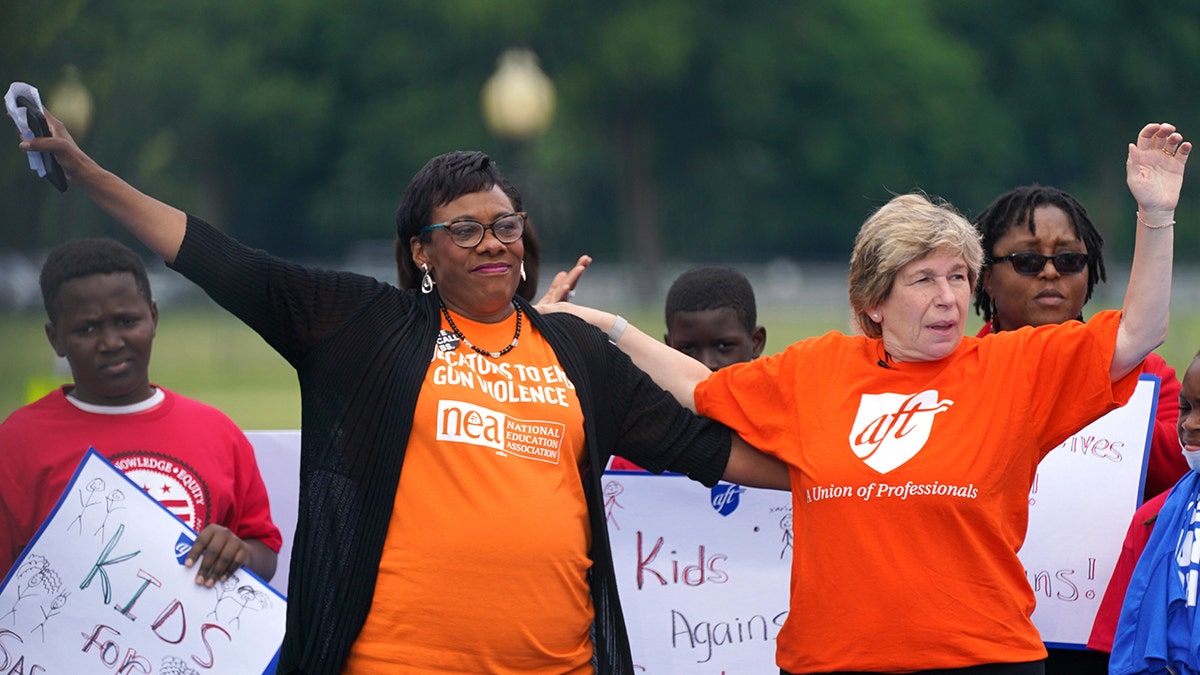
Presidents
of the nation's two largest teachers unions are pictured above, Becky
Pringle (left) of the National Education Association (NEA), and Randi
Weingarten (right) of the American Federation of Teachers (AFT).(Leigh Vogel/Getty Images for March For Our Lives)
The
union reported spending $500,000 to support a campaign to end
standardized testing in Massachusetts, another $500,000 to back an
anti-gerrymandering amendment in Ohio and nearly $500,000 to a
progressive political consulting firm specializing in ballot initiatives
and canvassing.
In addition to electoral spending, the NEA paid
more than $166,000 to Imagine Us LLC, a consulting firm focused on
racial equity training, and tens of thousands more to groups promoting
what they describe as "social justice education," including curriculum
materials centered on race, gender identity, and activism in K-12
classrooms.
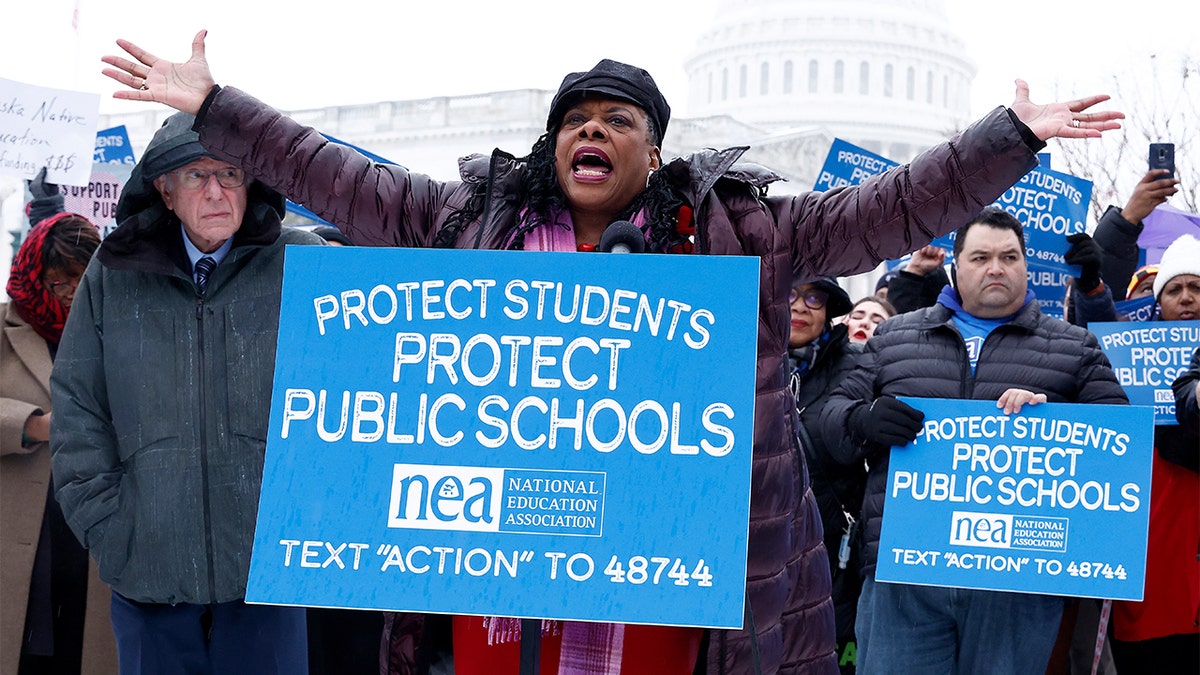
National
Education Association President Becky Pringle joins parents, educators,
community leaders and elected officials at a rally outside the U.S.
Capitol to defend public education ahead of Secretary of Education
nominee Linda McMahon’s confirmation hearing on February 12, 2025 in
Washington, D.C.(Photo by Paul Morigi/Getty Images for National Education Association)
NEA
sent $350,000 to the Schott Foundation, which describes itself as "a
BIPOC-led public fund that pools philanthropic funding and fuels racial
and education justice movements."
"This is the upshot of social
justice unionism," NAVI Director of Research Mika Hackner told Fox News
Digital. "Instead of focusing on member's working conditions, unions
spend hundreds of thousands of dollars on pet political projects
completely divorced from the needs and wants of most teachers but
perfectly in line with the political agenda the union has been co-opted
to serve."
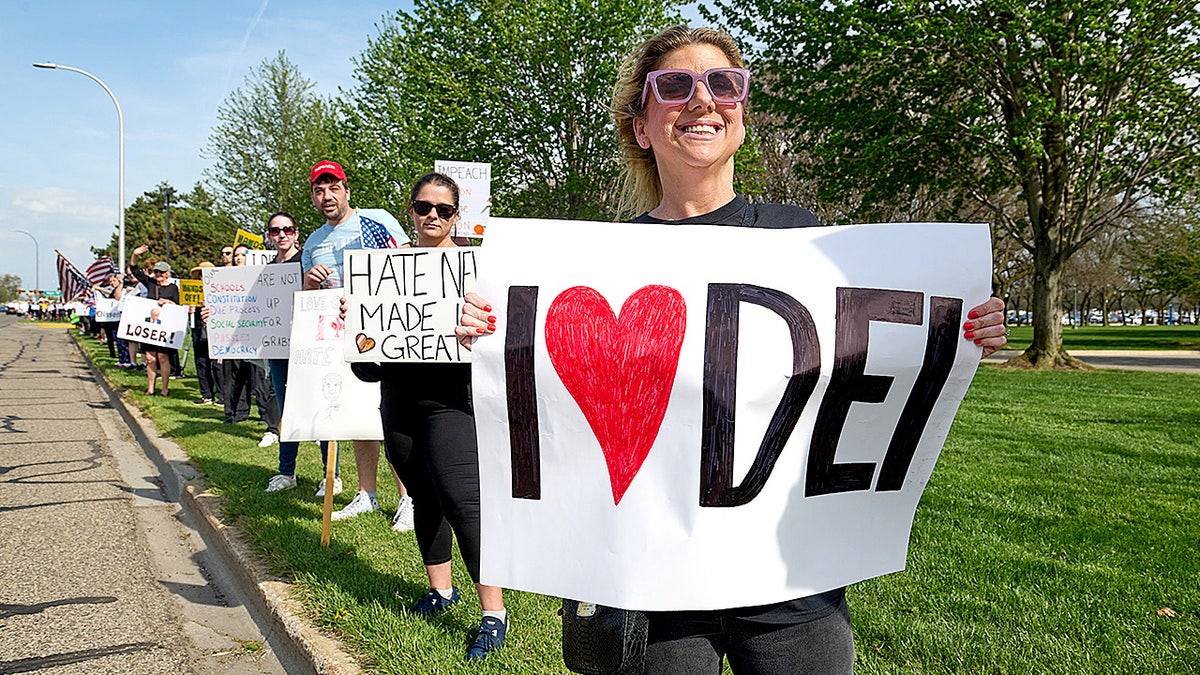
Hundreds
protest outside a rally held by President Donald Trump at Macomb County
Community College in Warren, Michigan, on April 29, 2025.(Getty Images/Dominic Gwinn)
Fox News Digital reached out to the NEA for comment but did not receive a response.
The
NEA has long-faced criticism for focusing on political advocacy and
far-left ideology rather than the best interests of students.
In November, Fox News Digital reported
on uncovered documents showing the NEA instructing members on how to go
through a gender transition at work, including best practices for using
gender pronouns and combating transphobia, while also being provided
with literature labeling conservative opposition as "villains."
Erika
Sanzi, senior director of communications for Defending Education,
suggested to Fox News Digital at the time that the union's federal
charter should be re-evaluated.
Sanzi said, "Their federal charter
was granted because they promised to ‘elevate the character and advance
the interests of the profession of teaching; and to promote the cause
of education in the United States.’ Seeing as their leadership — and by
extension, the organization itself — has morphed into a far-left insane
asylum that is actively destroying the cause of education, that charter
is no longer defensible."
Matthew Mark Miller is a reporter at Fox News. Find him on Twitter @andymarkmiller and email tips to AndrewMark.Miller@Fox.com.
Kurdish forces still control some of Syria's largest oil fields in the Deir el-Zor province, further east. Syria's government says those fields must be managed by central authorities.
A member of the Syrian army walks
with a weapon in the street as civilians flee following renewed clashes
between the Syrian army and the Syrian Democratic Forces (SDF), in
Aleppo, Syria, January 7, 2026(photo credit: REUTERS/KARAM AL-MASRI)
US-led coalition planes flew over flashpoint towns in northern Syria where army troops and Kurdish factions were clashing on Saturday, a Syrian security source and a Turkish defense source told Reuters.
The
Syrian security source said the planes had launched warning flares over
the area. There was no immediate response from the US-led coalition to Reuters' questions.
This comes after Syria's army
said on Saturday it had seized the oil fields of Sufyan and Thawrah in
northern Syria, where Kurdish fighters have been withdrawing from dozens
of towns and villages under an agreement meant to avoid a bloody
showdown.
Kurdish
forces still control some of Syria's largest oil fields in the Deir
el-Zor province, further east. Syria's government says those fields must
be managed by central authorities.
A
member of the Syrian army walks with a weapon in the street as
civilians flee following renewed clashes between the Syrian army and the
Syrian Democratic Forces (SDF), in Aleppo, Syria, January 7, 2026
(credit: REUTERS/KARAM AL-MASRI)
The situation with the Kurds in Syria is still tense, with Syrian President Ahmed al-Sharaa
issuing a decree on Friday that granted Kurdish Syrians full Syrian
citizenship and criminalizing discrimination against Kurds on Friday,
according to the Syrian state-owned news outlet SANA.
The
decree, which includes eight articles, established that “Syrian Kurdish
citizens are an essential and integral part of the Syrian people,”
declaring that Kurdish “cultural and linguistic identity is an
inseparable part of the diverse and unified Syrian national identity.”
“Any
discrimination or exclusion based on ethnicity or language is legally
prohibited,” the decree outlined, adding that “anyone who incites
national strife shall be punished in accordance with applicable laws.”