by Robert Williams
The UAE... demonstrated that sovereignty can be defended without fanaticism, and that prosperity can be built through peace rather than perpetual war. This is why attacks on the UAE are not merely attacks on a country. They are attacks on a model for peace.
The Trump administration needs to pay close attention: The UAE is not merely another Gulf monarchy, another energy partner. It is one of the clearest examples in the Arab world of a country that deliberately chose modernization over ideological stagnation and development over the old politics of grievance.... This choice is precisely what makes it so important — and precisely what makes it so threatening to the forces that thrive on disorder.
The UAE... demonstrated that sovereignty can be defended without fanaticism, and that prosperity can be built through peace rather than perpetual war. This is why attacks on the UAE are not merely attacks on a country. They are attacks on a model for peace.
President Donald Trump no doubt sees this with clarity: his extraordinary Abraham Accords remain one of the defining strategic achievements not only of the century but of history.
Defending the UAE, therefore, is entirely consistent with a hard-headed American strategy. America did not help broker the Abraham Accords only to watch their boldest Arab partner become an exposed target. A serious policy... requires seriousness: tighter intelligence coordination, stronger integrated air and missile defense, firmer deterrence against Iranian aggression and proxy warfare, and unmistakable public clarity that the United States forcefully stands by the states that choose peace over terror and an alliance with the US over revolutionary blackmail. That is not charity toward Abu Dhabi. It is a defense of American interests, and a regional balance that works in America's favor.
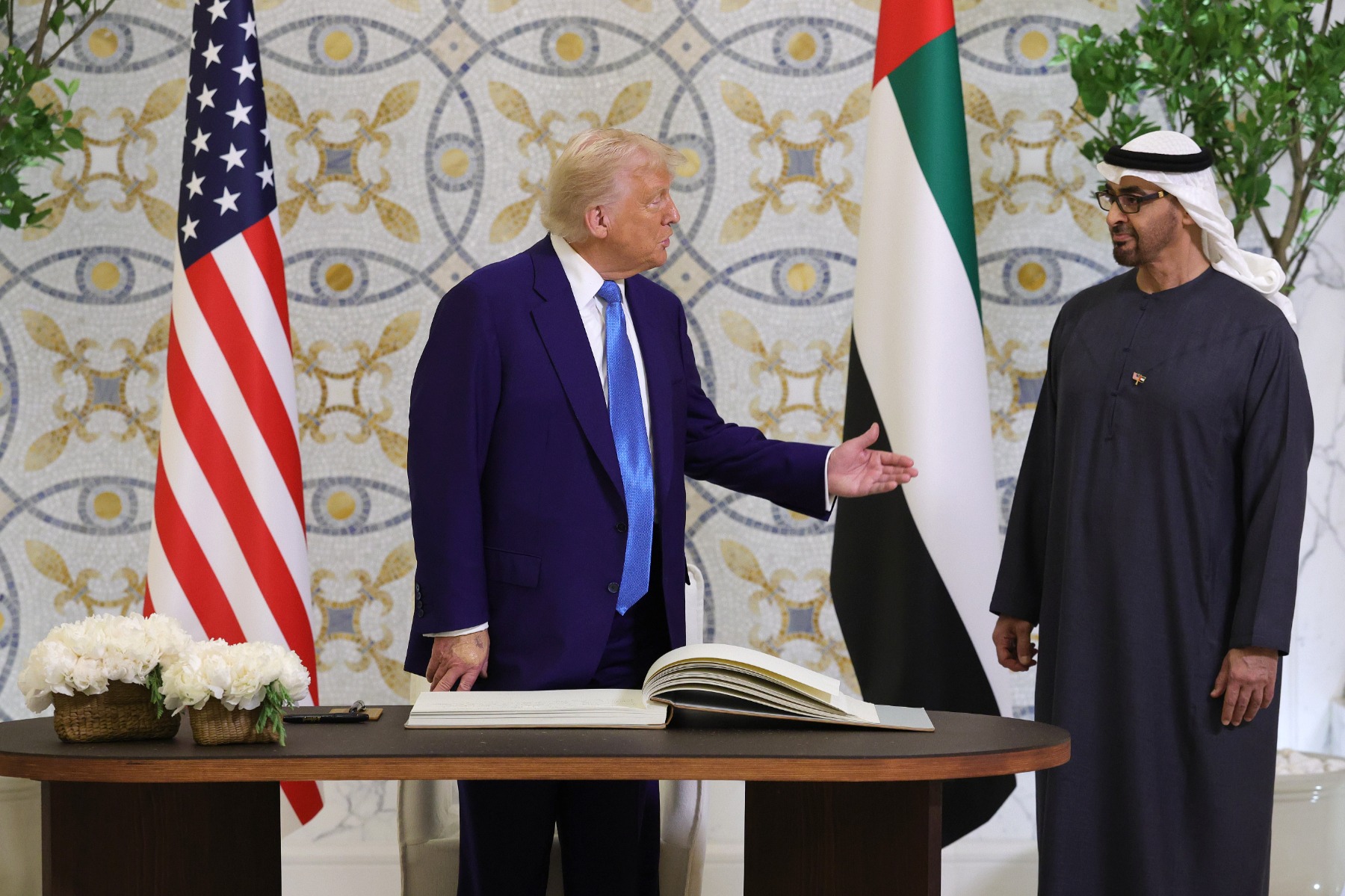
When United Arab Emirates President Sheikh Mohamed bin Zayed visited the victims of the recent attacks in hospital on March 6, he did more than offer sympathy. He delivered a message to his people, to the region, and to the world. He told the wounded and their families that those living in the Emirates are "among their family in the UAE." In his first public comments after the strikes, he also made clear that the country is "no easy prey." That was not simply compassion. It was doctrine: that his country was going to align with openness without apology. The price to his country for his outstanding leadership has been enormously high.
The Trump administration needs to pay close attention: The UAE is not merely another Gulf monarchy, another energy partner. It is one of the clearest examples in the Arab world of a country that deliberately chose modernization over ideological stagnation and development over the old politics of grievance. In a region too often scarred by militias and revolutionary sectarianism, the Emirates chose statesmanship and progress. It chose to build rather than burn. This choice is precisely what makes it so important — and precisely what makes it so threatening to the forces that thrive on disorder.
That choice became unmistakable in 2020, when the UAE signed the Abraham Accords with Israel. The agreement formally established peace, diplomatic relations, and full normalization between the two states. Its significance went far beyond diplomacy. The UAE made a strategic declaration that the future of the Middle East did not have to be built on rejectionism and endless confrontation. It could instead be built on cooperation, commerce, technological exchange, and a new regional architecture. The UAE did not treat peace as symbolism. It treated peace as a strategy for the modern world.
That break with the past is exactly why the UAE became a target. The Iranian regime and its proxies understand perfectly well what the Emirates represent. A confident Arab and Muslim-majority country that embraces modern governance, welcomes investment, works closely with the United States, and makes peace with Israel is a living refutation of their entire worldview. Tehran's ideological project depends on persuading the region that dignity can only come through militancy and permanent hostility. The UAE proves the opposite. It demonstrated that sovereignty can be defended without fanaticism, and that prosperity can be built through peace rather than perpetual war. This is why attacks on the UAE are not merely attacks on a country. They are attacks on a model for peace.
The Trump administration urgently needs to understand that protecting the UAE is not just a gesture of solidarity with an ally. It is imperative if the United States intends to preserve any serious pro-American order in the Middle East. A country that embraced peace with Israel, rejected extremism, invested in stability, and aligned itself with Washington cannot be struck without a meaningful response.
While confronting Iran is enormously appreciated, more needs to be done. Without also protecting its allies in the region, every friend and foe there will draw the same conclusion: American guarantees are provided only when convenient. This view would not just endanger the UAE. It would weaken the credibility and the future of the Abraham Accords themselves.
President Donald Trump no doubt sees this with clarity: his extraordinary Abraham Accords remain one of the defining strategic achievements not only of the century but of history. The White House said in May 2025 that Trump secured more than $200 billion in new U.S.-UAE deals while accelerating a previously committed 10-year, $1.4 trillion UAE investment framework in the United States. Those commitments were tied to sectors that matter deeply to the world's future, including AI infrastructure, semiconductors, energy, manufacturing, biotechnology, and quantum-related technologies. The UAE is a serious partner investing in American strength, American industry, and American technological primacy.
The trade figures reinforce the point. According to the Office of the U.S. Trade Representative, U.S. goods trade with the UAE totaled $39 billion in 2025. U.S. exports to the UAE reached $31.4 billion, while the U.S. goods trade surplus with the Emirates stood at $23.8 billion. In plain language, the UAE is clearly happy to help sustain American manufacturing, American exports, and American economic leverage, but such a country should not have to wonder whether the United States still regards the UAE as a valuable ally.
Defending the UAE, therefore, is entirely consistent with a hard-headed American strategy. America did not help broker the Abraham Accords only to watch their boldest Arab partner become an exposed target. A serious policy does not require reckless escalation or sentimental rhetoric. It requires seriousness: tighter intelligence coordination, stronger integrated air and missile defense, firmer deterrence against Iranian aggression and proxy warfare, and unmistakable public clarity that the United States forcefully stands by the states that choose peace over terror and an alliance with the US over revolutionary blackmail. That is not charity toward Abu Dhabi. It is a defense of American interests, and a regional balance that works in America's favor.
The alternative is far more dangerous. If the Emirates are left vulnerable, the message to the region will be devastating. It will tell every reformer, every pragmatist, and every government considering closer alignment with Washington that choosing peace brings prestige, but not necessarily protection. It will tell Iran and its proxies that the boldest Arab partner in the Abraham Accords can be bloodied, and it will tell the enemies of peace that America is willing to celebrate a new Middle East in speeches but not defend it in a storm.
The UAE matters because it made the choice no one else at the time dared to make. It rejected the politics of rage and the false romance of "resistance." It rejected the old lie that the Arab world must choose between dictatorship, theocracy, or collapse. Instead, it chose tolerance, development and peace with Israel -- not out of naivety, but because peace is the only durable foundation on which serious states can build prosperity and strength.
Trump should say -- and prove -- something very simple: America stands with the states that build, not the regimes that burn; with the governments that make peace, not the movements that glorify violence; with those who advance modernity, not those who drag the region backward into fanaticism.
To defend the Abraham Accords, Trump needs to defend the UAE.
Robert Williams is based in the United States.
Source: https://www.gatestoneinstitute.org/22334/defend-the-uae

No comments:
Post a Comment