Saturday, August 30, 2025

Gaza Part Three: Root Causes and Real-World Consequences - Thaddeus G. McCotter and Andrew Zack


by Thaddeus G. McCotter and Andrew Zack

Rewarding Hamas with a “two-state solution” ensures more terror, fuels antisemitism, and ignores Israel’s right to defend itself against eradication.


This is the third and final installment of a three-part series on the Gaza situation, political fallout, root causes, and real-world ramifications.

Certainly, the spark of the present crisis is Hamas’ cowardly terrorist attack upon Israeli civilians. Indeed, for many people—and not only in Gaza and the Arab world—the existence and continued survival of Israel is the paramount problem. But absent Israel’s eradication and, quite likely, a genocide of its Jewish citizens, this root cause must be taken as a given. What, then, within Gaza, the Arab world, and many Western nations, are some corollary root causes exacerbating the difficulty in forging an Arab recognition of Israel’s right to exist?

As patently evidenced by their customary lack of material support and unwillingness to permit resettlement, most Arab nations use the Palestinians as a pawn to deflect their own populations from focusing on liberty, democracy, and prosperity at home. This would constitute an existential crisis for these authoritarian nations, which would likely be unable to survive their failure to meet the rising expectations of their peoples. The great dilemma for these Arab nations: should a free, democratic, prosperous, and peaceful Gazan state be created, it will not be in their regimes’ best interests. Far better for them to have Palestinians’ and the Arab world’s unrest, invective, and violence directed at Israel than internally at their governments. For example, following this cynical strategy, many Sunni and Shia nations abet the propagation of hatred within the Palestinian people. This includes inculcating the young with hatred of Israel and Jews in general, which will poison the prospects for peace for generations to come.

These Arab regimes are not alone in doing so, for, despite claiming to support peace and the “two-state solution,” they have partners in international institutions and many Western nations who have their own root causes for promoting hatred of the Jewish state and its citizens, including their prejudicial ideological imperatives and domestic political aims.

In the West, particularly, an ancient hatred has melded with postmodernism to produce virulent antisemitism. Traditionally housed on the right, over the past half-century, antisemitism had been in retreat or at least dormant in this political quarter. This is no longer the case, as an influential cadre of neo-isolationists spinning many thinly veiled anti-Israel tropes has spurred a recrudescence of antisemitism on the right. Why has this not been routinely and righteously denounced by the left, which until recently had been a bastion against antisemitism?

Because, unlike yesterday’s liberals, today’s progressive movement is postmodernist. Influenced by the Baby Boomers’ old New Left that, in turn, was imbued with the radical theories of European socialists and Marxists, today’s postmodernists—including the bulk of American progressives—are secular to the core and hostile to all religion. As a result, they have rejected the Biblical notion that we are all created in God’s image and hence are all endowed with human dignity. 

In its place, the progressives’ new mantra is that race determines all and that the world can be divided into power relationships consisting of “oppressors” and “oppressed.” In one of history’s great ironies, a mere two generations after Hitler defined Jews as an inferior race that had to be wiped off the face of the earth, the progressives have now defined Jews as the ultimate white colonial oppressors of Palestinian “people of color.” In a world where so many have lost their moral bearings, the plight of Jews and Israel, their national home, is dire indeed.

In tragic consequence, then, the right and the left have a mutually shameful need to ignore the antisemitism of the other side of the political divide. But this is not the end of Western nations and their leaders’ political imperatives to abide hatred of Israel and aid the establishment of a separate state in Gaza. One need only look at the influx of new citizens of Arab and/or Muslim descent into European nations and the far smaller number of Jewish citizens who reside in them. Being democracies, for these leaders, the math is obvious: condemning Israel and supporting a “two-state” solution is a political winner. Still, even if one were to ignore the domestic political incentives to assail Israel and support Gazan statehood, in the battle between Israel and the Palestinians, it is apparent that these nations and the international organizations to which they belong have long ago abandoned any pretext of being an impartial arbiter and become Palestinian and Hamas partisans. 

It is also abundantly clear that the proposed “two-state” solution will not work. If implemented, it will constitute the rewarding of Hamas’ terrorist butchery, rape and kidnapping of civilians in Israel on October 7 and Hamas’ subsequent attempts to steal humanitarian aid to rebuild itself at the expense of starving the Palestinian people (which, as we have seen, they have blamed on Israel, a scurrilous charge that a feckless international media has abetted). 

Already, one of the ramifications of even considering this is the moral abomination of pretending Hamas’ terrorist attack did not happen or attempting to justify it by citing Israel’s “occupation” and “genocide” of Gazans. Rewarding, or at the very least blithely ignoring, terrorism will ensure more terrorism. It signals both Hamas and the majority of Palestinians that once a new state is established in Gaza, such terrorist acts can continue until the hated Jewish state is eradicated. Bluntly, for Hamas, Gazans, and the haters of Israel throughout the world, the continued international support for a “two-state” solution after the October 7 terrorist attack encourages, facilitates, and condones their hatred and terrorism.

As for Israel, the crisis has provided its opponents with an opportunity to revile it on the world stage and has witnessed latent antisemitism resurface. But what else was Israel to do after the Hamas terrorist attack on October 7? Simply, Israel did what any nation would do: it defended itself against a terrorist organization by rooting it out and eliminating the threat. That Hamas inhumanely used hostages and Gazan civilians to cravenly shield itself was not unexpected, and that is why Israel has gone to tremendous lengths to avoid civilian casualties. Rather than protect civilians, however, Hamas not only blamed Israel but also blatantly lied about the number of casualties, especially of women and children. Far too many around the world chose to believe Hamas’ lies over the truth about Israel. The result is the international vilification of Israel, of which that nation is painfully well aware.

But Israeli leaders also recognize the international community is not allied with them. It never has been, and if history and the current wave of antisemitism are any guide, it likely will not be for quite some time. Consequently, as has often been the case, in an existential crisis, Israel did what it needed to do to survive—international opinion be damned. It is lost upon so many that, while they wonder what impact this crisis will have on Gazans (an issue noted above), they spend no time recognizing the ramifications for the Israelis, which, combined with their ancient and modern historical experiences, affirms that it is better to be respected—and even feared—than loved in a world that has long sought your extermination. Thus, in defending itself, Israel did not suddenly become a political pariah. But, in its dangerous region of the world, Israel’s actions once again spoke volumes to its enemies that the Jewish state will survive and thrive—and that its enemies will not.

For the rest of the world, the calculation remains both elementary and ineluctable: if you reward terrorism, you get more terrorism. The international community fails to understand this. Israel does. Now, you know why they are reviled.

And why Israel is right.

***

An American Greatness contributor, the Hon. Thaddeus G. McCotter (M.C., Ret.) represented Michigan’s 11th Congressional District from 2003 to 2012. He served as Chair of the Republican House Policy Committee and as a member of the Financial Services, Joint Economic, Budget, Small Business, and International Relations Committees. Not a lobbyist, he is also a contributor to Chronicles, a frequent public speaker and moderator for public policy seminars, and a co-host of “John Batchelor: Eye on the World” on CBS radio, among sundry media appearances.

Andrew Zack is a Detroit-area attorney who is observing these events with great trepidation. 


Thaddeus G. McCotter and Andrew Zack

Source: https://amgreatness.com/2025/08/30/gaza-part-three-root-causes-and-real-world-consequences/

Follow Middle East and Terrorism on Twitter

Idan Shtivi identified as second Gaza hostage recovered in special IDF op. - Aaron Reich, Shir Perets, Jerusalem Post Staff


by Aaron Reich, Shir Perets, Jerusalem Post Staff

His remains were recovered along with Ilan Weiss. The IDF announced Weiss's recovery on Friday.


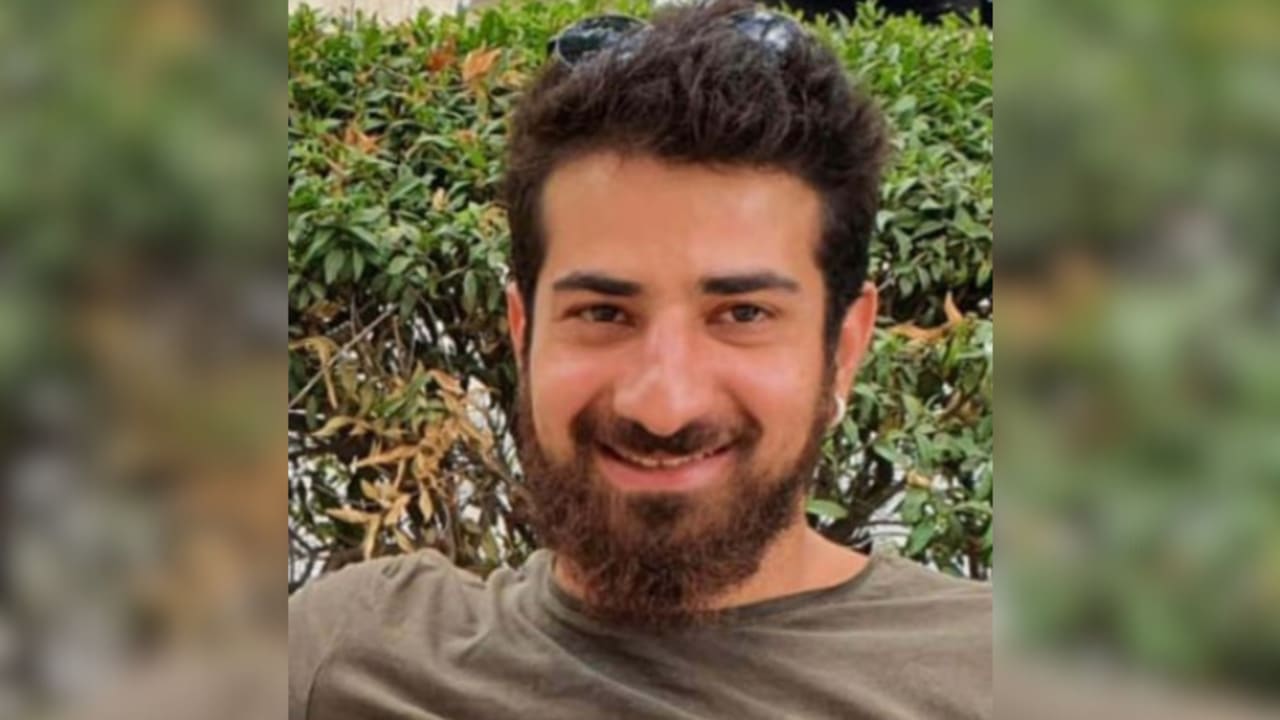
 Idan Shtivi.
Idan Shtivi.
(photo credit: Hostages and Missing Families Forum)

The remains of the second hostage who was recovered from the Gaza Strip in a special IDF and Shin Bet operation were identified as Idan Shtivi, Prime Minister Benjamin Netanyahu said Saturday night. 

His remains were recovered along with Ilan Weiss's. The IDF announced Weiss's recovery on Friday. 

His death was originally announced by the Hostages and Missing Families Forum in October 2024. 

"Idan was a talented student of sustainability and government and a courageous man. On October 7, 2023, he attended the Nova music festival, and when the terrorist attack began, he acted to evacuate and save many of the participants, the prime minister said.

"In the course of his actions, he was murdered, and his body was kidnapped by the Hamas terrorist organization into Gaza."

Israelis demonstrate against Gaza City incursion, and for an immediate hostage deal, August 30, 2025. (credit: AVSHALOM SASSONI)
On October 7, Shtivi arrived at the Nova festival site to take photos of his friends, who were conducting workshops there.  When the attacks began, Shtivi helped two people escape before he was kidnapped. 

With a passion for nature and the environment, Shtivi studied environmental sciences at Reichman University’s School of Sustainability. 

Shtivi, 28, is survived by his parents, Eli and Dalit, three siblings, and his partner, Stav. 

The identification process was conducted at the National Center for Forensic Medicine. The Israel Police, the Military Rabbinate, and the Hostages and Missing Persons Headquarters notified his family. 

"Together with all the citizens of Israel, my wife and I send our heartfelt condolences to the dear families and share in their deep sorrow," Netanyahu stated on Friday.

"The campaign to bring back the hostages continues without pause. We will not rest and we will not be silent until we return all our hostages home, both the living and the fallen."

Ilan Weiss

Weiss, 56, was a resident of Kibbutz Be'eri in the Gaza border area and served on the kibbutz's emergency standby squad. In January 2024, the kibbutz confirmed that he was killed during the October 7 massacre, with his body taken by Hamas back to the Gaza Strip.

Weiss's wife, Shiri, and daughter, Noga, were also taken hostage by Hamas on October 7, but were released in late November 2023 during a temporary ceasefire.

His other two daughters, Meytal and Maayan, were able to hide from Hamas during the massacre and were saved by Israeli soldiers. 

The family dog, Ketem, was also killed by Hamas terrorists when Shiri and Noga were abducted. 


Aaron Reich, Shir Perets, Jerusalem Post Staff

Source: https://www.jpost.com/israel-news/article-865771

Follow Middle East and Terrorism on Twitter

'Too complex and not lethal enough': Gallant reveals original Iran attack plan - report - Jerusalem Post Staff


by Jerusalem Post Staff

The original plan, which would have cost billions of shekels and demanded a vast amount of intelligence collected to succeed, was continuously delayed and would not have have been ready in time.


 Former defense minister Yoav Gallant and Iranian Supreme Leader Ali Khamenei over a backdrop of Isfahan Nuclear Technology Center
Former defense minister Yoav Gallant and Iranian Supreme Leader Ali Khamenei over a backdrop of Isfahan Nuclear Technology Center
(photo credit: Canva, Majid Asgaripour/WANA/via Reuters, MAXAR TECHNOLOGIES/HANDOUT VIA REUTERS, Via Maariv)

The Mossad's original plan of attack against Iran was scrapped prior to October 7, Former Defense Minister Yoav Gallant revealed in an interview with Meet the Press on Saturday, according to N12.

Gallant claimed that the plan was "too complex and not lethal enough," in the interview, and that he had called for a shift to aerial strikes on the regime in an alternative "100 day paper" he'd presented in March 2023.

The original plan, which would have cost billions of shekels and demanded a vast amount of intelligence collected to succeed, was continuously delayed and would not have have been ready in time for Israel to act, he said. 

"Anyone going to war with Iran must assume Hezbollah will be drawn in," he continued, criticizing Former Prime Minister Naftali Bennett and MK Benny Gantz's inaction in ordering the production of further military equipement during their terms. "200,000 shells were taken from us for Ukraine. Did they order a single new shell to be produced? The answer is no."

Gallant praised the IDF for its work in Operation Rising Lion. When asked about the Mossad's contribution, he noted that though the Mossad did assist in minimal areas, the majority of the operation was carried out by the Air Force according to information collected by the military. 

Iran's nuclear program has been delayed "by years," he said, but warned that the regime can and will rebuild, and that Israel must be prepared for when war on the Iranian front resumes. 

People attend the funeral procession of Iranian military commanders, nuclear scientists and others killed in Israeli strikes, in Tehran, Iran, June 28, 2025.  (credit: MAJID ASGARIPOUR/WANA (WEST ASIA NEWS AGENCY) VIA REUTERS)
People attend the funeral procession of Iranian military commanders, nuclear scientists and others killed in Israeli strikes, in Tehran, Iran, June 28, 2025. (credit: MAJID ASGARIPOUR/WANA (WEST ASIA NEWS AGENCY) VIA REUTERS)

On the hostages and war in Gaza

In the interview, Gallant also noted that five objectives were laid out at the start of the Israel-Hamas war. Three of these objectives: eliminating Hamas' organizational capablities, decimating its leadership, and gaining full operational freedom for the IDF within the Gaza Strip, have been achievied by the military.

“To achieve the two remaining goals, returning the hostages and replacing Hamas' rule with an adequate alternative, requires a political arrangement,” Gallant said to Meet the Press, going on to claim that National Security Minister Itamar Ben-Gvir and Finance Minister Bezalel Smotrich hold “veto power” in the government.

He urged them, and the government at large, to agree to the framework of a ceasefire-hostage deal presented by US Envoy Steve Witkoff.

"We do not leave anyone behind: Not wounded soldiers and definitely not civilians," Gallant said. "I believe that we must bring all the hostages home and if we can bring home ten hostages, half of those who are still alive, and the remains of the deceased hostages in the first stage of the deal, then we must take it." 


Jerusalem Post Staff

Source: https://www.jpost.com/israel-news/article-865774

Follow Middle East and Terrorism on Twitter

The Positives and Negatives of Trans Ideology - Stephen Soukup


by Stephen Soukup

The Left’s obsession with trans “rights” is pushing positive liberty to extremes, demanding government validation of lifestyles while undermining traditional freedoms.


This week, with the horrific murder of innocent children at Annunciation Catholic School in Minneapolis, “trans” issues are back in the news… again. Trans issues are, it seems, always in the news, for one reason or another. In many ways, they have come to define the differences between the parties. Moreover, they have become an anchor around the neck of the Democratic Party and its allies, who are unable to help themselves and reflexively support and defend trans individuals, even when they are guilty of violence as heinous as that committed this week by Robert “Robin” Westman. While normal people were mourning the loss of innocent life and decrying the bloodshed that has become too much a part of American urban life, Democratic politicians like Minneapolis Mayor Jacob Frey were insisting that it is hateful to mention the trans status of the killer, and Democrat-aligned media figures like CNN’s Jake Tapper were churlishly scolding others for not respecting the murderer’s pronouns.

How did this happen? How did American society come to be divided over the inability of a minority of the population to distinguish men from women? And how did the Democratic Party come to stake its entire future on an alliance with this minority faction and its contempt for biological reality?

I blame John Rawls.

Well…kinda.

The history of Western politics since the Enlightenment is marked in large part by the conflict between negative and positive liberty (and negative and positive rights). In brief, negative rights are those that are presumed to be “endowed” by man’s “Creator” and which government cannot violate. Man has the right to life, liberty, property, the pursuit of happiness, free speech, freedom of religion, a free press, to bear arms, and so on. All the rights enshrined in the Bill of Rights and derived from the “classical” liberal tradition are “negative” rights.

By contrast, positive rights are those fashioned primarily by a separate faction of the liberal project, that which we know today as the “Left.” Positive rights are those that are intended to promote a “just” society. They denote the rights that a person has and that are provided to him specifically by a just sovereign. The right to a job, to food, to housing, to medical care, to personal safety, to equity (as opposed to equality), to education, etc., are all examples of positive rights.

In a very broad sense, the conflict between negative and positive rights is the conflict between (most of) the contemporary right and the contemporary Left, between Locke’s vision of the social contract on the one hand and Rousseau’s interpretation on the other, and between the individual and the state. (Both of which abandon the conservative notion of voluntary community, but that’s a story for another day).

For most of its history, the United States has been primarily a nation dedicated to negative rights. That all began to change in the Progressive era and continued to change, slowly but surely, throughout the first seven decades of the 20th century. In 1971, however, a “modestly successful” Harvard moral philosopher named John Rawls changed everything, insisting that the negative rights of traditional American politics were necessary but were not sufficient for the operation of a “just” society. I discussed Rawls at some length in The Dictatorship of Woke Capital, noting, among other things, the following:

For many on the Left, the turning point in the battle for control of the hearts and minds of the people and the battle for the soul of liberty came in 1971 with the publication of John Rawls’s A Theory of Justice. Before the publication of this book, Rawls was largely unknown outside of the provincial world of moral philosophy; he was an average and modestly successful philosopher, whatever that means. After his Theory, however, Rawls became a global superstar and among the most prominent voices in public morality in the West. When he presented Rawls with the National Humanities Medal in 1999, Bill Clinton declared emphatically that the philosopher’s work had “helped a whole generation of learned Americans revive their faith in democracy itself.” And indeed, as much as anyone, Rawls has been the inspiration for the “learned”—which is to say the liberal Left—for nearly the past half-century….

Rawls’s “expanded” social contract blends both negative rights (the First Principle) and the supposition of positive rights (the Second Principle). The First Principle dictates the minimum liberty afforded to all members of society, while the Second stipulates that justice can only be achieved if all are provided the same opportunity, including the same economic opportunity. Hence, a “just” society demands economic redistribution….

In many ways, Rawls and his theory of justice allowed the contemporary Left to embrace its fetishization of positive liberty. He squared the circle left by Rousseau, conceding the necessity of basic negative rights but emphasizing the moral requirement of positive rights as well. He provided the best of both worlds and thereby offered what the Left has seen ever since as a plausibly ethical political platform, limited acknowledgment of individual liberty coupled with a far less limited demand for economically just institutions….

I included Rawls in a book about “woke capital” for the same reason I bring him up today, namely because his theory of justice and his normalization of positive liberty have been expanded far beyond their traditionally accepted bounds and have distorted many people’s expectations of government and society. Historically, Rawls is considered an advocate of economic justice. His theory discusses economic inequality, the ownership of property, and the means to remedy the disparities that exist in negative-rights-based societies. Rawls was an opponent of the traditional welfare state, but he was a powerful advocate of government intervention in leveling the economic playing field. In many ways, his ideas have served as the line of demarcation between classical liberalism and contemporary state-liberalism for the last half-century.

Or to put it more plainly: Rawls’s theories are part and parcel of traditional politics in this country and the traditional divisions between Republicans and Democrats.

At the same time, however, his theory of justice has been embraced by cultural activists as well, those who believe that positive rights have a role in normalizing racial, sexual, and identitarian disparities as well.

If you look at the history of various civil rights endeavors, you’ll notice that they all begin with a demand that negative rights be applied uniformly. Martin Luther King, for example, sought the right to vote, to assemble peaceably, and to participate in society without the burdens of the endemic racism of Jim Crow. He sought equality under the law. Likewise, the rioters at Stonewall sought nothing more than to live their lives free from undue government interference and oppression. They wanted to be free to live and love as every other American. They wanted the government to leave them alone and to do its job defending their Creator-endowed right to pursue happiness.

As these movements matured, however, and as the nature of the Left changed in response to Rawls’s advocacy of positive rights, demands began to change as well. Some expanded, positive demands were economic and logical. Affirmative action, busing, etc. made a certain amount of sense, given the perpetuation of economic inequity that would otherwise have been the result. Likewise, the demand for the state to treat monogamous same-sex couples as they treated traditional married couples—i.e., giving them the same medical rights, same tax treatment, etc.—seemed like a small and sensible increase in positive liberty.

Eventually, however, as traditional America became accustomed to and stopped objecting to the normalization of that which should, by right, have been normalized, the cultural Left shifted tactics and became more confrontational. This is a complicated evolution, but for our purposes today, it should suffice to say that traditional civil rights movements—for racial and sexual minorities—were successful enough that the cultural Left needed new weapons to sow dissent. And it found them in an expanded version of Rawls.

What we see today in the Left’s obsession with trans “rights” and the demand that reality be bent to suit trans ideology is the expansion of positive rights to their illogical conclusion. This isn’t really a fight between straight and gay, cis and trans, religious and secular, etc. It’s the same old fight about positive rights, about what government and society “owe” their citizens in the pursuit of justice.

The Left and its allies are all demanding that the state and society take positive rights as far as they can be taken and provide all individuals with recognition, confirmation, and endorsement of their lifestyles and identities. A just society no longer merely requires that the state leave people alone to let their freak flags fly. It requires that the state—and everyone in it—provide support and validation of the freak flags. Anything less is unjust, unkind, unfair, and unacceptable.

Needless to say, that way lies madness—or at the very least, extended conflict and, for Democrats, ongoing electoral disaster. 


Stephen Soukup

Source: https://amgreatness.com/2025/08/30/the-positives-and-negatives-of-trans-ideology/

Follow Middle East and Terrorism on Twitter

Thursday, August 28, 2025

US, Israel applaud France, Germany, UK decision to reimpose sanctions on Iran - JNS


by JNS

“The countries of the world are also joining the fight against the axis of evil,” stated Danny Danon, the Israeli envoy to the United Nations.


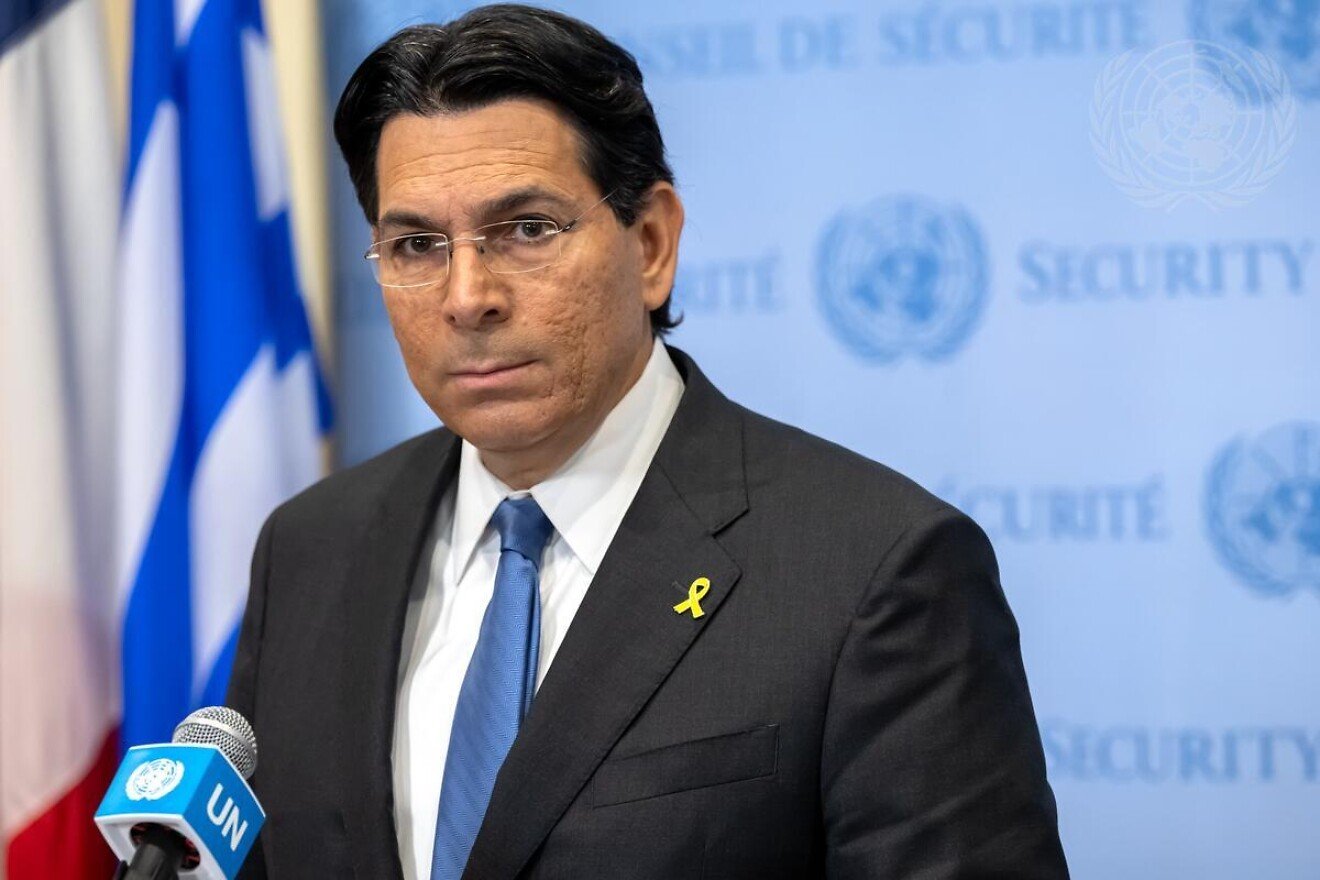
Danny Danon, Israeli ambassador to the United Nations, briefs reporters at U.N. Headquarters in New York City, on June 20, 2025. Credit: U.N. Photo.

France, Germany and the United Kingdom’s decision on Thursday to return sanctions on the Iranian regime drew praise from U.S. and Israeli leaders and from Jewish organizations.

The trio, which is referred to as the E3, had said in August that it would reimpose sanctions if the Islamic Republic didn’t reach a nuclear deal by the end of the month.

Marco Rubio, the U.S. secretary of state, stated that Washington welcomed the decision.

The three countries “have laid out a clear case of Iran’s continuing ‘significant non-performance’ of its nuclear commitments, establishing a strong basis for initiating snapback,” stated Rubio, who is also the U.S. national security advisor. “Moreover, the E3 could have initiated snapback at any point since 2019 but chose instead to first pursue intensive outreach and engagement, to provide Iran with a diplomatic off-ramp from its strategy of nuclear escalation.”

Rubio said that Washington will work with allies on the sanctions but is available “for direct engagement with Iran, in furtherance of a peaceful, enduring resolution to the Iran nuclear issue.”

Danny Danon, the Israeli ambassador to the United Nations, stated that “Iran continues to ignore the international community and violate its commitments time and time again.”

“Israel has already demonstrated its concerns about the malicious intentions of the ayatollahs’ regime,” he said. “Now the countries of the world are also joining the fight against the axis of evil. This is an important step on the way to stopping the Iranian nuclear program and increasing pressure on the regime in Tehran.”

The American Jewish Committee said the sanctions are “an important step toward holding the Iranian regime accountable for its repeated violations of its nuclear obligations and its continued dangerous actions,” and AIPAC said that they are “a critical step to increase pressure on the Iranian regime by restoring international restrictions and sanctions targeting the country’s nuclear and missile programs.” 


JNS

Source: https://www.jns.org/us-israel-applaud-france-germany-uk-decision-to-reimpose-sanctions-on-iran/

Follow Middle East and Terrorism on Twitter

Milley crafted Biden Admin's fiction that Afghanistan fell in just 'eleven days' - Jerry Dunleavy


by Jerry Dunleavy

Once the Taliban had taken over Afghanistan, the Biden Administration settled on a false narrative that the collapse of Afghanistan had occurred in just eleven days, and thus could not have been predicted. Milley led the charge in promoting it, despite experts and military personnel on the ground in Afghanistan saying otherwise.


Among the litany of mistakes and falsehoods pushed by U.S. military commanders and President Biden in 2021 was the fiction that Afghanistan fell in only “eleven days” in mid-August 2021. In reality, the Taliban takeover unfolded over multiple months following then-President Joe Biden’s disastrous withdrawal "Go-to-Zero" order on April 14, 2021. The architect responsible for that house of cards was then-Chairman of the Joint Chiefs Mark Milley. 

Many in the Biden Administration — President Biden himself, then-Defense Secretary Lloyd Austin, then-Secretary of State Antony Blinken, and others — joined Milley in pushing the “eleven days” claim, although General Austin “Scottie” Miller, the final commander of NATO’s Resolute Support mission in Afghanistan, was among those who later admitted that Afghanistan had not collapsed in just eleven days, but rather over months.

Just the News previously laid out how Milley also wrongly dismissed the comparison between the fall of Saigon and the impending fall of Kabul, massively inflated the size of the Afghan military and police by falsely claiming that they numbered 325,000 to 350,000 strong, and demonstrated he was not tracking the reality on the ground when he underestimated the speed and scope of Taliban district control in the summer of 2021.

Milley then ran cover for the Biden Administration once the situation went sideways by misleading about how quickly the collapse of Afghanistan had occurred. Biden pardoned him on his last full day in office in January 2025.

Milley did not respond to requests for comment sent to him through Princeton University, where he was named a visiting professor last year, and through JPMorgan Chase, where he has been a senior adviser since 2024, nor to Just the News' previous reporting.

House GOP report misleads about Milley running cover for Biden Admin intel failure

HFAC’s final report last year omitted many key facts about Milley’s miscalculations and false statements on Afghanistan — and also left out Milley’s misleading claims about Afghanistan falling in just a week and a half.

HFAC’s report from last year had a lengthy section where it attempted to claim that U.S. generals had predicted how quickly the Taliban would take over, when in reality Milley and other military commanders very much did not predict this.

"Chairman McCaul stands by his comprehensive report, the culmination of 18 transcribed interviews, seven public hearings, and 20,000 pages of documents obtained under subpoena from the State Department,” Emily Cassil, a spokesperson for McCaul, told Just the News.

The final HFAC report attempted to pit statements from Biden and former White House press secretary Jen Psaki against statements from Milley and others, but the claims from Biden and Psaki about being surprised by the Taliban takeover are not actually contradicted by those by Milley, who led the way in claiming that no one predicted Afghanistan would fall in just a week and a half.

The HFAC report pushed this stance in a lengthy section: “Ms. Psaki, for example, claimed no one anticipated the fall of the Afghan government and forces with statements like, ‘I don’t think anyone assessed that they would collapse as quickly as they did. Anyone. Anyone in this room. Anyone in the region. Anyone anywhere in the world.’ … In her testimony before the committee, when presented with military guidance to the contrary and asked what information supported her claim, Ms. Psaki quibbled that ‘quickly’ has a broad range of potential definitions, ignoring the unmistakable impression that statement created for Americans watching."

The report continues to say "On August 20, 2021, President Biden contended that ‘no one — I shouldn’t say ‘no one’ — the consensus was that it was highly unlikely that in eleven days they’d collapse and fall, and the leader of Afghanistan would flee the country.’ Valid explanations are few and far between for the chasm between military testimony on advice to the president on an imminent Taliban takeover and the administration’s claimed surprise when that came to pass.”

Mixed messaging after the fact between White House and Pentagon

There was no “chasm” between what Milley said and what Biden said, and indeed, it appears that Milley first made the “eleven days” claim, with Biden and other Biden Administration officials then following suit.

In reality, neither Milley, Miller, then-CENTCOM Commander Frank McKenzie, nor any other military commanders have ever said they had predicted the Taliban would take over Afghanistan in mid-August 2021, despite the final report implying they had. And the “eleven days” claim which the final report attributed to Biden on August 20, 2021 had first been uttered by Milley two days prior.

Milley himself, like Psaki and Biden, had claimed in mid-August 2021 (and then repeatedly after that) that “there was nothing that I or anyone else saw that indicated a collapse of this army and this government in eleven days” and that “I did not, nor did anyone else see a collapse of an army that size in eleven days.” And Milley had made the claim first.

Despite this, the HFAC report attempted to make it seem like it was just Biden who had made this “eleven days” assertion, when in fact it was also made by — and most likely originated with — Milley and other military leaders. 

Collapse of Afghanistan occurred over months — not days

Afghanistan had not collapsed in just eleven days, despite it now often being treated as conventional wisdom, likely thanks to the narrative pushed by Milley.

U.S. Forces-Afghanistan produced a timeline which displayed the warning signs about the Taliban takeover starting in early July 2021.

The Taliban was projected to “seize 18 strategic districts” and “isolate provincial capitals” on July 9, 2021. There were “five provincial capitals on verge of collapse” on July 21. The Afghan government’s “collapse” was “foreshadowed” on July 28, 2021 with “4 of 5 indicators in critical status.” 

Lashkar Gah and Kandahar provinces were “under duress” by July 30, 2021, according to the timeline, and there was an “imminent cascade of provincial capital collapse” by August 1, 2021. By August 9, the Taliban was “poised to attack Kabul with little to no warning.” And by August 13, the “fall of Kabul” was “imminent” with “6 of 7 key indicators met.” Despite weeks of warning signs, the non-combatant evacuation operation (NEO) wasn’t declared until August 15.

The Long War Journal, part of the Foundation for the Defense of Democracies, produced a real-time mapping of Taliban control in Afghanistan which made it clear that the collapse of Afghanistan did not occur in just eleven days in August 2021, but rather over the months following Biden’s Go-to-Zero order.

According to this mapping project, the day before Biden’s withdrawal directive — April 13, 2021 — the Taliban controlled 77 Afghan districts while the Afghan government controlled 129 districts, with 194 districts contested. By May 18, 2021, Taliban district control had risen to 86 districts and Afghan government control had dropped to 98 districts. By June 16, 2021 — two months before the Taliban seized Kabul — Taliban district control eclipsed that of Afghan government control, with the Taliban controlling 104 districts and the Afghan government controlling only 94.

The mapping project said that on July 10, 2021 — more than a month before the Taliban seized Kabul — the Taliban controlled 216 districts while the Afghan government controlled only 73, meaning that the Taliban had nearly tripled its district control in the three months since Biden’s Go-to-Zero order, while the Afghan government had seen its district control cut nearly in half. And by July 25, 2021, the Taliban controlled 223 districts while the Afghan government was still clinging to only 73, meaning that before August even began the Taliban was in control of more than three times as many districts as the Afghan government was.

 The “eleven days” fiction: "No one saw it coming"

Yet Milley said on August 18, 2021, that “there was nothing that I or anyone else saw that indicated a collapse of this army and this government in eleven days.”

Milley added during the press conference with Austin that “I stood behind this podium, and I said that the Afghan security forces had the capacity, and by that, I mean, they had the training, the size, the capability to defend their country. This comes down to an issue of will and leadership. And no, I did not, nor did anyone else see a collapse of an army that size in eleven days.”

Before the Taliban takeover, the Biden Administration had repeatedly inflated the size of the Afghan security forces to being “300,000” strong when there was overwhelming evidence that it was much smaller than that, and that Milley himself had further inflated the Afghan forces to an even more implausible size of “325,000 to 350,000” strong.

Biden then claimed two days later that “no one — I shouldn’t say ‘no one’ — the consensus was that it was highly unlikely that in eleven days they’d collapse and fall, and the leader of Afghanistan would flee the country.”

Blinken echoed the “eleven days” claim when testifying before HFAC in September 2021.

McKenzie also testified in September 2021 that “I did not see it coming as fast as it did. I thought it would be a matter of into the fall or into the winter. I did not see it happening in eleven days in August.”

Biden Pentagon spokesman John Kirby even tried to later claim in 2023 that the “Taliban takeover” had occurred in just “nine days.”

Milley told the Senate in late September 2021 that the U.S. military would need to take a look at two main factors which he said were allegedly behind the Taliban takeover, the second of which was the “rapid collapse, unprecedented rapid collapse, of the Afghan military in only eleven days in August.” Milley said that an area that needed to be “fully explored” was “the intel” as he asked, “How did we miss collapse of an army and a government that big, that fast, in only eleven days?”

Austin told the Senate at the same hearing that “we certainly did not plan against the collapse of a government in eleven days” when pressed on whether the Pentagon had ever planned for the immediate collapse of the Afghan government.

Milley later reportedly told Chris Whipple, the author of The Fight of His Life, that “the intelligence I saw predicted months” and said that “we leave the country in August — and in a reasonable, worst-case scenario it’s a Thanksgiving, Christmas, January time frame when things fall apart. I think the intelligence was very, very good. The one exception is that no one predicted eleven days.”

Admiral Frank Whitworth, then the director of intelligence for the Joint Staff and Milley’s right-hand man at the time, also reportedly pushed the story that the Afghan military and government collapsed in two weeks or less. Bob Woodward’s book, Warquoted Whitworth as saying: “I don’t think anyone in uniform, in the intelligence community could say we knew it was going to fall in 10 to 14 days.”

The book said that Whitworth and Milley were close, that Milley had petitioned to make the intelligence director post a three-star position to keep Whitworth with him at the Joint Staff. The book also said Whitworth was on a family holiday in Hawaii when Afghanistan’s provincial capitals started being captured in August. Whitworth is now the director of the National Geospatial-Intelligence Agency.

One general pushes back on the “eleven days” falsehood

Miller, the final commander of NATO’s Resolute Support mission in Afghanistan, and the topmost Pentagon leader on the ground in Afghanistan, agreed that the collapse of the Afghan government and military did not happen in just eleven days, instead telling HFAC in 2024 that it had clearly been happening for months following Biden’s Go-to-Zero announcement.

Miller said that “the Afghan Government died of a thousand cuts as opposed to a tipping point type thing.” When asked whether there were warning signs of Afghanistan’s collapse not just in August 2021, but throughout 2021, Miller said that “it was very clear the situation was deteriorating.” 

Miller also said it was fair to say that, by June 2021, it was only a matter of time that the Taliban would not only start capturing provincial capitals but capture Afghanistan as a whole, adding that “I thought it was coming soon.”

Afghan Colonel Salim Faqiri, a Blackhawk helicopter pilot, reportedly said “he knows that many Americans believe that Afghan security forces gave up and ran” but “what they don’t understand, he said with audible frustration, is the destruction of morale that occurred over months, as Afghan security forces saw fellow soldiers die as weapons dwindled and aircraft became inoperable, making it much more difficult for the military to rescue troops who had been wounded in battle.” 

Faqiri said: “I witnessed a lot of fighting, like in Helmand, Kandahar. … I flew every day, every night and saw what’s going on. … It wasn’t like, in one or two weeks, the collapse happened [...] The collapse happened and started months before.”

Bill Roggio, a senior editor at The Long War Journaltold HFAC that “it was eleven days from when the first province, Nimruz, fell under Taliban control until Kabul, the capital, collapsed” but that “the eleven days were merely the endgame of the Taliban strategy to take control of Afghanistan.”

Milley testified the month after the fall of Kabul that the intelligence community had “consistently” estimated that the Afghan military “was at risk of fracture and the government could collapse after the departure of US forces at the end of the summer with opinions ranging from weeks, months, or in some cases years after our departure depending on when the intelligence report was written.” The general contended that the “consensus intelligence view” estimated an Afghan military fracture and the Taliban takeover of all Afghan provincials except for Kabul “by early to late fall or at the latest December, assuming the last U.S. troops were out by 31 August.” 

Milley claimed that “there were no estimates that I am aware of that predicted the collapse of the Afghan Army and the government in eleven days in August prior to the final departure of U.S. forces” and that “the speed, scale, and scope of the collapse was a surprise.”

Milley’s assessment of what the intelligence had been was far different than what Blinken later claimed it had been, with Blinken indicating the intelligence had been even worse.

Miller: "Things would go very bad, very fast.“

The assessment across the government was that even in worst-case scenarios, as our forces withdrew from Afghanistan, that the Afghanistan government, the Afghanistan security forces, would hold well into the following year,” Blinken said in an HBO documentary. “I believed strongly that we were going to have a robust embassy presence in Kabul certainly through the year, well into the next year. … Everything that we planned and did was based on that assumption.”

Miller later told HFAC that “my view was that, going to zero, things would go very bad, very fast.” Miller thought the intelligence assessments regarding the stability and longevity of the Afghan security forces were “overly optimistic.”

Milley admitted that Miller’s predictions about when the Afghan government would collapse were more dire than most: “Scott Miller did say ‘hard and fast’ — and he also meant that, at least to me and to others, that he meant that to be in the fall, October, November, maybe even December time frame. … the maybe Thanksgiving … likely to be in the October time frame. … Miller did, in many, many assessments, say rapid, fast, hard for collapse. He also centered into the October-November time frame as opposed to August.” Miller held the minority view on when Kabul would fall. Milley said: “The intel assessments were centering around November, Thanksgiving, at the latest, Christmas. Some intel assessments went into the next year.”

Even with Miller’s alleged prediction of an autumn or winter collapse, none of the military’s predictions were accurate.

Rep. Ronny Jackson, R-Texas, specifically confronted Milley about his “eleven days” claim during a September 2021 House hearing, with the GOP congressman saying the collapse of Afghan forces could be traced back at least to June 2021, rather than just a week and a half in August 2021.

“General Milley, on August 18th you were quoted as saying: ‘The timeframe of a rapid collapse was widely estimated in range from weeks to months and even years following our departure. There was nothing that I or anyone else saw that indicated a collapse of this Army and this government in eleven days.’ Between the 18th and the 21st of June, in just four days, 21 districts and nine provinces fell to the Taliban and the Afghan security forces quickly surrendered and abandoned their post,” Jackson said. “This was an obvious beginning to the end of the Afghan Army and to the Taliban takeover.”

Biden on collapse: “More quickly than we anticipated”

The Biden Administration would repeatedly insist that events in Afghanistan unfolded “more quickly than we anticipated.”

A U.S. military officer whose name was redacted told military investigators that it was “absolutely true” that the Biden Administration thought it had a lot more time than it did, telling investigators, “There was no acknowledgement of the threat on the horizon. The military and civilian thought within the NSC was that the ANDSF [Afghan security forces] was getting beat up but would recover. They were thinking that the ANDSF could hold for at least two years.”

Blinken argued on August 15, 2021 that the Taliban takeover happened “more quickly than we anticipated.”

The president also argued the next day — the day after Kabul fell to the Taliban — that the collapse of the Afghan government happened "more quickly than we anticipated.” Biden said that “Afghanistan political leaders gave up and fled the country. The Afghan military collapsed, sometimes without trying to fight.” Biden asserted in an interview with George Stephanopoulos just after the fall of Kabul that “there was no consensus” in the government's intelligence when asked why back in July he had downplayed the chances that the Taliban would take over.

Then-Director of National Intelligence Haines argued on August 18, 2021 that “as the president indicated, this unfolded more quickly than we anticipated, including in the intelligence community.” Admiral Whitworth, Milley’s ally, also reportedly said that “to me, it was a cascading event that was much faster than I had anticipated.”

Biden was soon asked why he didn’t make the proper preparations after being warned that the Taliban would be making serious advances in Afghanistan at some point. “Well yeah, at some point. But the point was that although we were in contact with the Taliban and Doha for this whole period of time, that ‘some point’ wasn’t expected to be the total demise of the Afghan National Force, which was 300 [thousand] persons,” Biden said August 20, 2021 — relying again upon the fictional “300,000” figure.

Derek Chollet, a counselor to Blinken during the withdrawal, told HFAC that it was only “in the week or so leading up to the evacuation” when “it started to become clear” to him that the situation in Afghanistan “was deteriorating rapidly.” Chollet acknowledged the Taliban had made territorial gains prior to August 2021, but he said he did not see that as an indication of a deteriorating security situation: “My recollection is that there were territorial gains happening … and, therefore, preparations were accelerating as we were getting closer to the deadline for withdrawal. But I don't — what I recall is that it was in the week or so, give or take a few days, leading up to the — what ended up being the fall of the government that it became very dire.”

Monday-morning quarterbacking

The intelligence community also sought to defend itself despite failing to properly predict the Taliban takeover with precision. A senior intelligence official claimed just a couple days after the fall of Kabul that “strategically, a rapid Taliban takeover was always a possibility.” One anonymous U.S. intelligence official said the day of the Taliban takeover that “leaders were told by the military it would take no time at all for the Taliban to take everything” but “no one listened.”

The U.S. intelligence community reportedly concluded in mid-June 2021 that the Afghan government might collapse within six months to a year after the U.S. military withdrawal. Milley had reportedly requested that new assessment.

A U.S. intelligence assessment in July 2021 similarly reportedly said that the Afghan government could fall to the Taliban within six months or a year of the U.S. military departing Afghanistan. Some intelligence agencies had reportedly been predicting the Afghan government might hold on two years after the U.S. withdrew.

“The trend lines that all of us see today are certainly troubling. The Taliban are making significant military advances — they're probably in the strongest military position that they've been in since 2001,” then-CIA Director William Burns said on July 22, 2021 when asked about predictions that the Afghan government could collapse six months after the U.S. ended its presence in the country. “The Afghan government retains significant military capabilities. The big question… is whether or not those capabilities can be exercised with the kind of political willpower and unity of leadership that's absolutely essential to resist the Taliban."

The Special Inspector General for Afghan Reconstruction released a report on July 30, 2021 which said the Afghan news was "bleak” and assessed that the Afghan government faced an “existential crisis.”

A new U.S. intelligence assessment reportedly found on August 3, 2021 that Kabul could fall to the Taliban within months or even weeks. Afghanistan’s provincial capitals began falling two days later.

Kunduz became the first Afghan provincial to fall, with one U.S. military official later reportedly saying that “Kunduz was a wake-up call.” It wasn’t enough of a wake-up call for the NEO to be declared.

The military’s assessments of the possible fall of Kabul post-U.S. withdrawal went from a possible six months, to three months, to weeks as the Taliban march continued. It was reported on August 10, 2021 that the U.S. military assessed a collapse could occur within 90 days, while others said it could be a month. It was further reported two days later that a new U.S. military analysis warned Kabul could be isolated within 30 to 60 days and could fall within 90 days. It fell three days later.

Biden National Security Advisor Jake Sullivan was asked on August 17, 2021 — two days after Kabul fell — about U.S. intelligence reports indicating that the Taliban could overwhelm Afghanistan and take the capital within weeks. The Biden national security advisor dodged the question: "I'm not actually familiar with the intelligence assessments you're describing, but I also don't want to get into specific intelligence products.”

Hamdullah Mohib, Afghan President Ashraf Ghani’s national security adviser, said the Afghan government received “some” information related to the U.S. intelligence assessments: “I remember a security briefing about three or four weeks before the collapse, or perhaps even less than that, in which there was a timeline. It was vague. It was not a very clear response, whether they believed that would be the fall of Kabul, or that would be the time when the Taliban surround Kabul.”

Milley claimed in mid-August 2021 that “there was nothing that I or anyone else saw that indicated a collapse of this army and this government in eleven days” and that “I did not, nor did anyone else see a collapse of an army that size in eleven days.”

“Nobody called it, eleven days in August. There was nobody who did that,” Milley then insisted to the Senate in September 2021. “That was a swing and a miss on the intel assessment of eleven days in August. There is nobody that called that.”

Outside experts and officials ignored by Pentagon and White House

Sir Laurie Bristow, the last British ambassador to Afghanistan, wrote in his book, Kabul: Final Call, that, on June 26, 2021, “I heard on the grapevine that BK [Afghan Defense Minister Bismillah Khan] thought Kabul might fall to the Taliban by August.”

Afghan war veteran and Democratic congressional candidate Matt Zeller also predicted on Twitter on July 8, 2021 that “the Taliban is going to take Kabul in a matter of weeks.”

Roggio told HFAC that “General Milley and others within the military and intelligence establishment watched the Taliban’s advance throughout the summer of 2021 and yet maintain that the collapse of the Afghan government was a surprise, something that no one could have foreseen. Nothing could be further from the truth.”

Roggio himself had predicted in mid-July 2021 that “the way things are trending, the Afghan government would be lucky to outlast the summer. It's that bad.”

Retired Colonel Seth Krummrich told HFAC in 2023 that “I heard numerous senior leaders express ‘surprise’ at the collapse of the Afghan military and government and the speed of which the Taliban took Kabul. I am incredulous of this supposed ‘surprise’ as all the evidence of this outcome was clear well before the decision was made to withdraw.”

Despite the claims by Milley and others, the collapse of the Afghan army and government had clearly been happening for months — the eleven-day timeframe from the fall of the first provincial capital to the fall of Kabul was just the culmination of months of Taliban battlefield victories, Afghan military defeats, U.S. force withdrawals, and deals between the Taliban and local Afghan leaders.

Missing these warning signs meant the Taliban was back in power.

HFAC repeatedly claimed military leaders had accurately predicted the collapse

HFAC’s report from September of last year had a lengthy section where it attempted to claim that U.S. generals had predicted how quickly the Taliban would take over, when Milley and others had actually claimed that no one had predicted the collapse while wrongly claiming the collapse had happened in just a week and a half in August 2021.

HFAC had also put out a press release in August 2024 which attempted to argue that military commanders like Milley and Miller had predicted the Afghan government would collapse in mid-August 2021, which they did not.

“At a press briefing on August 31, 2021, regarding the collapse of the Afghan forces and military, Ms. Psaki stated, ‘I don't think anyone assessed that they would collapse as quickly as they did. Anyone. Anyone in this room. Anyone in the region. Anyone anywhere in the world. If you have anyone who did, I'd be surprised.’ Ms. Psaki was then presented by the committee with contradictory assessments by former Chairman of the Joint Chiefs General Milley and former CENTCOM Commander General Miller, as well as the State Department Dissent Channel Cable from U.S. Embassy Kabul,” the HFAC press release said.

The HFAC press release added: “Given Ms. Psaki's testimony that her information came from the NSC press team, the talking points and the messaging she received from them must have ignored the conflicting assessments from Generals Milley and Miller, as well as the Dissent Channel Cable from U.S. Embassy Kabul.”

The transcript of Psaki’s interview with HFAC in July 2024 shows HFAC staff had read her a number of quotes from Milley, McKenzie, and Miller — but none of those quotes demonstrated any evidence that any of the military commanders had predicted a Taliban takeover in mid-August 2021, despite the repeated insistence of HFAC in press releases and in the HFAC report.

After the release of the HFAC report, McCaul sent a letter to Jake Sullivan in September 2024 where the Texas Republican doubled down on the false contention that U.S. military leaders had accurately predicted the collapse of the Afghan government. Sullivan reportedly met with HFAC behind closed doors in December 2024 months after the letter from McCaul.

“Not only did Mr. Sullivan direct public communications, but as my report detailed, he materially misled the American public. Those misrepresentations extended throughout the inter-agency process, military withdrawal, and NEO. They came to a head on August 31, 2021, when Ms. Psaki told the American people, ‘I don't think anyone assessed [the Afghan government and forces] would collapse as quickly they did. Anyone. Anyone in this room. Anyone in the region. Anyone anywhere in the world.’ My report revealed Ms. Psaki's statement to be false — senior military advisors predicted a rapid collapse during meetings with the NSC — and my report also established Mr. Sullivan was responsible for Ms. Psaki's press briefings,” McCaul’s letter wrongly claimed.

Psaki had indeed made a number of false statements related to the Afghanistan withdrawal — including her false claim that Biden had not repeatedly checked his watch during the dignified transfer ceremony at Dover Air Base for those killed during the Abbey Gate attack — but HFAC’s repeated insistence that military leaders had accurately predicted the collapse of Afghanistan was not true.

  • Reporter's disclosure

A quick word about this author (a disclosure I shared in my prior piece on Milley). I co-authored a book — KABUL — on the withdrawal and evacuation from Afghanistan and, prior to joining Just the News, I worked as the senior investigator on the House Foreign Affairs Committee (HFAC), specifically tasked with reviewing the bungled Afghan withdrawal.

quit the committee in protest last August over disagreements with then-GOP Chairman Michael McCaul over how his investigation was run and over what was edited out of the drafts I wrote before the final report titled “Willful Blindness: An Assessment of the Biden-Harris Administration's Withdrawal from Afghanistan and the Chaos that Followed” was published last September.

In full disclosure, I have also been serving as an independent factfinder in Defense Secretary Pete Hegseth's ongoing review of the Pentagon’s failings during the Afghan withdrawal, but I am participating in that exercise solely as a journalist. I'm not paid by any government agency and my participation is solely to help provide Just the News readers and the American public a better understanding of what led to such a disaster. 


Jerry Dunleavy

Source: https://justthenews.com/government/security/milley-led-pushing-biden-admin-fiction-afghanistan-fell-just-eleven-days

Follow Middle East and Terrorism on Twitter

House panel probing organized efforts to distort Wikipedia, including entries on Israel - Aaron Bandler


by Aaron Bandler

“I am glad that Congress is investigating the use of foreign and U.S. government funds to pay for biased editing on Wikipedia,” a co-founder of the encyclopedia told JNS.


Wikipedia. Credit: Gerd Altmann/Pixabay.

When the House Committee on Oversight and Government Reform announced that it is investigating manipulation of information on Wikipedia, Larry Sanger, co-founder of the encyclopedia, welcomed the news.

“I am glad that Congress is investigating the use of foreign and U.S. government funds to pay for biased editing on Wikipedia,” Sanger, who has criticized Wikipedia frequently in recent years, told JNS.

Sanger told JNS that he asked U.S. President Donald Trump and billionaire entrepreneur Elon Musk, who led the U.S. Department of Government Efficiency, in February to enact a policy barring federal workers from editing Wikipedia on the clock and preventing federal dollars from funding edits to the encyclopedia.

“There is clearly massive support for this sort of investigation,” Sanger said.

Rep. James Comer (R-Ky.), who chairs the House panel, and Rep. Nancy Mace (R-S.C.), who chairs its Subcommittee on Cybersecurity, Information Technology and Government Innovation, stated on Wednesday that they are probing “organized efforts, undertaken in violation of Wikipedia platform rules, to influence U.S. public opinion on important and sensitive topics by manipulating Wikipedia articles.”

The lawmakers wrote to Maryana Iskander, CEO of the Wikimedia Foundation, seeking “documents and information related to actions by Wikipedia volunteer editors caught violating platform policies, as well as Iskander’s efforts to thwart intentional, organized efforts to inject bias into sensitive topics.” (JNS sought comment from the foundation.)

“Multiple studies and reports have highlighted efforts to manipulate information on the Wikipedia platform for propaganda aimed at Western audiences,” the lawmakers wrote. “One recent report raised troubling questions about potentially systematic efforts to advance antisemitic and anti-Israel information in Wikipedia articles related to conflicts with the State of Israel.”

The lawmakers cited a recent Anti-Defamation League report, which stated that 30 editors on Wikipedia have been coordinating to “introduce antisemitic narratives, anti-Israel bias and misleading information.”

They also said that an Atlantic Council report indicated that “hostile nation-state actors” have spread pro-Kremlin and anti-Western messages by manipulating Wikipedia and other articles upon which artificial intelligence tools train.

“Your foundation, which hosts the Wikipedia platform, has acknowledged taking actions responding to misconduct by volunteer editors who effectively create Wikipedia’s encyclopedic articles,” the lawmakers wrote.

Sanger told JNS that Congress should consider evidence that the foundation acts legally as a “publisher,” rather than a “platform,” and that the former CEO of the foundation has “said that she coordinated with government agencies on ‘disinformation.’” 

Wikipedia “makes broad editorial decisions about what constitutes reliable sources, which must be respected by large numbers of participants,” he said. “The Wikimedia Foundation could address the situation but does not.”

The foundation also “refuses to reveal the identity of its most powerful editors or to override decisions by editors,” he added.

“As our research showed earlier this year, antisemitism and anti-Israel bias on Wikipedia are a significant problem,” the Anti-Defamation League stated. “We welcome the House Committee on Oversight and Government Reform opening an investigation into this issue and thank Rep. Comer for his leadership efforts to address this hate.”


Aaron Bandler

Source: https://www.jns.org/house-panel-probing-organized-efforts-to-distort-wikipedia-including-entries-on-israel/

Follow Middle East and Terrorism on Twitter