by Zina Rakhamilova
If medical professionals can participate in terror without accountability, then the laws meant to protect humanity have been hollowed out from within.
 |
We have spent the better part of the last two years being inundated with propaganda and disinformation pushed by Hamas and amplified by its supporters around the world. But the greater crime lies not only in terrorists and those who cheer them.
It lies in the silence and inaction of human rights organizations and international health bodies that were created to prevent exactly these kinds of abuses. Their failure to respond meaningfully to Hamas’s crimes against Israelis and against the Palestinian people is a betrayal of the very principles they claim to uphold.
Romi Gonen's testimony
Last weekend, former Israeli hostage Romi Gonen spoke publicly for the first time about her time in Hamas captivity. Her testimony confirmed what many feared, but what made it especially disturbing was not only what happened to her but who inflicted part of that harm.Gonen revealed that during the 471 days she was held hostage, she was sexually assaulted four times, with the third assault being the most severe. Within the first four days of her captivity, before any Israeli response and before a single IDF soldier had entered Gaza, the first man to sexually assault her was a nurse, someone tasked with treating her bullet wound.
It has been a recurring pattern in Gaza for medical professionals, teachers, and journalists to use their positions as a cover for involvement in terror organizations. We know that hostages were held by Gazans working in ordinary professions in this way, but it is especially horrifying to learn that someone entrusted with her care used his position to abuse her. After the assault, Gonen was forced to continue living in the same house as the man who had violated her.

Gonen’s testimony matters not because it is singular but because it fits a growing and deeply troubling pattern. Medical professionals in Gaza, doctors, nurses, hospital staff, were not merely passive bystanders to Hamas’s crimes. In multiple documented cases, they were active participants in hostage-taking, abuse, concealment, and even murder.
A pattern of abuse
This is not an accusation made lightly. Every humanitarian organization, particularly those operating in Gaza, must be outraged that terrorists are masquerading as health professionals and participating in this corrupt system.There have been multiple documented cases of this kind of abuse. The first involves former hostage Noa Marciano, who was kidnapped from the Nahal Oz base. Her body was recovered by the IDF shortly after her death, but it was only years later that it was revealed she had been killed by a Gaza doctor who injected air into her veins and even filmed her death.
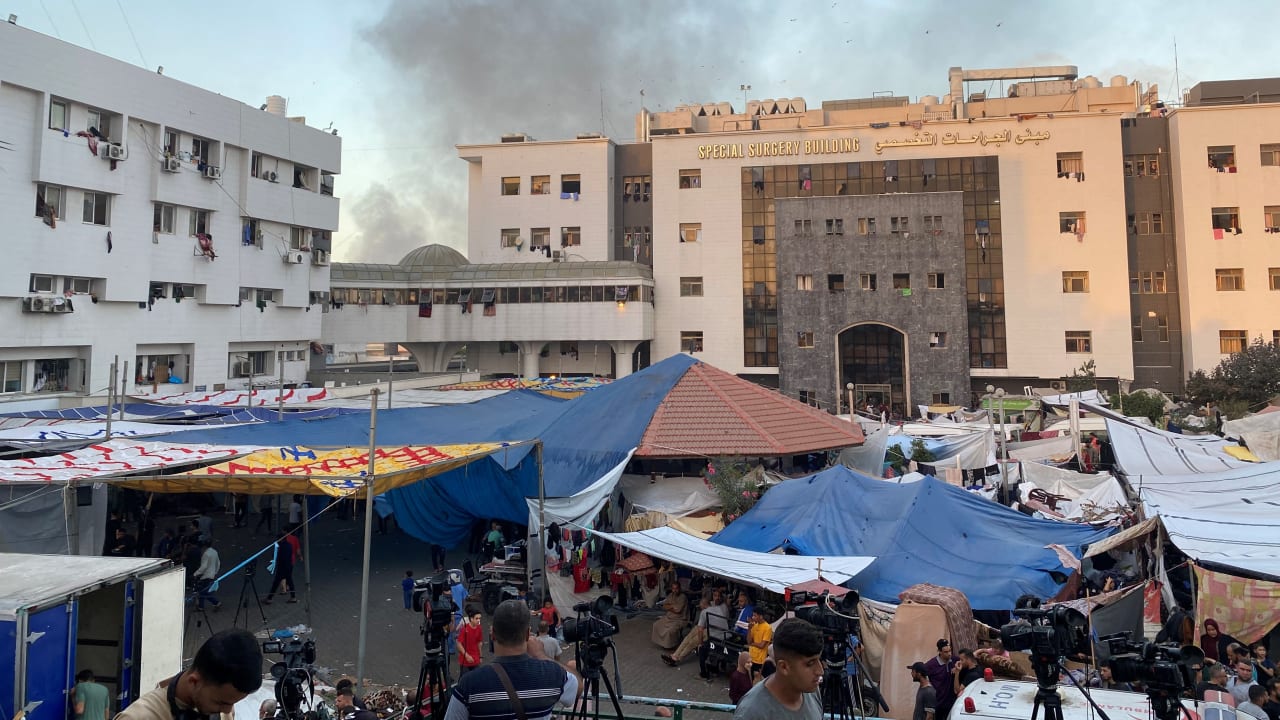
Emily Damari, who was kidnapped from Kibbutz Kfar Aza, was held inside Shifa Hospital by a physician who forced her to call him “Dr. Hamas.”
Then there is Dr. Marwan al-Hams, a physician at a hospital in Rafah, who handled the body of IDF soldier Hadar Goldin who was killed by Hamas in 2014, knowing it was hidden for years in a tunnel beneath the city.
Another example is Dr. Ahmed al-Jamal, a physician who also worked at a local mosque. He held Israeli hostages Andrey Kozlov, Shlomi Ziv, and Almog Meir Jan inside his family home in Nuseirat alongside his son, who had written for Al Jazeera. Both were known to have ties to Hamas and both were killed by the IDF in June 2024 during a rescue operation of those hostages.
The weaponization of medical protections
These are not fringe allegations. They are documented cases that expose a grim reality: Humanitarian and medical protections, some of the most sacred principles in international law, were deliberately weaponized.International humanitarian law exists to shield medical professionals so they can save lives without fear. Hamas understood this. And it exploited that protection, embedding terror within hospitals, clinics, and homes labeled as civilian or humanitarian spaces. When doctors become jailers, when nurses become abusers, when hospitals become holding cells, the moral and legal framework designed to protect civilians collapses.
What this war has made painfully clear is that humanitarian and health organizations often turn a blind eye when the victims are Jewish. Legacy media outlets scrutinize Israel’s actions against a non-state terror group that embeds itself in civilian infrastructure and exploits aid for profit, yet they barely acknowledge the role some Gaza-based medical professionals played in hostage abuse and killings.
Gonen described repeated sexual harassment and assault, constant threats, and psychological terror. She recounted how her captors refused to let her use the bathroom alone, punished her every time she resisted harassment, and ultimately, how one captor took advantage of her during his final hours of guarding her before she was moved into the tunnels.
She has spoken about the long aftermath: the PTSD, the way ordinary sounds trigger memories of captivity, and the cruel misconception that once hostages return home, their suffering is over.
The suffering doesn’t end. While the release of hostages brought relief to their families and the public, it marked only the beginning of a long and difficult journey toward recovery.
What makes Gonen’s testimony especially significant is not only what it reveals about Hamas but also what it exposes about the international system’s failure to respond. October 7 victims came from 35 different countries, so this was never solely Israel’s tragedy. The entire world should have taken responsibility for the citizens affected.
And yet, Israel has largely been left to shoulder the burden alone, militarily, diplomatically, and morally.
The world lacks a coherent framework for responding when non-state terror organizations commit mass sexual violence and hostage-taking while hiding behind civilian infrastructure and humanitarian status. Existing mechanisms, including the Responsibility to Protect doctrine, have proven weak, politicized, or selectively enforced.
Countries that host, fund, or legitimize terror groups, like Qatar or the regime in Iran, must be held accountable. Human-rights organizations must confront uncomfortable facts, even when they complicate preferred narratives. If medical professionals can participate in terror without accountability, then the laws meant to protect humanity have been hollowed out from within.
And if the world refuses to confront that, October 7 will not remain a tragedy of the past: It will become a blueprint for terrorist groups in the future.
Zina Rakhamilova is a co-founder and CEO of Social Lite Creative, a digital marketing firm that specializes in geopolitics.
Source: https://www.jpost.com/opinion/article-881795

No comments:
Post a Comment