by Lawrence Kadish
President Donald Trump's strategic decision to reorder our relationship with Europe may be startling Old World diplomats, but that is because they do not know their own history.
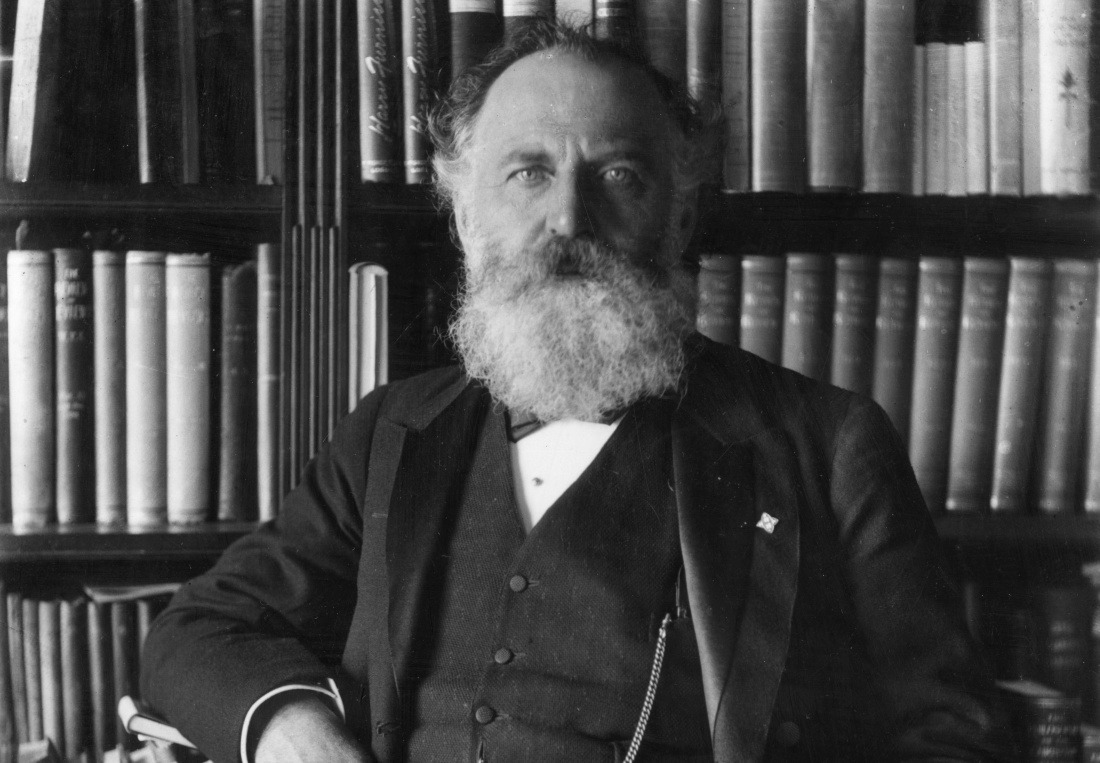 |
| In 1901, British journalist William Thomas Stead published a provocative and surprising foresighted examination of America's growing global influence at the start of the 20th century. His central thought was that the United States, through its industrial might, technological innovation, and cultural exports, was creating a new form of empire. Today's European leaders should go back and read Stead's insight regarding how America has played a role in defining Europe and much of the world. Pictured: Stead in 1900. (Photo by Rischgitz/Getty Images) |
President Donald Trump's strategic decision to reorder our relationship with Europe may be startling Old World diplomats, but that is because they do not know their own history.
In 1901, British journalist William Thomas Stead published The Americanization of the World. It was a provocative and surprising foresighted examination of America's growing global influence at the start of the 20th century.
Stead wrote that American power was reshaping international commerce, culture, and politics in unprecedented ways. His central thought was that the United States, through its industrial might, technological innovation, and cultural exports, was creating a new form of empire. It must have been stunning for the British author because his Victorian world was built on colonial conquest. Meanwhile, America was becoming a global competitor by creating economic dominance.
Stead warned his countrymen that "Americanization" had several key elements. He included the spread of American business methods, particularly mass production, which were serving as a model for industries around the world. He also reported on the enormous export of American products, from sewing machines to agricultural equipment. Beyond commerce, Stead identified our American approach to democracy that would eventually replace European imperial governments.
Like European leaders today, he viewed this process with a mixture of admiration and apprehension because the British Empire had reached its zenith. They just did not know it.
And now here we are during the first quarter of the 21st century. Today's "Americanization" operates through Silicon Valley's technology, American brands and culture, and the projection of a superpower's military and economic strength.
Today's European leaders should go back and read Stead's insight regarding how America has played a role in defining Europe and much of the world, reminding us of Mark Twain's observation that said, "History never repeats itself, but it does often rhyme". Trump has figured out that soft power (tariffs and trade) is as important as hard power (missiles and warships) in protecting our nation's future. It was true in 1901, and it is self-evident in 2026.
Lawrence Kadish serves on the Board of Governors of Gatestone Institute.
Source: https://www.gatestoneinstitute.org/22232/europe-fear-americanization

No comments:
Post a Comment