by Con Coughlin
While it can be argued that removing Venezuelan dictator Nicolas Maduro and protecting Greenland from the nefarious designs of China and Russia are all worthy objectives, if Trump is serious about reasserting America's dominant role in world affairs, then he needs to show that he genuinely means business when dealing with implacable foes such as Russia, China and Iran.
What is not in dispute is that, despite Trump's claim that regime officials have told him they will not exact reprisals against the protestors, telling the White House they will not execute them, the killing has continued unabated.
Trump's intense involvement in diplomatic efforts to end the Ukraine war has so far achieved little, with Russian President Vladimir Putin promising peace while continuing merciless attacks on Ukraine, making no credible effort to engage with the Trump administration's various peace initiatives.
As former Chief of Romanian intelligence Ion Mihai Pacepa noted decades ago: "[I]nstructions on how to behave in Washington. 'You simply have to keep on pretending that you'll break with terrorism... over, and over, and over'" -- and then presumably do whatever you want.
While it can be argued that removing Venezuelan dictator Nicolas Maduro and protecting Greenland from the nefarious designs of China and Russia are all worthy objectives, if Trump is serious about reasserting America's dominant role in world affairs, then he needs to show that he genuinely means business when dealing with implacable foes such as Russia, China and Iran.
US president Donald J. Trump's delay in delivering on his "locked and loaded" promise to Iran's brave protestors, it appears, is merely the result of placing the final touches on his "It's time to look for new leadership in Iran."
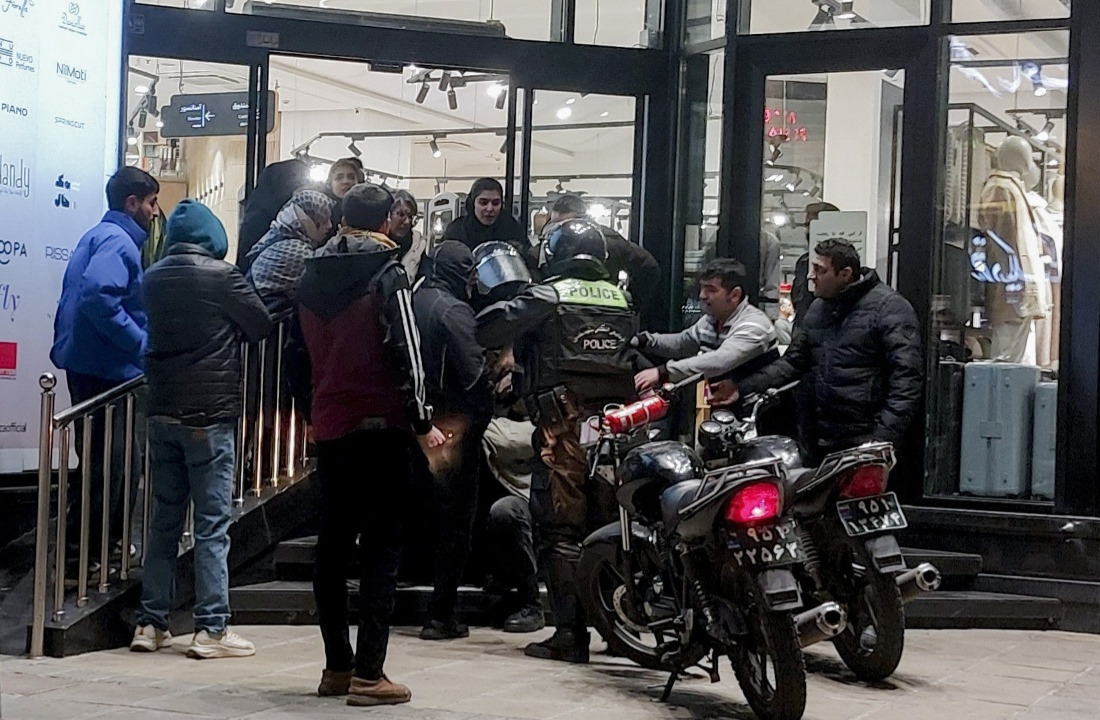
From the moment a fresh wave of anti-government protests erupted throughout Iran at the start of the year, Trump has made numerous threats to intervene if Tehran's theocratic regime continued to resort to acts of extreme violence to suppress the will of the Iranian people.
Trump's most explicit warning to the ayatollahs came at the height of the recent disturbances, when it became clear the regime was resorting to extreme violence to crush the protestors.
The president urged Iranians to keep protesting, declaring that help was on its way, without saying what that help might be:
"Iranian Patriots, KEEP PROTESTING - TAKE OVER YOUR INSTITUTIONS!!! Save the names of the killers and abusers. They will pay a big price.... HELP IS ON ITS WAY."
Trump also revealed that he had "cancelled all meetings with Iranian Officials," who had attempted to reopen negotiations on Iran's controversial nuclear programme in a deliberate attempt to deflect attention away from their domestic woes and buy time to restore order.
The president insisted that no such talks would take place "until the senseless killing of protesters STOPS." When asked what he meant by "help is on its way", Trump indicated that military action was among the options being weighed to punish Iran over the crackdown.
"The killing looks like it's significant, but we don't know yet for certain," Trump said. "We'll act accordingly," he added.
In another sign that the US was preparing to attack Iran, the State Department urged American citizens to leave Iran, including by land through Turkey or Armenia.
Trump's subsequent decision to tone down his anti-Iran rhetoric, claiming that his warnings have led to Iran ending the killings -- which apparently it has not -- initially raised doubts about Trump's willingness to act.
That Trump so far has not followed through on his threats must be a source of profound disappointment for Iranian protestors.
Trump's official position on the unrest is that he intends to "watch and see what the process is" before deciding what to do next.
This caveat appeared despite the fact that even regime officials, including Supreme Leader Ayatollah Ali Khamenei, have publicly acknowledged that thousands of Iranian protestors have been killed during the past two weeks of violence.
In a speech at the weekend, Khamenei said thousands had been killed, "some in an inhuman, savage manner", and blamed the US for the deaths.
Assessments on the number of protestors killed during the recent unrest differ wildly. The US-based Iranian Human Rights Activists News Agency (HRANA) has claimed more than 3,000 lives have been lost, while some activists are claiming that at least 16,500 protestors have been killed and 330,000 injured.
Providing precise casualty figures is difficult because of the internet blackout implemented by the regime to curb the violence.
What is not in dispute is that, despite Trump's claim that regime officials have told him they will not exact reprisals against the protestors, telling the White House they will not execute them, the killing has continued unabated.
Iran's Chief Justice Gholamhossein Mohseni-Ejei said that "the government must act quickly to punish more than 18,000 people who have been detained through rapid trials and executions."
The Islamic regime is basically employing the same tactics of brutal repression that it used during similar anti-government protests, such as during the 2009 Green Movement and more recent protests in 2022.
The risk for Trump is that, having raised the prospect of launching a regime change in Iran, his failure to do so will seriously undermine his own credibility and, with it, the effectiveness of American deterrence.
Hostile powers such as Russia and China, both of which are allies of Iran, will certainly be taking a close interest in how the latest drama plays out in Iran and just how willing the American leader is to follow through on his threats of serious action.
Trump's involvement in major global security challenges is already under fierce scrutiny over his involvement in the conflicts in Ukraine and Gaza, where his interventions have achieved only mixed results.
Trump's intense involvement in diplomatic efforts to end the Ukraine war has so far achieved little, with Russian President Vladimir Putin promising peace while continuing merciless attacks on Ukraine, making no credible effort to engage with the Trump administration's various peace initiatives.
As former Chief of Romanian intelligence Ion Mihai Pacepa noted decades ago: "[I]nstructions on how to behave in Washington. 'You simply have to keep on pretending that you'll break with terrorism... over, and over, and over'" -- and then presumably do whatever you want.
In Gaza, meanwhile, Trump's initial success in negotiating the release of all the living Israeli hostages, and all but one of the deceased, has stalled at the start of "Phase 2" of his "Comprehensive Plan to End the Gaza Conflict," especially on the key question of requiring Hamas terrorists to disarm and end their involvement in the Gaza Strip. So long as Hamas remains an active force in Gaza, the prospects of a lasting peace will remain remote.
The perception that Trump might not have the staying power to achieve his stated objectives in conflicts such as Iran, Ukraine and Gaza, will be carefully watched as he pursues other policy objectives in Venezuela, Greenland and possibly Cuba.
While it can be argued that removing Venezuelan dictator Nicolas Maduro and protecting Greenland from the nefarious designs of China and Russia are all worthy objectives, if Trump is serious about reasserting America's dominant role in world affairs, then he needs to show that he genuinely means business when dealing with implacable foes such as Russia, China and Iran.
Con Coughlin is the Telegraph's Defence and Foreign Affairs Editor and a Distinguished Senior Fellow at Gatestone Institute.
Source: https://www.gatestoneinstitute.org/22218/trump-iran-protesters

No comments:
Post a Comment