by Robert Williams
The U.S.-UAE relationship stands out as one of the few alliances that has consistently transcended administrations, ideologies, and regional crises. Today, this relationship — particularly in artificial intelligence and advanced technology — offers Washington something rare: strategic leverage.
Unlike alliances that fluctuate with electoral cycles, the U.S.-UAE partnership has proven durable because it is grounded in shared strategic instincts: opposition to political Islam, preference for state stability over chaos, and a pragmatic understanding of power. From counterterrorism cooperation to energy security and regional normalization, Abu Dhabi has repeatedly aligned with U.S. objectives when it mattered.
Under U.S. President Donald Trump, the UAE played a central role in the Abraham Accords — one of the most consequential diplomatic breakthroughs in the Middle East in generations. The Accords succeeded because they were deal-oriented, interest-based, and insulated from ideological illusion.
In Ukraine, the Western toolkit has been largely binary: sanctions or weapons. AI introduces a third vector — structured information dominance — enabling better forecasting of economic stress, battlefield dynamics, energy flows, and negotiation windows.
Abu Dhabi offers what fragile states do not: political stability, centralized decision-making, and the ability to translate technology into governance outcomes. This is not outsourcing American power — it is multiplying it through a reliable strategic node.
One of the most underappreciated assets in modern diplomacy is trustworthiness across adversarial lines. Sheikh Mohamed bin Zayed has valued precisely this asset.
During the Trump administration, this approach proved effective in the Middle East, where MBZ acted as a stabilizing force capable of translating American objectives into regional outcomes. In the Ukraine context, such a figure matters. The United States cannot credibly mediate without appearing partisan, and Europe lacks both cohesion and leverage. Russia and Ukraine, meanwhile, require off-ramps that do not resemble capitulation. A trusted intermediary with credibility in Washington — and channels to Moscow and Kyiv — becomes indispensable.
The UAE fits this profile better than any European actor. Importantly, this role does not replace U.S. leadership; it extends it by enabling outcomes Washington cannot directly engineer.
A U.S.-UAE-enabled AI architecture could support a structured quadrilateral framework involving the United States, the UAE, Russia, and Ukraine — not for symbolic summits, but for continuous, data-driven de-escalation. AI systems can model ceasefire stability, monitor compliance using satellite imagery and open-source intelligence, forecast humanitarian and energy impacts, and identify negotiation windows based on battlefield and economic indicators. These tools already exist, but remain fragmented and politically underutilized. What is missing is a solidly dependable architecture and convener. The UAE, with U.S. backing, can provide both.
AI-backed governance — applied carefully and under U.S. strategic oversight — could help stabilize a post-conflict Ukraine by strengthening verification mechanisms, transparency, and reconstruction oversight. For Washington, this aligns directly with a Trump-era doctrine: achieve peace through cooperation, not endless war. It avoids U.S. troop involvement, limits financial drain, and reasserts American leadership through outcomes rather than ideology.
The choice facing U.S. policymakers is not between victory and surrender, but between strategic innovation and strategic exhaustion. The Ukraine war has exposed the limits of escalation without resolution. Artificial intelligence, when embedded in loyal, committed alliances, offers a new instrument of American statecraft — one that favors precision over destruction and trustworthiness over attrition.
The U.S.-UAE partnership is uniquely positioned to pioneer this model. Sheikh Mohamed bin Zayed has demonstrated that credible intermediaries can deliver where traditional diplomacy fails. Under a results-oriented American leadership, this partnership could help transform AI from a battlefield advantage into a peace-building architecture.
The lesson of the Abraham Accords still applies: real peace is made by those willing to deal, not posture. In an age of endless war, peace through AI — backed by power, reliability and strategy —could well be the most productive solution of all.
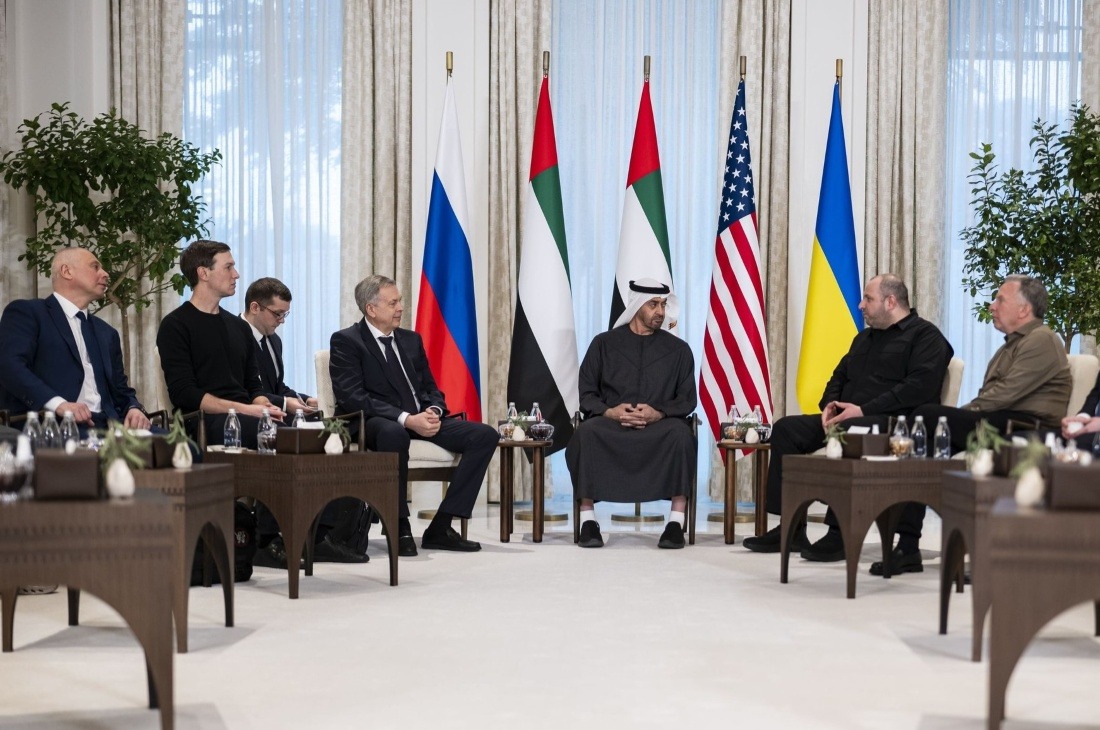
For decades, American foreign policy has struggled with a recurring failure: winning wars tactically while losing peace strategically. Ukraine risks becoming the latest case. As the conflict grinds on, costs rise for U.S. taxpayers, European economies weaken, global energy markets destabilize, and Washington's strategic focus drifts away from the primary long-term challenge — China. Against this backdrop, the United States needs partners that deliver not rhetoric but results.
The U.S.-UAE relationship stands out as one of the few alliances that has consistently transcended administrations, ideologies, and regional crises. Today, this relationship — particularly in artificial intelligence and advanced technology — offers Washington something rare: strategic leverage.
Under the leadership of Sheikh Mohamed bin Zayed, the UAE has demonstrated an ability to maintain working trust with competing powers while remaining firmly aligned with core U.S. interests. In an era defined by data, algorithms, and information dominance, AI-enabled diplomacy may offer a path where brute force has stalled.
Why the U.S.-UAE Relationship Works — and Endures
Unlike alliances that fluctuate with electoral cycles, the U.S.-UAE partnership has proven durable because it is grounded in shared strategic instincts: opposition to political Islam, preference for state stability over chaos, and a pragmatic understanding of power. From counterterrorism cooperation to energy security and regional normalization, Abu Dhabi has repeatedly aligned with U.S. objectives when it mattered. This alignment survived moments of tension and persisted across administrations.
Under U.S. President Donald Trump, the UAE played a central role in the Abraham Accords — one of the most consequential diplomatic breakthroughs in the Middle East in generations. The Accords succeeded because they were deal-oriented, interest-based, and insulated from ideological illusion.
That same logic now applies to artificial intelligence. The UAE recognized early that AI is not merely an economic tool, but a strategic one — shaping intelligence analysis, logistics, predictive modeling, cyber defense, and diplomatic decision-making. Washington has increasingly acknowledged that time-tested, reliable partners must be integrated into the AI ecosystem to maintain Western technological superiority. The result is a rare convergence: American innovation leadership combined with Emirati execution, capital, and geopolitical flexibility.
Why AI Cooperation with the UAE Is Strategic for the United States
AI cooperation with the UAE serves three concrete U.S. strategic purposes.
First, it extends American technological influence without direct state expansion. By integrating reliable partners into AI development, standards, and deployment, Washington avoids ceding ground to China's state-exported digital authoritarianism. Second, cooperation with the UAE strengthens intelligence and decision-support systems across allied networks. AI excels at pattern recognition, predictive risk assessment, and scenario modeling — precisely the tools required in complex conflicts where escalation control is critical. Third, it creates a constructive, non-military avenue towards successful solutions.
In Ukraine, the Western toolkit has been largely binary: sanctions or weapons. AI introduces a third vector — structured information dominance — enabling better forecasting of economic stress, battlefield dynamics, energy flows, and negotiation windows.
This cooperation is not theoretical. In 2025, Microsoft announced a $1.5 billion strategic investment in G42, the UAE's flagship artificial intelligence and advanced technology group. This was not a symbolic venture bet, but a high-confidence decision by one of America's most security-sensitive technology firms. The partnership focused on cloud infrastructure, AI deployment, and alignment with U.S. governance and security standards. Microsoft's move sent a clear signal: the UAE is viewed not as a risk, but as a proven, reliable platform for sovereign AI development aligned with Western interests. More broadly, the UAE has committed tens of billions of dollars to AI infrastructure, including high-performance computing, next-generation data centers, and sovereign AI models. U.S. technology firms and chip ecosystem partners are deeply embedded because Abu Dhabi offers what fragile states do not: political stability, centralized decision-making, and the ability to translate technology into governance outcomes. This is not outsourcing American power — it is multiplying it through a reliable strategic node.
Mohamed bin Zayed and the Value of Trusted Intermediaries
One of the most underappreciated assets in modern diplomacy is trustworthiness across adversarial lines. Sheikh Mohamed bin Zayed has valued precisely this asset. The UAE maintains working relationships with Washington, Moscow, Kyiv, Beijing, and key European capitals — not out of ambiguity, but out of strategic irreplaceability. This is not neutrality; it is constructive engagement. During the Trump administration, this approach proved effective in the Middle East, where MBZ acted as a stabilizing force capable of translating American objectives into regional outcomes. In the Ukraine context, such a figure matters. The United States cannot credibly mediate without appearing partisan, and Europe lacks both cohesion and leverage. Russia and Ukraine, meanwhile, require off-ramps that do not resemble capitulation. A reliable intermediary with credibility in Washington — and channels to Moscow and Kyiv — becomes indispensable.
The UAE fits this profile better than any European actor. Importantly, this role does not replace U.S. leadership; it extends it by enabling outcomes Washington cannot directly engineer.
From War Management to Peace Engineering: The Role of AI
Artificial intelligence offers a framework to move from reactive war management to proactive peace engineering. A U.S.-UAE-enabled AI architecture could support a structured quadrilateral framework involving the United States, the UAE, Russia, and Ukraine — not for symbolic summits, but for continuous, data-driven de-escalation. AI systems can model ceasefire stability, monitor compliance using satellite imagery and open-source intelligence, forecast humanitarian and energy impacts, and identify negotiation windows based on battlefield and economic indicators. These tools already exist, but remain fragmented and politically underutilized. What is missing is a solidly dependable architecture and convener. The UAE, with U.S. backing, can provide both.
The relevance of the UAE's domestic experience is critical. In Abu Dhabi, AI has already enhanced governance capacity by improving logistics coordination, crisis response, security integration, and administrative efficiency. Ukraine, exhausted by prolonged war, faces not only military attrition but governance overload: fragmented data, delayed decisions, and constant escalation risk. AI-backed governance — applied carefully and under U.S. strategic oversight — could help stabilize a post-conflict Ukraine by strengthening verification mechanisms, transparency, and reconstruction oversight. For Washington, this aligns directly with a Trump-era doctrine: achieve peace calmly, without endless war. It avoids U.S. troop involvement, limits financial drain, and reasserts American leadership through outcomes rather than ideology.
Peace Through Power — and Precision
The choice facing U.S. policymakers is not between victory and surrender, but between strategic innovation and strategic exhaustion. The Ukraine war has exposed the limits of escalation without resolution. Artificial intelligence, when embedded in loyal, committed alliances, offers a new instrument of American statecraft — one that favors precision over destruction and trustworthiness over attrition.
The U.S.-UAE partnership is uniquely positioned to pioneer this model. Sheikh Mohamed bin Zayed has demonstrated that credible intermediaries can deliver where traditional diplomacy fails. Under a results-oriented American leadership, this partnership could help transform AI from a battlefield advantage into a peace-building architecture.
The lesson of the Abraham Accords still applies: real peace is made by those willing to deal, not posture. In an age of endless war, peace through AI — backed by power, reliability and strategy — could well be the most productive solution of all.
Robert Williams is based in the United States.
Source: https://www.gatestoneinstitute.org/22244/us-uae-ai-cooperation

No comments:
Post a Comment