by Shimon Sherman
The economics of the 2026 Strait of Hormuz crisis explained.
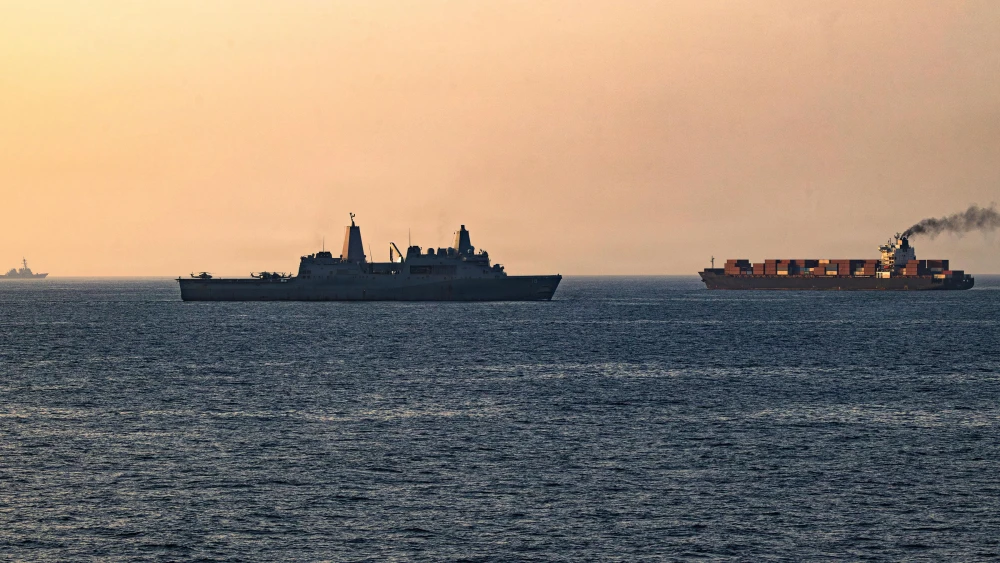 |
In recent weeks, the 2026 Iran crisis has evolved from its initial “hot war” phase into a historically unique “dual blockade.” At the center of this chapter in the conflict is the Strait of Hormuz.
Measuring just 21 miles wide, this narrow geographic chokepoint has historically served as the central artery of the global oil economy. Before the conflict, the waterway accommodated the passage of approximately 3,000 commercial vessels every month, single-handedly processing roughly one-fifth of the world’s total seaborne petroleum trade. These waters are essential for sustaining the global supply chains of crude oil, liquefied natural gas (LNG) and agricultural fertilizers.
Following the commencement of hostilities, however, transit volume through the strait collapsed by more than 90%. The resulting paralysis has trapped an estimated 2,000 commercial vessels and upwards of 20,000 mariners within the Persian Gulf. Due to the absence of an alternative route to the open ocean, these commercial assets and all the supply chains downstream of them are currently stuck in a painful holding pattern.
The crisis is defined by two overlapping enforcement zones. On one side, the Islamic Republic of Iran has forbidden passage to vessels it considers hostile, attempting to assert sovereign control over the international corridor and to leverage the resulting global economic crisis into diplomatic capital. Simultaneously, the United States has implemented a comprehensive naval blockade to stop any vessels servicing Iranian ports and pressure Tehran’s economy.
The Iranian blockade
In early March 2026, the Islamic Revolutionary Guard Corps (IRGC) enacted an official decree closing the strait to ships originating from or affiliated with the United States, Israel and their allies.
Iran’s military approach to controlling the Strait of Hormuz relies on smaller, cheaper weapons and hit-and-run naval operations to challenge superior American conventional forces. Iranian forces have laid down fewer than 100 sea mines throughout the channel, backing them up with aerial and naval drone swarms and fast-attack gunboats.
This campaign has already damaged 17 merchant ships, seven of which were abandoned by their crews. The attacks have also sunk one tugboat and resulted in the deaths or disappearances of 12 commercial seafarers.
Confirmed seizures and boarding operations include the MSC Francesca, the Epaminondas, the Sevin (which was captured carrying 65% of its 1-million-barrel capacity), the Dorena (which was fully loaded with 2 million barrels of crude oil) and the Euphoria, which sustained heavy damage to its bridge during the interdiction.
While Iranian naval operations have been systematic in their severing of the strait, the political messaging has been far from stable. Over time, the initial closure morphed into a more extravagant claim of permanent control over the strait. In diplomatic negotiations, initiated in early April, Tehran introduced a 10-point plan that required a complete restructuring of the waterway’s governance, explicitly placing the international transit corridor under sovereign Iranian coastal authority.
To institutionalize this control regardless of diplomatic outcomes, Iran’s parliament is currently advancing a 12-article Hormuz sovereignty law. Parliamentary Speaker of Iran Mohammad Bagher Ghalibaf articulated this uncompromising stance, stating, “Others can’t pass through the Strait of Hormuz while we cannot.”
Riding on the back of this new legal framework, Iran is attempting to transform the blockade from just a military operation into a financial enterprise. To offset the crushing financial toll of the war, Iranian authorities created a formalized toll system, demanding between $500,000 and $2 million per vessel for safe passage through the strait, charging a premium roughly equal to $1.00 per barrel of crude oil.
To shield this system from American financial retaliation, the tolls are priced in Chinese yuan and wired directly to Iranian-controlled accounts within Chinese banks. The extortion system is proving effective. Facing astronomical war-risk insurance premiums, at least one major oil tanker operator recently paid the $2 million transit fee directly to Iranian authorities to guarantee the safe passage of its cargo without interference.
Compounding the volatility brought on by this national protection racket, the implementation of Iranian policy surrounding the strait has been marked by a chaotic back-and-forth, driven by severe internal divisions following the decapitation of the country’s centralized leadership. On April 8, a two-week ceasefire brokered by Pakistan temporarily paused hostilities between the U.S. and Iran. This truce explicitly mandated the immediate reopening of the Strait of Hormuz. However, the Iranian military simply ignored the agreement and announced that the strait would remain closed despite the concessions made at the negotiating table. This decision was justified by the continued Israeli offensive in Lebanon, which Tehran claimed violated the ceasefire terms.
This disconnect between the government and the military became even more apparent in mid-April. On April 17, Iranian Foreign Minister Abbas Araghchi announced that “the Strait of Hormuz is declared completely open” for commercial shipping following a freshly declared ceasefire in Lebanon.
However, within hours of the foreign minister’s announcement, the Tasnim News Agency associated with the IRGC criticized the “bad and incomplete tweet by Araghchi and incorrect ambiguity-creation regarding the reopening of the Strait of Hormuz.”
Tasnim went on to say, “While various conditions have been considered for this matter, one of the most important among them is the complete oversight by Iran’s armed forces over the passage of ships, and this passage shall be deemed null and void in the event of the continuation of the claimed naval blockade.”
The U.S. blockade
Washington’s approach to the Strait of Hormuz has also been in continuous flux throughout March and April. In mid-March, President Donald Trump publicly called on NATO to help secure and reopen the waterway. Traditional allies like the United Kingdom, France and Australia refused to join offensive military operations in the volatile region. After a temporary ceasefire brokered by Pakistan in early April failed to stop ongoing Iranian attacks on shipping, the United States abandoned its diplomatic efforts and moved to physically choke off the Iranian economy.
On April 13, the U.S. Central Command (CENTCOM) officially launched a comprehensive naval blockade designed to stop all ships traveling to or from Iranian ports. General Dan Caine, Chairman of the Joint Chiefs of Staff, explicitly outlined the broad scope of this operation, stating, “Let me be clear, this blockade applies to all ships, regardless of nationality, heading into or out of Iranian ports.”
He further established the military’s proactive stance, adding, “The joint force ... will actively pursue any Iranian-flagged vessel or any vessel attempting to provide material support to Iran.”
White House Press Secretary Karoline Leavitt clarified the geographic boundaries of the operation, noting, “This includes all Iranian ports on the Arabian Gulf and the Gulf of Oman.”
To enforce this massive cordon, CENTCOM has deployed more than 10,000 military personnel, dozens of aircraft and approximately 15 U.S. warships directly across the 21-mile chokepoint. The U.S. Navy has been explicitly authorized to “shoot and kill” any Iranian vessels suspected of laying sea mines in the navigational channels.
This posture led to confrontation on April 19, when the guided-missile destroyer USS Spruance intercepted the Iranian-flagged cargo ship M/V Touska, which was carrying approximately two million barrels of crude oil. After a six-hour standoff when the cargo ship ignored repeated warnings, the Spruance ordered the civilian crew to evacuate the engine room and fired its five-inch naval gun directly into the ship’s propulsion systems. After the ship was permanently disabled, U.S. Marines boarded and seized the vessel.
U.S. forces have also captured or forced the anchoring of other Iranian-linked ships, including the M/T Tifani, M/V Hero II and M/V Hedy. According to official CENTCOM statistics, the military has successfully intercepted and turned around 33 vessels attempting to breach the blockade.
However, the reality on the water shows a highly porous blockade. Maritime intelligence compiled by Lloyd’s List revealed that by April 20, at least 26 vessels belonging to the Iranian “ghost fleet” had successfully bypassed the U.S. warships. A “ghost fleet,” or dark fleet, is an illicit armada primarily composed of aging tankers that operate outside traditional insurance and regulatory frameworks to deliberately evade international sanctions. These ships rely on a tiered system of obfuscation to physically and digitally vanish from tracking systems.
The primary tactic for bypassing the American naval cordon has been the manipulation of the Automatic Identification System (AIS), a legally mandated transponder that transmits a ship’s location. The simplest evasion method is “going dark,” where crews manually disable their AIS transponders to create data gaps that hide their movements from conventional tracking.
More advanced vessels employ AIS spoofing, utilizing electronic warfare mechanisms or manipulated software to transmit false satellite coordinates. Once past the immediate chokepoint, these vessels have conducted unauthorized ship-to-ship cargo transfers by moving the petroleum to unflagged or clean intermediary ships at sea.
Recognizing that the physical naval cordon in the Strait of Hormuz is porous, Washington has launched a sweeping global financial campaign to supplement the blockade. Secretary of Defense Pete Hegseth outlined this dual approach, noting, “At the same time, Treasury Secretary Scott Bessent and our friends over at Treasury are launching Operation Economic Fury as well, maximizing economic pressure across the entirety of the government.” This operation expands traditional economic sanctions to attack the broader international demand for Iranian oil, with a specific focus on China, which purchases 91% of Iran’s oil output.
On April 24, the U.S. Treasury Department levied aggressive secondary sanctions against the independent Chinese refinery Hengli Petrochemical, a major buyer of illicit Iranian crude oil. The Treasury also issued formal warnings to two major Chinese banks, threatening them with expulsion from the U.S. dollar system if they process the yuan-denominated transit tolls Iran is demanding.
Bessent emphasized the severity of these measures, stating, “And the Iranians should know that this is going to be the financial equivalent of what we saw in the kinetic activities.” This systemic pressure has shown some initial success; after the threats of secondary sanctions were announced, the U.S. military observed two out of 10 monitored Chinese vessels voluntarily reversing course before reaching the Gulf.
Effects of the blockade
The trajectory of the dual blockade is leading toward a war of macroeconomic attrition, testing the thresholds of both the Iranian state and the global economy. For Iran, the U.S. naval blockade is driving the nation toward fiscal collapse. The near-total restriction on maritime exports is costing the Iranian economy an estimated $500 million daily in lost petroleum revenues. This daily hemorrhaging is particularly significant given that oil exports accounted for approximately 40% of the nation’s total export economy.
This economic pressure is compounding the immense expenses incurred by Iran during the “hot phase” of the war. Total war damage now exceeds 40% of Iran’s GDP, triggering a historic collapse of the rial, skyrocketing domestic inflation and soaring unemployment rates. This economic strain is being partially offset by a new overland smuggling operation that pumps millions of liters of oil illicitly transported daily across land borders into Pakistan. Net revenue generated by the smuggling routes is expected to be around $1 billion annually.
Conversely, the capacity of the United States to survive the Iranian blockade is tested by profound inflationary shocks and supply-chain paralysis. To mitigate the immediate loss of 20% of the world’s seaborne oil, the International Energy Agency (IEA) authorized the largest emergency oil release in its history, flooding the market with 400 million barrels of oil. Fatih Birol, executive director of the IEA, praised the intervention, noting, “The oil-market challenges we are facing are unprecedented in scale, therefore I am very glad that IEA member countries have responded with an emergency collective action of unprecedented size.”
Of this total emergency release, the United States Strategic Petroleum Reserve contributed 172 million barrels. Despite this unprecedented intervention, the 400-million-barrel release covers a mere 20 days of lost transit throughput from the Strait of Hormuz.
The global reaction to this economic reality has been stark. Brent crude prices have hovered around $100 per barrel since the start of the conflict, representing a 35% spike from pre-war baselines. Domestically, U.S. gasoline prices surged above $4.05 per gallon, an increase of more than a dollar from pre-war levels, with projections indicating that prices will not normalize below $3.00 until at least 2027.
Furthermore, the disruption of agricultural fertilizers transiting the Gulf threatens severe harvest failures across Africa and Latin America, potentially projecting food insecurity deep into 2027. Consequently, major financial institutions, such as Goldman Sachs, have increased the statistical probability of a near-term U.S. recession to 30%.
Shimon Sherman is a columnist covering global security, Middle Eastern affairs, and
geopolitical developments. His reporting provides in-depth analysis on
topics such as the resurgence of ISIS, Iran’s nuclear ambitions,
judicial reforms in Israel, and the evolving landscape of militant
groups in Syria and Iraq. With a focus on investigative journalism and
expert interviews, his work offers critical insights into the most
pressing issues shaping international relations and security.
Source: https://www.jns.org/analysis/the-dual-iran-us-blockade

No comments:
Post a Comment