by T. Casey Fleming
China is paving the way. How far behind is the United States?
Communist China did not merely develop one of the world’s most advanced systems of online control; it built a scalable architecture for digital governance that has been widely criticized for its implications for freedom of expression and privacy. Western governments and security analysts have repeatedly raised concerns about intellectual property theft, cyber-espionage, and forced technology transfer over the past two decades. At the same time, China has developed substantial domestic research and engineering capacity — much of it based on stolen U.S. innovation. The result is a hybrid ecosystem that draws on global innovation, including open technological systems, but is deployed within a fundamentally centralized model of state control.
In September 2025, more than 500 gigabytes of internal files were leaked from Geedge Networks, a company co-founded by Fang Binxing, widely associated with the Great Firewall. Researchers described the leak as one of the most significant exposures of censorship infrastructure ever recorded, revealing not only domestic surveillance capabilities, but also a growing international deployment footprint.
For more than a decade, the Chinese Communist Party (CCP) has supported the expansion of tightly controlled digital environments beyond its borders, including in Iran. In Iran, systems associated with the Islamic Revolutionary Guard Corps have been reported to incorporate centralized monitoring, filtering, and network shutdown capabilities. These systems enable authorities to restrict communications during periods of unrest and reduce transparency around internal political events, raising concerns among human rights organizations about the suppression of dissent at scale.
Analysts and civil society groups have documented how digital control mechanisms can be used to fragment communication among protest movements and limit external visibility of state actions. In some cases, these technologies are integrated into broader national security frameworks, where maintaining internal stability becomes a primary objective during periods of political tension or conflict.
The 2026 conflict involving Iran illustrates how information control and geopolitical instability increasingly intersect in the digital age. Governments with advanced surveillance and network control capabilities may be better positioned to manage internal dissent during crises. However, this also raises fundamental questions about accountability; transparency; and the long-term balancing of security, civil liberties, and personal freedom.
According to leaked materials and public reporting, similar systems have been deployed in countries such as Kazakhstan, Ethiopia, Pakistan, and Myanmar, often in connection with the CCP’s Belt and Road Initiative. In some cases, these systems are deeply integrated into national telecommunications infrastructure, enabling large-scale monitoring of communications, content filtering, and network-level behavioral control.
These developments raise growing concern about the long-term trajectory of digital governance. Systems designed for comprehensive visibility and oversight significantly expand state capacity to manage information flows. Whereas proponents argue that such systems can improve stability and administrative efficiency, critics warn that they also create conditions for persistent restrictions on expression, anonymity, and privacy.
A key structural concern is durability. Once installed, large-scale surveillance and censorship infrastructure is often difficult to dismantle. Technical dependencies, institutional workflows, and national security incentives reinforce continued reliance. Over time, this creates path dependence, where digital control systems evolve and expand, embedding themselves into the core architecture of governance and state-society relations.
Within China, similar systems continue to be refined in regions such as Xinjiang, including policies affecting the Uyghur population. International observers and human rights organizations have raised ongoing concerns about the implications of these practices, particularly as such technologies are refined and adapted for broader deployment.
Taken together, these trends reflect a shift in how digital space is understood by some governments — not merely as a medium for communication, but as an operational environment for governance, security, and behavioral control. Researchers warn that without strong oversight, legal constraints, and institutional safeguards, the expansion of such systems could progressively narrow the space for free expression and reshape the boundaries of permissible speech over time.
In parallel, democratic societies including the United States are engaged in ongoing debates over privacy, cybersecurity, platform regulation, and national security. These discussions reflect the broader challenge of preserving open digital systems while addressing legitimate risks such as cyber-threats, misinformation, terrorism, and foreign influence. The global diffusion of advanced monitoring technologies has intensified the urgency of these debates, even as outcomes remain contested.
The Geedge leak and related developments point toward a near-term global environment in which digital infrastructure increasingly defines the boundaries of freedom — and risks making those boundaries difficult to redraw. Exported censorship systems, integration with state security networks, and deployment during unrest suggest that information control is becoming deeply embedded in ways that can persist across political cycles and crises.
At the same time, global competition is shifting toward advanced technologies — most significantly artificial intelligence, where concerns over intellectual property protection, technological leadership, and governance frameworks are intensifying. The design and regulation of AI systems will play a decisive role in determining whether they reinforce open societies or contribute to more centralized and nefarious systems of state control.
In this environment, some governments are expanding digital governance models that concentrate authority over information flows, raising concerns about the global diffusion of more restrictive political systems. The interaction between surveillance infrastructure and A.I. capability is increasingly viewed as a force multiplier of state power, with long-term implications for civil liberties, political openness, and the resilience of democratic institutions.
This makes the development of a citizens’ electronic bill of rights (EBOR) increasingly significant as a potential policy framework — establishing enforceable standards for limits on surveillance, data ownership, algorithmic transparency, due process in digital enforcement, and individual control over personal information in the digital age.
The outcome is not predetermined, but it is increasingly path-dependent. The policy choices, governance structures, and rights frameworks adopted today will determine whether digital systems remain open and pluralistic or gradually harden into infrastructures where freedom is not abruptly removed, but incrementally constrained in ways that become permanent.
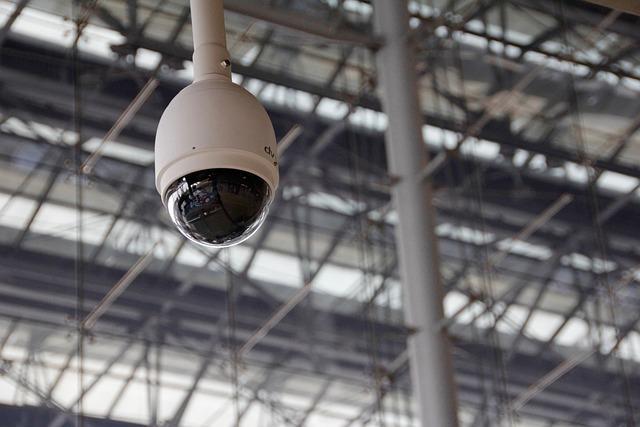
Image via Pixabay.
T. Casey Fleming is CEO of BlackOps Partners and author of The Red Tsunami: The Silent Storm Killing Your Freedom.
Source: https://www.americanthinker.com/articles/2026/05/the_globalization_of_digital_oppression.html

No comments:
Post a Comment